My literary week (9), some thoughts about fiction …

It’s been a busy week, what with getting ready for our road trip to Port Macquarie, and then doing said road trip, so reading has been slowed down somewhat. However, that doesn’t mean that things literary have been forgotten.

Why write fiction?
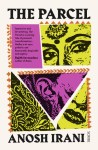
Anos Irani, The scribe

Like most of you who read this blog, I expect, I’m always looking out for discussions about what literature is all about, particularly from the writers who create this things we read. This week, I listened to a couple of interviews with authors, and loved what they had to say.

I’ll start with Anosh Irani whose latest novel The parcel I reviewed a few days ago. In an interview on Canada’s CBC, he said:

I had to tell the truth. For me that was the most important thing. Tell it in the form of a story but make it as truthful as possible.

Fiction is a beautiful way to get to the higher kind of truth.

There’s a difference between facts and truth. Factual information is what I learned when I did my research but truth can be an emotional truth; it can be a spiritual truth. These are things that you can arrive at through fiction, that’s why I love the novel. […]

The idea for me when I write a novel is to find what is human in the worst kinds of experience. […]

There are questions that the reader will also ask that have no answer and that is the whole point that sometimes there aren’t any answers. […]

I think literature should make us a little uneasy, a little uncomfortable, it should cause a shift in our unconsciousness because only when we are disturbed will we go in search of something [and he then refers to great novels like Rohinton Mistry’s A fine balance, Albert Camus’ The outsider and Vladimir Nabokov’s Lolita as examples. Yes!]

SNAP, I thought, because the previous day I’d heard Richard Fidler interview Richard Flanagan, and Flanagan too had talked about truths and about questions without answers:

Novels are something we go to because they remind us that implicit in each of us is a universe of possibilities, some better, some worse […]

It’s said now that reality has outstripped fiction, and that fiction can’t deal with this new reality, but […]

I genuinely believe in the novel as one of the great spiritual, intellectual and aesthetic traditions and at its best it speaks to fundamental truths about the human condition. It’s not that it has answers but … it asks the necessary questions we need to ask, of ourselves and of our times.

As you will probably guess, I love this idea of novels’ role being to ask us questions without necessarily providing the answers. Irani certainly does it. He presents some complex if not discomforting moral questions, and leaves the reader to think about how to react. His only request, I’d say, is for us to react with humanity, to not be quick to judge (particularly if we haven’t walked in those shoes.) Sometimes, as he says, there are no answers.

MUBA (Most Under-rated Book Award)
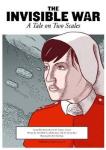
The Invisible War book cover

While on the road, I did check my Twitter feed every now and then, and one that caught my attention came from the Small Press Network (SPN). It announced this year’s MUBA award shortlist. I have written about these awards before, and have read the odd nominee, but this list comes completely out of left-field for me. The books are:

  • Briohny Doyle’s The island will sink (Brow Books, an imprint of Lifted Brow magazine): a debut novel that sounds like it’s in the dystopian cli-fi tradition
  • The invisible war: A tale on two scales (Scale Free Network): a surprising-sounding graphic novel for young adults set in the first World War and about bacteriophage that fights dysentery! This book has won educational publishing awards, but I guess is unknown/underrated in the general realm.
  • Susan McCreery’s Loopholes (Spineless Wonders, whom I’ve mentioned before in a post on Specialist Presses): a collection of micro-fiction about family life and relationship – no piece is more than 250 words
  • Christina Kennedy’s Horse Island (Zabriskie Books): set around Tuross Lake in NSW’s south coast, a beautiful part of the world only about three hours drive from me. This book chronicles Kennedy’s commitment to native Australian plants.

What a fascinating bunch. The winner will be announced next month.

How we read …

Another thing readers like me like to read about is how other readers read. I don’t mean what they read, or how many books they read, but how they actually read. This can include things like whether they write marginalia or not, or how many pages they read before they give up on a book, or whether in fact they ever give up a book once started. Consequently, I loved this from a Canadian blogger I love to visit, Buried in Print. It’s from her review of a book by Sarah Dunn called The arrangement, and she writes:

And when I say ‘entertaining’, I mean I chuckled aloud several times and paused more than once to let the book settle into my lap so I could enjoy the idea of the scene described.

I related to this. I often do the same. Not just for funny scenes, but for moving ones, or gorgeously written ones that I want to let soak in. It slows down the reading of course – but, when you are moved (to laugh, cry or wonder), you are moved, and you don’t want to rush that, do you?
Six degrees of separation, FROM Like water for chocolate TO …

I’ve decided to change my blog titling practice for my Six Degrees meme, from including the end book to not! I’ve decided it’s more fun to read the post following the connections until the end, rather than knowing the end book at the beginning? Let me know what you think. But now, the formalities. Six Degrees of Separation is a meme currently run by Kate (booksaremyfavouriteandbest). To find out more about it please click the link on her blog-name. It’s a fun meme.

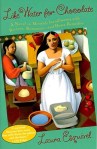
Laura Esquivel, Like water for chocolateNow, the book Kate chose for October is one I’ve actually read, unlike many of her other choices, but it was long before I started blogging. It’s Laura Esquivel’s Like water for chocolate. Unfortunately, I no longer have my beautiful hardback copy, having lent it to someone and never got it back, as happens sometimes in our reading lives. As always, I’ve read all the books in my chain, though not all since I started this blog.

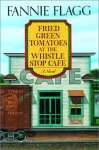
Fannie Flagg, Fried green tomatoesI had fun choosing my first book. Should I go with chocolate in the title (like Chocolat), or Mexican authors (like Valeria Luiselli), or magic realism (like Gabriel Garcia Marquez), all of which or whom I’ve read? Nope! The subtitle of Esquivel’s book is “a novel in monthly installments (sic) with recipes, romance and home remedies”, so I’ve chosen another book that (like Chocolat in fact) also glorifies food and eating, Fannie Flagg’s Fried green tomatoes at the Whistle Stop Cafe. I read it before blogging, so no review to link to I’m afraid.

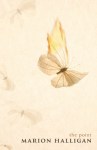
Marion Halligan, The pointFood plays a shocking role at the end of Flagg’s warm Deep-South-set comedy, but I’ve decided not to go there. Instead, I’m linking on the cafe idea, and have chosen another book that I read before blogging, Marion Halligan’s The point, about a beautiful, top-class, but fictional, glass restaurant in my city, the capital of Australia. I did say I wasn’t going to follow Flagg’s shocking end, but I need to admit that there’s a murder in this book so it’s not all champagne and caviar! It deals with haves and have-nots, with insiders and outsiders (for which the glass motif works well, of course.)

Emily BItto, The strays, book coverAnd now, I’m going to get to books I’ve read since blogging. Another book which deals with insiders and outsiders is Emily Bitto’s The strays (my review). Its narrator is an outsider who is welcomed into a Victorian artists’ community as the friend of the founding artists’ children. She has her life, her expectations, her dreams turned around, until things go awry. How much it was all to her benefit is a question we ponder at the end, and that is also a relevant question for my next book …

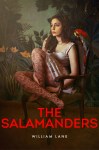
William Lane, The salamandersWilliam Lane’s The salamanders (my review) which has its origins in an artists’ colony though the book is set sometime after that colony had disbanded. However, it too explores the impact on the children of the artists. It’s a very different book to Bitto’s, however, delving into bigger issues relating to the land. Salamanders, and lizards in general, feature, both to represent the antiquity of the Australian continent and also, I think, resilience.

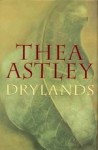
Thea Astley, DrylandsRegardless of the intent, this motif reminded me of the bar, cheekily called the Legless Lizard, in Thea Astley’s Drylands (my review)! It’s set in the dying town of Drylands and presents a bleak picture of Australia. Here is the quote I used in my review, describing Drylands as

a God-forgotten tree-stump of a town halfway to nowhere whose population (two hundred and seventy-four) was tucked for leisure either in the bar of the Legless Lizard or in front of television screens, videos, Internet adult movies or PlayStation games for the kiddies.

[…]

No one was reading anymore.

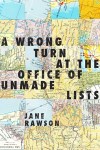
Drylands could be called dystopian, albeit one set in the present not the future. And that made me think of Jane Rawson’s A wrong turn at the Office of Unmade Lists (my review). There’s no doubt about its definition as a dystopian novel, dealing as it does with the devastating effects of climate change. Coincidentally, it also has several scenes in a bar!

Well, we haven’t travelled far once leaving the Americas – besides returning there briefly in Rawson’s book – but we have spent quite a bit of time in kitchens and bars. What does that tell you about me?

Have you read Like water for chocolate? And whether or not you have, what would you link to? 

Six degrees of separation, FROM Wild swans TO Family skeleton

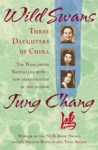
Jung Chang Wild swansAs you are sure to know by now, I am becoming rather addicted to the Six Degrees of Separation meme currently run by Kate (booksaremyfavouriteandbest). Please click on the link if you want to find out more about this meme, because I’m moving on with my selections! Our starting book this month is Jung Chang’s three generation biography-autobiography, Wild swans. This book is on my TBR. I missed it when my reading group did it, because I was living in the USA at the time, and I always meant to rectify that …

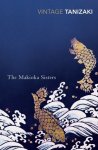
Junichiro Tanizaki, The Makioka sistersNow, I could link to a book my reading group did while I was away that I did read, but instead I’m going to choose a book that I read instead of books they were reading (even though, unfortunately, it was way before blogging so I have no review to link to). I’m choosing it because it was such an eye-opener for me, and I love to recommend it whenever I get the chance – and, it is set in Asia, albeit Japan, not China. The book is Junichiro Tanizaki’s The Makioka sisters, and is set in Osaka between the mid 1930s and 1941. It’s about a wealthy Osaka-based family and its attempts to marry off the third sister.

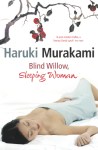
Haruki Murakami, Blind willow, sleeping womanThis is the book that introduced me in a big way to Japanese literature, a major contemporary exponent of which is Haruki Murakami. I’ve read a few of his books, but not many since I started blogging. One, though, that I have reviewed is his collection of short stories, Blind willow, sleeping women (my review). If you’ve never read Murakami, these short stories – 24 of them in fact – would provide an excellent introduction to his somewhat strange but fascinating world view.

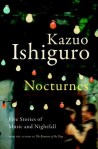
Kazuo Ishiguro, NocturnesMy next link is to another collection of short stories, but to make the link a bit meaningful, I’m choosing a collection by a Japanese-born English writer – Kazuo Ishiguro’s Nocturnes: Five stories of music and nightfall (my review). These five stories touch the theme of music in some way. They also feature a typical Ishiguro device, the unreliable narrator (or at least a narrator who is not completely across what is going on in the story s/he is telling.

Dorothy Porter, On passionNow, many writers, talk about being inspired by music, but the one I’m going to link to here is our wonderful late poet Dorothy Porter, and her little book On passion (my review). Porter dates her passion for music back to her introduction to the Beatles in 1964. She writes that she has written “virtually all [her] poems to rock riffs and rhythm – the catchier, the darker, the louder, the gutsier the better.”

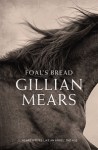
Gillian Mears' Foal's breadPorter died too young, from breast cancer at the age of 54. We Aussies have lost a few of our favourite women writers, too young, in recent years. Another is Gillian Mears, who suffered from multiple sclerosis for nearly two decades before dying last year at the age of 51. I have reviewed her Foals bread here. It’s a novel about a passion in fact, the passion for the sport of horse high jumping. I loved the way Mears conveyed that passion through her characters Noah and Roley.

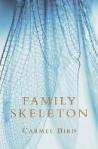
Carmel Bird, Family skeletonAnd now for my final link, I’m going to return to my reading group. Gillian Mears was one of several Australian women writers we discovered in the year of our formation, 1988. Many of them, though not Mears, we found in the anthology, Room to move, which was our first book. It had stories by Glenda Adams, Thea Astley, Kate Grenville, Helen Garner, Elizabeth Jolley, and many others, including Carmel Bird. It is her latest novel, Family skeleton (my review) that I’m going to use for my last link. Family skeleton seems the perfect book to end a chain that started with a book about three generations of women. I’m sure Chang dealt with a skeleton or two!

So there you have it … we started with one sort of family in China, then visited Japan and England, before coming to Australia and ending with a different sort of family.

Have you read Wild swans? And whether or not you have, what would you link to? 

Six degrees of separation, FROM Pride and prejudice TO Northanger Abbey

Pride and prejudice book covers

Just a few editions of Pride and Prejudice

I’m only one day back from California and it’s Six Degrees of Separation time againbut I absolutely couldn’t miss this one as our host Kate (booksaremyfavouriteandbest) nominated Jane Austen’s Pride and prejudice as the starting book. It’s a particularly special choice because last month we commemorated the 200th anniversary of Austen’s death. This meme, as you know, requires us players to create a chain of six more books, linking one from the other on whatever basis we like. I don’t think I need tell you that I’ve read Pride and prejudice, which Austen called “my darling child”, but I’ll confirm that, as always, I have also read all the books in my chain. Moreover, because of Austen’s importance to me and to this year, I’m going to try to make every book in this chain relate to her in some way …

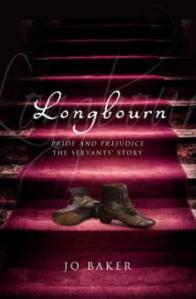
Jo Baker, LongbournI’ll start with an example of the sort of book I rarely read – that is, spin-offs and sequels – and nominate Jo Baker’s Longbourn (my review). Longbourn, as the Austen fans among you will know, is the name of Elizabeth Bennet’s family home, and Baker’s novel focuses on the lives of its servants. I read this for my Jane Austen group, and while most of us found the plot rather far-fetched, as is not unusual with this “genre”, we thought Baker’s research into the lives of servants of the time made the book a worthwhile read.

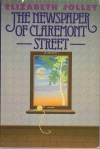
Elizabeth Jolley, The newspaper of Claremont StreetFrom here, I’m going to nominate a book I read long before I started blogging, but which Guy (of His Futile Preoccupations) reviewed recently, Elizabeth Jolley’s The newspaper of Claremont Street (Guy’s review). I could have linked to a Jolley I’ve reviewed here, as one of the reasons I’ve chosen Jolley is because I sometimes call her my antipodean Austen, but I want to nominate Newspaper because she’s a cleaner, in other words, essentially a servant.

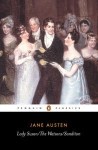
Jane Austen, Lady Susan, Watsons, SanditonMy next link is a cheeky one, Jane Austen’s Lady Susan (my review), the book which marks the transition between her juvenilia and mature novels. It’s a cheeky link because the recently widowed Lady Susan, described by another character in the book as “the most accomplished coquette in England”, is poor. She’s desperate to marry well so that she can be kept in the manner to which she had become accustomed, but as the book opens she can’t afford her own house, let alone servants! By the way, this book contains one of those quotes you often find in those “wit and wisdom” or “favourite quotes” of Jane Austen books: “where there is a disposition to dislike a motive will never be wanting”. Love it.

jane Austen, Love and FreindshipI’m going to continue being cheeky, and name another juvenilia work for my next link, Jane Austen’s Love and freindship (sic) (my review). It wouldn’t be cheeky, actually, if I linked it on the juvenilia theme, but, as some of you will know, the recent film adaptation of Lady Susan (starring Kate Beckinsale) was titled (somewhat irritatingly to Austen fans), Love and friendship. What were they thinking? Anyhow, Love and freindship (yes, she spelt it with an “ei” not “ie”) is an epistolary novel written when she was 15 years old. Its humour is broad, but you can see in it the writer she was to become.

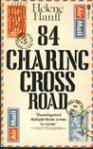
Helene Hanff, 84 Charing Cross RoadAnother epistolary book that I’ve enjoyed, though it’s not a novel, is Helen Hanff’s 84 Charing Cross Road (my review). This is such a classic now that I’m sure you’ll know it but, just in case you don’t, it comprises the delightful correspondence that took place in the middle of the twentieth century between American writer and bibliophile, Helene Hanff, and Frank Doel of Marks & Co, a London secondhand and antiquarian bookshop. It’s the sort of book that booklovers, like me, adore – and I adore it even more because during the correspondence Hanff fell in love with Pride and prejudice and asked Frank to find her a copy. She wrote:

“You’ll be fascinated to learn (from me that hates novels) that I finally got round to Jane Austen and went out of my mind for Pride and Prejudice which I can’t bring myself to take back to the library till you find me a copy of my own.”

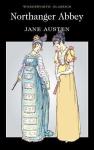
Jane Austen, Northanger AbbeySo now, what to choose for my final book? It has to be one of Austen’s, and I’m going to make it Northanger Abbey (my review), not only because it is 200 years old this year, but because it is the one that contains her famous defence of the novel. I’ve mentioned it so many times before, but I’ll quote it again:

… there seems almost a general wish of decrying the capacity and undervaluing the labour of the novelist, and of slighting the performances which have only genius, wit, and taste to recommend them. “I am no novel–reader — I seldom look into novels — Do not imagine that I often read novels — It is really very well for a novel.” Such is the common cant. “And what are you reading, Miss — ?” “Oh! It is only a novel!” replies the young lady, while she lays down her book with affected indifference, or momentary shame. “It is only Cecilia, or Camilla, or Belinda”; or, in short, only some work in which the greatest powers of the mind are displayed, in which the most thorough knowledge of human nature, the happiest delineation of its varieties, the liveliest effusions of wit and humour, are conveyed to the world in the best–chosen language.

How better to end this post than on such a gorgeous description of the novel!

So, I think I’ve done what I set out to do and made this all about Austen, albeit we have dipped our toes briefly in Australia and the USA along the way. I hope it hasn’t been too boring …

Have you read Pride and prejudice (dare you admit you haven’t)? Whether or not you have, what would you link to? 

Monday musings on Australian literature: ACT Litbloggers under way

A few weeks ago I posted on the ACT Litblogging program for which I am a mentor. But, I’ll just recap in case you missed that post. Titled ACT Lit-bloggers of the Future, this is a collaborative program between the ACT Writers Centre and the National Library of Australia (NLA). It provides for two emerging ACT-region writers to attend events at the National Library of Australia and post their experience on the Writers Centre’s Capital Letters blog, as well as for that mentorship from me.

The two bloggers, playwright and performance maker Emma Gibson, and blogger/podcaster and writer Angharad (Tinted Edges), are now well underway. They have posted on three events, and more posts, I know, are scheduled for the next month. The posts to date reveal the variety of programs offered by the National Library, an impressive variety really, when you know that the bloggers, due to their work and other life commitments, have not been able to attend every event available.

Here are the posts published to date:

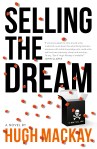
  • Hugh Mackay, Selling the dreamAuthor talk with social commentator and prolific writer Hugh Mackay, held on 6 June, and posted by Angharad. The book was Selling the dream, on the advertising industry, and Angharad, who loves attending author talks – as most keen readers do – enjoyed both the overall experience and what she learnt about advertising, including its increasing role in political campaigns. As you usually do at author talks, she bought the book and had it signed!
  • Presentation on the life and death of botanical illustrator Dorothy English Paty by curator Nat Williams, on 28 June, and posted by Emma. Emma, who has always liked botanical illustration, was throughly engaged by this introduction to Paty (1805-1836), a little-known early Australian amateur artist. The Library has two of her Newcastle sketchbooks in its Nan Kivell Collection and this talk focused on presenter Williams’ research. As Emma says, although there are many gaps in our knowledge about her, the survival of these notebooks, together with research by people like Williams, will ensure that she (and the contributions she made) are not lost to us.
  • NAIDOC 2017 week collection talk titled Our voice, presented by librarian Ryan Stoker on 6 July, and posted by Emma. Described as a collection talk, this event involved Stoker highlighting “a variety of interviews, social histories and folklore recordings” that the Library has collected from Aboriginal and Torres Strait Islanders. As a playwright, Emma is attuned to things aural, and takes her own audio recordings when travelling. Not surprisingly then, she found the talk illuminating, particularly in relation to how this collection at the NLA might help keep indigenous languages alive.

More posts, as I said in my introduction, are coming, including one from Angharad on an author talk by the popular and successful Australian fantasy and historical fiction writer Kate Forsyth. Look for that, and others by our two bloggers, on the Capital Letters blog. You can subscribe to it via the box in the right sidebar.

Meanwhile, our two bloggers would love it if you read these current posts and left them a comment!

You are very likely to hear more about this program later in the year, but I did want to share what’s been done to date – and give a little heads up to the good work being done by the NLA, ACT Writers Centre, and our two bloggers.

A short post today, but I’m sure you won’t complain about that!

Australian Women Writers 2017 Challenge completed

Carmel Bird, Family skeletonI usually write my completion post for the Australian Women Writer’s Challenge, around the middle of the year, even though I plan to take part until the year’s end. As in previous years, I signed up for the top-level, Franklin, which involves reading 10 books and reviewing at least 6, and as in previous years I’ve exceeded this. However, it’s good to get the completion post out of the way before the end of year madness begins!

I have, so far this year, contributed 16 reviews to the challenge, two more than for last year’s completion post.

Here’s my list in alphabetical order (by woman author), with the links on the titles being to my reviews:

Unlike last year’s half-way list, I did review one classic and a book by an indigenous woman author this year. There are other differences too. Last year I’d read just three memoirs (with two of those being hybrid biography-memoirs) while this year I’ve reviewed five memoirs to date. The fiction-nonfiction ratio, though, is still roughly the same.

aww2017 badgeLast year, I ended the post on plans for the rest of the year – and said that they would include reading at least one indigenous woman, Ali Cobby Eckermann, which indeed I did (her Ruby Moonlight). This year, however, I’m not setting out any plans. I do know I’ll be reading Heather Rose’s Stella Prize winner, The museum of modern love, as my reading group is doing that. (We will be reading a couple of other women writers, but they are not Australian.) As for the rest of my reading plans for the year, they are undefined – which means I could very well be as surprised as you by what turns up!

Monday musings on Australian literature: Guest post from Bill of The Australian Legend

It’s been two years since I last published a Guest Post, for no any other reason than that the idea slipped off the radar as other busy-ness took over. However, during a recent email correspondence with (relatively new) blogger Bill, the idea re-popped into my head, and so I asked him, as he explains below.

First though, a quick intro. Bill appeared on the Australian lit-blog scene just over two years ago with quite a bang. Well, that’s a bit overly dramatic perhaps. What I mean is that he launched himself as a serious player in the lit-blogosphere, and one with a very particular agenda – to write about independent women, particularly independent women writers. Well, of course, I was interested in that and have enjoyed some good discussions here and on his blog ever since. If you’re likewise interested, I suggest you start with his About page and move on from there.  Meanwhile, let’s give the floor to Bill …

*****

Apart from my friend Michelle at Adventures in Biography who got me started on Lit.Blogging, Sue here at Whispering Gums was the first blogger I followed and who followed me. So I owe her a great debt, and feel guilty each time I think of the imaginary detective story where the private eye’s principal informant is the toothless derelict … Whispering Gums. (The real, and much nicer, origin of her name is here.)

It is a matter of great pride to me to be invited to do a guest post, and I’m only sorry that it is under false pretences. I was discussing (by email) with Sue some reviews I had put up on the Australian Women Writers Challenge site and I asked her in passing what she thought of biographies of women writers by men. My intended question was did she think the AWWC site should list them. Sue however thought I was asking her opinion of the biographies themselves, and promptly put it back onto me!

Do you remember the old BBC Radio show Just A Minute which was often used as a filler on Radio National? Well I feel like (the late) Derek Nimmo leaning in to the microphone to speak for 60 seconds on the life cycle of newts. But here goes, 1000 words on Biographies of Women Writers by Men, starting now.

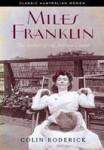
Colin Roderick, Miles FranklinI have reviewed two such biographies, Brian Mathews on Louisa Lawson and Colin Roderick on Miles Franklin. The former is a good example of a man being able to write sympathetically and insightfully about a woman, and the latter is not.

Walking up and down my own shelves I see I have numerous biographies by women. Three – Roe, Barnard and Coleman – on Miles Franklin, Barbara Baynton by Penne Hackforth Jones, Christina Stead by Chris Williams, two by Sylvia Martin – Aileen Palmer and Passionate Friends, ‘collected’ lives by Drusilla Modjeska, and by Dale Spender, Tomalin’s Jane Austen and Gaskell’s Charlotte Bronte; and I also have two more by men, Brian Dibble on Elizabeth Jolley (Doing Life which I really ought to have reviewed by now) and Ric Throssell on his mother, Katharine Susannah Prichard.

Of course, as you may know, I am an old white guy and so I am probably the very last person to be attempting to answer the implied question: does it matter? Well, in the case of Colin Roderick (1911-2000), one of the most influential figures in the Aust.Lit industry in the middle of the last century, his gender matters a great deal. He runs Franklin down both as a writer and as a woman:

[her] unshakeable conviction of physical inferiority and lack of physical attraction… converted her into a skittish coquette stringing two or three men along simultaneously and a synthetic man-hater… It forced her to become a defensively bellicose propagandist for feminist causes.

He routinely misstates her commitment to feminism, and writes that a determined suitor might have cured her flirtatiousness with a spanking. In the comments to my piece on Roderick, author Jess White, taking comfort from my description of him, describes Roderick’s biography of Rosa Praed, In Mortal Bondage, as “bizarre & bordering on fiction in places.”

The Roe biography of Franklin I would describe as asexual, but the earlier (in fact the first) biography, by Marjorie Barnard, which I haven’t read for a long time, does seem to me to reflect the fact that it is written by a woman. It starts (stereotypically!) by describing how Franklin dressed and how she looked: “her smile. Radiant, quick and gay, it transformed her. It was irresistible and in her old age still charming and youthful.” And ends with an analysis of love: “[Miles] held in her heart an impossible ideal of human relationships and when she found it unrealizable, not so much for herself as in the lives of others, she was bitterly hurt and disappointed”, which I have never been able to express half so well.

Unlike Roderick, Matthews takes Lawson’s feminism seriously and gives a good account of it. In fact, he takes Lawson seriously as poet, businesswoman, leading figure in the women’s movement at the turn of the century, and as a mother (with four difficult adult children!) Whether he adequately emphasizes with her, perhaps only a woman could tell. Unfortunately for Matthews there was very little evidence to say how Louisa spent her private life after leaving her husband – although we’re pretty sure she didn’t want to get pregnant again.

Marianne van Velzen in her account of Ernestine Hill turned to fiction to round out those areas where evidence was lacking, an approach which Matthews discusses and dismisses, and which I think detracts greatly from the usefulness of those autobiographies which resort to it.

At this point in my writing I went away for a couple of days, and by sitting, driving, with the radio off, was able to refine my ideas. We have seen that biographies may be ‘factual’ or ‘fictionalized’. Then, from a ‘gender studies’ point of view we may also categorise them as: Neutral, Masculinist, and Feminist. The problem of course with ‘Neutral’ is that old, conservative, white men regard their own point of view as neutral and all others as radical. But let us say for argument’s sake that ‘neutral’ is the gathering and presentation of historical material without (much) gender analysis, and that Jill Roe’s Stella Miles Franklin is an example of this. Colin Roderick’s biographies of Franklin and Praed are clearly ‘masculinist’, in that he devalues the opinions of the women he is writing about and ascribes to them motives which he wouldn’t ascribe to men. An example of a ‘feminist’ biographer might be Sylvia Martin who is exploring the space between spinsterism and lesbianism by looking into the lives of single women writers like Mary Fullerton.

A further division is suggested by Nathan Hobby who is both a blogger and PhD student writing a biography of Katharine Susannah Prichard. At the end of 2015 he wrote, “The best biographies, in my opinion, are generally written by biographers who care about biography as a genre rather than biographers who are simply passionate about their subject.”  So then we also have ‘serious’ biographers and the ‘simply passionates’. The latter definition clearly captures rellos such as Ric Throssell and journalists like Marrianne van Velzen.

If you are thinking I have drifted a bit far from the topic, I guess the questions I am trying to get to are: How many Australian women writers have been the subject of biographies by ‘serious’ men? And, assuming only Roderick actually attacks his subjects, how many of those biographies were sympathetic, and how many missed the point?

Now, all you Whispering Gum-nuts out there, it’s down to you. I’ve listed the four that I have. How many have I missed?

Thanks Bill for taking up my invitation – and for presenting some different angles for us all to think about regarding biographers and their biographies.

Six degrees of separation, FROM Picnic at Hanging Rock TO A few days in the country

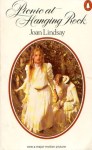
Joan Lindsay, Picnic at Hanging RockWoo hoo, it’s Six Degrees of Separation day again, and for this month our host Kate (booksaremyfavouriteandbest) has selected a special book, Joan Lindsay’s Picnic at Hanging Rock, which is 50 years old this year. This meme, as you probably know by now, requires we players to create a chain of six more books, linking one from the other on whatever basis, flimsy or otherwise, we can justify. I have read Picnic, albeit nearly 40 years ago, and of course as always, I have read all the books I select for my chain.

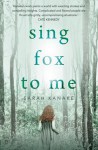
Sarah Kanake, Sing Fox to meBut, here’s where the problem started. I could think of so many ways to link from this book that I was stalled for a while. Would I link to another novel that readers thought was a real story, or a novel starting with a picnic, or a novel adapted to a popular movie, or, perhaps to another Gothic novel about mysterious disappearances. I decided on the last, and so my first link is to Sarah Kanake’s Sing fox to me (my review). Set in Tasmania, which is a favourite location for Australian Gothic novels, Kanake’s book is about a young 14-year-old girl, River Snow Fox, who disappears into the bush on a rainy night.

Louis Nowra, Into that forest

From here, given the prevalence of the lost child motif in Australian literature, I couldn’t not go to another book about lost young girls in the bush, Louis Nowra’s Into that forest (my review). Also set in Tasmania, it’s about two young girls, Hannah and Becky, who find themselves lost in the bush after their boat capsizes in a storm and Hannah’s parents drown. They are taken in by a Tasmanian Tiger pair, and live with them for four years until they are found – by Becky’s father. And then comes the problem, how to reintegrate into human society.

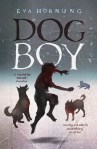
Eva Hornung, DogboyAnd now, if you know recent Aussie literature, you might guess my next link. Yes, Eva Hornung’s Dog boy (my review). It too is about a feral or wild child, this time a young 4-year-old boy who is taken in by a dog pack. In it, too, like Nowra’s, the boy returns to human society and again, reintegration proves a serious challenge. However, Hornung’s book explores the issue from a different, more scientific angle, and, although she is an Australian author, the book is set in Moscow. This gives me the opportunity to change my linking pattern from lost children to …

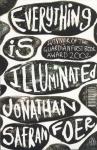
Jonathan Safran Foer, Everything is illuminatedSetting, sort of. I have reviewed other books set in Russia, but we’re now going to Russia’s neighbour, Ukraine, and Jonathan Safran Foer’s Everything is illuminated (my review). Coincidentally, it also involves the search for a lost person, though in this case it’s the protagonist’s search for the woman who, he believes, saved his grandfather from the Nazis during World War 2. It’s a Holocaust novel, but it is also a rather wild, postmodern novel that plays within itself and with the reader. None of these factors, though, generate my next link. Instead I’m going whimsical, and am linking to …

Tegan Bennett Daylight, Six bedroomsAnother three-name author. I was surprised when I thought of going this way, just how many such-named authors I’ve read, like Gabriel Garcia Marquez, Tara June Winch, Ali Cobby Eckermann and Tegan Bennett Daylight. I love these names, they have such a wonderful ring when you say them. Anyhow, of these, I’m choosing Tegan Bennett Daylight’s collection of short stories, Six bedrooms (my review). This is not one of those linked collections, but most do share a theme, coming-of-age.

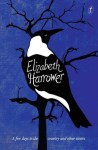
Elizabeth Harrower, A few days in the country and other stories

And now, I bet you thought I was going to link on the coming-of-age theme, didn’t you? But, I’m not. In 2016, Bennett’s book was shortlisted for the Stella Prize. It was a very interesting list, as its six books included two short story collections and an essay collection. For my final link, because I loved it so much, I’m choosing the other short story collection, Elizabeth Harrower’s A few days in the country, and other stories (my review). If you like short stories and you haven’t read it, then you have a thrill in store (is all I can say).

So, there you have it for another month. I’ve managed to include two male authors, and one non-Australian. We spent a lot of time in the bush with lost children, then ventured to the Ukraine and into bedrooms and other domestic spaces, before, guess what, somehow returning to the country (albeit not to lost children.)

Have you read Picnic at Hanging Rock? And whether or not you have, what would you link to? 

My literary week (8), a cultural life

There’s always something going on here in the nation’s capital, besides politics that is and despite the belief in some circles that it is a soulless place! In fact, it’s so busy here – so packed full of things to do – that my reading has been pretty slow of late. However, I have been active, and thought some of my activities might interest you.

Blog mentoring – and a question for you

In my last Monday musings I mentioned that I’ll be mentoring two ACT Lit-bloggers for the rest of this year. We had our first meeting last weekend, and one of the issues we talked about – and it’s one we’ll continue to talk about – relates to what litblogging actually is. What is the difference, we want to explore, between litblogging, review and criticism? Where are the lines, what are the crossovers? We tossed a few ideas around, including the issue of informality/formality, but there’s a lot more to explore regarding content (and these concepts of review, criticism, analysis) and audience (who reads blogs, what do blog readers look for, and can this audience be widened?)

So now I’m throwing it over to my brains trust – that is, you who read this blog – because you cover a wide range of backgrounds. What say you to these questions? And how (or where) do you think litblogs fit into literary culture?

Coranderrk

I mentioned Coranderrk on this blog a couple of years ago. It was an Aboriginal Station in Victoria, established and successfully run by some remaining local indigenous people, and it operated from 1863 to 1924. I came to the story through the Bread and Cheese Club’s activity in the 1950s when they held working bees to repair the cemetery and restore the monument of leader William Barak to its rightful place in the town.

So, when I saw that the play Coranderrk, which was first performed in 2013, was going to be part of his year’s Canberra Theatre Centre season, I bought tickets, and we finally got to see it this week. It tells the story of the community’s attempt to obtain formal control over the land when local farmers started making moves to move them on! They felt the land was too valuable to be run by Aboriginal people (!), and so, as the program says,

the men and women of Coranderrk … went head-to-head with the Aboriginal Protection Board at a Victorian Parliamentary Inquiry to be allowed to continue.

The play tells this story primarily using words from sources of the time – mainly evidence and testimony from the Inquiry. The four actors – three men and one woman – each play several indigenous and non-indigenous characters to tell the story of the conflict. It is, really, like a documentary in play form (called, I believe, verbatim theatre), and it could have been very dry. Fortunately, I like documentaries. And anyhow, the writers do manage to inject the words, the story, with a sense of theatre, partly through little recurring motifs, like banter over a hat, and word plays, as well as, of course, the drama of the story itself.

It’s not a happy outcome, as you’d expect for the time, but the program says “The production aims to encourage a shared understanding of the past between Aboriginal and non-Aboriginal people.” It is just one of the many stories that are coming out now about our colonial past and that we Australians need to know if we are to advance as a “real” nation, that is, as one that knows its true history.

Coranderrk
Written by Andrea James & Giordand Nanni
Directed by Eva Grace Mullaley
Produced by Ilbijerri Theatre Company & Belvoir
Canberra Theatre Centre, 14-15 June 2017

John Waters

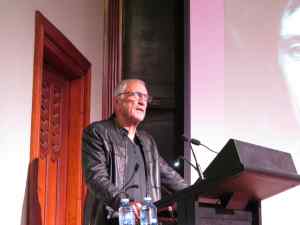
John Waters, NFSAOne of my several post-retirement commitments is involvement in the Friends of the National Film and Sound Archive. Like most Friends organisations we volunteer for our “parent” body, and we organise events. Recently, we ran a bus tour of the suburb of Moncrieff, whose streets are named “to honour Australia’s music history”.  We enjoyed driving around the streets, being regaled by local music expert David Kilby with biographies of and entertaining clips from such performers as Johnny O’Keeffe, Jimmy Little, Harold Blair and June Bronhill.

Then, this week, we presented an evening, to a full house, with the wonderfully generous Australian actor John Waters who willingly gave up his time, driving himself to Canberra, to talk about his career in film and, at the same time, promote the importance of preserving Australia’s audiovisual history. The NFSA is “our nation’s album” he said, and “who doesn’t like a family album”. Exactly.

There was more to my week, including my local Jane Austen group’s discussion today of the plethora of biographies about our Jane – but I think I’ll save that for another post. There’s only so much culture you can manage at a time!

Monday musings on Australian literature: ACT Writers Centre

Do you have a writers centre in your neck of the woods? We do in Australia, but I’ve barely written about them before. They generally provide support and/or training for writers, via online and face-to-face mechanisms, some free-of-charge but most fee-paying, and tend to be membership organisations. Over coming months, I’ll share what’s happening in different centres around Australia, but I’m starting here with the one in my city, the ACT Writers Centre.

First though, a little anomaly – to do with apostrophes! I note that the ACT Writers Centre has no apostrophe in its name, while the Australian Writers’ Centre does. Whyfor this thusness? A quick survey around the various Australian state centres revealed that most do not use the apostrophe (with the Northern Territory appearing to have a foot in both camps, depending on which page you are on!) It’s like Mothers/Mother’s/Mothers’ Day. I prefer the no-apostrophe approach. As in, what sort of (adjectival) day is it? It’s a mothers day, that is, a day for mothers. Rather than, whose (possessive) day? It’s mother’s day, a day owned by mothers. It seems that most writers centres in Australia see it the adjectival way. Either that or they don’t know their apostrophes, and that would be a worry!

Enough pedantry, let’s get on with the ACT Writers Centre. It describes itself as:

the leading organisation of writing-based culture in the ACT. Our mission is to develop writers and their work.

How do they do this? Well, by running programs, offering prizes or awards, and providing services such as manuscript assessment, editing, and mentorship. Most of these are fee-based. They also have a blog, Capital Letters.

In this post, I’m going to focus on four special programs offered, but they also offer various courses. Currently, the ACT Writers Centre runs four main programs:

HARD COPY

HARDCOPY 2015 flyerI’ve written about Hard Copy before, in a previous Monday Musings post. The first program was held in 2014, so this year’s will be its fourth. They describe it as “a national professional development program that helps build the capacities, aptitudes and resources emerging Australian writers need to reach their potential.”  Its aim is not specifically to achieve publication for its participants, but to help them with manuscript/project development, to arm them with an understanding of how the Australian publishing industry works, and to help them “build connections and relationships within the industry/writing community”.

This program, which is run by our local centre, receives funding from the Australia Council for the Arts, and is offered nationally, that is, not just to ACT-based writers. Also, it alternates between fiction and non-fiction writing. This year’s program, as the one run in 2015, is for non-fiction writing.

All this is pretty dry. For an insider’s perspective, do read Michelle’s posts on her blog, Adventures in Biography, on her experience of the 2015 program. She had a great experience – and I was pleased because I got to meet her while she was here! She found the program very helpful, to say the least.

Between the Lines

Hetherington and Webb, Watching the worldYou know that mantra, the one that says to be a writer you need to be a reader? Well, the ACT Writers Centre clearly believes it to be so, because this year they are offering “a facilitated book discussion group for writers with an active practice”. This sounds a bit like a reading group, but with two big differences. First, it has  a professional leader, in this case Professor Jen Webb from the University of Canberra (whose book with poet Paul Hetherington, Watching the world, I reviewed a couple of years ago). And secondly, the focus will be on “authorial technique and achievement, rather than subjective personal judgements on whether or not the book is ‘good’ or ‘bad’”.

The focus this first year will be Australasian literary novels. You can see the list on the link I’ve provided on the heading. There are 6 books, as it’s a bimonthly program: three are by men and three by women, three are by New Zealand writers including one by Maori writer Witi Ihimaera, and one is by a woman of indigenous Australian background (Melissa Lucashenko). I’d love to see their discussions written up on the Capital Letters blog!

ACT Writer-in-Residence

This is the program which, when I read about it last week, inspired today’s post. It’s a new three-year program offered by the Writers Centre in collaboration with the University of New South Wales (Canberra) and with support from the Copyright Agency Ltd. Again, you can read the details of what the program offers and expects on the link I’ve provided. Like HARD COPY it is not limited to ACT Writers. It is mainly geared to established writers, but “suitably qualified developing writers” were also encouraged to apply.

Last week the three writers were announced:

  • 2017: Isobelle Carmody, fantasy writer, particularly of the immensely popular, much translated, Obernewtyn Chronicles. (Daughter Gums was, and still is, a big fan.)
  • 2018: Jane Gleeson-White, prize-winning non-fiction writer who plans to research a novel set during World War II.
  • 2019: Angela Gardner, poet who apparently has a project on “Air” which will “include some novel public programs for Canberra – including balloon flying”.

I was initially surprised to see that all three writers have been announced now, but I guess it does enable the later writers to plan their lives, something I suspect writers often don’t get an opportunity to do!

ACT Literary Bloggers

And now comes the one close to my heart! It’s another new program, and another collaborative one, this time with the National Library of Australia. It “provides an opportunity for two emerging ACT-region writers to attend events at the National Library of Australia and document the experience for the ACT Writers Centre’s Capital Letters blog. The program, which will run from May to December, includes a mentorship with ….” yep, me, Whispering Gums! What an honour, and how interesting it’s going to be. The program is particularly aimed at writers who’d like to write about “the literary arts for the online environment”.

The two bloggers have been chosen: playwright and performance maker Emma Gibson, and blogger/podcaster and writer Angharad (Tinted Edges).

I am looking forward to working with Emma and Angharad, particularly to jointly exploring ways in which blogging can be used to further promote literary culture in the (our, any) community. You may hear more about this later in the year.