 I’m a relative latecomer to Non-fiction November, but I like to take part in some way because I do like and read non-fiction. However, I don’t have the time to fully take part, so as in previous years, I plan to do a couple of concatenated posts.
The meme is jointly hosted by Julz (Julz Reads) (Week 1), Sarah (Sarah’s Book Shelves) (Week 2), Katie (Doing Dewey) (Week 3), Leanne (ShelfAware) (Week 4) and Rennie (What’s Nonfiction) (Week 5).
Week 1: (Oct. 28 to Nov. 1) (Julz Reads) Your Year in Nonfiction:
There are several questions for this week, but I’m just going to answer a couple …
What was your favorite nonfiction read of the year?
My year starts at the end of last November. I’ve not read a lot of non-fiction, but have read a lot of really interesting non-fiction! I’m choosing three highlights:
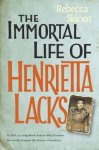
- The immortal life of Henrietta Lacks by Rebecca Skloot (my review): because it’s a biography that also explores the history and ethics of science, as well as social justice and racism. It’s the whole package really.
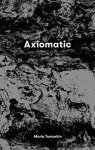
- Axiomatic, by Maria Tumarkin (my review): because, again, social justice is at its core, and it forces us to rethink those maxims that we trot out, often without thinking about them too deeply.
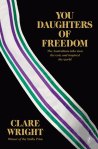
- You daughters of freedom, by Clare Wright (my review): because it illuminates how progressive Australia was at the time of our Federation, and the significant role played by women, nationally and internationally, in that progressive thought and action.
Do you have a particular topic you’ve been attracted to more this year?
I wouldn’t say this is a topic I’ve been particularly attracted to this year, but I have had a long, ongoing interest in the stories and rights of Indigenous Australians, and try to keep my reading up in this area. This year, in terms of non-fiction regarding Indigenous Australians, I read Anita Heiss’s anthology Growing up Aboriginal in Australia (my review) and Stan Grant’s On identity (my review). I also read Neil H Atkinson’s The last wild west (my review), in which he chronicles his enlightenment of the injustices under which Indigenous Australians live.


Week 2: (Nov. 4 to 8) (Sarah’s Bookshelves) Book Pairing:
“This week, pair up a nonfiction book with a fiction title. It can be a “If you loved this book, read this!” or just two titles that you think would go well together. Maybe it’s a historical novel and you’d like to get the real history by reading a nonfiction version of the story.”
 I love this week of the Challenge, because for as long as I can remember I’ve enjoyed seeing connections between my reading. However, because I’m doing three weeks in one, I’m going to do just one pairing, and it pairs two books I’ve read this year, Clare Wright’s You daughters of freedom (my review) which chronicles the women’s suffrage movement in Australia with Sue Ingleton’s Making trouble: Tongue with fire (my review) which tells the story of two women’s rights advocates, Harriet Elphinstone Dick and Alice C Moon.
 Both these books focus on the late nineteenth and early twentieth century, though Ingleton’s ends right at the beginning of the twentieth century. Ingleton’s Dick and Moon weren’t actively involved in the suffrage movement, but they were passionate advocates of the rights of women and of women’s ability to live independent lives, and they, particularly Moon, met and associated with early Sydney leaders of the suffrage movement, like Rose Scott and Louisa Lawson, who feature in Wright’s book.
Week 3: (Nov. 11 to 15) (Doing Dewey) Be The Expert/Ask the Expert/Become the Expert:
Either share 3 or more books on a single topic that you have read and can recommend (be the expert) … [or] put the call out for good nonfiction on a specific topic that you have been dying to read (ask the expert) or … create your own list of books on a topic that you’d like to read (become the expert).
Hmm, except that I wouldn’t and couldn’t call myself an expert, I could choose Indigenous Australian rights and lives, and repeat the three books I listed under Week 1’s particular topic question. I will stay with this idea, and share some more books I’d like to read, but with the proviso that I, as a non-indigenous person, could never actually become the expert. Some non-fiction indigenous works I’d like to read include:
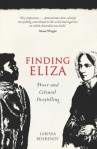
- Larissa Behrendt’s Finding Eliza: Power and colonial storytelling (Lisa’s ANZLitLovers review): this book which explores/exposes early writing about Indigenous Australians has been on my TBR for a few years now. I hope to read it for Lisa’s 2020 Indigenous Literature Week.
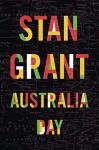
- Stan Grant’s Australia Day (my post on a conversation with Stan Grant): having heard the conversation, I’d now like to read the book!
- Alexis Wright’s Tracker (Bill’s The Australian Legend review) which won the Stella Prize in 2018, and which appeals for its story of a strong but controversial Indigenous Australian activist and for its “take” on biography/memoir.

(I am early with Week 3, but I figure that balances the fact that I’m very late with Week 1. I hope I’ll be forgiven.)

 This month’s is a classic – the sort of book in fact which defines classic given its timelessness as a much loved book. It is, of course, given the post title, Lewis Carroll’s Alice’s adventures in Wonderland. And of course I have read it, though so so long ago that I really don’t recollect the actual time I read it because it’s one of those books that enters one’s consciousness isn’t it?
 For my first link, I’m going to do something that might shock those of you who know the book, because I’m linking to Charlotte Wood’s dystopian novel, The natural way of things (
 Now, not everyone approves of eating rabbits (or any animals for that matter). For Wood’s characters it was a matter of them or the rabbits, and they chose themselves. However, to be balanced about this, because, you know, we are supposed to be balanced here in Australia, my next link is to David Brooks’ animal rights reflection-cum-memoir, The grass library (
 The main animals in Brooks’ book are rescue sheep – two at first, then another, and finally a fourth. Sheep that desperately needed rescuing, because they are being mysteriously attacked, appear in Evie Wyld’s Miles Franklin award winning book, All the birds, singing (
 Birds of all sorts feature in All the birds, singing, as they also do in Carrie Tiffany’s Stella prize winning novel, Mateship with birds (
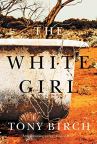 For Indigenous Australians, birds have many meanings and values, one of which is as messengers. We were introduced to this, practically, during our Arnhem Land trip last year, but birds-as-messengers feature in Tony Birch’s latest novel, The white girl (
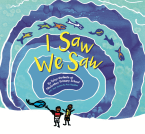 And now, because all my links to this point have involved animals, I am going to stick with animals. However, for this last link, I’m going for a double shot and am linking on indigenous author too. The book is I saw we saw written and illustrated by the Yolngu students of Nhulunbuy Primary School (
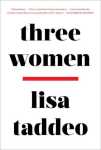 It all starts, of course with Kate setting our starting book, and this month’s is – well, back to usual after a record run – that is, back to a book I’ve not read. Kate described it as a book everyone is taking about, Lisa Taddao’s Three women. I initially commented that maybe everyone is, but I’m not one of them. However, on reading a bit about it at GoodReads, I realise that I have heard the author interviewed. Her name and title just hadn’t clicked.
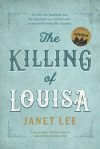 So, Lisa Taddao’s Three women, for those of you who don’t know, is a non-fiction book in which the author spent nearly ten years researching the sex lives of three American women. It is, says the GoodReads blurb, “the deepest nonfiction portrait of desire ever written.” This year I read an historical fiction work in which a woman’s desire – or, at least society’s attitudes to/assumptions regarding her desire – resulted in her execution. The book is Janet Lee’s The killing of Louisa (
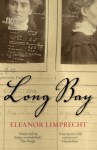 Another historical fiction work inspired by the story of a real Australian woman who was sent to gaol, this time for performing abortions, is Eleanor Limprecht’s Long Bay (
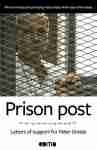 Since we are talking questionable or unjust imprisonments, I’m moving next to a highly questionable and unjust one, that of Australian journalist Peter Greste who was arrested in Egypt in 2013 for “spreading false news, belonging to a terrorist organisation and operating without a permit”. He spent over a year in prison there before his release was effected. While he was in gaol, a letter-writing campaign was organised to keep his spirits up (to which Ma Gums contributed). The book Prison post: Letters of support for Peter Greste contains a selection of those letters.
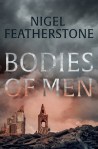 I think that’s enough of prisons for a while – though in my next book one of the characters was, in fact, close to being sent to military prison so perhaps this is a double link1 The book is Nigel Featherstone’s Bodies of men (
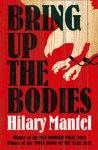 And now, just because I can, I’m going to take the easy path and link on title, so my next book is Hilary Mantel’s Bring up the bodies (
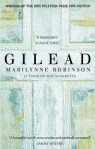 Another trilogy that was published over almost as long a time-frame is Marilynne Robinson’s Gilead trilogy, which started with Gilead (


 On the first morning Henry Reynolds was in conversation with Ian Broinowski, author of a historical fiction entitled The Pakana Voice: Tales of a War Correspondent from Lutruwita (Tasmania) 1814-1856. Broinowski whose grandfather and father were both editors of the local newspaper, The Mercury, invents a colonial journalist, W.C., reporting on the frontier war that raged in Tasmania, but with sympathies lying on the Aboriginal side of the frontier. W.C. writes his despatches from an Aboriginal point of view, upending the usual way of reading history and forcing us to consider the colonial experience from the other side of the frontier. Acknowledging that as a non-indigenous person he could not truly represent an Aboriginal voice, Broinowski consulted the well-known Tasmanian Aboriginal writer puralia meenamatta Jim Everett and began the session by thanking him for his assistance and for changing the way he thought about Tasmania’s history.
 The main point is, though, that Kate sets our starting book, and this month’s is – hallelujah, again – a book I’ve
  Now, A gentleman in Moscow is set, almost completely, in Moscow’s famous
  Claude Ballard, our gentleman in Los Angeles, is a film director, albeit a fictional one from the silent era, but it just so happens that my last read was the memoir of a contemporary Australian film director, Jocelyn Moorhouse, so it’s to her book, Unconditional love: A memoir of filmmaking and motherhood (
 Jocelyn Moorhouse’s husband, PJ Hogan, is also a film director, and two of his most famous films are Muriel’s wedding and My best friend’s wedding. A now classic novel, but one I only read recently, starts with a wedding, Mary McCarthy’s The group (
 The group, as I’ve said, starts with a wedding, but it ends, logically I suppose, with a funeral. A book that starts with a funeral – and this has its own logic – is Carmel Bird’s Family skeleton (
 But, enough of weddings and funerals. My next link is on something simple – the author’s name. Later this month I will be heading to Japan (my fourth visit). An early western visitor to Japan was the intrepid Englishwoman Isabella Bird whose 1879 travel book, Unbeaten tracks in Japan
  I like reading Japanese literature, though I haven’t read a lot since blogging. However, I did recently read a contemporary novel, Sayaka Murata’s Convenience store woman (
 Whispering Gums