Monday musings on Australian literature: Guest post from Kate on anxiety, COVID and Aussie lit

Today, I present another Monday Musings guest post coordinated for me by Bill (The Australian Legend), this one from Kate (booksaremyfavouriteand best), she of Six Degrees of Separation fame. Bill suggested a topic to Kate – one applicable to her professional interests and to what we are currently experiencing – and it seems she ran with it!
Thanks so much again to Bill and also to Kate for helping me out and for offering some fresh content for Monday Musings. Read on … and of course we’d love your comments  … How are you coping with COVID-19?

Kate’s post

Had you told me last year that 2020 would bring months of ‘stay at home and bunker down’ time, I would have thought that it sounded like heaven. No more taxiing children around? No more daily commute and peak-hour traffic? Oodles of ‘free’ time to read? Great, sign me up. And true, at the beginning of lockdown, I thought that I would get so much reading done, and therefore so much blogging done…. But that hasn’t happened. Like many bloggers (and people in general), COVID-19 brought with it a level of anxiety that I have not previously experienced.

At the same time as this feeling of anxiety was creeping in, posts on social media popped up about how ‘industrious’ people were being – “I cleaned out my wardrobe!” and “I painted the fence!” and “I’ve finally knitted that jumper I bought wool for three years ago!” and “I’ve learnt Spanish!” and “I’m making my own sourdough #delicious #nomnom!” Huh.

Then came round two of the ‘maximising time’ posts – “My kids are really getting ahead in maths” and “Look at these macarons Master 6 whipped up for afternoon snack”.

Through the noise of painting, craft, calculus and baking, one thing became very clear to me – I can’t possibly write blog posts and worry about a pandemic at the same time. Great for those that can, although I think that’s a very small percentage of people. For most, the industriousness that they’re putting on social media is their anxiety talking. Specifically, when overwhelmed by uncertainty, some people focus on what they can control (such as their sourdough starter, or memorising conjunctions for Spanish verbs), and others (like me), do nothing. Both are defence responses – our reptilian brain relies on fight/ flight/ freeze for survival.

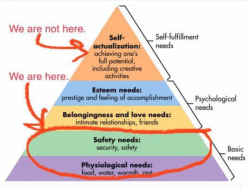
To understand what was happening with blogging, social media, and my lack of reading, I turned to Maslow’s hierarchy. Essentially, we can’t do the ‘self-fulfilment’ stuff when the ‘basics’ are in doubt (and blogging sits in the self-fulfilment category) – with our ‘foundation’ threatened, no wonder we feel anxious.

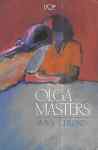
This is a Monday Musings post, and therefore needs an Australian literature reference. There are plenty of memoirs by Australian authors dealing with anxiety – this year alone I’ve read such books by Clare Bowditch, Georgie Dent and Nicola Redhouse. Equally, there are plenty of memoirs and novels that deal with anxiety in relation to a particular trauma. But what of stories that speak to those bottom rungs on Maslow’s hierarchy? Certainly stories about ‘pioneering’ fit (I’ll defer to other bloggers, such as Bill of The Australian Legend, who have a thorough knowledge of these books). But my mind turned to a book I read thirty years ago (so my memory is sketchy, but significantly, small details have stayed with me) – Amy’s Children by Olga Masters.

Book coverIt’s the story of a young woman living in Sydney during WWII. The War is merely a backdrop – instead, the focus is on Amy and her decision to leave her children in the care of her parents in regional New South Wales, while she goes to Sydney to make a life for herself. Amy puts considerable effort into setting up a home. There’s a slow accrual of ‘things’ – a bed, a wardrobe, a kitchen table – and the coveting of the unobtainable (Amy’s fantasies include “…a little glass fronted cabinet containing a bottle of sherry and fine stemmed glasses and a barrel of wafer biscuits. She would put a match to the gas fire ‘to take the chill off the room’, without having to consider the cost…”). She digs a vegetable garden and meets the neighbours. She gets a job, and begins a relationship.

From memory, much was made of Amy’s ‘selfishness’ and lack of maternal feeling, but does the story read differently through a Maslow lens? Are Amy’s attempts to ‘set up house’ representative of her need to feel secure, both personally and in the context of a world at war? I’ll do a re-read and report back.

In my professional life, I spend a lot of time working with people suffering anxiety. Anxiety tends to be a very specific beast – different things trigger different people – however, the starting point for managing it doesn’t change (I call it ‘mental first-aid’). Basically, get some exercise (preferably with fresh air involved); eat well (I don’t mean lavish, I mean nutritious,  so redirect Master 6 from macarons to paella); sort out your sleep; maintain social connections; and talk with someone if you’re not feeling great. Hopefully, with those things in order, the space for becoming engrossed in a book will return.

Six degrees of separation, FROM Normal people TO …

My time is tight right now and my mind distracted, but I did want to continue Six Degrees, which as you know is a meme currently run by Kate, and you can read all the rules on her blog – booksaremyfavouriteandbest.

Her June selection is Sally Rooney’s Normal people, which I have not, once again, read. I am going to keep it brief.

So, here goes:

Normal people

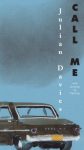
Call me

to take

Two steps forward.

But,

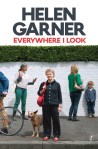
Everywhere I look,

I see

Signs preceding the end of the world.

Maybe tomorrow?

Regardless,

Yours truly,

The still deceived.

(Links on titles are to my posts.)

How nice it would be if our recent experience of cooperation (here in Australia, anyhow) did encourage us to take two steps forward into a new way of being and doing and relating.

And now my usual questions. Have you read Normal people? And, regardless, what would you link to? 

Bill curates: Jane Austen’s letters, 1814-1816

Bill curates is an occasional series where I delve into Sue’s vast archive, stretching back to May 2009, and choose a post for us to revisit.

Book coverI said, when I introduced this series, that Sue began writing Whispering Gums in May 2009. It seems that once begun she could not stop. There are WG posts for May 2,4,5,6,10,14,15,16,19,21,22,27,28,30,31. The May 31 post is titled, prophetically, “When too much Jane Austen is barely enough”, and is in fact the third Jane Austen post for the month. Today I reprise the second. But there will be more.

Diedre Le Faye ed., Jane Austen’s Letters, Oxford University Press, Oxford, 2014

More Jane Austen from Whispering Gums (here)

_______________________

My original post

By 1814, Jane Austen had published Sense and sensibility (1811) and Pride and prejudice (1813).  Mansfield Park (1814) was about to be published, and Northanger Abbey had been written many years previously but was not yet published. She was over half way through her major published oeuvre of 6 books and had less than 4 years to live. Tragedy!

Jane Austen's desk with quill

Austen’s desk, Chawton. (Courtesy: Monster @ flickr.com)

There have been several editions of her letters, the most recent being Jane Austen’s letters, published in 1995 and edited by Jane Austen scholar, Deirdre Le Faye. Of the estimated 3000 letters she wrote, only about 160 survive so it is well to savour them slowly. I have just (re)read the letters from 1814 to 1816, and found much to delight a Janeite. They contain some of her most famous quotes regarding her subject-matter and style, advice to her nieces on novel-writing, criticisms of other writing which provide insight into her own writing, as well as a lot of detail about her daily life.

One of her most famous comments was made to her niece Anna (nèe Austen) Lefroy in September 1814:

You are now collecting your People delightfully, getting them exactly into such a spot as is the delight of my life – 3 or 4 families in a Country Village is the very thing to work on.

Somewhat less well known is her response to James Stanier Clarke, the Prince Regent’s chaplain and librarian, who suggested she write a novel about an English Clergyman. She writes:

The comic part of the character I might be equal to, but not the Good, the Enthusiastic, the Literary. Such a Man’s conversation must at times be on subjects of Science & Philosophy of which I know nothing  […] A Classical Education, or at any rate, a very extensive acquaintance with English Literature, Ancient and Modern, appears to me quite Indispensable for the person who would do any justice to your Clergyman. And I think I may boast myself to be, with all possible Vanity, the most unlearned, & uninformed Female who ever dared to be an Authoress. (December 1815)

False modesty perhaps, but she she knew what she was comfortable writing and this was not it. She makes clear in her letters exactly what she thinks makes good writing and one of those things is to write what you know. She tells Anna that it is fine to let some characters go to Ireland but not to describe their time there “as you know nothing of the Manners there” (August 1814). Interestingly, it would have been around this time that she was writing Emma – some of whose characters go to Ireland but no details are given of their life there. She also tells Anna that fiction must appear to be realistic as well as be realistic when she says:

I have scratched out Sir Tho: from walking with the other Men to the Stables &c the very day after his breaking his arm – for though I find your Papa did walk out immediately after his arm was set, I think it can be so little usual as to appear unnatural in a book. (August 1814)

In other words, truth is allowed to be stranger than fiction!

In the September 1814 letter referred to earlier, she advises Anna to keep her characters consistent, and to be careful about providing too “minute” descriptions.  And in another letter written that same September she warns Anna off “common Novel style” such as creating a character who is “a handsome, amiable, unexceptionable Young Man (such as do not much abound in real Life)” and to not have a character “plunge into a ‘vortex of Dissipation’ … it is such thorough novel slang – and so old, that I dare say Adam met with it in the first novel he opened”!

There is a lot in these letters – about writing and getting published, the weather, fashion, health, and the like. However, in the interests of brevity I will close with something completely different but which, given the current popularity of Christos Tsiolkas’ The slap, seems very apposite. She writes this in 1815 about a young boy of her acquaintance: “we thought him a very fine boy, but in terrible want of Discipline – I hope he gets a wholesome thump, or two, whenever it is necessary”. If Jane thinks it’s a good idea, who are we to argue?

_______________________

When Bill offered this series to help me out, he said he’d start with Eve Langley’s The pea pickers, which he did. I wondered what he would choose next, but I should have guessed that he would have turned to another favourite that we share, Jane Austen.

We’d love all you other Austenites to show yourselves and tell us what you most love about her.

Monday musings on Australian literature: Guest post from Lisa on national library book culls

As I noted in last week’s Monday Musings, Bill (The Australian Legend) has organised a few Monday Musings guests posts for me. Of course, given we comment closely on each other’s posts, he turned to Lisa (ANZLitLovers) for the second one. Bill did suggest an idea to Lisa, in case she needed it, but she found another topic to inspire her. It is a highly relevant one to me as a retired national institution librarian/archivist, so I was more than happy with her suggestion.
Thanks so much again to Bill and Lisa for helping me out and for offering some wonderful new content for Monday Musings.  Read on … and do let us know what you think …

Lisa’s post

Last year, when in New Zealand for the Auckland Writers’ Festival, I visited the Auckland Art Gallery, and was disappointed to find its ’Historic European’ Gallery closed.  From the postcards on sale in the shop we could see that they had some very interesting pieces, so we were a bit disappointed. But at the time we just thought this meant they had stopped collecting European art.  However, from a recent visit to their website, it’s clear that European art has been sidelined.  If you want to see New Zealand and Pacific art, this gallery is the place to go.  But if on the other hand you are a Kiwi student of art history, or merely curious about New Zealand’s international collection as we were…

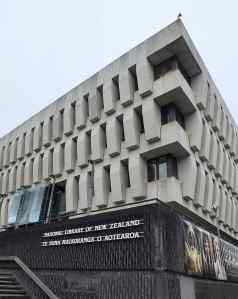
I thought of this when I came across a more radical policy underway in the New Zealand National Library. In October last year the library announced that they are going to ‘rehome’ 600,000 books to make room for New Zealand and Pacific material, in line with their 2015 Collections Policy.

Yes, that’s right, 600,000 books!

Behind the scenes, libraries have all kinds of policies that affect their acquisitions and deaccessions procedures.  These rarely attract much interest from the public, except for the issue of censorship, or ‘self-censorship’ of certain types of books. (As, for example, when a school library unofficially responds to complaints from religious minorities by not lending books featuring magic such as the Harry Potter series).

Acquisitions and deaccession policies reflect a variety of complex issues which change over time.  No collection is static, and space for underutilised materials is always a problem.

The New Zealand library’s Rachel Esson (Director of Content Services) explains their decision like this:

The overseas published collection is not one single collection but is made up of an assortment of books acquired from a range of sources, some were purchased and some donated to us having been weeded from other libraries. These books were collected to support the library system, to provide access to information that other libraries might not hold. However, around 80% of them have not been issued for 20-30 years which means most of these books are not being used and that means that the library system is telling us that it doesn’t need these books anymore.

To be clear, they are keeping some overseas published books and will continue to purchase more for their collections in focussed areas, which include: library and information science; music; reference works; children’s literature; family history, and print disabilities.

But the removal of 600,000 books is needed to make room for New Zealand and Pacific Materials:

The National Library acquires between 80,000 – 90,000 electronic and print publications a year that consist of New Zealand, Pacific and overseas material.

That makes sense to me, because New Zealand is a wealthy nation and is in a position to be a centre of excellence for the literature of Pacific Island nations which may not have the resources to do it themselves.

But as I know from my own experience as a teacher-librarian, undertaking a cull of underutilised books can be a fraught exercise, because there is always someone who, for sentimental or research reasons, needs that battered copy of a text that seems past its use-by date.  At the same time there will always be people who want to cut a swathe through the entire collection to rid it of books that offend them for one reason or another.  In the feminist Seventies, for instance, there was alarm about the preponderance of male central characters in library collections of children’s literature, and that’s still a problem today.  So is the paucity of characters reflecting Australia’s multiculturalism, its Indigenous past and present, and its LGBTIQ and disabled communities…

The philosophy of inclusion is comparatively new and it keeps changing.  Difficult decisions have to be made around those innocuous words ‘as well as’, ‘instead of’ and ‘proportion’ because these decisions have implication for space, storage, display and especially funding.

For most libraries, the decision to acquire or get rid of a book to make space for others is a decision for the local community and the users.  However, in the case of a national or state library, the rules are different.  They have a statutory obligation, i.e. enshrined in law as ‘deposit legislation’, to acquire and retain the books they have for the benefit of the nation.  According to New Zealand writer and reviewer David Larson, in a lively critique for The Spinoff the relevant Minister has to sign off on the disposal of these 600,000 books.  Amongst other concerns he is alarmed about the process for retention and selection.  There’s more to it than whether the books have been issued within a certain time frame…

The consultation process, Larson says, appears not to have adequate expertise to identify which books are needed for research purposes, and offering them to other New Zealand libraries which have no obligation to keep them is a concern.  Then there are books that are published overseas, but written by New Zealanders:

New Zealanders are, famously, a nation of part-time expats: any number of Kiwis have contributed to this field or that by publishing books while living overseas. So if the goal is to keep “anything that is New Zealand and Pacific related”, that will require identifying a huge corpus of often obscure books published offshore.

Likewise, there are many overseas-published books by non-New Zealanders which touch on New Zealand or Pacific interests, often in ways obvious only to specialists.

Larsen stresses that many of these books are destined not for rehoming, but for destruction, but his article met with a droll riposte from librarian Rebecca Hastie, in a piece also for The Spinoff, ‘Weed in the Dead of Night, a Librarian shares the secrets of book culling’.

To see why it might matter that New Zealand could lose its only copy of a text that’s being offered for ‘rehoming’, I took a look just in the ‘A’ section of the Fiction List (downloaded from here).  For a start, the library is also offloading everything that Jessica Anderson and Thea Astley wrote, so Australian Literature isn’t a priority area for retention.  Too bad if a Kiwi wants to do a PhD in the comparative literature of our two countries.  There were titles I’d love to read by Kingsley Amis, Joan Aiken, Louisa May Alcott, Isaac Asimov, and Margaret Atwood.  Even Jane Austen has to go.  Top of the Bs was a stack of titles by Isaac Babel, which, along with three by Leonid Andreyev, mean that someone in a previous era understood the important of dissident Soviet literature (which is surely still a subject for scholarly attention.)

Lest you think that this is only an issue for this particular library in New Zealand, this week Inside Story is carrying an article called ‘Asia Illiteracy’ about a new collection development policy at the National Library of Australia, which is about to sideline its collections of Southeast and Northeast Asian material:

For almost seven decades, the National Library of Australia has been building one of the world’s most extensive collections of Southeast and Northeast Asian material. The legacy of accumulated investment and collecting by specialist curators, its store of Asian newspapers and periodicals, books, government documents and other rare materials is among the great treasure troves of Asian studies, and the most extensive Asia collection in the Southern Hemisphere. Researchers visit from around the world, and the collection is a foundation stone of decades of effort to build sustained and deep knowledge of Asia at Australian universities.

Now, much of this is to be abandoned. In a new “collection development policy” — the document which lays out what and how the library will collect — the library has dramatically downgraded its emphasis on overseas collecting. It has removed key Asian countries from its list of priorities; it has closed its Asian Collections Room; it has cancelled subscriptions to hundreds of Asian periodicals.

[…]

The new collection development policy makes it clear that the library is turning inward, sharpening the focus on Australian materials. Thankfully, the Asia-Pacific will remain the priority in overseas collecting, but the scope of the reduction leaves only part of the previous Asia strategy intact. Countries that have been a major focus for decades — notably Japan and Korea, and also all the countries of mainland Southeast Asia — have been dropped altogether from the list of priority countries for collecting. 

The catalyst for the New Zealand decision seems to have been the need to deal with a collection in a flood-prone storage facility which is too expensive to replace, while the NLA’s decision, according to Inside Story is forced on them by relentless funding cuts.

It’s always a matter of money…
Bill curates: Eve Langley’s The pea pickers

Back in April, Karen of Booker Talk published a great series of posts on the A2Z of Bookblogging. One of those posts was on Updating Posts or, Breathing new life into old posts. Bill (The Australian Legend), as part of his generous plan to help me keep my blog alive during my time-challenged period, suggested taking up this idea and reposting some of my old blogs. Thus was born … Bill curates! I am so grateful. And now, I pass you over to Bill …
Bill curates will be an occasional series where I delve into Sue’s vast archive, stretching back to May 2009, and choose a post for us to revisit.
Book coverMy first choice is Sue’s review of Eve Langley’s masterpiece The Pea Pickers. One day Australians will overcome their cultural cringe and realise that in Joseph Furphy’s Such is Life and Eve Langley’s mostly unpublished eleven journals and novels we have writing that should be ranked alongside Ulysses and Rembrance of Times Lost. That’s my opinion and not necessarily Sue’s, but I think she still ranks The Pea Pickers pretty highly, and while she says she might now have written this piece a little differently – it was in fact her first review – I think you’ll agree it stands the test of time.
Eve Langley, The Pea Pickers, first pub. 1942. Cover from Angus & Robertson 2nd ed. hardback, 1958
See also Bill’s posts about Langley:
  • Eve Langley Wrote Two Novels (here)
  • Wilde Eve, ed. Lucy Frost (here)
_______________________

My original post

It  is hard to classify Langley’s most famous novel, The pea-pickers, which was first published in 1942. In some ways it fits into the coming-of-age genre but it is different from the more usual offerings in that genre, if only because there is no real sense at the end that the protagonist has come of age! It also has elements of the picaresque. Again, it’s not typical. The two sisters don’t travel far and wide, they don’t have many “big” adventures”, and it’s heavier in tone than the usual picaresque, but it is about two young women who set out to adventure partly to recover some of their lost history.  A modern interpretation of the picaresque perhaps?

The novel is semi-autobiographical, and is told in first-person. Given that there’s not a very strong plot nor a strong sense of character development, it’s interesting that Langley chose the novel form for it rather than autobiography. She wrote it in the early 1940s, but based it on the journals and poetry she wrote during the time period in which the novel is set, the 1920s.

So what exactly is it about?  The plot is pretty thin: two sisters dress as men and take men’s names, Steve and Blue, in order to work as agricultural labourers in Gippsland, the place their mother has told them about throughout their childhood and with which they feel they have a connection.  The book chronicles their life and work over a few seasons, and particularly describes the people they meet along the way, including a couple of “loves” for Steve, the narrator.

Stylistically it is interesting. Her language is very poetic, and there is also a lot of specific poetry in it. It is quietly humorous. It is also quite declamatory – in an old-fashioned poetic sort of way. There are a lot of allusions, particularly to things classical. There is no real plot, no sense of growth for the main characters from the beginning to the end. All this makes it quite odd – a strange mix of old-fashioned (declamatory style, classical allusions, etc) with post-modern (disregard for traditional elements of the novel such as plot and character development).

Two lovely pieces of writing early in the book are:

Down I fell, in love. And what happened? In feeling, incidents pure beyond pens, anguished beyond all telling. In fact, incidents to the point of idiocy.

and

Then the elderly party with the severe yet insane look took the violin from Blue’s hand and stood beside the door with it, looking as though he were meditating on a dry spell that had brought crows flying around the sheep and mortgages flying around the mailbox, and on that violin he played, with an absent-minded hand, such tunes as Ulysses should have retorted to the harpies.

It’s interesting in terms of social history – the cross dressing, the racism (anti Italians in particular), the depiction of agricultural life of the time. It beautifully evokes 1920s rural Victoria, portraying both the characters who populated it and the sort of small-scale agriculture that was going on.

Cross-dressing or women dressing “mannishly” was a bit of a common thread in nineteenth and early twentieth century Australia. Louisa Atkinson, back in the mid to late 1800s, was a botanist, illustrator, writer who wore trousers (particularly when she was out collecting her specimens) and shocked the locals in the Southern Highlands of NSW (Berrima/Bowral area), even though she conformed in terms of religiosity. Marie Bjelke Petersen (late 19th to mid 20th century) was described as mannish in dress when she was young – and I believe she wore pants. In addition, Marie Bjelke Petersen wrote the story “Jewelled Nights” which was turned into a film starring Louise Lovely in 1925. It is about a woman who dressed as a man. The film didn’t do wonderfully well at the box office. And then Edna Walling in Melbourne in the early 20s wore comfortable jodhpurs when she undertook the gardening and landscaping for which she was famous, leading local residents to call her ‘Trousers.”

So it seems that women did find pants more comfortable and wore them mainly for that reason. But, in this book there is also the issue of assuming a man’s guise to help them to find work. They didn’t try to completely hide their womanhood but they didn’t want to advertise it either. They used their male names in their application letter to get a hop-picking job. They also felt safer if they didn’t look obviously female when they were out and about.

In addition to the coming-of-age theme, the book also has other themes, such as love of land and dispossession from it:

Yes, I am from Gippsland, too. My family have been graziers here for many years. I should be the mother of sons who would be the princes of this province, in thought and action … But what am I? Well, you can see, A wandering pea-picker, living in a galvanised iron hut. But my forefathers were the pioneers here. And that is what is really hurting more than anything. I am nothing to Gippsland; I just wander through her, being hurt by her and used by her in menial toil.

The pea-pickers is a challenge. It seems fresh and innovative, thumbing its nose at many traditions of the time, but it also seems to go nowhere and can be self-consciously self-important. It is, nonetheless, an important part of Australia’s literary heritage and deserves wider reading.

_______________________
Do any of you agree with Bill and me about this astonishing book?

Monday musings on Australian literature: Guest post from Bill on Melbourne and Sydney, 1880-1939

Over the years, I’ve invited people to write guest posts on my blog, including Bill a couple of years ago. However, when Bill (The Australian Legend) became aware of my current family care situation and its impact on my reading and posting, he offered to organise some guest Monday Musings posts for me. It lifted my heart immensely to know that Bill, Lisa and others – as you will see – are willing to help keep this little series of mine going. Thanks so much Bill for taking this in hand. I love that Bill’s post is on a topic dear to my heart (and his). Read on … and do let us know what you think …

Bill’s post

Book coverIn the 1870s and 1880s Melbourne was both Australia’s largest and wealthiest city and its literary centre – around figures like Marcus Clarke, George McCrae (son of Georgianna), Adam Lindsay Gordon, Henry Kendall, Ada Cambridge, Tasma.
What I want to discuss here is the movement of the literary centre to Sydney and how that worked out, during the first half of the twentieth century. This is an opinion piece rather than the result of any great research so feel free to add to what I say and to correct my mistakes.

Sue has always been interested in the women of this period of Australian writing, and over the past few years we, the Australian Lit.Blogging community, have done a lot to establish in our own minds at least, who the women writers were and to review their work. On my blog, I broke Australian writing into ‘Generations’ more or less in line with HM Green’s ‘Periods’ in his History of Australian Literature, so: Gen 1 1788-1890, Gen 2 1890-1918, Gen 3 1919-1960.

Gen 2 and the first years of Gen 3 were characterized by being both Sydney-centred and seriously misogynist. Gen 2 covered the years of the Sydney Bulletin magazine’s greatest influence, Federation, rising nationalism, WWI.  The Bulletin‘s stable of writers: Henry Lawson, Banjo Patterson, Steele Rudd, Joseph Furphy and a host of bush poets, and the drawings of Lindsay Norman (who moved up from Melbourne after leaving art school) followed by the War reporting of Keith Murdoch and CEW Bean left us with an indelible image of ourselves as resourceful bushmen, and larrikin fighting men. An image which both excluded women and around which they had to work.

The Bulletin openly scorned home life and dismissed the popular women writers of the previous generation as ‘Melbourne-based romance writers’.

“The Sydney Bulletin liked to believe that in ‘virile cultures’ where ‘home-life [had] not become so all absorbing: ‘men live and struggle and fight out in the open most of the time. When they go to their homes they go to beat their wives…’{3 Nov. 1888} According to the Bulletin, home life trammelled a man’s spirit and sapped his masculinity. And it robbed him of his independence.” (Marilyn Lake, 1986

This bled into Gen 3 and the Lindsay-led Sydney Push of the 1920s, an antipodean Bohemia where women were only of use as models and for sex.

For those of us over, say, 50 our history, including such literary history as got past the anglophile gatekeepers, was written and taught by returned servicemen, and they very much bought into the myths of the lone bushman, mateship etc. So it is important to realise that there is another history, that of strong, independent women, which is not taught. In the 1890s both Melbourne and Sydney had vibrant women’s movements focussed on (white) female suffrage, yes, but also on domestic violence, temperance, and women’s welfare. The Melbourne movement coalesced around Annette Bear and Vida Goldstein, and Sydney around Rosa Scott and Louisa Lawson, and Lawson’s newspaper, Dawn.

Miles Franklin is the prime example of a woman writer who was influenced by the nationalism of the Bulletin but wrote with a definite pro-woman and anti-marriage slant. After the publication and instant success of My Brilliant Career in 1901, Franklin was taken up by Rosa Scott, and then subsequently fell in with Goldstein’s lot when she moved to Melbourne and became life-long friends with Melbourne suffragists Mary Fullerton and Mabel Singleton. Her fictionalised biographies My Career Goes Bung and Cockatoos describe her year in the Sydney literary set, living with Scott, flirting with AB Paterson, and meeting Lindsay and (Bulletin editor) Archibald.

Franklin lived overseas for many years, from 1906 to the 1930s and when she came back for good, to her mother’s house in Sydney, it was to a changed literary scene, one dominated by women. During the 20s women had been excluded from the Sydney Push’s literary magazine, Vision, and maybe only Zora Cross with her erotic poems fitted in with the times. Anne Brennan, daughter of drunken poet Christopher Brennan, who hung around the Lindsay push for grog and sex, and tried to write, tried to fit in and failed. Christina Stead was tempted to join the Push, but her compulsion to earn enough to flee overseas saved her.

The Melbourne scene gathered around Nettie and Vance Palmer. Vance, originally a Queenslander, tried hard to be a writer in the Bulletin tradition but hasn’t stood the test of time. They were friends with Louis and Hilda Esson and with the poet Maurice Furnley. But more importantly Nettie and Hilda had been at school together at Melbourne’s Presbyterian Ladies College, and subsequently at university. Hilda had been neighbours with Katherine Susannah Prichard’s family and introduced KSP to Nettie. Earlier alumni of PLC included Vida Goldstein and Henry Handel Richardson who, of course, wrote about the school in The Getting of Wisdom.

Nettie, a poet and scholar, maintained an enormous correspondence with a great many Australian writers and was important in maintaining links with expatriates like Richardson.

Sydney women wrote from their homes, isolated from each other until the formation of the Fellowship of Australian Writers in 1928 by Mary Gilmore, Steele Rudd and John le Gay Brereton. Later in the 30s the FAW’s most prominent members were Miles Franklin, Marjorie Barnard and Frank Dalby Davidson.

So what can I say about that fixture of Australian life: Melbourne-Sydney rivalry. Melbourne ‘had’ Katherine Susannah Prichard, but she was living in Perth; Henry Handel Richardson, acknowledged for years as Australia’s best writer, but long since based in England; (the late) Joseph Furphy, writer of the Great Australian Novel, Such is Life; and Nettie Palmer.

Sydney, by the outbreak of WWII, had a blossoming of writers: Kylie Tennant, Marjorie Barnard, Flora Eldershaw, Dymphna Cusack, Eleanor Dark, Ernestine Hill, and Patrick White just setting out. You be the judge.

For a compilation of posts on Australian (mostly) women’s writing up to 1960 see:

  • theaustralianlegend, AWW Gen 1, 1788-1890 (here)
  • theaustralianlegend, AWW Gen 2, 1890-1918 (here)
  • theaustralianlegend, AWW Gen 3, 1919-1960 (here)

Bill Holloway, 25 May 2020

Six degrees of separation, FROM The Road TO …

We are now through one-third of the year. Can you believe it. It’s been quite a blur here in Australia with our worst bushfire season in decades being followed almost immediately by the pandemic. It’s hard to feel that the year has started, and yet, here we are in May already. Last month, I noted that the starting book was the first of the year’s Six Degrees of Separation starting books that I’ve read. Well, I’m thrilled to announce to all who are fascinated by such things that I’ve also read this month’s starting book, albeit before blogging. If you are new to blogging and don’t know this meme and how it works, please check out meme host Kate’s blog – booksaremyfavouriteandbest.

Book coverNow to May’s starting book, the 2007 Pulitzer Prize winning novel by America’s Cormac McCarthy The road. If you haven’t read it, let me tell you that it’s a mesmerising, post-apocalyptic dystopian novel. I loved it, partly because its writing is so spare (see my discussion of spare early in my blog.) It’s about a father and son who walk alone through a burned, destroyed America. They are heading to the coast, though to what they don’t know. Now, I’ve decided to do something a little different in this post: I plan to link every book back to this one. In other words, each book will be about something people do “on the road”, which means, of course, that each book will also link to each other!Raphael Jerusalmy, Evacuation

My first book is French writer Raphaël Jerusalmy’s Israel-set novel, Evacuation (my review). It is also a road trip novel, but it involves twenty-something Naor driving his mother from her kibbutz back to Tel Aviv. As they drive he tells her what happened in Tel Aviv, after he, his girlfriend, and his grandfather, had jumped off the bus that was to take them out of the city, as part of a mandatory evacuation process.

Eve Langley, the pea-pickersAnother, very different road trip underpins Australian writer Eve Langley’s The pea-pickers (my review). Here, two sisters dress as men and take men’s names, Steve and Blue, in order to work as agricultural labourers in Gippsland. The book chronicles their experiences, work, relationships and lessons learnt, over a few seasons, as they travel through Gippsland and greater Victoria.
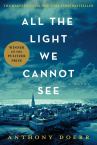
Anthony Doerr, All the light we cannot seeWhile road trips aren’t the backbone of my next book, American writer Anthony Doerr’s Pulitzer prize-winning novel All the light we cannot see (my review), they do feature quite strongly. Young Marie Laure is taken by her father from Paris to the Brittany coast’s Saint-Malo after the Germans invade Paris in 1940. Meanwhile, the orphan German boy, Werner, becomes a master at building and fixing radios, which results in his being taken on the road through Germany and into Russia to track Resistance workers through their radio transmissions.

Book coverStaying in war-time but moving to a different sort of road, I am taking us to the Thai-Burma railroad as told by Australian writer Richard Flanagan in his Booker Prize-winning novel, The narrow road to the deep north (my review). I don’t think I need to justify this one any more, except to add that there is a dramatic road trip through a bush-fire at the end, giving this book double-linking credit!
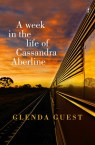
Glenda Guest, A week in the life of Cassandra AberlineHaving mentioned railroads, I’ll stay with them and link to Australian writer Glenda Guest’s A week in the life of Cassandra Aberline (my review). Having been recently diagnosed with Alzheimer’s, Guest’s Sydney-based protagonist Cassie decides to return to her childhood home in Perth in order to resolve the situation that had resulted in her fleeing many decades ago. She chooses the train as her method of travel, because that was the way she’d left, and it would also give her time to think through her situation. This is a true “journey” novel.

Book CoverChoosing my final book proved a challenge: I had many to choose from, many I wanted to highlight. In the end I decided to stay in Australia, and go a bit lighthearted. The book is English writer Louis de Berniere’s Western Australia-set Red dog (my review). My post on this book and film is among my all-time most popular posts. The story is about how a stray dog, the titular Red Dog, decides on John as his master and it then chronicles Red Dog’s various adventures in the mining communities of the Pilbara, much of it travelling in John’s truck. It also tracks Red Dog’s search for John through Australia and even into Japan, via road, train and ship. A road story with a difference!
So, a simple chain this month in terms of linking strategies, but I enjoyed looking at some of the ways “the road” has been used by novelists to chronicle journeys, whether they be actively chosen, or forced upon people.

Now the usual: Have you read The road? And, regardless, what would you link to? 

Six degrees of separation, FROM Stasiland TO …

It’s April and finally the first starting book for 2020’s Six Degrees of Separation that I’ve read. If you are new to blogging and don’t know this meme and how it works, please check out meme host Kate’s blog – booksaremyfavouriteandbest.

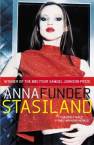
Anna Funder's Stasiland bookcoverNow to April’s starting book, the critically acclaimed, multi-translated, award-winning nonfiction book by Australia’s Anna Funder Stasiland (my review). Have you read it? If you haven’t do consider it because it’s not the sort of book to go out of date.

Janette Turner Hospital, Orpheus lostStasiland tells the stories of Stasi officers and collaborators and of those who suffered at the hands of the Stasi in the then East Germany. Largely because of this book, Mr Gums and I made a point of going to Leipzig in 2013 and visiting the Stasi’s Runde Ecke headquarters there. Anyhow, in announcing this book, Kate described it as a “classic on tyranny and resistance”. There are so many books that can link from that, so I’ll be interested to see what my co-meme-players do. I’ve decided to choose a related aspect, surveillance, which was fundamental to the Stasi’s tyrannical practices, and link to Janette Turner Hospital’s Orpheus lost (my review).Book cover

From here, I could take a cheery turn and link on, music, say, or the classics, but I’m going to stick with serious themes. Orpheus lost is partly about how terrorism leads to fear, surveillance and the loss of freedoms. Hospital was interested, she said, in the trading of civil liberties for safety in the post-9/11 world. However, I don’t want to spend all this post on this issue, so I’m making a cheeky jump to David Brooks’ The grass library (my review). It’s an animal rights focused memoir in which one of the main “characters” is Orpheus the lamb!

Bidda Jones and Julian Davies, BacklashFrom here it’s a very simple jump to another animal rights book, this one about the live export business, Bidda Jones and Julian Davies’ Backlash: Australia’s conflict of values over live exports (my review). I remember that when he sent the book to me, co-author and publisher Julian Davies described it as the most important book they’d published.

Book coverSo, I’m going to stick now with Julian Davies, or, at least, with his publishing company Finlay Lloyd, and link to the latest book of theirs published, John Clanchy’s In whom we trust (my review). One of the commenters on my post – someone who knows the author – described it as “an origin story” for the Royal Commission into Institutional Responses to Child Sexual Abuse. It is about child abuse, but is also about, as commenter David wrote, “the institutional tension between the Brother’s and Clergy power structure within the Church”. It’s a powerful, but deeply human read.
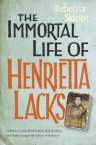
Rebecca Skloot, The immortal life of Henrietta LacksTrust, as Clanchy shows, is in short supply between powerful institutions and those who have no power and who, by rights, should be able to trust those who are not only able to but who morally should protect and support them. Rebecca Skloot had to work very hard to gain the trust of African-American Henrietta Lacks’ poverty-stricken family to write her scientific biography The immortal life of Henrietta Lacks (my review). This book is both a fascinating story of scientific discovery and a horrifying story of the abuse of people’s trust and, in fact, their rights.

Elliot Perlman, The street sweeperI am going to stay in America for last book, albeit the author is Australian, Elliot Perlman. The street sweeper (my review) is about many things, but the titular character is street sweeper Lamont Williams, an African-American, who has just started work as a janitor at a cancer hospital in a pilot program for ex-convicts. He is innocent of the crime that put him in jail but his colour and poverty meant he didn’t have a chance. This book which links the Holocaust to Civil Rights in America is fundamentally about moral responsibility – which, of course, is not what the Stasi practised at all!

I have stuck with politically charged books this month – and why not given the important role writers play in keeping us honest. So, I am going to conclude with Orwell from his essay, “Why I write”:

What I have most wanted to do throughout the past ten years is to make political writing into an art. My starting point is always a feeling of partisanship, a sense of injustice. When I sit down to write a book, I do not say to myself, ‘I am going to produce a work of art’. I write it because there is some lie that I want to expose, some fact to which I want to draw attention, and my initial concern is to get a hearing. But I could not do the work of writing a book, or even a long magazine article, if it were not also an aesthetic experience.

PS I wrote and scheduled this before COVID-19 restrictions took hold internationally. I decided not to rethink my post in the light of that but to leave you with what initially inspired me! However, I’ll add that I wonder what writers will make of COVID-19. When will the first COVID-19 novel appear? From where and from whom will it come, and what will be the take?

Anyhow, now the usual: Have you read Stasiland? And, regardless, what would you link to? 

Monday musings on Australian literature: Autumn Book Binge 2020

A big thanks to Lisa (ANZLitLovers) whose post on the Autumn Book Binge brought it to my attention. I knew immediately that I had to post on it – albeit with a little change, as you will see.

The Autumn Book Binge (love the wordplay on “bingo”) is being run by the State Library of Victoria. It involves reading (or listening to) a book of your choice for each of the categories on the bingo (oops, binge) card. What a great idea for this autumn (or, northern spring) given COVID-19 and the consequent encouragement for us all to social distance – no punishment for readers!

The Binge is explained here. Victorians can pick up a Challenge Card from participating libraries, while anyone can download it here. The formal “game” runs over our downunder autumn, that is, from 1 March to 31 May 2020.

As Lisa has done in her post (linked in my opening sentence), I am going to list the categories with suggestions from books I have read (with links to my reviews on the titles). I’m limiting myself to five options for each. Here goes …

Set in the ACT

This is where I’ve made my change. This Book Binge is a Victorian challenge, so its category is “set in Victoria”. To play the game to win the prizes, you need to choose a Victorian-set book, but you must be Victorian-based to win. If you’re not, I suggest you make this box your own jurisdiction. (Sorry Victoria!)

Recent releases (published in the last 12 months, more or less!)

I’m nominating only Australian writers because they need all the airing they can get:

Other lives (biography about someone who inspires you)

In translation

Fact to fiction (fiction based on true stories)

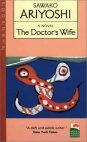
Sawako Ariyoshi, The doctor's wifeAs with translation above, I have aimed here to traverse the globe.
Book to screen

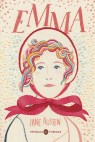
  • Jane Austen, Emma, PenguinJane Austen’s Emma (my posts, one, two and three): this category could be filled with Austens but I’ve just chosen Emma because it’s the most recent adaptation I’ve seen.
  • Alan Bennett’s The lady in the van: adapted beautifully with Maggie Smith in the title role
  • EM Forster’s Howard’s End: adapted to film in 1992 and a more recent television miniseries in 2017
  • Pierre Lemaitre’s The great swindle: English film title, See you up there
  • Madeleine St John’s The women in black: filmed as The ladies in black

Beastly titles (with animals in the title)

Other worlds (set in an alternate world to your own)

Jamil Ahmad Wandering falcon coverI think I can interpreted this to mean anything not my contemporary Australia, so I’ve chosen a wide variety of worlds, from the mythical past to dystopian futures.
Aboriginal and Torres Strait Islander writers

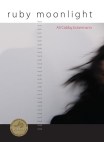
Ali Cobby Eckermann, Ruby Moonlight

I’ve focused on fiction for this list, but click here for all my posts on Indigenous Australian literature.

And there you have the nine categories, with selected recommendations from me. (Not all are Australian, but this is an Australian library’s initiative, qualifying it for Monday Musings!) You can take part in the discussion, whether or not you are Victorian, but if you do, please use the hashtag #AutumnBookBinge.

Will you take part in any way?

My literary week (16), values and truth

Wow, it’s been a year since my last literary week post. How did that happen? I have had many literary weeks since then – haha – including a few that I even thought writing about, but each time something got in the way. This time, though, I’m not letting it …

Family values …

I was inspired to write this post by seeing a performance of Australian playwright David Williamson’s latest (and possibly last) play, Family values, this week. It is quintessential Williamson, I’d say – a satire in which a contemporary issue/ethical or moral concern is explored during an event or tightly defined period, in this case a retired judge’s 70th birthday party for “family only”. (Don’s party, for example, is set during an election night party, The club takes place over a football season, and Travelling north during a family holiday, to name a few well-known examples.)

What Williamson does is use satire to skewer some aspect of modern Australian life and values. In Family values, his target is our treatment of asylum-seekers/refugees. So, we have the successful but conservative recently retired judge Roger, and his tolerant but definitely not down-trodden wife, Sue, preparing for the birthday party. They are joined by their three, all divorced, adult children – daughter Lisa who arrives early with the recently medevac’d and now escaped refugee Saba, born-again Hillsong devotee Michael, and Emily who brings her partner Noelene. Lisa’s plan is to get Saba away to the family holiday house before Emily and Noelene, Border Force employees both, arrive. Of course, she doesn’t, and the stage is set for a family conflagration over values, priorities, and politics – all complicated by longheld childhood grievances.

It was highly entertaining as Williamson always is. I’m sure most of us watching could see bits of ourselves, and/or of our lives, in one or more of the characters. The set was effective, with its central staircase going nowhere, the actors did excellent jobs with their parts, and there were genuinely funny moments, but the satire was a little too obvious and some of the speeches were just that much too preachy and declamatory for me*. Mr Gums found it distressing because of the cruel intractability of our government’s attitude to asylum-seekers, but I’m afraid I was somewhat distracted by the play’s didacticism, despite its heartbreaking theme. However, the play’s heart is absolutely in the right place and I did enjoy the evening.

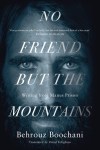
Behrouz Boochani, No friend but the mountainsCoincidentally, we are currently watching and enjoying the new Australian television series Stateless, which is also about our cruel mismanagement and mistreatment of asylum-seekers. It, though, is drama, and so quite different to Williamson’s satirical approach. All of this has reminded me that I need to read Behrouz Boochani’s No friend but the mountains, which will give me a first person account of what it’s like to be an asylum-seeker to Australia.
Miss Fisher … an interlude

We also saw, in the last week, the Australian feature film, Miss Fisher and the Crypt of Tears, which was inspired by the very popular Australian television series Miss Fisher’s Murder Mysteries, which itself was inspired by the popular Phryne Fisher 1920s-30s set detective novels by Australian novelist Kerry Greenwood. It was fun, but, although I like much of screenwriter Deb Cox’s work, this story and the production pushed my disbelief beyond my comfort level. However, as always, I did love Phryne’s clothes and derring-do!

Quote of the week

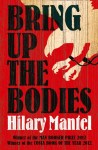
Hilary Mantel, Bring up the bodiesHaving included a Quote of the Week in my last two literary week posts, I’m continuing the tradition. This post’s quote, coming from Hilary Mantel’s Bring up the bodies (my review), is, however, not new:

What is the nature of the border between truth and lies? It is permeable and blurred because it is planted thick with rumour, confabulation, misunderstandings and twisted tales. Truth can break the gates down, truth can howl in the street; unless truth is pleasing, personable and easy to like, she is condemned to stay whimpering at the back door.

Like most, I read Bring up the bodies soon after it came out, but I have just seen this quote in the free little reading guide – The world of Wolf Hall – which I picked up in our local independent bookstore, Harry Hartog, last weekend. It is one of the guide’s two epigrams, and seems strangely applicable to our times! I’ll leave it with you …

* That said, I did love Williamson’s “going forward” joke.