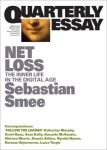
Sebastian Smee, Net loss: The inner life in the digital age (#BookReview)

Book CoverIf you’ve been reading my blog recently, you’ll already know why I am reviewing Sebastian Smee’s Quarterly Essay edition, “Net loss: The inner life in the digital age”, but to briefly recap, it’s because it inspired a member of my reading group to recommend we read Anton Chekhov’s short story, “The lady with the little dog”. What wonderful paths a reading life can take, eh?

Smee’s aim in his essay is, he says,

to dig into this idea that we all have an inner life with its own history of metamorphosis – rich, complex and often obscure, even to ourselves, but essential to who we are. It is a part of us we neglect at our peril. I am interested in it because of my sense that, as we live more and more of our lives online and attached to our phones, and as we are battered and buffeted by all the informational, corporate and political surges of contemporary life, this notion of an elusive but somehow sustaining inner self is eroding.

He commences the essay, though, by admitting that he uses social media – a lot. And not only that, he also admits that he knows that he is “handing out information about myself to people whose motives I can’t know. I feel I should be bothered by this, but I’m not, particularly.” He’s not bothered because they know only know “superficial stuff” about him, such as his phone number and age, what sports teams he supports, the music he listens to and where he does the weekly food shop. From all this, he  says, they can probably guess how he’ll vote, but, he says, and this is a big but, “they cannot know my inner life”.

This is where Chekhov’s “The lady with the little dog” comes in because Gurov discusses his inner and outer lives, making clear that the inner life is where “everything that was essential, of interest and of value to him, everything that made the kernel of his life, was hidden from other people”.

The digital age is, as Smee says, making huge incursions into our lives. Children, “from a young age, are encouraged to present performative versions of themselves online” and, for all of us, “it gets harder to be alone with ourselves or to pick up a book; harder still to stay with it”. This is true – to a degree – though there are many of us who do carve out alone-times for ourselves. For me, this includes never being plugged in when I walk. That is definitely my alone-time. As is my yoga time, and bed-time when my phone is in another room, while my book is with me!

But, what is this inner life? How do we define it? Smee says it includes “apprehensions of beauty, your intimations of death, what is going on inside you when you are in love, or when your whole being is in turmoil”. He feels that, today, “we can no longer assume that it has its own reality. To the extent that it exists at all, it seems to have no place in public discourse. Even in discussions of art, it is ignored, thwarted, factored out”. Hmm, I haven’t consciously thought about whether, when discussing the arts, we refer to our inner lives, whether we share our innermost feelings about what we see, hear or read, but I’d have thought we do. Yet, if Smee is right about what he calls “the obscurity and unknowability of our inner selves”, then have we ever?

Anyhow, Smee explores what “self” is and how various writers and artists have viewed it. Chekhov’s Gurov, for example, felt a tension between his inner and outer lives; while American filmmakers Lizzie Fitch and Ryan Trecartin, he says, portray our identity, our inner selves, as something flexible, as something messy, splintered, and defined by our relationships with each other.

Smee talks about the effect of social media, like Facebook, on our selves. Trustworthy studies, like one in the American Journal of Epidemiology, he says, “find that use of Facebook correlates with diminished wellbeing, both physical and mental”. Correlation doesn’t mean causation of course but the implication is there. Smee returns to his question about how much companies like Facebook really know about us, about how accurate their profiles are.

He talks throughout the essay about algorithms, because that is how social media software works. Their algorithms that deal “with big and disparate data sets can see patterns where they couldn’t previously be detected”. This has “proved incredibly useful in business, medicine and elsewhere”. However, these algorithms “still struggle to cope with the messiness and idiosyncrasy that inhere in individual human beings.” Can they, will they ever be able to, gain access to our inner lives? It’s hard to say, he says, because “individual reality is beyond quantification. And cause and effect are always more complex than we like to think”.

Throughout his discussion, Smee draws mostly on writers and artists, rather than on philosophers and psychologists, to explore his topic, to exemplify his arguments. And so to this question of quantifying individual reality, he turns to Cézanne, who conveys in his art that

life … is not hierarchical, like a newspaper article, or linear, like an algorithm. It is fluid and multifaceted … Instead of cause and effect, there are only clusters of interlocking circumstances which mysteriously give rise to new circumstances.

Will, I wonder, this inherent instability save us – and our inner lives?

Social media will, of course, continue to keep trying to access our selves. One way they do so is by trying to capture as much of our attention as they can. And yet, Smee goes on to argue, our inner lives, “the very things that move us the most”, are, in fact, “the hardest to share”. Chekhov knew it was hard to do. Moreover, he knew that sharing our inner selves “can also be a betrayal of the primary, inward experience.” Touché.

Smee also makes an important distinction between private and inner life. Privacy is linked to political freedom (and power), he says, “to what you do and think away from the interested, potentially controlling eyes of others”. It’s “a shallow concept”. Inner life, on the other hand, as he argues throughout the essay, “may be elusive and impossible to define”.

And yet, says Smee, it’s this inner life that can erupt into hate, as we see played out on social media, the trolling, the never-ending vindictiveness. He references Frances Bacon’s paintings, arguing that they “dramatise a tension between the psyche’s darker compulsions and a pressure felt within civilised society to conform, to stifle emotions, not to lash out.”

Do we want these inner lives unleashed? (In a way, though, we then know what people really think?!) However, the question that most interests Smee is why are these negative aspects of our inner lives being unleashed? He suggests that it’s what all the artists (the filmmakers, writers and painters) he quotes are expressing – “an apprehension that we are alone”. This is where, Smee proposes, social media comes in with a solution:

One response to this panic, it seems to me, is to disperse ourselves, by being as widely visible as possible. Social media, and the internet generally, make this feel possible, to an unprecedented degree. They allow us to lay before the world (in the hope that the world will be watching) the things we love, the things we hate, and a mediated image of our lives that can seem to rescue us from the threat of oblivion.

But, to really protect our inner lives, he believes, we need the converse: “to pay attention again to our solitude, daring to hope that we might connect that solitude to the solitude of others.”

So where does the essay leave us? Early on he argues that

Once nurtured in secret, protected by norms of discretion or a presumption of mystery, this ‘inner’ self today feels [my emph] harshly illuminated and remorselessly externalised, and at the same time flattened, constricted and quantified.

It’s easy for us to say, yes, yes, yes, this is so, but I wonder whether this too is just a feeling? And whether, in truth, our inner lives remain as obscure and unknowable as Smee describes in the essay – and therefore as rich as ever? Net loss is a fascinating essay to read – particularly for “arty” types who love allusions to writers and artists. He makes pertinent points about the way social media operates and gives us much to think about regarding the inner life, but in the end leaves us with more questions than answers – which is perfectly alright. The one immutable, however, is that whatever we think is happening, the inner life is worth protecting.

Lisa (ANZLitlovers) reviewed this, as did Amy (The Armchair Critic) who discusses it at some depth including delving into what Smee doesn’t do.

Sebastian Smee
“Net loss: The inner life in the digital age”
in Quarterly Essay, No. 72
Collingwood: Black Inc, 2018
98pp.
ISBN: 9781743820698
Monday musings on Australian literature: Writers SA

Time, I decided, for the next Monday Musings in my little series on Australia’s writers centres, this time South Australia’s. And it, like Writing NSW did, has recently changed its name, in this case from SA Writers Centre to Writers SA It is, says its About page, Australia’s first writers’ centre, and is located at the State Library of South Australia..

The Chair at the time of the change, Amy Matthews, said that it will ‘turn its attention in an even more dedicated way to helping South Australian writers achieve their creative dreams’, and that they are ‘going to do even more all over the city and the state, with more free events, more writing workshops and three targeted year-long programs for writers at all stages of their careers’. One can be cynical about name changes, but if they result in real improvements, then who cares. Let’s hope that’s happening here.

Like other writers centres, Writers SA is a membership organisation, but also obtains funding and support from others, particularly from federal and state governments.

Here are some of the things the centre does:

Courses/Workshops

Courses and workshops are, as I’ve said in previous posts, a major component of what writers centres do, and so it is with Writers SA, and it’s clear that this centre makes a particular effort to support and encourage young writers. Here is a small selection of Writing SA’s current offerings:

  • Teen Writers Club (with Jason Fischer, a science fiction writer who has won and been shortlisted for Ditmar and Aurealis Awards): geared to teens 15–17 years old, but this is a guide only, they say. That said, they also have a group for younger people aged 12–14 years old. It’s a weekly group that meets on Saturday mornings during school term time.
  • Manuscript Incubator (with Bronwyn Tilley): a 5-month program for “writers looking towards publication”. It’s far easier to quit than to finish! This program says it’s for a whole range of needs from turning a draft into a “final polished product”, to finding/approaching an agent or publisher.
  • Story to Screen (with Holly Lyons, who is been script-writer or script editor on many Australian television series, including, most recently, Home and away): a one-off workshop on how to transform “an original idea for a story that you’re happy to share with the group … into a story with impact suitable for film or TV.”
  • Book coverWriting for Change (with Tory Shepherd, journalist who has written On freedom, published by MUP): a one-off workshop on the challenge of crafting “a piece that will (hopefully!) withstand the scrutiny of subeditors, editors, and of course readers”. The promotion for this workshop says that “there’s more demand than ever before for opinion pieces, which means more opportunities for freelancers. It’s also a powerful way that advocates and lobbyists can make their case.”

These are just four of many courses and workshops they offer on topics that include, in addition to the above, creating comics and writing YA fiction, the future of fantasy, finding an agent, and even on how to keep your motivation up!

Events/Networking

  • Monthly meet-up: A monthly informal get-together led by staff from Writers SA and Adelaide City Library that is “usually genre specific or practice specific”. The promotion says “ask for advice, ask questions, tell stories or make up stories. You’ll come away motivated and ready to go home and put pen to paper.” The August meet-up is on Journalism.
  • Literary drinks: These are regular (or semi-regular, it’s not clear) evening which they describe as “relaxed networking opportunities for writers, readers and everyone in or interested in the writing industry. Meet your writing peers, connect with your community, and find out what’s happening in the world of words in SA.” The next one occurs in September and is called “Spring Mixer”.
  • Salisbury Writers Festival: This annual festival, now 15 years old, is organised by Writers SA and the City of Salisbury. The program for the 2019 festival to be held at the end of August is on their website.

In addition to the above, Writers SA also offers a wide range of professional resources and services, including manuscript assessment, something they call “first feedback”, and individual consultations. It has a blog, which seems to be published regularly, and which covers a wide range of topics, from professional to fun things like giveaways.

Book coverIn 2018, the centre created a Writers and Readers in Residence Project specifically designed to support regional communities. It involves South Australian and international writers undertaking “an artistic residency in regional communities to activate reading as well as writing in the town”. It seems to have funding (from the Australia Council of the Arts) to run from 2018 to 2020. You can read about it on their website.

Writers who have been involved to date include Jennifer Mills (author of the Miles Franklin shortlisted Dyschronia) who was based in the Eyre Peninsula; New Zealand novelist and playwright Whiti Hereaka who is currently based at Roxby Downs Community Library; and writer Karen Wyld who took part in the ACT Writers Centre’s Hardcopy program and was based at Ceduna. The project involves writers working on their own projects and offering workshops or other activities in the communities in which they are based. Karen Wyld was hosted by the local public library while another participant, novelist and poet Bernice Chauly, worked with Ali Cobby Eckermann (who has appeared several times on my blog.) It sounds like an active, exciting program, one that recognises the needs of South Australia’s many remote communities, while offering development opportunities for the writers too. It also clearly puts diversity into practice in its selection of writers for the project. (Oh, and this sounds like just the sort of thing the newly-renamed organisation was aiming for!)

.. and here ends my post on another busy, active Writers Centre.

Writers Centres covered to date: the ACT, New South Wales, the Northern Territory, Queensland, and Tasmania.

Miles Franklin Award 2019 Winner announced!

Melissa Lucashenko, Too Much LipWell, good news for me (because it’s all about me of course!) Not only had I read more of the longlist and the shortlist than is my usual achievement, but one of those books is the winner – and a wonderful winner it is too, Melissa Lucashenko’s Too much lip (my review)!
Really, as much as I liked the other contenders I’d read, I did hope this would win – because it is truth-telling of the most honest sort. Indeed, Lucashenko has said that she expected backlash (which didn’t come) from indigenous communities for her no-holds barred story about a rather dysfunctional indigenous family in which violence and substance abuse, in particular, is no stranger.  Lucashenko, does, of course, underpin this squarely with references to/evocation of the causes, that is, the intergenerational trauma indigenous people have experienced after two centuries of dispossession (and all the policies and practices that have ensued to deny them equality, dignity, and thus the health and security that we all deserve as citizens of this country.)

But, in addition to this honest, real story about contemporary indigenous lives and culture – about the challenge of marrying traditional beliefs and values with contemporary life – is the fact that it’s a rip-roaring tale. Humorous, page-turning, with colourful, individuated characters. If you haven’t read it yet, you surely will now!?

Jason Steger, writing in The Sydney Morning Herald, says

It’s not surprising that Melissa Lucashenko says Too Much Lip was her most difficult book to write. After all, it deals with physical and substance abuse, violence, marginalisation, displacement and dispossession, racism and incarceration within the experience of one Indigenous family.

He quotes the judges as saying that she “weaves a (sometimes) fabulous tale with the very real politics of cultural survival to offer a story of hope and redemption for all Australians”. Exactly!

I apologise for the delayed announcement – I was at reading group last night, and was distracted by our exciting discussions!

But, woo hoo! This is an inspired and inspiring choice! Well done judges, I say.

What do you think?

Monday musings on Australian literature: No Vogel prize in 2019

For those of us who follow the major Australian literary awards, The Australian/Vogel is one we like to keep an eye out for, because it has launched a number of significant careers during its nearly 40-year history. For those who don’t know it, the award is for an unpublished manuscript, which can be “a work of fiction, Australian history or biography”, by a writer under 35 years old.

It currently offers a $20,000 cash prize and, most importantly, publication by Allen & Unwin. It is usually announced early-ish in the year, with the book’s publication occurring at the time. (The entries for the 2020 award closed on 31 May, which gives time for the judge’s decision and for the publication process to be set in train.)

Authors who have won and gone on to publish more books – and whom I’ve posted on here – include:

Emily O'Grady, The yellow house(Of the above, only Document Z is the actual Vogel winner.
Others who have established ongoing careers, and whom I’m still to review, include Brian Castro (1982), Mandy Sayer (1989), and Rohan Wilson (2011). Last year’s (2018) winner was Emily O’Grady, with The yellow house (my review). Some of the prize’s past winners have gone on to win, or be shortlisted for, the Miles Franklin and other major Australian awards.

However, Ben Walter, discussing the Vogel (and to some degree literary prizes in general), on the Overland website, argues that while the money is nice, these awards are not, as the Vogel itself shows, a guaranteed path – or necessary even – to establishing a literary career. He has a point, I’m sure. (He also refers to an article on the writing life, including a survey of Vogel winners in Meanjin by Frank Moorhouse, in 2017. This is well-worth reading, and possibly worthy of a separate post!)

Anyhow, back to 2019 …  Books + Publishing, which reported the news in May, quoted Allen & Unwin’s publisher, Annette Barlow, as saying:

This is an award that has literally launched the careers of over 100 authors. But this year, in 2019, there is no winner and—although we’re disappointed, of course—I feel the judges’ decision speaks to their respect for the award and their desire to maintain the excellent standards of previous winning manuscripts.

They also quote Stephen Romei, literary editor of the Australian and one of the Vogel judges. He said:

I will be on the judging panel again this year, for the 2020 Vogel, and am optimistic we will find manuscripts that stand up and be counted.

It’s always disappointing when an award is not granted. This is the third time that this prize has not been awarded, the others being 1985 and 2013. Were there really no good manuscripts out there?

Jane Rawson, A wrong turn at the office of unmade listsAuthor of the innovative A wrong turn at the Office of Unmade Lists, Jane Rawson, wrote a post, “Just award the Vogel’s already”, on the Overland website, teasing out some of the pros and cons of this sort of award and of awards in general, not to mention the challenge of carving out a writer’s life. She says:

Not awarding the Vogel’s this year is downright cruel. Mediocre books get published all the time, and some of them even win multiple awards: who cares if you give the Vogel’s to a manuscript that isn’t a work of utter genius? The people who’ve submitted manuscripts have found a way to carve out time and space to write. They’ve dedicated themselves to a craft that has almost no financial or social reward. They’ve put their hopes on the line. Choose the best of the bunch and shortlist them: give one of them a prize. Maybe it will be the only money and recognition that writer ever gets, or maybe it will be the encouragement they need to go on to write better books. Either way, who cares: anything is better than the big plate of nothing most writers are served.

Her comments are both informative and provocative, but of course they are just another person’s opinion. If you are interested in the issue, do read her article and the comments on it. One interesting response came from someone called Adam Ford:

My first thought was that it wasn’t the prize committee, but the publishers themselves (more specifically the publishers’ marketing department) who decided they didn’t want to publish any of the manuscripts bc none of them fit with existing publishing success trends. Just another encroachment of commerce onto publishing. No idea if that’s true, of course. You’ve got to wonder what the conversation was like when they decided that THIS was the way to go.

I can see both sides of the argument but, in the end given the challenges of the writing life, I’m with Rawson. Why not reward the best of the bunch – and, if necessary, help that author create a “worthy” book? Then again, should we worry, or just accept Ben Walter’s argument (see above) that these awards are not the be-all and end-all – and get over it?

Monday musings on Australian literature: New Territory 2019

New Territory LogoFor the third year I am a mentor for the ACT Writers’ Centre arts writing program, which was called in its first year, ACT Lit-bloggers of the Future program, but rebadged last year as New Territory or, Adventures in Arts Writing. It was broadened then to include theatre, when the Street Theatre joined the National Library of Australia and the Canberra Writers Festival as program partners.

I’ve greatly enjoyed my role, as I’ve met some wonderful people – Angharad and Emma in 2017, and Amy in 2018. This year, we increased the number of participants to three, but one has since withdrawn due to being offered work in Kyrgyzstan! Canberra, Kyrgyzstan, Kyrgyzstan, Canberra … What would you choose?

So, to recap the program before I introduce this year’s participants. Its overall aim, as the Writers Centre says, is to develop:

a deeper conversation about the arts: why we make art, how do we engage in art, and to what end? We aim to develop the arts writers, thinkers and provocateurs of the future.

This is done by providing for the selected emerging ACT-region writers to attend events at the National Library of Australia, the Street Theatre and the Canberra Writers Festival, and post their responses (which “document/explore/critique the experience”) on a blog. And this year, we have a dedicated New Territory Blog for the writers. It is still managed by the Writers Centre, but is separate from their own blogWe expect each blogger to write around 6 posts over the 6 or so months that the program runs. The Writers Centre plans to populate this blog with all the posts that have been written for the program since its inception.

The three writers were chosen in May, and the program is now well under way, so I’d like to introduce the two continuing writers to you:

  • Shelley Burr is working on a novel, and took part in the ACT Writers Centre’s well-regarded Hard Copy program last year (the same program, though a different year of course, that helped Michelle Scott Tucker with her biography of Elizabeth Macarthur, which I’ve reviewed.) She is particularly interested in what she calls “drought noir”, which term sounds perfect for some of the crime coming out of Australia at present. Shelley has had her writing place well in the Stockholm Writers Festival First Pages program. She hasn’t posted to the blog yet as she wants to focus on the Canberra Writers Festival, which takes place at the end of August.
  • Rosalind Moran already has quite a CV, having written for anthologies, websites, and journals including Meanjin, Overland, Feminartsy, Demos, and Writer’s Edit. She has also featured in several festivals – the Emerging Writers’ Festival, the National Young Writers’ Festival, the National Multicultural Festival, and Noted Festival. Oh, and she’s the co-founder of a new literary venture, Cicerone Journal. Rosalind has already written three posts on the blog: on the National Library’s Inked cartoon exhibition; on a puppet show titled BRUCE at the Street Theatre; and on a play at the Street Theatre, A Doll’s House, Part 2. Rosalind has her own website, here.

As in previous years, I plan to ask Shelley and Rosalind whether they’d like to write a guest post here during the program. Regardless, I will also report back later in the year, but meanwhile please do check out their posts on the blog (linked above).

Until then, thanks again to the ACT Writers Centre, the National Library of Australia, the Street Theatre and the Canberra Writers Festival for sponsoring this program – and a special thanks to author Nigel Featherstone for initiating and overseeing this program. I love being involved. I reckon I gain as much, if not more, from meeting and talking with other local arts writing enthusiasts, as they do from my involvement.

Previous posts on the program:

Vale Kerry Reed-Gilbert

Note: It is traditional in most indigenous Australian communities to avoid using the name of a deceased person, for some time after their death. And so, as is my wont regarding writing about indigenous writers, I checked out what I believed to be authoritative precedents, and found that Wiradjuri woman Kerry Reed-Gilbert’s name has been used on sites such as AIATSIS (Australian Institute of Aboriginal and Torres Strait Islander Studies). I am therefore presuming that her family (probably with her approval) is happy for her name to be used. It is in this spirit that I write this small tribute post.

Kerry Reed-Gilbert (1956-2019) died last weekend, as NAIDOC Week was coming to an end. She was, says Wikipedia, an “Australian poet, author, collector and Aboriginal rights activist”, and anyone interested in the history of Indigenous Australian writing is sure to have heard of her. She had certainly been in my ken for a long time, and has appeared in this blog several times. The first time was in 2013 when I described her as the first chairperson of FNAWN, the First Nations Australians Writers Network, which she co-founded. She appeared again in 2014 as one of the indigenous people recommending books every Australian should read. She recommended:

  • Because a white man’ll never do it, by her father, the author and activist Kevin Gilbert
  • The Macquarie PEN Anthology of Aboriginal Literature, edited by Anita Heiss and Peter Minter
  • Any book by historian Henry Reynolds, because “it’s time for people to know the truth of this country”
  • That deadman dance, by Kim Scott (my review)

Jump a couple of years to 2016, and Reed-Gilbert appeared here again, this time as a participant in the Blak and Bright Festival. And she appeared twice the next year – 2017 – first, as a contributor to the interactive book, Writing Black, and then later in my review of that work.

It was, however, not until 2018, when I attended An evening with First Nations Australia Writers session as part of the Canberra Writers Festival, that I became fully aware of the love and esteem with which this clearly amazing woman was held. Jeanine Leane, in particular, paid tribute to her for her work with FNAWN, with the Us Mob Writing Group, and in organising the Workshop for indigenous writers that coincided with the 2018 Festival. The warmth felt towards her was palpable that evening.

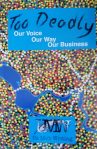
Us Mob Writing, Too DeadlyBut wait, there’s more! Reed-Gilbert appeared again in my blog this year, twice in fact – for her contributions to two anthologies, Growing up Aboriginal in Australia, edited by Anita Heiss (my review), and Too deadly, edited by her and two others for the Us Mob Writing group (my review). As well as being one of the editors, she had ten pieces in the anthology.

If you don’t have a sense by now of what a stalwart she was for Indigenous Australians, and particularly for Indigenous Australian writers, then maybe some info from the AustLit database will help. Reed-Gilbert was a well-recognised, high-achieving poet and editor:

  • receiving funding from the Australia Council to attend a poetry festival in the USA (2010);
  • receiving an ‘Outstanding Achievement in Poetry’ award and ‘Poet of Merit’ Award from the International Society of Poets (2006);
  • touring Aotearoa New Zealand as part of the Honouring Words 3rd International Indigenous Authors Celebration Tour (2005);
  • being awarded an International Residence from ATSIAB to attend Art Omi, New York, USA (2003); and
  • touring South Africa performing in ‘ECHOES’, a national tour of the spoken word (1997)

Her work has been translated into French, Korean, Bengali, Dutch and other languages.

You may also like to read the statement made by AIATSIS upon her death, which speaks of her role as a writer, mentor and activist, and this heartfelt one from Books + Publishing which describes her, among other things, as a literary matriarch.

Book coverNot only is it sad that we have lost such an active, successful and significant Indigenous Australian writer, but it is tragic that we have lost her so soon, as happens with too many indigenous Australians. So, vale Kerry Reed-Gilbert. We are grateful for all you have done to support and nurture Indigenous Australian writers, and for your own contributions to the body of Australian literature. May your legacy live on – and on – and on.
Meanwhile, we can all look out for her memoir, The cherry-picker’s daughter, which is being published this year by Wild Dingo Press.

Australian Women Writers 2019 Challenge completed

As has become tradition, I’m writing my completion post for the Australian Women Writer’s Challenge, around the middle of the year, though I will continue to contribute until the year’s end, and do a final round-up then.

I signed up, as always, for the top-level, Franklin, which involves reading 10 books and reviewing at least 6, and as always I’ve exceeded this. In fact, by June 30, I had contributed 16 reviews to the challenge, including 3 guest posts by Amanda.

Here’s my list in alphabetical order (by author), with the links on the titles being to my reviews:

This slideshow requires JavaScript.

AWW Challenge 2019 BadgeIn last year’s completion post, I said that I didn’t have specific goals for the rest of that year but that I’d like to read more indigenous writers, more classics, and more from my TBR pile. These continue to be my non-goal goals, but I’ve not done particularly well with them so far this year, but I have read two classic writers (Capel Boake and Louise Mack) and I’ve also read three works by indigenous writers, two of which are anthologies. I’m pleased with all this, and hope to read more indigenous authors, in particular, men as well as women, as the year progresses. And, I’ve returned to my preferred fiction/non-fiction ratio, with 9 of my 13 being novels and short stories. Around 2/3 is my comfort zone!

I’m also pleased to include, this year, three guest posts by Amanda who offered to do these reviews to fill gaps in the Challenge. As Amanda doesn’t have her own blog, and didn’t want to review on GoodReads (another option for our participants), I happily offered her my blog for the purpose.

Watch out for my 2019 AWW Challenge wrap-up post for the year’s full story!

Monday musings on Australian literature: Listen to Indigenous Australian authors

BannerSome years, I’ve written an indigenous Australian focused Monday Musings post to start and conclude NAIDOC Week and Lisa’s ANZLitLovers Indigenous Literature Week. I have been researching a topic for this year’s second post, but it’s taking longer than I expected, so have decided to hold it over to next year. Meanwhile, having committed to a second post, I decided to change tack and instead share some podcasts comprising interviews with Indigenous Australian authors …
So, I’ve put together a sample list of interviews conducted this year with Indigenous Australian writers. They are from ABC RN programs (AWAYE!, The Book Show, and Conversations) and The Wheeler Centre. You can search those sites for earlier interviews with these, and other writers.

I am listing them alphabetically by author to make it easy for you to see if your favourite is here! And I am providing website links, but most if not all of these will be available through podcast services on tablets and smart phones.

Tony Birch

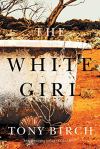
Fighting for family in Tony Birch’s The White Girl, The Book Show, (ABC RN), 24 June 2019, 17mins

Book coverBirch speaks to Claire Nichols “about trauma, bravery and writing stories of the past” regarding his latest book The white girl (my review) He discusses, among other things, the “contradictory and unpredictable” way in which the Act (which limited the freedom of indigenous people to travel, and made children wards of the state) was enforced in towns, and how this increased the level of insecurity and anxiety felt by indigenous people, somehting experienced by his character Odette Brown. The reason for this unpredictability could be incompetence in the local police, or the presence of a genuinely benign policeman, or because there was no law in the place or town.
Stan Grant

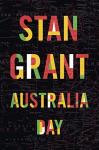
Book coverConversations: Stan GrantConversations (ABC RN), 24 April 2019, 52mins

Coinciding with the publication of his latest book Australia Day (about which I reported in another conversation with him), Grant talks with Richard Fidler about his book, and specifically his thoughts about the push to “change the date” of Australia Day. He believes, as the show’s promo says, “that … for now, 26 January is all that we are and all that we are not” and thinks that there are deeper questions to discuss about who we are than simply changing the date. I like his comment on protest – his dislike of “certainty” and of “slogans” – because I feel similarly uncomfortable, much as I agree with the heart of most protests. “I like to live in the space between ideas”, he says.

Melissa Lucashenko

Melissa Lucashenko in conversation at Sydney Writers Festival, AWAYE! (ABC RN), 11 May 2019, 33mins
Melissa Lucashenko, Too Much LipConversation with AWAYE!’s Daniel Bowning, including Lucashenko reading from Too much lip (my review). The show’s promo says “we talk about our grannies, the meaning of place, the role of humour in serious literary work, the fetishisation of Black suffering and why she would never kill off one of her characters.” Lucashenko talks about how the book is about oppressed people (of whatever ilk) standing up. (As she says on another podcast, “if you don’t fight you lose”.) Because she included some negative depiction of indigenous lives (particularly black-on-black violence), she expected backlash from the black community, but it hasn’t come. She feared being honest about this issue at this time in Australia’s history – was it the right time, she wondered – but then realised that “silence is violence”. She says the job of the writer being “to see what’s going on and write about it”.  Oh, and she wanted to write a funny book – which she certainly did.

Other interviews with Lucashenko on this book are available on ABC RN’s The Book Show, including one after its Miles Franklin shortlisting (12 July 2019, 10mins).

Bruce Pascoe

Book coverA truer history of Australia, AWAYE!, 25 May 2019, 12mins

Pascoe talks about Young dark emu, his junior version of his bestselling Dark emu (my review). It includes a reading by Pascoe from the book. He talks about the importance of teaching the true history of Australia to young people in schools, arguing that “ignorance makes you scared, knowledge makes you wonder”.

Alison Whittaker

Book coverAlison Whittaker in conversation at Sydney Writers Festival, AWAYE!, 18 May 2019, 32mins

Whittaker talks about (and reads from) her latest work, Blakwork, reviewed for Lisa’s ILW week by Bill and Brona. She talks about the “transformative power of poetry” and says her aim is “to provoke and upset white readers because they are the main readers” of poetry. This issue, that we middle class, white, educated people are the main readers of indigenous writing, is something I often think about. It’s a complex interaction, methinks. Whittaker talks about the paradox of using the English language, the language of the imperialists, to convey feelings and ideas from a very different culture.

An aside. I appreciated her discussion of the word “important” as in, “an important book”. I agree with her dislike of it, and avoid it in my reviews, albeit the temptation can be great. She says that “important is not an interesting thing to say”. The challenge for me, often, is to find the “interesting thing to say” that is also succinct!

Tara June Winch

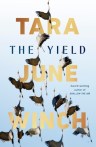
Book coverDocumenting ‘the old language’ in Tara June Winch’s The Yield, The Book Show (ABC RN), 15 July

Winch talks to Claire Nichols about her new book, The yield (reviewed by Lisa/ANZlitLovers), and also reads from the book. In the book, the character Albert Gondiwindi is writing a dictionary of Wiradjuri language. He says that “every person around should learn the word for country in the old language, the first language – because that is the way to all time, to time travel!” Given the current interest in reviving indigenous languages, and the criticality of using our own language to express our own culture, this book sounds really timely.

Alexis Wright

Alexis Wright, TrackerAlexis Wright in conversation with Elizabeth McCarthy, Books and Arts at Montalto, The Wheeler Centre, 14 January 2019 (though recorded in 2018), 1hr 3mins
Wright talks to Elizabeth McCarthy about her collective biography Tracker, which won the 2018 Stella Prize and the Non-Fiction Book Award in the Queensland Literary Awards. The interview focuses mostly on Tracker Tilmouth himself, rather than on the form of the book, and the approach Wright took to writing it.

Do you listen to literary podcasts? If so, I’d love to hear your favourites.

Tony Birch, The white girl (#BookReview)

Book coverWe need more novels like Tony Birch’s The white girl and Melissa Lucashenko’s Too much lip. This is not to say that we don’t need all the wonderful Indigenous Australian literature I’ve read and reviewed here over the years, but some of the books, as excellent (and as beloved by me) as they are, can be more challenging to read. The white girl and Too much lip, on the other hand, are accessible, page-turning novels that have the capacity to reach a wide audience, but will they? I sure hope so, because the truths they tell are crucial for all Australians to know if we are to ever become a more mature and united nation.

In other words, it’s not only for their page-turning quality, that I paired these two novels. They have some other similarities, which I’ll briefly address before focusing on The white girl. Both novels are set in rural areas, though Birch’s novel also spends some time in the city, and both have female protagonists, though Birch’s Odette is a grandmother while Lucashenko’s Kerry is a 30-something, not-yet-settled woman. Most importantly, though, both reference long-term issues (the aforementioned truths) that have affected indigenous lives for generations, including, of course, the stolen generations, dispossession and powerlessness, past atrocities, and entrenched institutional discrimination.

However, beyond these, the novels are very different. For a start, Birch’s The white girl, being set in the 1960s, fits into the historical fiction genre whilst Lucashenko’s novel is contemporary. Moreover, Lucashenko’s is more complex and has more humour, albeit of the black sort, than Birch’s more straight drama, so let’s now get to it. Unlike Birch’s previous novel, Ghost river, which is set in Melbourne, The white girl, is set in a fictional town, Deane, and an unnamed city. This effectively universalises the story to suit any part of Australia, making it difficult to shrug off the issues as not relevant to our own places.

The basic plot of The white girl concerns Odette’s determination to save her grand-daughter, Sissy, from falling under the control of white authorities, because this novel is set at a time in Australia when indigenous people came under the Act, an act which meant they could not travel away from where they lived without permission. It also meant that the state was legal guardian of children like Sissy. Things come to a head for Odette and Sissy when a new and more officious policeman, Sergeant Lowe, comes to town to replace the alcoholic, and generally more laissez-faire Bill Shea. Odette feels the time is ripe to reunite Sissy with her mother, Lila, who had left soon after Sissy was born, and who, Odette realises some way into the story, had good reason to disappear.

Birch has set his novel at a time of transition. It’s well into the Menzies era, and indigenous people are becoming more actively engaged in fighting for their rights. Sergeant Lowe, though, is not impressed. When Odette approaches him for the necessary permissions to travel, he refuses, telling her (with the about-to-retire Shea also in his hearing):

‘The whole business of native welfare has been neglected in this district for many years. I will not allow it to continue. Your people need certainty, just as we do, as officers of the Crown. None of this is helped, of course, by those trouble-makers arguing for citizenship of behalf of your people.’

The divisive language (“your people”) and the assertion of absolute power (“I will not allow it to continue”) reflect classic colonial behaviours that ramp up the level of threat felt by Odette. This threat is exacerbated by the presence of a brutal white family in the district, the Kanes, comprising a father and two sons. Lowe is somewhat aware of their trouble-making, but only insofar as it affects another white person in the district, the gentle, brain-damaged Henry who owns the local junkyard. To some extent the book’s characters are stereotypical, but Birch’s story-telling is such that they don’t become – at least not unreasonably so – caricatures. This is partly because they are fleshed out with back-stories. It’s not particularly complex story-telling – the back stories, for example, are common ones – but the novel is believable, perhaps because they are common.

As Lucashenko does in Too much lip, Birch also references traditional culture and its ongoing role in people’s lives. Odette, like many indigenous people, listens to messages from birds (“a morning doesn’t pass without one of them speaking to me”) and to the “old people” from whom she believes her strength comes. Birch also beautifully conveys indigenous people’s resourcefulness in the face of a dominant white culture. For example, Odette’s father tells her, when she’s a young girl, why she should sing in the mission church even though they don’t believe in “their God”:

‘Because it’s best to keep them fellas happy, keep their meanness down.’

And Odette’s response, when asked for her “tribal name” by a patronising white woman who offers her piece-work employment as a card artist, provides a typical example of indigenous response to such self-interested nosiness:

It never failed to surprise Odette how white people were always going on about uplifting Aboriginal people, yet they would demand information about the old ways when it suited them. She looked over to the honey jar sitting on the bread board and read the label to herself. It sounded tribal enough. ‘We’re the Bilga people, ‘ she explained. ‘That’s my tribe. The Bilgas.’

What Birch shows, then, is that survival for indigenous people was (and mostly still is) quite a cat-and-mouse game. It involves “taking a chance with these white people”. This is a risk, Odette and her friends realise, but is often all they have. And that, I think, is the main message Birch wants to leave with his non-indigenous readers. The question is, can we rise to the challenge, and be trusted? Are we prepared to heed the truths being shared? So far, I’d say, the jury is still out.

Lisa (ANZLitLovers) also liked this book. Read for ANZLitLovers ILW2019.

Banner

Tony Birch
The white girl
St Lucia: UQP, 2019
265pp.
ISBN: 9780702260384

(Review copy courtesy UQP)

Monday musings on Australian literature: early Indigenous Australian literature

BannerSince 2013, I’ve written an indigenous Australian focused Monday Musings post to coincide with NAIDOC Week and Lisa’s ANZLitLovers Indigenous Literature Week. NAIDOC Week, for non-Aussies out there, occurs across Australia each July “to celebrate the history, culture and achievements of Aboriginal and Torres Strait Islander peoples”. One way litbloggers can recognise and celebrate it is to read indigenous Australian writers and contribute to the list of reviews maintained by Lisa on her blog. (Lisa also accepts reviews of indigenous authors from other nations.)

NAIDOC Week LogoThis year’s NAIDOC Week theme is VOICE, TREATY, TRUTH. How better to celebrate this than through a post on early indigenous Australian literature which, like that of today, aimed to share truths about indigenous Australian experience. It’s a tricky topic because it’s only been relatively recently that indigenous Australian stories (novels, poetry, short stories, plays, memoirs) have been published. However, indigenous people have been writing since the early days of the colony.
This post can only be a brief introduction. The best source for the topic is, I believe, the Macquarie Pen anthology of Aboriginal literature (2008), edited by Anita Heiss and Peter Minter. Indigenous Australian academic Mick Dodson writes in the Foreword that it contains “a range of works that any serious student of Aboriginal history, life and culture will find valuable”. It also, he says, encapsulates Aboriginal “political and cultural activisms”.

The anthology starts with the first-known piece of written text in English by an Aboriginal author, a letter written by Bennelong in 1796 not long after he returned from England. Editors Heiss and Minter write that the anthology contains

writing ranging from the journalism, petitions and political letters of the nineteenth and early twentieth centuries, to the works of poetry and prose that are recognised widely today as significant contributions to the literature of the world.

They go on to say that “Aboriginal literary writing grew directly from a complex and ancient wellspring of oral and visual communication and exchange”. This is something that at least some non-indigenous Australians recognised. FS, writes in The Age in 1938, for example, about indigenous Australian “rock literature” or “picture writing”. FS is responding to a planned German scientific expedition to northwest Australia which was intending, among other things, to “study … rock carvings, cave paintings and similar work on wood to ascertain whether it is a desultory art or a method of writing” [my emph.] S/he believes this goal is unnecessary, because the “rock literature” clearly demonstrates that indigenous Australians have had a “literature” long pre-dating the English language.

Anyhow, back to Heiss and Minter who discuss the necessary nexus between the literary and the political in indigenous literature. They note that 19th century Aboriginal literature primarily comprised “genres that are common to political discourse” – letters, petitions and chronicles – and that between Federation and the 1960s, political manifestos and pronouncements of Aboriginal activist organisations were added to these genres.

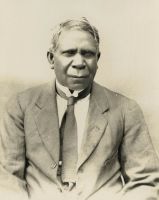
David Unaipon (State Library of NSW, Public Domain)

It wasn’t until 1929, in fact, that the first book by an indigenous Australian writer was published, David Unaipon’s Native legends. A report of the book’s publication appeared in January 1930 in South Australia’s Border Chronicle. The reviewer says (using the sort of tone and language typical of the time):

Not long since there entered the editorial den a full blood aboriginal who said, in that “moistened” voice that the Australian abo always wears, that he was distributing the only book ever written by an Australian aboriginal in the English language … The legends are told in English that will cause wonder in anyone who has tried to master any speech other than his mother tongue. Claudian, the Latin poet, was born an Egyptian, educated as a Greek, and the world has marvelled ever since that he became one of the great masters of Roman speech. Yet Unaipon, is in his way, as great a marvel as Claudian, since his natural atmosphere differs more widely from that in which he works than did the civilization of Claudian’s Egypt and Greece differ from that of Rome. The style of David’s writing is correct by all the formal rules, but differs widely from ordinary written speech. His legends are fairy tales in color, and in “The Song of Hun garrda”, which is an invocation to the God of Fire, he gets into a highly poetic region. Likewise, he is mysticc and writes of “earthly body subjective consciousness”, “earthly life experience”, as if those things had a real meaning to him, which is more than can be said of some of those who talk on such matters in their native speech. It is an interesting little contribution to Australian letters.

Heiss and Minter say the book is “literary in its adaptation of his cultural imagination to particular modes of authorship and narration”. They see his pioneering role in the development of indigenous literature, saying he “gave subsequent Aboriginal writers a significant precedent by which to imagine their authorship of a culturally grounded future literature”.

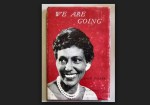
Book coverIt would be over thirty years before another book by an indigenous writer was published, although during that time “letters, reports and petitions” continued to be written in support of “Aboriginal rights and constitutional transformation”. One of these activists was the poet and activist, Kath Walker (later Oodgeroo Noonuccal), and she was the author of that second book. Published in 1964, We are going was mistakenly described by The Canberra Times as “the first book written by an Australian aborigine”. Heiss and Minter again note its pioneering role, saying it “marks the arrival of Aboriginal poetry as one of the most important genres in contemporary Aboriginal political and creative literature.”

It took more time, however, before indigenous writers got a firm foothold. Heiss and Minter argue that it wasn’t until the late 1980s that “Aboriginal writing was firmly established as a major force in Australian letters. David Headon writing in the ANU’s Woroni in 1990 would agree:

Certainly Aboriginal literature is a growth industry of substantial proportions. The sheer number and range of books now available is all the more surprising when one considers that the first [!] published work by an Aboriginal writer, Oodgeroo Noonuccal’s (Kath Walker’s) book of poems, We Are Going, was published in 1964, and at the beginning of the 1980s the only black writers with any kind of national profile were Walker, Jack Davis, Kevin Gilbert, Mudrooroo Narogin (Colin Johnson) and possibly Bobbi Merritt and Faith Bandler. None of these were well-known outside their community. Australian literature has been profoundly altered by the emergence of so many Aboriginal texts in the last 10 hectic years.

He reviews an unknown-to-me 1990 anthology, the gorgeously titled Paperbark. It predates Heiss and Minter’s Macquarie anthology by nearly two decades. Published by the University of Queensland Press and described by them as “the first collection to span the diverse range of Black Australian writings”, it includes writings from the 1840s to 1990. The Aboriginal and Islander authors include “David Unaipon, Oodgeroo Noonuccal, Gerry Bostock, Ruby Langford, Robert Bropho, Jack Davis, Hyllus Maris, William Ferguson, Sally Morgan, Mudrooroo Narogin and Archie Weller.” Like the Macquarie anthology, it also includes “community writings such as petitions and letters”.

Headon’s review is well worth reading for his references to writings, many of which are new to me, but I’m going to leave him on his following point:

Books like Paperbark are in the vanguard of what will surely be one of the great (Australian) cultural debates of this decade: how long can an ex-colony like Australia allow some of its universities to continue to indulge their colonial habits? How long will Old and Middle English, 17th- and 18th-century English literature be the literature major staples at our universities? When will the dominant pressure be post-colonial? Change, Paperbark proclaims, is afoot.

Good question! Interestingly, in 1984, the ANU did offer a 10-week adult education course in ‘Aboriginal Literature’. It may, of course, have only been run that year.

Anyhow, I hope you have enjoyed this little introduction to what I’ll call the first wave of indigenous Australian writing.

Past NAIDOC Week-related Monday Musings