Monday musings on Australian literature (and the arts): COVID-19

I don’t know about you, but I’m finding it hard to settle to read, let alone write thoughtful reviews right now. (I’m sitting on one at the moment that I really want to do justice to, but my brain is all over the place.) Consequently, I’m going to just write a COVID-19 Monday Musings – and try to keep it simple, and focused on the things most important to us, that is, books and the arts.

A couple of days ago, The Saturday Paper (paywalled except for one free article a month) published an article by award-winning essayist Alison Croggon on “COVID-19 and the arts“. In it she discusses the impact on the arts, particularly on small companies and independent artists in the greatest jeopardy, of COVID-19 containment measures. These measures have certainly affected me with various cancellations, including our beloved National Folk Festival. Mr Gums and I count ourselves lucky to have managed to see the Australian Ballet’s last performance of the season of “Volt”, before Melbourne Arts Centre was closed down.

Anyhow, Croggon writes that:

As always, the brunt is being borne by thousands of small companies and independent artists and ancillary workers – publicists, stage managers, technical staff, ushers, caterers and others. Many are in desperate situations, exacerbated by the fact that their major sources of alternative income – teaching, casual work in the hospitality industry and so on – have also dried up.

She shares the experiences of a musician and a theatre designer to put flesh on the facts. And it’s pretty withered looking flesh. One talks of having all those jobs carefully cobbled together to create a living income disappear in one go. It’s important, therefore, that governmental assistance package/s include support for freelancers and independent arts workers, because they are critical to the survival of the industry as a whole.

Meanwhile, “freelancers are calling for institutions to pay out cancelled commissions” but not much of that is apparently happening. I certainly think that those of us who can should do this, and/or not ask for refunds for cancelled events. I figure that I’ve spent the money anyhow. However, I appreciate that life will become more tenuous for some people and that money recouped (or not spent) will make a difference to their surviving this period. All I can say is that each of us needs to do what we can but to not judge what others do – unless we’ve walked the proverbial month in their moccasins!

For up-to-date information on COVID-19 and the arts, the Australia Council for the Arts has a web-page and the Australian Government’s Office of the Arts also has a COVID-19 Update page.

Bookish stuff, in particular

I can’t even begin, really, to offer suggestions about this because ideas and opportunities to maintain our literary culture are coming thick and fast, ranging from ways to keep buying books and supporting our bookstores to potential livestreaming of literary events (like the Yarra Valley Writers Festival). It’s impossible to keep up and, anyhow, I suspect that those of you reading this blog are well enough connected to be receiving news and notifications yourselves. We can’t catch it all, but we can catch enough to keep us well engaged.

My reading group, which was to have met at my place next week, is setting up a WhatsApp group to try out virtual book discussion. There may be better apps, but as this one is known to many of the group already, it’s where we are starting. Within minutes of the group being set up, 8 of the 12 of us had joined, which is a measure, I think, of how much we value each other and our book discussion.

Many bloggers have written COVID-19 posts, including Lisa (ANZLitLovers) with three posts to date, Bill’s (The Australian Legend) more personal one, and Welsh blogger Paula’s “Coronatome” version of her Winding up the Week posts in which she provides a bumper crop of reading, including one of Lisa’s posts and a Books + Publishing article about the expansion of Australian Reading Hour.
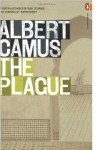
Albert Camus, The plagueBooks have been written over the years about epidemics/pandemics/contagions, including our own Geraldine Brooks’ Year of wonders. This is historical fiction inspired by the Derbyshire village of Eyam which, when struck by the plague in 1666, quarantined itself to prevent the spread of disease. An interesting read in the light of what’s happening now. But, my favourite of them all is Albert Camus’ The plague (which I’ve read a few times, including since blogging, so here’s my review!) Camus explores the three main responses to plague – rebel, escape and accept – through the actions of his various characters. Rebelling, of the right sort, is his preferred approach. Read it if you haven’t already! In the end though, whatever happens, I’m hoping that what the lovely Dr Rieux says proves true with our COVID-19 experience:

… what we learn in a time of pestilence: that there are more things to admire in men than to despise.

Finally, if you are finding it difficult to cope with the stresses of the current situation, there’s always Up Lit (check my post from 2018 to get you started.) Seriously, though, many jurisdictions have their helplines, including, in Australia, Lifeline (13 11 14). Do call the one most appropriate to you if you find the impact of isolation or just overall worry about COVID-19 starting to seriously affect your mental health. It’s not easy right now, and we all want to come out healthy and ready to go on the other side.

Take care and be safe my blog friends.
World Poetry Day 2020

I have written two World Poetry Day posts before, in 2016 and 2018, so why not again in 2020, particularly given, more than any year, we are probably in need of hearing what poets have to say – of being soothed, inspired, entertained, or yes, even admonished by them.

Awarnessdays.com says of World Poetry Day:

Poetry reaffirms our common humanity by revealing to us that individuals, everywhere in the world, share the same questions and feelings. Poetry is the mainstay of oral tradition and, over centuries, can communicate the innermost values of diverse cultures.

In celebrating World Poetry Day, March 21, UNESCO recognizes the unique ability of poetry to capture the creative spirit of the human mind.

They explain that the day was adopted by UNESCO in 1999, and that one of its main objectives is “To support linguistic diversity through poetic expression and to offer endangered languages the opportunity to be heard within their communities.” Observing the day is, they say, also “meant to encourage a return to the oral tradition of poetry recitals, to promote the teaching of poetry, to restore a dialogue between poetry and the other arts such as theatre, dance, music and painting, and to support small publishers and create an attractive image of poetry in the media”. Wonderful goals, all.

UK’s Global Dimension website provides ideas for recognising the day, including, of course, “organising readings of poems from different cultures, including from pupils’ own cultures.” Well, that’s not going to happen now, in the UK or anywhere, is it, with COVID-19 and the cancellation of public events. However, the page points us to the Wikipedia Poetry page as a good starting point for investigating different forms of poetry. They also, and this is just what we need, provide a link to a site called Poetry Station which offers “poems to view on video”. It was established after the English & Media Centre (EMC) was awarded in 2009 a small Arts Council of England grant for a pilot project to create “a freely accessible web-based video channel and portal for poetry”.

What a lovely aspirational site it is – and, it is also available as an app, simply called Poetry Station. For each poem, as well as the videoed performance, there is a link to information about the poet (often from Wikipedia), to suggested activities (for educators) and also a list of related poems which, of course, are linked to performance of this poems. The site also lists the poets, titles and topics for the poems on the site.

And in Australia?

A Google search brings up various cancelled events in Australia, run by organisations like the Geelong Library and Heritage Centre and Gosford Library. As in previous years there are also non-poetry reading activities being promoted or run. Golden Carers has a page of activities on their website (as I also noted in my 2018 post), and Reading Australia, which regularly support the day, is running a World Poetry Day competition for primary and secondary students and teachers, with the support of Red Room Poetry. (I’ve mentioned both organisations here before).

For those interested in Australian poetry, there are many sites and sources of information – many that I’ve mentioned here over the years – but for today, I’m sharing a list of Australian poetry books from the National Library of Australia bookshop.

Finally, not specifically created for World Poetry Day, but unfortunately applicable, is Australian comedian Sammy J’s recent offering, “The ballad of the dunny roll”, which riffs off the classic Australian balladeer Banjo Paterson. I think both Aussies and non-Aussies will appreciate this:

Leonard Cohen, 2009

Leonard Cohen, Bowral, January 2009

I’d love to hear about any poetry you like, or your favourite poets.

Meanwhile, I’ll leave you with what seems a very appropriate line, from Leonard Cohen’s “Dance me to the end of love” (available at the Poetry Station.)

Dance me through the panic till I’m gathered safely in.

Keep safe everyone.

Monday musings on Australian literature: Autumn Book Binge 2020

A big thanks to Lisa (ANZLitLovers) whose post on the Autumn Book Binge brought it to my attention. I knew immediately that I had to post on it – albeit with a little change, as you will see.

The Autumn Book Binge (love the wordplay on “bingo”) is being run by the State Library of Victoria. It involves reading (or listening to) a book of your choice for each of the categories on the bingo (oops, binge) card. What a great idea for this autumn (or, northern spring) given COVID-19 and the consequent encouragement for us all to social distance – no punishment for readers!

The Binge is explained here. Victorians can pick up a Challenge Card from participating libraries, while anyone can download it here. The formal “game” runs over our downunder autumn, that is, from 1 March to 31 May 2020.

As Lisa has done in her post (linked in my opening sentence), I am going to list the categories with suggestions from books I have read (with links to my reviews on the titles). I’m limiting myself to five options for each. Here goes …

Set in the ACT

This is where I’ve made my change. This Book Binge is a Victorian challenge, so its category is “set in Victoria”. To play the game to win the prizes, you need to choose a Victorian-set book, but you must be Victorian-based to win. If you’re not, I suggest you make this box your own jurisdiction. (Sorry Victoria!)

Recent releases (published in the last 12 months, more or less!)

I’m nominating only Australian writers because they need all the airing they can get:

Other lives (biography about someone who inspires you)

In translation

Fact to fiction (fiction based on true stories)

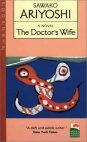
Sawako Ariyoshi, The doctor's wifeAs with translation above, I have aimed here to traverse the globe.
Book to screen

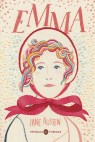
  • Jane Austen, Emma, PenguinJane Austen’s Emma (my posts, one, two and three): this category could be filled with Austens but I’ve just chosen Emma because it’s the most recent adaptation I’ve seen.
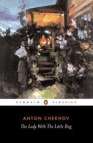
  • Alan Bennett’s The lady in the van: adapted beautifully with Maggie Smith in the title role
  • EM Forster’s Howard’s End: adapted to film in 1992 and a more recent television miniseries in 2017
  • Pierre Lemaitre’s The great swindle: English film title, See you up there
  • Madeleine St John’s The women in black: filmed as The ladies in black

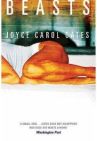
Beastly titles (with animals in the title)

Other worlds (set in an alternate world to your own)

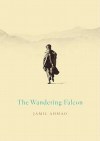
Jamil Ahmad Wandering falcon coverI think I can interpreted this to mean anything not my contemporary Australia, so I’ve chosen a wide variety of worlds, from the mythical past to dystopian futures.
Aboriginal and Torres Strait Islander writers

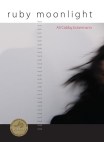
Ali Cobby Eckermann, Ruby Moonlight

I’ve focused on fiction for this list, but click here for all my posts on Indigenous Australian literature.

And there you have the nine categories, with selected recommendations from me. (Not all are Australian, but this is an Australian library’s initiative, qualifying it for Monday Musings!) You can take part in the discussion, whether or not you are Victorian, but if you do, please use the hashtag #AutumnBookBinge.

Will you take part in any way?

Monday musings on Australian literature: Adelaide Festival Awards for Literature

Hands up if you are familiar with the Adelaide Festival Awards for Literature and know who won its major categories this year? I may be out of touch, but it seems to me that these awards (about which I’ve written a couple of times before) are less well-known than some of their other state-based counterparts like the New South Wales Premier’s Literary Awards, the Queensland Literary Awards and the Victorian Premier’s Literary Awards. Why is this?

Part of the reason may be that these awards – like the now downgraded (and, you have to think, struggling) Western Australian Premier’s Literary Awards – are biennial. Another reason may be that they are announced during the wider-based Adelaide Festival. This Festival was established in 1960 and has to be one of Australia’s best-known arts festivals. Apparently inspired by the Edinburgh Festival for the Arts, it includes various, what I would call sub-festivals, including the Adelaide Writer’s Week, WOMADelaide and the Adelaide Fringe. Interestingly, Adelaide Writer’s Week, during which the biennial literary awards are announced, is held annually. There is an historical explanation for this. The overall Festival and the Writer’s Week were themselves biennial until 2012. Will the Awards catch up one day?

One more thing, before I get onto the literary awards specifically, Wikipedia provides a link to a June 2019 newspaper report announcing that Adelaide Festival, which had that year “eclipsed its previous 2018 box office record by over $1 million [would] receive a further $1.25 million in annual funding over the next three years to help the Festival ‘continue to attract major performances and events'”. In these days of ongoing  funding cuts to the arts, this surely says something about the value of this festival to South Australia – economically and, presumably, culturally.

Adelaide Festival Awards for Literature

So, the Awards – almost. First a bit more about the Adelaide Writers Week which was part of the original 1960 Adelaide Festival. According to the History of the Adelaide Festival of Arts (2010) (downloadable here) this week “became the model for subsequent literary festivals around the world, and its prestige and popularity among writers, readers and publishers has never been surpassed”. Certainly, I know people who have gone – and who love it. Particularly impressive is that many of its events are free. How special is that? However, it is also a largely outdoors event which can be a challenge in Adelaide’s summer.

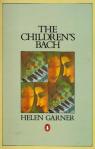
Helen Garner, The children BachSo yes, now really, the Awards! They were established by the South Australian government in 1986, and, like some other state literary awards, include both national and state-based prizes, as well as some fellowships for South Australian writers.  Over the years, categories have come and gone. The original four categories were Fiction, Children’s Literature, Poetry and Non-fiction, with the original 1986 winners of these being, respectively, Helen Garner’s The children’s Bach (my review), Ivan Southall’s The long night watch, Robert Gray’s Selected poems: 1963-1983, and RM Gibbs A history of Prince Alfred College.

As of 2020, the Awards are being managed by the State Library of South Australia, and currently have a prize pool $167,500 across the eleven categories, including the Premier’s Award of $25,000.

Significant fiction winners over the years have included two-time winners Peter Carey, Frank Moorhouse, David Malouf and Roger McDonald. A few women have won too, but not many. Besides inaugural winner Garner, the other women winners to date have been Kate Jennings, Gail Jones (twice) and Eva Hornung.

Book cover2020 Winners (National)

  • Premier’s Award (est. 1996, chosen from the category winners): Jessica Townsend’s Nevermoor: The trials of Morrigan Crow.
  • Fiction Award: Gail Jones’ The death of Noah Glass.
  • Children’s Literature Award: Jessica Townsend’s Nevermoor: The trials of Morrigan Crow.
  • Young Adult Fiction Award (est. 2012): Sarah Epstein’s Small spaces.
  • John Bray Poetry Award: Natalie Harkin’s Archival-Poetics.
  • Non-fiction Award: Meredith Lake’s The Bible in Australia.

2020 Winners (South Australian)

  • Jill Blewitt Playwrights Award (est. 1992): Piri Eddy’s Forgiveness.
  • Arts SA/Wakefield Press Unpublished Manuscript Award (est. 1998): Jelena Dinic In the Room with the She Wolf by Jelena Dinic. Previous winners have included Margaret Merrilees’ The first week (my review) and Cassie Flanagan-Willanski’s Here where we live (my review).
  • Barbara Hanrahan Fellowship (est. 1994): Aiden Coleman.
  • Max Fatchen Fellowship (est. as Carclew Fellowship in 1988): Sally Heinrich.
  • Tangkanungku Pintyanthi Aboriginal and Torres Strait Islander Fellowship (est. 2014): No applicants for 2020, but Ali Cobby Eckermann (my posts) won this fellowship in 2014 and 2016. I wonder why there were no applicants this round? Are the requirements too difficult? Is it not being advertised well enough? If you are interested, check page 5 of the 2020 Guidelines.

Any comments?

Stella Prize 2020 Shortlist announced

Well, lookee here, the Stella Prize shortlist was announced this morning while I was at Tai Chi so I am just getting to it now. And, I am rather pleased because, although I’ve only read one of the six, I am currently reading another, and have a third on my reading group schedule, so that’s half of them without really trying! Not that I don’t WANT to try, but my reading schedule is so packed that I find it HARD to try. I therefore love it when the listed books are ones I plan to read anyhow.

So …

Book coverThe shortlist:

  • Jess Hill’s See what you made me do (nonfiction)
  • Caro Llewellyn’s Diving into glass (memoir)
  • Favel Parrett’s There was still love (novel) (will be read in May) (Lisa’s review)
  • Josephine Rowe’s Here until August (short stories)
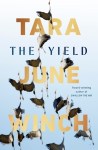
  • Tara June Winch’s The yield (novel) (reading now) (Lisa’s review)
  • Charlotte Wood’s The weekend (novel) (my review)

After a rather “out there” longlist, which included several books many of us had not heard of, the shortlist, as often happens with the Stella I think, has narrowed down to a less surprising list. Would most you you agree with that? This is not being critical of the longlist – because I hadn’t read most of those books – but simply saying that the shortlist seems more geared to the books that have been generally well received critically. I like to think that that’s because they shine out …

Anyhow, the judges’ chair, Louise Swinn commented on the shortlist that:

Writers across the gamut of their career appear on the 2020 Stella Prize shortlist, which includes authors who are household names alongside some we are just getting acquainted with. The six books on this year’s shortlist are all outward-looking, and they tell stories – of illness, family life, friendship, domestic abuse, and more – in remarkable ways. If language is a tool, or a weapon, then these writers use their skills with tremendous courage. We found a lot to be hopeful about here, too – not just at the stories being told, but at the quality of the art being produced.

The winner will be announced on April 8.

Any comments?

Monday musings on Australian literature: The Guardian Australia’s Unmissables

Although I’d seen it before, it was BookJotter Paula’s latest Winding Up the Week (#110) post that reminded me of The Guardian Australia’s Unmissables series. Initiated last March, Unmissables aims to highlight 12 new releases they deem “significant”.

Before I share the books highlighted to date, though, I’d like to talk about the project’s funding because, as most of you know, how quality journalism is paid for is, currently, a critical issue. The Guardian, unlike some other newspapers online, is not paywalled. Instead, it asks readers to support them financially, by either subscribing, which I do, or, “contributing”, which, in effect, means donating without tax deductibility. Clearly, though, that’s not enough to produce the breadth and depth of content that we readers like. Consequently, they also turn to “outside” sources. They have at least three models: “supported by”, “paid content/paid for by”, and ‘”advertiser content/from our advertisers funding”. Unmissables comes under the first one, and is “supported by” the Copyright Agency Cultural Fund. This method is, unlike the other two, “editorially independent”. They say:

Before funding is agreed with a client, relevant senior editors are consulted about its suitability and the editor-in-chief has the final say on whether a funding deal is accepted. A client whose branding appears on editorial content may have a role in suggesting what kind of topics are covered, but the commissioning editor is not obliged to accept ideas from the funder. The content is written and edited by Guardian and Observer journalists, or those approved by GNM [Guardian News and Media], to the same standards expected in all of our journalism. GNM will not show copy to funders for approval.

I’ve written about the Copyright Agency’s Cultural Fund a few times before, including in a dedicated Monday Musings post. From my observer’s point of view, it seems like this fund is doing some good things to support and promote our literary culture.

Now, though, the books …

Author event: Heidi Sze on her book Nurturing your new life

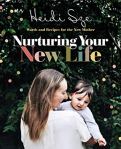
Book coverA book primarily intended for postpartum mothers is not really the sort of book Whispering Gums’ readers would expect to see here, but let me explain. Melbourne-based Heidi Sze started her food blog, Apples Under My Bed, the same year I started mine. However, that’s not our link. Rather, it’s that later that year, Daughter Gums also started a blog, through which she met Heidi – first online, then in person. Through that connection, a few years on, Daughter Gums ended up working in the Melbourne-based company co-founded by Heidi’s husband. Got all that?
Anyhow, the point is that over the last few years, I have been following Heidi, mainly via her Instagram account heidiapples. I have watched her gorgeous two children come into being – and then her third “darling child” (as Jane Austen would call it), her book Nurturing your new life: Words and recipes for the new mother. Note the double meaning of the title, “new life” referring both to a new child, and to a woman’s new life as a mother. “Matrescence, the process of becoming a mother” is, in fact, what the book is about.

Consequently, when I received Paperchain bookshop’s email announcing Heidi’s author tour event there, I knew I had to go and meet her in person. (Of course, Daughter Gums had already given me the heads-up, so I wasn’t going to miss it.)

The event …

I arrived early, hoping to say hello to Heidi before it started, as I had to get off promptly afterwards. I recognised her immediately, and was thrilled to be so warmly greeted when I introduced myself. An added bonus was that her two children, Joan (4) and Walt (18 months), and husband Ben were there too, so I got to meet the whole lovely family. Joan, though, as she should in a book shop, was more interested in finding out where the children’s section was. I approved!

The event basically comprised Heidi telling us about herself, how the book came into being, her intentions for the book, and how she structured and wrote it to meet those intentions. It was a small audience, comprising mostly mums and dietitians/nutritionists, given Heidi is a professional dietitian with a Bachelor of Nutrition and Dietetics from Monash University.

Would-be authors might be interested to know how she came to write this, her first book. She explained that a literary agent, who had been reading her blog and liked what she was writing, contacted her and suggested she write a book! Obviously, this isn’t going to happen to every blogger, but it shows that well-written clearly focused blogs can lead to other things – in Heidi’s case, also to being a recipe columnist for ABCLife (a lovely editor of which I also met at the event.)

Back to the book, though. It took Heidi seven months to prepare her book proposal, which included planning out the chapters and what each one would cover. She obviously did a thorough job because she got a book contract with HarperCollins.

Heidi also shared her career trajectory, explaining how, after the birth of her first child, she moved from general nutrition to a pre and postpartum focus. She also explained how in her early private practice she found she was doing as much counselling as specific nutrition advice. Through this, she had become increasingly aware of the damage that diet culture does. With her awareness of this and of the hard time women give themselves in general, Heidi underpins her book with one important message – that no two experiences are the same, so comparing yourself with others is not helpful. (A message relevant not just to new mums, eh?) She recognises, however, that it’s hard to live by this with “all the noise out there”.

Heidi supports this message in her book with practical advice for new mothers, two of which are that new mothers need support (Chapter 3) and that self-care is critical (Chapter 4). “We are not meant to do this alone”, she realised early in her new-motherhood. Indeed, the trickle-down effects of no support are immense, she said. And she’s right of course. Each generation does it differently, but each generation needs to recognise this important fact. It does take a village to raise a child. You are not a failure as a woman or a mother, if you can’t do it all because, in fact, you CAN’T do it all.

Related to the idea of support is the idea that new mothers need to take care of themselves, that fitting in self-care is not a luxury, but “a necessity and should be treated as such”. So, to tak self-care as an example of how the book works, Heidi not only provides sensible suggestions for how to achieve it, but, understanding from her own recent experience how hard it can be, she nurtures her readers along, encouraging them not to reach for the stars but to work out what’s manageable for them. Analyse your day, she says, to work out when you might slot in some time for yourself; think about when and how your partner can help; and so on. Self-care, she says, can be as simple as having a quiet rejuvenating shower. It’s partly in the mindset. In the end, she says:

Just do what you can and pray the stars align more often than not. And remember, you may need to make sacrifices – be it accepting piles of laundry or cancelling non-essential obligations – so that you don’t sacrifice yourself.

I didn’t find it hard to let the housework go, I must say!

Of course, being a nutritionist/dietitian, she includes recipes. Heidi said her goal was to create recipes that were easy and nutritious, that provided left-over opportunities for later meals, and that use up ingredients to reduce shopping expeditions. The recipes are great, and include things like banana oat smoothie, kedgeree (something I love), and slow-cook beef casserole.

If you have a new mother in your life, this warm, practical, non-judgemental book is for her – and, it wouldn’t hurt dipping into it yourself for ways to help. And, of course, if you are a new mother, this book is definitely for you.

Challenge logoAuthor Event: Heidi Sze on Nurturing your new life
Paperchain Bookstore, Manuka
27 February 2020

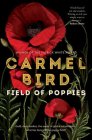
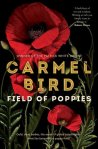
Carmel Bird, Field of poppies (#BookReview)

Book coverThere are some writers whose personalities shine through so strongly that I have taken to characterising them in just a word or two. Jane Austen, for example, I think of as wickedly witty, and Helen Garner as heartbreakingly honest. Carmel Bird is another of these. I describe her as seriously cheeky, by which I don’t mean she is really cheeky, but that there’s seriousness beneath her surface cheekiness. The cheekiness makes me chuckle, but ruefully, suspiciously so, because I know that waiting nearby is very often a skewer of some sort. Her latest novel, Field of poppies, is no exception. Even the title is paradoxical, alluding as it does to both Monet’s pretty painting, Field of poppies in Argenteuil 1873, and the poppy fields of Flanders.
Field of poppies, then, has all the hallmarks of Bird’s writing – a light tone, and all manner of allusions and digressions, underpinned by a clearly-focused intelligence. If you are lulled, early on, by narrator Marsali’s chatty, friendly tone, you’d be advised to check the epigrams and preface. The very first epigram tells you, in fact, exactly what this novel is all about:

We are within measurable, or imaginable distance of real Armageddon. Happily there seems to be no reason why we should be anything more than spectators. (Henry Asquith, Secretary of State for War, July 24 1914)

Can’t say plainer than that. The epigrams, which include one by Bird’s signature fictional novelist Carrillo Mean, are followed by an incisive preface which offers a vision of the modern world and where it’s heading. Mixing visions of disaster (“Crops failed, dried out, withered, died”) with those annoyances we love to comment on (“People forgot how to punctuate or spell”), it further cements the book’s intention.

The novel is told first person by retired interior designer Marsali Swift who, with her husband, the semi-retired doctor William, made a tree-change to the perfectly named, prosperous ex-goldfields town of Muckleton. I mean, Muckleton! That suggests something too, doesn’t it? However, in the opening paragraph, Marsali also tells us that she and William had given up their country idyll after seven years and now live in a high-rise apartment in Melbourne, called, ironically, the Eureka. The tree-change hadn’t met their expectations, because of two events, a robbery at their loved home Listowel, and the mysterious disappearance of local eccentric musician, Alice Dooley. The arrival of a new gold-mine doesn’t help, either, with its disruptions and environmental threat.

Now, if you know Bird’s writing, you will know what to expect, but if you don’t, let me say that this is not a book you read for plot – though there is a plot about the missing Alice. Rather, it’s one you read for the joy of engaging with a lively but concerned mind and all the insights such a mind can offer. Isn’t that, really, what we read for? As one member of my reading group described it, reading this book is like having “a conversation with a quirky, artistic, intelligent friend”. That’s exactly how I feel when I read Bird. I feel my mind engaging with hers, pondering where it’s going and what it’s trying to tell me, and really enjoying the ride. She can be so sly, such as this about the missing Alice’s Silver Sisters group of witches:

The Silver Sisters still exist, to the best of my knowledge but Alice certainly does not. I understand the SS were always a harmless lot …

Whoa? The SS, harmless? Well, of course, the Silver Sisters were, but referring to them as SS can’t help but remind us of another SS, can it? This is what Bird does – and I love it. She makes me feel alive as a reader.

“Such a state of affairs is clearly a fantasy”

Various motifs run through the novel, including the aforementioned poppies, dreamhouses, and Alice in Wonderland. Each contributes in its own way to the idea that all is not as it seems, that we may, in fact, be living a fantasy. Marsali spends some time dissecting Monet’s painting, but as she draws us into its seemingly idyllic beauty, she inserts something sinister – not only the poppies and their dark reminder, but the possibility of a gun pointing out of a window in the lovely house nestled in the background. Bird’s meaning is clear: our dreamhouses, our country idylls, may not be what they seem at all. Dreams, she says early in the novel, are dangerous. For a start, they can lure us away from reality.

Later in the novel, Marsali’s description of returning to Muckleton for bookgroup makes her meaning clear:

When I go there for Mirrabooka nights I drive past the gate to Listowel and catch a glimpse of the house itself behind the trees. It’s really so very like the house in the distance in the Monet, the dangerous fool’s gold of the old lost dream house.

For Marsali, there are glimmers like these of the truth beneath the fantasy, but will she and William – who, we must see, stand for many of us – really change their ways?

Bird also refers in the novel to several literary texts, and in particular to Alice in Wonderland. Carroll’s Alice works beautifully as a foil for the missing Alice Dooley. Without spoiling the ending too much, both disappear into the deep, but Alice in Wonderland survives while Alice Dooley doesn’t. However, this foil isn’t a case of simple opposites, because, although Carroll’s Alice survives, the world she enters is chaotic.

“This is my memoir”

Another thing Bird does in this book is play with the idea of fiction. Marsali keeps reminding us that this is her memoir. It’s dangerous, she writes, for fiction writers to include dream sequences in their narratives, but as this is her memoir, she will include some! Similarly, “it’s hard to make coincidence work in fiction”, but again, because this is her memoir, she has them since “coincidences happen quite naturally in real life”. It’s “a nice coincidence”, Marsali writes, that Alice Dooley was called Alice! She pushes our acceptance of coincidence even further by not only involving kangaroos in the two road accidents that start and end the book’s drama, but also having the second accident’s driver spending time at a pub called The Kangaroo before he sets off on his fateful drive:

Look, it was called The Kangaroo. I can’t help that. It just was.

Well, look, that made me laugh. She is so blatantly cheeky.

I’d love to go on, because this book is rich in commentary, satire and jokes about contemporary life – and I’ve barely touched them.

However, I will close here, and will do so on this from the book:

Beauty always falls in love with the Beast, who always turns out to be the Prince, but that’s only the end of the telling, not the end of the lives of Beauty and her Beast-Prince. Life goes on until it doesn’t. Cinderella died in the end, and so did Snow White.

Fantasy, fairy tales, even fiction, in other words, are just that. They do not tell the whole story. Which world are Marsali and William living in, and which, indeed, are we?

Lisa (ANZLitLovers) also enjoyed this novel.

Challenge logoCarmel Bird
Field of poppies
Melbourne: Transit Lounge, 2019
241 pp.
ISBN: 9781925760392

Review copy courtesy the author.


Monday musings on Australian literature: Recovering Australia’s Indigenous languages

In my recent Delicious Descriptions post on Madelaine Dickie’s Red can origami, I referred to last year’s UN International Year of Indigenous Languages. It occurred to me that while I’ve referred to Indigenous Australian languages several times in this blog, I’ve never specifically posted about them. Now seemed a good time, particularly given interest the year generated. As local Canberra newsreader Dan Bourchier wrote last year, ‘to the UN, language is more than a method of communication, it’s a “repository for each person’s unique identity, cultural history, traditions, and memory”.’

Late last year, The Conversation published an article on “the state of Australia’s indigenous languages”. They started with some facts: in 1788 there were between 300 and 700 Indigenous languages spoken across Australia as shown by anthropologist Norman Tindale’s 1974 map, but by the 2016 Census, only around 160 of these languages were reported as being spoken at home, and of these, only 13 traditional Indigenous languages were still spoken by children. The article then lists the languages and the number of speakers recorded in the Census. Do read the article, if you are interested, as it also discusses the challenges involved in obtaining a true picture of the situation. Here, though, I want to move onto the recovery of language – assuming, of course, that readers here agree that recovering language is important, critical, to people and their culture.

Noongar language (Daisy Bates)

Noongar language (recorded by Daisy Bates)

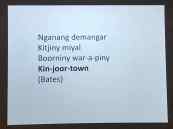
Certainly, it’s clear that Indigenous people want to revive heritage or original languages, and many are doing so “from old recordings and documents, and sometimes from elderly speakers”. In 2017, I wrote a post on Indigenous Australian author, Kim Scott’s Ray Mathew Lecture “A paradox of empowerment” which was about  “how reclaiming Aboriginal language and story may offer a narrative of shared history and contribute to social transformation.” Scott talked about a project he’s involved in to regain and claim Noongar language, and he described how they were doing that. One way is through archival sources, and – Bill (The Australian Legend) will like this – he used a story recorded by Daisy Bates as an example. It shows something that Dickie alludes to in her novel, which is that Indigenous languages, like English, change – so Bates recorded the Noongar people incorporating the the name of the settlement, King George Town, into their language, Kin-joor-town. Book cover

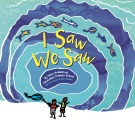
So, there is a quite a lot going on in specific Indigenous communities to revive languages that have died or nearly died (as the Noongar are doing) and to maintain languages that have survived (as the Yolngu are doing). There are indigenous publishers, like Magabala Books and the Indigenous Literacy Foundation (ILF), who are publishing books in language. (I reviewed the English edition of the ILF’s picture book, I saw we saw, which was first published in language.) There are Indigenous singers, like the late Gurrumul*, who sing in language. Red Room Poetry has a Poetry in First Languages project. And, slowly, Indigenous languages are being taught in schools and universities. Saying all this, though, is not say the job is done. It simply says that things are happening – and, seemingly, increasingly so.

But I also wanted to say something about the relevance of all this to non-Indigenous people. Right now, many Indigenous people are not keen for non-Indigenous people to learn their languages – not while their own people are not proficient, as this could easily become a new form of dispossession. However, reconciliation and respect are helped, as many like Scott and Stan Grant believe, by non-indigenous Australians becoming more familiar with Indigenous languages. For some time now, significant Australian sites have returned to their local Indigenous names – Uluru (Ayres Rock), Kata Tjuta (The Olgas), Watarrka (King’s Canyon), Nitmiluk (Katherine Gorge), Kati Thanda (Lake Eyre) and Purnululu (The Bungle Bungles) are some examples. This recognises that these places have a history long preceding that contained in the names given them by settlers.

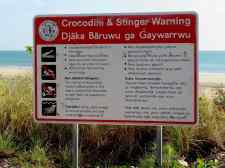
Sign in Arnhem Land

Signage around Australia is increasingly recognising local Indigenous culture. Welcome signs to many towns now include the name of the local Indigenous nation. I have also come across some bi-lingual signs in larger Indigenous communities, though this is rare. You can now buy clothing displaying Indigenous language, such as the t-shirt we bought our grandson. It featured an echidna with the Indigenous label biggi billa. And, excitingly, our Canberra newsreader now starts the evening news bulletin with “Yuma, Good-evening” and closes with “Yarra, Good-night”. We all know greetings like Caio and Au-revoir. Why not Yuma and Yarra? Or, whatever it is, where you live? Indigenous author Tara June Winch said in a conversion I attended last year that it’s a sign of respect to use local words when we travel overseas, so why not the same here? Fluency, she said, isn’t necessary to show such respect.

Book coverFinally, on the subject of authors, Indigenous words are increasingly appearing in contemporary fiction – in, for example, Melissa Lucashenko’s Too much lip (my review), Tara June Winch’s The yield (a novel about language, in fact), and, yes, Madelaine Dickie’s Red can origami. Just a few words here and there – and being done in a way that doesn’t exoticise language but, rather, assumes it is part of the culture.
Dan Bourchier, in the article linked in the opening paragraph, quotes Stan Grant:

Indigenous languages also present a tantalising opportunity for all the people of Australia to find a deeper sense of belonging. The empty space of terra nullius could be filled with the voices of people of all backgrounds speaking the first languages of this land. It is a space to truly build a nation.

I’m loving all these initiatives. What about you? And do you have any examples to share?

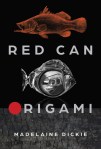
Madelaine Dickie, Red can origami (#BookReview)

Book coverSome writers, I understand, suffer from a thing called “second novel syndrome”, which describes the fear of writing a second novel after a successful first one. Well, it’s clear that Madelaine Dickie, who won the TAG Hungerford with her first novel Troppo (my review), hasn’t suffered from this particular disorder, because her second novel, Red can origami, is not only another good read but it presents as a confident work from an author who knows exactly what she wants to do.

A confident work

Let’s start with the plot. Red can origami is set primarily in a town in Australia’s north-west called Gubinge, to which Melbourne-based journalist Ava has gone for a job as a reporter. Fairly soon, though, she is offered a significantly better paid job as an Aboriginal Liaison Officer by the Japanese uranium mining company, Gerro Blue, who wants someone to help them negotiate an exploration licence with the local native title owners. Already you can see, I’m sure, some red flags, because this plot is going to require Dickie to create Indigenous Australian characters and, thus, to speak for them. This, of course, raises once again that thorny question of who can write what.

Now, I attended this novel’s New South Wales launch at the south coast just before Christmas (and just before the bushfire situation got out of control). I hadn’t met Dickie before, but her mother-in-law, who held the launch, is a good friend and one of my reading group’s original members. Dickie gave a wonderful speech in which she addressed this question head-on. She quoted Anita Heiss’s statement that the Australian novel needs to be inclusive; she reminded us that there were many Indigenous writers, like Alexis Wright in Carpentaria and Tara June Winch in The yield, who are telling their stories well; and she quoted non-Indigenous author Stephen Hawke who writes Indigenous characters and argues that you need to write well and be respectful. In addition, she, who has lived in the Kimberleys where the novel is set, described some of the work she’s done in recent years for traditional owners, including going “on country with old people”. Her arguments and credentials seem fair enough to me – though of course, in the end, it’s up to each reader, Indigenous and non-Indigenous, to decide for themselves.

The other point I want to make about the confidence of this work is its voice, because it is told second person. This too Dickie confronted in her speech. She was leaving no stone of potential contention unturned. I was impressed. Anyhow, essentially, she said that she’d tried writing it third person but it flowed better when she switched to second. That was her writerly judgement – and certainly I found it easy to read. However, she also had a political reason for this choice, and it’s this, she wanted to involve if not implicate the reader in what’s happening. Second person does this very effectively – at least it does in this book. I won’t spoil the ending, but I’ll just say that the second person voice makes the last line an inspired one.

About the book

So now, I’ve talked a lot around the book, but not a lot about it. Another thing Dickie said in her speech was that she wanted the book to be a page-turner – and that it is. The novel moves at a good pace, as did Troppo, and covers a lot of ground in its 220 pages. It starts with Ava arriving in town and building up a little band of both Indigenous and non-Indigenous friends and aquaintances. These characters include Lucia, an Indigenous reporter on the same paper as she; Ash, a non-Indigenous local TAFE lecturer who is soon attracted to Ava, and who shows her the ropes, taking her fishing and to the local bars in particular; and Noah, an Indigenous station-manager and local Indigenous leader, to whom Ava is attracted. Ava quickly falls in love with the land and the life of the Kimberleys, but equally quickly she becomes aware of local politics – and, with her reporter’s eyes, she notices some suss things going on. Is Gerro Blue already working on the land they haven’t yet obtained the licence to do? What are those bones they’ve disturbed?

It is in this environment that Ava, who has already shown sympathy towards the Indigenous owners, is wooed by Gerro Blue’s smooth CEO, Yuma Watanabe, to be their Aboriginal Liaison Officer. If there is a plot fault in the novel, it could be this – why would she take such a job – but Dickie makes us believe. Not only is Watanabe a shrewd employer, but Ava genuinely, albeit uncertainly, believes she can help the local Burrika people. After all, she thinks, “better you, with your olive-green heart, than someone else”. However, she also admits that being paid real money rather than a reporter’s salary, would set her up. She is, then, a real or flawed character, just as we like our characters to be.

As the book progresses, conflict increases. The traditional owners disagree over whether to grant Gerro Blue the licence, particularly given it’s for uranium mining, with all its implications. (Dickie has specifically set her novel around 2011, the year of the Fukushima disaster.) They don’t all trust Ava either. Protesters, from within and without the Indigenous community, make their own waves. Dickie navigates well this tricky, but real – and not at all unusual – situation in native title negotiations. She clearly knows whereof she speaks. Anyhow, while all this is going on, Ash is keeping an eye out for Ava, while Ava is keeping her eye on Noah. It all, of course, comes to a head, with a powerful ending that is entirely appropriate to the story being told.

And then there’s the writing. This is a novel written in the voice of a young woman living in remote Australia. The voice is, thus, earthy, but also fresh and authentic. Dickie’s writing is expressive, and has been pared to the essential, which is not the same as saying it is bare and plain. It is anything but. Here is Ava describing her sophisticated Melbourne sister:

Imogen’s voice is all sparks. It holds the drunken sequin shine of a Melbourne night.

And here a boab tree in Perth, far from its home (like Ava):

The boab’s bark is cracked, its leaves are withered, and its roots strain from the soil, as if it’s planning on splitting town, hitching north.

So, Red can origami is a good read, as Dickie intended, but it also has an underlying purpose. Dickie is passionate about northwest Australia, and about the challenges faced by Indigenous Australians – and she wants all Australians to understand this better. Red can origami sits within that contemporary literature space comprising works which explore Indigenous and non-Indigenous Australian relationships and interactions. Like Lucashenko’s Too much lip, and similar novels, Red can origami works beautifully as a consciousness-raiser, because it wraps authentic situations and issues in an engaging, page-turning story. In doing so, it teaches us about the beauty of northwest Australia, about the complexities of native title legislation and practice, about the nastiness that happens when politics and business get together, about direct and indirect racism, about dispossession, and, above all, about the diversity of human beings and the challenges we face in getting along together. A book for now.

Lisa (ANZLitLovers) was also impressed by the book, and teases out some different angles.

Challenge logoMadelaine Dickie
Red can origami
Fremantle: Fremantle Press, 2019
221pp.
ISBN: 9781925815504