Monday musings on Australian literature: on Nation and people

Hodge and Whitehurst, Nation and PeopleDo you keep your old textbooks? I do, though am now starting to move them on. But some I still can’t part with, one being my high school history text. Called Nation and people: An introduction to Australia in a changing world, and first published in 1967, it was written by Brian Hodge and Allen Whitehurst who were teachers at East Sydney Technical High School. I decided for today’s Monday Musings to have a little look at what my teenage self learnt from it …

I was tickled because some of what I saw, looking at it now, had connections with my future – though, of course, I didn’t know it then. First is the fact that I went to high school in Sydney, and the teachers who wrote it were in Sydney, but the front cover is an image of Canberra, the city I moved to for my first professional job after finishing university, and where I live today. The other is that the first book listed in the student’s bibliography at the back is “F. Whyte, William Morris Hughes: His life and times“. F. Whyte (actually William Farmer Whyte), a journalist, was the grandfather of the man I married. This biography was his magnum opus. I have no idea why it is listed first though. The list is not alphabetical by author or title, and Billy Hughes was not our first Prime Minister so there’s not an obvious chronological reason. The order is quite idiosyncratic to my librarian eyes!

What is history?

These, however, aren’t what I really want to share, entertaining though they are to me. I was interested, for example, in the Preface. The authors say that

students should be encouraged to look for themes. It is important … that they understand the nature of a particular topic they are studying and why they are studying it.

In other words, history is not about dates but ideas and trends. Now, my two favourite high school teachers were my history teacher (Mrs Reynolds) and the librarian (Miss Reeve). It was the late 196os, a time of increasing interest in rights for indigenous Australians, of the Civil Rights movement in the US, and when anti-Apartheid activism was becoming stronger. These two teachers – seen as “red” by more conservative parents – encouraged us to think about what we’d now call social justice. I loved them, because for them history was a living thing about themes, ideas and values.

Indigenous Australians

Of course, in looking at this book now, I particularly wanted to see what it told us about indigenous Australians, because this was an issue we felt strongly about. There are a few references to Aborigines, as indigenous Australians were called then, but there is also a 10-page section devoted to them. It starts with some quotes – from the Constitution (1901), “A Crown Lands Commissioner to Governor La Trobe in 1840”, and writer Marjorie Barnard (from her history of 1962) – followed by their introduction:

During the nineteenth century, the white settlers of Australia extended their frontiers and finally won a continent from its former black owners. The pattern was a similar one to other regions in the world where the white civilisation had made contact with coloured races which were less powerful and culturally different. Lands had been conquered, the stability of the conquered society shattered and the coloured peoples exploited.

They talk about early contact – from seventeenth century sealers to the later farmers – and their poor treatment of indigenous people. They note that “few whites made any effort to understand” cultural differences. They describe conflict between white and black people, in which killing occurred on both sides, but in their view:

Too often in Australian history in the nineteenth century good relations were destroyed by the low standard of settler and the low standard of police.

Next, they say

After the white man had won the land, his [this was before 1970s feminism!] attitude changed. The black man became regarded as a useful stockman who could perform important duties in areas of harsh environment where white labour was scarce and expensive. Thus an extensive cheap labour force was set up for the cattle stations …

They go on to discuss other aspects of black-white history in Australia: missionaries and paternalism, and then assimilation. In 1967, a referendum was passed which amended Australia’s Constitution “to allow aborigines to be included in the census”. Hodge and Whitehurst include a photo of some “Young Australians” sitting at desks. The caption reads: “Now these young Queenslanders will be counted. But will they count?” Good question.

This section ends by suggesting that “integration” is starting to be seen as a better policy than “assimilation”, but

This means, of course, that Australians would have to accept the fact that their society is multi-racial and multi-cultured, and that two cultures would live side by side with complete equality.

Those words – “would have to accept” – suggest, don’t you think, an uncertainty that Australians would indeed accept this. Around 50 years have passed since this was written, and progress has been made but “complete equality”? Nope. How very depressing it all is.

Further reading

Finally, the authors provide a list of additional reading at the end – where I found F. Whyte – but they say “the reading list in this text is recommended as a manageable one”.  They don’t think students “should or could read all the books listed, but … are thoroughly capable of looking at quite a number of them.” They tell students not “to become a slave to one or two general texts, even if they are concise and interesting” and not to “attempt to wade though volumes that are recommended as reference books”. Instead, they say:

Perhaps your most profitable course at this stage of your study of History would be to enter into the spirit of the course through biography. This plan of action  you will find very profitable in your study of Australian development. Through reading biographies you will gain a feeling for History and insight into the spirit and problems of each decade.

How sensible is that? Don’t make students read dry recitations of historical events and facts. Better to read books that will bring history alive. Those they recommend at the end include biographies and fiction, such as George Johnston’s My brother Jack, Xavier Herbert’s Capricornia and, interestingly, Alan Paton’s Cry the beloved country.

Looking at this book, I can see the origins of my ideas about what history is and what it means. Thank you Messrs Hodge and Whitehurst, and thank you too Mrs Reynolds and Miss Reeve. You have not been forgotten.

Do you have teachers and classes that have made a lasting impression on you and your way of thinking?

Monday musings on Australian Literature: The Vagabond

Quite by accident – no, I tell a lie, it was through a link sent by a good friend (thanks Kate) – I came across “The Vagabond”, a mysterious journalist who wrote for Australian newspapers – primarily in Victoria – in the late 19th century. The link was for an article he wrote on sixpenny restaurants, but that article was published in the online journal Inside Story to coincide with the publication of The Vagabond papers (ed. Michael Cannon, Monash University Publishing, 2016).

So, who was this Vagabond? Well, for a start, he is significant enough to be included in the Australian National Biography (ADB), where he is listed under the name John Stanley James (1843-1896), born in Walsall, Staffordshire, England. If, however, you read contemporary obituaries for him, as I did before I found ADB’s entry, you would think he was Julian Thomas, born in Virginia, USA! If you continued to search Trove, though, you would find articles written the year after his death identifying him as John Stanley James. Apparently, as ADB tells it, he had a few fallings-out with his father, in England, and in 1872 went to the USA where he changed his name to Julian Thomas. He arrived in Sydney in 1875.

According to John Barnes (ADB), his early articles, published in Melbourne’s The Argus, were

on ‘the social life and public institutions of Melbourne from a point of view unattainable to the majority’. The most substantial of the series were based on his first-hand reports of what it was like to be ‘inside’ certain institutions: to gather material, he spent a day in the Immigrants’ Home, was admitted to the Benevolent Asylum and worked as the porter at the Alfred Hospital, an attendant at lunatic asylums and dispenser-cum-dentist at Pentridge gaol. His accounts of these institutions combined intimate knowledge of their day-to-day working with a breadth of perspective gained from his knowledge of other societies. His shrewd observation, practical judgments and suggestions for reform reveal a compassionate spirit behind his cultivated flamboyancy.

One of the obituaries I found in Trove referred to these articles:

His series of articles for the “Argus” descriptive of life in the benevolent asylums, hospitals, and finally the Pentridge prison, created a furore which had never been eclipsed by any work of the kind done here since.

This obituarist described him as having “A clear, crisp, epigrammatic style”.

Another described him as having “a fluent pen, a versatile imagination, and an interesting manner of personal comment” and also mentioned, albeit more measuredly, his institutional pieces:

his earlier series of Vagabond papers wherein from personal experience he revealed some of the abuses in the administration of penal establishments, lunatic asylums and charitable institutions, attracted considerable attention.

John Barnes sums him up this way:

Outwardly egotistical and reckless, he had a generous and sympathetic nature. Probably his early life had helped to develop in him a keen feeling for those in need, a feeling expressed in his best work and commemorated after his death in a memorial erected by public subscription.

The process of raising money for, and the erection of this memorial, is also documented in Trove.

In 1878, he was sent to New Caledonia to report on a native uprising. Barnes writes that “he shocked readers with details of the brutality of the French colonial administration which he condemned strongly”. These reports, plus those on his experiences in the New Hebrides and New Guinea, were published in his book Cannibals and Convicts (1886). Although he travelled again – including to China, Japan, British Columbia and the South Seas – Barnes argues that it’s his early Victorian pieces and those in this book that represent his best work.

I’ll leave the story of his life there … you can read more at the ADB link above or look for his articles in Trove yourself. Instead, I’m going to end by discussing his article on the sixpenny restaurants, which was published in the Argus on 27 May 1876, his early (well-regarded) years in Victoria.

The sixpenny restaurant

Not only did I enjoy the article for itself, but it reminded me of one I discussed earlier this year, George G Foster’s “The eating-houses”. It was published in New York in 1849, and discusses various types of eating-houses, including sixpenny ones. The articles are different overall, but both provide a picture of an active eating-out scene in 19th century western countries. Fascinating.

So, the Vagabond’s article. Interestingly, the version published in Inside Story starts about two paragraphs into the original published in The Argus. These first two paragraphs make a political statement about Australia’s need for labour, and the Vagabond has a proposition:

I would have printed one million handbills, exactly similar to those which any day, from 12 till 2, you will have thrust into your hands in the principal streets of Melbourne, and the wonders of which will strike an English labourer or mechanic dumb. Imagine poor Hodge, who lives on bread and bacon, and whose only idea of spending six-pence is to purchase a quart of ale, reading from the bill of fare that a breakfast with a choice of 10 hot dishes of meat, bread and butter ad libitum, and “two or three cups of tea or coffee;” a dinner with choice of six soups, 12 kinds of meat, including such epicurean luxuries as “beef steak pudding” or “stuffed ox-heart;” and six puddings or pies, with tea, coffee, and bread and butter, as at breakfast, may be had in Melbourne for 6d. a meal. The supper (which he reads may be had “both before and after closing of the theatres,” pleasantly suggesting that it is the custom for his class to patronise those places of amusement) is even more bewildering” stewed rabbit, “haricot mutton,” “curries,” and some 15 other dishes, with salad, beet-root, and tomatoes. A land which can furnish such delights for 6d., must surely be the working man’s paradise (my emph).

This argument leads into the article proper, which starts by stating that “Most men have to suffer a perpetual combat between their tastes and their exchequer”.

Vagabond describes his surprise at the quantity of food he can buy for 6d. at these sixpenny restaurants. It resulted in his doing a tour of cheap restaurants. He found they are pretty much alike – “the dishes tend to be stereotyped, and the cooking is much the same in all”. There can be, particularly in summer, “more flies in the dishes than refined prejudices might fancy”, and sausages, he writes, are such “bags of mystery” that the “enormous consumption” of them is “convincing proof that faith is strong in the colonies”. Love it!

Workers Cafe, Porto

Workers’ cafe, Porto, Portugal

After discussing the food in some detail, he then describes the establishments, making an interesting observation:

Sixpenny restaurants vary a good deal in style; there are some in the principal thoroughfares which shine with plate-glass, white linen, and pretty waiter girls. But all this extra display, and the cost of the handbills which are so freely circulated, cause perceptible diminution in the quantity or quality of the viands. The places where one really feeds best are the smaller restaurants, kept by married couples, who do the cooking themselves … These are chiefly patronised by working men.”

This brought to mind my experience as a traveller: we’ve often had the best meals in little ma-and-pa run restaurants, in worker-patronised restaurants. We tend not to frequent those places at home because they offer the sort of food we might cook ourselves but when we travel, these places can be the best for learning about local food and life.

But, I digress … Vagabond continues to discuss the experience of dining in cheap restaurants. He notes the “tricks” customers employ to obtain more food, and suggests dining after the rush makes it easier for diners to chat together. He then describes the patrons – and it’s a fascinating, multicultural bunch – before moving on to the staff, the waiters who “are refugees from all classes” and the cooks, most of whom began “with making damper”.

He concludes by mentioning that some taverns are setting themselves up as rivals to the sixpenny restaurants. They give “hot lunches with pint of ale, from 12 to 2 daily, for 6d”, but the food mostly comprises “a plate of corned beef and potatoes” and “you get altogether about half the amount of food you would at a sixpenny dinner”. However, these places are frequented by young clerks, who, he says, are too proud to be seen in a sixpenny restaurant. He concludes his article with:

It would be far better for them if they would put their dignity on one side, and take a dinner in a sixpenny restaurant, which up to this time I consider to be the most wonderful example of Victorian progress and prosperity which I have met with.

I can see what Barnes means by “a compassionate spirit behind his cultivated flamboyancy”. I could read more of Vagabond.


Monday musings on Australian literature: Inga Clendinnen

I cannot let this week pass without adding my voice to the tributes made by my blogger friends to anthropologist-historian Inga Clendinnen (1934-2016), who died last week at the too-young age of 82. It seemed fitting to delay my tribute for a couple of days to make her a Monday Musings topic. Clendinnen deserves no less (says she, applying a gravitas to her Monday Musings that they don’t really warrant!)

Now, I wonder how many of my non-Australian readers have heard of or know much about this rather significant Australian public intellectual? Clendinnen’s first area of speciality – and the subject of her first two books – was the Aztec civilisation. I haven’t read those books. She then wrote another which is on my TBR, Reading the Holocaust (1998). Her next was the first I read, her memoir Tiger’s eye (2000). Critic Morag Fraser described it as follows (the back blurb):

This is a rare book … it is memoir, history, fiction, a documenting of filial gratitude and ingratitude, and a record of the cauldron of a near-fatal illness, all bundled coherently – that’s the miracle – between covers.

The book was inspired by her experience with liver disease (and her ensuing transplant) … but this disease in turn inspired her to contemplate all sorts of things about life – hers and life in general – about the things that interest her, like writing, for a start, and of course about the experience of being seriously ill. (Oh dear, I’ve always wanted to reread this, and am now becoming distracted from the task at hand by dipping into it!) She talks about how writing is her way of understanding herself. Much of what she says is thoughtful, serious, philosophical, but there are also light touches:

Meanwhile, I wrote. I was in a big mixed ward and discovered when I pulled out my writing pad that in such a ward writing is ‘letter-writing’, and therefore a collective activity. Topics and items of local interest were offered by patients and by nursing staff. If I said, defensively, that I was writing stories, passing strangers–chaplains, orderlies, tea-ladies–would stop to empty a bucket of tales about their dogs or their ex-wives over me, or would say that they are writers too, or would be when they could get around to it. When they weren’t too busy living.

I love how she captures that special world that is the hospital.

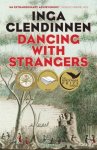
Inga Clendinnen, Dancing with strangersAnyhow, moving on. The book that really brought her to wider attention in Australia was her multi-award-winning book, Dancing with strangers (2003). In her Introduction she describes it as “a telling of the story when a thousand British men and women, some of them convicts and some of them free, made a settlement on the east coast of Australia … and how they fared with the people they found there.” “A” telling, she writes. I like that. She also explains how she aimed to apply the disciplines of history (which can be “culture-insensitive”) and anthropology (which can be insensitive to “temporal change”) to an analysis of episodes recorded in primary resources in order to understand better what people did and why they did it. In other words, she teases out possible cultural assumptions, expectations, and, even, aspirations which might have underpinned the behaviours and events that have too often been simplified in the historical record we all know.

So, in this history, we have Clendinnen, our historian, saying things like “I think Baneelon believed he had fully instructed Phillip as to what was in store for him”, and

There is another possibility in this hall-of-mirrors world: that Barangaroo’s funeral rites were muted not because of Barangaroo’s social isolation, but because of Baleen’s ongoing ambition to impress the British, in this case with the reverent sedateness of his mourning. After all, he has watched enough British burials.

She concludes by arguing, logically it seems to me, that “to understand history we have to get inside episodes, which means setting ourselves to understand our subjects’ changing motivations and moods in their changing contexts, and to tracing the devious routes by which knowledge was acquired, understood and acted upon.” This is the sort of history I enjoy reading …

Every time, in fact, that I read Clendinnen on history I am mystified all over again about her strong criticism of Kate Grenville’s comments regarding The secret river. I keep thinking I’m missing something. In Dancing with strangers Clendinnen uses her knowledge of culture and human beings to fill gaps or find different explanations for how people behaved which is, in a different but to me related way, what “literary” historical novelists do. We could get caught up in semantics here, in arguing exceptions and rules, and so on, but my feeling (with no evidence I admit) is that Grenville’s over-exuberant-at-the-time way of explaining what she was doing “got up Clendinnen’s nose”. I read (and enjoyed) Clendinnen’s Quarterly Essay on “The history question: Who owns the past (QE23)” (2006) and the section in which she discusses novelists and historians is replete with my marginalia! I’ll leave it there!

Finally, the last book of hers that I’ve read is her essay collection, Agamemnon’s kiss (2006). One of the dedicatees is “my unknown [liver] donor, April 1994”. Not surprisingly, the collection includes essays on health, life and death. It also includes writings on reading fiction, writing history, the history wars, the Holocaust. And she writes about other writers, such as Hilary Mantel and Penelope Fitzgerald. In the last titular essay, she writes (yet again) about reading and writing. I’ll end with something that I think we’d all agree with:

Rewarding reading is like being luxuriously absorbed in intimate conversation with a person not previously known, but whose words somehow interweave with the lonely interior monologue we conduct inside our heads. In real life we might encounter such a conversation in five, ten or twenty years, or possibly not at all. In a world of libraries and bookshops it is forever at our fingertips …

Vale Inga Clendinnen. Thank you for all your wonderful books, and for the intimate conversations we can now, because of them, continue to have with you.

For tributes from other bloggers, please see

  • Michelle’s of Adventures in biography (who brought Clendinnen’s death to my attention last week)
  • Lisa’s of ANZLitLovers
  • Janine’s of the Resident Judge of Port Phillip

Monday musings on Australian literature: The inaugural Australian Short Story Festival

Promotion is hotting up for the inaugural Australian Short Story Festival (ASSF) to be held in Perth this year, from October 21st to 23rd. At least, it’s hotting up, if you follow them on social media, because they’ve been actively promoting the event on Twitter and Instagram*. ASSF Inc is a non-profit organisation, and they are aiming big: this is their first event but on their website they describe it as “an annual festival celebrating short stories in written as well as spoken form.” Annual! Good for them. I like the fact, too, that they are talking about spoken and written short stories.

Australian writers bring to the genre of the short story, a form so loose and so generous that almost anything can be attempted within its porous borders. (Amanda Lohrey, on ASSF’s Instagram, 27 July)

ASSF explains that theirs is “the first national event to focus exclusively on the short story form”. It therefore “offers a unique contribution to the nation’s literary culture, as well as a timely response to the current resurgence of this aesthetically exacting narrative form”. It certainly seems to be so – that is, I do sense that the form is enjoying a resurgence. Anyhow, to continue … they say that the festival will “bring together short story writers, storytellers, publishers, and editors of literary magazines, as well as readers, and will connect audiences with both Australian and international short story writers”. They are committed to being culturally-inclusive, both in terms of speakers and audiences. Let’s hope they achieve this – particularly in terms of the audience, because the program does look pretty positive in terms of diversity.

And, they are already planning the 2017 Festival which they advise will be held in Adelaide.

Short stories do not say this happened and this happened and this happened. They are a microcosm and a magnification rather than a linear progression. (Isabelle Carmody, on ASSF’s Instagram, 20 July)

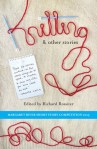
Richard Rossiter, Knitting

Courtesy: Margaret River Press

The organising committee includes some Western Australians who’ve graced these pages before in some form or other. There’s Caroline Wood, who is Director of both the Centre for Stories and Margaret River Press. I’ve reviewed a few books, including two short story anthologies, from this lovely little press. There’s also MidnightSun publisher Anna Solding. I’ve reviewed a short story anthology of theirs too. There are also two authors, Laurie Steed and Susan Midalia (who has appeared in one of the anthologies I’ve reviewed and co-edited another), as well as Catherine Nose, editor of Westerly Magazine, and Ada Chung representing the City of Subiaco.

So, what will be happening at the Festival? They released their program a few days ago – and it looks good. The style is looks to be typical writers festival with “in conversation” sessions, workshops and panel discussions on contemporary topics. The opening address will be given by, arguably, the doyenne of Australian short story writing, Cate Kennedy, and the closing address by one of Western Australia’s best-known writers, Kim Scott. “In conversation” sessions are being held with writers like Ellen van Neerven, Fiona McFarlane and Paddy O’Reilly, all of whom I’ve reviewed here; the workshops include topics like editing; and there’s a whole slew of other sessions that sound inspired and inspiring, ranging from the practical like publishing, structure, and voice to general interest topics like emerging writers, adapting for stage and screen, flash fiction and poetry, and crossing the cultural divide. And of course there are spoken word sessions like the “street side readings walk trail”.

Write your story as it needs to be written. Write it honestly, and tell it as best as you can. I’m not sure there are any other rules. Not ones that matter. (Neil Gaiman, on ASSF’s Instagram, 31 May)

It all sounds wonderfully interesting and exciting – and not overly expensive (as you’ll see if you check out the website links I’ve provided). I wish the Festival great luck – not that I think they’ll need it given the thinking and planning I’ve seen to date. I look forward to reading all about it on my favourite Western Australian litblogs!

A word after a word after a word is power. (Margaret Atwood, on ASSF’s Instagram, 5 September).

* I’ve included, throughout this post, some of the Instagram posts I’ve been seeing over the last few months. I’ve loved them.

Monday musings on Australian literature: Text Classics publishes its 100th title

Back in 2012, I reported on Text Publishing’s new initiative to publish Australian classics, with new introductions, and market them at a very affordable $12.95. I was thrilled and hoped the venture would take off. Well, it did, and now four years later they have published the 100th title in the series. What a wonderful achievement – for them and for readers of Australian literature. I have loved seeing favourite authors in print again and, particularly, being introduced to new ones (to me) including the luminous Elizabeth Harrower and the intriguing Madeleine St John.

Text’s 100th Classic

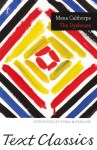
Mena Calthorpe, The dyehouse

Text Publishing – quite rightly – is planning to celebrate this milestone but, before I talk about that, I should tell you the title of the 100th book shouldn’t I? It’s a book and author I hadn’t heard of, The dyehouse by Mena Calthorpe. Originally published in 1961, it was, according to Wikipedia, shortlisted for the Miles Franklin Award. Hmm … I wonder where the Wikipedia author got that from, because on the Wikipedia Miles Franklin page it says that they’ve not been able to find records of shortlists released prior to 1987. Fiona McFarlane, who wrote the introduction to Text’s release, says it was “commended for the Miles Franklin Award”. I wonder where that came from too. I’d love to know more about the early history of the awards. However, that’s not my concern today.

The dyehouse belongs to the tradition of social realist novels – to which Ruth Park’s Harp in the south belongs, not to mention many of the books written by our women writers of the 1920s to 1940s. It is set in a textile factory, and the Australian Women’s Weekly, reporting its publication, quoted Calthorpe as saying:

All my life I’ve just written for myself, for experiment. I started this novel when I was working in the dyehouse, simply to practise writing dialogue.

McFarlane tells us that Calthorpe was a member of the Communist Party in the 1950s, and after leaving that joined the Australian Labor Party. She was also secretary for a while of the “leftist Australasian Book Society”. It’s not surprising, then, that she wrote in the social realist style.

McFarlane says that the book received mostly favourable reviews, from the “right-wing Bulletin to the left-wing Tribune“. However, my research did uncover a less than favourable one from The Canberra Times’ reviewer “RR”. RR was rather circumspect about it, praising it with one hand and panning it with the other. S/he writes:

Despite its immaturity of style, it is an impressive piece of work—about a factory, factory workers, unsubtle seduction, and love.

Its characters range from a not-very-convincing All Black, Renshaw, to a veritable troupe of Snowy Whites. The few in-betweens, notably Oliver Henery, are the really interesting characters. They almost come to life. The story is about simple people experiencing simple emotions.

Almost come to life”. Oh dear. Describing it as, among other things, the story of “a lovesick girl and her search for the Real Thing”, s/he says

This is trite material. That Mrs. Calthorpe makes it interesting is a tribute to her skill.

Yet the book is badly overwritten and pretentious. It needs ruthless pruning of its “literary” passages […

…] She has considerable skill as a writer, her great strength appears to be story construction. When she stops fascinating herself with her own clever prose, throws away her thesaurus, and gets down to telling a story simply, economically, and honestly she may well be a force to be reckoned with on the Australian literary scene.

Well, that final point is good isn’t it? Interestingly, when the book was republished by Hale and Iremonger in 1983, suggesting faith in it, The Canberra Times’ reviewer, author Marian Eldridge, was more positive. She ends her piece with:

Calthorpe’s views about the exploitation of people are clear but at no time does she preach at the reader. Nor does she offer pat solutions. She is too good an artist for that: through spare, clear prose and jaunty dialogue she creates a series of intermeshing situations that she lets speak for themselves. She does not probe deeply into the psychology of her diverse characters but neither has she created stereotypes.

The Dyehouse’ is a fine example of the social realist genre. Through Calthorpe’s vivid, compassionate picture of people at work we learn a great deal about the actual processes in a dyehouse, or at least one of 25 years ago. I find very satisfying a piece of fiction that both tells a good story and explains how things work.

So, Eldridge likes her prose … anyhow, that’s enough for now. I’ll say more when I read it myself!

Text’s celebration plans

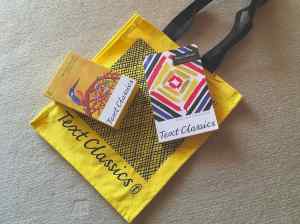
Text 100 Classics Goodies

Text is clearly proud of its achievement – as it should be – and is planning a multi-pronged celebration, which will hopefully also promote these books to more Australian readers. Celebratory activities include:

  • events at writers festivals;
  • giveaways and reader competitions;
  • a revamped website including a literary map of Australia and New Zealand;
  • initiatives for bookshop promotions;
  • a boxed set of 100 Text Classics Postcards (thanks Text for my complimentary set); and
  • a free “I could never get bored with reading” (Amy Witting) tote bag for customers buying Text Classics at participating bookshops.

If you are interested in any of these I suggest you go to their website and “become a text member”. While there you will see a special deal of 5 classics for $50. You’ll also see Text’s Top Ten classics. Guess which book is number one? Elizabeth Harrower’s The watch tower (my review). What a service Text has done for Australian literature by bringing this author to our attention. I wonder what great finds Text will bring to us in the next 100?

Lisa (ANZLitLovers) has also written a post on this milestone.

Monday musings on Australian literature: Arnold Haskell’s Australia

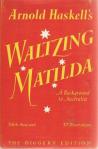
Arnold Haskell, Waltzing MatildaWho is Arnold Haskell you are probably asking, if you are anything like me. The answer will probably surprise you: he was a British dance critic, who wrote many books on ballet, and was, in fact, involved in the development of the Royal Ballet School. But, he also visited Australia a couple of times, first in 1936, as a publicist-reporter with the Monte Carlo Russian Ballet. He returned to Australia in 1938 to research his book Waltzing Matilda: a background to Australia, which was published in England in 1940 (though not published in Australia until 1944). And guess where I found this book? Yep, in my aunt’s house.

So, he visited Australia a couple of times before the Second World War, but his book was published during the war. I find that quite fascinating – who would be interested in what is really a travel book in such  abnormal times? (I looked at the records for this book in Trove. There are several editions: most are categorised as “description and travel”, but some as “civilisation” and “history”. I think the former is better, but it just goes to show that categorisation is never easy!)

Anyhow, here is how he starts his Introduction:

I happened on Australia four years ago, at four days’ notice and by complete accident. Had I been given a week’s notice I probably would not have come at all. I was completely, even aggressively uninterested in that continent. … When I let my friends know where I was going, they said “Why?” which did not encourage me, and left me speechless for once.

His lack of interest wouldn’t surprise Australians who are aware that for the British, particularly at that time, we Australians were simply colonials, and had nothing of interest to offer, and particularly nothing for those who saw themselves as sophisticated. Haskell saw Australia, for example, as offering “hospitality, hearty but uncouth”. He says in this first paragraph that he was “bribed” to accept the trip, partly by the work (the ballet company) and partly by the opportunity to visit Ceylon (now Sri Lanka) and Honolulu, en route. Harrumph!

However, he “became … enchanted”, and so returned later for 6 months to see more. As there were no books that described Australia in the way he as a traveller wanted, he decided to write it himself:

Australia, in comfort at all costs, in luxury if possible; Australia, stressing the modern plumbing in the most modern hotel in Sydney rather than the lack of plumbing in the dead centre [had he visited his own counties I wonder?]; recounting the lives, thoughts and works of many eminent painters rather than the pathetic state of the rapidly dwindling aboriginal; in fact to write of Australia as one writes of Europe or America: positively and without the eternally negative point of view.

It would be easy for us to take exception to this, but it’s more interesting to read it as a reflection of (a certain segment of) the times, and as something that can provide insight into the world as it was then. And anyhow, he goes on to say that he want to trace

the evolution of a society from brutality and chaos to as perfect an expression of ordered democracy as can be found, to show the amazingly rapid transition from an unhappy group of felons, often not so bad, and their gaolers, often not so good, of overbearing petty Himmlers and dictator governors to a civilised community of amazingly tolerant people living in a country freer from crimes of violence than any other, in a continent that has never known the hatred, violence, hypocrisy and destructiveness of Europe.

Ah, it would be lovely to pat our own backs at this, except that we know that there has been violence here. It just wasn’t spoken of back then.

He goes on, completely oblivious to Australia’s long history of occupation by indigenous people, talking about how Australia’s history is still mainly a “family tradition rather than history”, one in which “I remembers” have not yet made it into “the ordered framework of text-books and university courses”. Again, although his view is myopic, I love this way of describing the “short” history as he saw it.

However, his book is not, he says, a history but a personal story which he hopes will “provide the background” that he found lacking.

I will come back to this book, I think, because as well as travelling around the states, he also did some of his own primary research checking letters, manuscripts etc to obtain his own perspective. It should make for fascinating reading … but for now, I’m tired folks, so signing off with a shorter than usual one!

Monday musings on Australian literature: Science writing

If you’ve read my last post on the Griffyn Ensemble, you’ll know it is National Science Week here in Australia (13-21 August). Last year I wrote two Monday Musings for the week, one on novels featuring scientists, and the other on non-fiction science books. This year I thought I would write a little about science writing in general. Remember, though, this is not my area of expertise, so it will be a serendipitous post of bits and pieces.

Stephen Sarre, the scientist who inspired the Griffyn Ensemble’s concert, said about it

What I like about what Michael [Sollis] is doing is that he’s mixing science with art. He’s converting a scientific finding into a performance. It’s so important that scientists try to spread knowledge and merging science and art is wonderful.

Scientists in other words are keen to get their work known – and it is important. Not only does public interest, belief and support help them obtain funding, but we are of course the beneficiaries of their work. It’s useful for us to know, understand and be able to engage intelligently in what they are doing. Climate change, cancer cures, new light but strong building materials, and so on, all impact our lives.

Test Tubes

Test Tubes (Courtesy OCAL via clkr.com)

So, who is out there communicating science to us? Science journalists, for a start, but here in Australia we have a non-profit group called Australian Science Communicators (ASC). It was established in 1994 and its members include “scientists, teachers, journalists, writers, entertainers, students and other communicators who engage Australians (and people overseas) with science, technology and innovation”. A wide church in other words.

In this group, somewhere, are, yes, bloggers, and ASC’s website lists Australian science blogs. There are over 50 of them covering various interests such as “general science”, “climate science”, and “ecology”. I haven’t heard of ONE of them so I dipped in:

  • Espresso Science, written by Jenny Martin, a Lecturer in Science Communication at the University of Melbourne and a broadcaster at Melbourne’s 102.7 FM Triple R community radio. She hopes her “shots of science” will be as addictive as coffee. Her most recent post (10th August) is about memory, not about our usual concern with maintaining memory but about the way we make up memory or remember “what never happened”!
  • Paperbark Writer (love this name), described as Australian nature meeting science and art, and written by Paula Peters. She has a PhD in ecology and has worked in environmental agencies. On her about page she gives a passionate explanation for why she does what she does. The latest post (13th August) on her blog is about a program she did for Gympie National Gallery. Gympie is where I turned 5 – the first birthday I really remember.
  • Science Book a Day, “put together by George Aranda” who runs a science book club in Melbourne. Describing himself as a “science communicator” he says his aim is “to engage people in science via books”. Science, he argues, “isn’t about being told by scientists that ‘this is science’ but for people to build an understanding and engagement with science in their own way”. There are “10 great” posts, such as “10 great books about agriculture” and “10 great books on women in science”. And, of course, there are posts about individual books, the latest being (14 August) for the science fiction book, Peter Watts’ Blindsight.

Three’s enough to give you a flavour. You can click on the link above if you’d like to explore what looks like a pretty vibrant community. Some of the blogs are by “professional” scientists and some by enthusiasts, some aren’t recently active, but many are.

William Lawrence Bragg

(William) Lawrence Bragg, 1915, Public domain, courtesy Nobel foundation, via Wikimedia Commons

I also discovered in my research that there is a National Science Prize, named the Bragg UNSW Press Prize in honour of Australia’s first Nobel Laureates, physicists William Henry Bragg and his son, William Lawrence Bragg. The prize is for short pieces, up to 7000 words, of “non-fiction written for a non-specialist audience by a single author” and published in the previous year. Entries can include extracts from longer published works, including books but not from academic theses or conference papers. The winners are included in the university’s annual Best science writing anthology. The 2015 edition is my next reading group book so you’ll be hearing more on this one.

Previous winners of the prize include science journalist Christine Keneally, who won the 2015 Stella Prize with her book The invisible history of the human race; award-winning free-lance journalist Jo Chandler; and astronomer Fred Watson, about whom I have written before due to his involvement in Griffyn Ensemble concerts.

This isn’t the only science writing prize. There is also the Eureka Prize for Science Journalism which is sponsored by the Australian government and is “awarded to an Australian journalist or journalist team whose work is assessed as having most effectively communicated scientific or technological issues to the public”. It is part of a larger swag of science awards in different areas of science, and the list of winners and finalists names individuals or groups rather than specific journalistic works. For example, in 2014, the winner of the Australian Government Eureka Prize for Science Journalism was Sonya Pemberton of Genepool Productions, a television/documentarty production company. Their program Jabbed: Love, fear and vaccines apparently broke SBS records in 2013.

If you are interested in Australian science writing, Wikipedia has a category for Australian science writers. It’s not very extensive – Jo Chandler, for example, isn’t there, though she’s clearly a respected journalist – but is worth checking out.

In her introduction to Best Australian science writing 2015, Bianca Nogrady (whose The end I’ve reviewed here) wrote:

What a fabulous job it is to write about science. We get to gatecrash laboratories, hospitals, field sites, boardrooms, workshops, expeditions and zoos; peering over shoulders, pointing at complex bits of science and asking, ‘so, what does that do?’

She is active in the field of science writing and last year convened a panel which explored what she called “the knotty question of the intersection between science communication and science journalism”. Are they inclusive, or breeds apart? You can listen to the whole discussion at the link I’ve provided. As in other fields, social media is shaking up the field of science writing it seems. Nogrady’s view is that science communication (in its wider meaning) will continue but that the now-all-too-familiar challenge will be to sift the gold from the dross. I loved discovering another whole area of writing where passion is so evident.

I’ll conclude by returning to the University of New South Wales, home of the Bragg Prize and the annual science writing anthology. They say:

Good writing about science can be moving, funny, exhilarating or poetic, but it will always be honest and rigorous about the research that underlies it.

Have you read much science writing? If so, what have you read, and what has made it worthwhile (or not) for you?

Monday musings on Australian literature: Australian literature in China

GrenvilleSecretRiverChineseNow I admit, right up, that this post is very much a toe-in-the-water sort of post. I know very little about the topic, but what I’ve come across I’ve found interesting and decided to share it. The thing is, we Aussies – those of us born here of Anglo parentage anyhow – tend to be monolingual. We also live in a fairly insular place, being an island ‘n all. Consequently, few of us I think know much about how well or far our literature travels. Occasionally, an Aussie book will do very well – say, Anna Funder’s non-fiction book Stasiland (my review) or Kate Grenville’s novel The secret river – and we’ll hear that it’s been translated into multiple languages. But mostly we tend to be fairly oblivious of these off-shore happenings.

I was therefore intrigued when, a few weeks ago, I found an article in Trove titled “Chinese interest in our literature” from a 1994 edition of The Canberra Times. It was written by Robert Hefner who was, as I recollect, the paper’s literary editor of the day. Hefner commences with:

I first met Chinese author, teacher and translator Li Yao six years ago [ie around 1988] when he was visiting Canberra with author Rodney Hall. Li had just met Patrick White, whose novel The Tree of Man he had translated into Chinese.

Wow, I thought, Hall and White are serious writers – that is, they don’t produce page-turners or simple plot-driven stories. How fascinating – how wonderful too – that our northern neighbours are interested in our literature at that level. Hefner was writing the article because Li was back in Australia for the Melbourne Writers Festival. He’d discovered that since that last meeting, Li had translated 15 more books, 8 of them Australian. These included Brian Castro’s Birds of passage, Patrick White’s Flaws in the glass, Nicholas Jose’s Avenue of eternal peace [a big seller in China], a short story collection, and Geoffrey Bolton’s A history of Australia. Hefner quotes Li, then associate professor in the Department of English at the International Business Management Institute in Beijing:

Translations of Australian books in China are welcomed by students and general readers, especially Patrick White. I translated A fringe of leaves and it sold 10,000 copies in Beijing. That’s a best-seller, even compared with Chinese authors.

Wow, again. Patrick White a best-seller in China? Who’d have thought?

Li told Hefner things were changing in China, that “people, especially young people” were “looking for something new”, wanting to “know another world, especially a world so far away as Australia”. They were also interested, he said, in how “China is seen through foreign eyes”. Consequently, his most recent translation was Alex Miller’s Miles Franklin Award-winning novel The Ancestor Game, which is about early Chinese immigration to Australia. Li* hadn’t decided whom he’d translate next, but was “considering Tim Winton, David Malouf or Rodney Hall”.

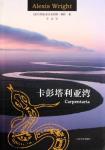
Alexis Wright Carpentaria in ChineseThat was 1994. Was it a flash in the pan I wondered? I did some very scientific research, that is, I “googled”. And I found all sorts of things, such as the China Australia Literary Forum. It met in 2011, and involved “ten prominent Chinese writers” visiting Sydney for “in-depth discussions with Australian authors, and those involved in the translation and reception of their works”. The Australian writers they met included Judith Beveridge, Kim Cheng Boey, Lisa Gorton, Ivor Indyk, Gail Jones, Nicholas Jose, Julia Leigh, Shane Maloney, John Mateer, Michael Wilding, Ouyang Yu and Alexis Wright. The forum resulted, the report goes on to say, in the translation of Alexis Wright’s Carpentaria (my review), which was launched in 2012 at the Australian Embassy in China. Nobel Prize winner Mo Yan wrote the introduction to the translation, and guess who did the translation? Yep, Li Yao.

A second China Australia Literary Forum took place in 2013, this time in Beijing. Eight Australian authors attended, including JM Coetzee. The eight Chinese involved included Mo Yan.

Apparently though, Australian literature had been read in China long before these last few decades. Back in the 1920s four Australian poets, including Mary Gilmore and Roderick Quinn were read. Ouyang Yu (whose Diary of a naked official I’ve reviewed here) is reported as having read a poem by Adam Lindsay Gordon in 1927. (All this came from a 2011 article in JSTOR which is not available freely on the web.) This article disproves the previously held view that translated Australian literature hadn’t been available in China before 1949. Indeed Ouyang Yu has written a paper about the reception of OzLit in China from 1906 to 2008. It’s an interesting survey article which looks at the history of Australian literature in China, including the interest in and value of different forms such as poetry, popular writing, literary fiction, and so on. He concludes by saying that Australian writers are now receiving Chinese awards. In 2009, for example, “Alex Miller became the first Australian writer to receive a Chinese literary award for his novel The landscape of farewell”.

I won’t go on, because I think I’ve made my point about Chinese interest in Australian literature. Quite coincidentally, I discovered a (now expired) call for entries from the Australian Association for Literary Translation for its AALITRA Translation Prize. This prize “aims to acknowledge the wealth of literary translation skills present in the Australian community” and awards prizes for translation of a selected prose text and of a selected poem. Each year a different language is chosen, and in 2016 the language is Chinese!

This is all wonderful for Australian literature, but what about the reverse? How much effort do Australians put into reading translated literature from other countries. If my record is anything to go by, not as much as I’d like – or should!

* I found a 2010 article in The Australian about Li Yao’s introduction to English-language literature. It was in the late 1960s, during the Cultural Revolution, and he read, “under the covers” at night, books like Jane Austen’s Pride and prejudice! This little comment reminds us too that availability of Australian (or any non-Chinese) literature in China hasn’t had the simple trajectory my post might imply!

Monday musings on Australian literature: Contemporary thoughts on Elizabeth Harrower

Contemporary is an odd word isn’t it? I like using it, but worry about ambiguity, given it can mean either “living or occurring at the same time” or “belonging to or occurring in the present”. So, when I say “contemporary thoughts on Elizabeth Harrower”, how do you know which meaning I intend? Well, to put your minds at rest, in this instance I’m intending the former.

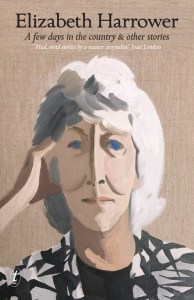
Elizabeth Harrower, A few days in the countryMany of you know who Harrower is, but for those who don’t, she’s an Australian writer who was active in the 1950s to 1970s, and then largely disappeared from view. She was born in 1928 and is still alive. Four of her five novels were published in the 1950s to 1960s. The fifth novel, In certain circles, was written in the late 1960s to early 1970s, but not published until 2014, because she withdrew it from publication at the time. Her short story collection, A few days in the country, and other stories, was published last year, but includes stories dating back to the 1960s. (I have reviewed three of her books.)

So, she was an unknown to many of us when her books started appearing in Text Publishing’s Classics series. What a find she’s been, but what, I wondered, was thought about her in her heyday, and where did she fit in that literary world. To Trove, therefore, I went – and found the snippets I’m sharing today.

The first comes from “Your bookshelf” by Joyce Halstead in The Australian Women’s Weekly in 1961. Halstead writes briefly about Harrower’s third novel, The catherine wheel, which was published in 1960. She describes the plot, and concludes with her assessment:

An intense, probing study of human relationships, intricately and interestingly resolved, and deserving of high literary praise.

That certainly accords with my experience of Harrower’s writing, though I haven’t read this one – yet.

Elizabeth Harrower The watch towerNext comes another article from The Australian Women’s Weekly, this time in 1966. (Why was this very literary writer mainly featuring in a women’s magazine?) The article is titled “Op art? … Commas caused full stop” and is about her fourth novel, The watch tower. It conveys a lovely sense of Harrower’s down-to-earthness:

We mentioned the publishers’ description of her as “one of Australia’s most sensitive and psychologically perceptive novelists.”

“You know, you shouldn’t blame writers for what other people say about them,” said Miss Harrower.

She says that she had never studied psychology, and that:

“Because I am interested in people, it doesn’t mean that I go around consciously analysing them … Sometimes it is years afterwards that you remember an occurrence which, when it happened, just flowed past you.”

She then describes “having words” with her publisher (for whom, in fact, she worked herself, because writers, she said, need to have a job unless they are “a Morris West or have a private income”):

“When the publishers sent me the proofs I found they had altered all my ‘whichs’ to ‘thats’ and had taken out a lot of commas. I didn’t like it — so I changed them all back.”

I love this. I much prefer “whichs” to “thats”, regardless of what grammarians say about nonrestrictive and restrictive clauses, and I’m inclined to use more commas than less, despite modern style!

My city’s newspaper, The Canberra Times, also wrote about The watch tower, in early 1967. The reviewer, John Laird, admires Harrower’s writing, saying she:

employs a style distinguished by its sensitivity and subtlety, and displays considerable ability in capturing the flow of thoughts, emotions, and sense-impressions in the minds of her two main women characters.

But, he concludes that

What is not so convincing is the portrait of Laura’s misogynic husband. To me he seems a specially concocted figure, largely an embodiment of the malevolent and destructive forces that constantly menace the women characters in Elizabeth Harrower’s novel world.

I wonder how many women would find him “not so convincing”? Seems like Mr Laird wants to underplay the gender aspect of the “malevolent and destructive forces” menacing the women?

The next two articles* also come from The Canberra Times. One, in 1967, announces that Harrower (along with George Johnston and Thomas Keneally) had won a 12-month Commonwealth Literary Fund Fellowship, which is, I expect, the Fellowship that led to In certain circles, the one she withdrew from publication.

Second time around …

The other article comes from 1979, and we are now getting into re-issues of her work. The article, written by Lyn Frost, is titled “Fine Australian writing new and rediscovered”. It announces a new imprint, Sirius Quality Paperbacks, by Angus and Robertson. “The first six books”, Frost writes, “are by women and some have been out of print for far too long. Teachers of Australian literature must be grateful for their appearance.” I sure hope they were! The authors include Henry Handel Richardson, Eleanor Dark, Christina Stead and, of course, Elizabeth Harrower. In fact, the six books include two of Harrower’s, The Catherine wheel and The long prospect (which Stead called Harrower’s “masterpiece”). Frost is impressed by Harrower’s writing, saying:

I can’t think how I’ve missed reading Harrower’s perceptive work before this.

How embarrassing is it that this was exactly the response many of us had over 30 years later when Text started republishing her!

Then, along similar lines, comes critic Peter Pierce in 1988 reviewing Murray Bail’s The Faber book of contemporary Australian short stories in The Canberra Times (again). It’s a “real” review which discusses the anthology at some depth, including reference, naturally, to some of the works included. One is Elizabeth Harrower’s “The cost of things” (which also appears in A few days in the country, and other stories). Pierce describes Harrower as “Too little celebrated and too long silent in Australian literature”. (I had to laugh at Pierce’s comment that the anthology is “misleadingly titled” but that “Bail is unapologetic about including stories written nearly half a century ago”. “Contemporary” by any other name!)

There are other brief references to Harrower – including to her being a National Book Council Award judge in 1981 – but I’ll conclude with another article from The Canberra Times. It’s one of those weekly new-paperback-releases columns, and this particular week’s bunch, in 1995, included Harrower’s The long prospect (ETT Imprint). Columnist (and local English teacher) Veronica Sen calls it a “determinedly unsentimental novel”, and says that it treats “suburban small-mindedness and the pain of growing up … with panache”.

If you haven’t read Harrower yet, I hope my post has pushed you a little further in her direction.

* The Canberra Times has been digitised, to date, by the NLA, up to 1995, whereas the Sydney Morning Herald, for example, has been digitised to 1954. Disparities like this are primarily due to what permissions are granted by the respective rights holders.

Monday musings on Australian literature: Looking back, looking forward

As some of you know, I have been involved recently in looking after my aunt’s estate. This weekend, my cousin and I checked out, again, the bookcase that contained old books, books that had belonged to my grandparents. One of the books that came to my attention was The golden treasury of Australian verse (e-version). It was given to my grandmother in 1914 before she was married, but it was, in fact, the 1912 revised edition of the 1909 edition, which came from An anthology of Australian verse first published in 1906. Got that?

I’m not, in this post, going to review the poetry, interesting though that is. Rather, I want to share ideas from the introduction written by Bertram Stevens. He was born in outback Australia, in Inverell, New South Wales, in 1872. His mum came from Queanbeyan, which is the city adjoining my own. The Australian dictionary of biography, to which I’ve linked his name, says:

A proficient, lucid critic, Stevens was pre-eminently a cultural catalyst and pioneer who perceived needs and lacunae. His An Anthology of Australian Verse (1906), although uneven, was the first seriously edited collection of its kind; improved as The Golden Treasury of Australian Verse (1909), it became a standard text.

It’s his perceptions on Australian literature that I want to share here, but first, a disclaimer. Like most people of his time, he saw Australia – and therefore Australian culture – as starting with white settlement. That’s just how it was then, so please read his comments in that context.

He starts by describing Australia because, he says, “the literature of a country is, in certain respects, a reflex of its character”. I found his framing of Australia’s development and how it played out in our literature fascinating. He said (and I’m going dot point them for ease) that Australia:

  • encompasses “all climates, from tropical to frigid” but that it is more liable to long droughts. He suggests that “the absence of those broad, outward signs of the changing seasons which mark the pageant of the year in the old world is probably a greater disadvantage than we are apt to suspect”
  • has few of “the conditions” that are found “in older communities where great literature arose”. Our early history, he says, has “no glamour of old Romance … no shading off from the actual into a dim region of myth and fable”. Instead, Australia’s “beginnings are clearly defined and of an eminently prosaic character”. By this he means that the early settlers were engaged in the struggle to survive, to establish industries, after which came “the gold period” with further expansion of industries. The implications of all this, he argues, is that “business and politics have afforded ready roads to success, and have absorbed the energies of the best intellects”. Moreover, “there has been no leisured class of cultured people to provide the atmosphere in which literature is best developed as an art”. Australians had consequently been happy “to look to the mother country” for its “artistic standards”.
  • has had “no great crisis … to fuse our common sympathies and create a national sentiment”

These are all interesting points, though he doesn’t expand on them with significant evidence. A little further on he suggests that the “large stream of immigration” during the gold period (1860s-1880s) had a major impact on the development of the colonies, not just in terms of industry/economics but wider culture as well. I was pleased to see a recognition of the importance of immigration to the development of culture!

He gives a brief history of writing and publishing in Australia, discussing the early poets, from the late 1700s to the early 1800s, but argues that Australia’s first genuine, albeit, crude poetry appeared in 1845 “in the form of a small volume of sonnets by Charles Harper”. Harpur was followed by poets like Henry Kendall (about whom I’ve written, briefly, before, and who attracted praise from English critics) and the problematical Adam Lindsay Gordon, about whom he writes:

his work cannot be considered as peculiarly Australian in character; but much of it is concerned with the horse, and all of it is a-throb with the manly, reckless personality of the writer. Horses and horse-racing are especially interesting to Australians, the Swinburnian rush of Gordon’s ballads charms their ear, and in many respects he embodies their ideal of a man. There are few Australians who do not know some of his poems, even if they know no others, and his influence upon subsequent writers has been very great.

You may remember a previous Monday Musings in which Gordon’s influence was discussed, again in not very flattering light. (I must admit, however, that I am one of those Australians who knows some of his poems!). Kendall died in 1882, having achieved some success, but, writes Stevens,

He lived at a time when Australians had not learned to think it possible that any good thing in art could come out of Australia, and were too fully occupied with things of the market-place to concern themselves much about literature.

Stevens also discusses the role of early – mid-nineteenth century – magazines and newspapers in promoting Australian literature, like Victoria’s The Argus and The Australasian, but argues (and few would disagree with him) that it was The Bulletin, established in 1880, which had the biggest influence on the development of Australian literature:

Its racy, irreverent tone and its humour are characteristically Australian, and through its columns the first realistic Australian verse of any importance, the writings of Henry Lawson and A. B. Paterson, became widely known.

Their work started to make an impression on the reading public by the mid 1890s, and Stevens concludes his introduction with

Australia has now come of age, and is becoming conscious of its strength and its possibilities. Its writers to-day are, as a rule, self-reliant and hopeful. They have faith in their own country; they write of it as they see it, and of their work and their joys and fears, in simple, direct language. It may be that none of it is poetry in the grand manner, and that some of it is lacking in technical finish; but it is a vivid and faithful portrayal of Australia, and its ruggedness is in character.

There’s still some cultural cringe here but, nonetheless, I enjoyed reading his assessment of the first century or so of Australian literature – and may come back to it and his anthology in another week when I’m less tired!