Monday musings on Australian literature: Poetry Month 2021

I have posted on World Poetry Day, which occurs in March, several times in recent years. And I have written about Australian poetry various times, including about the Red Room Company (or, Red Room Poetry). Their vision is very simple: “to make poetry in meaningful ways”. They have initiated and supported various projects over the years, and have now come up with a new one, Poetry Month. It seems the perfect topic for another Monday Musings on poetry in Australia.

Many of you are probably aware that the US has various months dedicated to literary/humanities/justice issues, like Black History Month in February. One of these is their National Poetry Month which has been going now since 1996. I’ve often thought it would be good for Australia to emulate some of these. We do have NAIDOC Week, of course, but that could be a month, eh? Anyhow, now Red Room has initiated a Poetry Month which is exciting:

Our goal is to increase access, awareness, value and visibility of poetry in all its forms and for all audiences. The inaugural Poetry Month will be held during August 2021 with the aim of an ongoing annual celebration.

What are they doing?

A lot, in fact. They say that they have

an electrifying lineup of poetic collaborations, daily poems and writing prompts, online workshops, poetic residencies and live to live-streamed showcases, designed to engage everyone – from veteran poetry lovers to the (for now!) uninitiated.

There is a calendar. They have 8 poetry ambassadors, who are an eclectic and appropriately diverse bunch: Yasmin Abdel-Magied, Tenzin Choegyal, Peter FitzSimons, Dr Karl Kruszelnicki, Stephen Oliver, Grace Tame, Megan Wilding.

My love of reading and writing poetry is guided by a lifelong attraction to the seemingly simple and unadorned.

~ Tony Birch

Specific events are …

  • 30in30 daily poetry commissions: every day there are/will be “new original text/video poems, poet reflections and writing prompts from some of the country’s leading poets, authors, spoken word artists and playwrights”. They can be accessed on the site, and on social media (with the hashtag #30in30). Today, for example, there’s a 2-minute video from First Nations author, Tony Birch, on what poetry means to him. He talks of poems that can have new meanings each time you read them. 30in30 will include commissions from their larger Fair Trade project which involved First Nations poets from around the world.
  • Line Break: a weekly online show, on Tuesdays through August, 7pm AEST, on Facebook and YouTube, providing previews from feature poets, publishers, spoken word artists, and musicians, and more.
  • Poets in Residence: a program, supported by City of Sydney (how great is that). The poets were to be located at Green Square Library “for a period of writing, reading and performing poetry on site, engaging the general public in various ways and showcasing COS library collections”. Unfortunately, Sydney’s current lockdown has forced the postponement of this.
  • Showcases: a “raft” of live and online events across the country, including the inaugural Poetry Month Gala supported by The Wheeler Centre. Click on the Showcases link to see events from, indeed, around the country, including in South Australia and Western Australia.
  • Workshops: weekly online workshops, on Wednesday nights 7-9pm, via Zoom, catering “for all poets at all levels … anywhere in Australia”, with the topics being “stripping poetry back, breath and beatboxing, the intersection of poetry and comedy, and a special older emerging voices workshop”. They suggest a donation of $10. The workshop leaders are Sarah Temporal, Hope One, Vidya Rajan and Tony Birch.

What an exciting-sounding and diverse program.

Here is a taster … Australian of the Year, Grace Tame, with her strong 30in30 contribution, “Hard pressed”.

A little value add from me …

If you are looking for contemporary Australian poetry, you could start with two independent publishers:
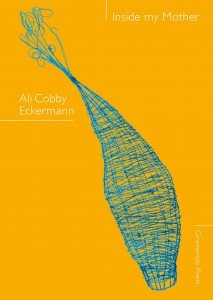
Ali Cobby Eckermann, Inside my mother
  • Giramondo, which published Jonathan Shaw’s chapbook that I reviewed recently). They have also published Ali Cobby Eckermann, Jennifer Maiden, Gerald Murnane, Gig Ryan, Fiona Wright, and so many more known and unknown to me.
  • Pitt Street Poetry, which published Lesley Lebkowicz’s The Petrov poems (my review) and Melinda Smith’s Drag down to unlock or place an emergency call, which won the 2014 Prime Minister’s Literary Award for poetry. They have also published Eileen Chong, John Foulcher, Peter Goldsworthy, Geoff Page, and Chris Wallace-Crabbe, to name some of the better known (to me) from their stable.

There is also the Australian Poetry Library, about which I’ve written before. It now contains, the website says, “tens of thousands of poems from hundreds of Australian poets”. You can read poems free online, but if you want to download and print poems, there is “a small fee, part of which is returned to the poets via CAL, the Copyright Agency Limited”. This resource is particularly geared to teaching poetry, but is available to anyone.

Lesley Lebkowicz, The Petrov Poems

If you are looking for Australian bloggers who write about poetry, try Jonathan Shaw at Me fail? I fly. This link will take you to his poetry tagged posts, of which there is now a substantial number. Also, blogger Brona (This Reading Life) is planning to support the month, so if you don’t already subscribe to her blog, do check her out if you are interested in poetry and/or in what Red Room is trying to do for Australian poetry.

Finally, you can also find poetry reviews in the Australian Women Writers database.

And now my question: do you have a favourite poem to share with us? (And do you, like Tony Birch, go back to it again and again, and find something different each time?)
Monday musings on Australian literature: Miles Franklin Award, the fourth decade (1988-1997)

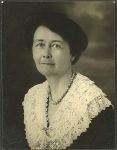
Miles Franklin
Miles Franklin, c. 1940s (Presume Public Domain, via Wikipedia)

This is my fourth post in a little sub-series looking at the Miles Franklin Award by decade.

As with the first three, written back in 2016, I don’t plan to list all the decade’s winners, as you can find them on the Award’s official site. Instead, I’ll share some interesting snippets, inspired by my Trove meanders. This mostly involved The Canberra Times and The Australian Jewish News, because this period is still within copyright, meaning the NLA can only digitise newspapers which have given them permission to do so.

Men in the ascendant (again)

In my third decade post (linked below), I noted the increase in awards made to women. Just five awards were won by women in the first two decades combined, but in the third decade, four of the nine awards went to women. This reflected, I suggested, the flowering of writing by Australian women in the late 1970s and 1980s. However, it wasn’t to last. In the fourth decade, eight of the nine awards made went to men – and the woman who did win generated one of the Award’s biggest controversies (see below). Without spoiling my fifth decade post, this “bias” towards men continued for another ten years or more, which inspired, among other things, the establishment of the Stella Award in 2012 … but, I’m jumping ahead. Let’s stay in the nineties for the moment.

The skewing towards men, not surprisingly, carried through to the shortlists, with 31 men shortlisted over the decade to 18 women. However, when it comes to multiple listings, four writers, two men and two women, were shortlisted three times: Rodney Hall and David Malouf, Thea Astley and Janette Turner Hospital (who has never won it).

The men who won included previous winners Peter Carey, Tim Winton, and Rodney Hall. The others were Tom Flood, David Malouf, Alex Miller, Christopher Koch and David Foster. I admit that I didn’t know Tom Flood, but Dorothy Hewett was his mother. His winning book, Oceana Fine, was his only novel.

There wasn’t much discussion about the skewing back then, but I did love Celal Bayari, who wrote in the the University of New South Wales’ Tharunka paper about Elizabeth Jolley missing out in 1989:

Jolley good book (ha ha)

JOLLEY’S latest has just been omitted from the shortlist for the Miles Franklin Award. That is a real shame because The Sugarmother is a great book.

Controversy (1)

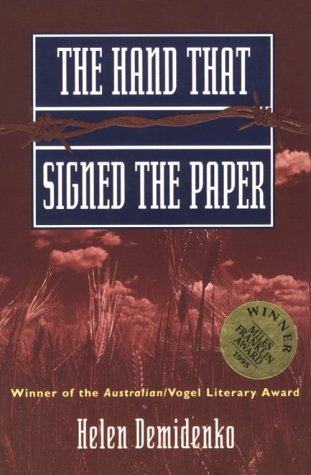
The controversy concerned Helen Demidenko’s novel, The hand that signed the paper, which won in 1995. Bill (The Australian Legend) summarised the controversy beautifully in his post on the book, so why reinvent the wheel? Bill wrote:

For the benefit of non-Australians, the controversy surrounded the awarding of the 1995 Miles Franklin Award to Helen Demidenko for The Hand that Signed the Paper, the story of a Ukrainian family collaborating with the Nazis during the Holocaust. The granting of the Award to an anti-semitic work was justified on the grounds that Demidenko was telling the story of her people, until Demidenko, who would attend speaking engagements dressed in the costume of a Ukrainian peasant girl, was finally unmasked as Helen Darville, a University of Queensland student of entirely English background.

This was a multi-pronged controversy – and Bill explores some of the prongs in his excellent post. There were criticisms of the work itself: it was uneven and poorly written, it was racist/anti-semitic, it distorted history. There were criticisms of the author’s deception regarding her background, with some saying that the only reason they accepted this unpleasant book’s win was because the author was speaking for “her” people. (This feeds into current discussions about who can write what.) There was discussion about literary criticism – about whether it’s all about the text, or whether other considerations, like the author’s background, are relevant to assessing a work. There were discussions about the line between fact and fiction, particularly since Demidenko/Darville herself called her work “faction”. There were criticisms of plagiarism, which were subsequently overturned. There were suggestions that the author, around 24 at the time, was a disturbed young woman to be pitied. And, there were criticisms of the judges – of their decision in the first place, their refusal to admit they were wrong, and their not engaging in discussion. The novel was apparently shortlisted for the Victorian Premier’s Literary Award, and then quietly un-shortlisted before the announcement. The controversy raged for months.

The book, by the way, had previously won the 1993 The Australian/Vogel LiteraryAward for unpublished manuscript, and in 1995 it also won the ALS Gold Medal.

The Canberra Times‘ literary editor at the time, Robert Hefner, suggested that the book “could well prove to be one of the most divisive books in Australian history”. Not surprisingly, it sold well. By August 1995, according to her publisher, it had sold 25,000 copies, and they were preparing to republish it under the author’s real name.

Controversy (2)

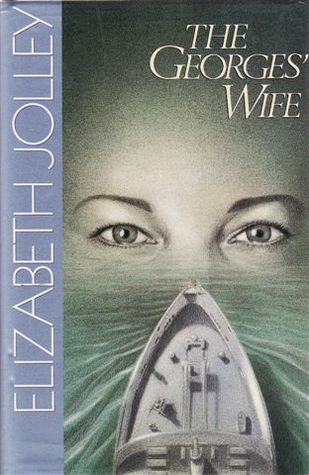
Lest you think, however, that this was the only Miles Franklin Award controversy of the decade, think again. The ongoing issue of the “Australian content” requirement raised its head during the decade too. In 1994, when Rodney Hall won for The grisly wife, The Canberra Times reports that, “The Georges’ Wife [Elizabeth Jolley], and Frank Moorhouse’s Grand Days, were disqualified because the judges decided they did not have enough Australian content”.

No award (again)

In both the second and third decades, there was a year in which no award was made. It happened again this decade but for a purely administrative reason, to do with changing the award’s timing from year of publication to year of announcement!

The value of awards

Given I’ve posted on the value of awards recently, I’ll conclude by sharing a couple of points that came out of this little piece of research.

David Malouf said, on winning in 1991 with The great world,

“An award like this is a bit like the Archibald to painting. Both are extremely well known and important … People who don’t necessarily buy a book when it first comes out are interested to see what books turn up on the short list and which book wins. That kind of interest is always very important.”

He also admits that winning awards offers reassurance:

“Writers are very diffident, basically. They’re always doubtful of themselves and it’s always good when you are offered approval for what you have done”

Similarly, Alex Miller, who won in 1993 for The ancestor game said:

“I decided it was terrific to be short-listed and that was that, and I just got on with my work, and then when I was told last Wednesday I really couldn’t believe it … It’s enormous validation and acknowledgment, for sure.

It’s a bit of a watershed, isn’t it, winning something like Miles Franklin.”

And Rodney Hall, winning in 1994 with The grisly wife, said “this has picked me up”.

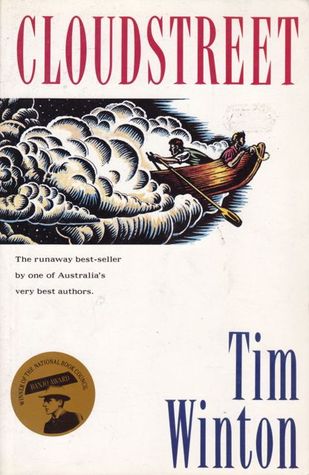
I mentioned above sales for Demidenko/Darville’s book, but that had the “benefit” of controversy. Tim Winton’s 1992-winning Cloudstreet experienced a boost in sales. The Canberra Times reported less than two months after Winton’s win:

… Tim Winton returned recently from a 30-day promotional tour of the United States, where Graywolf’s beautiful hardback edition of his Miles Franklin Award-winning novel Cloudstreet has already sold more than 12,000 copies. In Australia, where it was published by McPhee Gribble and Penguin, sales have topped 60,000.

Let’s leave the fourth decade there!

Past posts in the series

Monday musings on Australian literature: Defining the novel, in 1975?

During one of my forays into Trove, I came across an intriguing little piece by Canberra artist-educator-reviewer, Malcolm Pettigrove. Pettigrove was a regular arts reviewer in The Canberra Times through the 1970s and 1980s, but it was his article published on 31 January 1975 that particularly caught my attention.

It starts:

NO issue in the issue-filled business of literary appreciation has had as much wind and ink spent on it as The Definition of The Novel. Ironically, few issues are of less importance.

I like this, because I think definitions are fun, but ultimately unimportant. Actually, fun is not quite the right word. What I mean is that discussing definitions is a worthwhile exercise because it helps hone our ideas about form and can inform our understanding of creative works, but in the end, the important thing is the work, regardless of what category/form/type critics or reviewers slot it into.

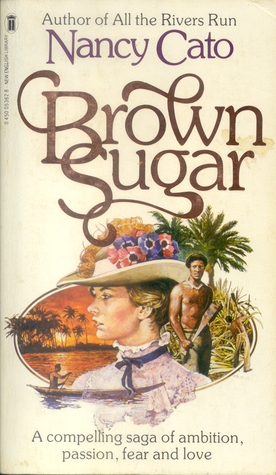
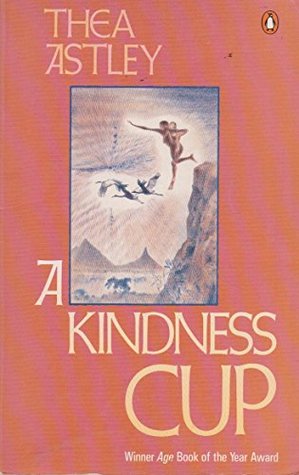
So, with that understanding, let’s look at what Malcom Pettigrove had to say – in his review of three Australian historical fiction novels, Nancy Cato’s Brown sugar; Maslyn Williams’ Florence Copley of Romney, and Thea Astley’s A kindness cup.

He starts, in fact, by saying a bit more about the novel:

Whatever theorists might make of it, the word “novel” remains in reality nothing more than a convenient label for those fictional works of narrative, descriptive, expository, dramatic, or didactic prose which no other label will fit. […] No more comprehesive [sic] definition has ever been coined, and it’s quite likely that none ever will.

Now, I’m not going to engage much more with this. Wikipedia’s writers simply describe the novel as “a relatively long work of narrative fiction, typically written in prose and published as a book”. I could check my various books, but I think I’ll find variations on this theme, so let’s move on. Pettigrove says that this says nothing about a “lack of imagination on the part of the definition-makers”. Rather, “it indicates that the novel has a life and a mind of its own and is determined not to surrender to the definition-makers until it has exhausted all the variations of form, content and style that are available to it”.

The Australian novel, he says, is no different. He writes:

Most novels, whether Australian or not, are conservative, courteous, sociable things, with established habits, moderate expectations, and only a limited inclination to experiment. The bold innovation, being rarely understood and seldom well received, is left to the adventurous minority, some of whom die in the attempt leaving the successful ones to proliferate their own image in more or less conservative, courteous and sociable offspring which are established in their habits, and given to moderating our expectations by being limited in their inclination to experiment further.

I do like this description of how innovation leads to the next “standard” – until, of course, the next innovation comes along. It happens in all the arts, doesn’t it? Of the three novels he’s reviewing, you won’t be surprised to hear that he says that Cato’s and Williams’ novels belong to the majority, while Astley’s is an “offspring of the minority”.

He then discusses the three novels. Nancy Cato has appeared in this blog a few times. Her historical fiction, Brown sugar, is a “novel” he says, and also “a foreshortened saga”, a “history of the rise and fall of the north-coast sugar empires”, and “a romantic tale”. He sees limitations in this novel, particularly in terms of depth of characterisation. The extent of her historical research is evident, he says, but “in the hands of a Martin Boyd this material would undoubtedly have given rise to characterisations of considerable depth and subtle complexity.”

Maslyn Williams’ novel, Florence Copley of Romney, he says, shares with Brown sugar, its “contrast of values”. Overall, though, this story is “pleasantly romantic” rather than offering something interesting and challenging about the Australia in which it is set.

Book cover

Then, he comes to Thea Astley’s A kindness cup (for which there are reviews by Lisa, Bill and Lou on Lisa’s Thea Astley page). Astley is described on the book’s fly-leaf, Pettigrove says, as “a prose stylist”. It’s clear he’s not a fan – or not entirely a fan – of Astley’s “prose-style”, for which he gives examples, but he writes that:

If this brief and bitter tale succeeds — and I believe it will — it will be in spite of its prose-styling, not because of it. When Miss Astley drops the prose of the stylist and begins to function simply as a writer with a tale to tell her work becomes stark, tense, and most effectively dramatic.

Astley’s writing, he says, would intrigue “the reader who enjoys examining the intricate and often unfathomable relationships between a human action, its setting and its motive”. She evokes her cane-country town setting “with potent economy” and the motives of its characters “are exposed with the precision of surgery”. Indeed, he says,

The total impact of the book is considerably greater than its brevity might suggest possible.

All three books, he concludes, discuss the nature of man in their own way – though their understanding “is wonderfully simplified when the men depicted inhabit the philosophical no man’s land that nineteenth-century rural Australia has become in the minds of so many contemporary novelists”. “Philosophical no man’s land”? A discussion for another day, perhaps?

As for defining the novel? He suggests these novels provide no answers … just, the implication is, more questions. In fact, his piece peters out in terms of its opening salvo, but I did enjoy his perspective on these three writers.

Thoughts, anyone?

Monday musings on Australian literature: Talking literary awards

This Thursday will see the announcement of the winner of this year’s Miles Franklin Literary Award. It’s one of the more important days on the Australian literary calendar, but it has inspired another of those articles about the value of literary awards.

Now, we have discussed awards here before. Back in 2012, I wrote about them when the Queensland Premier’s Literary Awards were abolished by a new premier. In 2014 I wrote on Unpublished Manuscript Awards. And more recently, I wrote about the return of The Age Book of the Year Award. These posts, and others, have generated discussion about the value of awards, with both readers and writers commenting on whether they like them and why, so I won’t go there again.

Instead, I’ll share a couple of interesting ideas from the article I mentioned above. First, though, having planned this post a couple of days ago, I was surprised to find Stan Grant referring to awards in his book, On Thomas Keneally (my review). In 2016, he says, he was on a judging panel – with Thomas Keneally, in fact – for the NSW Premier’s Literary awards. They were judging the Indigenous writer category:

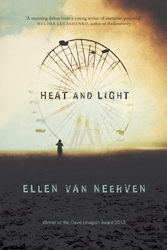
Ellen van Neerven, Heat and light, book cover

Keneally and a fellow judge strongly supported Pascoe, but I resisted, arguing instead for the merits of Ellen Van Neerven’s Heat and light, a dazzling work of fiction I considered of greater depth and literary worth than Dark emu. In the end we agreed that Pascoe and Van Neerven should share the prize.

I have reviewed both of these books (links on the titles), and for what it’s worth, I agree with Grant (despite the fact that, as he admits himself, “Dark emu has certainly had the greater cultural impact”).

Regardless, I’m sharing this because it beautifully introduces David Free’s article in last Friday’s The Sydney Morning Herald. Free is an Australian journalist and novelist who is not, I admit, well-known to me, but his provocatively titled article, “Judge a literary prize? No thanks, they’re all a giant waste of time”, makes some points worth sharing.

He starts anecdotally by sharing his experience of being asked to “serve on the judging panel of one of Australia’s most coveted literary prizes”, which he chooses not to identify. This doesn’t really matter in terms of what I want to share. He decides not to accept the invitation, largely because “the prospect of sitting down with a couple of strangers [the other judges] to haggle about our respective tastes in literature struck me as radically unappealing”. You can see why I started with Grant’s experience. Anyhow, he says

My literary taste is unorthodox, by current standards. I happen to think it’s sound and I do my darnedest to defend it in my criticism. But I’ve never been bold enough to imagine that my literary judgements amount to objective, provable truths.

Of course, this idea of suggesting that something is “best” dogs prizes in the arts, whether they be for books, paintings, films, whatever. We all know it, but prizes do have their benefits. Arguably, they can enhance sales, and the big money prizes do give their winners breathing space, an opportunity to devote some more time to their art.

If, however, we put these pros aside, and focus on the idea of prizes identifying works that we might like to check out, then I think Free has a couple of interesting ideas to consider.

The first one is to abolish judging panels and have “one judge only – a different person each year, chosen strictly on the strength of his or her literary expertise.” He knows the idea sounds “farcical”, that “people would denounce such awards as arbitrary”, as just an “expression of some random person’s taste”. He counter-argues, however, that the idea that panels make better decisions is a “furphy”:

It doesn’t matter how discerning each individual judge is. When human beings get together in groups, weird things happen. We feel pressured to conform – to say what we think we’re expected to say rather than what we believe. That’s why the verdicts of literary juries tend to be predictable, wholesome, obedient to the winds of trend.

I think he has a point. Do you?

It’s his other idea, though, that appeals more, because it aligns with my own use of awards. He suggests that we scrap the concept of the lone winner:

Let’s have a prize where there isn’t even a shortlist – a prize where the judges just announce their longlist of the year’s 15 best books, then split the winnings 15 ways.

This is more like it. He continues:

Admittedly this wouldn’t turbo-charge book sales the way our existing awards do, but in the long run it might promote a healthier relationship between fiction and the reading public. If diversity and inclusion are what we want, why not showcase these qualities on a longlist, instead of pretending they can somehow be embodied by a single writer? On longlists there’s room for different writers with different talents, doing all sorts of different things. There’s room for the quirky, the experimental – maybe even the humorous, once a decade or so. Sniff around a longlist for a while and you’re likely to find at least one book that floats your boat.

Isn’t this what all of us who look at longlists (and to some degree shortlists) like? It avoids the whittling down, he says, and all those arguments about which writer’s “turn” it might be, or which identity group has or hasn’t had a “fair shake already”.

Ultimately, he says, the best verdict is posterity. “Either a work lasts or it doesn’t … Crowd wisdom of that sort is very hard to argue with”. Actually, I think you can, because the “crowd” itself is often skewed, but I take his point, theoretically speaking.

Meanwhile, I will continue, as I have said elsewhere, to enjoy long- and shortlists, because that’s where many of the gems truly are.

What do you think?

Monday musings on Australian literature: Recovering Australia’s Indigenous languages (2)

2021 National NAIDOC logo.

Yesterday was the start of Lisa’s (ANZLitLovers) 2021 Indigenous Literature Week which coincides of course with NAIDOC Week, and, again, I’ve decided to contribute this week’s Monday Musings to the cause. The topic I’ve chosen, the reclamation of First Nations languages, was partly inspired by last week’s Monday Musings on Eliza Hamilton Duncan, but also follows up a post I wrote early last year on the topic.

According to academic Elizabeth Webby, Dunlop was the “first Australian poet to transcribe and translate Indigenous songs, and [w]as among the earliest to try to increase white readers’ awareness of Indigenous culture”. Dunlop also created vocabularies of the local language. Consequently, her work, like that of other colonials, is helping language reclamation projects around Australia. Of course, if settlers hadn’t stolen land and destroyed culture, and hadn’t actively suppressed language, in the first place, this arduous work would not be needed.

Each year NAIDOC week has a theme, and 2021’s is “Heal country, heal our nation” which, the website says, “calls for all of us to continue to seek greater protections for our lands, our waters, our sacred sites and our cultural heritage from exploitation, desecration, and destruction.” Given the significant role played by language in maintaining culture, a post on language reclamation is, I think, relevant to this theme.

‘The living voices of our past giving strength to our future’

This heading is the goal of a 2013-established organisation, First Languages Australia. They are working, they say, to “a future where Aboriginal language communities and Torres Strait Islander language communities have full command of their languages and can use them as much as they wish to.” This is just one organisation working on the goal.

Another is Living Languages, founded in 2004 under another name. They describe their purpose as “to support the sustainability of Indigenous languages and Indigenous peoples’ ownership of their language documentation and revitalisation.”

It is difficult to assess the magnitude of the challenge because so much is lost, but Living Languages says that some 250-400 languages were spoken across Australia, or up to 700 and 800 if you include language varieties and dialects. However, they say, Australia has been “identified as one of five language endangerment hotspots worldwide, with only around 13 languages being passed on to children today”.

As I wrote in my previous post, First Nations communities vary in their attitude to sharing language outside their communities. This statement by the Kaurna people on the University of Adelaide’s language courses webpage clearly states their position:

Kaurna language and culture is the property of the Kaurna community. Users of this site are urged to use the language with respect. This means making every effort to get the pronunciation, spelling and grammar right.

Kaurna people reserve the right to monitor the use of the language in public. Users of this site should consult with Kaurna people about use of the language in the public domain.

Random projects and activities

There’s no way I could document all the projects – big and small – that are happening around Australia, so I’m going to share three (adding to those I mentioned in last year’s post) which exemplify the sorts of things that are happening.

Eidsvold State School Wakka Wakka program

Located in Queensland’s North Burnett Region, this school has developed, says the Teach Queensland website, a “unique language program” that engages the whole school with the local community and in learning the local Aboriginal language, Wakka Wakka. The local First Nations people support this program:

After several years of planning and consultation with Traditional Owner groups, the Wakka Wakka Corporation and the community, Eidsvold State School encourages all students and staff to speak to each other in Wakka Wakka using short phrases.

Mawng Ngaralk language website

Mawng is spoken in the western part of Arnhem Land in the Northern Territory. The site tells us that Warruwi School runs a Mawng language program and supports the 2014-established Warruwi Language Centre which runs other Mawng language activities. Do check out this website, because it contains a dictionary and many, many videos in which local speakers share their knowledge in ways that both document vocabulary and pronunciation, and show how the language is used in song and dance.

Paper and Talk workshop

This was a two-week workshop held in 2019, led by Monash University, in collaboration with Living Languages and AIATSIS. Its aim was “to help revive languages from five Aboriginal communities”: Anaiwan (NSW), Wakka Wakka (QLD), Yorta Yorta (VIC), Ngunnawal (ACT) and Wergaia (VIC). The workshop gave language researchers from these communities “the opportunity and skills to access archives and transform them into usable language resources”. They were, for example, introduced to resources, like an 1800s surveyors’ notebook, in which language were documented by early settlers (like Dunlop).

What about irretrievably lost languages?

Maïa Ponsonnet, who researches Aboriginal languages, though is not Indigenous herself, makes the point that “while there are very good reasons to deplore the loss of small languages, assuming this loss condemns cultural identity may be unhelpful and reductive to those who have already shifted away from their heritage language”. In her article in The Conversation she argues that reclaiming languages is important, but that over-focus on it can be hurtful and, in some circumstances, politically damaging for those whose languages are lost. Language, her research is showing, is “plastic”. Post-colonial languages like Kriol can be “shaped by culture”, she writes. “Even when language is replaced, culture can continue”.

Thoughts, anyone?

Click here here to see all my previous ILW/NAIDOC Week-related Monday Musings.

Monday musings on Australian literature: Forgotten writers 2, Eliza Hamilton Dunlop

When I started my Monday Musings sub-series on forgotten Australian writers a couple of months ago, I had a few writers in mind, including the first one I did, Helen Simpson. However, a couple of weeks ago, The Conversation published the latest in their Hidden Women of History series, and the subject was an Irish-Australian poet, Eliza Hamilton Dunlop. I figured that, being a poet, she also qualifies for my Forgotten Writers series. I hadn’t heard of her, but she has become well-known in academic circles, because of … well I’ll let The Conversation explain.

Anna Johnston, co-editor with Elizabeth Webbey, of the recently published collection of essays Eliza Hamilton Dunlop: Writing from the colonial frontier, launches her The Conversation article with

Eliza Hamilton Dunlop’s poem The Aboriginal Mother was published in The Australian on December 13, 1838, five days before seven men were hanged for their part in the Myall Creek massacre.

Dunlop, Johnston continues, had arrived in Sydney in February and was “horrified by the violence” she read about in the papers. Her poem was inspired by the evidence given in court about an Indigenous woman and baby who survived the massacre. In it, she condemns “settlers who professed Christianity but murdered and conspired to cover up their crime”.

The poem made Dunlop “locally notorious”, but “she didn’t shrink from the criticism she received in Australia’s colonial press”. She hoped

the poem would awake the sympathies of the English nation for a people who were “rendered desperate and revengeful by continued acts of outrage”.

So, who was this outspoken, confident woman?

She was born in Ireland in 1796. Her father was a lawyer, but her mother died soon after her birth. Soon after, her father moved to India, to be a Supreme Court judge, so she was raised by her paternal grandmother. Johnston writes that she grew up in a “privileged Protestant family with an excellent library”, and “grew up reading writers from the French Revolution and social reformers such as Mary Wollstonecraft”. She started writing at a young age, and had poems published in local magazines in her teens.

These poems reflected her interest in the Irish language and in political campaigns to extend suffrage and education to Catholics. After travelling to India in 1820, she wrote poems about the impact of British colonialism. Then, in 1823 she married book binder and seller David Dunlop, in Scotland. His family history inspired poems about the bloody suppression of Protestant radicals in the 1798 Rebellion.

According to ADB, she had previously married an Irish astronomer in Ireland and had two children, one born in Coleraine, Northern Ireland, in 1816. They don’t mention what happened to this husband, but they concur with Johnston about her marrying Dunlop in 1823. Johnston says that Eliza and David had five children in Coleraine, and that they were engaged there “in political activity seeking to unseat absentee English landlords”. Clearly, Dunlop was politically engaged from an early age.

The family left Ireland in 1837, arriving in Australia, as mentioned above, in February 1838. Husband David worked first as a magistrate in Penrith, before, in 1839, becoming police magistrate and protector of Aborigines at Wollombi and Macdonald River, where he remained until 1847. ADB’s Gunson says that “as a minor poet Mrs Dunlop contributed to the literary life of the Hunter River circle” and that “her acquaintance with the European literary world gave her a place of prestige, and though neither as talented nor radical as, for example, Charles Harpur, her contribution was original”.

Songs of an exile

She may not have been, as “talented” or “radical” as others, but Sydney University Press deems her a worthy subject. Their promo for the above-mentioned book says that, after the publication of “The Aboriginal mother”,

She published more poetry in colonial newspapers during her lifetime, but for the century following her death her work was largely neglected. In recent years, however, critical interest in Dunlop has increased, in Australia and internationally and in a range of fields, including literary studies; settler, postcolonial and imperial studies; and Indigenous studies.

One of those interested is Katie Hansord, who has an essay in the book and who has written about her on the Tinteán online magazine website. Hansord’s article is titled – surprise, surprise – “a forgotten colonial woman poet”. Hansord says that in addition to being a poet she was “a playwright, a writer of short stories, and a passionate advocate of human rights with a keen interest in politics”. She writes that

Dunlop’s poetry reflects her concerns with both gender and nationalism. It should be remembered that in its original publication, ‘The Aboriginal Mother’ was the fourth poem in the series ‘Songs of an Exile’ which Dunlop published in The Australian from October 1838.

The poem is easily found on the web, and has been included in many anthologies, but it is also in Hansord’s article, linked above. The poem was, as were many of Dunlop’s poems, set to music by Isaac Nathan, and performed in concerts at the time.

However, the point I wish to end on concerns the reception of “The Aboriginal mother” because it was, of course, controversial. Leading the negative charge was, apparently, The Sydney Herald, which essentially believed that Dunlop had “given an entirely false idea of the native character”(29 November 1841), that, in effect, the Indigenous people were not capable of such deep feelings.

Hansord says more about this in her article:

Elizabeth Webby has also pointed out that the Sydney Morning Herald* ‘which had strongly opposed the execution of the men involved in Myall Creek was for many years very hostile to her [Dunlop] and her work’ (Blush 45). This hostility seems also to have reflected a growing white masculinist nationalist agenda.

Hansord briefly discusses the construction of “Australianness” during the nineteenth century, a construction that privileged white Australian-born men. For immigrant Irishwoman Dunlop – who was also actively engaged in capturing Indigenous language and translating Indigenous songs – this was clearly not good enough. (You can find an example of an Indigenous poem captured in the original language and translated by Dunlop, in The Band of Hope Journal and Australian Home Companion (5 June 1958)).

Dunlop died in Wollombi in 1880, and is buried in the local Church of England cemetery. There is clearly much more to this woman, but let this be a little introduction to another interesting, independent colonial Australian woman!

* The Sydney Herald, founded in 1831, was renamed The Sydney Morning Herald in 1842.

Monday musings on Australian literature: Refugee literature

I had planned another post for this week, but that can wait, as Lisa (ANZLitLovers) has reminded me that it is Refugee Week, and I thought that should take priority. Lisa has posted on a book relevant to the week, and includes in her post a link to a reading list of books she provided last year. Do check her posts out, because she also briefly describes the successes and failures of Australia’s treatment of refugees.

Refugee Week was first commemorated in Australia in 1986 in Sydney, and became a national event in 1988. It runs from Sunday to Saturday of the week which includes 20 June (World Refugee Day), so this year it actually runs from Sunday 20 to Saturday 27 June. Its aim, as you can imagine, is “to inform the public about refugees and celebrate positive contributions made by refugees to Australian society” in order to encourage Australians to welcome them and help them become integral part of our community.

Before I get to my main topic of refugee literature, I thought it would be worth reminding us of a book that was not written by a refugee but which, among other things, makes a point about the contributions made to Australia by postwar European refugees. I’m talking Madeleine St John’s The women in black (my review). For baby-boomers, this novel brought back the suspicion with which Australians viewed, for example, the strange food introduced into Australia at the time, like salami, for example! My sense is that we learnt a lesson from this and are now more welcoming of the wonderful new foods refugees can bring to us. But, of course, refugees bring much more than simply food to a country. For St John’s Europeans, this included more cultured or intellectual interests, and greater equality between the sexes.

Recent refugee literature in Australia

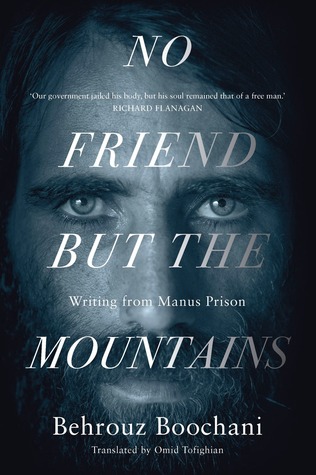
Behrouz Boochani, No friend but the mountains

There is a wealth of post-war European refugee literature published in Australia, but for this post I want to focus on more recent literature. And probably the best known recent work of refugee literature in Australia was/is Behrouz Boochani’s No friend but the mountains. As it turns out, this Kurdish-Iranian asylum-seeker to Australia has ended up in New Zealand. However, his book, which he wrote on a mobile phone and transmitted in a series of single messages, won the 2019 Victorian Prize for Literature and the Victorian Premier’s Prize for Nonfiction. It was translated from Persian into English by Omid Tofighian.

Refugee literature comes in various forms – memoirs, of course, of which Boochani’s book is an example, but also novels, poetry and drama. Most commonly, it’s the next generation whose voices are heard, than the adults who came here.

AS Patric, Black rock white city

These “next” generation writers include those who came as quite young children. They are true bearers of both worlds. Anh Do, author of the memoir, The happiest refugee, is an example. He came to Australia as a Vietnamese boat-person in 1980 when he was just a toddler. Nam Le, author of the short story collection, The boat, was a baby when his parents arrived here, also as Vietnamese boat people. Two of the stories in his collection deal specifically with the experience of migration, but all, as I recollect, confront the idea of survival which must surely have been inspired by his family’s experiences.

Another example is AS Patrić, who was a child when he came to Australia from Serbia (and the Yugoslav Wars). He won the Miles Franklin Award with his debut novel, Black rock white city (my review), which graphically portrays the feeling of displacement experienced by refugees.

Alice Pung, by contrast, was born in Australia a year after her parents arrived as refugees from Cambodia. She has written memoirs about her family, including Her father’s daughter (my review).

Indian-born Aravind Adiga’s novel, Amnesty (Lisa’s review), has recently been shortlisted for the 2021 Miles Franklin award. He is not a refugee, and does not live in Australia, but his novel deals with with some of the most complex issues confronting Australia at the moment, that of people coming to Australia via people smugglers, seeking asylum but not deemed to be refugees. This novel forces its protagonist to confront his status, while also looking at how his position in Australia makes this such an issue.

Refugee literature makes many contributions to our literature. One is refugee writers’ willingness to challenge literary norms and genres, and to push boundaries. Boochani and Patrić are particularly good examples of this. Another is the focus they bring to our perception of Australian culture and identity, confronting us with issues like racism and promoting social justice causes. Alice Pung’s writing exemplifies this. Both, though, force us to rethink the status quo, and to see both our literature and our culture through different eyes and we are, surely, richer for it.

I’m afraid that this is a brief post because, as some of you know, I am family and grandchild visiting in Melbourne. However, I hope I have done at least a little justice to Refugee Week.

I’d love to you to contribute to the discussion, with, for example, your own favourite examples of refugee literature – and why you like them.

Monday musings on Australian literature: Return of The Age Book of the Year

Early in my retirement, I spent quite a bit of time creating and editing articles on Australian literature in Wikipedia. I focused on a couple of subject areas in particular, Australian women writers and Australian literary awards. One of the awards I worked on was the well-regarded The Age Book of the Year Awards.

Gillian Mears' Foal's bread

They were established by Melbourne’s The Age newspaper, and were first awarded in 1974. For 15 years – between 1998 and 2012 – they were presented during the Melbourne Writers Festival (like the NSW Premier’s Literary Awards are during the Sydney Writers Festival.) They started with two awards – fiction and nonfiction – but in 1993, a third was added for poetry. One of the winning books from these categories was chosen as The Age Book of the Year. Sadly – at least, sadly for those who think literary awards have value – this award was cancelled in 2013. However, I have just read – in The Age of course – that it has been revived, and the winner will be announced, once again, at the Melbourne Writers Festival.

The revival was written up by The Age’s literary editor, Jason Steger:

In a double boost for writers, readers and the book industry The Age is sponsoring the Melbourne Writers Festival and reviving the Age Book of the Year award…

Apparently, The Age’s current editor, Gay Alcorn was “dismayed” when she joined the paper in 2020 and found that it no longer supported the Festival. Steger quotes her as saying, “I am thrilled that it has been rectified. The festival is about books and writing, ideas and debate in this city – exactly what The Age champions.” Even if you don’t like Awards, you will hopefully like this editor’s belief that a newspaper should champion “books and writing, ideas and debate”.

This year there will only be a fiction award, but there are plans to revive the other two categories and the overall “book of the year” in the future. With just three months to go, they’d better get their skates on to even do just one award this year! My web search has not found any further information about how the prize is going to be managed, how (or whether) books are submitted, and/or who will be judging. Neither is there any information about what the actual prize is. We will just have to wait.

We’ll also have to wait to see whether long and shortlists will be announced. For me, as a reader, these lists are as important as the award itself, as they provide good guides to what is going around.

Recap of Past Fiction Awards

You won’t be surprised that past winners of the fiction category include writers who are some of our biggest literary names, but before I share some of them, I should explain that the award was described as “Imaginative writing”. The result is that an early winner was a poetry collection – AD Hope’s A late picking – awarded before poetry was given its own prize. It also includes short stories, but as these are fiction, that shouldn’t be a surprise!

So, let’s look at some of the winners. Over the Award’s 38 years, there were 39 winners, as one year the award was shared. Of these, 16 were by women. The first award was made in 1974 to David Foster’s The pure land, and the last, in 2012, to Gillian Mears’ Foal’s bread (my review).

Book cover

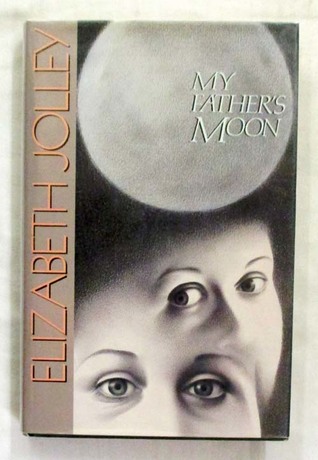
The writer who won the most awards is Peter Carey, with four, for True history of the Kelly Gang (2001), Jack Maggs (1997), The unusual life of Tristan Smith (1994), and Illywhacker (1985). One writer received three awards, Elizabeth Jolley, for The Georges’ wife (1993) (Bill’s review), My father’s moon (1989) (my review), and Mr Scobie’s riddle (1983).

Three writers won twice – David Malouf, Joan London and Thea Astley.

If you compare this award with other major fiction awards over the same period – such as the Christina Stead Award (NSW Premier’s Literary Award) and the Miles Franklin – you will see a large overlap in authors, but not so much in actual titles. In other words, Carey, Jolley, Astley, and so on, have won awards on each list, but for different books. Carey, for example, won the Miles Franklin in 1989 for Oscar and Lucinda, and the Christina Stead in 1982 for Bliss. Jolley won the Miles Franklin in 1986 for The well, and the Christina Stead in 1985 for Milk and honey, while Thea Astley won four Miles Franklins, but all for different books than her two The Age winners.

Of course, there are also authors who only appear on one list. Nicholas Hasluck, for example, won The Age’s award but neither of the other two.

None of this is particularly surprising. Occasionally, we see a book sweeping the awards, but mostly – and this is a healthy thing, I’d argue – the accolades and largesse are spread around.

What is worth noting but not surprising about The Age’s award and the other two I’ve mentioned here is that before 2012, very few authors from diverse backgrounds won. Since then, authors like Kim Scott, Michelle de Kretser, Melissa Lucashenko, Tara June Winch and Melinda Bobis have won literary fiction awards, and it has happened often enough for it to be no longer particularly commented on, which is as it should be. Presumably, The Age’s award will continue this trend.

We await the next move …

Monday musings on Australian literature: Reading and publishing, pandemic-wise

In his 1946 essay, “The prevention of literature”, George Orwell named “the unwillingness of the public to spend money on books” as one of the threats to literature. I commented in my post that I didn’t know how that stood now in England, but that I thought Australians were currently buying books. The week’s Monday Musings seemed a good opportunity to check this out.

It didn’t take long to confirm. Jason Steger, literary editor for The Sydney Morning Herald and The Age, reported on 4 June, in his weekly emailed newsletter, that:

total book sales in Australia, according to Nielsen BookScan, jumped by 9 per cent to 66 million in 2020 … It’s proof that even as we sink more and more time into streaming services and social media, we’re still finding entertainment and enlightenment in books, and increasingly so during times of crisis and change.

This confirms what the Australian and New Zealand book industry’s Books+Publishing reported last (southern) spring (30 September):

For the first eight months of 2020, adult fiction sales were up 12% in value compared to the same period in 2019, and children’s, YA and educational sales were up 7%, according to data from Nielsen BookScan. Only adult trade nonfiction was lagging slightly, with sales down 1%.

This includes some catch-up, because, apparently, sales were down 3% in 2019 after 5 years of “marginal growth”.

Unfortunately, the figures do not include “ebooks and audiobooks, as their sales aren’t tracked in Australia in any reliable way”. We don’t know, therefore, whether, with lockdowns, more people turned to eBooks, making the increase even better than they look.

On the other hand …

While this looks positive, it’s not evenly so. Books+Publishing notes that bookshops in major city centres and some shopping centres struggled – particularly in Melbourne with its long lockdown – while sales in suburban strip shopping centres and regional towns were up on last year. The major winners were the online retailers and discount department stores. I don’t know whether these “online retailers” include the bricks-and-mortar shops which introduced online options.

Book cover

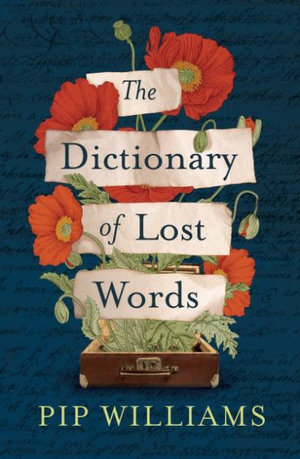
Books+Publishing also looked at the impact on publishing. They reported that major publishers “appear to have weathered the fallout from Covid-19 better than many of the smaller publishers, particularly those with titles doing well in discount department stores, chains and online retailers”. Many smaller publishers reported significant declines in sales. An exception was Melbourne’s Affirm Press which chose not to delay publishing any of its titles. It had excellent results with Pip Williams’ debut novel The dictionary of lost words which went into reprint in its first week.

Steger takes up the impact on writers, particularly debut authors who had “book launches, festival appearances and publicity tours cancelled”. He links to Melanie Kembrey’s article on how “six authors got their books published – in the hardest of times”. The article, actually, focuses more generally on these debut authors than on the impact of COVID-19, but a couple of authors do talk about it. Sam Coley, author of State Highway One, had a sense of humour about it saying:

Since you’re not going to make any money out of it, that’s the real fun part of it, drinking wine on our publisher’s expense account … It was disappointing. It was difficult to launch a book online and then still be inside your own house.

He also had a publicity tour of New Zealand cancelled (thus missing more excellent wine-drinking opportunities, I’d say!)

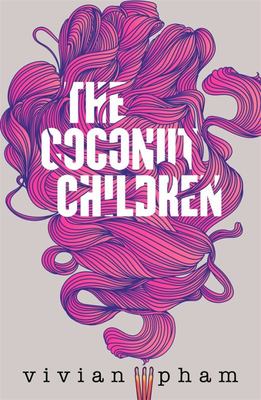
Vivian Pham, author of the well-regarded The coconut children, was “relieved” that the coronavirus meant cancellation of public events. It was a silver lining, for her, as it gave her time to process what was happening. She didn’t feel “ready”, having had no “public speaking” experience. She said she’d “mainly been doing online events and book clubs which feel really personal.” She liked that the pandemic “slowed things down” because it had been “overwhelming.”

Many of you will have seen/attended online events, like those mentioned by Pham. One lovely one that I attended was Writers in Residence, which focused on emerging writers. Blogger Lisa (ANZLitLovers) offered to host Virtual Launches and had three authors take this up.

What sold?

You may have noticed in the figures above that most areas increased, except for adult nonfiction which showed a small decrease. Steger reported in January on 2020’s bestselling books. He starts by noting a trend already under way, “the continuing absence of one of the staples of many annual bestseller lists, international and American fiction, particularly crime”. How interesting.

A decade ago, the top 10 books sold in Australia included only one Australian book (a cookbook), says Steger. However, in 2020, only two US books were on the list (one being Delia Owens’ Where the crawdads sing). Mark Newman, managing director of the 57-shop Dymocks chain, said there’s been a growing trend towards Australian stories. This started in 2016 with Jane Harper’s The dry. Novels which appeared in 2020’s top 10 included Trent Dalton’s All the shimmering skies and Jane Harper’s The survivors. Newman said that 2020 had been “particularly strong for Australian authors with new books.

Bruce Pasco, Dark emu

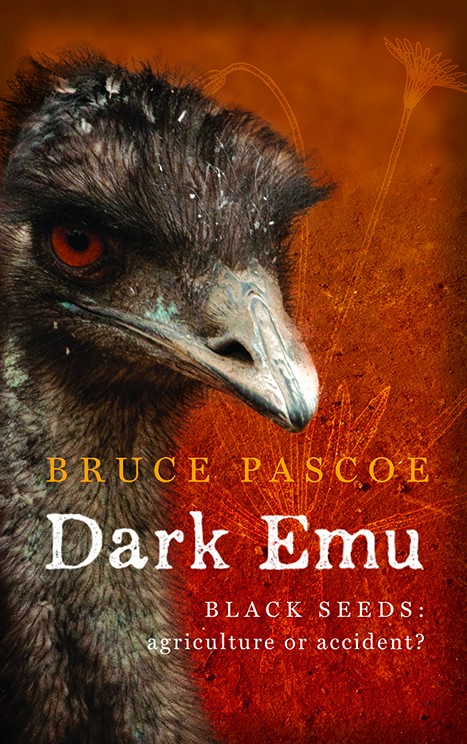
Other Australian books which appeared in the top 20 included Julia Baird’s Phosphorescence and Bruce Pascoe’s Dark emu which was first published in 2014.

Books+Publishing categorised what people were reading, and came up with “escapist fiction, self-help and children’s books (middle grade)”. According to Allen & Unwin, crime by both Australian and international authors, was selling well, particularly from “well-loved local and international authors … as people are looking for something they know they will enjoy”. This was not me. Although for reasons many of you know I read less, my reading preferences didn’t change.

Anyhow, Books+Publishing writes,

In the absence of browsing opportunities, established brands, titles and authors were the clear winners. ‘Debut literary fiction has been more challenging,’ says Sherwin-Stark [Hachette Australia]. ‘In normal times, our debut authors would be out and about meeting booksellers and readers on publication, and this has just not been possible.’

The impact of the lack of “browsing” is something I hadn’t considered. You can browse books online, but, do you? Do you?

Sherwin-Stark also says something that I’m sure many of us observed: 

“the pandemic has encouraged the industry to get more creative in their promotion. ‘Publishers and bookshops have been incredibly innovative to find ways to connect readers with authors—virtual events are excellent and attracting very large viewing audiences and these events will become a part of our promotional mix permanently.’

So there it is … a little round-up on the pandemic’s impact on the bookselling and publishing.

I’d love to hear about your experience of pandemic reading?

Monday musings on Australian literature: Memorable Australian fictional families

A bit of a fun post this week that I hope will engage you, regardless of where you live or what you read. This post is a sort of companion to one I wrote back in 2017 on Memorable Australian characters. I’ve had this post in mind ever since then, but have kept putting it off because – well – how many truly memorable fictional families are there in Australian literature? I have a few which I’ll share below, but first I thought to whet your appetite with some non-Australian ones like, of course, Jane Austen’s Bennets and Louisa May Alcott’s March family.

What makes a memorable family? Is it the relationship between the members? Is it the liveliness or some other strong characteristic of certain members? Is it the family’s ability to rise above misfortune or tragedy? Is it the chemistry of the family as a whole? Or is it all in the writing?

So, here is my list, presented alphabetically by the family’s name …

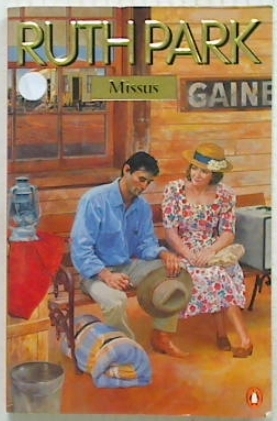
The Darcys: When I thought about this topic, Ruth Park’s Darcy family was uppermost in my mind. It comprises parents, daughters, a son-in-law and more as the books progress. I first read The harp in the south (1948) and its sequel Poor man’s orange (1949) in my mid-teens and I loved them because of the warmth of the family – they were real, they disagreed with each other, they struggled to make ends meet, but they fundamentally loved and supported each other. I also loved that nearly four decades later, in 1985, Ruth Park wrote a prequel, Missus (my review), in which she tells how the parents, Mumma and Hughie, met and got together. The thing about these books is that not only do they contain the story of an engaging family, but they tell an important story about early to mid-twentieth century Australia.

The Lambs and the Pickles: Winton’s two families, like the Darcys, have become classics of Australian literature – as is the house in which they live together, the titular Cloudstreet (1991). Park’s novels are very much about the Aussie battler, and so, in a way, is Cloudstreet, except that it’s a book of a different time and a different literary sensibility. Winton uses his families to confront us with our assumptions about who we are. Wikipedia quotes Australian picture-book author, Mem Fox, as saying “If you have not read Cloudstreet, your life is diminished . . . if you have not met these characters, this generous community, these tragedies, the humour. It is so wonderful.” Can’t say much better than that. For some, Cloudstreet is our GAN.

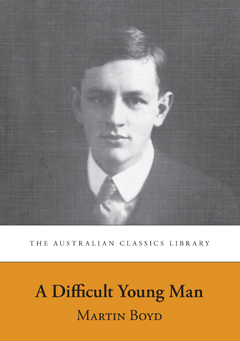
The Langtons: This family does not, I suspect, jump immediately into people’s minds, but Martin Boyd’s Langton Tetralogy, which started with The cardboard crown in 1952, and finished a decade later with When blackbirds sing (Lisa’s review), offers a fascinating insight into a very different sort of family to the Darcys, Lambs, and Pickles. The Langtons are well-to-do and are based on Boyd’s own, somewhat eccentric, intellectual and artistic family. They, the Langtons, think little of whizzing over to England when life is unsatisfying in Australia. I have read the second novel, A difficult young man (my review), and would happily read more. Wikipedia quotes academic Gillian Dooley on why these books may not as well-read today:

“Boyd’s subject matter is no doubt the principal reason for his neglect. By any standards, his prose is strong and luminous and his novels are beautifully crafted and immensely readable. But the late twentieth century had little patience with the scandals and vicissitudes of Anglo-Australian aristocratic families, with no apparent connections with convicts, sealers or whalers, or the indigenous people. Boyd was admittedly something of a good old-fashioned snob.”

Like Lisa, and I believe Dooley, I think Boyd’s novels are worth reading for their writing, their wit – and for their insights into a different place, time and people. I don’t agree with what seems to be a fairly common notion that the well-to-do are neither valid nor interesting to read about – particularly if the writing is of high calibre.

Ethel Turner, Seven Little Australians

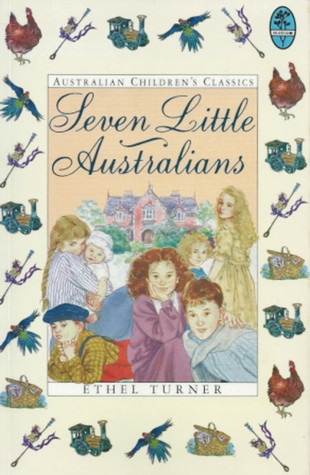
The Woolcots: If you don’t know who the Woolcots are, you are probably not Australian! They are Ethel Turner’s family in her Seven little Australians series. These are children’s books so the family focus here is on the seven children, their relationships with each other, and what they get up to. Apparently, according to Wikipedia, Seven little Australians, the first in the series which was published in 1894, was an instant hit in Australia and overseas. Here is some praise from Rockhampton’s Morning Bulletin (7 November 1894) which suggests why it was popular:

Because there is no preaching, or homilies on the evils of wrong-doing, children will read the book more readily, and they will be dullards who will escape the moral tone of it. Our authoress gives us nice descriptions of Australian scenery, all the more attractive that they are truthful and not over-coloured. Old hands, we dare-say, will pick holes in the book, but on the whole it is truthfully realistic. 

So that’s my (very) little eclectic list. I know there are others but my aim is not to be comprehensive but to start a discussion about some of the “classic” families in literature and why we like them.

Now, over to you. Who are your most memorable families, Australian or otherwise, and why?