Last Monday I wrote my Monday Musings post on graphic novels, in which I defined the term and noted that it was sometimes applied so widely as to include graphic nonfiction. I understand this from a practical point of view. After all, in public libraries and bookshops the goal is to organise books in such a way that readers will find them. Classification niceties are not the point. However, for me, here, it was a step too far, so last week’s post did not include Australian graphic nonfiction.
But, these books do deserve an airing, so, in a sort of part two post, I am going to list a few recent graphic nonfiction works. This will be a short post, because I am not going to reiterate the general information I posted last week, most of which applies as much to graphic nonfiction as to the fictional version.
Select list, plus some
This is a short list aimed at providing a taste of what is happening, which, in fact, doesn’t seem to be a lot when we are talking nonfiction in the graphic book format:
- Safdar Ahmed, Still alive: Notes from Australia’s immigration detention system (2021, Fantagraphics): graphic reportage blending autobiography and journalism, about the author’s experiences running art workshops with asylum seekers at Sydney’s Villawood Detention Centre; Ahmed won a Walkley Award in 2015 for his web comic Villawood: Notes from an immigration detention centre (see here).
- Dave Dye, The Anzac legend : a graphic history of Australia’s involvement in the Great War up to 5th of May 1915 (2014/2017 2nd ed, Wotsleft Books): a graphic history of Gallipoli and the ANZAC Landing; the NLA’s catalogue classifies it as “Graphic novels” and “Nonfiction comics”! (What?)
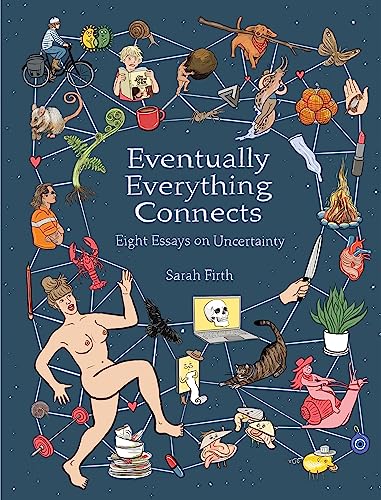
- Sarah Firth, Eventually Everything Connects (2023, Allen & Unwin): set of interconnected graphic essays that uses humour to explore everyday life, science, philosophy (including existentialism), and grief.
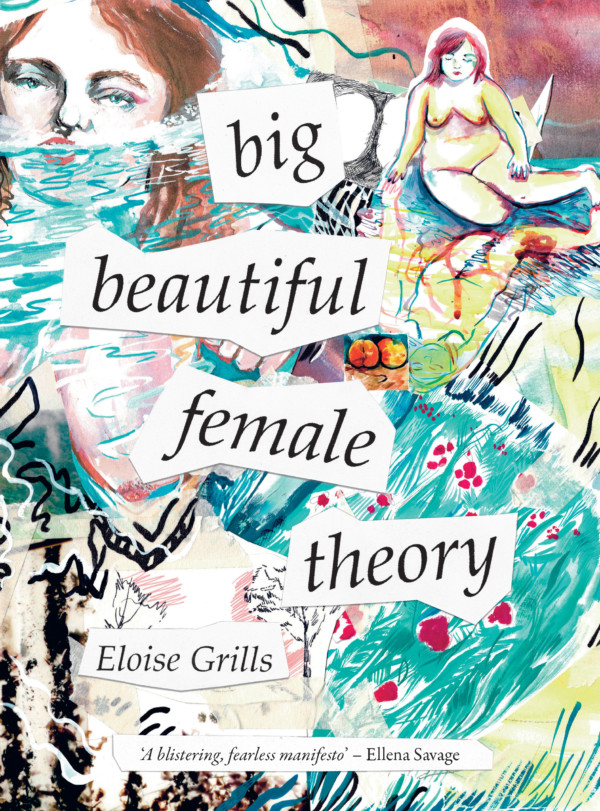
- Eloise Grills, big beautiful female theory (2022, Affirm Press): graphic memoir exploring contemporary life, womanhood, and body image; shortlisted for the 2023 Stella Prize.
- Mandy Ord, When one person dies the whole world is over (2019, Brow Books): graphic memoir, in the form of diary recording one year of Ord’s life, and attempting (said the Stella judges) “to pin down time, to capture the most beautiful and fleeting moments that we tend to rush past”; longlisted for the 2020 Stella prize.
- Joshua Santospirito, The islands where we left our ancestors (2024, Scribe): true story (memoir?) of the creator’s visit to Italy’s Aeolian Islands with his parents to search for past connections and family roots; “a tale of migration and return, of the rise to stardom of actress Ingrid Bergman, of the cheeky wind god Aeolus, of ancestry, place, and belonging…” (from Scribe).
- Sam Wallman, Our members be unlimited (2022, Scribe): explores the history of and necessity for labor unions; “history and argument … celebration and reflection … a reminder of the galvanising power of radical solidarity and of radical love” (Christos Tsiolkas).
There are many graphic nonfiction works for children too, but I’ll just share a self-published example, Laura J. Carroll‘s Making the Shrine (2024), because it captured my attention as something a bit different. It is described as an illustrated exploration of the history of the Shrine of Remembrance in Victoria, examining the memorial’s legacy and the stories of the people behind it. It comprises illustrated stories – history and dramatised personal anecdotes – associated with the Shrine. The National Library wrote a blog post on Carroll’s creation of this work, using her research in Trove.
I am intrigued by some – many – of these! What about you?
Have you read graphic nonfiction and, if so, I’d love to hear your thoughts.


The work on unions sounds interesting. I’m surprised how multi-faceted these all sound. A lot of US graphic nonfiction is like “Queer coming of age” or “that year I did [insert what happened].” I’d like to see more graphic memoirs from older authors. I’m noticing a trend of many in the US discussing the individual’s 20s from the perspective of their 30s, and it’s….tired, unfortunately, when you are not in your 20s.
Thanks Melanie. I love the variety here too. There are the queer stories too of course but there’s a range of social justice issues. The union one interests me in particular too.
Thanks WG,
This is a head space journey for me! I tend to back off from ‘graphic’ works because of their presentation and maybe because of a latent consciousness of the newspaper cartoons that I enjoyed as a child – ‘Denis the Menace’, ‘Ginger Meggs’ and the like… These days I appreciate the more text-based books…. Clearly, I’m underestimating the value of ‘graphic’ works to communicate stories and – from your post today – a broader range of information in general. Meanwhile, their specific style of presentation clearly has relevance and attraction for a wider range of creators and readers. I should stop ‘bouncing off’ graphic works and take a closer look!
Hi Sue, here’s my Treble Clef Reply —– I need to log in to post it though…. but have to get ready now to go out and see a lovely friend who I’m looking forward to meeting up with!
M xx
Thanks for persevering with making a comment M. I like your thoughts because they mirror mine to some degree too, but I have read a couple of graphic books that I have liked a lot. But still, I don’t gravitate to them. However, I have bought Cannon (in last week’s post and intent to give it a proper go!)
I really appreciate the diversity of graphic non-fiction too; as with my other reading, I tend to pick up the fiction most readily, but I have read about butterflies, about Japanese interment camps in North America during the WWII years, about a young woman’s experience watching her mother’s early-onset dementia, about another young woman’s struggles to reconcile her own relatively comfortable life and identity as an immigrant to North America with the memories (mostly kept secret) that her parents retained after leaving China behind as a young married couple and, of course, Maus (which is sometimes classified as fiction but is based on the author’s parents’ WWII experiences). Given that I don’t read very much non-fiction compared to fiction, I’m glad that this format introduces me to topics and perspectives I might not read if it was a 300page-long narrative.
Thanks Marcie. I think I’ve heard of a couple of those you mention – maybe through your reading. I
think Maus is formally regarding as nonfiction but falls into that gray area where some bookshops and libraries lump all graphical works together as graphic novels? I am looking forward to reading Cannon. I thoroughly enjoyed Gauld’s Goliath. Whimsical but serious.
Hi Sue, I am not a fan of graphic fiction novels or nonfiction books. I think for children, nonfiction graphic novels are good, as it might encourage them to obtain more information. But I prefer to read novels where I savour the descriptions, and I get more involved with the story. I am old, and think graphic novels is another word for comic novels. I was never a fan of comics.
Thanks Meg … no, I was never a fan of comics either. I did occasionally read some The Phantom comics but I don’t recollect ever seeking them out, buying them etc. I am more comfortable with textual description. I think this is why I also prefer live action over animation. But I CAN enjoy good art so I have enjoyed some graphic novels and animation.
Have you been away? I have a feeling you were travelling.
Hi Sue, yes, I have been away. I visited Iceland and England. Just finished reading Independent People by Halldor Laxness. There is no way this cold be a graphic novel!
I thought so. Sounds great. I read Independent people over 15 years ago. Great read isn’t it.
I have, but none of them are Australian – Maus of course, the graphic book that convinced me to give GN’s a try in the first place. Since then one called Radioactive about the Curies, plus a more recent one about Jane – The Novel Life of Jane Austen | Janine Barchas & Isabel Greenberg.
Like me Brona … I’ve reviewed a few on my blog, but none are Australian. I remember that Jane Austen one you did.