And so we enter – here Downunder – the last month of autumn which makes, I guess, this week’s starting book somewhat prescient with its hints of the darkness to come. Not that Australia experiences the darkness of some, but still… However, I am jumping ahead, because before I tell you about the book I should introduce the meme. It is of course Six Degrees, and if you don’t know it and how it works, please check Kate’s blog – booksaremyfavouriteandbest.
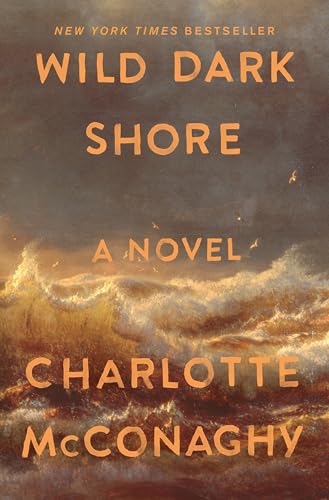
The first rule is that Kate sets our starting book. This month, she nominated another book I haven’t read, though it’s been popping up in awards lists recently, including a longlisting for this year’s Stella Prize, and is by an Australian author I have in my sights. The book is Charlotte McConaghy’s Wild dark shore.
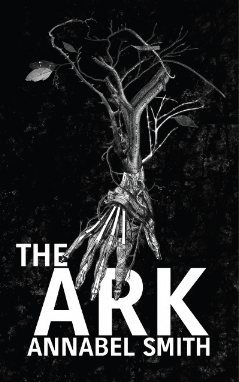
This book is ripe for links, with its various prize listings, its island setting, its cli-fi credentials, and its having a mystery at its core (apparently), but I’m going somewhere a bit different albeit relates to the climate issue. GoodReads tells me that it is set on Shearwater, a tiny weather-lashed island that is home to the world’s largest seed bank. So, my link is to the first novel I read that dealt with a seed bank, Annabel Smith’s The ark (my review). It made quite an impression on me, and not only because it was set in the Snowy Mountains which I love so much.
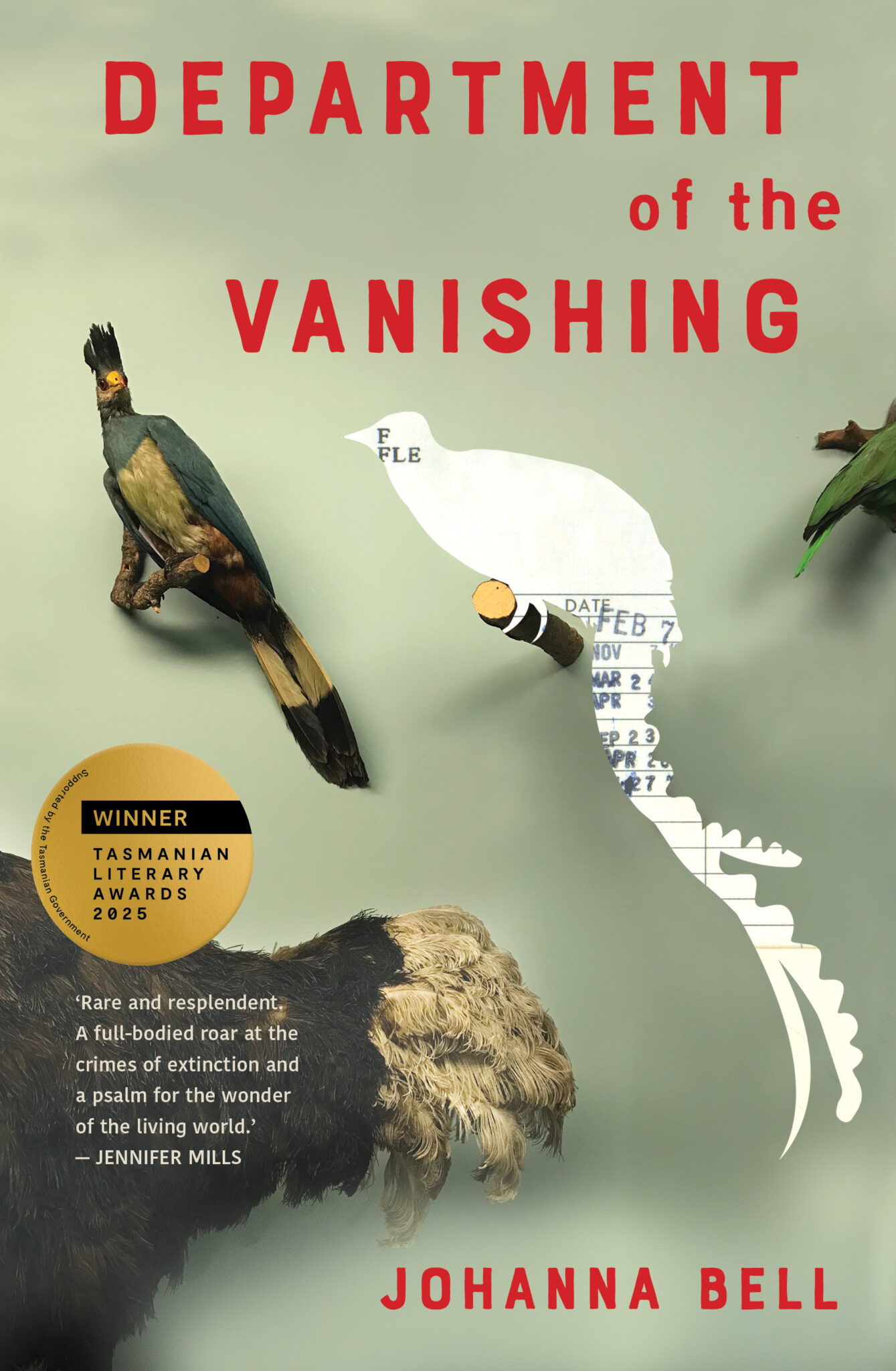
One of the reasons it made such an impression was its form. As I wrote in my review, it is a “modern” epistolary novel told through a variety of textual communications – emails, a blog, memos, reports, minutes of meetings, and news articles. Johanna Bell’s Department of the Vanishing (my review) is not exactly epistolary but it too is told through a variety of documents – lists, reports, minutes, notes, interviews, prose poems. In a second link to The ark, its subject matter is also about the drive to preserve natural history due to climate change.
Johanna Bell’s focus is birds, the extinction of species, with one species in particular threading through her novel, the lyrebird. Another novel which has one bird species threading through it is Carrie Tiffany’s Mateship with birds (my review), though in her case it’s kookaburras – and, while it’s set in a farming community, it’s not so much climate change-driven. The birds, however, do have something to do with Tiffany’s commentary on humanity.
Shifting a little from form and content, my next link relates to the author. Carrie Tiffany is a scientist by training, and so is Barbara Kingsolver. I have not read any of her environment-driven books, since blogging, though Demon Copperhead (my review) does have a nod to science in that it was inspired by the OxyContin epidemic in the USA – and who created OxyContin?
Demon Copperhead falls into that group of books I call big, baggy monsters, most of which – at least those I read – tend to be focused on social justice issues, so my next link is to another big baggy monster dealing with social issues. It is Andrew O’Hagan’s Caledonian Road (my review). It deals with a whole grab bag of contemporary issues – including toxic masculinity; intergenerational wars; racism; modern technology with its related concerns like security, privacy, hacking, and digital identity; disruption as activist action; financial corruption and malfeasance; foreign interference; and human trafficking – all of which are overlaid and connected by the traditional biggies – class, entitlement and privilege, economic inequality.
For my final link, I am picking up on an issue that brings about O’Hagan’s protagonist’s downfall. Campbell does not understand his privilege and the precarity of the lives of others. He is also confident in his charm. So it is that he is easily taken advantage of because he doesn’t fully understand technology, and trusts others. My link is to Colum McCann’s Twist (my review) which was inspired by McCann’s realisation of how vulnerable we are to sabotage of the cables beneath the sea that, essentially, carry our lives (our banking, our medical records, our private communications with each other, and so on). Should we be so trusting?
So, while my books have crossed the seas from Australia to the USA to England, before ending on the coast of Africa, most of them have had strong messages about modern sociopolitical issues. As is common in my chains, two of the four are by men. Less common is the fact that all are contemporary set.
Have you read Wild dark shore? And, whether or not you have, what would you link to?


I don’t remember seeing your review for Department of the Vanishing, but it is on my radar – it sounds fascinating.
It really is Brona. I loved reading it.
What a fascinating chain! I had a very hard time this month, since nothing I’d read about our starter book really “spoke” to me. You, however, found lots! Well done!
Haha, it’s funny isn’t it, Davida, how this happens. I’m glad you found my chain interesting.
Very. Thanks!
Your chain covers the Big Issues this month! I went down the eco-climate path too, but stayed on it until the end.
Mateship with Birds sounds intriguing.
Thanks Rose … I look forward to seeing yours then. And yes, Mateship with birds is really interesting. I nearly went from there to another older age romance, but the birds got me in the end!
I love an older age romance! What book were you thinking of linking to?
The bird link was terrific, it worked well.
Major Pettigrew’s last stand was one, because I’ve reviewed it! Or an Australian one, Never look desperate (they are 49 and 54), or, more complex, Andrea Goldsmith’s The buried life (43 and 57).
Thanks, I’ll check my library for the last two – have already read (and was charmed by) Major Pettigrew’s Last Stand.
Glad to be of service Rose. Both books deal with some interesting issues, and in fact, in Goldsmith’s book the older romance is not the main point.
I’m still waiting to come to the top of the list at the library of those wanting to read Wild Dark Shore. But I’m pleased to report that I have read three of your links: the Kingsolver, the O’Hagan and the Tiffany. Which encourages me to think I shall enjoy your other choices too. Great chain!
Oh, I like that you feel our interests might be similar, Margaret. I’m intrigued by the McConaghy, but am not sure I’ll get to fit it into my schedule.
It’s so hard to fit in all the books that sound appealing. Correction. It’s impossible.
It sure is … and even more impossible when you hit old age!!
When we – allegedly – have more time.
Exacting- tomorrow perhaps!
Great chain! Interesting how many people are linking to birds given the different paths to get there! 🙂
Thanks Rach … I haven’t had much time today to check other posts yet so I haven’t seen that yet. When I looked this morning not many were published yet!
Hi Sue, I have read Wild Dark Shore, and found it an okay read. My links are by titles set in Tasmania. Disquiet by Juliet Leigh: Past the Shadows by Favel Parrett: The Lightkeepers’s Wife by Karen Viggers: Great Alone by Kristin Hannah: The Light Between the Ocean by M L Stedman: Flames by Robbie Arnott: and The Living Sea of Waking Dreams by Richard Flannagan,
Thanks Meg. Did you read her Migrations. Did you like it better? Liked your Tasmanian links.
I’ve read just Mateship with Birds from your chain which I loved. Caledonian Road is squatting on my TBR shelves. Too baggy, or would you recommend it?
Haha, Susan, I love that you’ve read Mateship with birds. I guess my answer to Caledonian Road depends a bit on whether you like baggy monsters? I don’t mind them, when they are these social justice/realism type stories. This does cover a lot of ground, and is OTT in places, but I liked it. However, when I put in my three top picks from my reading group schedule last year, it was not one of them. Does that answer your question?
It does, and I shall give it a try. Thank you!
My pleasure, Susan.
An interesting assortment. That McConoughy (sp?) book pops a lot when ever I look up books online but not read it. The only one on this list I;ve read is Demon. I really enjoyed it but it is very long.
Haha, that it is Pam. I think McConaghy has quite a following, and this book, like some of her previous ones, has been listed for a lot of awards, which I guess is why it keeps popping up.
I knew I spelled her name wrong. I should read her and see for myself if I like her writing. 🌻
So should I!
Great chain! I love books told through different documents.
Thanks Cathy … I find them intriguing too. They require a bit more work to read but good ones are worth it, aren’t they?
I have read none of the books in your chain. I’m going to use islands as the connecting thread here:
Degree one will be What We can Know by Ian McEwan. It qualifies as climate fiction and island fiction, since the rising ocean has turned Great Britain into an archipelago. I forget which of the islands the narrator mostly lives on.
Degree two will be Lab Girl by Hope Jahren, whose laboratory by the end of the book is in Hawaii. It is not fiction, but since Jahren’s specialty is botany there is plenty about plants and seeds.
Degree three is On the Island by Thomas O’Croghan, set on Great Blaskett Island around the end of the 19th Century. The islanders told of had a thoroughly practical relationship with plant life, not at all a theoretical one.
Degree four is Njal’s Saga, set in Iceland about the beginning of the 11th Century. There is a connection here to Ireland, since apparently Njal is the same as Neill, and late in the book one reads of the Battle of Clontarf. (By the way, the Germans call Iceland “Island”, probably not just to confuse English speakers. )
Since we mentioned ice (and people do travel across glaciers in the saga), degree five is The Ice Age by Margaret Drabble, set almost entirely on the island of Great Britain.
Degree six, for old times’ sake, will be the The Odyssey, which takes place almost entirely on islands: Ithaca, Phaiakia, Calypso’s, Circe’s, Sicily, etc. In the first book, Telemachus, addressing Athena, who is visiting Ithaca incognito, says, I don’t suppose you walked here. The editor supposes this to be the sort of jape islanders liked to use on mainlanders.
This feels like a different chain to your usual one George though I can’t quite put my finger on why. I guess part of it is you’ve included people like McEwan and Drabble, though you do regularly include other contemporary novelists so maybe it’s not all that different! Lab girl sounds particularly interesting to me of those by authors I don’t know. The only one I’ve read is The Odyssey and to be honest I’m not sure I’ve read the whole lot!
I did like the island theme with some references to seeds and plants!
Lab Girl is a wonderful book. It gives an excellent picture of what it is to do that sort of scientific work. I’ve recommended it to a few of the young and their parents. Jahren, oddly enough, has, like Percival Everett, ventured into the world of Mark Twain fan-fiction. I think that she now lives in Finland.
I am not particularly found of McEwan–what I have read of his, I have read for our neighborhood book club. Drabble I think very well of, but I have read only two of her books.
Thanks George. I will keep Lab Girl in mind. McEwan has been prolific and I’ve only read a smattering, mostly his earlier ones. Two stick in my mind, Enduring love and On Chesil Beach, as powerful reads about human behaviour.
Charlotte McConaghy’s Wild Dark Shore is our book club read for the next quarter. I am yet to read it. And as Shore is an easy-to-use title, I have had a look at my readings and TBR and can give The Fatal Shore: History of the Transportation of Convicts to Australia 1787 – 1868 by Robert Hughes. I have read that and think it essential for anyone interested in the subject. I have also read The Long Green Shore, a novel of WW2 by John Hepworth that I thought superb, but it seems to have been left behind by the public at large. The Broken Shore by Peter Temple. Crime is not my genre, but I enjoyed this one more than I thought I might. I have a copy of Kafka on the Shore by Haruki Murakami on the TBR. I have yet to read anything by him but seem to have a few of his sitting here staring at me. And seeing as I have a Japanese writer, I will add a book I don’t have called When the Tsunami Came to Shore: Culture and Disaster in Japan edited by Roy Stars. The blurb says a “.collection of essays by an international group of leading experts on Japanese religion, anthropology, history, literature and music presents new research and thinking on the long and complex relationship between culture and disaster in Japan…” and it has a great cover, I don’t have it but want it.
Great links John. I know a few of these books, but not the Hepworth or the Stars. I’m not even familiar with those authors. BTW, you have shortchanged us, which is something I did when I started doing this meme, in that it’s SIX degrees from the starting book, not including it. So, if you have another SHORE title, here’s your chance.
Oops! How about The Farthest Shore by Ursula Le Guin. I read the first book in the series, A Wizard of Earthsea, when I was very young but cannot recall it at all. I doubt I will get to that again so doubt I will read this lol.
Well done John! You’ve completed the meme now!
Fun links as always! I have not read Wild Dark Shore but it sounds like a book I would really like! I think my first link would be to a novel called The Seed Keeper by Diane Wilson about Dakota women who saved their traditional seeds from being destroyed.
Oh, I like the idea of The seed keeper Stefanie. Sounds like a great first link.
There’s an earlier book by McConaghy that is easier to find in North America and I bet you’d enjoy it too, Stefanie! (It’s the only one of hers I’ve read myself.)
Great connections, WG!
There’s an earlier book by McConaghy that is easier to find in North America and I bet you’d enjoy it too, Stefanie! (It’s the only one of hers I’ve read myself.)
Great connections, WG!
Thanks Marcie … Is that Migrations? I remember when it came out that I wanted to read it.
Yes! I found it in my log last night, and was going to return today with the title. I thought the prose was beautiful and the story held me straight to the end.
I really must read it. That’s a recommendation!
Ok so now I’ve put Migrations on my library wishlist and I am surprised, and happy, to discover that there is actually a pretty long holds queue for it.
Haha… so it was the OTHER one! Migrations got quite a lot of positive commentary when it came out so it has stayed in my brain as something to keep an eye out for.
Oops, I read the comments out of order and was thinking it was you not Marcie who had read one before!!!
I love your list – so many interesting books I didn’t know about to add to my groaning TBR shelves, although I think I’ll pass on the big baggy monsters (love that as a description though).
I didn’t like Wild Dark Shore (although I’d read a couple of McConaghy’s previous books, this one was not for me) so I riffed off that and ended up at utopian sci fi (A Psalm for the Wild Built).
Thanks maamej, I’ll visit yours. I’ve seen more mixed feelings about this McConaughey I think than for previous ones.
Interesting that this book has stirred up mixed feelings – I’ve mostly only heard people gush about it.
I have seen quite a few mixed responses. I think now if I read her I should go back to Migrations.