Those of you who follow literary awards will know something of the history of the Queensland Literary Awards. Originally called the Queensland Premier’s Literary Awards, the award was established in 1999, but ended in 2012 when the then new Premier, Campbell Newman, controversially abolished them. There was an outcry, and very quickly the Queensland literary community came together to find sponsors and create the Queensland Literary Awards. They were administered by the State Library of Queensland, but through the hard work of a large volunteer community.
After a change of government in 2014, government support was once more provided for the awards, but the word “Premier” did not return to the title. The State Library of Queensland took over their management, and this continued until 2025. This year, the awards moved again, and are now part of the Brisbane Writers Festival. According to The Guardian this change was the result of last year’s controversy when the arts minister John-Paul Langbroek intervened to stop the library awarding a $15,000 black&write! fellowship* to First Nations author K Ren Wyld, over a social media post about the dead Hamas leader Yahya Sinwar. Some of you will remember that this resulted in the resignation of several of that year’s award judges. Political interference in literary awards is never a good thing. (You can read The Guardian’s report of this action, here).
So, the 2026 awards were announced during the Brisbane Writers Festival which was held earlier this month, from 8 to 11 October.
These awards have always been special, partly because they include specific categories geared to fostering emerging writers, First Nations writers, and short stories.
Queensland Literary Awards Winners 2026
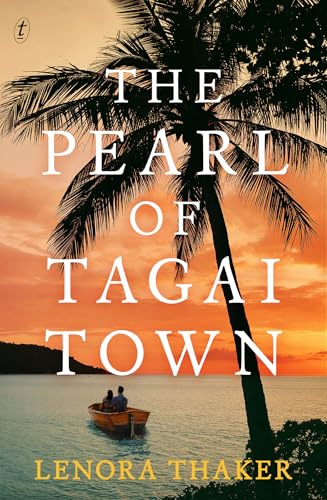
- Queensland premier’s award for a work of state significance: Lenora Thaker’s The pearl of Tagai Town
- Steele Rudd award for a short story collection (Biennial): Helena Pantsis, Mother salad
- Judith Wright Calanthe award for a poetry collection: Eunice Andrada, KONTRA (also won the Victorian Premier’s Award for Poetry, and was shortlisted for this year’s Prime Minister’s Literary Awards and longlisted for the Stella Prize) (see Jonathan’s review)
- Children’s book award: Zeno Sworder, Once I was a giant (also won book of the year at the Australian Book Industry awards and Victorian premier’s children’s literature award).
- Young adult book award: Julianne Negri, The belly of a wolf
- Fiction book award: Claire Thomas, On not climbing mountains (Brona’s review)
- Nonfiction book award: Micaela Sahhar, Find me at the Jaffa Gate (also won the Victorian Premier’s nonfiction award this year)
- Lord Mayor’s people’s choice Queensland book of the year award: Sita Walker, In a common hour
Four awards are described as development awards. These include the much admired David Unaipon Award which has produced some excellent books over the years:
- David Unaipon (Manuscript) Award for an Emerging Aboriginal and/or Torres Strait Islander Writer:Lukas Williams, When the circle speaks
- Manuscript Award for an Emerging Queensland Writer: Helen Crampton, The passion hunters
- Queensland Premier’s Young Writer and Publisher Award: Svetlana Sterlin
- Queensland Premier’s Regional Writer and Publisher Award: Abi Stephenson.
The major prize-winner, Lenora Thaker, is a Meriam and Wagedagam writer, and her debut novel, The pearl of Tagai Town, is historical fiction that was inspired by her ancestors’ lives in an unmapped shantytown known as Cairns-Malay Town in far north Queensland. This town, says The Guardian’s report on the awards (linked above), housed, from the late 1800s to the late 1950s, “Aboriginal and Torres Strait Islanders, as well as Chinese, Indian, Japanese, Malaysian and Sri Lankan residents who had been segregated from the white population”. Prior to winning this award, she had received a Boundless Mentorship (now Indigenous Writing Mentorship), a joint initiative between Text Publishing and Writing NSW, which is awarded to an unpublished Indigenous writer who has made substantial progress on a fiction or non-fiction writing project.
* Another part of this change, not surprisingly, has been the ending of SLQ’s management of the loved and successful black&write! program for First Nations writers. Earlier this year, Writing Australia called for submissions for a new approach to the program, one that will be “delivered within a publishing environment, strengthening pathways for First Nations editorial talent”. As far as I can tell, a new industry partner has not yet been found – or, at least, not yet announced.


I’m happy to see they include a short story collection recognition, because short stories certainly get the shaft. At least in the US, short story collections struggle to find a publisher.