Canberra Writers Festival 2025: 6, Poems of love and rage

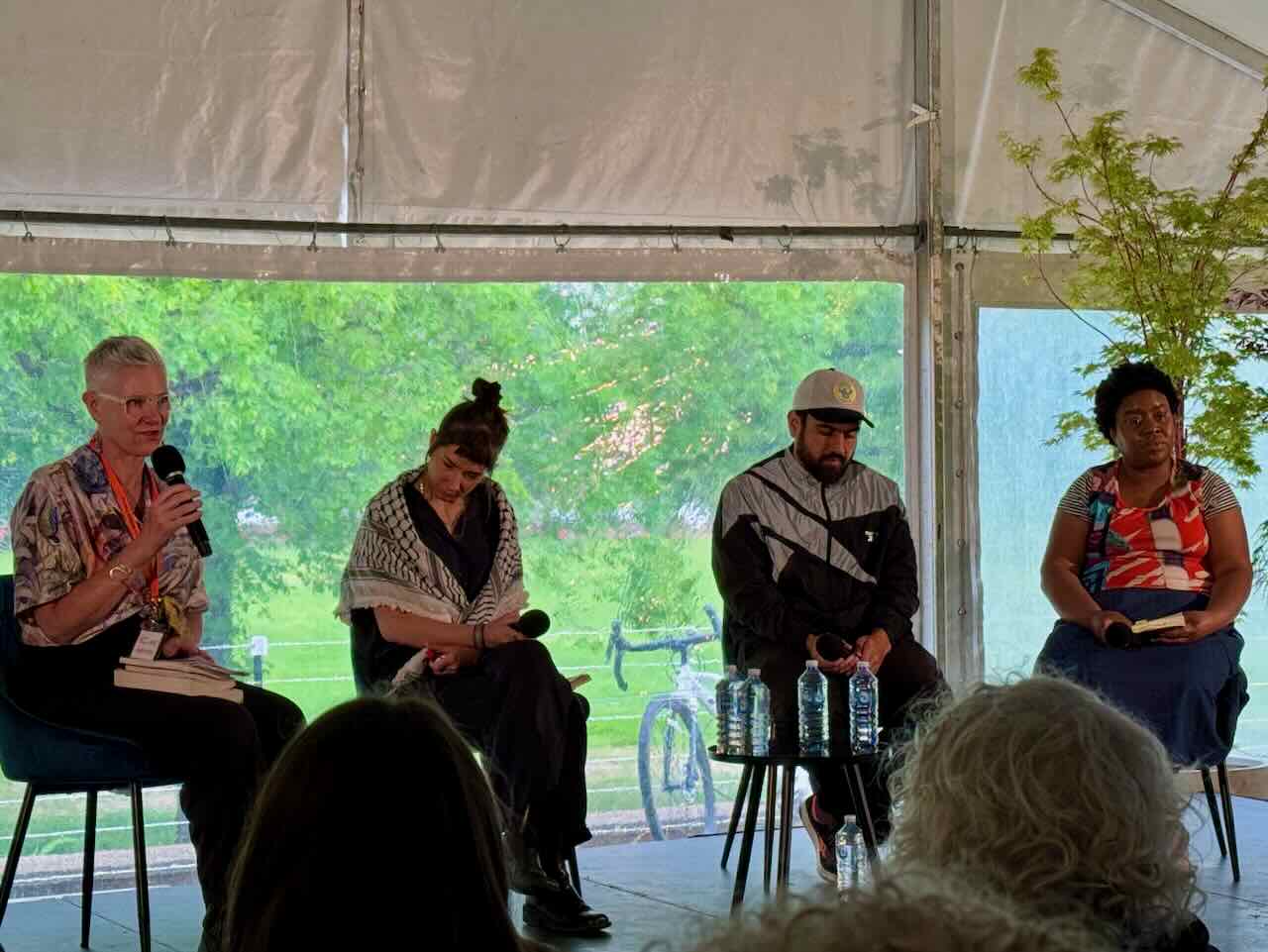
Evelyn Araluen, Maxine Beneba Clarke and Omar Musa with Jacqui Malins

The program described the session as follows:

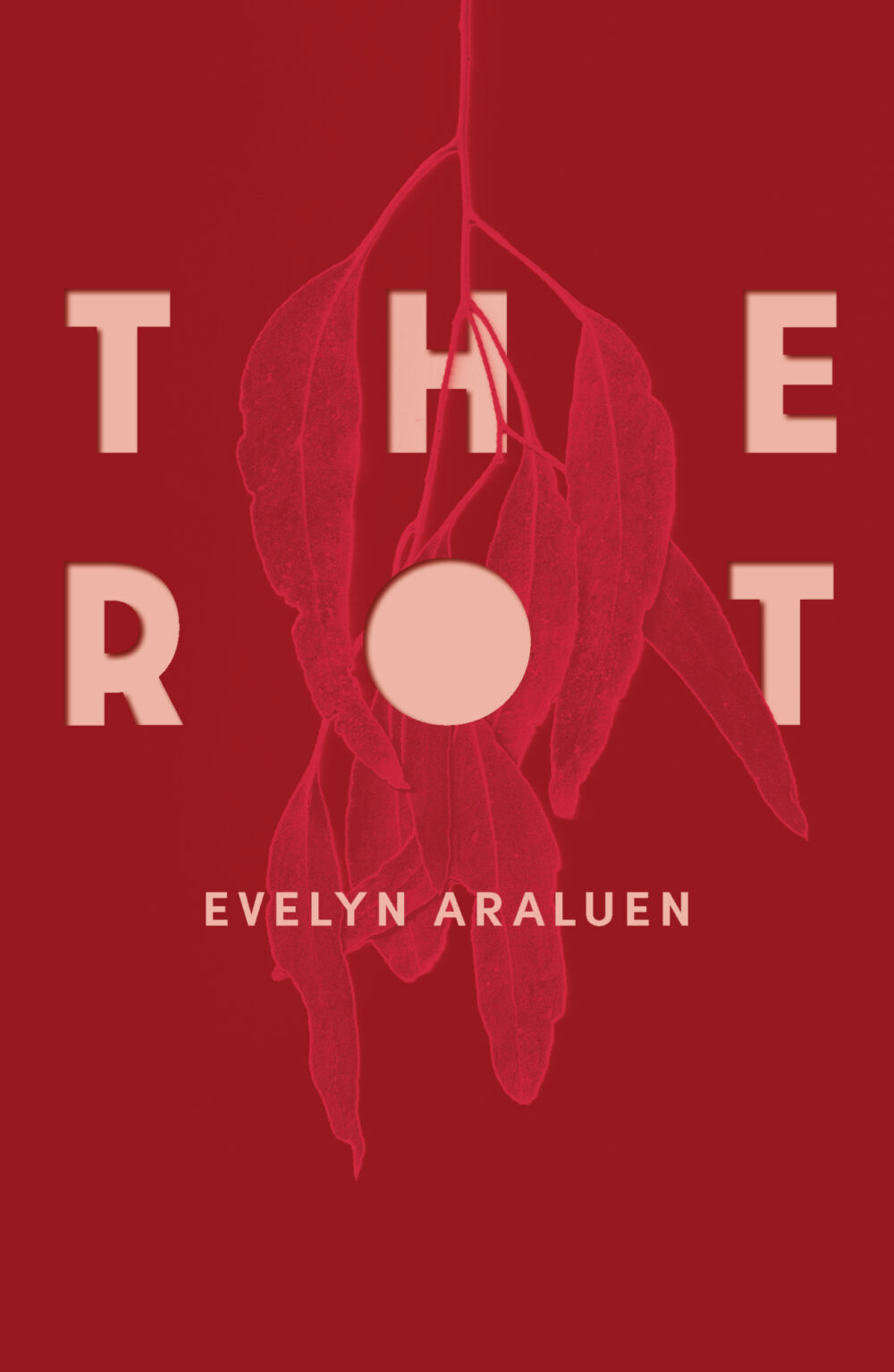
An electrifying highlight of this year’s program, our poetry panel features some of Australia’s most acclaimed and innovative poets putting love and rage on the page. Overland Poetry Prize winner Evelyn Araluen (The Rot) joins Maxine Beneba Clarke with Beautiful Changelings, and hometown spoken word artist Omar Musa. This session delves into the power of love, and the ongoing fight against oppression in its many forms. Don’t miss this powerful event. Moderated by Canberra author, artist and performance poet, Jacqui Malins.

For this event, we hardy festival attendees had to leave the warmth of the National Library building (or whatever building we’d previously been in), and walk through a little rain to a marquis on the Patrick White Lawns. It was worth the effort. Actually, it wasn’t that cold and wet, and the venue, with chairs on the grass and some lovely potted trees, made for a nice change.

As this session included poetry reading and performance, your scribe had a bit of a break from intense scribbling, but the notes I took have still ballooned. After acknowledging country, Jacqui asked each of the poets to choose a poem to read (or perform) that explores rage.

On rage

Evelyn explained that her collection is all love and rage, that it was written in the context of love of communities, network and solidarity, but informed by rage, by the futility of witnessing genocide from our phones while the government continues to provide material for weapons. She was thinking specifically about global capitalism. She read her poem “Girl work” from The rot. As I’m sure you all know, there’s something special about hearing a poem read by the poet. They know what nuances and rhythms they intended for their words. This is a deeply satiric and ironic poem about girls and work, girls and girly aspirations, set against “the machine” that will swallow them up. It’s confronting (“girly, you glisten in your soft tailoring … your coolgirl cleangirl chic”) and confrontational (“o girly, lift your head…”). The words are cleverly angry.

Jacqui commented on its exploration of how to live in the face of the onslaught while also trying to live day-to-day. She likes the thread in the collection of what to do with our hands, the twitching to act.

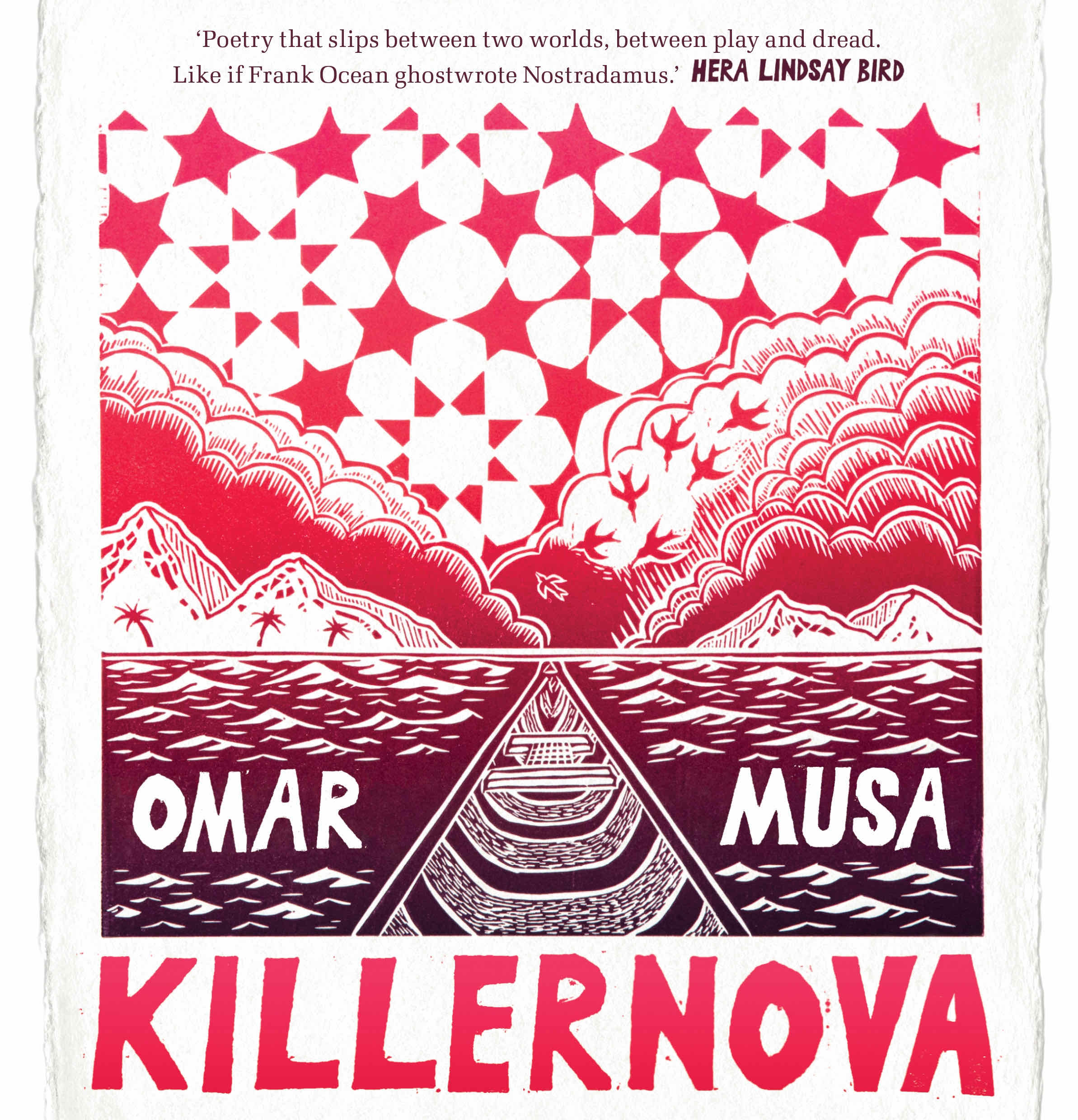
Omar, poet, novelist, musician and artist from Queanbeyan, “Palace of the Palarang, Venice of the Eden Monaro”, has published four books of poetry (the last being Killernova, see my post on its launch). A performance poet, he performed rather than read two poems, “To burning” (which you can see on YouTube performed with music by his wife Mariel Roberts) and an older one I’ve heard before, “UnAustralia” (on YouTube too). He too is enraged by politics which cares more about money than people (particularly brown, Muslim, and “other”) and the environment.

As Jacqui said, his poems contained an “extensive catalogue of rage” that hasn’t changed over the years since they were written.

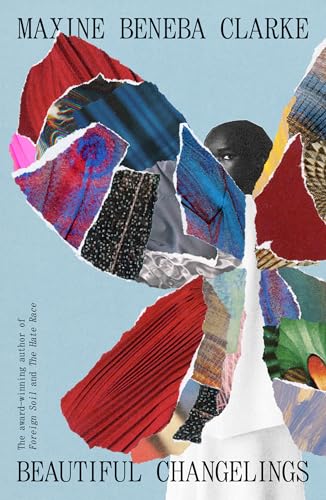
Maxine, reading from her just published book, Beautiful changelings, took us to somewhat different places. Like Araluen’s book, her focus is women. Araluen’s is described as a “liturgy for girlhood in the dying days of late-stage capitalism” while Clarke’s is about “ageing, womanhood, motherhood” with “wrecking-ball revisitings of the myths, mantras and fairy tales fed to girls” (from back covers and promotional materials). The first poem she read, “A good wait”, was inspired by her role as chauffeur for teenage children. It is more humorous than overtly angry, but has a layer of anger all the same for parents, particularly women, who are expected to put their needs – including their work/careers – second to those of their children.

She then read a section from a longer poem, “Major complications”, which explores rifts in contemporary feminism. It was inspired by feminist witch t-shirts and the Salem witch-hunts, and draws on the story of Tituba, “the witch that would not burn”. I loved the line – I think I got it right – “Tituba made sure they got the complication they asked for”.

On writing poetry inspired by rage

Omar grew up angry. Ppoetry was is pressure relief valve. He talked about his Malaysian inheritance and a way of expressing yourself that alchemically transforms rage to a different state, that enables you to legitimate anger. (I missed the details because I didn’t catch the Malaysian word.) It’s reductive to delegitimise rage.

For Evelyn, rage was explicit to her project. Referring to the success of Dropbear (my review), she said what an enormous privilege it is for a poet to be read. It’s unusual. Her book is in schools, and she hears from teenage girls. This made her think about her responsibility to her audience. She feared she could be immobilising girls into despair. She was inspired by Revolutionary letters, a poetry collection by Beat poet Diane di Prima, who turned practical things into revolutionary action.

Maxine (whose memoir, The hate racemy review – is also in schools) related to this audience idea. She talked about being a woman and getting older, and the rage that brings. There’s poetry and reaching for poetry. Bigots, she said, aren’t going to pick up poetry. Further, more than with prose, people come to poetry with openness. An interesting point. How, she said, does she make sure that her rage is poetry.

Jacqui wondered about rage turning into polemic, and love into sentimentality. Are these risks ?

Omar said not necessarily. “UnAustralia” is a polemic poem. He hopes poems can work on different levels, such as rallying the base and educating others. Poets use their tools to smash open the door, using different weapons for different battles. Jacqui agreed that preaching to the converted has a role.

Evelyn commented that “people like shitting on sincerity”, that the elite will say they “hate slam poetry” but don’t go into those rooms and see the work. This is “cringe culture”, at work. We have a bad relationship with sincerity. (This idea spoke to me.) Performance offers a strong introduction to poetry, performance poets put their whole heart into their work. What is it that brings people through the door? How much affect is effective? Research suggests that the most significant trigger for engaging people is to activate emotional sensibilities.

Maxine added that in 2025 earnestness is not cool, but then people will perform emotions on Instagram!

On love

Jacqui asked the poets to end with a poem written through the lens of love. Maxine read her tribute to being an aging woman, her love letter to growing older, “I want to grow old”. It mentioned several older women models, like the late Toni Morrison, and included lines like “speaking slow and exact and only sense” and “I want to grow old spectacularly”. Omar read two poems, one to his cellist wife, and one to a childhood friend (noting that friendship can be our greatest love affair.) Evelyn, who at first feared she didn’t have one, read the last poem in her collection, “I will love”.

This event was in a small venue, but had a decent-sized audience. Poetry always moves me a little out of my comfort zone, but I’m glad I took the risk!

Postscript: It was notable that the three poets were people of colour, albeit from very different backgrounds. Interestingly, of the 7 sessions session I attended, five comprised only white (I believe) participants, and two comprised all people of colour. I did, however, only attend 7 of a large number of sessions, so mine may not be a good sample. Nonetheless, shaking it all up a bit – people’s backgrounds, genres, forms, and so on – could energise discussions.

Canberra Writers Festival, 2025
Poems of love and rage
Sunday 26 October 2025, 12-1pm

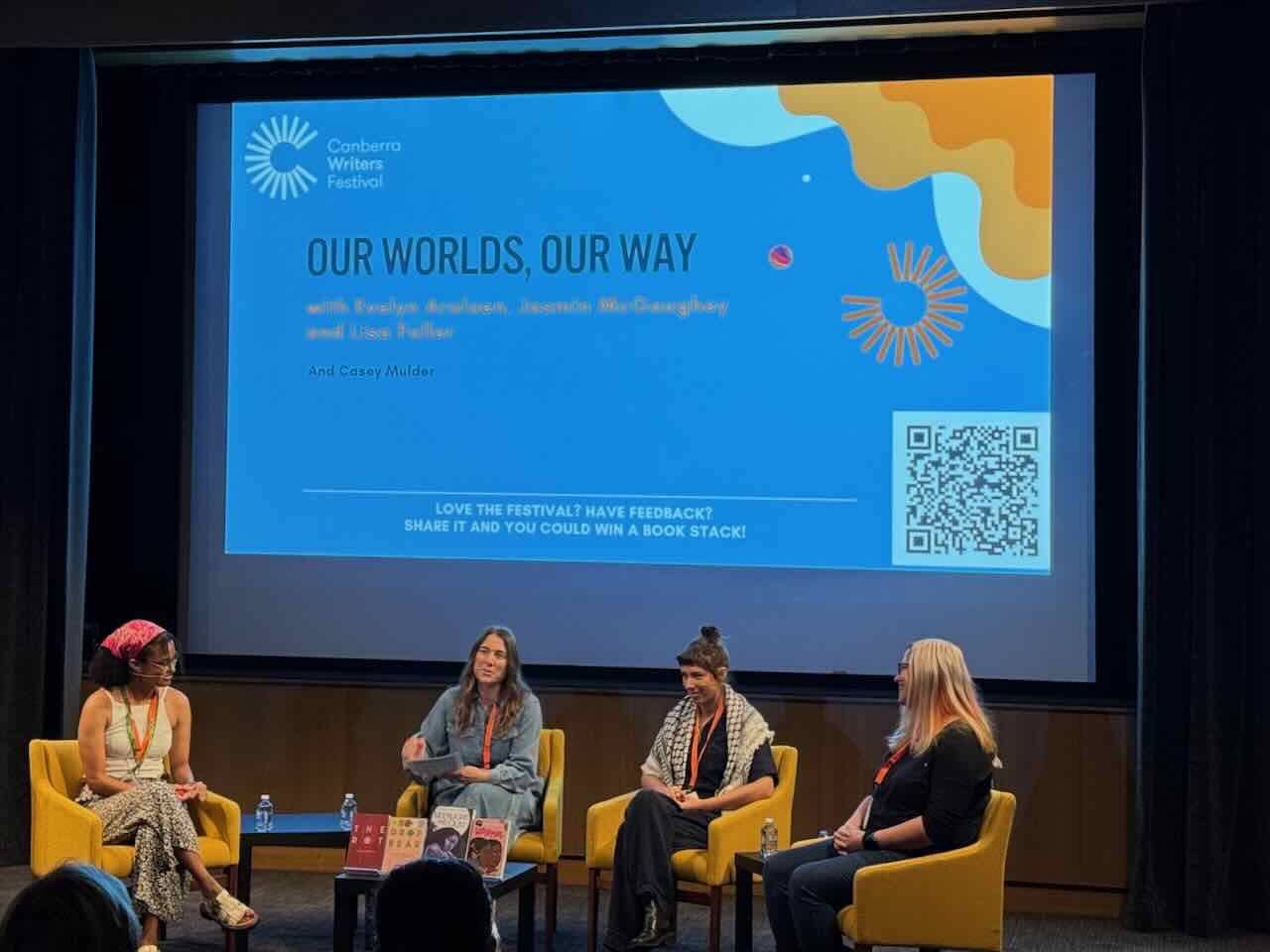
Canberra Writers Festival 2025: 5, Our worlds, our way

Evelyn Araluen, Jasmin McGaughey and Lisa Fuller with Casey Mulder

The program described the session as follows:

Join this exciting First Nations panel including Evelyn Araluen, Jasmin McCaughey and Lisa Fuller to explore how culture and Country influence each author’s writing. Spanning poetry, YA and children’s novels, how do Indigenous worldviews emerge? As First Nations writing and publishing thrives in Australia, this event offers a unique chance to look across genres and celebrate creativity and connection. Moderated by Ballardong Noongar educator and writer Casey Mulder, co-curator of Rivers Flow.

Casey Mulder asked Lisa Fuller to acknowledge country, which of course she did, and then introduced herself as from Noongar country but having been a high school English teacher in the East Kimberley, before obtaining a mentorship at Magabala Books. She is now a freelancer editor.

She then introduced the three panel members:

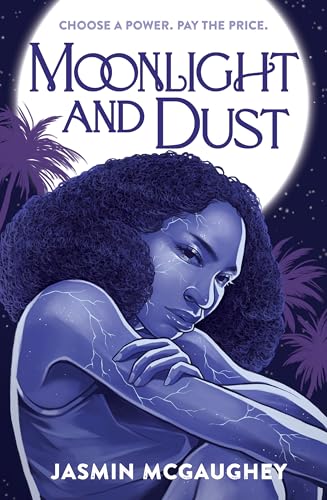
  • Jasmine McGaughey, Torres Strait Islander and African American writer who has written the YA fantasy novel Moonlight and dust and Ash Barty’s Little Ash series.
  • Evelyn Araluen, Goorie and Koori poet, editor and researcher, born and raised on Dharug Country and in the Western Sydney Black community; writer of two poetry collections, the Stella winning, Dropbear (my review) and The rot.
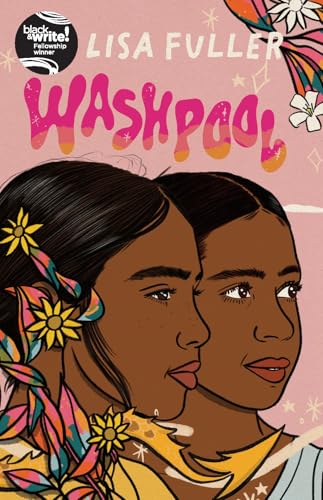
  • Lisa Fuller, Eidsvold Murri writer, now living on Ngunnawal and Ngambri lands; writer of children’s literature, short stories, poems and memoir, including YA fantasy novel Ghost bird, picture book Big big love (with Samantha Campbell, and winner in the 2025 ACT Literary Awards, my post), and the middle grade fantasy Washpool.

Then the conversation began … I’ll add first though, that I kept thinking this session was “our words, our way”. As it turned out, it was all about Worlds and Words.

On their experience of storytelling when growing up and how country speaks to their work

Lisa spoke of her origins in a small place inland of Bundaberg, brought up by a single mother and with no internet or mobile phone. She grew up with books. Washpool is fantasy, so she did not need go through the permissions and protocols which First Nations writers do when writing about country. However, she’s been told the book has a strong sense of country, which the panel agreed is because the First Nations worldview of country as alive seeps through it. The book was written for her “niblings”, and was intended as fun.

Evelyn started by commenting that her niece loved the pink cover of Washpool. She grew up within the diaspora Aboriginal communities between the Hawkesbury Valley and Blacktown in Western Sydney. Her great grandfather is from Bandjalung (near Clarence River). Her mother’s side is from Dirty Swamp near Molong in Wiradjri country but due to aggressive pastoralism (colonisation) they don’t know their clan name. Fragments of culture are coming back through oral traditions. The country she grew up on is being destroyed by industry, and she has lost family through mesothelioma. She, like so many, didn’t grow up on country, because of the colonial project. Many in her diaspora community do not know where they come from. People on missions learnt songs from each other, and are transmitting songs and stories that belong to other nations. It is a constant process of healing and repair, as oral traditions are shared and passed on. The biggest “place” in The rot is the Internet, but she couldn’t stop thinking about Bandjalung.

Jasmine grew up in Cairns, but with a father from Alabama, and a mother from the central islands in the Torres Strait (low lying sandy islands, which are dying because of rising water). She currently lives in Darwin, but misses Queensland, which she described as a “casual version of Australia”. That got a chuckle from the audience. (I loved hearing her story because of my recent trip to Cape York and the Torres Strait, and because I am Queensland-born.) She has a “love-hate” relationship with Cairns, but believes it doesn’t get enough “page-time”. There were no stories for her to read about TI when she was growing up. Storytelling is big in her family. Her mother would try to find books with people like her. Then she made the point of the session for me, which is that the stories told in fantasy and sci fi, with their plots of colonisation, of dispossession, are their lives. Lisa Fuller’s Ghost bird felt like her life, because it was about teen adventures, but they were still connected to family. (How lovely is that.)

She then referenced the State Library of Queensland’s black&write! program, which she described as best practice for First Nations publishing. Casey agreed, saying it is great having First Nations people involved in editing and publishing, rather than always having to educate white editors and publishers.

On their writing and story-telling practices

Jasmine spoke, somewhat laughingly, of being a millennial so was “a Twilight girl”. She mentioned Lisa Fuller’s article, “Why culturally aware reviews matter” (see here), which articulated the tension she was dealing with. She wrote a short story, “The breaker”, which became a novella, and then her novel. It is nothing like Twilight!

Lisa spoke to how culture is embedded in work. She was struggling with writing Ghost bird. She was in Canberra, surrounded by other cultures, and couldn’t write, so she had to go home. She wrote for the teenagers who want to see themselves in books. She talked about books in libraries, about romances set on stations in which First Nations people were either invisible, or idiotic station workers or the noble savage. Her niece asked for her book to be in the school library, but Lisa has never been asked to speak at the school. First Nations kids need to have books that show good things about their lives and cultures. Fantasy speaks to otherness and the post apocalyptic world they live everyday! (There’s that point again.)

Evelyn spoke to where “our world, our way” fits into her practice. Drop bear was all about colonialism, about things like May Gibbs’ little white bush babies getting about on First Nations lands. The Rot is about how young girls are configured socially, politically, economically; about the fetishisation of their deaths; about Palestine, and the constant documenting of the brutalisation of bodies on our phones; about the compulsion in western media to tell some stories and not others, to fixate on pain and violence. She talked about the glorifying of youth, the devaluing of women as they age, and that she is loving growing older as a woman. She wanted to understand the damage she felt, and the resentment she had (through reading things like Wuthering Heights at the age of 11.) She sees her role as doing analysis. We weren’t imagined as readers, she said. She wants to make First Nations people visible, and to make visible the impact of the erasure they’ve experienced.

The discussion turned to white writers asking about writing “Aboriginal characters” because they see a problem and want to fix it! Evelyn tells such writers is to read all the work they can by First Nations writers, and then they won’t ask the question. They’ll see that the best they can to is to lift and support First Nations writers. Casey added that white Australians need to go on the journey ourselves, and not ask them to do it for us.

There was some sharing of pet hates, such as being asked, “if we write Aboriginal characters, is it an Aboriginal story”, or describing a fantasy written by a First Nations person as allegory. First Nations editors and publishers don’t make these mistakes.

Q & A

I’d like to write high fantasy from different cultures, can I (or should I not) include First Nations cultures? The response was that the question to ask is, why do you want to do it? Without educating yourself, you will inadvertently write stereotypes. You would need sensitively readers. You need to think about what harm you might do, because you want to lift up, not put down. The panel admitted that even coming from a culture, there are things they don’t know. There are permission and protocol processes because First Nations cultures are community-based.

Is there an international community of First Nations writers supporting each other as there seems to be within Australia? The panel mentioned various initiatives and experiences, but noted that Australian is remote. There is Red Room Poetry’s anthology Woven, comprising poems from First Nations poets from around the world; and the Trans-Indigenous literary studies movement that started around 2012. There are communities and networks, and members of the panel had their own connections, such as Jasmine finding peers in the Oceanic region. Despite what we think about the US, they are ahead in what they are doing, publishing-wise.

This was valuable session, but hard to write up. I hope I have been respectful and accurate.

Canberra Writers Festival, 2025
Our worlds, our way
Sunday 26 October 2025, 10-11am

Wayne Bergmann and Madelaine Dickie, Some people want to shoot me (#BookReview)

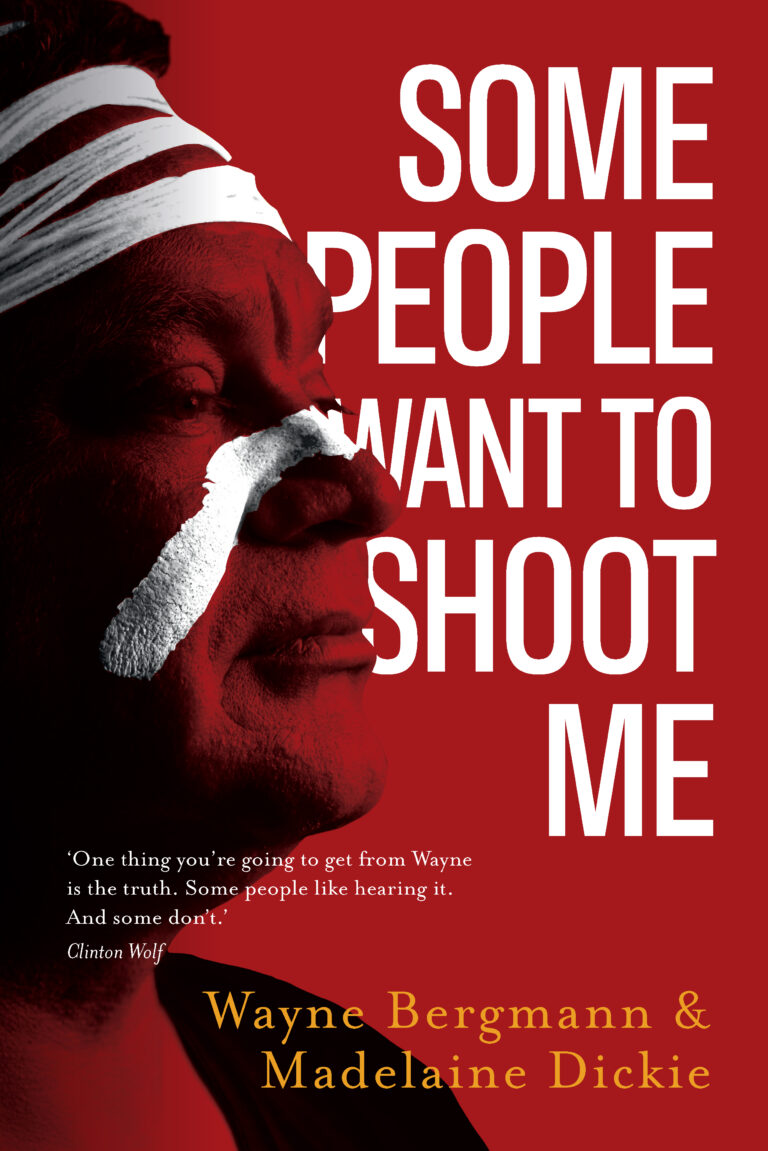
Having finally read Wayne Bergmann and Madelaine Dickie’s Some people want to shoot me, I am not surprised that it has been shortlisted in the Nonfiction category of this year’s Western Australian Premier’s Book Awards. It is moving; it is clearly written; and it is informative about big issues. Wayne Bergmann is a Nyikina* man and Madelaine Dickie a kartiya (white) woman, making this one of those collaborative novels I wrote about recently.

Before I continue, a little on its form. This is a work of nonfiction. It is essentially memoir, written in third person by Bergmann and his collaborator, Dickie. And, being a memoir, it has a specific focus. In this case, it is one underpinned by a powerful sociopolitical message concerning the right of First Nations people to survive and prosper on their own land.

“walking in two worlds”

So … Some people want to shoot me is about a man who realised he must walk in two ways – the kartiya way and the old people’s way, that is the white way and the way of his traditional culture. For his heart and soul he needed to walk the traditional ways, but in his head, seeing the suffering and the social and economic dysfunction caused by dispossession and powerlessness, he had to walk the kartiya way. The book exposes just what a tough balancing act this was – and is. It demanded (demands) strength, bravery, nous, clarity of purpose – and the support of family.

The book opens with a Prologue which sets the scene. It’s 2011 and Bergmann, who is at breaking point after years of negotiating on behalf of Kimberley Traditional Owners, walks out of a meeting with a mining company and heads, with his wife and children, back to country:

to the mighty Martuwarra, the Fitzroy River – lifeblood of Nyikina country, Wayne’s country, his children’s country – made by Woonyoomboo when the world was soft.

From here, the book starts in Chapter 1 the way memoirs usually do – at the beginning. For Bergmann, the beginning is Woonyoomboo who tasked the Nyikina people to look after country. This they did, until the arrival of white settlers in the late 19th century, when things “radically changed”. The first two chapters chronicle some of this change through the lives of Bergmann’s forbears. It depicts a world where the legacy of nuns, monks, ethnographers, pastoralists and miners “was still felt acutely”, where “frontier massacres had occurred within living memory”, and “where justice, under whitefella law, didn’t often grace Kimberly Aboriginal People”. Bergmann, who was born in 1969, saw this, felt this, and took on the pastoralists, mining companies and governments to “upend the status quo”.

Of course, such upending doesn’t come easily, and the people doing this upending aren’t always understood and appreciated, which is where we came in at the Prologue. The book details, chronologically, Bergmann’s work, from his early work with the KALACC (Kimberley Aboriginal Law and Culture Centre) and his realisation that for Aboriginal people to be empowered under Western law and able to make systemic changes, “they needed to understand the kartiyas’ law system inside out”. So, he did a law degree, and then, at the age of 33, became CEO of KLC (Kimberley Land Council) and here is where the really hard work started, and it was not pretty. It demanded every ounce of energy, intelligence and resilience, he could muster.

Bergmann had to be clear about the role, which was, as a native title representative body, “to facilitate a process and follow procedure in accordance with native law to allow Traditional Owners (TOs)” to make decisions “about their country”. This meant consulting with the TOs and ensuring they understood what they were being asked for and what was being offered. When stakes are high, emotions also run high. Some environmentalists, for example, would turn against TOs (and thus the KLC) when their views diverged, but sometimes TOs believed that some development was advantageous to their people. Then, of course, there were times TOs didn’t agreed with each other, or when there was disagreement between TOs and others in their communities. This is to be expected, of course. Do all kartiyas agree? But, it makes for very difficult times, and Bergmann was at the centre. As well as working with the relevant Kimberley TOs, Bergmann was also negotiating with the Western Australian government and, for example, the Woodside mining company, negotiating not only the actual agreements, but for money and resources to carry out consultations so that the TOs could come to the table well informed. All this is explained clearly in the book, making it well worth reading for anyone who has not followed native title cases closely. It’s both enlightening and chastening.

Bergmann made some significant deals, but it was a bruising time, so after a decade, wiser and with a clear view ahead, he moved on to establish KRED Enterprises. A charitable business, wth the tagline of “walking in two worlds”, its aim was (and is) to support cohesive Aboriginal economic development in the Kimberley, to encourage businesses run by and for Aboriginal people. The rest of the book covers Bergmann’s work – under the KRED umbrella and in other areas (including buying a newspaper, the National Indigenous Times) – all focused on the one goal, to pull his people out of poverty and disadvantage, to ensure they have the opportunities available to all Australians, and in so doing to improve their lives and outcomes. Nothing less will do.

We had to create some wealthy Aboriginal organisations, and wealthy Aboriginal people, so we could shape our own future, on our own country.

Woven through the accounts of Bergmann’s work are stories about his personal life, some good times but also the egregious attacks his wife and children faced at the height of his KLC work. We come to see the truth of Dickie’s description of him in her Introduction, as “demanding, smart, intensely political and visionary”. This is a man who puts himself on the line because he is driven to see First Nations Australians prosper.

Some people want to shoot me packs a lot into its 223 pages. That it covers so much, with great clarity and readability, is due to the writing. It’s well structured, and employs some narrative techniques, including evocative chapter titles and the occasional foreshadowing, which keep the story moving. At the end of the book is an extensive list of Works Cited and a Select Bibliography, which provide authority for what has gone before, if you need it.

Meanwhile, here are some words by another First Nations leader, Clinton Wolf:

One thing you’re going to get from Wayne is the truth. Some people like hearing it. And some don’t.

This book tells Wayne’s story, and I did like hearing it. It’s a great read about a great Australian, telling truths we all need to hear.

* First Nations cultures are orally-based, which results in inconsistent spellings when their languages are written. This post uses the spellings that Bergmann and Dickie use in their book.

Wayne Bergmann and Madelaine Dickie
Some people want to shoot me
North Fremantle: Fremantle Press, 2024
223pp.
ISBN: 9781760992378

Monday musings on Australian literature: Collaborative story-telling between First Nations Australian and white writers

National NAIDOC Logo (2025)

NAIDOC Week 2025 started yesterday, and as I have done for many years now, I am devoting my NAIDOC Week Monday Musings to celebrating First Nations writers in some way.

This year is a particularly special year because it marks NAIDOC Week’s 50th anniversary, 50 years it says, “of honoring and elevating Indigenous voices, culture, and resilience”. The 2025 theme is “The Next Generation: Strength, Vision & Legacy,” and is intended to celebrate not only past achievements achievements, “but the bright future ahead, empowered by the strength of our young leaders, the vision of our communities, and the legacy of our ancestors”. 

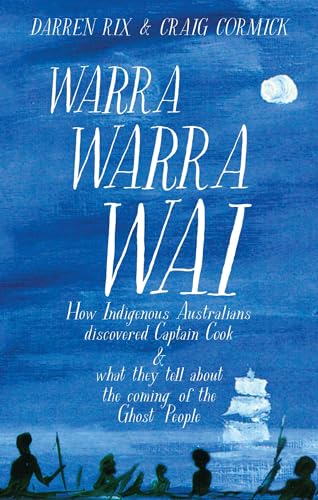
.Now, over the years, I have written posts on a wide range of First Nations writing and storytelling, was wondering what to write about this year, when a couple of weeks ago this idea of collaborative writing projects popped into my head because I’ve come across a few in the last few years. Then, at the ACT Literary Awards last Thursday night, another such collaboration was not only shortlisted but won the Nonfiction award. The book is Warra Warra Wai: How Indigenous Australians discovered Captain Cook & what they tell about the coming of the Ghost People, and is by Darren Rix and Craig Cormick. That sealed the deal!

In the introduction to this book, Darren and Craig, the names they use to sign off the Introduction, say that:

This book has been a blackfella-whitefella collaboration, because too much of our history has been written by one voice only, and we need to find more collaborative ways to tell our past, present and future.

I would love to discuss all the collaborations I’m going to share in this post – including researching how the collaborations worked, who did what, and how differences (if any) were resolved – but that would be a big project. I have, however, met some of the writers involved, and have followed some of the projects on social media, so I am aware of some of the processes the writers followed. For now, though, I will share what Darren and Craig say in their Introduction:

In this collaboration, we each worked to our strengths. Craig did most of the work in the archives, and Darren did most of the oral interviews – and the people we talked to got the final say on the text. The stories we gathered belong to the individuals and communities we visited. This is their book.

Selected list of collaborative books

This list is presented in alphabetical order by the name of the first author listed on the title. I did think about dividing it into two lists – one fiction, one nonfiction – but decided that all these books aim to share truths about our society and culture, whether told within a factual or imaginative framework, so one list it is. (Links on authors’ names are to my posts on that author.)

There has been a lot collaborative publishing in the children’s literature sphere, over a significant period of time, but I’ve been less aware, until relatively recently, of similar activity in the adult sphere.

Wayne Bergmann and Madelaine Dickie, Some people want to shoot me (memoir, Fremantle Press, 2024, on my TBR): shortlisted for Nonfiction Book of the Year in the Western Australian Premier’s Book Awards.

Craig Cormick and Harold Ludwick, On a barbarous coast (historical fiction, Allen & Unwin, 2020, my review): a re-imagining of what happened when Captain Cook’s Endeavour was wrecked off the coast of Far North Queensland.

Aaron Fa’Aoso with Michelle Scott Tucker, So far, so good: On connection, loss, laughter and the Torres Strait (memoir, Pantera Press, 2022, Bill’s review): apparently the first memoir by a Torres Strait Islander to be commercially published, which means it addresses “the under-representation of Torres Strait Islander perspectives in Australian life”. You can read more about it on Tucker’s website.

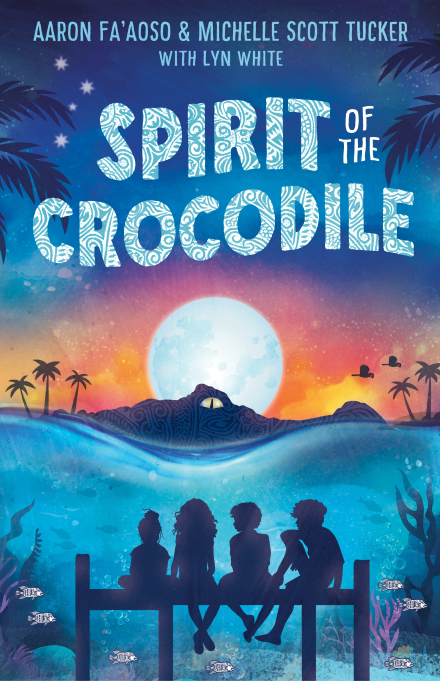
Aaron Fa’Aoso and Michelle Scott Tucker with Lyn White, Spirit of the crocodile (YA fiction, Allen & Unwin, 2025, on my TBR, Bill’s review): a coming-of-age novel set against the challenges to the Saibai island community of climate change.

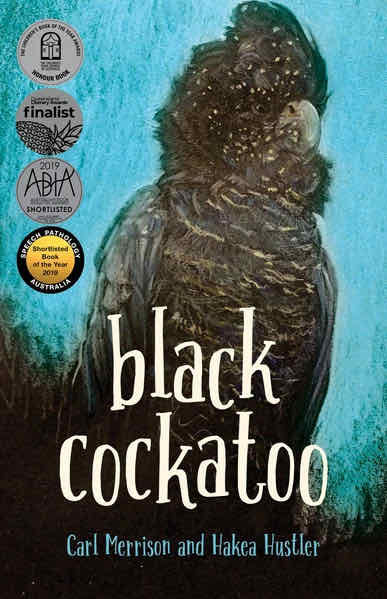
Carl Merrison and Hakea Hustler, with Dub Leffler (illus.), Black cockatoo (YA fiction, Magabala Books, 2018, my review): pleasingly, this book was in my Top 10 visited posts last year, and is in the Top 20 this year to date.

Boori Monty Pryor and Meme McDonald, Maybe tomorrow (memoir, 1998, my review): one of the first books I reviewed on this blog. Pryor has focused much of his life’s work on helping young people feel strong in their culture.

Boori Monty Pryor and Jan Ormerod, Shake a leg (Children’s picture book, Allen & Unwin, 2010): one of several children’s book collaborations involving Boori Monty Pryor.

Darren Rix and Craig Cormick, Warra Warra Wai: How Indigenous Australians discovered Captain Cook & what they tell about the coming of the Ghost People (history, Scribner, 2024, on my TBR): follows Cook’s journey up “Australia’s” east coast, visiting the places he renamed and gathering the local people’s stories.

Nicolas Rothwell and Alison Nampitjinpa Anderson, Yilkari: A desert suite (“unclassifiable” but fiction, Text Publishing, July 2025, on my TBR)

As the word “selected” conveys, this is not intended to be a comprehensive list, but an introduction to the range of collaborative writing that’s been happening. However, I (and readers of this blog I’m sure) would love to hear of other First Nations-settler collaborations, including from other parts of the world.

Click here for my previous NAIDOC Week-related Monday Musings.

Have you read any First Nations-white writer collaborations? And if so, care to recommend any?

Monday musings on Australian literature: Historical fiction by First Nations writers

With this weekend in Australia being a long weekend for Australia Day (or, Invasion Day), I decided that the best thing I could do would be to write a post promoting historical fiction by First Nations Australian writers. While there are First Nations historians writing histories, I figure more people read historical fiction, given I’d like to encourage us all to broaden, fill out, revise our understanding of Australia’s history, then historical fiction seemed a good place to start.

Of course, there’s the obvious proviso. Historical fiction is not history. However, I believe that good historical fiction does provide truths about the past that can inform our understanding of what happened. Historical fiction by First Nations writers ensures that this understanding extends beyond the point of view of the victors to that of those who were displaced and dispossessed. Historical fiction can also provide some facts, but we can’t assume what we read is factual. It is fiction after all. All the books I list here have some basis in fact, but how much, and what sort of fact varies. All, though, offer important truths.

The books – which include some I’ve not read – are listed in rough chronological order by their time setting, and organised under some broad “eras”, because while some issues are overarching or ongoing, there are experiences and ideas particular to different eras. Stories that encompass multiple timeframes are listed under the earliest one. Where possible, and to the best of my ability, I have identified places using both their local and settler names.

Early settlement

The books set in this period explore what happened when white settlers first appeared on land belonging to First Nations peoples. These novels explore the clashes that occurred, the mistakes that were made, the possibilities for doing it differently or the moments where it might have gone differently, and the ultimate dispossession of the traditional owners.

Jane Harrison, The visitors (2021): 1788; Warrane/Sydney Cove: reimagines the arrival of the First Fleet from the perspectives of elders from seven nations (Brona’s review).

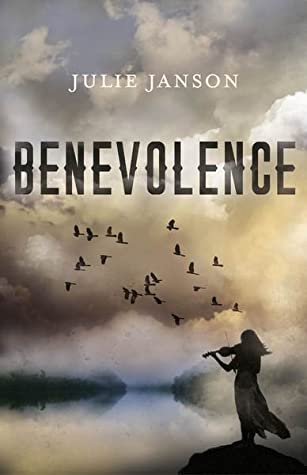
Julie Janson, Benevolence: 1816-1842, Dharug Nation/Western Sydney: based on the author’s ancestor, tells the story of Muraging who, when around 12 years old, is handed over by her father to the Parramatta Native Institution, in the hope that she will help their people by learning British language and ways (my review).

Anita Heiss, Dirrayawadha (Rise up): around 1824, Wiradyuri Country/Bathurst: inspired by the 1824 Bathurst War, fought between the Wiradyuri people and the British, tells the story of the Wiradjuri resistance leader Windradyne, through the eyes of his fictional sister Miinaa (my CWF 2024 post).

Kim Scott, That deadman dance (2011): 1826-1844, Noongar Country/Southwest WA: a first contact story set in Western Australia in which the generosity of the local people, and their willingness to engage, is ultimately met by rapaciousness and violence (my review).

Julie Janson, Compassion (2024): 1836 on, Dharug Nation/Western Sydney: sequel to Benevolence, and based on the life of another Janson ancestor, Muraging’s outlaw daughter, a horse thief and resistance fighter who took on colonial authorities (including in the courts). 

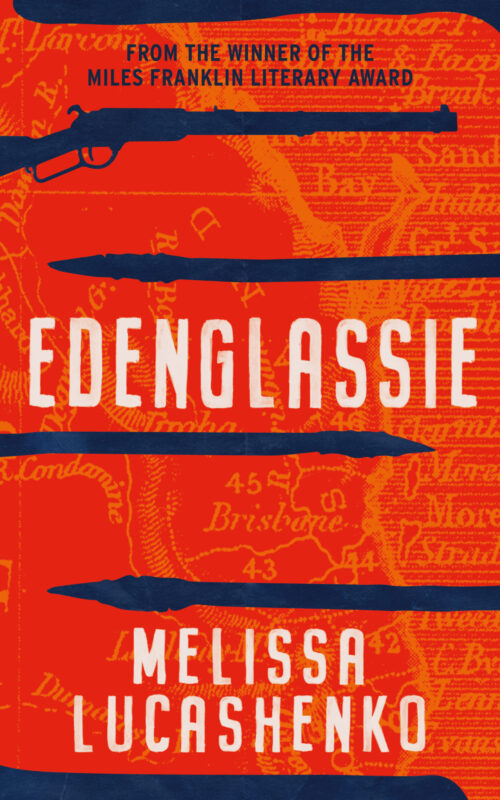
Melissa Lucashenko, Edenglassie (2023): 1850s and 2020s, Magandjin/Brisbane: a “what if” story in which armed resistance to the dispossession, massacres and other brutalities from the colonisers is told alongside attempts from both sides to work together (my review).

Mid to late 19th century

By this period, the settlers had established themselves throughout Australia, with First Nations people surviving as best they could – often in the employ of the settlers and living, of course, under British law. Their lives, health and culture were severely affected by dislocation, and they lived at the mercy of the settlers. Many were separated from their Country, with culture, including language, was being lost.

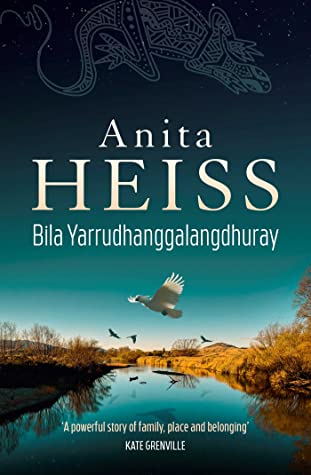
Anita Heiss, Bila Yarrudhanggalangdhuray (River of dreams) (2021): 1852 on, Wiradjuri Country/Gundagai and Wagga Wagga: inspired by the story of the four First Nations men who, using bark canoes, saved 40-70 people during Gundagai’s 1852 flood; tells the fictionalised story of the daughter of one those men, her ending up working for one of the landowning families, and being forced to leave her country (my review).

Ali Cobby Eckermann, Ruby Moonlight (2012): 1880s, mid-north South Australia: verse novel about a teenage girl, Ruby Moonlight, whose family is massacred by white settlers, and who meets the lonely “colourless man”, Miner Jack (my review).

Leah Purcell, The drover’s wife (2017): 1890s, Ngarigo and Walgalu Country/Snowy Mountains: re-visioning of Henry Lawson’s classic short story, turning the drover’s wife into a First Nations woman left to fend for herself in a hostile world (my review of the film version).

Federation to 1930s

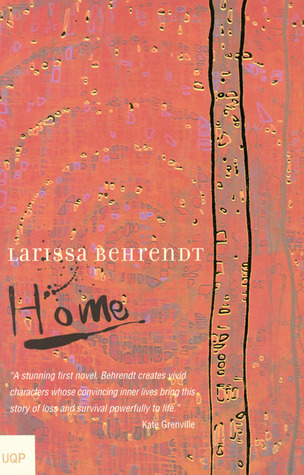
Larissa Behrendt, Home

While the facts of First Nations lives at this time are largely a continuation of the previous era, fiction set in this period starts to address more specifically the impact of the missions, and of government policies, on First Nations’ lives.

Larissa Behrendt, Home (2004): 1918 through to 1980s, Eualeyai Country/North-western New South Wales: based on the story of the author’s grandmother, who was abducted from her camp in 1918, and following her seven children. (Lisa’s review)

Post World War 2

As we move closer to contemporary times, the fiction addresses more contemporary issues, particularly regarding government polity, while still retrieving stories from the past that are little known.

Anita Heiss, Barbed wire and cherry blossoms (2017): 1944, Wiradyuri Country/Cowra: inspired by the 1844 breakout from the Cowra POW Camp, imagines a relationship between escaped Japanese POW Hiroshi and the daughter of a First Nations couple who offer him refuge at Erambie Mission. But, mission rules, and government protection and assimilation policies limit their choices. (Lisa’s review)

Marie Munkara, A most peculiar act (2020): 1940s, Larrakia Nation/Darwin: follows the trials and tribulations of a 16 year-old Aboriginal fringe-camp dweller, in Darwin during the Japanese bombing raids, and her resistance to protectionist policies like the Aboriginal Ordinances Act and the “White Australia” policy (Lisa’s review).

Dylan Coleman, Mazin Grace (2012): 1940s and 50s, Kokatha Mula Country/western South Australia: fictionalised version of the author’s mother’s childhood at the Koonibba Lutheran Mission (Lisa’s review).

Alexis Wright, The plains of promise (1997): 1950s Gulf Country of Queensland: starts at St Dominic’s Mission in the Gulf Country of Far North Queensland, where a young Aboriginal woman is taken away from her mother, and explores the brutality of colonisation at the mission and beyond (Tony’s review).

Book cover

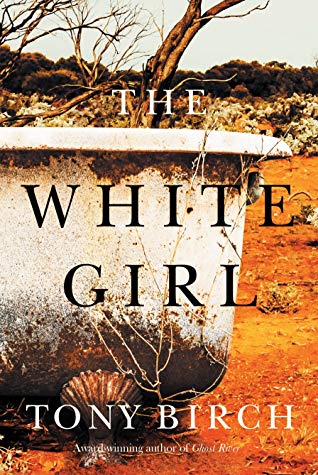
Tony Birch, The white girl (2019): 1960s, fictional rural town: tells the story of Odette who is determined to save her granddaughter from being removed, against the backdrop of the egregious restrictions of the Aboriginal Protection Act are in force (my review).

Karen Wyld, Where the fruit falls (2020): 1960s-70s, multiple locations: spans four generations of women, over several decades, with a focus on the 1960s and 70s, a time of rapid social change and burgeoning Aboriginal rights (Lisa’s review)

There should be something here for everyone!

Any thoughts? Or, do you have any historical fiction titles to add?

Melissa Lucashenko, Edenglassie (#BookReview)

Broadly speaking, Melissa Lucashenko’s latest novel, Edenglassie, does for southeast Queensland what Kim Scott’s That deadman dance does for Noongar country in southwest Western Australia. Both tell of the early days of their respective colonies from a First Nations perspective; both are written in a generous spirit but with absolute clarity about the dispossession that took place; and both suggest things could have been different.

Unlike That deadman dance, however, Edenglassie, is a dual narrative story. The main storyline, featuring two young people, Mulanyin and Nita, is set around the Magandjin or Meanjin (Brisbane) region during the mid-1850s, making it just a little later than Scott’s first contact narrative. Dispossession, massacres and other brutalities from the colonisers were met with armed resistance, but there were also attempts to work together. Paralleling this historical story is a modern one, featuring Granny Eddie, Winona, and Dr Johnny, set in the same area at the time of its 2024 bicentenary. These stories, one using historical realism and the other modern humour, riff off each other to provide a complex picture of the colonial project – then and now.

Melissa Lucashenko said much that interested me in the conversation I attended for this book, but here I’ll focus on two points she made. One is that the book’s central question is “what was going through these people’s [the colonisers’] minds?” Things could have been different then, she said, and could still be now. The other point is that she wanted to counteract the trope of the dying race. This idea has been slowly changing since Mabo, she said, but is still evident. The modern storyline, with its confident and politically involved Goorie characters, ensures that we see a vibrant, living culture in action.

Realising these two ideas is a big ask, and in my reading group there were some equivocations, but I think Lucashenko pulls it off, through creating engaging characters who come alive on the page and narratives that ring true to their times. Mulanyin, the kippa (young initiated man) from the historical period, and Winona, the fiery young woman in modern times, represent the passion of youth. They are impatient and want things to happen – or change – now. Both, however, also have elders guiding them – in the Goorie way, which is to encourage people to work it out for themselves and to remedy their mistakes.

“needing to endure the unendurable” (Mulanyin)

So, what is it that these young characters must contend with? The novel starts with two pointed events. In the modern storyline, Granny Eddie trips over a jutting tree root and is ignored by passersby until two young brown faces – Malaysian students as it turns out – help her up and get her to hospital. The modern scene is set, and all is not well.

We then flash back to 1840 where members of the Goorie Federation are looking forward to the imminent departure of the dagai, only to be told that this is now unlikely. A Goorie mother wonders what

If life never returned to normal. If the rule of law was never restored. What would her son see as a man? … Would her daughters be subject to the terrors the dagai brought?

What indeed?

Having asked the question, Lucashenko then moves her historical story to 1854-1855. Mulanyin is living with his law-brother Murree north of his own saltwater Nerang/Yugambeh home. Here, he is in close contact with the colonisers, and particularly with the Petries. At this time, the Petries, particularly the young Tom Petrie, were sympathetic to, and tried in their own way to work with, the Goories on whose land they resided. Lucashenko seems to be saying that, given colonisation was happening and wasn’t going to be undone, there were ways in which it might have been made to work (or, at least, work better). Conversations between Tom, Mulanyin, and other characters, explore their differences, particularly regarding attitudes to country. Mulanyin wants to know

what goes on in the brain of an Englishman? When he arrives in another man’s country to steal his land, and water, and game, and then with a straight face, calls those he steals from thieves? Is this how it is in Scotland? Is this why your people have fled that terrible place?’

The ensuing discussion has Tom struggling to explain the English, but admitting that “in their ignorance, they don’t understand that the land here has its own Law. They think that only their British law exists”. However, he says, they “respect some boundaries still … Those that are well defended”.

What did ‘well defended’ look like, Mulanyin wondered, if not like a thousand Goories assembled at the Woolloongabba pullen pullen? If not like Dundalli, leading the warriors who had willingly assembled under him, from Dugulumba to K’gari?

Fair point, Mulanyin.

Meanwhile, the modern-day characters are living with the fall-out from the failure of the colonisers to make it work and of the colonised to succeed in their resistance. Goories are still here, yes, but life is a struggle, and Winona wants to fight back, wants “to bite em hard onetime, while we got the chance”. She can’t understand why Granny Eddie, who grew up “with a dirt floor and empty belly” doesn’t think she deserves more. Granny, though, is two things. A pragmatist who sees that “Dagai not going away! We gotta get on with them”. And she’s an elder well-versed in her culture, so when Winona takes a hardline with Dr Johnny, who claims Aboriginal heritage, Granny says

“You’re thinking like a whitefella when ya close him out. That’s not our way. We bring people in, we bring our Mob home, and we care about them. We teach them how to behave proper way…”

Further, she argues,

“We can’t be sunk in bitterness … Or stuck in the past. We need to focus on the good dagais, like Cathy and Zainab, and them Petries, and –.”

Winona, Granny Eddie and Mulanyin all make sense, but they speak from different angles. What makes Edenglassie so interesting is the way Lucashenko gives space and respect to these angles. She certainly shows what was lost – and the utter unfairness of it. But, with the generosity of spirit we keep seeing, she also shares through her characters what living with deep connection to country means. And, she encourages everyone to think about alternative ways we can do this.

Towards the end of the novel, Gaja (Aunty) Iris shares an important story with our modern protagonists, introducing it with

we all know how important our stories are … People all over the world keep their stories close. Middle Eastern people believe … that by telling a story you can change the world, and nothing is as powerful as the right story at the right time.

With ideas about truth-telling and decolonisation becoming part of modern Australian culture, now feels like the right time for stories like Edenglassie. It might be an uncomfortable time to be a settler Australian, but that’s nothing compared with what First Nations people have endured and continue to endure. The least we can do is try to understand. Books like Lucashenko’s not only help us along this path but give us a lively read at the same time.

Melissa Lucashenko
Edenglassie
St Lucia: UQP, 2023
306pp.
ISBN: 9780702266126

Monday musings on Australian literature: First Nations Australian short story collections

NAIDOC Week 2024 National Logo

NAIDOC Week 2024 finished yesterday, but, as I often do, I am bookending the week with Monday Musings posts. Last week, I posted on First Nations Australian Stella listees. This week I’d like to highlight some recent (meaning 21st century) short story collections. In my admittedly limited experience, First Nations people can be wonderful storytellers. Lest this sound like a stereotype or generalisation, see Tara June Winch’s quote below!

As I shared last week, NAIDOC Week’s theme this year was Keep the Fire Burning! Blak, Loud and Proud. It encompasses a number of ideas but one, the website says, relates to forging “a future where the stories, traditions, and achievements of Aboriginal and Torres Strait Islander communities are cherished and celebrated, enriching the fabric of the nation with the oldest living culture in the world.” Short stories make a perfect contribution to this goal, and contemporary First Nations writing is richly served in this form. My aim here is to share a selection in order to provide a resource for anyone interested in reading more First Nations stories.

“we are a culture that has survived by storytelling” (Tara June Winch)*

The first First Nations stories I read were the “myths and legends” which comprised a significant component of the first works of First Nations literature to find its way into the mainstream. Not all of these, I admit, were written by First Nations people, though some were, such as those published in the 1970s and 80s by Dick Roughsey. Some others claimed (and I hope this was honest) to have shared the stories with the agreement of the relevant owners of those stories. I then jump a few decades to journals like The Griffith Review which has, from its start, included writings – fiction and nonfiction – by First Nations writers. Indeed, they write on their website that

One of the things that makes Australia truly unique is being home to the oldest continuous civilisation. What this really means is undervalued and little understood in this country. It is part of the reason Griffith Review has featured Indigenous writing in every edition.

So, we find articles, poetry and fiction by Tony Birch, Melissa Lucashenko, Ellen van Neerven, Alexis Wright, and others. One of the first First Nations short stories I reviewed on my blog was one by Melissa Lucashenko from The Griffith Review.

Selected short story collections and anthologies

  • Tony Birch, Common people (UQP, 2017) (Lisa’s review)
  • Tony Birch, Dark as last night (UQP, 2021)
  • Tony Birch, Father’s day (Hunter Publications, 2009)
  • Tony Birch, The promise (UQP, 2014)
  • John Morrissey, Firelight stories (Text Publishing, 2023)
  • Mykaela Saunders (ed), This all come back now: An anthology of First Nations speculative fiction (UQP, 2022)
  • Adam Thompson, Born into this (UQP, 2021) (my review)
  • Ellen van Neerven (ed.), Flock: First Nations stories then and now (UQP, 2021) (on my TBR)
  • Ellen van Neerven, Heat and light (UQP, 2014) (my review)
  • Archie Weller, The window seat (UQP, 2009)
  • Tara June Winch, After the carnage (UQP, 2016)

As with the Stella listees, UQP leads the pack here too, with such a strong commitment not only to First Nations writing but to that dreaded form, the short story! And, many of these collections have been listed for (or won) some of Australia’s top literary awards. The stories cover all genres – contemporary fiction, speculative, dystopian, historical fiction, satire, ghost stories, and so on.

I would like to add here a title from Fremantle Press, though its ambit is a little wider. Published in 2022 and edited by Ellen van Neerven and Rafeif Ismail, it is Unlimited futures: Speculative, visionary Blak+Black fiction, and it comprises “speculative, visionary fiction from 21 emerging and established First Nations writers and Black writers” (Fremantle website). I’ve reviewed a few pieces from it, including Ambelin Kwaymullina’s Fifteen days on Mars (my review).

I didn’t plan for this to be a treatise, but a taster – or, is it, tempter? I will close on another quote that speaks to me …

We are your original storytellers. Our culture has survived through story and we are the civilisation with songlines etched in the land you inhabit. (Tara June Winch)*

* Tara June Winch, “Decolonising the shelf”, Griffith Review 66 (Nov 2019)

Click here for my previous NAIDOC Week-related Monday Musings.

Have you read any First Nations short stories – Australian or otherwise? And if so, care to recommend any?

ALS Gold Medal for 2024 announced

It is some time since I wrote about the ALS Gold Medal. This is not because I don’t think it’s interesting or worthwhile, but because there are so many awards, and I just don’t have the time to write up announcements for every award made each year. So, I pick and choose a bit, and this year’s ALS Gold Medal winner is – well, you’ll see … but first, a quick recap on the award.

As I wrote in my first post on the medal, it was established in 1928 by the Australian Literary Society (ALS) – hence its name – but this society was incorporated in 1982 into the Association for the Study of Australian Literature (ASAL), and it is this organisation that now makes the award. The Gold Medal is awarded to “an outstanding literary work in the preceding calendar year”. Note that it is for a “literary work”, which means it can be fiction, poetry, memoir, biography, and so on.  It is Australia’s longest-standing literary award, but there is no money attached to it, just a gold medal. This is a shame for the writers, but it is nonetheless an award that is well worth having.

The shortlist for this year’s award was:

  • Jordie Albiston, Frank (documentary poetry)
  • Stuart Barnes, Like to the lark (poetry)
  • Katherine Brabon, Body friend (novel)
  • J. M. Coetzee, The Pole and other stories (short story collection)
  • Omar Sakr, Non-essential work (poetry)
  • Sara M. Saleh, The flirtation of girls/Ghazal el-Banat (poetry)
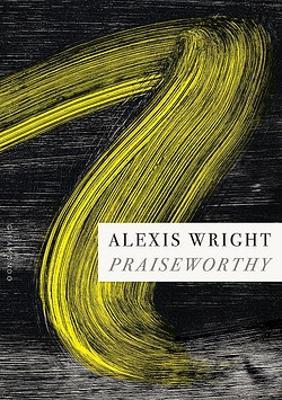
  • Alexis Wright, Praiseworthy (novel)

And the winner, announced on July 8, is

Alexis Wright’s Praiseworthy 

How apposite for Wright’s win to be announced in NAIDOC Week. This is the third time that Wright has won the medal. Books+Publishing, announcing this award, says that over the life of the award only two other writers have won it three times, and they are Patrick White and David Malouf. Those of you who read my Monday Musings post this week may remember that I observed that Alexis Wright and Melissa Lucashenko are the only writers who have won the Stella Prize three times. This woman, this First Nations writer, really is something, and I need to catch up my reading of her.

For the record, Praiseworthy has, so far, won the ALS Gold Medal (2024), the Stella Prize (2024), the Queensland Literary Award for fiction (2023), and the James Tait Black Memorial Prize (2023). It has also been shortlisted for the Miles Franklin Literary Award (2024).

This year’s judges for the medal were Elizabeth McMahon (academic and literary critic), Ali Alizadeh (literary writer and theorist), and Ann Vickery (poet and feminist scholar). According to Books+Publishing, the judges described Praiseworthy as “a novel for and of our time… hilarious, furious, poetical and painful”.

(BTW I haven’t read any of this year’s shortlist, but I have read two of last year’s including the winner, Debra Dank’s We come with this place).

Monday musings on Australian literature: First Nations Australian Stella listees

NAIDOC Week 2024 National Logo

Yesterday was the start of NAIDOC Week 2024. As has been my practice since 2013, I’m devoting this week’s Monday Musings to the cause.

NAIDOC Week’s theme this year is Keep the Fire Burning! Blak, Loud and Proud. Without specifically stating it, this theme responds, I’m sure, to the devastating loss of the Voice referendum last year. As the website says, it “celebrates the unyielding spirit of our communities and invites all to stand in solidarity, amplifying the voices that have long been silenced”. They say more, but I’ll just share two other points. One is that “the fire represents the enduring strength and vitality of Indigenous cultures, passed down through generations despite the challenges faced”, and the other is that

Through our collective efforts, we can forge a future where the stories, traditions, and achievements of Aboriginal and Torres Strait Islander communities are cherished and celebrated, enriching the fabric of the nation with the oldest living culture in the world.

For this year’s NAIDOC Week Monday Musings, I thought I’d pick up the point about cherishing and celebrating the stories of Aboriginal and Torres Strait Islander communities. This is simplistic, I know, but one way in which stories are celebrated is through awards – particularly through being short- or long-listed, or winning them. One award which has actively sought to embrace diversity in its foundational purpose is the Stella. Yes, that diversity is limited to “women and non-binary writers”. Nonetheless, the achievements have been significant in encouraging and raising the profile of many writers who may not have been seen otherwise.

So, with 17 years of the prize now in the bag and in the spirit of celebrating their achievement, I am listing all those works by First Nations writers which have featured in the Stellas over that time. This might also give them another little time in the air.

The Stella listees

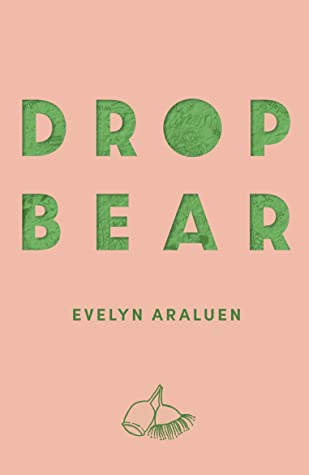
  • Evelyn Araluen, Dropbear (Poetry and prose, UQP) : Winner 2022 (my review)
  • Claire G. Coleman, Terra nullius (Fiction, Hachette Australia) : Shortlisted 2018 (my review)
  • Dylan Coleman, Mazin Grace (Fiction, UQP) : Longlisted 2013 (Lisa’s review)
  • Debra Dank, We come with this place (Nonfiction, Echo) : Shortlisted 2023 (my review)
  • Ali Cobby Eckermann, She is the earth (Poetry/Verse novel, Magabala Books) : Longlisted 2024  (on my TBR, kimbofo’s review)
  • Gay’wu Group of Women, Songspirals (Nonfiction, Allen & Unwin) : Longlisted 2020 (Denise’s review)
  • Anita Heiss, Bila Yarrudhanggalangdhuray (Fiction, Simon & Schuster) : Longlisted 2022 (my review)
  • Ngaire Jarro & Jackie Huggins, Jack of Hearts: QX11594 (Nonfiction, Magabala Books) : Longlisted 2023 (kimbofo’s review)
  • Melissa Lucashenko, Edenglassie (Fiction, UQP) : Longlisted 2024 (on my TBR, Brona’s review)
  • Melissa Lucashenko, Mullumbimby (Fiction, UQP) : Longlisted 2014 (Lisa’s review)
  • Melissa Lucashenko, Too much lip (Fiction, UQP) : Shortlisted 2019 (my review)
  • SJ Norman, Permafrost (Fiction, UQP) : Longlisted 2022
  • Elfie Shiosaki, Homecoming (Poetry, Magabala Books) : Longlisted 2022 (Lisa’s review)
  • Nardi Simpson, Song of the crocodile (Fiction, Hachette) : Longlisted 2021 (my review)
  • Ellen van Neerven, Heat and light (Fiction/short stories: UQP) : Shortlisted 2015 (my review)
  • Chelsea Watego, Another day in the colony (Nonfiction, UQP) : Longlisted 2022 (on my TBR, Bill’s review)
  • Tara June Winch, The yield (Fiction, Penguin Random House) : Shortlisted 2020 (my review)
  • Alexis Wright, Praiseworthy (Fiction, Giramondo Publishing) : Shortlisted 2024 (Bill’s second post with a link to his first)
  • Alexis Wright, The swan book (Fiction, Giramondo Publishing) : Shortlisted 2014 (on my TBR, Bill’s review)
  • Alexis Wright, Tracker (Nonfiction, Giramondo Publishing) : Winner 2018  (Bill’s review)

Some comments. There are 20 listed books (if I’ve got them all) out of 204. Of these there have been two winners – Alexis Wright’s Tracker and Evelyn Araluen’s Dropbear – seven shortlists, and 11 longlists. Alexis Wright and Melissa Lucashenko are the most listed authors – out of all authors – through the history of the prize to date. The listed books include novels, poetry and nonfiction.

Certain publishers appear frequently, particularly UQP which has an excellent – and long record – for supporting and publishing First Nations Writers. Eight of the listed books come from them. First Nations publisher, Magabala, has three, and Giramondo which publishes Alexis Wright also has three. Hachette has published two, with Simon & Schuster (which is behind the new First Nations imprint Bundyi I wrote about last week), Allen & Unwin, Penguin Random House and Echo, each having one. It’s healthy to see a spread, but it’s also great to see serious support being reflected here.

You will also see that almost every book has been reviewed by a litblogger. Some have been reviewed more than once, but I’ve just chosen one to share here. I hope that my posting this list will remind us all of some good books out there, and whet our appetites to check out First Nations writing.

Click here for my previous NAIDOC Week-related Monday Musings.

Monday musings on Australian literature: Bundyi

Next week will be NAIDOC Week – with this year’s theme being “Keep the Fire Burning! Blak, Loud and Proud” – but I am jumping the gun a little with a post on a relevant publishing initiative that was announced earlier this year.

This initiative comes from publisher Simon & Schuster, and is that they have created a new First Nations imprint called Bundyi, which will be curated by Dr Anita Heiss, “a proud Wiradyuri woman and one of Australia’s most prolific and well-known authors”. Simon & Schuster published Heiss’s most recent novel, Bila Yarrudhanggalangdhuray (my review).

Bundyi is, the website says, a Wiradyuri word meaning “to share with me’” The aim is to “focus on cultivating First Nations talent in the industry by publishing First Nations authors, edited and designed by First Nations people”. Heiss, described as Publisher at Large, will be commissioning both fiction and non-fiction writing. She says that “the only way we will see First Nations people truly sovereign in this space, is to have us as publishers of our own stories”, and makes the point that Simon & Schuster understands “that the responsibility for change in the sector lies with the current mainstream publishers acting as mentors, and eventually moving over to allow us to learn, and to do what Australian publishing has needed for a long time: for us to have control over the way we are represented on the page, and in the national narrative”.

And they have started the way they mean to continue with the Bundyi logo being designed by a 100% Aboriginal-owned company, Iscariot media. The logo, which you can see at the link I’ve provided above, “represents the flow of the three rivers of Wiradyuri country – the Kilari, the Marrambidya and the Wambool – as well as the flow of creativity”.

What can we expect?

S&S’s page, linked above, says that the first titles in the imprint will be published this year, but doesn’t name them. However, in late May, through Canberra’s wonderful Meet The Author convenor, Colin Steele, who is also one of my major sources of literary news, I received a news item from Books+Publishing. It said that Bundyi had “acquired world rights to a new commercial novel by Larissa Behrendt”, and that the book was the result of a brainstorm between Behrendt and her good friend Anita Heiss. It is to be a First Nations take on Pride and prejudice!

Heiss said that “It didn’t take long for us to come up with the idea of Larissa, an Austen aficionado, writing a version of Pride and Prejudice through her lens, as a Euahlayai/Gamilaroi woman”. Behrendt added that “As a long-time friend and admirer of her work, I am beyond excited to be working with Anita on this project. I love Jane Austen, and the idea of translating the characters and story arcs through a First Nations lens is an idea that is close to my heart. Anita has been a trailblazer with new writing, and I am proud to be following in her footsteps.”

That Behrendt is a fan of Austen won’t be news to those who read her novel After story (my review) in which a woman takes her mother on a literary tour of England, so this will be interesting – even to someone like me who is not normally a fan of prequels, sequels and retellings. Behrendt has a seriously impressive cv. Not only is she an award-winning author, but she is a filmmaker and host of the program Speaking Out on ABC Radio, the Distinguished Professor at the Jumbunna Indigenous House of Learning at the University of Technology Sydney, a Fellow of the Academy of Social Sciences of Australia, a Fellow of the Australian Academy of the Humanities, a Foundation Fellow of the Australian Academy of Law – and more. We have to wait a bit for her book, though, as it’s not due to be published until 2026.

Meanwhile, Books+Publishing named two books which will be published by Bundyi before Behrendt’s – Stan Grant’s memoir Murriyang and Tasma Walton’s historical fiction novel, I am Nan’nert’garrook. These align with the imprint’s focus as listed on its homepage:

  • Non-fiction: memoir, autobiography, biography, essays
  • Commercial fiction: romance / chick lit, historical fiction, contemporary fiction.

This new imprint is exciting news for all of us interested in First Nations Australian writing. It may not, it seems, be focusing on the edgier end of town, but there is room for all, particularly if we want more Australians to read First Nations writing. If you are interested, I suggest you keep an eye on Bundyi’s homepage for further news. I plan to.