Last week, as most of you will know, I shared the favourite Aussie fiction books named by writers in the Sydney Morning Herald’s Best Reads of the Year 2022, Readings Bookshop’s Best Fiction, and the ABC RN’s Bookshelf Panel’s Books of the Year 2022. This week, as promised, I’m sharing their nonfiction and poetry favourites drawing from the same links for the first and third, and the Best Nonfiction of 2022 link for Readings. Again, I’m only including Australian titles (for this Monday Musings post).
Nonfiction
I made the point last year that nonfiction picks tend to speak to the professional interests of their nominators – historians, for example, tend to choose histories. This year though, most of the contributors are writers, journalists and booksellers, resulting in less of this focused sort of choosing.

One, however, was historian Clare Wright. She nominated several books, mostly histories, but rather than give individual reasons she rounded up her list with “fearless, fascinating accounts of rule breakers, rule makers and rule enforcers.”
A few books were picked multiple times, including one that was also nominated a few times last year – Bernadette Brennan’s biography of Gillian Mears, Leaping into waterfalls. Others that were named more than once are Shannon Burns’ Childhood, Chloe Hooper’s Bedtime story, Janine Mikosza’s Homesickness, Oliver Mol’s Train lord, Kylie Moore-Gilbert’s The uncaged sky, Karlie Noon & Krystal De Napoli’s Astronomy: Sky country, Sian Prior’s Childless and Chelsea Watego’s Another day in the colony
The form of nonfiction most favourited this year was the same as last year – memoirs.
- Tim Baker’s Patting the shark (memoir): “vital” (Jock Serong)
- Bernadette Brennan’s Leaping into waterfalls: The enigmatic Gillian Mears (biography): “enthralled” (Anna Funder); (Jennifer Down) (Brona’s review) (on my TBR)
- Shannon Burns’ Childhood: A memoir (memoir): “unsparing self-depiction, coolly detached and brilliantly analytical” (Helen Garner); “powerful … terrific” (Robbie Arnott)
- Anna Clark’s Making Australian history (history): (Cassie McCullagh)
- Jessie Cole’s Desire: A reckoning (memoir): “beautifully told” (Sofie Laguna)
- Sharon Connolly’s My giddy aunt and her sister comedians (history): (Clare Wright)
- Deborah Dank’s We came with this place (First Nations memoir): “a heart-stopping story into bush Aboriginal life, philosophy and history” (Melissa Lucashenko)
- Brigid Delaney’s Reason not to worry (philosophy/selfhelp): “fascinating, hilarious and highly practical guide to using the philosophy of Stoicism to help you deal with the vicissitudes of everyday life” (Readings)
- Peter Doyle’s Suburban noir: Crime and mishap in 1950s and 1960s Sydney (history): “must for crime buffs” (Tony Birch)
- Meg Foster’s Boundary crossers: The hidden history of Australia’s other bushrangers (history): (Clare Wright)
- Rachel Franks’ An uncommon hangman: The life and deaths of Robert ‘Nosey Bob’ Howard (history): (Clare Wright)
- Hannah Gadsby’s Two steps to Nanette (memoir): “deeply moving and extremely funny” (Readings)
- Mawunyo Gbogbo’s Hip hop and hymns (memoir): “earnest and lyrical missive about growing up in a Black migrant family” (Maxine Beneba Clarke)
- Joëlle Gergis’ Humanity’s moment: A climate scientist’s case for hope (climate science): “clear-eyed, wounded, humane and above all, honest” (Tim Winton) (Janine’s review)
- Julia Gillard’s Not now, not ever: Ten years on from the misogyny speech (essays): “good reasons to keep speaking up” (Pip Williams)
- Julie Gough’s Tense past (art/culture): “vital work” (Tony Birch)
- Eloise Grills’ Big beautiful female theory (memoir/cultural analysis): “confrontational, honest and everything great nonfiction should be” (Readings)
- Edna Gunaydin’s Root and branch: Essays on inheritance (essays): “clever, unstintingly self-aware” (Jennifer Down)
- Linda Jaivin’s The shortest history of China (history): “deep context” (Jock Serong)
- Kath Kenny’s Staging a revolution: When Betty rocked the Pram (history): (Clare Wright)
- Lee Kofman’s The writer laid bare: Emotional honesty in a writer’s art, craft and life (part memoir): “intimate look at the process” (Graeme Simsion)
- Jess Ho’s Raised by wolves (memoir): “straight-talking, sharp-shooting memoir” of the Melbourne hospo scene (Readings)
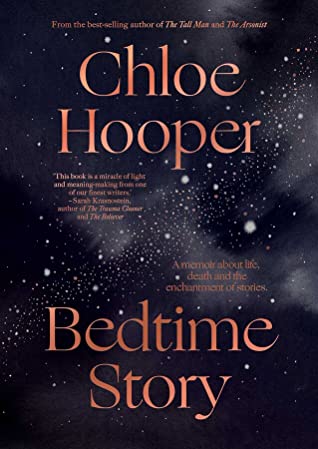
- Chloe Hooper’s Bedtime story (memoir): “shows the power of words and literature to comfort us during the darkest moments of our lives” (Readings); “beautifully written and illustrated” (Kylie Moore-Gilbert); “exquisite” (Sarah Krasnostein) (Lisa’s review)
- Danielle Laidley’s Don’t look away: A memoir of identity & acceptance (memoir): “inspiring, disarming, and deeply moving” (Craig Silvey)
- Chris Macheras’ Old vintage Melbourne 1960-1990 (history): “pure joy” (Readings) (Lisa’s review)
- Paddy Manning’s The successor: The high stakes life of Lachlan Murdoch (biography): “unflinching book … about power, apprenticeship, and succession” (Readings)
- Janine Mikosza’s Homesickness (memoir): “brilliant and original” (Lucy Treloar); (Emily Bitto)
- Oliver Mol’s Train lord: The astonishing true story of one man’s journey to getting his life back on track (memoir): “compelling combination … harrowing, funny, enigmatic” (Sofie Laguna); “shaggy, imperfect, raw and glorious” (Robbie Anrott)
- Kylie Moore-Gilbert’s The uncaged sky: My 804 days in an Iranian prison (memoir): “powerful story … incapable of hatred … incapable of simplifying” (Alex Miller); “timely … timeless” (Diana Reid) (Lisa’s review)
- Karlie Noon & Krystal De Napoli’s Astronomy: Sky country (First Nations science): “fascinating and highly engaging” (Readings); (Sarah Krasnostein)
- Sean O’Beirne’s On Helen Garner: Writers on writers (essay): “a beautifully crafted essay full of great respect for a great writer” (Readings) (Kimbofo’s review)
- Brigitta Olubas’ Shirley Hazzard: A writing life (biography): “illuminating biography” (Michelle de Kretser)
- Anne-Marie Priest’s My tongue is my own: A life of Gwen Harwood (biography): (Clare Wright)
- Sian Prior’s Childless (memoir): “charts the author’s journey to self-acceptance” (Kylie Moore-Gilbert); “exploring the grief and consolations of childlessness” (Lucy Treloar); “gut-wrenched … its honesty a brutal gift” (Michael Winkler)
- Bronwyn Rennex’s Life with birds (history/memoir): “formal freshness and sweetly bent wit” (Helen Garner)
- Henry Reynolds and Nicholas Clements’ Tongerlongeter: First Nations leader and Tasmanian war hero (history/biography): “astonishing … compelling” (Amanda Lohrey)
- Heather Rose’s Nothing bad ever happens here (memoir): “loved … the profundity” (Hannah Kent); (Jason Steger) (my post on a conversation)
- Natasha Sholl’s Found, wanting (memoir): “darkly funny” (Kylie Moore-Gilbert)
- Julianne Schultz’s The idea of Australia: A search for the soul of the nation: (Cassie McCullagh) (Lisa’s review)
- Jonathan Seidler’s It’s a shame about Ray (memoir): (Cassie McCullagh)
- Anna Spargo-Ryan’s A kind of magic (memoir): “reframing redemption” (Sarah Krasnostein)
- Simon Tedeschi’s Fugitive (memoir/history): “shimmering meditation on performance, identity and music” (Michael Winkler)
- Jayne Tuttle’s Paris or die and My sweet guillotine (memoirs): “joltingly alive, beautiful and terrifying” (Helen Garner)
- Chelsea Watego’s Another day in the colony (essays/memoir): “insights … are personal and profound” (Lucy Treloar); “vital collection” (Laura Jean McKay) (on my TBR) (Bill’s review)
- Don Watson’s The passing of Private White (biography): (Anna Funder)
- Nadia Wheatley’s Sneaky little revolutions: The selected essays of Chairman Clift (essays): (Kate Evans)
Poetry
Last year, there was a string of poetry, but this year we have just two. Interesting – and probably partly due to who was asked to contribute.
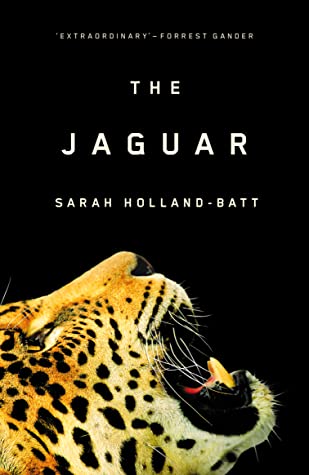
- Sarah Holland-Batt’s The jaguar: (Emily Bitto); “deep compassion … flawless command of image and line” (Michelle de Kretser); “her artistry … is exhilarating” (Amanda Lohrey)
- David Stavanger, Mohammad Awad, and Radhiah Chowdhury’s (ed) Admissions anthology: “stunning curation … on mental health” (Maxine Beneba Clarke)
The lists continue to come thick and fast, but I’m interested in any thoughts you have on these, particularly if you like nonfiction and poetry.





 Whispering Gums