Canberra Writers Festival 2019, Day 1, Session 2: Defining moments – True Crime Panel

The reason for my second choice for the day – a panel discussion on true crime – may not seem quite so obvious as my first, so I’ll explain. I don’t read a lot of crime, but I do watch it, and I have a slightly more than passing interest in true crime. I loved Truman Capote’s In cold blood, I also love Helen Garner’s Joe Cinque’s consolation and This house of grief, and I have watched all of the Underbelly television series (for which one of the panel members, Felicity Packard, wrote). Is that justification enough?

Picture of the panelThis session was recorded for ABC RN’s Big Ideas program, and the host of that show, Paul Barclay, moderated the panel. The panel members were

  • Hedley Thomas, investigative journalist who has produced a highly successful podcast The Teacher’s Pet about the disappearance and probable murder of Lynnette Dawson.
  • Felicity Packard, screenwriter on Underbelly and other successful television series.
  • Rachel Franks, academic specialising in true crime, including from Australia’s convict and colonial eras.

Paul Barclay commenced by commenting on our penchant for true crime, and that it can be a “guilty pleasure” for many. These crimes range from the criminal slaughter of indigenous Australians in colonial Australia to twentieth century crimes such as the disappearance of Azaria Chamberlain, the famous Pyjama Girl case, and Canberra’s most famous one, the as yet unsolved murder of Colin Winchester.

Felicity Packard, on what interested her about true crime, said that the story comes first. She loves a good story, but she has also always been interested in crime. She wants to get into the minds of the criminals, not to glorify them, but to represent – and understand – them as people. She also said her aim was not to judge them. Their actions speak for themselves! Fair enough.

Hedley Thomas, on why we love true crime, said that his wife liked it because she wanted to understand crimes against women with a view to identifying how women might protect themselves. More women read, watch and listen to true crime, Thomas said. They tend to empathise more and want to protect themselves. For “the rest of us”, there’s voyeurism, but also an awareness of the fine line, of how easily we could lash out ourselves.

Rachel Franks, on whether our convict origins contribute to our interest in true crime, felt that yes, it was a contributing factor! Everyone back then knew a crook, she said! Crimes broke routines, and people followed them closely in the newspapers.

The conversation then discussed:

  • the role of the pursuit of justice, and of revenge, in our interest in true crime.
  • women as victims: why we are more interested in crimes against the young and the beautiful, and why, even, we see such crimes as more heinous. Packard saw the focus on beauty as a sad indictment on society, and Franks said the focus on the young dying taps into the notion of loss of potential.
  • the fact that some crimes captivate people more than others, such as that of Allison Baden-Clay, whom Thomas knew personally: this story captivated us, he suggested, because they were an ordinary suburban couple (on the surface at least).

Barclay asked Packard what she’d learnt about criminals, given she’d spent time with many during her research for Underbelly. Her answer was enlightening, though, I suppose, not surprising. First, though she clarified that the crimes she dealt with were mercantile, rather than domestic/personal ones, and were from “organised crime” (though she’d call them “disorganised”). These criminals are characterised by lack of impulse control, greed, a sense of entitlement, and a determination to protect their patch. She did not see these criminals as particularly loyal or as part of a brotherhood, as Mafia movies suggest. She saw some loyalties, but these tended to be self-interested and short-lived.

Regarding whether it is easier or harder to write fictional versus true crime, Packard said that with true crime you have the bare bones but huge knowledge gaps. She therefore needs to invent – but in good faith. She’s not making documentary.

Barclay asked Franks about colonial Australia and particularly about the 19th century baby-farmer crimes. Franks explained that baby-farming grew largely as a response to the stigma faced by unmarried mothers. Often these “baby-farmers” would neglect or even kill outright these babies. A particularly heinous couple were Sydney’s John and Sarah Makin from the 1890s. They apparently killed 12-13 babies, and yet few of us know this story. The outcry over the Makins’ case resulted in some changes to legislation, such as banning the paying for babies, but it took much longer to reduce the fundamental cause, the stigmatisation of unmarried women.

Franks said that the main value of true crime is that it forces us to have a conversation about it, including how did the crime unfold, what policies or behaviours supported it or allowed it to happen.

Different true crime spaces (for want of a better word)

Barclay asked whether some crimes are too horrible to adapt for television. Packard said that child murder and sexual abuse (particularly child sexual abuse) are too hard to turn to entertainment, which is the space she works in.

Thomas’s space is different, investigative journalism, specifically in cold case crimes. It’s painstaking work, as journalists don’t have police tools, and difficult because the people involved are elderly or even deceased. His Teacher’s Pet podcast brought more people forward. So, he said, if he used the podcast model again he would start broadcasting it before he finished it (which is something filmmakers/documentary-makers can’t do.) Media, Thomas believes, can play an important role in ensuring justice. It’s incumbent on journalists to try to make a difference.

Regarding the impact of media on fair trial, Thomas said it depended on whether you are talking to defence or prosecuting lawyers! He also said that accused people can apply for a judge-alone trial to avoid prejudicial jury, but overall he believes that jurors are sensible and can be well instructed by judges. Packard talked here about the court process still being in train when the first Underbelly went to air. Free-to-air broadcast of it is still suppressed in Victoria.

Barclay asked about the impact of the series on the criminals. Mick Gatto was concerned and didn’t enjoy the notoriety, Packard said. Those who were played on screen by someone attractive were less bothered, and those on the looser end of illegality enjoyed the notoriety (and did quite well out of it!)  Overall, though, she said it’s a nasty brutish world, in which every male is dead or in gaol by the time they’re 35. There are glamorous moments but they’re brief.

Franks works in the history space. She said that crime shows can teach us to be most frightened of the serial killer but for women the greatest danger is at their front door. These are the stories that need to be told. True crime can be high-jacked for entertainment, but the serious stories – indigenous massacres, and domestic violence for example – can be reframed as history, or documentary.

And, just to make sure we all knew we were in Canberra, we finished with the point that the murder of Colin Winchester is a great story that needs to be investigated and told.

It was a fascinating session. I particularly enjoyed its teasing out the different “spaces” in which true crime operates. It’s a more complex “genre” than I had realised.
Canberra Writers Festival 2019, Day 1, Session 1: Capital culture

It’s Canberra Writers Festival time again. The theme continues to be Power, Politics, Passion, reflecting Canberra’s specific role in Australian culture and history. I understand this. It enables the Festival organisers to carve out a particular place for itself in the crowded festival scene, but the fiction readers among us hunger for more fiction (and, for me, literary fiction) than we get. And, because the Festival is widely spread with venues on both sides of the lake, it was impossible to schedule as many of my preferred events as I’d like! Logistics had to be considered. Consequently, my choices might look a bit weird, but I think I managed to navigate the program reasonably well.

Note: There is unlikely to be a Monday Musings this Monday 26 August, as I’ll still finishing off my Festival posts!

Capital Culture: Panel discussion moderated by Irma Gold

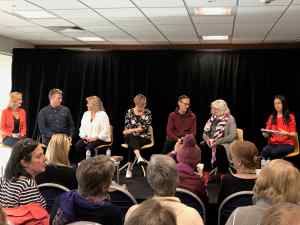
Panel pictureThe session was billed as follows: “Some of Canberra’s finest and most creative writers join forces in this irresistible ode to the national capital. Take a wild ride through a place as described by the vivid imaginations of some of this city’s best talents. Capital Culture brings stories not just of politics and power, but of ghosts and murder and mayhem, of humour and irreverence, and the rich underlying lode that makes Canberra such a fascinating city.”
You can see then why I chose this one – to support our local writing community, and to see writers on the panel who particularly interested me (like Marion Halligan, Paul Daley, and moderator Irma Gold.)

What I didn’t realise when I booked this session was that it was also a book launch. The description says ”Capital culture brings stories …” but oblivious me read that as saying the session called Capital Culture would tell us stories about the capital! The joke was on me, not that it would have affected my decision. Fortunately I discovered my mistake moments before commencement so I was prepared.

The writers were:

  • Paul Daley: journalist and author of Canberra in the Cities series.
  • Andrew Leigh: Australian Labor Party MP, but previously a Professor of Economics at the ANU, and author of several books including the wonderfully titled, Battlers and billionaires: The story of inequality in Australia.
  • Marion Halligan: award-winning Australian writer of novels, short stories, essays and other non-fiction.
  • Tracey Hawkins: award-winning author of children’s and adult non-fiction books.
  • Marg Wade: owner and operator of Canberra Secrets Personalised Tours, and author of three editions of Canberra secrets.
  • Nichole Overall: social historian and author of Queanbeyan: City of champions.

Irma Gold opened the session by referring to the Festival’s theme, Power, Politics, Passion, and saying that Canberra is more than that. This new anthology, which includes fiction, poetry and non-fiction, offers, she said, a nuanced picture of our capital. She also acknowledged country, and noted that it was a privilege to be talking about story on this land that has been full of stories for so long.

Perceptions of Canberra

The discussion started with panel members’ initial response to Canberra. It is a peculiar thing – to me, anyhow, who specifically wanted to come to Canberra – that many who come here hate it at first.

Journalist Daley and police officer Hawkins, for example, found themselves insulated within their professional communities – Parliament House journos for Daley, and police officers, not to mention criminals and dead bodies (!) for Hawkins. It was only when they married and moved into the ‘burbs that they started to enjoy Canberra community life. Daley also discovered the bush (which was something he’d never embraced before as an inner city Melbourne boy.)

Gold also came here not wanting to come, but is now a committed Canberran. Overall’s husband’s family came here in 1958 when his father, John Overall, became the first commissioner of the NCDC (National Capital Development Commission). Although her husband didn’t much like it, his father saw the city’s “unfulfilled potential” and was instrumental in building the capital we have today, including the lake and significant buildings like the National Library of Australia.

Other panelists had slightly different stories. Author Halligan quite liked Canberra when she came here as a student in 1962, but she didn’t expect to stay. Marriage changed that, and she now loves Canberra. She’s on a mission to overturn the ongoing denigration of Canberra through the use of our name as a synonym for the the Government. The whole of Australia elects it (and, in fact, right now the government is not the one Canberra voters would have brought in!) Daley said that this use of Canberra as a synonym for the Federal government is lazy jounralism. We feel abused and misrepresented much of the time, I must say!

MP Leigh talked about his love of the “bush capital”, saying it’s hard to come back from a walk in the bush and not feel good about yourself. Canberra’s bush, he said, is grounding and a leveller, something anyone can enjoy. His responses tended to be those of a politician – not shallow responses, though, but those of someone who sees the city from a certain perspective. He said that

if Canberra was a person, I like to think that it would be an egalitarian patriot, the kind who knows the past but isn’t bound by it.

Tour guide Wade said that her approach to the anthology was to do something fun, so she wrote a story inspired by Canberra’s ghosts, in particular those at the National Film and Sound Archive. She also mentioned ghosts at the Australian War Memorial (the “friendly digger” who opens and closes doors), the Hyatt ghost (who just stands and does nothing), and Sophia Campbell at Campbell House Duntroon (who is a naughty ghost)!

Gold then asked the panelists to comment on the fact that few countries in the world show as much contempt for their capital as Australians do. The term “Canberra bashing”, she said, entered the Australian dictionary in 2013, our centenary year. Of course, Gold was speaking to the converted, but the points were well made nonetheless!

Overall agreed that Canberra is underestimated by others, and that there is more to it than its obvious superficial beauty. Daley commented that Canberra has an intelligent, outward-looking populace. Canberrans are acutely aware of the symbolic nature of place, and the way it encompasses the story of Federation. It’s an egalitarian place, compared, say, to Sydney. Canberra is mostly middle-class with few shows of wealth. He also commented that creative communities can be found all through CBR.

Leigh took up the point about community noting Canberra’s “extraordinary urban design”, including its walkability and plethora of small suburban centres, which facilitates people mixing at local shops, and engaging in community activities at levels higher, apparently, than many Australian cities.

Wade talked about loving to change people’s perception of Canberra, while Hawkins commented on how often, when she travels overseas, people have never heard of Canberra, let alone know it’s Australia’s capital.

Gold asked Halligan about the idea that you shouldn’t set fiction in Canberra. Halligan said that her fiction was not political, but about ordinary people and lives. She talked about her experience of doing book tours with her novel The apricot colonel and the frequent surprised response that Canberrans were normal, just like them. Fiction, she suggested, can help change perception. Overall mentioned the success of Chris Uhlmann and Steve Lewis’ Secret city series.

It’s not all light

Finally, Gold noted that the anthology’s editor Suzanne Kiraly had described hers and Paul Daley’s piece as being the darkest in the anthology. Daley said that while Canberra is egalitarian, it’s not a great place to be poor, and so his second piece in the book is a fiction piece inspired by a young woman busker, the “violin girl”, he used to see. Leigh agreed that there’s no shortage of suffering in Canberra, but also argued that there are many civic entrepreneurs here reaching out to support or help the more vulnerable in the community.

Hawkins added that her story is a murder, that Canberra has crimes like any other community – as she discovered in her early years working here, which took her to, among other places, the old Kingston mortuary.

Gold commented early in the session that Halligan’s piece has a mournful, sorrowful tone. Halligan responded that she was “conscious of the melancholy of things that have been lost” such as the old Georgian vicarage where Glebe Park is now. Overall agreed, saying that we lose our uniqueness and distinctness, our sense of who we are, when we lose our buildings.

Q&A – and some comments

There was a short Q & A, but I’m just going to comment on the one suggesting that Canberra does not have a great depth of multiculturalism, despite our great annual Multicultural Festival. Those panelists who responded generally disagreed, and I could see their point – to a point. However, I had already noted to myself that the panel itself was not diverse. As far as I could tell none had an indigenous nor any other culturally diverse background. And, indeed, I think the whole anthology is the same. A lost opportunity to offer some different voices about our city.

However, the anthology does include contributions from some excellent writers, and I look forward to reading it. I only wish that, like most anthologies I’ve read, the table of contents included the author’s name!

Previous Canberra anthologies I’ve reviewed:

Sir Walter Scott, Waverley, Vol. 1 (#BookReview)

I admit it, I’m defeated – not because I’m not enjoying it, but because it needs more attention than my distracted brain can give it right now. Consequently, I am posting on just the first volume of Sir Walter Scott’s first novel, Waverley. I read it for my Jane Austen meeting last weekend. We did Scott for two reasons: he was highly impressed by Austen’s writing, and Austen liked his!

Waverley was published in 1814, and Austen mentioned it in a letter to her niece Anna Austen that year (which was just three years before she died). She said, in her inimitable Austen way:

Walter Scott has no business to write novels, especially good ones. – It is not fair. – He has Fame & Profit enough as a Poet, and should not be taking the bread out of other people’s mouths. – I do not like him, & do not mean to like Waverley if I can help it – but fear I must… (28 September 1814)

And I must too, really, I must, notwithstanding my decision to not continue!

And Walter Scott is worth liking, because he liked Austen! Here are three references he made to Austen in his journal a decade after she died:

Also read again, and for the third time at least, Miss Austen’s very finely written novel of _Pride and Prejudice_. That young lady had a talent for describing the involvements and feelings and characters of ordinary life, which is to me the most wonderful I ever met with. The Big Bow-wow strain I can do myself like any now going; but the exquisite touch, which renders ordinary commonplace things and characters interesting, from the truth of the description and the sentiment, is denied to me. What a pity such a gifted creature died so early! Journal, 14/3/1826)

AND

The women do this better – Edgeworth, [Susan] Ferrier, Austen have all had their portraits of real society, far superior to anything man, vain man, has produced of the like nature. (28/3/826)

AND

Wrote five pages of the _Tales_. Walked from Huntly Burn, having gone in the carriage. Smoked my cigar with Lockhart after dinner, and then whiled away the evening over one of Miss Austen’s novels. There is a truth of painting in her writings which always delights me. They do not, it is true, get above the middle classes of society, but there she is inimitable. (Journal, 18/9/1827)

Waverley

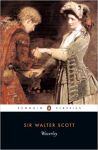
Waverley book cover

Waverley is regarded as the first work of historical fiction. Its subtitle, “Or, Sixty years since”, tells us its historical setting, which is, specifically, the Jacobite uprising of 1745. The plot concerns Edward Waverley, an idealistic, impractical young man who joins the army, and is sent to the Scottish Highlands. He meets passionate Scottish patriots, Fergus and his sister Flora, who support Prince Charles Edward Stuart (aka Bonnie Prince Charlie), and is attracted to their cause. Not a wise move! Initially published anonymously, Waverley was a big success, marking, says Penguin’s blurb, “the start of his extraordinary literary success”.

So, why do I like it, and yet am not planning to finish it? I like it for its humour and Austen-like observations on human nature. I like the way the novel starts with Scott, as first person narrator, explaining why he chose his character Waverley’s name (“an uncontaminated name, bearing with its sound little of good or evil, excepting what the reader shall be hereafter pleased to affix to it”), and clarifying what sort of novel he was writing. He lists various possibilities – including Gothic, Romance, Sentimental – and then concludes:

By fixing then the date of my story Sixty Years before this present 1st November, 1805, I would have my readers understand that they will meet in the following pages neither a romance of chivalry, nor a tale of modern manners; that my hero will neither have iron on  his shoulders, as of yore, nor on the heels of his boots, as is the present fashion of Bond Street; and that my damsels will neither be clothed “in purple and in pall,” like the Lady Alice of an old ballad, nor reduced to the primitive nakedness of a modern fashionable at a route. From this my choice of an æra the understanding critic may farther presage, that the object of my tale is more a description of men than manners.

Examples of his Austen-like observations, include:

Where we are not at ease, we cannot be happy; and therefore it is not surprising, that Edward Waverley supposed that he disliked and was unfitted for society, merely because he had not yet acquired the habit of living in it with ease and comfort, and of reciprocally giving and receiving pleasure; (Ch. 4)

AND

There is no better antidote against entertaining too high an opinion of others, than having an excellent one of ourselves at the very same time. (Ch. 5)

There are many satirical or humorous comments made in this first volume, such this to the modern “soft” education methods:

I am aware I may be here reminded of the necessity of rendering instruction agreeable to youth, and of Tasso’s infusion of honey into the medicine prepared for a child;

Unfortunately, this method, he argues, did not serve our young hero well:

With a desire of amusement therefore, which better discipline might soon have converted into a thirst for knowledge, young Waverley drove through the sea of books, like a vessel without a pilot or a rudder.

Don’t you love that image, “like a vessel without a rudder”? Anyhow, he then elaborates on the ills of unstructured, uncritical reading.

Later, he describes Waverley’s arrival in the Highlands:

Three or four village girls, returning from the well or brook with pitchers and pails upon their heads, formed more pleasing objects, and with their thin short-gowns and single petticoats, bare arms, legs, and feet, uncovered heads and braided hair, somewhat resembled Italian forms of landscape. Nor could a lover of the picturesque have challenged either the elegance of their costume, or the symmetry of their shape, although, to say the truth, a mere Englishman, in search of the comfortable, a word peculiar to his native tongue, might have wished the clothes less scanty, the feet and legs somewhat protected from the weather, the head and complexion shrouded from the sun, or perhaps might even have thought the whole person and dress considerably improved by a plentiful application of spring water, with a quantum sufficit of soap. The whole scene was depressing, for it argued, at the first glance, at least a stagnation of industry, and perhaps of intellect.

This paragraph has so much in it: the cheeky reference to the mania for “the picturesque“, the “dig” at the English (and their preference for comfort, and, by implication, for “niceness”), and the social commentary regarding the poverty of the peasants.

Now, I know some people don’t like authors who talk to you. I understand it destroys their engagement – the fantasy that what they are reading is “real” – but I don’t feel that way. It could be argued, I think, that this style particularly suits historical fiction because it can remind us that this is someone telling us a story and that we need to think about what we are being told? Anyhow, I did start Volume 2, which opens:

Shall this be a short or a long chapter?—This is a question in which you, gentle reader, have no vote, however much you may be interested in the consequences; just as probably you may (like myself) have nothing to do with the imposing a new tax, excepting the trifling circumstance of being obliged to pay it.

Haha, eh?

However, the book is slow reading. There are so many long descriptions, and, in my Kindle version, the frequently appearing blue-links to footnotes kept distracting my eye, regardless of whether I decided to click on them or not! I just can’t love it enough, right now, to finish it.

So, I’ll leave you with Penguin’s praise that “with its vivid depiction of the wild Highland landscapes and patriotic clansmen, Waverley is a brilliant evocation of the old Scotland – a world Scott believed was swiftly disappearing in the face of a new, modern era.” Scott’s heart was in the right place. He treated his oppressed characters (peasants, for example) with respect, and he recognised that defeat was often accompanied by loss of culture. He is worth reading!

Sir Walter Scott
Waverley, Vol. 1
Penguin Classics, 2004 (Orig. pub. 1814)
388pp.
ASIN: B002RI9IQU
ISBN: 978-0140430714

Monday musings on Australian literature: National Biography Award, 2019

It’s been five years since I posted on the National Biography Award. Given that, and the fact that some changes have been made since last year, I figured it was worth reminding you (and me) of it.

First, a recap: The National Biography Award was endowed in 1996 by Geoffrey Cains, and supported for many years by Michael Crouch. Its aims were “to encourage the highest standards of writing in the fields of biography and autobiography, and to promote public interest in these genres”. From 2013 to 2018, the prize was $25,000 for the winner, and $1,000 for the shortlisted authors.

However, Michael Crouch died in 2018, bringing about some changes, as the website explains. It is now being supported by the Nelson Meers Foundation whose key objective is, they say, “to foster innovative artistic and cultural expression, and to encourage greater engagement with the diversity, complexity and richness of our cultural sector”. Hence their taking on this Award. This change has resulted in an increase in prize money for the shortlisted authors, and a new prize to commemorate Michael Crouch. The new arrangement, starting in 2019, is:

  • $25,000 for the winner
  • $2,000 for each of six shortlisted authors
  • $5,000 Michael Crouch Award for a first published biography by an Australian writer

The shortlist for 2019 was:

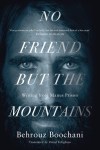
  • Behrouz Boochani’s No friend by the mountains: Writings from Manus Prison (Memoir) (Bill’s The Australian Legend’s review): If you are Australian and haven’t heard of this book yet, you have probably been RipVanWinkling it, but for non-Australians, Boochani is a Kurdish asylum-seeker who has been detained on Manus Island for over six years. This is his story, and one I have written about before.
  • Danielle Clode’s The wasp and the orchid: The remarkable life of Australian naturalist Edith Coleman (Biography) (Theresa Smith’s review): Reclaiming the story of a once well-known but then forgotten early twentieth century Australian naturalist, this book seems to be one of those hybrid biography-memoirs as the author herself, a scientist, is also present in the book.
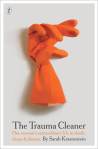
  • Sarah Krasnostein, The trauma cleanerSarah Krasnostein’s The trauma cleaner: One woman’s extraordinary life in death, decay & disaster (Biography) (my review): This book is about as well known in Australia as Boochani’s is; it’s a beautifully structured, moving story, about transgender woman Sandra Pankhurst’s life and her current occupation as a trauma cleaner.
  • Rozanna Lilley’s Do oysters get bored? A curious life (Memoir) (Amy Walters’ post on Capital Letters, and my post on a festival conversation with Lilley): A complex memoir exploring Lilley’s life with her autistic son, her caring for her father with dementia, and her own experience of the trauma of sexual abuse while living with her bohemian parents, Dorothy Hewett and Merv Lilley.
  • Rick Morton’s One hundred years of dirt (Memoir): A memoir about multigenerational trauma, about which the judges wrote “Not since George Orwell has the grinding, humiliating, life-sapping horror of working-class deprivation and inequality been better portrayed”.
  • Sofija Stefanovic’s Miss Ex-Yugoslavia: a coming of age memoir (Memoir) (Lisa’s ANZLitLovers’ review): The story of a complex migration, which saw Sofija moving from a comfortable childhood in Belgrade to an unsettled life in Melbourne after the collapse of socialist Yugoslavia, but then returning to Serbia, only to come back to Australia when war hit the region.

So, only two biographies and four memoirs, which is a bit of a shame I think, albeit I enjoy good memoirs. However, from my research and from what I’ve read myself, each book here offers something special in content and/or in the approach taken, which expands our understanding of the forms within which they are written, and which is what you’d expect from a shortlist.

The judges for 2019 were:

  • Dr Georgina Arnott: Research Associate at Monash University on Australian history projects; author of The unknown Judith Wright which was shortlisted for the National Biography Award in 2017; and a judge also in 2018.
  • Margy Burn: librarian who has been responsible for Australian special collections at the National Library of Australia, and other state and university libraries; served on working parties for the Australian Dictionary of Biography; and a foundation judge for the Kibble and Dobbie awards for life writing by a woman author.
  • Professor Iain McCalman: author of several books; former President of the Australian Academy of the Humanities; and currently co-director and co-founder of the Sydney Environment Institute at the University of Sydney.

2019 Winners

Behrouz Boochani, No friend but the mountainsThe overall winner, announced last Monday, 12 August, is Behrouz Boochani’s No friend but the mountains. The judges said that:
This is compelling storytelling in the samisdat tradition, written in Farsi as a series of text messages sent to his translator and collaborator Omid Tofighian. Collaboration has made this book, which demonstrates how innovative, experimental and creative the work of translation can be.

The winner of the inaugural Michael Crouch Award for a Debut Work was Sofija Stefanovic’s Miss Ex-Yugoslavia, which judges described as “finely observed and ambitious”, a “thoughtful and tender addition to the genre of migration stories”.

For the non-Australians, in particular, I’d love to know about any specifically biography awards in your countries … but am of course happy to hear from anyone.

Grace L. Chao and Amanda Ambinder Shapiro, Bookclub social: A reader’s guide to online book clubs (#BookReview)

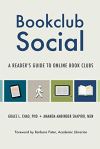
BookcoverBack in 2016, I completed a survey about online bookclubs, and answered some supplementary questions about “my” sort of club. I also took part in a follow-up telephone interview with the two American researchers involved, Grace Chao and Amanda Shapiro. Now, three years later, they have completed their research and self-published it in their book, Bookclub social: A reader’s guide to online book clubs. Of course I bought it, because although it’s some time since I’ve been active in online book clubs (or, OBCs), I am interested in reading communities of all sorts.
Chao and Shapiro explain their research process in the opening chapter. They describe their work as an ethnography, and so used “anthropological methodology”. This involved the survey (for which they received 840 responses, a 22% response rate), followed-up by in-depth interviews with around 100 participants, and participant observation of a number of clubs in operation. They divide the clubs into seven genres:

  • Classics (which includes Literary)
  • Erotica
  • General Reader
  • Horror
  • Mystery/Thriller
  • Romance
  • Sci-fi

You won’t be surprised to hear that I slotted into the Classics group.

Anyhow, in this chapter they explain their aim as being to look at “how the nature of community is being redefined and shaped in the digital age”. I wouldn’t say, necessarily, that what they found was surprising – at least not in terms of my own experience of such clubs – but the book makes some cogent points about how international online communities can work, what they can offer, and some of the challenges they face too.

Of course, Chao and Shapiro found that, overall, female readers dominate most of the clubs, which is similar to face-to-face clubs, although in certain genres, like sci-fi, men are involved in greater numbers than in others. They found that people join these clubs to converse about books, “to deepen and enhance their reading experience”, and often, to seek both intellectual and social outlets. Face-to-face clubs can do these too, but OBCs can offer more.

For example, and this is something that I particularly liked, in a traditional face-to-face book club, there is limited time for discussion, usually just an hour or so. As Chao and Shapiro put it, these groups require “a faster thought process where there is less time to analyze or to react”. In an OBC, you can read a comment by another reader, mull it over, and write a response in an hour, a day, or whenever (within the rules or practices of the club.) I learnt so much during my 10 years or so of active involvement in these clubs.

However, it’s not only the extended time-frame which enables deeper or more expansive discussion. The global nature of these clubs allows for a more “diverse cultural exchange of perspectives and opinions”. This diversity can be generational, gender, racial, ethnic, socioeconomic, political and/or religious based.

For some readers, Chao and Shapiro found, OBCs represented the only outlet available to them for book discussion. These are readers who live in countries/places/situations where “a shared reading culture is not prioritized” (or, even, approved of), or who read genres (like Erotica) for which it is not always easy to find local reading communities, or who, for some reason (such as being housebound), are unable to access activities like face-to-face reading groups.

A propos the first group, Chao and Shapiro write that “for members from more restrictive cultures and communities, a virtual shared reading community could be their first foray into a community which allows personal expression and choice”. They include some moving stories about such readers, mostly women, who are desperate to be part of a reading community. A member of a Romance bookclub told Chao and Shapiro about a member from Pakistan, who was being pressured to marry “an elderly gentleman”:

Shortly thereafter, she told us that her family was not allowing her to post in the group anymore and even restricting her access to the internet. In her last post, she wrote: ‘Think of me.’ I didn’t know what to do. We never realized the risk she was taking by being a member of our book club. Through our book discussions, she was exposed to different cultures, religions, politics, morals, and values; she was able to speak her mind freely, things we take for granted in Western society. It’s like the club was deemed a bad influence…

Stories like this are saddening, but not surprising.

They note, in fact, that the social aspects of these clubs disprove the popular misconception that OBC members are “anti-social because they prefer online to face-to-face interactions”. Socialisation does take place, they say, with “intricate networks of friendships” being created across “national borders, time zones, and cultural barriers”. Here I’ll share a quote from the book that I’m sure another survey participant wrote about me:

I met another gal from Australia when she and her hubby were visiting here. We went to a great museum in Los Angeles.

Mr Gums and I did indeed meet two OBC friends of mine, and we had a lovely day at the J. Paul Getty Museum in Los Angeles. My OBC experience has had a significant and ongoing influence on my life, even though I am no longer active.

The book is logically structured, with the main body comprising chapters focusing on specific questions, such as Who’s in charge? (on the role of moderators) and Who’s anchoring the club? (on the role of core members). Other chapters explore social connection in OBCs, how they create virtual safe havens, their role in exposing members to new ideas, and the way they are able to create a sense of belonging among members. Chao and Shapiro support these discussions with evidence from their field research and from relevant academic writings by anthropologists, sociologists, information scientists, and others. The chapters are carefully footnoted and there is an extensive list of references at the end.

I’m not sure whether what they found can be extrapolated to other online communities and the book ends with advice about OBCs rather than making such extrapolations, but they do make some cogent points about the way OBC’s support and promote diversity and inclusivity, and they identify the main factors that make these sorts of communities work (or not). For these reasons, Bookclub social is a worthwhile read, as well as, for me at least, an enjoyable one.

Grace L. Chao and Amanda Ambinder Shapiro
Bookclub social: A reader’s guide to online book clubs
BookBaby, 2019
ISBN (ebook): 9781543947526

Monday musings on Australian literature: Introducing Charmian Clift

There’s no way I can do justice in a short post to such this complex woman about whom so much has been written, but I’d like to add Charmian Clift to Monday Musings posts featuring Aussie authors, not only because she and her husband, author George Johnston, were one of our significant literary couples, but also because, according to academics Tanya Dalziell and Paul Genoni writing The Conversation, she is enjoying somewhat of a renaissance.

This renaissance includes that:

  • in 2018 she and Johnston were inducted into the Australian Media Hall of Fame (see my post); and that
  • she is the subject of two recent/upcoming novels, Tamar Hodes’ The water and the wine (2018), English writer Polly Samson’s A theatre of dreamers (coming in 2020).

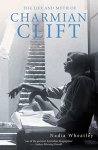
Nadia Wheatley, The life and myth of Charmian Clift, book coverIntriguing, because there was also flurry of interest in her back in the 1990s-2000s, with:
  • Suzanne Chick’s Searching for Charmian: The daughter Charmian Clift gave away discovers the mother she never knew (1994): autobiography/memoir
  • Susan Johnson’s The broken book (2004): novel
  • Nadia Wheatley’s The life and myth of Charmian Clift (2001): biography

There’s clearly something about Charmian! (I have read Chick and Johnson, but before blogging)

Potted bio

Clift was born in the gorgeous NSW south coast town of Kiama in 1923, and served in the Australian Women’s Army Service in World War II as an anti-aircraft gunner. After the war, she worked as a journalist on Melbourne’s Argus, and married journalist George Johnston in 1947. They had two children, before moving to London in 1950 for his job as European editor for Sydney’s Sun. In 1954, they went to Greece to live writers’ lives, where they lived, mostly on Hydra, for 9 years, before returning to Australia in 1963. Clift then worked, primarily, as a freelance journalist, until she died tragically, by suicide, in 1969.

Clift (see Wikipedia) wrote novels, three in collaboration with Johnston, two autobiographies/memoirs, short stories, and many essays/columns (collections of which were published after her death.) She was working on an autobiographical novel, The end of the morning, before her death.

The Charmian renaissance

Dalziell and Genoni (D&G) say that “the revival of interest in Clift is more than a collective nostalgia or feminist correction of the historical record, although both are relevant”. It’s also due, they say, to increasing interest in their Hydra years, where they met other writers and artists including Leonard Cohen, and where they were visited by people like Sidney Nolan and family. D&G refer to two events in Melbourne in 2015: an exhibition called Homage to Hydra, which included paintings of them, and a show, Hydra: Songs and tales of Bohemia, by musicians Chris Fatouros and Spiros Falieros in which they use Cohen’s songs to tell about Clift and Johnston’s time on Hydra.

Ah, and then it comes out! In 2018, D&G themselves published a book, Half the perfect world: Writers, dreams and drifters on Hydra, 1955-1964, in which they tell of the “fabled decade of Clift’s life as a bohemian expatriate”. But there’s more, they share: Sue Smith has written a play called Hydra, which casts “Clift in ways that resonate sympathetically with the concerns of contemporary audiences”. Smith describes Clift as “a woman ahead of her time”, in both her life choices and her writing. Queensland Theatre’s webpage on Hydra provides some useful background, including references to Johnson’s novel.

D&G, then, are particularly interested in Clift’s personality, and in how Johnston’s and her dream of “a cheap and sun-soaked creative island life slowly soured”. They reference Wheatley’s well-regarded biography. They suggest that Clift’s “first person narratives of a life lived with great passion and a sceptical eye to the consequences garnered a large readership” and that “these readers responded to an incisive intellect with a vision of a culturally enriched Australia” [my emph]. They see her as “one of the most important female voices” of her post-war time when a social revolution was on the horizon. Oh, and they argue that Clift was modern in her capacity for “self-creation”!

Searching for Charmian … in Trove

Of course, I had to check Trove to see what contemporary writings I could find, by or about her, but there’s not much, as I expected, because the post-1950s is still tied up in copyright. However, I did find a poem, “Kiama’s Blowhole”, written by her when she was 8 years old and published in The Kiama Independent, and Shoalhaven Advertiser (14 January 1933).

I also found a review by Sylvia Lawson in The Canberra Times (5 March 1966) of a collection of her newspaper columns/essays that was published in her lifetime, Images in aspic (1966). Lawson’s reaction is mixed. Indeed the review is headed “Popularity despite an irritating style”! She praises Clift’s style saying:

She does indeed write well (often better here, in fact, than in her two novels), but it’s what the style does that counts. The long, weaving, daydreaming sentences, the short brisk ones, and the way of letting reflections drift off in rows of dots combine to give readers the sense that her moods and responses have been fully handed over to them, transcribed as exactly and honestly as possible.

Lawson says this of the collection – and I love this – “Writing with humour and enquiry about mods, post-mods, squares and oldies, she does something (since they all read her) to make it one world after all”. However, she doesn’t like it all, saying that “Sometimes the nostalgia goes right over the edge into whimsy; sometimes it looks very like cashing-in on private experience”. This variety, this unevenness, though, is not surprising in this sort of collection I think.

I found an excerpt from Images in aspic in the Macquarie anthology of Australian literature. It’s about the parlous state of the Australian film industry. She writes that no-one has “exploited cinematically our stupendous beaches, or sought to portray the neo paganism of the surf-cult, which is utterly contemporary, utterly Australian …” Nor, she says, “has anybody touched upon the particularly contemporary problem of the integration of hundreds of thousands of Europeans into our communities. There is yeast enough there to ferment a dozen films without formula or cliché”. How much has changed? She writes:

Ever since I have been back here I have been conscious that Australians, caught in international cross-currents of ideas and manners and fashions, twisted about by reassessments of their own old myths, bewildered by elusive and changing standards, are desperate to be redefined.

This is interesting. Clift, the returned expat, seems to be somewhat positive about the state of Australia, and its capacity to grow, at a time when those famous intellectuals, Clive James (1962), Germaine Greer (1964) and Robert Hughes (1964), left for Europe, seeking something less stultifying!

I did find one article in Trove written by Clift, “Home from the Aegean” (Australian Women’s Weekly, 26 February 1964). It’s about the family’s decision to return to Australia, and concludes with:

“You must be out of your minds to leave this!” the latest batch of young Australians said with conviction.

But I don’t think so. In fact, I think that this last journey, which completes the circle of my journeyings, might turn out to be the most exciting one of all.

How sad that five years later she took her own life.

National Bookshop Day 2019

Time for another National Bookshop Day, given my last posts were in 2013 and 2012. In those posts I named some of my favourite Canberra bookshops, particularly the National Library Bookshop, Paperchain and Beyond Q (secondhand booksellers). They are still among my favourites, but, since then, two more excellent bookshops have opened, Muse (which runs Festival Muse about which I’ve written several times) and Harry Hartog Booksellers. Both these stores sell new and secondhand books, making them extra special. What great choice we have in Canberra!

Staff picks shelf
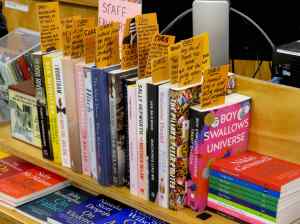
Staff picks at Book Face

This bookshop day, I may not get to a bookshop, as I’ll be on the road between Sydney and Mollymook, so I’m including pictures from one we visited this week in Port Macquarie. I hadn’t heard of Book Face before, but the website explains that it is “a small group of local, independent bookstores whose first store opened its doors in November 2014. Owned by Paul and Leo Berkelouw”. If you don’t know the Berkelouws, and are interested in them, check out the family’s two-century plus history of bookselling on the Berkelouw website.

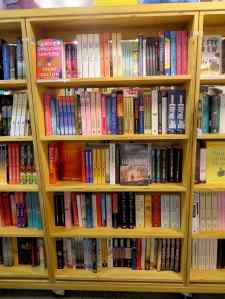
Book shelves at Book Face
Shelf section in Book Face, Port Macquarie

Book Face is an inviting smallish bookshop, with a lovely little cafe at its entrance. (You know how I love Muse with its excellent restaurant!) We enjoyed wandering about its bookshelves – and facing out Nigel Featherstone’s Bodies of men while doing so! Never let a chance go by is my motto when seeing Aussie authors in bookshops. Pleasingly, a couple of other Aussies (Trent Dalton and Peggy Frew) were already face out (as you might see in the pic). It was also heartening to see some Aussie authors in the little display of staff picks on the shop’s counter. Good one Book Face.

And now, for something completely different …

Author-owned bookshops

I don’t know of many Australian author-owned bookshops but there are several in the USA. Here’s a list of those I know (in alphabetical order by author name):

  • Judy Blume’s Books & Books, Key West, Fl (opened 2016): Blume, of course, is an extremely popular writer of children’s and young adult books. Her shop is a not-for-profit centre “that provides studio space for local artists, a residency program for visiting artists, galleries, and classes” as well as selling books.
  • Louise Erdrich’s Birchbark Books and Native Arts, Minneapolis, Mn (opened 2010): Erdrich (whom I’ve reviewed recently) opened this small independent bookstore with her daughters. It specialises in Native American literature, has “indigenous-language guides, literature and crafts, alongside the latest best sellers”, and a toy-filled play area!
  • Lawrence Ferlinghetti’s City Lights, San Francisco, Ca (opened 1953): Ferlinghetti, an American poet who turned 100 this year, opened his store and publishing company with college friend, Peter Dean Martin. The shop was aligned with their left-leaning politics and aimed to “break literature out of its stuffy, academic cage”. The current manager says that they don’t sell or publish bestsellers!
  • Jeff Kinney’s An Unlikely Story, Plainville, Mass (opened 2015): Kinney is the author of the very popular Wimpy Kid books. The article announcing his shop’s establishment explains his aim as being to help the book trade. He plans to be somewhat hands-on, including offering cartooning workshops at the store. It has a healthy cafe too!
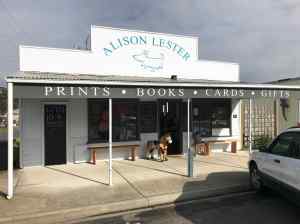
  • Exterior of Alison Lester Gallery BookshopAlison Lester Gallery/Bookshop, Fish Creek, Vic (opened 2014): Lester is a popular Australian children’s picture book author and illustrator. Her shop, unlike the others I’ve included here, only sells her own books and art work, but as she’s the only Australian author-owner I could find, and the only one of the shops that I’ve visited, I’m including it!
  • Jonathan Lethem’s Red Gap Books, Blue Hill, Me (opened 2009): American novelist Lethem is co-owner of this used books shop, which is named for a 1935 film, Ruggles of Red Gap, loved by the shop’s owners!
  • Larry McMurtry’s Booked Up, Archer, Texas (est. orig. in Washington DC, 1970): Bestselling author of Lonesome Dove and other books, McMurtry sells used books. The Archer store is apparently one of the largest used bookstores in the USA. McMurtry is quoted on the site as saying “Few books are rare; we have handled only a handful in 44 years in the trade. But many books are attractive. Customers come to us from wherever the four winds blow.” Love it.
  • Ann Patchett’s Parnassus Books, Nashville, Tn (opened 2011): Award-winning novelist of books like Bel canto, Patchett is co-owner of Parnassus Books, which the two women established when Nashville suddenly lost both its bookstores. You can read the story (with links to more) on the shop’s website. It’s all about two passionate people believing they could do what corporations couldn’t or wouldn’t in Nashville!
  • Emma Straub’s Books Are Magic, Brooklyn, NY (opened 2017): Unknown-to-me novelist and short story writer Straub opened this shop with her husband, largely because their local bookshop had closed. (Rather like Patchett.) Like many of the bookshops I’ve listed, this offers author events and is keen to engage the local community. Straub says that their “bookselling philosophy is that books are magic. And that we are nonjudgmental and we aim to be encouraging.”

I’ll leave you with Ann Patchett’s passionate statement about books bookshops and social change:

Amazon doesn’t get to make all the decisions; the people can make them, by choosing how and where they spend their money. If what a bookstore offers matters to you, then shop at a bookstore. If you feel that the experience of reading a book is valuable, then read a book. This is how we change the world: We grab hold of it. We change ourselves.

Couldn’t say it better myself.

Now, can you add to the list? From anywhere in the world?

Sebastian Smee, Net loss: The inner life in the digital age (#BookReview)

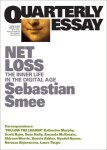
Book CoverIf you’ve been reading my blog recently, you’ll already know why I am reviewing Sebastian Smee’s Quarterly Essay edition, “Net loss: The inner life in the digital age”, but to briefly recap, it’s because it inspired a member of my reading group to recommend we read Anton Chekhov’s short story, “The lady with the little dog”. What wonderful paths a reading life can take, eh?

Smee’s aim in his essay is, he says,

to dig into this idea that we all have an inner life with its own history of metamorphosis – rich, complex and often obscure, even to ourselves, but essential to who we are. It is a part of us we neglect at our peril. I am interested in it because of my sense that, as we live more and more of our lives online and attached to our phones, and as we are battered and buffeted by all the informational, corporate and political surges of contemporary life, this notion of an elusive but somehow sustaining inner self is eroding.

He commences the essay, though, by admitting that he uses social media – a lot. And not only that, he also admits that he knows that he is “handing out information about myself to people whose motives I can’t know. I feel I should be bothered by this, but I’m not, particularly.” He’s not bothered because they know only know “superficial stuff” about him, such as his phone number and age, what sports teams he supports, the music he listens to and where he does the weekly food shop. From all this, he  says, they can probably guess how he’ll vote, but, he says, and this is a big but, “they cannot know my inner life”.

This is where Chekhov’s “The lady with the little dog” comes in because Gurov discusses his inner and outer lives, making clear that the inner life is where “everything that was essential, of interest and of value to him, everything that made the kernel of his life, was hidden from other people”.

The digital age is, as Smee says, making huge incursions into our lives. Children, “from a young age, are encouraged to present performative versions of themselves online” and, for all of us, “it gets harder to be alone with ourselves or to pick up a book; harder still to stay with it”. This is true – to a degree – though there are many of us who do carve out alone-times for ourselves. For me, this includes never being plugged in when I walk. That is definitely my alone-time. As is my yoga time, and bed-time when my phone is in another room, while my book is with me!

But, what is this inner life? How do we define it? Smee says it includes “apprehensions of beauty, your intimations of death, what is going on inside you when you are in love, or when your whole being is in turmoil”. He feels that, today, “we can no longer assume that it has its own reality. To the extent that it exists at all, it seems to have no place in public discourse. Even in discussions of art, it is ignored, thwarted, factored out”. Hmm, I haven’t consciously thought about whether, when discussing the arts, we refer to our inner lives, whether we share our innermost feelings about what we see, hear or read, but I’d have thought we do. Yet, if Smee is right about what he calls “the obscurity and unknowability of our inner selves”, then have we ever?

Anyhow, Smee explores what “self” is and how various writers and artists have viewed it. Chekhov’s Gurov, for example, felt a tension between his inner and outer lives; while American filmmakers Lizzie Fitch and Ryan Trecartin, he says, portray our identity, our inner selves, as something flexible, as something messy, splintered, and defined by our relationships with each other.

Smee talks about the effect of social media, like Facebook, on our selves. Trustworthy studies, like one in the American Journal of Epidemiology, he says, “find that use of Facebook correlates with diminished wellbeing, both physical and mental”. Correlation doesn’t mean causation of course but the implication is there. Smee returns to his question about how much companies like Facebook really know about us, about how accurate their profiles are.

He talks throughout the essay about algorithms, because that is how social media software works. Their algorithms that deal “with big and disparate data sets can see patterns where they couldn’t previously be detected”. This has “proved incredibly useful in business, medicine and elsewhere”. However, these algorithms “still struggle to cope with the messiness and idiosyncrasy that inhere in individual human beings.” Can they, will they ever be able to, gain access to our inner lives? It’s hard to say, he says, because “individual reality is beyond quantification. And cause and effect are always more complex than we like to think”.

Throughout his discussion, Smee draws mostly on writers and artists, rather than on philosophers and psychologists, to explore his topic, to exemplify his arguments. And so to this question of quantifying individual reality, he turns to Cézanne, who conveys in his art that

life … is not hierarchical, like a newspaper article, or linear, like an algorithm. It is fluid and multifaceted … Instead of cause and effect, there are only clusters of interlocking circumstances which mysteriously give rise to new circumstances.

Will, I wonder, this inherent instability save us – and our inner lives?

Social media will, of course, continue to keep trying to access our selves. One way they do so is by trying to capture as much of our attention as they can. And yet, Smee goes on to argue, our inner lives, “the very things that move us the most”, are, in fact, “the hardest to share”. Chekhov knew it was hard to do. Moreover, he knew that sharing our inner selves “can also be a betrayal of the primary, inward experience.” Touché.

Smee also makes an important distinction between private and inner life. Privacy is linked to political freedom (and power), he says, “to what you do and think away from the interested, potentially controlling eyes of others”. It’s “a shallow concept”. Inner life, on the other hand, as he argues throughout the essay, “may be elusive and impossible to define”.

And yet, says Smee, it’s this inner life that can erupt into hate, as we see played out on social media, the trolling, the never-ending vindictiveness. He references Frances Bacon’s paintings, arguing that they “dramatise a tension between the psyche’s darker compulsions and a pressure felt within civilised society to conform, to stifle emotions, not to lash out.”

Do we want these inner lives unleashed? (In a way, though, we then know what people really think?!) However, the question that most interests Smee is why are these negative aspects of our inner lives being unleashed? He suggests that it’s what all the artists (the filmmakers, writers and painters) he quotes are expressing – “an apprehension that we are alone”. This is where, Smee proposes, social media comes in with a solution:

One response to this panic, it seems to me, is to disperse ourselves, by being as widely visible as possible. Social media, and the internet generally, make this feel possible, to an unprecedented degree. They allow us to lay before the world (in the hope that the world will be watching) the things we love, the things we hate, and a mediated image of our lives that can seem to rescue us from the threat of oblivion.

But, to really protect our inner lives, he believes, we need the converse: “to pay attention again to our solitude, daring to hope that we might connect that solitude to the solitude of others.”

So where does the essay leave us? Early on he argues that

Once nurtured in secret, protected by norms of discretion or a presumption of mystery, this ‘inner’ self today feels [my emph] harshly illuminated and remorselessly externalised, and at the same time flattened, constricted and quantified.

It’s easy for us to say, yes, yes, yes, this is so, but I wonder whether this too is just a feeling? And whether, in truth, our inner lives remain as obscure and unknowable as Smee describes in the essay – and therefore as rich as ever? Net loss is a fascinating essay to read – particularly for “arty” types who love allusions to writers and artists. He makes pertinent points about the way social media operates and gives us much to think about regarding the inner life, but in the end leaves us with more questions than answers – which is perfectly alright. The one immutable, however, is that whatever we think is happening, the inner life is worth protecting.

Lisa (ANZLitlovers) reviewed this, as did Amy (The Armchair Critic) who discusses it at some depth including delving into what Smee doesn’t do.

Sebastian Smee
“Net loss: The inner life in the digital age”
in Quarterly Essay, No. 72
Collingwood: Black Inc, 2018
98pp.
ISBN: 9781743820698

Monday musings on Australian literature: Writers SA

Time, I decided, for the next Monday Musings in my little series on Australia’s writers centres, this time South Australia’s. And it, like Writing NSW did, has recently changed its name, in this case from SA Writers Centre to Writers SA It is, says its About page, Australia’s first writers’ centre, and is located at the State Library of South Australia..

The Chair at the time of the change, Amy Matthews, said that it will ‘turn its attention in an even more dedicated way to helping South Australian writers achieve their creative dreams’, and that they are ‘going to do even more all over the city and the state, with more free events, more writing workshops and three targeted year-long programs for writers at all stages of their careers’. One can be cynical about name changes, but if they result in real improvements, then who cares. Let’s hope that’s happening here.

Like other writers centres, Writers SA is a membership organisation, but also obtains funding and support from others, particularly from federal and state governments.

Here are some of the things the centre does:

Courses/Workshops

Courses and workshops are, as I’ve said in previous posts, a major component of what writers centres do, and so it is with Writers SA, and it’s clear that this centre makes a particular effort to support and encourage young writers. Here is a small selection of Writing SA’s current offerings:

  • Teen Writers Club (with Jason Fischer, a science fiction writer who has won and been shortlisted for Ditmar and Aurealis Awards): geared to teens 15–17 years old, but this is a guide only, they say. That said, they also have a group for younger people aged 12–14 years old. It’s a weekly group that meets on Saturday mornings during school term time.
  • Manuscript Incubator (with Bronwyn Tilley): a 5-month program for “writers looking towards publication”. It’s far easier to quit than to finish! This program says it’s for a whole range of needs from turning a draft into a “final polished product”, to finding/approaching an agent or publisher.
  • Story to Screen (with Holly Lyons, who is been script-writer or script editor on many Australian television series, including, most recently, Home and away): a one-off workshop on how to transform “an original idea for a story that you’re happy to share with the group … into a story with impact suitable for film or TV.”
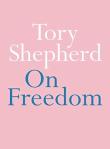
  • Book coverWriting for Change (with Tory Shepherd, journalist who has written On freedom, published by MUP): a one-off workshop on the challenge of crafting “a piece that will (hopefully!) withstand the scrutiny of subeditors, editors, and of course readers”. The promotion for this workshop says that “there’s more demand than ever before for opinion pieces, which means more opportunities for freelancers. It’s also a powerful way that advocates and lobbyists can make their case.”
These are just four of many courses and workshops they offer on topics that include, in addition to the above, creating comics and writing YA fiction, the future of fantasy, finding an agent, and even on how to keep your motivation up!

Events/Networking

  • Monthly meet-up: A monthly informal get-together led by staff from Writers SA and Adelaide City Library that is “usually genre specific or practice specific”. The promotion says “ask for advice, ask questions, tell stories or make up stories. You’ll come away motivated and ready to go home and put pen to paper.” The August meet-up is on Journalism.
  • Literary drinks: These are regular (or semi-regular, it’s not clear) evening which they describe as “relaxed networking opportunities for writers, readers and everyone in or interested in the writing industry. Meet your writing peers, connect with your community, and find out what’s happening in the world of words in SA.” The next one occurs in September and is called “Spring Mixer”.
  • Salisbury Writers Festival: This annual festival, now 15 years old, is organised by Writers SA and the City of Salisbury. The program for the 2019 festival to be held at the end of August is on their website.

In addition to the above, Writers SA also offers a wide range of professional resources and services, including manuscript assessment, something they call “first feedback”, and individual consultations. It has a blog, which seems to be published regularly, and which covers a wide range of topics, from professional to fun things like giveaways.

Book coverIn 2018, the centre created a Writers and Readers in Residence Project specifically designed to support regional communities. It involves South Australian and international writers undertaking “an artistic residency in regional communities to activate reading as well as writing in the town”. It seems to have funding (from the Australia Council of the Arts) to run from 2018 to 2020. You can read about it on their website.

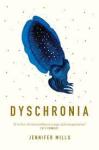
Writers who have been involved to date include Jennifer Mills (author of the Miles Franklin shortlisted Dyschronia) who was based in the Eyre Peninsula; New Zealand novelist and playwright Whiti Hereaka who is currently based at Roxby Downs Community Library; and writer Karen Wyld who took part in the ACT Writers Centre’s Hardcopy program and was based at Ceduna. The project involves writers working on their own projects and offering workshops or other activities in the communities in which they are based. Karen Wyld was hosted by the local public library while another participant, novelist and poet Bernice Chauly, worked with Ali Cobby Eckermann (who has appeared several times on my blog.) It sounds like an active, exciting program, one that recognises the needs of South Australia’s many remote communities, while offering development opportunities for the writers too. It also clearly puts diversity into practice in its selection of writers for the project. (Oh, and this sounds like just the sort of thing the newly-renamed organisation was aiming for!)

.. and here ends my post on another busy, active Writers Centre.

Writers Centres covered to date: the ACT, New South Wales, the Northern Territory, Queensland, and Tasmania.

Anton Chekhov, The lady with the little dog (#Review)

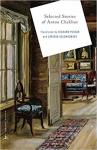
Penguin collection, translated by Wilks, book cover

“The lady and with the little dog” was an out-of-left-field recommendation for my reading group for two reasons. One is that it is a single short story – not even a whole collection which we have done before. And the other is that the member who recommended it did so on the basis of its being referred to a few times in Sebastian Smee’s recent Quarterly Essay (72), Net loss: The inner life in the digital age, which I’ll review next, hopefully.

So, what to read? We were as a group challenged, albeit was a good challenge. First, “the lady and the little dog” has appeared in many Chekhov collections over the years, accompanied by different selections of stories (though of course some individual ones do recur more than others.) Second, the story has been translated by many translators, including Constance Garnett, Ivy Low Litvinov, collaborators Richard Pevear and Larissa Volokhonsky, and Ronald Wilks. So, do we read all or some of the other stories in the collections we variously acquired (or try, even, to suggest we all read the same collection? That wasn’t going to happen! Particularly given availability challenges.) Or, do we just read the story plus the work that inspired its recommendation? (But what about the fact that there was a mix-up not resolved until late in the month about what exactly was that work!) In the end, our being a disciplined but not controlling group, we all chose our own paths, which made for an interesting meeting.

Penguin collection, translated by Garnett, book cover

Now, I have to admit that at the end of my first reading of the story – this story that is the lead story in so many collections and so must be well-regarded – I was a little underwhelmed, though why is hard to explain. After all, much as I love Guy de Maupassant’s short stories with their dramatic twists, I also love quiet stories about character, which is more Chekhov’s style. I think the issue was that I read it too fast, too distractedly, because when I reread it, Chekhov’s skill started to shine through. Chekhov, by the way, is seen as marking the transition between the mid- to late-nineteenth century realism of de Maupassant and the modernism of early twentieth century Joyce.

The story concerns an adulterous affair between 40-year-old Gurov and the much younger Anna, who meet while holidaying in Yalta without their respective, unsatisfactory spouses. Gurov’s arranged marriage was to a woman whom he considered “not very bright, narrow-minded and unrefined” and who “makes love insincerely”, while Anna sees her husband as “no more than a lackey” or “flunky” (depending on your translation!) She wants “to live life to the full”. Gurov initially sees his seduction of and relationship with Anna as “just another adventure”, not expecting to care when she returns home to St Petersburg. But, after he returns to Moscow, he realises that he’s been touched by her. Life has become meaningless:

Those pointless business affairs and perpetual conversations – always on the same theme – were commandeering the best part of his time, his best strength, so that in the end there remained only a limited, humdrum life, just trivial nonsense.

Penguin collection, translated by Pevear and Voslonsky, book cover

Consequently, he seeks out Anna, and finds that she too was unhappy, and so their affair resumes.

As the affair progresses, Gurov makes a distinction between his inner and outer lives (which is what Smee references in his essay). Gurov thinks:

He was leading a double life: one was undisguised, plain for all to see and known to everyone who needed to know, full of conventional truths and conventional deception, identical to the lives of his friends and acquaintances; and another which went on in secret. And by some strange, possibly fortuitous chain of circumstances, everything that was important, interesting and necessary for him, where he behaved sincerely and did not deceive himself and which was the very essence of his life – that was conducted in complete secrecy; whereas all that was false about him, the front behind which he hid in order to conceal the truth– for instance, his work at the bank, those quarrels at the club, his notions of an ‘inferior breed’, his attending anniversary celebrations with his wife – that was plain for all to see. …

What I noticed more on my second read through was Gurov’s personal growth. In the beginning, he is bored, misogynistic, and selfish. He found men boring, and preferred female company, and yet “he always spoke disparagingly of women and whenever they were discussed in his company he would call them an ‘inferior breed’”. Moreover,

Repeated – and in fact bitter – experience had long taught him that every affair, which at first adds spice and variety to life and seems such a charming, light-hearted adventure, inevitably develops into an enormous, extraordinarily complex problem with respectable people – especially Muscovites, who are so hesitant, so inhibited – until finally the whole situation becomes a real nightmare.

Penguin collection, translated by Slater, book cover

Then Anna appears, and this self-centred man is suddenly possessed by “those stories of easy conquests … and the alluring thought of a swift, fleeting affair, of a romance with a strange woman whose name he didn’t even know.”

By the end, though, not only has he realised that he had “genuinely, truly fallen in love – for the first time in his life”, but that he had come to a new understanding of himself:

Anna Sergeyevna and he loved one another as close intimates, as man and wife, as very dear friends. They thought that fate itself had intended them for each another, and it was a mystery why he should have a wife and she a husband. And in fact, they were like two birds of passage, male and female, caught and forced to live in separate cages. They forgave one another all they had been ashamed of in the past, forgave everything in the present, and they felt that this love of theirs had transformed them both.

There is, however, no easy conclusion – no clever twist, no clear ending, happy or tragic.

And so, of course, as I should have realised on the first read, “The lady with the dog” (or “with the little dog” or “the lap dog” or “the pet dog”, depending on your translation) is a tight, moving, ironic story about a man who, like many of Jane Austen’s best characters in fact, discovers the errors of his attitudes, and is transformed by the knowledge.

Anton Chekhov
“The lady with the little dog”
in The lady with the little dog and other stories
(trans. Ronald Wilks)
London: Penguin Books, 2002)
(“The lady with the little dog”, first pub. 1899)
ISBN (eBook): 9780141906850

Avalailable online at Adelaide University’s etext site.