Hobart Writers Festival 2019, Part 1: Guest post

No, I didn’t go to this year’s Hobart Writers Festival, but I had the next best thing – a brother who did. Not only that, but he responded positively to my request for some notes. I’ll be posting what he so-called “cobbled” together today and tomorrow, which means no Monday Musings this week. I hope – and believe – that you’ll find his report a worthy replacement.

By way of introduction, my brother Ian Terry has lived in Tasmania for well over three decades now, and recently retired after around 10 years as a curator of history at the Tasmanian Museum and Art Gallery. We have been discussing our reading most of our adult lives. It’s a connection that means a lot to me,  because I respect his thoughts and interpretations (despite his not being a Jane Austen fan!)

Part 1: Saturday 14 September

Tasmanian readers and writers have had a mixed week. On the cusp of publishing its 40thanniversary edition of the state’s well-regarded literary magazine, Island learned that its funding from Arts Tasmania has not been renewed for 2020. Unless it can find new sources of funding this celebratory issue will be the magazine’s last.

On a happier note Hobart’s historic Hadley’s Orient Hotel, in recent years positioning itself as a significant cultural space in the city, hosted the Hobart Writers Festival this weekend. The festival has a had a chequered history, sometimes held annually, sometimes bi-annually at varying venues and with changing names. This record suggests that while Tasmania takes its art and culture seriously and has a vibrant and important scene, the state’s small population creates recurring financial difficulties.

This festival’s theme, My Tasmanian Landscape, promised a program all about ‘Tasmania’s amazing literary landscape’ to celebrate ‘our diverse writers and writing’. While it is too long since I ventured into the Hobart Writers Festival, this edition did not disappoint with several sessions a balm to my historian’s soul offering me tempting choices.

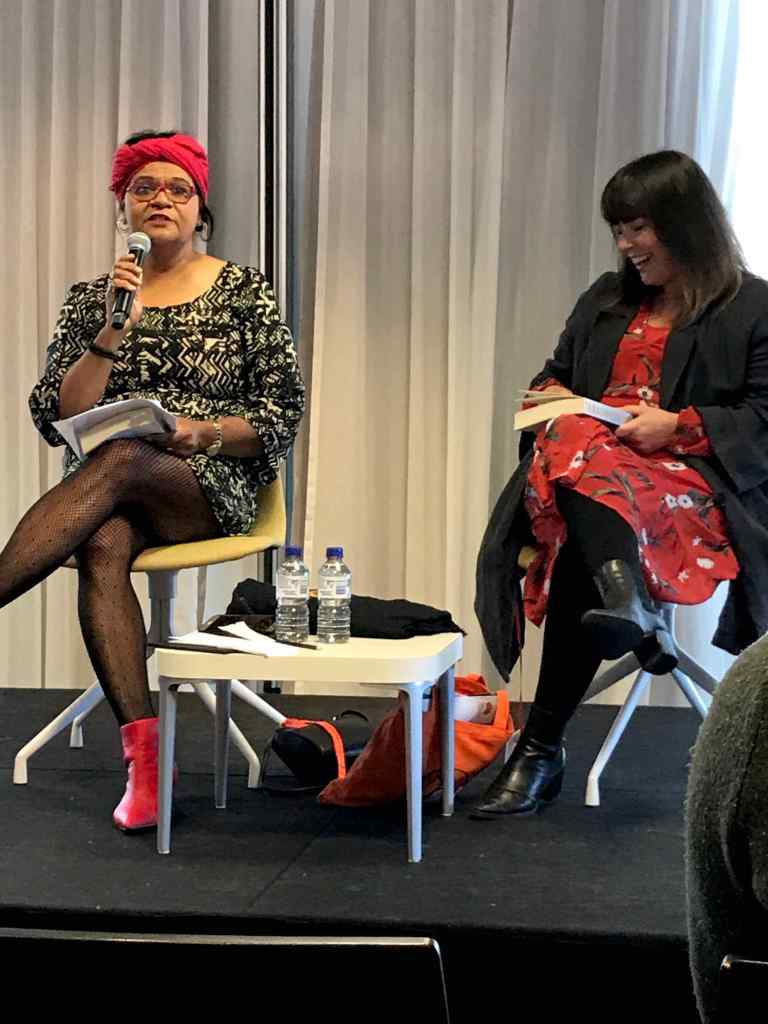
Book coverOn the first morning Henry Reynolds was in conversation with Ian Broinowski, author of a historical fiction entitled The Pakana Voice: Tales of a War Correspondent from Lutruwita (Tasmania) 1814-1856. Broinowski whose grandfather and father were both editors of the local newspaper, The Mercury, invents a colonial journalist, W.C., reporting on the frontier war that raged in Tasmania, but with sympathies lying on the Aboriginal side of the frontier. W.C. writes his despatches from an Aboriginal point of view, upending the usual way of reading history and forcing us to consider the colonial experience from the other side of the frontier. Acknowledging that as a non-indigenous person he could not truly represent an Aboriginal voice, Broinowski consulted the well-known Tasmanian Aboriginal writer puralia meenamatta Jim Everett and began the session by thanking him for his assistance and for changing the way he thought about Tasmania’s history.

The conversation touched on many issues, particularly on language, representation and the free press, matters as pertinent today as in the early 19thcentury. W.C. has a trusty canine companion Bent, a nod to early Tasmanian newspaper editor, Andrew Bent, who is regarded as the founder of Australia’s free press for his strident opposition to government control of newspapers. Words and language, Reynolds reminded us, configure the way we regard our history, drawing attention, as an example, to the procession of 26 weapon-carrying Aboriginal men and women through Hobart in early 1832. Although usually portrayed as having surrendered to colonial power Reynolds observed that captives do not commonly proceed to a Governor’s residence spears in hand. Words matter.

In a moving finale, Broinowski asked readers of his book to think about the people depicted on its cover – Aboriginal Tasmanians as drawn by John Glover – as the original owners of the soil and victims of the violence of the frontier.

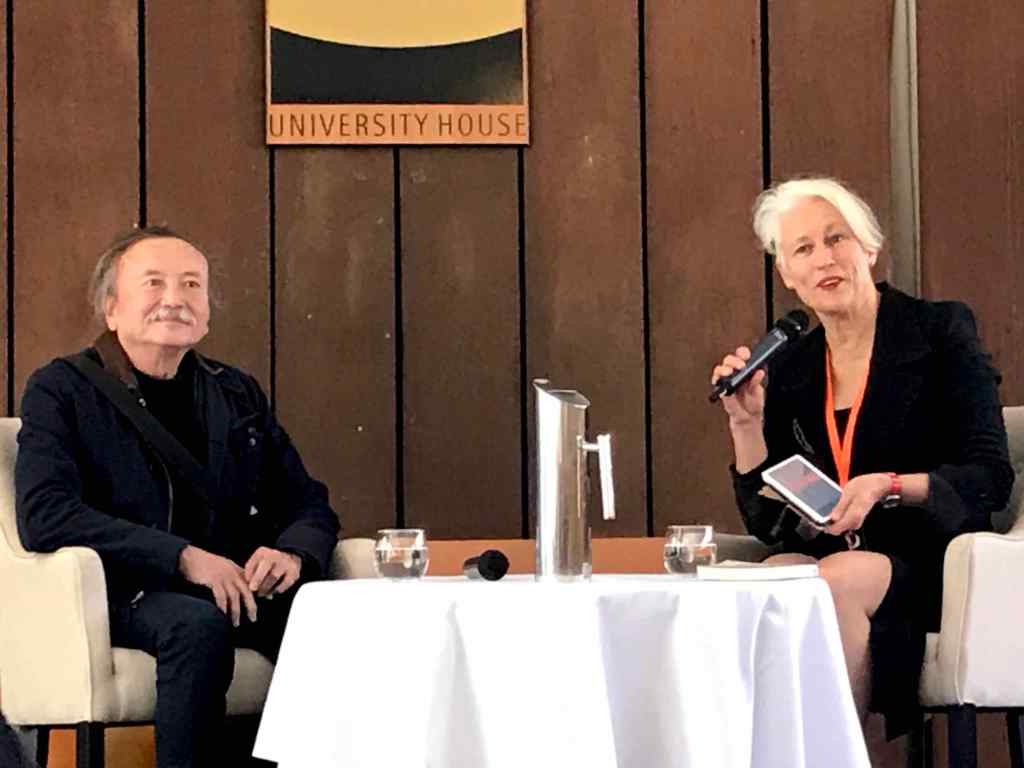
History underpinned the next session which saw the launch of the inaugural Van Diemen History Prize, initiated by Forty South Publishing, at the suggestion of historian Dr Kristyn Harman. Judges Kristyn Harman, Imogen Wegman and Nick Brodie joined winner Paige Gleeson and highly commended authors Tony Fenton and Terry Mulhern on a panel discussing history writing in general and the authors’ essays in particular.

Brodie observed that much of Tasmanian history could be categorised as myth, and commended Gleeson for exploring and exploding the much-repeated myth of a bunch of rowdy female convicts (the so-called Flash Mob) mooning Governor Sir John Franklin and his wife, Jane Lady Franklin, at the Cascade Female Factory in 1844. In her thoughtful and entertaining response, Gleeson noted that, as an academic historian, writing popular history was alien to her, so she consulted the seer of all modern knowledge, Google, to get some tips. ‘Do not write about historiography,’ she was sternly advised, ‘nobody wants to read about writing about writing history’. ‘Rubbish,’ she thought and proceeded to do just that, exploring how myths come into being and how, while not wholly accurate, they can hold kernels of truth that point to a larger social reality.

In similarly entertaining mode, Tony Fenton informed the audience that writing about the minutiae of weather, the environment and times encountered by hapless scientists who journeyed to Bruny Island and remote Port Davey to view the eclipse of the sun in May 1910 was critical to his story, because otherwise it would be boring ‘as nothing happened’. Four weeks of drizzle, rain and grey skies did not abate and the eclipse was impossible to see. School children in Queenstown, on the other hand, despite the town’s soggy reputation, enjoyed rapidly clearing skies and a good view of the event.

Terry Mulhern’s essay is more sombre, telling us of the last days, even hours of early 19thcentury Henry Hellyer who took his own life 1832. Mulhern told us that he was able to draw on his own early experience of depression to empathise with the turmoil that led Hellyer down his fatal path.

Finally, in answering a question from the floor, Imogen Wegman reminded us that historical myth-breaking takes courage and could be controversial. For female historians, she suggested, this is even more difficult as women were not meant to rock the boat.

My third session took me on a journey from 1820s India and Tasmania’s Derwent Valley to the state’s Fingal Valley in the 1930s as Henry Reynolds discussed the lives, nature writing and linkages between Elizabeth Fenton and her great great grand-daughter, Anne Page with Margaretta Pos. Pos, a former Mercury journalist and ‘plain writer’ in her own words, has written about Elizabeth Fenton and published the teen-aged journal of own mother Anne Page.

Both women wrote lyrically about Tasmania’s natural world. Page called herself a ‘bush rat’ and lovingly described the valley in which she lived with its presiding presence, Tasmania’s second highest peak Ben Lomond. She listed animals sighted, including the thylacine, and like Fenton decried the destruction of old growth forest and the environment in general.

Reynolds noted that while many historians have argued that it took several generations for Australians to grow a deep sense of place and love for their new home, in Tasmania this happened very quickly as evidenced by the writing of women such as Fenton. He also suggested that Page’s love of nature was fostered by her being educated at home on the Fingal Valley farm rather than at school where education focussed away from Tasmania.

In conclusion, Pos reported that she asked her mother, who died aged 97, whether she had ever wanted to write books. ‘I was going to write eight books,’ Anne Page replied, ‘but had eight children instead’.

Dissident poets and story-tellers Sarah Day, Cameron Hindrum, Pete Hay, Ruth Langford and Gina Mercer, rounded out my day one sessions by discussing the role of poets as activists. Hindrum stated that Tasmanians have a genetic predisposition ‘not to take any crap’ and quoted Bertolt Brecht who, writing about dictatorship, asked, ‘Why were their poets silent?’

Unconvinced by Brecht’s question, Hay, a poet, academic and activist, provocatively opined that poets puff themselves up, that with their tiny and declining audience they cannot be activist by writing alone. Poetry, he said, is elusive and enigmatic and so cannot be put to political cause, although he did concede that writers have a role to bear witness and cut through political sloganeering. He finished by telling us that poetry rewires the brain by bending the rules of language, and read a moving poem about driving through clear-felled land near Laughing Jack Lagoon in central Tasmania – It’s no laughing matter, Jack – the poem concluded.

Day countered Hay’s thesis by remembering the writer/poet/activist Judith Wright and quoting Emily Dickinson’ lines, Tell all the truth/but tell it slant. Mercer drew on her own history of childhood trauma telling the audience that poetry became her solace and her voice, her way of speaking the unspeakable, of being activist in the cause of women’s and environmental rights by transforming silence into words and action. She spoke of poetry as providing reflective activism.

Langford, a Yorta Yorta woman who grew up in Tasmania, confessed that she was a dissident by birth and a story-teller rather than a poet, and that she had engaged in much activism in her life, chaining herself to machinery and scaling corporate buildings to hang protest banners. Life as an activist she said was one of hate and division, of us and them. Now eschewing direct activism, she argued that our current predicament required intelligence to heal the planet and society, with words and poetry providing powerful vehicles for this.

Nhulunbuy Primary School, I saw we saw (#BookReview)

Book coverA week or so ago, I wrote a post to commemorate this year’s Indigenous Literacy Day. In that post I noted that the book I saw we saw was going to be launched at the Sydney Opera House that day. It was written and illustrated by students from Nhulunbuy Primary School, up on the Gove Peninsula, and a number of them were going to read and perform from the original Yolŋu Matha language version, Nha Nhunu Nhanjal?, at the launch. I ordered my own copy of the book that day.

The books – the original Yolŋu Matha version, launched at this year’s Garma Festival, and the English version – were published by the Indigenous Literacy Foundation, which describes itself as a “national book industry charity”. Their aim is to “reduce the disadvantage experienced by children in remote indigenous communities in Australia, by lifting literacy levels and instilling a lifelong love of reading”. These two books came out of their Community Literacy Project, and were produced through a series of workshops with illustrator Ann Haddon and teacher-librarian Ann James, with local Yolŋu elders helping develop the story.

So, the English-version book. It begins with a brief introduction telling us that the Yolŋu people of north-east Arnhem Land represent one of the largest indigenous groups in Australia. Their main language is Yolŋu Matha, which, it explains, has twelve sub-languages, each with its own name. It also tells us that, for most Yolngu children, English is their second (or even third or fourth) language. I saw we saw, the English language version of their book, is, by definition, written in English, but it uses words from the Dhaŋa sublanguage to name the actual “things” seen. This is a lovely, effective way of introducing indigenous language to non-indigenous people (as recommended at the Identity session of the Canberra Writers Festival). However, this approach also creates a bit of a challenge for the reader – what is being seen, and how do you pronounce it?

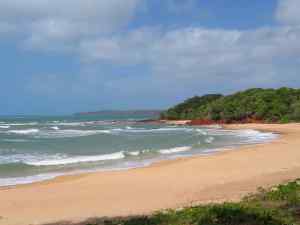
Beach, north-east Arnhem Land

Beach, north-east Arnhem Land

Well, there is quite a bit of help for us in this. First, the text and illustrations provide a lot of clues. “I see a waṯu grab a stick from a man” is accompanied by quite a busy drawing with birds, fish, turtle, jellyfish, and a person fishing, but there is also a picture of a dog with a stick in its mouth. So, waṯu is dog! Sometimes, however, it’s not so easy to get it exactly right, either because of the busy-ness of the picture or the (delightful) naiveté of the children’s drawings. You can usually guess, but can be uncertain, nonetheless. In these cases, the illustration on the last page of the story, which shows most of the creatures with their English names, provides most of the answers. Finally, there is also the online Yolŋu dictionary which, in fact, I used to obtain the necessary diacritics since, funnily enough, they are not available on my Apple keyboard!

That’s the “what is being seen” problem solved, but what about the pronunciation issue? How would you pronounce ŋurula (seagull)? Or mirinyiŋu (whale)? This one is easily solved. At the front of the book is a QR code. You hold your tablet or smart phone camera over that to be taken to a website where you can hear the story read by child-speakers of the language. The whole story only takes 3 minutes or so. Of course, being able to then say the words yourself will take some practice.

The story itself is simple, traditional picture-book style. The pages alternate between “I saw …” and “We saw …”, with each “I saw – We saw” pair forming a rhyming couplet:

I saw a maranydjalk leaping high
We saw a ŋurula soaring in the sky

It’s a delightful book. The rhymes are comfortable, not forced; the illustrations are appealing, particularly to young people; and story introduces readers to the rich natural environment of Arnhem Land region. It also conveys the pride the young authors and illustrators have in their country. It would be a wonderful book to use in primary school classrooms. It’s certainly one I look forward to reading to Grandson Gums when he’s a little older (and I’ve practised my Yolŋu Matha).

You can purchase this book directly from the Indigenous Literacy Foundation, for $24.99.

AWW Challenge 2019 BadgeNhulunbuy Primary School students, with Ann James and Ann Haddon
I saw we saw
Broadway: Indigenous Literacy Foundation, 2019
40pp.
ISBN: 9780648155492


Prime Minister’s Literary Awards Shortlist, 2019, announced

As you know, I don’t announce all literary awards shortlists, but the Prime Minister’s Literary Awards have an “interesting” history, so I plan to follow them more closely than I originally did.

The press release says that over 500 books were submitted across the 6 categories, much the same as last year in fact. Last year, I listed all categories, but this year I am just listing the three that feature most often on my blog.

Rodney Hall, A stolen seasonFiction

  • Rodney Hall’s A stolen season, Picador (my review)
  • Gail Jones’ The death of Noah Glass, Text Publishing
  • Melissa Lucashenko’s Too much lip, University of Queensland Press (my review)
  • Suneeta Peres da Costa’s Saudade, Giramondo Publishing (Lisa ANZLitLovers’ review)
  • Laura Elizabeth Woollett’s Beautiful revolutionary, Scribe Publications

While last year’s list was male-dominated, this year’s tips the balance just over to the women’s side. Also, last year’s list seemed a little conservative, sticking to tried and true authors, while this year’s list mixes it up a bit. Indeed I barely know two of them. Best of all, last year I had read none of the shortlist, while this year I’ve read two! Hall, Jones and Lucashenko have appeared on a few lists this year, with Lucashenko, of course, recently winning the Miles Franklin Award.

Maria Tumarkin, AxiomaticNon-fiction

  • Cynthia Banham’s A certain light: A memoir of family, loss and hope, Allen & Unwin
  • Gabrielle Chan’s Rusted off: Why country Australia is fed up, Vintage Books
  • Paul Genoni and Tanya Dalziell’s Half the perfect world: Writers, dreamers and drifters on Hydra, 1955–1964, Monash University Press
  • Chloe Hooper’s The arsonist: A mind on fire, Hamish Hamilton (on my TBR) (Lisa AnzLitLovers’ review)
  • Maria Tumarkin’s Axiomatic, Brow Books (my review)

A mixed bunch, as you’d expect from something broadly described as “non-fiction”, but I’m pleased that again, unlike last year, I have actually read one of the books, and have another on my TBR. I like the judges’ description of Tumarkin’s exploration of her axioms, that she “turns them upside down and uses them to explore the intersection of past and present memories and the entanglement of human frailty.”

Clare Wright, You daughters of freedomAustralian history

  • Billy Griffiths’ Deep time dreaming: Uncovering ancient Australia, Black Inc.
  • Anna Haebich’s Dancing in shadows: Histories of Nyungar performance, UWA Publishing
  • David Kemp’s The land of deams: How Australians won their freedom, 1788-1860, The Miegunyah Press
  • Meredith Lake’s The Bible in Australia: A cultural history, NewSouth Publishing
  • Clare Wright’s You daughters of freedom: The Australians who won the vote and inspired the world, Text Publishing (my review)

Like last year, university publishing houses have done well here, with UWA Publishing, The Miegunyah Press and NewSouth Publishing taking three of the five spots. But, unlike last year, this year I have actually read one of the books! I am also particularly keen to read Billy Griffiths’ book which explores not only Australia’s archeology but the history of archeologists’ relationship with indigenous people and their knowledge and ideas about Australia’s “deep past”. While Griffiths and Haebich address indigenous Australia in their histories, I’m disappointed that there are no indigenous-authored histories here. Were any published or submitted this year I wonder?

The complete shortlist with judges’ comments can be seen on the website (Click on each book for the comments).

Thoughts, anyone?

Monday musings on Australian literature: Teachers in Australian novels

What’s brought this on, you are probably wondering, but I can explain. Firstly, my Jane Austen group has, over the years, discussed Jane Austen from the point of view of roles and professions, so, for example, we’ve discussed professions like the clergy, and roles, like brothers, in Austen, and have enjoyed the research and the discussion. Secondly I’ve been in Melbourne this weekend visiting our family, and it just so happens that Son Gums is a teacher. Why not, then, I thought, look at how teachers are portrayed in Australian novels.

Hmmm, I can think of many films, though I admit that I’m talking internationally here, about inspirational teachers. They abound, in fact, but where are they in novels? Even where teachers are not negatively portrayed they seem more likely to be weak and/or ineffectual, than proactive and successful. It was hard to search the internet for my topic, however, because searches tended to retrieve hits about teaching fiction, or teachers’ resources for fiction, rather than hits about teachers as characters in fiction. I did, though, find a blog post from 2012 in which blogger and educator, Darcy Moore, asked “where is the inspirational teacher in Australian popular culture literature and film?  I wasn’t surprised to discover that he didn’t find much either. 
BookCover

So what is there? Some novels featuring teachers fall, loosely, into the mystery-crime-thriller genre. There’s Kenneth Cook’s debut 1961 novel Wake in fright which chronicles the nightmarish school holiday of a rookie teacher in outback Australia, Joan Lindsay’s famous 1967 novel Picnic at Hanging Rock in which teachers lose some students during a picnic, and Gabrielle Lord’s 1980 novel Fortress that was inspired by a real abduction of a teacher and students in Victoria in 1972. At least in that story the teacher does manage to escape with her students. It’s probably not surprising, given the dramatic nature of these novels, that all three have been made into movies. I have read two of these books, but before blogging.

Dymphna Cusack, Jungfrau

Some books feature teachers, but aren’t significantly about their work. Dymphna Cusack’s 1936 novel Jungfrau  (my review) is one such. Cusack, who had herself been a teacher, writes here about three women, obstetrician Eve, teacher Thea, and social worker Marc. They are modern young professional women, but the book’s focus is more their personal and social lives, particularly as affected by Thea’s affair with a married professor, than their working lives. Indeed, early on, Thea, defending her adulterous relationship as her right “to get something out of life”, says “my work doesn’t mean anything to me”. Hmm …

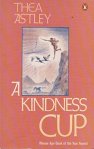
Book coverThen there’s Tom Dorahy in Thea Astley’s 1974 novel A kindness cup, my first Astley, which I read long before blogging. He’s an idealist, a humane person, who returns to his home town for a reunion, but what he really wants to do is right the wrongs of a massacre of Aboriginal people that occurred during his time there, twenty years previously in the 1860s, and for which the perpetrators were never properly punished. It’s interesting that Astley, inspired by a real massacre, was writing about this in 1974! She really was a special and fearless writer. However, again, the book, as I recollect, isn’t so much about his teaching.

Book coverElizabeth Jolley’s 1983 novel, Miss Peabody’s inheritance, also features a teacher, but perhaps not quite in the way most parents would be looking for. This is a novel-within-a-novel, in which an Australian novelist sends instalments of her novel-in-progress to a fan in England. Her novel is about three middle-aged single women, including headmistress Arabella Thorne, who holiday annually together in Europe. This particular year, Thorne brings along a sixteen-year-old student to give her “a little finishing”. The finishing she gets, as she becomes caught up in Miss Thorne’s emotional entanglements with her women friends, is not exactly the usual!
Book coverHmmm, so, are there any teachers actually being good role models in Australian novels? I’m sure there are, but the only one I can remember right now is Phil Day who appears in Julian Davies’ 2018 Call me (my review). Phil Day is not, admittedly, the novel’s protagonist, but his student Pip is – and Phil Day plays an important role in Pip’s coming-of-age trajectory, by listening to him and discussing life with him, rather than by telling him what to do.

Good, wise and/or supportive teachers do appear, I know, in other coming-of-age stories, but I can’t think of any that stand out particularly.

So I’m going to end this post, by returning to Darcy Moore, who concluded his post with:

In an era where teachers are often criticised by politicians and our standing in the Australian community is often talked down, certainly in comparison to Asian and Scandinavian countries, it is important that we work to build an improved attitude towards learning. … It would be wonderful to build a vision into something tangible, something that that allows us to have a society where such positive imagery about teaching and teachers enters our popular, cinematic and literary culture and is not viewed as pretentious, elitist or cringeworthy. Wouldn’t it?

Seven years after that post, things are still much the same I think in terms of how our teachers are perceived. Why is this? And would it help to have some positive depictions in literature – and the other arts? I’m not one to prescribe what writers should write about, but that doesn’t stop me wondering whether positive portrayals would help (if that makes sense.)

Meanwhile, do we have some great depictions in Australian literature that I’ve missed? I’m sure we do, so here is your chance to tell me.

Six degrees of separation, FROM A gentleman in Moscow TO …

It is the first Saturday of the month again, which means it’s time to do the Six Degrees of Separation meme. If you are new to blogging and don’t know what that is, please check our host Kate’s blog – booksaremyfavouriteandbest.

Cover for Amor Towles A gentleman in MoscowThe main point is, though, that Kate sets our starting book, and this month’s is – hallelujah, again – a book I’ve read and reviewed, Amor Towles’ A gentleman in Moscow.

Book coverNow, A gentleman in Moscow is set, almost completely, in Moscow’s famous Hotel Metropol. How many people live in hotels? I sense that it was more common in the past than it is now, but maybe I’m naive? Anyhow, the book I’m reading now (so no review yet) is Dominic Smith’s The electric hotel. My first link, however, is not to this fictional Electric Hotel, as you might have expected, but to the real Knickerbocker Hotel in Los Angeles, in which the main character, the now elderly Claude Ballard, is living at the start of the novel.
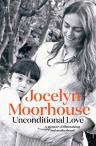
Book coverClaude Ballard, our gentleman in Los Angeles, is a film director, albeit a fictional one from the silent era, but it just so happens that my last read was the memoir of a contemporary Australian film director, Jocelyn Moorhouse, so it’s to her book, Unconditional love: A memoir of filmmaking and motherhood (my review) that I’m linking next.

Book coverJocelyn Moorhouse’s husband, PJ Hogan, is also a film director, and two of his most famous films are Muriel’s wedding and My best friend’s wedding. A now classic novel, but one I only read recently, starts with a wedding, Mary McCarthy’s The group (my review), so that’s my next link.
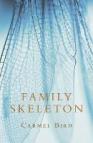
Carmel Bird, Family skeletonThe group, as I’ve said, starts with a wedding, but it ends, logically I suppose, with a funeral. A book that starts with a funeral – and this has its own logic – is Carmel Bird’s Family skeleton (my review).
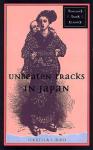
Book coverBut, enough of weddings and funerals. My next link is on something simple – the author’s name. Later this month I will be heading to Japan (my fourth visit). An early western visitor to Japan was the intrepid Englishwoman Isabella Bird whose 1879 travel book, Unbeaten tracks in Japan I’ve quoted from (although I haven’t yet finished it.)
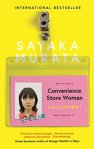
Book coverI like reading Japanese literature, though I haven’t read a lot since blogging. However, I did recently read a contemporary novel, Sayaka Murata’s Convenience store woman (my review), which explores some of the challenges faced by people who dare to be – or, simply are – different, in modern Japan.
Hmm, this chain is more hodge-podge that mine usually are. For a start, it includes two books I have started but not yet finished. Also, we have traversed the world far more energetically than we often do, starting in Moscow, then going to Los Angeles, and then Australia. We then popped back to the USA, this time the east coast, before returning to Australia, and then ending up in Japan. Oh, and we started in a grand hotel and ended in a convenience store. I’ll leave you to ponder what that means!

And now, my usual questions: Have you read A gentleman in Moscow? And, regardless, what would you link to? 

Indigenous Literacy Day 2019

Today, Wednesday 4 September, is Indigenous Literacy Day, which the Indigenous Literary Foundation (ILF) describes as “a national celebration of Indigenous culture, stories, language and literacy”. The day is intended to both promote awareness of disadvantage in indigenous communities, and to  “encourage the rest of Australia to raise funds and advocate for more equal access to literacy resources for remote communities.”

I have been donating annually to ILF for the last few years, but there’s more I can do to support them and raise awareness. Writing this post is one of those ways.

It seems particularly relevant for me to do this this year, because the importance of supporting indigenous literacy, and, related to this, of spreading knowledge about indigenous languages was the impassioned parting message from Tara June Winch, Yvette Henry Holt and Jeanine Leane, at the Canberra Writers Festival Identity session.

Nha Nhunu Nhanjal? project

Book coverA few weeks ago, I received an email from the ILF reminding me about Indigenous Literacy Day and telling me about a book they are publishing, commemorating both this day and this year’s International Year of Indigenous Languages. The book is Nha Nhunu Nhanjal?, and is the product of a special project. It was “written and illustrated by Yolŋgu Matha-speaking students from Nhulunbuy Primary School on the Gove Peninsula in North East Arnhem Land and was launched at this year’s Garma Festival”. An English edition of the book, titled I Saw We Saw, will be launched at the Sydney Opera House today, Indigenous Literacy Day. Students from Nhulunbuy, 4,000 kilometers away, will be present to read and perform from the Yolŋgu Matha version.

In the email, ILF quoted well-known Australian author Richard Flanagan, an ILF Ambassador, speaking at the Garma Festival:

“Every language is a universe, and each universe allows us to understand what it is to be human in a different, larger and richer way. Like a basket woven out of many pieces of grass, many languages make our societies stronger and better.”

ILF says, reiterating Winch and co’s message, that

It is vital for young children to have access to books in their language. And seeing their way of life reflected in books their own children and community have created, ensures that cultural identity and connections to country remain strong.

We all know this don’t we? Many of us love reading about other cultures, but our first home, our starting point has to be, and for most of us naturally was, books about our own culture.

How can you support indigenous literacy and culture?

There are many things you can do, of course, depending on your skills, abilties, interests and wallets. Here are some ways:

  • donate to ILF (here)
  • buy a book (or two) from the National Library of Australia’s Bookshop, online or in store, today, between 9am and 5pm, as they all be donating 5% of all sales made to the  Indigenous Literacy Foundation. (Or from any other bookshop offering a similar donation to ILF today.)
  • buy the English version of the book, to keep, give away and/or donate to your local school.
  • hold your own fundraising activity, such as a Book Swap (doesn’t have to be today!)
  • advocate for ILF on social media, tagging @IndigenousLiteracyFoundation on Facebook and Instagram, and @IndigenousLF on Twitter

Let’s do what we can to help indigenous Australians’ literacy. And let’s also do what we can to increase non-indigenous Australians’ understanding of an ongoing 60,000+ years culture that no other country in the world is lucky to have. I mean, really, how fortunate we are.

Monday Musings on Australian Literature: Canberra Writers Festival 2019 Recap

Just when you thought it was safe to return to my blog, I’m at it again, talking about this year’s Canberra Writers Festival. However, if you are like me you are intrigued about what other readers and festival goers like, so I thought I’d share what the Canberra Writers Festival sent us subscribers.

But, I’ll start with my 7 posts, and their popularity (by number of hits):

Interesting. The two which specifically featured local authors and/or local subject matter were the most popular, despite my international readership. Maybe some local authors shared the link and a lot of hits were local? Anyhow, these were followed by the two most literary sessions I attended – Tara June Winch and Brian Castro. This doesn’t surprise me, given my “brand” here. And then the last three, which had about two-thirds the hits of the top post, are a mixed bag of, generally, more popular subjects.

Before moving to the Canberra Writers Festival’s report, I’d like to point you to a post written by one of this year’s New Territory bloggers, Shelley Burr. She wrote on the Wonder Women panel (which featured Australian historical fiction novelists.) You’ll have to read her post to find out who they were!

Now, were my most popular posts reflected in the most popular sessions attended? Sort of. The Canberra Writers Festival wrote that the “Top Ten” sessions “include”:

  • Simon Winchester in conversation with Richard Fidler
  • Capital Culture
  • Never Never
  • Defining Moments – True Crime Panel
  • For Whom the Pell Tolls
  • You Daughters of Freedom
  • Best of the Best: Book Club Favourites
  • Women, Men and the Whole Damn Thing
  • Is Hate Our New Normal?
  • David & Margaret

I’m not sure how to interpret this, because they say “the top ten include“, but there are ten here, so I’m presuming these are the top ten? Let’s presume they are, and that they are in order (though I’m surprised that the session featuring Behrouz Boochani from Manus Island is not in the list.)

Anyhow, certainly Simon Winchester was in a 300-seat theatre and was sold out. Capital Culture was sold out too, but in a smaller space. I’m intrigued that three of the sessions I chose were in the top four of the Top Ten, though what that says, I’ll leave to you. It’s interesting, though, that the most popular session, by this list, was not my most popular post. A couple of other sessions listed here – such as Never Never, about “the role that the bush plays in our collective imagination” – were ones I had to miss because of clashes. I didn’t mind missing You daughters of freedom because I had heard Clare Wright speak about her book last year.

It’s clear that the Festival’s “political” slant works well for the organising committee, with sessions on George Pell (including David Marr), Gender (including Gillian Triggs), and Hate (also including Gillian Triggs) all being popular.

The Canberra Writers Festival email also told us the best-selling books at the festival:

  • Capital culture (ed. by Suzanne Kiraly) (I bought this)
  • On disruption (Katharine Murphy) (I have given this as a gift)
  • Cardinal: The rise and fall of George Pell (Louise Milligan)
  • On patriotism (Paul Daley)
  • Brain changer (Felice Jacka)
  • Unbreakable threads (Emma Adams)
  • Just add love (Irris Makler)
  • On indignation (Don Watson)
  • Plots and prayers (Niki Savva)
  • Leading lines (Lucinda Holdforth)
  • You daughters of freedom (Clare Wright) (I have reviewed)

Hmmm … I haven’t heard of some of these, but it’s interesting, given the signing line I saw, that Exactly isn’t listed here. Given there were different booksellers at different sites – including, the NLA bookshop, Harry Hartog and Dymocks – it’s possible that this list does not concatenate across all the booksellers? Anyhow, it’s also interesting that the little “On…” books published by Melbourne University Press are doing well. I recently posted on Stan Grant’s On identity, from the same series.

As for my purchases, I am way out of step. Besides Capital culture, I bought Brian Castro’s Blindness and rage and Simon Winchester’s Exactly (for Mr Gums). I also bought Brian Castro’s After China during the Festival, but at Muse. And, I already had some of the books I heard discussed, including Nigel Featherstone’s Bodies of men, Karen Viggers’ The orchardist’s daughter, and Tara June Winch’s The yield.

All this is fascinating, but the best thing is that the Festival, now in its fourth year, appears to have done well with good pre-sales and, they say, “significant impromptu attendance”. This augurs well for its continuation. And that, of course, is what we want.

Jocelyn Moorhouse, Unconditional love: A memoir of filmmaking and motherhood (#BookReview)

Book coverAlthough it is quite a traditional memoir, style-wise, Jocelyn Moorhouse’s Unconditional love: A memoir of filmmaking and motherhood is particularly interesting for a couple of reasons. Firstly, she’s an artist who had a happy childhood. Who knew that could happen? Secondly, while most memoirs focus on one aspect of the writer’s life – such as their career (sport, for example), their trauma (childhood abuse, perhaps), their activity (like travel) – Moorhouse intertwines two ostensibly distinct parts of her life, her filmmaking career and her life as a mother.
Jocelyn Moorhouse will be known to many filmgoers as the director of the critically successful Proof, How to make an American quilt, and The dressmaker. She is also the wife of PJ Hogan who directed Muriel’s wedding, My best friend’s wedding, and Peter Pan. This is one amazing couple. Not only have they each made critically successful films, but they are lifetime creative and life partners, working on and/or supporting each other’s movies, negotiating the logistics of parenthood, and so on. They have made it work for over 30 years, in a way that few do. That’s impressive.

It could all, then, have been pretty idyllic, but life rarely turns out that way, and for Moorhouse and Hogan it didn’t. The reason is that of Moorhouse and Hogan’s four children, the middle two are autistic. This resulted in an 18-year hiatus in her filmmaking career, although during that time she kept her hand in, mostly working in some way with PJ on his projects. The book, then, tells both stories, the development of her career from her early studies in media and drama at Rusden State College and then at the Australian Film and Television School, where she met Hogan, and her very particular and demanding life as the mother of two autistic children.

She shares the emotions of giving birth to two gorgeous children only to have them regress around two years of age, as is apparently typical with autism, into unhappy, and therefore difficult children. I say unhappy because it is clear that the children suddenly find the world confusing and frustrating. Their language and communication skills regress so they resort to screaming and crying, and other difficult behaviours. Moorhouse talks about the shock of diagnosis, the therapies they try, including the ones that work (for them), and the logistics of running a family whose life is peripatetic and dependent on the next film job coming along.

Moorhouse, the experienced storyteller (and in fact problem-solver), tells her story carefully. It’s not until halfway through the novel that she brings us to her growing uneasiness about her second daughter, Lily, and Lily’s diagnosis. It’s a tough chapter, because it was a shock to her. She realises that her discussion of causes, not to mention possible preventions and cures, could upset some readers:

I am aware that some of the readers of this book may be autistic themselves and could possibly find this chapter upsetting. Please understand that I wasn’t rejecting Lily because of her autism. If you keep reading, you will discover that I love her autism and her brother’s too. But twenty years ago I was afraid for Lily’s future …

It is tricky to write about issues like this, without offending unintentionally. It’s a long “journey”, to use current terminology, that she and her family go on. And it’s a hard one. Late in the book she says that it took her years to realise that a lot of the pain she was feeling stemmed from “an internal war between my instinct to cling to the dreams about life, and my need to accept the truth”. By the end, she and PJ learn to rebuild their dreams for Lily and Jack, and she learns to balance her need to work against the family’s needs.

This brings me to her career. I enjoyed reading about that, about her own films and the insight she gave me into a film director’s work in general. I worked with film – from an archival point of view – and met various film industry people over the years, but I still learnt much about just what a director does from this book, such as the amount of script work they (might) do, the work involved in casting, choosing location and designing sets, and so on. Each director has his/her own way of doing things, it’s clear, but I greatly enjoyed reading about Moorhouse’s experiences – the wins and losses, the need to be philosophical about those that got away or didn’t go to plan.

Style-wise, Unconditional love is a straightforward chronological memoir, told in plain language, making it an accessible read. A lovely, though not unusual thing she does, is to begin each chapter with a quote. They come from diverse sources, including filmmakers (like Ingmar Ingmar Bergman and Frederico Fellini), writers (like Virginia Woolf and Maya Angelou), people who treat or have autism (like Oliver Sacks and Temple Grandin), and artists (like Marc Chagall). The opening quote, for the introduction, comes from Margaret Atwood, saying that, “in the end, we’ll all become stories”, which seems perfect for both a memoir and a filmmaker.

This is a generous memoir, rather than a tell-all one. There’s little name-dropping, though of course names are dropped because that’s the business she and Hogan are in. There are references to relationship and financial challenges – you’d be surprised if there weren’t any – but these aren’t dwelt upon. She also seems careful to not intrude unnecessarily on her children’s rights to their own lives, particularly as they get older.

Unconditional love is a book that will appeal to readers interested in Australian filmmakers, to those interested in families with autistic members, but most to anyone interested in a story that shares the challenges of a life but focuses more on the solutions.

AWW Challenge 2019 BadgeJocelyn Moorhouse
Unconditional love: A memoir of filmmaking and motherhood
Melbourne: Text Publishing, 2019
296pp.
ISBN: 9781925773484

(Review copy courtesy Text Publishing)

Canberra Writers Festival 2019, Day 2, Session 3: In our backyard

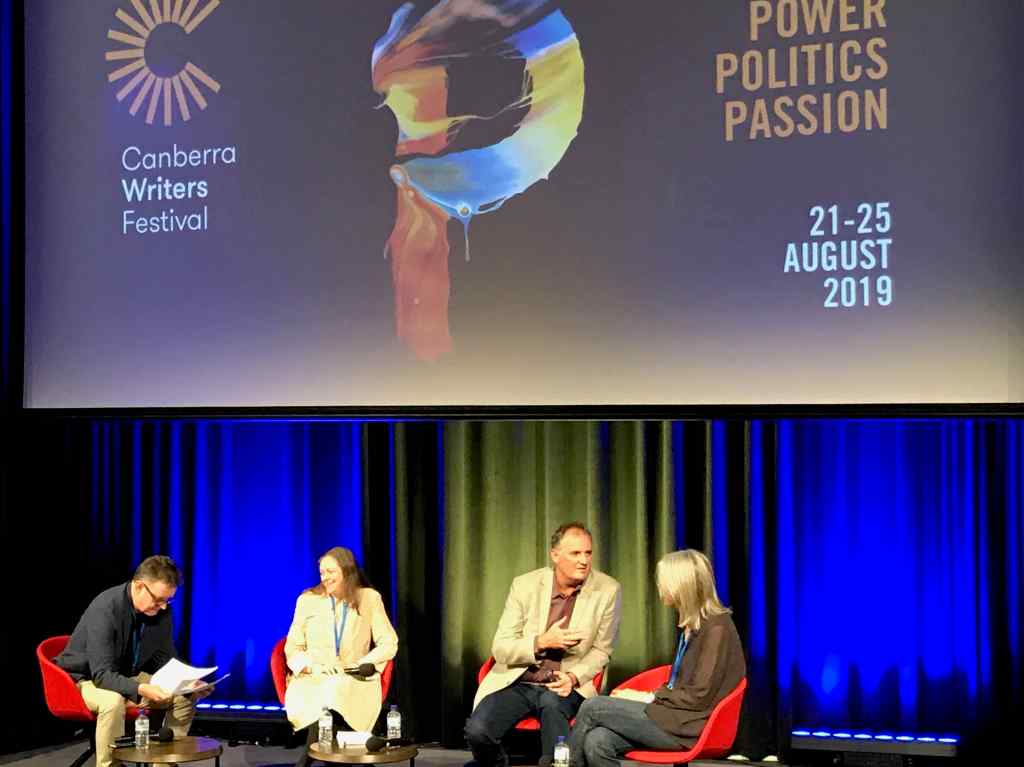
Suddenly it was my last session! How quickly the two days went. The reason I chose In Our Backyard is obvious. It was described as “Get up close and personal with four of Canberra’s literary gems”, and was moderated by ABC journalist, Emma Alberici.

It was a warm-hearted session, characterised by a sense of respect between the writers made most evident in their friendly banter and genuine interest in each other.

Alberici introduced the four writers:

  • Nigel Featherstone, novelist, Bodies of men (my review)
  • Karen Viggers, novelist, The orchardist’s daughter (my review)
  • Kathryn Hind, novelist, Hitch
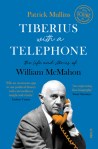
  • Patrick Mullins, political biographer, Tiberius with a telephone: The life and stories of William McMahon.

Four very different books, said Alberici, so she suggested they start with their book’s genesis.

Genesis

Karen Viggers, The orchardist's daughterKaren Viggers: Is passionate about Tasmania, wilderness, freedom, empowerment, forests, and friendship. Her novel is about three outsiders in a small timber town, and explores how people create bonds and belonging in such places.
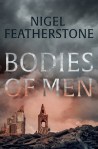
Patrick Mullins: Did his PhD in political biography at the University of Canberra in 2014, but hadn’t written one. He looked around and Billy McMahon was there for the taking (with “good reason” he added!) Researching McMahon, he became intrigued by the disconnect between the reputation (the derision) and the reality (twenty plus years covering all major portfolios as well as prime minister.) Further, his unpublished autobiography indicated he had a divorced-from-reality view of himself, which suggested themes about the myths we can create about the past.

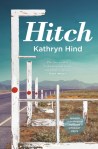
Kathryn Hind: Enrolled in a creative writing masters in the UK. She had to write something. She looked to her  experience of travelling around the world alone for a year, during which she found that she needed, as a young woman, to be hypervigilant, always. Suddenly, Amelia and her dog by the side of the road appeared to her. Neither she, Amelia, nor she, the author, knew what would happen to her!

Nigel Featherstone, Bodies of menNigel Featherstone: Wanted “to piss off Tony Abbott”. Seriously though (or, also seriously), the book resulted from a “strange decision” to apply for an ADFA (Australian Defence Force Academy) residency in 2013, despite having no interest in war. Of course, the residency did come with $10K! Featherstone’s overriding interest was to explore different expressions of masculinity under military pressure. Eventually, he found two books in the ADFA Library: Deserter, by American Charles Glass, which explored desertion as an act of courage, and Bad characters, by Australian Peter Stanley, which included the story of a soldier who, during World War 1, had been caught in a homosexual act, been found guilty, and never turned up to board the ship to take him home to prison! There’s my novel, he decided. Had he had any reaction from ADFA to the book, Alberici asked. No.
Place

Given the narrow “backyard” framing of the panel, Alberici took it upon herself to broaden the theme to “place” in general. Suited me. I love hearing authors discuss place.

Karen Viggers: All her stories come from a spiritual connection to place. (I follow Karen on Instagram and can attest her love of place!) She gives her place a fictional name, because she, like Tara June Winch said in the morning, didn’t want to impose her views on real towns (but it is set in the Geeveston/Huonville/Hartz Mountain region of southern Tasmania). She wanted to focus on different types of violence, besides physical, including psychological and economic control. In small towns people know this is going on and can’t pretend they didn’t know. She also wanted to bring back park ranger Leon from a previous book. And, most of all, she wants people to visit, love, and support Australia’s places.

Book coverKathryn Hind: Believes her senses were heightened because she started writing in England, when she was missing Australia. She couldn’t do physical research so would “drop a pin on map”. She named real places. She didn’t feel she had to capture exact their reality, but the timings of Amelia’s journey had to be right. I love that she used online traveller reviews to inform herself. For example, a review of a hotel in a little town mentioned being kept awake by trains shaking the walls at night. She used that! She wanted to truly test Amelia to bring out her strength.
Nigel Featherstone: Hadn’t been to Egypt, so had some initial creative concerns. Then he realised that 1940s Alexandria no longer exists, which that freed him to rely on research. He knows very well the other main place in the book, Mt Wilson. He also talked about writing by hand (which astonished journalist Emma Alberici!) He has gradually learnt that writing is a whole of body activity.

Book coverThen it was Patrick Mullins. He was tricky in terms of “place”, so Alberici asked him about the title. Mullins admitted that his publisher chose it – using Gough Whitlam’s description of McMahon’s scheming by telephone. Mullins’ own title is the subtitle. Alberici asked if he had any cooperation from the family. None, said Mullins, though he sent messages and did have coffee with one member. So, he couldn’t access the 70 boxes of McMahon’s papers at the Archives. He understood, he said. Children of politicians have crappy lives, and, anyhow, it freed him from feeling beholden to the family. Silly family, eh? Fortunately, he had access to one of McMahon’s autobiography ghostwriters who had seen the papers. The most startling revelation, he said, responding to another question from Alberici, was that McMahon was “more admirable than we would have thought”. He racked up several significant achievements, including taking us to the OECD, and showed impressive persistence/resilience.

Q&A

It was a quality Q&A. The first questioner asked the writers to share the best part for them about writing:

  • Viggers loves the first draft, the joy of going on the ride, and taking the tangents. She also loves those rare moments when the words start to sing!
  • Featherstone found it a hard question, but said one part is when you feel you have written a good sentence, one that feels alive. (One that sings, perhaps?) This happens about once a month, he said. He quoted novelist Roger McDonald, who says that writing is putting sentence after sentence after sentence.
  • Hind’s favourite moments were making discoveries in her own work, the moments when you forget to eat and drink, the moments when you feel “this is what I’ve done”, and when you know your novel so well you can defend it against an editor (albeit her editor was great, she hastened to say.)
  • Mullins gave a non-fiction writer’s answer: It’s when you get access to material, when you find that special piece of information, the little details.

Another question concerned characters “taking over”. Does this happen, and how did they feel about it? Viggers said that for her it’s less that the characters dictate and more that the publishers want her to go deeper, while Hind said that there were times when she wished Amelia would tell her more! Amelia divulging much, even to her author! Featherstone gave the answer of the session. He said that around draft 20 (of the 40 he wrote), he pretended he was a journalist and interviewed his main characters. He asked them to give him an object that represented them, and to tell him a secret about themselves, which he promised not to put in the book. They did, and he didn’t!

Another asked for the best piece of advice they’ve received. Featherstone said it was “to write about what makes you blush”, while Viggers said it was “to get it down, then get it right.” Her husband also says that writing is not about inspiration but getting “bum on seat” and doing it. Hind said her tutor told her that she writes very plainly, which upset her – until he added, “a bit like Tim Winton”! That’s ok then! Mullins said he’d been told that a book about McMahon would be short. It’s not, it’s nearly 800 pages. So, his response was, don’t follow advice!

A good place to end my report of my Canberra Writers Festival. Phew. To those still with me, thanks for following along!

Canberra Writers Festival 2019, Day 2, Session 2: PM’s Pick (Brian Castro with Genevieve Jacobs)

Book coverPM’s Pick, featuring the multi-award-winning Brian Castro, was another must-attend session. The night before, while dining at Muse, I checked to see whether they had any Castro in their classy little bookshop. They did, including a second-hand copy of his fourth novel, After China. I snapped it up, and as I did, bookseller Dan reminded me that he’s “very literary”. I know, I said! He is also very reclusive, making this a not-to-be missed session. And it was free, my original payment being refunded when they found a sponsor. Woo hoo!

The session was titled PMs Pick in reference to the fact that Castro won the 2018 Prime Minister’s (PM’s) Literary Award for Poetry for his verse novel, Blindness and rage: A phantasmagoria: A novel in thirty-four cantos. Even the title is scary, but Lisa (ANZLitLovers) has tackled it.

Castro and JacobsCastro conversed with local ABC radio presenter Genevieve Jacobs. It was a smallish audience, and a quiet conversation, but provided some fascinating insights.
Castro, like Gerald Murnane whom he referenced a couple of times during the conversation, is a self-described recluse. This event is the first he’s done, he said, for three years! I didn’t know that when I booked it, but I’m doubly glad now. The worse thing when he’s writing, he said, is having to be “a social gadfly”, so he hides away, except that he needs to talk to his students at the University of Adelaide where he teaches creative writing.

I’m going to focus on what I learnt about Castro and his ideas (not quite in the order in which the conversation went), and end with a reference to Blindness and rage.

Firstly, why does he live in Adelaide? Hong Kong-born, he has been Australian-based since going to a Sydney boarding school when he was 11 years old. He called himself a fringe-dweller, explaining that he doesn’t, exactly, live in Adelaide but in the Adelaide Hills. Before that, he lived in the Dandenongs on Melbourne’s fringe, and before that in the Blue Mountains just west of Sydney.

He likes the provincial life, which he doesn’t see as negative. It’s also something that Lucien Gracq, his fame-seeking protagonist of Blindness and rage, comes to value.

Then, there’s his job. He teaches creative writing, but he’s not convinced it’s a worthwhile thing to do. (Should I be sharing this?!) Universities, these days, he said, are factories. What do you do with a creative writing degree? Maybe get work in publishing? He has had just two writers win awards over the years he has been teaching. Creative writing has become an industry, but it pays his way, given his novels are not exactly best-sellers!

Indeed, he had quite a bit to say about the writing life, some of it in response to the Q&A, including how tough it was to get that first publisher when he was 32. Winning the Vogel award did it. He has been lucky, he said, and is particularly so now because his publisher, at Giramondo, is also his friend. One of the lessons he has learnt over the years is to accept disappointment! Cheery, eh? His early days were very difficult, because if you want to write, you must invest everything in it. However, reality starts to hit when you start to age, and need to shore up something for retirement. It’s difficult for literary writers in Australia, where returns are small. Only five Australian writers, he said, really live off their writing.

Various gems regarding what he likes to write and read came out during the conversation. For example, he thinks we should read for mood not plot. I relate to this, because this is exactly what I most remember about the books I’ve read. I rarely remember the story, or character details, but I remember the tone and/or how the book made me feel. He’s also most interested in metre and rhythm, which makes sense, because these contribute strongly to mood. He talked about hearing Homer in the original ancient Greek. He didn’t understand it, but the rhythms “electrify the brain even if you don’t understand it”.

So, he “always pays attention to the language first. The plot will come, if it comes.”

Castro described himself as a “short writer”. Long novels don’t appeal to him. He quoted WG Sebald who didn’t like 19th century novels because you could see “the engines grinding” in them! He also said, which won’t surprise you, that he’s not interested in linear narratives, though he recognises there are different tastes and preferences.

Interestingly, for someone seen as a “very literary” writer, he also questioned “grandiose notions of high literature”. He loves works you can read on multiple levels.

Jacobs, of course, asked him about winning the Prime Minister’s Literary Award for Poetry, wondering whether he was surprised. Yes, very – though, when he resisted attending the Awards Ceremony, having previously experienced the bad end of such events, he was told-without-being-told that he should be there! Neither he, nor Gerald Murane, who also won that year (for fiction), wanted to attend.

Regarding winning, it shuts you up for a while he said! He’s having a year off, waiting until he retires. On whether winning has an impact on sales, he simply said his books don’t sell well. His publisher told him he was publishing Blindness and rage for posterity! (Hence Castro working as a professor!)

And regarding the mushrooming of literary awards and whether they support literature, he said Yes and No. Some people can win big money and disappear. However, money does help you buy time, which we’ve heard here before. But then you have get back to the desk. How you high jump that desk is the challenge he said.

The issue of translated fiction also came up. I sensed that Castro (like me) has a love-hate relationship with it. Love, because many of his favourite writers (like Sebald, for example) don’t write in English and he’s not fluent in all the languages of the authors he reads. But hate because he misses “the textures, colours, flavors when read in translation”. Castro said there’s a huge swathe of literary works that haven’t been translated. It came out, in the Q&A, that his novel, After China, had been poorly translated into Chinese, and that they had omitted the first chapter because of the sex!

Blindness and rage

Book coverNow, I should say a little about Blindness and rage. Inspired by Virgil, Dante (the 34 cantos of his Inferno), and Pushkin’s Eugene Onegin, it tells the story of writer Lucien Gracq who, told he is terminally ill, goes to Paris to finish the epic poem he’s writing and to die there. He joins a secret writers’ society, Le club des fugitifs, which only dying writers can join. It publishes an author’s last unfinished work, but not in his/her name. This reflects Castro’s own view that the work is all, the writer doesn’t matter! He doesn’t think fame helps anything.

Castro said that he reads a lot of literary biographies for pleasure, but he inserts writers in the novel to mock. He particularly mocks what he sees as the glorification of French intellectuals, which has been “going on for too long”, he said. Lucien finds them, mostly, arrogant and dismissive. Jacobs commented on the many allusions in the book, and asked whether he expects us to leave the written page? No, he doesn’t expect us to go read the authors, but, he’s a “fictioneer”, and doesn’t mind if people check Wikipedia’! (Harumph!)

The novel chronicles Lucien’s gradual recognition of what’s real in life, from his initial desire to seek something “vainglorious”. It does this, I gather, with a good deal of irony and humour, undermining, along the way, various literary traditions and assumptions.

I haven’t read Blindness and rage yet, but I’m now intrigued. Anything that looks at the lives of writers/artists – that questions who they are, what they are about – intrigues me, particularly when in the hands of someone as clearly provocative as Castro. And as humorous! Castro said he didn’t set out to be humorous but the PM judges noted it, and he admitted that gravity needs a touch of lightness. Jacobs suggested that the undercutting of seriousness, such as can be found in the book, is very Australian. Castro seemed to accept that, but added “also democratic”!

And, of course, there was a reading – of Canto XXX, which starts:

It may be a fact that
if you’re dying of thirst
in the desert
you do not call for whisky
and all you want is water
which may drown you
in full irony.

Canto XXXI has a verse which starts “To be able to write is not to say anything/but to put small things together”, which do, in the end, I’m sure, say something!

Q&A

There’s not a lot to share from the Q&A, besides what I’ve included above. One struggling writer of science fiction asked about finding publishers and agents, which didn’t feel quite appropriate for the forum.

Another asked – and this made me smile – how she could find a copy of After China! Luckily, Castro was able to say that Wakefield Press is republishing it. And another asked whether he would consider doing a reading (for audiobooks) of Blindness and rage, like Seamus Heaney did for Beowulf. Castro seemed intrigued and not totally negative about the idea.

The session ended as quietly as it started, but I left feeling glad I’d spent time with such a writer, and wanting to read Blindness and rage.