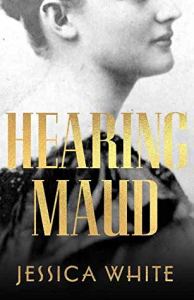
Hearing Maud, author Jessica White told us in her conversation with Inga Simpson two weekends ago, was 15 years in the making. This is something I already knew, because, as the result of our involvement in the Australian Women Writers Challenge, I’ve met Jess and we’ve talked about this book. However, it was excellent to hear the more detailed story – and at its conclusion rather than partway through. Jess is clearly very happy to have it finally off her hands, but it’s also clear that the book was, and is, very important to her – as you shall see.
The participants
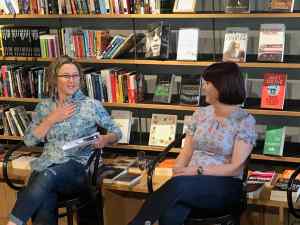
Jessica White has written two novels A curious intimacy, which earned her a Sydney Morning Herald Best Young Novelist gong, and Entitlement (my review). She’s been listed for various prizes, and has had essays and short stories published in Australia’s best-known literary journals, including Meanjin, Southerly, Overland, Island and Griffith Review. She is a lecturer/researcher at the University of Queensland.
Inga Simpson, whom I’ve still to review here (but I will), has written three novels, Mr Wigg, Nest and Where the trees were, the last two of which have been listed for or won prizes. Her latest book, Understory, is a memoir about her love of Australian nature, and especially trees.
The conversation
As Simpson advised at the beginning, the conversation was not a Michael-Parkinson-like hardball interview but more a conversation between friends which, apparently, they are. As a result, it had a warm, natural feel, while still addressing some important points and issues.
Hearing Maud, which I’ve just started reading, is one of those hybrid memoir-biographies that I’ve talked about recently. However, most of those have been mother-daughter stories, the biography being about the mother and the memoir, the daughter. White’s book is different. The biographical subject is Maud, the deaf daughter of the late nineteenth-early twentieth century writer Rosa Praed (1851-1935) (whom I read before blogging). White did not know or ever meet Maud so her knowledge has come from her research, which, Simpson said, is a strength of White’s.
White began by talking about the book’s genesis. It started with her PhD research into Rosa Praed, with whom White felt a connection, given they shared a rural, bush background and a love of romance! White was drawn to Praed’s “racy romances”, she said!
However, as she researched Praed, she discovered the existence of Maud, and the more she researched the more she realised what a “terrible life” Maud had had. So, she started writing a biography about Rosa and Maud. This was rejected by a publisher, but in rejecting it he suggested that she make the book “more about deafness”. To her credit, White was not put off. Having initially felt that deafness hadn’t challenged her, she started, as she continued to research Maud’s life, to recognise more about her own life as a deaf person – and then to perceive the intersections and divergences in their two lives.
Patricia Clarke, in her biography of Praed, Rosa! Rosa!, wrote that it was fortuitous for Maud to be born at a time when they were teaching deaf to speak, but White, now understanding more about deafness, saw it differently. It was a time of Social Darwinism – when the idea was to breed out disabilities – so the pressure to conform was strong. This was often, as it was in Maud’s case, counterproductive, if not disastrous. I will write more on this when I review the book, but essentially, a number of factors, including the breakup of Maud’s family and Rosa’s non-inclusive attitudes, resulted in her having a mental breakdown at 28 years old, and being committed to an asylum. She spent the next 39 years of her life there, that is, until she died!
The conversation spent some time on White’s own experiences as a deaf person. Simpson, being a writer, was particularly interested in language, so questioned White about words she’d used in different contexts to those Simpson was familiar with, such as, “coming out” (as a deaf person), “assimilation” (of deaf people into hearing culture), “mainstream” (of people with disabilities into abled-culture), and “colonialism” (of deaf culture and language by hearing culture.) Coming out as a deaf person was a slow process for White, not so much because she was resistant to the idea but because she hadn’t realised how much deafness had impacted her. Living in the country amongst a large extended family, she’d been, essentially, sheltered from fully experiencing her deafness. She was, she said, brought up as a hearing person, and just saw herself as “a bad hearing person”. That got a rueful laugh from the audience.
However, White was conscious through her teens and early twenties of a sense of isolation and loneliness. It was not until she was in her 30s that she started think about herself as deaf, and understand its impact on her life. She recognises, though, the paradox (“the poison and the cure” that she discusses in Hearing Maud) of her deafness, because she believes it has had, for her, negatives but also positives. She would not, she says, have become a writer if she hadn’t been deaf, and turned to reading at a young age.
The conversation, at this point, engaged in some of the history and politics of disability (and particularly deafness, of course): on government policy regarding educating deaf children, on the politics of whether to teach signing or not, on the notion (that is embedded in the cochlear implant development) of ”fixing” people. White argued that this medical model of disability opposes the cultural model, which, for example, allows deaf people to sign, to have have deaf friends, to, in fact, be deaf. White observed that signing is strongest in poorer countries where the medical model is not so developed/can’t be afforded! White is now interested in learning to sign, and is pleased that the book has opened pathways for her into deaf communities. She clearly hopes this will result in mutual benefit to them all.
White also explained how her deafness forced her to develop the ability to intensely focus – on faces and body language, for example – to find patterns and thus meaning. This need to attend to detail makes her a good scholar, she believes, albeit also exhausts her!
Returning to more literary topics, White addressed that tricky memoir issue regarding their potential to hurt others. White said that although she says some tough things, this was not an issue in her clearly close family, whom, she described, as over-sharers! Nonetheless, she did pare back some difficult things in her parents’ lives. She also said that the self in the book is her authentic self.
As for what’s next, White has other things planned – as indeed I know she does because, from my meetings with her, I know she has a mile-a-minute mind! One project is an ecobiography about the pioneering Western Australian botanist, Georgiana Molloy, in which she wants to show the importance of biodiversity. She defined ecobiography, as being about how ecology shapes who we are. I’m intrigued by the various ways the biography form is being explored, expanded, teased out in contemporary literature, so I look forward to White’s ecobiography take.
Q & A
There was a short Q&A, which I won’t share in full, but I did ask White why she’d decided to combine memoir and biography. She said that she wanted to tell Maud’s story, but that hers created a foil or mirror for that story, and in doing so, it enriched both stories.
Another questioner, commenting on deaf people having to conform to the speaking world, asked what the speaking world could do to make life easier for deaf people. White said that many people don’t understand the feeling of powerlessness that disability can bring. She hopes the book will help people see that there are different ways of being.
Jessica White in conversation with Inga Simpson
Muse (Food Wine Books)
Saturday 2 November, 4.30-5.30pm
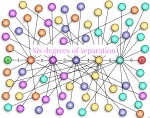
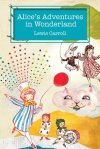 This month’s is a classic – the sort of book in fact which defines classic given its timelessness as a much loved book. It is, of course, given the post title, Lewis Carroll’s Alice’s adventures in Wonderland. And of course I have read it, though so so long ago that I really don’t recollect the actual time I read it because it’s one of those books that enters one’s consciousness isn’t it?
 For my first link, I’m going to do something that might shock those of you who know the book, because I’m linking to Charlotte Wood’s dystopian novel, The natural way of things (
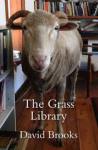 Now, not everyone approves of eating rabbits (or any animals for that matter). For Wood’s characters it was a matter of them or the rabbits, and they chose themselves. However, to be balanced about this, because, you know, we are supposed to be balanced here in Australia, my next link is to David Brooks’ animal rights reflection-cum-memoir, The grass library (
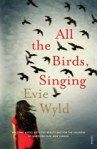 The main animals in Brooks’ book are rescue sheep – two at first, then another, and finally a fourth. Sheep that desperately needed rescuing, because they are being mysteriously attacked, appear in Evie Wyld’s Miles Franklin award winning book, All the birds, singing (
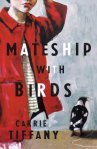 Birds of all sorts feature in All the birds, singing, as they also do in Carrie Tiffany’s Stella prize winning novel, Mateship with birds (
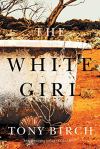 For Indigenous Australians, birds have many meanings and values, one of which is as messengers. We were introduced to this, practically, during our Arnhem Land trip last year, but birds-as-messengers feature in Tony Birch’s latest novel, The white girl (
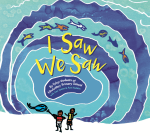 And now, because all my links to this point have involved animals, I am going to stick with animals. However, for this last link, I’m going for a double shot and am linking on indigenous author too. The book is I saw we saw written and illustrated by the Yolngu students of Nhulunbuy Primary School (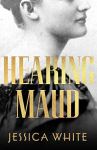
 Brent of Bin Bin: We now know this pseudonym was Miles Franklin, but it was a pretty well-kept secret at the time. Certainly,
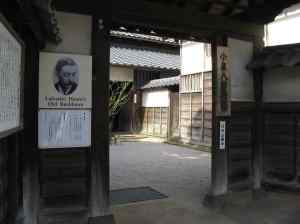 Lafcadio Hearn
 White talked about Henry Handel Richardson’s The fortunes of Richard Mahony (1930), starting by contesting some of the criticisms from Australian critics. He described the trilogy as having “a structural harmony found only in very great novels” and he dispensed with “the question of whether the author had produced a typicallv Australian book or not” by saying it was “a universal work, and that should be enough”. (So there!) White, like Binns, then went on to talk about the work in detail – plot, characterisation, style, and so on, concluding, our reporter says, that
 Another writer praised during the decade is Dymphna Cusack. In
 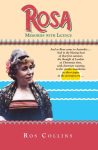 Memoirs are tricky things. There are readers who love them, readers who hate them, and readers like wishy-washy me who sit in the middle. I sit in the middle because, for a start, I don’t like to say “never” when it comes to reading. I sit in the middle because I couldn’t cope with a steady diet of memoirs, particularly those how-I-got-over-my-[whatever trauma or challenge it was], which is certainly not to say that I don’t admire those memoirists or don’t enjoy some of their fare. And, I sit in the middle because I don’t like formula, because I like books that try to tackle their subject or their form a little differently. So, the memoirs I mostly read are those which play with form or whose subject matter offers something different. Ros Collins’ memoir, Rosa: Memories with licence, does both of these.
 Ros Collins
 Whispering Gums