Monday musings on Australian literature: Hidden Women of History

Every now and then I share some content from The Conversation, and so I am again today. This time, it’s an occasional series they have featuring the “hidden women of history”, in which they “look at under-acknowledged women through the ages”. Not all of these are Australian but around half, so far, are.

The most recent article in the series (see link below) is about Catherine Hay Thomson. It starts:

In 1886, a year before American journalist Nellie Bly feigned insanity to enter an asylum in New York and became a household name, Catherine Hay Thomson arrived at the entrance of Kew Asylum in Melbourne on “a hot grey morning with a lowering sky”.

Hay Thomson’s two-part article, The Female Side of Kew Asylum for The Argus newspaper revealed the conditions women endured in Melbourne’s public institutions.

Her articles were controversial, engaging, empathetic, and most likely the first known by an Australian female undercover journalist.

Before this, the intrepid Thomson had written about Melbourne Hospital, having obtained work there as an assistant nurse. She was quite a social justice mover-and-shaker, and worth reading about.

Here, though, I want to share with you some of the other women in this series which, at the point of writing, numbers 31 articles. The first was published on 31 December 2018, and featured  Elsie Masson, a journalist who became an advocate for Aboriginal people. Lydon writes in her article (see link below) that:

As one of the “first white women” to travel in the Northern Territory, Masson’s newspaper articles and book An Untamed Territory – a profusely-illustrated narrative of life in the wild north – show how she popularized the “expert” views of her circle: an elite global network of colonial administrators, including the famous anthropologist Walter Baldwin Spencer.

Lydon writes of Masson’s “transition from dislike to respect” not only of Indigenous Australians but of “others” as well, such as Chinese people. Attending the trial of nine Indigenous men arrested for the murder of trepanger James Campbell also changed her views. Lydon writes that her

account of this trial ultimately argued for the need to acknowledge the coherence of Indigenous tradition, and what today is termed customary law.

These articles cover a wide range of women – Indigenous, immigrant and Australian-born – from the early nineteenth century to well into the twentieth. They cover a wide range of professions and achievements, from the arts and sport to social justice and activism.

Listed below are the articles featuring Australian women (alphabetical by last name):

I haven’t read all of these articles yet, but once again, I thank The Conversation for bringing these women – few of whom appear, for example, in the Australian Dictionary of Biography (ADB) – to our attention.

Stella Prize 2020 Longlist

I don’t do well at having read the Stella Prize longlist at the time of its announcement. In 2017 I’d read none; in 2018 it was one, and last year two! Will it be three this year? (BTW by the end of 2019, I had read six of the 12, one more than in 2018! At least I’m going up, albeit at a snail’s pace.)

I do do better at reading the winners, however, having read Carrie Tiffany’s Mateship with birds, Clare Wright’s The forgotten rebels of Eureka, Emily Bitto’s The strays, Charlotte Wood’s The natural way of things, Heather Rose’s The museum of modern love and Vicki Laveau-Harvie’s The erratics. So far, I’ve only missed 2018’s winner, Alexis Wright’s Tracker.

The judges are again different to last year’s – with the exception of the chair, Louise Swinn, who was also chair last year. 2020’s judges are award-winning journalism and author Monica Attard, journalist and editor for NITV News Jack Latimore, feminist editor and author Zoya Patel, and poet, educator and researcher Leni Shilton. Once again, as you’d expect from an organisation like Stella, attention has been paid to diversity on the panel.

Book coverThe longlist:

  • Joey Bui’s Lucky ticket (short stories)
  • Gay’wu Group of Women’s Songspirals: Sharing women’s wisdom of Country through songlines 
  • Jess Hill’s See what you made me do
  • Yumna Kassab’s The house of spirit
  • Caro Llewellyn’s Diving into glass
  • Mandy Ord’s When one person dies the world is over
  • Favel Parrett’s There was still love (on my TBR) (Lisa’s review)
  • Josephine Rowe’s Here until August (short stories)
  • Vikki Wakefield’s This is how we change the ending
  • Tara June Winch’s The yield (on my TBR) (Lisa’s review)
  • Charlotte Wood’s The weekend (my review)
  • Sally Young’s The paper emperors: The rise of Australian newspaper empires

Well, wow! All I can say is I guessed Winch and thought probably Wood, and maybe Parrett, but several of the others I haven’t even heard of. I was hoping that Carmel Bird’s Field of poppies, Madelaine Dickie’s Red can origami, and Amanda O’Callaghan’s This taste for silence, for a start, might get up – not to mention Jessica White’s Hearing Maud. But, as I haven’t read most of the longlist I’m not going to judge. I will say though that my record, that was on the up, has taken a beating, as I’ve only read one to date. Nonetheless, it is good to see diversity again in the list – both in terms of author and form.

The judges’ chair, Louise Swinn commented on the longlist that:

… This longlist is varied: it includes a graphic memoir, a young adult novel, Aboriginal songspirals, personal memoir, history, short stories and novels. We’ve been given a sense of just how influential our newspapers have been on public policy; we’ve learnt some history of our land; and we’ve been given the lowdown on both the dire statistics and the real-life stories of domestic abuse. We’ve been transported: we were sixteen years old all over again (gulp!).

All of the writers we longlisted are finding innovative ways to communicate their stories, and there is a very real sense when opening these books that an honest dialogue is being entered into. These authors are craftspeople serious about their intention and dedicated to the art. We were educated and entertained by these twelve longlisted books and we recommend them heartily.

The shortlist will be announced on March 6 (not March 8, International Women’s Day, as recently been tradition), and the winner on April 8.

Any comments?

Charlotte Wood, The weekend (#BookReview)

Book coverAfter reading the first few pages of Charlotte Wood’s latest novel, The weekend, I was starting to wonder how on earth these women, with “their same scratchy old ways”, could be described as “dearest friends”. They seemed so different, and so irritated or, sometimes, cowed by each other’s differences. Where was their point of connection I wondered, besides their late friend Sylvie?

But, let’s start at the beginning. My edition’s back cover describes the set up beautifully: “Four older women have a lifelong friendship of the best kind: loving, practical, frank and steadfast. But when Sylvie dies, the ground shifts dangerously for the other three. Can they survive together without her?” Well, they are going to find out, because the book concerns a weekend – a Christmas weekend, in fact – in which the remaining three come to Sylvie’s beach-house to clean it out for sale. It’s a thankless task at the best of times, so when you get three very different, but still grieving personalities doing it, the stage is set for tension, at the very least.

Who then are these three? There’s retired restaurateur Jude who has had a married lover for over forty years; public intellectual Wendy whose much loved husband died many years ago and who now has the frail, demented dog Finn in tow; and out-of-work actor Adele whose relationship has just fallen apart, leaving her homeless. Wood sets the scene, and establishes their characters perfectly through describing their journey to and arrival at the beach-house (much like the opening title sequence for another house-party story, The big chill.) We quickly learn that Jude is organised, task-focused, financially comfortable and disdainful of other people’s frailties; that Wendy is disorganised and soft, but emotional and loyal; and that vain but always optimistic Adele is seen by her friends as “the child” of the group. While Wendy and Jude work at their Jude-assigned tasks, she can be found reminiscing over Sylvie’s LP collection.

Over the weekend, the women’s friendship is tested to its limits. Early on, Wendy reflects that “it was exhausting, being friends”, while Adele remembers their early years of friendship, and how they “saw their best selves in each other”. But, how honest are they, can they be, should they be with each other? Adele ponders early, that “it was dangerous business, truth-telling”. Over the weekend, of course, some truths come out – what they think about each other, and truths that were supposed to be secrets. And yet, the friendship holds fast:

Because what was friendship, after forty years? What would it be after fifty or sixty? It was a mystery. It was immutable, a force as deep and invitable as the vibration of the ocean coming to her through the sand.

“simple creatureliness”

However, there is a fourth main character in this story – the aforementioned Finn whom Wendy brings with her knowing full well that Jude would not be impressed. But what was she to do? Living alone and unwilling to euthanise him, she had no option. Utterly frail in body and mind, he is a significant character – or, at least, plays a significant role – in the book. This role is bifold. Firstly, we gain more information about the women’s characters and their attitudes to aging and death through their attitudes and reactions to him. His physical and mental frailty, his incontinence, deafness and blindness, confront the women with their own mortality. No-nonsense Jude doesn’t want him and his mess around, and thinks, frankly, he should be put down. She is barely aware of Finn’s importance to Wendy. Adele isn’t enamoured but more tolerant and understanding, while Wendy, for whom Finn was a lifeline after her husband’s death, finds it impossible to think about euthanasia. His presence throughout the novel sometimes mirrors, sometimes opposes the women’s volatile emotional states.

But, the other more interesting role played by Finn has to do with one of the novel’s over-riding themes, one triggered by ageing. It’s the question of what have I lived for, what have I achieved, when have I “finished [my] turn”? Wendy and Adele, for example, both feel they have more to achieve. For Wendy, it’s the intellectual idea she feels she’s moving towards, “the place she had always felt was there waiting for her”, and for Adele, it’s “clawing back her one great moment on the stage”. Jude’s life is more about “gathering experience, formulating opinions, developing ideas” to “fold away and save for” those times her married lover is able to see her. So, the underlying question is: When you no longer have those seemingly limitless goals of youth, what goals do you have, where do they come from, and what happens when you, perhaps, run out of goals or purpose? Finn offers this opposite – “simple creatureliness”, or, just being. This issue of goals and purpose is, I believe, one of the biggest challenges of ageing – alongside the obvious physical ones – and I love that Wood takes it on.

However, she doesn’t stop there, because her women also confront other ageing-related issues – increasing homelessness for older women, the threat of loneliness that often attends age, and coping with technological and cultural change not to mention with children who start to parent you.

To keep this story and its tensions focused, Wood uses the house-party setting, as many other authors have done before including John Clanchy in his novel Sisters (my review). I didn’t much like the melodramatic party scene, involving two interlopers, that occurs near the end, but this is a common trope, I think, in the house-party sub-genre. Overall, I loved the writing. It’s tight. We shift seamlessly between the characters without getting lost, each one nicely differentiated, and there are some spot-on images:

Every time Jude had to hold her tongue, every time she didn’t tell Wendy she should pay him the kindness of letting him die, she felt falsehood pulled tighter like a plastic bag, closer, closer over her mouth and nose. She couldn’t bear it.

AND

Outside the cicadas were filling the still summer air with sound. You must shed the dead skin … The bush was full of insects and snakes reborn, shining with newness. The dried carapaces rustled as the resurrected creatures slithered out of, away from, their dead selves. You had to struggle free from what had protected you.

By now, you may be thinking that this a grim book, but while its intent is serious, Wood’s touch is light, using some humour – sometimes generous, sometimes satirical or ironic – in the telling. This humour – as in the scene describing Adele, in the park, having just peed, running into a theatre producer – keeps these women real and relatable, and the tone edging to hopeful.

You would think that The weekend would be the perfect pick for my reading group, given we are all women not much younger than Wood’s protagonists and that many of us have been friends for thirty years plus. And yet, the responses of the twelve members present at our meeting were mixed. One group was ambivalent, arguing that the characters were too much like types, while the other loved it, believing it captured the dynamics of longtime women’s friendships with heart and humour. You know which group I belonged to – for all the reasons I’ve described above.

Lisa (ANZLitLovers) also enjoyed the book.

Challenge logoCharlotte Wood
The weekend
Sydney: Allen & Unwin, 2019
256pp.
ISBN: 9781760292010

(Review copy courtesy Allen & Unwin)

Monday musings on Australian literature: Screen adaptations, update

Back in 2012, I wrote three posts (here, here and here) sharing some of my favourite film and television adaptations of Australian novels and plays. With recent(ish) announcements about more adaptations in the offing, I thought it worth writing an updating post.

To get us going, here are some of the adaptations that have been announced over the last few years, which is not to say that they will actually make it to the screen:

  • Emily Bitto’s The strays (my review)
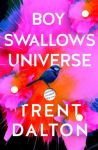
  • Trent Dalton’s Boy swallows universe (my review)
  • Peter Goldsworthy’s Wish
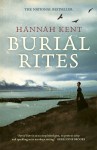
  • Hannah Kent’s Burial rites (my review)
  • Hannah Kent’s The good people 
  • Alice Pung’s Laurinda

When these announcements are made it can be very early in the process. It may simply be that developmental funding has been allocated – and, as the saying goes, there can be many a slip betwixt cup and lip.

Meanwhile, I was intrigued while researching this update, to come across an announcement for a symposium on Adaptation and the Australian Novel being run by the Centre for Critical and Creative Writing at the University of Queensland in June this year. The announcement starts with this:

Landmark Australian novels are being adapted for the stage and screen at a rate we’ve not seen for many decades. In the 2015 to 2020 period alone, what was previously a steady trickle has become a flood as the nation’s various mediums of cultural transmission have offered reimagined versions of much-loved novels …

They name many titles we have seen on our screens over the last few years including, on TV, The slap (my review) and Barracuda (my review), and on the big screen, Jasper Jones (my review) and The ladies in black (my review).

The symposium will include keynote speeches by “international critical adaptation theorist Frances Babbage” and “internationally-acclaimed stage and screen writer, and adaptor of the landmark The Secret River text, Andrew Bovell”. There will also be an in-conversation session between Christos Tsiolkas and Andrew Bovell, discussing Bovell’s adaptation of Tsiolkas’s novel Loaded for the screen. The announcement also calls for proposals for 20-minute papers. They list the sorts of topics they’re looking for, such as Adaptations and gender, and Indigeneity, race and ethnicity, and landscape, and so on. You can see the complete list at the link above.

These topics draw from what I thought was the most interesting paragraph in the announcement, the paragraph that poses the questions they think need to be considered:

Questions that arise here include: Why the rush on Australian adaptation now? What’s fuelling the appetite for this locally themed work, and why is it being distributed internationally via digital platforms such as Amazon and Netflix? Is there a ‘house style’ emerging either at particular theatre companies or television production houses who are leading this push? Whose stories are being canonised in this tranche of largely Anglo-Celtic authored works, and whose voices are doing the adapting? What version of Australian national identity becomes enshrined in this process, and whose perspectives are elided or omitted?

While all these are valid questions, I have highlighted those that I think are of most interest to Whispering Gums readers. In my brief research of the internet, I found nothing much else discussing this issue of perspective and representation, so I hope these papers are podcast and/or published.

Unrelated to this issue, but interesting too, is that of why so few adaptations, comparatively speaking, in the Australian screen industry. This was raised in The Guardian back in 2014. Apparently, in Hollywood, more than half of its movies are adaptations, while in Australia it’s less than 20%. MIFF (Melbourne International Film Festival) apparently hosted an event which brought together Australian book publishers and film producers. The thinking was that “if a successful film can be crafted from a book, more sales will result, benefitting publishers and authors as well as the filmmakers.” Makes sense to me. Various reasons for the low rate of adaptations are put forward in the article, including cost and the fact that book culture is very different to film culture. Overall, the reasons seemed to me to be applicable to the adaptation industry in general, rather than explaining why the Australia-Hollywood discrepancy, although one panelist believed that in the USA “distributors and agents are constantly on the lookout for book properties that are capable of being turned into films”.

Finally, though this goes back even further to 2010, there’s an Occasional Paper published by Screen Australia, titled Mitigating Risk: The case for more adaptations in the Australian film industry. It was written by Matthew Hancock, as part of the Master of Arts program at the Australian Film, Television and Radio School. He notes the declining proportion of adaptations in Australia to under 20% since 1999, which, he says, “is significant because adaptations, both in Australia and in foreign markets like the US, tend to perform well, attracting a higher proportion of box office than their proportion in release”.

So, my question is: Do you prefer adaptations over original screen stories? And, leading question, thinking particularly of that issue of perspective and representation, is there a literary work that you would love to see adapted? 

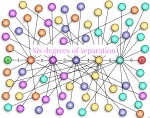
Six degrees of separation, FROM Fleishman is in trouble TO …

Here we are at our second Six Degrees of Separation meme of 2020. For those of you who don’t know what this meme is and how it works, please check out meme host Kate’s blog – booksaremyfavouriteandbest.

Once again, but I’m used to this now, I haven’t read Kate’s starting book, Fleishman is in trouble by Taffy Brodesser-Akner. However, I devised a lovely – well, I think it was – chain for it. Then, as the fires and smoke in my area just got worse and worse this week, I decided to go off script and riff off the title to create my own theme for this post, Australia is in trouble! I’m not going to link my books, but just share six that I’ve read which address, in some way, climate change.

In his 1946 essay, “Why I write”, George Orwell lists four main purposes for writing, the fourth being:

Political purpose: Using the word ‘political’ in the widest possible sense. Desire to push the world in a certain direction, to alter other peoples’ idea of the kind of society that they should strive after. Once again, no book is genuinely free from political bias. The opinion that art should have nothing to do with politics is itself a political attitude.

The other purposes, if you want to know, are “sheer egoism”, “aesthetic enthusiasm”, and “historical impulse”. Orwell goes on to say that “in a peaceful age I might have written ornate or merely descriptive books, and might have remained almost unaware of my political loyalties. As it is I have been forced into becoming a sort of pamphleteer.” Of course his times were different, so his issue – totalitarianism – is different to the ones confronting us now (though, then again, perhaps not!) Anyhow, my point is that in this post I’m going to share six works by writers who also write with a political purpose.

Melissa Lucashenko’s “How green is my valley” (2006) (my review): an essay in Griffith Review’s climate-change-focused issue (12), Hot air: How nigh’s the end. Indigenous writer, Lucashenko addresses climate change, recognising that many non-Indigenous Australians also love the land. She suggests that a “bicultural” approach, which spans the chasm “between industrial and indigenous views of the ‘good life’ and what constitutes a proper society”, would be a good place to start.

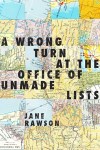
Jane Rawson’s A wrong turn at the Office of Unmade Lists (2013) (my review): set in a bleak climate-damaged Melbourne of 2030, where it’s very hot, and clean water is harder to come by and more expensive than beer. Its main protagonist, Caddy, is living rough, having lost her husband and home in a heatwave-induced fire a couple of years before the novel opens.

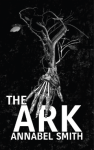
Annabel Smith’s The ark (2014) (my review): set in the 2040s, during, as Smith describes it, “a post-peak oil crisis. The polar ice caps have melted. Crops are failing. People are starving and freezing to death.” Interestingly, given my George Orwell intro, a major theme of this novel is how, in such a world, charismatic-despotic leaders can come to the fore.

Alice Robinson’s Anchor point (2015) (my review): a family drama, but one framed by farming and the land. Climate change hangs over this novel, with its depiction of father Bruce and daughter Laura struggling against drought, bushfires and land degradation to keep their farm going. By 2018 (a little into the future at the time the novel was written), Laura has given up the struggle, because “the climate had long stopped being something she understood”.

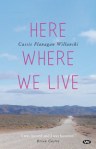
Cassie Flanagan Willanski’s Here where we live (2016) (my review): a collection of short stories about the relationships between non-Indigenous and Indigenous Australians, and the relationship both have with the land. Although not specifically a cli-fi book, concern about land, the environment, and climate change suffuses the stories. In the last story, a terrible storm occurs, and a character says:

‘It’s climate change, of course,’ you say knowingly. ‘They say that these one-hundred year storms are occurring so frequently now that the name no longer bears any meaning. But we need to keep the name so that we can understand that this kind of storm is so severe it should only occur once every hundred years. We need the name so we understand that something has gone wrong.’

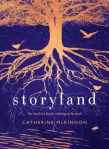
Catherine McKinnon’s Storyland (2017) (my review): set in the Illawarra region south of Sydney, and tells the story of the Australian continent, post-white settlement, from 1796 to 2717. One of its five time-periods is 2033 in which climate-change has caused utter devastation to the land and a dystopia is playing out.

So, a different Six Degrees post, and one not necessarily featuring all the most obvious Australian climate-related books. Although all mine are by women, men have written some too. It’s just that I haven’t read them. The main point is that writers are addressing this issue, doing their best “to push” all to see that Australia is in trouble. The question is whether the people who need to read them are in fact reading them?

And now, the usual: Have you read Fleishman is in trouble? And, regardless, what would you link to? 

Steven Carroll, The lost life (#BookReview)

Audiobook coverLast year, Mr Gums and I bought a new car to replace our loved but aging 15-year-old Subaru Forester. We’ve been keen to move into the hybrid world but wanted to stay with the SUV-style for various practical reasons, so, as soon as a reasonably-priced hybrid SUV appeared on the market here – the Toyota RAV4 – we were in, and so far so good. However, the real reason I’m sharing this is because another impetus for buying a new car was all the new technology, including the audio systems that enable you to play music – and books – via your phones. And so it was that I borrowed my first ever e-audiobook from our local library, Steven Carroll’s The lost life. The technology worked a treat.
Long-term readers here know that I’m not a huge fan of audiobooks, for reasons I’ve explained before. Fortunately, the reader here, Deirdre Rubenstein, did an excellent job. She was expressive, appropriately English-sounding, but read more than played the characters. That helps a lot.

So now, the book. I chose it for two reasons – it was short, making it a good test case, and it was by Aussie author Steven Carroll, whom I haven’t read yet, and whose Eliot Quartet series I’ve been wanting to read. The lost life, the first book in this series, is inspired by the poem “Burnt Norton”, the first of Eliot’s Four Quartets. Makes sense, huh! “Burnt Norton” was published in 1935, and most of Carroll’s novel is set in September 1934. The novel is framed by the story of Eliot and Emily Hale*, who did, in fact, visit Burnt Norton manor in 1934, but their love is paralleled by that of a young couple, 18-year-old Catherine and 22-year-old Daniel. Eliot, himself, is a fairly shadowy figure in the story, with the focus here being on Miss Hale and Catherine.

The story starts at Burnt Norton, a country estate to which Catherine and Daniel have gone for a romantic picnic and maybe a swim. It’s summer, and Carroll beautifully evokes the passion beating in the “ardent” young Catherine’s breast as she looks forward to further development of their physical relationship, which has not yet been consummated. But, they are interrupted by the appearance of two older people, who turn out to be, of course, Eliot and Miss Hale, and they scurry away because they are trespassing. However, they do observe, from behind the shrubs, a little lovers’ ceremony between the older couple, one that Daniel later violates, fortunately unbeknownst to Eliot and Miss Hale, but distressing to Catherine.

Here, I might pause and refer to the poem which inspired this novel. It starts:

Time present and time past
Are both perhaps present in time future,
And time future contained in time past.

A little later come the lines that I remember so well from my university days:

At the still point of the turning world. Neither flesh nor fleshless;
Neither from nor towards; at the still point, there the dance is,
But neither arrest nor movement.

I don’t know what it is about Eliot’s lines that move me so, but I think it’s their almost confounding spareness and mesmerising rhythm. Putting that aside though, it’s this sense of timelessness, of past, present and future being tied to the here and now, of both stillness and movement, of almost suspended animation too, that pervades Carroll’s novel as the protagonists work through their ideas about love and life.

“a felt experience”

Now, Catherine and Miss Hale know each other, as Catherine’s summer job is cleaning the house in which Miss Hale is staying. The plot is, to a degree, predictable. However, it is not the point. The point is how the characters react and feel about what happens. This is an introspective novel in which the two women reflect on love, their own attitudes to it, and what they see, or think they see, in each other. Miss Hale sees her young self in Catherine, her eighteen-year-old self whose disappointment she does not what to see repeated, while Catherine sees wisdom but also sadness in Miss Hale. She comes to realise, in fact, that Miss Hale, who describes her love with Eliot as “a different kind of love”, is a virgin. It is this experience of love, this mystery that endows a special knowledge, that drives the plot.

There is, though, so much to this novel. The tone is gorgeously melancholic, mirroring the poem that inspired it. Carroll also uses images from the poem – sunlight, roses, light – to suffuse his book with a sense of lost time. Repetitions like “young man of whom great things were expected”, “ardent ways”, and “the woman who won’t let go long after she has any right” add to the melancholic tone, while also anchoring our understanding of the characters.

There is also a link drawn between performance and reality. Catherine sometimes feels she is in a play or story, and this contributes to the theme of “the lost life”. Literally, it is the life Miss Hale lost by waiting all those years for Eliot rather grabbing life herself, but more broadly it can encompass all those lives we never have. Even if we, as Miss Hale realises we should, “grasp our moments as they arrive”, there will always be other lives not taken or lived. As Eliot writes in “Burnt Norton”:

Footfalls echo in the memory
Down the passage which we did not take
Towards the door we never opened.

Ironically, Catherine, who delivers “a felt experience” for Miss Hale, becomes an actor who can “deliver a felt experience on cue”, offering up other lives to her audiences, while living her own moments as they arrive. It’s an inspired conclusion to a book about love, living, and the biggest of them all, time.

Lisa (ANZLitLovers) loved this book.

Steven Smith
The lost life (Audio)
(Read by Deirdre Rubenstein)
Bolinda Audio, 2010 (Orig. pub. 2009)
5:57 e-audiobook (Unabridged)
ISBN: 9781742333830

* Check Wikipedia for more on the relationship between Eliot and Hale.

Monday musings on Australian literature: Literary series

Series and literary fiction are not, I’d say, common bedfellows, not the way, for example, that series and crime, or series and fantasy, or, even, series and children’s/YA books are. However, there are significant literary fiction series, of which I’ve reviewed some of here – Willa Cather’s Great Plains trilogy, Marilynne Robinson’s Gilead trilogy, and Hilary Mantel’s Cromwell series. The first two Cromwell books – Wolf Hall (my review) and Bring up the bodies (my review) – won Booker Prizes, and the final one is scheduled (at last) for publication this year.

This week, I expect to post a review of a book in an Australian literary fiction series, and it’s this which inspired me to write today’s post. As I do with these sorts of posts, I’m just going to present my selection (as this by no means comprehensive) in list-form – in chronological order of the publication date for the first book in the series.

  • Miles Franklin’s My brilliant career series: Unlike the rest of the series below, there are just two books in Franklin’s series, My brilliant career (1901) and My career goes bung (1946). This latter she wrote soon after the first but it wasn’t published until much later. However, like others below, the first has become a much-loved and studied classic.
  • Eleanor Dark’s The timeless land trilogy: This is an historical fiction series dealing with the early history of European settlement in Australia. The first book, The timeless land (1941), is an Australian classic and has been taught in schools. It is significant, particularly given its time, for telling the story from both European and Aboriginal Australian points of view. The subsequent books are Storm of time (1948) and No barrier (1953). 
    Book cover
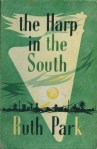
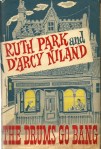
  • Ruth Park’s The harp in the south trilogy: The first book in this series, The harp in the south, was published in 1948, and is now an Australian classic which is regularly taught in schools. I wrote a little about it in my recent review of Park and husband Niland’s memoir, The drums go bang. The other two books in the series are Poor man’s orange (1948), and the prequel in terms of story chronology but the last written, Missus (1985) (my review). The series, an example of Australian social realism, tells the story of the Darcy family of Surry Hills, Sydney. The harp in the south won The Sydney Morning Herald’s competition for an unpublished novel, in 1946.
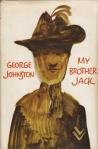
  • Book coverGeorge Johnston’s My brother Jack series: George Johnston’s My brother Jack (1964) is also now an Australian classic. Both it and its sequel, Clean straw for nothing (1969), won the Miles Franklin Award, and both are regularly taught in schools and/or universities. The third book is A cartload of clay (1971). The series is semi-autobiographical, about Johnston’s own life, starting in the between-the-war years.
  • Rodney Hall’s The Yandilli Trilogy (also known as A Dream More Luminous Than Love): This series comprises Captivity captive (1988), The second bridgeroom (1991), and The grisly wife (1993). All three have been shortlisted and/or won significant literary awards, including, for The grisly wife, the Miles Franklin.
  • Steven Carroll’s Glenroy series: This six book series comprises The art of the engine driver (2001), The gift of speed (2004), The time we have taken (2007), Spirit of progress (2011), Forever young (2015), and The year of the beast (2019). Like Johnston’s series above, it is based on his own family and their life in the Melbourne suburb of Glenroy. As in Park’s series, the final novel is a prequel, so the first, chronologically, and is set in the country rather than the city/suburb where the rest are set. Four of the titles have been shortlisted for significant literary awards, with The time we have taken winning the Miles Franklin Award.
  • Kate Grenville’s The secret river series which started with a controversial bang with The secret river (2005), when Grenville locked horns with historian Inga Clendinnen over novelists writing history. Anyhow, this series is a little different from some because The lieutenant (2008) (my review) deals with early settlement but is based on an historical figure, not Grenville’s fictional Thornhills, while the third book, Sarah Thornhill (2011), is a more traditional  sequel to The secret river. The secret river was shortlisted for several awards and won the NSW Premier’s Literary Award for fiction.
  • Audiobook coverSteven Carroll’s Eliot Quartet: Carroll must love writing series, because he also has a series inspired by TS Eliot’s Four Quartets. Three of the four have been written, to date: The lost life (2009), A world of other people (2013), and A New England affair (2017). A world of other people was a joint winner of the Prime Minister’s Literary Award (Fiction).

While I don’t naturally gravitate to series, I have read and enjoyed some. It’s interesting that so many of the above have won awards and/or have been (or still are) standard literature texts. It suggests that authors can and do sustain both literary quality and readers’ interest in a continuing subject. Many of the above have also been adapted to other art forms, including plays and television miniseries.

Lisa (ANZLitLovers) has reviewed many of these, which you can find by searching her blog.

Do you have favourite literary fiction series (and yes, you can include The lord of the rings if you must!)?

Angela Thirkell, Trooper to the Southern Cross (#BookReview)

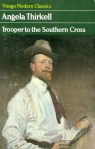
Book coverUnlike many, I think, I have not read Angela Thirkell’s Barsetshire novels which, I understand are very different to her only Australian-set novel, Trooper to the Southern Cross, which, in fact, she published under the male pseudonym of Leslie Parker. It has been on my TBR for some time, so I’m grateful that Bill’s AWW Gen 3 Week provided the impetus for me to finally pull it off the shelves and read it.

That said, Angela Thirkell is a bit of a ring-in. Wikipedia describes her as an Australian and English novelist, but really, she, who lived from 1890 to 1961, only lived in Australia from 1920 to 1929. All her novels were published after her return to England, so, although she did some journalistic writing in Australia, it’s a bit of a stretch to call her an “Australian” novelist. Nonetheless, I’d argue that this book, which has an Australian protagonistwas and was published in 1934, is worthy of Bill’s week, and the Australian Women Writers Challenge.

Before I get on with the book, I should tell you that Thirkell’s father was William Morris’ good friend and biographer, and her maternal grandfather was Pre-Raphaelite painter Edward Burne-Jones. She had Rudyard Kipling and Stanley Baldwin as cousins, JM Barrie as godfather, and Beatrix Potter as a neighbour. She moved, then, in interesting circles.

Hilarious and affectionate satire

GoodReads writes that in Trooper to the Southern Cross, Thirkell “assumes the voice of an Australian army officer and relates an amusing, rough-and-tumble sea story about an eventful, post-World War I journey on a troop-carrying vessel deservedly labeled a ‘hell-ship.’ Thirkell’s keen ear for dialogue, and her skillful use of her own first-hand experience of a voyage on a similarly rumbustious vessel, combine to create an amusing and spirited yarn.” This is a fair description, but Virago’s back cover does a better job, describing it as “an hilarious and affectionate satire on the manners and mores of Australia”, “satire” being the operative word.

I make this point because, as Bill will be interested to know, HM Green, in his History of Australian literature, believed, says Virago, this book was written by a male, and described it as an example of “unconscious humour” rather than as satire. It’s an easy mistake to make, particularly if you don’t know the full story. At this point, of course, I had to check out Trove, where I found two contemporary reviews. One, from Sydney’s The Sun (18 November 1934), is scathing, describing it as “without literary merit, with just a touch of sardonic humor and a good deal of unrestrained nastiness”. The main complaint is that the book “portrays the Australian soldier as something between a savage and a simpleton”.

The other review, from The Sydney Morning Herald (29 September 1934), is a little more positive. It has its criticism, though, saying that the “language and outlook” of its army doctor narrator “is that of the common soldier and rather difficult to reconcile with his rank and the assumption that he is a graduate in medicine of an Australian university. Our Medical Faculties hardly turn out their diamonds quite as rough as this unpolished specimen.” However, this reviewer finds the book funny, and concludes:

The voyage was full of incident, and the episodes, tragic, thrilling, or amusing, lose none of their interest in the free manner of telling. From the major’s mouth came artless revelations of opinions on all subjects that are reminiscent of “Gentlemen Prefer Blondes,” though the artlessness has not the subtlety of the art of Anita Loos. Diggers will chuckle over this book.

Hmmm … not The Sun’s diggers, perhaps.

“a reserved kind of chap”

Trooper to the Southern Cross is based on Thirkell’s own trip to Australia in 1920 on the requisitioned German troopship SS Friedrichsruh which, like the novel’s fictional Rudolstadt, had been ingeniously sabotaged by the Germans. For example, the toilets flushed boiling water and salt water flowed from freshwater taps. Not surprisingly this added to the havoc on a ship that was carrying officers with their wives and families, “ordinary” diggers, and prisoner diggers who soon had it over the soldiers guarding them. As Thirkell tells it in her novel, there was much violence on board and at the only two stops made en route, Port Said and Colombo. All this is told in the voice of Major Tom Bowen, who is modelled on Thirkell’s husband, albeit her husband wasn’t a doctor or a major. Bowen’s wife, Celia, however, is not based on herself, says Tony Gould in Virago’s introduction, but Mrs Jerry, the Colonel’s wife, is.

The novel is interesting to read for a number of reasons, one being simply for its history, its being, according to its publisher, the first book to deal with “the repatriation of Australian troops after the war.” A very particular repatriation one would hope, but a story of such nonetheless. Mostly, though, it’s interesting for the voice of its narrator. He is quite something, and I can imagine different readers responding very differently to him. He, like George Thirkell, served in the war from the Gallipoli Campaign right through to Armistice. He’s reasonably educated, having done medicine in Sydney, but he uses Australian vernacular and his cultural tastes are popular. Virago’s Gould notes that Thirkell “became extremely well versed in Australian literature and culture and uses it to comic effect” in the book. Here, for example, is Bowen soon after meeting “the wonderfully pretty little thing” who was to become his wife:

The girl didn’t know what back-blocks were, so I had to explain that they were way out beyond everything. I asked her if she’d read ‘On Our Selection’, because that gives you some idea of the back-blocks. But she hadn’t. And she hadn’t read ‘We  of the Never Never’, nor ‘While the Billy Boils’, so I knew she wasn’t literary.

You can imagine the female Thirkell enjoying writing this male character – and she does it so well. He makes you cringe – with his frequently smug patronising manner, sexism, racism, and general all round chauvinism – and yet you can’t help liking him too. He has nous dealing with men, particularly the diggers for whom he has a clear-eyed affection; he is resourceful; and he shows tenderness to others in need, regardless of who they are. He’s even open to having his mind changed, such as when the Roman Catholic padre helps him out:

To think of an R.C. showing me what Christianity really was. It gave quite a shock to a lot of my ideas.

As a document of 1920s Australian manners and culture, told with a lightly satiric eye, Trooper to the Southern Cross is a surprisingly entertaining read.

Challenge logoAngela Thirkell
Trooper to the Southern Cross
London: Virago, 1985 (Orig. pub. 1934)
(Virago Modern Classic No. 171)
177pp.
ISBN: 0860685926

Monday musings on Australian literature: Christina Stead’s 1930s, Beauties and Bankers

Today’s Monday Musings post is the second of two on Christina Stead that I promised for Bill’s (The Australian Legend) AWW Gen 3 Week. These two posts – last week’s and this – focus on contemporary Australian responses to her four 1930s-published books, based primarily on my research of Trove.

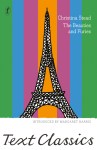
Last week’s post looked at The Salzburg tales (1934) and Seven poor men of Sydney (1934), so this week The beauties and the furies (1936) and House of all nations (1938) get their turn. Although I’ve only read For love alone, plus some short stories of hers, I know many of her books, including last week’s two. However, this week’s books are less familiar to me.

Book cover

The beauties and the furies was not one of Stead’s most successful books, it has to be said, and I had to dig a bit deeper in Trove to find reviews. It’s the story of a woman who, married to a boring man, runs off to Paris to be with her student lover. The reviews were not kind, mostly for the writing than the content.

The Sydney Morning Herald’s reviewer (22 May 1936) writes that her “definite tendency to develop an artificial style” appeared in her second book, but suggests that

That “visionary imagination,” for which she has been commended, runs away with reality altogether in “The Beauties and Furies” at times.

S/he then quotes from the book, and, I must say that out of context at least it is a little over-the-top, but the review isn’t all bad, saying that despite these passages and “a leaning towards redundancy”, Stead has “a definite flair for delineation of character and a good sense of dialogue and situation”. The book is, however, “too long”, presumable because of the redundancy.

Book coverThe Mail’s review (30 May 1936) is similarly critical, and is titled, in fact, “Not recommended”. This reviewer attacks both the writing and the content, describing the story as

merely a sordid one, not of a beautiful comradeship, but of an illicit love affair between two people, whose ideals are about as spiritual as those of a pair of monkeys.

S/he ends the review with the parenthetical comment “(Censors please note)”. However, even so, this reviewer does see skill, saying “she can write vigorously, yet with simplicity and charm”.

The Australian Women’s Weekly (20 June 1936) joined the chorus:

A good story spoilt by a maddening cascade of words to water the purple patches of the plot. Of course, some of them have their uses. “Endoped dome of misery” might be applied to the reader’s head after ploughing through some of these passages. It seems a pity, for the book might have been a good one had the author stuck to her undoubted gift for descriptive phrases only as the means of telling her story.

The best “review” comes from Melbourne’s The Herald (18 June 1946) which quotes America’s New Yorker critic, Clifton Fadiman, who sees more to admire than criticise:

again declares that Christina Stead, the Sydney woman who wrote “The Salzburg Tales,” “Seven Poor Men of Sydney,” and “The Beauties and Furies,” is “a simon-pure genius, showing not a trace of workaday talent.” “I say this,” he temperately adds, “knowing that ‘The Salzburg Tales’ had its excesses and that ‘Seven Poor Men of Sydney’ was no less flawed … ‘The Beauties and Furies’ though her finest book to date, is also imperfect. Yet it discloses such streaming imagination, such tireless wit, such intellectual virtuosity, that I cannot see how anyone who reads it carefully— and there is no other way to read it — can deny Miss Stead’s position as the most extraordinary woman novelist produced by the English-speaking race since Virginia Woolf. . . . The style is indescribable, the wit hardly suggestible.”

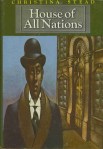
Book coverHouse of all nations (1938), which satirises bankers and financiers, garnered far more positive reviews overall. Edgar Holt in The Herald (9 July 1938) starts with
That I was not very familiar with her work before is an appropriate commentary upon the indifference of most of us to our Australian novelists. “House of All Nations” is a brilliant and exhilarating book, a superb performance of sustained wit, a crushing satire on the world of international finance.

Holt shares many quotes to show the quality of her writing, saying Stead “revels in words. They spurt from her pen, fountain-like”. He does have some criticism but, like Fadiman, is impressed, concluding that

The scope of this book is almost too ambitious; but instead of failing in an exceptionally difficult undertaking, she has written a novel which will command universal admiration.

We should be very proud to include her in the forefront of Australian novelists.

Like Holt, who described the book as a “mosaic”, Adam McCay, in Sydney’s The Sun (10 July 1938) also discusses the novel’s construction:

According to current literary jargon, “House of All Nations” might be called a cavalcade, or a pageant: but its plan is too well-made, not accidental enough, to let it be named a kaleidoscope. Looking for a word, we might say that it is a symphony, with privateering international finance as leitmotiv, and it is written wholly in scherzo movements.

McCay is fulsome in his praise, saying, among other things, that:

In her perception of financial intrigue, as well as in her naked studies of fraud, gluttony, perversion, avarice, and adultery, Miss Stead has eyes as ruthless as a studio light. It is a rare woman who can furnish scepticism and satire as unabashed as Voltaire’s.

I will just note here, in passing, the sexism in some of the commentary. It was the 1930s.

The writer in Brisbane’s The Telegraph (14 July 1938) starts by sharing the qualified assessment made by that American supporter of Australian literature, C Hartley Grattan, then goes on to quote English critic Ricard Church who said that:

Such variety of character, presented with so original and vivid a style, makes this book quite outstanding. And as for the author’s mastery of the details of the international money-market; well, that is worthy of Zola.

So far, then, Stead has been compared favourably with Virginia Woolf, Voltaire and Zola. The aforementioned Adam McCay writes in another article that while one English reviewer sees her as “the most important woman novelist in English since Virginia Woolf”, he’d “go back past Mrs. Woolf to George Eliot”.

One-time Stead friend and supporter, the Australian journalist Florence James, wrote various articles about Stead’s career during the 1930s. In The Sydney Morning Herald (22 September 1938) she noted that

at last Australia is waking up to realise that in London and New York this young Australian is considered by many famous critics to be the most important woman writing in the English language to-day.

There were, of course, naysayers who did not like Stead’s exuberant, untamed style, but we can put that down, in part at least, to the fact that her modernist style was new and innovative. Not everyone likes innovation.

Note: You can find bloggers’ reviews of various Stead works at Lisa’s ANZLitLovers Christina Stead page.

Ruth Park and D’Arcy Niland, The drums go bang! (#BookReview)

Book coverVolume 1 of Ruth Park’s autobiography, A fence around the cuckoo, covers the period of her life up to when she lands in Australia to marry D’Arcy Niland. Not being sure, perhaps, that there’d be a sequel, Park concludes with:

We lived together for twenty-five years less five weeks. We had many fiery disagreements but no quarrels, a great deal of shared and companionable literary work, and much love and constancy. Most of all I like to remember laughter.

That autobiography was published in 1992. The drums go bang, written collaboratively by Park and Niland, was published in 1956 and covers the first five or so of these years to just after the publication in 1947 of The harp in the south.

The first thing that struck me was its point of view: it slips astonishingly between third person and first person plural, sometimes in the middle of a paragraph. And then the penny dropped, its collaborative nature. When they are talking about one of them, Tiger (Ruth’s nickname) or Evans (D’Arcy’s), third person is used, but when they are talking about them together, first person plural is used. Here is an example about their delayed honeymoon:

We didn’t mind the delay. Tiger was crazy to see Sydney, and besides she wasn’t too keen on going away to the Blue Mountains with a strange man. While Evans was away at the Railway she went around the city on her own …

Once you work out what’s going on, it works very well. However, to understand this particular paragraph, and the “strange man” comment you’ll need to read their story for yourself, as I want to move on to other things. Suffice it to say that this comment, while containing an element of truth, given the way their relationship developed, is also an example of their light, self-deprecating humour. As Park said in her autobiography, “most of all I like to remember laughter”.

The drums go bang is a short and often funny book, but it manages to cover a lot, including their struggles to find accommodation in 1940s Sydney when accommodation was scarce, their decision to go freelance and the resultant struggle to survive, their work in the outback, two pregnancies, their lives in Surry Hills and other Sydney suburbs, and their relationships with a wonderful cast of characters. The aspects which interested me most were of course Surry Hills, because it inspired The harp in the south, the writing life, and the writing itself, which provides such an insight into their skills.

Although they tell it with such humour, Park and Niland are very clear about how difficult the freelance life is. For most of the five years covered by the book they live a hand-to-mouth existence, experiencing poverty at close hand. However, there’s also good advice here for would-be writers. For example, early in the book, Tiger expresses frustration at Evans’s belief that a good story will sell regardless, but even this is told with humour:

He was convinced that if the story were good it must sell. He bailed up an amiable Salvation Army major and tried to persuade him that “The Other Side of Love” was just what was needed for the War Cry. He submitted “The Menace of Money” to the Business Man’s Monthly, and a sentimental animal story to the house magazine at the Abattoirs.

They share their Minor Carta, their manifesto for writers who wish to make a living writing. Its eight articles include some hard learnt truths, such as that you have to “write anything and everything”, you cannot afford to be “snobbish” about your art, and you can’t let rejection slips get you down. They talk about the variability of payment systems for freelance work, unscrupulous writing schools, and the importance of marketing, of needing to “shape it to fit”. They write articles, songs, short stories, radio plays, children’s radio, comedy sketches, and more – anything that might bring in a cheque (and they do it sharing one old typewriter.)

I’d love to share more about their lives, and particularly the characters in it, like Evans’ brother Young Gus, the generous freelance publisher Mr Virtue, and colourful relations like Aunt Nibblestones and Uncle Looshus, but I want to get onto something that is most relevant to Bill’s AWW Gen 3 Week, their time in Surry Hills and how it inspired The harp in the south. Initially scared by “the place, with its brawling, shrieking life”, abusive drunks and fighting prostitutes, Park started to adapt, and

… began to study the people for what they were, and not what they did. Their true kindness, their generosity and charity filled her with shame. They were so much more genuinely loveable than she had given them credit for being, and she began to understand how the incredible congestion of their lives, the rabbit-warren houses, the inescapable dirt of an area which is built around the big factory chimneys all contributed to their innately lawless, conventionless attitude towards life. She began to understand that in such a place dirt ceases to become important, morals are often impracticable, and privacy is an impossibility.

As it turned out, though, The harp in the south was written, almost, you could say, accidentally. In New Zealand for some needed R&R after the birth of their second child, they are sent a clipping by Uncle Looshus which announces a Sydney Morning Herald competition for a novel, short story and poem. Park tries to convince Niland to write a novel but he refuses, saying he only writes short stories, and tells her to have a go. So, she does, and of course Surry Hills is her inspiration:

… she felt she understood them. She certainly liked them, mostly because in the midst of all their dirt and poverty and fecklessness they contrived to be happy.

She wrote down a sentence that seemed to sum up their philosophy: “I was thinking of how lucky we are”.

That sentence, the last line in the book, was the key that opened the door. From then on the story grew by itself.

This book, published serially in 1947 to both acclaim and vituperation, has become a classic of Australian social realism, albeit, as Paul Genoni says, “tempered with romanticism”. The same could be said of this delightful memoir.

Challenge logoRuth Park and D’Arcy Niland
The drums go bang!
Illustrated by Phil Taylor
Sydney: Angus and Robertson, 1956
195pp.
ISBN: None