Bill curates: Elizabeth Jolley’s My father’s moon

Bill curates is an occasional series where I delve into Sue’s vast archive, stretching back to May 2009, and choose a post for us to revisit.

Elizabeth Jolley is one of the greats and I am sorry that I have only read her in fits and starts. I have had, unread, Brian Dibble’s biography of her for so long now that I wonder if I should just hurry up and read all these fictionalised accounts of her life first, uncontaminated by knowing what she ‘really’ did.
_______________________

My original post titled: “Elizabeth Jolley, My father’s moon”

Book cover‘No one,’ she says, ‘can write anything till they’ve had experience. Later on perhaps. You will write later on.’ (Elizabeth Jolley, My father’s moon, 1989)

Although fiction demands imagination, it must be based on  some kind of genuine experience. (Elizabeth Jolley, “Only Connect”, essay first published in Toads, 1992)

My father’s moon is the first book in Jolley’s semi-autobiographical trilogy, the others being Cabin fever and The George’s wife. It won The Age Book of the Year Award in 1989.

I am an Elizabeth Jolley fan – and, along with Helen Garner, another Jolley fan, I enjoy the way she repeats and revisits stories and characters from one book or story to another. In this book is the chapter, “Night Runner”, which was published as a short story in Meanjin in December 1983, and again in a short story anthology, Room to move, published in 1985. The narrator of the story – and of the novel – typifies Elizabeth Jolley’s alienated protagonists and their often peculiarly self-centred and self-deluded ways of coping with their loneliness. Clearly Jolley decided that this was a character she wanted to develop further. And clearly she also drew a lot from her own experience to develop this character. Like Vera, Jolley was brought up as a Quaker, her parents sheltered refugees before and during the Second World War, and she trained as a nurse. Like Vera, Jolley probably experienced loneliness and alienation. However, this is fiction and so we need to be careful about how far we take these analogies between Vera and her creator. Much as I can empathise with Vera’s predicament, I must admit that I would hate to think she is Elizabeth Jolley.

It’s an uncomfortable novel. Vera, the first person narrator, is not a highly sympathetic character but neither is she totally disagreeable either. What she is, though, is lonely. The book has a somewhat challenging structure – and I had to concentrate to keep track of where I was. It starts with Vera, a single mother, leaving her parents’ home, with her young daughter, to live and work in a boarding school. Her hopes for a lovely life there among people “who feel and think as I do” are dashed. Such people “are not here as I thought they would be … I am by my own mistakes buried in this green-leafed corruption and I am alone”. In this first chapter are flashbacks to the past, and gradually the book moves into the past, providing us with insights into her character and how she has ended up where she is. Most of this past takes place in the hospital where she trains as a nurse during the war. The book finally returns to the beginning of the novel with Vera resolving to make a step towards alleviating her loneliness. However, we are by no means convinced she will.

The book comprises titled chapters, many if not all of which could be (and some have been) published separately as short stories. This gives it a somewhat disjointed feel – but seems appropriate for the story of a person like Vera. It is full of wonderfully drawn characters, with some very funny (if often dark) scenes and dialogue. Just think nurses and hospitals! There are many references to music – something that is common in Jolley’s works. Music is usually a comforting force for her characters, offering them respite from what is often a cruel world – and this is the case here, with Vera being drawn to characters who love and play music. There is a lot of irony, some of it subtle, some of it less so as in Magda’s comment to Vera who has fantasised about an affair with her husband: ‘You are so innocent and good … Don’t ever change’. Naive perhaps, innocent no!

So, what about the title? Funnily enough(!), it refers to Vera’s relationship with her father, a major stabilising influence in her life. He tells her throughout her childhood that wherever she is she can always look at the same moon he is looking at, ‘And because of this … you must know that I am not far away. You must never feel lonely’. A lovely concept and one to which Vera regularly returns in the book.

My father’s moon is not, I think, the easiest Jolley to read, and there are some things that might become clearer on a second reading. However, its concerns are very representative of her work – loneliness and alienation, homosexuality, parenting, memory, music and religion. While Vera is deeply lonely, while she often behaves selfishly, she can also be kind. She is also no quitter. For that I rather like her.

Elizabeth Jolley
My Father’s Moon
Melbourne: Viking, 1989
171pp.
ISBN13: 9780670822676

 ____________________

I have written several posts on Jolley over the years, including reviews of a couple of novels, a sort of memoir, and a short story, but I had hoped to have read and posted on more of her work by now. Instead, a few of her novels – along with that Brian Dibble biography Bill has – still languish on my TBR pile.

Have you read any Jolley? If so, do you have any favourites?

Monday musings on Australian literature: Indigenous Australian literature, 1970s

Although Lisa’s (ANZLitLovers) annual Indigenous Literature Week is officially over for 2020, I thought I’d bookend it with a second Monday Musings, this one on how Indigenous Australian literature looked around 50 years ago. Who was writing then, and what were they writing?

My main sources were Trove, of course, and the Macquarie Pen anthology of Aboriginal literature, edited by Anita Heiss and Peter Minter. In their introduction, Heiss and Minter argue that:

Aboriginal literature as we know it today had its origins in the late 1960s, as the intensification of Aboriginal political activity posed an increasing range of aesthetic questions and possibilities for Aboriginal authors.

With the Constitutional Referendum of 1967, and, as they put it, “the election of the reformist Whitlam government in 1972 [that] saw a new radicalisation in Australian politics”, there was a growing interest in land rights and cultural self-determination. In this world, Aboriginal literature “began to play a leading role in in the expression of Aboriginal cultural and political life”.

Heiss and Minter nominate the period from 1967 to the mid-1970s as being “significant for the sudden growth in Aboriginal authorship across a broad range of genres.” Ha! It was in 1967 that I wrote a little piece for my school year book on “Aboriginal equality in Northern Australia”. (It’s a bit excruciating to read now, being the words of an idealistic young teen, but that was when my interest in Indigenous Australian rights really started – and when I started reading authors like Kath Walker, later Oodgeroo Noonuccal.)

Book coverThe writers they name from that time – Kath Walker, Jack Davis, Kevin Gilbert, Monica Clare (who is new to me), Gerry Bostock and Lionel Fogarty – pretty much mirror the writers who cropped up in my Trove search. Heiss and Minter describe them as

active in the political sphere while simultaneously catalysing a nascent publishing industry and writing their own vanguard pieces of creative literature.

There is another name that they don’t mention, but who comes up in Trove, and that’s the controversial Colin Johnson (who also published under the name Mudrooroo.)

The interesting thing about this group of people is that they are primarily poets and playwrights. Davis, Bostock and Gilbert are both, while Walker (Noonuccal) and Fogarty are best known as poets. The exception is Monica Clare. She was primarily an activist, but wrote an autobiographical novel that was published posthumously in 1978, Karobran: The story of an Aboriginal girl. Why were poetry and drama so dominant at that time? Is it because they were easier to publish (or get published) – or perform? Is it because these forms lend themselves more to the activism all these writers were engaged in? A poem, after all, is a powerful tool that can be performed, learnt and quoted again and again – as Noonuccal’s were, I know.

Now, what did the newspapers at the time have to say about Indigenous writing? First, there were several references to the paucity of Indigenous writing and Indigenous characters in contemporary literature, including in children’s literature. Presumably this awareness marked the beginning of the slow change that led us to the last decade or so in which we’ve seen significantly more Indigenous writing being published across all forms and genres.

There was, though, less awareness of the importance of Indigenous people telling their own stories. The sense I get is that it was perfectly alright for non-Indigenous people to tell Indigenous stories. Reviewer Lyndal Hadow, writing in the Tribune about a book of short stories by someone called D Stuart, praises:

his wide and deep knowledge and appreciation of the Aborigine. I believe there is no one who has written with such understanding in all the literature of the subject. His ear and his pen for the subtleties of altered English as used by his Aboriginal friends are not matched by any one I have read, and I have read them all. Again Stuart shows that those of whom he writes are known to him, not as subjects to be studied, but as old friends whose lifestyle he understands, and whose strengths he respects.

I love her confidence in her assessment because she has “read them all”!

The most comprehensive article I found about Indigenous writing in Australia came from the University of New South Wales’ student magazine Tharunka in 1976. The article, written by John Beston, commences:

Who are the Aboriginal writers? The first person to supply an answer to that question was Kath Walker, herself the best known of Aboriginal writers. In an article entitled “Aboriginal Literature,” in the January 1975 issue of Identity, Kath Walker mentions five writers other than herself — Jack Davis, Kevin Gilbert, Colin Johnson, Wilf Reeves and Dick Roughsey — and concludes that there is an exciting time ahead. I agree with her.

Beston comments on the three main poets of the time, Walker, Davis and Gilbert, and shares this:

Kath Walker has graciously acknowledged Jack Davis to be the better poet, but there is no clear superiority of one poet to the other: Davis is the more skilled craftsman, but Walker sometimes has greater emotional force.

This article is worth reading, because it surveys the gamut of Indigenous Australian writing at the time, across all forms and genres. He concludes, though, by returning to Walker and her significant role, saying (in the tone of his times):

The quality of her work and the success she met with — We Are Going went into seven editions — gave other Aboriginals a needed boost and encouraged them to express the creativity that they have always had. So Aboriginal literature is less than twelve years old. The young tree is certainly flourishing.

Another article I found noted Kevin Gilbert’s being awarded a literature grant to write a book. And, there was a 1979 review of the book Literature and the Aborigine in Australia by a non-Indigenous writer, which seemed to be more about “the history of the efforts of Australian writers to come to terms” with Indigenous culture than about Indigenous literary culture itself, though the review does say:

‘There is also, completing the record, the very new group of writers, Aboriginal or part-Aboriginal themselves, who are producing their own literature.’

In the 1970s, then, there wasn’t a lot of coverage of Indigenous Australian writing, but there was the beginning of an awareness that Indigenous Australians were writing – and that Indigenous Australians and their culture should no longer be overlooked. We have a long way to go yet in terms of all Australians reading and appreciating Indigenous Australian writing and culture, but it is useful to see where we’ve come from, don’t you think?

Past ILW/NAIDOC Week-related Monday Musings

Helen Garner, Yellow notebook: Diaries, Volume 1, 1978-1987 (#BookReview)

Book coverThe opening session of last November’s inaugural Broadside Festival featured Helen Garner in conversation with Sarah Krasnostein about her recently published Yellow notebook, the first volume of her edited diaries. It was an excellent, intelligent conversation. Garner came across as the forthright writer she is, one who fearlessly exposes difficult and unpleasant things, alongside joys and triumphs.

The epigraph she chose for her diaries is therefore not surprising:

We are here for this–to make mistakes and to correct ourselves, to stand the blows and hand them out. (Primo Levi, The periodic table)

Certainly, in Yellow notebook, Garner both stands some blows and hands a few out. She admits to many mistakes. She allows herself to be vulnerable. She may have cut a lot, as she told Krasnostein, but she clearly didn’t sanitise. Her aim was to select what others might find interesting. She didn’t rewrite, only changing (or adding) something if it would otherwise have been meaningless. A diary, she said, “has no voiceover, unlike a memoir”. That is, a diary contains what you did/felt at the time without the benefit of later reflection; she had to accept herself – both hurting others and being hurt – as she was at the time of writing. This gave her “fellow-feeling” with others.

She also decided not to identify people. She uses initials, such as M for her daughter, F for her husband at the time. Some of these people are, of course, easily identifiable for anyone who knows her biography, but I think there is still value in taking this approach. In this spirit, I decided not to investigate beyond what I already knew about her life.

The yellow notebook has a lot to offer Garner lovers. For what is quite a short book, its content is wide-ranging. It includes observations from life around her (as you’d expect from a writer), snippets of conversations (both overheard and her own), the occasional news item, stories from her life, thoughts about other writers, and of course reflections on her own writing. We are introduced to her love of music, and her interest in religion. We hear about her marriage break-up and her all-encompassing love of her daughter. All this reveals a messy person – someone who can be wise at times, and immature at others, who can be confident but also excruciatingly insecure, who can be unkind but also warm and generous, a person, in other words, like most of us, except most of us don’t lay the worst of ourselves quite so bare.

I could give examples of all of the above – and I should, because there’s glorious sentence after glorious sentence – but I want to focus on her writing life. For the rest, do read the book yourself.

“thinking voluptuously of the stories I’m going to write”

Part of understanding a writer is knowing who they read and admire. The writer Garner mentions most in this volume is Elizabeth Jolley. While Jolley and Garner are, in some ways, quite different writers, they have a lot in common. Both don’t shy away from some of the darker aspects of human behaviour. Sometimes Garner simply quotes Jolley – as we do when a writer reminds us of something we’re experiencing. Sometimes she shares little anecdotes about Jolley, but other times she comments on Jolley’s writing, even when referring to another writer!

‘Cod seemed a suitable dish for a rejected one and I ate it humbly without any kind of sauce or relish.’ –Barbara Pymm, Excellent women. This is Elizabeth Jolley’s tone and it made me laugh out loud.

Elizabeth Jolley makes me laugh out loud too. Garner also loves Jane Austen. She writes:

Mansfield Park. She never tells you anything about the appearance of her characters. As if they were moral forces. I love it.

You can see why I love Garner. She, Jolley and Austen all get to the heart of humans, incisively – and with wit. Garner writes about being rejected:

My short story was rejected by the Bulletin because it contained four-letter words. A letter from Geoffrey Dutton: ‘It pains me to have to knock this back … it’s you at your best.’ Thanks a lot. I suppose he’s a skilled writer of rejection letters.

Other writers Garner mentions include, randomly, Frank Moorhouse, Janet Malcolm, Joan Didion, Tim Winton, Virginia Woolf, Patrick White, DH Lawrence (who “uses the same word over and over till he makes it mean what he needs it to”), EM Forster, Katherine Mansfield, Henry James, James Joyce, Doris Lessing, Christina Stead (whom, she discovers, is “a visonary”), Randolph Stow, Rosa Capiello, and Les Murray:

The infuriating accuracy and simplicity of his images – birds that ‘trickle down through’ foliage. Of course, I think, this is what they do – why didn’t I know how to say it?

Four of Garner’s own books are published during the ten years covered by these diaries, the novels Moving out (1983) and The children’s Bach (1984) (my review), and short story collections, Honour; and Other people’s children (1980) and Postcards from Surfers (1985) (my review).

She shares many of her struggles and challenges in writing The children’s Bach, in particular:

… each morning I set out for my office weak with fear. I will never be a great writer. The best I can do is write books that are small but oblique enough to stick in people’s gullets.

AND

This flaming book is jammed again. I feel my ignorance and fear like a vast black hole.

AND

I’m scared to go into my office in case I can’t make things up.

AND

Went to work and fiddled around for half an hour, then began to properly feel it come … Delirious I ran downstairs and bought myself a pastie …

She shares her thoughts about writing, such as

About writing: meaning is in the smallest event. It doesn’t have to be put there: only revealed.

This is so Austen, too.

More broadly, she also speaks of critics, awards, and readers. It’s engaging and heart-rending all at once – and probably applicable to many writers.

Finally, she reflects on the value of art and on the creation process. Describing the experience of a painter finishing a portrait, Garner writes:

The miracle of making something that wasn’t there before. Pulling something out of thin air.

It’s that capacity that impresses someone like me. I’m sorry for the pain writers (and other creators) endure, but I’m so glad they are prepared to do it. I look forward to Volume 2, and beyond.

Challenge logoHelen Garner
Yellow notebook: Diaries, Volume 1, 1978-1987
Melbourne: Text Publishing, 2019
253pp.
ISBN: 9781922268143

(Review copy courtesy Text Publishing)

Bill curates: JM Coetzee’s Diary of a bad year

Bill curates is an occasional series where I delve into Sue’s vast archive, stretching back to May 2009, and choose a post for us to revisit.

When Sue wrote this review in July 2009 – yes I am progressing only slowly, but there is so much to choose from!  – Diary of a Bad Year was Coetzee’s most recent work. I read it only a year or so ago and it impressed on me how lucky we are in Australia that Coetzee chose to live here.

_______________________

My original post titled: “JM Coetzee, Diary of a bad year”

Book coverJ.M. Coetzee is one of those rare novelists who pushes the boundaries of what a novel is. The progression from his mid-career novel, the spare but terrifying Disgrace (1999),through Elizabeth Costello (2003) to Diary of a bad year (2007) is so dramatic that there are those who question whether these last two are even novels. It’s actually been a year or so since I read Diary of a bad year but it is currently being discussed by one of my reading groups so now seemed to be a good time to blog about it here.

One of the first things to confront the reader who picks up Diary of a bad year is how to read it. It has three (two to begin with) concurrent strands running across the top, middle and bottom of the page. Some readers try to read the three strands as concurrently as possible while others read the strands sequentially. Following this latter path, though, means you risk missing the way the strands comment on each other. The three strands are:

  • the narrator’s formal voice, basically taking the form of essays he is writing
  • the narrator’s informal voice in which he talks about his life as he is writing the essays
  • the voice of Anya, his “little typist”, and, through her, of her boyfriend, Alan

The three characters represent three modes of viewing the world: the narrator’s is primarily theoretical, while Anya’s is more pragmatic and Alan’s rational. Through these modes, Coetzee teases out the moral conundrums of the early 21st century both in terms of the political (the events confronting us) and the personal (how are we to live).

Towards the end, Coetzee refers to his love of Bach. To some degree the book is a paean to Bach: its three-part structure in which each part counterpoints the others seems to be a textual representation of Bach’s polyphony. The essays running across the top of the page, while a little uneven and dry on their own, are counterpointed by the views of the characters in the other two strands, resulting in our being presented with different ways of viewing the same world.

The characterisation is interesting: Senor C, the writer of the essays, is the logical, moral but somewhat pessimistic thinker; Anya is practical, down to earth, but with a strong moral sense; and Alan is the economic rationalist for whom money is essentially everything. The views of the two men are strongly contrasted, while Anya is caught in the middle. There is a Darwinian sense in Alan of the survival of the fittest, while Senor C spurns competition as a way of life, preferring collaboration. For all his “moral” views, though, Senor C is not presented as a paragon and we are discomforted at times by his attitude towards the beautiful Anya.

The overall theme seems to be how do we live in a world full of paradoxes and contradictions, a world that seems to be pervaded by dishonour and shame (the things Senor C explores in the essays). He talks about ordinary people and how they (we) cope with things they (we) don’t approve of. He wonders why they (we) don’t do something about it, but suggests in the end that they (we) practise “inner emigration”. He says:

The alternatives are not placid servitude on the one hand and revolt against servitude on the other. There is a third way, chosen by thousands and millions of people every day. It is the way of quietism, of willed obscurity, of inner emigration.

I like that concept though it does smack of burying one’s head in the sand. He also talks about collective guilt, and about bearing the dishonour of what’s gone on before. Through choosing a “novel” form like no other, one which blends but in no way harmonises fact and fiction, Coetzee shows in a very concrete way that difficult times need new ways of presenting ideas. He offers no neat conclusions, no easy outs; he is quite subversive really. Late in the book he ponders the value of writing, and says:

Are these words written on paper truly what I wanted to say?

This then is another step in Coetzee’s path of trying to find the best, perfect perhaps, way of saying what he wants to say. I, for one, will be ready for his next step.

JM Coetzee
Diary of a Bad Year
Melbourne: Text Publishing, 2007
178pp.
ISBN: 9781921145636

____________________

I said in this July 2009 post that I was ready for his next step, but in fact other reading got in the way and I have not read any more Coetzee since then. However, like Bill, I’m very glad he chose Australia to be his home. I will try to read more of him in coming years because I enjoy his exploration of the novel-form itself, as well as being interested in his ideas.

Have you read any Coetzee? If so we’d love to hear what you think about his writing.

Monday musings on Australian literature: Indigenous Australian biographies

Yesterday was the start of Lisa’s (ANZLitLovers) 2020 Indigenous Literature Week, and, as I have done for a few years now, I’ve decided to devote my Monday Musings to an Indigenous Australian literature topic. This year’s topic is Indigenous Australian biography.

I have previously written Monday Musings on Indigenous Australian autobiographies and memoirs. These have flourished in the last decade or so, particularly, it seems, memoirs from Indigenous Australian women. I’ve reviewed several on this blog. However, biographies are a different form altogether, and in researching for this post, I’ve struggled to find many. Readings bookshop, for example, provides a list of Australian First Nations Memoir and Biography but I struggled to find many biographies in their list. It is a positive thing that publishers and readers have embraced memoirs, but I can’t help feeling that the paucity of biography tells us something about the place of Indigenous Australians in Australian culture.

The Australian Dictionary of Biography (ADB), self-described as “Australia’s pre-eminent dictionary of national biography”, aims to provide “informative and fascinating descriptions of the lives of significant and representative persons in Australian history.” This suggests that biography has a formal role in telling the story of a nation. Consequently, the dearth of Indigenous Australian biographies – if my research is right – is surely a measure of the continuing marginalisation or exclusion of Indigenous Australian culture and lives from our national story.

Not surprisingly, I’m not the only one to have noticed this problem. In 2017, the National Centre of Biography launched a new project “to develop an Indigenous Australian Dictionary of Biography“. It’s being led by Shino Konishi who is of Indiengous descent from Broome. She is on the ADB’s Indigenous Working Party which was established in 2015, and which includes “leading Aboriginal and Torres Strait Islander scholars from each state and the territory”. The main aim of the project is to add 190 new Aboriginal and Torres Strait Islander biographies to the ADB which, they say, has published nearly 13,000 biographies since 1966, but “has tended to under-recognise the contribution of Indigenous people to the Australian story”. The end-result of the project will be a dedicated Indigenous ADB.

Alongside this, the National Centre of Biography, which publishes the Australian Dictionary of Biography, also hosts a site called Indigenous Australia which “brings together all entries on Indigenous Australians found in the NCB’s biographical websites–Australian Dictionary of Biography, Obituaries Australia, Labour Australia and Women Australia.” It also supports the Australian Indigenous Autobiography Archive, which is an initiative of the University of Western Sydney. (However, it moves us away from my focus here on biography.)

Of course, the above is all very important, but the ADB is about biographical essays in a dictionary of biography. I’m also interested in full-length biographies. I didn’t find many, but, as always, I’m hoping you will tell me (or remind me of) others?

Alexis Wright, TrackerIndigenous Australian biography – a small selection

  • Max Bonnell’s How many more are coming?: the short life of Jack Marsh (2003): on athlete and first class cricketer, Jack Marsh, who died in 1916.
  • Kathie Cochrane’s Oodgeroo (1994): on poet and activist Oodgeroo Noonuccal.
  • Ruby Langford Ginibi’s Haunted by the past (1999): on Ginibi’s son, Nobby, who spent significant time in prison, and the systemic failures in handling Indigenous young.
  • Kevin Keeffe’s Paddy’s road: Life stories of Patrick Dodson (2003): on activist Patrick Dodson, and his family, and their commitment to reconciliation.
  • Marlene J. Norst’s Burnum Burnum: A warrior for peace (1999): on Burnum, Stolen Generations survivor, sportsperson and activist.
  • John Ramsland’s The rainbow beach man (2009): on Les Ridgeway, Worimi elder, who was a farm labourer, station manager and was eventually recruited by Charles Perkins to work in the Commonwealth Department of Aboriginal Affairs.
  • Peter Read’s Charles Perkins: A biography (2001): on activist, Freedom Ride participant and administrator, Charlie Perkins.
  • Banjo Woorunmurra and Howard Pedersen’s Janadamarra and the Bunuba Resistance (1995): on Aboriginal resistance fighter, Jandamarra, and his resistance against invasion in the Kimberleys.
  • Alexis Wright’s Tracker (2017): on the charismatic ‘Tracker’ Tilmouth, activist, a book which is described by some as a “collective memoir” but which I’ve included here as an example of new forms of “biography”, particularly for Indigenous life-writing.

So, now, please add to this list …

Past ILW/NAIDOC Week-related Monday Musings

Six degrees of separation, FROM What I loved TO …

Half the year is over – and what an awful year it has been, generally and personally. I’d like to try to put the first half behind me (without ever forgetting the special person who left my life during it and whose 91st birthday would, in fact, have been today) and look to a more positive second half. Let’s see what we can do with this month’s Six Degrees of Separation meme.  If you are new to blogging and don’t know this meme and how it works, please check out meme host Kate’s blog – booksaremyfavouriteandbest.

Book coverJuly’s starting book is another I haven’t read. Indeed, I haven’t read any of her books, but if I did, this is the one I’d choose. The book is American writer Siri Hustvedt’s What I loved.

Jane Austen, PersuasionSiri Hustvedt is, I read a long time ago, a Jane Austen fan, so my first link is Jane Austen’s Persuasion (my reviews of volume 1 and volume 2) because Hustvedt wrote the introduction to the Folio edition of this novel. If you are a Jane Austen fan, like me, you will buy multiple versions of her novels just for the introductions. (For this reason, I’ll be adding my mum’s editions to my already multiple edition Austen library.)
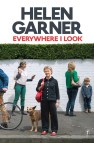
Helen Garner, Everywhere I lookAnother novelist who loves Jane Austen – they are legion in fact – is Helen Garner. She wrote about Austen in her collection of essays, Everywhere I look (my review).

Barbara Baynton 1892

Baynton 1892 (PD, via Wikipedia)

Garner, in fact, wrote about quite a few writers in that collection, including Tim Winton and Elizabeth Jolley, but the one I am going to link to next is a much older writer, Barbara Baynton, and her short story “The chosen vessel”, (my review). Garner says she has never got over it. It’s a powerful story, that’s for sure.

Kate Chopin

Kate Chopin (PD, via Wikipedia)

There are many short stories and novels I have never got over, though quite a few of them are from pre-blogging times. However, there’s a short story from my blogging times that affected me deeply and that I keep returning to. The writer is the American Kate Chopin, and the story “Désirée’s baby” (my review). Its underlying themes about race and gender are distressingly still too relevant today (or, do I mean still too distressingly relevant!)

Maxine Beneba Clarke, The hate raceRacism is an issue that we just can’t seem to resolve. Why is it that we can’t all see and respect each other as equal human beings? I have read many books over the years – fiction and non-fiction – that deal with race. However, I’m going to return to Australia, and Maxine Beneba Clarke’s The hate race (my review), for my fifth link, because her aim was to show “the extreme toll that casual, overt and institutionalised racism can take: the way it erodes us all”. It “erodes us all”: this is a lesson we are all still learning.
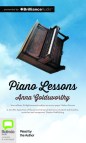
Book coverWhere to from here? Can I be a little less heavy for my last link? The hate race is a memoir about Clarke’s experience of growing up. I hope it’s not disrespectful to conclude with a very different, and rather happier memoir about growing up, Anna Goldsworthy’s Piano lessons (my review). Goldsworthy had her challenges – who doesn’t – but nothing like those faced by Clarke.
So, an unusual chain this month, because it includes two short stories, a book of essays, two memoirs, and just one novel. My links have stayed mostly in Australia, but I have popped over to early 19th century England and late 19th century USA. All this month’s writers are women.

Now the usual: Have you read What I loved? And, regardless, what would you link to? 

Bill curates: Orhan Pamuk’s Snow

Bill curates is an occasional series where I delve into Sue’s vast archive, stretching back to May 2009, and choose a post for us to revisit.

Sometimes I think I am well read and sometimes I come upon a post like this and realize just how far I have to go. Pamuk, I discover, is a famous Turkish novelist and the winner of the 2006 Nobel prize.

_______________________

My original post titled: “Orhan Pamuk, Snow”

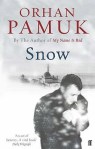
Book coverOne of my rules of reading is that when I have finished a book I go back and read the first chapter (or so) and any epigraphs the author may have included. These can often provide a real clue to meaning. This rule certainly applies to my latest read, Snow, by Nobel Prize winner, Orhan Pamuk.
(WARNING: SOME SPOILERS)

Snow, in fact, has no less than four epigraphs:

  • lines from Robert Browning’s “Bishop Blougram’s Apology” describing the paradoxical nature of things: “the honest thief, the tender murderer,/the superstitious atheist”;
  • a quote from Stendhal’s The charterhouse of Parma which warns about the ugliness of “politics in a literary work”;
  • a quote from Dostoevsky’s Notebooks for the Brothers Karamazov which suggests ideals like the European Enlightenment are “more important than people”; and
  • Joseph Conrad’s statement in Under Western eyes that “The Westerner in me was discomposed”.

These four epigraphs pretty well sum up the concerns of the book. What about the title? The second chapter begins with:

Veiling as it did the dirt, the mud and the darkness, the snow would continue to speak to Ka of purity, but after his first day in Kars, it no long promised innocence.

Here then is the first paradox: snow is pure but not innocent, and it covers dirt, mud and darkness. Already, you can see that this book is going to be ironic. Just how ironic though is a matter for contention but my suspicion is that its very foundation is ironic, as it grapples with what it means to be an artist in a political society, with how one is to live in a conflicted nation. The plot centres on a coup – a coup which is variously called a military coup and a theatrical coup! In fact, it is a coup by a theatrical group that is supported by the military! Art and politics could hardly be more entwined.

Snow though is not an easy read. It is my third Pamuk, but only the second one I have completed. I loved his memoir-cum-history Istanbul but could not, hard as I tried, finish My name is red.

What then is it about? The main action covers three days in the life of Ka, a Turkish poet recently returned from 12 years exile in Germany, who comes to Kars (in far east Turkey) ostensibly to write about the suicide epidemic among young women, but whose secondary (or perhaps primary!) reason is to fall in love with an old school-friend, Ipek. Soon after he arrives, however, the coup occurs and Ka is, rather unwillingly, caught up in the intrigue between the competing interests: the secularists, the Islamic fundamentalists, and the Kurdish nationalists. This sets the stage for exploring the art-politics nexus. Ka says to Sunay, the leader of the coup AND of the theatrical troupe that comes into town:

I know that you staged the coup not just for the sake of politics but also as a thing of beauty and in the name of art … you know only too well that a play in which Kadife bares her head for all of Kars to see will be no mere artistic triumph; it will also have profound political consequences.

Here then is one evocation of the second epigraph. The third and fourth epigraph refer to the running conflict in the book between European/Western values and Turkish/Eastern values. There is very much a sense that the people of Kars feel condescended to by European culture, but as a teen-ager says at one point, “We are not stupid! We’re just poor”. The people of Kars do not understand Western notions of individualism, and they see Western ideas of secularism and atheism as equating with immorality. Ka, as a Westernised Turk, acts as an uncomfortable, to him, bridge between the two worlds.

The core of the book is Ka. He is a sad and highly conflicted individual who, in his youth, had used words to argue that people should act for “the common good” but now finds himself using them to further his own happiness. Once politically active, “he now knew that the greatest happiness in life was to embrace a beautiful, intelligent woman and sit in a corner writing poetry”. The irony is that, for all his attempts to achieve this, he ends up with neither and dies four years after the coup a sad and lonely man.

The novel is interesting, stylistically and structurally. It is essentially a third person story about Ka but is told by a first person narrator, Ka’s friend, the novelist Orhan(!). This metafictional narrative technique, by adding another layer to the “conversation”, rather deepens the “artist in society” and art/politics themes of the book. Much of the story is foreshadowed: we learn of Ka’s death in Chapter 29, though the book has 44 chapters. The tone of the book is imbued with huzun, that very particular Turkish sense of melancholy that Pamuk explores beautifully in his book Istanbul. And, while it is about a coup and has a body count of 29, there are some very funny scenes, one being the political meeting at which the competing rebels prepare a statement about their beliefs for the Western Press. Anyone who has attended a political meeting will feel at home here!

All this said, the book is a challenge to grasp: there are a lot of characters, comings-and-goings, and ideas to track. Just why Ka is the way he is, just what did happen to him in the end, and just what Orhan is saying about art and politics are hard to pin down. I love the way the book is underpinned by paradox and irony – and yet at times the meaning can be a little tricky to discern. What is clear though is that Ka has found living by his political beliefs deeply unsatisfying but, ironically, is unable to bring about a situation in which he can live “happily” any other way.

Kadife, the leader of the headscarf girls, says (fairly early in the book):

…do not assume from this that our religion leaves no room for discussion. I will say that I am not prepared to discuss my faith with an atheist, or even a secularist. I beg your pardon.

Oh dear! Some reviewers call it a brave book. With its fearless exploration of the tensions in modern Turkey, it certainly feels that way. I am very glad that I put in the effort to read it.

Orhan Pamuk
Snow
Translated by Maureen Freely
London: Faber & Faber, 2005 (orig. Turkish ed. 2002)
426pp
ISBN: 0571218318

____________________

I know what Bill means. I too keep stumbling across authors I should know but have never heard of. I would like to read more Pamuk, including The museum of innocence which is on my TBR. Meanwhile, though, my heart really belongs to his mesmerising memoir, Istanbul. I’d love to read it again.

Have any of you read Pamuk? If so we’d love to hear what you think about his writing.

Monday musings on Australian literature: Older men protagonists

Early last year, I wrote a Monday Musings on Older women protagonists. With my father having turned 100 last month, I figured it was time I explored older men protagonists in Australian literature. It proved a bit harder than I expected, but gradually books started to make themselves known to me.

As in my older women post, I’m using 60+ as my definition. (Please note that I am saying “older” here, not “old”, as I don’t see 60s as old, though perhaps it’s all a matter of perspective!) Of course, not all authors specifically state the age of their characters, so, as in my “older women” post, I’ve had to guess sometimes. Do correct me if you know I am way out!

My select little list is alphabetical by author (with links being to my posts). I have read most of the books below, but some before blogging.

Older men protagonists

  • Peter Carey, Amnesia (2014): An old left journalist, and his university friends, consider their activist pasts against the current world and the ongoing need for activism.
  • John Clanchy, In whom we trust (2019): Set in early 20th century Victoria, Father Pearse is a priest nearing 70, who wishes to retire and return to his Irish home, but there is trouble from his past that he is forced to confront and consider righting.
  • JM Coetzee, Slow man (2006): A 60-year-old man suffers a cycling accident resulting in the amputation of a leg, and has to refigure how he is going to live.
  • Elizabeth Jolley, Mr Scobie’s riddle (1983): Set in a nursing home, three 85-year-old men consider their lives, the past and the idea of home.
  • David Malouf, Ransom (2009): A reworking of a section of the Iliad in which the aging Priam risks all to ask Achilles for the body of his son, Hector, asking, that is, for some humanity from Achilles.
  • Alex Miller, Lovesong (2009): A retired novelist, living with his 38-year-old daughter, is told a love story which he shares with us through his own lens.
  • Christos Tsiolkas, Damascus (2019): Covers the apostle Paul’s adult life, but focuses in particular on the lessons and understandings of three old men, Saul, Thomas and Timothy, in relation to the foundations of Christianity.
  • Arnold Zable, Cafe Scheherazade (2001): Journalist Martin visits Cafe Scheherazade to hear stories about displacement from its Jewish owners and patrons, particularly three friends who are also old men, Yossel, Laizer and Zalman.
  • Arnold Zable, Sea of many returns (2008): A dual point-of-view novel, with one of the POVs being a Greek-born grandfather who, in yearning for home, ponders the meaning of home and place in our lives.

This slideshow requires JavaScript.

Ross King, writing in The Guardian in 2016 about older men protagonists, says this:

I was struck by the painter’s [Claude Monet] vigour, fortitude, ambition and (if I can declare some personal interest) sheer narrative traction. Monet in those years, his 70s and 80s, was very much an old man in a hurry, emerging from self-imposed retirement on the eve of the first world war to create some of the most daringly experimental pigmentary effects he had ever attempted. He offers proof that an eightysomething can propel a narrative without an author having to resort to wistful recollections of a vanished prime.

Interesting point. Certainly few of the characters in my little selection focus on their vanished primes. Several think about the past, but not in terms of their so-called prime. For some, like those older women books, there’s a need to resolve/atone for/amend the past, while for others there’s a more philosophical pondering about the meaning of the past, of home, of life. Unlike my older women books list, few if any of these older men books explore illness (like dementia and cancer).

Like that previous list too, but in reverse, most of the authors writing about old men are men – which is not surprising. I’m wondering whether any of our current male literary fiction authors who are now 60 plus, are writing about the topic? Like David Malouf (who has already done Ransom), Rodney Hall, Peter Goldsworthy, to name just a few.

And now, of course my question! Can you add some books to the list – Aussie if you’re Aussie, or your own nationality if you’re not?

Anne Tyler, Redhead by the side of the road (#BookReview)

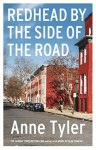
Book coverIn the last couple of months of my Mum’s life I bought her a few novels that I thought would give her pleasure. Although we didn’t know, then, how dire her health was, I did know that she was tired and needed good but not overly demanding or depressing reads. So, for Easter, I gave her Pip Williams’ The dictionary of lost words; for Mothers Day, I gave her Sulari Gentill’s A few right thinking men and Anna Goldsworthy’s Melting moments; and, then, when she went into hospital, I bought her Anne Tyler’s Redhead by the side of the road. Being the lexicographer she was, she loved The dictionary of lost words. She took A few right thinking men into hospital and read two-thirds of it before tiredness defeated her. She was finding the historical background really interesting, but she was keen to get onto Tyler whose books she’d read before. Unfortunately, she never did, but I picked it up as I sat by her bed on the last day of her life. It’s a long time since I’ve read Tyler, but it turned out to be the perfect book for my current state of mind. Even so, it took me two weeks to read it …
Anne Tyler has created some memorable characters and/or situations. I loved The accidental tourist with its travel writer aiming to show American businessmen how to travel without feeing they’d left home – the antithesis of how Mr Gums and I like to travel. I remember the opening of Breathing lessons with the couple squabbling about navigating as they drive to a funeral under pressure. And, her empty-nest-fearing character in The ladder of years who just ups and leaves in the middle of a family holiday is such a wonderful conceit. If she were Australian, we’d probably describe her work as quirky.

What makes Tyler’s novels so enjoyable, then, are her characters and her writing. Her characters are believable but just a little off-centre, and her writing is accessible, but tight and evocative. Her novels are character rather than plot-driven, but they don’t wallow in her characters’ lives. She keeps the story moving.

So, in Redhead by the side of the road, we have 41-year-old Micah Mortimer, “such a narrow and limited man; so closed off.” Routine is his mantra, and you could pretty much set your clock by it. He’s not particularly socially astute, and doesn’t understand the jokes his four older sisters make about him, particularly when he tells them that it looks like his latest girlfriend, Cass, has broken off their relationship. He doesn’t explain that the cause was his inept response to her announcement that she feared she was about to lose her flat – because he hasn’t realised it himself. This is one of the catalysts that forces him to reconsider his life. The other is the sudden appearance on his doorstep of college freshman, Brink, who thinks Micah might be his father.

Now, Brink is the son of his first serious girlfriend Lorna. Micah knows for a fact that Brink is not his son but he accepts this young man into his home and tries, in his own way, to help. While all this is going on, he also keeps an eye out on his apartment building where he “moonlights as a super” and he attends calls for his sole-trader business, Tech Hermit. I must say that, living with my own tech expert, I loved Micah’s interactions with his clients, so many of which I’ve heard Mr Gums have with various friends and family members. “Have you turned it off and then on again?”, for example. The password-finding escapade for a young girl who had inherited her gran’s home and computer is particularly entertaining.

However, that’s not the subject of the novel. What is, is Micah’s slowly growing awareness of life not being as he has seen it, of realising that striving for predicable order does not necessarily make you happy. When Lorna explains why their relationship had ended, our routine-focused Micah, who has never been good at seeing things from other perspectives, has “to adjust to this altered view of the past”. The novel’s title provides a little insight into this:

He slowed to a walk on the last stretch approaching York Road. He momentarily mistook the hydrant for a redhead and gave his usual shake of the shoulders at how repetitious this thought was, how repetitious all his thoughts were, how they ran in a deep rut and now his life ran in a rut, really.

Micah, though, is not the only character muddling along. The thing I like about Tyler is that all her characters muddle along. She forces us to see below the surface, to see that while some may appear more successful than others, may have the trappings of success – like Lorna – all have their insecurities or uncertainties. The novel is full of gentle but no less pointed insights into relationships – Micah’s with his messy, chaotic family, for example, or, Lorna’s with her husband. And it has some sensible down-home philosophies, such as “what’s the point of living if you don’t try to do things better” and “try again, try again, and try again after that … because what else can a person do”.

All this might sound a bit cutesy, but the thing is that beneath Tyler’s apparent cutesiness, is a warm but clear-eyed view of human nature. She sees our foibles, our mis-steps, our little self-delusions, but she wants us to make our lives work. Redhead by the side of the road is no exception, and was just the right read for me for now. I must get back to reading Tyler.

Anne Tyler
Redhead by the side of the road
London: Chatto and Windus, 2020
178pp.
ISBN: 9781784743482

Bill curates: Tim Winton’s Breath

Bill curates is an occasional series where I delve into Sue’s vast archive, stretching back to May 2009, and choose a post for us to revisit.

Tim Winton is not my favourite novelist but as a Western Australian I feel obliged to read those of his books that I come across, and mostly they’re OK though a bit same-ish (boys growing up on WA’s south west coast). It seems Sue initially titled this post Tim Winton versus Thea Astley. Read on and you’ll see why.
_______________________

My original post titled: “Four time winner: Tim Winton wins 2009 Miles Franklin”

Well, it’s finally happened as I knew it must. Someone has equalled Thea Astley’s record number of four Miles Franklin Award wins, as tonight Tim Winton was announced the 2009 winner with Breath. I was seriously considering making Thea Astley my third favourite writers post – I think this means that I will now have to.

Winton has won the award for Shallows (1984), Cloudstreet (1991), Dirt music (2001) and now Breath (2009); and Astley for The well dressed explorer (1962), The slow natives (1965), The acolyte (1972) and Drylands (1999). Both writers are great stylists who use metaphor well, both tend to explore strong connections between character and landscape, and both are indubitably Australian! I think, however, that Astley’s pen ranged wider than Winton’s and she took more risks. That’s not to say that Winton doesn’t deserve his wins but I do think that Astley (she died in 2004) was and continues to be undervalued.

Breath

Tim Winton, BreathAnyhow, here is a brief recap of my thoughts on Breath which I read long before I started writing this blog. I’ll start with a quick plot summary just in case there’s someone out there who doesn’t know it! It is a first person, coming of age story told by Bruce “Pikelet” Pike. It starts with his boyhood friendship with Ivan “Loonie” Loon. As young boys, they dare each other to perform dangerous stunts in the local river, and then as teenagers, they take up surfing where they are encouraged into new levels of recklessness by a former professional surfer named Sando. As time passes, Pikelet’s friendship with Sando and Loonie disintegrates and is replaced by a rather equally scary relationship with Sando’s American wife Eva, an injured and therefore ex-skier.
I like the book. I like the way he sustains the “breath” metaphor throughout to represent various facets of life and life-giving (or life-taking) forces. Despite not being a surfer, I love his wonderfully visceral descriptions of surfing. I also like his exploration of the imperative to take risks that is so common in young men and that is often accompanied by a drive to “be someone”.

Book coverRelated, I suppose, to the coming-of-age issue is the theme of learning to accept being ordinary.  After Sando and Loonie leave the first time, Pikelet goes out and surfs Old Smoky: the first time he does it he’s so successful he feels he’s not ordinary, but then in his overconfidence he does it again and nearly does himself in…this is the beginning of his changing point of view. As he says a little later when he reviews his relationship with Eva, “No, Eva was not ordinary. And neither was the form of consolation she preferred. Given my time over I would not do it all again”. In other words, while he had originally equated not being ordinary with doing big risky things, with courting fear, by the end of the novel he realises that life is “a tough gig” and is about more than courting fear and taking big risks. This doesn’t mean that he can’t do and enjoy a job that provides an andrenalin rush (paramedic/ambulance driver) but it does mean that he no longer seeks to be anything other than himself and that he now goes for an adrenaline rush in “safer” more acceptable ways.

Before he gets to this point, though, he has to come to terms with his Eva experience and with the fact that he spent a big part of his life blaming her for his problems. He eventually comes to the conclusion that “people are fools, not monsters”. This closely resembles my own world-view: that is, that mostly(there are obvious exceptions) when people do the wrong thing they do it, at best, from the best of intentions, or, at worst, for reasons of laziness, selfishness or just plain obliviousness.

There’s no neat ending or pat conclusion: Pikelet recognises that he has been damaged by his life experiences and that he needs to manage himself – but he still loves to surf, that is, to do something “pointless and beautiful”. In this sense it is very much a book of its post-modern age: the lesson almost is that there is no lesson, that each of us has to find our own way. Pikelet says to Sando “maybe ordinary’s not so bad”. As one who is rather ordinary herself, I concur!

Tim Winton
Breath
Penguin Australia, 2008
224pp.
ISBN: 9780241015308

____________________

Bill is nothing if not observant! He noticed that the URL for my Breath post was “Tim Winton versus Thea Astley”. Being an early blogger when I wrote this post, I wasn’t completely clued into changing the URL if you change the blog title before you finally post it. The thing is, I was, at the time, really irritated that Astley was never being mentioned – certainly not in the general or popular press – for her Miles Franklin record. Even now, I think, many people do not realise just how significant she is!

Are any of you Winton and/or Astley fans? We’d love to know your favourites if you are. Or, alternatively, we’d love to know why you aren’t!