Bill curates is an occasional series where I delve into Sue’s vast archive, stretching back to May 2009, and choose a post for us to revisit.
My original post titled: “The information highway, Jane Austen style”
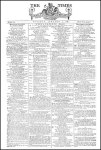
The Times 1785 (must be public domain!)
Did you know there was an information highway in Jane Austen’s day? Well, there was – and it was forged by roads and newspapers. This is the springboard for Dr Gillian Russell‘s talk, Everything Open: Newspapers in Jane Austen’s Fiction and Letters, which she gave to the Canberra group of Jane Austen Society of Australia this weekend. She argued that the increase in the publication and distribution of newspapers in the late eighteenth century contributed to the development of a new style of nation – and in support of this quoted Henry Tilney’s statement to Catherine Morland in Northanger Abbey:
Dear Miss Morland, consider the dreadful nature of the suspicions you have entertained. What are you judging from? … Does our education prepare us for such atrocities? … Could they be perpetrated without being known, in a country like this, where social and literary intercourse is on such a footing, where every man is surrounded by a neighbourhood of voluntary spies, and where roads and newspapers lay everything open? Dearest Miss Morland, what ideas have you been admitting?
Dr Russell argued that this provides evidence that newspapers – supported by the roads which made transport of the papers easier and faster (because this was also the era of the Turnpike trusts) – were at the centre of a new style of openness and transparency in Austen’s time.
But, to provide some context. Jane Austen was born in 1775 – and the 1770s, Russell said, was the beginning of the heyday of newspapers. In 1790, some 60 newspaper titles were published in England; by 1821 there were 135. Newspapers comprised just four pages – the first page was primarily advertisements, the second page reported political (and war) news, while the third and fourth pages contained miscellaneous news, often more domestic in nature. Formal access to these newspapers, though, was gender and class-based. Men – of the gentry or middle-class – comprised the majority of subscribers. However, she argued – pretty convincingly, using the writings of Jane Austen, William Cowperand Leigh Hunt – that once newspapers were in the home, they were readily available for women to read. She described how newspapers were passed on from those who could afford them to friends, neighbours, relations. And Austen reflects this in her novels: the Dashwood women, in Sense and sensibility, received their papers from their generous landlord, Sir John Middleton; and Mr Price, Fanny’s rather impoverished father in Mansfield Park, likewise received his papers secondhand from a neighbour, signalling his lower position in the social pecking order. The fact that the Musgrove men in Persuasion read the paper while the foppish Sir Walter Eliot didn’t conveys a lot about the sorts of men they were. Anyone who’s read Persuasion will know that Sir Walter Eliot is not the one we admire!
Russell’s argument is that, while most historians study newspapers in order to understand the politics of their times, these early newspapers epitomise what Samuel Johnson called “intelligence”, which he defined as the commerce of information – that is, the way information moved around society and the role information played in that society. Austen’s writing shows how newspapers brought people together through sharing information: they promulgated domestic/family information regarding births, deaths, marriages, elopements and such, and, during the Napoleonic wars, they published naval information of critical interest to families at home such as who was promoted to what rank, who was on what ship and where the ships were. By publishing information of mainly domestic interest, newspapers validated families’ position in society. Mrs Bennet’s concern, in Pride and prejudice, about the inadequate reporting of Lydia’s marriage, for example, indicates her recognition of the importance of such reporting to establishing (or reflecting) the family’s social standing. Through this process, Russell said, newspapers played a significant role in nation-building, particularly in establishing the middling order as a bigger “player” in the life of the nation.
And, just as we have today, there was a complex information infrastructure in place to support this “commerce of information”. Papers were read by men in clubs, taverns and coffee houses. They were moved quickly from city to country via the roads and complex networks of tradespeople (one rural subscriber for example picked up his paper from the butcher). Reading rooms were an important feature of resort towns (a bit, perhaps, like the Internet Cafes of today?)
In other words, during Austen’s time newspapers became a more central part of the daily lives of the middle classes and the gentry. Papers were major bearers of domestic news and in this way, argued Russell, mirrored what Jane Austen’s novels did – that is, they conveyed information about the way the world worked and in so doing demonstrated that all forms of information exchange (domestic and political) had a public meaning. In this new world, as Henry Tilney said, everything was laid open, transparent. Except, and here’s the rub, men were still the gatekeepers…
____________________
Bill’s choice this time brought me up with a start. When I wrote this in 2009, newspapers were still, if I remember correctly, significant sources of news for most news-hungry people. But, the last 11 years have seen that landscape change considerably. For my parents, the newspaper was critical for keeping up with personal information like births, deaths and marriages. Reading such news would result in letters or phone calls of congratulation or condolence. What is happening to this information? Does anyone care anymore? And, what about those legally required public notices?
What would Jane make of today’s information highway? And, more to the point, what do YOU make of it?
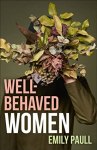 Well-behaved women is a debut collection of short stories by Western Australian writer Emily Paull. It is one of those collections that has a unique title, and what a perfect – and teasing – title it is for a collection of stories focused on women.
 Emily Paull
 If you are not Australian, and not parents, grandparents or teachers of young children, you may not know about “the famous Treehouse series”. It started with the book,
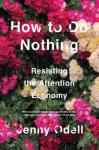 August’s starting book is yet another I haven’t read. Indeed, not only have I not read it, I’ve never heard of it or its author, which is not surprising because, as far as I can tell, it’s a sort of critique of how capitalist forces are driving us all more and more to perform, produce, to be forever doing something, or, as one GoodReads reviewer wrote, on “on how the attention economy and hustle culture is affecting our lives”. The book is Jennifer Odell’s How to do nothing: Resisting the attention economy.
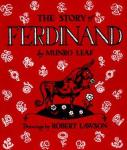 Now, I’m going to break with my usual practice and start with a book I’ve read but not reviewed on my blog, because this book is the. perfect. book. about. doing. nothing. What’s more, it was published in 1936, so this idea is not new, folks! The book is Munro Leaf’s now classic children’s book, The story of Ferdinand. Why don’t you take a moment to stop and smell the flowers before you read on!
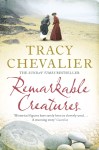 Tracy Chevalier’s Remarkable creatures (
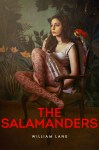 Keeping with the nature theme, and a coastal setting, I’m going to take us to William Lane’s The salamanders (
 The story of The salamanders is founded in an artist’s colony, and all the relationships and dysfunctions that such groups can generate. In a very loose link, I’m taking us to David Mitchell’s The thousand autumns of Jacob de Zoet (
 Another book which deals with European trading in the East Asian region – this time by Britain’s East India Company – is Amitav Ghosh’s River of smoke (

 I then checked Booktopia, which is also listed on the page as a source. I searched for Eleanor Dark’s Prelude to Christopher. They provided this message: “This product is printed on demand when you place your order, and is not refundable if you change your mind or are unhappy with the contents. Please only order if you are certain this is the correct product, or contact our customer service team for more information”. Readings didn’t say this, but I’m presuming their copy will be POD too.
 Whinge aside, the list is an exciting albeit serendipitous one, including many books barely remembered these days. There are, for example, Kylie Tennant’s memoir The man on the headland, and her autobiography, The missing heir. There are four by Thea Astley, eight by Dymphna Cusack (including the Newcastle-set Southern steel, which interests me), and four by Xavier Herbert.
 Other treasures, in terms of their place in Australian literary culture, include Dal Stivens’ 1951 political (and debut) novel, Jimmy Brockett. Stivens is little known now, but,
  As you’ll have realised from the Tennants above, the books include non-fiction, like Australian historian Russell Ward’s memoir, A radical life. There are also books of poetry, such as AD Hope’s Selected poems, and short story collections.
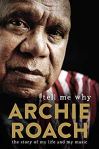 Good things come to those who wait! At least, I hope so, because Lisa has had to wait a long time for a review from me for this year’s
  Archie Roach
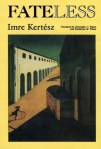 Let’s get the first thing clear. I like holocaust literature – not because I enjoy the subject matter but because in it I find the most elemental, universal truths about humanity. Depending on the book, this literature contains various combinations of bravery and cowardice, cruelty and kindness, love and hate, self-sacrifice, self-preservation and betrayal, resilience and resignation, and well, all those qualities that make up humanity and its converse, inhumanity. I have by no means read all that is out there but here are some that have moved me: Anne Frank’s The diary of a young girl (of course) and Anne Holm’s I am David, from my youth, and then books like Martin Amis’ Time’s arrow, Bernhard Schlink’s The reader, Marcus Zusak’s The book thief, and Ursula Hegi’s Stones from the river. There are gaps, though, in my reading, such as Thomas Keneally’s Schindler’s ark (I did see the film), the works of Primo Levi, and Elie Wiesel’s Night. I have, however, just added
 Whispering Gums