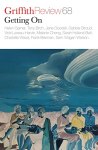
 I love reading the Griffith Review, though have mostly only reviewed individual articles on this blog. It’s a meaty quarterly, with each edition being devoted to a particular theme. Edition 68’s theme, Getting on, seemed apposite for my reading group and so was our August selection. Although it was confronting at times, it was a universally approved choice, and our discussion was lively and engaged.
Like all Griffith Reviews, this edition contains essays, reportage, memoirs, fiction and poems, some from writers who have previously appeared on my blog (like Helen Garner, Vicki Laveau-Harvie, Kathy Marks, and Charlotte Wood); some from writers known to me but not (yet) on my blog (Melanie Cheng, Leah Kaminisky, Sam Wagan Watson among others); and some new to me. The edition opens with editor Ashley Hay’s introductory piece, “The time of our lives: Senescence, sentience and story”. She frames the volume’s overarching subject matter by saying that ageing in Australia:
has been largely framed by intersections between a Royal Commission and its revelations of institutional shortfalls and betrayals; the urgent need for reform; the conditions we place under the umbrella designation of ‘dementia’; an increasing awareness of under-reported ageism; the seemingly intractable gap in life expectancies between Indigenous and non-Indigenous Australians; the day-to-day experience of some 200,000 older Australians who live in residential-care facilities; and an emphasis on the ‘costs’ of an ageing population rather than any framing of the potential benefits of longevity.
However, while these practical and political issues underpin the volume, it also includes some more philosophical and personal reflections which provide breadth and life to the discussion. And so, the edition proper starts with established writer, 77-year-old Helen Garner (“The invisible arrow”) who provides a personal perspective on the experience of ageing, on losing hearing (necessitating hearing aids) and failing sight (requiring cataracts). It’s also about the quandary of being a writer challenged by ageing, an issue somewhat addressed, from a different angle, by Charlotte Wood (“Experiments in the art of living”).
Because my life over the last couple of decades has involved elderly people, I was particularly interested in the essays on aged care practice and policy, especially Sarah Holland-Batt’s “Magical thinking and the aged care crisis” and Beth Mohle’s “System failure”. Both these provided detailed analysis of the current failures of the system – including the multiple reviews with their multiple ignored recommendations – and offer some ideas for improvement. The problem is also taken up provocatively by Gen Xer Ingrid Burkett in “Bold rage” and more calmly but also passionately by another Gen Xer, Charlotte Wood. I did laugh, though, when Burkett suggested one of the ideas discarded by Holland-Batt as “magical thinking”, the “geriatric co-op” or, as Burkett wrote, “buying a large house or building a purpose-built dwelling where we could all live together as we age”. It’s not a new Gen X idea. My Boomer friends and I posited this idea too in our youth!
Policy discussions also take up other issues, like euthanasia and assisted dying (Andrew Stafford’s “Dying wish”) and the disturbing problem of increasing homelessness among older women (Therese Hall’s “Almost homeless”).
Then there are the pieces specifically about the science of ageing (such as Bianca Nogrady’s “Longevity, science and, about medicine and about dead” and David Sinclair’s “Live long and prosper”); about how science may help ageing and aged care in the future (Leah Kaminsky’s intriguing discussion of AI in “Killing time”); and about personal experiences of chronic illness (Mark Aarons’ “Solving my medical mystery”) and death (Gabbie Stroud on her brother’s suicide, “In an unguarded moment”). In this personal vein too is the moving poem, simply titled “Andrew”, about the family’s experience of the terminal illness and death of writer, Andrew McGahan. Niece Anna McGahan writes:
He cannot carry our projected burdens
When he still has heavy gifts
Three glorious, painful months to fill
There are, in fact, several moving pieces – some personal, some professional. Melanie Cheng writes about being an unempathetic intern and what turned her around (“The human factor”) while palliative care specialist, Frank Brennan (“Contemporary loss”), details the practice of palliation. The fiction and poems that are interspersed amongst the non-fiction pieces provide personal perspectives on the information presented. Sam Wagan Watson’s short story “The elsewheres of Charlie Bolt”, for example, powerfully illustrates the isolation and loneliness that many of the contributors identify as serious problems of ageing. The line –
The only songlines Charlie Bolt knew were in the curdling of crow gargles on the street.
– conveys the dislocation Charlie experiences from his culture, as well as from life in general.
It’s impossible to list all the pieces, so I’ll conclude by sharing a couple of my responses to this volume (besides frustration with our policy-makers’ failure to properly address aged care). One relates to the discussion of older people as elders, because this suggests a more positive understanding of ageing. It’s discussed in depth by Jane R Goodall (“Joining forces: The wrath of age meets the passion of youth”) who says “there is little or no public discussion about what it means to be an elder rather than just a senior” and teases out what being an elder might look like. It’s also part of the conversation between Ruth Ross, Jay Phillips and Mayrah Dreise about making “Acknowledgement of Country” statements more meaningful (“Listening to elders: Wisdom, knowledge, institutions and the need for change”).
My other main response concerns denial about ageing and its consequences. I’m with Ailsa Piper (“Old growth: On luck, appreciation and acceptance”) who says “I like saying I’m old”, because, as she says, many never get to. Associated with this denial are people’s claims that they won’t go into aged care, that they’ll leave their home “feet first”, that they will not give up their independence. My experience of watching people age is that the situation is less that you are forced to “give up” your independence, and more that your independence leaves you!
How we handle this situation is up to us, of course, but, as Charlotte Wood reports:
Palliative care nurses have told me people almost always die as they live. A person who has lived with acceptance and gratitude will die in gracious acceptance.
She wonders when it might be time to “change one’s default state”! She then quotes an 84-year-old aged care resident:
Ageing, writes Peter Thomson of Ivanhoe, ‘is inevitable, inexorable and interesting. AAA rating for ageing: Anticipate, Adapt, Accept’.
Now that, rather than “I won’t”, seems to me to be a better default state to take.
Getting on is informative, as you’d expect, but it is also inspirational and challenging. Recommended for adults of all ages!
Note: Links on names are to posts in this blog on those writers. Lisa (ANZLitLovers) wrote up a panel discussion on this volume at the Yarra Valley Writers Festival.
 Griffith Review 68: Getting on
(edited by Ashley Hay)
South Brisbane, Qld. : Griffith University in conjunction with Text Publishing, 2020
287 pp.
ISBN: 9781922212498
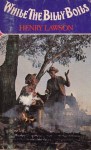 By all accounts, Louisa Lawson was quite a force. A poet, writer and publisher, as well as a suffragist and feminist, she was fully engaged in the country’s literary and political life, but is most remembered now for the latter, particularly her feminist causes.
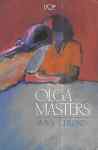 Both Olga and her son Chris Masters were journralists. Chris still is. Olga commenced work as a journalist when she was only 15 years old, but through her relatively short career, she also wrote novels, short stories and drama. Her career as a published writer of fiction was very brief, with The home girls short story collection being published in 1982 and Loving daughters, her wonderful first novel, published in 1984. It is Australian literature’s loss that she died just as her fiction career was taking off.
 Multi-award-winning author Thomas (Tom) Keneally has published over 40 novels, from his 1964 debut novel, The place at Whitton, to his most recent 2020 novel, The Dickens boy. He is best known for his Booker prize-winning novel, Schindler’s ark, which was adapted to the Academy Award winning film, Schindler’s list.
 Set in the satirically named town of Allbut, whose nearest large town is the equally satirically named Mainchance, Thea Astley’s An item from the late news is framed by the story of a man who comes to the town, fearful of “the atom bomb”, and wanting to live a quiet – sheltered, you might say – life.
 Thea Astley
 I read
  When historian Desley Deacon offered me her biography of Dame Judith Anderson for review, I was a little reticent because my review copies were getting out of hand. Little did I know then what was in store for me, and just how much more behind I would become. However, finally, its turn came, and here I am with my review.
 Desley Deacon

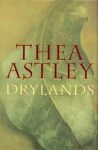
 Take Drylands, for example. It covers a lot of the things important to Astley. Two major ones are words and their importance/their power, and people’s cruelty to each other. Subsumed in this latter one are some recurrent issues for her – gender, race, and other power imbalances. She has several targets in this book: she’s not too fussed on computers, television, or our sports-mad society; she’s also critical about how women are treated, not to mention indigenous people and ‘oddballs’. She’s a writer with a strong social conscience – and, for example, tackled race issues head on in books like the ironically titled A kindness cup (1974) and the gorgeously titled The multiple effects of rainshadow (1996).
 I didn’t think I’d get to this session, but when my regular Thursday evening commitment was cancelled, I knew exactly what to do …
 McLean Davies exemplifed the importance of literature by saying that the recent Black Lives Matter protests brought attention to the need for indigenous stories to be heard. She said that it resulted in books by indiengous authors, like Anita Heiss’ Growing up Aboriginal in Australia (
 She talked about the issue of “engagement” and that in trying to achieve this for diverse classes, teachers will often resort to more standard “white”, often neo-colonial texts. But young people are interested in indigenous issues, climate, etc, she said. Teachers would do well to turn to, for example, Claire G Coleman (
 McLean Davies concurred to a degree, but gave a nicely nuanced response, evoking a complex understanding of culture cringe: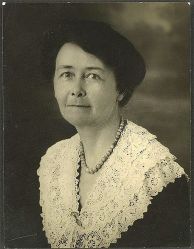
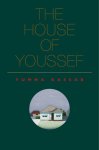 Sullivan introduced The house of Youssef as comprising “spare and sharp” stories about a Lebanese community in Sydney, exploring “the way generations differences play out … the gaps … that make mutual understanding so challenging.” Kassab agreed her stories are about community and family. It’s unavoidable that there will be tensions between generations in any community, she said, but these are exacerbated in migrant communities because of the added layer of different cultural expectations. She’s become increasingly interested in this issue.
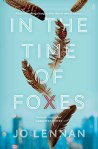 Introducing Lennan’s collection, Sullivan described it as having an international outlook. It has a wide geographic spread, featuring characters taken out of their comfort zones. Lennan observed that mobility has become familiar over the last decades. It seems easy, but is in fact complicated, as she shows in her title story, “In the time of foxes”. It’s about a young filmmaker in London with a young toddler. Her mother is developing dementia back home, and, there’s a fox in the backyard to deal with. She has to face “giving up” her childhood home. Lennan’s point is that living abroad offers immense opportunities but can be accompanied by immense cost. The time has come for this character to pay that cost. (This cost, as many of my generation knows, is also paid by those left at home – particularly with COVID-19, for example, keeping grandparents away from their overseas grandchildren!)
 Sullivan introduced Tan by noting that her stories, which include animal protagonists, unsettle readers expectations and assumptions. She asked how this approach allows her to explore perceptions. Tan spoke from personal experience when she observed that people can look at characters – like her cats and mermaids – and assume they don’t have interiority or inner life, that they are just a sidekick to another’s life. She likes exploring how these characters are unexpectedly resilient, and suggested they could mirror how she moves through life. As a young Asian woman, she often feels underestimated. But, she is not always sure if how she thinks the world is seeing her is how it actually is, but how do you know? She quoted Chimamanda Ngozi Adichie’s statement that “the problem with stereotypes is not that they are untrue, but that they are incomplete”.
 Whispering Gums