Bill curates is an occasional series where I delve into Sue’s vast archive, stretching back to May 2009, and choose a post for us to revisit.
We discovered in August that Thea Astley is Sue’s #3 favourite writer. We’ve always known that Jane Austen (here) is #1. So I thought we should check out # 2. And, if you’re wondering, I’ve looked and there is no #4. Sue of course – she’s a librarian – is astonishingly well organised, so to go to her Jolley reviews, click on Authors above. There you will find authors listed alphabetically, and beneath each author the books Sue has reviewed.My original post titled: “Favourite writers 2: Elizabeth Jolley”
Not, unfortunately, being a time-traveller, I haven’t managed to see or hear Jane Austen in person. I am, however, far more fortunate in this regard when it comes to the subject of my next favourite writers post – Elizabeth Jolley. I did get to see and hear her at a literary lunch at the height of her career. My reaction was the same as many others – her “little old lady” appearance and voice belied her sharp wit and earthy worldliness.
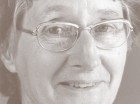
It’s not surprising that she is one of my favourite writers: I call her my antipodean Jane Austen. She is witty and ironic, she is wicked (though blacker than Austen), and she tends to write about a small number of people in a confined, often domestic, situation. But here the similarity ends. While the “character” of Austen’s characters play a role in what happens to them – there’s a reason why Elizabeth not someone like Lydia “gets” Mr Darcy – Austen’s main interest is in the social and economic constraints on her characters. Jolley on the other hand focuses more on the interior. She explores loneliness and alienation. She looks at the disturbing or unsettling sides of relationships, the ‘feelings’ people have but often don’t admit to such as those for a person of the same sex or for a person for whom they should not have feelings for (due, for example, to age differences, power differences, or infidelity). She shows how difficult it is to maintain a long-term intimate or deep relationship that is equal on all levels (physical, intellectual, social, material, etc).
In the Australian and New Zealand Journal of Psychiatry (Vol. 25, No. 1, 1991), Jolley writes:
In my own writing I have been interested in the exploration of survival (perhaps emotional survival), resilience and responsibility. (I only know this now after several books are written).
How very Jolleyesque that aside is – humble but a bit sly at the same time. She continues a little later to say:
…for the most part my characters are perplexed, anxious, often frightened with perhaps one redeeming aspect in their personalities – that of optimism which might for a time, until it gets out of hand, keep them from the specialist’s doorstep.

The first Jolley I read was the short story, “Night runner”, in an anthology titled Room to move. It introduced me to her concept of alienation and rather black notion of survival, her particular brand of irony, her portrayal of characters who more often than not suffer from some level of self-delusion, and her dark humour. I went on to read Miss Peabody’s inheritance, The newspaper of Claremont Street, The well, The sugar mother, and An innocent gentleman, among others, and have never really been disappointed. I enjoy her use of repetition and self-referencing, the motifs and the characters, even, that reappear in different works. She gets me in the pit of my stomach with her vulnerable but often unkind or downright cruel characters, but makes me laugh at the same time with her depictions of their attempts at survival. You just have to see Ruth Cracknell playing The woman in a lampshade to know what I mean!
I have not yet read all of Jolley’s works. Just as for a long time I kept back one Jane Austen novel because once I’d read it I’d have read them all, I am now doing the same with Jolley. Her books are so delicious they need to be savoured. I’m sure this is not the last post I’ll be writing about her.
Postscript: Since this post I have read more Jolley, but I still have some up my sleeve!
____________________
Bill is right. There is no #4, though I have frequently thought about who would be my number 4. I’ve also wondered about how many favourite writers it would be reasonable to have? I love so many writers, still living and those who are no longer with us … but I think that if I do name a 4th I will stick to ones who have died. And, I think I know who that would be.
You now know my top three writers, as I considered them 10 years ago? Would you care to name your top 3?
 Murmurations is a beautiful, evocative word, and Carol Lefevre’s latest book, titled Murmurations, does beautiful, thoughtful justice to it. It is though an unusual book. Styled by its author as a novella, it reads on the surface like a collection of short stories, except that the stories are not only connected by the various characters who pop in and out, but by an overarching mystery concerning one of them, Erris Cleary, whose funeral occurs in the first of the eight stories.
 Carol Lefevre
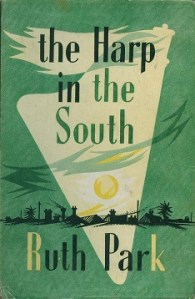 I’ve been pondering this for a long time, in fact, but I’ve kept shying away from it because it’s such a big topic. There are so many questions to answer, before we even get started, beginning with what we mean by “urban”. Sue mentions Garner, Tennant, Park and Tsiolkas as examples of writers who could be considered. Now, Tennant’s Ride on stranger (1943) and Tell morning this (1967), Park’s The harp in the south (1948), and Garner’s Monkey grip (1977) are all clearly urban. That is, they are set in inner city areas. However, do we include suburb-set novels, like Tsiolkas’
 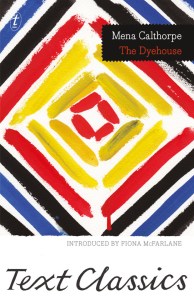 “Underside” here is the operative word, and refers, for me, to those “socio-economic realities”, Wikipedia mentions. Urban fiction tends (and I am generalising) to be about poverty and the various challenges and ills that occur in such an environment – marginalisation (of workers, women, migrants, and so on), crime, drugs, poor health, insecure accommodation, and so on – most of which stem from a sense of powerlessness. These are the sorts of issues variously confronted by Tennant, Park and Garner, and by other “urban” books I’ve reviewed here like William Lane’s
 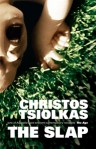 Another common topic in suburban novels is family – often family dysfunction. Tim Winton’s Cloudstreet (1991), set in Perth’s suburbs, is probably the Australian suburban novel of the last few decades, though its protagonists are “battlers” rather than the middle class, and the story is told against the backdrop of history over a few decades. Christos Tsiolkas’ The slap also fits into these family-focused books, but again it’s overlaid with contemporary issues like class, sexuality, and ethnicity.
 Then, there are the outliers. Where to put Elizabeth Jolley’s novels, many of which are set in suburbs? Many of her characters are alienated or anxious, so perhaps they are a development of the Patrick White tradition? Amy Witting, Marion Halligan and Jessica Anderson have also set novels in cities and suburbs, some with a wry edge, and many dealing with the challenges women face in navigating contemporary life. And then there’s Sara Dowse’s West block – about to be reissued – which is probably unique here, with its life-within-the-bureaucracy context.
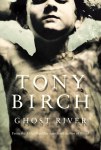 We are also seeing some urban-suburban set Indigenous novels, like Tony Birch’s

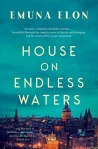 I’ve said before that I’m surprised by how many takes there can be on World War II, and on the Holocaust, in particular – and once again I’m here with another such story, Emuna Elon’s House on endless waters. I hadn’t heard of Elon before but,
 They sound and look highly self-promotional, but who teaches their courses? Well, there are some well-known names there, including published (many of them internationally successful) Australian authors, such as
  Not included in the above list is Heidi Sze’s book Nurturing your new life, which I have not specifically reviewed. However, I have read a significant proportion of it, and did write up
  Considering this concept, The Conversation authors Larissa McLean Davies, Sarah E. Truman, Jessica Gannaway and Lucy Buzacott, came up with their list of five books for young Australians. They are:
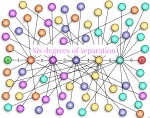
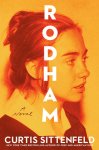 Once again, the starting book is one I haven’t read, though unlike last month’s, I have heard of the author. The book is American author Curtis Sittenfeld’s Rodham. According to GoodReads it “imagines a deeply compelling what-might-have-been: What if Hillary Rodham hadn’t married Bill Clinton?” However, this is not where I’m going to go.
 I said that I have heard of Curtis Sittenfeld, and the reason is because of her involvement in
  Longbourn was, I discovered, one of many books presented in England’s BBC4’s Books at Bedtime program. I was surprised to discover that another book broadcast on this program was our own (I mean Australia’s own) Elizabeth Harrower’s In certain circles (
 And now, just to mix it up a bit, I’m going to link on circles and the fact that the circle is a symbol of infinity. This brought me to John Banville’s The infinities (
 Two main characters in The infinities can be described as infinite, meaning, in part, that they are immortal – the gods Hermes and Zeus. Gods aren’t the only things that are immortal. Cells can be too, as I learnt in Rebecca Skloot’s fascinating, heartrending, The immortal life of Henrietta Lacks (
 The story of African-American Henrietta Lacks’ cells should be a good one. After all, her cells have gone on to produce some significant medical advances. However, the way the cells were taken and used is a story of both ingrained medical arrogance and ongoing racism whereby the human behind these cells and her family were continually ignored and discounted. A closer-to-home book about the experience of racism is Maxine Beneba Clarke’s The hate race (
 Maxine Beneba Clarke’s heritage is mixed, her mother being Guyanese and her father Jamaican (Caribbean). Indigenous Australian author Tony Birch, like many of us, has mixed heritage. He claims a Barbadian (Caribbean) convict amongst his ancestry! I can’t resist making that my last link, though I could also link on the fact that Birch’s writing deals with racism. His most recent novel, The white girl (
 Introducing
  Whispering Gums
