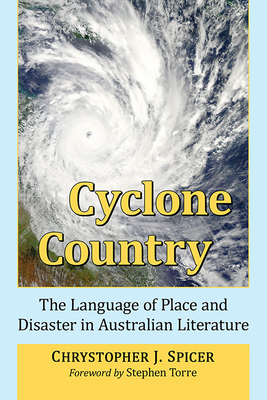
Chrystopher J. Spicer: Cyclone country: The language of place and disaster in Australian literature (#BookReview)

I love thinking about place in literature, so I was intrigued when Chrystopher Spicer, cultural historian and adjunct senior research fellow at North Queensland’s James Cook University, offered me his book Cyclone country: The language of place and disaster in Australian literature for review. Unfortunately, I’ve taken a while to get to it.

Place can be a contentious issue for readers, and I’ve become embroiled in many discussions over the years on the topic. However, this is not going to be one of those, not because I have nothing more to say, but because Spicer’s book looks at place from a different angle. His focus is, obviously, cyclones, and was inspired by the fact that he lives in northern Queensland, a tropical region known for its often highly destructive cyclones. Despite this, people stay. How do they incorporate their experience into their sense of place, and, more significantly, into their understanding of who they are personally and as a community? Cyclones bring chaos and destruction, but, paradoxically, they are also part of the fabric of place they destroy.

It is in this context that cyclones (and similar “nature catastrophes”) can be catalysts for literature. It specifically was for Susan Hawthorne’s eco-poetry collection Earth’s breath. Spicer wanted to explore whether such literature provides “a means by which individuals and societies can cope with and integrate these events into their lives, culture and place” and how weather catastrophes like cyclones “speak of our relationships with place and the people in it”. Concluding his introduction, he identifies his objectives as

to explore how we integrate a violent, chaotic, and destructive weather feature into our culture through the use of storytelling and structure. At the same time, I hope to convey a sense of the connectivity and commonality of people search for meaning amid the meaninglessness of chaos and catastrophe.

“in with through” (Hawthorne)

Spicer explores all this through eight chapters. The first two and the last are devoted to general discussion about cyclones, cyclones and place, and cyclones in literature. In these chapters in particular, Spicer draws on academics, critics, and other writers to provide a theoretical underpinning to his argument. The fundamental point is that stories shape the places in which we live and that in the same process people and place are mapped by those stories. He adopts the word “terroir”, traditionally used to describe wine regions, arguing that it encompasses both the tangible habitat and the spiritual sense that is imbued in that habitat from living within it. Weather, he argues, is inseparable from the physical and experiential aspects of the landscape. As poet Susan Hawthorne writes:

I am in with through the cyclone
which is inside with through me

The book’s other five chapters explore his ideas through specific works set in or around Queensland and its cyclonic environment: Vance Palmer’s Cyclone (Lisa’s review), Thea Astley’s A boatload of home folk (with references to other works including The multiple effects of rainshadow which I’ve reviewed), Patrick White’s The eye of the storm (Lisa’s review), Susan Hawthorne’s Earth’s breath, and Alexis Wright’s Carpentaria (my post).

Storms and cyclones have, of course, featured in literature as long as people have been telling stories, and Spicer provides many examples. Their “propensity to be intense life-changing personal experiences” naturally leads to their use in literature, often as metaphor for “epiphany and revelatory apocalypse”. I’m sure all of us have examples from our reading. For me, Shakespeare stands out.
Alexis Wright, Carpentaria

The five authors Spicer explores use cyclones in different ways, but there are recurring ideas. Epiphany, revelation, with a corresponding opportunity to change or start afresh, underpin the stories. Serpents and similar monsters feature frequently, whether it’s Palmer’s Leviathan, or Hawthorne’s ouroboros, or Wright’s Rainbow Serpent. I’m simplifying here but, essentially, their role varies from being the monster that embodies and explains the chaos to something that is more organically part of the process of chaos and renewal. Somewhat related to this, but separate too, is a cyclical view of nature and thus life. This idea is particularly developed by Hawthorne and Wright, in whose works the apocalyptic event contains the cycle of beginning and end, of life and death and life again.

For White, the image or metaphor is a little different again, but also related, with his using the spiral and the mandala or circle. For his protagonist, it’s in the “eye” of the storm, or the “still point” of the spiralling word, that revelation is found, and epiphany achieved. Astley, too, suggests Spicer, sees us as all being “part of a swirling, spiralling, cyclonic universe”. However, instead of going into the eye, her characters try to escape the cyclone, something which Astley herself said, “is not possible”. The main Astley book that Spicer explores, A boatload of home folk, has been criticised as awful, unlikeable, but Spicer disagrees, arguing that, ultimately, Astley, like the other writers, “uses the elemental cyclone as a trope of apocalypse that is both an instrument of destruction and a catalyst of revelation.” It is what the cyclone draws out of the despair in the novel’s characters that is significant.

In the end, there are two main ideas I took from this book. One is that cyclone literature helps us to understand the event, to incorporate the resultant chaos into our lives, and thus, to “integrate nature catastrophes” into our sense of place, or terroir. While Spicer’s focus is cyclones, he also mentions “nature catastrophes”. Consequently, I’d argue that his argument holds for places which frequently experience other such catastrophes, like bushfires, tornadoes, earthquakes, and recurring long droughts. People who live in places frequented by such catastrophic events, and who choose to remain in those places, must surely “integrate” the experience in some way into their identity as a person of that place, and into their understanding of how to live in that place. Spicer’s discussion of Susan Hawthorne’s Earth’s breath addresses this idea in depth.

The other idea relates more generally to how writers use cyclones/storms to explores broader ideas. In a way, this extends beyond Spicer’s specific goals regarding place. Whether or not writers are inspired by actual cyclonic events or purely imagined ones, in real or imagined places, they can and do use cyclones to explore spiritual and/or psychological upheavals in their characters’ lives. Spicer’s selections are all Queensland-related, so place is quintessential to the stories, but his analysis shows that cyclones in literature also transcend place to encompass something more universally human.

In the final section of his book, “The Cyclone as Universal Trope”, Spicer writes that –

Such events and the stories of them can challenge previous human experience, thereby providing opportunity to move forward and rebuild, opportunity for the emergence of the new.

– with “the new” embodying both the tangible and the intangible aspects of our lives.

Spicer’s book is well-researched and thorough in its analysis, and is supported by an excellent bibliography and index. I found it fascinating. It’s not for everyone. However, it makes an excellent contribution to our understanding of the tropes of Australian literature, including reminding us that it’s not all about “the bush”.

Lisa also reviewed this book.

Chrystopher J. Spicer
Cyclone country: The language of place and disaster in Australian literature
Jefferson, NC: McFarland, 2020
202pp.
ISBN: 9781476681566

Review copy courtesy of the author
Monday musings on Australian literature: Birds in Australian fiction

This week in Australia, 18 to 24 October, is National Bird Week. According to BirdLife Australia, this week originated in the early 1900s when 28 October was designated by the Royal Australasian Ornithologists Union as the first Bird Day. Now Bird Week, it is organised and promoted by BirdLife Australia, which is the Union’s successor. Its goal is to inspire Australians to take action and get involved in bird conservation efforts.

My post may not count as taking action, but I thought it might be fun to talk about birds in Australian fiction. It’s a huge topic, so I will only touch the tip of a bird’s feather, but that just means there’s plenty of opportunity for you all to join in, with your Aussie and non-Aussie examples.

Birds, birds, birds

Birds can offer powerful imagery for writers, though like all imagery they need to be used carefully. Marion Halligan’s warning in The fog garden, “That is the trouble with metaphor, it may take you to places you don’t want to go”, is worth heeding. Birds are popular in poetry and fiction. They are used to convey positive or negative ideas or emotions; they convey freedom; they herald messages and omens (good or bad). Just for a start.

And then there are individual birds, which can enrich or complicate the issue further. Doves suggest peace, and crows (or ravens) death. Eagles can mean power and owls wisdom, while lovebirds need no explanation. Flocks of birds can mean many things. Writers can use birds to convey the obvious ideas, or they can use them ironically to convey the opposite.

Patrick White, Happy Valley

Indigenous cultures, like Australia’s First Nations people, can have a specific relationship with birds. They figure frequently in Indigenous spirituality, often providing a connection with ancestors. If your totem is a bird, the meaning can be even more potent.

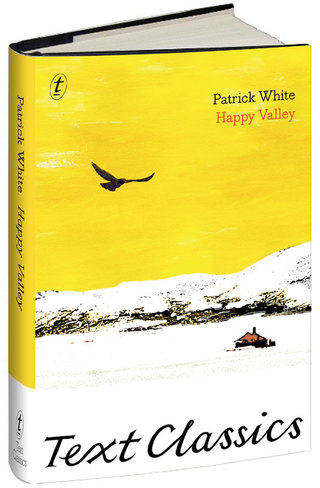
All this is very general, I know, but the point is that when a writer mentions a bird, particularly if the references recur in a work, chances are there’s a reason. It can be fun – and worthwhile – to think about what that might be. In my posts on many of the novels I’ve selected for this post, I have tried to explain the birds, but who knows whether that has matched the authors’ intentions? For some reason, though, I never even mentioned the bird that opens Patrick White’s Happy Valley (1939) (my review)!

Selected Aussie novels featuring birds

My selection here is ad hoc and mostly drawn from books I’ve reviewed on this blog. My discussion will be brief because my aim is to suggest some ideas rather than write a treatise on the topic. Apologies if you hoped for more!

Some novelists focus on specific birds. Jessica Anderson’s One of the wattlebirds (1994) (my review) features various birds, but particularly the titular wattlebird. It’s not a bird commonly found in literature, I must say, and it’s not one of our most beautiful songbirds, either. However, Anderson uses it very specifically in the novel, for her insecure protagonist, Cec who calls it the DOIK, for its sound, or “no-comment bird”, because it seems to be drowned out by other birds. This reflected, I felt, Cec’s feeling of inconsequence.

Mateship with Birds (Courtesy: Pan MacMillan)

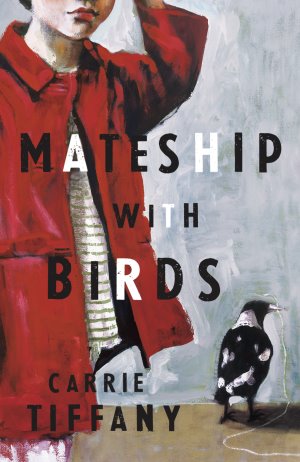
Carrie Tiffany mentions various Australian birds in her Mateship with birds (2012) (my review). The novel takes place over a year that is paced by the life-cycle of a kookaburra family, but it actually opens with descriptions of magpie attacks on humans, and then of cockatoos damaging crops. In the recent Stella 10 years panel, Tiffany reiterated that her novel is about desire, and certainly that’s there, but I also felt her birds convey broader themes about the nature of our relationships with animals, and how we accommodate the animal versus the human within ourselves.

Birds are also significant in Evie Wyld’s All the birds, singing (2013) (my review). Their use is complex. They can reflect protagonist Jake’s mood (“the birds sing and everything feels brand new”), break tension, and suggest death (such as the crows hovering over the dead ewe in the opening paragraph). There are specific birds – butcher birds, night jars, galahs, merlins, currawongs and crows – and there are birds in general.

Tiffany’s and Wyld’s novels are rural, so nature is part of their literal setting, but in both, birds also carry significant metaphorical weight.

Leah Swann’s Sheerwater (2020) (my review) makes frequent reference to the migration of shearwaters (or, mutton birds). They start the novel and introduce the days around which the novel is structured. Among other things, I sensed that their impressive endurance mirrors that of women, like protagonist Ava, and their arduous journey that of her sons.

Book cover

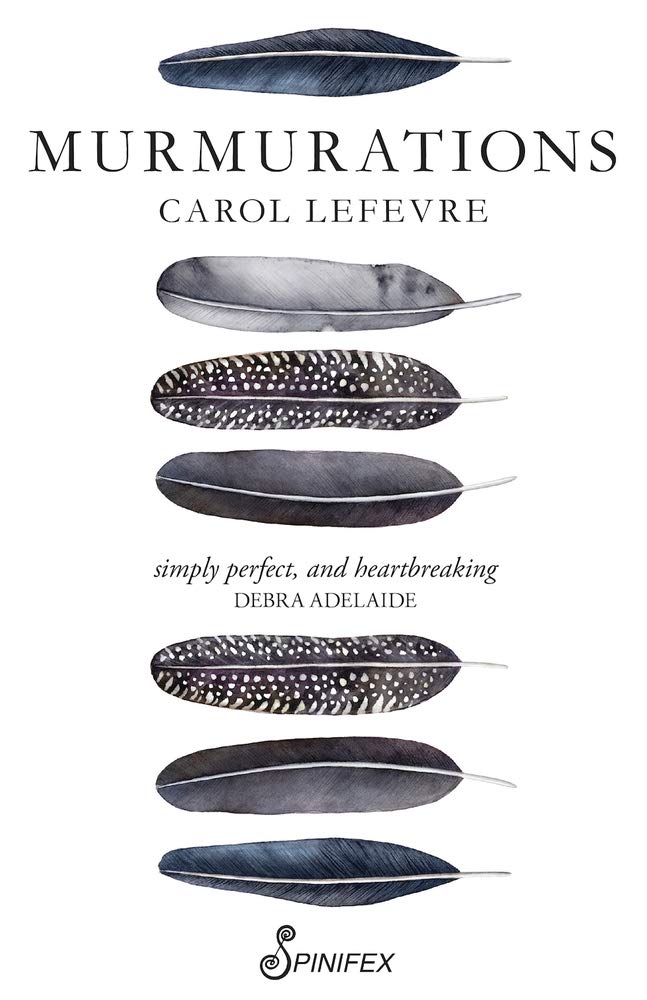
Less obvious, perhaps, are birds in Carol Leferre’s Murmurations (2020) (my review) but murmuration does refer to the flocking behaviour of starlings to deter predators and keep warm. Lefevre’s epigraph, from a paper about starlings, provides a strong sense of her intention: “The change in the behavioural state of one animal affects and is affected by that of all other animals in the group, no matter how large the group is“.

I have books on my TBR that reference birds in their title, but I have no idea what role birds will play. Carmel Bird’s The Bluebird cafe includes an epigraph from Nabokov’s Pale fire: “I was the shadow of the waxwing slain/By the false azure in the windowpane”. Waxwings are beautiful, silky birds, but I’m prepared for something tricksy, or that’s not as it seems. Then bluebird? Bluebirds of happiness? Another is Melinda Bobis’ most recent book, The kindness of birds (Lisa’s review). The back cover blurb starts with:

An oriole sings to a dying father. A bleeding-heart dove saves the day. A crow wakes a woman’s resolve. Owls help a boy endure isolation. Cockatoos attend the laying of the dead. Always there are birds in these linked stories that pay homage to kindness…

Will these birds mean what we might expect? Watch this space.

Birds feature frequently in First Nations Australia novels. Often they are message carriers. For Tony Birch’s protagonist Odette in The white girl (2019) (my review) “a morning doesn’t pass without one of them speaking to me”. However, as in other literature, their use is also more complex. Crows feature heavily in Melissa Lucashenko’s Too much lip (2018) (my review), from the beginning when one says to protagonist Kerry:

Yugam baugal jang! Buiyala galli! Yugam yan moogle Goorie Brisbanyu? You could help, instead of sitting up there like a mug lair from the city.

Lucashenko’s crows are cheeky, complicated beings which know and often convey the wrongness of things. Kerry’s first conversation in her hometown Durrongo is with three crows, one of whom has managed to get its beak caught in the fangs of a dead snake. It could starve to death. “The eaters and the eaten of Durrongo, having it out at the crossroads” thinks Kerry – and so the novel really starts!

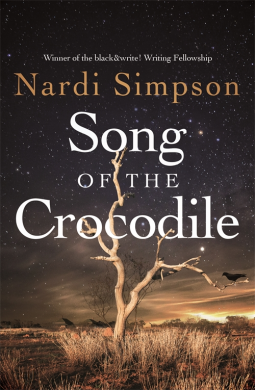
Finally, various birds appear in Nardi Simpson’s Song of crocodile (2020) (my review), but most significantly in spirit songman Jakybird, who wants to reconnect the “threads of broken lore”. Towards the end of the novel he prepares his spirit “choir” for one last, powerful song. 

Birds, birds, birds … what can you add to this discussion?

Elizabeth Jolley, Hilda’s wedding (#Review, #1976 Club )

One of Elizabeth Jolley’s biggest fans is Helen Garner, as I have said before. Garner often mentions Jolley, and my current read, the second volume of her diaries, One day I’ll remember this, is no exception. She writes:

Elizabeth Jolley’s new novel, My father’s moon [my review]. She re-uses and reworks images from her earlier work, brings forth experiences that she’s often hinted at but never fully expressed. I can learn from this. I used to think that if I said something once I could never say it again, but in her book I see how rich a simple thing can be when you turn it this way and that and show it again and again in different contexts.

This is not the only reason Garner admires Jolley, but the reasons are not my topic for today! I will add, though, because it is relevant to my topic, that another thing Garner appreciates about Jolley is that both draw closely from their own lives in their writing.

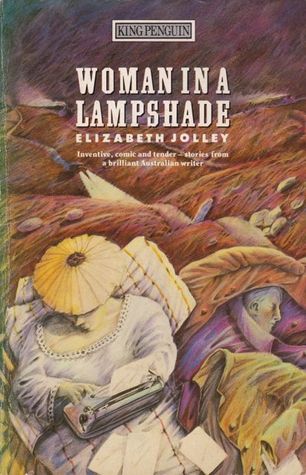
So now, “Hilda’s wedding”, which I read for the 1976 Club, hosted by Kaggsy’s Bookish Ramblings and Stuck in a Book. It’s not the short story I had planned to read, but I couldn’t find that one – also a Jolley – in my collection or online. Fortunately, during my hunting, I found this one from the same year, and it exemplifies the two points I made at the beginning. Firstly, it features a character, Night Sister Bean, who appears in other Jolley works, including the first of hers I read, the short story “Night runner”. And, being a hospital-set story, it draws on (let’s not say “from”) her own experience of nursing.

“Hilda’s wedding” is a rather bizarre or absurd story – which, again, is not a surprise from Jolley. In it, the narrator, who is a relieving night nurse – so somewhat of an outsider – organises an on-the-spot wedding for the very pregnant, apparently unmarried, kitchen maid Hilda. The various roles – husband, celebrant, parents of the bride, pages – are played by night staff including the cook, cleaners and porters. The bride is dressed, with a veil made of surgical gauze and a draw sheet as her train (which contains a hint of the Gothic that we can also find in Jolley’s writing). Immediately after the ceremony, Hilda goes into labor and gives birth in the elevator.

What does it mean? I’m not sure, but this little story about an impromptu wedding sounds like children’s play-acting. It’s a game which uses imagination and creativity, which provides a sense of fun in a grim place, and which brings a little joy to Hilda, whose “melon-coloured face shone with a big smile”. Melons, as you may know, are often associated with pregnancy and fertility. However, injected into the story at various points is the real world, one characterised by rules and impersonality. There’s also the unresolved mystery about Sister Bean and rumours about her negative impact on transfusions/drips. Is she a witch, they wonder?

Sister Bean opens and closes the story, but otherwise appears only occasionally. There are various ways we could read her. One could be people’s need to find a reason or explanation or scapegoat for the bad things that happen in a world where you have little control. In the third last paragraph, our narrator comments on the early morning, and the city waking up:

A thin trickle of tired sad people left the hospital. They were relatives unknown and unthought about. They had spent an anonymous night in various corners of the hospital waiting to be called to a bedside. They were leaving in search of that life in the shabby world which has to go on in spite of the knowledge that someone who had been there for them was not there any more.

It is against this backdrop of sadness that our nurse narrator was there for Hilda. In the next and penultimate paragraph, the narrator is standing outside, taking “deep breaths of this cool air which seemed just now to contain nothing of the weariness and the contamination and the madness of suffering”.

In this story, as is typical of Jolley, there is humour alongside sadness, comedy next to tragedy, unreality bumping up against reality, and, appropriately, no resolution at the end.

In Central mischief – a collection of Jolley articles, talks and essays compiled by her agent Carolyn Lurie – is a talk Jolley gave to graduating nurses in 1987. Before I get to my concluding point from it, I’ll just share something else she says, which is that “for me fiction is not a form of autobiography”. This is an important distinction, which I think Garner would also make. Writers like Jolley and Garner may draw on their own experiences, but what they write is something else altogether.

But now, I want to conclude on this that she tells them:

There is a connection between nursing and writing. Both require a gaze which is searching and undisturbedly compassionate and yet detached.

What a clear-eyed view – and how hard to achieve. What do you think about this?

Challenge logo

Elizabeth Jolley
“Hilda’s wedding” (first pub. 1976, in Looselicks)
in Woman in a lampshade
Ringwood, Vic: Penguin Books, 1983
pp. 139-46
ISBN: 0140084185

Monday musings on Australian literature: Writers’ notebooks

If you’ve attended writers festivals, you are sure to have heard writers talk of using notebooks to jot down ideas on the run, to record conversations overheard on public transport, cafes, etc, to capture the thoughts of the writers they read, and so on. These notebooks are not works of art in themselves, but part of a writer’s toolbox for creating their art – except, of course, writers being writers can turn anything into art, if they set their minds to it.

Some time ago, an article appeared in The Guardian on writers’ notebooks. It starts by discussing:

the way notebooks seem to offer access to hidden origins, and to the creative processes by which works we value come into being. Notebooks record early versions and impulses, and though sometimes the writer has an eye to posterity, the privacy of self-communing allows things that can’t be shared with others to be said, within what Coleridge, one of the great notebook-keepers, called in 1808 a “Dear Book! Sole Confidant of a breaking Heart”. For Virginia Woolf, her notebook helped to “discover real things beneath the show”; flashes of perception, phrases, half-formed and potential ideas …

The article was written by American Professor Philip Horne, who commissioned ten authors to write new stories based on “germs” left behind by Henry James in his notebooks. That book has been published, Tales from a master’s notebook: Stories Henry James never wrote. (Anyone read it?) Apparently, Horne is also editing an edition of James’ notebooks.

I’ve digressed a little – into American writers, and third-party-edited notebooks – when I really want to focus on Australian writers. But, sorry, I’m going to digress again, this time to lithub.com staff writer, Dustin Illingworth:

Few literary artifacts remain as consistently enigmatic as the author’s journal. … The very names we employ—the aforementioned “journal,” the stuffy “diary,” the tepid “notebook”—are failures of imagination, if not outright misreadings. Staid synopses and ossified lives these are not. Rather, what we find within their pages are wild, shapeless, violent things; elegant confessions and intricate codes; portraits of anguish; topographies of mind. Prayers, experiments, lists, rivalries, and rages are all at home here, interbred, inextricable from one another. A piece of petty gossip sits astride a transcendent realization. A proclamation of self-loathing becomes a paean to literary art. News of publication shares the page with the most banal errands imaginable.

Perfect, including his reference to nomenclature – journal, diary, notebook. Writing courses specifically recommend keeping a “writers notebook”, but writers themselves – if they do it at all – keep diaries, journals, notebooks, even loose pieces of paper like backs of envelopes. Many of these eventually find their way into libraries and archives.

Here, though, my focus is those that are published – by the writers themselves, not posthumously by academics or other editors. These works are clearly part of a writer’s oeuvre – and I’m calling them “notebooks”. They tend to be highly edited and somewhat different from traditional diaries, which, of course, can also be carefully edited. But, these “notebooks” have minimal diary framework, in terms of day-by-day dear-diary accounting.

Selected Aussie writers’ notebooks

I don’t know how many writers have published the sort of “notebooks” I’m talking about, but I have three on my shelves, to get the discussion going.

The first one, chronologically in terms of publication, is the most unusual, Beverley Farmer’s A body of water (1990). I’ve had it on my TBR since it came out. How embarrassing. Luckily for you, though, Lisa has reviewed it, so do go there if you are interested. Meanwhile, I’ll just make a few comments. I bought it because I loved Farmer’s writing, and looking at it again – as I have many times over the years – I feel the urge to dive in, but, no, on with this post.

Farmer’s book takes place over a year from February 1987 to the next February. The thirteen journal chapters are named for the month, but what makes this notebook a little different is that interspersed between the months are five short stories. The content of the journal chapters, however, is very much as described in the quotes above. There are references to her life (particularly her relationship angst), to books she is reading, to her own writing, to her environment. I am, cheekily, going to quote from Lisa’s review, because – well, you’ll see why later:

Farmer reads Alice Munro, and makes notes about the structure of her stories; she goes to the Spoleto Festival (forerunner of the Melbourne Festival) and brings home the books of A.S. Byatt from which to learn.  She wishes she had the insouciance of Olga Masters, she admires the ‘spirals within spirals’ in V.S. Naipaul’s The Enigma of Arrival (p192) and she reads and re-reads cherished authors, to ‘rebuild and restore’ (p169) finding a ‘fearful symmetry and sureness of touch’ in Jessica Anderson’s Tirra Lirra by the River (p219).

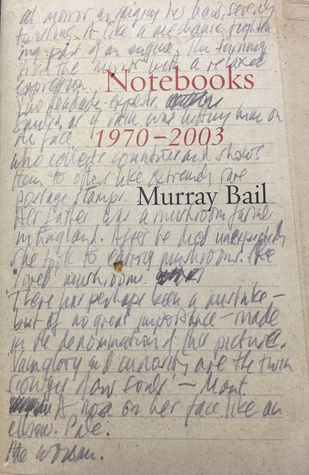
My second book is actually called a notebook – Notebooks 1970-2003 (2005) – and it’s by Murray Bail. I bought it because I like Bail and was intrigued by this notebook form, but I haven’t read it yet, either. It has just two parts: London June 1970-November 1974 and Sydney September 1988-November 2003.

It is more spare than Farmer’s and Garner’s books, but that in itself provides insight into him, as well as its content sharing what he’s observing, reading, thinking about. Here’s something quite random:

Strolling from one picture to another in art galleries, even commercial ones, I am assailed by literary ideas which beg to be resolved.

Book cover

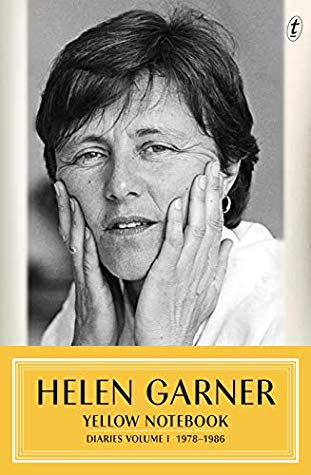
And finally, the book – or books – that inspired this post, Helen Garner’s first two volumes of her diaries, Yellow notebook: Diaries Volume I 1978–1986 (my review) and One day I’ll remember this: Diaries Volume II 1987–1995. Interestingly, the first one is called “notebook” and “diaries” while the second one is just “diaries”. I am including them here because the content, though arranged by year, looks like a collection of snippets, rather than a traditional diary.

In my review of volume 1, I focused on Garner’s writing about other writers, such as Elizabeth Jolley. In volume 2, she mentions other writers again, of course. One of these is – yes – Alice Munro, whom Lisa says Farmer also mentions. Here’s Garner:

Alice Munro is deceptively naturalistic. All that present tense, detail of clothes, household matters, then two or three pages in there’s a gear change and everything gets deeper and more wildly resonant. She doesn’t answer the questions she makes you ask. She wants you to walk away anxious.

Anyone who knows Garner and/or Bail will know that they were married (1992-2000) during the periods covered by their “notebooks”, and Bail certainly appears in Garner’s. But, more on that when I review it.

Why read these notebooks?

For me it’s because although, fundamentally, the text is the thing, I do think that understanding something about the writer can enhance what we get out of our reading.

Garner’s notebooks are a perfect example, because she writes much about what she thinks it worth writing about and what sort of writing she strives for. She wants, for example, to understand “what people do to each other”, and she writes of striving to let “the language tell the story”, and of “trying to trim adjectives without losing the sensuous detail they afford”. Of V/Bail, she admires “the bright freshness of his writing, its muscle, its dazzling turns. Carved free of cliché. Scrubbed till it hurts.”

There are many reasons for reading these notebooks, but another big one is discovering what our favourite writers read and what they think about what they are reading, as Lisa shares from Farmer. Here is Bail, being his spare self:

Emerson’s ‘Self reliance’: line by line, blow by blow.

I remained seated and immediately read through it again.

There is also just the joy of reading their writing. These notebooks are full of insights and descriptions that make you stop, but if I start sharing them, I’ll never stop. Instead, I’ll end with Farmer from near the beginning of her book. She’s writing about her “new phase of writing”:

This new writing: I want it to be an interweaving of visual images–more open, loose and rich, and free of angst. And if I keep a notebook this time …

Have you read any writer’s notebooks?

George Orwell, How the poor die (#Review)

“It is a sound instinct that warns people to keep out of hospitals if possible, and especially out of the public wards.” George Orwell may have written this in 1946, in his essay, “How the poor die”, but I can’t help thinking that it is still a sound instinct, something only too vividly confirmed by the experience of COVID-19, world-wide. How many people have contracted COVID-19 in hospital, for a start? How many hospitals have been so over-run that they’ve had patients in corridors, in foyers, in ambulances on ramps, in quickly erected marquee wards, not to mention people on the streets waiting to get in. This isn’t the experience of all patients in all hospitals in all countries, but as far as I can tell one or more of these things has happened in every place that COVID-19 has taken hold. It’s not pretty.

But, I digress. Back to Orwell. The essay was inspired by an experience he had in a public ward of a hospital in Paris in 1929, but why leave it to 1946 to publish? According to Wikipedia, the editor of Orwell’s Collected Works, Peter Davison, suggests that it may have been first written between 1931 and 1936, when Orwell was writing about “the unemployed, tramps and beggars”, and that he reworked it over 1940 to 1941. It was submitted to a journal around then but was rejected, “possibly because readers would have been unwilling to read about ‘how the poor die’ at such a time”. In the end, a section [which section, I wonder?] was retyped and it was published in November 1946.

Orwell’s experiences were awful. He had pneumonia, he says, and was placed in a packed ward – “a long, rather low, ill-lit room … with three rows of beds surprisingly close together” – and treated with cupping and a very painful mustard poultice. This, however, was not the worst of it. He describes the impersonal, disrespectful way in which the patients were treated by the doctors, medical students and nurses, the lack of basic cleanliness and care (with patients, not nurses, for example, often getting bedpans for those who couldn’t do it themselves). That this was going to be the sort of story he’d tell is heralded in the second paragraph where he describes having a bath on admission as “a compulsory routine for all newcomers, apparently, just as in prison or the workhouse”.

Anyhow, Orwell then moves on to death. He suggests that the lonely, ignored death of patient numéro 57, would be seen as “an example of a ‘natural’ death, one of the things you pray for in the Litany”. He considers it might be “better to die violently and not too old”, because, for all the horrors of war, he writes, death via a man-made weapon nowhere near “approaches in cruelty some of the commoner diseases”.

At this point, I was wondering about what hospital experiences Orwell had had, but he goes on to mention a Spanish hospital and an English cottage hospital, both of which he experienced in the 1930s. So, when he argues that the English cottage hospital was superior, he is speaking from experience. I wonder, though, whether a French cottage hospital might have been similarly decent? I don’t know.

Orwell next gives a brief history of hospitals through the nineteenth century, describing how they were places where medical students practised on the poor. He focuses on surgery, which, at that time, was “believed to be no more than a peculiarly gruesome form of sadism”. This apparently inspired a nineteenth century genre (though he doesn’t use that term) of horror-literature “connected with doctors and hospitals”. All you horror lovers will be familiar with this, I’m sure. Doctors in these stories had names like Slasher, Carver and Fillgrave. He also mentions Tennyson’s poem “The Children’s Hospital” (1880) as being part of this anti-surgery literature.

I found all this interesting, but wondered what his point was. A page or so before the end, I thought I found a hint, when, after referencing the improvements brought by anaesthetics and disinfectants, he says

Moreover, national health insurance has partly done away with the idea that a working-class patient is a pauper who deserves little consideration.

And yet … he concludes by saying that, despite improvements, hospitals are still not the best place to die, and that “the dread of hospitals probably still survives among the very poor”. It takes a long time, he implies, for past experiences and history to die out in the collective imagination. Not necessarily a bad thing, I think.

Wikipedia tells us that in 1948, two years after this story was published, and one year before Orwell died, Britain’s National Health Service was established “as publicly-funded medical provision for all”. The person behind it was the Minister of Health, Aneurin Bevan, who had once been Orwell’s colleague at the Tribune.

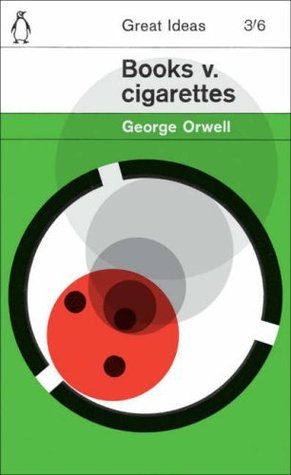
Previous reviews from this book: “Books v. Cigarettes“, “Bookshop memories“, “Confessions of a book reviewer“, “The prevention of literature” and “My country right of left“?

George Orwell
“How the poor die” (orig. 1946, in Now)
in Books v. cigarettes (Great Ideas)
London: Penguin Books, 2008
pp. 50-64
ISBN: 9780141036618

Available online at the Orwell Foundation.

Stella … 10 years

While the Stella Prize isn’t quite 10 years old, next year will see the awarding of the 10th prize. With that landmark in its sights, the Stella people decided to tweak the prize criteria, and have added single-author poetry collections to the forms eligible for the prize. An excellent move. Around the same time, they announced their 2022 judging panel – Melissa Lucashenko (chair), Declan Fry, Cate Kennedy, Sisonke Msimang, and Oliver Reeson – creating another nicely diverse panel.

Now and then: Ten years of Stella

To celebrate entering its 10th year, Stella held a zoom session involving three past winning and shortlisted authors, Carrie Tiffany (Mateship with birds), Emily Bitto (The strays), and Claire G. Coleman (Terra Nullius). (Links are to my reviews) The session was convened by Christine Gordon who introduced herself as a Stella founding member, and the Programming and Events coordinator for Melbourne’s Readings Bookshop.

I wasn’t sure what to expect, but it was short and tightly focused on the value of the Stella. There was no Q&A, but I it was a good opportunity to hear from three writers whom I’ve read and reviewed here.

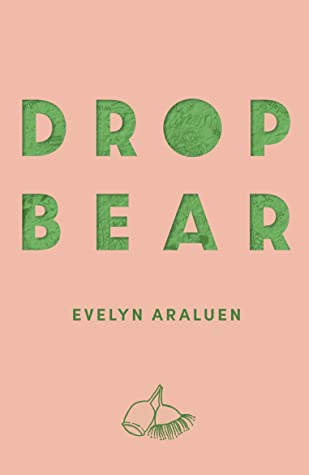
To honour the Prize’s inclusion of poetry collections next year, Christine started by reading from Evelyn Araluen’s poem “Acknowledgement of country” (from Dropbear). It’s a powerful, in-your-face poem that further inspired me to read this collection. (Brona has reviewed it, but doesn’t mention this particular poem.)

What did you know about the prize at the point your book was listed/won?

Mateship with Birds (Courtesy: Pan MacMillan)

Emily, who won the prize in its third year, remembers being excited by the idea behind the prize. Being a debut author, she didn’t know much about the literary landscape that inspired it, but she was amazed by the inequities that the Stella Count had revealed for women writers, across prizes, publishing, and reviewing. She was thrilled to win, but straight after, she found its value being questioned by men who wondered how worthwhile it was to win a prize only open to women! As the panel concurred, these critics didn’t understand the idea of an unequal playing field and its impact.

Carrie, Stella’s inaugural winner, said that she had not been overly aware of discrimination. She’d had good experience with her first novel – Everyman’s rules for scientific living – of the Orange Prize (now the Women’s Prize for Fiction), which was taken very seriously. But, she did experience backlash immediately after winning the Stella, with patronising articles in The Age and The Australian, for example. The latter described her book as a “bush romance”. Had someone like Carey or Winton written the book, she said, it would have been described in terms of exploring “nature and desire”. She said that her approach now would be to talk about history and women’s lack of opportunity and education, about how women have much catching up to do. Stella, she said, has more than broken the glass ceiling, it has “smashed the wall out of the building”.

Claire said that, like Carrie, she’d come to writing late, and had had no connection with the writing community. Being longlisted and then shortlisted for her debut novel was a profound endorsement.

What did winning mean for you?

Emily BItto, The strays, book cover

Christine noted that winning the Stella has a clear impact on sales. Emily agreed saying her book had been out for a year before winning the award, and sold as much in the first two weeks after winning as it had in that whole first year. Claire said after her shortlisting, her book achieved a spike in sales. Christine then mentioned the ongoing work Stella does to keep books in the public eye, over the long haul.

Choose a favourite poem

Christine asked each participant to share a favourite poem:

  • Claire read “White excellence” (Ellen van Neerven’s Throat, which Brona has also reviewed)
  • Carrie commented first that, while poetry collections are new to the prize, verse novels like Lisa Jacobsen’s shortlisted The sunlit zone had been eligible from the beginning. She read a poem dedicated to poet Anne Carson (Maria Takolander’s Trigger warning). She loved its focus on words and the concreteness of language.
  • Emily read “This landscape before me” by, she admitted, her friend, Sarah Holland-Batt. (Available at Poetry Foundation.

Why do you write/Earliest memories of writing

Emily talked about writing newspapers for her mother – from headlines right through to the sports news! As for why she writes, she described herself as an “angsty person” concerned about finding what we can do that’s meaningful. Books give her meaning, and she decided she wanted to contribute to that. Writing feels a worthwhile thing to do. (Amen to that, eh?) She added that winning the Stella was a wonderful endorsement.

Claire G Coleman, Terra nullius

Claire said, simply, that she was impelled to write Terra nullius: it was there and had to be written. In the process, though, she found that writing was something she could do, and that it is, in fact, the only job she’s suited for! She felt that being listed for this and other prizes helped create interest in her, which probably then helped her get her next books published. The prize changed her life in the sense that it told her that she could write.

Carrie, like Emily, sees reading as life-sustaining. She also likes that she can conceal herself in her writing, she can use the novel “to express me”. She believes in the role fiction can play in encouraging empathy: through novels we can “learn what it is to be someone else”. As to whether the prize was life-changing, she said that she was obliged, as a winner, to give lectures at universities. This was challenging as she’d never done it before! She also felt that her success with her first two novels meant people were more open to her later, more difficult book.

At this point, Christine closed the session, reminding us that Stella’s aim is to get women’s writing on everyone’s agenda, and asking us all to “Be a Stella Ambassador”. But of course!

I wouldn’t say I learnt anything earth-shatteringly new. However, through the experience of these quite different writers, I obtained a first-hand sense of what Stella can mean for writers. I also enjoyed getting to know these three a little more – and I loved all four poems that were shared. There’s something about hearing a poem read.

Monday musings on Australian literature: Novelistic re-imaginings

Years ago I read a Guardian article titled “Top 10 novels inspired by Shakespeare”. Written by Sally O’Reilly, it started with “Shakespeare famously customised existing plots when writing his plays, and added to them an acute perception of human experience which gave them universal significance.” I thought, then, that it might be fun to share a few Australian novels that customise or are inspired by existing plots from well-known works. There are many, of course, because it is a popular thing to do, so I just plan to get the ball rolling from some of the books I’ve reviewed here, and then throw it to the rest of you to share those you’ve read, Australian and otherwise.

Janette Turner Hospital, Orpheus lost

When I started thinking about this topic, I immediately thought of relevant books I’ve read over the last couple of decades, like Jane Smiley’s One thousand acres (Shakespeare’s King Lear), Lloyd Jones’ Mr Pip (Dickens’ Great expectations), and, of course, Jean Rhys’ The wide Sargasso Sea (Charlotte Bronte’s Jane Eyre). None of these are Australian, however, but they might clue you into the challenge I had in titling this post, because “re-imaginings” come in many forms. Examples include retelling a story from a different perspective, setting the story in a different place and time, and providing prequels or sequels to a story. Some stick closely to the original story and characters while others are more in the “loosely inspired” or “loosely based on” category. The variations are endless.

Why do writers do this? There’s probably a different answer for every writer, but some reasons do seem to recur. One is the desire to tell a story from a different perspective, such as, for example, a feminist one to redress the problematic views of an earlier time. Another is to bring a story that the writer thinks has something important to say to a modern audience. We don’t always know exactly why writers decide to do this, but, like most readers, I like to have a guess.

And yet, I have to admit that I tend to be anxious about them. Do I know the original, and if not, should I read it first? What if I don’t want to read it first? Should I still read the re-imagining. If I do know the original, will I remember it well enough to understand the author’s intentions? More often than not, it works out fine, whether I’ve read the original or not – but I never learn my lesson, and next time, I go through it all again.

Mirandi Riwoe, The fish girl

Anyhow, here is a random few that I’ve reviewed on my blog. I’m listing them alphabetically by author. I did consider trying to categorise them – but decided that would take me down a rabbit-hole!

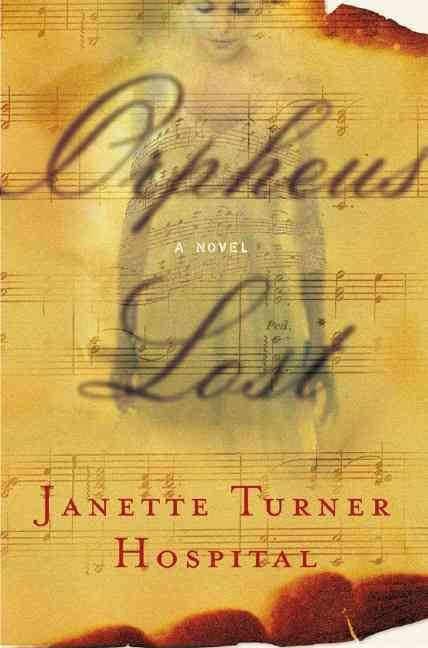
  • Janet Turner Hospital’s Orpheus lost (2007) (my review): reimagines the Orpheus story, with a feminist perspective, making the woman the would-be rescuer.
  • David Malouf’s Ransom (2009) (my review): re-visions the section of the Iliad in which Priam visits Achilles to ask for his son’s body back. Malouf said he wanted to suggest a new kind of human, non-heroic consciousness, by having Priam “do something extraordinary”.
  • Mirandi Riwoe’s The fish girl (2018) (my review): a “post-colonial response” to Somerset Maugham’s short story “The four Dutchmen”. She gives the girl a backstory, and explores it from the perspective of the colonised, particularly colonised young women. She shows that young women were pawns in both the hands of colonial powers and of their own men.
  • Roslyn Russell’s Maria returns: Barbados to Mansfield Park (2014) (my review): an imagined sequel to Jane Austen’s Mansfield Park, in which Russell redeems the banished adulteress Maria Bertram and “runs with” the hints regarding slavery in Austen’s novel.
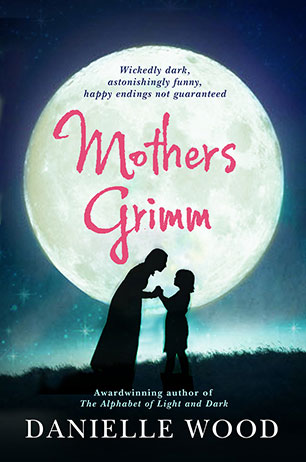
  • Danielle Wood’s Mothers Grimm (2014) (my review): re-visions some Grimm Brothers’ fairytales – “Rapunzel“, “Hansel and Gretel“, “Sleeping Beauty“, and “The Goose Girl“ – to reflect on and question contemporary motherhood.

Geraldine Brooks’ March (2006), which I read before blogging, is another well-known Australian example. She takes the absent father from Little women, Mr March, and creates story about him, focusing on his role in the Civil War.

Danielle Wood, Mothers Grimm, book cover

Not surprisingly, classics (in both senses of the words), myths and fairy-tales feature strongly in these re-imaginings because they provide a springboard that doesn’t have to be explained to the reader. The exception, in my list, is Riwoe’s The fish girl which takes a Somerset Maugham short story. Maugham is well-known, of course, but not necessarily the short story used here. We could, however, call it the exception that proves the rule, in that in the end these works do need to stand on their own, with the original work adding depth for those who know it, rather than being a prerequisite.

What do you think? And, have you read novelistic re-imaginings? Do you like them, and why or why not? We’d love to hear from you.

Six degrees of separation, FROM The lottery TO …

Another month has gone, and we in Canberra, New South Wales and Victoria are still in lockdown. However, with vaccinations proceeding apace, the end is in sight, we hope. On the plus side, it is spring, and the blossoms are out – and daylight savings starts this weekend which I love. I know that for some of you, though, it is autumn. I hope you are having a good one. Meanwhile, let’s get onto our Six Degrees of Separation meme, which, as most of you know, is run by Kate. Check her blog – booksaremyfavouriteandbest – to see how it works.

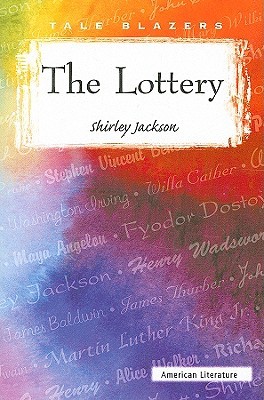
We start, of course, with the book chosen by Kate except that this month it is a short story, Shirley Jackson’s much studied, much anthologised “The lottery”. And, because it is a short story, I did manage to read it (my post).

My first link is an obvious one, another short story with a shocking ending, Kate Chopin’s “Désirèe’s baby” (my review). I’m a big Chopin fan, which started when I read her novel The awakening. Anyhow, our starting short story and this one make powerful statements about human cruelty, and both, coincidentally, start by describing lovely days!

Chopin’s story involves a baby and racism. Another book in which a baby is unwittingly related to brutal, racist behaviour is Nardi Simpson’s Song of the crocodile (my review). It’s a novel by a First Nations Australian, so its ambit extends beyond Chopin’s, but it is this baby who grows up and forces this novel’s shocking denouement.

Book cover

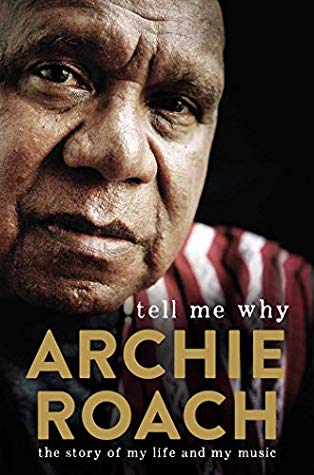
For my next link, I thought I’d move away from grimness, except I then realised that this next book also has racism at its core! However, my link is on the author’s career, because Nardi Simpson had an established singing career before she became a novelist. The author of the book I’m linking to is also a well-recognised First Nations singer, but his book is a memoir, Archie Roach’s Tell me why: The story of my life and my music (my review).

Emma Ayres, Cadence

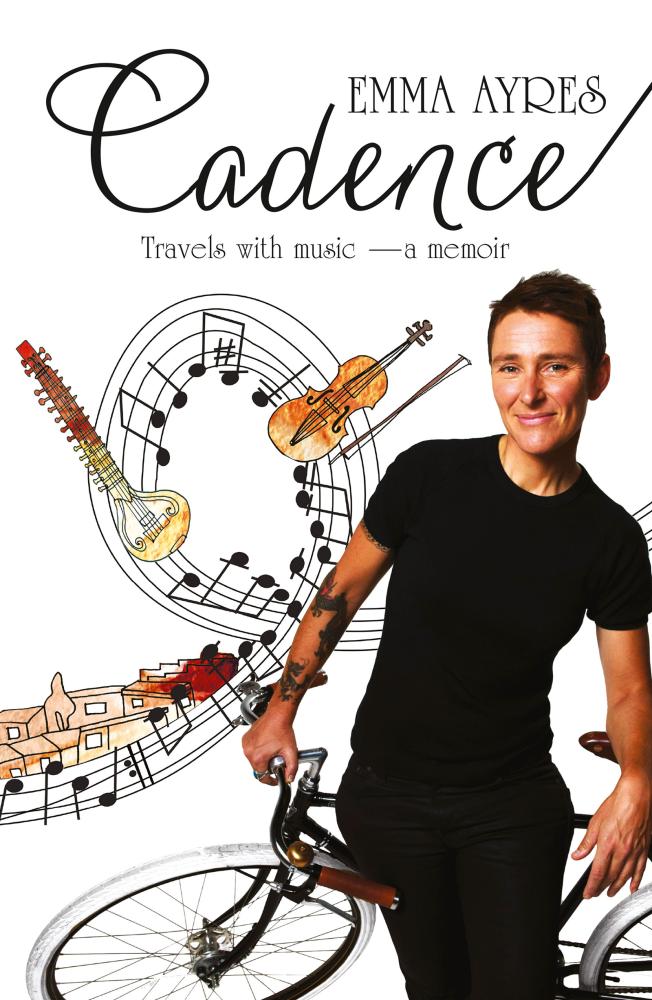
I’m sticking with musical memoirs for my next link. It is a travel memoir by a musician who, bravely to my mind, cycled across Europe and Asia, from England to Hong Kong, with her violin. The book is Emma Ayres’ Cadence: Travels with music (my review).

Sarah Krasnostein, The trauma cleaner

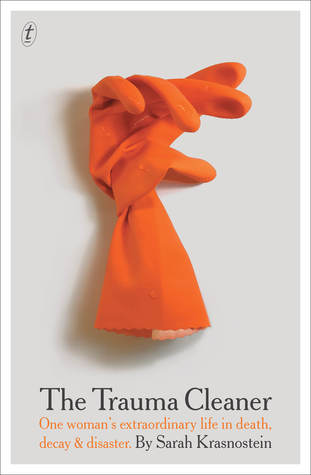
Most Australians know Emma Ayres, as she was a much-loved presenter some years ago on ABC Classic FM. Most of us also know that, after she left that job, she went to Kabul and soon after that transitioned to Eddie Ayres. He wrote about this process in his book Danger music. However, I haven’t read that, but I have read Sarah Krasnostein’s The trauma cleaner (my review), an award-winning biography of a transgender woman, Sandra Pankhurst.

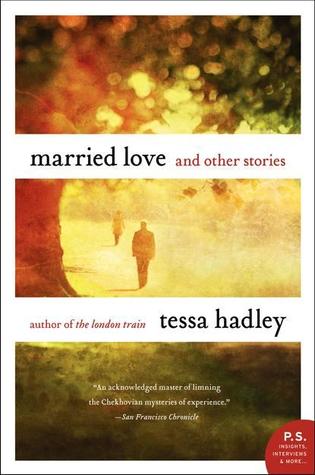
Now, what to end on? I think a short story might be apposite, and there is one that I read back in my first year of blogging that might fit the bill, though, back then, I gave less attention to my short story reviews than I do now. The story is Tessa Hadley’s “Friendly fire” (my post). I’m linking on the protagonists who are two middle-aged women cleaners in an industrial warehouse, Pam who owns the cleaning business and her friend Shelley who is helping her out for the day. The main focus is Shelley, and her thoughts about life and family, particularly about her son who is in the military in Afghanistan, which might give you a clue about the story’s title. I read it online, but it has been published in a collection called Married love, hence the cover I’ve used.

So, this month I have at least come full circle in terms of form. We have also travelled quite a bit, given one of the links is a a travel memoir, and we have, I’ve realised, met a few cleaners, as Nardi Simpson’s novel involves house cleaners and washerwomen. Perhaps, I’m giving myself a hint!

Now, the usual: Have you read “The lottery”? And, regardless, what would you link to it?

Shirley Jackson, The lottery (#Review)

As a lover of short stories, I have wanted to read Shirley Jackson’s “The lottery” for some time. With Kate selecting it as October’s Six Degrees starting work, now seemed the perfect time!

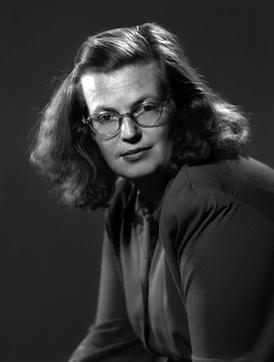
Shirley Jackson (1916-1965) pops up on blogosphere with some consistency, and is clearly well-regarded. Her career spanned two decades and, during that time, as the thorough Wikipedia article says, she wrote six novels, two memoirs, and more than 200 short stories. Her debut novel, The road through the wall, and “The lottery”, were both published in 1948, though she had had short stories published over the preceding decade.

It was “The lottery”, however, which established her reputation – particularly as a master of horror stories. Wikipedia says it resulted in over 300 letters from readers, many “outraged at its conjuring of a dark aspect of human nature”. In the San Francisco Chronicle of July 22, 1948, Jackson responded to persistent queries from her readers about her intentions:

“Explaining just what I had hoped the story to say is very difficult. I suppose I hoped, by setting a particularly brutal ancient rite in the present and in my own village, to shock the story’s readers with a graphic dramatization of the pointless violence and general inhumanity in their own lives.”

Many of you probably know the story, but, just in case, I’m not going to “spoil” it beyond that. I will, however, make a few comments.

I’ll start with Wikipedia’s succinct synopsis: it is about ‘a fictional small town which observes an annual rite known as “the lottery”, in which a member of the community is selected by chance’. It’s a great read, because the build-up is so good and the ending so powerful. If you were not forewarned, you’d have no idea you were reading a “horror” story, because there’s nothing Gothic about the setting, no eeriness, no overt build up of fear even. Instead, there’s the coming together of this village’s 300 people coming for this annual event. It’s summer, “the flowers were blossoming profusely and the grass was richly green”. Idyllic, in other words, or, so we are set up to see it is (or, could be?)

The children are described, then the men and women. It all seems benign, though there are tiny hints of something else, that you may not notice if you’re not expecting it. The emcee of “the lottery” is the ironically named Mr. Summers, who has the “time and energy to devote to civic [my emph] duties”. Many of the names in the story sound normal, but they also carry symbolic weight – Graves, Adams, Delacroix (pointedly, as it turns out, perverted to Dellacroy by the townspeople).

Anyhow, there is a long discussion of the “black box” that is used for the lottery, but, although it is “black”, it sounds quaint and unimportant. No great care is taken of it between lotteries. There’s a bit of camaraderie and joking between the townspeople; there’s confirmation of the formalities; but, slowly tension builds. Mr Summers and the first man to draw from the black box, grin at each other “humorlessly and nervously”. We are now half way through the story, and there’s nervousness among the attendees.

Then, plopped in here, is a little discussion about some villages – because this is not just this village’s tradition – having given up, or talking of giving up, the lottery. However, Old Man Warner (another interesting name), who has been through 77 lotteries, doesn’t approve of change. He sees “nothing but trouble in that”. When you know the end, you wonder what sort of person he is! Certainly not the archetypal dear old man, grandpa to everyone! Meanwhile, anxiety slowly builds, with another townsperson saying to her son, “I wish they’d hurry”.

The “winner”, when identified, doesn’t behave like a winner, which provides another dark hint, but which causes our aforementioned Old Man Warner to pronounce that “people ain’t the way they used to be”.

The final line of the story is shocking, but by then you have worked out what winning means, so it adds an extra layer to the story’s meaning (as you’d expect in a good short story).

You can find in Wikipedia, and elsewhere on the web, all sorts of critical reactions and theories about what it means, but I’d like to return to Jackson’s comment that she intended a “graphic dramatisation of the pointless violence and general inhumanity“. Why do the townspeople accept “the lottery”? What makes some villages give up the ritual and others not? Why do some in this town act with relish and others not? It recalls, for me, Christos Tsiolkas’ The slap. Yes, it’s a novel and a very different story, but I saw it as being fundamentally about the violence that seems to be be lying too near the surface of our so-called civilised society. I’ll leave it at that, but it makes me think, plus ça change.

Image credit: Shirley Jackson, New York City. 1940s. Contact: photography@magnumphotos.com. Low resolution version from Wikipedia, used under Fair Use.

Shirley Jackson
“The lottery”
First published in The New Yorker, June 26, 1948

Avalailable online at The New Yorker.

Maggie O’Farrell, Hamnet (#BookReview)

Book cover

Not unusually, I’m late to this book that was all the talk in 2020 – and, I may not have read it at all if it hadn’t been for my reading group. I’m talking, as you will have guessed from the post title, of Maggie O’Farrell’s Hamnet.

As most of you will know, Hamnet’s plot draws from the life of Shakespeare (never named in the novel) and Anne Hathaway, and the death of their son Hamnet at the age of 11. There was an older sister, Susanna, and Hamnet’s twin sister, Judith. O’Farrell explains her interest in her Author’s Note:

Lastly, it is not known why Hamnet Shakespeare died: his burial is listed but not the cause of his death. The Black Death or ‘pestilence’, as it would have been known in the late sixteenth century, is not mentioned once by Shakespeare, in any of his plays or poetry. I have always wondered about this absence and its possible significance; this novel is the result of my idle speculation.

Because this book has been well-covered already online, I’m going to take a slightly different tack with this post, and focus on a couple of questions.

“She herself might tell a different story”

With all books, but particularly with historical fiction, one of my questions is, why did the author choose to write their story. O’Farrell partly answers it in her Author’s note. However, there is also, surely, a feminist reading, because, although the novel is titled Hamnet, it is primarily about his mother Agnes (as Anne is named in Shakespeare’s will). Early in the novel, O’Farrell writes “This is the story, the myth of Agnes’s childhood. She herself might tell a different story”.

The thing is, we don’t know a lot about Agnes Hathaway which makes her ripe for historical fiction. What we do know is that women’s stories were – and too often still are – rarely told, but that that doesn’t mean their lives were unimportant. It means that importance hasn’t been placed on them. Whoever Agnes really was, O’Farrell has created a wonderful, eccentric character, who is perceptive, warm, independently-minded, a little flawed but engaged in the life of her family and community. She is fun to read about.

Besides telling a story about her, though, O’Farrell also presents, through her, a story about grief, and this, for me, was one of the strongest aspects of the novel. Agnes’ thoughts about burying her son, her astonishment that people can complain about their children, her utter discombobulation were so real:

Agnes is not the person she used to be. She is utterly changed. She can recall being someone who felt sure of life and what it would hold for her …

This person is now lost to her for ever. She is someone adrift in her life, who doesn’t recognise it. She is unmoored, at a loss. … Small things undo her. Nothing is certain any more.

So real …

Hamlet?

Warning: Spoiler of sorts

Given the novel is titled for Hamnet, rather than for its main protagonist, Agnes, it’s worth considering why, and this leads us to the play Hamlet. The novel ends with Agnes attending a performance of her husband’s play, which confirms the significance of this play to the novel. The epigraph to the novel’s second part is a quote from Hamlet (V:ii): “Thou livest;/ . . . draw thy breath in pain,/ To tell my story”. But, Hamlet could scarcely be seen to be Hamnet’s story, though I did have a little laugh at the point in the novel where Hamnet chooses to die:

They cannot both live: he sees this and she sees this. There is not enough life, enough air, enough blood for both of them. Perhaps there never was. And if either of them is to live, it must be her. He wills it. He grips the sheet, tight, in both hands. He, Hamnet, decrees it. It shall be.

Eleven-year-old Hamnet seems, here, to be far more decisive than his namesake who is known for his prevarication. This, however, is not what we are expected to take away from the novel I’m sure!

So, what else? Well, there’s the grief theme, which Hamlet can be seen to “resolve” in the novel. Agnes, devastated after her son’s death, can’t understand her husband returning to work – and writing comedies:

His company are having a great success with a new comedy. They took it to the Palace and the word was that the Queen was much diverted by it.

There is a silence. Judith looks from her mother, to her sister, to the letter. 

A comedy? her mother asks.

She is even more devastated though to learn that her husband has gone on to write a play using their son’s name – Hamnet and Hamlet being interchangeable – so she goes to London to confront him. What happens is something else. Initially, she feels eviscerated:

How could he thieve this name, then strip and flense it of all it embodies, discarding the very life it once contained? 

But then, as she sees the ghost father and living son, she starts to see something else:

He has, Agnes sees, done what any father would wish to do, to exchange his child’s suffering for his own, to take his place, to offer himself up in his child’s stead so that the boy might live.

My reading group discussed the question of the play a little, though we didn’t come to any particular conclusion, which I rather like. However, we did talk about how Shakespeare wrote his darkest, strongest plays, including the four great tragedies, after Hamnet’s death, which suggests that his son’s death had a big impact on him. A member also raised the play’s existential nature, seeing it exploring the fragility of life – “to be or not to be” – and how you go on in the face of bleakness.

Now, I could go on and talk about the style (language, use of present tense, symbolism), the decision not to name Shakespeare, and the dual storyline structure, as I normally would, but I’m sure they’ve been discussed elsewhere, so I’m leaving it this time. There were aspects of the novel that I question, but the truth is that I fell for Agnes and her story.

So, I’m going to leave you with two quotes, one from the husband, one from the wife.

It is so tenuous, so fragile, the life of the playhouses. He often thinks that, more than anything, it is like the embroidery on his father’s gloves: only the beautiful shows, only the smallest part, while underneath is a cross-hatching of labour and skill and frustration and sweat. 

Gardens don’t stand still: they are always in flux. 

These relate to their spheres of activity, but they also say something about life, don’t you think?

Maggie O’Farrell
Hamnet
London: Tinder Press, 2020
310pp.
eISBN: 9781472223814