Sara Dowse, West Block (#BookReview)

The decision to republish, last year, Sara Dowse’s pioneering 1983 novel, West Block, was prescient. Think about this. In last weekend’s The Saturday Paper (14 August 2021), journalist Karen Middleton wrote about an issue involving the Department of Prime Minister and Cabinet. In her article, she shares some comments made about this Department by law professor Anne Twomey. Twomey, Middleton writes, called

the department “disorganised, shambolic and disrespectful of the legal process”.

“In days gone by, the department was full of extremely competent people – the traditional mandarins,” she says. “Look what’s coming out of it now.”

Now, this is the Department Sara Dowse worked in during the 1970s. It was housed in a wonderful old Canberra building called West Block, and it’s this building, and Dowse’s work there, which inspired her eponymous novel. I read it back in the 1980s, and loved it, but have always wanted to read it again. How would it stack up – as a novel, and as a document about Canberra and the public service – decades later? Having now reread it, I think it stacks up very well, and clearly so did For Pity Sake Publishing.

This new edition is prefaced by an Author’s Note, in which Dowse provides a background to the novel, including her career trajectory which inspired it. Dowse headed up the Whitlam government’s new Women’s Affairs Section, from 1974 to 1977. Dowse resigned partly in protest at the section’s removal from the Department by the Fraser Government, but partly also because what she really wanted to do was write.

But, what to write about? She was American-born, living in Australia at a time when Australian women’s writing was flowering – with Australian stories. Although she’d been in Australia since 1958, it was her experience working in West Block, that gave her such a story:

The building itself galvanised me. The minute I walked into it, I wanted to write its story, but now that I was in a position to, I was up against the prejudice against Canberra, most particularly, Canberra’s public service.

As a Canberran and a public servant myself – albeit a librarian/archivist rather than a bureaucrat – I know whereof she speaks.

‘Nuff said, so I’ll return to my opening description of the novel as “pioneering”. Some of you may have wondered about that call. First, few novels had been set, to then anyhow, in Canberra. There’d been some, like M. Barnard Eldershaw’s Plaque with laurel, but not many. That has changed, since, due partly in fact to Canberra’s group of Seven Writers, of which Dowse was a member. Second, not many novels had been written about the workings of the public service, particularly Australia’s. And finally, Dowse’s writing, particularly the structure she used for her novel, was innovative. Dowse said in the book’s zoom launch I attended last year, that one of her inspirations was John Dos Passos, and how he can tell a big story through overlapping individual stories.

All this makes West Block an excellent and meaningful read, not just for Canberrans, but for Australians and readers of thoughtful novels anywhere.

Servants of a nation (Harland)

With that long preamble, let’s now get to the book. Set in 1977, it tells the intersecting stories of five public servants: conservative, “sober-faced” bureaucrat George Harland; passionate, progressive Henry Beeker; socially conscious, dedicated but lonely Catherine Duffy; young, up and coming economist Jonathan Roe; and the femocrat, Women’s Equality Branch head, Cassie Armstrong, whose story bookends the novel, making her its main and unifying character. While each character’s story occupies a separate chapter, giving each centre stage in turn, they do occasionally appear in each other’s stories, and they all work in West Block to Departmental head, Deasey.

Through these characters we see the workings of government, and here, as a plus, we also gain insight into the issues of the time which, besides women’s affairs, included Australia’s uranium policy and Vietnam. Dowse uses these big issues to show what happens behind the scenes – trips overseas to negotiate with other governments, the IDCs (interdepartmental committees) and argy-bargying between departments as public servants try to find compromise between their various political masters, relationships between politicians and bureaucrats. Underpinning these is the daily life of public servants as they navigate the ethics of public service and their career ambitions alongside their jobs. We see tensions between different perspectives and approaches – the sober conservatives like Harland versus the crusading progressives like Beeker – of service. Dowse gives both their due.

This sounds dry, but it’s not because Dowse infuses her story with humanity. Her characters are not just public servants, but human beings with lives, and feelings. At the launch I attended, interviewer Seminara said she loved the characters for their commitment to public interest and because they are “admirable as characters, flawed as people.” Harland struggles to understand his daughter who has left her husband and children; Catherine confronts the ethics of personal relationships that intrude into work life; and Jonathan reacts poorly to his girlfriend’s unplanned pregnancy, for example.

Cassie, the main character, is not Dowse but is clearly inspired by her. The angst is palpable as she and her staff struggle to get their voices heard and women’s agenda on the table. There is a telling scene with Deasey that says it all. She presents him with her Branch’s thorough report into women’s needs cross-government. He’s not impressed:

‘Seriously now. We’ve had enough of your fingers poking in every pie. Causes no end of trouble. I can’t allow it, do you hear? It’s no way to run a department. So, be a reasonable girl. Pick out one, two, maybe three things to concentrate on.’ He stopped for breath. ‘Discrimination legislation, for instance.

“Girl” eh! Would he have said to Harland, “be a sensible boy”? I reckon not.

There are two more crucial characters in this novel, Canberra and West Block. They breathe life into and enrich the read immensely, but this is getting long, so watch for a Delicious Descriptions in a couple of days

While West Block’s style and structure is not as unusual as it was in the 1980s, it will likely still challenge those who like straightforward chronological narratives with deeply interacting characters. For me, though, there is a overarching narrative arc concerning Cassie’s devastated realisation that she is not going to effect the change for women she’d envisaged – and I enjoyed every beautifully-delineated character.

Ultimately, West Block pays tribute to the public servants who understand that their role is to be “servants of a nation” not of their political masters. This is the role of the public service, no matter how much its political masters would like to make it otherwise. Unfortunately, this fundamental principle has been increasingly tarnished over recent decades, which makes re-publication of this novel, now, all the more relevant and, dare I say, necessary.

Challenge logo

Sara Dowse
West Block
Book designer: Barbie Robinson
For Pity Sake Publishing, 2020 (New Edition, Orig. ed. 1983)
348pp.
ISBN: 9780648565789

Review copy courtesy For Pity Sake Publishing and the author

Monday musings on Australian literature: Supporting genres, 3: Biography

Time for another in my little Monday Musings sub-series on “supporting” genres. I’ve chosen Biography for this one, since the 2021 National Biography Award winner will be announced this month.

However, I have written quite a bit about Australian biography before:

David Marr, NLA Seymour Lecture, Sept 2016

Given all this, you might think that this post is superfluous, but I figured that it’s helpful to put all these together in one post as a resource for myself (and maybe for others too?) These posts provide significance evidence for the support of and interest in biography in Australia – and they mean that the rest of this post will be a bit different to the first two “supporting genre” posts.

Definition

You may have noticed that I described the Seymour Biography Lecture as “devoted to life-writing” – and here’s the rub, because there is quite a blurring of definitions when we talk about “biography” these days. Traditionally, biography has been seen as a detailed description of a person’s life written by a third person. Autobiography, on the other hand, is the story of a person’s life, written by that person. Then there’s memoir which focuses on a particular aspect or period of a person’s life, and is written, again, by that person. All of these come under the banner of “life-writing”. The problem is that, for example, the Seymour Biography Award is called “biography” but the lectures are, in fact, broader. Indeed, the first lecture we went to was given by Robert Drewe who has written, and who thus talked about, memoir.

This is fine but the nomenclature is strange, don’t you think? Even our National Biography Award is, actually, a national life writing award. It “celebrates excellence in biography, autobiography and memoir writing” says the Award website. Interestingly, though, while all these forms feature regularly in the shortlists, traditional biographies have tended to be the winners. A recent exception was Behrouz Boochani’s No friend but the mountains.

Life-writing now

Life-writing is big business. Search online and you will find many companies offering to help you write your life story, or to write your life story for you. You will also find courses on life-writing. Daughter Gums did one a few years ago at the ACT Writers Centre taught by memoirist Benjamin Law.

The Fellowship of Australian Writers NSW (FAWNSW) has an excellent page on the subject written by Dr Rae Luckie. They quote from La Trobe University’s description of its Unit for Studies in Biography and Autobiography.

Life writing is now one of the most dynamic and rapidly developing fields of international scholarship. It includes not just biography and autobiography, but also diaries, journals, letters, and the use of life narrative in various disciplines: history, anthropology, sociology, politics, business and leadership studies, sport, and others… In addition to its high academic profile, life writing generates great interest among the general public: works of biography and autobiography sell in vast numbers.

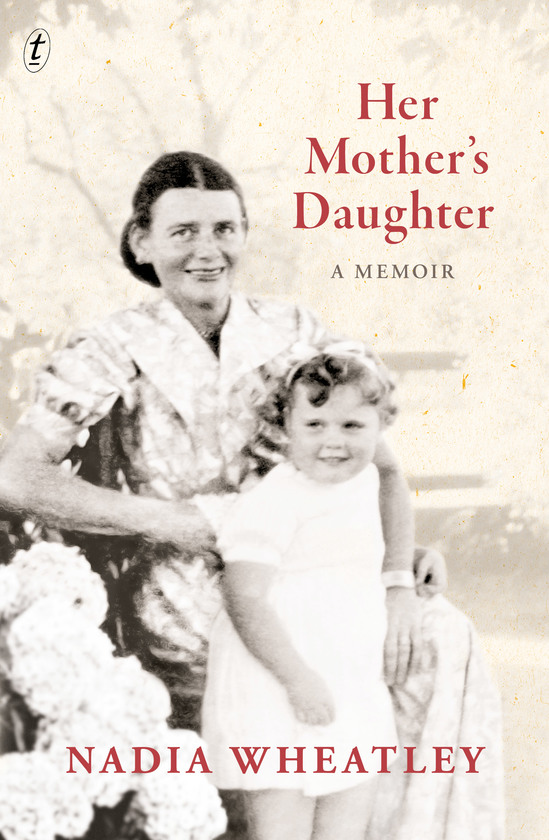
Nadia Wheatley, Her mother's daughter

Luckie talks about changes in the field, saying that “writers whose work is included under the umbrella of ‘life writing’ have broken traditional auto/biographical boundaries”. She mentions works I read before blogging, like Inga Clendinnen’s Tiger’s eye, Helen Garner’s Joe Cinque’s consolation, and, even, Robert Dessaix’s “autobiographical novel” Night letters! While I enjoy the traditional biography, and have reviewed several here, I am not averse to reading writers who play with the form, like the hybrid-biography-memoirs I’ve reviewed (such as Nadia Wheatley’s Her mother’s daughter and Gabrielle Carey’s Moving among strangers)

The biggest change, though, is probably that academic historians are now embracing the form in a way they hadn’t previously. If you are interested in a discussion of the topic, check out this in the first issue of the Australian Journal of Biography and History. The authors comment on the fact that “there are now prizes to encourage biographical writing, lectures that feature prominent biographers, biography research centres and courses in universities, public conferences and so on.” Another interesting point they make is the significant role biography played in feminist history.

Biography – and life-writing – are now serious, as well as, marketable business. You heard it here!

Zeitgeist, or Serendipity?

Book cover

And now for something completely different. It concerns those funny coincidences which happen in the literary firmament, like when David Lodge’s Author, author and Colm Tóibín’s The master, which are novels about Henry James, both came out in 2004. What was that about?

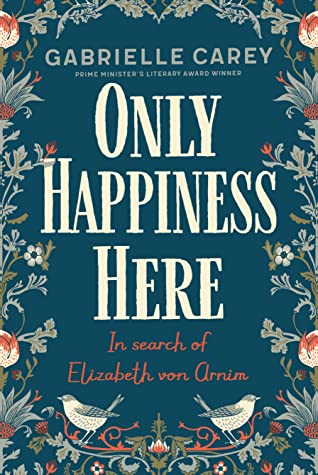
Well, I’ve noticed another strange coincidence: the recent publication of Jennifer Walker’s Elizabeth of the German Garden: A biography of Elizabeth Von Arnim (2017), Gabrielle Carey’s Only happiness here: In search of Elizabeth von Arnim (2020) and Joyce Morgan’s The Countess from Kirribilli: The mysterious and free-spirited literary sensation who beguiled the world (2021). Many of you, I know, have heard of Elizabeth von Arnim. Her best-known works are the satirically humorous Elizabeth and her German Garden and the popular Enchanted April which was made into a successful feature film starring many of our favourite grand dames of English theatre. For those of you who don’t know her, though, she’s a British novelist who was born in Sydney (Kirribilli) in 1866, but who moved to England with her family when she was three and never lived here again. Her connection with Australia is therefore tenuous, but she was a wonderful character who moved among the biggest literary movers and shakers of her time. I devoured many of her novels, and a memoir, back in the 80s and 90s when Virago published her. Why this flurry of interest now? (Not that I disagree.)

Do you read biography? If so, care to share some favourites?

Previous supporting genre posts: 1. Historical fiction; 2. Short stories

Claudine Jacques, The Blue Cross/La Croix bleue (#Review, #WITmonth)

I haven’t taken part in Women in Translation month (#WITmonth) before but decided to dip my toes in this year with a translated short story. I hoped to find one online and I did, “The Blue Cross” (or, in its original French, “La Croix bleue”) by New Caledonian writer Claudine Jacques. Coincidentally, I found it was translated by Patricia Worth who now, apparently, lives in Canberra. She translated it as part of her Master of Translation Studies. It was published in The AALITRA* Review, with the English presented alongside the French.

I didn’t know Claudine Jacques, but Worth provides some information on her website. Jacques was born in Belfort, France, moving to New Caledonia as a sixteen-year-old with her parents. She’s lived there ever since. She ran a vocational training centre, before establishing a publishing company, but she now, says Worth,”devotes herself almost exclusively to writing”. She and other authors founded the Association des Écrivains de la Nouvelle-Calédonie (New Caledonian Society of Authors) in 1997.

Literary Bureau Trames adds that Jacques lives “in the bush”, and has run the local village library for 20 years. She also runs the Boulouparis comic strip festival, is involved in writing workshops for schoolchildren and in an initiative of the Association Écrire en Océanie (Writing in Oceania) which has identified talent in young Caledonians.

Worth says she finds Jacques’ writing “compelling” and is particularly interested in “the social problems laid out in her stories”. She “was surprised to find numerous similarities between the histories of Australia and New Caledonia”. Her favourite Jacques novel is Cœurs barbelés, which is about the “painful experiences of white Caledonians and the indigenous Kanak people trying to live harmoniously on an island”.

Worth has translated several of Jacques’ short stories, with three available online. “The Blue Cross” is the first I found. It comes from a collection, Le cri de l’acacia. Google translate summarised the description I found: “The cry of the acacia or all those cries that you can’t hear! Because they would be too strong, too present, too throbbing … hear the life that endures in banal tragedies or squeaky comedies, universal deep down in the intimate and the tiny, the grandiose and the derisory. All these crumpled fates are those of everyday heroes” who are the “valiant men and intrepid women with extraordinary courage … in the face of violence, alcohol, pornography and the addiction of their own lives”.

“The Blue Cross”** certainly fits this description. Its story is one of those universal, banal, domestic tragedies, one with alcohol at its centre, and a courageous woman who does the right thing. Jéhovana, the woman and wife at the centre of the story, is married to an alcoholic who is no longer fully employed due to his drinking. She has tried to maintain appearances:

She wasn’t used to making certain judgements and, out of decency, put them off. What would the neighbours and the family say, seeing her speaking and acting for him? Yet at the last family meeting it was to her that they spoke; she had given her opinion while stating plainly that it was for both of them and that she was doing it under her husband’s control, but it seemed to her that no one had been fooled.

She’s behaving as a widow would and wonders if she’d be better off if it were true

freed from all these constraints, this waiting, this shouting, these beatings, this fetid washing stinking of vomit and alcohol, and especially from the shame that she and her children bore! 

For his part, he is conflicted. She is no longer interested in him, “had banished him” from her bed.

Now and then he forced himself on her, he had the right, she was his wife, but he had less and less strength and his desire for her had softened with time. And then he didn’t like to see her sad preoccupied look; she was so happy at the beginning of their marriage but now would often cry. How could he continue to desire a woman who cries?

It all comes to a head at their son’s Communion celebration. She begged him to not drink, but, well, of course he’s an alcoholic and is unable to keep his promise. What happens next is not particularly surprising, but the resolution is, perhaps, though, then again, perhaps not. The story certainly conveys, without telling, the complexity of situations like this – particularly for women.

It’s hard to comment on the writing, given I’m reading a translation, but I enjoyed reading the story. It is told well, giving us just enough information for us to get a sense of the two main protagonists, and just enough description to set the scene for us. The most interesting thing about the choices the author has made is to name the woman, Jéhovana, but not the man. Does this suggest that he stands for all such men, while Jéhovana’s situation and decisions are individual? And Jéhovana’s name? I don’t know it, but it does bring to mind the God, Jehovah. Does this give us a hint regarding her character?

In all, an interesting story. I can see why Worth likes Jacques’ work.

Notes on the translation

Worth prefaces her transaction with some comments. She says that she left in the text “culture-specific expressions – from New Caledonian-French, Wallisian and Polynesian languages – whose meanings were clear, feeling this added “richness to the story in the way Jacques allowed them to enrich her French”. That makes sense. She includes a glossary, as Jacques did. In some cases, however, she expanded where a French expression has a specific cultural meaning in New Caledonia.

I can’t really comment on the quality of the translation, as my French isn’t up to that, but I did notice that Worth changed some of Jacques’ punctuation. For example, there’s one long sentence in French, with just commas separating the different parts, that Worth breaks into two sentences, and uses a semi-colon. It looks sensible to me, but I wonder if it says something about French style versus English style. Does anyone have any ideas on that?

* AALITRA: The Australian Association for Literary Translation.

** The Blue Cross: an international organisation “engaged in the prevention, treatment and after care of problems related to alcohol and other drugs”.

Claudine Jacques
“The Blue Cross” (“La Croix blue”) from Le cri de l’acacia (2007)
(trans. Patricia Worth)
in The AALITRA Review Vol. 0 No. 2 (2010)

Avalailable online at LaTrobe University’s Open Journal Systems site.

Bill curates: Mary Church Terrell’s What it means to be coloured …

Bill Curates is an occasional series where I delve into Sue’s vast archive, stretching back to May 2009, and choose a post for us to revisit. In 2011, when today’s post was first published, Barack Obama was in his first term as President and then Senate Majority Leader, Republican Mitch McConnell, was pursuing a scorched earth policy of refusing to even allow Democrat legislation to be debated, with the stated aim of making Obama a one-termer. Obama got a second term, but then there was Trump, and racism in America seemed to take a giant step back into the light, giving new relevance to this talk from 1907.

This is the last Bill Curates post he sent me a few months ago. I intended to publish it then, but life, reading and blogging got busy, and I tucked this away in my drafts folder for another time. I think now is the time to post it and to thank Bill for the wonderful support he gave my blog through my dark year. It was so appreciated. Thank you Bill, you helped save my sanity.

______________________________

My original post titled: Mary Church Terrell, What it means to be colored in the capital of the United States

Mary Church Terrell. Public Domain, National Parks Service, via Wikipedia

I heard a radio interview this week with Jane Elliott of the brown-eye-blue-eye experiment fame, and she suggested that racism is still an issue  in the USA (through the efforts of a vocal minority) and is best demonstrated by the determination in certain quarters that Barack Obama will not win a second term*. It’s therefore apposite (perhaps) that my first Library of America post this year be on last week’s offering, “What it means to be colored in the capital of the United States” by Mary Church Terrell (1863-1954). This essay originated, according to LOA’s introductory notes, in a talk Terrell gave at a Washington women’s club in 1906. It was then published anonymously, LOA says, in The Independent, in 1907.

Now, I’d never heard of Terrell, but she sounds like one amazing woman. Not only did she live an impressive-for-the-times long life, but she had significant achievements, including being, it is believed, the first black woman to be appointed to a Board of Education (in 1895). She also helped found the National Association of Colored Women. On a slightly different tack, she was a long-time friend of H.G. Wells. Interesting woman, eh?

I have a few reasons for being interested in this essay, besides Jane Elliott’s comment. I lived in the DC area – in Northern Virginia – for two years in the early-mid 1980s and was surprised by some of my own experiences regarding race there. And, as a teen in the 1960s and early 1970s, I was aware of and fascinated by the Civil Rights movement in the USA. I was surprised but thrilled to hear, late last year, an audio version of John Howard Griffin‘s book, Black like me, that I read and loved back in those days.

But enough background. To the essay… I’ll start by saying that I’m not surprised that it began as a talk, because it seemed to ramble a bit. However, as I read on, some structure did start to appear. She starts by listing the various areas in which she, as a black woman, was (or would have been if she’d tried) discriminated against in the national capital. These include finding a boarding house and a place to eat, being able to use public transport, finding non-menial employment, being able to attend the theatre or a white church, and gaining an education. She introduces her section on transport as follows:

As a colored woman I cannot visit the tomb of the Father of this country, which owns its very existence to the love of freedom in the human heart and which stands for equal opportunity for all, without being forced to sit in the Jim Crow section of an electric car …

The irony here is not subtle – but she’s in the business of education where subtlety would not get her far!

She then returns to many of these issues – and this is where I started to wonder about her structure – but what she does is move from introducing the issues by using herself as an example to exploring each one using real examples of people she knows or has heard of. She describes, for example, how employers might be willing to employ a skilled black person, but are lobbied by other staff and threatened with boycotts by clients and so take the easy path of firing (or not hiring) the black person in favour of a white person. In one case the employer is  a Jew,

… and I felt that it was particularly cruel, unnatural and cold-blooded for the representative of one oppressed and persecuted race to deal so harshly and unjustly with a member of another.

You can guess why, in 1907, this was published anonymously!

Anyhow, I won’t repeat all the examples she provides to demonstrate the extent of prejudice at play, because you can read the essay yourself. I will simply end with her conclusion:

… surely nowhere in the world do oppression and persecution based solely on the color of the skin appear more hateful and hideous than in the capital of the United States, because the chasm between the principles upon which this Government was founded, in which it still professes to believe, and those which are daily practiced under the protection of the flag, yawns so wide and deep.

Some 100 or so years later, the US sees itself as the leader of the free world and yet it seems that this chasm is still rather wide. What are the chances that it will completely close one day?

* Please note that this is not a holier-than-thou post. We Aussies have our own problems with racism and prejudice, and so I am not about to throw stones at anyone else.

___________________________

I love that Bill decided to choose a non-Australian post for this BC. It’s so depressing to think that no improvements seem to have been made in the decade since I wrote this – there, or I fear in most countries. Certainly, statistics coming out here in Australia are showing no improvement in important measures, like life expectancy and incarceration. Indeed there’s been some sliding. This is not good enough.

Thoughts?

Monday musings on Australian literature: Poetry Month 2021

I have posted on World Poetry Day, which occurs in March, several times in recent years. And I have written about Australian poetry various times, including about the Red Room Company (or, Red Room Poetry). Their vision is very simple: “to make poetry in meaningful ways”. They have initiated and supported various projects over the years, and have now come up with a new one, Poetry Month. It seems the perfect topic for another Monday Musings on poetry in Australia.

Many of you are probably aware that the US has various months dedicated to literary/humanities/justice issues, like Black History Month in February. One of these is their National Poetry Month which has been going now since 1996. I’ve often thought it would be good for Australia to emulate some of these. We do have NAIDOC Week, of course, but that could be a month, eh? Anyhow, now Red Room has initiated a Poetry Month which is exciting:

Our goal is to increase access, awareness, value and visibility of poetry in all its forms and for all audiences. The inaugural Poetry Month will be held during August 2021 with the aim of an ongoing annual celebration.

What are they doing?

A lot, in fact. They say that they have

an electrifying lineup of poetic collaborations, daily poems and writing prompts, online workshops, poetic residencies and live to live-streamed showcases, designed to engage everyone – from veteran poetry lovers to the (for now!) uninitiated.

There is a calendar. They have 8 poetry ambassadors, who are an eclectic and appropriately diverse bunch: Yasmin Abdel-Magied, Tenzin Choegyal, Peter FitzSimons, Dr Karl Kruszelnicki, Stephen Oliver, Grace Tame, Megan Wilding.

My love of reading and writing poetry is guided by a lifelong attraction to the seemingly simple and unadorned.

~ Tony Birch

Specific events are …

  • 30in30 daily poetry commissions: every day there are/will be “new original text/video poems, poet reflections and writing prompts from some of the country’s leading poets, authors, spoken word artists and playwrights”. They can be accessed on the site, and on social media (with the hashtag #30in30). Today, for example, there’s a 2-minute video from First Nations author, Tony Birch, on what poetry means to him. He talks of poems that can have new meanings each time you read them. 30in30 will include commissions from their larger Fair Trade project which involved First Nations poets from around the world.
  • Line Break: a weekly online show, on Tuesdays through August, 7pm AEST, on Facebook and YouTube, providing previews from feature poets, publishers, spoken word artists, and musicians, and more.
  • Poets in Residence: a program, supported by City of Sydney (how great is that). The poets were to be located at Green Square Library “for a period of writing, reading and performing poetry on site, engaging the general public in various ways and showcasing COS library collections”. Unfortunately, Sydney’s current lockdown has forced the postponement of this.
  • Showcases: a “raft” of live and online events across the country, including the inaugural Poetry Month Gala supported by The Wheeler Centre. Click on the Showcases link to see events from, indeed, around the country, including in South Australia and Western Australia.
  • Workshops: weekly online workshops, on Wednesday nights 7-9pm, via Zoom, catering “for all poets at all levels … anywhere in Australia”, with the topics being “stripping poetry back, breath and beatboxing, the intersection of poetry and comedy, and a special older emerging voices workshop”. They suggest a donation of $10. The workshop leaders are Sarah Temporal, Hope One, Vidya Rajan and Tony Birch.

What an exciting-sounding and diverse program.

Here is a taster … Australian of the Year, Grace Tame, with her strong 30in30 contribution, “Hard pressed”.

A little value add from me …

If you are looking for contemporary Australian poetry, you could start with two independent publishers:

Ali Cobby Eckermann, Inside my mother
  • Giramondo, which published Jonathan Shaw’s chapbook that I reviewed recently). They have also published Ali Cobby Eckermann, Jennifer Maiden, Gerald Murnane, Gig Ryan, Fiona Wright, and so many more known and unknown to me.
  • Pitt Street Poetry, which published Lesley Lebkowicz’s The Petrov poems (my review) and Melinda Smith’s Drag down to unlock or place an emergency call, which won the 2014 Prime Minister’s Literary Award for poetry. They have also published Eileen Chong, John Foulcher, Peter Goldsworthy, Geoff Page, and Chris Wallace-Crabbe, to name some of the better known (to me) from their stable.

There is also the Australian Poetry Library, about which I’ve written before. It now contains, the website says, “tens of thousands of poems from hundreds of Australian poets”. You can read poems free online, but if you want to download and print poems, there is “a small fee, part of which is returned to the poets via CAL, the Copyright Agency Limited”. This resource is particularly geared to teaching poetry, but is available to anyone.

Lesley Lebkowicz, The Petrov Poems

If you are looking for Australian bloggers who write about poetry, try Jonathan Shaw at Me fail? I fly. This link will take you to his poetry tagged posts, of which there is now a substantial number. Also, blogger Brona (This Reading Life) is planning to support the month, so if you don’t already subscribe to her blog, do check her out if you are interested in poetry and/or in what Red Room is trying to do for Australian poetry.

Finally, you can also find poetry reviews in the Australian Women Writers database.

And now my question: do you have a favourite poem to share with us? (And do you, like Tony Birch, go back to it again and again, and find something different each time?)

Six degrees of separation, FROM Postcards from the edge TO …

I love August. It’s still winter but we can see the light at the end of the tunnel, and when I say “light” I mean it literally as suddenly, it seems, we start to see the lengthening days. We also know that the first spring blossoms are about to give us joy. These are pluses because in fact August, September and October here can have some really cold days with winds coming off the snow … but summer! It’s not far off! Now though, I’ll get onto our Six Degrees of Separation meme, which, as most of you know is run by Kate, and explained on her blog – booksaremyfavouriteandbest.

The first rule, of course, is that Kate sets our starting book. This month it’s a book I’ve not read, though it’s been around for a long time, Carrie Fisher’s Postcards from the edge, which was published in 1987. For some reason, I’ve always thought it was a memoir, but it’s actually fiction, albeit semi-autobiographical. I’m sure I don’t need to tell you who Carrie Fisher is, so I’ll just move on to my next link.

Helen Garner, Postcards from Surfers

I can’t resist going for the obvious this time – and linking on the title – because it gives me an opportunity to share a short story collection from a favourite author, Helen Garner’s Postcards from Surfers (my review). I could cheekily suggest it’s a double link because, like much of Garner’s fiction, this collection has autobiographical elements.

When I review short story collections, I often comment on the title, because some are given an original title while others are titled for one of the stories in the collection. Garner’s collection is one of the latter, and it is on this that I am going to link, and go to Adam Thompson’s Born into this (my review). The titular story is perfect for the collection because the stories are all about the lives First Australians are born into.

Cate Kennedy, Australian Love Stories cover

It was at this point of my research for this Six Degrees that I decided to focus on short stories, so all my links will be short stories. For the next link, I’m delving into the collection. One of the bolder stories in Born into this is titled “Honey”. One of my favourite, and cheekiest stories in the Australian love stories anthology edited by Cate Kennedy (my review) is Carmel Bird’s “Where honey meets the air”.

Next I’m linking on form. By this I mean that Australian love stories is an anthology of stories by different writers versus one writer’s collection as we’ve had to this point. My next link then is to another anthology, Love on the road 2015: Twelve more tales of love and travel edited by Sam Tranum and Lois Kapila (my review). The eagle-eyed among you will have spotted another double link, this time on the theme – love.

Book cover

Love on the road was published in Dublin and contains stories from around the world, so we are going to stay overseas. However, just in one place, Mumbai, and one writer, Jayant Kaikini’s No presents please (my review) which was published in Australia by Scribe. It’s so good to see small Australian publishers bringing books like this to our shores.

Penguin collection, translated by Garnett, book cover

My last link is to a single short story, Anton Chekhov’s classic The lady with the dog (my review). Can you guess what the link is? I’ll give you some marks if you say because it’s set overseas, but I chose this particular overseas-set story because, like Jayant Kaikini’s collection, I read it in translation!

I know some of my readers here aren’t short story lovers so these links won’t thrill them much, but for the rest of you, I hope you see some collections or anthologies that you know or that appeal to you. I did my best to take us a bit around the world.

Now, the usual: Have you read Postcards from the edge? And, regardless, what would you link to?

Queensland Literary Awards 2021 shortlist announced

I haven’t reported often on these awards, but they are an example of the literary world’s faith in the value of awards, as any of you who remember their history will know. They are an interesting set of awards because they combine specific state awards and awards for which all Australian writers are eligible. And they have some great categories, including one for short story collections, which appeals to me. The full shortlist is available on their site. I will just list a selection of the categories here, but there are also awards for Poetry, Children’s and YA Books for example, if you are interested.

Queensland Premier’s Award for a work of State Significance ($25,000)

  • Lech Blaine’s Car crash: A memoir
  • Laura Elvery’s Ordinary matter
  • Fiona Foley’s Biting the clouds
  • Patty Lees with Adam C Lees’ A question of colour (Lisa’s review)
  • Jaya Savige, Change machine

David Unaipon Award for an Unpublished Indigenous Writer ($15,000)

  • Ngankiburka-mekauwe (Senior Woman-of Water) Georgina Williams’ Mekauwe= Tears Volume #1 (Notes For Song) 1970-2020
  • Chella Goldwin’s Politiks

University of Southern Queensland Short Story Collection-Steele Rudd Award ($15,000)

Book cover
  • Laura Elvery’s Ordinary matter
  • Melissa Manning’s Smokehouse
  • Elizabeth Tan’s Smart ovens for lonely people (Bill’s review)
  • Adam Thomspon’s Born into this (my review)
  • Barry Lee Thompson’s Broken rules and other stories 

University of Queensland Non-Fiction Book Award ($15,000)

  • Lech Blaine’s Car crash: A memoir
  • Eleanor Hogan’s Into the loneliness
  • Henry Reynolds’ Truth-telling (Janine’s review)
  • Luke Stegemann’s Amnesia Road (Janine’s review)
  • Marian Wilkinson’s The carbon club

University of Queensland Fiction Book Award ($15,000)

Book cover

Courier-Mail People’s Choice Queensland Book of the Year Award ($10,000)

  • Trent Dalton’s All the shimmering skies
  • Sandra Hogan’s With my little eye
  • Kathleen Jennings’ Flyaway
  • Susan Johnson’s From where I fell (Lisa’s review)
  • Grantlee Kieza’s Banks

There are books here that I’ve heard a lot about, and that are on my TBR here, and books I haven’t heard of at all. What about you? Any favourites here? Any surprises or tempters?

The winners will be annnounced on 9 September. Good luck to all.

Monday musings on Australian literature: Miles Franklin Award, the fourth decade (1988-1997)

Miles Franklin
Miles Franklin, c. 1940s (Presume Public Domain, via Wikipedia)

This is my fourth post in a little sub-series looking at the Miles Franklin Award by decade.

As with the first three, written back in 2016, I don’t plan to list all the decade’s winners, as you can find them on the Award’s official site. Instead, I’ll share some interesting snippets, inspired by my Trove meanders. This mostly involved The Canberra Times and The Australian Jewish News, because this period is still within copyright, meaning the NLA can only digitise newspapers which have given them permission to do so.

Men in the ascendant (again)

In my third decade post (linked below), I noted the increase in awards made to women. Just five awards were won by women in the first two decades combined, but in the third decade, four of the nine awards went to women. This reflected, I suggested, the flowering of writing by Australian women in the late 1970s and 1980s. However, it wasn’t to last. In the fourth decade, eight of the nine awards made went to men – and the woman who did win generated one of the Award’s biggest controversies (see below). Without spoiling my fifth decade post, this “bias” towards men continued for another ten years or more, which inspired, among other things, the establishment of the Stella Award in 2012 … but, I’m jumping ahead. Let’s stay in the nineties for the moment.

The skewing towards men, not surprisingly, carried through to the shortlists, with 31 men shortlisted over the decade to 18 women. However, when it comes to multiple listings, four writers, two men and two women, were shortlisted three times: Rodney Hall and David Malouf, Thea Astley and Janette Turner Hospital (who has never won it).

The men who won included previous winners Peter Carey, Tim Winton, and Rodney Hall. The others were Tom Flood, David Malouf, Alex Miller, Christopher Koch and David Foster. I admit that I didn’t know Tom Flood, but Dorothy Hewett was his mother. His winning book, Oceana Fine, was his only novel.

There wasn’t much discussion about the skewing back then, but I did love Celal Bayari, who wrote in the the University of New South Wales’ Tharunka paper about Elizabeth Jolley missing out in 1989:

Jolley good book (ha ha)

JOLLEY’S latest has just been omitted from the shortlist for the Miles Franklin Award. That is a real shame because The Sugarmother is a great book.

Controversy (1)

The controversy concerned Helen Demidenko’s novel, The hand that signed the paper, which won in 1995. Bill (The Australian Legend) summarised the controversy beautifully in his post on the book, so why reinvent the wheel? Bill wrote:

For the benefit of non-Australians, the controversy surrounded the awarding of the 1995 Miles Franklin Award to Helen Demidenko for The Hand that Signed the Paper, the story of a Ukrainian family collaborating with the Nazis during the Holocaust. The granting of the Award to an anti-semitic work was justified on the grounds that Demidenko was telling the story of her people, until Demidenko, who would attend speaking engagements dressed in the costume of a Ukrainian peasant girl, was finally unmasked as Helen Darville, a University of Queensland student of entirely English background.

This was a multi-pronged controversy – and Bill explores some of the prongs in his excellent post. There were criticisms of the work itself: it was uneven and poorly written, it was racist/anti-semitic, it distorted history. There were criticisms of the author’s deception regarding her background, with some saying that the only reason they accepted this unpleasant book’s win was because the author was speaking for “her” people. (This feeds into current discussions about who can write what.) There was discussion about literary criticism – about whether it’s all about the text, or whether other considerations, like the author’s background, are relevant to assessing a work. There were discussions about the line between fact and fiction, particularly since Demidenko/Darville herself called her work “faction”. There were criticisms of plagiarism, which were subsequently overturned. There were suggestions that the author, around 24 at the time, was a disturbed young woman to be pitied. And, there were criticisms of the judges – of their decision in the first place, their refusal to admit they were wrong, and their not engaging in discussion. The novel was apparently shortlisted for the Victorian Premier’s Literary Award, and then quietly un-shortlisted before the announcement. The controversy raged for months.

The book, by the way, had previously won the 1993 The Australian/Vogel LiteraryAward for unpublished manuscript, and in 1995 it also won the ALS Gold Medal.

The Canberra Times‘ literary editor at the time, Robert Hefner, suggested that the book “could well prove to be one of the most divisive books in Australian history”. Not surprisingly, it sold well. By August 1995, according to her publisher, it had sold 25,000 copies, and they were preparing to republish it under the author’s real name.

Controversy (2)

Lest you think, however, that this was the only Miles Franklin Award controversy of the decade, think again. The ongoing issue of the “Australian content” requirement raised its head during the decade too. In 1994, when Rodney Hall won for The grisly wife, The Canberra Times reports that, “The Georges’ Wife [Elizabeth Jolley], and Frank Moorhouse’s Grand Days, were disqualified because the judges decided they did not have enough Australian content”.

No award (again)

In both the second and third decades, there was a year in which no award was made. It happened again this decade but for a purely administrative reason, to do with changing the award’s timing from year of publication to year of announcement!

The value of awards

Given I’ve posted on the value of awards recently, I’ll conclude by sharing a couple of points that came out of this little piece of research.

David Malouf said, on winning in 1991 with The great world,

“An award like this is a bit like the Archibald to painting. Both are extremely well known and important … People who don’t necessarily buy a book when it first comes out are interested to see what books turn up on the short list and which book wins. That kind of interest is always very important.”

He also admits that winning awards offers reassurance:

“Writers are very diffident, basically. They’re always doubtful of themselves and it’s always good when you are offered approval for what you have done”

Similarly, Alex Miller, who won in 1993 for The ancestor game said:

“I decided it was terrific to be short-listed and that was that, and I just got on with my work, and then when I was told last Wednesday I really couldn’t believe it … It’s enormous validation and acknowledgment, for sure.

It’s a bit of a watershed, isn’t it, winning something like Miles Franklin.”

And Rodney Hall, winning in 1994 with The grisly wife, said “this has picked me up”.

I mentioned above sales for Demidenko/Darville’s book, but that had the “benefit” of controversy. Tim Winton’s 1992-winning Cloudstreet experienced a boost in sales. The Canberra Times reported less than two months after Winton’s win:

… Tim Winton returned recently from a 30-day promotional tour of the United States, where Graywolf’s beautiful hardback edition of his Miles Franklin Award-winning novel Cloudstreet has already sold more than 12,000 copies. In Australia, where it was published by McPhee Gribble and Penguin, sales have topped 60,000.

Let’s leave the fourth decade there!

Past posts in the series

The Age Book of the Year 2021 shortlist announced

A few weeks ago, I wrote a Monday Musings on the revival of The Age Book of the Year award. Back then, there was no information about when the shortlist would be announced. Suddenly, however, with no fanfare, it was announced yesterday afternoon – at least that’s when the announcement I saw was posted.

The judging panel comprised Jason Steger (The Age’s literary editor); Susan Wyndham (author and former The Sydney Morning Herald literary editor), and Thuy On (poet and critic).

The shortlist was drawn from books published between 1 June last year and 31 May this year.

The shortlist

I’ve included a brief excerpt for each book of Steger’s (the judging panel’s?) comments:

  • Robbie Arnott’s The rain heron (Kim’s review): “Its separate but connected narratives are beguiling, beautiful and violent”.
  • Steven Conte’s The Tolstoy Estate (my review): “restrained, elegant prose that crackles with sexual, moral and political tension”.
  • Richard Flanagan’s The living sea of waking dreams (Lisa’s review): “provocative story [that] taps into our anxieties with an urgent plea and hopeful flashes of beauty”.
  • Kate Grenville’s A room made of leaves: “a witty voice that blends echoes of Jane Austen with a contemporary perspective”.
  • Amanda Lohrey’s The labyrinth (Lisa’s review): “explores the contradictions of human nature and community with wry wisdom”.
  • Nardi Simpson’s Song of the crocodile (my review): “its lyricism and attentiveness to language are testament to Simpson’s musicality”.
  • Adam Thompson’s Born into this (my review): “the past is never far from the present in these nuanced glimpses of complex lives”.

A lucky seven, eh? It’s not a particularly provocative or surprising list. It largely reflects the books currently doing the awards rounds, which is not to say it’s not a reasonable list. It contains four male to three female writers; two First Nations writers; a short story collection; two debut books; two works of historical fiction; four by previous winners of major literary awards. Something for everyone?

I’m thrilled that I’ve actually read – and greatly enjoyed – three of these.

The winner, who will receive $10,000, will be announced on September 3, at the opening of the Melbourne Writers Festival.

Now, my usual question. Thoughts anyone?

Nardi Simpson, Song of the crocodile (#BookReview)

Nardi Simpson’s Song of the crocodile is a tight multi-generational saga set in the fictional town of Darnmoor over the last decades of the twentieth century. It tells the story of the people of the Campgrounds, who are ostracised, exploited and abused by the white townspeople. Between the Campgrounds and the town proper, with its ironically named Grace and Hope Streets, is the tip, which was created by knocking down “strangely scratched gums” on the old bora grounds. The road to the tip, and on to the Campgrounds, is Old Black Road. The stage is set …

“trespassers on their own country”

The story is told in three parts which span three generations of the Billymil family – Celie, her daughter Mili, and Mili’s eldest son Paddy. Celie’s part starts, however, with her mother, Margaret. Margaret not only runs the town hospital’s laundry, but also undertakes the major load of nursing the hospital’s First Nations patients. They are housed on “the back verandah” and are mostly ignored by the hospital’s medical staff. In this way, very early in the novel, we get the picture loud and clear about how the town’s Indigenous people are treated. The racism, the omniscient narrator tells us, is “hidden yet glaring. It’s the Darnmoor way”.

But there is a parallel story going on here, too, that of the spirits and ancestors, the “knowledge keepers”, who reside among the stars. They “wait for their loved ones to arrive” but they also introduce an important idea underlying this story – the “connectedness” of “all living or once lived things”. This connection is symbolised in the novel by threads and ropes that join sky and earth through birds and trees to the roots underground. I loved that Simpson shared this, that she trusted her readers to respect a worldview that’s foreign to many of us.

Intrinsic to this connectedness, of course, is the land. Some of the book’s most lyrical writing comes from descriptions of the country – rivers, trees, birds – in which it is set. This country is the freshwater plains of northwest New South Wales, the traditional lands of Simpson’s Yuwaalaraay heritage. In her novel its main feature is the Mangamanga River, “known by some as the wide-bodied, liquid boss of the plains.” It is to this river that Mili and/or members of her family go to refresh their spirits, but the men of Darnmoor want to control it, and protect themselves, by building a levee between the town and the Campgrounds.

Essentially, then, Song of the crocodile is the story of people who are made to feel “trespassers in their own land”. But, it’s also the story of strong, resilient women who forge a community on the Campgrounds. With guts and confidence, Celie turns her mother’s laundry skills into a business called the Blue Shed, providing work for herself and the other women. These women are a joy to read about, but they and their families are barely tolerated by the town, which ensures they know their place. When Mili’s bright young friend Trilpa wins a mathematics prize she is disqualified on trumped-up grounds, and when Mili, herself, applies for permission – permission, would you believe – to continue school past the age of 15, she too is brought down, by Mayor Mick Murphy, in the worst way.

“threads of broken lore”

Needless to say, it’s a difficult story. Too many people, people we’ve come to love, “pass” too young. As the oppression of those left behind builds, creating “hopelessness and grief”, the beast – Garriya, our titular crocodile – starts to stir. Regular hints of his rumbling imbue the novel with a sense of foreboding.

The crocodile is apparently a creator being in Yuwaalaraay country, but his evocation in this novel, as Garriya, is unleashed by the evil that has been visited upon the Campground people, evil that has broken the country’s lore. We feel him coming, and Mili’s alienated son Paddy is the conduit. Desperate to counteract this, spirit songman Jakybird wants to reconnect the “threads of broken lore”. He prepares his spirit “choir” for one last, powerful song, Garriya’s cycle. The climax is shocking, but the ending is cheekily open.

All this sounds grim, but I didn’t find it hopeless. There is delightful warmth and humour in the interactions between the Campground women, and there is humour and hope in the spirit world. Through these, Simpson gives us a complex story of oppression and survival. For all the misery suffered by the Billymils and their community, there is hope in their resilience, in their ongoing connection to country, and in their determination to keep passing on culture. Early in the novel, laundry worker Joyce addresses the parcels for delivery, using drawings that convey “a belonging, a knowledge, a truth of the place on which they walked and worked”:

In most cases the recipients failed to notice the mark, tearing the paper off and crushing it into a ball. It didn’t matter that eventually it was taken to the tip and returned to the earth. What mattered were the boys on the bikes that delivered them, that read the symbols then read the land. The drawings and the washing restored old journeys, countrymen walking on places they knew.

Simpson also, as First Nations writers are increasingly doing, uses Yuwaalaraay language throughout. She doesn’t directly translate it and there is no glossary. This bothered some of my reading group, while others of us felt the meaning was always clear – or clear enough. Here, for example, is Margaret in Chapter 1:

“Yaama. Dhii ngaya gaagilanha. Who wants a cuppa?” Margaret pushed open the door to the hospital’s back verandah, its hingers squealing as she entered. “How are we all today?”

Song of the crocodile was my reading group’s July book, and it resulted in one of our liveliest discussions this year, as we defended our diverse responses to its ideas, style, characters and tone.

For me it was an absorbing read. It is uncompromising in its portrayal of the insidious racism that First Nations Australians confront and the devastating impact of that on the spirit, but it also shows resilience in the face of that, and it affirms that culture is strong. That has to be a positive thing?

For Lisa’s and other blog reviews, check her ILW Fiction Reading List.

Challenge logo

Nardi Simpson
Song of the crocodile
Sydney: Hachette Australia, 2020
401pp.
ISBN: 9780733643743