Blogging highlights for 2021

Finally, the last of my traditional, self-indulgent year-end trifecta (which includes my Australian Women Writers’ Challenge wrap-up and Reading highlights posts).

But, like last year, before I launch into my usual analysis, I must send another big shout-out to Bill (The Australian Legend) who continued to curated his Bill curates series of reblogged posts from my blog’s early days to help me over the doldrums in the months after my father’s death. I know I didn’t have to keep posting during that time, but I so appreciated being able to keep up the continuity. Thanks a bunch Bill.

Top posts for 2021

Gradually over the last few years my top posts have shifted to include more posts on recent Australian books. However, a few “usual suspects” posts keep hanging around, and it’s still true that most of the posts are over 5 years old. Regardless of whatever the top posts are, though, they raise the question, why them? They are such a motley lot.

Here is my 2021 Top Ten, in popularity order:

Trent Dalton, Boy swallows universe

None of these, as usual, were actually published in the reporting year (2021). Other observations:

Book cover
  • Mark Twain’s “A presidential candidate” joined the Top Ten in 2018 and reached 2nd spot in 2020. This year it gained the Top Spot! Curious.
  • Three works made their Top Ten debut, and they are all Australian: Fergus W. Hume’s The mystery of a hansom cab, Tara June Winch’s The yield, and Julia Baird’s Phosphorescence.
  • Five of the Top Ten are for Australian works, one less than 2019’s record of 6.
  • Wallace Stegner’s Crossing to safety, a post from 2014, suddenly appeared in 2020’s Top Ten, and remained there? Why now?
  • Barbara Baynton, who has been in the Top Ten for as long as I have been doing this, has slipped out, with “The chosen vessel” slipping from 2020’s no. 5 to no. 15.
  • Red Dog (posted in 2011) was a Top Ten regular until last year when it moved to the Top Twenty, where it remained this year.
  • Seven of the top ten posts were published over 5 years ago.
  • Short stories and essays still feature strongly, but are decreasing – to just three this year.
  • My little post on English language usage in restaurant ordering keeps getting hits!

Five Australian posts appear in the next ten, one more than in 2019 and 2020, and are similar to last year’s: ABR’s Top Twenty Aussie Novels of the Twentieth Century (11) which was a Top Ten last year; Delicious descriptions: Clare Wright’s sources on the Australian landscape (12); Barbara Baynton’s “The chosen vessel” (15); Shaun Tan’s Eric (19); and Red dog (20).

As for posts actually written in 2021? Where did they fit? Well, as usually happens, they appear quite low in the list, with the first one ranking 32. Here are the Top Ten 2021-published review posts (excluding Monday Musings and meme posts):

Two from last year’s published-in-the-year Top Ten – Tara June Winch and Julia Baird – made it into the “real” Top Ten this year. Will any of these achieve the same in 2022?

My most popular Monday Musings posts were:

None of these were in the Top Three last year, except that the 2020 new releases post was. My Australian Gothic (19th century) post, which had been in the Top Three for a few years, wasn’t even in the Top Five this year. Maybe life has been too Gothic recently for people to want to read about it?

Random blogging stats

The searches

Help Books Clker.com
(Courtesy OCAL, via clker.com)

I love sharing some of the search terms used to reach my blog, even though changes to Google a few years ago dramatically reduced search term visibility. However, some still get through, and some find me despite some aberrant spelling at times.

  • there are always some searches that truly make me laugh, or mystify me: jane austen corner laughing; new panjabi sexy stories; chinese gym “guest post”
  • as last year, several searches seemed to be for a school or college assignment about Sherwood Anderson’s short story “Adventure”. Some hopefuls type in the whole question: explain the significance of the title ‘adventure’ by anderson; adventure by sherwood anderson 4. who should be blame for alice’s tragedy [I wonder what the previous three questions were?]
  • I have mentioned Austen scholar Gillian Russell, but my post wouldn’t have helped this searcher: “gillian russell” husband canberra
  • some searches are so general, I’m amazed they found my blog. I have no idea if they find what they want. Try this one: winner announced OR erotic story

Other stats

I wrote 154 posts, one more than in 2020, and just under my long term average of 158. This represents an average of nearly 13 posts per month..

Merlinda Bobis Fish-hair woman

Australia, the USA, Britain, in that order, continue to be the top three countries visiting my blog. The next three slots mirrored last year’s: India, the Philippines and Canada. The Philippines seems to be here primarily because of continued interest in my post on Philippine-born Merlinda Bobis’ Fish-hair woman. I think she’d be pleased. Anyhow, Germany, France, Mexico and China, in that order, round out the Top Ten.

Challenges, memes and other things

I only do one challenge, the AWW Challenge, which I wrapped up last week, and one regular meme, #sixdegreesofseparation run by Kate (booksaremyfavouriteandbest). I occasionally do others, which you can find on my “memes” category link.

I also took part in Lisa’s (ANZLitLovers) Indigenous Literature week, Bill’s (The Australian Legend) AWW Gen 3 Week Part 2, and Nonfiction November. More casually, I toyed with Novellas in November (Cathy of 746 books and Rebecca of Bookish Beck), the #YEAR Club (Karen of Kaggsy’s Bookish Rambling and Simon of Stuck in a Book), and Brona’s Aus Reading Month.

All of these align with my reading practice, and frequently give me a welcome opportunity to delve into the TBR.

Being blogging mentor for the New Territory program (2017-2019) was a highlight, until the pandemic struck. Now, online communications have moved on, and thus, I’d argue, also the original impetus for this program. However, I want to report on the activities of its “alumni”. Angharad continues to actively blog at Tinted Edges and has had some wins in short fiction competitions, while continuing to work on her novel. Emma Gibson is now based in Melbourne, and following her dual interests of playwriting and writing about place. Amy Walters is building her excellent criticism cv. You can find a list on her blog, including several published in 2021. This year I reviewed These strange outcrops, a special edition of Rosalind Moran’s Cicerone journal. Rosalind continues to write poetry and reviews from her current homebase in Cambridge, UK. Shelley Burr, as I reported last year, won a Debut Dagger for her Aussie noir unpublished manuscript, Wake. It is now set for publication this year with Hachette. I will be reading it. Watch this space.

And so, 2022 …

As I say every year, a big thanks to all of you who commented on my blog this year – the regulars who have hung in with me year in year out, and the newbies who have taken the time to visit and comment. I do hope you stay, because, for me, the conversations are one of blogging’s biggest delights. They help us, I think, grow as readers. Also, as I wrote last year, the friendly but fearless sharing of sometimes opposing ideas demonstrates that social media can be positive and respectful, that communications technology can be used for good. I love being part of proving that.

Beyond the commenters, though, I also want to thank all you wonderful bloggers out there. I apologise for not always managing to visit everyone as much as I’d like. I wish you all good reading and great book talk in 2022.

Finally, huge thanks to the authors, publishers and booksellers who make it all possible (and who have put up with my extreme tardiness this year, but I am catching up). Roll on 2022 …

Six degrees of separation, FROM Rules of civility … TO …

I started last January’s Six Degrees with “Woo hoo! A New Year at last after what has really been a doozy for us all, in one way or another. So glad to see the back of it”. Little did we know – still, there was no harm in hoping for better. Regardless of what the year brought us, I hope you all had an excellent Christmas wherever you were and however you were able to spend it. And, given this year’s first Six Degrees of Separation meme actually happens on New Year’s Day, now’s the time to also wish you every good thing for 2022. Now, on with the show. If you don’t know this meme and how it works, please check meme host Kate’s blog – booksaremyfavouriteandbest.

The first rule is that Kate sets our starting book. This month, she’s chosen a book that’s on my TBR (given to me by my wonderful Californian friend, in fact) and that I want to read, Amor Towles’ Rules of civility. One day!

I’m going to start the year’s links by being a bit silly, and so my link is on a three-word title with “of” in the middle. I was surprised to find I had quite a bit of choice – including Book of colours and Field of poppies – but the title that felt closest in flavour to Towles’ is Michelle de Kretser’s Questions of travel (my review). This novel inspired and challenged me in so many ways.

Graham Greene, Travels with my aunt

Staying with the idea of travel, I’m linking to a novel whose title starts with “travel”, Graham Greene’s Travels with my aunt (my review). I loved reading Greene again after a long hiatus. It was because my reading group selected it as our “classic” pick for 2017.

William Makepeace Thackeray, Barry Lyndon

So, my next link is my reading group’s 2016 “classic” pick … a book that I didn’t enjoy so much, though it had its moments, William Makepeace Thackeray’s The luck of Barry Lyndon (my review). (For those of you who think I LOVE every book I read – think again!)

Book cover

The luck of Barry Lyndon is a good example of a traditional – classic – picaresque novel. When I wrote my post on Eve Langley’s 20th century novel, The pea pickers (my review), I observed that it had elements of the picaresque, and so it is on that idea that I chose it for my next link.

Frank Moorhouse, Cold Light

The two sisters in The pea pickers take to the road, finding work as they can, while exploring the country. In order to find work in those times – the 1920s – when women rarely went on such adventures, and for safety reasons, they dressed in men’s clothes and adopted male names. Ambrose in Frank Moorhouse’s Cold light (my review), however, cross-dresses (in the mid 20th century) because he likes to do so, and fortunatelyfor him the wonderful Edith doesn’t mind.

Marilynne Robinson, Gilead

Aussie readers will know that Cold light is the third book in what is known as the “Edith trilogy”, so I decided to take the trilogy idea for my last link. I initially thought to choose the third in a trilogy – for a strong link (if some links can be stronger than others) – but, despite having a candidate or two, I decided for various reasons (including a change of continent) to go with Marilynne Robinson’s trilogy, which starts with Gilead (my review).

Coincidentally, we’ve ended up in the country where we started – the USA – but instead of 1930s New York, we’ve moved to 1950s Iowa (in the midwest). Between these books, we’ve travelled more than usual – after all, two of the links are books about travel – and we’ve gone back to 1844. We’ve also visited various 20th century decades, and dipped our toes in the current century. We’ve met ne’er-do-wells and ministers, earnest young woman and cross-dressing diplomats, as well as travellers and migrants. We’ve seen it all – or, at least, a lot.

I like, too, that I’ve started the year with half of my books by men and half by women. How very even of me!

Now, the usual: Have you read Rules of civility? And, regardless, what would you link to?

Reading highlights for 2021

Regulars know that my annual Reading Highlights post is my version of a Top Reads post. It’s my way of sharing highlights from my reading year without actually ranking books or nominating a “best” which I just can’t do.

I don’t, as I say each year, set reading goals, but my “rules of thumb” include trying to reduce the TBR pile, increasing my reading of Indigenous authors, and reading some non-anglo literature. This year was another difficult one – of which COVID-19 was only a part. Consequently, once again, I didn’t make great inroads into these … but there were highlights.

Literary highlights

My literary highlights, aka literary events, were, for the same obvious reasons as last year, mostly online – except that I seemed to attend fewer than last year. I don’t think it was that I was Zoomed-out so much as that times just didn’t seem to suit. However, those I attended were excellent:

  • Sydney Writers Festival: Live and Local: Many online festivals – some solely online, and some hybrid – were offered over the year, but I only attended a couple of sessions from the now well-established Sydney Writers Festival streamed series: one featuring Sarah Krasnostein in conversation with Maria Tumarkin, and the other Richard Flanagan with Laura Tingle.
  • F*ck Covid: An online literary affair: This event, organised by the ACT Writers Centre, was a mini-festival. It comprised two sessions, both convened by Nigel Featherstone: one featured established authors (Irma Gold and Mark Brandi) and the other, emerging authors (Shu-Ling Chua and Sneha Lees). It was a most enjoyable and enlightening afternoon.
  • Stella: The Stella Prize is coming up for its 10th year – can you believe it – so they put on a little online celebratory event, Stella … 10 Years. It featured three previous winning or short-listed authors – Carrie Tiffany, Emily Bitto and Claire G. Coleman. It was brief, but I liked that the questions were a little different to the usual ones you get at a book launch.
  • Author interviews/book launches: With COVID-19 abounding, there weren’t many in-person book launches, but we did get to a couple: Irma Gold’s debut novel The breaking, and Omar Musa’s gorgeous book, Killernova.

Reading highlights

What follows here are highlights based on what I love about – or in my – reading.

So, I love …

  • reading First Nations Australian authors: Each year I try to ensure my reading diet includes First Nations authors, and this year I read quite a variety: Jasmine Seymour and Leanne Mulgo Watson’s Cooee mittigar (picture book), Carl Merrison and Hakea Hustler’s Black cockatoo (children’s/YA novel), Nardi Simpson’s Song of the crocodile (novel), Adam Thompson’s Born into this (short story collection), Alf Taylor’s God, the devil and me and Cindy Solonec’s Debesa (memoirs).
  • it when my reading connects in some way: This year, for example, Sarah Krasnostein’s The believer and Alison Croggon’s Monsters, both referenced the idea of living with uncertainty in a way that made me stop and think, but more interesting was the link between Krasnostein’s nonfiction book on believers and Helen Meany’s novelistic exploration of belief, truth and authenticity in Every day is Gertie Day.
  • reading essays: I read many this year, including three by George Orwell, as well as essay collections, like The best Australian science writing 2020, which is always a stimulating read.
  • Australian novels that address contemporary life and issues: Favourites this year include Irma Gold’s The breaking, Malcolm Knox’s satirical Bluebird, Helen Meany’s above named novel. Interestingly, there were not so many climate change dystopias in my reading this year.
  • reading short stories: I read some engaging collections this year, including one from Mumbai authorJayant Kaikini (No presents please) and some debut Australian collections, Marian Matta’s Life, bound, Margaret Hickey’s Rural dreams and First Nation’s Adam Thompson’s collection.
  • coming across writing that stray from the mould: I didn’t have any talking foetuses, skeletons or fossils, this year, but I did read a second-person book, Tsitisi Dangarembga’s This mournable body, which movingly captured its protagonist’s uncertainty. I also read Bernadine Evaristo’s syntactically different Girl, woman, other which looked off-putting with its almost completely absent punctuation but which, in fact, flowed beautifully. Loved it.
  • reading writers on other writers: I read some excellent commentary by writers on other writers this year: two books from the Writers on Writers series (Jensen’s warm but informative tribute to Kate Jennings and Stan Grant’s honest discussion of Thomas Keneally), and three essays from Belinda Castles’ Reading like an Australian writer.
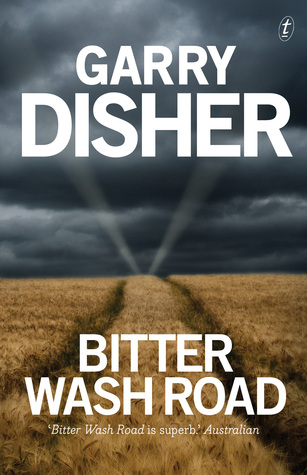
  • reducing the “dreaded” TBR (which I define as books waiting for more than 12 months): I started off the year with a bang, reading four worth-waiting-for books in the first four months – Angela Savage’s Mother of Pearl, Elizabeth Harrower’s The long prospect, Garry Disher’s Bitter Wash Road, and Trevor Shearston’s Hare’s fur – but I then fell in a heap. The result is that my TBR grew significantly over the year. Wah!
  • rereading loved books: I rarely find the opportunity to reread, but this year, I actually managed a few. There were classics by Jane Austen and Anthony Trollope, but the one I want to highlight is Sara Dowse’s West Block. I’d been wanting to re-read it for some time, and was not disappointed as I loved reacquainting myself with its original approach and still-relevant content.

And then there were the little misses!

  • The one that got away: I was astonished to discover, when writing my Reading Group favourites post, that I had missed reviewing our first book of the year, Anthony Trollope’s Barchester Towers. I realised why – the meeting was a week after my Dad died – but I can’t believe that I wasn’t even aware that I hadn’t reviewed it. Such is the discombobulation wrought by grief.
  • The one I started but have not (yet) finished: I started reading Jess Hill’s 2020 Stella winner, See what you made me do, on my Kindle, very early in the year. It’s a good read, but I only read it when I’m out and about about, and there’s been less out-and-abouting this year, meaning that at the end of the year, it remains unfinished.

These are just some of 2021’s highlights. I wish I could name them all.

Some stats …

As for actual stats, I don’t read to achieve specific stats, but I do have some reading preferences and like to keep an eye on what I’m doing to keep me honest to myself! So, how did I go?

I like …

  • to read fiction most: 62% of my reading was fiction (short stories and novels) which is less than recent years, albeit only just less than last year’s 63%. Around 75% is my rule of thumb, plucked out of thin air I admit, but, the fact is, there’s some great non-fiction around so, well, I read a bit more of it this year!
  • to give precedence to women: 65% of the works I read this year were by women which is better than last year’s aberrant 80%, and more like what I think is a fair thing! This includes collaborations with male writers and editors.
  • to read non-Australian as well as Australian writers: 27% of this year’s reading was NOT by Australian writers, which is close enough to my goal of around one-third non-Australian, two-thirds Australian.
  • to read older books: 25% of the works I read were published before 2000, which is more than last year, and closer to the longer-term average of around 30%. I will try to lift this a bit more.
  • to support new releases: 25% of this year’s reads were published in 2021, which is similar to last year. I think this is fair!

Overall, it was a great reading year in terms of quality reads, but not so great in terms of quantity. As in 2020, my personal circumstances, in addition to the disruptions caused by COVID-19, meant I did less self-directed reading than I would have liked and that was a bit frustrating. Here’s hoping for a better 2022, for all of us.

Meanwhile, a huge thanks to all of you who read my posts, engage in discussion, recommend more books and, generally, be both thoughtful and fun people. Our little community is special, to me!

I wish you all an excellent 2022, and thank you once again for hanging in this year.

What were your 2021 reading or literary highlights?

Monday musings on Australian literature: Australian Women Writers Challenge 2021

Challenge logo

For the last time, I am devoting my last Monday Musings of the year to the Australian Women Writers Challenge ( in its current form at least, see below). What a couple of years we’ve had. It’s hard to know whether it has affected the challenge or not but, anecdotally, our numbers did not increase over a period when more people were stuck at home. Were we too discombobulated to focus on reading or were many of our participants too tired from the challenges of working from home and home-schooling to read and review as well? I look forward in the future to seeing what sociologists and other researchers make of these years and how we behaved.

Anyhow, the challenge … it has continued to go very well. The full database now contains reviews for nearly 7,700 different books across all forms and genres, from all periods, of Australian women’s writing. This means that the number of books reviewed on our database increased in 2021 by nearly 700 books, less than the number added last year, but still a healthy 10% increase to the database.

My personal round-up for the year

These last two years have not been stellar ones for me, so my posting to the challenge was down (mirroring the overall trajectory for the challenge!) I posted only 23 reviews to the Challenge over the year, a few less than last year, but I did also read three essays I didn’t post to the challenge. I will include them here as they were by women and appeared in a book edited by a woman, Belinda Castles’ Reading like an Australian writer. I’m disappointed in my reading achievements this year, but it is what it is! Here they are, with links to my reviews:

Fiction

Non-fiction

Anthologies/Essays

This year, fiction (including short stories) represented around 53% of my AWW challenge reading, which is a little less than last year’s 61%, and only two were classics by my loose definitions. One, Elizabeth Harrower’s, was read for Bill’s (The Australian Legend) Gen 4 week (Part 1). As always, I appreciate the impetus to read books from the past, because they do not deserve to be forgotten! In terms of that problematic word “diversity”, I read four books by First Nations Australia women.

My non-fiction reading was even more heavily slanted towards memoir/life-writing than usual, though the essays shift the balance a little, with a focus there on writing about writing.

Finally, as always, a big thanks to Theresa, Elizabeth and the rest of the team. I have loved being part of this challenge, partly of course because it equates with my reading goals so has never really been a challenge, but also because it’s been a generous and supportive team working on an important goal.

And so, 2022

Challenge logo

Most of you will know that this challenge was instigated by Elizabeth Lhuede in 2012 in response to concerns in Australian literary circles about the lack of recognition for women writers. I have been involved as a volunteer since 2013. In many ways, we feel that ten years on, the goal has been achieved, as women writers seem to be well-established on Australia’s literary scene, at least by observable measures.

Partly for this reason, the challenge will change tack in 2022 and focus on past and often under-recognised or overlooked women writers, from the 19th- and 20th-centuries. The new team overseeing this new phase comprises Elizabeth, Bill (The Australian Legend) and me. We plan to offer articles and reviews about earlier writers, and publish their actual writings – in full or excerpt form, as appropriate. We three feel that Australia’s rich heritage of Australian women’s writing hasn’t been fully explored and we’re keen to nudge it a bit more into the limelight.

This does not mean that the always popular contemporary aspect of the challenge will cease, but it will now be carried through our Facebook groups, Love Reading Books by Aussie Women and Australian Women Writers News and Events. Please join those groups if you are interested and haven’t already joined them.

Meanwhile, you will hear more about AWW 2022, when we get going in February.

My year in books 2021

I did this meme last year but wasn’t really thinking of doing it this year. However, here I am on Christmas morning with, for the first time in decades, nothing much to do until we head out to lunch, so why not? The thing about these memes is that they remind us of some of the great reads we’ve had over the year, and that’s a good thing.

Lisa says she thinks it was Annabel at Annabookbel who led the way in 2020 with this annual Christmas meme… Karen at Booker Talk reminded her and would have reminded me too, except I saw Lisa’s first, and I like that she seems to have added in a “lockdown” question.

Here are the rules: Using only books you have read this year (2021), answer these questions. Try not to repeat a book title. Links in the titles will take you to my reviews.

In high school I was  This mournable body (Tsitsi Dangarembga) … because, you know, puberty and bodies aren’t a happy match.

People might be surprised by A mouthful of petals (Wendy and Allan Scarfe) … because, well, wouldn’t you?

I will never be The believer (Sarah Krasnostein) … at least, not of most of the kinds in this book.

My life in lockdown was like Dreams they forgot (Emma Ashmere) … self-explanatory!

My fantasy job is (in) West Block (Sara Dowse) … because it’s a gracious old building and I love working in gracious buildings.

At the end of a long day I need (a) Bluebird (Malcolm Knox) rather than (a) Black cockatoo (Carl Merrison and Hakea Hustler) … the happiness of the bluebird without the raucousness of the cockatoo.

I hate (being) The long prospect (Elizabeth Harrower) … because I’d rather be on the shortlist!

I wish I had A different kind of seeing (Marie Younan and Jill Sanguinetti) … because who couldn’t do with a new way of seeing in their lives?

My family reunions are Where the heart is (Irma Gold and Susannah Crispe) … because family just is.

At a party you’d find me with Girl, woman, other (Bernadine Evaristo) … because, sorry men, but woman do make safe company when there’s drink around.

I’ve never been to Bitter Wash Road (Garry Disher) … and am not sure I want to, either.

A happy day includesRural dreams (Margaret Hickey) … because, although I’m a small city-big town sort of girl, I do love to dream of the country.

Motto I live by None of us alone (Jonathan Shaw) … no man (or woman) is an island, and I like it that way.

On my bucket list is (exploring) Where the crawdads sing (Delia Owens) … when we can travel again (and if that happens in my lifetime).

In my next life I want to have Infinite splendours (Sofie Laguna) … wouldn’t you?

Sorry, but you only get two images, after two attempts to get a slideshow in. Methinks there might be a limit to the number of images in a slideshow and I exceeded it. Whatever, it wasn’t happening.

Anyhow, it’s time to get ready for my Christmas day’s activities, so I hope you all enjoy this little response to the meme, and, even more, that you have a peaceful, healthy, and happy holiday season wherever you are.

Alison Croggon, Monsters (#BookReview)

Alison Croggon’s Monsters: A reckoning is a demanding but exhilarating read, demanding because it expresses some tough feelings, and exhilarating because of the mind behind it, the connections it makes and the questions it asks. Coincidentally, it has some synchronicities with my recent read, Sarah Krasnostein’s The believer. Both talk about “uncertainty”, and both conclude by talking about “love”, but beyond these two ideas are very different books.

Monsters is categorised on its back-cover as narrative nonfiction/memoir. However, it could also be described as an essay collection, albeit a linked-essay collection, because each individually-titled chapter seems to take up an issue – or return to an earlier issue – and riff on it, though riff is too frivolous a word for what Croggon does.

The book has an interesting trigger and an even more interesting trajectory. The trigger is the final breakdown in what had been a very difficult relationship with her sister. The trajectory is to explore this through the lens of colonialism, the “colonial project”. It’s audacious, really, and yet it makes a lot of sense. It certainly adopts the idea that the personal is the political with a vice-grip that doesn’t let go.

I’ll start with the memoir part. Threading through the essays are references to her white middle-class family. She starts, in the first two chapters – “The curse” and “Ancestors” – with a quick expose of the family tree. It goes back to the 1100s, but she focuses mostly on the 19th century’s Great Uncle Bee who was heavily implicated in “the colonial project”. Her thesis is that “colonisation is, necessarily, a process of traumatisation for everyone who is born in the system”. Croggon does not wish to diminish its greatest impact on the colonised but her point is that the “system” damages everyone. She argues, albeit using “a small, wonky, uncertain line”, that the attitudes and values inherent in the system can (even, perhaps, must) poison personal relationships. She writes, two-thirds through the book:

I was born as part of a monstrous structure – the grotesque, hideous, ugly, ghastly, gruesome, horrible – relations of power that constituted colonial Britain. A structure that shaped me, that shapes the very language that I speak and use and love. I am the daughter of an empire declared itself the natural order of the world.

The memoir part, the family part, particularly regarding her sister, is tough and hard – and I admit that I would not want to be her sister reading this book. However, although Croggon has the pen in her hand, so of course we feel her pain at “the fracture”, she does not absolve herself of her role. Indeed, at the end – and she means personally and politically, I believe – she talks of “attempting to understand my own complicities”.

“Are we irrevocably broken by our histories?”

Here is where the essay aspect of this intriguing work illuminates, because, in different but sometimes overlapping essays/chapters, she explores issues like patriarchy, whiteness, feminism, primarily as they play out through “the colonial project”. Take, for example, her analysis of patriarchy and its impact on the relationship between women: “how it distorts and destroys relationships between women: how it creates this deadly competition…” Competiton being, of course, fundamental to colonialism.

Now, I wanted to reject this because I do not feel in competition with women – I have always loved the sisterhood – but, I can’t ignore the overarching point she is making, one that’s bigger than my little world. She continues:

For centuries, our foundational cultural texts have said, over and over again, that women are without worth.

I could easily (but naively) dispute this by pointing to my life, but I have to admit to my privilege and, whether conscious or not, to the entitlement under which I live. I am therefore willing to accept Croggon’s thesis regarding colonialism – and its impact on the personal as well as the political:

We are both [she and her sister] the product of a machine that has spent centuries concealing its violence, that pours countless resources into disguising its greed for resources and power as an exercise in human progress.

This machine is fed, as Croggon sees it, by a faith in binaries: “good/bad, men/women, white/black, right/wrong, guilty/innocent”. These binaries “profoundly infected” her relationship with her sister but, as she explores through her essays, they also underpin the colonial view of the world that permeates so much of our thinking and behaviour still today. We have not, as we know, shaken off the bonds of our colonial past, and if there’s one thing Croggon rams home, with erudition and sophistication, it’s how deeply ingrained colonial thinking is in everything we do. To put it simply, colonialist cultures are racist, sexist, hierarchical, and rely on “conquest, erasure, entitlement” to survive.

One of my favourite, one of the most clarifying essays/chapters, is “The whiteness”. In one chapter she pulls apart denotation, connotation, implication, and more. She says that “whiteness isn’t really about skin colour. Like blackness, it’s a category”. She writes that “the savagery of whiteness, its pettiness, its hypocrisy, its dishonesty, its murderousness: these are hard things to understand about oneself.” She writes of the whiteness that is able to argue its own victimhood. And, she admits to discomfort with prodding the traumas of her white family in the face of Black anguish.

It is uncomfortable being white today, with all our privileges – and it is even more uncomfortable that such a weak word as “uncomfortable” probably adequately describes our feelings and uncertainties.

You can probably see by now that this is not a simple read. It’s certainly not one you can dip into and read an “essay” at random, because the argument is entwined through memoir. It’s fragmented, and draws on a seemingly random group of thinkers and writers against which she bounces her own ideas. It requires concentration to follow the links and connections, the slipping back-and-forth between the personal and the political, but, as I flip through the book to write this post, what I see are a lot of “Yes” marks in the margin.

Some of these “yeses” relate to sharing some experiences, such as a childhood love of reading, or to seeing the world similarly, but others relate to the questions she leaves us with, because there are no answers here.

Towards the end comes the admission that “I can’t see what I can’t see”. Of course! But this is also the cry of someone who wants to see more. Also near the end, she returns to her relationship with her sister, and the role of patriarchal norms and colonialism’s assumptions in its collapse. She says “I can’t see how it can be undone”. This is the biggest – and, to be honest, most confronting – question Croggon leaves us with. Can it be done? Can we unlearn colonialism’s cruel premises and heritage, so that we can undo what we have done?

Challenge logo

Alison Croggon
Monsters: A reckoning
Melbourne: Scribe, 2021
275pp.
ISBN: 9781925713398

(Review copy courtesy Scribe)

Monday musings on Australian literature: Favourite books 2021, Part 2: Nonfiction and Poetry

Last week, as most of you will know, I shared the favourite Aussie fiction books named by writers in the Sydney Morning Herald’s Books we loved in 2021 and ABR’s Books of the Year 2021. This week, as promised, I’m sharing the nonfiction and poetry favourites. Again, I’m only including Australian titles (as this is a Monday Musings post). It’s a much longer and more varied list than last week’s.

Nonfiction

Nonfiction picks tend to speak to the professional interests of their nominators – historians, for example, tend to choose histories, while literary critics might range across essays and literary biographies, and social commentators tend to like other analyses of contemporary life and behaviour. The result is a rich, and tempting, list.

Despite this variety, a few books were picked multiple times, like Bernadette Brennan’s biography of Gillian Mears, Leaping into waterfalls, and Delia Falconer’s essay collection, Signs and wonders. Political biographies/analyses are usually popular and so it is here with Gideon Haigh’s The brilliant boy: Doc Evatt and the great Australian dissent and Sean Kelly’s Sean Kelly’s The game: A portrait of Scott Morrison.

A few other titles appeared more than once, including a couple on my TBR, but one stood out because it was new to me and sounds different: Anwen Crawford’s No document.

As for the most popular form of nonfiction favourited this year, you could probably say that the memoirs have it.

  • Ruth Balint’s Destination elsewhere: Displaced persons and their quest to leave postwar Europe (history): (Sheila Fitzpatrick)
  • Clem Bastow’s Late bloomer: How an autism diagnosis changed my life (memoir): “frank and fearless” (Graeme Simsion); “astute and illuminating” (Giselle Au-Nhien Nguyen)
  • Lech Blaine’s Quarterly Essay: Top blokes (essay): “hilarious and incredibly illuminating explanation of how identity politics shapes actual politics” (Bri Lee)
  • Lech Blaine’s Car Crash (memoir): “deeply moving” (Bri Lee) 
  • Bernadette Brennan’s Leaping into waterfalls (biography): “verve and sensitivity … intimate and often unsettling” (Caroline Baum); “a skilful, unforgettable distillation of a writer’s creative imagination” (Mark McKenna); “scholarly, passionate, readable” (Don Anderson); “The book I never wanted to end” (Zora Simic); “an exceptional work” (Brenda Walker)
  • David Brophy’s China panic: Australia’s alternative to paranoia and pandering (nonfiction): “some uncommon common sense on Australia’s current hyped-up alarm” (Sheila Fitzpatrick)
  • Edmund Campion’s Then and now: Australian Catholic experiences (essays, theology): “humane, literate, hospitable, engaging essays” (Don Anderson)  
  • Anwen Crawford’s No document (book-length essay): “superb … resonant power, about grief, politics, ephemerality and art” (Lucy Treloar); “sophisticated, moving lament” (Bernadette Brennan); “a striking collage-like essay written in a spirit of lucid grief and righteous anger” (James Ley); “so beguiling I read it twice” (Zora Simic); (Declan Fry) (Lisa’s review)
  • Emma Do and Kim Lam’s Working from home (may ở nhà) (social commentary): “this book!” (Declan Fry)
  • Delia Falconer’s Signs and wonders (essays): “both solace and alarm as she renders the impact of living in the anthropocene” (Anna Funder); “exquisite writing that swerves with heartbreaking facts, into hidden realms of our broken world, luminous with humanity” (Robert Adamson); “illuminating book on the climate crisis ” (Brenda Walker); “captures the fragility and incredulity of living at a tipping point of earthly life” (Tom Griffiths) (Lisa’s review)
  • Fiona Foley’s Biting the clouds (history): (Anita Heiss)
  • Helen Garner’s How to end a story (diaries):”reads like a thriller, gripping us in the quotidian, real-time horror of her unravelling marriage” (Clare Wright); “the taut shape of a fine novel” (Brenda Walker); “the most formidable book of excerpts from the diaries so far” (Peter Craven) (on my TBR)
  • Caroline Graham and Kylie Stevenson’s Larrimah (nonfiction): “strange and extraordinary” (Craig Silvey)
  • Stan Grant’s With the falling of the dusk (memoir/politics): “an insightful analysis of a world unravelling since the 1990s” (Andrew West)
  • Bella Green’s Happy endings (memoir): “astute and illuminating” (Giselle Au-Nhien Nguyen)
  • Gideon Haigh’s The brilliant boy: Doc Evatt and the great Australian dissent (history): “concerns H.V. Evatt’s compassion as a High Court judge in a negligence case” (Judith Brett); “exemplary in its forensic analysis and sympathetic treatment of a brilliant man” (Jacqueline Kent); “a fascinating and moving story of callousness, compassion, and creativity” (Frank Bongiorno)
  • Amani Haydar’s The mother wound (memoir): “poetic rumination on the false binaries between “public” and “private” violence, and modern Australia” (Bri Lee); “narrated with unsentimental intelligence” (Bernadette Brennan); “powerful” (Zora Simic); “astute and illuminating” (Giselle Au-Nhien Nguyen)
  • Veronica Heritage-Gorrie’s Black and blue (memoir): “an eye-opening and heartbreaking examination of how messed-up policing is in Australia” (Bri Lee); “powerful” (Zora Simic)
  • Jennifer Higgie’s The mirror and the palette (feminism): “spellbinding update of Germaine Greer’s and Linda Nochlin’s seminal feminist research” (A. Frances Johnson)
  • Kate Holden’s The winter road: A story of legacy, land and a killing at Croppa Creek (true crime/terrorism): “powerful environmental parable … brilliant, sensitive” (Tom Griffiths)
  • Eleanor Hogan’s Into the loneliness (biography): “the delicately handled story of the friendship between writers Ernestine Hill and Daisy Bates … a complex and moving book” (Delia Falconer)
  • Sarah Holland-Batt’s  Fishing for lightning: The spark of poetry (essays): “luminous” (Mindy Gill)
  • Terri Janke’s True tracks (nonfiction): (Anita Heiss)
  • Evelyn Juers’ The dancer: A biography for Philippa Cullen (biography): “richly researched cultural history” (Georgie Williamson) (Lisa’s review)
  • Sean Kelly’s The game: A portrait of Scott Morrison (political profile): “outstanding for the subtlety of its psychological insights, weighing of evidence, and the breadth of reading” (Mark McKenna); “illuminating psychological exposé of Scott Morrison … grim but essential reading” (Peter Rose); “the best thing I have read on our current prime minister … full of insights and ideas” (Judith Brett); “deserves to become a political classic” (Frank Bongiorno)
  • Krissy Kneen’s The three burials of Lotty Kneen (memoir): “fascinating and powerful” (Favel Parrett); (Anita Heiss)
  • Sarah Krasnostein’s The believer (nonfiction): “the nutty given dignity by her sharp, empathetic eye” (Jock Serong) (my review)
  • Janet McCalman’s Vandemonians: The repressed history of colonial Victoria (history): “her trademark approach: take the local and specific and use them to illuminate a whole stratum of life” (Glyn Davis) (Lisa’s review)
  • Mark McKenna’s Return to Uluru (history): “profoundly moving” (Jock Serong); “a powerful microhistory and meditation on frontier violence and its legacies” (Frank Bongiorno); “metaphysical true crime story … may it change hearts and mind” (Geordie Williamson); “challenge[s] Australians with the responsibility of truth-telling” (Tom Griffiths) (on my TBR) (Janine’s review)
  • Sylvia Martin’s Sky swimming (memoir): “intimate, generous, written with modesty and great empathy … a gem of a book from the heart of a deeply intelligent writer” (Alex Miller)
  • Fiona Murphy’s The shape of sound (memoir): “deft explorations of disability and self-discovery” (Fiona Wright)
  • Cassandra Pybus’ Truganini (biography): “essential reading for understanding Tasmania” (Jock Serong) (Janine’s review)
  • Stephanie Radok’s Becoming a bird (essays): “an unassuming gem of a book” (Michelle de Kretser); “a marvellous book about the freedom of the mind to take wing” (Nicholas Jose) (Lisa’s review).
  • Yves Rees’ All about Yves: Notes on a transition (memoir): “a new and important critical voice” (Clare Wright)
  • Henry Reynolds’s Truth-telling: History, sovereignty and the Uluru Statement (history): “challenge[s] Australians with the responsibility of truth-telling” (Tom Griffiths) (Janine’s review)
  • Della Rowley and Lynn Buchanan’s (ed.) Life As Art: The biographical writing of Hazel Rowley (essays): “vibrant collection of essays” (Brenda Niall)
  • Chelsea Watego’s Another day in the colony (memoir): “you should read” (Declan Fry)
  • David Williamson’s Home truths: A memoir (memoir): “big book for a big life” (Don Anderson)
  • Michael Winkler’s Grimmish (experimental nonfiction): “a brilliant experimental stroll through pain, boxing and sweary goats” (Jock Serong): “a feral, unpinnable creature” (Beejay Wilcox)
  • Ghil’ad Zuckermann and Emmalene Richards’ Mangiri Yarda (Healthy Country): Barngarla wellbeing and nature (language/culture): “an inspirational examination of the …. benefits of language revival and the profound importance of reawakening languages” (Alice Nelson)

Poetry

  • Eunice Andrada’s Take care: “thank you for your care” (Declan Fry)
  • Evelyn Araluen’s Dropbear: “with subtlety and an occasional razor” (Tony Birch); “discourse-altering” (John Kinsella); “showed us where it’s at!” (Declan Fry) (Brona’s review)
  • Eileen Chong’s A thousand crimson blooms: “piercing reflections on memory and loss” (Lucy Treloar): “a nuanced, tender volume of deceptively complex and disarmingly emotive verse that is at once deeply personal and universal” (Maxine Beneba Clarke) (Jonathan’s review)
  • Jelena Dinic’s In the room with the she wolf: “an understated wonder, a journey from war to peace, and from one poetic tradition to another” (Peter Goldsworthy)
  • Toby Fitch’s Sydney spleen: “existential linguistic meltdown” (John Kinsella) (Jonathan’s review)
  • JS Harry’s New and selected poems (posthumous): “imaginative genius” (Robert Adamson)
  • John Hawke’s Whirlwind duststorm: “innovative, intelligently creative, almost fearless” (Jennifer Harrison)
  • A. Frances Johnson’s Save as: “some of the most moving confessional and elegiac poems you’ll read anywhere” (Gregory Day)
  • Bella Li’s Theory of colours (poetry/art): “gloriously disquieting combo of image and text” (Declan Fry)
  • Kate Llewellyn’s Harbour: “more meditative book overall, a safer haven, but she is still plenty naughty” (Peter Goldsworthy)
  • Mal McKimmie’s At the foot of the mountain: “innovative, intelligently creative, almost fearless” (Jennifer Harrison)
  • Caitlin Maling’s Fish work: “has the terseness of an Anthropocene novella” (Tony Hughes-d’Aeth)
  • Jazz Money’s How to make a basket: “tender and sharp, clear-eyed and lyrical” (Jennifer Down); “a powerful and accomplished debut” (Maxine Beneba Clarke)
  • Omar Musa’s Killernova (woodcuts/poetry): “a unique hybrid creature – a beautifully designed, stunning combination of woodcuts and poetry” (Maxine Beneba Clarke) (my post on the launch)
  • Pi O’s Heide: “staggering in its audacity, and an intoxicating thrill to read. It is history as ode, and a bold vindication of art … also wickedly funny and heretical” (Christos Tsiolkas)
  • Elfie Shiosaki’s Homecoming: “exquisite hybrid work” (Tony Hughes-d’Aeth)
  • Emily Sun’s  Vociferate | 詠: “cultural-presumption-shredding” (John Kinsella); “bristling with spiky maternal reclamations and intercultural electricity” (Tony Hughes-d’Aeth)
  • Maria Takolander’s Trigger warning: “confronting and sculpted” (John Kinsella); “some of the most moving confessional and elegiac poems you’ll read anywhere” (Gregory Day)
  • Lucy Van’s The open: “read it with an increasing sense of excitement” (Declan Fry)

As I said last week, the lists will come thick and fast over the next month, but I’d be interested in any thoughts you have on these, particularly if you like nonfiction and poetry.

Novel-in-stories, Tara June Winch’s Swallow the air

This is my third post inspired by Reading like an Australian writer, and it involves two First Nations writers, Ellen van Neerven on Tara June Winch’s award-winning debut novel Swallow the air. I chose van Neerven’s essay for my next post, because, coincidentally, I’d just read Winch’s story “Cloud busting” in Flock, an anthology, edited by van Neerven. Are you keeping up? “Cloud busting” is one of the stories in Swallow the air.

Form? What form?

Tara June Winch, Swallow the air

In my review of Swallow the air, I wrote:

The first thing to confront the reader is its form. It looks and even reads a little like a collection of short stories*, but it can be read as a novella. There is a narrative trajectory that takes us from the devastating death of narrator May Gibson’s mother, when May was around 9 years old, to when she’s around 15 years old and has made some sense of her self, her past, her people. May’s mother is Wiradjuri, her father English.

The asterisk pointed to a note at the end of my post, which stated that one story from the novel, the aforementioned “Cloud busting”, had been published separately in Best Australian stories 2006. And, in her essay, van Neerven says that she had used “Cloud busting” with students. Sounds like it could become one of Australia’s popular anthologised stories. This would be a good thing because, also in her essay, van Neerven comments on having had no introduction to “Indigenous-authored books” when she was at school (which, for 31-year-old van Neerven, was not that long ago.) Short stories are an excellent form for introducing school students to great stories and writing, and it would be a good thing to see more diverse stories added to current anthology favourites.

“Cloud busting” is a beautiful story, by the way, because it makes a point about deep loss but also conveys the warmth, trust and generosity that can exist between people.

Anyhow, back to form. Just as I wrote in my post on Swallow the air, van Neerven also comments on the book’s form, noting that “writing relational novels-in-stories” is a “very First Nations practice”. She cites Jeanine Leane’s Purple threads (my review) and Gayle Kennedy’s Me, Antman and Fleabag, as other examples. Marie Munkara’s Every secret thing (my review) fits in here somewhere too, I’d say. I hadn’t really thought about this as being particularly First Nations, as we all know novels from various writers that generate arguments about whether they are novels or short story collections. However, in my experience – and I am generalising a bit – First Nations people can be great story-tellers so it wouldn’t surprise me to find the form of “novel-in-stories” being more common among First Nations writers.

Further discussing this book, in which protagonist May goes on a journey back to Country to find her Wiradjuri origins, van Neerven makes another interesting observation, which is that May’s journey “plays into the reader’s romanticised expectations that a return to Country will bring the story a happy resolution”. But, of course, it’s not that simple. Country has often been too damaged by “past policies and institutionalisations”, as van Neerven puts it, for this to happen, but, she says, May does come to understand something important, which is that Country “lives within her” and her family “allowing her to feel strong in her identity without the shame of not living or growing up on Country”. Of course, it’s not up to me to pronounce on the validity of this way of seeing, but it makes good sense to me.

Anyhow, I’ll leave it, on these two interesting-to-me points, as I don’t want to steal the life from Castle’s book. These essays are all so different, as you’d expect, but this just makes them more worthwhile. You just never know what approach a writer is going to take when talking about another writer, but you do know that it will probably be insightful.

Ellen van Neerven
“Kinship in fiction and the genre blur of Swallow the air as novel in stories”
in Belinda Castles (ed), Reading like an Australian writer
Sydney: NewSouth, 2021
pp. 7-12
ISBN: 9781742236704

Tara June Winch
“Cloud busting”
in Ellen van Neerven (ed), Flock: First Nations stories then and now
St. Lucia: UQP, 2021
ISBN: 9780702264603 (Kindle)

My reading group’s favourites for 2021

In our now annual tradition, my reading group once again voted for our favourites from our 2021 schedule – and as has also become tradition (see last year’s if you like), I’m sharing our reading and findings with you.

First, though, here is what we read in the order we read them (with links on titles to my reviews):

This schedule is very different to last year’s which was was less diverse than usual: nearly all were Australian and we didn’t do a classic. It’s true that our focus always has been Australian – with a special interest in women – but it was never meant to be quite so narrow as it was last year. So, this year … we did a classic; we did just 5 Australian books; and we read three male authors (plus those who had essays in the Best Australian science anthology). The first half of next year will see a continuation of this variety, with not only a classic but a translated book (which has been absent for a couple of years).

The winners …

All twelve of our currently active members voted, and the rules were the same. We had to name our three favourite works, which resulted in 36 votes being cast. No weighting was given to one over another in those three, even where some members did rank their choices. Last year we had a runaway winner – it received twice the number of votes as the two which shared second place. This year though was completely different. The winning book received 8 votes, second 7 votes, third 6 votes and so on down to fifth with 4 votes. Consequently, we have two Highly Commendeds this year, because after 4 votes we dropped to 2, 1 and none.

  1. Shuggie Bain, by Douglas Stuart (8 votes)
  2. The crocodile song, by Nardi Simpson (7 votes)
  3. Girl, woman, other, by Bernadine Evaristo (6 votes)

Highly commended: Where the Crawdads sing, by Delia Owens (5); Hamnet, by Maggie O’Farrell (4).

  • Book cover

It was a real tussle this year, and I enjoyed watching the votes come in. Until the last two votes, Nardi Simpson was winning – oh, how I would have loved her to win, particularly after Melissa Lucashenko’s win last year – but she was pipped at the post.

Interestingly, last year all three of the nonfiction titles on our list featured among our favourites, while this year the two nonfiction works didn’t get any votes at all, though they both generated excellent discussions. It’s just that we read such strong fiction. Every book but the two nonfiction books received at least one vote.

Of course, this is not a scientific survey (and it’s a very small survey). Votes were all given equal weight, even where people indicated an order of preference, and not everyone read every book (though most did this year), so different people voted from different “pools”.

Oh, and if you want to know my three picks, they were Tsitsi Dangarembga’s This mournable body, Bernadine Evaristo’s Girl, woman, other, and Nardi Simpson’s Song of the crocodile. It was a hard decision though, with Shuggie Bain fighting for a place!

Selected comments (accompanying the votes)

Not everyone included comments with their votes, and not all books received comments, but here is a selection of what members said about the top five:

  • Shuggie Bain: Commenters used descriptions like “perceptive”, “powerful”, “brilliant evocative writing”.
  • Song of the crocodile: Comments included “punchy truth-telling”, “loved the ‘fantastic aspects’ … [like] the crocodile totem”, “edgy and important”, “full of beauty and … I understand intergenerational trauma more”.
  • Girl, woman, other: Commenters saw it as a “fabulous evocation of women in complicated relationships”, and “satirical, insightful exploration of diverse women”, while another said “made me feel like I was almost there in London. A great book to read while the borders stopped travel.”
  • Where the crawdads sing”: Our one commenter on it called it “evocative and compelling”.
  • Hamnet: Commenters agreed it was “powerful”: “powerful story of an invisible woman, and the impact of grief” and “powerful … imagined history. Beautiful descriptive writing”, while another said “engaging, well-plotted and historically plausible”

And a bonus!

As in 2019, a good friend (from my library school days over 45 years ago) sent me her reading group’s schedule from this year (links are to my reviews where I’ve read the book too):

  • Kate Grenville, A room made of leaves: novel, Australian author
  • Tony Birch, Ghost River: novel, Australian author (First Nations)
  • Annabel Crabb, The wife drought: nonfiction, Australian author
  • Mark Henshaw, The snow kimono: novel, Australian author
  • Richard Fidler, Ghost Empire: nonficton, Australian author
  • Clive James, The fire of joy…roughly 80 poems: poetry, Australian author
  • Michelle de Kretser, Questions of travel: novel, Australian author
  • Kim Mahood, Craft for a dry lake: nonfiction, Australian author
  • Behrouz Boochani, No friend but the mountains (on my TBR): nonfiction, Kurdish-Iranian author
  • Pip Williams, The dictionary of lost words (on my TBR): fiction, Australian author

My group has read the Henshaw and de Kretser in past years, and we have also read a different book by Kim Mahood (Position doubtful) which we loved.

So, I’d love to hear your thoughts, particularly if you were in a reading group this year. What did your group read and love?

Monday musings on Australian literature: Favourite books 2021, Part 1: Fiction

For a few years now, I’ve shared favourite Aussie reads of the year, from the ABC and, last year, other sources.

This year I’m doing it a bit differently. I’m focusing on the Sydney Morning Herald’s Books we loved in 2021 and ABR’s Books of the Year 2021. Both these contain favourites from a large number of Australian writers. Both also include fiction and nonfiction, Australian and non-Australian works – and there are a lot. So, I’m writing two posts, one on fiction (this week) and the other on nonfiction and poetry (next week). I am only including their Australian favourites – this is a Monday Musings after all.

Novels

Book cover
  • David Allan-Petale’s Locust summer: (Toni Jordan) (Lisa’s review)
  • Miles Allinson’s In moorland: “lays out his territory with authority and a quiet, complex beauty” (Helen Garner); “darkly funny novel of generational bonds, a dazzling ride that is full of heart” (Lucy Treloar); “insightful and ambitious” (Toni Jordan); (Emily Bitto); “engrossing portrayal of obsession, loyalty and destruction within a family” (Robbie Arnott); “very smart novel” (Robbie Arnott) (Lisa’s review)
  • Amal Awad’s The things we see in the light: (Toni Jordan)
  • Larissa Behrendt’s After story: “ambitious in conception and masterful in execution” (Clare Wright); (Anita Heiss) (on my TBR, Lisa’s review)
  • Hannah Bent’s When things are alive they hum: “heartfelt and sweet” (Trent Dalton)
  • Emily Bitto’s Wild abandon: “kicks over the traces and breaks hearts” (Helen Garner); “brilliant and inventive” (Craig Silvey); “wonderful novel, daring and surprising, and profoundly humane” (Christos Tsiolkas); “thrilling and audacious” (Michelle de Kretser); lushly baroque, ruinous, and fantastically inventive … style in spades: its lyricism is exhilarating” (Sarah Holland-Batt)
  • Katherine Brabon’s The shut ins: “a poignant conceit, reminiscent of the work of W.G. Sebald and Patrick Modiano” (Anders Villani)
  • Brendan Cowell’s Plum: “the brain-damaged-rugby-league-poet-book I was waiting all my life to find” (Trent Dalton)
  • Garry Disher, The way it is now: (Judith Brett)
  • Jennifer Down’s Bodies of light: “witness to the creation of a resilient self” (Bernadette Brennan); “mesmerising chronicle … of one of the most sharply drawn characters I’ve encountered in recent fiction … extraordinary” (Robbie Arnott); “an epic Bildungsroman that honours the dignity of crafting a life in the wake of childhood trauma” (Yves Rees); “equal parts devastating and hopeful” (Giselle Au-Nhien Nguyen)
  • Stephen Downes’ The hands of pianists: “an extraordinary book which appropriates the style and strategies of W.B. Sebald but then succeeds in equalling him” (Peter Craven)
  • Robert Gott’s The orchard murders: “perfectly executed Melbourne noir” (Jock Serong)
  • Anita Heiss’s Bila Yarrudhanggalangdhuray: “much-needed look at white settlement from an Indigenous maid’s point of view” (Jane Sullivan) (on my TBR, Lisa’s review)
  • Sally Hepworth’s The younger wife: “delivered wit, warmth and suspense” (Jane Harper) (Theresa’s review)
  • Kathryn Heyman’s Fury: (Fiona Wright); (Anita Heiss)
  • Antoni Jach’s Travelling companions: “funny, layered” (Toni Jordan) (Lisa’s review)
  • Mette Jakobsen’s The wingmaker: ‘dare I say “uplifiting”‘ (Graeme Simsion); “exquisite” (Favel Parrett)
  • Susan Johnson’s From where I fell: “inspired me as an author” (Anita Heiss) (Lisa’s review)
  • Michelle de Kretser’s Scary monsters: “about the thought crimes that divide us, but also stunning, profound and funny” (Anna Funder); (Fiona Wright); (Emily Bitto); “its riskiness, unashamed intellectualism, and rage against ageism, misogyny and racism” (Bernadette Brennan); “brilliant, chimeric” (Sarah Holland-Batt); “creatively repositions contemporary concerns around race, immigration, and national identity” (Paul Giles)
  • Amanda Lohrey’s The labyrinth: “luminous, meditative and richly layered fiction” (Cassandra Pybus): “moody and allegorical with overcast skies, distant waves, and silences” (Glyn Davis) (On my TBR, Lisa’s review)
  • Laura Jean McKay’s The animals in that country: (Emily Bitto) (kimbofo’s review)
  • Emily Maguire’s Love objects: (Fiona Wright); “a tender and aching story” (Tony Birch) (Lisa’s review)
  • Meg Mason’s Sorrow and bliss: “contemporary laughter and heartbreak” (Mick Herron)
  • Jennifer Mills’ The airways: (Fiona Wright); “subtle and fierce” (Geordie Williamson) (Lisa’s review)
  • Liane Moriarty’s Apples never fall: (Jane Harper)
  • Alice Pung’s One hundred days: ” the quiet, bold power of Pung’s writing, the commanding precision of her prose” (Christos Tsiolkas); “warm, funny, compelling read” (Judith Brett) (kimbofo’s review)
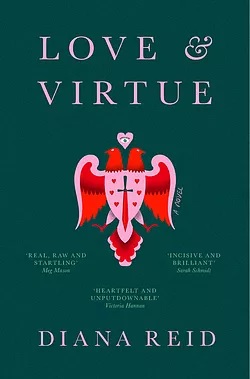
  • Diana Reid’s Love and virtue: “discomfiting ambiguities” (Hannah Kent); ‘restores what’s gone missing from contemporary sexual politics: the distinction between “being hurt and being wronged”’ (Helen Garner); “sharp” (Victoria Hannan) (Brona’s review)
  • Nicolas Rothwell’s Red heaven: “an engrossing novel of ideas” (Glyn Davis)
  • Claire Thomas’ The performance: (Emily Bitto) (on my TBR, Brona’s review
  • Evie Wyld’s The bass rock (Emily Bitto) (on my TBR)

Short stories

  • Tony Birch’s Dark as last night: “richly evocative and deeply empathetic … Birch is more at home with his material than any other modern writer I know” (Alex Miller)
  • Paige Clark’s She is haunted: “deft and original” (Craig Silvey); “stayed with me long after the last word” (Victoria Hannan); “fresh and fantastic” (Bri Lee); (Jennifer Down)
  • Melissa Manning’s Smokehouse: “exquisite” (Jennifer Down) 
  • SJ Norman’s Permafrost: “ghost stories that queer and disrupt the Western gothic tradition” (Hannah Kent); “a beguiling collection of queer ghost stories” (Yves Rees)
  • Chloe Wilson’s Hold your fire: “enthralled and amazed” (Anna Funder)

Finally …

It’s always interesting to see what books feature more than once – which is not to say that popularity equals quality, but it does say what has most captured attention this year. And it seems that Miles Allinson’s In moorland, Emily Bitto’s Wild abandon, Jennifer Down’s Bodies of light, Michelle de Kretser’s Scary monsters, Diana Reid’s Love and virtue, and Paige Clark’s She is haunted are this year’s ones. Most by women writers. I wonder if they’ll all be longlisted (at least) for the Stella?

Another interesting thing about lists is discovering new books. Paige Clark and Chloe Wilson’s short story collections, for example, are new to me – and appeal. Dare I put them on the wishlist?

I know lists will appear constantly over the next month, but I’d be interested in any thoughts you have on these (or on your own list, if you’d prefer!)