To tour or not to tour: the art of being a tourist

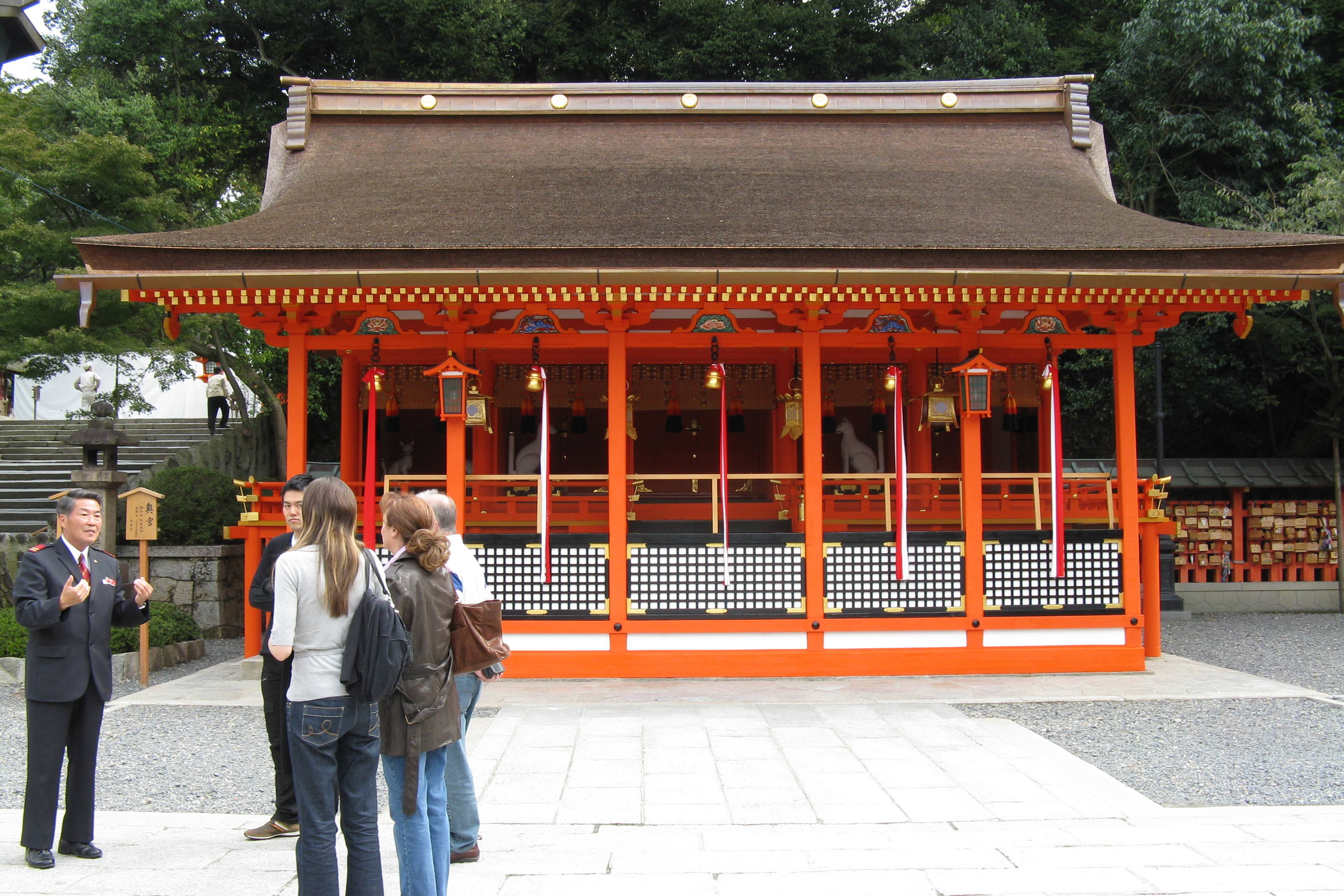
Tour guide in Japan, Fushimi Inari Taisha, Kyoto

Tour guide we saw at Fushimi Inari Taisha, Kyoto

As readers here know, Mr Gums and I have just returned from a week in Hong Kong. I did say that my Macau post would be the post to represent that trip – after all, this is primarily a book blog – but have decided that one more won’t push the friendship too much. My subject? The taking of tours.

Now, Mr Gums and I do not take a lot of tours. We generally like to do things on our own, at our own pace, but for some inexplicable-to-me-now reason, we decided to do it differently for our trip to Hong Kong. And so we booked ourselves into 3 tours during our 7 days: Day tour to Lantau Island, half day tour to the New Territories, and a long day tour to Macau.

These tours were all run by the same company, but we had different tour guides for each, different being the operative word:

  • Tour guide 1, Kim, was an extrovert. She was vivacious but rather loud with a somewhat raspy penetrating voice, and I think most of our “co-tourers” found her a bit exhausting.
  • Tour guide 2, Shirley, was quieter and more serious, but had a funny little speech mannerism involving her saying something like “shm” at the end of most sentences or long phrases. An artefact of speaking in a second language, perhaps? Or, maybe a Chinese version of “um” or “er”?
  • Tour guide 3, Cisco (though Patrice was his real name according to his name badge), was the salesman type, style-wise and in actuality, as he had a range of, there’s no other word for it, rather tacky souvenirs to sell. He tended to talk about himself in the third person, as in “Now, Cisco is not one of those guides who …”.

None of this is meant to be particularly critical. They were all very good at their jobs: they knew their stuff, imparted it well, were personable and made sure we saw all we needed to in the time frame given. But this last bit is part of the problem: the time-frame given. We felt rushed through pretty well every sight we saw. Even where we were given time to wander at will, it was such a short time that our very wandering was rushing. So, we have developed some pros and cons about going on tours, and I thought I’d share them with you.

The pros:

  • It’s convenient: You don’t have to worry about transport, tickets, lining up etc. You just follow like sheep and all will be revealed in due course.
  • It’s sociable: You get to meet other “tourers”, who will always include congenial spirits that you can enjoy passing the time with.
  • It’s informative: You learn a lot that you would probably have to work a lot harder to discover on your own, from, say, the average annual wage in Hong Kong to an insider’s understanding of Chinese Buddhism.

The cons:

  • It’s inflexible: The pace is not your own. You cannot linger at the sight that particularly interests you, and hurry through or omit altogether the ones that don’t.
  • It’s bland: You tend to eat at more generic places, of food modified to suit a general tourist palate. Boring…
  • It’s generic: You are given the info that the guide thinks is of interest, in the style (humorous, serious, too long, too brief, and so on) of the particular tour guide … of course, this doesn’t apply so much to special interest tours, but that’s not what I’m talking about here.
  • It’s disorienting: Unless you bring your own map with you, you tend to have no idea where you are in relation to where you’ve been and where you are going. You just herd on and off buses (or whatever) and/or  trot behind the guide watching to not lose him/her, rather than taking stock of what’s around you and how you got there.

And so for us, next time, we’ll only do a tour if it’s for something we absolutely would not be able to do otherwise, because, for us, the issue is not fitting in as many sights as possible in the time available, and it’s not eating only to refuel. It’s learning what a place is about. We want to eat what the locals eat, use the transport the locals use, and see what we want to see at the pace we want to see it. We’re with Donald Horne: we want to sight-experience, not simply sight-see.

(Disclaimers:

  • The above does not apply to personal guides, such as friends, friends of friends, and relatives, who provide that personal insight that is so invaluable.
  • Not all tourists want to tour the way we do. Our cons are of course other people’s pros, and vice versa. Vive la différence!
  • There are tours, and there are tours. You have to pick the “type” that suits your needs and purpose.)
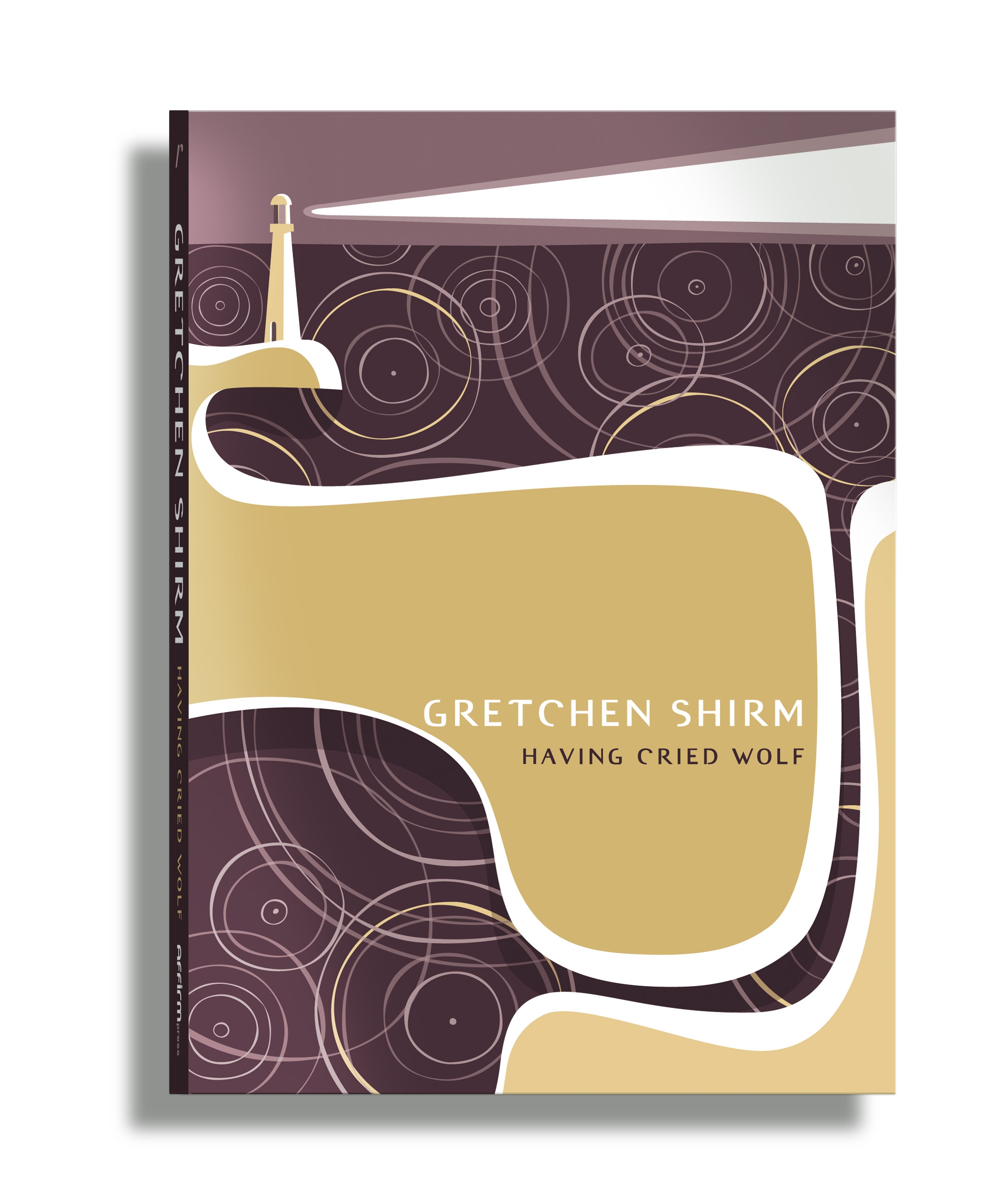

Gretchen Shirm, Having cried wolf

Having cried wolf, book cover

Book cover (Image from Affirm Press)

I have come to the conclusion that short stories are the best holiday reading for me. After a day’s sightseeing followed by reading up on sights for the next day, I usually find I have little time left for my reading. Novels are hard to read under such circumstances, but short stories? Well, they are just the thing. And so, on our recent trip to Hong Kong, I took Gretchen Shirm’s first collection of short stories, Having cried wolf.

Gretchen Shirm is a new Australian writer who was awarded the D.J. O’Hearn Memorial Fellowship for Emergent Writers in 2009. The blurb on the back of the collection likens her to Olga Masters, Helen Garner and Beverley Farmer, and I can see that, but as I was reading the stories I kept thinking of Tim Winton‘s The turning. The obvious reason is because, like The turning, Having cried wolf comprises short stories that are connected by character and place. The fifteen short stories are set in (or deal in some way with) the fictional New South Wales coastal town of Kinsale, and several characters reappear throughout, sometimes in their own stories and sometimes in others. It is rather fun, actually, identifying these and picking up the thread of a story as you progress through the book. Despite this, though, the stories do, I think, also stand well alone.

While Shirm doesn’t focus quite so much as Winton does on the description of place, beyond, that is, conveying the sense of small-town life, her themes are similar: the challenges of small-town living and, particularly, of maintaining meaningful relationships. These themes, however – particularly regarding maintaining relationships – are also those of the aforesaid Masters, Garner and Farmer.

And so to the stories. I must say I enjoyed them – though they are not a particularly cheery bunch. Shirm’s writing is tight and sure, with none of the over-writing often found in first-timers. She writes in first and third person, in female and the occasional male, voices. The characters range from early teens to middle-aged and she captures them all well. Her subject matter includes coming-of-age, marriage and separation, sexuality, suicide and some uncomfortable morality. While many of the stories are interlinked, they are not organised in a totally chronological manner. For example, we learn in the first story, “Breakfast friends”, that Alice is separated from her husband, but in a couple of stories later, “The shallows”, we meet her with the boyfriend who later becomes her husband. This nicely replicates I think the random way we often find out about people in real life.

I’m not going to do a blow-by-blow discussion of the stories but just mention a couple to exemplify some features of her writing. “Small indulgences” for example is a first person story by a rather down-trodden wife. It perfectly encapsulates a woman who has almost, but not quite (as she refuses to colour her hair), subsumed herself to her husband’s needs – and it ends on a delicious if rather sad ironic note. Several of the stories end effectively on metaphors that are subtle but gorgeously appropriate. “Duplicity”, which is about the son of the woman in “Small indulgences”, ends with “There were still no lights on in the house, but by then Daniel was used to the darkness”. And “Breakfast friends” ends with:

The cicada shell is empty now, but inside it was once soft, malleable and not yet formed.

The meaning of that is clear when we read it, but gains added poignancy as we learn more about its characters in later stories. There are many other lovely expressions throughout the stories, such as

… she wants to pour the memory into a mould and leave it there to set.

Why can’t I think like that!

Shirm uses foreshadowing in many of the stories to convey suspense and move the plot along, but she’s not heavy-handed about it. It does mean though that the stories are similar in tone. In other words, this is not a collection of great tonal range but I don’t think that matters, because there’s enough variety and interest elsewhere. There are however a few grammatical oddities that jarred. In a first person voice they can I suppose be forgiven, but there were a couple in third person stories that did bother me. “Peter’s friends swum in the pool” just isn’t right. Is it okay if the voice is third person subjective and that’s how the character might speak? I’m not sure. I’m being pedantic though because overall this is fine confident writing with lovely insights into human behaviour. It does not read like a first collection – and I hope we see more of Gretchen Shirm.

Gretchen Shirm
Having cried wolf
(Series: Long Story Shorts, 4)
Mulgrave: Affirm Press, 2010
ISBN: 9780980637892
221pp.

(Review copy supplied by Affirm Press)

Monday musings on Australian literature: Some Australian travel writing

At luggage carousels one can question travelling (Donald Horne, The intelligent tourist)

Having just returned from our trip to Hong Kong, I thought this would be a good opportunity to post about some Australian travel writing. Hmm … good idea, but where to start? The first problem is that while I usually enjoy travel literature when I read it, I don’t read it often. And the second one is the focus: should I post on Australians writing about travel or on anyone writing about travel in Australia? I’ve decided on the former, which means that while the writers will be Australian, their subjects will not necessarily be so. Travel writers, as you probably know, are a varied lot: some only write travel, but many are novelists, journalists and other sorts of writers who have, for some reason, written travel books.

To keep it simple, I’ve chosen 3 fairly recent examples that represent different types of travel writing.

1. Robyn Davidson‘s Tracks (1995)

Robyn Davidson has to be the Australian travel writer most contemporary Australians would first think of when asked. Tracks is Davidson’s first travel book and it chronicles her 1,700-mile trek across the central and west Australian deserts using camels. It resulted in her being dubbed “The camel lady”. It also resulted in her developing a fascination for deserts and nomadic life, and in 2006 she wrote an essay titled “No fixed address” for the Quarterly Essay. Her book is an example of what I would call adventure travel literature. There are many more examples of this type – from walkers, sailors, mountaineers and so on.

2. Thomas Keneally‘s The place where souls are born (1992)

Monument Valley

In Monument Valley, one of the areas that inspired Keneally

Australian novelist Keneally’s book is about the American southwest. It is one of my favourite pieces of travel writing because I lived (and travelled) in the area for three years and fell in love with it, and because Keneally writes about it so evocatively. He matches criticism with reverence, and shares the area’s history and culture with us alongside his own personal reaction to it. What more  do we want in travel writing? This book is from Jan Morris‘s Destinations series. Keneally says he considered Sudan (“that bitter, lovely republic”) and Australia before settling on the Southwest. He sees the Southwest the same way I do, as being different (“the space of enormous elevations of mountains, of canyons deep enough to make the brain creep and waver”) from Australia but also similar. He says:

An Australian has to keep on referring to the snow and the heights to remind himself that this is not some town in western New South Wales. It is as if similar passions have run through the earth’s crust and core and made an organic link between the two places.

I’d put this in the category of traditional travel literature – it’s both descriptive and reflective of place and people, and it shows what is individual to the place in question while also revealing the universals. He concludes the book with:

But, in the spirit of the book, it is the chanting [from the Pueblo] we fix on, going away with it more or less in our ears. I take to the road strangely assured that someone is singing for us, celebrating matters we have got out of the way of celebrating for ourselves. The eternity of things. Even of our own spirits.

3. Don Watson‘s American journeys (2008)

Don Watson has impeccable writing credentials. Not only has he written about cant, jargon and weasel words in Death sentence and Watson’s dictionary of weasel words but, with American journeys, which covers his travels in America, post-Hurricane Katrina, he won the Age Book of the Year and the Walkley Award for best non-fiction book. “To journey in America,” he says, “is to journey in language”. While the book is a little repetitive at times – because the same issues keep cropping up as he travels – it captures the paradox that is America. He sees how its wonderful can-do-ism is offset by a focus on individualism that refuses to see that sometimes individualism needs to be over-ridden for the common good, that there are some things that government should do to ensure that all its citizens are well cared for.  Katrina ably demonstrated this. Watson says:

… if it is true that private businesses are efficient because it is in their nature to seek and maximise profit – which is to say their self-interest – then the pursuit of the public interest is not in their nature, and one may as well look to a rattlesnake for kindness as to corporations for the rebuilding of a city full of people. It is pointless; and it follows that it’s just as pointless to imagine that a country governed by the principle of private interest is capable of fixing problems in the public interest – be they local, like New Orleans; national, like poverty; or global, like the environment or peace …

He goes on to say that while American churches, corporations and the nation as a whole

do good and selfless works at home and abroad, it is also true that, in these days of culture wars, the idea of government being the principal agent of such works is faded. That is what New Orleans revealed …

Watson’s book is in a category I’d call socio-political travel literature. This sort of writing tries to understand how a society works, what makes it what it is.

The travel writing I like best:

  • is generous towards its subject matter, that is, it doesn’t whitewash the negatives but neither does it refuse to understand them
  • uses language that captures my imagination
  • has a sense of humour (though not necessarily laugh-out-loud funny)
  • illuminates place and people – that is, it looks beyond the clichés

In his book The intelligent tourist, Donald Horne (known to most Australians as the author of The lucky country and The education of young Donald), suggests that tourists “give up sight-seeing for sight-experiencing“.  This sense of “experience” is what I look for in travel writing – as well as in my own travelling.

Do you have favourite pieces of travel writing?

Feng shui and fortune in Macau

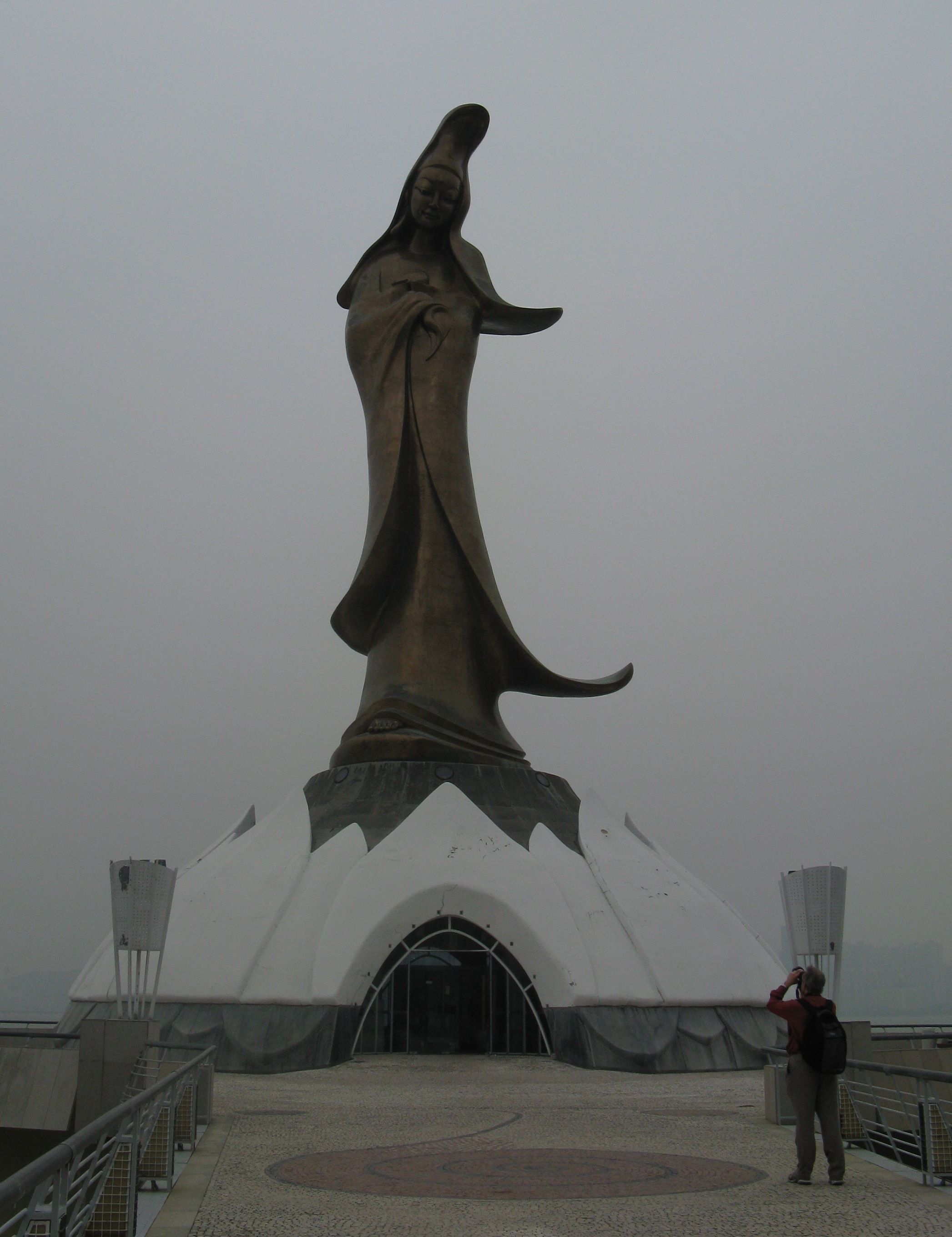
Feng Shui, as most westerners probably know by now, is an important consideration in Chinese life. The correct placement of objects is critical to the well-being of those who live or come within the orbit of that object (which could be a bed in a bedroom, the house itself or, as in the case I raise today, a statue).

Guan Yin, Macau

Guan Yin, Macau

Macau is the former Portuguese colony which was returned to China in 1999. It therefore has a fascinating blend of Chinese and European culture. I’m not going to go into long details about that now but thought I could convey some sense of it all through the example of the Guan Yin Chinese Goddess statue which stands by the Macau Harbour. She is, we were told, rather disliked by the Chinese of Macau. The reasons are:

  • she faces the mountain with her back to the sea, which is the exact reverse of good feng shui (and where else would you need good feng shui but in the world’s gambling capital, eh?);
  • she stands on a closed lotus flower but buddhas, bodhisattvas and other gods/goddesses are traditionally set on an open flower, which symbolises abundance and prosperity;
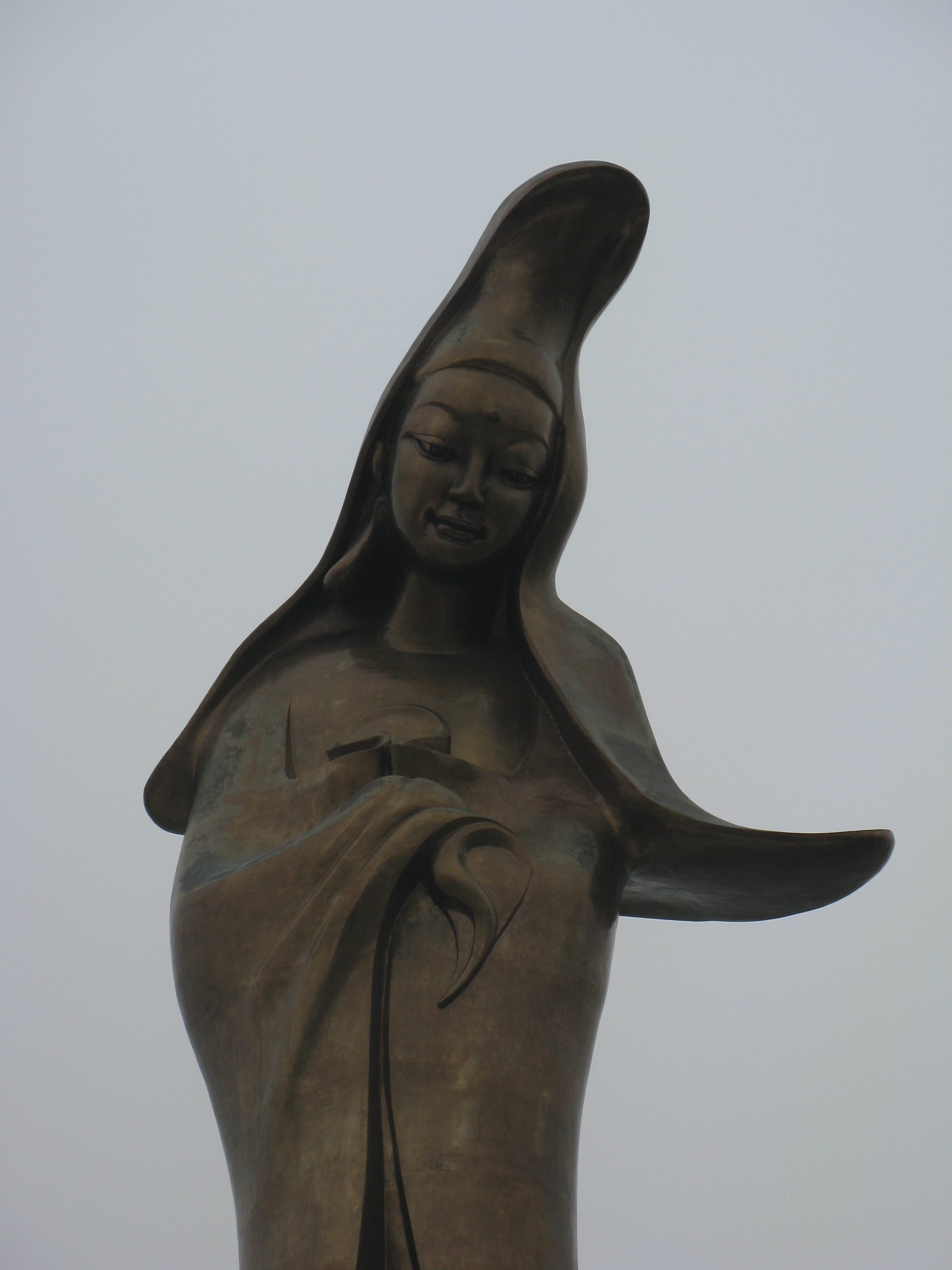
  • Guan Yin, Macau, close-up

    Chinese goddess? Or, Mary?

    she looks more like Mary (that, is the Mother of Jesus) than a Chinese goddess; and, to add insult to injury,

  • she was created and built off-shore resulting in the megamillion dollars paid for her going off-shore.

The things you learn when you travel. I have chosen this as my post to represent our week in Hong Kong/Macau because it reminded me of just how complex culture is and how important cultural knowledge is to our enjoyment and appreciation of the arts. It also demonstrates how easy it is to not quite get it right!

(Oh, and please excuse the photos. It was a grey old day in Macau so her gorgeous “bronzeness” was not well on display the day we saw her.)

Monday musings on Australian literature: My literary home, more or less

Once again Mr Gums and I have left daughter and dog at home in order to hit the road – well, in this case, the skies as by the time this is published we will be in Hong Kong. My posting and commenting will consequently somewhat sporadic for the next week…and so I decided to make this Monday musings a simple one.

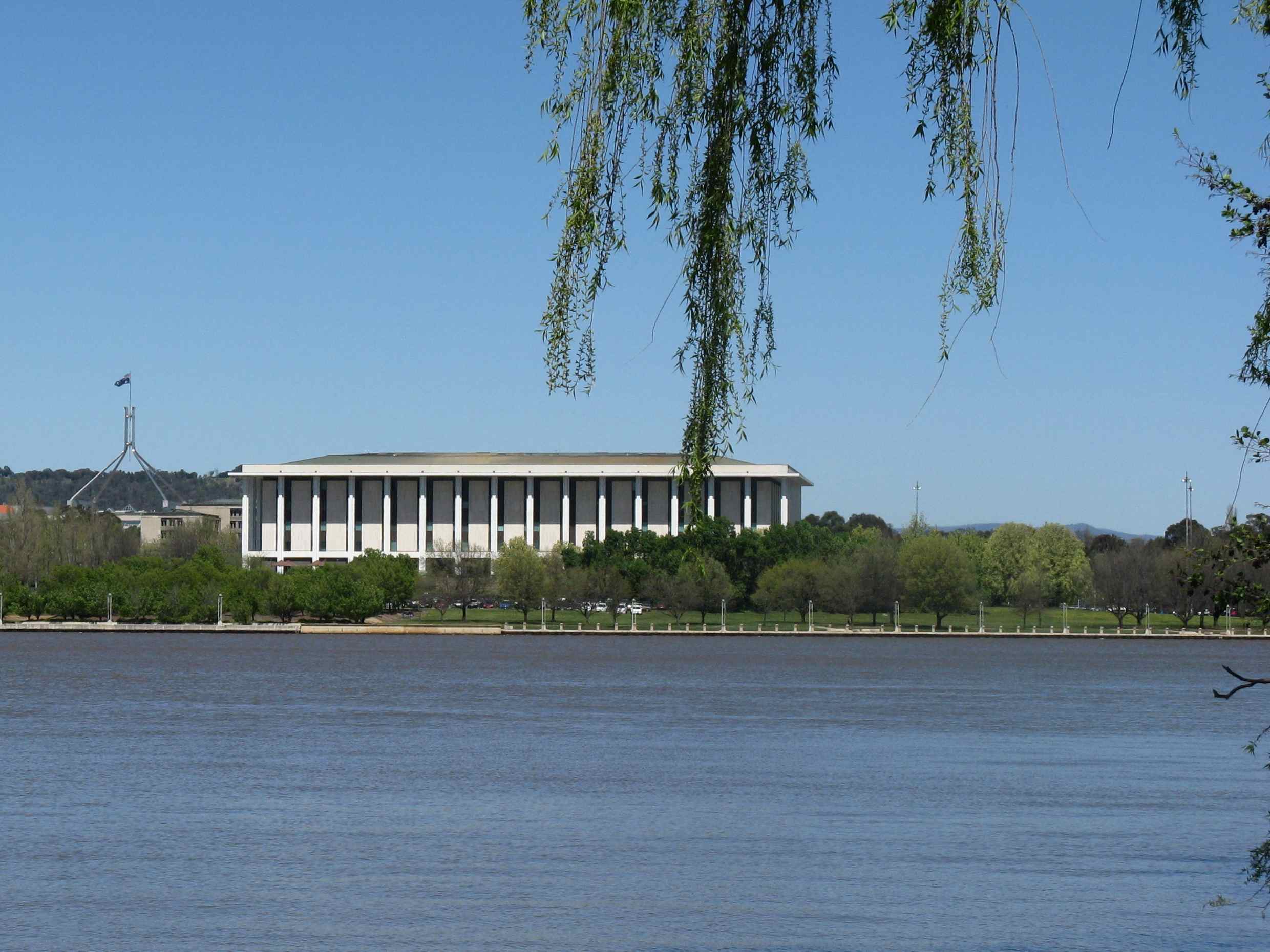
National Library of Australia

National Library of Australia, viewed from Commonwealth Park on the opposite side of Lake Burley Griffin

Now, my real literary home is, as for most of us I expect, my childhood. That is where my love of reading started. I cannot remember a time without books. My parents read, and encouraged reading. Books were my favourite presents. For me, this all translated into choosing librarianship for my career, and this brings me to this post. I count myself lucky that my first professional job as a librarian was at the National Library of Australia. Eventually, the section I worked with separated and became a new institution. Since its work was where my heart lay, I went with it.

However, I have stayed close to the Library: I’m a “Friend” and, since taking early retirement a few years ago, I visit there regularly to read and research, attend seminars, visit the bookshop and exhibitions, and meet friends for lunch. I have heard many Australian writers speak there – including David Malouf, John Marsden, JM Coetzee, Geraldine Brooks, Janette Turner Hospital – and have seen some doing research there – including Kate Grenville.

Being our National Library, it is of course home to many of Australia’s most famous literary manuscripts – too numerous to mention here, but a fairly recent coup was the believed-to-have-been-destroyed papers of Patrick White. It is also where, due to legal deposit, you should be able to see any book published in Australia. A great resource!

The National Library has been one of the world’s forerunners in using and managing the digital domain. Here are some of its major projects:

  • Pandora, the Australian web archive, was among the first attempts in the world to archive online information. It was established in 1996.
  • Picture Australia is a federated search project providing access to image collections from institutions all over Australia. It was established in 1998.
  • Newspaper Digitisation Project, to which I referred in last week’s Monday musings, is a project to digitise, using OCR technology, Australia’s early newspapers up to 1954. Since OCR technology – particularly when used on old newsprint with old printing technologies – results in a lot of “errors”, the National Library invites users to edit the articles. Anytime I use it, I do my correcting bit on the articles I find. The top user-corrector, recorded on the project’s home page, has now made nearly 560,000 corrections. 560,000!! Now, that’s a lot of participatory value the Library has harnessed.
  • Trove is the Library’s latest big project and enables users to search “the deep web” for material relating to Australia and Australians. It uses modern search technologies to point to related material, to enable users to manage the information they find and contribute their own content, and to encourage users to actively engage with the library and each other through forums.

And there’s much more besides … but I’ll leave it here and let you explore my literary home through the links above while I explore Hong Kong …

On polishing Jane Austen’s halo

My American friend Peggy who, several years ago, very generously sent me the Pride and Prejudice Game, has now sent me a link to a short interview – with a transcript – conducted on NPR (National Public Radio) with Dr Kathryn Sutherland. Sutherland is the academic who has been researching Austen‘s manuscripts for the last three years and whose quoted-around-the-world comments I discussed briefly in a recent post.

This interview contains statements by Sutherland that are similar to those she made in a BBC interview (in a link provided by blogger Arti in her comment on my previous post). In Peggy’s link, Sutherland says that she has received some negative reactions to her comments. Not surprising, I suppose, given what was clearly out-of-context seantionalist reporting.

Anyhow, this is what she said to the NPR interviewer:

I’ve heard a range of responses. And I have had some very extreme and, I have to say, unpleasant responses to my work. All I can say is that, you know, as critics we should just stop polishing her halo.

There are very few authors that we put in this extraordinary position where we feel that we should never say anything critical about them. She can stand up to it. She’s interesting. She’s experimental. She’s an extraordinary writer. The idea that we can never question what she wrote I think is absolute nonsense.

Can’t say fairer than that …

David Mitchell, The thousand autumns of Jacob de Zoet

‘Oh I found ways to live to tell the tale. It’s my chief hobby-hawk is the noble art of survivin’.’

‘Loyalty looks simple,’ Grote tells him, ‘but it isn’t.’

‘…Expensive habit is honesty. Loyalty ain’t a simple matter, Di’nt I warn yer…’

It’s interesting that some of the main themes of David Mitchell‘s The thousand autumns of Jacob de Zoet are conveyed by one of its lesser (in terms of status) and more questionable (in terms of morality) characters, the Dutch cook, Arie Grote. Interesting because such a slippery and relatively minor character expresses some critical themes and because Mitchell’s making this choice provides a clue to the book’s tone and style. It has, in other words, a rather wry undertone.

Dejima model, Nagasaki

Model of Dejima, at Dejima Wharf, Nagasaki

So, what is its plot? Broadly, it is about the Dutch East India Company‘s activities on Dejima, a walled island in Nagasaki harbour, during Japan’s isolationist (or, “Cloistered Empire”) period, with most of the action taking place between 1799 and 1800. It follows Jacob de Zoet, a young man who arrives in 1799 to work as a clerk (and to make his fortune so he can return home to marry his love, Anna). What he finds is a multicultural community comprising Dutch, Japanese, a Prussian, an Irishman and others including Malay slaves, living and working within a complex web of ambitions, animosities and allegiances. He discovers pretty quickly that he’s going to need good survival skills to make it through. The question is: will he make it through, and will he do it with his integrity intact?

There is a love triangle of sorts, involving a young Japanese midwife named Orito. And there’s a drama centred on her “abduction” to a horrifying (invoking, for me, Margaret Atwood‘s The handmaid’s tale) monastery/nunnery called Mt Shiranui, which is overseen by the evil lord/abbot, Enomoto. This sounds, I admit, a bit melodramatic and in a way it is, but it seems to work, largely because of the characterisation.

The novel has a huge cast of characters, as this Character List (source unknown) shows and, over the course of 450+ pages, Mitchell gives us the backstories to many of them. At times I felt there was too much detail – as in “why do I need to know all this?” – but the stories were so interesting that I didn’t really mind. Mitchell is not, I have to say, a taker-outer and so, if you like your stories to move along at a fast clip, this is not for you. Many of the characters, from bottom to top of the hierarchy, are corrupt, as they scheme, bribe and manipulate for money, power and/or prestige, but not all are. Some of the most interesting characters are those who are not corrupt but are not perfect either. They include Jacob; the doctor/scientist, Dr Marinus, who tests Jacob somewhat cruelly; the young interpreter, Ogawa Uzaemon, who overlooks Jacob’s illegal importation of his Christian psalter; and John Penhaligon, the gout-ridden English captain who makes a play for Dejima late in the novel.

Having read and enjoyed Cloud atlas, I must say I kept expecting some, shall we call it, literary “tricksiness” but it never really appeared. This is historical fiction told in a linear fashion, albeit with the odd digression and some shifting perspectives. In fact, while not particularly “tricksy”, the style is not simple. There is a lot of variety in the telling:

  • dialogue (and italicised thoughts of characters, as conversations or action occur);
  • backstories;
  • set-ups that don’t always follow through as you would expect (such as that concerning Jacob’s hidden psalter);
  • scenes in which the main action is interspersed by something else going on (such as Cutlip preparing his boiled egg while Penhaligon negotiates with the slippery Prussian, Fischer);
  • action and adventure; and
  • a good deal of humour (including the scene in which a Japanese translator tries to translate a scientific lecture being given by Dr Marinus).

The language is similarly diverse. Mitchell uses irony, metaphor and symbolism, wordplay, and repetition, to name just a few techniques. Here, for example, is a rather lovely oxymoron:

The creeds of Enomoto’s order shine darkness on all things.

And here is a moving description related to an honourable death (without naming names):

An inch away is a go clamshell stone, perfect and smooth …
… a black butterfly lands on the white stone, and unfolds its wings.

I was impressed by the array of literary devices he used and how it never felt overdone. It was his language and characterisation, more than anything else, that kept me engaged.

The book does suffer a little, though, from the breadth of its concerns. I flicked through the book to jot down its themes and ran out of space on my page! So, I grouped them:

  • Political/historical: commerce, nationalism, colonialism and slavery
  • Philosophical: fate, faith and belief, truth
  • Social: education, oppression of women, science and enlightenment
  • Personal/psychological: loyalty and betrayal, honesty, love and integrity, survival

That’s a pretty broad church and, although some naturally overlap, the effect is to dilute the book’s impact somewhat.

So, how would I encapsulate it? Well, I’d sum it up as being about “imprisonment”, both literal and metaphorical. The Dutch are imprisoned on Dejima, the Japanese are imprisoned within their self-imposed isolationist policy, Orito and her “sisters” are imprisoned at Mt Shiranui. And people are imprisoned by their roles and/or culture. For example, women’s options are restricted, slaves have little control over their lives, and many of the characters, including Jacob, are imprisoned by their lack of economic resources that would enable them to freely choose their lives.

This is one of those rather unwieldy books that is hard to pin down but, despite this, I did rather enjoy watching Jacob and co. going about “the noble art of survivin'” in an intriguing place and time.

Monday musings on Australian literature: Dear Sir, or The cult of ugliness

As I was researching Ruth Park for last week’s Monday musings, I came across some “Letters to the editor” in The Sydney Morning Herald and thought they were worth sharing. (As you read them do note how some of the letter writers sign themselves.) I’ll start with a couple of letters criticising Park’s novels:

Sir, The type of literature exemplified in Ruth Park’s “Harp in the South” and the first two instalments of “Poor man’s orange” fits into a pattern which appears also in modern painting and sculpture, and perhaps in a lesser degree, in much modern music.

This general trend may be described as the “cult of ugliness” …

Why cannot she, with her undoubted talent for portraying people, let us believe there are some normal and pleasant people, whose trials and failures and successes, joys and sorrows, would still present a fruitful field for her literary powers?”

(H.E. Ellen, Cronulla, 13 July 1949, p. 2)

Ruth Park, in her novel about the Darcy family seems to revel in the unpleasantness and beastliness of life…

(K.W., Pymble, 15 July 1949)

… We all know that such conditions exist, but making them a subject for a novel will do nothing towards eliminating them.

It seems a pity that we should feel duty bound to hasten on Sunday morning to keep that part of the “Herald” from falling into the hands of the young.

(M. Blayney, Rozelle, 15 July 1949)

The Surry Hotel, Elizabeth Street, Surry Hills

Surry Hotel, Surry Hills (Courtesy: J Bar via Wikipedia, using CC-BY-SA 3.0)

Fortunately, though, other letter-writers saw value in the “cult of ugliness”, such as:

… Too many of us are cramped and stifled by our small world, so that when Miss Park flings a challenge to our “good” society, we shrink from the “ugliness” her claim contains, not willing to admit that the unpleasant morals of Surry Hills are to be found also in many a far more respectable suburb.

I should encourage my lads, were they old enough, to read these novels, for only by a personal touch with the fortunate and less fortunate, can they be really balanced in their adult outlook.

(Mother of Three, Lindfield, 15 July 1949)

… she has drawn a strong picture of loyalty and devotion in family life as it exists in the hearts of the poor and unfortunate, in spite of the worst possible conditions of living. One may just as well condemn Charles Dickens for exposing the horrors that existed in his day, as to condemn Ruth Park for the same objective …

(Mrs L.R. Fowler, 15 July 1949)

… Hughie Darcy’s loyalty to his friend, Mr Diamond, his understanding of his frailties, is born of a Christ-like love, however distorted it may appear to us …

Instead of writing scornfully about “nasty” novels, we need to “get under the skin” of our fellow Australian citizens and guard against such degradation in the future.

(G.M. Powell, St John’s Rectory, Mudgee, 15 July 1949)

Others distance themselves from the prudes and hypocrites who aren’t interested in facing society’s problems:

… “Poor man’s orange” … shows an understanding almost unrivalled in Australian literature of human psychology and of the problems facing certain sections of our society. I tender my congratulations to Miss Park and the “Herald” for writing and publishing, in spite of prudes and hypocrites, this human and moving story of slum life.

(Humanist, Sydney, 15 July 1949)

But my favourite of the supporters is G.M. Powell (already cited partially above) who praises Ruth Park’s ability to

look behind the dirty facade of human behaviour, and to find that the real personality behind it is really very lovable after all, and frequently very similar to us who walk the paths of rectitude…

Oh dear. Given more recent furores over books and “arts” in general (and I’m sure you all can name some favourite ones) which have engendered rather similar responses, it seems that we readers – including the prudes, hypocrites, and walkers in the paths of rectitude – are as universal as the subjects of the books we read. Funny that!

With thanks to the National Library of Australia for its wonderful newspaper digitisation project which made this post possible.

Jane Austen’s manuscripts: Is she the writer we think she is?

Jane Austen sketch by Cassandra

Cassandra's portrait of her sister, c. 1810

Well, it’s all over the web, Jane Austen‘s manuscripts are full, FULL they say, of errors. They’re being formally launched tomorrow, Monday 25 October, so we can all see them then, though as far as I can tell they are already up: Jane Austen’s Fictional Manuscripts. Is something more going up tomorrow? Or is this just a case of a soft launch versus a formal launch? Anyhow, what does the claim really mean?

Kathryn Sutherland, the Oxford University academic who has been looking at the manuscripts, says that

It’s widely assumed that Austen was a perfect stylist – her brother Henry famously said in 1818 that ‘everything came finished from her pen’ and commentators continue to share this view today.

Except that it is pretty well acknowledged that Austen’s family was protective of her reputation, so … we do need to look a bit further.

Kathryn Sutherland continues to say, according to what I presume is the advance press release:

The reputation of no other English novelist rests so firmly on this issue of style, on the poise and emphasis of sentence and phrase, captured in precisely weighed punctuation.

That is partly so – and I am certainly one to laud her style – though I’d say her reputation rests on three things: style, story and insight.

Anyhow, Sutherland then says that what we know as the precision of Jane Austen’s writing is not evident here –

We see blots, crossings out, messiness – we see creation as it happens, and in Austen’s case, we discover a powerful counter-grammatical way of writing. She broke most of the rules for writing good English…

– and suggests there was a strong editorial hand involved in getting the works to the state in which we see them. Hmm… isn’t this the case for other authors? And anyhow, on how many novels is she basing this opinion? If it’s just Persuasion and the unfinished Sanditon – besides some of the earlier juvenilia and minor works then these two were written when her health was failing. In fact, a quick look at the website as it exists now shows very little crossing out, for example, in Lady Susan. In her letters, Austen wrote of a few small typographical errors in Pride and prejudice and the odd missing “said he” and “said she”, which presumably means that what was published was close to what she wrote? Added to this is the fact that I understood that very little survives in manuscript form of Jane Austen’s novels. In fact, the introduction to the site says that:

There is no evidence to indicate that Jane Austen saw the bulk of these drafts as anything other than provisional.  Hence the stark situation that no manuscripts appear to remain for works published or planned for publication in her lifetime (Sense and SensibilityPride and PrejudiceMansfield ParkEmmaNorthanger Abbey or Persuasion, the famous six novels). The assumption must be that their working and finished drafts were routinely discarded once replaced by print forms. There is only one exception: the two cancelled chapters of Persuasion, which represent an alternative ending to the one that made it into print.

Has this “press release” (or syndicated article) been written to get some controversy going … or is Sutherland, a reputable scholar I believe, basing her statements on other information? Will there be more on the site tomorrow? I look forward to following the continuing discussion …

Did Shakespeare write Shakespeare? Did Austen write Austen? In the end what matters really is the work … isn’t it? Or is this just a little too naive?

POSTSCRIPT: I wrote the above last night as a bit of a “feeler”. While the statements in the news pieces did not accord with the knowledge I had about Austen’s manuscripts and her own practices, and while my research indicated that Sutherland is a reputable scholar, I wanted to raise the following issues:

  • had more knowledge/manuscripts come to hand (though I suspected not) to alter our understanding?
  • what difference does editing make to our assessment and appreciation of the works?

Let’s not even bother to raise the third one about  the ethics of such skewed reporting if that’s what I – and clearly others – believe is behind it all!

Nicole Krauss, The young painters

In her work, the writer is free of laws. But in her life, Your Honour, she is not free.

Nicole Krauss‘s short story, “The young painters”, is a sly, clever little piece. I have not read Krauss’s novels so came to this short story with no preconceptions, other than that I’d heard of her. The story starts with:

Four or five years after we got married, Your Honor, S. and I …

Ah, I thought, so the narrator is defending herself in a court for some crime she’s committed. And so it turned out – more or less – because this is not about the usual sort of crime nor the usual sort of court. It is about the crime of art, that is the crime of stealing the lives of others for art’s sake. In this case, the artist is a writer and she has “stolen” a tragic story from a dinner host about “the young painters” of the title. She has also written a novel using her father’s last days, telling stories about him (particularly regarding his loss of control of his bodily functions) that she knows he would have seen as a betrayal. She does it nonetheless, justifying herself in two ways: one is that she doesn’t write the novel until after his death and the other is that the story reflects

less on him than on the universal plight of growing old and facing one’s death – I did not stop there, but instead I took his illness and suffering with all its pungent detail, and finally even his death, as an opportunity to write about his life and, more specifically, about his failings, as both a person and a father, failings whose precise and abundant detail could be ascribed to him alone. I paraded his failings and my misgivings […] even if the final notes of the book were of triumphant love and grief at the loss of him, in the weeks and months leading up to its publication a sickening feelings sometimes took hold of me  […] In the publicity interviews I gave, I emphasized that the book was fiction and professed my frustration with journalists and readers alike who insist on reading novels as the autobiographies of their authors, as if there were not such thing as the writer’s imagination …

Later in story she runs into the dinner party host and senses, rightly or wrongly (the point is not what others think but her own conscience), his displeasure at her use of the story. She defends herself, to his Honor, by saying the story had not been told in confidence, that she had not discovered it surreptitiously by sneaking around his diaries and journals (which of course begs the question of those writers who do!).

And so, here we have laid before us various writerly defences:

  • I’m universalising from the particular;
  • I’m not writing autobiography but fiction;
  • the story was “given” to me (and, presumably, you knew I was a writer when you told me).

But, for this writer, it all starts to play on her conscience … and here I will end so you can read the story yourself. It’s very short – just 4 pages if you print it out from the link below – and I’ve only touched the surface. The ending is effective.

If this story is a guide to Krauss’s ability as a novelist, and the way she thinks about her “art”, then I’d like to read more, as I found it a cleverly – and dare I say it, poignantly – conceived and executed story.

Nicole Krauss
“The young painters” (from “20 under 40”)
The New Yorker, 28 June 2010
Available: Online

Note: As with several of The New Yorker short stories, this is apparently an excerpt from her novel Great house.