Monday musings on Australian literature: West Coast Writers

Western Australian cities, towns, settlements ...

Adapted by Mark Ryan (Image from Wikipedia under the GNU Free Documentation License)

For the non-Australians among you, Western Australia is our biggest state and, for many of us, is further away from where we live than New Zealand. Moreover, its main population areas are on the coast: there is a lot of desert between the eastern states and where most Western Australians live. Consequently, it would be true to say that more eastern Australians visit places like New Zealand and Bali than visit Western Australia – and, conversely, more Western Australians visit Bali than visit the eastern states. Every now and then they rattle the cage and speak of secession!

Western Australia was one of the first parts of the Australian mainland to have been visited by European explorers. Dutch explorer Dirk Hartog famously (to Australians) affixed a pewter plate when he visited the west coast in 1616. The first white settlement though did not occur until 1826 in Albany, followed by Swan River (now Perth) in 1829, some 40 years after Botany Bay was settled on the east. But, I am not here to give you a history of Western Australia. Rather, I’d like to introduce you to some of the writers the state has produced.

The state’s most famous writer – past or present – has to be Tim Winton. He has won the Miles Franklin award four times (only the second writer to do so) and he is still producing. He writes novels, short stories and children’s books – and he is a significant advocate for the environment. If there is such a thing as the GAN, Winton is currently seen as a major contender. Winton loves the land, and particularly the Western Australian coast. Most of his books are set there and place is significant in the lives of his characters. He once said to an Australian literary editor that “The place comes first. If the place isn’t interesting to me then I can’t feel it. I can’t feel any people in it. I can’t feel what the people are on about or likely to get up to”. He is the writer to read if you want to “feel” the state. Here are a couple of excerpts from Dirt music, on the more remote northwest:

Fitzroy River

Aerial shot of the Fitzroy River

… and Fox [in a plane] sees how the land is with its crone-skin patterns, its wens and scars and open wounds. The plains, with their sparse, grey tufts of mulga scrub, rise into the high skeletal  disarray of the sandstone ranges where rivers run like green gashes towards the sea. All rigid geometry falls away; no roads, no fences, just a confusion of colour. Out at the horizon the jagged, island-choked coast.

AND

The water is like shot silk and he barely raises a crease. It’s so hot out there, so still and clear that the distances seem to expand until everything looks twice as far as it did on the map.

But he’s not the only writer to evoke life in the West. Robert Drewe, who moved to Western Australia when he was 6 and spent his formative years there, has also written evocatively about the place. His autobiographical-cum-fictional book The shark net is a pretty confronting story about his childhood and, in particular, the role played in it by serial killer Eric Cooke who committed 8 murders the late 1950s to early 1960s.

And then there’s one of my favourite writers, Elizabeth Jolley. She migrated to Western Australia with her husband in 1959. Her writing though tends to be more interior, with place and setting used symbolically, metaphorically. Alienation and marginalisation are big themes for her, so I can’t help surmising that her dislocation from England combined with the remoteness of Western Australia contributed to this sense in her work, but it mightn’t be quite that simple. Here she is in an essay titled “A small fragment of the earth”:

In a country where a 10-centimetre map would produce sheets of blank spaces, the emptiness and the silence are impressive.

At times, in this silence, the traveller is tempted to stop the car with the idea of walking. To get out of the car and to walk. The road between empty paddocks is quiet and deserted. When walking it would be possible to accept a different view of time and journey. It would be possible to feel small and safe, walking and then pausing to stand still.

The occupation of a small fragment of the earth is known only to the person who is alone in it. It is possible to imagine the feelings of being unseen and not known about while standing alone in one isolated place, low down under the immense, clear blue sky. It might even be possible to think that all anxieties and fears will disappear. They might dissolve, dissipate themselves into the silence.

There are other significant writers too – such as Katharine Susannah Prichard, Randolph StowSally Morgan, Dorothy Hewett, Gail Jones and Craig Silvey – but I can’t possibly write about them all without becoming rather tedious. They are all worth checking out though.

Jane Austen, Sense and sensibility (Vol. 2)

Austen, Sense and sensibility, Ch 36 illustration

From Chapter 36, illus. by CEBrock (Presumed Public Domain, from solitaryelegance.com)

…and because they were fond of reading, she fancied them satirical… (Lady Middleton on the Dashwood sisters, Ch. 36)

In January, I wrote about Volume 1 of Jane Austen’s Sense and sensibility, which my local Jane Austen group is reading volume by volume this 200th anniversary year of its publication. Unfortunately I missed the February meeting and so didn’t take part in the discussion. But, I am still reading it volume by volume. Here are some thoughts on Volume 2 (which comprises Chapters 23 to 36).

In my discussion of Volume 1, I suggested that the “sense” and “sensibility” dichotomy is not as absolute as the title would suggest. However, in Volume 2, Elinor and Marianne are pretty well entrenched in these two opposing positions. Marianne gives full rein to her emotions as the extent of Willoughby’s perfidy becomes clear, while Elinor takes tight control of herself to hide her emotional distress about Edward. Is this a flaw in the novel? Or Austen’s skill in setting up the characters and then, in this central section, using their prime characteristic to further her plot and themes? Let’s see how it pans out in Volume 3.

Also in my discussion of Volume 1, I talked about what I saw as the theme of “judgement” being developed in the book. The word “judgement” does not appear as frequently in this volume, but I think the idea is still there. Elinor is convinced that Marianne and Willoughby have a “secret” engagement because she does not believe Marianne to be so lacking in judgement as to behave the way she does (giving Willoughby a lock of hair, writing to him) without being engaged. And yet, she’s not totally confident in Marianne because she decides to go to London with Marianne and Mrs Jennings

as she did not think it proper that Marianne should be left to the sole guidance of her own judgement…

Is Elinor a bit of prig? Some think so, but I prefer to see her as a wise young person, who needed to be so, given the mother and sister she had. As the volume progresses, we see the failure of judgement in many of the characters, such as Fanny Dashwood who ironically prefers to have the Steele sisters as her guests over her relations, the Dashwoods, and Mrs Jennings whose general kindness makes it hard for her to see through more calculating characters like Lucy Steele.

For all this, though, it is money that drives the plot in this book, that generates its main plot crises, one of which occurs in this volume. Money is behind Willoughby’s callous treatment of Marianne, as Miss Grey has £50,000! Miss Morton has £30,000, and so is being promoted in this volume as a good catch for Edward Ferrars who has only £2,000 of his own (though he is promised more if he marries well. What’s that about money begetting money?) Lucy claims to love Edward for himself, and not his money. Money is the governing principle in the lives of Mrs Ferrars and her daughter, Fanny Dashwood. John Dashwood never appears without money being far behind. Money is a significant factor – particularly regarding women and marriage – in all of Austen’s novels, something she establishes clearly in this, her first one to be published.

One of the delights of this volume is the way characters are so beautifully and consistently delineated. For example, here is how some of the characters respond to the news of Willoughby’s engagement to Miss Grey:

  • Hail-fellow-well-met Sir John Middleton finds the behaviour “unaccountable” from such a bold rider;
  • Cheery but garrulous Mrs Palmer “resolved never to mention his name again, and she should tell everybody she saw, how good-for-nothing he was”;
  • Cold Lady Middleton shows “calm and polite unconcern”; while
  • Kind Colonel Brandon makes “delicate, unobtrusive enquiries”.

Austen’s ability to define character so clearly, using satire, irony or straight description as the character warrants, is one of the things I love about her.

Finally, I just have to share this little bit of “plus ça change”:

Why don’t he, in such a case, sell his horses, let his house, turn off his servants, and make a thorough reform at once? I warrant you, Miss Marianne would have been ready to wait till matters came round. But that won’t do now-a-days; nothing in the way of pleasure can ever be given up by the young men of this age.

What do I hear today about today’s younger generation wanting it all now?

What you call Cult Fiction, I call …

Recently I wrote a post on why I love ABC’s Radio National, giving The Book Show as one of the reasons. Now, I will talk about why I love ABC TV. Or, at least, about The First Tuesday Bookclub and its spin-off Jennifer Byrne Presents. Both programs involve a panel discussing books. The First Tuesday Bookclub is a monthly program (on the first Tuesday of each month, no less)  in which Byrne, two regular panel members and two guests discuss, usually, a current book and an older one. Jennifer Byrne Presents is an occasional program in which Byrne and four guest panel members discuss a particular bookish topic such as bestsellers, crime fiction, travel writing.

One of these occasional programs was broadcast this week, and the topic was cult fiction. The guests were asked to name their favourite cult fiction book, and their choices were:

Fascinating, eh? After each panel member spoke a little to their choice, Byrne asked them …

What makes a cult book?

They tossed around a number of ideas, including that cult fiction should:

  • have some level of zeitgeist
  • have some sense of danger, of being a little off the beaten track, of being daring
  • be loved intensely (to the extent that people might dress up, talk the language such as Elvish, meet to discuss it, and so on)
  • have longevity
  • not be a bestseller

Not all the books nominated by the panel meet all these criteria, particularly the “bestseller” one.

Other questions Byrne asked were:

  • Does cult fiction have to be well-written? (Most panel members said yes)
  • Can you call a cult novel one you only read once? (The panel varied a little on this, though most believed it’s a book you read and read again)
  • Is your relationship with someone affected if you discover they don’t share your particular “cult fiction” love? (Again the panel varied but veered towards “yes”, though perhaps with a little bit of the tongue-firmly-planted-in-cheek)

Is Jane Austen a cult author?

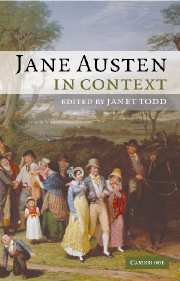
Janet Todd, ed, Jane Austen in context

Courtesy: Cambridge University Press

All this (of course) made me think of Jane Austen, and an essay by Deidre Shauna Lynch on the “Cult of Jane Austen” in Cambridge University Press’s book, Jane Austen in context (edited by Janet Todd). Lynch analyses the range of Jane Austen followers, from the fans to the scholars, and explores some of the implications behind Jane Austen ‘worship’ and the tensions that exist between those who wish to focus on her work and those who seek a more personal relationship with the author. She discusses how the latter group, in particular, have spawned a particular type of Jane Austen tourism that can be likened somewhat to that of pilgrims visiting their saint.

Coincidentally, around the time I read this essay, the Jane Austen House Museum wrote an open letter to the Jane Austen Society banning people from scattering ashes in Chawton‘s grounds. A manager said that while the Museum understood people’s desire to have their ashes scattered at Chawton:

we don’t really feel it’s appropriate. If it enriched the soil we wouldn’t mind so much but the ashes have no nutrients at all.

Oh dear! She does go on to say, however, that Jane Austen had a good sense of humour and that:

she would think it’s hilarious and be thrilled she inspired such devotion.

But, that’s enough of that … otherwise you will start to suspect me of Austen fandom.

Besides, what I really want to know is: How do you define cult fiction? And, do you love any books that you would put in this group?

Monday musings on Australian literature: Japan and Australia

I had another post partly drafted for today but, due to the events of last week in Japan, I’ve decided to postpone that idea for another time. Australia (and we are not the only country in this) has a close relationship with Japan – much of it positive, some of it negative (this latter to do with, most recently, whaling, and before that the Second World War). Like most good relationships though we accommodate the good and the bad and strive always to improve it. And here endeth that particular lesson!

Canberra Nara Candle Festival, 2008

Canberra Nara Candle Festival, 2008

I’m not going to detail the full history of our relationship now, but Japanese people have lived and worked in Australia since the nineteenth century – back then, in industries like pearl diving and sugar cane farming. Japan is an important trading partner for Australia – and so, largely for this reason, not only is Japanese a popular language taught in schools, but many cities, towns and schools across the country have sister relationships with their counterparts in Japan. Our city, Australia’s capital, is sister city to Nara, a previous Japanese capital. Our son taught English in Japan for three years. Mr Gums and I have visited Japan twice, and are booked to go again this May.

In other words, Australia’s connections with Japan are political, economic and cultural. Consequently, things Japanese are not hard to spot. Food, cars, computers and other electronic goods are the obvious manifestations, but they are in our culture too. Manga and anime for a start. However, for today’s post I’m choosing just one example. It’s a poem that was written in response to the 2004 earthquake and subsequent tsunami in the Indian Ocean. I’ve chosen it because it’s relevant now, and because it shows how language transcends boundaries. After all, when I grew up, we talked of tidal waves.

Tsunami
such a pretty word
trips off
the tongue
saltily
in pleasing phonemes
(Japanese
– you know –
like sakura and
kimono)
[ … ]

Tsunami
a slash
of syllables
– tabloid terrible –
a crackle of images
ravage
our screens.
[ … ]
lives shatter [ … ]

(from “Tsunami”, by Anita Patel, in Summer conversations, 6(2), 2006)

It’s a beautifully conceived poem, with a very Japanese sense of form and  symmetry, but for copyright reasons I don’t believe I can quote it in full.

And now, in respect for those suffering, I’ll finish here and leave further discussion of Japanese culture and Australia for better times.

Note: I have not here, or in previous posts, provided links for donations to relief efforts for the way-too-many disasters that have occurred during the time I’ve been blogging. I’m sure, after all, that you, like us, have your favourite charities to use if you wish to donate.

David Foster Wallace, All that

I have not yet read anything by David Foster Wallace and so when I came across his short story*, “All that”, in The New Yorker, I jumped at the chance of an introduction.

It has a first person narrator, who is looking back on his childhood and recalling, in particular, his fascination with magic and religion. It is a clever – and rather sad – little piece about the mismatch between the rationality of parents and the incredulity of children, especially highly imaginative ones. The prime technique Wallace uses to explore this mismatch is that of an unreliable or, more specifically, naive narrator, so that we ache for the little boy while also recognising where the parents are coming from (even if we hope we would not be quite like them). As the narrator says:

That is why it is that adults and even parents can, unwittingly, be cruel: they cannot imagine doubt’s complete absence. They have forgotten.

And so they tease, and set children up, unaware of the impact of their behaviour.

The story’s tone is one of uncertainty and qualification. The narration is peppered with such expressions as “I’m ninety percent sure”, “as I remember”, “I’m positive it was”, “I believe”. And, on occasions, he uses ambiguous syntax and then has to clarify the meaning for us, as in “It was (‘it’ meaning the cement mixer) the same overlarge miniature …”. All this gives the reader the distinct sense of a disconnect between what the narrator is saying and what he is really feeling. For example, the parents lie to their son in the teasing but cruel way that adults do, by telling him that his cement mixer is magic, that it mixes cement while he pulls it along but that it stops the minute he turns around to look at it. He is mystified why his parents, knowing of this “magic”, hadn’t told him immediately but waited some weeks or months. He says of his parents:

They were a delightful but often impenetrable puzzle to me; I no more knew their minds and motives than a pencil knows what it is being used for.

Now that’s an interesting image to unpack, eh? The first time he mentions his parents, he calls them “my biological parents”, providing another clue to a disconnect.

Then there is the intriguing pacing. Most of the story is written at a normal pace with a mix of simple and complex sentences, but, every now and then, there is an excessively long sentence, as in:

Sometimes the experience of the voices was ecstatic, sometimes so much so that it was almost too intense for me – as when you first bite into an apple or a confection that tastes so delicious and causes such a flood of oral juices in your mouth that there is a moment of intense pain in your mouth and glands – particularly in the late afternoons of spring and summer, when the sunlight on sunny days achieved moments of immanence and became the color of beaten gold and was itself (the light, as if it were taste) so delicious that it was almost too much to stand, and I would lie on the pile of large pillows in our living room and roll back and forth in an agony of delight and tell my mother, who always read on the couch, that I felt so good and full and ecstatic that I could hardly bear it, and I remember her pursing her lips, trying not to laugh, and saying in the driest possible voice that she found it hard to feel too much sympathy or concern for this problem and was confident I could survive this level of ecstasy, and that I probably didn’t need to be rushed to the emergency room, and at such moments my love and affection for my mother’s dry humor and love became, stacked upon the original ecstasy, so intense that I almost had to stifle a scream of pleasure as I rolled ecstatically between the pillows and the books on the floor.

Phew! That is one mouthful and a half. It relates to his discussion of his childhood “voices” and his religious feelings (which were not shared by his rational parents), but the language used here and the sudden breathless pace speak to all sorts of undercurrents. The story ends with his recounting watching a movie with his father, in which his and his father’s memory of some critical points vary significantly.

The thing is, I don’t know much about Wallace’s writing and his specific concerns but I did find this a rather disturbing tale … partly because it is hard to decide just how unreliable the unreliable narrator is!

David Foster Wallace
“All that”
The New Yorker, 14 December 2009
Available: online

* I believe this is an excerpt from his posthumous “novel”, The pale king, which will be published this April.

Delicious descriptions from Down Under: Nam Le on a storm

Australia is not all surf, sand and sea, as much as the tourist industry likes to have it so. We actually do have “weather”, as many quaintly call anything that is not fine, sunny and calm. It is, in fact, autumn here now … after a rather unusual summer (in most parts of the country). It wasn’t as hot, and we had a lot more rain than the average. There have been, in different parts of the country, fires, floods and cyclones, all wreaking their own special form of damage, so I thought it was time for a description that wasn’t sun. What about storms?

Storms in literature, of course, usually have a symbolic as well as literal function, and this is the case in Nam Le‘s story “Halfhead Bay”. Storms can reflect strong emotions or conflict, herald a disturbance, suggest chaos or violence, and/or imply divine intervention. In King Lear, for example, the storm reflects his growing madness and, as is generally regarded, signposts divine intervention. But, symbols like that are most effective when they work well on the literal level first. King Lear feels the power of the actual storm as we readers see its import. Nam Le’s storm, too, is visceral:

And she was right, the storm was coming in – it was streaking like a grey mouth snarled with wind, like a shredded howl, rendering the land into a dark, unchartered coast. The bay turning black. For centuries, fleets had broken themselves against the teeth of that coast.

It’s not unusual to personify storms … but this one here is particularly powerful, not to mention rather malevolent sounding.  Some storms can be powerful in a beautiful way. This, however, is not one of them.

Note: I read Nam Le’s award-winning short story collection, The boat, a couple of months before I started blogging, so you won’t have seen a review here. It’s an astonishingly versatile collection and well worth reading.

Marie Munkara, Every secret thing

They all nodded, not knowing what the hell curry* was but getting gist of the story all the same.

Marie Munkara leads us a merry dance with Every secret thing, her first book, which won the David Unaipon Award for an unpublished Aboriginal or Torres Strait Islander writer. What exactly is this “thing” she presents to us? A novel? A short story collection? Well, I think it’s a bit of both. It looks like stand-alone short stories, and can probably be read that way. But, the same characters keep reappearing in the stories and there is a chronological thrust to it with a conclusion of sorts in the final story, so I’d call it connected short stories.

Form, though, is not the only way in which she leads us a merry dance. This is a genuinely funny book – sometimes slapstick or ribald, sometimes more bitter, satiric and/or ironic, but pretty well always funny. However, her subject matter is desperately serious – the destruction of indigenous culture through contact with white culture, specifically in this book through contact with missions and missionaries.

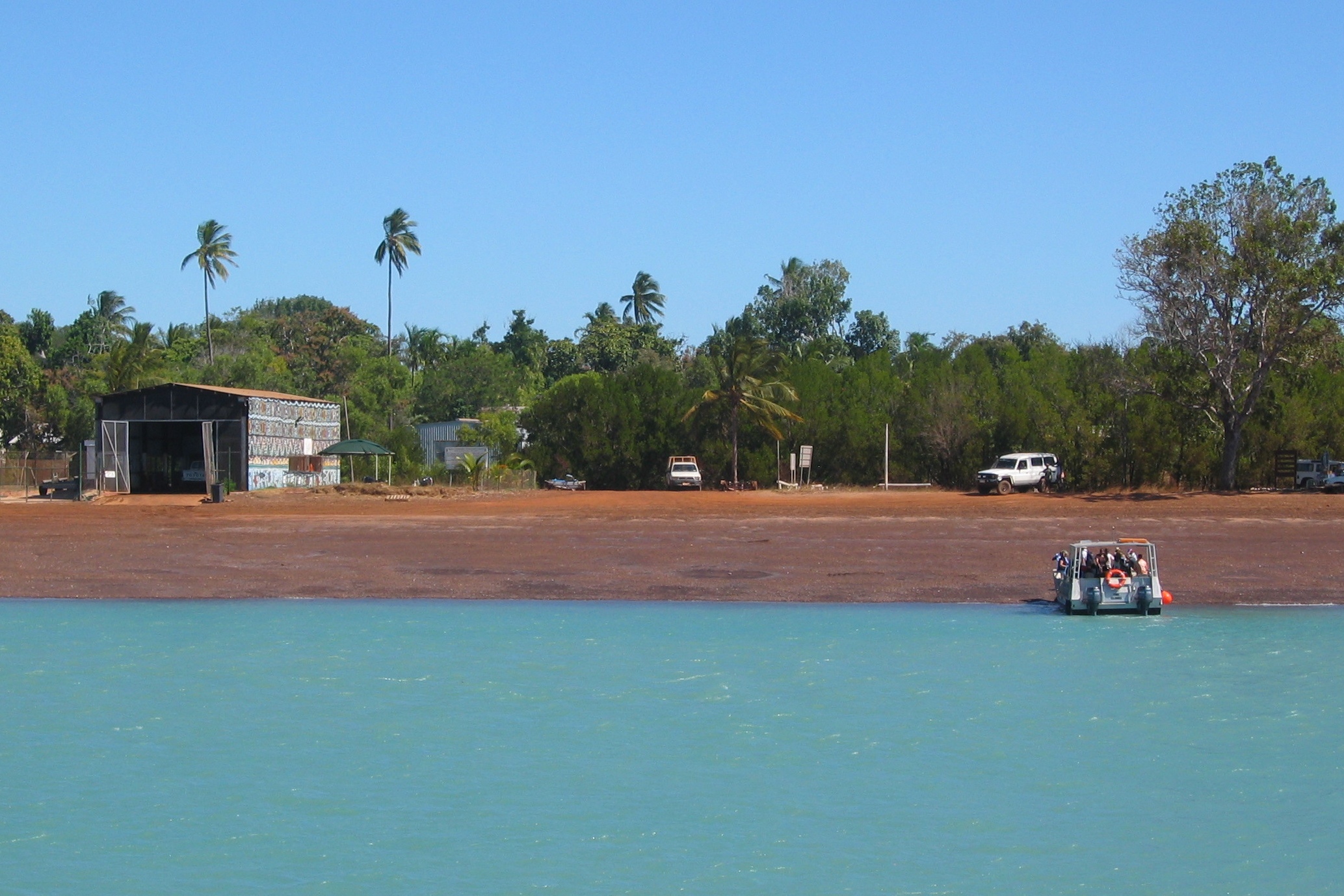
Bathurst Island (Tiwi Islands)
Approaching beautiful Bathurst Island (Tiwi Islands)

Marie Munkara was born in Arnhem Land and spent the first few years of her life on Bathurst Island in the Tiwi Islands. She left there when she was 3 years old, and didn’t return until she was 28. These stories, she says, are drawn from those told to her by friends and family, and are set, I think, in the early to mid twentieth century. She explores a wide range of issues reflective of indigenous-white contact at that time, including education and religion, the stolen generation, sexual abuse, the introduction of alcohol and disease, and anthropological research.

Munkara sees humour in everything (more or less) but her more biting humour is reserved for the “mission mob” because, of course, it is they who wield the power over the “bush mob”. The “bush mob” are shown to be intelligent and resourceful but no match for the power of the muruntawi (white people). Her language draws on a wide range of traditions – including indigenous storytelling, biblical, common clichés – and from these she tells stories that are only too believable. Here she tells us about one of the Brothers:

And so time passed and the natural progression of things came to be and the bullied became the bully, and the bully became the misogynist, and the misogynist became a Brother in a Catholic mission in a remote place in the Northern Territory… (“The sound of music”)

A too familiar story, told in a biblical tone. There is a funny story in which the “bush mob” tries to lead an anthropologist astray by feeding him incorrect information (such as obscene or silly names for ordinary objects), but their victory is Pyrrhic, as the end of the story conveys:

And after all, it was difficult sometimes to tell the difference between the missionaries and the madmen and the mercenaries because their eyes all looked the same and their tongues all spoke the same language of greed. If it wasn’t your soul they wanted, it was something else. Until it became an automatic response whenever a strange muruntani appeared to put out your hand for the specimen bottle to piss into or extend your arm for a blood sample to be taken or for the ungracious thought to pass through their mind that here was yet another who had come to take but as always gave nothing in return. (“Wurruwataka”)

Her stories about the stolen generations are particularly bitter, but again she uses humour. She tells the story of Marigold (née Tapalinga) who’d returned “home” after years away, only to find that she no longer fit, but:

Nor did Mrs Jones want the hussy back as their servant having sprung the little slut underneath Mr Jones in the spare room. The poor man was still traumatised by the ordeal. This wasn’t the first time she’d raped him, he claimed. (“Marigold”)

Only an indigenous writer could write something so patently ridiculous on this topic – and so drive the point home!

Munkara neatly tracks the Bishop’s behaviour and impact on his flock by constantly changing her epithet for him. In the first story, “The Bishop”, he is introduced as “his Most Distinguished” but is then referred to by various names including “his Most Garrulous”, “his Most Impatient” and “his Most Impious”. This changing of names for the Bishop is rather unsubtle humour but it carries a sly comment on the “mission mob’s” disrespect for indigenous culture by insisting on naming indigenous people, completely ignoring the fact that they have their own names. And so, in the first story, we are introduced to Matthew, Mark, Luke and John, to Epiphany, Lazarus, and John the Baptist, to name just a few of the cast of characters populating the book.

Another technique Munkara uses is to pepper her stories with white culture sayings and clichés, such as, “misery loves company alright”, “looking on the bright side”, “but you just can’t please everyone”, and this one:

And so it came to be that for the first time ever, the mission mob found themselves sitting where they’d never sat before – between a rock called ‘you didn’t see that one coming did you’ and a hard place called ‘bush mob’s indifference’. (“The good doctor”)

Overall, this is deceptively simple but clever writing that sets up and undermines its premises every step of the way. First “the mission mob” seems to be winning, and then “the bush mob”. However, while it could be said that “the bush mob” were “clever individuals who had learnt to sit on the wobbly fence of cultural evolution without falling off”, the real truth is that

They didn’t have to die to go to hell because the mission had happily brought that with them when they’d arrived unasked on the fateful shores of the place that was their heaven all those years ago. (“The movies”)

A spoonful of sugar, they say, makes the medicine go down, and that’s certainly true of this book. The sugar is not so strong though that you miss the medicine. Munkara makes sure of that – and the end result is a very funny but also very sobering book. I suspect and hope that Munkara has more … because the missions are only one facet of the history of contact in Australia. There is plenty for her to sink her teeth into.

Musings of a Literary Dilettante and Resident Judge have also reviewed this book.

Marie Munkara
Every secret thing
St Lucia: University of Queensland Press, 2009
181pp.
ISBN: 9780702237195

* Reference to the colloquialism “giving them curry”.

Monday musings on Australian literature: SPUNC has spunk

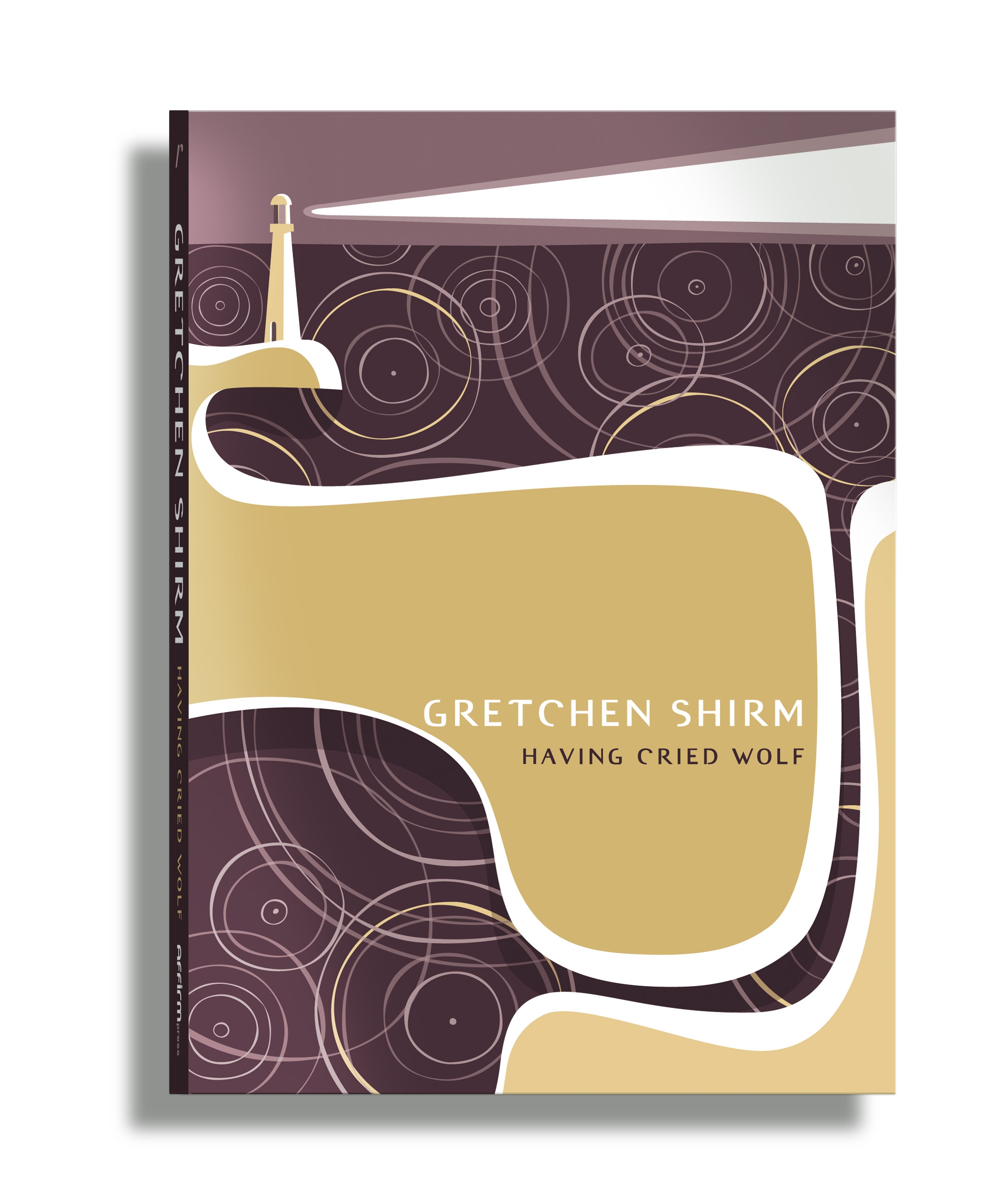
Having cried wolf, book cover

Isn’t this cover gorgeous? (Courtesy: Affirm Press)

Yes, come here for your wit. I bet I’m the first one to have thought of that line! SPUNC*, in case you haven’t heard of them and you probably haven’t, is the Small Press Network (in Australia). The acronym actually stands for Small Press Underground Networking Community. It was formed in Melbourne in 2006 and its aim – as you would have guessed – is, in its own words, “to promote independent publishing and support the principle of diversity within the publishing industry as a vital component of Australian literary culture”.

Its definition of small is, I think, pretty broad. I suspect the key word is “independent” more than “small” as its members range from what seems to me to be well-established companies, like Text Publishing, which publishes some high volume works, to smaller more boutique publishers like Ginninderra Press and, a new kid on the block, Affirm Press.

In 2007, SPUNC commissioned a report into independent publishing in Australia. It was titled A lovely kind of madness: Small and independent publishing in Australia. Aha, there it is “small” and “independent” and it seems that for the purposes of this report the focus was on the smaller end of the scale.

In fact, definition is one of the issues the report confronted and so, using the evidence they gathered from their survey and overseas research, they came up with one. Their suggested guidelines for ‘small press’ is that they are independent publishers who:

  • Have published at least one book title or journal issue (in hardcopy);
  • Have an annual turnover of $500 000 or less;
  • Have print runs of usually less than 2000;
  • Have published more than one author;
  • Publish fewer than 10 book titles per year; and
  • Usually do not charge authors fees for production, editing or distribution.

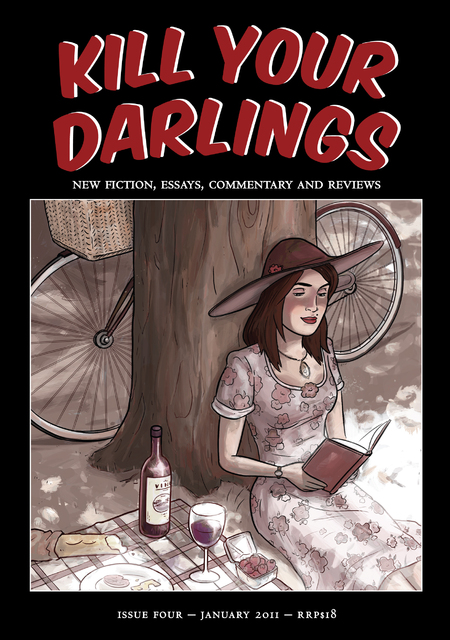
Kill Your Darlings Issue 4

Kill Your Darlings

Guess what the report found? Well, in case you can’t, I’ll tell you: it’s that the main problems faced by smaller presses are publicity and distribution. Who’da thought it?! They do admit though, that distribution in particular is a problem for all publishers, not just the small ones, due to “the combined effects of a crowded market, a geographically wide distribution area, low margins and relatively small print runs”. It’s hard running any business in “a wide brown land”.

Why am I writing this? Because I do read books from small presses, including Affirm Press, Black Inc, Ginninderra PressGiramondo Publishing, Griffith Review, and Kill Your Darlings to name just a few. And because I want them to survive: they pick up new upcoming writers; they publish poetry; they publish essays; they, in fact, make the major contribution to the diversity of publishing in Australia; they foster local talent; and they are often simply just beautiful to look at and hold.

Do you read small presses? Do they contribute to your literary scene? What do you think they could do to lift their visibility?

* POSTSCRIPT: SPUNC link removed due to Small Press Network changing its “name” from SPUNC to SPN (for obvious reasons), 20 Feb 2022.

Albert Camus, The plague (orig. La peste)

All I maintain is that on this earth there are pestilences and there are victims, and it’s up to us, so far as possible, not to join forces with the pestilences. (Tarrou)

and

… to state quite simply  what we learn in a time of pestilence: that there are more things to admire in men than to despise. (Dr Rieux)

Albert Camus 1957

Camus 1957 (Public domain from the New York World-Telegram and Sun Newspaper Photograph Collection, via Wikipedia)

I love Albert CamusThe plague. I loved it when I first read it in my teens, and I’ve loved it every time I’ve read it since. Why is this? Well, firstly, I have always loved Tarrou’s quote above. As Tarrou goes on to say, “This may sound simple to the point of childishness; I can’t say if it’s simple, but I know it’s true”. Someone once said to me in our current more cynical century, “Oh, but that means accepting victimhood!”. I don’t see it that way though … and neither I think did Camus.

Tarrou’s, and Rieux’s, statements, then, are one reason I love this book. Another is that it can be read on multiple levels … but first a quick rundown of the plot for those who haven’t read it. It is set in the town of Oran, on the Algerian coast, in the late 1940s. The town is stricken by the plague, and so closes itself off for the duration of the disease. The novel then follows the progress of the disease and how the citizens cope with such a pestilence and its impact on their lives. We see the story through the actions and conversations of several characters including Dr Rieux, Tarrou (a “goodhumoured” but somewhat mysterious visitor to the town), Rambert (a visiting journalist), and more secondary characters including the Priest Paneloux,  Grand (a minor government official), and Cottard (a criminal).

That’s the basis of the literal story … but there are other levels. It can be seen as an allegory of the French occupation in World War 2, but I prefer to see it more broadly as a metaphorical story about how to live in an “absurd” (that is, inherently irrational) world. It might have been inspired by the Nazi occupation and the French Resistance, but I think Camus’ concerns are more universal.

So, how to talk about this book? In the sixty plus years since its publication, it has been under almost constant analysis from every angle you can think of. What can I add? I’m not sure but I’ll give it a go – and talk about what I see as the three critical concepts explored in the novel:

  • pestilences;
  • their impact;
  • how we are to live in a world in which they occur.

Camus sees the world as “absurd”, that is, one in which the irrational can, and will, happen:

Everybody knows that pestilences have a way of recurring in the world; yet somehow we find it hard to believe in ones that crash down on our heads from a blue sky. There have been as many plagues as wars in history; yet always plagues and wars take people equally by surprise.

Camus’ point seems to be that it doesn’t matter where this “irrationality” comes from – man or nature – but that it  does come, and it’s always a surprise. “Pestilences” is his word for the things that come and destablise us; they are the “impossible” things that make normal life not possible.

The impact of these pestilences is, in Camus’ view, very specific – loss of freedom, loss of individuality, loss of planning for the future, and apathy:

They fancied themselves free, and no-one will ever be free as long as there are pestilences.

and

They forced themselves never to think about the problematic day of escape, to cease looking to the future.

and

They maintained saving indifference.

So, how do we react to and live under pestilences? Camus explores three main reactions – rebel, escape and accept – and decides, not surprisingly, that the only real response is to rebel. Rebelling to him, though, doesn’t require a heroic taking to the hustings. It can simply mean not giving in. Here is Rieux:

What’s true of all the evils in the world is true of the plague as well. It helps men to rise above themselves. All the same, when you see the misery it brings, you’d be a mad man, or a coward, or stone-blind to give in tamely to the plague.

And so you do the decent thing, you do what you can to “fight” the plague and help your fellow humans. This is what Rieux, Tarrou and Grand do – and what Rambert eventually decides to do (saying that “this business is everybody’s business”) after spending much of the novel trying to escape. Rieux, Tarrou and Rambert spend a lot of time intellectualising the plague, while Grand gets on with it. Grand could be a laughable character – he devotes his spare time trying to find the right words for the first sentence of his book – but the narrator doesn’t laugh at him. Grand:

was the true embodiment of the quiet courage that inspired the sanitary groups. He had said ‘Yes’ without a moment’s hesitation and with a large-heartedness that was second nature to him.

When Rieux thanks him Grand says in surprise:

Why, that’s not difficult. Plague is here and we’ve got to make a stand, that’s obvious.

Meanwhile, Father Paneloux tries to understand the plague in terms of religion. His first reaction is that traditional one of God visiting his wrath upon a sinful people. But, as the plague sets in and he sees an innocent child die a painful death, he is forced to rethink his religion. He sees two options: to reject God or to totally accept whatever God presents. Since he is not willing to reject God, he decides that he must surrender totally to God’s will. Camus, it’s clear, doesn’t buy it!

Then there’s the criminal Cottard who flourishes under the plague. I won’t labour his story, but just say that one of the issues for him is that he’s safe from the police while the plague exists, and he relishes the fact that suddenly he’s not the only one who is miserable. In fact, as the townspeople become more miserable, the cheerier he becomes. He’s not prepared to join Rieux et al in their fight:

It’s not my job … What’s more, the plague suits me quite well and I see no reason why I should bother about trying to stop it.

The irony is that the person who most cares about Cottard is Grand!

Well, I have gone on about this novel, and could go on more. I’ve barely touched on its literary technique (its narrative style, structure, characterisation and language) but I think I’ve written enough. I will end with Rieux’s assessment of what it all means, because it means as much today as it did when it was written. That makes it a universal work.

None the less, he knew that the tale he had to tell could not be one of a final victory. It could be only the record of what had had to be done, and what assuredly would have to be done again in the never-ending fight against terror and its relentless onslaughts, despite their personal afflictions, by all who, while unable to be saints but refusing to bow down to pestilences, strive their utmost to be healers.

Camus’ worldview here is a moderate form of humanism, one that is realistically rather than idealistically based. It makes a lot of sense to me.

Albert Camus
(Trans. by Stuart Gilbert)
The plague
Middlesex: Penguin Books, 1960 (orig. 1948)
252pp.
ISBN: 0140014721

Writer-Artist Shaun Tan wins an Oscar

Shaun Tan 2008 Taipei International Book Exhibition

Shaun Tan, 2008 (Courtesy: Rico Shen, via Wikipedia, under CC-BY-SA 3.0)

Shaun Tan, whose Eric (an excerpt from Tales from Outer Suburbia) I reviewed here a few months ago, won the Oscar this week for Best Animated Short Film. (Tan shared the prize with British producer, Andrew Ruhemann). This is the third time, I believe, an Australian film has won this category, the previous ones being Adam Elliot‘s Harvie Krumpet and Bruce Petty‘s Leisure, both of which I’ve seen and would happily recommend.

Tan’s film is titled The lost thing, and is based on his 1999 picture book of the same title. Like Eric, it is (to be very simplistic) about difference and, accepting it or not, but unlike Eric it is set in a more dystopian, alien world. I need to see it now, clearly.

Shaun Tan was born in 1974 … he already has a swag of awards to his name. He also has a positive and flexible attitude to sharing his art. In an interview in 2009, he talked about directing The lost thing and its being a close adaptation of the book, and about how with other adaptations, he has said “Do what you want”. I like this, this willingness to be “precious” about some projects but let other things go and see where they are taken:

My approach has always been to remain very open to adaptations of my own work in other media, and trust in the vision of collaborators. This is partly because I see my own imagery as open-ended and ‘unfinished’. (Shaun Tan)

He is a man to watch.