Shadow Man Asian Literary Prize 2011: Reviews from the week December 18-24

Shadow Man Asian Literary Prize 2011 Badge

Image created by Matt Todd of A Novel Approach

Happy Holidays everyone who is celebrating this weekend … May you receive many books and the time to read them!

I have taken a quick break from my festivities to bring you Week 6 of our Shadow Man Asian Literary Prize 2011 longlist reviewing project. It has been quiet on the reviewing front this week, for obvious reasons. And yet, I have bumper crop of reviews for you because of the addition of a new member to our team, Mark of Eleutherophobia. Welcome Mark. We discovered that Mark had read and reviewed several of the books on the longlist so it seemed sensible – if not downright useful! – to ask him to join us. And so, here are this week’s reviews – all Mark’s:

  • Jamil Ahmad’s The wandering falcon (Pakistan). This book has been loved by all our reviewers so far, and Mark is no exception. A pre-Taliban story that sounds like a must for all of us.
  • Rahul Bhattachariya’s The sly company of people who care (India). A debut novel that follows an India cricket journalist to Guyana, and Mark calls it “bewitching”.
  • Mahmoud Dowlatabadi’s The colonel (Iran). Mark describes this as an important book that represents “a despairing and as yet unheard plea to the Iranian people”.
  • Yan Lianke’s Dream of Ding Village (China). Although it’s a gruelling tale, says Mark, with perhaps some contrivance, he also thinks it is “a remarkable and unforgettable book”. Hard to go past that eh?
  • Anuradha Roy’s The folded earth (India). Mark liked this more than the rest of us to date, though we did all enjoy much about it, particularly the writing. Mark calls it “a beautiful book that will not leave you until long after the final page”.
I had hoped to bring you my review of Banana Yoshimoto’s The lake, but that will have to wait until next week … Meanwhile, on with the festivities!

Whither literary manuscripts in the digital age?

Have you experienced the thrill of seeing original manuscripts by your favourite author or of a favourite book? I certainly have … the most memorable for me, of course, being some pages from Jane Austen‘s Persuasion. But such personal thrill isn’t the only value to be gained through having access to original manuscripts. Scholars love to analyse the progress of a writer’s work to better understand the work and/or the writer. Where would Charles Dickens or TS Eliot scholars be, for example, without the manuscript of, say, Oliver Twist or The wasteland? Marie-Thérèse Varlamoff and Sara Gould writing for UNESCO say

As a visit to the manuscript department of any of the great national libraries of the world will testify, the hand-written manuscript can reveal much more about the life and state of mind of the writer than any electronic document can ever do. Marcel Proust’s “paperoles“, the small pieces of paper which his servant wrote under dictation because he was too ill to write himself, contain many handwritten corrections in the margins, and are of major importance for all those who study the genesis of Proust’s literary creation. Victor Hugo’s splendid handwriting and the amazing and powerful drawings he used to draw in the margins of the pale blue paper he favoured, are similarly full of historical significance.

But, things are changing … we are now in the age of electronic (or digital) communication … and it’s not all bad …

Digitisation has been a boon for scholars. Sure, the ideal will always be to see an original manuscript, but that’s not always possible … and in these cases a digitised (scanned) version will often do the job. I love the fact that I can see Ezra Pound’s annotations on TS Eliot’s original manuscript (typescript) of The Wasteland on my app. For a scholar, a digitised version of an author’s manuscript will often suffice at the start of his/her research even if later on the original must be sighted. Digitised versions of manuscripts are regular features now of museum displays with touch screen and other technologies added in to enhance the experience. We take all this for granted. We expect to have access to anything we want in digital version …

But, along with the pluses come the minuses as Marie-Thérèse Varlamoff and Sara Gould continue:

How can the successive versions of a novel for example, or the progression or changes in an author’s thoughts, be studied in future, when the only permanent record may be a diskette containing the final version. No draft, no hesitation, no drawings or doodles. No doubt either that those who will study literary history or the genesis of a book will be at a loss.

Enter Max Barry. On his blog recently, he described how he has retained the whole edit history of his novel Machine man, which means readers can “browse to any particular page and see how it evolved from something to nothing”. He gives examples on his blog of how he worked on this novel and how the edit history looks. Click on this link to go to an example page. In the date bar above the text you’ll see a little arrow pointing to V2 (that’s Version 2 of course). Click on that to go to Version 2, and you will see a similar little arrow for V3 … and so on. Once you’ve mastered that, you can read the final serial version of the novel on the blog and, whenever the spirit moves you, you can click on a tiny icon at the top of the page to bring up and explore the entire version/edit history.

This is what libraries (archives/museums) now need (want) to collect … and this is what they’ll be challenged to preserve into the future. No longer will the challenge be to stop the ink from fading and the paper from deteriorating. No, it will be migrating the file so that no information is lost and so that the hardware and software of the day will be able to read documents produced under obsolete technologies. The principle is the same: collect, preserve and make available a writer’s work and process. The practices for achieving this with electronic/digital documents, though, is a whole new ball-game, and one that libraries (et al) are facing right now.

Max writes:

I’m not sure what use this is to anybody, other than for exposing my writerly fumblings in an even more humiliating manner than I’ve already done. But it was POSSIBLE, so I have DONE IT.

Librarians and researchers know what use this is … and we thank writers like Max Barry who take the management of their work so seriously.

Monday musings on Australian literature: Guest Post from Guy of His Futile Preoccupations

Monday Musings’ Guest Post no. 3 comes from Guy Savage of His Futile Preoccupations. Guy started commenting on my blog very early on and endeared himself to me by giving me the nickname of Gummie. That is a very Aussie thing to do – or is it English? Guy, you see, is an expat Brit living in the USA. (At least I think I’ve got that right.) I quickly discovered that Guy had an interest in and knowledge of things culturally Australian and we have shared some interesting conversations about Australian authors and films over many posts here and there. He is also interested in the classics, including authors like, oh, Jane Austen for example. His other interest – he’s a man of many talents – is crime fiction and film noir, and he writes with great flair on things criminal! Do check out his blog. You won’t be disappointed.

But, on with the post. Guy stunned me when, commenting on my very first Monday Musings, he named Max Barry as his favourite Aussie writer. Max Barry, who is he? Well, today Guy is going to tell (me) us … read on …

Max Barry 2006

Max Barry 2006 (Courtesy: dejahthoris, via Wikipedia, using CC-BY-SA 3.0 Unported)

Max Barry: One of Australia’s National Treasures

Ok, I’ll admit it. I’m not rational about Max Barry. I’d like to say that I’m his number one fan, but that makes me sound as though I’m ready for psycho-therapy, and anyway, if you make a trip to Max’s website and sign up as a member of Max’s Posse (currently at 5785 and climbing), you’ll see that he’s his own number one fan. So instead I’ll land on the safer statement that I’ve been a fan of this Australian author for 10 years. Born in 1973, Max Barry is a young writer, and there’s going to be a lot of great books coming from his home in Melbourne. I suspect that he’s better known outside of Australia, but I’m basing that on the fact that Gummie hadn’t heard of Max Barry before I mentioned him, and she’s my barometer for all-things-to-do-with-Australian-culture.

Yes it’s been ten years since I first came across Max Barry in 2001 via an out-of-print copy of his first book, Syrup, a brilliantly funny novel which satirizes marketing and consumerism. Actually I’d better back up a bit here–the book, published in 1999, was attributed to Maxx Barry in a continuation of the marketing idea. Max says he added the extra X:

because it seemed like a funny joke about marketing, and I failed to realize everyone would assume I was a pretentious asshole.

Syrup is the story of an unlikely hero, Scat, a marketing graduate from Iowa who moves to L.A. He devises a marketing plan for a new drink called Fukk and plans to sell his idea to Coca-Cola, but before he can seal the $3 million dollar deal, Scat’s roommate, Sneaky Pete, in a wickedly funny backstabbing move of corporate theft, claims the copyright.

Syrup is one of the funniest books I’ve ever read, and when I concluded the novel, I was troubled that I’d found it purely by accident. I took the book’s out-of-print status rather personally, and buying about a dozen copies, I sent them out to anyone who was still speaking to me and urged them to read the book. Without exception, everyone who got one of those copies of Syrup loved the book.

Barry’s second novel appeared in 2003. Jennifer Government is an alternate-reality vision of globalization in which most countries are nakedly dominated by corporations rather than by governments. Corporate employees take the name of the corporation they work for as surnames, and schools are sponsored and controlled by corporations intent on raising the next generation of avid consumers. This is a novel in which corporate competition has become so fierce that consumers become stiffs in a guerilla marketing campaign guaranteed to hype sales of crappy new tennis shoes. Jennifer Government is a remarkably intelligent and prescient novel, for some of the fictional dire social conditions Barry created no longer seem quite so futuristic in the post-boom gloom.

Barry’s 2006 novel Company again placed the individual in the middle of corporate nastiness. This novel, set in Seattle, explores the shady dealings of the Zephyr Holdings Company, and when Stephen Jones from the Training Sales Dept. begins to ask a few awkward questions, he finds himself catapulted into management. In this novel, Barry blends the nonsense rules of corporatism with the naturally absurd results, and consequently, this is a perfect depiction of the insanity of life within the corporate machine.

This year Barry published his fourth novel, Machine Man–the story of corporate scientist Charles Neuman, employee of Better Future, who accidentally loses a leg in an industrial accident. Charles’ discovery that the replacement leg is better than the original sets off a chain of events in which Charles decides to improve himself limb by limb in a grimly hilarious skewering of corporate culture.

Over the years, Barry’s novels have been optioned for film and disappointingly several projects have not gone beyond the blue sky phase; I was rather excited at the news that Steven Soderbergh and George Clooney’s Section 8 films optioned Jennifer Government, but so far nothing on that score. But someone out there has noticed the Vast Talent that is Max Barry and 2012 will see the release of Syrup from director Aram Rappaport. Max Barry flew to America and watched the filming and even got a small cameo role.

Ok so Max Barry has written four novels–two of which are the funniest books I’ve ever read, and now it looks as though he’s about to get some long delayed-global recognition, but there’s a lot more to this author that makes him exceptional. Max has also taken control of his own marketing–albeit that no-one was interested in Max back when his first novel was out-of-print, but any new author out there could learn a thing or two from Max. Max has maintained an active website since 1999 and keeps in touch with his fans (and I’d like to think we’re a little nuttier and stranger than the average readers) via an e-newsletter. In 2004, Max converted his website to a weblog where he shares his news. On the site, you can check out NationStates, a game designed by Max to help market Jennifer Government:

NationStates is a state stimulation game. Create a nation according to your political ideals and care for its people. Or deliberately oppress them. It’s up to you.

Max even has a few videos up on youtube. But if you want to get a taste of Max’s wonderful sense of humour, check out his weblog where you will see comments about nasty critics in a piece called Things Critics Do That Piss Me Off . Here’s Number 3:

#3: Spots Plot Holes That Are There

Max Responds: Shut the fuck up! Go write your own novel, you hack!

And on the Q& A subject of whether or not Syrup is based on Max’s sordid period of employment with Hewlett-Packard:

That’s a filthy lie. Why, if HP was like Syrup, it would be a seedy den of politics and corporate back-stabbing, brimming with sexual tension. That is absolutely not true. There was very little sexual tension.

Actually, HP was a great place to work and taught me a lot about how companies function. I worked with some tremendously talented salespeople, most of whom used their powers for good instead of evil.

As a reader of crime fiction, I’ve noticed that many crime writers tend to take a different type of approach from other so-called literary authors that leaves no room for ivory tower elitism. Not only do many crime writers maintain extremely active blogs (thinking Max Allan Collins, James Sallis, Duane Swierczynski here), but there’s also a high level of reader involvement. Duane Swierczynski (Severance Package, The Wheelman), for example, is even organizing a Philadelphia bus trip January 2012 to the grave site of author David Goodis (Dark Passage). Crime writers don’t seem to feel the need to distance themselves from fans; perhaps they’ve even learned that maintaining a place for readers to check to see what they’re reading and writing is actually a good thing, or there again perhaps they’re tougher than their average readers, and they’re not scared to get within punching distance. Whatever the reason behind this internet-author-reader-relationship, this is the sort of proximity I see in Max Barry–there’s an innate humility in this writer that makes me, as a reader, cheer for his success. He’s an Everyman who’s worked in mind-numbingly boring, demeaning jobs, and he just happens to have the talent to write about his experiences which become, in turn, our experiences. He’s not just a writer who produces a book once in a while; if you’re a fan, you’re involved. We’ve been with Max through his disappointments and his successes, through the birth of two children (to clarify, Max’s wife, Jen  gave birth–not Max), and when Max wrote a serial called Machine Man, newsletter subscribers got to read chapters and give feedback. When Max landed a book contract for Machine Man, we even voted on the choice of cover.  It makes me feel all warm and fuzzy just thinking about it…. Sniff…

… and you’ve made us all warm and fuzzy with your passionate post Guy. I recently bought Company – I just have to find time to read it! Meanwhile, readers here might like to check out Book Around the Corner’s reviews of Syrup and Company and Guy’s own reviews of Jennifer Government, Companyand Machine man.

Shadow Man Asian Literary Prize 2011: Reviews from the week December 11-17

Shadow Man Asian Literary Prize 2011 Badge

Image created by Matt Todd of A Novel Approach

Week 5 of our Shadow Man Asian Literary Prize 2011 longlist reviewing project and we’re moving along with quite a bumper crop of reviews this week  …

  • Haruki Murakami‘s IQ84 (Japan) by Matt of A Novel Approach. Matt, a student of Japanese literature, has mixed feelings. He calls it unwieldy, though he also admits that he’s not a Murakami fan.
  • Anuradha Roy’s The folded earth (India) by Fay of Read, Ramble. Fay, like Matt and me, admired the writing but had reservations about the whole.
  • Kyung-Sook Shin’s Please look after mother (or Mom, depending on your version) (Korea) by Lisa of ANZLitLovers. Lisa didn’t like it as much as Stu and Matt did from our team. I guess that’s one that she won’t have to worry about choosing from!
  • Banana Yoshimoto‘s The lake (Japan) by Lisa of ANZLitLovers. She’s not overly impressed by it, stating that this “tale of adolescent introspection dressed up as a surreal mystery looks very slight indeed”. I liked Kitchen, the first (and only) Yoshimoto book I’ve read, but that was a long time ago now. I look forward to seeing what I think about The lake which will be my next read for the project.

And, of course, if you missed it, I did finally manage my first review for the project this week: Anuradha Roy’s The folded earth.

Anuradha Roy, The folded earth (Shadow Man Asian Literary Prize 2011)

Anuradha Chenoy (Jawahar Lal Nehru University,...

At last I’m posting my first review for our Shadow Man Asian Literary Prize longlist reviewing project. The book is The folded earth  by Indian writer Anuradha Roy.  Like many others, my first reaction when I saw this book listed was to wonder whether Anuradha was another name for Arundhati Roy – but it isn’t. She is, however, used to readers confusing her – and now that we have cleared that up, I will get on with my review.

The folded earth is Roy’s second novel. It’s a contemporary story about a young Hindu woman, Maya, who marries a Christian man, Michael, thereby angering both her parents and his. Consequently, when Michael dies, mountaineering, after only 6 years of marriage, she has no family to turn to for support. Grief-striken her solution is to move to Ranikhet, the nearest town in the Himalayan foothills to where he died. The novel chronicles her life in that town – the work she does, the friends she makes. It’s a fairly simple plot, though there are some complications: there’s the mysterious Veer who comes and goes and with whom she develops an uneasy relationship, and there’s the backdrop of conflict as the impending elections bring into focus Christian-Hindu tensions. There are also some references to real people – to the romantically involved Nehru and Edwina Mountbatten, and to the legendary big-cat hunter Jim Corbett.

The main appeal of the book for me was the evocation of village life through its colourful characters. They include Ama, the  stereotypical but nonetheless believable wise village woman; Charu, her lovelorn but resourceful granddaughter; Mr Chauhan, the officious Administrator; Diwan Sihab, the eccentric would-be biographer of Corbett and generous landlord to Maya; Puran, the simple cowherd; Miss Wilson, the austere principal of the Catholic school at which Maya works. And of course, Maya, herself, who is the first person narrator of the novel. These characters come alive and we care about them, even Mr Chauhan who, with his attempts to beautify Ranikhet (“In foreign countries I have heard people have to pick up even their dog’s … waste from roads”), provides light comic relief. He is not totally benign though, as he is also behind one of the book’s cruellest moments when his henchmen torture Puran.

I also enjoyed the writing. Roy’s descriptions of the foothills and seasonal changes bring the landscape alive:

… I stood looking at the mountains, which had risen out of the monsoon sky. Clouds were piled high at their base so that they floated in mid-air, detached from everything earthly. Something in the quality of the light made the peaks appear translucent, as if the molten silver sky were visible through them.

Her descriptions of people and their relationships are often spot-on, such as this of a new relationship:

We were too new and fragile, too skinless to be exposed to daylight just yet.

Roy explores some of the changes confronting the region, particularly in relation to religious difference, education, and the role of women. Should women be educated, and if so how much? (Ama, for example, would like to see Charu educated so that “she won’t let a man get away with treating her badly” but not so much that it will stop her getting a husband.) How do hardworking villagers comprehend the seasonal influx of wealthy travellers? Here is Ama again:

Travelling is all very well […] But it’s for people with money to burn and nothing better to do but eat, drink and idle. Why go walking up and down hills for pleasure? We do that everyday for work.

Social conflict and change are real issues in this neck of the woods!

And yet, despite these positives, the book doesn’t quite hang together, mainly, I think, because it doesn’t know what it is. Is it about coming to terms with grief, an ideas novel about political tensions in contemporary India, a mystery about Michael’s death, a hymn to the Himalayan region (in the face of encroaching urbanisation), or all of the above? I suspect Roy intended all of these but the book is a little too disjointed, a little too unfocused to quite pull it off. The politics seem important but are mostly a sideline to the personal stories. For the political ideas to have impact they needed to collide in some major way with the characters rather than form a backdrop as they do here. There is a mystery about Michael’s death but Roy doesn’t build or sustain the tension well, and when the true story comes out it’s neither surprising nor particularly powerful. There are references to the destruction of the natural world, to humans making “anthills out of the mountains”, to “the distant past of the forests when the shadow of a barasingha’s horns flitted through the denser woods”, but the ideas are not fully integrated into the story.

I’m not sorry to have read it, however. It’s not a ground-breaking book and it doesn’t fully cohere, but there is a lot to enjoy – the writing, the exotic (to me) setting, and the characters, for a start. I don’t imagine this will be my top-ranked book in the longlist but neither would I discourage people from reading it.

From the team: Matt (A Novel Approach) had similar reactions to mine, and Fay (Read, Ramble) also had reservations.

Shadow Man Asian Literary Prize 2011 Badge

Image created by Matt Todd of A Novel Approach

Anuradha Roy
The folded earth
London: MacLehose Press, 2011
257pp.
ISBN: 9780857050441

Monday musings on Australian literature: Australian Gothic (19th century)

A few months ago I wrote a post on Horace Walpole‘s The castle of Otranto which is regarded as a pioneer in the Gothic novel tradition. I thought then that it would be good to explore how the Gothic translated to Australia where we have no castles in which the supernatural can rattle and clang. Australia though had (and has) plenty to inspire a Gothic imagination: strange unforgiving nightmarish landscapes, weird vegetation and imaginary creatures. Moreover, Australia was colonised by the British in the late 18th-early 19th centuries, the time when Gothic novels were at the height of their popularity in Britain.

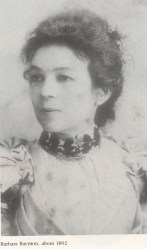
Barbara Baynton 1892

Baynton 1892 (Presumed Public Domain, via Wikipedia)

Consequently, many of Australia’s 19th century writers did incorporate the Gothic into their writing, and today I’ll list just few (but it will be little more than a list as I’ve been away the last two weekends and am playing catchup in pretty much every aspect of my life.)

The following are just some of the authors whose writings are regularly included in Gothic anthologies or in discussions of an Australian Gothic tradition:

  • Barbara Baynton
  • Marcus Clarke
  • Henry Lawson
  • Rosa Praed (who, like Ada Cambridge, is not as well known as she should be, which is something I have been planning to – and will –  rectify)
  • Price Warung.  I reviewed his Tales of the early days, a couple of years ago. One of the tales, “The Pegging-Out of Overseer Franke”, is commonly included in Australian Gothic anthologies. It tells the story of revenge against a cruel overseer of convicts … and explores the fine line between definitions of man and beast when cruelty and revenge become the modus operandi.

19th century Australian writers didn’t always need the supernatural to convey horror, evoke fear and portray disjunction between desire/hope and harsh reality. They had the forbidding Australian landscape, the threat of becoming lost in or being destroyed by that landscape, and the harsh unyielding authority of colonial male power. Who needed castle ghosts in this situation? This is not to say that the supernatural never appeared in Australian writing, but that this writing could, and often did, convey a Gothic sense of horror and dread through the concrete realities of 19th century Australian life. It’s fascinating to see what happened to the Gothic tradition in the second half of the 20th century (in, say, the work of Elizabeth Jolley) but that is a topic for another day.

Shadow Man Asian Literary Prize 2011: Reviews from the week December 4-10

Shadow Man Asian Literary Prize 2011 Badge

Image created by Matt Todd of A Novel Approach

Week 4 of our Shadow Man Asian Literary Prize 2011 longlist reviewing project and we’re moving along with …

  • Jamil Ahmad’s The wandering falcon (Pakistan) by Stu of Winston’s Dad. He, like Lisa who has already reviewed it, liked it for what he felt to be its authentic portrayal of the tribespeople of an area that now encompasses parts of Afghanistan, Pakistan and Iran.
  • Tahmina Anam’s The good Muslim (Bangladeshi) by Lisa of ANZLitLovers. She liked it a lot. Her description of the way it explores the domestic (personal) and the bigger picture (political) – and the fact that it’s a Bangladeshi novel – have tempted me!
  • Rahul Bhattacharya’s The sly company of people who care (India) by Fay of Read, Ramble who calls it “a captivating first novel”. It’s about a cricket journalist who goes to Guyana for a year … that in itself intrigues me!
  • Anuradha Roy’s The folded earth (India) by Matt of A Novel Approach. He’s impressed, with reservations.
  • Tarun J Tejpal’s The valley of masks (India) by Lisa of ANZLitLovers. She says “It’s not for the faint-hearted, but it is an outstanding book.”

I hope you are finding this an easy way to keep up with the team reviews … and that what I’m doing here is not redundant. The last thing I want to do is post for posting’s sake. (And, I know you won’t believe a word I say, but my first Man Asian review will appear next week!)

Meanjin’s Tournament of Books 2011, Finale

… and now we have a winner! Those of you who have been following the tournament will know that the two books facing off in the Finale were Helen Garner‘s The children’s Bach and Joan London‘s Gilgamesh. I would not have guessed this at the beginning (and neither, they say, did the organisers). Not because these aren’t great books – I’ve read them both – but because they are not the ones on the top of people’s tongues (like, say, My brilliant career) or the ones with critical weight behind them (like, say, The man who loved children or The fortunes of Richard Mahony). That said, I’m surprised but not sorry, because it’s no bad thing to expose other works to wider attention. The question is, will they get it?

Anyhow, onto the finale. It was judged a little differently: there was a panel of 5, with each giving a brief reason for his/her vote. You can read their reasons on the Meanjin site, because here I’m simply going to announce that the winner.  And it is, drum roll please, with 3 votes to 2,  Zombie Round returnee, Helen Garner’s The children’s Bach.  I’m happy – after all it’s one of the few from the original list that I’ve reviewed on this this blog. It was a reread too, which tells you something: Garner is a great writer.

The real question, though, is what happens next? Has the Tournament achieved anything for Australian literature, and Australian women’s writing in particular? Is it worth doing again next year? Well, I’m not sure. Leaving off the question concerning the merits of judging books, and looking at it from a consciousness-raising point of view, which were, I believe, its main goals, did Meanjin‘s Tournament achieve what it set out to. I fear it didn’t … and that I suspect is due less to the tournament itself than to lack of promotion of it. I didn’t see or hear much buzz about it around the traps – in neither the formal print and electronic media nor in less formal places like blogs.

Appropriately, the following quote from The children’s Bach has some application here:

Like many women of her age whose opinions, when they were freshly thought and expressed, had never received the attention they deserved, Mrs Fox had slid away into a habit of monologue, a stream of mild words which concealed the bulk of thought and knowledge as babbling water hides submerged boulders.

I fear that, like Mrs Fox’s wisdom, the submerged boulders of good Australian literature have stayed submerged … what must (can) we do to expose them?

Delicious descriptions from Down Under: Andrew O’Hagan’s Maf meets some bedbugs

I can’t not share at least one humorous little treasure from Andrew O’Hagan’s The life and opinions of Maf the dog and of his friend Marilyn Monroe, because I think my review focused a little too much on the serious.

Some of the delights of the book, if you suspend your disbelief, can be found in the conversations Maf has with other critters, such as squirrels, spiders, bedbugs, ants, flies, cats, and of course other dogs. There are some gems, with their point usually being how much more together, or knowing, these critters are than the humans around them. Take, for example, the bedbugs Maf meets while Marilyn is in the Columbia-Presbyterian hospital:

There were bedbugs. I saw them and immediately assumed they were little Karamazovs. I don’t know whether it was the general environment, or the condition of the people they’d been close to, but the bedbugs had a perfectly Russian attitude, seeming to doubt the reliability of everything. ‘We admit it is our time,’ said one of the bugs in a mournful way. ‘Russian values, if we may speak of anything so nebulous and bourgeois as values, are understood, in America as elsewhere, to be a central feature in what we might call the great duality and contradiction of the age.’ He meant the Cold War. ‘The Americans envy us. They are fascinated by Russian literature’.

‘And what has that to do with you?’ (Sorry to have been so rational, but on these visits I’d spent a lot of time around very rational young doctors. And the times were paranoid: I thought they must be spies.)

‘We are weaned in hospitals. In flop houses. In asylums. In cheap hotels and in housing projects. Our soul is Russian.’

‘But you are Americans, right?’

‘No,’ said a tiny voice, ‘we are bedbugs’.

That punch-line says it all! There’s more to unpack in this little interlude … some of which makes more sense in the context of the book. Still, there’s enough here to give you a sense of this kinda-out-there book which, as Maf tells us, continues the tradition, established in prose fiction by Cervantes, of animals speaking about humans.

Monday musings on Australian literature: Women of letters

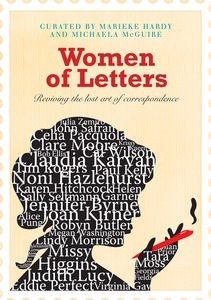
Women of Letters, edited by Marieke Hardy and Michaela McGuire

Women of letters (Courtesy: Penguin Books Australia)

Letter-writing has a long literary tradition – both fictional and non-fictional. Epistolary novels, according to Wikipedia, go back to the 1400s, and I’m sure if you’re a reader you’ve read at least a few. My favourite Australian example is a gut-wrenching young adult novel Letters from the inside by John Marsden. But these are not my topic today. The other sort of letters are the “real” letters written to “real” people. If the letters are good enough and/or the people significant enough these also have a long publishing tradition. I’ve reviewed some here – by Jane Austen (of course)! Collections of published letters can be found for some of Australia’s famous women writers, including Christina Stead, Henry Handel Richardson and Miles Franklin. But these aren’t today’s subject either.

My subject is a specific book of letters compiled by two Australian women, Marieke Hardy and Michaela McGuire, from an initiative of theirs in which they asked Australian women (initially) to “‘pen’ letters to a theme and read them aloud”. Their aim was to raise funds for Edgar’s Mission, “a not-for-profit sanctuary for neglected, discarded and abused farmed animals” in Victoria. Their project commenced in March 2010, and has involved live “shows” in several Australian cities – and now, this book.

The letters have been organised under 16 “recipients”, such as “To the night I’d rather forget”, “To my first boss”, and “To the photo I wish had never been taken”, which gives you a sense of where this collection is going. They are written by 69 well-known (though not quite all so to me) Australian women (mostly!) writers, performers, politicians and so on. I will admit that I have not read the whole 400+ pages book yet, but with Christmas around the corner and a good cause, now seemed to be a good time to write about it. (No, I am not under a retainer for Penguin!). Three of the contributors are writers I’ve reviewed in my blog, so I reckon they’d be a good place to start:

  • Anna Krien “to my first pin-up”. Trouble was Anna Krien was a tomboy and not like other little girls. When they wanted “love”, she wanted friends, so she turned to her cat, Tiger. It’s a light-hearted letter with a serious core about the damage that little girls can do to little girls (“the twisted best-friend bully dichotomy”), something Margaret Atwood explored to great effect in Cat’s eye.
  • Alice Pung “to the moment it all fell apart”. It contains anecdotes from her latest book, Her father’s daughter, presented as a letter to her father. She leads us on about an online relationship only to … but I won’t tell what, except to say it’s to something typically reflective of her and her father’s experiences.
  • Helen Garner “to the letter I wish I’d written”. That sounds like an apposite recipient for a writer who has never shied from controversy – but in fact, being Garner, her contribution isn’t the expected. Rather, it’s a series of letters to her “gazombies”, to people who’ve died, friends who’ve suddenly disappeared from her life, and people who crossed her path but became missed connections. They’re “fragments” that add up to a disjointed but very Garner-ish whole. She thanks the science teacher who taught her that “hot air rises”, she’s sorry that she lost contact with her “nanna” because “my adolescence extended right into my thirties”, she tells a man she regrets not accepting his offer to dance because blokes who can dance “are very thin on the ground”, and she writes to her three ex-husbands thanking them for what they gave her and telling them “there is nothing to forgive”.

There are a few contributions from men, mostly “To the woman who changed my life”. There are light-hearted letters such as actor Jane Clifton’s to her “1991 Nissan Pintara with only 20 000km on the clock” that she calls “the Nissan Piñata, because no matter how many times you get hit, you are the gift that keeps on giving”, and singer Georgia Fields’ to Mariah Carey telling her that “next time I’m at a party and your name comes up, I’m not going to sit quietly and pretend I don’t know you …”. But, I’ll conclude with actor Claudia Karvan’s letter to love, itself, in the “A love letter” section. It’s a cheeky little number telling love she is “eternally grateful for your landing on my shores” but suggesting:

You have a strange habit of departing, and departing quite swiftly. So quick your footsteps aren’t heard. No doorbell sounding the arrival of your cab, just bang, you’re gone […] You really are quite the magician.

This is, as you’ve probably worked out, a book for dipping into. The letters might be artificially created but there’s a lot of art in them – of letter writing, of life. Just the thing, really, for a post-Christmas read.

Do letters play a role in your life? Do you like to read them? Do you write them?

Marieke Hardy and Michaela McGuire (curated)
Women of letters: Reviving the lost art of correspondence
Camberwell: Viking, 2011
413pp
ISBN: 9780670076093

(Review copy supplied by Penguin Books Australia)