Man Asian Literary Prize 2011 Shortlist announced

Shadow Man Asian Literary Prize 2011 Badge

Image created by Matt Todd of A Novel Approach

… And my preferred two books – those by Ahmad and Yoshimoto – of the three I’ve read are in the final seven books. Woo hoo … but I have a lot to read to catch up to the rest of the team.

The shortlisted books are:

  • Jamil Ahmad’s Wandering falcon
  • Jahnavi Barua‘s Rebirth
  • Rahul Bhattacharya’s The sly company of people who care
  • Amitav Ghosh‘s River of smoke
  • Kyung-Sook Shin’s Please look after mom
  • Yan Lianke‘s Dream of Ding Village
  • Banana Yoshimoto‘s The lake

You can find our  Shadow team’s reviews by clicking the team logo in the blog sidebar or by clicking on the Man Asian Literary Prize 2011 page.

Monday musings on Australian literature: Guest post from Kim of Reading Matters

This week’s Monday musings brings you my fourth guest post, this time from Kim of Reading Matters. Like Guy, Kim started commenting on my blog in its infancy and I soon discovered that this blogger from England was actually an Australian. Naturally we developed a rapport. I have appreciated Kim’s support of my blog – through regular commenting  (particularly in my fledgling days) and through inviting me to be a Triple Choice Tuesday guest. She is one of England’s top litbloggers and this month is hosting an Australian literature month as I advised in last week’s Monday Musings.

I’m thrilled that Kim decided to write on children’s literature. Her guest post on children’s classics beautifully complements Louise’s recent post on current writers/illustrators.

Australian classic books from an Australian childhood

When you are an Australian expat who’s lived overseas for as long as I have (13 years and counting…) it’s easy to think you’ve never lived anywhere else. Then you have little “cultural blips” that rudely remind you that you grew up on the other side of the world.

For me, these “blips” usually occur when friends and colleagues start reminiscing about sweets (or should that be lollies?) from their childhood that are no longer available, or British TV shows they watched when they were growing up which were never screened in Australia. Once I had to sit in on a lengthy discussion about children’s literature where many of the references went completely over my head.

This got me thinking about my favourite books from childhood, all by Australian authors, which do not appear to have ever attracted an international audience. Here are three classics, none of which have been out of print in Australia, that mean a lot to me:

Blinky Bill by Dorothy Wall

Dorothy Wall (1894-1942), a New Zealand-born Australian, originally illustrated books for other writers before creating her own series about a mischievous male koala called Blinky Bill. The first book — Blinky Bill: The Quaint Little Australian— was published in 1933 and two others followed — Blinky Bill Grows Up (1934) and Blinky Bill and Nutsy (1937).

My aunt had three books in one beautifully bound volume. I still remember the distinctive red cover and the cheeky little picture of Blinky Bill, wearing bright orange trousers, toting a swag and billy can on a stick slung over his shoulder. It was always a real treat when I was allowed to take the book down from the shelf and look at the colour-plates inside. I remember turning the pages with awe and being very careful not to mark the book in any way.

Funnily enough I can’t really remember what the stories were about, but I remember the pictures with almost perfect clarity, they were so vivid and funny.

I’m delighted to say that you can read the text online at Project Gutenberg Australia

The Muddle-Headed Wombat by Ruth Park

The muddle-headed wombat by Ruth Park, book cover

Ruth Park (1917-2010), yet another New Zealand born author who called Australia home, also turned to Australian wildlife for inspiration.

Her main character was a wombat — a creature with which many non-Australians may not be familiar, think of a very cute furry pig with a cheeky face and short stumpy legs — whom was very muddle-headed.  He spoke in spoonerisms and misused similar sounding words — for instance “sensibubble” instead of “sensible” — which meant he often said very funny things without realizing it.

Wombat, as he was officially known, had two friends — a skinny grey cat called Tabby and a practical female mouse called Mouse — whom accompanied him on all kinds of adventures.

I can only recall vague details of particular stories — there were more than 16 in the series, all written between 1962 and 1971 to accompany an ABC radio show, which was cancelled by the time I was born. For instance, in one story Wombat bought a bicycle with shiny red wheels and in another he ate some chalk that made him sick.

But it was the quite hilarious illustrations that I remember most — along with the cute red jacket and floppy purple hat Wombat used to wear!

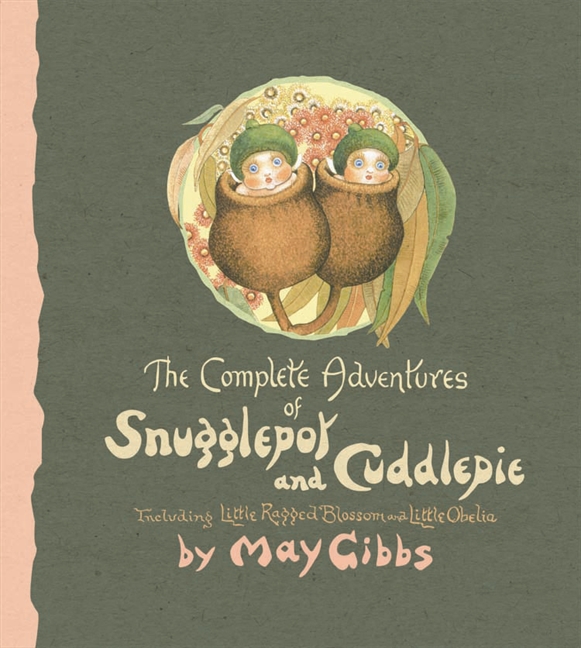
The Adventures of Snugglepot and Cuddlepie by May Gibbs

May Gibbs' Snugglepot and Cuddlepie

May Gibbs (1877-1969) was an English-born Australian writer and illustrator whose stories were inspired by Australian native flora.

She’s probably best known for her gumnut babies, Snugglepot and Cuddlepie, who are cute little foster brothers that resemble eucalyptus nuts.

The pair go on an adventure in the Australian bush, but they have to take care not to run into the big bad Banksia men — horrible creatures modeled on banksia cones, which are a bit like hairy pinecones.

As a child I remember being physically scared of the Banksia men, but as ever in the world of children’s literature, good overcomes evil and they sink to the bottom of the sea!

The best part about Snugglepot and Cuddlepie, which was first published in 1918, are the truly beautiful illustrations by the author. To this day these illustrations are used on all kinds of merchandise, but what I hadn’t realized until I started writing this piece is that all profits go to UNICEF, the Spastic Centre of NSW and the NSW Society for Crippled Children (now the Northcott Society), according to the wishes of May Gibbs’ bequest.

May Gibbs home Nutcote, on the shores of Sydney Harbour, is also open to the public.

I suspect that all three books, with their emphasis on Australia’s unique plants and animals, may be responsible, not only for my love of Australian literature, but my love and respect of the Australian bush, too.
Shadow Man Asian Literary Prize 2011: Reviews from the week January 1-7

Shadow Man Asian Literary Prize 2011 Badge

Image created by Matt Todd of A Novel Approach

Week 8 of our Shadow Man Asian Literary Prize 2011 longlist reviewing project and we now have only a few days to the shortlist announcement on January 10. This week’s reviews are:

  • Tahmima Anam’s The good Muslim (Bangladesh) by Fay of Read, Ramble. She says “it is beautifully structured, the story well told, the characters alive” and believes it will be one of the short-listed novels. We’ll soon know!
  • Tahmina Anam’s The good Muslim (Bangladesh) by Mark of Eleutherophobia. He concurs with Fay and our other reviewers that it is a strong contender for the shortlist. He calls it “a brave and important book”.
  • Jahnavi Barua’s Rebirth (India) by Stu of winstonsdad. Stu makes a great point about its universality, which makes me keen to read it … but this book has been one of the two most difficult of the longlist to track down.
  • Rahul Bhattachariya’s The sly company of people who care (India) by Lisa of ANZLitLovers. She says that “this is a remarkably clever book; I’m not surprised that it won the Hindu Literary Prize.”
  • Mahmoud Dowlatabadi’s The colonel (Iran) by Fay of Read, Ramble. She found it an intense read, “a powerful book. Overpowering”. I feel this is one I should read.
  • Tarun Tejpal’s The valley of masks (India) by Matt of A Novel Approach. He loved it but called it “the black sheep of the list”. Now that’s got me intrigued!
  • Banana Yoshimoto’s The lake (Japan) by Mark of Eleutherophobia. He’s not greatly enamoured saying it “drowns in introspection and self-doubt” but he says he’d read another Yoshimoto (so it’s clearly not all bad!)

Other Shadow Man Asian news

  • The shortlist will be announced next week, on January 10th … watch our spaces!
  • I have made it easier for you to find all our reviews now by creating a page listing the books in alphabetical order by author, with links to our team members’ reviews. Click on the Man Asian Literary Prize page tab or our Shadow Man Asian Logo in my sidebar to access the list.
  • If you missed it, I posted my third review this week:  Jamil Ahmad’s The wandering falcon. I do hope that one of two of those I’ve read make the shortlist!

Jamil Ahmad, The wandering falcon (Shadow Man Asian Literary Prize 2011)

Map of Pakistan

Pakistan, with borders (Courtesy: Omer Wazir via Flickr using CC-BY-SA 2.0))

I’m not sure how to describe Jamil Ahmad’s Man Asian Literary Prize novel, The wandering falcon. Is it a disjointed novel, a picaresque, or a collection of connected short stories? It doesn’t matter greatly – it is what it is – but at least by raising the question I’ve given you a sense of how it feels to read this book.

There’s much to fascinate here, not least of which is that this is a debut novel by an author who was born in 1933. Another late bloomer (though he apparently wrote the stories back in the 1970s). Ahmad worked in the Pakistani Civil Service and spent many years in the region he writes about. The book is set in the decades before the rise of the Taliban and presents – explores – life in the multi-tribal region on the borders of Pakistan, Afghanistan and Iran. Fascinating stuff for a reader whose knowledge of this area is general.

There are nine chapters/stories, each having a unique title like “The sins of the mother”, “A point of honour”, “A kidnapping” and each telling a story from the life of a tribe/clan in the region. What unifies these is the character, Tor Baz, who is the wandering falcon of the title. He is born in the first chapter to a couple on the run for disobeying tribal laws of marriage. This chapter, “The sins of the mother”, sets a rather brutal tone for the novel, a tone that carries through into many of the succeeding stories (or events). This is a region where people live by tribal loyalties (and, of course, rules) and where the imposition of borders cuts across tribal life, particularly for those tribes that are nomadic. In the third story, “The death of camels”, the nomadic Pawindahs want, indeed need, to cross borders as they always have, but are told they need travel documents. Their leader says to the government official:

‘… We are Pawindahs and belong to all countries or to none. [ …] What will happen to our herds? … Our animals have to move if they are to live. To stop would mean death for them. Our way of life harms nobody. Why do you wish for us to change?’

Why indeed?

As you will have guessed from my opening sentence, this is not a strongly plot driven book. Ah, now this is where form becomes an issue. We don’t expect a collection of short stories (connected or otherwise) to have a strong plot and so this, probably, is what it is. But there is a linear chronology running through the book. It’s tracked through our falcon Tor Baz who pops up, for one reason or another, in different tribes, from his birth in the first chapter to the end when he’s a man. We see him in various roles, including informer and guide, but we never really get to know him – and for some reason this doesn’t seem to matter. It simply adds to the feel of the book, which is simultaneously fabular and grounded in reality.

The voice is third person, with the startling exception of one story that is told first person by an outsider, a part Afridi returning to his father’s birthplace. If I have a criticism of the book it’s that occasionally the voice becomes a little didactic, a little inclined to tell us some facts rather than show us, but this isn’t often and it’s not heavy-handed enough to spoil the read.

What makes this book stand out is the writing. It beautifully (if one can use such a word for the world it depicts) evokes the landscape we’ve become familiar with through television news and movies. Here is the novel’s second paragraph, describing a military post:

Lonely, as all such posts are, this one is particularly frightening. No habitation for miles around and no vegetation except for a few wasted and barren date trees leaning crazily against each other, and no water other than a trickle among some salt-encrusted boulders which also dries out occasionally, manifesting a degree of hostility. (“The sins of the mother”)

Hmm … “lonely”, “frightening”, “crazily” and “hostility. With words like this on the first page, you know you are not in for something light and cheery. The interesting thing though is that the book does not read as a diatribe or even as a plea. It’s more a description of people who accept their lives, despite the harshness and difficulty, lives where, for example,

If nature provides them food for only ten days in a year, they believe in their right to demand the rest of their sustenance from their fellow men who live oily, fat, comfortable lives in the plains. To both sides, survival is the ultimate virtue. In neither community is any stigma attached to a hired assassin, a thief, a kidnapper or an informer. (“A kidnapping”)

The book chronicles this life – its unforgiving landscape and sometimes brutal justice – and the changes that are starting to threaten centuries old traditions:

The pressures were inexorable. One set of values, one way of life had to die. In this clash, the state, as always, proved stronger than the individual. The new way of life triumphed over the old. (“The death of camels”)

This is a mesmeric book. We feel the author’s affection for the people, their traditions and the land, and we go with his acceptance of lives whose bases are so different to ours. It’s a book born of the earth but its spirit won’t be pinned down. An eye-opener, in more ways than one – and a worthy contender for the prize.

Note: For other Shadow Man Asian Literary Prize reviews, see Lisa of ANZLitLovers, Mark of Eleutherophobia, and Stu of Winstonsdad.

Jamil Ahmad
The wandering falcon
London: Hamish Hamilton, 2011
181pp
ISBN: 9780241145425

Monday musings on Australian literature: Some Australian Literature online events for 2012

What better way to kick off Monday Musings in 2012 than by heralding some exciting Australian Literature initiatives from around the ‘net. Here they are, in no particular order:

Australian Women Writers Challenge 2012 Badge

Badge (Design: Book'dout - Shelleyrae)

Australian Women Writers Challenge 2012 by Elizabeth Lhuede. Her aim is to promote women writers across all fields and genres of writing. The challenge involves signing up to read books – in any genre – by Australian women writers. You can focus on one genre or many, you can choose a level that suits you. I don’t usually do challenges, but this one is a no-brainer for me since I always try to read a goodly quantity of Australian literature each year and I love to read books by women. Last year I reviewed at least 14 Australian women writers and, in addition, wrote several posts on specific women writers and women’s literature issues. My aim will be to achieve a Franklin-fantastic Dabbler, that is, I’ll read (and review) at least 10 books by Australian women writers in more than one genre.

Australian Literature badge, by Reading Matters

One of the Australian Literature Month badges (by Reading Matters)

Australian Literature Month by Kim of Reading Matters. She plans to read lots of Australian books during her cold northern January (she would leave Australia!) and encourages readers of her blog, to do the same. As an incentive she has created several gorgeous badges for bloggers to attach to their posts reviewing Aussie books. Since seeing a platypus in the wild is on my bucket list, I have chosen her platypus badge for this post.

Australian National Year of Reading 2012 by WeLove2Read. This project is “a collaborative project joining public libraries, government, community groups, media and commercial partners, and of course the public. As well as creating specific new campaigns for the National Year of Reading, we’ll be using our joint efforts to bring together and showcase the wonderful projects and organisations across Australia which already exist to promote reading and literacy”.  (From the website) Keep an eye on the website for activities and events as they occur during the year.

2012 Aussie Author Challenge by Booklover Book Reviews. The challenge is to “read and review books written by Australian Authors – physical books, ebooks and audiobooks, fiction and non-fiction” (from the blog). There are two challenge levels and, like most challenges, a badge to add to your site. (I added this challenge after the post was published, as the result of Tony‘s recommendation. Thanks Tony.)

And so …

As you start your 2012 reading, do consider including some Aussie Lit into the mix and please let the people above know when you do. They will appreciate knowing that their work has hit some paydirt.

If there are other initiatives that I haven’t listed here, please let me know in the comments below and I will update this list.

Shadow Man Asian Literary Prize 2011: Reviews from the week December 26-31

Shadow Man Asian Literary Prize 2011 Badge

Image created by Matt Todd of A Novel Approach

Week 7 of our Shadow Man Asian Literary Prize 2011 longlist reviewing project and we’re moving along with less than two weeks now to the shortlist announcement. This week’s reviews are:

  • Jahnavi Barua‘s Rebirth (India) by Fay of Read, Ramble who thinks it has some interesting things to say about women’s lives in contemporary India but feels that it’s not fully successful as a novel
  • Amitav Ghosh‘s River of smoke (India) by Mark of Eleutherophobia. Mark liked it, with some reservations. He feels it’s a little overambitious, trying to do too much, but nonetheless calls it an “epic, intense, richly rewarding novel”.
  • Haruki Murakami‘s IQ84 (Japan) by Lisa of ANZLitLovers. Lisa didn’t like it much, echoing many of the bloggers’ reviews I’ve read, including Matt who has also reviewed it for our project.
  • Kyung-Sook Shin’s Please look after mother (Korea) by Mark of Eleutherophobia who liked it, calling it “a quaintly crafted story”.

And, of course, if you missed it, I posted my second review for the project this week: Banana Yoshimoto‘s The lake. My next one will be Jamil Ahmad’s The wandering falcon.

Notable reads for 2011

I’ve been wondering whether to jump on the “Best of” bandwagon and, if I did it, how to do it. Then today I read Lizzy Siddal’s (love that name!) list and decided that I’d follow her lead and use categories rather than go for a simple Top Ten (or whatever) which always feels fraught. I know Lizzy’s not the only one to use categories but hers was the one that inspired me today.

However, for my categories I’m going to use book reviewer cliches since, of course, I never use them in my reviews!

Some mosts

  • Grittiest: Joyce Carol Oates’ Beasts for confronting sexual predation on multiple levels.
  • Most thought-provoking: André Gide’s The immoralist for, well, making me think.
  • Most rivetting: Lloyd Jones’ Hand me down world because even though I guessed the set up fairly early on I still wanted to know how it was going to play out.
  • Most haunting: Horace Walpole’s The castle of Otranto. What else? Case dismissed.
  • Most lyrical: Alan Gould’s The lakewoman for its mesmeric, poetic, romantic sensibility.
  • Most unflinching: Mario Vargas Llosa’s no-holds-barred The feast of the goat about the last days of the Trujillo regime … it was an apposite read given the events of the Arab Spring
  • Most powerful: That would have to be the power couple, Franklin and Eleanor: An extraordinary marriage, by Hazel Rowley
  • Most poignant: Jay Griffiths’ A love letter from a stray moon for being fiery, passionate and poignant all in one.

And, to be fair about it, a couple of leasts

  • Least epic: Jane Austen’s The Watsons. After all, how could an unfinished Jane Austen come even close to being epic?
  • Least nuanced: Howard Jacobson’s The Finkler question, though perhaps there’s nothing more nuanced than the substitution of “Finkler” for “Jew”?

There aren’t many Aussie books in this list, but that’s because I focused on Aussie highlights in this week’s Monday Musings. To include them again would be like double-dipping, wouldn’t it?

And now over to you … what were your most notable reads for 2011?

Oh, and Happy New Year to you all … may the reading gods smile kindly on you in 2012.

Ana Menéndez, Celebrations of Thanksgiving: Cuban offerings

I love food and I enjoy reading about food. I particularly enjoy reading about food – and food traditions – from other cultures. And so, when Ana Menéndez’s story popped up on the Library of America last month I made a note to read it. The last piece of food writing that I read from LOA, John Duncan’s “A Virginia barbecue”, was also an example of travel writing. This piece, though, could also be described as immigrant literature: in it Menéndez describes her Cuban family’s Thanksgiving celebrations and how it changes over time as they become more American.

Menéndez commences by describing her how Cuban family celebrated Thanksgiving – what they called Tansgibin – with black beans and rice, fried plantains and yucca. They didn’t know, she said, that they were being “ethnic” or trendy” in eating this food! It’s all about perspectives, eh? She then describes how, as their stay in America lengthened, they went about transforming the meal. For Cubans that meant making pig (or roast pork) the central feature, rather than turkey.

The pig is marinated in mojo” which she describes as

the most important part of the equation and families lived and died by their mojo recipes. Today you can buy a strange chemical syrup in bottles labeled “mojo” – of which the best one can say about it is that it’s another sad example of the banality of exile.

To digress a little, this reminded me of my recent trip to Japan. Our host at a ryokan we stayed at told us that, traditionally, each family would have its own Miso Soup recipe but that now people tend to buy the instant variety in the supermarkets. He, however, wasn’t talking about “the banality of exile” but of the impact of commercialisation (and modernisation). It’s not only immigration, then, that sees cultural practices decline. Anyhow, on with the story …

The whole business, she writes – the preparing of the “mojo”, the digging of the pit and the preparation of the grill for the pig, the men tending to the meat with the women preparing the rest of the meal – was a ritual, and, more importantly, “a happy, bantering gathering”. In fact, she describes herself as

one of the few women of my generation who does not consider the kitchen a chore or an affront to my independence, but rather a place of warmth and sustenance.

I take her point – to a point! But that’s another story.

Menéndez then describes how, little by little, change occurred. Someone brings a pumpkin pie (breaching the wall, she says), then comes the cranberry sauce, and a stuffing … and the final blow, the pig is replaced by the turkey. Not only are there concerns that the pig might be unhealthy but it starts to seem like “an embarrassing extravagance, a desperate and futile grasping after the old days”. Our author admits to liking the change. As the younger member of the family, she had become annoyed by

my family’s narrow culinary tastes – which to me signaled a more generalised lack of curiosity about the wider world.

Fascinating how food (and attitudes to it), as she says a little earlier in the article, prefigures change. And yet, change doesn’t come easily. Her family didn’t know how to cook turkey so, what did they do? Well, they cooked it like they cooked their pig. And then they would bestow their best compliment on the cook: “This tastes just like roast pork”!

I enjoyed the article … it provides much food (sorry!) for thought. Even in my own Christmas celebrations I love to find a balance between maintaining family traditions – so that the meal feels like Christmas and not just another festive event – and injecting some change (or difference) each year so that the tradition doesn’t become stale. How much tricker though this challenge is for immigrant cultures. What do you keep? What do you let go? And why?

At the end of the article is her recipe for Mojo … so if you’d like your turkey next year to taste like pork (or, at least, Cuban), you can look it up (in the link below).

In addition to writing pieces like this, Menéndez has written two novels, Loving Che (2004) and The last war (2009). Before them, she published a short story collection, In Cuba I was a German Shepherd, which was a 2001 New York Times Notable Book of the Year.  LOA’s notes tell us that her overall theme, as in this story, is the experience of exile. I wonder if any readers here – Americans particularly – have read her? I’d love to know what you think.

Ana Menéndez
“Celebrations of Thanksgiving: Cuban offerings”
First published: US Society & Values, 9 (4), July 2004
Available: Online at the Library of America

Banana Yoshimoto, The lake (Shadow Man Asian Literary Prize 2011)

Shadow Man Asian Literary Prize 2011 Badge
Image created by Matt Todd of A Novel Approach

When I saw that Banana Yoshimoto‘s novel The lake was shortlisted for the 2011 Man Asian Literary Prize I knew that it would be a high priority for me to read, because I like Japanese literature and I have read and enjoyed Yoshimoto (her novel Kitchen) before.

The first thing that struck me, however, as I started reading the book was a case of reading synchronicity. Roy’s The folded earth, the first book I reviewed for our Shadow Man Asian Literary Prize 2011 project, is about a young woman grieving the death of her husband. In The lake, the protagonist, Chihiro, also a young woman, has just lost her mother. And, in further synchronicity, both women meet men who impact their lives. This is not unusual, of course, but the thing is that in both books there is a sense of mystery surrounding these men. However, this is where the similarity ends: the mystery in The lake has nothing to do with the death of Chihiro’s mother. Rather, it relates to something the man has experienced, something that has clearly damaged him.

So, what is the plot? It is basically a romance. The first line of the novel is:

The first time Nakajima stayed over, I dreamed of my dead mom*.

Chihiro, our first person narrator, then flashes back to tell us about her background, her somewhat unusual life with her bar-owner mother and businessman father who never married due to his family’s objections. Chihiro is around 30, but this is, really, a coming-of-age novel because she doesn’t yet feel grown-up:

I’m still a child. I still need my parents, and yet, I suddenly feel I’m walking alone.

Into this solo life comes a young medical student, a “puzzling young man”, Nakajima, who lives in the apartment opposite hers. They first communicate non-verbally across the dividing space. Gradually Chihiro feels she is falling in love with Nakajima, but she is not sure, partly because he’s odd, uneasy, something he admits to but can’t (yet) explain. However, it is through learning to accept Nakajima, to not push him but simply to care for him, that Chihiro starts to grow up. At first she wants to have fun – “I didn’t want to deal with weighty matters” – but she comes to realise that she needs him, and senses that he is “the one”. All this develops before we know what happened to Nakajima. Plotting the story through Chihiro’s description of their developing relationship puts the focus less on what happened in the past – though we certainly want to know – and more on how two young “kind of weird” people might move together to a good future.

Now, here’s the rub. Do I let on what happened to Nakajima? The blurb inside the jacket hints at what it is, so perhaps it’s ok to. However, I think I won’t. All I’ll say is that the lake – to which Nakajima takes Chirihiro half way through the novel – and the brother and sister (Mino and Chii) living there are important to the resolution. Chii is bedridden and mute but she can foretell the future and she does this through Mino. This adds a supernatural element to the story, which works well enough for me though I’m not sure what it specifically adds to the novel (except perhaps a sense of “otherness” to the atmosphere?)

The more important question to ask is why has this novel been longlisted for the Man Asian Literary Prize? Is it more than a nicely written coming-of-age love story? Well, the mystery and its impact on Nakajima, Mino and Chii is a significant one, but that, from the way the story is told and how the plot is resolved, doesn’t seem to be the main point. It is clearly about grief, trauma and recovery, but I think this might be overlaid with the struggle in Japanese society, particularly for the current young generation, to not follow the norm blindly. Nakajima and Chihiro did not have “normal” upbringings. This means that, whether they like it or not, they symbolise nonconformity – and must, consequently, make active decisions about where to next. Freedom is not, I understand, a high value in Japanese society … but it is an issue that comes up regularly in the book. Chihiro’s parents aren’t, through family expectations, free to marry. The mystery surrounding Nakajima relates to a loss of freedom. In her work as a muralist, Chihiro’s only demand is the freedom to paint what she wants and, when that is threatened by a sponsor wanting her to incorporate an enormous logo into her mural, she intelligently but resolutely conducts a campaign to encourage him to change his mind.

Late in the novel, when talking about his experience, Nakajima says:

When you’re in a state of homogeneity, you’ve lost yourself.

Beyond loss and childhood trauma, then, it is the ongoing things like homogeneity, lack of freedom, the push to be normal that challenge Yoshimoto’s characters. But this is a quiet, lyrical book rather than a feisty one. It recognises that life involves “dull repetition of the same old thing” peppered by those “little leaps of your heart to put a splash of colour in the world”. Have I fully understood this novel? I’m not sure that I have … but I did enjoy reading it and thinking about the issues Yoshimoto seems to be exploring.

Matt of A Novel Approach and Lisa of ANZLitLovers, on our Man Asian team, have also reviewed it and are worth reading for their different takes.

Banana Yoshimoto
The lake
(trans. by Michael Emmerich)
Brooklyn: Melville House, 2011 (orig. Japanese ed. 2005)
188pp
ISBN: 9781933633770

* An American translation. We would say “mum”!

Monday musings on Australian literature: My AusLit wrap up for 2011

Here we are at the end of another year and I’ve decided that, rather than list my top Aussie reads for 2011, I’d list my AusLit highlights of the year. I apologise in advance that it’s going to be all about me – that is, the links will be to posts on this blog. After all, we are talking about my AusLit highlights. Here they are in no particular order:

Meanjin‘s Tournament of Books

This year Meanjin decided to emulate the Morning News’ Tournament of Books with the express aim of raising consciousness about Australian women writers. I don’t know how well they achieved this aim but next week’s Monday Musings will be about other AusLit-related initiatives so perhaps it’s all part of momentum building. Meanwhile, if you missed the discussion here, click on my Tournament of Books tag and you will find the 6 posts I devoted to the topic.

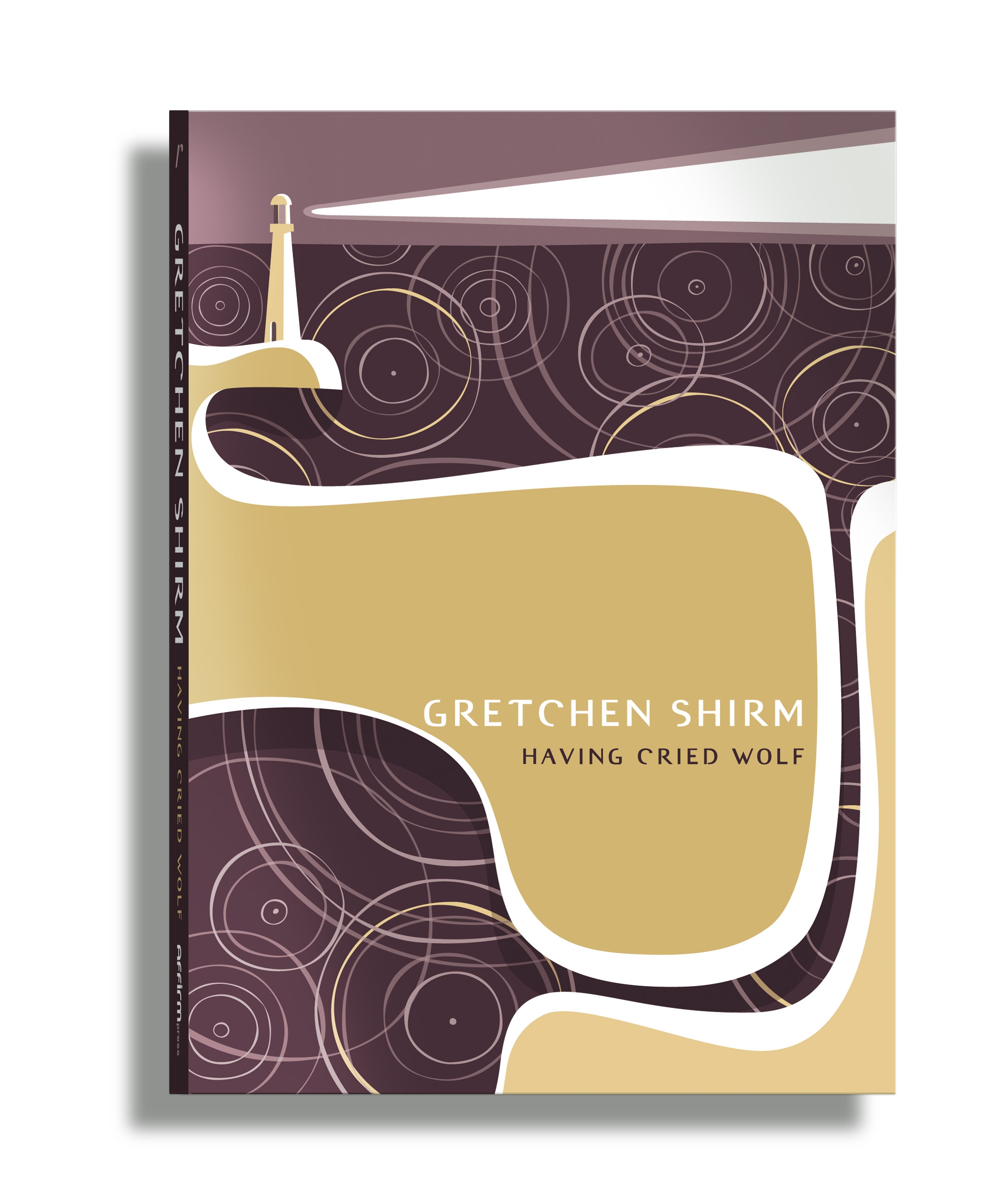
Having cried wolf, book cover

Having cried wolf, book cover (Courtesy: Affirm Press)

Affirm Press’s Long Story Shorts

Affirm Press is one of Australia’s wonderful small independent publishers. In 2010 they published the first of the six books in their Long Story Shorts project which involved commissioning emerging writers to produce short story collections. This year I reviewed the final three books and was impressed by the writing, the gorgeous production and the publisher’s commitment. May there be many more such collections and even more opportunities for emerging writers in 2012 and beyond. Hats off to Affirm Press!

Prime Minister’s Literary Awards panel

The Prime Minister’s Literary Awards are relatively new on the Australian literary awards scene but they’ve made a splash, partly because the prizes are comparatively lucrative. There are plans next year to add a Poetry prize and roll the Prime Minister’s Australian History Prize under the banner. This year, I attended, on the day of the announcement, a panel discussion with some of the winners and shortlisted authors. It was a real treat to hear (and see) the authors firsthand … but I have yet to read this year’s fiction winner, Stephen Daisley’s Traitor. Last year’s winner, Eva Hornung’s Dog boy, though, well demonstrates the calibre of the awards.

Miles Franklin Award

This year’s winner was That deadman dance by Kim Scott. Not only is it a beautifully written and thoughtful book but it’s a rare win for an indigenous author – and that has to make it a 2011 highlight.

Poetry

Readers of this blog know that I like to review poetry occasionally, though I am by no means an expert. I reviewed two special books of poetry this year, special because of the women who produced them and for the quality of their poetry. Ginny Jackson’s book The still deceived was published posthumously after she’d worked hard to complete it while terminally ill with cancer. Her poem, “Getting off the bus”, contains some of the most poignant lines I’ve read about dying. Nora Krouk’s Warming the core of things was published the year she turned 90. I used two lines from one of her poems in our family Christmas card this year. I should read and review more poetry!

Sydney University Press’s Charles Dickens set

Sydney University Press has been doing great work in recent years re-publishing Australian literary classics, several of which I’ve reviewed on this blog. However, this year they published another “treasure”, Charles Dickens’ Australia: Selected essays from Household Words 1850-1859, edited by Margaret Mendelawitz. It’s a five-volume set of articles relating to Australia from Charles’ Dickens periodical, Household Words. The periodical is available on-line, another example of the pluses of electronic communication, but to have someone else do the work of sifting out those articles of relevance to Australia and then sort them into thematic volumes is a perfect example of value adding.

Monday Musings guest posts

When I commenced my Monday Musings series nearly two years ago I planned to include the occasional guest post but for various reasons I haven’t organised many to date. However, there were two this year and they were highlights for me – and not just because I didn’t have to write them! They were informative posts: Louise wrote on some Aussie Children’s Lit creators, and Guy Savage wrote on Max Barry. Both were passionate posts on topics dear to the heart of their writers – and both taught me some things I didn’t know. There’ll be more guest posts next year.

Meeting Alan Gould

Alan Gould is a local (to me) poet, short story writer and novelist, and he was shortlisted last year for the Prime Minister’s Literary Awards for his beautiful, mesmerising novel, The lakewoman. My reading group was lucky to have him attend our discussion of his book earlier this year. It was a treat to be able to ask questions about the genesis of what is an intriguing book and to discuss our reactions to it. Gould was gracious in sharing his ideas with us, and we hope he got something out of the discussion too. He should be better known.

Top Aussie post of the year – Red Dog

WordPress provides some excellent blog stats, including your top posts (by number of hits). You can ask for your top posts to be listed by specific time frames – 7 days, 30 days, year, and alltime. I decided to check for my top post over the past year and was surprised to find that it was my review of The Red Dog (Movie and Book). I posted it in August and it is so far ahead of the next top ranked post that it will be my top post for the calendar year. The movie was based on a book written by Louis de Bernières about a legendary dog of the Pilbara. It’s a slim book and is not great literature but the film has done astonishingly well at the box office. I say “astonishingly” because Australian films often do not attract good audience numbers, which worries our film industry. Red Dog, though, bucked that trend and showed filmmakers that Australian audiences will go to Australian films (sometimes, anyhow!). I would hate this movie to start a spate of similar movies in the hope of cashing in on audience interest, but it was good to see a film that appealed to Aussies. I hope we see more – and varied ones – in 2012.

And finally …

Thanks to everyone who has read, commented on and/or “liked” my blog over the last year. I may not know you all but I sure appreciate your visiting me here. I wish you all happy reading in 2012 … and, meanwhile, would love to hear of your blog or literary or reading highlights of the year.