Monday musings on Australian literature: Guest post from Nigel of Under the counter or a flutter in the dovecot

This is embarrassing but I really can’t remember how and when I first met Nigel. Actually let me rephrase that: I do remember when I met him in person because I’ve only met him once (at a literary event earlier this year), but who stumbled across whose blog first I have no idea. I’m glad we did though, because in Nigel I’ve discovered not only a lovely writer (see my review of his novella Fall on me) but an active supporter of Australian literature through such activities as the online creative arts journal VerityLa and the arts forum, the Childers Group. I also enjoy his reflective blog, Under the counter or a flutter in the dovecot. And so I was thrilled when he said yes without apparent demur to my request for a guest post. Thanks Nigel …

Real or imagined, raising children makes a great story

The game now finished and the speeches in full swing, the camera panned left to take in the players who were standing off to one side and looked worn-out and knocked around, a few with mud on their faces, a bit of blood too, but smile they did because they’d won and were elated. After a moment, the camera went back to whoever it was that hadn’t yet finished his speech (why is it that a man with a microphone will always go on too long?). For the first time in my life I was grateful when the TV channel cut to an ad break.

When the NRL grand final coverage resumed – I’d not watched the actual game, and had only stumbled on the closing minutes of the concluding celebrations by lazy accident – the victorious players were wandering around the field, or ‘paddock’ as it’s apparently called, many with their young children in hand. It’s this that struck me: rugby league boofheads wanting to be with their kids in these lingering moments of sports elation.

It looked – it felt – amazingly non-sensical.

I’m not one for children; never have been, never will be. I am, in fact, the least paternal person on Earth. At no point in my life have I ever wanted children. Which is, now I examine my life with precision (the process of writing does that), a bit of a lie. I remember that as a teenager I did have day-dreams of raising children, except in those day-dreams my wife was always absent, to be accurate she was dead, which left me to be a hip young single father, and I was very good at fathering, and my kids adored me and I adored them back. Once I was old enough to understand why my wife was always cactus, my mind – my conscious mind – turned to things closer at hand, and much more real. Which is why, aged forty-four, I’m blissfully childless. When on the rare occasions something good happens to me (though for some reason these events are never televised), I reach for a bottle of nicely chilled verdelho and a slice of blue cheese on a cracker.

Not having children, not wanting children – now that I have a fine appreciation of the opportunities and constraints of my life, I desire children as much as I desire the idea of a car-alarm going off in the middle of the night, and if ever I find myself day-dreaming, which is, I should say, a lot, it’s about having a crumbling hut in some far-flung place that you can only access by barging a rusty old four-wheel-drive across seven creek-crossings – is problematic for someone like me, a writer of all things, that ridiculous trade that’s getting more and more ridiculous as each day goes by. For family is the guts of the contemporary Australian story – it is, to throw into the mix some suitably highfalutin French, its raison d’etre.

I’ve just finished having a private Australian literature festival, reading some blisteringly powerful novels by our nation’s finest (who too don’t get to parade their children in front of TV cameras). Kate Grenville’s Sarah Thornhill, Craig Silvey’s Jasper Jones and Gillian Mears’ highly distressing but remarkable Foal’s Bread. All three novels explore family and the impacts on children, but also the desire for children, that procreating is the usual path, the standard, the predictable, how it is just what you do. How the desire to continue your bloodline is simultaneously overwhelming and underwhelming. It is refreshing that both Foal’s Bread, which is largely set between the world wars, and Sarah Thornhill, which has as its backdrop our morally bankrupt colonial times, explore women who aren’t just mothers, whose dreams are bigger and wider and deeper.

*

In my own writing, my own attempts at making words come to life on the page – it always seemed so easy as a boy: you wrote what happened and that was that – I too explore family. My main characters are usually men and women (always a good start!) who have children, who want to be parents, who struggle to cope, who feel the pressure of internal and external expectation, who fail and fall into a heap but pat themselves down and have another crack at it.

Featherstone, Fall on me

Fall on me bookcover (Courtesy: Blemish Books)

My novella Fall on Me (Blemish Books, 2011) is about a single father who has to cope with his precocious seventeen-year-old son who insists on turning his naked body into an art exhibition. Lou and Luke: how through writing their story I’ve gotten to know them well, so well, despite everything how they created a family for themselves, and the addition to that family, Anna Denman, their housemate who became much more. To the point that I still think about them. And it’s always gratifying – and humbling – when readers say they think about them too.

In my forthcoming novella, I’m Ready Now, to be launched in Canberra on 22 November by Blemish Books, I write about a very different family. The story is a simple one, but it’s told from two points of view: a mother’s and a son’s. Lynne Gleeson is a fifty-year-old ‘corporate wife’ (that’s how she describes herself) whose husband Eddie, a man who inherited his family’s property-development business, has died of a heart-attack. Theirs was a perfectly functional if not loving relationship, one of considerable wealth and privilege – the family home is a daunting historic mansion called Gleeson House in Battery Point, Hobart. Now that Lynne is alone, she has decided to sell this property, and the family’s other houses, including an architect-designed getaway on Magnetic Island, Queensland. Effectively homeless, she leaves Tasmania to spend a fortnight in Sydney, staying with her son Gordon. But Lynne has plans. Big plans.
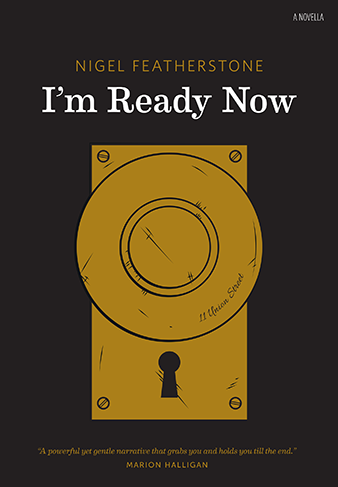
Nigel Featherstone, I'm ready now

Cover (Courtesy: Blemish Books)

Meanwhile Gordon, a professional freelance photographer, is thirty now, and despite being in a relationship of five years’ standing, is having what is described as a ‘Year of Living Ridiculously’ – it involves spending his weekends out in Sydney’s bars and clubs, taking drugs, and having promiscuous sex. For his thirtieth birthday, which his step-father’s death prevented the family from celebrating, Gordon has secretly arranged ‘The Ultimate’, which threatens to tear everything and everyone apart. It sounds heavy, it sounds grim, but it’s just about family. So it’s the truth. And, yes, I really think I can say that: the truth.

Family: there are plenty of other things to write about. Fighting wars amongst far-flung stars. Cornering yellow-teethed bad-guys. Hacking up zombies. Sex, which as I know better than anyone, doesn’t always have to result in something altogether gruesome nine months later. But still it’s family that I write about, the desire to raise someone in your own likeness, to have your best go at doing a decent job of it, to leave something worthwhile behind. All I’m going to leave behind is a handful of stories in the flickering fluorescent-light basement of the National Library of Australia.

*

Last month my older brother and his fourteen-year-old son dropped in on their way to the snow-fields. We went down to a café in the mainstreet for lunch and caught up on all that was happening in our various worlds. An hour later it was time for them to continue on their way south. The day was cold and blustery, the sort that makes my hands turn blue and my mood turn a similar colour. Dust was being flung around and as my brother and his son got into their brand-new four-wheel-drive I began to cough and splutter wildly.

My nephew, who’s not big on conversation and his favourite thing ever is his skateboard, wound down the window and stared at me fair-square in the face and said, ‘Are you sick?’ He looked genuinely concerned. ‘No,’ I said, ‘there’s a typhoon going on out here and it’s hit the back of my throat.’ His eyes brightened right up and he laughed. As my brother drove the two of them away, I sent my nephew a text message: ‘Have a great time on the slopes.’ He wrote back: ‘Have a good week.’ When was the last time someone had wished me a good week? I couldn’t remember. But I loved those words. They moved me. And they still do.

If I have a motivation to write, it’s to move people.

So, despite everything I know about myself, after forty-four years of determined self-direction, to the point that I’m now, to put a twist on something Quentin Crisp once said, one of the stately homos of Goulburn, I watch the dying moments of a rugby league season and can’t take my eyes off the men – proud, probably even gentle men (when they need to be) – who lead their children around a football field; it’s not the men who fascinate me, but the big hands holding the little hands. And I read great Australian novels about family and generations and personal history amongst the maelstrom that is the bigger political and social context. And I write stories about people who do their utmost to raise the best of kids. And I keep in my mind a simple text-message from my nephew.

But I also recall something the US poet and civil rights activist June Jordan once wrote: ‘In the name of motherhood and fatherhood…we threaten and suffocate and bind and ensnare and bribe and trick children into wholesale emulation of our ways.’ My unborn children should be grateful that they had me as a father. Hopefully the ones that live on the page are much more optimistic about their chances in the world.

What did Jane Austen look for in a novel?

There are those who don’t get Jane Austen. Some think her novels are silly romances while others think that she writes stories about the well-to-do who, they feel, aren’t relevant or worthy subjects.

Nothing, really, could be further from the truth. Her novels may be romantic but they are more than simple romances. Jane Austen loved to satirise human foibles (as she did Mr Collins’ pomposity in Pride and prejudice). She cared deeply about the lot of women who had little financial support (such as Jane Fairfax in Emma). With the exception of Emma, in fact, her heroines are not rich, and some are in quite precarious financial situations. However, she wanted them to be able to choose partners they love and respect (as Elizabeth Bennet does in Pride and prejudice) … though she knew that this wasn’t easy or straightforward in Regency times.

But don’t take my word for it. Listen to the author herself – in a letter to her niece Fanny – written only months before she died:

He and I should not in the least agree, of course, in our ideas of novels and heroines. Pictures of perfection make me sick and wicked.

What better manifesto or clearer indication of her novelistic imperative could she have left for us? Life and people weren’t perfect, and nor would her novels be.

Elliot Perlman, The street sweeper (Review)

Elliot Perlman‘s latest novel, The street sweeper, is a complex book with a pretty simple message. It’s complex because of its multiple interconnecting storylines that move back and forth between World War II, the American Civil Rights era, and contemporary times. It has multiple themes, about which I’ll write further, but the underlying message is simply this: history is important. Related to this is the idea that all things are connected. Let me explain …

The original characters in the novel, those from whom the connections flow, are two lawyers, the Jewish Jake Zignelik and African-American William McCay. Both were active in civil rights in the 1960s. However, as the novel starts, Jake has been dead for some time, and William is in his 80s. The baton, in a way, has been passed to their sons, Charlie and Adam who are historians at Columbia University. It is around 2008, and both men have lost their way somewhat. Charlie is a successful academic, so successful that his administrative duties are not only tearing him away from his main love, research, but also from the important relationships in his life, those with his father, wife and teenage daughter. Adam’s problem is different. His career has stalled. He hasn’t published anything for so long that he will not get tenure – and Charlie, who has been his mentor, but who has let that relationship slide too, can’t help. Adam, believing it’s the honourable thing to do, breaks up with his long-standing girlfriend, Diana, on the basis that he’s unable to be the husband and father that he believes she wants.

None of these characters, though, is the street sweeper of the title, because there is another significant character, the one who opens the novel. This is Lamont Williams, an African-American who has just started work as a janitor at a cancer hospital in a pilot program for ex-convicts. He, like Adam, is close to 40 years old. Lamont, we soon learn, is a good man to whom bad things happen, just like the hero in Perlman’s first novel, Three dollars. He is, in fact, innocent of the crime that put him in jail but his colour and poverty meant he didn’t have a chance – just like the Jews in war-time Europe.

The novel focus primarily on these two men – Adam and Lamont – as they struggle to get their lives on track. Lamont’s story sees him getting to know hospital patient and Holocaust survivor Henryk Mandelbrot who tells Lamont over a period of nearly 6 months of his experience under Nazism, particularly in Auschwitz. Mandelbrot wants his story known, and insists that Lamont learns and remembers it. Meanwhile, Adam, initially reluctantly, looks into a research project suggested by Charlie’s father William, one that sees him also learning about the horrors of the Holocaust. As the novel progresses, and more characters – from the past and present – are introduced, the connections and links between people multiply, rather like a Dickensian novel. There is, though, a point to these connections. Early in the novel, Perlman writes that

you never know the connections between things, people, places, ideas. But there are connections.

And these connections, whether we know it or not, can direct the trajectory of our lives – as they do for the characters in The street sweeper. There is also a central ideological connection in the book, and this is that there are “parallels between the situation of blacks in the United States and the Jews in Germany”.

A major theme of the novel – one of Perlman’s pet themes in fact – is that of moral responsibility, of what makes a “good” person. As so often happens, those who have the least but, paradoxically, the most to lose, are quickest to take the moral path. Early in the novel, and four days into his 6 months probation, Lamont is accosted by Mandelbrot who asks a favour. This favour is something Lamont is not supposed to do – it’s not his job – but, seeing the old man’s distress, he risks losing his job to do the right, the moral, thing. Late in the novel, a professional woman who has nothing to lose but a bit of her time is asked to do a moral thing. She experiences a jolt when, after a passage of time, she realises that she’d been prevaricating about an issue of justice. Not all characters though come to this realisation regarding their moral duty.

I said in my opening paragraph that the underlying message of the novel is that history matters. This is conveyed throughout the book by discussions about history and the role of historians, by showing historians going about their business, by reference to the “long causal chain” and to the importance of remembering, and most of all, by the refrain, “tell everyone what happened here”. You won’t be surprised to know that I loved the fact that Perlman explicitly and implicitly explores the theory and practice of history here, but it deserves a post of its own so watch this space … I’ll simply say now that Perlman explains in his author’s note which characters are based on “real” historical figures, and he provides an extensive list of the sources he used.

The question I always ask when reading historical fiction is why has the author decided to tell this story from the past? In Perlman’s case the answers are obvious. First it’s the one made explicitly in the novel, and that is to “tell everyone what happened here”. Then there’s the more implicit one to do with why we need to know what happened, and that is to ensure that the horrors visited upon the Jews in the Holocaust and the African-Americans in the US don’t happen again. And finally it’s to remind us of our basic moral responsibility which is, as William says to his son, to “Do what’s right here, Charlie”.

I could pick some holes in the novel. It’s big and a little baggy around the edges. It can verge on didacticism at times. And, to make the necessary connections, Perlman relies a lot on coincidence, which could seem contrived if you haven’t bought into the story. But, here’s the thing. I have read many good, even excellent, books this year. However, The street sweeper, like Rohinton Mistry‘s A fine balance and Margaret Atwood‘s The handmaid’s tale, is one that will stay with me long after I’ve forgotten the name of the characters, long, even, after I’ve forgotten how the plot falls out. And that, for me, is the best sort of read.

Lisa of ANZLitLovers also liked this novel.

Elliot Perlman
The street sweeper
Kindle edition
Random House, 2011
ASIN: B005LV7O4S

Monday musings on Australian literature: Canberra’s centenary

The invisible thread, by Irma Gold

Cover (Courtesy: Irma Gold and Halstead Press)

In 2013 Canberra, Australia‘s national capital, will celebrate its centenary. A whole raft of events and activities has been planned to keep us busy and buzzing all year – and I look forward to them – but for me, a reader, one of the most exciting projects inspired by the centenary is The invisible thread. It’s an anthology of fiction, non-fiction and poetry by writers, past and present, who have had an association with Canberra.

Some 75 writers are represented. Seventy-five! Even I, with my now rather long history in the capital, am surprised by the number, which perhaps gives you a hint to the meaning of the title. Robyn Archer, the Creative Director of the Centenary, writes in the foreword that much about Canberra is hidden or invisible but, she says, “just because you don’t see it, it doesn’t mean it isn’t there”. Like, for example, service stations! We do have them, contrary to popular opinion, we just like to keep them tucked away a little! Bill Bryson also noticed this feature of Canberra in his book Down Under. He wrote:

It’s a very strange city, in that it’s not really a city at all, but rather an extremely large park with a city hidden [my emphasis] in it. It’s all lawns and trees and hedges and a big ornamental lake [Lake Burley Griffin] – all very agreeable, just a little unexpected.

Hence The invisible thread!

Now, I haven’t yet read the book, having only acquired my copy last week, but I’ve given it a good look. And within its pages I’ve found many friends – personal and literary. Some are writers I have reviewed in this blog over the last three years or so, namely Francesca Rendle-Short, Alan Gould, Geoff Page, Alex Miller, Nigel Featherstone and Marion Halligan. Others are classic writers I’ve mentioned in various posts, particularly the Monday Musings series. These include some wonderful women, Judith Wright, Rosemary Dobson, Kate Grenville, Miles Franklin and the collaborative team M Barnard Eldershaw. There are writers I’ve known for reasons external to their writing, like Michael Thorley and Sarah St Vincent Welch. There are young writers like the internationally published Jack Heath and rap artist Omar Musa, and older writers like historian Bill Gammage whose The biggest estate on earth won this year’s Prime Minister’s Literary Award and the Victorian Premier’s Literary Award. And there are some of the grand men of Australian letters, like the poets AD Hope and Les Murray and the historian Manning Clark. If all these don’t tempt readers, I’m not sure who will, except perhaps those I haven’t mentioned!

The book is divided into four sections: Looking Backwards, Looking Forwards, Pts 1 and 2, and Looking In, Looking Out, Pts 1 & 2. Editor Irma Gold*, whose collection of short stories I reviewed earlier this year, describes the breakdown as “open-ended and kaleidoscopic”, and says that while Canberra features in the writings,

it is not the headline act. Rather, it supplies the invisible thread that links writers to each other, as one-time or full-time Canberrans, and to everyone who call Australia home. Like writers everywhere, the writers showcased here are looking both in and out, backwards and forwards, conveying the world through the lens of their experience.

Each of these sections is introduced with a delightful cartoon by Judy Horacek, one of my favourite cartoonists.

I plan to return to this book, when I’ve had time to digest it more, so I’ll finish here on a little anecdote. In 1988, some good friends and I started a reading group, one that will celebrate its 25th anniversary next year. Our initial focus was Australian women writers, and so in those early years we read Marion Halligan, Kate Grenville and more. We were Canberra women readers. However, also in 1988, a group of Canberra women writers (which included Marion Halligan and was known as the “Seven Writers”) produced a collection of short stories titled Canberra Tales. Several of those writers are included in this anthology, including Dorothy Johnston. Johnston’s story in that collection, “The Boatman of Lake Burley Griffin”, is also in this anthology. Its opening sentence is:

To look at the lake, you’d think nothing dramatic, scarcely anything human happened there.

But how wrong you’d be …

Irma Gold (ed)
The invisible thread
Braddon: Halstead Press, 2012
256pp.
ISBN: 9781920831967

* To hear interviews with some of the anthology’s authors, check out Irma Gold’s You Tube page

William Gilpin and travel photography

Yes, I know that William Gilpin, about whom I wrote in my last post, died before photography, though only just. He died in 1804 and, according to Wikipedia, the first permanent photograph produced by a camera was made in 1826. However, the notion of cameras – through the camera obscura – was already well known. This, however, is not really the subject of today’s post. The subject is the third essay in his Three essays, which is titled “On the art of sketching landscape”.

The thing is that this essay reminded me of travel photography because his main focus is “taking views from nature” the intention of which, he says

may either be to fix them in your own memory – or to convey, in some degree, your ideas to others.

Aren’t these our two main aims in taking travel photographs? That is, to help us remember our travel and/or to share out experiences with others?

He then goes on to give advice about how to sketch, some of which is specifically about the tools and implements of sketching, but some of which relates more broadly to composing pictures. For example, he writes of getting “the best point of view” for the scene you wish to sketch (or, for us, to photograph), stating that “a few paces to the right, or left, make a great difference”. He’s right there. There are times when I’ve been too lazy, or felt I didn’t have enough time, to walk about looking for the best aspect, only to be sorry later when I’ve seen someone’s better photograph of the same scene.

And he talks about “scale”, that is,

how to reduce it [the scene] properly withing the compass of your paper: for the scale of nature being so very different from your scale … If the landscape before you is extensive, take care you do not include too much: it may perhaps be divided more commodiously into two sketches …

Today of course we can take panoramic photos, and we can enlarge (or crop) to our heart’s content when we download our images onto our computers. Still, the better the original photo, the easier later editing is, eh?

His advice then starts to get more interesting, because he goes on to differentiate between making a sketch that “is intended merely to assist our own memory” and one “intended to convey, in some degree, our ideas to others“. These latter sketches, he says, “should be somewhat more adorned”. Now, part of this adornment is simply about the detail. A sketch to remind us of what we have seen may only require “a few rough strokes”, while one that is to convey something to others who have no idea of the place, needs “some composition … a degree of correctness and expression in the out-line – and some effect of light”.

But, he then goes further to suggest that “nature is most defective in composition; and must be a little assisted”. In other words, it is alright “to dispose the foreground as I please”. Yes, fair enough. We do this often, don’t we, in composing or enlarging/cropping photos? But, it is also alright, he says, to take further liberties:

I take up a tree, and plant it there. I pare a knoll, or make an addition to it. I move a piece of paling – a cottage – a wall – or any removable object, which I dislike.

He qualifies this, though, by saying that “liberties … with the truth must be taken with caution”. We should not, he says, introduce “what does not exist” but can make “those simple variations … which time itself is continually making”.

All this made me think of photography, digital in particular, and how easy it is to remove or modify or manipulate an image to make it look better … and made me realise that no matter what tools we have to hand, this is something we have always liked to do. And this is the point that Gilpin is making with his theory of “the picturesque” because, if you remember the definition I gave in my previous post, it is about “that peculiar kind of beauty, which is agreeable in a picture”.

What I take away from all this – ignoring Gilpin’s tendency to pomposity and prescription, for which he was, fairly I think, satirised – is that he is talking about the difference between “reality”, or what is actually there, and an aesthetic “truth” relating to the ideas (and even feelings*) conveyed by the scene. And that makes sense to me.

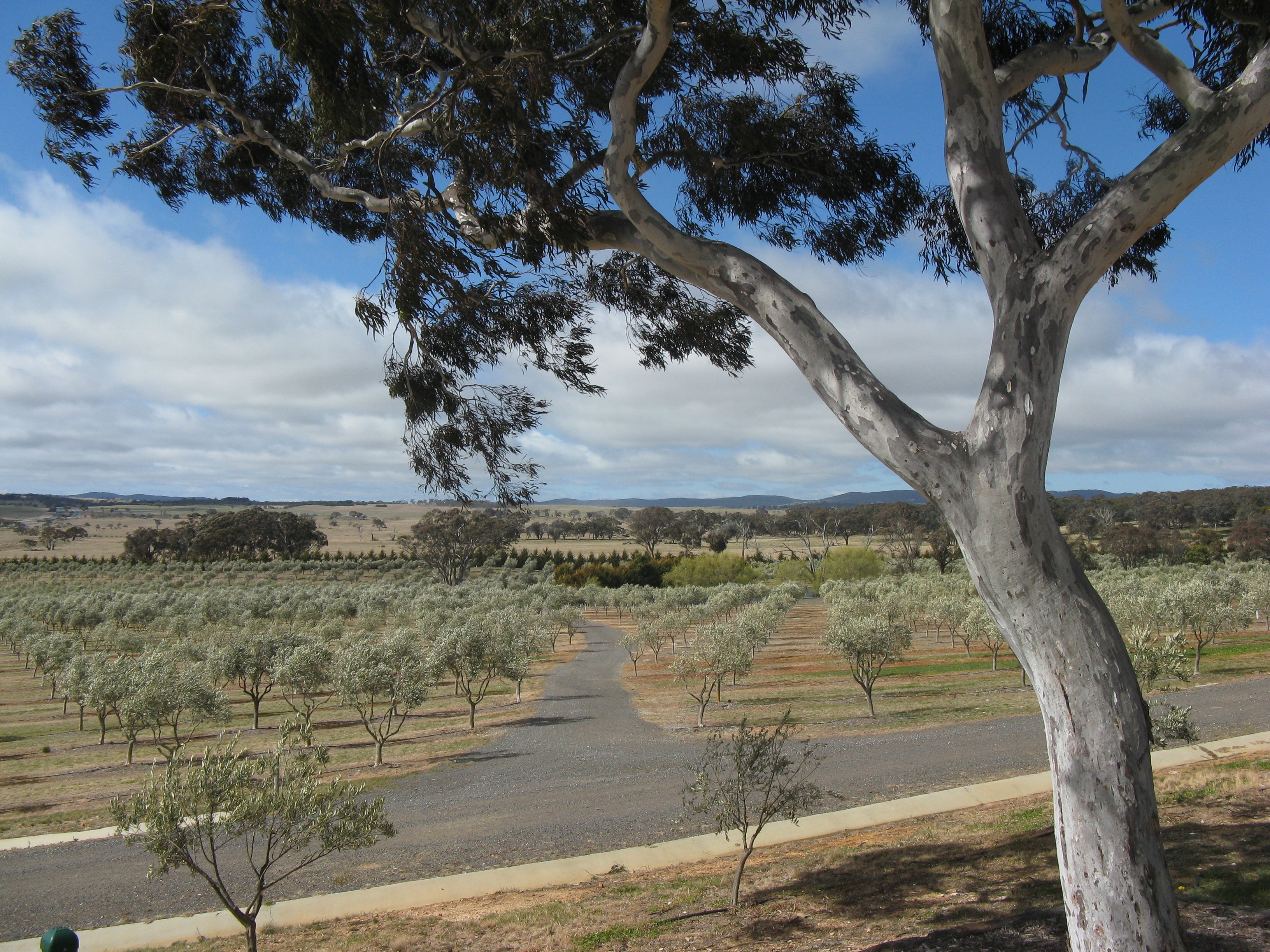
Fedra Olive Grove

Gilpin would not like the rows of olive trees here, but would probably like the irregular somewhat rough tree.

* There is, I believe, much academic debate about whether Romanticism rejected or extended the ideas of the Picturesque. I’m inclined to think it’s not a case of either/or but a more complex development.

William Gilpin, Jane Austen and the picturesque

I was introduced to William Gilpin by Jane Austen. Well, not by her so much as by her brother, Henry, who told us* that she was “enamoured of Gilpin on the Picturesque at a very early age”.

Engraving of Rev. William Gilpin.

William Gilpin (Harper’s New Monthly Magazine, No. 231, August, 1869.Public Domain, via Wikipedia)

This month my local Jane Austen group decided to look a little more deeply at Gilpin, his Picturesque, and what Jane Austen really thought. William Gilpin (1724-1804) was an English vicar, schoolteacher, prolific writer and amateur painter. He is remembered primarily for his theory of “the picturesque”. The “picturesque”, according to my Shorter Oxford English Dictionary, dates back to 1703 with the meaning, “in the manner of a picture; fit to be made into a picture”. In his Essay on Prints (1768), Gilpin defined it as “… a term expressive of that peculiar kind of beauty, which is agreeable in a picture”.

The blogger at Austenonly has written an excellent post on Jane Austen and Gilpin in which she proposes – and my group here agreed with her – that Austen was enamoured of him because he appealed to her sense of the ridiculous. He expresses his opinions so dogmatically, he is so opinionated, that she can’t help mocking him. How could she not satirise a man who seriously suggests (“Essay 1: On Picturesque Beauty”, Three Essays) that, when it comes to a portrait, “the highest form of picturesque beauty” is not “the lovely face of youth smiling with all its sweet dimpling charms” but “the patriarchal head” with its “lines of wisdom and experience … the rough edges of age”. Being a woman of a certain age, I rather like Mr Gilpin! But, seriously, is it really a matter of either/or?

Or someone who writes (in the same essay):

A piece of Palladian architecture may be elegant in the last degree. The proportion of its parts — the propriety of its ornaments — and the symmetry of the whole, may be highly pleasing. But if we introduce it in a picture, it immediately becomes a formal object, and ceases to please. Should we wish to give it picturesque beauty, we must, use the mallet, instead of the chisel : we must beat down one half of it, deface the other, and throw the mutilated members around in heaps. In short, from a smooth building we must turn it into a rough ruin. No painter, who had the choice of the two objects, would hesitate a moment.

We must presume that he is not speaking literally when he suggests taking a mallet to a pleasing building in order to make it picturesque! But Jane Austen is sure to have laughed and, as you’ll read in Austenonly’s post, there are many examples in Austen’s novels, particularly Pride and prejudice, Sense and sensibility and Northanger Abbey, in which she satirises the picturesque.

On the other hand, there are also places where she seems to exhibit an appreciation and understanding of Gilpin’s theory because, while Gilpin could be dogmatic, he also argued convincingly for a seeing nature with “a picturesque eye”. He writes in “Essay 2: On Picturesque Travel” about enjoying “the great works of nature, in her simplest and purest stile, open to inexhaustible springs of amusement”, and says

Nor is there in travelling a greater pleasure, than when a scene of grandeur bursts unexpectedly upon the eye, accompanied with some accidental circumstance of the atmosphere, which harmonises with it, and gives it double value.

I’ll illustrate this with two examples of travellers in Austen. First is her description of Fanny’s return to from Portsmouth in Mansfield Park:

Her eye fell everywhere on lawns and plantations of the freshest green; and the trees, though not fully clothed, were in that delightful state when farther beauty is known to be at hand, and when, while much is actually given to the sight, more yet remains for the imagination.

There is also a lovely, similarly genuine, description of the environs of Lyme in Persuasion in which she writes of a “sweet, retired bay, backed by dark cliffs, where fragments of low rocks among the sands make it the happiest spot for watching the flow of the tide …”

The question that comes to mind then is whether she is satrising the picturesque or slavish adherence to it or, even perhaps, its somewhat slippery nature. In fact, Jane Austen, landscape and the Regency is a pretty inexhaustible topic. And so, while I thoroughly enjoyed my brief introduction to Mr Gilpin, I’d love to find time to read more, particularly his travel writings about various parts of the British Isles. Meanwhile, I can’t resist leaving you with another Gilpin satirist, William Combe (1741-1823), who in 1809, as Dr Syntax, wrote the poem “The Tour of Dr Syntax in Search of the Picturesque”. It starts with

I’ll make a tour – and then I’ll write it.
You well know what my pen can do,
And I’ll employ my pencil too:-
I’ll ride and write, and sketch and print,
And thus create a real mint;
I’ll prose it here, I’ll verse it there,
And picturesque it everywhere.
I’ll do what all have done before;
I think I shall – and somewhat more.
At Doctor Pompous give a look;
He made his fortune by a book:
And if my volume does not beat it,
When I return, I’ll fry and eat it.

What a hoot …

* in his biographical note to the posthumously published first edition of Northanger Abbey and Persuasion

Monday musings on Australian literature: Some thoughts on specialised literary awards

Did you hear last week that the Man Group is, after the current award, withdrawing its support for the Man Asian Literary Prize? I heard it via a tweet from a member of our prize team for the 2011 prize. This, in the same year that the Queensland premier cancelled the Queensland Premier’s Literary Awards. What is happening? Is there something in the international waters? Has climate change somehow blown the winds in the wrong direction?

And yet, fortunately, other awards keep appearing. Late last week I reported on the shortlist for a new award here, the Most Underrated Book Award (or MUBA). In the same week the people behind the new Stella Prize finally called for nominations for the inaugural award. Winners will be announced in April next year. This award, appropriately named for Miles Franklin – her full name was  Stella Maria Sarah Miles Franklin – is “for the best work of literature [fiction and non-fiction] published in 2012 by an Australian woman”. Fiction and non-fiction! This will be interesting.

All this ground-shifiting raises the question, yet again, regarding whether new (in fact any) prizes are warranted, particularly prizes targeted to special groups. Author Chris Flynn, writing on the Meanjin Blog regarding the Stella Prize, said, in support of a prize for women writers:

At this point in the process the argument over whether or not a dedicated prize for women is needed is moot. We can, after all, have as many prizes as we like in literature and even if the Barbara Jefferis Award already exists, so what? Men are eligible for that anyway, as the $35K goes to ‘the best novel written by an Australian author that depicts women and girls in a positive way or otherwise empowers the status of women and girls in society.’ Frank Moorhouse was shortlisted this year, and Anna Funder won. If I came into some moolah and announced I was starting up The Flynn Prize for, say, the best first novel of the year, would anyone seriously be shouting me down and saying it was unnecessary, that there are already plenty of prizes out there and debut novelists should just suck it up and hope for the best? Yeah, I don’t think so, somehow.

I like his point that “We can, after all, have as many prizes as we like in literature”.

This brings me back to the Man Asian Literary Prize, which started in 2007. The executive director of the prize, David Parker, thanked the Man Group for its support and argued for the value of the prize:

We look forward to the future with a new partner, confident that Asian fiction is now beginning to secure the global readership and recognition it deserves. Our most recent winner, Please Look After Mom by South Korean writer Kyung-sook Shin, has recently sold its two millionth copy worldwide – an amazing achievement. One third of the shortlisted writers for this year’s Man Booker Prize are from Asia, and international publishing houses such as Pan Macmillan and Hachette have recently opened offices here in Hong Kong. Clearly, Asian literature is on the march.

I don’t know what part the Man Asian Literary Prize played in these encouraging results, but have to assume that the increased international profile it provided for Asian writers played at least some part.

Not all awards, of course, can hope to bring about such high profile change. Some certainly carry more weight (read “status”) than others, but I’d liken it to the Olympics versus national and state championships. This network of championships all play a role in the development and recognition of athletes – and so surely do the international, national, state, local and specialised awards for writers.

For writers and publishers, then, I think awards – both general and specific – have value. What about for me as a reader? I’m not a close follower of literary awards. That is, I don’t aim to read all the long- and shortlists in specific awards, or even all the winners, but I do like to keep an eye on awards and they do help inform my reading choices. I find them particularly useful as a guide in specialised areas that are out of my comfort zone – and hence my involvement in this year’s Man Asian Literary Prize. I was introduced to the literature of countries I’ve never read before. I’m hoping MUBA and Stella will do the same for the writers (and readers) they are targeting.

The Most Underrated Book Award 2012

A short post! I have just read on the SPUNC site that Kobo is sponsoring an award to highlight books that were released by independent publishers and members of the Small Press Network (SPUNC) and that did not receive wide recognition.

The shortlist for the inaugural award was announced this week, and the titles are:

The award apparently recognises both the publisher and author. The winner will be announced, the SPUNC announcement says, on 8 November at the opening of the Independent Publishing Conference during a special gala night and literary debate at the Wheeler Centre.

Good on Kobo I say. Books published by smaller presses are often overlooked in the major literary awards partly, I presume, because the authors usually aren’t well enough established to be noticed and partly because small publishers don’t have the marketing clout and distribution networks to get their books out to enough readers and reviewers. I hope this new award will help raise the profile of the authors and their hardworking publishers.

* I have a soft spot for Irma Gold, and not just because I’ve read and enjoyed her book. She lives in my city, and is currently coordinating the production of, and editing, The invisible thread, an anthology of works “by writers who have an association with the Canberra region”. The book represents a major literary contribution to Canberra’s 2013 Centenary Celebrations, and is planned to be the focus of many literary events over the coming year. Watch this space!

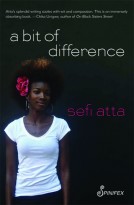
Sefi Atta, A bit of difference (Review)

Sefi Atta, A bit of difference

Book cover (Courtesy: Spinifex Press)

Nigerian writer Sefi Atta was once an accountant. Interesting switch that, accountant to writer, but Atta seems to have made it with great success. Her first novel, Everything good will come, won the Wole Soyinka Prize for Literature in Africa, and received an Honourable Mention in the Aidoo-Snyder Book Prize. Her short story collection, News from home, won the Noma Award for Publishing. I don’t usually itemise awards but it seemed appropriate to do so for a writer who is probably little known to most of my readers. It provides some context to her standing.

However, I mentioned her previous profession for another reason. The main character in her most recent novel, A bit of difference, is a Nigerian accountant. I’m not sure how autobiographical the novel is but Atta clearly understands something about the world of accountants!

The novel is set in the early-mid 2000s, just post the war in Iraq, and takes place over a few months in the life of its protagonist, Deola (pronounced, we are told in the first chapter, “day-ola”). Aged 39, Deola is the director of internal audit for an international charitable foundation. Her role is to audit organisations that receive its grants. The novel starts with her travelling to the Atlanta, USA, office and sets the tone for her dissatisfaction regarding where she is in her life, that is, an unmarried, childless Nigerian expat living in London.

Deola and I have little in common, but I have lived the expat life twice, once in my early 30s and again in my late 30s-early 40s and I understood her desire to be with people who have a “shared history”. The trouble of course is that having gone to boarding school and then worked in England for many years, her “shared history” is a little muddy. However, she starts to feel it’s back in Nigeria, despite her own misgivings and those of her English and Nigerian friends in London.

This is not a book with a page-turning plot. It simply follows several months in the life of an unsettled woman who’s trying to make a decision. It’s told 3rd person, but from Deola’s point of view, and is chronological, with flashbacks to explain to us how she’s got to where she is. Despite the potential, given its setting, it’s not a grim novel. There’s humour – in some funny scenes, entertaining dialogue, effective use of irony. And there’s a wide cast of well-diffferentiated and rather colourful but very real characters – from the thirty-something sister in Nigeria who still likes hip-hop to the not-yet successful Coetzee-enthusiast Nigerian novelist friend in London.

What is most interesting in the novel is its multiple, intertwining themes: the often lonely life of the middle-class expat, race relations in England, African identity and politics, and the way even the enlightened or educated people in both cultures don’t always meet eye-to-eye. I was reminded, as I was reading the book, of Anita Heiss’s talk at the Readers Festival I attended last month. She said she wanted to write novels about young, professional, urban indigenous women to show that their concerns are much the same as their anglo-Australian contemporaries, with the added issue of racial identity and politics to contend with.

And so, as I believe Heiss’s “chicklit” novels do, Atta’s novel explores those universal concerns of belonging and identity, but set against a particular environment where ethnic distrust and/or racial and class hierarchies threaten the self, both at home and in the “adopted country”. Deola feels somewhat of an outsider. In England, she feels her views or experience are not respected by her employing organisation and she is conscious always of being black in a white country. Back home in Nigeria, she’s aware of corruption, and of the way Nigerians rank and distrust each other on a whole range of grounds. England may be characterised by “phony egalitarianism” but Nigeria doesn’t seem much better. Through a character like Deola, Atta can tease out the misunderstandings – or arrogance even – of western organisations trying to “do good” for developing countries while also showing the lack of cohesion in those very countries receiving the help. Fortunately for Deola, at least on a personal level, help might be on the way in the form a man she meets on a business trip to Lagos. But, like most modern novels, nothing is quite as simple as it seems …

Two motifs run through the novel – the fear of HIV/AIDS and the threat of “armed robbers”. These are the “bogies” of contemporary Africa, and serve as a constant reminder that for all the universalities, this novel is also particularised to Africa. A bit of difference is an interesting and satisfying book primarily for this very reason, for, that is, the fact that it so beautifully integrates an engaging personal story with one having a wider political resonance.

Sefi Atta
A bit of difference
North Melbourne: Spinifex Press, 2012
219pp.
ISBN: 9781876756994

(Review copy supplied by Spinifex Press)

The Griffyns go Behind Bars

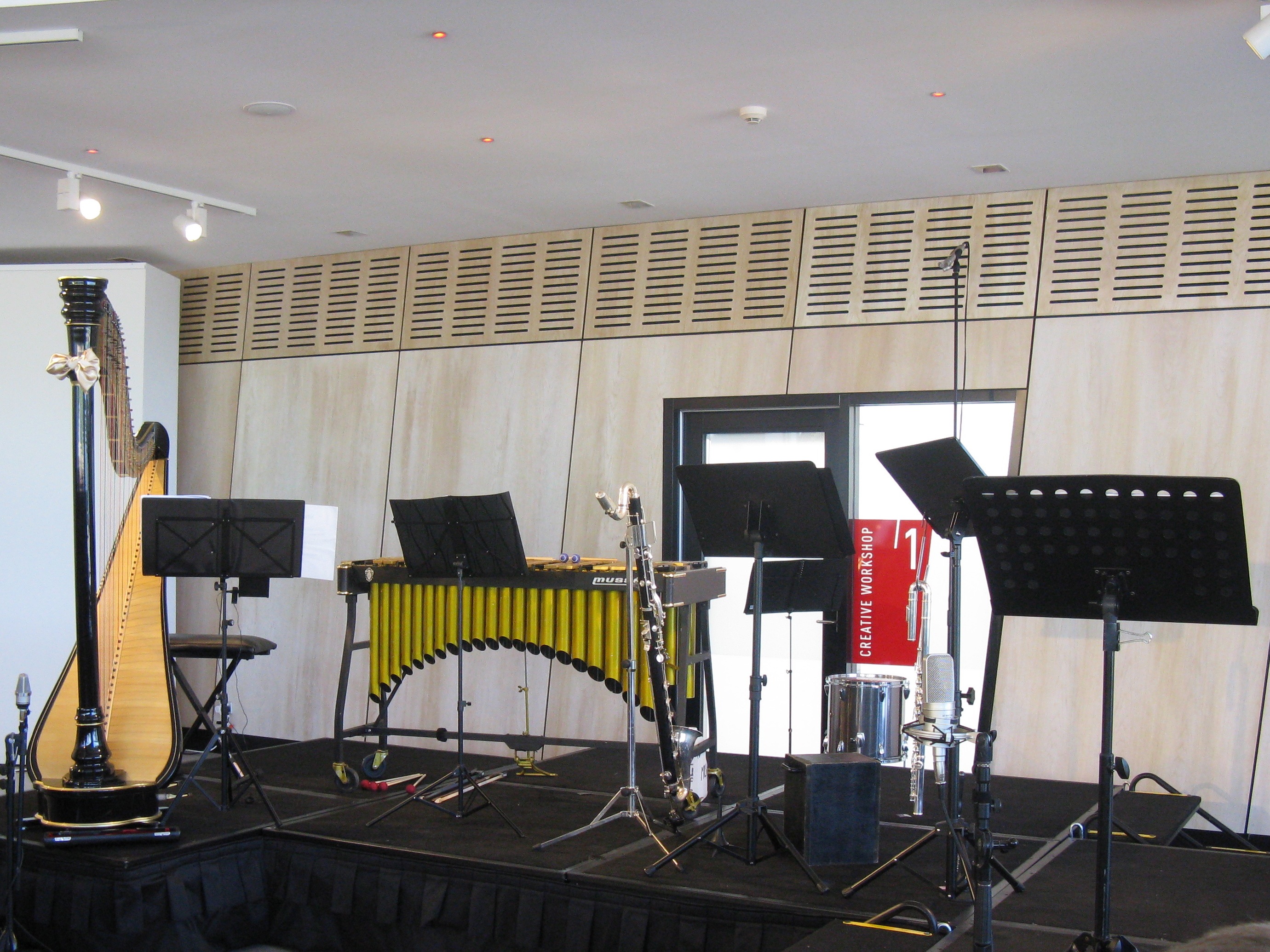
Griffyn Ensemble set up

Before the concert

The Griffyn Ensemble has done it again. They’ve presented a concert that moved, challenged, educated and entertained us. Behind Bars, which was performed last week in Melbourne, Bendigo and Canberra, was the third and final concert of their 2012 season. Like all their concerts it had a theme, this one being, obviously, imprisonment.

This thematic approach is one of the things I greatly enjoy about Griffyn Ensemble. I love the way they marry music with ideas. I guess it appeals to the reader in me. However, while I’ve enjoyed the themes and the music the Griffyns have chosen to represent them, what hasn’t always been clear to me, and I’ve mentioned this before, has been the logic behind the order of the program. Their last concert, which was structured around the four seasons, was clearer, but in Behind Bars the coherence was both logically and philosophically satisfying. Let me describe the program in the order it was presented …

Behind Bars Installation

The concert’s opening introduced us to the main composers and ideas to be further explored in the concert. The performers were spaced around the room, behind, in front of and beside us, and, one by one, provided a spoken and brief musical introduction to one of the concert’s composers. As each new musician performed his/her composer’s snippet, the previous musician/s performed theirs concurrently.  It could have been a mess, but it was lightly and sensitively done and worked well as a concert opener. This section concluded with the ensemble singing Gideon Klein‘s “Poljuŝko, Pole” which was composed in Theresienstadt in 1942.

Abyss of the Birds

Clarinettist Matthew O’Keeffe then performed the clarinet solo movement from Olivier Messiaen‘s Quartet for the End of Time, which was composed in a prisoner-of-war camp in 1941. Messaien apparently said, after this piece was performed in Poland’s Stalag VIII, that “never was I listened to with such rapt attention and comprehension”. This was a lovely piece – though you should know that I’m partial to clarinet. I heard in it strains of jazz and hymns interspersed with the sound of birds. This “birdsong” provided an unexpected sense of hope and freedom amongst the melancholy tones that surrounded it.

Theresienstadt

As you have probably guessed from the heading, the third section of the concert also came from the Second World War and comprised pieces created and/or performed in this Czech concentration camp. The highlight of this section was a performance of the children’s opera, Brundibár, composed by Hans Krasa. WC Fields apparently once said “never work with children or animals” and I must say that guest artist, eight-year-old William Duff, almost stole the show. He sang clearly and sweetly, and his acting was natural and confident. He seemed to have a lovely relationship with his “mother”, the beautifully expressive soprano Susan Ellis. This delightfully entertaining piece was followed by the news that, after performing the work for a Nazi promotional film, the composer, musicians and performers were all sent to Auschwitz and thence the gas chambers. The section closed on the song, “I wander through Theresienstadt”, by poet Ilse Weber (who, with her son, was also transferred to Auschwitz and the gas chambers).

It was in a sombre mood that we went to intermission.

San Quentin

San Quentin was represented by Johnny Cash’s song “San Quentin” composed in 1969 and an earlier piece, “Vocalise”,  by Henry Cowell (imprisoned for “bisexual behaviour”).

March of the Spirit

The concert concluded with an eight-song “folk oratorio” composed by Mikis Theodorakis in 1969 while under arrest at Zoutona during Greece’s military dictatorship of the late 1960s. The piece, March of the Spirit, was set to poems written by Greek poet Angelos Sikelianos during the Greek Civil War in the 1940s. It was described in the program notes as “a collection of eight songs that are a melting post of classical and traditional music elevating the great works of Greek literature and inspiring a new message of democracy and freedom for the Greeks”. Michael Sollis – in a strong, appropriately Greek-sounding voice – and Susan Ellis did the singing, backed, as ever, by the rest of the ensemble on harp, percussion, clarinet and flute. The rousing words – comprising such images as “the earth has been overfertilised with human flesh” interspersed with patriotic calls to freedom – were displayed on a screen for the audience to follow.

What I liked, then, about the concert in terms of its programming coherence is basically this. The opening section provided an effective introduction to the concert’s music and ideas. It was then followed by four sections that were essentially chronological – World War 2 then the 1960s. And, philosophically it ended on a positive note – through a work that expresses the pain of civil unrest but is also a rousing call to freedom and democracy. My only comment, really, is that given the Griffyns are an Australian group performing in Australia, some Australian content might have been appropriate. The toughest issue to tackle would be Aboriginal Deaths in Custody but that would probably be too culturally sensitive for such a group to take on. One day, perhaps, but not quite yet.

I’m aware that I’ve written a lot of words but said little about the music and the musicians. I’ll just say that it was a musically, emotionally and intellectually satisfying concert – and I greatly look forward to the Ensemble’s 2013 season. There are always compensations I find for the years flying by!