Last time I wrote a My Literary Week post it was because I’d scarcely read that week, but had some literary moments to share. This time it’s because I’ve been reading things which have generated some thoughts that I want to document, but not in long dedicated posts. (I’m feeling lazy). Most have been inspired by those reading coincidences (or synchronicities) where you read something in one place and then it, or something related to it, pops up in another. See what you think …
Critical critics (and Jane Austen)
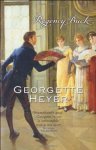 A week ago, I read a post about Georgette Heyer by blogger Michelle who, knowing my love of Jane Austen, wondered what I thought about Heyer, given she was an avowed Austen fan and wrote about the Regency. I’m afraid I disappointed Michelle because I confessed that I’ve never read Heyer. I tried one a couple of years ago, but I just. couldn’t. get. into. it. I commented on Michelle’s post that what some of those (not Michelle I might add) who try to compare Heyer and Austen miss is that Heyer was writing historical fiction, while Austen was writing contemporary fiction. Austen was writing about her own time, and this makes their works very different. Heyer doesn’t write Jane-Austen sorts of stories. Her stories are not about small villages and a small number of families, but are set on bigger stages and mostly amongst the wealthy. War and high drama are more her subject matter. Austen’s characters are mostly middle class, and even those who are wealthy live in the country and attend quiet social events. Her themes involve critiques of society and human behaviour.
And here comes the synchronicity, sort of. As I was preparing for my local Jane Austen group’s meeting this weekend on Austen’s grand houses, I read the essay “Domestic architecture” by Clare Lamont in Janet Todd’s (ed.) Jane Austen in context. In it, Lamont notes that critics have expressed disappointment at the lack of architectural information or descriptions of interiors in her novels. But, but, but, I say, Austen was writing contemporary fiction. She was writing for readers who knew the homes the wealthy, the middle-class, the parsons, farmers and others lived in. Austen did not have to describe these in detail. Historical novelists do though! So Austen, being the sort of writer she was, used her descriptions to convey character, not to tell us what the places were like.
When we read, it is so important to know the context and genre within which we are reading before we start casting aspersions!
What contemporary readers know
And this brings me to another comment on the topic of what contemporary readers – that is, readers reading books around the time they were written – know. I was mooching through Instagram this morning, and came across an image of mini-pineapples by Iger aforagersheart. She wrote that she’d read a history of pineapples which told her, among other things, that they were used as a symbol of wealth for “fancy Europeans”.
Aha, I thought, Jane Austen used this – and her contemporary readers would have recognised it for what it was, a pointer to the pretensions and focus on money of the character involved, General Tilney in Northanger Abbey. He has “a village of hot-houses” but, oh dear, “The pinery had yielded only one hundred [pineapples] in the last year” he complains to our heroine Catherine. General Tilney, we gradually discover, values people by their money, and is ungenerous to those without. This starkly contrasts with the admirable Mr Knightley in Emma who grows strawberries and apples, in fields and orchards, and shares them willingly with neighbourhood families. He even gives his last keeping apples, to his housekeeper’s dismay, to the poor Bateses:
Mrs. Hodges … was quite displeased at their being all sent away. She could not bear that her master should not be able to have another apple-tart this spring.
We readers of later times see, of course, this generosity, but we may not know what the pineapples symbolise, and are therefore likely to miss that little early hint to where Austen was going with General Tilney.
Hungary and the war
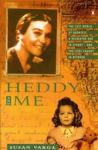
Penguin edition
The third reading coincidence relates to my review last weekend of Susan Varga’s Heddy and me, in which she tells of her mother’s life in Hungary before, during and after the war, and her (and the 1943-born Susan’s) immigration to Australia. A great read. Then, I opened my digital edition of The Canberra Times this morning, and what did I see but an article about local food-blogger Liz Posmyk’s recently published book, The barber from Budapest, which tells the story of her parents through two world wars in Hungary, the challenge they faced in living postwar under Communism, and their subsequent migration to Australia.
There are still many stories to tell about people’s experiences of the two world wars, and about what happened postwar. Whether we’ll ever learn the lessons they provide is another thing.
Christina Stead Week
And finally, of course, I can’t let the post finish without mentioning Lisa’s (ANZLitLovers) Christina Stead Week, with which she has aimed to raise the profile of, and gather together a list of blog reviews for, this often overlooked writer. Stead was, Lisa shares on her post, described by the New Yorker as “the most extraordinary woman novelist … since Virginia Woolf” and by Saul Bellow as “really marvellous.”
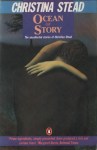
I have contributed two posts – one on the story, “Ocean of story”, and another on the first three stories in the Ocean of story collection. I thoroughly enjoyed reading these, and thank Lisa for giving me the impetus to read them.





 Whispering Gums