Gavin Casey, Dust (#Review)

I have had to put aside the novel I was reading for Bill’s Gen 1-3 Aussie male writers week, as my reading group book called. I will get back to it, and post on it later, but in the meantime, I wanted to post something in the actual week.

So, I turned, as I have for other Reading Weeks, to The Penguin century of Australian stories, an excellent anthology edited by Carmel Bird. Given Bill’s week encompasses writers working from 1788 to the 1950s, Bird’s anthology offered almost too many choices. Besides the obvious Henry Lawson, there were Steele Rudd, Tom Collins, Vance Palmer, and more, ending with Judah Waten’s 1950 story, “The mother”. I considered several, but Gavin Casey captured my attention because in her Introduction to the anthology, Kerryn Goldsworthy, looking at the 1930s and 40s, commented that Gavin Casey’s “Dust” and John Morrison’s “Nightshift” exemplified the more overtly political stories of this era. She added that:

they are stories in simple, unadorned language … that focus on workers and workplace disasters, on the physical dangers lying in wait for working men and women.

I have been interested in this period – and its socialist-influenced political thinking – for some time, so it had to be Casey or Morrison. Casey it was because I have listed him in a couple of Monday Musings posts but knew nothing about him.

Who was Gavin Casey?

Casey (1907-1964) was an author and journalist, born in Kalgoorlie, Western Australia, to an Australian-born father and Scottish mother. 

He doesn’t have a Wikipedia article but there is a useful biographical entry for him in the Australian dictionary of biography (ADB). Written by Anthony Ferguson, it says he had a sketchy education before obtaining a cadetship with the Kalgoorlie Electric Light Station. However, he left there to work in Perth as a motorcycle salesman, only to be “forced” back to Kalgoorlie in 1931 by the Depression. He then worked “as a surface-labourer and underground electrician at the mines, raced motorcycles and became a representative for the Perth Mirror“. He married in 1933, but “poverty plagued them, long after their return to Perth next year”.

By 1936, he was publishing short stories in the Australian Journal and the Bulletin, and in 1938 he was foundation secretary of the West Australian branch of the Fellowship of Australian Writers. His two short story collections – It’s harder for girls (1942), which won the 1942 S. H. Prior memorial prize and in which “Dust” appeared, and Birds of a feather (1943) – established his reputation. Ferguson writes:

Realistic in their treatment of place and incident, his stories showed—beneath the jollity and assurance of his characters—inner tensions, loneliness, unfulfilled hopes, and the lack of communication between men and women.

You may not be surprised to hear that his first marriage failed!

Overall, he wrote seven novels plus short stories and nonfiction works. His novels include Snowball (1958), which “examined the interaction between Aborigines and Whites in a country town”, and Amid the plenty (1962), which “traced a family’s struggle against adversity”. There is more about him in the ADB (linked above).

Ferguson doesn’t specifically address the political interests Goldsworthy references. Instead, he concludes that critics liken Casey’s earlier works to Lawson, seeing “a consistent emphasis on hardship that is tempered, for the male at least, by the conviviality of mates”. Ferguson also praises both for “their perceptiveness” and “their execution”.

The reality of Casey is a bit more nuanced, I understand. For a start, his men are not bush-men but suburban workingmen. Consequently, I plan to write more on him in a Monday Musings Forgotten Writers post, soon. Meanwhile, on with “Dust”.

“Dust”

“Dust” features male characters only, and there are some mates but, while they are important, they are not central. “Dust” also must draw on Casey’s experience of working in Kalgoorlie’s mining industry. It’s a short, short story, and is simply, but clearly constructed. It starts with a physical description of dust swooping through the township, over housetops and hospital buildings, and “leaving a red trail wherever in went”. It sounds – almost – neutral, but there are hints of something else. Why, of all the buildings in town, are “hospital buildings” singled out with the “housetops”, and does the “red trail” left behind signifiy anything?

Well, yes it does, as we learn in the next paragraph. Although this dust comes from “honest dirt” and can do damage like lifting roofs off, it is “avoidable” and is nothing like the “stale, still, malicious menace that polluted the atmosphere of far underground”. Ah, we think, so the “dust” we are talking about is something far more sinister than that flying around the open air.

And here is where the hospital buildings come in. Protagonist Parker and his miner friends are waiting for their six-monthly chest x-rays checking for the miners’ dust lung disease which killed his father. Things have changed since his father’s times, Parker knows. Not only are there the periodic medical examinations, but there are mechanisms to keep the dust down, and a system of “tickets” and pensions for affected miners. But, the risk is still there, and Parker’s anxiety increases as he watches his mates go in one by one, while he waits his turn.

This is a story about worker health and safety – but told from a personal not political perspective. It’s left to the reader to draw the political conclusions. However, it is also a highly relatable story about humans, health, and risky choices and behaviour, because it seems that Parker does have a choice. I won’t spoil it for you, but simply say that the ending made me smile – ruefully.

Gavin Casey
“Dust” (orig. 1936)
in Carmel Bird (ed.), The Penguin century of Australian stories
Camberwell: Penguin Books, 2006 (first ed. 2000)
pp. 86-90

Gideon Haigh, My brother Jaz (#Review)

When I posted my first review of the year – for Marion Halligan’s Words for Lucy – I apologised for starting the year with a book about grief and loss. What I didn’t admit then was that my next review would also be for a work about grief and loss, Gideon Haigh’s extended essay, My brother Jaz. This does not herald a change in direction for me, but is just one of those little readerly coincidences – and anyhow, they are quite different books.

For a start, as is obvious from its title, Haigh’s book is about a sibling, not a child. It was also much longer in the making. Halligan’s book was published 18 years after her daughter’s death, and was something she’d been writing in some way or other all along. Words are also Haigh’s business, but he ran as far as he could from his grief, and it was only in 2024, nearly 37 years after his 17-year-old brother’s death, that Haigh finally wrote, as he says in his Afterword, “something I had always wanted to write, but had suspected I never would”.

Before I continue, I should introduce Haigh for those of you who don’t know him. Haigh (b. 1965) is an award-winning Australian journalist, best known for his sports (particularly, cricket) journalism, but also for his writing about business and a wide range of social and political issues. He has published over 50 books. I’ve not read any, but I am particularly attracted to The office: A hardworking history, which won the Douglas Stewart Nonfiction Prize in 2013. However, I digress …

Unlike Halligan who, to use modern parlance, leant into her grief in what I see as a self-healing way – as much as you can heal – Haigh did the opposite. He did everything he could to avoid it; he worked, he writes, “to flatten it into something I could roll over”. And it affected him. If he, just 21 at the time, was a workaholic then, he doubled down afterwards and work became his refuge, his life:

It was the part of me that was good; it was the only part of me I could live with, and that sense has quietly, naggingly persisted. Go on, read me; it’s all I have to offer. The rest you wouldn’t like. Trust me. You don’t want to find out.

If this sounds a bit self-pitying, don’t fear, that is not the tone of the book. It is simply a statement of fact, and is not wallowed in. It represents, however, a big turnaround from someone who admits early in the book that he was known for his “pronounced, and frankly unreasonable, aversion to autobiographical writing”. This aversion was despite the fact that, “at the same time, trauma, individual and intergenerational” was something he’d written about – and been moved by – for a long time. So, in this first part of his six-part essay, we meet someone who had experienced deep pain, but had shrunk from indulging in a certain “kind of confessional nonsense”, and yet who increasingly found himself “backing towards an effort to discharge this story” to see if it made him “feel differently”.

What changed? Time of course is part of it. Haigh shies from cliches, as he should, but grief will out. It just can’t be bottled up forever, no matter how hard he tried, and so in early 2024, during the Sydney Test Match no less, “something previously tight had loosened” and over 72 hours he wrote the bulk of this essay. A major impetus was the break up of a relationship. It was time for a “reckoning”, he writes on page 76, but much earlier, on page 47, he alludes to it:

Why did I even start this? The only reason I can think of is that it has to be done. It can’t remain unwritten, just as I could never leave Jaz unremembered. I have myself to change, and how am I to do this unless I examine this defining event in my life face on?

This idea of the examined life is something Halligan mentions too in her memoir. She writes near the end of her book that “I do believe that the unexamined life is not worth living, and that an enormous part of that is the recollected life”.

What I hope I’ve conveyed here is the way this essay is driven – underpinned – by a self-questioning tone, more than a self-absorbed one. Even as Haigh writes it, he is interrogating his reasons (and perhaps by extension anyone’s reasons) for writing about the self. That this is so is made evident by the way the narrative, though loosely chronological, is structured by the writing process rather than by the “story”:

“OK it’s getting on to dawn, and I’m going to click on ‘Jasper Haigh [inquest] Reports for the first time” (p. 29)

“It’s raining, but I’ve just returned from a walk. I often walk when I have something to turn over in my head.” (p. 33)

“I’m at the point right now where I just wonder what the hell I am doing.” (p. 47)

“I have picked this up again after putting it aside to draw breath, to consider what next … So, I’m going to stagger on, with the excuse that this is no memoir: this is less a geology of my life than a core sample.” (p. 61)

This approach helps us engage with a writer who prefers to push us away. It finds, in a way, the art in the artifice, and enables Haigh to write something that questions the memoir form while at the same time paying the respect that the best memoirs deserve. It’s a juggling act, and I think he pulls it off.

By the end, Haigh is not sure whether writing this work – this raw “reckoning” to re-find his emotional bearings – has achieved anything. It is, he believes, “too early to tell”, but I wouldn’t be so sure. He is a writer, and he has put on paper the defining event – the “core sample” – of his life. That has to mean something.

Gideon Haigh
My brother Jaz
Carlton: Melbourne University Press, 2024
87pp.
ISBN: 9780522880830

Monday musings on Australian literature: Bill’s Australian White Men Gen 1-3

For several years now, Bill (The Australian Legend blog) has run a week dedicated to “generations” in Australian literature, focusing until this year on Australian Women Writers. This year, however, he has changed tack, and decided to look at Australia’s early male writers – who were, of course, in that colonial landscape, mostly white. He has also decided to do three generations at once, which means we are covering writers who were active from 1788 to the 1950s. This, says Bill, will be his last “Gen” – and fair enough, it’s been a big effort, one that many of us have enjoyed taking part in. Bill deserves a big thanks for bringing older Australian writers to the fore, and encouraging discussion about our literary history – the writers, the influences (including his “favourite”, The Bulletin) and the trends.

As before, Bill has created a page of Gen 1-3 writers to which he will add reviews posted for them or for writers he’s not yet listed. In this post I am going to list the writers I have read who suit this period, as my first contribution to Bill’s project.

Now, like Bill, my reading focus is women writers. Each year they represent 65-75% of my reading. I do like reading men too – and I would read more, if I could carve out more reading time – but my point here is to explain why my contribution is paltry.

Sometimes a bloke gits glimpses uv the truth
(CJ Dennis, “In Spadger’s Lane” in The moods of Ginger Mick)

The Gums’ Gen 1-3 List

In alphabetical order by author (compared with Bill’s chronological one by date of birth) … and with links on titles to my reviews of their books.

Knowledgable eyes will notice that my list does not include some of the big names of Australia’s male writers of the 19th century – Rolf Boldrewood, Marcus Clarke, Joseph Furphy, Henry Kingsley and Henry Lawson. Or Watkin Tench’s first hand accounts of the early colony. I have read a couple of these before blogging, but overall they have not been high priorities for me.

But, just to prove my interest, I have also read a couple of biographies of Australian male writers:

I have also read a couple of short journalistic pieces by Vance Palmer.

The books in my list span a century, from John Lang in the 1850s to Martin Boyd and D’Arcy Niland in the 1950s. John Lang’s A forger’s wife is a colonial novel with a 19th century melodrama feel, and is about, as I wrote in my post, issues like “the survival of the wiliest, and the challenge of identifying who you can trust”, things deemed critical to survival in the colonial mindset. By the ’90s, we were well into the time of social realism* and writers were looking outwards – to the sociopolitical conditions which oppressed so many. This is reflected in William Lane’s novel. It is also reflected in Price Warung’s stories, which, although “historical fiction” about the convict days, are written with a social realist’s eye on the inhumanity of the system. By the time we get to the mid-20th century, fiction was increasingly diversified. The world wars, increasing awareness of gender and continued concern about those issues the social realists cared about, not to mention modernism’s interest in the self, intellect, art, and their intersection with each other (to put it very loosely) can be found in the books I’ve read from that period.

When Bill started this project, he was inspired by the divisions suggested by Henry Green in his history of Australian literature. Green’s divisions were “conflict”, 1789-1850; “consolidation”, 1850-1890; “self-conscious nationalism” 1890-1923; and “world consciousness and disillusion”, 1923-1950. There is some sense to these divisions, and they provided a loose skeleton for the Gens! However, in her introduction to The Cambridge companion to Australian literature, Elizabeth Webby shares several studies or surveys of Australian literature, discussing their different approaches and goals, but she does say that several identify the 1890s as “being crucial to the development of a national literature”.

I could go on delving more deeply, but I won’t, as this post’s main goal was to tell Bill which books I can contribute to his male Gen 1 to 3 list, and I’ve done that.

Are you joining in or do you have any thoughts to add?

* There is some confusion regarding social versus socialist realism, but I am using social realism broadly to mean concern with sociopolitical issues – particularly regarding the working classes – with or without political “isms” behind it.

Marion Halligan, Words for Lucy (#BookReview)

For my reading group’s tribute to Marion Halligan last year, I had planned to read one of her older novels, Wishbone, which I did (my review), and her last book, the memoir Words for Lucy, which I didn’t. But, I have now. I guess a book born of a mother’s grief for a daughter who died too young doesn’t make the cheeriest start to this year’s reviews. However, such is the life of a reader so you’ll just have to bear with me!

Lucy, for those who don’t know Halligan’s biography, was born in 1966, with a congenital heart defect. She was not expected to survive more than a few days, but she did – for nearly 39 years. In the end, however, in 2004, her heart gave out. I’ve read two other memoirs written by a mother about her seriously ill daughter, Isabel Allende’s Paula and Joan Didion’s The year of magical thinking. They are very different books and in fact, in Didion’s case, her daughter did not die during the book, though she did die young (and Didion wrote a book about that, Blue nights). The reason I am sharing this is that Halligan, Allende and Didion were all published authors, and it shows. As Halligan writes in the opening to her book, “My business is words”. For these three writers, the process of writing was an important part of how they processed their feelings. Halligan’s book might have come out some 18 years after Lucy’s death, but she’d been writing all that time.

While confirming my memory concerning Allende and Didion, I came across the Wikipedia article on Blue nights. It includes a quote from Rachel Cusk’s review of the book. She says “Didion’s writing is repetitive and nonlinear, reflecting the difficult process of coping with her daughter’s death”. While I don’t know about the reason, the “repetitive and nonlinear” description could equally be applied to Words for Lucy. The book is divided into twelve parts (plus a postscript), with each part comprising many small sections. There is an overall chronological arc to the book, in that after briefly describing Lucy’s death, Halligan does start with her birth, and tells of the funeral and wake near the end. What comes in between, however, is, writes Halligan, like “box of snapshots. You find your own way through the story, from random details”. In other words, if you are looking for a traditional grief memoir in which the memoirist works chronologically through the “stages” of their grief, you won’t find it here.

Carmel Bird and Marion Halligan
Carmel Bird and Marion Halligan, 2016

What you will find is a book about mothering and “daughtering”, about living with a chronically-ill child, about making memories and living with memories, about sadness and joy, about loss and grief (because Halligan has had more than you’d think fair), and about writing. It’s also about friendship. Having experienced my own devastating loss (of my sister in her early 30s), I know very well the value of friends. For Halligan, a great friend was the writer Carmel Bird. I was much moved by the role Carmel played in Lucy’s life, and by the love and support she clearly gave Marion.

Now, returning to Halligan’s “snapshots”, I enjoyed how, within a broad thematic structure, Halligan wanders through family life – from the lighthearted like Lucy’s love of things to the serious like her long and complex medical journey that cramped her life so much, from the family’s experience of living overseas to travelling there together later. From these, and more, so many truths emerge. For example, Halligan writes on page 2,

Love is so important to us. We so much need it. We can’t do without it. What we don’t realise at the beginning is the price it comes at.

Right there I knew I was going to like this book, because I was immediately taken back to my first pregnancy, and the fear I had that something would happen to this child I was bringing into the world. Ah well, I reassured myself, I didn’t have him (as the child turned out to be) before and I was fine, so I’d be alright! But of course, as soon as that child came into the world, my life changed and I realised things would never be the same, that if anything happened to him, I would not – indeed, could not – go back to how I was. The price of love…

The price of love isn’t all bad of course, even when the loved person dies, because there are the memories, and it is through memories that Halligan charts both Lucy’s life and her own grief. There is, though, a sort of paradox here that Halligan admits to. It’s what she calls the Janus face of grief. There’s the grief we feel for the person who has gone, for the life they are missing, the things they’ll not see or experience, and there’s that selfish grief the bereaved person feels, the loss, the misery, the wanting that person back in your life to make you happy (in effect).

It’s a complex thing grief – not linear, which Halligan knows and hence her book’s structure, and not all misery either, which Halligan also knows. Happy, joyful memories do pop up. You do laugh. Halligan describes some special memories, and then writes this beautiful thing about them:

Those are perfect memories, I can take them out whenever I like and run their cool and sparkling shapes though my fingers, look at their brilliant colours, the light refracting through them.

These memories may not be “factual”, may not be the same as those of others who experienced the same person or event, but as Halligan would tell her sisters who questioned her memory of some family event, “Write your own narratives … this is mine and I’m sticking to it”.

Throughout Words for Lucy there is the writer’s eye on what is fact and what is truth. Truths can be “different” (indeed, “many”, as Emmanuelle learns in Wishbone) while facts are “another matter”. And so, in the final pages of the book, Halligan, paying her due to “a memoir’s desire for honesty”, shares one last painful fact so that we don’t go away believing some wrong truths about her family.

Words for Lucy was Marion Halligan’s last book. It’s a memoir, and has the honesty that form demands. However, I see it as also containing her apologia, her final statement on what fiction is. For her, and she understood the slipperiness of this, it’s about truth, which is different from fact. “Fiction is always life”, she writes in this book. It means writers using life – including their own – “in all sorts of imaginative ways”. Think Jane Eyre, David Copperfield, and her own, somewhat controversial, The fog garden.

Ultimately, whether Halligan was writing fiction or nonfiction, words were her business. And these, her final ones, represent a fitting legacy for a brilliant career as well as a beautiful tribute to a beloved daughter.

Marion Halligan
Words for Lucy: A story of love, loss and the celebration of life
Port Melbourne: Thames and Hudson, 2022
218pp.
ISBN: 9781760762209

Monday musings on Australian literature: Some New Releases in 2025

For some years now, my first Monday Musings of the year has comprised a selected list of new Australian book releases for the coming year. And, for many years, the bulk of this post came from a comprehensive list prepared by Jane Sullivan for the Sydney Morning Herald. However, this year’s SMH’s list, prepared by Melanie Kembrey, is highly selective, comprising just fifteen fiction and fifteen nonfiction titles. Further, it only covers the first half of the year, and as usual includes non-Australian books – meaning it has only a handful of Aussie titles.

So, I did a lot more research than usual. I checked many publisher websites, and found a couple of publisher emails useful. I also found The ArtsHub’s list prepared by Thuy On, which is a little longer than Kembrey’s and comprises selected Australian new releases for the first half of the year. I gleaned my list from these disparate sources, which varied in how well and thoroughly they shared their forthcoming titles.

The information I provide for each title varies a little, depending on what information I found easily. Links on the authors’ names are to my posts on those authors.

Fiction

As always, I have included some but not all the genre fiction I found to keep the list manageable and somewhat focused. Here’s my selection:

  • Mandy Beaumont, The thrill of it (March, Hachette)
  • Ashley Kalagian Blunt, Cold truth (February, Ultimo)
  • Tara Calaby, The spirit circle (historical fiction, January, Text)
  • Jane Caro, Lyrebird (April)
  • Shankari Chandran, Unfinished business (January, Ultimo)
  • Madeleine Cleary, The butterfly women (historical crime, April, Affirm Press)
  • Rachel Coad, Stray cats and bad fish: Silence of the eels (graphic novel, September, Upswell)
  • Anna Dombroski, After the great storm (February, Transit Lounge)
  • Laura Elvey, Nightingale (genre-bender, May, UQP)
  • Beverley Farmer, The seal woman (repub. of 1992 edition, March, Giramondo)
  • Irma Gold, Shift (March, MidnightSun)
  • Andrea Goldsmith, The buried life (March, Transit Lounge)
  • CE Grimes, The Guts (literary thriller, April, Puncher and Wattman)
  • Joanna Horton, Catching the light (April, Ultimo Press)
  • Luke Horton, Time together (March, Scribe)
  • Catherine Jinks, Panic (crime, January, Text)
  • Gail Jones, The name of the sister (June, Text)
  • Yumna Kassab, The theory of everything (March, Ultimo Press)
  • Vijay Khurana, The passenger seat (April, Ultimo Press)
  • William Lane, Saturation (May, Transit Lounge)
  • Zane Lovitt, The body next door (crime, March, Text)
  • Charlotte McConaghy, Wild dark shore (March, Penguin)
  • Nadia Mahjouri, Half truth (February, Penguin)
  • Steve MinOn, First name second name (March, UQP)
  • Debra Oswald, One hundred years of Betty (March, Allen & Unwin)
  • Jacquie Pham, Those opulent days (February, Upswell)
  • Sophie Quick, Confidence woman (April)
  • Diana Reid, Signs of damage (March)
  • Madeleine Ryan, The knowing (February, Scribe)
  • Josephine Rowe, Little world (April, Black Inc)
  • Ronni Salt, Gunnawah (historical rural crime fiction, January, Hachette)
  • Gretchen Shirm, Out of the woods (April, Transit Lounge)
  • Anna Snoekstra, The ones we love (June, Ultimo Press)
  • Jessica Stanley, Consider yourself kissed (April, Text)
  • Sinéad Stubbins, Stinkbug (May/June, Affirm Press)
  • Marion Taffe, By her hand (historical fiction, HarperCollins)
  • Hannah Tunnicliffe, The pool (January, Ultimo Press)
  • Madeleine Watts, Elegy, southwest (March, Ultimo Press)
  • Chloe Elisabeth Wilson, Rytual (May, Penguin)
  • Sean Wilson, You must remember this (January, Affirm Press)
  • Ouyang Yu, The sun at eight or nine (February, Puncher and Wattman)

Short stories

  • Peter M. Ball, What we talk about when we talk about brains: The Red Rain stories (January) 

Nonfiction

I am sorting these into two broad categories …

Life-writing (loosely defined)

  • Clem Bastow and Jo Case, Someone like me: An anthology of nonfiction by autistic writers (anthology, March, UQP)
  • Bron Bateman (ed), Women of a certain courage: Life stories (anthology, no month, Fremantle Press)
  • Brooke Boney, All of it (memoir, April)
  • Judith Brett, Fearless Beatrice Faust: Sex, feminism and body politics (biography, April, Text)
  • Geraldine Brooks, Memorial days (memoir, January)
  • Kerrie Davies, My brilliant career, Miles Franklin undercover (autobiography, March)
  • Robert Dessaix, Chameleon: A memoir of art, travel, ideas and love (memoir, March, Text)
  • Kate Grenville, Unsettled: A journey through time and place (Black Inc, April)
  • Hannah Kent, Always home, always homesick (memoir, May)
  • Sukhjit Kaur Khalsa, Fully Sikh: Hot chips and turmeric stains (memoir, February, Upswell)
  • Josie McSkimming, Gutsy girls (memoir, February, UQP)
  • Robert Manne, A political memoir: Intellectual combat in the Cold War and the Culture Wars (Black Inc, April)
  • Dean Manning, Mr Blank (memoir/biography, March, Puncher and Wattman)
  • Paul Marshall (ed), Raparapa: Stories from the Fitzroy River drovers (anthology, February, Magabala Books)
  • Brenda Niall, Joan Lindsay: The hidden life of the woman who wrote Picnic at Hanging Rock (biography, February, Text)
  • Sonia Orchard, Groomed: A memoir about abuse, the search for justice and how we fail to keep our children safe (memoir, January, Affirm Press)
  • Lucy Sussex and Megan Brown, Outrageous fortunes: The adventures of Mary Fortune, crime-writer, and her criminal son George (biography, Black Inc, February)
  • Grace Tame, The ninth life of a diamond miner: A memoir (memoir, repub., March, Pan Australia)
  • Naomi Watts, Dare I say it (memoir, January)
  • Jessica White, Silence is my habitat: Ecobiographical essays (memoir/ecoliterature, October, Upswell)

History and other non-fiction

  • Vanessa Berry, Calendar (essays, October, Upswell)
  • Anne-Marie Conde, The prime minister’s potato and other essays (June, Upswell)
  • Stephen Gapps, The Rising War in the colony of New South Wales, 1838-1944 (history, April)
  • Joshua Gilbert, Australia’s agricultural identity: an Aboriginal yarn (First Nations, Penguin, May)
  • Robert Godfree, Drought country: The dry times that have shaped Australia (eco-literature, February, CSIRO Publishing)
  • Alyx Gorman, All women want (women’s studies, March, HarperCollins)
  • Tom McIlroy, Blue Poles: Jackson Pollock, Gough Whitlam and the painting that changed a nation (history/biography, February/March, Hachette)
  • Alison Pouliot, Funga obscura: Photo journeys among fungi (photography/ecology, March, New South)
  • Belinda Probert, Bill’s secrets: Class, war and ambition (narrative nonfiction, January, Upswell)

Poetry

Finally, for poetry lovers, I found these, almost entirely from publisher websites:

  • Gregory Day, Southsightedness (April, Transit Lounge)
  • Yvette Henry Holt, Fitzroy North 3068 (March, Upswell)
  • Anna Jacobson, All rage blaze light (September, Upswell)
  • Šime Knežević, In your dreams (February, Giramondo)
  • Cameron Lowe, BliNk (February, Puncher and Wattman)
  • Thuy On, Essence (February, UWAP)
  • Helena Pantsis, Captcha (February, Puncher and Wattman)
  • Omar Sakr and Safdar Ahmed, The nightmare sequence (April, UQP)
  • David Stavanger, The drop off (April, Upswell)

So far I have read only three from my 2024 lists, though have several more on the TBR. How will I go this year?

Meanwhile, anything here interest you?

Six degrees of separation, FROM Orbital TO …

Woo hoo, a new year – and a Happy New Year to you all – but our old-faithful Six Degrees meme continues on. I’d like to thank Kate for keeping on with this meme as it’s the only one I like to do, and I do like being part of the Six Degrees community. Now having done that little bit of emotional blackmail, on with the show … as always, if you don’t know how the #SixDegrees meme works, please check Kate’s blog – booksaremyfavouriteandbest.

The first rule is that Kate sets our starting book. This month, it’s another book I haven’t read. I did buy it with the best of intentions when Kate announced it, but then forgot to bring it to Melbourne with me. The book is last year’s Booker Prizewinner, Samantha Harvey’s Orbital. As most of you surely know it is a novella about six astronauts orbiting the earth in their spacecraft. 

Cover for Amor Towles A gentleman in Moscow

I had many thoughts about this one, starting with another prize-winning novella with a single-word title, Arboreality. However, in the end I chose another novel about confined protagonists, though in this case it’s one confined protagonist. The book is Amor Towles’ A gentleman in Moscow (my review), whose aristocratic protagonist is under house arrest in a hotel in Moscow (in Bolshevik Russia).

The women in black, Madeleine St John, book cover

Towles’ novel is an intriguing book. Why did an American investment banker write such a book. Towles, whether you believe him or not, said he had no central theme. He simply wanted to create a work that would be “satisfyingly cohesive” but “prompt varied responses from reader to reader, and from reading to reading.” One of my responses was that the novel belonged at least in part to the comedy-of-manners tradition – and, no, I am not linking to Jane Austen but to another recent-ish comedy-of-manners, Madeleine St John’s The women in black (my review).

Setting is my next link, because The women in black is set in a Sydney department store. Kim Kelly’s Ladies’ Rest and Writing Room (my review) is also set in a Sydney department store, albeit three decades earlier, in the 1920s.

Kirst Krauth, Just a girl

OK, so now my next link might irritate some, but Kim Kelly’s name is alliterative on “K”, and so is my next author Kirsten Krauth. I’m linking to her debut novel just-a-girl (my review). GoodReads describes it as “A Puberty Blues for the digital age, a Lolita with a webcam”. It’s one of the first novels I read that looked at social media and its (potentially dangerous) use by teenage girls.

Book Cover

My next link picks up on the issue of the digital age and its impact on our lives, though Sebastian Smee‘s main interest is our inner lives. I’m linking to his Quarterly Essay, “Net loss: The inner life in the digital age” (my review). Among many things, he talks how modern digital media encourages children to “present performative versions of themselves online”, which links nicely with Krauth.

Penguin collection, translated by Wilks, book cover

However, it’s the inner life issue that is the basis of my final link. The reason I read Smee’s essay is because it inspired a member of my reading group to recommend we read Anton Chekhov’s short story “The lady with the little dog” (my review). As I wrote in my Smee post, Chekhov’s Gurov discusses his inner and outer lives, making clear that the inner life is where “everything that was essential, of interest and of value to him, everything that made the kernel of his life, was hidden from other people”. This is the inner life that Smee explores.

So, we’ve gone from outer space to inner lives this month! And my links have been three male and three female authors. We’ve spent time in some confined spaces, and, without planning it, I started and ended in Russia.

Have you read Orbital and, regardless, what would you link to?

Blogging highlights for 2024

Yesterday, as per my tradition, I posted my annual Reading highlights, which means tonight it’s time for my Blogging highlights. This is probably only of interest to me, but I’m a librarian/archivist by training and I love to keep records! My main blogging highlight this year has to be that I celebrated 15 years of blogging in May. I never thought I’d still be here, but then again, I hadn’t realised how much fun it would be to be part of an international community of litbloggers, nor did I guess the way we’d become part of literary culture, locally, nationally and internationally.

Anyhow, onto some specific highlights …

Top posts for 2024

Are you interested in which posts of yours get the most hits? I love seeing which of my review posts are most visited over the year. For many years, older posts have dominated my Top Ten, but recent years have seen a gradual shift to more newer posts taking top honours. This continued for 2024. Why this change?

  1. Claire Keegan, So late in the day (December 2023)
  2. Ernest Hemingway, “Cat in the rain” (September 2022)
  3. Barbara Kingsolver, Demon Copperhead (February 2024)
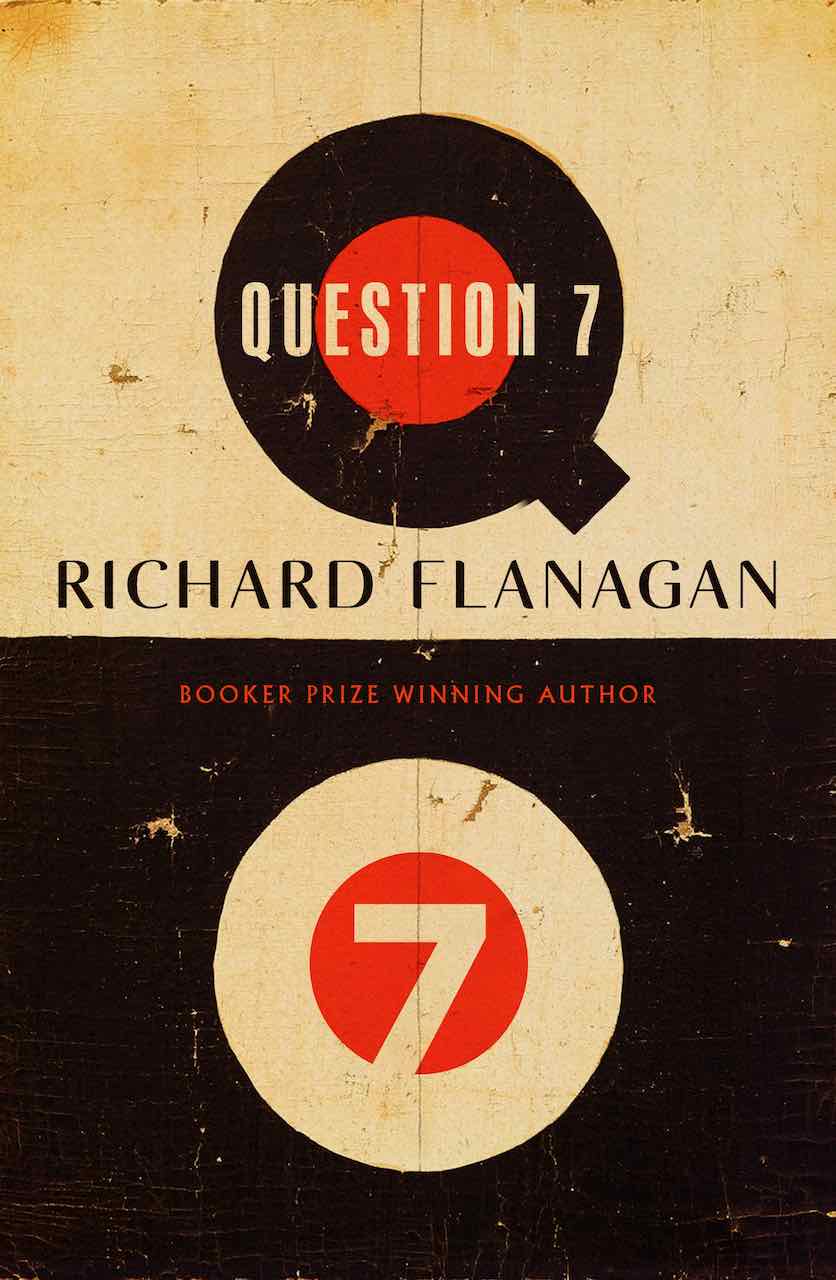
  4. Richard Flanagan, Question 7 (March 2024, Australian)
  5. J.D. Vance, Hillbilly elegy (August 2023)
  6. Carl Merrison and Hakea Hustler, Black cockatoo (January 2021, Australian)
  7. Charlotte Wood, Stone Yard devotional (June 2024, Australian)
  8. Robbie Arnott, Limberlost (March 2023, Australian)
  9. Ambelin Kwaymullina, “Fifteen days on Mars” (January 2023, Australian)
  10. Epiphany in Harrower’s “The fun of the fair” (essay by Emily Maguire) (January 2022, Australian)

Observations:

  • Three of these posts (Hemingway, Kwaymullina and Maguire’s essay on Harrower) were Top Tens last year, but in a big break with the past, none of the Serial Top Tenners (Jack London, Barbara Baynton, and Mark Twain) appear this year. Jack London does rank 12th, while Baynton and Twain have both dropped to the 20s.
  • Seven posts were published in the last two years, which is another record, being an increase by two on last year’s record of 5. Even more of a record is that all top ten posts were published in the 2020s. This trend to recent posts ranking well is a big change after years of older posts holding sway. I’m not sure how much is due to a real change in behaviour and how much to some change in WordPress’s protocols for counting hits.
  • Seven of this year’s Top Tens are Top Ten debuts, and six of this year’s Top are for Australian works, both of which are also records.
  • The list always offers something intriguing (to me, anyhow), but I’ll just comment on two inclusions: J.D. Vance’s Hillbilly elegy jumped in hits the week he was named you-know-who’s Vice-Presidential running mate; and I have no idea why Carl Merrison and Hakea Hustler’s gorgeous children’s picture book, Black cockatoo, is in the Top Ten, but I love that it is.

I also like to see how the posts written in the year fare, so here are the Top Ten 2024-published posts (excluding Monday Musings, event and meme posts):

My two most popular Monday Musings posts were the same as last year: Some new releases (the 2024 version); Books banned in Australia (June 2019); but my old post on The lost child motif (February 2011) was roundly bumped out of its stranglehold on the number three position by this year’s First Nations short story collections post (July 2024). What a lovely surprise.

Random blogging stats

The searches

Help Books Clker.com
(Courtesy OCAL, via clker.com)

I know some of you enjoy this part of my Blogging Highlights post, even though these days search term visibility is greatly curtailed.

Some searches related to specific books…

  • “need a detailed summary of stone yard devotional book by charlotte wood for a book club”: don’t you love the “need”?
  • “what is the trait of esperance in novel terra nullius”
  • “the rosie project cultural context”

while some are more general …

and some are just surprising …

  • last year I noted that the searches – ‘date of birth and “scott tucker”‘ and ‘husband and “scott tucker”’ – were probably looking for this Scott Tucker but that they got Michelle Scott Tucker’s Elizabeth Macarthur’s biography instead. People are still looking for “that” Scott Tucker, but are finding “mine”.
  • “trust-your-instincts-and-have-a-premarital-agreement-drafted” : what on earth brought this search to me?
  • “helen garner detives inspiration from female british author” : despite the typo this search found me, though I haven’t worked out why.
  • “books on literary authenticity in australia” : this seems to have brought the searcher to my home page rather than to a particular post which I guess should please me!
  • “historical importance of the esay literature and totalitarianism” : this brought the searcher to my post on George Orwell’s essay on “The prevention of literature”

Other stats

2024 was another quiet year for me post-wise. Although I wrote four more posts than last year’s 135, it was still well under my long term average of 153. However, my overall hits for the year increased by 35% on last year. Stats! I find it hard to believe that’s a true increase, particularly given the number of “likes” and “comments” were about the same. Methinks they’ve changed their counting protocols.

The top six countries visiting my blog were the same as last year, in the same order: Australia (46%), the USA (22%), United Kingdom, India, Canada, and the Philippines. But the next four show a change with Ireland popping in at no. 7, having not been in the ten at all, followed by New Zealand, Germany and France, from last year’s top ten. China dropped out.

I’ve never reported on this one before, but another interesting figure provided by WordPress (JetPack) is Clicks. This tells which sites visitors clicked, suggesting something about visitors’ engagement with our posts. My tops include Wikipedia, my own blog and images within it, and two short story sites. But, you might be interested in the bloggers that I link to. Here are the top 5 blogs clicked from mine, plus their most clicked link:

Challenges, memes, et al

I only do one regular meme, Kate’s (booksaremyfavouriteandbest) #sixdegreesofseparation. I occasionally do other memes – found under my “memes” link – but did no others in 2024.

I also took part, to various degrees, in Bill’s (The Australian Legend) Gen 0, Nonfiction November (multiple bloggers), Novellas in November (Cathy of 746 books and Rebecca of Bookish Beck), the #YEAR Club (Kaggsy’s Bookish Rambling and Simon’s Stuck in a Book), and Buried in Print’s MARM. Most of these can be found via my “Reading weeks/months/years” category.

I like the structured opportunity these provide for bloggers to explore writers and works we might otherwise find hard to fit in, and would love to do more, but …!

And so, 2025 …

I can’t do much but repeat my usual thanks you to all of you who commented on my blog this year – the regulars and the newbies who have given me a shot. I love those of you who comment – regularly or occasionally – and thank you for being an active part of the community. But, as always, a big thank you too to the lurkers. Your interest and support is also greatly appreciated.

I also want to thank all the hardworking bloggers out there. I’m sorry that I’ve continued this year to be a less regular commenter on your blogs than I’d like to. My life has changed, and I’m still working out how to manage the new lifestyle, with new and old commitments. I enjoy reading your posts when I can, and hope to read more, and engage in more book talk in 2025.

Finally, huge thanks to the authors, publishers and booksellers who make it all possible.

Roll on 2025 … Meanwhile, Happy New Year everyone.

Reading highlights for 2024

And suddenly it’s the end of the year again, meaning time for the annual highlights posts. For me, this means posting my reading highlights on December 31, and blogging highlights on January 1. I do my Reading Highlights on the last day of the year, so I will have read (even if not reviewed) all the books I’m going to read in the year, and I call it “highlights” because, as most of you know, I don’t do “best” or even, really, “favourite” books. Instead, I try to capture a picture of my reading year. I also include literary highlights, that is, reading-related activities which enhance my reading interests and knowledge.

Literary highlights

This mostly comprises my favourite literary events of the year. I never get to all that I would like – not even close – but those I attend I enjoy. Even where the books or authors may not be my favourite genre or topic, there is always something to learn from writers and other readers.

  • Canberra Writers Festival: I attended six sessions this year, and you can find my write-ups on them (plus previous festival sessions) on my Canberra Writers Festival tag. I attended conversations with Rodney Hall, Emily Maguire, Catherine McKinnon, Charlotte Wood, Robbie Arnott, and Anita Heiss, as well as a lively panel on the art and role of the critic.
  • Awards events: I attended fewer awards events this year, just two live ones: ACT Literary Awards; and the Finlay Lloyd 20/40 Winners Launch and Conversation with Authors.
  • Book launches and author conversations: I attended the same number as last year, and most were part of the The Canberra Times/ ANU Meet the Author series: Brigitta Olubas and Susan Wyndham (with Julianne Lamond); Sulari Gentill and Chris Hammer (with Anna Creer); Shankari Chandran (with Karen Viggers); and Karen Viggers (with Alex Sloan). I can’t believe I didn’t get to more, but my records tell me that I didn’t!
  • Podcasts: I am not a big podcast follower, mainly because I prefer not to be constantly plugged in. When I walk, I walk in peace. When I do housework, I listen to music. When I drive locally, I listen to the radio, but when we drive long distance we often listen to podcasts – and this year we’ve focused on Secrets from the Green Room. Targeted primarily to writers, the episodes have much to offer readers who like to understand how it all works – the writing, the editing, the publishing, the promotion, and so on.

Reading highlights

As usual, I didn’t set reading goals, but kept my basic “rules of thumb”, which are to give focus to Australian and women writers, include First Nations authors and translated literature in my list, and reduce the TBR pile.

2023 was a very strange year – our downsizing year – and it showed in my reading, which was unusually high in short stories and low in nonfiction. This year saw me return to something like my usual pattern, but not quite. Short stories, for example, remained a higher proportion of my reading. This works fine in this new phase of my life which involves frequent trips to Melbourne to see family and spend time with grandchildren.

But now the highlights … each year I present them a bit differently, choosing approaches that I hope will capture the flavour and breadth of my reading year. Here are this year’s observations from my reading:

The characters

  • Mothers in extremis: Mothers aways feature in my reading, but this year’s included some seriously challenged ones: Al Campbell’s The keepers, about a mother of two autistic sons; Jane Caro’s The mother, about the mother of a daughter subjected to coercive control by her husband; and Marion Halligan’s memoir Words for Lucy (review coming), about a mother’s grief for a daughter who died too young.
  • Young people in extremis: Life is rarely easy for the young, but Lucy Mushita’s Chinongwa and Barbara Kingsolver’s Demon Copperhead have more than their youth and inexperience to contend with. The system is stacked against them. In Karen Viggers’ Sidelines, on the other hand, the issue starts closer to home. It’s the parents who need to take a look at themselves.
  • It’s never too late: Rachel Matthews’ middle-aged characters in Never look desperate show that romance is not just for the young.
  • The oldies have it: Older characters have shone in this year’s reading. Besides those in Matthews’, Caro’s and Halligan’s books, I enjoyed the stoic 80-year-old Wilf in Stephen Orr’s Shining like the sun, matriarch Maya in Shankari Chandran’s Chai time at Cinnamon Gardens, the aging Zelda in Michael Fitzgerald’s Late, and Nunez’s determined narrator in The vulnerables. Not only did they show that “Life” doesn’t stop when you age, but that, while age might bring some wisdom, it doesn’t bring all the answers.
  • Most unlikable character: Sometimes there are characters you just want to shake (not that I would ever shake a person of course!) and this year, self-pitying Deidre in Karen Jennings’ Crooked seeds wins the award. If only she’d read Dale Carnegie’s How to win friends and influence people!
  • The odd couple: Odd couples are not unusual in romance, but privileged-on-the-run Jagger and eco-warrior Nia make a fetching pair in Donna Cameron’s The rewilding.
  • Most naive characters: This goes to most of the characters in P.S. Cottier and N.G. Hartland’s The thirty-one legs of Vladimir Putin. What were they thinking!
  • Don’t forget the animals: Animals are rarely forgettable when writers create them, and I certainly couldn’t forget Sigrid Nunez’s miniature macaw Eureka, Carmel Bird’s cat Arabella, and definitely not all those mice in Charlotte Wood’s Stone Yard devotional.

The subject matter

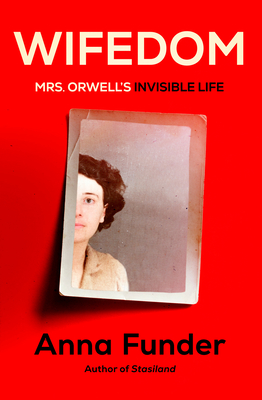
  • Writers’ lives: I always enjoy reading literary biographies and memoirs, and this year I read three very different works, from Sean Doyle’s more traditional Australia’s trailblazing first novelist: John Lang to more personal, hybrid takes in Nell Stevens’ Mrs Gaskell and me, and Anna Funder’s Wifedom.
  • Truthtellers of the year: I used this category last year, and I think it’s a keeper because truthtelling, particularly regarding the “colonial project”, is not done. This year’s highlights include First Nations Australian Melissa Lucashenko’s Edenglassie, and two from North America, Thomas King’s “Borders” and Sherman Alexie’s “War dances“, each of which added different layers to the truths we need to hear.
  • Vividly rendered places will always get me in, and this year three were skilfully evoked, the Monaro (in Charlotte Wood’s Stone Yard devotional), Naples (in Shirley Hazzard’s The bay of noon), and the South West Coastal Path (in Raynor Winn’s The salt path).
  • Only fools have answers“: the best writing for me is that which leaves us with questions. Many of this year’s reads did just that, but leading the way was surely Richard Flanagan’s Question 7.

The reading life

  • Good things come to those who wait: Gail Jones has been on my must-read list (and in my TBR) since Sixty lights was published in 2004. Finally, this year I read a novel by her, Salonika burning. It must not be my last.
  • Re-find of the year: Having not read a Shirley Hazzard novel for many years, I loved finding the opportunity to read The bay of noon for Novellas in November and the #1970 Year Club
  • Re-reads of the year: Of course these were by Jane Austen, Mansfield Park and her novella, Lady Susan.

Only when I was young did I believe that it was important to remember what happened in every novel I read. Now I know the truth: what matters is what you experience while reading, the states of feeling that the story evokes, the questions that rise to your mind, rather than the fictional events described. (Sigrid Nunez, The vulnerables)

Some stats …

While I don’t read to achieve specific stats but, I do have some reading preferences which I like to track, but it’s boring to repeat them all each year. So let’s just say that

  • 85% of this year’s reading was fiction and 75% of my authors were women, both of which are higher than my long-term average.
  • Nearly 50% of this year’s reading comprised works written before 2000, which is also higher recent percentages.
  • 58% of this year’s authors were Australian.
  • Last year’s big downsizing project saw short stories and novellas comprising over 60% of my year’s reading. This halved in 2024 to just over 30%.
  • 11% of this year’s reading was by First Nations writers, largely due to my reading several short stories by First Nations American writers.

I read only two books from my actual TBR – Nell Stevens’ Mrs Gaskell and me and Gail Jones’ Salonika burning – but I will add to this Shirley Hazzard’s The bay of noon, which has been on my virtual TBR for many years.

Tomorrow, I (hope to) post my blogging highlights.

Meanwhile, I’ll repeat my usual end-of-year huge thanks to all of you who read my posts, engage in discussion, recommend more books and support our little litblogging community. It is special. I wish you all an excellent, book-filled and peaceful 2025.

What were your 2024 reading or literary highlights?

Monday musings on Australian literature: Some little recaps (2)

Last year, my last Monday Musings of the year fell on Christmas Day, so I did what I called a little recap post. This year, my last Monday Musings occurs the day before my big two end-of-year posts – Reading Highlights and Blogging Highlights – so I’ve decided to do another little undemanding Recap Post.

Recap 1: Some All-time Tops

Back in May I celebrated fifteen years of blogging, but in that post I didn’t share much in the way of overall statistics. However, trends and stats interest me so I’m sharing a couple here. Do you ever look at long term stats and trends on your blogs? See anything interesting?

Book Cover

My top review post of all time is one I wrote back in 2010 on Edith Wharton’s short story “A journey”. It was a Top Ten post for a long time, and continues to garner enough hits each year to keep it in the top 30. Close on its heels is my top Australian review post of all time, the one on Red Dog, the movie and the book. Like Wharton’s story, it was a serial Top Ten post, but was a bit of an outlier because, for many years, my Top Ten was dominated by my posts on older short stories. The last few years, though, have seen a gradual switch to more recent posts on more recent works occupying the top. I wonder why?

My strangest Top, though, comes from the list of sites that “refer” (sends visitors) to my blog. Next in the list after obvious sites – WordPress Reader, WordPress Android App, Facebook and Twitter – comes mumsnet.com! It’s the “UK’s biggest network for parents” and for some reason my posts, such as one on Germaine Greer, seem to get discussed there, resulting in visitors to my site. Is it just me?

Recap 2: Australian Women Writers Challenge

I’ve been involved in the Australian Women Writers blog since 2012. In January 2022, it changed from being an all-encompassing challenge to a blog/website devoted to promoting older, often under-recognised or overlooked, women writers, from the 19th- and 20th-centuries. This year, Elizabeth Lhuede and I tried a new “twist” for our posts, and featured a work by authors who had published something in 1924. Some of the writers were so fascinating that I also wrote them up for my Forgotten Writers series.

We made another change in 2024, which was to reduce our posting from twice a week to once a week. For Elizabeth and me, this post comprised an introduction to our chosen writer followed by a piece published by that person, while Bill continued with his survey of the Independent Woman in Australian Literature (with posts by himself and some guest contributors). Bill has written a useful wrap-up of his AWWC posts over the year on his blog.

Despite these changes, including fewer posts, our stats continued to increase, after dropping in 2022. As last year, my post on Barbara Baynton’s short story “A dreamer” was the blog’s most visited post during the year.

The blog does take a lot of time, and we are currently talking about future plans. Bill has decided to hang up his commissioning editor’s hat after three hardworking years. We are hugely grateful for all he did, including finding guest contributors. Those contributors produced some of our most popular posts of the year. Michelle Scott Tucker’s post on the Billabong series, for example, was our third most-visited post for 2024.

Recap 3: Books given this year

As I wrote last year, this is not, technically, a recap, but I have often in the past shared the titles of Australian books I’ve given as Christmas gifts. This year I’m including Australian books I have given during the year – for birthdays, giveaways, and Christmas. They are not necessarily my favourite reads – indeed, I haven’t read them all – but were chosen to suit the recipients’ likes. Those I have read I did enjoy, otherwise I wouldn’t have given them to someone else, and some of those I haven’t read are on my TBR.

  • Carmel Bird, Love letter to Lola (my review, short stories; also in my gift list last year)
  • Carmel Bird and Jace Rogers, Arabella (my review, children’s picture book)
  • P.S. Cottier and N.G. Hartland, The thirty-one legs of Vladimir Putin (my review, novella)
  • Ceridwen Dovey, Once were astronauts (to Melanie of Grab the Lapels – her review, short stories)
  • Ali Cobby Eckermann, Ruby Moonlight (my review, verse novel)
  • Anita Heiss, Barbed wire and cherry blossoms (novel)
  • Tania McCartney, Wildlife compendium of the world (children’s nonfiction book)
  • Andrew McDonald and Ben Woods, Hello Twigs: Time to paint (early graphic-novel reader)
  • Emily Maguire, Rapture (my CWF Conversations 1 and 2, novel)
  • Inga Simpson, The thinning (novel)
  • Nardi Simpson, Bellburd (novel)
  • Stephen Orr, Shining like the sun (my review, novel)
  • Benjamin Stevenson, Everyone on the train has murdered someone (novel)
  • Karen Viggers, Sidelines (my review, novel)
  • Sonya Voumard, Tremor (my review, memory/nonfiction)

This year I seem to have given more non-Australian writers as gifts than usual, including Mick Herron, Toshikazu Kawaguchi, Claire Keegan, Thomas King and Natasha Donovan, Seichō Matsumoto, Haruki Murakami, Sigrid Nunez, and the New Zealand children’s writer Pamela Allen. This might not support Australian writers, but it does support our bookshops, and literary culture which is what it’s all about – ultimately, isn’t it.

Care to share your Christmas book-giving?

Monday musings on Australian literature: Forgotten writers 9, Dulcie Deamer

Dulcie Deamer, like my most recent Forgotten Writer, Jessie Urquhart, has retained some level of recognition – or, at least notability, with there being articles for her not only in Wikipedia and the AustLit database, but also in the Australian dictionary of biography (ADB). I have briefly mentioned her in my blog before, in Monday Musings posts on the 1930s and 40s.

Dulcie Deamer

Born Mary Elizabeth Kathleen Dulcie Deamer, Dulcie Deamer (1890-1972) was, says Wikipedia, a “novelist, poet, journalist, and actress”. ADB biographer Martha Rutledge, however, is more to the point, describing her as “writer and bohemian”, while her contemporary, the journalist and author Aidan de Brune, puts it differently again, commencing his piece with, “Dulcie Deamer has had an adventurous life”. From the little I’ve read of her and her work, it’s clear she was imaginative and fearless.

Born in Christchurch, New Zealand, to George Edwin Deamer, a physician from Lincolnshire, and his New Zealand-born wife Mable Reader, Dulcie Deamer was taught at home by her ex-governess mother. The timelines of her youth are sketchy in places, but Rutledge says that at 9, she appeared on stage, and De Brune writes that she was writing verses by the age of 11. A year after that, in 1902, De Brune and Rutledge agree that her family moved to Featherston, a small bush township in the North Island of New Zealand, where, de Brune says, “she ran wild” for five years, “riding unbroken colts, shooting, learning to swim in snow-fed creeks, and going for long, solitary rambles of exploration through the virgin bush”. It was here ‘that what she describes as “memories of the Stone Age” came to her’. Somewhere during this time, according to Rutledge, she was sent to Wellington to learn elocution and ballet lessons, apparently in preparation for the stage. At the age of 16, she submitted a story to the new Lone Hand magazine, and won the prize of 25 pounds. It was “a story of the savage love of a cave-man” and it changed the course of her life.

This story, “As it was in the beginning”, won the prize in 1907, from around 300 entries, said one contemporary report (The Wellington Times, NSW, 18 November 1909), and was published in The Lone Hand at the beginning of 1908, illustrated by Norman Lindsay. The critical responses were shocked but, mostly, admiring, that such virile writing could come from such a young woman. The story went on to be published in a collection of her stories in 1909, titled In the beginning” : six studies of the stone age, and other stories ; including “A daughter of the Incas”, a short novel of the conquest of Peru. One reviewer of this collection (Barrier Miner, 27 May 1910), wrote that Deamer “writes with a freedom of speech and a knowledge of things in general which must have fairly astounded her respectable parents, one would think, when they first read her compositions”! You get the gist. This work was republished in 1929 in a special limited edition titled, As it was in the beginning. The Australasian (21 December 1929) reviewed this and wrote of that original award winning story:

It was a tale of primitive man and woman, of a wooing and winning and retaining with club and spear— an unmoral tale, utterly pagan, terrifically dramatic. Its paganism was unsophisticated; its dramatic force was the expression of natural gift. Mr. Norman Lindsay illustrated the story. His paganism could hardly be called unsophisticated, but there was no doubt about his dramatic power. 

She was really quite something it seems and I might research her a little more. Meanwhile, Wikipedia picks up the story (sourced from newspapers of the time). As well as writing, she continued her stage career. She married Albert Goldie, who was a theatrical agent for JC Williamson’s, in Perth, Australia, in 1908. She had six children, but separated from Goldie in 1922. Rutledge, writes that

In the crowded years 1908-1924 Dulcie bore six children (two sons died in infancy), travelled overseas in 1912, 1913-14, 1916-19 and 1921 and published a collection of short stories and four novels—The Suttee of Safa (New York, 1913) ‘a hot and strong love story about Akbar the Great’; Revelation (London, 1921) and The Street of the Gazelle (London, 1922), set in Jerusalem at the time of Christ; and The Devil’s Saint (London, 1924). Three were syndicated in Randolph Hearst’s newspapers in the United States of America. Her themes, including witchcraft, gave ‘free play to the lavish style of her writing, displaying opulence and sensuality or squalor of traditional scenes.

Reviewing The devil’s saint for Sydney’s The Sun, The Stoic gives a flavour of Deamer’s writing. “She has style (a little too ecstatic perhaps) and she has a fine instinct for story-telling”, but there is much kissing – quite explicitly described – and “Sheikish stuff”. However, as The Stoic knows, there are readers for such writing, and s/he concludes that ‘If anybody wants romance, with a flavor of the supernatural and plenty of “pash,” this is the book’.

Deamer left her husband in 1922, and lived a Bohemian life in Kings Cross, while her mother brought up her children. She worked as a freelance journalist, contributing stories, articles and verse to the Australian Woman’s Mirror, other journals and newspapers, including the Bulletin and the Sydney Morning Herald. Like other writers we have featured, she often used pseudonyms. Rutledge tells us that Zora Cross described her in 1928 as ‘Speedy as a swallow in movement, quick as sunlight in speech … [and] restless as the sea’. Debra Adelaide writes that she was known as the “Queen of Bohemia” due to her involvement with Norman Lindsay’s literary and artistic circle, with Kings Cross Bohemianism, and with vaudeville. Various commentators and critics refer to her interest in religion, mythology, classical literature and the ancient world.

Deamer was a founder in 1929 and committee-member of the Fellowship of Australian Writers. In the 1930s she wrote plays, and a volume of mystical poetry titled Messalina (1932), while in the 1940s she another novel, Holiday (1940), another volume of mystical poetry, and The silver branch (1948). De Brune, writing in 1933, says that she was also hoping “to contribute screen stories to the newly-established Australian film industry” but it doesn’t appear that she achieved in this sphere.

In their short entry on her, Wilde, Hooton and Andrews say that her unpublished biography, The golden decade, “is informative on the literary circles of Sydney in the 1920s and 1930s”. They also say that she features in Peter Kirkpatrick’s 1992 book, The sea coast of Bohemia. Whatever we might think of her novels now, she was a lively and creative force in her time, and worth knowing about.

The piece I posted for the Australian Women Writers Challenge is titled “Fancy dress” (linked below). It provides insight into her interests in the magical and mystical and conveys something of her lively, humorous style.

Sources

  • Debra Adelaide, Australian women writers: A bibliographic guide. London, Sydney: Pandora, 1988.
  • Aidan de Brune, “Dulcie Deamer (1890-1972)” in Ten Australian Authors, by Aidan de Brune, Project Gutenberg Australia and Roy Glashan’s Library, 2017 (originally published in The West Australian, 13 May 1933) [Accessed: 21 November 2024]
  • Dulcie Deamer, “As it was in the beginning“, The Lone Hand (1 January 1908) [Accessed: 23 December 2024]
  • Dulcie Deamer, “Fancy Dress“, The Daily Mail (12 July 1924). [Accessed: 21 November 2024]
  • Dulcie Deamer“, Wikipedia [Accessed 21 November 2024]
  • Martha Rutledge, ‘Deamer, Dulcie (1890–1972)‘, Australian Dictionary of Biography, National Centre of Biography, Australian National University, 1981 [Accessed: 21 November 2024]
  • William H. Wilde, Joy Hooton and Barry Andrews, The Oxford companion to Australian literature. Melbourne, Oxford University Press, 2nd, edition, 1994