Jane Austen’s Persuasion, Vol. 1

Jane Austen, Persuasion

My Jane Austen group is reading Persuasion – eleven years since we last did it – because 2017 is the 200th anniversary of its publication. Of course I’ve read it several times, so, as you’ll know from my other Austen re-reads, my aim here is to focus on reflections from this read rather than to write a traditional review.

You’ll probably also know that my group often does slow reads of her novels, a volume at a time. Persuasion was published in two volumes, so last month we read Volume One. It finishes at Chapter 12, just after Louisa Musgrove has her fall at Lyme. This post is about this volume.

But first, I want to say something my relationship with Persuasion. I first read it in 1972 when the second TV miniseries was screened in Australia. I was reading it in tandem with the screening, and the night the last episode screened I sat up late to finish the last chapters. I’ll never forget my emotional response to it. I can’t remember whether the miniseries was a good one, but I sure thought the book was. Why?

Persuasion doesn’t have the sparkle of Pride and prejudice, nor the  young spoofy humour of Northanger Abbey, nor even the heroine we love to laugh at in Emma, but it is quiet, emotional and deeply felt. Its heroine Anne, at 27 years old, is Austen’s oldest. She’s caring, intelligent, but put upon by her unappreciative family – and yet we don’t feel she’s a pushover. The novel’s romance, when it comes, feels right and well-earned. No-one ever says that Austen should not have married Anne to her man the way some do about some of her other heroines such as Marianne in Sense and sensibility, and Fanny in Mansfield Park. No, when it comes to Persuasion, Austen fans are generally in agreement: it’s a lovely book in which the hero and heroine belong together. But, it’s about so much more too …

I’m not going to provide a summary, so if you need to refresh yourselves on the plot and characters please check Wikipedia.

A specific setting

I’m not sure why it is, but on this my nth (i.e. too many to count) reading of Persuasion, I suddenly noticed that it was the only book, really, that gives us a very specific date and that is set pretty much exactly contemporaneous with when Austen was writing it. It starts in “this present time, (the summer of 1814)” and ends in the first quarter of 1815. This period pretty much covers the hiatus in the Napoleonic Wars when Napoleon was exiled to Elba – and is why Naval Officers are out and about, on land and available for appearing in Persuasion! Sir Walter’s friend and advisor, Mr Shepherd tells him:

This peace will be turning all our rich Navy Officers ashore. They will all be wanting a home.

It is the appearance of the Navy and Austen’s contrasting the substance of naval officers with the superficiality of the aristocracy that gives Persuasion its particular interest – beyond its lovely story, I mean. It is very much a book about social change. (I should say, here, that Austen was partial to the Navy, having two successful Naval brothers)

Two themes

Anyhow, this idea and that relating to persuasion are developed in Volume 1 through various themes, two of which I’ll discuss here.

Appearance and Social status

That social status is a major concern is heralded on the book’s first page when we are told about Sir Walter’s favourite book: “he was a man who, for his own amusement, never took up any book but the Baronetage”. The narrator tells us soon after that:

Vanity was the beginning and the end of Sir Walter Elliot’s character; vanity of person and of situation.

However, he has not been sensible with his money, and needs to rent out his home Kellynch-hall, hence my earlier quote. But, Sir Walter doesn’t like the Navy, and his reasons convey two of the novel’s themes – the focus on status and the cult of appearance. His response to the idea of renting his home to a Naval officer is:

Yes; it is in two points offensive to me; I have two strong grounds of objection to it. First, as being the means of bringing persons of obscure birth into undue distinction, and raising men to honours which their fathers and grandfathers never dreamt of; and secondly, as it cuts up a man’s youth and vigour most horribly; a sailor grows old sooner than any other man …

This is of course ironic, because the naval officer, Admiral Croft, to whom he eventually agrees to rent the place is a thoroughly decent man (who removes Sir Walter’s myriad “looking glasses” when he takes residence). Croft also, Anne “fears”, looks after the Kellynch estate and its people far better than her family did. However, for Sir Walter, the only thing that matters is status.

As the novel progresses, the difference between the Navy and the aristocracy is further developed, but more on that anon.

Anne’s sister Mary is highly aware of her status as a Baronet’s daughter, and the “precedence” due to her. That she stands on this demonstrates her superficiality and lack of decent human feeling. She complains when she goes to her in-laws’ home that her mother-in-law does not always give her precedence. One of her sisters-in-law complains to Anne:

I wish any body could give Mary a hint that it would be a great deal better if she were not so very tenacious; especially, if she would not be always putting herself forward to take place of mamma. Nobody doubts her right to have precedence of mamma, but it would be more becoming in her not to be always insisting on it.

Later, after Louisa’s fall at Lyme, when it is suggested that calm, capable Anne remain behind to care for Louisa, Mary objects:

When the plan was made known to Mary, however, there was an end of all peace in it. She was so wretched, and so vehement, complained so much of injustice in being expected to go away, instead of Anne;—Anne, who was nothing to Louisa, while she was her sister …

Here again is Mary’s misplaced sense of “precedence”. It is also a lovely example of Austen’s plotting, because only a few chapters earlier Mary had refused to stay home from a family party to look after her own injured little boy, preferring Anne do it. Austen had set us up nicely to see the superficiality of Mary’s desire to care for her sister-in-law. The more you read Austen, as I’ve said before, the more you see how fine her plotting is.

Strength of character versus Persuasion (or the influence of others)

Another ongoing issue in the novel concerns strength of character. Captain Wentworth reflects on Anne’s lack thereof in refusing their engagement when she was 19:

He had not forgiven Anne Elliot. She had used him ill; deserted and disappointed him; and worse, she had shewn a feebleness of character in doing so, which his own decided, confident temper could not endure. She had given him up to oblige others. It had been the effect of over-persuasion. It had been weakness and timidity.

A little later, he praises Louisa Musgrove’s strength of mind, but we, the reader, realise her pronouncements are theoretical. She had not been put to the test. She says:

What!—would I be turned back from doing a thing that I had determined to do, and that I knew to be right, by the airs and interference of such a person?—or, of any person I may say. No,—I have no idea of being so easily persuaded. When I have made up my mind, I have made it.

Meanwhile, Louisa shares gossip about Anne, suggesting that Lady Russell, who had discouraged Anne from marrying Captain Wentworth, had also discouraged her from marrying Charles Musgrove (which of course reinforces for Wentworth the idea of Anne’s weakness of character).

… and papa and mamma always think it was her great friend Lady Russell’s doing, that she did not.—They think Charles might not be learned and bookish enough to please Lady Russell, and that therefore, she persuaded Anne to refuse him.

In this case, though, the decision was all the then 22-year-old Anne’s – but Wentworth only hears the gossip.

Henrietta adds to the chorus about Lady Russell’s persuasive power:

I wish Lady Russell lived at Uppercross, and were intimate with Dr. Shirley. I have always heard of Lady Russell, as a woman of the greatest influence with every body! I always look upon her as able to persuade a person to any thing!

You can see Austen building up the plot here, leading us to see Wentworth as unlikely to be interested in Anne again.
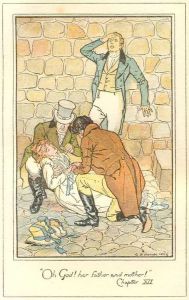
Persuasion, Lyme fall, CE Brock
Oh God! her father and mother (CE Brock, 1893?)

Anne, though, sees that firmness of character can go too far, that Louisa’s wilfulness against the advice of others had resulted in her potentially life-threatening fall. She wonders

whether it ever occurred to him now, to question the justness of his own previous opinion as to the universal felicity and advantage of firmness of character; and whether it might not strike him, that, like all other qualities of the mind, it should have its proportions and limits. She thought it could scarcely escape him to feel, that a persuadable temper might sometimes be as much in favour of happiness, as a very resolute character.

Will he see it her way? We’ll have to read Volume 2 to find out!

There’s a lot more I could say, but I think I’ve said enough. Next post I plan to take up the Navy issue a bit more …
Truth, Truthfulness, Self, Voice: Raimond Gaita’s Seymour Biography Lecture

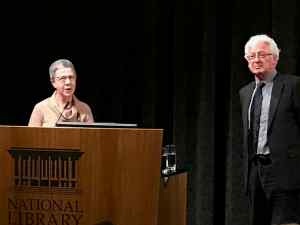
Raimond Gaita and Marie-Louise Ayres

Raimond Gaita and Marie-Louise Ayres, NLA, 2017

This week Mr Gums, Brother Gums and I went to one of the highlights of Canberra’s literary calendar, the Seymour Biography Lecture at the National Library of Australia.  It’s an annual lecture devoted to life-writing, and was endowed by the Seymours in 2005. This is the third one Mr Gums and I have attended, the first in 2015 being given by Robert Drewe, and last year’s by David Marr.

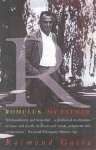
Raimond Gaita is best known to Australians as the author of the award-winning Romulus, my father, which, he informed us, is not-a-biography-nor-an-authobiography. He’s not, he said, a writer like those other Seymour speakers such as David Marr and Robert Dessaix. If we thought he would then go on to expound his theory of biography/autobiography/memoir, as might be expected for a “biography lecture”, we were mistaken, because philosopher Gaita had other plans.

And here is where I come a bit unstuck, because philosophy is not really my thing. I am therefore going to simplify – hopefully sensibly – what was a seriously philosophical argument that I tried to follow while also taking notes. I am going to limit my post to a few points that grabbed me – and that I believe I got right! I must say, though, that even if I didn’t catch all his arguments, I was thrilled to finally see this thoughtful, considered man in person.

“a tragic poem”

Raimond gaita, Romulus my fatherWhile Gaita didn’t engage, in the expected way anyhow, with the theory of his subject, he didn’t ignore it either. He explained that he doesn’t see Romulus, my father as biography or autobiography because it doesn’t contain “the critical psychological probing” you expect (or, perhaps, that he thinks we expect) in biography. He sees the book, rather, as “tragic poem”, as being about “broken lives” but not “diminished” ones. His described his book as tragedy, which he defined as reflecting “calm pity for the suffering it depicts”.

He wrote it “truthfully” as witness to the values by which his father lived, the father who, he said, gave him his “lifelong moral compass”. He discussed criticisms of his book, those arguments that had he been more ethically critical or more psychologically probing, he would have presented a more understanding picture of his mother. Don’t you love the way people are so ready to criticise what writers don’t do, rather than focus on what they do do? After all, the book is called Romulus, my father! I know, I’m being a bit ingenuous, since writing about his father does necessitate writing about his mother, but I stand by my point nonetheless.

Now, back to Gaita … to explain himself, he quoted Iris Murdoch’s statement that understanding another person is a work of “love, justice, and pity”. However, he said, he was 12 years old when his mother killed herself. He did not know her as an adult, had not conversed with her as an adult. He can, for example, speculate about what his father and his father’s friend Hora might have thought about things, but he didn’t know his mother: she doesn’t have an “individuated presence” for him. He sorrows for his mother (and admits that in writing about her he has put her under “intense scrutiny”) but he knew her only as a boy would.

At this point, he referred to Freud’s describing biography as being “vulnerable to psychological distortions”. Were Christine and Romulus really as he depicted them? Well, not, I understood him to say, in an absolute sense (but yes, he hoped, in his own sense). You ask seven people, he said, to describe a person and you’ll get seven different descriptions. You cannot match/judge these narratives against a single (simple? absolute?) notion that would guarantee “truthfulness” about that person’s life.

Truthfulness, et al

Gaita then went on to say that he is currently writing essays about people who have mattered to him. These essays have to be truthful but they can’t say everything. He hopes, however, that what is left unsaid will not compromise the truthfulness of what is said. He’d like to think that this is a justified hope. I think, in the right hands, it is!

One of his essay subjects is Martin Winkler who taught him German at school, and with whom he maintained contact long thereafter. Winkler is, he said, the wisest man he’s known. Around half of his lecture drew, in fact, from this essay on Winkler. I’m not going to repeat all he that said in detail here, but the essay, from what he shared with us about Winkler’s beliefs and ideas, would be well worth reading when it’s published.

So, just a couple of points. German-born Winkler loved German language and culture, but he was not blind to what Germany did during the war, which “lacerated his soul”. Winkler knew the dangers of following tradition which enables hiding behind respectability and which, in effect, enabled the Holocaust. However, he did not believe this had to diminish his love of Bach, or of German culture. Later in the lecture, Gaita commented that who would have thought that we would be now placing our faith in the Germany of Angela Merkel. (It just goes to show, doesn’t it, that people and/or nations can change. We live in hope!)

Another idea Gaita shared relates to love, ethics and values. For instance, he said, a feeling or emotion such as enthusiasm is ethically neutral, but love is “good”. It, in showing what people love, can be revelatory of value. He quoted Plato’s statement that love never proceeds by force or submits to force. Gaita also shared Winkler’s view that the core of responsibility is to be responsive to the needs of others in the lived context, which I assume means understanding people in terms of their lives rather than via some idea of absolute values.

Around here, if I remember correctly, Gaita returned to Romulus, his father, and in particular to Romulus’ compassion for his wife and her lover, which was evidenced, for example, by his providing financial support for them. Some of Romulus’ friends did not understand this (did not understand his father’s “goodness”). They felt his behaviour – his foolish heart – led him to dishonour himself. In other words, Gaita pointed out, another person would tell a different story about Romulus. So, the question is, was he a good man or a cuckold? There is no ethically neutral ground by which you can weigh the facts of his life to give one right answer or another. (Again, I think I’ve understood his point correctly. At least, what I’ve written makes sense to me, so that’s perhaps good enough!)

(Later, in the single-question Q&A, Gaita elaborated on his ideas of goodness and character. His father’s “goodness”, he said, was completely absent of condescension or superiority, something which many of his compatriots did not see or accept. Gaita, though, believes there should be more of such “goodness” in the world.)

For Gaita, growing up with such a man, seeing such compassion, was a gift. And it’s largely because of this that he did not grow up bitter. To be able to love, he said, is as important as being loved. You can, he said, be morally clear-sighted and at the same time love clear-sightedly. (I like this.)

Around here, we got into a discussion of facts and their meanings. You need, he said, to be truthful about the meaning of facts, which is more important, or relevant, than the facts themselves. (Regular readers here will know how much I liked this idea.) By example, he talked about the final sentences of Romulus, my father and of language choices that can convey different meanings. He could, for example, have written that his father was buried “not very far from” or “close to” or “near” his mother. He eventually chose “close” for its layered meaning – but he worried for a long time about whether the world also conveyed “sentimentality” (which emotion he sees as antithetical to truthful or authentic feeling). In the context, I think he made the right choice.

So, a very different biography lecture to the previous two we’ve attended. But, when you ask a moral philosopher to speak, that is, I suppose, to be expected. In other words, although we got a lecture which did address ideas regarding “truth” in writing about a life, it was also one that extended way beyond this to a discussion of values. My mind was certainly stretched – and is probably the better for it.

Seymour Biography Lecture
National Library of Australia
12 September 2017

Monday musings on Australian literature: Bookselling for charity

Old books

Old books (Courtesy: OCAL @ clker.com)

Last week I wrote a Monday Musings about the current, relatively positive, state of play for bookshops in Australia. Responding to that post on Facebook, one of my longstanding friends, and an original member of my bookgroup, reminded me of the Lifeline Bookfair which is held regularly in Canberra, and to which I have donated many books. I didn’t mention Lifeline because that post was about shops selling “new” books. However, she made me realise that while I have also written about secondhand book shops before, I have never specifically written about those organisations which sell books to raise money for charity (or good works). Now is that time …

First, though, a brief comment. A few years ago, knowing that bookselling is the prime fundraiser for some charities, such as Lifeline, I wondered what would happen to their fundraising goals in the new world of digital books. Well, I needn’t have worried. Books are still raising plenty of funds for charities. I’m not the only one, it appears, who still loves the printed book!

Lifeline Bookfair (Canberra)

The most visible seller of books for charity in my city is Lifeline. Lifeline is a national organisation providing 24-hour crisis support, particularly, but not exclusively, in the area of suicide prevention. It relies on volunteers to staff the support phones, and to raise money for the work of the organisation. A major fundraiser in my city – and I think in other parts of Australia – is the Lifeline Bookfair, which is held three times a year. It is hugely successful, and a big-ticket event on Canberra booklovers’ calendars. (Not mine, though. I donate to it, but I stay away! If I ever start to run out of books to read, however, I know where to go!) For Lifeline Canberra, these bookfairs are “the cornerstone” of their “financial strategy”, and currently bring in between $1 to $2 million for the organisation.

As well as the physical book fairs, Lifeline also runs an online service. I should add that besides books, they also sell records, DVDs, CDs, jigsaws and related products. For Mr Gums, Lifeline is a good source for the foreign language books (German, to be precise) that he likes to read.

There are Lifeline organisations throughout Australia and many, if not all, raise funds through booksales. We donated, for example, many books from my Aunt’s estate last year to her nearest Sydney operation.

Brotherhood Books

This is a social enterprise run by the Brotherhood of St Laurence which aims to tackle poverty in Australia. Its bookselling, mainly carried out online but also available through their physical stores in Victoria, is also volunteer run. They say that when you buy books from them

you also keep them out of landfill, reduce your carbon footprint, and support the many worthy charitable programs run by the Brotherhood of St Laurence.

Vinnies and Salvos

St Vincent de Paul (Vinnies) and the Salvation Army (Salvos) run secondhand shops throughout Australia, and sell books at these shops along with clothing and household goods. Both organisations aim to reduce social injustice, particularly poverty.

Vinnies, and probably Salvos, also give books to families in need.

Other

And of course, there’s an array of smaller charities which sell books to support their activities, starting with school, church and hospital fetes and stalls.

Also, the Australian online donations platform, GiveNow, lists a number of organisations which accept donated books, some of these to sell for fundraising (such as Brotherhood Books) and others to distribute to those in need (such as the Aboriginal Literacy Foundation, which is particularly interested in children’s books).

Do you buy from, or donate to, charity booksellers? Please give a shout out to your favourite/s – particularly if I haven’t mentioned them here.

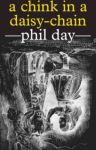
Phil Day, A chink in a daisy-chain (#BookReview)

Phil Day, a chink in a daisy chain

You’ve “met” Phil Day, author of A chink in a daisy-chain, here before. He illustrated co-publisher Julian Davies’ Crow mellow (my review) and Hartmann Wallis’ Who said what, exactly, which I reviewed very recently. This time, though, Day is author as well as illustrator.

It’s a fun, mind-bending book – with the fun starting on the cover page in which the illustration, as befits a story inspired by Alice I suppose, is upside down. On the back cover is a simple statement: “If there is a perfect book, Alice is it”. This is the question – oops, statement, really – to which Day returns regularly throughout his short book. But, before I talk more about that, I’ll share publisher Julian Davies’ description of the book in his covering letter:

The book is a creative essay, cum personal reflection, on the relationship between Lewis Carroll’s Alice books, personal identity and argumentative opinion. It is the first in a three-book series Phil plans to write on the embattled nature of individual intellectual and creative autonomy.

So, now, are you any the wiser? Perhaps not? And I’m not sure that I can enlighten you, but I’ll try.

The essay could also – perhaps – be described as a memoir, except that I would be hard-pressed to say hand-on-heart which of what Day tells us really happened, if any of it did? Or perhaps all of it did, just not quite the way Day tells it!

The essay starts with Day and his wife sitting on the minimal furniture left in the lounge-room of the Shillams (look at that name upside down and see what you get!) who are moving to Grafton (as you do!) They had been invited for farewell dinner and drinks and, over a mocktail called Clancy of the Overflow and Gin-and-Tonics served in teacups from the piano-doubling-as-a-bar, Day makes his pronouncement concerning Alice. “Can’t see why, Mr S said” – and we’re off, following Day’s weird and wonderful mind just as Alice followed weird and wonderful creatures down the rabbit-hole.

What makes Alice so good, poses Day’s foil, Mr S? Well, besides the fact that Day didn’t say it was “good” but that it was “perfect”, he doesn’t want to get into discussions of “the meaning of good”. And then Mr S asks him to “look at the man”, but, quite rightly, Day isn’t interested in the man either:

I didn’t want to look at the man. I don’t care about the man. I wasn’t drawn to the man, it was the book itself that made me say–If there is a perfect book, Alice is it.

You are probably following this ok right now – the ideas and the language – and it does make sense. It continues to make sense as Day embarks on a critique of teaching, of

the state government syllabus–a deformed thing that devalued the one-off self-directed realisations that a student might naturally become conscious of through their own curiosity. But because the state government syllabus was created by teachers it had no chance of being anything more than an approved state government syllabus, and because of the approved state government syllabus, I instructed my students not to be curious …

And of course curiosity is why Alice is so special. Not that Day says this specifically, but we know this is what he means.

From here, though, the connections and word associations become increasingly bizarre or absurd, just like in Alice. They are not the sorts of associations that make sense in the telling. You have to read it yourself. You have to follow Hobbes the cat, and the peppered oysters, the trees and the warrens, not to mention red-painted bedrooms and nursery rhymes, to find your own meaning … Beyond that my lips are sealed.

I wonder what Phil Day will come up with next in his personal odyssey into curiosity and creativity. Whatever it is, it will be original, probably absurd, definitely cheeky, and very likely a cri-de-coeur for the freedom to think unbound by rules and approved state government syllabi.

Lisa at ANZLitLovers also enjoyed the book.

Phil Day (author and illustrator)
A chink in a daisy-chain
Braidwood: Finlay Lloyd, 2017
61pp.
ISBN: 9780994516527

(Review copy courtesy Finlay Lloyd)

Monday musings on Australian literature: Bookshops, 2017

It’s been sometime since I’ve talked about bookshops. I missed this year’s National Bookshop Day (now called Love Your Bookshop Day). However, I have been thinking about bookshops. After a flurry of closures, particularly of bookshop chains, in our town, things seem to have settled down. My local mall, in fact, went from losing its two stores, several years ago, to now having two stores again. And, our independent stores around town seem to be holding their own. Is this indicative of something positive happening?

Well, I came across a recent article in The Conversation which suggested that things aren’t as desperate as we were feeling a decade ago. The article, by Nathan Hollier, the Director of Monash Publishing, is titled “Love of bookshops in a time of Amazon and populism”. It opens with the following sentence:

There was genuine positivity at this year’s Australian Booksellers’ Association Conference in Melbourne in June. The mood was one of camaraderie and optimism at the sharing of good news.

How nice, eh?

I’ll come back to the article, but of course I wanted to find out more about this year’s Australian Bookseller’s Conference. I didn’t find a lot of substance – in my brief Google search – but I did find some advance notification which listed some of the topics to be discussed:

a session on strategies for sustainability; the launch of National Bookshop Day 2017; a session on how small and independent publishers can work with bookstores to offer customers ‘something different’; a panel on children’s bookselling; and sessions on the state of the industry, ‘analogue marketing’, stock mix, and issues affecting small businesses.

Interesting, particularly given Hollier’s statement that children’s booksales are doing particularly well. He also says that “store numbers have steadied in recent years and, as was reported at the conference, both independent and chain or franchise booksellers are expanding”. Hmm … the number of stores is stable but these stores are expanding.

Book Stack

(Courtesy: OCAL, from clker.com)

However, as Hollier points out, there’s a new threat on the horizon, Amazon, which, as most Australian readers probably already know, has bought a big distribution site just outside of Melbourne. Local booksellers, says Hollier, will need to adjust (once again) in an environment “in which Amazon will likely reduce its delivery time and charges significantly. This will place downward pressure on book prices, and thus booksellers’ margins and capacity to survive.”

In the face of a megastore which can carry huge stock, local booksellers need, as they always have done, to carefully curate their holdings. They will also need to beef up extra services. “Community building will be the order of the day,” says Hollier. However, this curating is harder at a time when review pages in broadsheet newspapers are reducing, because these pages provide booksellers with “a degree of consensus as to what is important and valuable to read.” Certainly, in the heyday of newspaper review pages, our local bookshop would be inundated with requests for books which had been reviewed, particularly in the weekend lift-outs.

Hollier also discusses the challenge of lower prices, saying that:

The Productivity Commission doesn’t accept arguments in favour of maintaining price levels for some products in order to keep the costs of others down. But regulatory bodies have special challenges when confronted with large, diverse conglomerates, such as Amazon. It has the capacity to drop prices for products in one category (such as books) to maximise competitiveness, while the overall bottom line is propped up by more profitable parts of the business (such as Amazon Web Services).

He goes on to talk about the challenges for regulation when large firms follow “determined strategies of tax minimisation, aggressive use of IP and patent law, and sustained intransigence towards its workforce’s self-organisation and unionisation”.

Muse bookshop

Muse bookshop (before an event)

So, what can local booksellers do? Well, mainly it must be to continue that age-old strategy of customer service. They can stock the books their readers want, “curate” their collections (with new release shelves, local author shelves, genre highlight shelves, and so on), and, as I’m seeing increasingly in my area, offer more author events and talks. While for some readers, the cheapest book is all that matters, for others of us (and perhaps we are the lucky ones who can afford it), the experience of browsing beautiful bookshelves and talking with the owner (or staff) is worth the extra few dollars the books might cost. It feels good to support a bricks-and-mortar shop.

Anyhow, Hollier says that the bottom line is for people to have the desire and time (oh yes) to read. This desire, he says,

rests most powerfully on the belief that what one knows and says matters; that democracy, its public sphere, and reason, evidence and logic are the driving forces of one’s society.

Oh boy, isn’t this true! In this sense, he concludes, we get “the books and bookshops we deserve”. If this is so, then it seems that readers are turning things around, are showing that it is real bookshops that we want. May the current apparently positive state-of-play continue and grow, eh?

Have you noticed changes in the bookshop landscape in your neck of the woods?

Six degrees of separation, FROM Wild swans TO Family skeleton

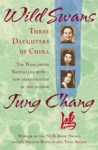
Jung Chang Wild swansAs you are sure to know by now, I am becoming rather addicted to the Six Degrees of Separation meme currently run by Kate (booksaremyfavouriteandbest). Please click on the link if you want to find out more about this meme, because I’m moving on with my selections! Our starting book this month is Jung Chang’s three generation biography-autobiography, Wild swans. This book is on my TBR. I missed it when my reading group did it, because I was living in the USA at the time, and I always meant to rectify that …

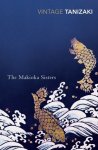
Junichiro Tanizaki, The Makioka sistersNow, I could link to a book my reading group did while I was away that I did read, but instead I’m going to choose a book that I read instead of books they were reading (even though, unfortunately, it was way before blogging so I have no review to link to). I’m choosing it because it was such an eye-opener for me, and I love to recommend it whenever I get the chance – and, it is set in Asia, albeit Japan, not China. The book is Junichiro Tanizaki’s The Makioka sisters, and is set in Osaka between the mid 1930s and 1941. It’s about a wealthy Osaka-based family and its attempts to marry off the third sister.

Haruki Murakami, Blind willow, sleeping womanThis is the book that introduced me in a big way to Japanese literature, a major contemporary exponent of which is Haruki Murakami. I’ve read a few of his books, but not many since I started blogging. One, though, that I have reviewed is his collection of short stories, Blind willow, sleeping women (my review). If you’ve never read Murakami, these short stories – 24 of them in fact – would provide an excellent introduction to his somewhat strange but fascinating world view.

Kazuo Ishiguro, NocturnesMy next link is to another collection of short stories, but to make the link a bit meaningful, I’m choosing a collection by a Japanese-born English writer – Kazuo Ishiguro’s Nocturnes: Five stories of music and nightfall (my review). These five stories touch the theme of music in some way. They also feature a typical Ishiguro device, the unreliable narrator (or at least a narrator who is not completely across what is going on in the story s/he is telling.

Dorothy Porter, On passionNow, many writers, talk about being inspired by music, but the one I’m going to link to here is our wonderful late poet Dorothy Porter, and her little book On passion (my review). Porter dates her passion for music back to her introduction to the Beatles in 1964. She writes that she has written “virtually all [her] poems to rock riffs and rhythm – the catchier, the darker, the louder, the gutsier the better.”

Gillian Mears' Foal's breadPorter died too young, from breast cancer at the age of 54. We Aussies have lost a few of our favourite women writers, too young, in recent years. Another is Gillian Mears, who suffered from multiple sclerosis for nearly two decades before dying last year at the age of 51. I have reviewed her Foals bread here. It’s a novel about a passion in fact, the passion for the sport of horse high jumping. I loved the way Mears conveyed that passion through her characters Noah and Roley.

Carmel Bird, Family skeletonAnd now for my final link, I’m going to return to my reading group. Gillian Mears was one of several Australian women writers we discovered in the year of our formation, 1988. Many of them, though not Mears, we found in the anthology, Room to move, which was our first book. It had stories by Glenda Adams, Thea Astley, Kate Grenville, Helen Garner, Elizabeth Jolley, and many others, including Carmel Bird. It is her latest novel, Family skeleton (my review) that I’m going to use for my last link. Family skeleton seems the perfect book to end a chain that started with a book about three generations of women. I’m sure Chang dealt with a skeleton or two!

So there you have it … we started with one sort of family in China, then visited Japan and England, before coming to Australia and ending with a different sort of family.

Have you read Wild swans? And whether or not you have, what would you link to? 

Min Jin Lee, Pachinko (#BookReview)

Min Jin Lee, PachinkoIf you are looking for a big, engrossing read that takes you into a little-known world, then I offer you Korean-American author Min Jin Lee’s Pachinko. It tells a story about the Korean diaspora in Japan over a period of 80 years, and was my reading group’s pick for August. There wasn’t a bored person in the room.

Interestingly though, several in the group had no idea what Pachinko was, so in case that’s the same for you, let’s get that out of the way first. It’s a sort of pinball-arcade game that is hugely popular in Japan. It’s a gambling game – a bit like our poker or slot machines – except that gambling is illegal in Japan so there is a complicated system of winning “prizes” which can be sold at a separate business for money! Pachinko parlours, which are highly visible in the entertainment districts of big cities, are dominated by Koreans – that is, their management and/or ownership is – which is where the title for Min Jin Lee’s book comes in.

Lee starts her novel in a small fishing village, Yeongdo in Busan, on the South Korean peninsula. It’s 1910, and a match is being made between Hoonie the cleft-palated, club-footed only son of a fisherman and his wife, and Yangjin, the 15-year-old daughter of a struggling family. A recipe for disaster you might expect, given the way historical sagas often go, except that Hoonie is a decent, loving man and Yangjin a hardworking, appreciative and loving young woman. They produce one daughter, Sunja, and it is her story – together with that of her family and friends – which forms the basis of Lee’s novel, until it closes in 1989.

The date 1910 was specifically chosen for the start of her novel because this is the year Japan annexed Korea, changing Koreans’ lives forever. With Koreans effectively belonging to Japan, many made the physical move there, believing their economic chances would be better, but most ended up in ghettos, living in poverty, and with minimal rights. Being Korean was, essentially, a passport to a second-class life, but they survived and this book chronicles their lives and spirit.

The first thing to say about Pachinko is that it’s a ripping read, covering four generations juggling life in a hostile land. We quickly become engaged in the lives of Sunja and her husband Isak as they move to Japan to live with his brother, Yoseb, and sister-in-law Kyunghee. Two children come, Isak is arrested (for preaching Christianity), and Sunja and Kyunghee join other Korean women selling kimchi and candy in an open market to help the family survive. Lee tells her story in straightforward, matter-of-fact language, with very few descriptive flourishes, which keeps the narrative moving without holding the reader up with extensive scene-setting. This description of Sunja’s second son, Mozasu, is a perfect example of Lee’s clear no-nonsense writing:

Mozasu had grown noticeably more attractive. He had his father’s purposeful gaze and welcoming smile. He liked to laugh, and this was one of the reasons why Goro liked the boy so much. Mozasu was enthusiastic, not prone to moodiness.

The rhythm is almost staccato at times, but never stilted. On occasion though, Lee will break out with something that is more evocative, and it can leave you breathless, such as this description of yakuza Hansu’s money-collector, Kim:

Hansu preferred Kim to do the collection because Kim was effective and unfailingly polite; he was the clean wrapper for a filthy deed.

The other interesting thing about Lee’s writing is that most of the big emotional events – marriages, births, and particularly deaths of which there are some awfully tragic ones – happen off-camera, and are reported to us in the same tone as the rest of the story. This is not the sort of storytelling you usually find in big family sagas, which love to squeeze out every emotional drop they can. I’d say this is because Lee’s goal is not to engage her readers in those sorts of emotions but to demonstrate the resilience and gutsiness of the people …

…. Because Koreans in Japan have had to be gutsy to survive in the face of being ostracised as aliens, of being treated as illiterate and filthy people, of being prevented from accessing higher level jobs. We, like the Koreans, are never allowed to forget their lack of status and, as a result, their reduced choices and opportunities.

It’s not surprising then that one of the themes is parents wanting education for their children, seeing that as a passport for a better future. Sunja’s son Noa wants to go to university, and later Noa’s brother Mozasu, himself not keen on schooling, sees education as a path out, preferably to America, for his son, Solomon. It’s not easy though. Korean children are bullied and ostracised at school, and are not encouraged to go to university. Only the dedicated make it through. The rest – like Mozasu – have to find work, which Mozasu does, luckily, albeit in a Pachinko Parlour. This, to his brother Noa’s disgust, becomes his career, but he becomes a wealthy man. Wealthy perhaps, but still Korean! He says to his friend Haruki:

In Seoul, people like me get called Japanese bastards, and in Japan, I’m just another dirty Korean no matter how much money I make or how nice I am.

And this brings me to my next theme, that of home. Lee provides three epigraphs in the novel, one for each of its parts, and the first one comes from Dickens: “Home is a name, a word, it is a strong one; stronger than magician ever spoke, or spirit answered to, in strongest conjuration”. It’s clear throughout the novel that our Koreans in Japan are homeless – reviled in Japan, they also no longer belong in Korea, particularly the succeeding generations that were born in Japan. As our omniscient narrator says at one point:

There was always talk of Koreans going back home, but in a way, all of them had lost the home in their minds for good.

And so, in this book, characters need to find their own sense of “home” which is, in most cases, family. It is in this context – and I think I can say this without spoiling anything – that we might understand Solomon’s decision at the end and Noa’s tragedy.

The third theme is perhaps the most obvious one, as it relates to the title, which clearly has metaphorical as well as literal readings. I’ll let Mozasu explain it:

Mozasu believed that life was like this game where the player could adjust the dials yet also expect the uncertainty of factors he couldn’t control. He understood why his customers wanted to play something that looked fixed but which also left room for randomness and hope.

However, here’s the thing. This is such a big, baggy monster that every reader is going to come up with different themes, different emphases. Lee herself, in an interview included with my edition, talks about her themes as “forgiveness, loss, desire, aspiration, failure, duty, and faith”. And, of course, all those are there too!

So, to sum up, Pachinko is a wonderful read about an engaging cast of characters. It provides a broad historical sweep of a region many of us could know more about, and it exposes the situation faced for a century or more by alien Koreans in Japan. It is also a book about human beings, one that never quite plays to type, that doesn’t opt for the easy marks. Instead, it is suffused with a clear-eyed humanity which encompasses the best and worst in people, and lets the reader make his or her own assessment. As I said, a thoroughly engrossing read.

Min Jin Lee
Pachinko
Head of Zeus, 2017
ISBN: 9781786691347 (e-Book)

Monday musings on Australian literature: Tasmanian Writers Centre

Continuing my little series on our writers centres, I’ve chosen the Tasmanian Writers Centre for my next post, largely because it is holding its Tasmania Writers and Readers Festival next month. Might as well give that a plug in case for my Tasmanian readers, though I’m sure they know!

The Tasmanian Writers Centre was established in 1998 and must have one of the loveliest locations in Australia, the Salamanca Arts Centre. It has a lovely bright webpage which announces that its aim is

Supporting writers to tell powerful stories, connecting with readers and building sustainable careers.

To do this, the Centre does the sorts of things that other writers centres do, and as before I’ll list their main programs …

A Writer’s Journey

Danielle Wood, Mothers Grimm, book coverThis seems to be an annual program comprising monthly workshops, with the overall topic changing each year. In 2017, the topic is “the challenges and rewards of a variety of non-fiction formats. Topics include memoir and life writing, environmental journalism, how to research for non-fiction and freelance feature writing.” The presenters include Danielle Wood (whose memorable Mothers Grimm I’ve reviewed here), Anna Krien (whom I’ve reviewed here a few times and whose topic was, appropriately, Environmental writing and journalism), and Maria Tumarkin.

Erica Bell Mentorship Program

This program, which started in 2016, provides “one-on-one mentorship with an established writer over a six month period.” Applicants submit a 10,000 wd excerpt from their manuscript and a letter explaining why they believe they would benefit from a professional mentor. Unfortunately, for nosey me, the site doesn’t say who the professional mentor/s might be.

Young Writers Program

The Centre seems to have an active program for supporting and encouraging young writers:

  • Twitch: This is the overall name the Centre gives to its youth program. It includes workshops, “Hot Desk residencies”, and the Young Writer in the City program.
  • Young Writer in the City: I came across the first year of this program on a visit to Hobart in 2015, and wrote about it then. The idea was that writers, under 30 years old, would set up “their chairs, laptops and notepads in the midst of shoppers and surrounds to compose essays between 1500 and 5000 words”. It was apparently successful, because after that first one in Hobart, the project has been offered in Launceston, Devonport and, most recently, Glenorchy. You can find links to some of the recent writing on the project’s page. One, for example, found her inspiration for writing about MONA in her childhood love of Charlie and the Chocolate Factory, in “Willy Wonka and his fascinating factory full of wonder and surprises”. Anyone who has been to MONA could understand that reference.

Emerging Tasmanian Aboriginal Writers Award

This award is being offered for the first time in 2017 – as part of the Festival. It is open to writers 16 years and older, and offers prize money of $1200. The lovely thing is that it accepts a wide variety of writing forms: poems or songs, short fiction, non-fiction (essay, autobiographical or biographical work), a play excerpt, or an illustrated story. There are different length limits depending on the form.

Tasmanian Writers and Readers Festival

Tasmania’s festival is a biennial one, and like most such festivals includes “masterclasses, discussion forums, spoken word events, children’s programs”. It’s nice, I think, that it’s framed as a “writers and readers” festival. This year’s festival runs from September 14 to 17. At this year’s festival, masterclasses are being run by writers like Bradley Trevor Greive, Ashley Hay, Arnold Zable, and Alec Patrić (on Advanced Short Fiction). There’s also a delightful sounding session titled “Miles and Stella in Conversation”. Of course, I had to read more about that one, and this is what it said: “What do two prize-winning authors talk about when they talk about writing? Alec Patrić (2016 Miles Franklin winner) and Heather Rose (2017 Stella Prize winner) quiz each other on words, prizes, literature and life. A unique opportunity to get an inside glimpse into the friendship of writers.” This is followed by, in parentheses, the note that “(Cosmopolitans and Bellinis on sale for this session.)” Is there something I don’t know? Did our Miles love these cocktails? And what if I’d prefer a simple glass of wine? What a hoot.

It is also at this Festival that the shortlist for the biennial Tasmanian Premier’s Literary Awards will be announced – so, we’ll be looking out for that. The winners will be announced in November.

Canberra Writers Festival, 2017, Day 2, Pt 3: A panel of millennials

Unfortunately – for me, anyhow – this will be my last post on the Festival, as that cold I hoped (unrealistically) to hold at bay would not be held. Consequently, for both my benefit and that of others, I decided to keep my snivelling self at home on Day 3. I’m very disappointed however, as I was very keen to attend a few events, including one titled Re-imagining Christina Stead. It was a rare session on a “classic” Australian writer and I’d love to have supported it (though hopefully, it didn’t need supporting!) And of course, I wanted to hear what the three panelists had to say.

Griffith Review: the Millennials strike back: Yolande Norris, Cameron Muir, Anna Snoekstra, Frances Flanagan, and Michael Newton

Griffith Review 56

Griffith Review 56

Having last year attended a lively session on the plight of the millennials, I was interested to see another session this year on them – and decided, as a baby-boomer, that I could face another beating! Seriously, though, as a parent of millennials, I am interested in their view of the world, and this session, drawing as it did from the excellent Griffith Review, seemed worth attending.

Convenor Cameron Muir introduced the session by saying that the Griffith Review editor, Julianne Shultz, conceived Millennials strike back edition in lead-up to last year’s Federal election. She wanted not to engage in the generation blame game but simply to give millennials (those born from around 1981 to around 2000) a voice. The issue, like all Griffth Reviews, contains a mix of essays, fiction, poetry and memoir pieces. The panelists all had pieces in the issue:

  • Frances Flanagan (Essay) “A consensus for care”
  • Michael Newton (Essay) “Unpaid opportunities”
  • Yolande Norris (Memoir) “Navigating life in art” (in the online edition only)
  • Anna Snoekstra (Short story) “The view from up here”

Muir then noted that a major theme in the panelists’ pieces (and perhaps in the edition as a whole?) is work, and he asked them to comment. Norris, who contributed a memoir to the edition, talked about the challenge of managing her identity as a mother and as a worker, which is an issue, in fact, that many of us baby-boomers also grappled with. It wasn’t easy then, and it still isn’t now – unfortunately. She wondered what you do when you’ve achieved the “template for life”, house and child/ren.

Newton, whose piece was an essay, talked about the broader structural issues concerning how work is changing. Insecurity (precarity) in work, he said, results in pressure and can engender anxiety, which can breed depression. Millennials in this situation worry about whether to look for another job, whether they can earn a living wage. Why, he asked, are the real structural problems being hidden under arguments about smashed avo and kidadulthood? These arguments dismiss policy concerns of Millennials.

Snoekstra, whose piece is a short story, said that she calls herself a writer in social situations, but in fact she also works as a nanny. She talked about her generation’s concern with buying a house: do they buy a house meaning they can’t go on holidays, have to take a job they don’t like, or do they decide they won’t follow that path?

Flanagan, who like Newton contributed an essay, focused more on the longterm, but also looked back into history, drawing on Hannah Arendt’s division of human activity into three categories: labour, work and action. She suggested this might provide a model for how we view work. She wanted, she said, to meditate on how modern capitalism conceals the action of power. There has been insecure work in past, she said, but there were ways to resolve those, including the introduction of award wages. Today, though, she argues, work precarity is individualised and private. (There are no labour lines, today, for example, just people “waiting for a text message that will signal the prospect of work or its absence.”) Society is no longer offering careers but fragmented work. She then moved onto discussing the kind of work we value – and this is where the title of her essay “A consensus for care” makes sense.

She talked about the cyclical nature of work, writing in her essay:

While our current age is not alone in taking the maintenance of our physical and social spaces for granted, we have certainly given it a twenty-first-century neoliberal spin. Many early childhood educators earn so little that they cannot afford to buy a house or have children of their own, despite significant post-secondary qualifications. Aged carers are paid so poorly they risk poverty. People with jobs in the world of work and action who take time away to care for elderly parents or young children are punished for their ‘choice’, not just once through foregone income but twice as a result of a grotesque superannuation system that magnifies wage gaps in retirement. Through neoliberal goggles, labour is not recognised as the essential foundation for civilisation but rather a cost burden on the public purse that should rightly be turned into a profit-making opportunity. Treasurer Scott Morrison, speaking at the ACOSS National Conference in 2016, said, ‘What I am basically saying is that welfare must become a good deal for investors –for private investors. We have to make it a good deal, for the returns to be there.’

(What can you say to that!) Arendt, she said, would not apply the idea of “returns” to this sort of activity, but to “work” that produces – well – products. Flanagan suggests that we need to look at the kind of society and care we want. She pointed to Norway’s collectivist view of responsibility, and argued that we should put care and education at the heart of our society. We need to look at values, rather than costs, and look back for values to the mid-twentieth century and earlier rather than to the last 30 or 40 years. In other words, rather than to the time during which I spent my working life. Oh, how I remember the dispiriting slide into measuring and costing things which cannot and/or should not be costed. Things like, for example, the cultural collections in our museums, archives and libraries. We saw it happening but felt powerless to change it.

And so the discussion continued, teasing out issues regarding mental health (captured chillingly, said Flanagan, in Snoekstra’s story), the separation of public and private life (in that Millennials seem very public, sharing all, but their worries are private), the need to develop support networks for work, the prevalence of toxic attitudes online particularly from disgruntled men.

On this issue of disgruntled men, Newton commented in the past men assumed they would find a partner without too much effort, but that this is not the same for the current generation of young men which can build resentment. He also noted that the hollowing out of work in manufacturing, caused largely by automation, leaves men having to consider care work. However, they don’t value this “feminised work” so, he said, the whole idea of “work” needs to be rethought.

Muir concluded by asking them what they would say to the next generation:

  • Norris said this was tricky because projections are impossible, but developing and maintaining connections is important.
  • Flanagan said that she would argue that technology is just a tool, and that there are still questions about power. She suggested people should learn from mentors and mentor in turn.
  • Newton started, laughingly, by saying he recently had to explain the significance of Princess Di to his younger work colleagues. Seriously, though, he’d want to say that work is not an end in itself, but that they should look at values.
  • Snoekstra said that she was thinking of writing YA books, and was advised to write short books, with action at beginning, due to shortened attention spans, but then discovered that 12-14 year old girls are reading Nancy Drew!

Q&A

Could unions help? For baby-boomers they facilitated collective bargaining, and gave a sense of empowerment. Flanagan said that Australia has the worst anti-trade union laws in the democratic world. She works for United Voice, a large trade union, and said they need to use social networks to deal with mass desegregation of workforce.

Is the Universal Base Income a workable solution? It was agreed that carers should be remunerated, and the small surveys done to date does not show that it reduces the desire to find other work.

What are the implications of the drive to project yourself, that if it’s not on Facebook, it didn’t happen, that “it’s not ok to be not ok”. Norris felt that there is some pushback to this now, that people are becoming willing to show cracks. Flanagan said that for us to mature we need to create a caring society.

The commentary about housing focuses on Sydney and Melbourne but what about growing regional areas where housing can be cheaper. Is a trend happening? Our panelists generally thought there was, although some of the “trendy” places are quickly becoming expensive or built out. And, Australia is probably likely to remain a largely urbanised, centralised nation.

And there ended, somewhat over time, an excellent session that did not generation blame but that attempted instead to identify the issues and find solutions.

Canberra Writers Festival, 2017, Day 2, Pt 2: Two book launches

At last year’s festival, I attended a few excellent book launches, and so decided to do so again. Authors need all the support they can get after all.

Book launch: Ian Burnet: Where Australia collides with Asia

Burnet and Burdon

Burnet and Burdon

The first of today’s two launches was for a book with a very long title, by geologist Ian Burnet. It’s Where Australia collides with Asia: The epic voyages of Joseph Banks, Charles Darwin, Alfred Russel Wallace and the origin of the Origin of species. I haven’t heard of Burnet before, though he’s written a few books, and nor have I heard of the publisher, Rosenburg Publishing who produce “a small non-fiction list, concentrating mainly on history and natural history.”

So, that was interesting for a start. The book was launched by Sally Burdon of the Asia Bookroom here in Canberra.

I couldn’t possibly share all the information Burnet imparted to us about the four voyages he covers in the book. A lot of it is well-known, so well-known in fact that Burnet had been wanting to write about Alfred Russel Wallace, his hero, for a long time, but he couldn’t find an angle to make it worthwhile. The thing is that I didn’t know who this Wallace was.

The publisher’s website explains his importance. Wallace

realized that the Lombok Strait in Indonesia represents the biogeographical boundary between the fauna of Asia and those of Australasia. On the Asian side are elephants, tigers, primates and specific birds. On the Australasian side are marsupials such as the possum-like cuscus and the Aru wallaby, as well as birds specific to Australia such as white cockatoos, brush turkeys and the spectacular Birds of Paradise. It was tectonic plate movement that brought these disparate worlds together and it was Alfred Russel Wallace’s ‘Letter from Ternate’ that forced Charles Darwin to finally publish his landmark work On the Origin of Species.

This strait is apparently well-known in certain circles as The Wallace Line.

Burnet explained that the aha moment came when he was sailing in the strait and saw melaleucas, one of the unique species that supports Wallace and Darwin’s theory. He realised that this Australian connection was the story he could tell. (He found some other Australian connections, too, including Darwin’s contemplating his ideas about the origin of the species on the banks of Cox River, and the role of ornithologist John Gould in identifying adaptation in finches.)

An interesting point he made – one relevant to my write-up of the historical fiction session yesterday, even though this is non-fiction – is that it was the easiest book to research. Essentially all the critical documents he needed – letters, diaries etc by the main players – are digitised and available online. Way to go librarians and curators!

It was a lovely launch, and I learnt some things I hadn’t known before, which is always a plus.

Book launch: Stephanie Buckle: Habits of silence

I had identified this launch as one I wanted to attend, partly because the book is by a local author but even more because publisher Finlay Lloyd has sent me a copy of the book to review. Julian Davies, Finlay Lloyd publisher, introduced John Clanchy, whose gorgeous short story collection, Six, I’ve reviewed and who works with Finlay Lloyd as a manuscript assessor and editor.

Clanchy did a grand job of launching Buckle’s debut short story collection, Habits of silence. He explained that he met Buckle 10 years ago in a writers’ group, and talked about her achievements: some of the fourteen stories in this collection have been published before, have won prizes, and/or have been in editions of Best Australian stories. In other words, he said, she’s a writer with some cred (though he didn’t use that word.) She has worked at her craft, he said, even rewriting some prizewinning stories for this publication. (Interestingly, in a throwaway line, he mentioned that she has written a novel about the Canberra fires, From the ashes, but I don’t believe it’s been published as this is her debut book.)

Anyhow, Clanchy then discussed the book itself. He talked about the relevance of the low-light, empty urban streetscape on the cover, and said that it and the recurrence of words like “silence” and “wordless” provide a clue to the content. And this, he suggested, revolves around communication, about how it can break down, about the positive and negative impacts of silence. Silence, he said, can be positive, but with Buckle, things don’t stay the same, and smooth waters can turn turbulent.

Silence can be voluntary or involuntary. Two stories are about a stroke, which forces involuntary silence. He read an excerpt from one of these stroke stories. And then read from the second story in the book, “sex and money”, which is about voluntary silence, about silence being used aggressively by a wife who is not receiving the love and attention she desires. Both readings showed a gorgeous insight into human nature, and an ability to present it economically, as you’d expect in a short story.

Davies then returned to introduce Buckle. He reiterated her willingness to work on stories, suggesting this is partly a salute to being older, to the associated ability and willingness to produce stories of psychological subtlety. He then introduced Buckle to the podium.

Buckle said that the book was a long time coming, and that she never thought her first book would be a short story collection, given their general unpopularity. (Thank goodness for small publishers like Finlay Lloyd who take risks on unusual or less popular forms.) However, she loves short stories she said, particularly those of 2,500 to 3,000 words. You can’t hide in short story, and you can tease out a single idea. But, addressing the comment about her working on her stories, she said the hard thing is to know when to stop! I guess most writers – even bloggers – understand that!

She then read from two of her stories, from “us and them” which is set in a 1970s psychiatric hospital, and “the man on a path” which is about an older woman, widowed and lonely, going on holiday to a place she used to go with her husband. As she walks, all she sees are couples, until she sees a man alone walking towards her. The excerpt she read about what happens next was tantalising.

I so look forward to reading this book – but it will be a little while before it reaches the top of the pile.