Bruce Beresford, The best film I never made (#BookReview)

Bruce Beresford, The best film I never madeBruce Beresford, author of The best film I never made, is of special interest to me for a couple of reasons, besides the fact that I’ve enjoyed many of his films over the years. One is that after a few years of taking (or, perhaps, “dragging” is more accurate) our then young son to various classic movie “experiences”, like, say, a silent movie accompanied by live theatre organ, we finally hit pay dirt with Bruce Beresford’s Breaker Morant. He loved it, and I’d say his love of film was born then. The other is that I’ve known for some time that Beresford has wanted to film his old university friend Madeleine St John’s novel The women in black (my review). I want to see that film! According to the brief bio opposite the title page, it is being made now. At last!

All this is to explain why I was keen to read Bruce Beresford’s collection of stories when I saw it appear in Text Publishing’s New Releases list. But, what does “collection of stories” mean in the context of non-fiction? These are not essays or even newspaper columns that have been published before, and, disappointingly, there’s no Introduction, Author’s Note or Afterword providing context. There is, though, in that aforementioned brief bio, the address for his website, and there I found a tab called “Articles”. So this is where they are published? Yes, some anyhow, including some in an earlier form, but not all. However, from this, and from their personal, rather chatty style, I’d liken these articles to blog posts, which in his case comprise musings on things relating to his film and opera directing career and his related cultural interests.

The best film I never made, then, is a collection of these blogpost-cum-stories, organised for the book into four parts: I Family, Journeys, Memories; II Making and Not Making Movies; III Behind the Screen; IV Operas, Painters, Writers. The stories are all dated, ranging from 2004 to 2017. Some have brief updates at the end. The 2010 piece on Jeffrey Smart, “Smart lessons”, for example, has a final annotation noting that Smart died in 2013. The stories are not presented chronologically.

And now, because this is not a book with a narrative structure that can be spoiled – though there is some logic nonetheless to the order – I’m going straight to the end. You’ll guess why when I tell you that the title of the last article is “Australian literature and film”, but that literature connection is not the only reason. Other reasons are that it provides a good introduction to the style and tone of the whole, and also to the way he imparts his experience and understanding of filmmaking.

The main point of this last article is to discuss the idea, put forward he says by the press, that “Australian films would benefit if more adaptations were made from acclaimed literary works. Comparisons are inevitably made with foreign films, particularly English and American …” Commenting that he can understand why writer-directors might want to tell their own stories, he admits that probably a majority of English-language films are adaptations of novels but suggests that many of these would be from popular fiction rather than “literary successes”. He unpicks why:

Many novels are famous for their prose style, various colourful characters, their themes and so on: factors which can obscure the fact that other useful ingredients – a coherent plot for example – may be absent. In film, most of the characteristics that distinguish a literary work – such as a striking prose style – are stripped away and this can reveal the lack of a well-constructed story, or convincing dialogue, and be fatal to the effectiveness of the film.

He then provides examples of English and American adaptations, about which, of course, every reader-filmgoer will have different opinions – but I think his principle stands. He comments for example about the difficult of transferring “the satire and dry cynicism” of Waugh to film, and says Patrick White is notoriously difficult “because his novels like Conrad’s, are psychological studies, intense and profound, and not easy to transfer to a film script”. (Interestingly, though, he suggests that Happy Valley, which I’ve reviewed, could be a good candidate because of its “more conventional narrative”.) Filmmakers do better he argues “to adapt novels which rely on a few strong characters and a compelling narrative” like, for example, Kenneth Cook’s Wake in fright (albeit “won no literary prizes”).

So, this article demonstrates Beresford’s grasp of filmmaking, which, unsurprisingly, runs throughout the book, but it also exemplifies his tone and style, including his willingness to share his own prejudices. He’s not a fan of Tim Winton, for example, describing his books “as bargain-basement Patrick White: stylistically derivative, they are far more savage, full of unpleasant characters, and weakly plotted”. And Christina Stead, he says, is “a turgid writer, in my worthless opinion”. This possibly false but not pompous self-deprecation is another feature of his tone. In the same paragraph as the Stead comment, he writes that he’d filmed Henry Handel Richardson’s The Getting of Wisdom, but that “critics did not share my admiration for the result”! (Other films of his, he agrees, aren’t the best.)

And finally, this chapter also reveals his ability to “tell-all” without being gossipy. He suggests that another reason why classic novels aren’t adapted in Australia (as they are in England) is that they are just not well-known, “certainly the word of their excellence has not reached all of those in charge of making financial decisions.” (The challenge of financing films is a theme running through the book, in fact.) Beresford wrote, he tells us, an adaptation of Henry Handel Richardson’s epic, The fortunes of Richard Mahony. He says he hadn’t expected potential investors to have read it, but he “did at least expect them to have heard of it – and her. But this was not the case.” Oh dear! He backs up this example of philistinism with another:

when I was planning a film about Mahler, a Hollywood executive said, ‘What I can’t understand is why you would want to make a film about a nonentity.’ I said  nothing, but perhaps should have told him that one of the most gifted composers of all time could not accurately be described as a ‘nonentity’ – except by someone of overwhelming stupidity.

To his credit, Beresford does not name this person of “overwhelming stupidity”.

If you’ve enjoyed my discussion of this article, then you are likely to enjoy the book. I loved his discussion of the filmic qualities of the artist Caravaggio, and of his friendship with luminaries like Barry Humphries, Clive James, and the late Jeffrey Smart. His Behind the Scenes section provides fascinating insight into the role of cinematographers, composers and designers in the filmmaking process. And so on.

However, because this is a book of collected articles written over a decade or more, there is the occasional repetition, particularly in the first section about his personal life. And, he does come across somewhat as an unreconstructed male. There are several references to his chasing, or his friends’ marrying, beautiful women, which focus I find out-of-date (but that’s just my worthless opinion!)

The best film I never made is an enjoyable book. It’s more chatty and informative than reflective, but if you have followed Bruce Beresford’s films over the years – including Breaker MorantDriving Miss Daisy, Tender Mercies, Black Robe, Mao’s Last Dancer – and you are interested in the practice of filmmaking and in the arts more generally, this book has a lot to offer. And makes, methinks, a good summer read.

Bruce Beresford
The best film I never made, and other stories about a life in the arts
Melbourne: Text Publishing, 2017
281pp.
ISBN: 9781925603101

(Review copy courtesy Text Publishing)

Blogging highlights for 2017

Now for the last of my year-end trifecta (the others being my Australian Women Writers’ Challenge wrap-up and Reading highlights posts). I don’t know how much this one interests others, but I like to document trends on my blog for my own record. I won’t be offended if you don’t read this, as if I’d know!

Top posts for 2017

Barbara Baynton 1892

Baynton 1892 (Presumed Public Domain, via Wikipedia)

Change has been slowly happening in my top posts – though a few usual suspects, like Virginia Woolf’s short story “The mark on the wall“, remain there. Last year, an Aussie book, Hannah Kent’s Burial rites, finally topped the list, but this year that changed again. Here’s my Top Ten, by number of hits:

Now some basic analysis. Firstly, four Australian posts (plus, again, the Awards page) appear in the Top Ten, one more than last year. Craig Silvey’s Jasper Jones dropped to 12th position, while Barbara Baynton’s “The chosen vessel” regained its Top Ten position, and has been joined by another of her short stories from Bush Studies. (I’d love to know whether Bush Studies features high in the lists of other Aussie bloggers who have reviewed it.) Meanwhile, Red Dog just keeps on keeping on.

As I noted last year, short stories and essays (Wharton, Woolf, Baynton and Muir) dominate the top ten. This must surely be because they are set texts. I have a pretty good feeling that Red Dog is too!

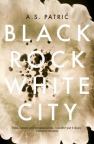
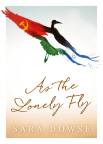
AS Patric, Black rock white cityMy most popular 2017-written post – ranking 48th – was, as happened last year, for an Australian work, this time AS Patrić’s Black rock white city. (Last year, though, the top ranking post written that year was 66th in the list). The next 2017-written post, ranking 58th, was for another Australian work, Sara Dowse’s As the lonely fly. And to complete the top three, coming in at 71, was an English classic, Graham Greene’s Travels with my aunt. A rather eclectic trio, which appeals to me.

For the Monday Musings fans amongst you, my most popular Monday Musings posts were: Novels set in Sydney (posted November 2015); White writers on indigenous Australians (posted February 2014); Australian Gothic (19th century) (posted December 2012).

Finally, last year, I noted that there was a surprising post in my Top Ten, What do you say when you order food at a restaurant (posted three years ago in November 2014). Ranking 8th last year, it climbed to the top this year, just pipping Edith Wharton at the post (overtaking her in the last throes of December). Most intriguing.

Random blogging stats

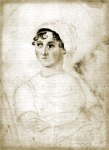
Jane Austen by sister Cassandra (surely public domain!)

I always share some of the searches that find my blog, so here’s a selection of this year’s:

  • several searches included the words “analysis” or “reading guide” or, in one case, “reading guide answers”, such as the adventure of the german student reading guide answers
  • searches such as say please when you make an order and can i get or can i have for ordering food: you know, now, what post they retrieve
  • several searches seemed concerned with whether Jane Austen’s writing is progressive or conservative, such as, is emma by jane austen conservatove [sic] as the ending; how is the ending of emma by jane austen not conservative; progressive plot pride and prejudice; jane austen’s conservatism and progressivism related to pride and prejudice. Homework questions perhaps?
  • if im white can i write about aboriginals: regular readers here will know why this one found me
  • musings on the famous novel: this one picks up several of my Monday Musings posts
  • which journal is favourite in literature: what do you think?

I didn’t unearth any really strange searches this year, which could be partly due to the fact that the majority of search terms are no longer revealed to us … but I do miss the weird and wonderful ones!

Other stats that tell the story of my year. I wrote around the same number of posts as last year, averaging 13 posts per month, but traffic to my blog increased by nearly 10%. While numbers are not my  prime goal, and are not something I specifically focus on building, it’s nonetheless gratifying to think that the hours spent writing posts are not just for me.

My blog visitors came from 178 countries (6 more than last year). Australia, the USA, and Britain again filled the top three slots, with India edging out Canada for fourth this year, thanks partly perhaps to the lovely Deepika! My most active commenters (based on the last 1000 comments, says WordPress) were Lisa (ANZLitLovers), Bill (The Australian Legend), Deepika (New Fractured Light), Meg, Theresa (Theresa Smith Writes) and Guy (His Futile Preoccupations). A big thanks to them, and to everyone who reads and/or comments on my blog. Whether or not you comment, it is a joy to share books and reading with you.

Challenges, memes and other things

As I wrote in my AWW Challenge wrap up, I will participate again this year. (Here’s the Sign Up page).

I have now been doing the #sixdegreesofseparation meme, run by Kate (booksaremyfavouriteandbest), for just over a year. I enjoy the challenge of completing these posts and that it results in my thinking again about the books I’ve read. I’ll continue with this one. I did, occasionally, do other memes during the year, which can be seen at this “memes” category link.

My biggest highlight of the year though was mentoring two litbloggers in the new ACT Litbloggers of the Future initiative, sponsored by the ACT Writers Centre and the National Library of Australia. Emma Gibson (see her guest post), Angharad Lodwick (see her blog) and I met several times to talk blogging, literature and ACT literary culture – and had great fun doing so. We wrapped it up at the end of the year at a meeting with Nigel Featherstone (ACT Writers Centre) and Kathryn Favelle (NLA), and agreed that while there are things we could improve if the program runs again, it did achieve its main goal of helping “to stoke cultural conversations in the ACT”. And that, really, is what it’s all about, isn’t it.
Wrapping up my wrap-ups …

To conclude, a big thanks to everyone who read, commented on and/or “liked” my blog last year – and thanks to all the other wonderful bloggers out there, even though I don’t always manage to visit everyone as much as I’d like. While some people find the Internet and Social Media cruel and unwelcoming, that’s not what I find in our litblogging corner of cyberspace, proving that technology isn’t inherently bad for you. And so, I wish you all happy reading in 2018, and hope to see you again at your place or mine!

Finally, a big thanks to the authors who write the books, and to the publishers and booksellers who get the books out there. May 2018 be a great one for you (us) all.

Reading highlights for 2017

I do hope I don’t disappoint my Monday Musings fans too much, but as this Monday also happens to be January 1, I’d like to use it to share my reading highlights for the year. Rest assured – if you care – that Monday Musings will be back. (Indeed, next week’s is already in the bag.)

So, to my 2017 reading highlights. As usual, I won’t be naming a top ten, or somesuch, because as I’ve said before I’m a wuss. It’s too hard. I could never be a literary awards judge. However, I had a great reading year – albeit a very unusual one – as you will see …

First, though, this year’s …

Literary highlights

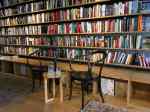
Muse bookshop

Muse bookshop (before an event)

Literary highlights mean for me literary events, and there were many wonderful events in Canberra this year. I missed a lot f them because I was away or had clashes, but those I did attend gave me much to think about:

  • Festival Muse: Muse is one of my favourite places in Canberra. Billing itself as “Food, Wine, Books”, Muse is a cafe, bookshop and event venue. They regularly hold author events, but early in the year they organised a literary festival. The sessions I attended were wunderbar. Given our Canberra location, their Festival, like the Canberra Writers’ Festival, includes quite a bit of political content. I wrote two posts (Women of the Press Gallery, Robyn Cadwallader author interview)
  • Canberra Writers Festival on which I wrote four posts (Day 1, Day 2 Pt 1, Day 2 Pt 2, Day 2 Pt 3): I loved the variety of sessions I attended, but had to miss the last day due to a cold which made attending the second day hard enough. Roll on 2018.)
  • Author interviews: I missed so many this year, but I did enjoy hearing Charlotte Wood, Sofie Laguna, and Jelena Dokic.
  • Two annual lectures at the NLA, which I try to make a fixture in my calendar: the Seymour Biography Lecture, given this year by Raimond Gaita; and the Ray Mathew Lecture given by Kim Scott. These lectures are the best – and we always follow them up with supper at Muse! What’s not to like!

Reading highlights

As in previous years, I’m going to discuss this year’s reading highlights – the books that made the biggest impression – under categories appropriate to this year’s experience (links to my reviews).

The reading … it was a year of …

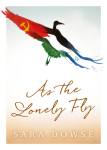
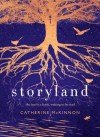
  • Sara Dowse, As the lonely blyLosing myself in grand sweeps: There was Sara Dowse’s As the lonely fly which spanned the lives of Russian Jewish émigrés to Israel and the USA over most of the twentieth century; Min Jin Lee’s Pachinko which looked at Koreans in Japan over the same period; and Catherine McKinnon’s Storyland which, in an inventive structure, told the story of a region of southeast Australia from the late 18th century to a 28th century dystopian future! Now that was a grand sweep! All three books were great reads which gave me plenty to think about.
  • Exploring displacement: As I reviewed my reading for the year, the theme of displacement kept popping up, book after book. I wonder why that would be!? The first two grand sweep books fit this theme, but others included Ali Cobby Eckermann’s Too afraid to cry (about being an indigenous child adopted into a non-indigenous family), Stan Grant’s Talking to my country (about indigenous people’s displacement by colonial settlers), Yuri Herrera’s Signs preceding the end of the world (about Mexicans making the crossing to the USA), AS Patrić’s Black rock white city (about Serbian refugees in Australia), Hoa Pham’s Lady of the realm (about a Vietnamese Buddhist nun displaced in her own country) and Viet Thanh Nguyen’s The sympathizer (about Vietnamese refugees in the USA).
  • Ali Cobby Eckermann, Inside my motherDelving into indigenous Australia: While I only read four works by indigenous Australians, they were a varied, inspiring lot: Ali Cobby Eckerman’s memoir Too afraid to cry and her poetry collection Inside my mother, Stan Grant’s hybrid memoir Talking to my country, and the Writing black anthology edited by Ellen van Neerven. These, and two other books, The stolen children edited by Carmel Bird, and Kim Mahood’s Position doubtful, contributed significantly to my growing understanding of life as experienced by indigenous Australians and how I might accommodate this understanding in my own life.
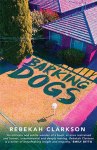
  • Indulging in short stories: Are you surprised! Okay, okay, I can’t name them all, so I’m picking the four that jumped into my head: Rebekah Clarkson’s Barking dogs and Karen Thompson’s Flame tip, which were connected by location and theme; the more traditional collection, Stephanie Buckle’s Habits of silence and Stephen Orr’s Datsunland.
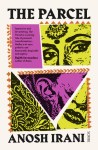
  • Anos Irani, The scribeMeeting unusual narrators: Unlike some readers who look askance at odd narrators, I’m open to them (in the hands of great writers, anyhow). Ian McEwan’s foetus in Nutshell and Carmel Bird’s skeleton in the cupboard in The family skeleton took me along with them into their – hmm – challenging families. The transgendered Madhu in Anosh Irani’s The parcel fits here too, though perhaps shouldn’t (be seen as unusual, I mean). The confessional tone maintained by the unnamed mole (of the spy not furry variety) narrating Viet Thanh Nguyen’s The sympathizer made him a somewhat unusual narrator too. And finally, how can I forget the slippery Hartmann Wallis in the eponymous (sort of) Who said what, exactly.
  • Discovering the lives of “real” others in fiction and non-fiction: Heather Rose’s novel The museum of modern love and Bernadette Brennan’s literary portrait A writing life; Helen Garner and her work were standouts here.

There were many more great books, including several classics (see, I haven’t even mentioned she who should be named) and some fascinating biographies, but I need to finish somewhere – don’t I, dear patient reader.

Some stats …

And here is where there are some surprises (for me, anyhow):

  • 53% of my reading was fiction, short stories and novels (versus 63% in 2016, and even more in 2015): While I was vaguely aware this was happening, I must say I’m not happy with it. Part of the reason is that my reading group did more non-fiction this year – four out of eleven in fact – where we usually only do one, and part of it is due to review copies sent my way. Very few of the non-fiction I read were actively chosen by me. I hope to recalibrate this somewhat next year.
  • 73% of the authors I read were women (versus 65% and 67% in 2016 and 2015 respectively): Again, while I like to read women writers and count reading them as one of my specific reading interests, I didn’t actively seek to increase the proportion this year. I can’t blame my reading group for this one, as our ratio there was 55%!
  • 35% of the works I read were NOT by Australian writers (versus 32% in 2016!): Roughly one-third non-Australian, two-thirds Australian feels like a fair ratio to me.
  • 31% of the works I read were published before 2000 (similar to last year’s 35%): Again, I’m happy with this. I like to keep delving into past works, but it’s a challenge doing so while trying to keep up with the contemporary literary scene.

So, some trends I’m comfortable with, and some less so. I don’t usually set goals for the year – besides a soft goal of trying, vainly, to reduce the TBR pile – but in 2018 I will do my best to lift the fiction ratio (albeit my first review for 2018 will be – wah – non-fiction!) This is not to say I don’t like non-fiction, because I do, but I have felt the lack of fiction at times. I need it in my life.

Overall, it was a good reading year, and I have loved sharing it with you. So, as I wrote last year, a big thankyou for reading my posts, engaging in discussion, recommending more books and, generally, being all-round great people to talk with.

I hope you all have a wonderful 2018. I also hope that you will continue to visit me here to share your thoughts. (And I will do the same for those of you who have your own blogs. What a lovely community we have.)

What were your reading or literary highlights for the year?

Joy Eadie, Discovering Charles Meere: Art and allusion (#BookReview)

Joy Eadie, Discovering Charles MeereThe award for my last review of the year goes to something a little left field for me, Joy Eadie’s Discovering Charles Meere: Art and allusion. I say left field because it is, essentially, a book of art criticism, and I don’t do much of that here (or anywhere, for that matter!) However, when Halstead Press offered me a copy for review a few months ago, I was intrigued, so accepted the book. And here is why I was intrigued …

In the email offering me the book, the publisher wrote:

Australian Beach Pattern is Meere’s most famous work and hangs in the Art Gallery of NSW. However, despite its popularity and recognition, it has been labelled by critics as an unimaginative work which glorifies an Aryan ideal of mid-twentieth Australia, and Meere’s name is hardly known.

And thus my interest was aroused, because earlier this year I had been to the Brave New World: Australia 1930s exhibition at the National Gallery of Victoria. One of the sections was titled “Body culture” and the commentary noted that “the evolution of a new Australian ‘type’ was also proposed in the 1930s – a white Australian drawn from British stock, but with an athletic and streamlined shape honed by time spent swimming and surfing on local beaches.” The notes referred to the problematic aspects of this idea in an era when eugenics was on the rise in Germany.

While the exhibition didn’t, in fact, include Charles Meere, it is in this context that his most famous work, “Australian Beach Pattern” (online image) dated 1940, has been seen and it is this interpretation that Joy Eadie refutes by offering her own reading of the painting. She does this by analysing the painting and comparing it with like works from his oeuvre to develop her ideas about his themes and world view.

Eadie’s thesis is, essentially, that within Meere’s coolly formal application of an Art Deco-cum-neoclassical style lie recurring features including “a certain dry wit, irony, the use of allusion and appropriation, oblique reference to the historical context and to being in a certain time and place, while recalling other times and places”. These features, she argues, are not easily apparent in one work, such as “Australian Beach Pattern”, but they become evident in the context of several works.

Robert Drewe, The bodysurfersHowever, before I discuss the book, I should explain for those who don’t know that “Australian Beach Pattern” is one of Australia’s iconic images. It was used on the program for the 2000 Sydney Olympics, on the cover of Robert Drewe’s The bodysurfers, and apparently features in curriculum materials about democracy in Australian schools. Merchandise featuring it is also amongst the most popular at the Art Gallery of News South Wales, where the painting has resided since 1965. But now, to the book …

It starts with a brief biography of the little-known British-born Meere (1890-1961), then moves on in Chapter 2 to analyse the poster (“1978 … 1938 150 Years of Progress”) he created for NSW’s 1938 Sesquicentenary celebrations. Referencing some of the tensions of the anniversary planning and using the careful eye for detail needed by an art critic, Eadie identifies features of the poster which depart from traditional poster style, and proposes that Meere’s aim was to subvert the “nationalistic hubris” of the anniversary story. Her analysis includes the suggestion that Meere alludes to Hieronymous Bosch’s “Ship of Fools” painting to comment on the practice of sending British outcasts to the other side of the world. She notes his inclusion of tall strong Aboriginal people on the shore, his placing of his own signature in proximity to these figures, and argues that his “choice of black to proclaim the joyous message of progress” was “deliberate and ironic”.

In this vein – analysing Meere’s painting style, use of colour, allusions to European paintings, historical context, and so on – Eadie discusses picture after picture, including of course “Australian Beach Pattern”, to build up her argument concerning Meere’s more subversive commentary on contemporary culture, and she is, overall, convincing. Her close reading of the paintings, mirrors, really, the close textual analysis literary critics do. And her challenge with Meere reminded me of that issue regarding the value to criticism of knowing the creator that I raised in my recent review of Bernadette Brennan’s book, because, in Meere’s case, it appears there are “no diaries or notebooks recording his artistic practice” so, says Eadie, “one can only speculate”.

And speculate she does, sometimes drawing long bows. These show the depth of her research, but with little evidence for what Meere actually knew, saw, experienced or thought, these bows rely on our agreeing with her assumptions – particularly regarding his alluding to other works. Her analysis of his “Diamonds are a girl’s best friend” painting is fascinating but relies on our making a number of leaps with her. In her chapter discussing the origins of the large number of “copies” of “Australian Beach Pattern” which regularly hit the market, the speculations build, but, as she does elsewhere, she admits to them, calling one idea “highly speculative”. Other times, she explains that she had to work from digital or reproduction copies of works in private hands, and that her analysis could change on seeing the work itself. None of this, however, gets out of hand, and her arguments are clear.

Discovering Charles Meere might sound dry and suited only to specialists, but not so. Eadie’s writing is engaging and refreshingly free of academic jargon and meaningless polysyllabic words. The book is short, nicely produced, and is well-illustrated, making it easy to follow her argument. As for the content, it should appeal to anyone interested in Australian art and 20th century Australian culture. I enjoyed my foray into the outfields of my reading interests!

aww2017 badgeJoy Eadie
Discovering Charles Meere: Art and allusion
Braddon: Halstead Press, 2017
96pp.
ISBN: 9781925043389

(Review copy courtesy Halstead Press)

Bernadette Brennan, A writing life: Helen Garner and her work (#BookReview)

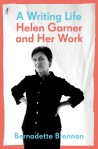
Bernadette Brennan, A writing life Helen Garner and her workEnough of the filler posts for a while! It’s time for a review, and it’s a special one because it’s for a book about one of my favourite writers, Helen Garner. The book is Bernadette Brennan’s A writing life: Helen Garner and her work. Described as a “literary portrait” rather than as a biography, it carefully and thoroughly explores her work from multiple angles, the effect of which was to confirm my overall understanding of her work while also resolving some of the gaps or misconceptions in my reading of her.

This brings me straight to the book’s fundamental assumption that knowing a writer’s life is (or can be) relevant to understanding his or her work. Brennan writes in her Introduction that she did not want to write a biography, which was just as well, as Garner did not want her to either. However, Brennan “knew” that the intersection of Garner’s “life and art made discussion of the biographical essential to understanding her work.” There are those who argue that the text is the thing – and the only thing. However, others of us believe that our reading of a text can be enhanced by other factors, that, as editor and critic Adam Kirsch has said, it is valid “to use the life to clarify the factors that shape the work — to show how life and work were both shaped by the same set of problems and drives.” What I realised while reading this book is that this can be as true for non-fiction as for fiction.

“honest, authentic” (Brennan)

I have written about Helen Garner several times on this blog, and many of those times I’ve explained that I love her writing, even though I don’t always agree with her. I love her honesty I say. Well, so do others apparently. In her Introduction, Brennan writes that:

Garner is one of the best-known and, some would say, best-loved writers in Australia. That admiration is inspired by a sense that she is honest, authentic …

And then, working chronologically, she starts the book proper with Garner’s first novel, Monkey grip. Concluding this chapter, Brennan quotes the judges who awarded Garner the National Book Council Book of the Year Award in 1978. They described her as “utterly honest in facing the dilemmas of freedom, and particularly of social and sexual freedom for women”. That was just the beginning. Garner, as we now know, continued to confront difficult issues and, as a result, to face censure, again and again, throughout her career. Brennan, to use current jargon, unpicks all this, book by book, using the texts themselves, the responses of critics, Garner’s unpublished letters and diaries, the clippings she collected, and spoken and written conversations with Garner herself and with several who know (or knew) her. It’s comprehensive.

You may be wondering at this point whether you need to have read Garner’s books to gain value from this book. Not necessarily, I’d say. I have read eight of the listed fourteen books, and found the chapters on those I haven’t read engaging despite not knowing them. However, those on the books I have read were particularly engrossing, and frequently illuminating.

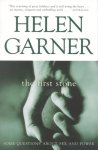
Helen Garner, The first stoneTake The first stone, for example. Subtitled “Some questions about sex and power” it explores a 1992 sexual harassment scandal at a Melbourne University college. The book was highly controversial at the time and Garner copped some ferocious criticism, particularly from feminists, for the stance she took. I was one who disagreed, strongly, with her. But, here is where my point regarding the value of knowing the author’s biography comes in. In a 50-page chapter, Brennan analyses the book in depth, exploring the circumstances of the case, Garner’s writing process, and the role played by the facts of her life in the approach she took. It was enlightening. I came away still not exactly agreeing with her, but understanding Garner’s position more. Brennan describes, among other things, Garner’s uncertainty regarding the young women, and how her own history and vulnerabilities affected her response.

Brennan starts this chapter with the statement that the “truth” surrounding the events “may never be fully known”, and follows this with the “facts” that are known. Of course, I loved this differentiation. Another significant point Brennan makes in the chapter concerns Garner’s positioning of herself in the story. The idea came from friend and publisher Hilary McPhee who, writes Brennan

suggested she insert herself as a character in into the narrative and write a book that charted the effects of each person’s statement on her own point of view. That strategy allowed her to explore the issues with which she was grappling, despite the absence of the complainant’s perspective, yet it late infuriated some commentators.

This approach would have come naturally to her, I’d say, given that all her writing has a strong autobiographical component, as she herself admits. This intrusion of her “self” has become a feature of her non-fiction writing and is part of a style of narrative non-fiction that she helped pioneer and that we now see used by younger Australian writers like Anna Krien and Chloe Hooper.

Brennan’s research into the writing of The first stone is meticulous, and is carefully documented in the end notes. Her subsequent analysis and the conclusions she draws are well-considered and make sense. She applies this technique to every chapter – to her discussions of Garner’s fiction like Monkey grip and Cosmo cosmolino, as well as to her other non-fiction works like Joe Cinque’s consolation and This house of grief. The book ends with last year’s essay collection, Everywhere I look.

“For me, particularly, it’s one book. The book of what I make of the world and my life as I have lived it.” (Garner)

Superficially, Garner’s work is diverse. She has written in almost every form you could imagine, including song lyrics, libretti, and plays as well as novels, short stories, essays and longform non-fiction. But the subject matter is much tighter – it tends to be domestic and relationship-based, but with a particular focus, because it grapples, says Brennan, with the problem of balancing “the desire for personal freedom with ethical responsibility”. Garner’s concerns are ethical and moral. She explores these values in the daily lives of ordinary people, in both her fiction and non-fiction, whether it’s a mother deserting her family (in The children’s Bach) or a father driving his car full of children into a lake (This house of grief), and she doesn’t separate herself from the issues. She shows her own failings, her own ugliness, with a breathtaking vulnerability, and brings, Brennan shows, much distress upon herself. She doesn’t, in other words, write what she writes lightly.

So, what picture does Brennan paint of Garner, the writer? It’s a complex one. It’s of a writer who has strong emotions, a fierce intellect and a commitment to seeking out the “truth”. It’s of a writer who can be hard on others, including those she knows, but who is equally hard on herself. It’s of a writer who isn’t scared to cross boundaries of form and defy expectations in order to tell the best story she can. Brennan’s approach to her topic is analytical, rather than critical. That is, she interrogates Garner’s work and mines her life for the aspects that will help us understand the work, but she doesn’t, herself, critique the work – which is probably to be expected, given the book’s title.

There is so much more that could be said about the book, so many angles from which it could be discussed, but I’ll close here by saying that this is, obviously, a book for those who want to understand Garner’s work more. But, it is also a book which makes clear the significant contribution Garner has made to Australian literature. And, in doing that, it is itself a significant book.

aww2017 badgeBernadette Brennan
A writing life: Helen Garner and her work
Melbourne: Text Publishing, 2017
334pp.
ISBN: 9781925498035

Books given and received for Christmas, in 2017

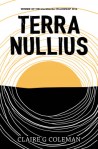
Claire G Coleman, Terra NulliusIn what is becoming a Boxing Day tradition – I have many traditions it seems at the end of the year – I am doing, again, a post on the books I gave and received this Christmas.

  • For Ma Gums, who has worked as a lexicographer, another word-oriented book (giving her such books is becoming another tradition!): Ann Patty’s Living with a dead language: My romance with Latin. My mum loved Latin at school and how it’s helped her with language throughout her now long life. I hope she likes this book.
  • For Daughter Gums, who reads widely but perhaps less so in the classics: A classic Australian, Christina Stead’s Little hotel.
  • For Brother Gums, who reads broadly, including keeping up with new Aussie releases: Robert Drewe’s latest, Whipbird, which was recently reviewed favourably by Lisa (ANZLitLovers).
  • For Sister-in-law Gums, who’s always interested in diverse authors and subjects, another recent Aussie book: Claire Coleman’s Terra nullius.
  • For Gums’ Californian friend, to whom I always like to send something Aussie: Stephanie Buckle’s short story collection, Habits of silence (my review). Not only is it a great read that appeals particularly, I think, to older readers, but it’s also a light one to post!

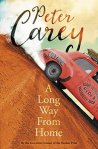
Peter Carey, A long way from hereAs for what I received, a varied but a much appreciated bunch:

  • From Parent Gums: Three books, because, strangely, they know I like to read. What a bonanza: Peter Carey’s A long way from here, Michelle de Kretser’s The life to come, and W. Bruce Cameron’s A dog’s way home.
  • From Son and Daughter Gums, who heard about my reading group schedule: Claire Coleman’s Terra nullius and Richard Flanagan’s First person. (I think I’m set for our next schedule now. I just have to find time to read them now.)
  • From Brother and Sister-in-law Gums, who, I’m pleased to say, usually give me books from their southern state: Rachel Leary’s novel Bridget Crack, which has been getting some good reviews around the blogs, and Tasmanian poet Robyn Mathison’s gorgeous little poetry collection Still bravely singing. I love reading books from our southern state.
  • From my Californian friend who gave me Viet Thanh Nguyen’s wonderful Pulitzer prize-winning The sympathizer last year: Viet Thanh Nguyen’s follow-up book The refugees, which fits beautifully into what seems to be my current reading trend, stories about displacement.
  • From a Jane Austen group member who organised a lucky dip of her duplicates at our end-of year-plus-Jane’s-birthday-celebration. An inspired idea – at least we all thought so (!): Paula Byrne’s Jane Austen: A life in small things. I have been tempted to buy this book several times, so am thrilled to have a copy.
  • From my now Octogenarian volunteer from my working days, with whom I keep in contact for semi-regular lunches: A gift voucher from a bookshop. Woo-hoo!

What about you? Any Christmas book news you care to report

Monday musings on Australian literature: Australian Women Writers Challenge 2017

aww2017 badgeAs has become tradition, I’m devoting my last Monday Musings of the year to the Australian Women Writers Challenge*. But, this time, my last Monday Musings also coincides with Christmas Day, so I wish a happy, peaceful holiday season to all my readers here who celebrate this time of year, however or whatever you celebrate.

Now, on with the show … This year has been an active one at the Challenge with a significantly increased number of reviews, in my area at least. We’ve also, with the help of new Challenge volunteer Theresa Smith (of Theresa Smith writes), published a large number of interviews with authors in our Spotlight series and, through connections made by Challenge founder Elizabeth Lhuede, published several posts on classic Australian women writers. In other words, we are extending the content on the blog to make it a broader resource beyond our round-ups and the reviews database which is, of course, the backbone of the challenge. The database now contains reviews for over 4,400 books across all forms and genres of Australian women’s writing, from all periods. This represents an increase of over 20% on last year’s total. Another good achievement.

Once again the Challenge ran some special events during the year, achieved some milestones, and introduced some new initiatives. These include:

  • Spotlights: Throughout the year we posted a variety of Spotlights – Saturday and Sunday Spotlights comprised author interviews (of which I did two, with Sara Dowse and Dorothy Johnston), Small Press Spotlights in which we featured some of Australia’s small publishing houses), and spotlights on classic women authors, like Ada Cambridge.
  • Facebook Page: Our Facebook Page – Reading Australian Women Writers – which was created last year, continues to attract readers wanting to share their latest Aussie women writers’ reads.
  • Bingo: We ran our second Bingo challenge – two in fact, one general, one classic – but I let it slip. Next year I will try a reminder system, although I’m not keen to overfill my blog with non-review content.
  • New releases: We are playing with how to capture and promote upcoming releases. We haven’t settled on the perfect process yet. Watch the blog for more on this.
  • Diversity: Once again author and researcher Jessica White coordinated a series of guest posts by “diverse” writers. There were posts by writers living with mental illness, by lesbian/queer writers, and others. These sorts of posts help make the AWW blog stand out from the crowd.

My personal round-up for the year

Let’s start with the facts, followed by some commentary. By the end of the year I will have posted 30 reviews for the challenge, the same as last year. Here they are, with links to my reviews:

Catherine McKinnon, StorylandFICTION

Rebekah Clarkson, Barking dogsSHORT STORIES

POETRY and VERSE NOVELS

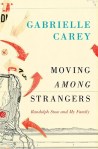
Gabrielle Carey, Moving among strangersNON-FICTION

I’ve noticed an interesting trend over the last three years in my Aussie women’s reading – a noticeable decrease in the proportion of novels:  48% in 2015, 40% in 2016, and just 34% this year. I’m not sure why this is, but I have been aware of reading more non-fiction this year – more by accident than on purpose. The types of novels I read changed from last year too, with very few debut novels this year as against nearly half last year, and two classics as against none last year!

Indigenous writers represented 10% of my total, with two books by Ali Cobby Eckermann and one by Ellen van Neerven. And memoir featured significantly – again – in my non-fiction reading, though they weren’t all your traditional memoir, one being an essay anthology, and two being what I would call “hybrids”. Overall, I’m reasonably satisfied with the diversity of my contribution – though I could always do better.

Anyhow, if you’d like to know more, check out the challenge here. The 2018 sign up form is ready, so do consider joining us. All readers are welcome. I’ll be there again (this being my sign-up post).  The challenge is also on Facebook, Twitter (@auswomenwriters), GoodReads and Google+.

Finally, a big thanks to Theresa, Elizabeth and the rest of the team – including my longtime online bookgroup friend Janine Rizzetti (Resident Judge of Port Phillip), who joined us this year. Once again it has been a positive experience, which is a credit to the willingness and flexibility of those involved. See you in 2018.

* This challenge was instigated by Elizabeth Lhuede in 2012 in response to concerns in Australian literary circles about the lack of recognition for women writers. I am one of the challenge’s volunteers – with responsibility for the Literary and Classics area.

My reading group’s top picks for 2017

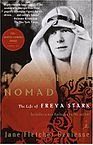
Jane Fletcher Geniesse, Passionate nomad, book coverThis year was my reading group’s 30th year, and for the first time ever we decided to vote on our top picks for the year. Will it become a tradition? Who knows? Anyhow, in the spirit of end-of-year lists, I thought you might be interested to see the result, because you will know some of these books.

First, though, here’s what we read in the order we read them (with links to my reviews). I missed one when I was travelling – unfortunately:

And now, the winners …

Min Jin Lee, PachinkoAll eleven of our currently active members voted. We had to name our top three picks, which resulted in 32 votes being cast (as one member only voted for two books). The top vote-getters are:

  1. Pachinko, by Min Jin Lee (7 votes)
  2. The museum of modern love, by Heather Rose (6 votes)
  3. Black rock white city, by AS Patrić (5 votes)

Highly commended were Nutshell by Ian McEwan (3 votes), and Our souls at night by Kent Haruf (3 votes). In other words, five books received 24 of the 32 votes cast, which is pretty decisive, don’t you think?

Heather Rose, The museum of modern loveBut of course, this is not a scientific survey. Votes were all given equal weight, even where people indicated an order of preference, and not everyone read every book, which means different people voted from different “pools”. If all had read every book Pachinko may have had even more votes (because my memory tells me that every one, or almost everyone, who read it voted for it.)

A few, including yours truly, tried to sneak in some extra “votes” but these were rejected by the returning officer (who happened to be yours truly!) These “extras” were for Stan Grant’s Talking to my country, Kent Haruf’s Our souls at night, Kim Mahood’s Position doubtful and AS Patrić’s Black rock white city.
 
AS Patric, Black rock white cityInterestingly, a few commented that there wasn’t one book in our schedule that they didn’t enjoy. Now, that’s an achievement! Of course, sometimes disagreement can engender the best discussions, but this year’s selection contained such meaty and/or “big” books that there always seemed to be issues to tease out.
Selected comments (accompanying the votes)
  • PACHINKO: Most members who commented on this one liked it for the cultural history it provides about Koreans in Japan, something which few us knew much about. One member added that  “the story was told so very well without pathos but with sympathy for the victims.”
  • THE MUSEUM OF MODERN LOVE: Comments on this included that it was revealing about “Abramovic the artist and the relationship with her audience”, with one member saying  “it was almost perfect. It satisfied on so many levels”.
  • BLACK ROCK WHITE CITY: Two members were uncertain about this to start with, one saying “I wasn’t really expecting to enjoy it but found I was totally absorbed very quickly” and another that “I started with low expectations and his beautiful writing won me over.” In the end, all who voted for it agreed, I’d say, with the member who called it “a fabulous and quirky story related to the migrant experience .”
  • NUTSHELL: The two members who commented on this one wrote “beautiful writing and a very innovative theme, makes me look at foetuses in a different way” and “clever, quirky and a lot of fun.”
  • OUR SOULS AT NIGHT: As for this one, if you’ve read Haruf you won’t be surprised at comments describing it as “a real gem”, as “deceptively simple with big themes and big heart.”

And next year, do I hear you ask?

Viet Thanh Nguyen, The sympathizerWe choose our schedule twice a year, so here are our books for the first half of 2018:
  • Rabih Alameddine’s An unnecessary woman
  • Viet Thanh Nguyen’s The sympathizer (which most of you know I’ve already read)
  • Claire Coleman’s Terra nullius 
  • Helen Garner night: read any from Garner’s oeuvre (an experiment. We’ve done poetry nights where we bring a poem or two to share, but never something like this.)
  • Richard Flanagan’s First person
  • Randolph Stow’s The merry-go-round in the sea (our classic, because we always like to do at least one)

If you are in a reading group – face-to-face or online – I’d love to hear your highlights and/or what you plan to read in 2018.

Reading Bingo 2017

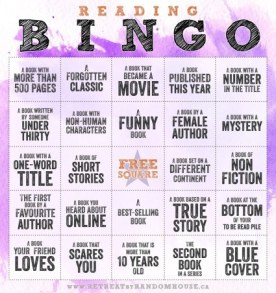
Reading Bingo 2017Are you getting sick of memes and lists? If so, just ignore this post and come back when the silly season is over because it seems that we book bloggers can’t help ourselves at this time of year. Today’s meme is a bingo asking us to name books we’ve read this year that meet categories on a bingo card – and it’s a big one with TWENTY-FIVE categories. I got the card from Lisa (ANZLitLovers).

Like most bloggers I have not read to the bingo card, but have tried, after the event, to squish my reading into the card. There are, therefore, a couple of fudges, which I hope you’ll accept. But if you don’t, what are you going to do? Unsubscribe? I hope not!

Sara Dowse, As the lonely blyA book with more than 500 pages: As it turns out I didn’t read one that was more than 500 pages though I read at least three that were between 450 and 500 pages, so I’m choosing the Australian one of those three, Sara Dowse’s As the lonely fly (my review), about Jewish migration, big dreams and the Jewish state in Israel.

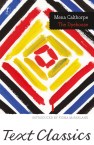
Mena Calthorpe, The dyehouseA forgotten classic: Mena Calthorpe’s The dyehouse (my review), which was (re)published by Text. They thought it was so special they made in their 100th book in their Classics series. If you haven’t read it, consider doing so, particularly if you like social realist novels about the lives of workers.

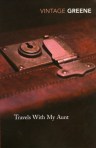
Graham Greene, Travels with my auntA book that became a movie: I have a few of those in my reading this year – and they are mostly classics. The one I’m choosing is Graham Greene’s Travels with my aunt (my review) which, unlike the ones I didn’t choose, I haven’t seen!! I did however read it!

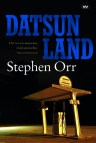
Stephen Orr, DatsunlandA book published this year: I’ve read several new releases this year, mostly review copies. I’m choosing Stephen Orr’s Datsunland (my review) because I do like a collection of short stories, and I’ve read a few good’uns this year. I’ll be reviewing my third Orr book, his newest release, within the next few months.

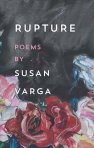
Susan Varga, RuptureA book with a number in the title: This proved strangely difficult this year, but luckily one book I read had numbers in its subtitle, Susan Varga’s moving poetry collection, Rupture: Poems 2012-2015 (my review). I do hope this isn’t a fudge – the numbers are on the title page even if not on the cover!

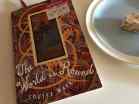
Louise Mack, The world is roundA book written by an author under thirty: Normally this would be hard, but history tells me that Louise Mack was 26 when her book The world is round (my review) was published in 1896. This book was nearly my “forgotten classic” until I needed something here!

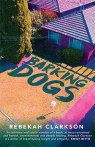
Rebekah Clarkson, Barking dogsA book with non-human characters: I was initially challenged by this one, until I remembered Rebekah Clarkson’s interconnected short story collection Barking dogs (my review) in which Jasper the barking dog recurs a few times, eventually providing the catalyst for a devastating action.

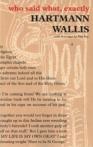
Hartmann Wallis, Who said what exactlyA funny book: I don’t read a lot of funny-haha books, but many of the books I read make me laugh. Take Hartmann Wallis’ Who said what exactly (my review), for example. If my review doesn’t enable you to see the humour, try reading Robin Wallace-Crabbe’s comment.

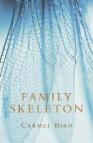
Carmel Bird, Family skeletonA book by a female author: Now this is a hard one – not! I have an embarrassment of riches here, so I’m going to go with one of the doyennes of the Australian literary scene, Carmel Bird and her clever Family skeleton (my review).

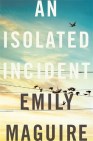
Emily Maguire, An isolated incidentA book with a mystery: Well, let’s choose an actual mystery book here, albeit a literary one in which the mystery is really not the main point. I’m talking about Emily Maguire’s An isolated incident (my review).

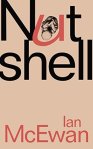
Ian McEwan, NutshellA book with a one-word title: I have a few options here, but I’ll go with the one I used in a recent Six Degrees post, Ian McEwan’s Nutshell (my review). Such an intriguing book with an unusual choice of narrator.

Stephanie Buckle, Habits of silenceA book of short stories: As a short story enthusiast I have a few options here too, so am choosing the last one I reviewed, Stephanie Buckle’s Habits of silence (my review). It’s a (lovely) debut collection, so I’d like to give it this extra shout-out.

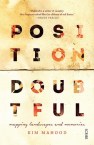
Kim Mahood, Position doubtfulA free square: So many to choose from, but I’ll nominate the book that I waited months to read until my reading group did it, Kim Mahood’s thoughtful memoir, Position doubtful (my review), about being Australian and relating to this land that belonged to someone else first.

Hoa Pham, Lady of the realmA book set on a different continent: I read several books set in different parts of the world, but, quite coincidentally, two of them were set partly or completely in Vietnam. I’m choosing the one set completely there, Hoa Pham’s Lady of the realm (my review).

Stan Grant, Talking to my countryA book of non-fiction: Again, so many to choose from, but Stan Grant’s Talking to my country (my review) works as a sort-of companion to Position doubtful, in that it’s by a descendant of one of those original owners. He firmly but generously talks about what it has meant for his people to have been so summarily displaced by us!

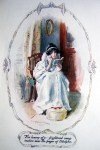
Northerner Abbey illus br Brock

From Ch. 9, illus. by CE Brock)

The first book by a favourite author: Most of you know who my favourite author is (though I have a few really) – Jane Austen. I’m fudging here, because her first book to be published was Sense and sensibility, but the first sold to a publisher (who then didn’t publish it) was Northanger Abbey (my posts). I just so happen to have re-read it this year (200 years after its eventual posthumous publication).

Karenlee Thompson, Flame tipA book you heard about online: Like most readers, I hear about many books online, but one I know I FIRST heard about online is Karenlee Thompson’s book of short fiction, Flame tip (my review), which was inspired by Tasmania’s bushfire of 1967.

Min Jin Lee, PachinkoA best-selling book: Hmmm, I don’t tend to read best-sellers, but I think Min Jin Lee’s Pachinko (my review) is such in the USA, where it was named one of the New York Times Book Review’s 10 Best Books of 2017.

Heather Rose, The museum of modern loveA book based on a true story: My choice here is one of my top reads of the year, Heather Rose’s The Museum of Modern Love (my review). Such a stimulating excursion into ideas about art, love and home.

Claire Battershill, CircusA book at the bottom of my TBR pile: Now which TBR pile do they mean? And what does bottom mean? I have no idea but one of my TBR reads this year was a wonderful collection of short stories given to me by Daughter Gums in 2014, Circus (my review), by Canadian writer Claire Battershill.

Viet Thanh Nguyen, The sympathizerA book your friend loves: This is easy. My dear American friend gave me Viet Thanh Nguyen’s The sympathizer (my review) because she loved it. I did too.

Anos Irani, The scribeA book that scares you: When I think of this category, I don’t think mystery or horror genre, but books with ideas that scare me. I’ve several to choose from, but I’ll go with Anosh Irani’s The parcel (my review) for its devastating evocation of how cruelly people can treat others, and how intolerant people can be of difference.

Jane Fletcher Geniesse, Passionate nomad, book coverA book that is more than ten years old: Again I have a few of these, but some have already appeared in this list, so I’ll go with Jane Fletcher Gienesse’s Passionate nomad: The life of Freya Stark (my review) which was first published in 1999.

The second book in a series: I almost never read series, and certainly haven’t read anything in a series this year so FAIL. I can’t complete the Bingo card!

Ali Cobby Eckermann, Too afraid to cryA book with a blue cover: Woo-hoo, this category enables me to include one of the two books I read this year by Ali Cobby Eckermann, her memoir Too afraid to cry (my review).

So there you have it … a long post. Did you make it to the end? I can’t expect you to complete the bingo card in the comments, but how about choosing one category to highlight a book you’ve read this year that you think deserves a shout-out?

Monday musings on Australian literature: Pulp fiction, 1940s to 1970s

This post was inspired by the Pulp Fiction exhibition* at the Canberra Museum and Art Gallery that ran from August to October this year. The exhibition used materials from two collectors, Graeme Flanagan (d. 2015) and James Doig, who also wrote the accompanying booklet. Doig says that Flanagan “amassed one of the most significant collections of Australian pulp fiction paperbacks”. He also collected original cover art, and in 1994 wrote Australian vintage paperback guide, which was apparently the first detailed book about Australian pulp fiction and is still an authority on the subject.

Most of you probably know what pulp fiction is, but if you don’t, it encompasses cheaply produced “mass market paperbacks and digests” in popular genres such as Westerns, crime, romance, adventure, science fiction and horror. Printed on “pulp” paper, they were not made to last and were poorly regarded by the literati of the time. But, of course, they were part of Australia’s reading culture and are now being recognised for the cultural objects they are. Because of their cheap production and disposability, however, they can be tricky to find – and, says, Doig, even Australia’s legal deposit libraries don’t hold complete collections.

Doig starts by referring to an article in the Tribune titled “I spent a week in a literary sewer” by journalist Rex Chiplin who wrote about the “muck” – “the pornography, sex, sadism, brutality and illiteracy” – being sold weekly on Australian newsstands. He wanted to find out where it all came from – but I wanted to find out who Rex Chiplin was. Well, I found out, via a blog called Ethical Martini, that he was a communist, which is not surprising because, as most Australians would know, the Tribune was the Communist Party of Australia’s newspaper.

Apparently Chiplin was called before Australia’s version of the USA’s McCarthy hearings, the Royal Commission on Espionage (1954-55), but the tidbit I want to share is Ethical Martini’s quoting another communist journalist, David McKnight, on Chiplin. McKnight wrote:

One unusual piece of exposure journalism was the pamphlet, “Facts Behind the Liquor Commission”, printed by the Communist Party of Australia at its underground printery which set out to expose capitalism in the shape of the ‘brewery barons’. Written by a journalist (probably Rex Chiplin) who had a racy turn of phrase (‘Bottled beer was as rare as a bankrupt Vice Squad sergeant’) the pamphlet incidentally exposed corruption in the labour movement…

It’s the “racy turn of phrase” that caught my attention, because it is certainly in evidence in the “sewer article” where he describes, for example, the directors of a magazine publishing company, American-Australasian, as “all North Shore pukka sahibs.” A little further on he describes a magazine called Action Detective Stories as “good wholesome literature for homicidal maniacs and similar unfortunates”. He criticises these “sewer” magazines’ forays into political commentary about the Korean War and Soviet behaviour in southeast Asia – but, I’m getting offtrack, so let me just share what he writes about Consolidated Press:

Consolidated Press, Frank Packer’s organisation … publishes a host of crime, sex and violence comics and the Phantom and Star paper-covered novels. Phantoms and Stars are direct reprints, lurid covers and all, of American gutter novelettes which are churned out by the score in “pulp factories.”

By reprinting they apparently circumvented import restrictions. Doig says that “Phantom Books … reprinted more than 300 of the best American crime novels between 1953 and 1961 and is a highly desirable series.”

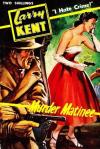
Larry Kent, Murder MatineeAnother company named and shamed by Chiplin was Cleveland, which our mate Doig says is the only pulp publisher still active (in Australia) today – focusing these days on westerns. Cleveland was also known for the Larry Kent I hate crime series which “was named after a 1950s Sydney radio show [preserved at the National Film and Sound Archive] about a hard-boiled New York detective”. The radio series commenced in 1950, and its popularity inspired, says The Thrilling Detective website, Cleveland “to try their hand at some Larry Kent novels”. They were written by American expat Don Haring through “an arrangement” with the radio producer. The first series of these monthly novelettes commenced in April 1954.

The Thrilling Detective explains that:

over 400 Larry Kent novels and novelettes were pumped out under the Larry Kent byline in the next thirty years, and supposedly, as late as the 1990s, the series was still being produced in Scandinavia. The covers usually featured paintings of leggy, full-figured babes and sported such snappy (and often exclamation mark-endowed) titles as Kill Me a Little!, This Way, Sucker!, Cute Heat!, Dig Me a Dame! and Stand Up and Die! Add on the 150 or so radio shows, and our Larry turns out to be one of the hardest working eyes around…

If you, like me, ever give pulp fiction a thought, it is probably for these covers, “lurid” though Chiplin thought they were. As The Thrilling Detective says:

Although the books were decidedly hokey pulp affairs, and by no means great literature, the covers themselves have a gorgeously cheesy flavour, and are now quite collectible. In fact, most of the web sites featuring Kent deal as much with the covers than the contents of the books.

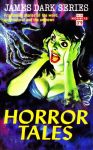
Horror tales, illustrated by Frank Benier

Illus. Frank Benier

Doig says that selling these books, which happened at stalls and newsagents on street corners and railway stations, was a competitive business. So “the cover was all important, the more colourful and garish the better.” He names some of the illustrators who did these covers – Stan Pitt and Walter Stackpoole (for Cleveland), and Col Cameron and cartoonist Frank Benier (for Horwitz). It is these covers as much as anything which now make these books highly sought after – and highly exhibitable!

Have you ever read any pulp fiction – or, even, are you a collector? I’d love to know.

* Images from the exhibition can be seen on Pinterest.