Amy Witting, Afterplay (#Review)

Amy Witting’s first novel wasn’t published until 1977, when she was 59 years old, which is why she appeared in my late bloomers post a few years ago. She went on to publish five more novels after that – two of which I read and enjoyed long before blogging – and she was an accomplished short story writer and poet.

An interesting piece of Witting trivia is that in the 1960s she taught at the same high school in Sydney as Thea Astley, who was a few years younger. Astley encouraged her to submit a short story to the New Yorker, which duly published it. Wikipedia tells us that Australian poet Kenneth Slessor once said “tell that women I’ll publish any word she writes”. And critic Peter Craven argues that her form of realism wasn’t really accepted by the reading public until Helen Garner appeared on the scene.
Amy Witting, Selected stories

“Afterplay” is not in this collection!

All this is to say that although Witting has never had the level of recognition enjoyed by writers like Astley, Jolley and Garner, she was well-regarded in literary circles, and is being brought to our notice again through Text Classics. This year they added three of her books – The visit (her first), A change in the lighting (which my reading group did back in the 1990s), and Selected stories – to their list. Discussing the publication of her stories, they said they could not include them all as they wanted to keep the book to a manageable size. However, as a little tempter, they decided to publish one of her stories, “Afterplay”, online, describing it as “a bite-sized taste of Witting’s short-form genius”. This has given me a wonderful opportunity to include her on my blog – and with a story you can read too. Win-win, as they say!

“Afterplay” provides an excellent introduction to Witting’s writing for a number of reasons. It’s a good example of the realism which Peter Craven sees as her métier; it exemplifies her spare, direct style; and its subject matter reflects her main writing interest, relationship-focused stories in domestic settings. It is also, at less than 1,500 words, a short short-story, and, according to Text, demonstrates “Witting’s masterly economy”.

“Afterplay” focuses on “two young women”, Judith and Geraldine, and their response to Geraldine’s break-up with Ken ten days previously. The problem is that her way of breaking up was to walk out leaving a note on the kitchen table, and he, not expecting this to happen, wants to talk to her. Judith thinks Geraldine should, but Geraldine is resisting all his attempts to contact her, telling Judith that she “can’t stand confrontation. Never could.”

The thing about this story, which is told third person, is the way Witting subtly shifts perspective between the two women, and only gives us Ken’s perspective through Judith reporting a phone conversation as it takes place. There is also a little back story about Geraldine’s previous relationship which seems to have ended with, or just before, the man’s death (by suicide is the implication). The effect of all this is to keep the reader a little uncertain, a little off-balance. We are not given the full picture from any of the perspectives, so our antennae keep pointing in different directions as we try to work out where our sympathies should lie. In the end, I think, my sympathy went mostly to the poor friend caught in the middle!

There’s some cheeky humour here – including little innuendoes about sex as a sport. Ken was “proficient at all sports, never missed a goal”, and of course the title “afterplay” brings to mind “foreplay” (which was not, apparently, Ken’s forte, albeit he’s “a sweet-tempered man”.) However, there is one awkward part where Geraldine tells Judith some things about the break-up that she surely already knows. You could argue, perhaps, that at times like these people do tell and retell their experiences, but it did feel a little clumsy.

Regardless, “Afterplay” is a beautifully crafted little (in size, not in value) story. But, don’t take my word for it. At only 1500 words and available on-line, how about you read it too – and let me know what you think.
aww2017 badgeAmy Witting
“Afterplay”
First published (I think): Quadrant 39 (5), May 1995
Available online at Text Publishing.
Monday musings on Australian literature: ABC RN presenters name their 2017 summer picks

Well, folks, it’s getting to the time of year when people start producing lists, and so, as last year, I’ll be joining the fray, starting this week with books recommended by ABC Radio National’s presenters – the bookworms amongst them, anyhow – for us to read over the coming summer.

However, as last year, not all chose Aussie books, but this post is in my Monday Musings on Australian Literature series, so what to do? Last year I decided to share them all, starting with the Aussie reads, and I’ve decided to do the same this year. After all, the things Aussies read form part of our literary culture don’t they?

Notwithstanding the above, I was disappointed last year when only two (TWO!) of the 18 presenters chose books by Australian authors. (The two books were Stan Grant’s Talking to my country and Helen Garner’s Everywhere I look, both of which I’ve read)I’m consequently thrilled that the number is far greater this year, with SIX (that is, nearly half) of the 14 presenters choosing Australian authors. Here they are:

  • Tony Birch, Common peopleMichael Cathcart (Books and Arts): Tony Birch’s Common people. Birch recently won the Patrick White Award, and his novels Blood and Ghost River were both shortlisted for significant Australian literary awards. Common people, however, is his (latest) collection of short stories. Cathcart says that the stories “take us into the lives of very ordinary people — often people who are doing it tough — and open up the pain, the wit and the twinkle of their worlds. Tony’s wisdom and goodwill are beyond politics. His prose breathes with humanity”. How I love short stories, and this sounds like another great collection.
  • Andrew Ford (Music Show): Ashley Hay’s A hundred small lessons. This is Hay’s third novel, her second The railwayman’s wife having won or been nominated for several literary awards.) Ford says that Hay’s writing “is so simple and precise, at first you fail to notice how powerful it is” and says that “the main character in the book is Brisbane — actually, two Brisbanes, 50 years apart, culturally different in so many ways, yet both sticky, subtropical, and prone to flooding”.
  • Ann Jones (Off Track): Julie Koh’s Portable curiosities. Koh is a critically well-regarded short story writer, and this, her first full collection, has received many accolades including her being named a 2017 Sydney Morning Herald Best Young Australian Novelist (though the “novelist” nomenclature is a bit weird.) Jones makes the collection sound great, when she says “The stories are dark and make fun of hipsters. In fact, in gorgeous and believable flow, Koh unleashes a portmanteau of fables, which take on body image, racism, father-son relationships and cat cafes.”
  • Sarah Kanowski (Books and Arts): Tex Perkins’ (with Stuart Coupe) Tex. Unlike many of the presenters it seems – see my summation below – Kanowski took the “summer read” recommendation seriously in choosing this memoir of Australian rock musician Tex Perkins. She said “In Tex, he is self-deprecating but not apologetic: yes he’s drunk too much, been an idiot, sabotaged his chances of commercial success, but he has also made great music and, above all, had fun. There are nobler aims in life and wiser books, but if you’re sitting on a beach towel with a beer this summer Tex will serve you brilliantly.”
  • Amanda Smith (Life Matters)Sarah Krasnostein’s The trauma cleaner. This is a biography of an amazing – but ordinary – person, Sandra Pankhurst, who was born a boy, “was adopted into an abusive family”, and then married, as a man, before deciding to live as a woman. It just so happens she also works as a trauma cleaner, that is, one who “cleans up crime scenes after the police have finished” and who  “also sorts things out after ‘unattended deaths’.” Smith says that not only is the book a “tribute to a life-force” is “a story told more beautifully than you can possibly imagine.”
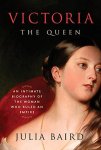
  • Julia Barid, Victoria the queenRobyn Williams (Science Show and Ockham’s Razor): Julia Baird’s Victoria the Queen. Williams noted that in 2017 he’d mostly read books by women, with this biography of Queen Victoria being his best book of the year. He bought it because he loves Julia Baird’s journalism, is “impressed by her range, deep learning and clarity”. He says that this biography “surprises, informs with real scholarship and tells a huge story with a light touch. When I finished I felt as if my brain had grown an extra layer.” I wouldn’t mind an extra layer in my brain, I must say!

Four chose British authors:

  • Joe Gelonesi (Philosopher’s Zone): Stephen Mumford’s Glimpse of light: New meditations on first philosophy (non-fiction)
  • Patricia Karvelas (RN Drive, and the The Party Room podcast): Natalie Haynes’ The children of Jocasta (fiction, Greek myths retold through the women characters)
  • Keri Phillips (Rear Vision): Tim Harford’s Fifty things that made the modern economy (non-fiction)
  • Andrew West (Religion and Ethics Report): David Goodhart’s The road to somewhere: The populist revolt and the future of politics (non-fiction)

And four chose American authors:

  • Kate Evans (Books and Arts): Jennifer Egan’s Manhattan Beach (novel)
  • Antony Funnell (Future Tense): Sarah Sentilles’ Draw your weapons (non-fiction)
  • Natasha Mitchell (Science Friction): Oliver Sacks’ The river of consciousness (non-fiction, collection of essays)
  • Scott Stephens (The Minefield: Noah Feldman’s The three lives of James Madison (non-fiction).

Julie Koh, Portable curiositiesSo, a more even spread than last year’s, but still oh-so-very Western-based. Last year, only ONE presenter chose a non-Western book, with all the rest choosing, as this year, Australian, British and American. This year there’s not even one non-Western book. However, both years, an indigenous author was chosen – just one, but that’s something. And, the choice of Julie Koh provides some nod to diversity too, as she’s the Australian-born daughter of Chinese-Malaysian parents.

The biggest difference this year, besides the significant increase in Aussie picks, is in the fiction-non-fiction ratio. Last year NINE (that is 50%) of the choices were for fiction (all novels), but this year only FIVE (35%) are, and of these, two are novels, two are short story collections, and one a collection of myths. This sort of selection is probably not what most readers might expect when looking for summer reads, but our ABC RN presenters are clearly a serious lot!

What ONE book would you recommend from your 2017 reads for, let’s be inclusive and say holiday, not summer, reading?

A year in first lines, 2017

How is that I, a non-meme-doing blogger, suddenly find myself doing memes, like the Six Degrees one? I can’t explain it exactly, but I think it happens when the meme encourages me to think about my reading or blogging. So, when Lisa (ANZLitLovers) reminded me of this end-of-year meme, that she was reminded of by Jane at Beyond Eden Rock, I decided to give it a go. To play, you “Take the first line of each month’s post over the past year and see what it tells you about your blogging year.” (I think this means the FIRST line of the FIRST post in each month.) Apparently, the idea started with The Indextrious Reader.

Now, I have cheated a little on this meme because I found that of the twelve first posts of the month, six were the Six Degrees of Separation meme, and two were my Monday Musings on Australian Literature series. This happened because I post, on average, thirteen posts a month, so there’s good probability that Six Degrees, which occurs on the first Saturday of the month, or Monday Musings, which occur every Monday, will be the first post of the month. Sharing these posts wouldn’t give a good overview of my blog, so I’ve chosen the first post of the month that is not a Six Degrees or Monday Musings one.

So, my first lines …

January: Reading highlights for 2016: 

And so we finally say goodbye to a year many of us would like to forget, but before we do, I would like to share my 2016 reading highlights.

February: Delicious descriptions: Freya Stark on a studied absence of curiosity: 

Usually I post a Delicious Description after my main post on the book in question, but I’m reversing my practice this time, for no other reason than time.

Graham Greene, Travels with my auntMarch: Graham Greene, Travels with my aunt: 

Every year, my reading group aims to do at least one classic – usually something from the nineteenth century – but this year someone suggested Graham Greene.

April: Janette Turner Hospital’s Orpheus lost: 

Last year I did a mini-review of Elizabeth Jolley’s An innocent gentleman using some scrappy notes from when I read the book long before blogging.

May: William Temple Hornaday, The bird tragedy of Laysan Island: 

William Temple Hornaday (1854-1937), whose article “The bird tragedy of Laysan Island” was a recent Library of America (LOA) Story of the Week offering, is a tricky man to write about.

June 2017: Linda Neill, All is given: 

Linda Neil’s second book, All is given, is subtitled “a memoir in songs”.

Ali Cobby Eckermann, Inside my motherJuly: Ali Cobby Eckermann, Inside my mother: 

Ali Cobby Eckermann, a Yankunytjatjara/Kokatha woman, has featured a few times on this blog, including in my review of her verse novel, Ruby Moonlight, and my Monday Musings post on her winning the valuable Windham-Campbell Prize this year.

August: Hartman Wallis, Who said what, exactly: 

Never mind Hartmann Wallis’ question Who said what, exactly, I want to know who Hartmann Wallis is, exactly!

September: Phil Day, A chink in a daisy-chain: 

You’ve “met” Phil Day, author of A chink in a daisy-chain, here before.

October: Catherine McKinnon, Storyland: 

It is still somewhat controversial for non-indigenous Australian authors to include indigenous characters and concerns in their fiction, as Catherine McKinnon does in Storyland.

Stan Grant, Talking to my countryNovember: Stan Grant, Talking to my country: 

History is, in a way, the main subject of my reading group’s October book, Stan Grant’s Talking to my country.

December: Unbreakable: Conversation with Jelena Dokic: 

If you are a fan of professional tennis you will probably have heard of Jelena Dokic who hit the world stage during the 1999 Wimbledon Championships.

The question is, as Lisa asked herself, do these first lines give you a good sense of my blog and of my reading interests. Well, I’d say yes and no …

Yes, because:

  • my reading each year includes some classics, such as Graham Greene’s Travels with my aunt.
  • my focus is Australian literature and this is clearly evident in the list above.
  • I am aiming to increase my coverage of indigenous Australian literature, and this is evidenced here by Ali Cobby Eckermann in July and Stan Grant in November.
  • each year I read a selection of offerings from the Library of America, and there’s one here, William Temple Hornaday’s “The bird tragedy of Laysan Island”.
  • I enjoy reading left-of-field books, such as those published by Finlay Lloyd, exemplified here by Hartmann Wallis’ Who said what, exactly and Phil Day’s A chink in a daisy-chain.
  • I report on my reading group’s reads, including, here, Graham Greene’s Travels with my aunt and Stan Grant’s Talking to my country.
  • I try to attend literary events and author talks, such as December’s conversation with Jelena Dokic (which in itself is not wonderfully indicative of my literary events, but it’s the one that popped up!)
  • I mix my reading forms and genres, across non-fiction and fiction, so in this list are memoirs, a biography, novels, an essay, and a classic.
  • I try to mix up my opening sentences, and I think there’s some evidence of that here (but you can tell me how successful you think I’ve been!)
  • I run some series on my blog, the main one being Monday Musings of Australian Literature, but another being Delicious Descriptions (which you can see in February).

And no, because:

  • I generally read more women authors than men, but the mix here is pretty even.
  • I do read some translated and diverse writing, but there are none here, besides the indigenous writers.
  • One of the forms I love to read are short stories, and they are not represented at all in this set of posts.

Overall though, my first lines have captured my blog reasonably well … I’d say. 

Betty McLellan, Ann Hannah, my (un)remarkable grandmother: A psychological biography (#BookReview)

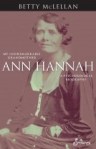
BettyMcLellanAnnHannahBetty McLellan’s Ann Hannah, my (un)remarkable grandmother: A psychological biography disconcerted me at first. I’d never heard of a psychological biography (which, I presume, is the same as psychobiography) so I was intrigued by McLellan’s discussion in the Introduction of her decision to use this approach. I did feel, for a chapter or two that she was drawing a long bow, but I persevered and it was worth the effort.

McLellan commences her Introduction by telling us a little about who Ann Hannah Stickley was and why she decided to write the book. As you’ll have gathered from the title, Ann Hannah was her grandmother. Born in 1881, and emigrating to Australia with four children when she was 40, Ann Hannah was, writes McLellan, “an unremarkable woman who lived an unremarkable life and died an unremarkable death” (albeit at the, I’d say, remarkable age of 97!) However, McLellan came to realise, long after Ann Hannah had died, that this grandmother, who was already living with her family when she was born and who was still there when she left home at nineteen, was worth investigating. She sensed that her grandmother had had a “remarkable resilience” and wanted to know how she’d done it. But how was she to explore this, given her grandmother had been dead for nearly 40 years?

The problem was that she knew relatively little about this quiet, practical, hardworking woman, and that there was no one left who might have known more. So what, she questioned, “would be the best literary device to use to record her story, explore my own reactions to it and analyse it in terms of its relevance for other women?” A straight biography would not work, for the reasons already given. Consequently, she turned to this new-to-me genre of psychological biography which “seeks to discover a subject through analysis of their political pronouncements, decisions, writing, behaviour or art”. Ann Hannah, being a private, “ordinary”, person had none of those, but she did have a number of sayings – didn’t all our grandmothers? It is through these that McLellan decided to analyse Ann Hannah, “with a view to uncovering the deeper meaning behind her words” and in so doing to not only understand her grandmother more, but, among other things, “to present her as a representative of many women born in her time and circumstance”. It’s a big ask …

McLellan, a psychotherapist and feminist activist who has written other books, does this by taking each saying, explaining its meaning and how her grandmother had used it, and then exploring its wider implications or connotations. What exactly she explores is largely driven by the saying. The saying in Chapter 2, for example, is “I’m a Londoner”, and so McLellan explores – through historical and sociopolitical lenses – what life was like in the parts of London where Ann Hannah had lived until her migration to Australia in 1921.  She was uneducated, and part of “the working poor”. But, this was also the time of the women’s suffrage movement, which McLellan describes in some detail. Ann Hannah, she says, had never indicated she was aware of the “political machinations” going on around her, so in one sense we could question McLellan’s inclusion of the history here. However, McLellan concludes the chapter by saying her grandmother had lived her life as a “strong, determined woman”. It could be argued that this was in part made possible by the sociopolitical environments she found herself in.

By contrast, Chapter 4’s saying is “‘e was a wickid man” [ “wickid” being spelt that way to capture Ann Hannah’s pronunciation]. It deals with Ann Hannah’s second husband’s violence and sexual abuse of his step-daughter, as well as of Ann Hannah, herself, and one of their daughters. Here, not surprisingly, McLellan looks more at psychiatry, psychology and the law, than history and politics. She describes the lack of recourse women had during the time Ann Hannah lived, and concludes that her grandmother’s only choice, really, was to “accept her lot” and get on with it, which is exactly what she did. (Not surprisingly, Ann Hannah said it was “the ‘appiest day of my life when ‘e died”!)

These are just two of the six chapters exploring Ann Hannah’s sayings. Two others deal with the experience of migration and of the loss of a child, both of which particularly engaged my interest.

Overall, the approach makes for a somewhat disjointed book, skipping as it does around different fields of human knowledge and experience. Nonetheless, it all works reasonably well because there are unifying threads to which McLellan returns, one being Ann Hannah herself, and the other McLellan’s feminist perspective. I say “reasonably” well because there were times when, due I’m sure to lack of information, Ann Hannah seemed to slip though my fingers. I wanted, I suppose, a more traditional biography! Given that McLellan explained why she couldn’t produce that, it’s unreasonable of me to criticise the book for what it’s not, so I won’t. I’ll just say that it’s what I would have liked!

The real question is, then, does McLellan’s decision to write a psychological biography of her grandmother work? Does it provide, in other words, some useful insights into women’s lived experience, as McLellan intended? I think it does – and does so in a way that not only illuminates the past, but also contributes to our understanding of the present and why things are the way they are today. A different but interesting read.

aww2017 badgeBetty McLellan
Ann Hannah, my (un)remarkable grandmother: A psychological biography
Mission Beach: Spinifex Press, 2017
150pp.
ISBN: 9781925581287

(Review copy courtesy Spinifex Press)

Helen Garner, Why she broke: The woman, her children and the lake (#Review)

Three years ago I reviewed Helen Garner’s This house of grief about Robert Farquharson who drove his car into a dam in Victoria, resulting in the deaths of his three sons. It’s a grim grim story, so you might wonder why I am now writing about her essay “Why she broke: The woman, her children and the lake” about Akon Guode who, in 2015, drove her car into a lake in Victoria resulting in the deaths of three of the four children inside.

There are two reasons, the main one being that this essay was, last week, awarded the Walkley Award (about which I’ve written before) for Feature Writing Long (over 4000 words). I hadn’t read the article when it was published in June this year, and probably wouldn’t have read it now, except for this award. What, I wondered, when I heard the news, made this essay, on a topic so seemingly similar to her recent book, worthy of the Walkley Award? The other reason is that although there are similarities – both parents drove their cars into water resulting in the deaths of children – there is a big difference. One parent was a father, and the other a mother. I wanted to know what, if anything, Garner would make of that in her analysis.

I’ll start two-thirds through the essay, where Garner quotes Guode’s defence counsel using a statement made to the Victorian Law Commission in 2004:

While men kill to control or punish their children or partner, women kill children because they cannot cope with the extreme difficulties that they encounter in trying to care for their children.

Given the current political climate – Harvey Weinstein, Don Bourke, et al – this statement must surely be read as part of that bigger picture concerning women’s powerlessness.

In the first part of the essay, Garner describes Guode’s life. She was a Sudanese refugee to Australia who had been married as a teenager but had then lost her husband in the civil war there. In that culture women cannot remarry, but remain a possession of their husband’s family. Guode’s third child was fathered by a brother-in-law. Eventually, after more trauma in Africa, she was sponsored to come to Australia by another of her late husband’s brothers, Manyang. Her life here became difficult in a different way, with her bearing four children to this already married man. At the time of the incident she had seven children.

Garner details the difficulties of Guode’s life, including the traumatic birth of her seventh child, and her struggle to care for her family while also sending money back to family in Africa. To her, this was an obligation, but at the committal hearing, Garner writes, a local community leader said that “It is not an obligation. I would call it a moral duty”! Not surprisingly Garner’s reaction to this is that “under the circumstances this seems like a very fine distinction”! This sort of word play – “obligation” versus “moral duty” – can make such a mockery of the law (or of its practitioners), can’t it?

There was of course discussion during the hearing of Guode’s mental state, with the judge suggesting that “something dramatic” must have triggered her action. The psychiatrist, however, argued that “it can just be the ebb and flow of human suffering, and the person reaching the threshold at which they can … no longer go on.”

But Garner also proposes a possible “trigger event” that went back 16 months to the last traumatic birth. Postnatal haemorrhaging was so bad she was close to needing a hysterectomy. Guode initially refused treatment. Garner writes that she was

prepared to risk bleeding to death on a hospital gurney rather than consent to the surgical removal of the sole symbol of her worth, the site of her only dignity and power: her womb?

Surely, a woman whose life had lost all meaning apart from her motherhood would kill her children only in a fit of madness.

Garner also discusses the technicalities of infanticide versus murder in Victorian law, and Guode’s counsel’s argument that all three deaths should be viewed through “the prism of infanticide”, which would result in a lesser sentence, even though only one of the children met the age criterion. Her eventual sentence makes clear that he didn’t win his argument.

What makes this essay so good, besides the analysis, is Garner’s writing. Here she is on a jury trial versus a plea hearing (which this was):

If a full-bore jury trial is a symphony, a plea hearing is a string quartet. Its purpose seems to be to clear a space in which the quality of mercy might at least be contemplated. There is something moving in its quiet thoughtfulness, the intensity of its focus, the murmuring voices of judge and counsel, the absence of melodrama or posturing. It’s the law in action, working to fit the dry, clean planes of reason to the jagged edges of human wildness and suffering.

That last sentence! Breathtaking. It reminds me once again what an excellent essayist Garner is, and it’s not just for her style. She has the ability to take us on a journey, leading us logically, and empathically, to consider values and ethics, without ever being didactic.

In this essay, it’s her concluding comments and final question regarding mercy which gets to the nub of it. It concerns the idea of “mother”, which she calls “this great thundering archetype with the power to stop the intellect in its tracks”. Read Garner’s essay, and/or this report in The Age, and see what you think. I don’t envy Justice Lasry’s job, but I know, based on what I’ve read, where my intellect goes.

aww2017 badgeHelen Garner
“Why she broke: The woman, her children and the lake”
The Monthly, June 2017
Available online

Monday musings on Australian literature: Interviews with Aussie writers

Those of you who read my December Six Degrees meme will know that the starting book was Stephen King’s It. Not surprisingly, a couple of bloggers – Kate (booksaremyfavouriteandbest) and Lisa (anzlitlovers) – made their first link Stephen King’s On writing. Lisa then went on to link to an Australian book on writing, Kate Grenville’s The writing book.

Now, I’ve written about Aussie writers on writing before, so I thought that in this post I’d share some books containing interviews with Aussie writers, which I’ll list in order of publication.

Jennifer Ellison’s Rooms of their own (1986)

Ellison’s book, of course, takes its title from Virginia Woolf’s wonderful, pleading book on behalf of women creators. It comprises interviews Ellison conducted with significant writers at the time: Blanche d’Alpuget, Jessica Anderson, Thea Astley, Jean Bedford, Sara Dowse, Beverley Farmer, Helen Garner, Kate Grenville, Elizabeth Jolley, Gabrielle Lord, Olga Masters, and Georgia Savage.

Naturally, the gender issue is explored, but other issues relating to writing, publishing and the role of writers in society are also discussed. I often refer to it.

Candida Baker’s Yacker: Australian writers talk about their work, Vols 1, 2 and 3 (1986, 1989 and 1990)

Candida Baker, Yacker 3The three volumes of Yacker were the result of author-editor-festival director Candida Baker’s multi-year interview project which was inspired by the Paris Review’s “on writing” interviews. By the end of the project she had interviewed 36 Australian writers, representing a wonderful resource – both on writers no longer with us, and on the early or mid-careers of writers still here. Her interviewees were:

  • Yacker: Christina Stead, Peter Carey, Nicholas Hasluck, David Foster, Helen Garner, Blanche D’Alpuget, Dorothy Hewett, Elizabeth Jolley, David Malouf, Thomas Shapcott, Thea Astley and David Williamson.
  • Yacker 2: Jessica Anderson, Marjorie Barnard, Sumner Locke Elliot, Barbara Hanrahan, Jack Hibberd, Thomas Keneally, Ray Lawler, Roger McDonald, Gerald Murnane, Les A. Murray, Janette Turner Hospital and Kath Walker (Oodgeroo Noonuccal).
  • Yacker 3: Randolph Stow, A.D. Hope, Glenda Adams, Kate Grenville, Peter Porter, Robert Drewe, Peter Corris, Louis Nowra, John Tranter, Frank Moorehouse, C.J. Koch and Gwen Harwood.

Kate Grenville and Sue Woolfe’s Making stories: How ten Australian novels were written (1993)

This book takes a slightly different tack to the other books in today’s post in that it comprises authors discussing a particular book, demonstrating their creative process. The authors and books included are: Jessica Anderson’s The commandant (my review), Peter Carey’s Oscar and Lucinda, Helen Garner’s The children’s Bach (my review), Kate Grenville’s Lilian’s story, David Ireland’s A woman of the future, Elizabeth Jolley’s Mr Scobie’s riddle, Thomas Keneally’s The chant of Jimmie Blacksmith, Finola Moorhead’s Remember the tarantella, Patrick White’s Memoirs of many in one, and Sue Woolf’s Painted woman.

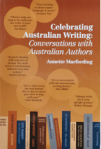
Annette Marfording’s Celebrating Australian Writing: Conversations with Australian Authors (2015)

Regular readers here might remember this book, as I’ve published several posts inspired by the interviews contained within. Marfording was, for several years program director for the Bellingen Writers Festival. She was also a radio presenter for the Bellingen community radio station, 2 bbb fm, on which these interviews were aired from around 2009 to 2014.  Her aim was, she said,

not to produce interviews “like those commonly done, focusing primarily on an author’s latest book. I wanted to inform listeners of their body of work, strengths – as I saw them – writing methods and work associated with their lives as authors, such as judging literary awards, editing short story collections, reviewing other writers’ works.”

Her interviewees are: Robert Dessaix, Cate Kennedy, David Malouf, Gregory Day, Charlotte Wood, Georgia Blain, Kate Howarth, Kristina Olsson, Larissa Behrendt, Debra Adelaide, Alex Miller, Kevin Rabalais, Di Morrissey, Peter Goldsworthy, Robert Drewe, Jon Bauer, Bryce Courtenay, Chris Womersley, Marele Day, Michael Robotham, and Barry Maitland.

In a really lovely, generous gesture, Marfording has directed that all profits from the sale of the book go to the Indigenous Literacy Foundation. A worthy cause and one that I support too.

Charlotte Wood’s The writer’s room: Conversations about writing (2016)

Wood’s book draws on interviews she did for her digital or on-line journal, also called The writer’s room, which ran from 2013 to December 2015. She, like Baker, was inspired by the Paris Review, and wanted to use their model which allowed writers to review and change the edited transcript of their interview. Her reason was that “having been interviewed about my own work so many times and then been embarrassed by my awkward words in print, I wanted ‘my’ writers to know that they would have complete and final control over anything that appeared in the magazine.” In the end, she says, they changed very little, mainly making “small but important clarifications” or expanding something “they’d been oblique about” or making statements or opinions more “definite”.

Because her project started in 2013, her interviewees include very recent writers on the Australian scene. The book contains a selection of the interviews she did: Tegan Bennett Daylight, James Bradley, Lloyd Jones (New Zealand writer), Malcolm Knox, Margo Lanagan, Amanda Lohrey, Joan London, Wayne Macauley, Emily Perkins, Kim Scott, Craig Sherbourne and Christos Tsiolkas.

*****

So, seven books containing interviews with writers, books that I believe provide a valuable contribution to Australia’s literary culture. And yet Marfording, in the Introduction to her self-published book, writes that publishers told her that “books of interviews don’t sell”. Who says, I want to know. I have bought three of the seven books I’ve listed here and wish that I’d bought them all!

What about you? Are you interested in reading interviews with authors? 

Six degrees of separation, FROM It TO …

And so we come to December and the last Six Degrees of Separation for the year. For newbies to blogging – because the rest of you surely know by now – this is a meme currently hosted by Kate (booksaremyfavouriteandbest). For information about how the meme works, please click the link on her blog-name. It’s fascinating to see the wild and wonderful paths different bloggers go, all starting with the same book – which, this month is a book I haven’t read (as is more common than not), Stephen King’s It. As always though, I have read all the books I link to.

Stephen King, ItThe reason I haven’t read It is that I’m not a big fan of horror, either to read or see in movies, and It is, I understand, horror. I have enjoyed some movie adaptations of King’s novellas, like The Shawshank Redemption, Stand by me, and Apt pupil, but the horror stories? Not so much. So, how to link a book that I have not only not read but is a genre I don’t like? Well, I’ve chosen something superficial …

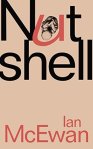
Ian McEwan, NutshellOne-word-titles! How original, eh?! There are many possibilities here, but I’m going to choose one I read this year, Ian McEwan’s Nutshell (my review). It’s one of those books that some people love and some hate, mostly because of its narrator. Some people just don’t like a foetus as a narrator! Can’t understand it myself. After all, fiction is supposed to be about the imagination. Seriously, though, I do understand the uncertainty about such a device, but I thought McEwan pulled it off …

Courtney Collins, The burialAs did too, I felt, Courtney Collins with her dead baby narrator in The burial (my review). If you think a foetus is a little bizarre, a dead baby speaking from the grave may be a step too far for you, but again, I thought Collins carried it off to present a fascinating historical fiction work about an Australian female bushranger. I haven’t heard anything more about Collins since, but I do hope she’s working on another book.

Hannah Kent, Burial Rites bookcover

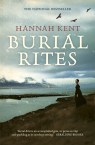
Anyhow, my next link is the obvious one. It’s on the word “burial” in the title and is, of course, Hannah Kent’s Burial rites (my review) Not only does it have “burial” in the title, but it is also a work of historical fiction, albeit one set in remote 19th century Iceland, not early 20th century outback Australia. Kent’s book, however, was not the first book set in Iceland that I’ve read. That honour goes to my next linked book …

Halldor Laxness, Independent peopleHalldór Laxness’ spare, mesmerising Independent people. Unfortunately, I read this book a few years before I started blogging, so I don’t have a review to link to. One day I might fish out my reading notes and try to concoct a review, just to have it recorded on my blog. But, I probably won’t – because I fear the result would be too superficial. I really need to have a book fresh in my mind to write my reviews.

Patrick White, Happy ValleyNow, the thing about Laxness, besides being Icelandic, is that he won the Nobel Prize for Literature, in 1955. He is, apparently, Iceland’s only Nobel Laureate. Aussies may see where this is going – it’s to Patrick White, who is not quite our only Nobel Laureate, but he is our only Nobel Laureate in Literature. The Nobel Prize goes, as you know, to a body of work, so I’m doing the logical thing and have chosen the novel that got him going, his debut novel, Happy Valley (my review).

Louise Mack, The world is roundI’m going to stick with this idea of debut novel for my last link – and choose another older debut novel, Louise Mack’s The world is round (my review). While White’s book was first published in 1939, the year he turned 27, Mack’s book was published in 1896 when she was 26. Mack may not have gone on to have the stellar literary career that White did, but she’s part of our early literary tradition and I don’t want her forgotten!

So, this month we’ve travelled the globe a bit, from America to England to Australia to Iceland and back to Australia! We’ve visited remote cold places and remote hot places. And we’ve met some unusual narrators. I’ve had fun – and I hope you have too.

And now, to end, have you read It? And whether or not you have, what would you link to? 

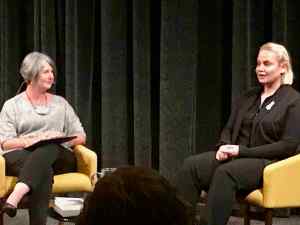
Unbreakable: Conversation with Jelena Dokic

Louise Maher and Jelena Dokic

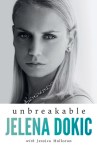
If you are a fan of professional tennis you will probably have heard of Jelena Dokic who hit the world stage during the 1999 Wimbledon Championships. She was just 16 years old, and, as Wikipedia writes, “achieved one of the biggest upsets in tennis history, beating Martina Hingis 6-2, 6-0. This remains the only time the women’s world No. 1 has ever lost to a qualifier at Wimbledon.” If you were an Australian tennis fan this was very exciting – or should have been. Unfortunately for Croatian-born Dokic, her tennis trajectory was one dogged by controversy, much of it caused by her abusive, controlling father. Her story, which she has documented in her book, Unbreakable, co-written with Jessica Halloran, is a tough one.

An author talk with a sportsperson about a co-written memoir would not necessarily be high priority for me, but if there’s one sport I love, it’s tennis, and Dokic’s story has implications that extend beyond tennis. So, with no competing events on that night, Mr Gums and I decided to go. It was in the form of a conversation between Dokic and local ABC presenter Louise Maher.

Jelena Dokic, Unbreakable

The conversation started with some introductory information. This included that Dokic had reached 4th in the world by the age of 19 years old, and that, due to the Yugoslav wars, she and her family had left Croatia for Serbia when she was 8 years old, and then emigrated to Australia in 1994 when she was 11. By 11 years of age, then, she’d already experienced far more trauma than most her age had experienced. When you add to this the fact that her father – who saw tennis as the opportunity for a good life – started abusing her from the minute he introduced her to tennis when she was 6 years old, you get the picture of a sad and lonely young person. It’s no wonder that the Australian tennis community – fans and players – found it hard to warm to her. No wonder, I say, but that’s no excuse. The failure of duty of care for this young person is clear – and her book has, apparently, got the international tennis world talking.

Now, I’m not going to give a blow-by-blow summary of the conversation, partly because it covered a lot of ground that is covered in the book, as well as in the various stories about her life that you can read on the Internet. Instead, I want to focus on the lessons and messages from the book (well, from what she told us about the book, as I haven’t read it.)

She had a few reasons for writing the book. One was to help others: she hopes by sharing her story, she will increase awareness of abusive parent-child relationships, particularly in sport, and thus help ensure it doesn’t happen to others.

Another reason is a more distressing one, in a way, and that is to enable Australians get to know her better – because the truth is that, due to her father’s abusive control of her, spectators never really got to know her, and as a result, they sometimes gave her a hard time. Some of this was racially or ethnically based – indeed she was told “to go back where you came from” – by several within and without the tennis world. The worst time for her, though, was when her father suddenly withdrew her from Australia, when she was 17 years old, to play for Yugoslavia. Her first major tournament after this was, unfortunately, the Australian Open – and the crowds jeered her. That’s hard enough for any-one, but for a 17-year-old girl who had no say in the matter, who was being abused by her father, it increased her sense of loneliness, of isolation, of having no support.

This issue of having no support is something she repeated several times in the conversation. When Louise Maher pressed her about her mother’s role, Dokic answered that her mother didn’t intervene. She wanted the family to stay together, and trusted her husband knew what he was doing!

Dokic provided various examples of her father’s abusive behaviour towards her, and of her desperation for a little praise that apparently never came (even after significant wins). She finally managed to “escape” home when she was 19-years-old – but life was tough, as she left with nothing, no money, no credit card. This is when, she said, she particularly needed support, but there was none.

I won’t continue, but there are some too-familiar lessons here, particularly the one that I’ll call the “turning a blind-eye syndrome”! There were people, Dokic said, who knew things weren’t right, but they were reluctant to get involved. And the media focussed on her father, enjoying the sensationalism of reporting on his behaviour – “Media thought he was funny, but he wasn’t”, she said. The didn’t pay any attention to what was happening to Dokic, or to the impact of their reporting on her. (I wished, that night, that I’d thought of my question about what she’d have liked the Media to do, before, not after, question-time finished!)

Dokic loved playing tennis, she said, but her father ruined her career. Tennis aficionados will, I’m sure, agree with her. She did look like achieving a come-back in her mid-to-late twenties but injury, illness, and surely the impact of all she’d suffered, meant there wasn’t the fairy-tale ending. Today she does sports commentating, motivational speaking and coaching.

There was a lot lot more – but if you’re interested, read the book!

Meanwhile, there are lessons to be learnt by the media, by spectators, and by tennis organisations about duty of care, particularly when reporting on, watching, or managing young players. What happened to Dokic could not have been completely avoided – its having started at home when she was a beginning 6-year old player – but it should not have gone on for as long as it did if people who knew, or even suspected, things were amiss, did something about it. I do hope this book has the effect that Dokic would like.

(Oh, and sitting next to me at this event was one of the ACT Litbloggers, the lovely Angharad of Tinted Edges. I look forward to seeing her post on it.)


Caroline Moorehead, Dancing to the precipice (#BookReview)

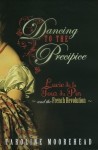
Unusually, my reading group read two biographies about non-Austrian women this year, Jane Fletcher Geniesse’s book on Freya Stark (my review) in January and now, this month, Caroline Moorehead’s book Dancing to the precipice: Lucie de la Tour du Pin and the French Revolution on the French aristocrat Henriette-Lucy, Marquise de La Tour-du-Pin-Gouvernet. Interestingly, Moorehead has also written a biography of Freya Stark. Moreover, while Caroline Moorehead is an English writer, it turns out that her father was the Australian war correspondent and historian Alan Moorehead. How tangled is all this!

But now the book itself. Dancing to the precipice chronicles the life of French-born aristocrat Lucie, from her birth in 1770 to her death in 1853, a period which, you’ll realise, covers some of Europe’s and, in particular, France’s most tumultuous times. Lucie de la Tour du Pin, as Moorehead calls her, saw most of it up close and personal, but somehow managed to survive. The evocative title conveys a sense of how tenuous that survival could be. It comes from Lucie’s own words written just before the storming of the Bastille. She wrote:

Amid all these pleasures we were laughing and dancing our way to the precipice.

Lucie, Moorehead tells us, went on to say that while this blindness was pardonable among the young, it was “inexplicable in men of the world, in Ministers and above all, in the King”. She wasn’t wrong – and the rest of the book tells us how often throughout their lives they nearly went over the precipice.

Dancing to the precipice is a thorough work, thorough in its description of Lucie’s life, and thorough in the research carried out by Moorehead. The biography is footnoted (though not intrusively) and contains an extensive list of sources at the end. It is also well-indexed. All of these are important – to me, anyhow! The reason the book is able to be so thorough – without Moorehead ever needing to resort to gap-filling – is because her life is so well documented, by herself primarily.

Lucie, in fact, has been described as the Pepys of her generation because of the memoir she started writing when she was 49. Titled Journal d’une femme de 50 ans, it was published posthumously and covers her life through the Ancien Régime, the French Revolution, to the time of Napoleon, until March 1815 when he returned from exile on Elba. In her Afterword, Moorehead explains that in addition to this memoir, which apparently has never been out of print, she had access to an extensive collection of letters written by Lucie to a god-daughter and many others, and the papers and correspondence of her husband. A wealth of resources that I suspect many biographers would die for.

Except, it’s perhaps this wealth that has caused my one little criticism of what is, really, an excellent biography. My criticism, as you’ve probably guessed, concerns the amount of detail in the book. There were times when I wondered whether I really needed to know as much as she gave, for example, about the wedding of a half-sister or the love-life of her friend. In terms of social history, perhaps yes, but there were times I wanted a tighter focus, and to not be inundated with quite so much information about so many people. That said, Dancing to the precipice is a fascinating story about an astonishing period of history and an engaging and resilient woman.

There were many aspects of the book I enjoyed, starting with refreshing my old high school and university history studies in the French Revolution. As Moorehead revealed each new phase in that tortuous process by which France moved from the ancien regime to the final republic, I remembered. I loved the description of Lucie and her husband’s time as émigrés in Albany, NY, in America, and the resourceful way they fit into the life there, despite their aristocratic training. I also loved the descriptions of fashion and food in Paris, and of the salons, and the role played by women in encouraging intellectual discussion and debate. Every time the émigrés felt it was safe to return to Paris, the salons started up again (until, eventually, they didnt!) Moorehead draws a stark comparison between the engagement of women in public debate in France versus that of their English counterparts:

Englishwomen remained, to the surprise and annoyance of their French guests, firmly in their segregated and inferior places, expected to withdraw after dinner to allow the men to talk literature and politics. In England, a visitor smugly remarked, women were ‘the momentary toy of passion’, while in France they were companions ‘in the hours of reason and conversation’. As Jane Austen put it, ‘Imbecility in females is a great enhancement of their personal charms’, something that Lucie, brought up to talk intelligently, would find extraordinary. (Loc 4713)

What most retained my interest in the book, though, was Lucie herself. Always the aristocrat but also believing in the need for change, her resilience and resourcefulness in the face of blow after blow was inspiring. Besides the escapes from France and the returns, only to have to escape again, there was the loss of her children. Only one from her ten pregnancies outlived her, something Moorehead argues was extreme, even accounting for the times. Lucie was also unusual for a more positive feat, that of having a successful, loving marriage for 50 years. She and Frédéric were, it appears, true partners.

So, there was more to enjoy about the biography than to criticise, and I’m very glad I read it. I’ll conclude with a quote from the book describing Frédéric’s last days, and his statements about the importance of studying history:

He now spent much of his time in his room, reading and writing to [grandson] Hadelin, long letters mulling over his own life and urging the young man to study, to think on serious matters, to develop a taste for reflection. He should turn, he wrote, towards ‘the vast questions of humanity: there you will find true riches’. […]  It was in history, he told Hadelin, that he should seek to find ways of understanding the world, and to learn how to make his mark on it; for it was to history that ‘one must look to discover motives and judgements, the source of ideas, the proof of theories too often imaginary and vague’. Reflection, he added, was ‘the intellectual crutch on which the traveller must lean on his road to knowledge’.

It’s astonishing that this couple who, Moorehead writes, stood out “for the reckless ease with which they challenged political decisions they considered to be lacking in morality or common sense”, regardless of who was in power, survived into their old ages. It says, I suspect, something about both the respect with which they were held and their ability to judge when it was time to skedaddle. A most interesting read.

Caroline Moorehead
Dancing to the precipice: Lucie de la Tour du Pin and the French Revolution
London: Vintage, 2010
ISBN: 9781409088929 (ePub)

Monday musings on Australian literature: Teaching indigenous texts

This post was inspired by an email I received from Reading Australia announcing a partnership with the Broome-based indigenous publisher Magabala Books for a project that was

inspired by the many teachers who reached out to Reading Australia to ask for more resources on works by Indigenous creators, and particularly units that showed non-Indigenous teachers how to teach Indigenous texts.

Then, quite coincidentally, I read on my Twitter feed this morning about a one-day seminar that had been run last week by AustLit’s BlackWords (about which I’ve written before) called Teaching with BlackWords Symposium – so I decided to broaden this post a little. As someone who is keen to promote and review indigenous writing but is always a bit anxious about it, I’m thrilled to see programs like these offering to help people who feel the same and who have formal responsibilities for teaching and sharing.

Reading Australia and Magabala Books

When I clicked on the link in my email announcing the Reading Australia-Magabala Books partnership, I discovered that this was the second such project, supported because of the success of the first. Both projects are funded by the Copyright Agency’s Cultural Fund.

The first project, implemented in 2017, involved Magabala Books creating resources for 15 books for primary school teachers to use in classrooms. You can access resources for 11 of the nominated 15 books on the Magabala site. I’m assuming that the rest is still to come.

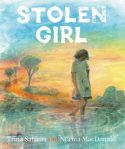
Saffioti, Stolen girlSo, for example, the resource for Stolen Girl (which was written by Trina Saffioti and illustrated by Norma MacDonald) starts with a section titled “connecting to prior knowledge” and points teachers to additional resources like the Bringing them home report. The resource says the book is suitable for around Year 4 (ie around 9-10 year olds). It starts by encouraging children to think about the meaning of “home” and the difference between “house” and “home”. It asks teachers to carry out an Acknowledgement of Country, to discuss its meaning and to talk about the name of the country in which the school is located. It also refers them to use stories from a site called Australians Together. These are just a few of a whole raft of activities helping teachers explore the ideas and history behind this book.

Ali Cobby Eckermann, Ruby MoonlightThe 2018 partnership turns to secondary school teaching. It identifies 8 books (listed in the order used on the site) for which resources will be written:

  1. Becoming Kirrali Lewis by Jane Harrison
  2. Dark Emu by Bruce Pascoe (my review)
  3. Grace Beside Me by Sue McPherson
  4. Jandamarra and the Bunuba Resistance by Banjo Woorunmurra and Howard Pederson
  5. Ruby Moonlight by Ali Cobby Eckermann (my review)
  6. Songs That Sound Like Blood by Jared Thomas
  7. Ubby’s Underdogs: Heroes Beginnings by Brenton E. McKenna
  8. Us Mob Walawurru by David Spillman and Lisa Wilyuka

I’ve only heard of a few of these books, but from what I do know it looks like a good variety.

I wonder how well promoted this program is, and how much it is being used in schools?

Teaching with BlackWords Symposium

Moving up the educational tree, the BlackWords Symposium was geared to secondary and tertiary teachers. The symposium was subtitled Best Practice for Teaching with Indigenous Stories, and promoted as “an important professional development event for teachers.”

The promotion continued:

Have you ever felt concerned, awkward about, or ill-prepared to teach Indigenous authored texts and issues into your classroom?  Would you like advice on how to respectfully use Aboriginal and/or Torres Strait Islander stories and history in your teaching? Do you think your teaching could benefit from a deeper understanding of the concerns and issues that First Nations writers address in their work?

The symposium was apparently sold out. How wonderful is that?

The  speakers were some of our big movers and shakers in promoting indigenous literature, Dr Anita Heiss, Professor Larissa Behrendt, Dr Sandra R. Phillips, and Samuel Wagan Watson. Also, someone I don’t know, Lindsay Williams, described as the “English Teacher Guru”, led a workshop on “using AustLit’s BlackWords resources in the classroom”. The day was chaired by Anita Hess and Kerry Kilner (of AustLit). AWW team member and author Jessica White, whose novel Entitlement I’ve reviewed, tweeted that it was “an amazing day”. Lucky her.

Things are happening, consciousnesses are being raised – but we are a long way, yet, from resting on our laurels.