Craig Silvey, Jasper Jones (Review)

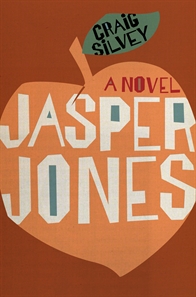
Jasper Jones cover (Courtesy Allen & Unwin)

Jasper Jones cover (Courtesy Allen & Unwin)

What is is about coming-of-age novels? Why do we like to read them long after we’ve (hopefully) come of age ourselves? Is it because we like to compare our own experience with that of others? Whatever the reason, it is clear that we do like to read them because they sure keep being written and published. In my few months of blogging I have already written about two, and have now read another, Craig Silvey’s Jasper Jones.

Like many, though not all, such novels, Jasper Jones has a first person narrator. It is set in a small country town in Western Australia in the late 1960s, and the protagonist, Charlie, is the nearly 14-year-old son of a high school literature teacher. He is a reader and therefore, almost by definition in the world of teenage boys, not “cool”. The book opens with the town’s bad-boy, Jasper Jones, knocking on his window in the middle of the night and, to Charlie’s surprise and delight, asking him for his help. The plot revolves around the shocking help that Jasper wants, how Charlie responds and the impact on him, his friends and family.

It is  a pretty dark and gritty story, and Silvey, mostly, controls it well, though there are times when he pushes the melodrama button a little too heavily. Silvey teases us at the beginning with the notion that the book will be a re-setting of Harper Lee’s To kill a mockingbird. There’s a death, an indigenous person likely to be blamed for it, a much maligned apparently “mad” person,  an apparently thoughtful and wise father AND Charlie’s own regular reference to the book and to how Atticus Finch might think in particular situations. However, fortunately I think, Silvey is a little more sophisticated a writer than that and Harper Lee’s book functions more as a frame for the story and the ideas being explored than as a direct model for the plot.

One of the things I like in the novel is the friendship between Charlie and his Vietnamese refugee school-mate, Jeffrey Lu. I’m not a teenage boy but I have known some in my time! The dialogue between the two boys rings pretty true – their puns, their ribbing of each other, their jokey arguments. True too is their uneven burgeoning interest in the opposite sex – Charlie is attracted to classmate Eliza Wishart  and to enjoying some “sassytime” with her, while Jeffrey’s focus is on making the town cricket team.

The novel is neatly plotted – and while some of it is predictable it is not all so. The fact that Charlie fears insects seems to be resolved when we discover that his love-interest Eliza has a similar fear – but it reappears again, cleverly, in the denouement. The story is well-paced, and it deals with a range of side issues, such as racism (against the Vietnamese refugee family, and the “half-caste” Jasper Jones), on top of the usual coming-of-age ones, such as loss of innocence (in several meanings of the word). Many of the characters could be seen as stereotyped – the “bastard” cricket coach who aligns himself with the “boorish” bully boys, and the cold-hearted status-seeking shire president, to name two – but most of them work despite this. Charlie’s mother though stretches the imagination a little too much: she has married down, she has been forced to live in a country town too small for her, and she has lost a child. This does seem a bit of overkill and the panning out of her part of the story feels a bit like one too many layers in the book.

One of the concepts that Charlie explores is that of “timing and chance”. He learns that despite your best laid plans, time and chance sometimes take over and there’s not much you can do about it. Another issue that runs through the book is that of reading, words and language. Early on Jasper Jones tells Charlie he trusts him because:

But I hope you might see things from my end. That’s what you do, right?  When you’re reading. You’re seeing what it’s like for other people.

With this coming near the beginning of the book, it’s not surprising that Charlie’s ability to empathise, to see things from other points of view, is pushed to the limits as the story progresses. Charlie, whose ambition is to be a writer, also learns about the limits of words, about when they are useful and when they are not, and about finding the right ones to use when they are.

There are many thematic and stylistic things that can be talked about in this book, making it a good one for discussion but, in the end, it is a fairly traditional coming-of-age story in its style, tone and structure. That said, if you like such stories, as I do, there’s a good chance you’ll find this a compelling and entertaining even if not a particularly challenging read. And is there anything wrong with that?

Craig Silvey
Jasper Jones
Sydney: Allen & Unwin, 2009
368pp.
ISBN: 9781741757743
Kendall’s favourite son

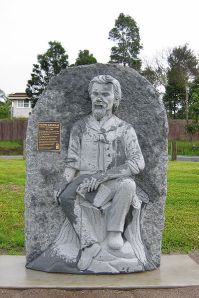
Statue of Henry Kendall, on an inclement day in Kendall, NSW

Statue of Henry Kendall, on an inclement day in Kendall, NSW

…is the Australian poet, Henry Kendall. Except, he’s not REALLY a son – he was not born there,  and he only lived there for 6 years, from 1875 to 1881, when he was New South Wales’ first Forest Inspector. But, you know the story, when you are on a good thing…! And, anyhow, as a lover of Australian literature, I’m not going to argue against naming a town after one of our favourite poets. Anything that keeps our writers front and centre is fine by me.

Henry Kendall’s most famous poem is “Bell-birds”. It’s not quite as famous as Dorothea Mackellar’s “My country” and Banjo Paterson’s “Waltzing Matilda” but it is definitely up there. It is, for example, included in last year’s anthology, 100 Australian poems you need to know. It was written in 1869, two years before he went to Camden Haven (ie, Kendall as it was then known) and it reflects his love of nature – the sort of temperate forest landscape he would have found around Kendall. You can imagine the bell-birds in this scene can’t you? The first verse goes like this:

Driving towards Kendall

Driving towards Kendall

By channels of coolness the echoes are calling,
And down the dim gorges I hear the creek falling:
It lives in the mountain where moss and the sedges
Touch with their beauty the banks and the ledges.
Through breaks of the cedar and sycamore bowers
Struggles the light that is love to the flowers;
And, softer than slumber, and sweeter than singing,
The notes of the bell-birds are running and ringing.

And I will close on this little Henry Kendall taster … posting from an iffy Internet Cafe in sunny Port Macquarie (about 30mins drive from the little village of Kendall).

Queensland Premier’s Literary Awards, 2009

Queenland has done itself proud with this year’s award winners: Richard Flanagan’s Wanting, Chloe Hooper’s The tall man, Nam Le’s The boat and Adam Elliot’s film script for Mary and Max all won their sections. All great works. Perhaps I should try to read the winners of the other sections. I like how these judges think!

Thanks to Lisa at ANZLitlovers for drawing my attention to the announcement. As she wrote, a full listing of the awards can be found at Matilda.

António Lobo Antunes, The natural order of things

António Lobo Antunes, 1998 (Photo: Gonçalo Figueiredo Augusto, from Wikipedia, under Creative Commons Licence, CC-BY-3.0)

António Lobo Antunes, 1998 (Photo: Gonçalo Figueiredo Augusto, from Wikipedia, under Creative Commons Licence, CC-BY-3.0)

Virtuosic? Tour de force? These are such clichéd terms to use in a review – and yet, I can find no other words to better describe Portuguese writer António Lobo Antunes’ 1992 novel, The natural order of things. This is one of those beautifully written, but rather challenging, books that you know you really should read again to get all those nuances, relationships, and connections that you sense but can’t quite fully grasp. If that puts you off reading the book, so be it, but in doing so you’ll miss something quite special.

As you might expect the title is ironic – there is very little natural order here. The novel does not follow the “natural (aka chronological) order” either of fiction or of life. The characters – including a middle-aged man living with a schoolgirl, a miner who “flies” underground, a girl/woman who spends her life in an attic, an ex-secret policeman who teaches hypnotism by correspondence – do not fit the “natural order” either.

The imagery is rich, evocative and effective in building up a picture (mostly of disorder and decay) and a feeling (mostly of melancholy, if not despair). The rhythm – produced by repetition, and by run-on paragraphs that don’t begin with new sentences – compels you on. The characters are convincingly drawn despite their often mad-sounding confusions. The mixing of the surreal with the real works – as does the weaving of two scenes from different points in time in the same sentence, not to mention the telling of a story by two voices in the same sentence. Somehow he makes it work. Here is an example:

…and eleven months later I met Mr Valadas at a restaurant and liked his double chin, he wasn’t as handsome as the skin doctor who hated Verdi, but I felt sorry for him, always by himself, eating lunch all alone,

and my sister Teresa, who kept looking at you and shaking as if she’d been hit by the world’s worst tragedy, “When is the wedding Fernando?” [p. 186]

Two voices alternating in one long run-on sentence – and for some reason, you go with the flow and know who’s speaking when. But that is the thing to do with this book – go with the flow.

So, what is it about? In superficial terms it’s about, as the blurb on my back cover says, “two families and the secrets that bind them”. But really, there’s not a strong plot, though several stories are told. The novel comprises 5 books, each of which is broken into chapters told from two alternating points of view, resulting in 10 voices. The stories are set between 1950 and around 1990 and deal, in their various ways, with post-1974 Carnation Revolution Portugal and the resultant disintegration of Portuguese society (not only in Portugal but in its African and Timorese colonies). This said, the over-riding sense of the book is one of personal stories, of past, present and the way memory works, and not of politics:

Relax, don’t lose your temper, I swear I’m doing the best I can, but that’s how memory is, it has its own laws, its own rhythm, its own whims, … (p. 23)

In a bit of self-consciousness that brings us back to earth, the second last voice in the book, the dying Maria Antonia, says:

I amused myself by imagining that the redheaded girl was the sister of my neighbours at the Calçada do Tojal, I moved her to the house of the Vacuum Oil employee and the imprisoned army officer … my nephew announced with a smile , “You’re going to live forever, Aunt Antonia”, and I nodded so as not to upset him, I stuck a Tyrolean hat on his head and place him in Hyacinth Park of Alcântra, married to a diabetic girl from Mozambique or … [p.263]

because we who are from here but are not from here, who are from a here that no longer exists, have filled up these buildings with the silt of mementos and albums and letters and faded pictures from the past, and our present is occupied by these ruins of memory, not only the memory of those who preceded us, but the memory of ourselves, because we also forget, because names and images and faces get lost in a fog that makes everything equally blurry, … [p. 274] … with me will die the characters of this book that will be called a novel, which I’ve written in my head, fraught with a fear I won’t talk about, and which one of these years someone, in accord with the natural order of things, will repeat for me in the same way that Benefica will be repeated in these random streets and buildings, and I, without wrinkles or gray hair, will water my garden with the hose in the late afternoon, and the palm tree at the post office will grow again, … [p.277-8] … even if we’re not very large trees, and even if they knock us down, we’ll remain in photos, in scrapbooks, in mirrors, in the objects that prolong and remember us, … [p. 278]

And so here is made clear what should already be clear through the way the book is written and structured – though the repetition of phrases, the recurrence of bird and tree images, and the intertwining of stories and voices – and that is that the present and past intermingle and repeat each other, that the real and the unreal both have a place, that nothing really ends or begins, and that, perhaps, no matter how bad things are there is hope. What also seems to be made clear is that this has all been the fabrication of Maria Antonia – or has it? After all it is not she but the redheaded girl (Julieta) who has the last say. Read it and decide for yourself.

(Translated by Richard Zenith)

A.B. (Banjo, to most of us) Paterson

Within the next few weeks I will be reviewing the Australian Classic Library’s re-release of Paterson’s The man from Snowy River and other verses, so this post is just a teaser. It was inspired by a column in The ABC Weekly (of 22 February 1941). Paterson died on 5 February 1941 – and less than three weeks later Australian novelist and critic, Vance Palmer, wrote a short item on Paterson’s impact on him:

I very well remember the excitement that filled me when, as a boy, I came across his new book, “The Man From Snowy River”, and I know that others around me shared the excitement. Here was the life we had known, suddenly given meaning, significance, a fresh interest. … It was as if a word had been uttered that was to awaken a dumb country, giving it a language of its own, and spreading a sense of fellowship between one man and another.

They were different times then – The man from Snowy River was first published in 1890, when Vance Palmer was 5 years old. We now have a language of our own, and we are a far more urbanised society than the one Paterson wrote about, and yet, I too have a soft spot for Paterson. Like Palmer, my love for Paterson also started when I was a child – when my father would read Paterson’s ballads to us. And in fact, I shared this Paterson-love only recently in an exchange with American blogger, Waltzing Australia, after she quoted “The Man From Snowy River” poem in full on her blog. We traded some favourite poems and lines, but I have to give her the award for the best response when she quoted these lines from his poem, “An Answer to Various Bards”, in which he responds to poets such as Henry Lawson with “their dreadful, dismal stories”:

If it ain’t all “golden sunshine” where the “wattle branches wave.”
Well, it ain’t all damp and dismal, and it ain’t all “lonely grave.”
And, of course, there’s no denying that the bushman’s life is rough,
But a man can easy stand it if he’s built of sterling stuff…

Yes, I can take a lot of Banjo – and so I greatly look forward to reading the recent re-release with its new introductory comments. Watch this spot!

Maile Meloy, Liliana

[WARNING: SPOILERS IF YOU CARE]

Fun but flimsy was my first reaction on reading the short story Liliana by American writer Maile Meloy. But, after reading it a couple of days ago, I found that it kept popping back into my head. What seemed at first to be a funny little story – about a grandmother who returns from the dead – turned out to have a few things to think about.

It is, I guess, both an inheritance and a second-chance story but with a difference. It is told first person by the thirty-something grandson, recently laid-off work and so functioning as house-father. Inheriting a little of Liliana’s millions would not be unwelcome (to him, anyhow). However, Liliana, the flamboyant independent one has left her money to the RSPCA – that is to animal welfare! When Liliana turns up on our narrator’s doorstep alive and well – at the beginning of the story – our narrator clearly thinks he’s still in with a chance.

In the next few pages – it’s a tight little story – we learn about the complexities of family, about need/neediness and about, really, the failure of imagination. We learn that if you don’t make it on the first chance, you are unlikely to make it on the second – particularly if neither situation is based on sincerity…and our narrator is not exactly dripping with that particular virtue:

…I thought about Jesus and Elvis. People had wanted them back, badly, and still do. But who would have willed Liliana back…

and

My wife, whose family is Jewish, says that I tricked her into falling in love with me by withholding my grandmother’s Nazi-movie past until it was too late, which is entirely true – I’m not an idiot.

Get the picture? This is a man who thinks he might get a job simply by using “new fonts with which to express my accomplishments”.

And so, our narrator, who had lived a somewhat Bohemian life as a child but had yearned for and created a “buttered saltines in front of TV” sort of life, is not the sort of person to engage his grandmother. “Well, you aren’t very much like your father, thankfully … But you aren’t very much like me either”. The story therefore ends much as it begins – no grandmother, no inheritance and no job. He knows he failed, but does he know why? Meloy doesn’t really answer this – and perhaps that’s part of her skill. She drops some choice words, and the rest is up to us.

(PS As well as being published online, “Liliana” appears in Meloy’s latest collection, Both ways is the only way I want it.)

Kath Walker aka Oodgeroo Noonuccal

I fell in love with Kath Walker, as she was known then, in my teens and bought her book of poems, My people. I loved her passion for her people and the intensity but accessibility of her poems. Every now and then I look at them again. Today, however, my mum gave me a dear little illustrated book produced by the National Library of Australia called Little book of dogs. It contains a small selection of Australian poems on, well, dogs. One of them was also in My people, and is called “Freedom”. It’s a powerful little poem about man’s (and the implication is white man’s) desire to tame “all things wild and tameless”.

Brumbies on the run in Central Australia

Brumbies on the run in Central Australia

For copyright reasons I don’t believe I can quote the whole poem – it only has four verses – but here is the first verse:

Brumby on the wild plain
All men out to break you,
My warm fellow-feeling
Hopes they never take you!

Simple stuff really but, if you have a message you must get across to as many people as possible, simple is sometimes best.

Breakfast with David, Malouf that is

Malouf reading from Ransom, National Library of Australia, 16 August 2009

Malouf reading from Ransom, National Library of Australia, 16 August 2009

“Exploring in the dark” is how David Malouf frames the process of writing. In other words, writing, he says, brings out what is within the writer but is not fully understood until the writing starts. Furthering this notion, he quoted Herman Hesse as saying that a writer needs to be “a sleepwalker with the absolute assurance that he will put his foot down in the right place”. These were the first thoughts David Malouf shared with us, this morning, at the National Library of Australia’s last Books with Breakfast event of the year. He was in conversation with academic Brigid Rooney.

This is the second time my friend and I have attended a David Malouf literary event, the first being in 1990 when The great world came out. Admittedly that was a bigger event but we both felt that he was more relaxed today. I guess that’s not surprising given nearly 20 years of literary events have passed since then.

The focus of the conversation was, not surprisingly, Malouf’s most recent book, Ransom, which essentially recounts the last 24 hours of Achilles’ and Priam’s lives at Troy. Malouf explained his fascination with Troy, from his first introduction to the story in 1943 when he was 9 years old, through a poem he wrote around 1969/1970 called “Episode from an Early War”, to this latest novel of his, Ransom. Explaining his obsession, he talked about Troy being a city under siege waiting for war, and how Brisbane had felt the same in 1943; and about the 1960s being a period of maximum anxiety about nuclear war, and how Troy reminds us of the destruction of a civilisation. He sees Troy as an important part of our cultural inheritance and as emblematic of many of the things that confront us today – particularly in relation to war and its victims.

The discussion returned several times during the conversation to writing and storytelling, things of major concern to Malouf and about which he is wonderfully eloquent. He recounted Henry James’ description of “experience” as being “threads suspended in the chamber of consciousness”. Henry James also said that “a writer is someone on whom nothing is lost”. Similarly, Malouf said that he sees our consciousness as “whole”, by which he means “all our experience is always with us”. Writing, he said, is about making connections in our experience and is “an extraordinary illustration of how our consciousness works”.

At one point in the morning, he discussed his book An imaginary life, which explores the exile of the Roman poet Ovid. He said it initially puzzled people as to why an Australian would write such a book, and that it was not really comprehended until European commentators started noticing that it dealt with the issue of “living at the centre versus living at the edge”. Just as the exiled Ovid was “living at the edge”, so do we in the New World. This recognition, he said, helped readers see it as a book that was indeed about and relevant to Australia.

Towards the end, the conversation returned to Ransom…but as I have only read 20 pages (after all, while I wasn’t concerned about spoilers, I didn’t want to go to the event completely unprepared) I will save discussing those comments until I review the book (probably next year the rate I’m going!) The event concluded with Malouf giving a brief reading from the book. Rather tellingly – and perhaps cheekily – he chose a section that ended with the words:

This old fellow, like most storytellers, is a stealer of other men’s tales, of other men’s lives.

Would that I could be such a stealer!

Victorian Premier’s Literary Awards Shortlist

And so, as reported by Perry Middlemiss on his Matilda blog, it’s pretty much the usual 2009 suspects that have been shortlisted for the Vance Palmer Prize for Fiction. They are:

  • The pages by Murray Bail (Text)
  • Dog boy by Eva Hornung (Text)
  • The boat by Nam Le (Penguin)
  • The slap by Christos Tsiolkas (Allen & Unwin)
  • Breath by Tim Winton (Penguin)

I have read the last three of these (links are to my reviews here or elsewhere), and will be reading The pages in the next month or so. Nam Le’s The boat won this year’s New South Wales Premier’s Literary Awards Book of the Year and UTS Glenda Adams Award. Will it win in Victoria? I rather hope it does – if only because it represents a fresh new and talented voice that would be great to encourage.

Jim Crace, Being dead

The old “so many books, so little time” mantra means that I very rarely read a book more than once (other than my Jane Austens of course), but I have read Jim Crace’s Being dead twice. I love this book. I know some find the subject matter unappealing but I find it not only fascinating but rather beautiful.

Beach near Bermagui, New South Wales

Beach near Bermagui, New South Wales

For those who haven’t heard of this novella (really), its plot centres on a murder. Joseph and Celice, a middle aged couple (and, significantly, zoologists), are bashed to death on a secluded part of a beach at the book’s beginning and, from this point, the story moves in multiple directions to explore a number of before and after scenarios relating to this event. In fact, one of the things I like about the book is its four-part structure, and its forwards-backwards movement in time as the different strands of the story are played out. Crace moves backward from the moment of their death to the beginning of that day, and alongside this he recounts forward the story of their relationship from the point of their meeting. The third strand concerns their daughter as she reacts to the news of their disappearance, and the final strand, which is the one that turns off some readers, chronicles the decomposition of their bodies as they lie undiscovered in the dunes. It’s not for nothing he makes them zoologists!

Near the end of the book is a clue to why Crace has chosen this structure. He writes that “Earth is not a visionary and can’t be blamed for what’s ahead. It is retrospective … It is the past that shapes the world, the future can’t be found in it”. It seems to me to be a pretty fatalistic – what will be, will be – view of the world, and one I rather like. I don’t think he’s quite saying we can’t change our world but he is saying that what we do, what is now, shapes it and our lives, that there’s no future mystery out there waiting to make something of us. Right near the end is this:

Nothing could be changed or amended, except by the sentiment of those who were not dead. That’s the only Judgement Day there is. The benefits of hindsight. The dead themselves are robbed of hindsight.

So what about the characters who are the focus of all this? Crace has in fact chosen pretty ordinary, fairly unlovable (except to themselves) not-particularly-admirable characters. By doing this he makes the point that we all have our lives, that the only really important thing is love, and that there is dignity in that. As he writes: “Love songs transcend, transport, because there is such a thing as love”.

And it is all told in language that is rhythmic and oddly beautiful despite the horror of the subject matter:

The corpses were surrendered to the weather and the earth, but they were still a man and wife, quietly resting; flesh on flesh; dead, but not departed yet.

Crace is a great stylist, I think, which is why he can tell such a story in four parts but in less than 200 pages. Take the title for example: the use of the present participle “being” is very telling. Present participles imply action, continuation, ongoingness, but death is usually seen as the end. In this book there are several continuations: the world, the natural world in particular, continues, and Joseph and Celice’s love continues. Oh, and they stay dead. Great title.

So, to labour the point, his message is that we and only we make our lives:

There is no remedy for death – or birth – except to hug the spaces in between. Live loud. Live wide. Live tall.

Carpe diem I suppose – but an oh so eloquent evocation of it!