Imre Kertèsz, Fateless (or Fatelessness)

[WARNING: SPOILERS, of sorts]

Let’s get the first thing clear. I like holocaust literature – not because I enjoy the subject matter but because in it I find the most elemental, universal truths about humanity. Depending on the book, this literature contains various combinations of bravery and cowardice, cruelty and kindness, love and hate, self-sacrifice, self-preservation and betrayal, resilience and resignation, and  well, all those qualities that make up humanity and its converse, inhumanity. I have by no means read all that is out there but here are some that have moved me: Anne Frank’s The diary of a young girl (of course) and Anne Holm’s I am David, from my youth, and then books like Martin Amis’ Time’s arrow, Bernhard Schlink’s The reader, Marcus Zusak’s The book thief, and Ursula Hegi’s Stones from the river. There are gaps, though, in my reading, such as Thomas Keneally’s Schindler’s ark (I did see the film), the works of Primo Levi, and Elie Wiesel’s Night. I have, however, just added Imre Kertèsz’s Fateless to my list of books read.
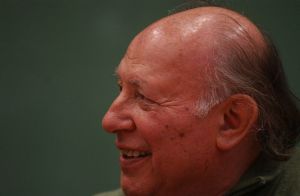
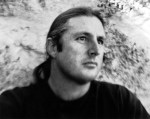
Kertèsz, 2007 (Photo by Csaba Segesvari, from Wikipedia under GNU Free Documentation License 1.2)

Kertèsz adds a new spin to the universal truths explored by these books – it’s what he describes (in my 1992 translation anyhow) as “stubbornness” which seems to me to mean “resilience” or a determination to survive, and even to have, if possible, little wins against the system.

Anyhow, first the plot. The novel takes place over the last year of the war and concerns Gyorgy Koves, a 14-year old Hungarian Jew, who, one day, is suddenly called off a bus, along with all other Jews on the bus and transported to Auschwitz, and then Buchenwald, Zeitz and back to Buchenwald, before returning home at war’s end. It chronicles his experiences, his thinking, and the impact on him of his experience. He begins as the archetypal naive narrator…but by the end, though his tone has changed little, he is no longer naive. This is rather beautifully achieved as we see his youthful application of logic being changed into something more cynical and survival focused.

Gyorgy speaks with a strange sense of detachment borne, to start with, of an apparent unawareness of what exactly was happening to him and a disbelief that anything untoward would happen. And so, in the beginning, as events unfold he describes them as “natural” because of course, when they got to Auschwitz, it was sensible to inspect each person to see who was physically fit and capable of working. He didn’t know then what would happen to those not found physically fit. The horror gradually builds as reality sets in and he goes about making it through each day – through his share of beatings, the reduced food rations, and all the other deprivations that make up concentration camp life. In the first part of the book he uses the term “naturally” to mean some sort of normal logic but by the end it comes to mean, as he explains to a journalist who asks him why he keeps using the word for things that aren’t natural, that these things were natural in a concentration camp.

Early on in his captivity he says that they approached their life (and work) “with the best of intentions” but they soon discover that these “best of intentions” do not bring about any kindness from their overseers, and so his attitude to getting on, to surviving starts to change. As he starts to physically weaken, become emaciated and develop infections, he observes that “my body was still there. I was thoroughly familiar with it, only somehow I myself no longer lived inside it”. Always dispassionate, always matter-of-fact, while describing the most heart-rending things.

Towards the end, he is placed in a hospital ward and there he is treated better and, even, with a certain amount of kindness. This in its way is as shocking to him as the cruel beatings he experienced at Zeitz. He can see no logic, “no reason for its being, nothing rational or familiar”. He can only understand kindness in terms of the giver receiving “some pleasure” from it or having some “personal need” satisfied. Never is there any sense that altruism might come into play. His view of “justice” is based very much on survival. He says, when he is spared, “everything happened according to the rules of justice … I was able to accept a situation more easily when it concerned someone else’s bad luck rather than my own … This was the lesson I learned”.

And so, in the end he returns home, and finds it hard to explain to people just what happened and how he now views life. He describes getting through his time as “taking one step after another”, focusing just on the moment. He implies that if he had known his fate he would have focused on time passing – a far more soul-destroying activity than concentrating on getting through each day “step by step”. This brings us to the fate/fateless bit. He says at the end that:

if there is a fate, there is no freedom … if, on the other hand, there is freedom, then there is no fate. That is … that is, we ourselves are fate.

I find this a little hard to grasp but he seems to be saying that we are free to make our own choices, even in a concentration camp – we are not fated but make our own fate. He was and is not prepared to accept any other approach to life. But life will not be easy:

I am here, and I know full well that I have to accept the prize of being allowed to live … I have to continue my uncontinuable life … There is no impossibility that cannot be overcome (survived?).

And yet, at the very end of the book, he says “and even back there [in the concentration camp], in the shadow of the chimneys, there was something resembling happiness”. Wow! This is an astonishing book – it charts horrors with a calmness that is quite shocking, and it is particularly shocking not because Gyorgy is unfeeling but because he can’t quite grasp what is happening to him. This is the fundamental irony of the book, and the fundamental truth of a naive narrator: we the reader know exactly how it is even as Gyorgy tries to make sense of it using logic and reason. I must read this book again – and preferably the newer more highly regarded 2004 translation by Tom Wilkinson.

(Translated by Christopher C. Wilson and Katharina M. Wilson)

Julian Barnes, The limner

I’m probably going to show my ignorance here as I’m no expert in short stories. I do however like them and have read a fair smattering over the years. Julian Barnes’ The limner is interesting because it is historical, that is, unlike most short stories that I have read, it is set in the past rather than contemporaneously with the author’s time. I think, in fact, that I have read more futuristic short stories than I have historical ones, and yet historical fiction is an equally popular genre. Is it in fact so that there are comparatively few short stories that are historically set, or is it simply that I haven’t read them? If the former, why?

Anyhow, it is an ironic story, not the least because it is a story by a writer (of course) about a man (a limner or portraitist) for  whom language means little. The limner, you see, is deaf and mute – and, what’s more, does not feel he misses much by not being able to speak and hear. His view is that “the world’s knowledge of itself, when spoken and written down, did not amount to much”. It is, in fact, a story that looks at what lies beneath the surface, that explores that age-old theme of appearance versus reality.

I have only read two works by Julian Barnes – The history of the world in 10 1/2 chapters (fiction) and The pedant in the kitchen (non-fiction)but these, together with this short story, reinforce my sense that I should read more. I like his way of viewing the world through whimsical and often ironic eyes. Wadsworth, the protagonist of this story, is an outsider: he is “industrious” and “of a companionable nature” but as time has gone on he has become less and less interested in painting his subjects – who are mostly adults, and mostly men. The plot turns on one particular, but apparently fairly typical, commission – the painting of a portrait of a customs collector. This customs collector, Mr Tuttle, is not interested in having his wife or children painted. The story commences, pointedly, with the statement that Tuttle had been argumentative about the fee and size of canvas, while Wadsworth, for his part, had agreed easily to his demands re pose, costume and background. As the story progresses it becomes clear that Mr Tuttle is a vain, pompous, self-important man who, while continually asking for “more dignity” to be represented in his portrait, in fact  exhibits little of that same dignity.

Without giving away the story, I will simply say that Wadsworth makes some decisions that enables him to preserve – though he doesn’t put it quite this way – his own dignity, and those of the lesser mortals in Mr Tuttle’s household. It is a neatly conceived story that makes its points lightly, humorously and, perhaps, a little predictably. While it’s not as challenging to read as some short stories – and I do like a challenge – it is also a little deceptive in its simplicity. It is well worth a read.

More Jolley

Elizabeth Jolley (Photo: Courtesy Fremantle Press)

Elizabeth Jolley (Photo: Courtesy Fremantle Press)

A decade or so ago my local reading group, with trepidation from some, decided to try a poetry night. The idea was that we’d all bring a favourite poem or two to share. What would I bring? I have some favourite poets from my student days – poets like Gerard Manley Hopkins, T.S. Eliot and William Wordsworth – but was that all I knew about poetry? Well, it just so happened that my brother had given me a few years earlier The Penguin book of Australian women poets (1986) so I hied me thither to see whether anything inspired. And what did I find but one of my favourite writers, Elizabeth Jolley, there ensconced.

Now, fair dealing provisions of the Australian Copyright Act are not clear for poems and anthologies so I won’t reproduce the full poem, “Neighbour woman on the fencing wire”, but here is its beginning and end:

So you’ve bought this place well let me tell you
straight away your soil’s no good all salt even a
hundred and sixty feet down and up on the slopes
is outcrops of granite and dead stumps of dead
wood nothing’ll grow there we know we’ve tried

dead and then there was that pig ate a woman’s
baby right in front of her door mind you I always say –

Says it all really…how can you not laugh along with a writer who writes a poem like this. (It is also published in her book Diary of a weekend farmer, 1993).

Elizabeth Jolley, My father’s moon

‘No one,’ she says, ‘can write anything till they’ve had experience. Later on perhaps. You will write later on.’ (Elizabeth Jolley, My father’s moon, 1989)

Although fiction demands imagination, it must be based on  some kind of genuine experience. (Elizabeth Jolley, “Only Connect”, essay first published in Toads, 1992)

My father’s moon is the first book in Jolley’s semi-autobiographical trilogy, the others being Cabin fever and The George’s wife. It won The Age Book of the Year Award in 1989.

I am an Elizabeth Jolley fan – and, along with Helen Garner, another Jolley fan, I enjoy the way she repeats and revisits stories and characters from one book or story to another. In this book is the chapter, “Night Runner”, which was published as a short story in Meanjin in December 1983, and again in a short story anthology, Room to move, published in 1985. The narrator of the story – and of the novel – typifies Elizabeth Jolley’s alienated protagonists and their often peculiarly self-centred and self-deluded ways of coping with their loneliness. Clearly Jolley decided that this was a character she wanted to develop further. And clearly she also drew a lot from her own experience to develop this character. Like Vera, Jolley was brought up as a Quaker, her parents sheltered refugees before and during the Second World War, and she trained as a nurse. Like Vera, Jolley probably experienced loneliness and alienation. However, this is fiction and so we need to be careful about how far we take these analogies between Vera and her creator. Much as I can empathise with Vera’s predicament, I must admit that I would hate to think she is Elizabeth Jolley.

It’s an uncomfortable novel. Vera, the first person narrator, is not a highly sympathetic character but neither is she totally disagreeable either. What she is, though, is lonely. The book has a somewhat challenging structure – and I had to concentrate to keep track of where I was. It starts with Vera, a single mother, leaving her parents’ home, with her young daughter, to live and work in a boarding school. Her hopes for a lovely life there among people “who feel and think as I do” are dashed. Such people “are not here as I thought they would be … I am by my own mistakes buried in this green-leafed corruption and I am alone”. In this first chapter are flashbacks to the past, and gradually the book moves into the past, providing us with insights into her character and how she has ended up where she is. Most of this past takes place in the hospital where she trains as a nurse during the war. The book finally returns to the beginning of the novel with Vera resolving to make a step towards alleviating her loneliness. However, we are by no means convinced she will.

Moon, by atomicshark @ flickr, licensed under Creative Commons CC-BY 2.0

Moon, by atomicshark @ flickr, licensed under Creative Commons CC-BY 2.0

The book comprises titled chapters, many if not all of which could be (and some have been) published separately as short stories. This gives it a somewhat disjointed feel – but seems appropriate for the story of a person like Vera. It is full of wonderfully drawn characters, with some very funny (if often dark) scenes and dialogue. Just think nurses and hospitals! There are many references to music – something that is common in Jolley’s works. Music is usually a comforting force for her characters, offering them respite from what is often a cruel world – and this is the case here, with Vera being drawn to characters who love and play music. There is a lot of irony, some of it subtle, some of it less so as in Magda’s comment to Vera who has fantasised about an affair with her husband: ‘You are so innocent and good … Don’t ever change’. Naive perhaps, innocent no!

So, what about the title? Funnily enough(!), it refers to Vera’s relationship with her father, a major stabilising influence in her life. He tells her throughout her childhood that wherever she is she can always look at the same moon he is looking at, ‘And because of this … you must know that I am not far away. You must never feel lonely’. A lovely concept and one to which Vera regularly returns in the book.

My father’s moon is not, I think, the easiest Jolley to read, and there are some things that might become clearer on a second reading. However, its concerns are very representative of her work – loneliness and alienation, homosexuality, parenting, memory, music and religion. While Vera is deeply lonely, while she often behaves selfishly, she can also be kind. She is also no quitter. For that I rather like her.

J.M. Coetzee, Diary of a bad year

Coetzee, Poland, 2006 (Photo: Mariusz Kubik, from Wikipedia)

Coetzee, Poland, 2006 (Photo: Mariusz Kubik, from Wikipedia)

J.M. Coetzee is one of those rare novelists who pushes the boundaries of what a novel is. The progression from his mid-career novel, the spare but terrifying Disgrace (1999), through Elizabeth Costello (2003) to Diary of a bad year (2007) is so dramatic that there are those who question whether these last two are even novels. It’s actually been a year or so since I read Diary of a bad year but it is currently being discussed by one of my reading groups so now seemed to be a good time to blog about it here.

One of the first things to confront the reader who picks up Diary of a bad year is how to read it. It has three (two to begin with) concurrent strands running across the top, middle and bottom of the page. Some readers try to read the three strands as concurrently as possible while others read the strands sequentially. Following this latter path, though, means you risk missing the way the strands comment on each other. The three strands are:

  • the narrator’s formal voice, basically taking the form of essays he is writing
  • the narrator’s informal voice in which he talks about his life as he is writing the essays
  • the voice of Anya, his “little typist”, and, through her, of her boyfriend, Alan

The three characters represent three modes of viewing the world: the narrator’s is primarily theoretical, while Anya’s is more pragmatic and Alan’s rational. Through these modes, Coetzee teases out the moral conundrums of the early 21st century both in terms of the political (the events confronting us) and the personal (how are we to live).

Towards the end, Coetzee refers to his love of Bach. To some degree the book is a paean to Bach: its three-part structure in which each part counterpoints the others seems to be a textual representation of Bach’s polyphony. The essays running across the top of the page, while a little uneven and dry on their own, are counterpointed by the views of the characters in the other two strands, resulting in our being presented with different ways of viewing the same world.

The characterisation is interesting: Senor C, the writer of the essays, is the logical, moral but somewhat pessimistic thinker; Anya is practical, down to earth, but with a strong moral sense; and Alan is the economic rationalist for whom money is essentially everything. The views of the two men are strongly contrasted, while Anya is caught in the middle. There is a Darwinian sense in Alan of the survival of the fittest, while Senor C spurns competition as a way of life, preferring collaboration. For all his “moral” views, though, Senor C is not presented as a paragon and we are discomforted at times by his attitude towards the beautiful Anya.

The overall theme seems to be how do we live in a world full of paradoxes and contradictions, a world that seems to be pervaded by dishonour and shame (the things Senor C explores in the essays). He talks about ordinary people and how they (we) cope with things they (we) don’t approve of. He wonders why they (we) don’t do something about it, but suggests in the end that they (we) practise “inner emigration”. He says:

The alternatives are not placid servitude on the one hand and revolt against servitude on the other. There is a third way, chosen by thousands and millions of people every day. It is the way of quietism, of willed obscurity, of inner emigration.

I like that concept though it does smack of burying one’s head in the sand. He also talks about collective guilt, and about bearing the dishonour of what’s gone on before. Through choosing a “novel” form like no other, one which blends but in no way harmonises fact and fiction, Coetzee shows in a very concrete way that difficult times need new ways of presenting ideas. He offers no neat conclusions, no easy outs;  he is quite subversive really. Late in the book he ponders the value of writing, and says:

Are these words written on paper truly what I wanted to say?

This then is another step in Coetzee’s path of trying to find the best, perfect perhaps, way of saying what he wants to say. I, for one, will be ready for his next step.

Orhan Pamuk, Snow

One of my rules of reading is that when I have finished a book I go back and read the first chapter (or so) and any epigraphs the author may have included. These can often provide a real clue to meaning. This rule certainly applies to my latest read, Snow, by Nobel Prize winner, Orhan Pamuk.

(WARNING: SOME SPOILERS)

Snow, in fact, has no less than four epigraphs:

  • lines from Robert Browning’s “Bishop Blougram’s Apology” describing the paradoxical nature of things: “the honest thief, the tender murderer,/the superstitious atheist”;
  • a quote from Stendhal’s The charterhouse of Parma which warns about the ugliness of “politics in a literary work”;
  • a quote from Dostoevsky’s Notebooks for the Brothers Karamazov which suggests ideals like the European Enlightenment are “more important than people”; and
  • Joseph Conrad’s statement in Under Western eyes that “The Westerner in me was discomposed”.

These four epigraphs pretty well sum up the concerns of the book. What about the title? The second chapter begins with:

Veiling as it did the dirt, the mud and the darkness, the snow would continue to speak to Ka of purity, but after his first day in Kars, it no long promised innocence.

Here then is the first paradox: snow is pure but not innocent, and it covers dirt, mud and darkness. Already, you can see that this book is going to be ironic. Just how ironic though is a matter for contention but my suspicion is that its very foundation is ironic, as it grapples with what it means to be an artist in a political society, with how one is to live in a conflicted nation. The plot centres on a coup – a coup which is variously called a military coup and a theatrical coup! In fact, it is a coup by a theatrical group that is supported by the military! Art and politics could hardly be more entwined.

Kars Photo: Jean & Nathalie @ flickr (Creative Commons licence)

Kars Photo: Jean & Nathalie @ flickr (Creative Commons licence)

Snow though is not an easy read. It is my third Pamuk, but only the second one I have completed. I loved his memoir-cum-history Istanbul but could not, hard as I tried, finish My name is red.

What then is it about? The main action covers three days in the life of Ka, a Turkish poet recently returned from 12 years exile in Germany, who comes to Kars (in far east Turkey) ostensibly to write about the suicide epidemic among young women, but whose secondary (or perhaps primary!) reason is to fall in love with an old school-friend, Ipek. Soon after he arrives, however, the coup occurs and Ka is, rather unwillingly, caught up in the intrigue between the competing interests: the secularists, the Islamic fundamentalists, and the Kurdish nationalists. This sets the stage for exploring the art-politics nexus. Ka says to Sunay, the leader of the coup AND of the theatrical troupe that comes into town:

I know that you staged the coup not just for the sake of politics but also as a thing of beauty and in the name of art … you know only too well that a play in which Kadife bares her head for all of Kars to see will be no mere artistic triumph; it will also have profound political consequences.

Here then is one evocation of the second epigraph. The third and fourth epigraphs refer to the running conflict in the book between European/Western values and Turkish/Eastern values. There is very much a sense that the people of Kars feel condescended to by European culture, but as a teen-ager says at one point, “We are not stupid! We’re just poor”. The people of Kars do not understand Western notions of individualism, and they see Western ideas of secularism and atheism as equating with immorality. Ka, as a Westernised Turk, acts as an uncomfortable, to him, bridge between the two worlds.

The core of the book is Ka. He is a sad and highly conflicted individual who, in his youth, had used words to argue that people should act for “the common good” but now finds himself using them to further his own happiness. Once politically active, “he now knew that the greatest happiness in life was to embrace a beautiful, intelligent woman and sit in a corner writing poetry”. The irony is that, for all his attempts to achieve this, he ends up with neither and dies four years after the coup a sad and lonely man.

The novel is interesting, stylistically and structurally. It is essentially a third person story about Ka but is told by a first person narrator, Ka’s friend, the novelist Orhan(!). This metafictional narrative technique, by adding another layer to the “conversation”, rather deepens the “artist in society” and art/politics themes of the book. Much of the story is foreshadowed: we learn of Ka’s death in Chapter 29, though the book has 44 chapters. The tone of the book is imbued with huzun, that very particular Turkish sense of melancholy that Pamuk explores beautifully in his book Istanbul. And, while it is about a coup and has a body count of 29, there are some very funny scenes, one being the political meeting at which the competing rebels prepare a statement about their beliefs for the Western Press. Anyone who has attended a political meeting will feel at home here!

All this said, the book is a challenge to grasp: there are a lot of characters, comings-and-goings, and ideas to track. Just why Ka is the way he is, just what did happen to him in the end, and just what Orhan is saying about art and politics are hard to pin down. I love the way the book is underpinned by paradox and irony – and yet at times the meaning can be a little tricky to discern. What is clear though is that Ka has found living by his political beliefs deeply unsatisfying but, ironically, is unable to bring about a situation in which he can live “happily” any other way.

Kadife, the leader of the headscarf girls, says (fairly early in the book):

…do not assume from this that our religion leaves no room for discussion. I will say that I am not prepared to discuss my faith with an atheist, or even a secularist. I beg your pardon.

Oh dear! Some reviewers call it a brave book. With its fearless exploration of the tensions in modern Turkey, it certainly feels that way. I am very glad that I put in the effort to read it.

Toni Jordan, Addition

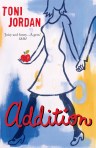
Addition Pb cover, Courtesy Text Publishing

Addition Pb cover, Courtesy Text Publishing

(SPOILERS: FOR WHAT IT’S WORTH)

Looks like, feels like, is it? Chick lit, that is. Toni Jordan’s first novel Addition has all the hallmarks of chick lit. The cover design with its line drawing of a female form invokes chick lit – albeit chick lit with an edge as the heels aren’t quite high enough and the colours not quite girly enough. The plot though is pure rom com and pretty much standard chick-lit: girl meets boy, girl loses (kicks out) boy, girl gets boy back. So why has this book garnered more attention and positive critical response than its sisters?

Well, Jordan is no Jane Austen (who is sometimes called the mother of chick lit) but she has produced something a little fresh. Her heroine, Grace, is not quite the standard chick lit heroine. She has had a breakdown, she is not in employment, she is not upwardly mobile and she is not focused on fashion and appearance (though it has to be said that she’s not oblivious to these latter either). Instead, she’s an ex-primary school teacher (not the most fashionable career, anyhow, in the world of chick lit) and she suffers from an obsessive compulsive disorder that results in her need to count, anything and everything, in order to maintain control over her life. And her hero, Seamus, a happy, ordinary dresser in an ordinary go-nowhere job, is “average”. Fortunately, though, with the help of her smart young niece, Grace realises at the end “that average can actually be unique”.

Grace’s voice is chick-lit-sassy and the book is genuinely funny a lot of the time, but there are also times when it is forced and tips over into being smart-alecky, such as her reactions to the psychiatrist and therapist. Her other hero is Nikola Tesla, the not-properly recognised famous inventor of many things electrical, who also had an obsessive compulsive disorder relating to numbers. It is the presence of Nikola in Grace’s life which sustains her at the beginning, helps ground her at the end and gives the book its real hook – that is, that being different is to be cherished and encouraged, as long as it doesn’t drag you down.

Jordan has a nice flair for language too. I liked the change in tone and pace when Grace’s panic rises, and a similar change in Jill’s speech to Grace when they are in hospital discussing their mother’s future. She’s lightly ironic in places and includes the odd bit of wordplay. It will be interesting to see where she goes next.

In addition (excusez-moi!) to its trying sometimes to be a bit too funny and its somewhat preachy ending (“Listen … Life is ..”), the book’s main problem is it’s too close adherence to the formula. You know she is going to lose him and you know she is going to get him back. It’s just a matter of how. Some level this same criticism at that favourite author of mine, Jane Austen, but her books encompass way more than plot to say some fundamental things about the human condition. I can read her again and again and see something new, or take away another perspective. I can’t see anything in Addition, as delightful as it is, that would afford me that pleasure on multiple readings.

So, read it, enjoy it – as I did – but if you want something a little more sustaining, try Jane.

Alice Munro, Dimension

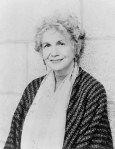
Alice Munro, from Random House Australia

Alice Munro, from Random House Australia

Alice Munro won this year’s Man Booker International Prize. You probably know that she is a Canadian short story writer. I have read many of her short stories over the years, though not as many as I would like.

WARNING: SOME SPOILERS!

Her short story “Dimension” was published in the New Yorker in 2006, and was then included in the 2007 edition of Best American Short Stories. In some ways, particularly in its tone, it reminded me of Lionel Shriver’s We need to talk about Kevin. Like “Kevin” it deals with the build up and fallout after a terrible tragedy caused by a family member, but the details of the tragedy and the focus of the story is different.

Munro clues us in very early that something terrible has happened. In the second para she writes this about the main character through whose point of view we see the story: “She liked the work – it occupied her thoughts to a certain extent and tired her out SO THAT [my emphasis] she could sleep at night”. Ah, we think, why does she have trouble sleeping? And then at the end of that paragraph is: “She didn’t want to have to talk to people”. The next para is more clear that she has been involved in something terrible: she had been “in the paper”. In this paragraph we get the first mention of “he”. “He” is nameless in the first few mentions, conveying to us a sense of mystery and, yes, menace. Not naming him at this point also depersonalises him; it makes him “other” to we named people.

This, then, is a story about one of those terrible family tragedies that we see in the news and wonder about: how did it get to that point, how does the mother (or whoever is left) keep going, etc? Munro explores these questions sensitively, conveying how Doree’s youth and inexperience resulted in her making a poor decision at a vulnerable time in her life which then stunted her further development of self – with devastating consequences. And, she does a good job of building up a picture of a controlling man (the husband Lloyd), but through Doree’s eyes so that we see her growing awareness of his nature. Her awareness though is accompanied by an uncertainty born of someone who does not know enough to judge properly, to know what is “normal” and what isn’t. Munro also makes us believe in Doree’s post-tragedy path – her going-through-the-motions distance from those around her and her tie to the perpetrator who is the only person to offer her a “refuge” peculiar though that refuge is. Munro’s resolution to all this could be seen as a little melodramatic, but it is clever…and, reassuringly, somewhat hopeful.

In other words, like all Munro’s stories, this is well worth a read.

Four time winner: Tim Winton wins 2009 Miles Franklin

Photo by Denise Fitch, Australia Council for the Arts

Photo by Denise Fitch, Australia Council for the Arts

Well, it’s finally happened as I knew it must. Someone has equalled Thea Astley’s record number of four Miles Franklin Award wins as tonight Tim Winton was announced the 2009 winner with Breath. I was seriously considering making Thea Astley my third favourite writers post – I think this means that I will now have to.

Winton has won the award for Shallows (1984), Cloudstreet (1991), Dirt Music (2001) and now Breath (2009); and Astley for The Well Dressed Explorer (1962), The Slow Natives (1965), The Acolyte (1972) and Drylands (1999). Both writers are great stylists who use metaphor well, both tend to explore strong connections between character and landscape, and both are indubitably Australian! I think, however, that Astley’s pen ranged wider than Winton’s and she took more risks. That’s not to say that Winton doesn’t deserve his wins but I do think that Astley (she died in 2004) was and continues to be undervalued.

Breath

Anyhow, here is a brief recap of my thoughts on Breath which I read long before I started writing this blog. I’ll start with a quick plot summary just in case there’s someone out there who doesn’t know it! It is a first person, coming of age story told by Bruce “Pikelet” Pike. It starts with his boyhood friendship with Ivan “Loonie” Loon. As young boys, they dare each other to perform dangerous stunts in the local river, and then as teenagers, they take up surfing where they are encouraged into new levels of recklessness by a former professional surfer named Sando. As time passes, Pikelet’s friendship with Sando and Loonie disintegrates and is replaced by a rather equally scary relationship with Sando’s American wife Eva, an injured and therefore ex-skier.

Southwest Western Australia, by soulsurfer 3 @ flickr

Southwest Western Australia, by soulsurfer 3 @ flickr

I like the book. I like the way he sustains the “breath” metaphor throughout to represent various facets of life and life-giving (or life-taking) forces. Despite not being a surfer, I love his wonderfully visceral descriptions of surfing. I also like his exploration of the imperative to take risks that is so common in young men and that is often accompanied by a drive to “be someone”.

Related I suppose to the coming-of-age issue is the theme of learning to accept being ordinary.  After Sando and Loonie leave the first time, Pikelet goes out and surfs Old Smoky: the first time he does it he’s so successful he feels he’s not ordinary, but then in his overconfidence he does it again and nearly does himself in…this is the beginning of his changing point of view. As he says a little later when he reviews his relationship with Eva, “No, Eva was not ordinary. And neither was the form of consolation she preferred. Given my time over I would not do it all again”. In other words, while he had originally equated not being ordinary with doing big risky things, with courting fear, by the end of the novel he realises that life is “a tough gig” and is about more than courting fear and taking big risks. This doesn’t mean that he can’t do and enjoy a job that provides an andrenalin rush (paramedic/ambulance driver) but it does mean that he no longer seeks to be anything other than himself and that he now goes for an adrenaline rush in “safer” more acceptable ways.

Before he gets to this point, though, he has to come to terms with his Eva experience and with the fact that he spent a big part of his life blaming her for his problems. He eventually comes to the conclusion that “people are fools, not monsters”. This closely resembles my own world-view: that is, that mostly (there are obvious exceptions) when people do the wrong thing they do it, at best, from the best of intentions, or, at worst, for reasons of laziness, selfishness or just plain obliviousness.

There’s no neat ending or pat conclusion: Pikelet recognises that he has been damaged by his life experiences and that he needs to manage himself – but he still loves to surf, that is, to do something “pointless and beautiful”. In this sense it is very much a book of its post-modern age: the lesson almost is that there is no lesson, that each of us has to find our own way. Pikelet says to Sando “maybe ordinary’s not so bad”. As one who is rather ordinary herself, I concur!

Pramoedya Ananta Toer, This earth of mankind

Nationalism, in today’s western world, is pretty much a dirty word – and yet it is the idea of nationalism which underpins Indonesian writer Pramoedya Ananta Toer‘s Buru Quartet, of which I have just read the first book, This earth of mankind. Toer’s concept of nationalism was formed under colonial rule of his country by the Dutch and then under military rule by Indonesians. His notion of nationalism encompasses ideas of individual freedom and dignity, and the right of individuals and, by extension, the nations which they form, to be self-determining. None of these are well supported under colonial or military regimes.

Toer & a translator. Photo: Michael Scott Moore at radiofreemike.com

Toer & a translator. Photo: Michael Scott Moore at radiofreemike.com

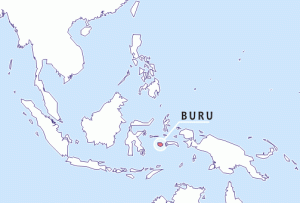
Toer (1925-2006) spent quite a bit of his life as a political prisoner and, in fact, this novel was first told orally to co-inmates in 1973 when he was imprisoned on the Buru Island penal settlement. He was first imprisoned (1947-1949) by the Dutch government after an anti British and Dutch revolution, and then later by the Indonesian government, first in 1963 when he supported Chinese minorities, and then after a military coup in 1965.  On this third occasion, he was imprisoned until 1979, though after that was essentially kept under house arrest until 2002. The first two novels were published in 1979/1980, and were translated into English in 1981 by Australian diplomat in Indonesia, Max Lane, who was recalled to Australia that same year as a result. Clearly, the Indonesian government was not amused. Indeed, the books were banned by that government in 1981.


From Wikipedia, under GNU Free Documentation License

From Wikipedia, under GNU Free Documentation License

This earth of mankind is set in 1898, and provides a fascinating look at colonial life in Indonesia at that time. It tells the story of a Native, the only one to attend an elite school. Being a Native he has no formal name, and so throughout he is called several names – Sinyo or Nyo, Gus, and most commonly Minke. Early in the novel, he is introduced to a succesful concubine Nyai Ontosoroh and her beautiful daughter, Annelies, and is gradually drawn into their lives. The novel follows his – and their – fortunes as the colonial authority does its best to see that a Native does not rise above his station. Life turns out to be a paradoxical one for Minke – on the one hand his education teaches him to think and argue and believe that all things are possible while on the other hand the colonial structure, within which he lives, works to ensure that little is possible.

The novel is peopled with a wide range of characters of various ethnic backgrounds – primarily Dutch, Indo (people with Dutch and Native parentage), and Natives, but also French and Chinese. This ensures that the strictly enforced layer of colonially-decided rights is set against a wide variety of political and personal opinions and provides the reader with an excellent insight into a complex society. This is perhaps also the cause of its main flaw because it is, at heart, an ideological novel. And, like many ideological novels, characters and plots are simplified and exaggerated to make the point. So, in simple terms the story can be seen as poor clever boy meets rich powerful concubine and falls in love with her beautiful but weak daughter only to be crossed by the wicked brother. The story has a melodramatic edge and there’s not a lot of complexity – of greys – to the characters. They are there to serve a purpose.

That said, it is a rivetting read. Told, first person, in Minke’s voice, the novel immediately engages us with him and his situation. He is, in fact, a little more rounded than the others: we get a sense of his uncertainty as he makes his various decisions throughout the book. This is largely because it is also a coming-of-age novel: paralleling the ideological issues underpinning the novel is the story of Minke’s emotional, social and intellectual development. A major thread is that of education and what can (should) be expected of an educated person. Early in the novel his “mentor”, the French artist, Jean Marais, tells him:

You’re educated Minke. An educated person must learn to act justly, beginning first of all with his thoughts, then later in his deeds. That is what it means to be educated.

This advice underpins Minke’s thought and actions from that point on: at each test or decision point he tries to apply his education.  There’s bitter irony here though because it is the source of that education – Europe – that causes his major problems at the end. As Minke is fast learning, you have to be strong to survive.

There’s a lot more that can be teased out in this book – including the role played by language in controlling and enforcing power and status – but rather than ramble on, I will end with the words of Minke’s favourite teacher, Magda Peters. She says:

…without a love of literature, you’ll remain just a lot of clever animals

It is not surprising then that Minke, Toer’s alter ego in this book, becomes a writer!

(Translated by Max Lane)