Frank Dalby Davison, Dusty (#BookReview)

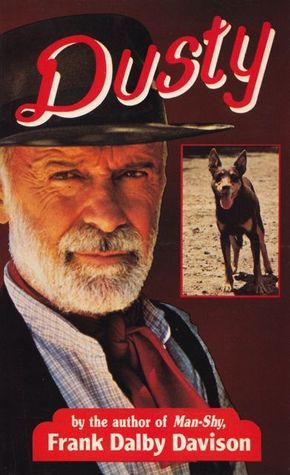
It’s a strange coincidence that my second review for Bill’s Gen 1-3 Aussie male writers week is for a novel titled Dusty, when my first was for a short story titled “Dust”. One of those funny little readerly synchronicities. The title, however, is about the only synchronicity because, although both stories allude to the dusty Australian landscape, Casey’s short story is about miners’ lung dust disease while Davison’s novel is about a part-kelpie part-dingo named Dusty.

A bit about Frank Dalby Davison

Davison (1893-1970) was best known as a novelist and short story writer, and was a significant figure in Australian literary circles of his time. There are useful articles for him in Wikipedia, and the Australian dictionary of biography, and I plan to devote a Monday Musings to him soon. Meanwhile, as background to this post, it’s relevant to say that he was born and schooled in Melbourne, but left school in his early teens to work on his father’s farm near Kinglake. The family moved to the United States in 1909, when he was 16. After working there in the printing trade, he travelled more, eventually enlisting for World War 1 in England. After the war, he took up a Soldier Settlement selection near Injune, in central western Queensland. 

Davison wrote several novels, but his best known is probably Man-shy (1931), which won the Australian Literature Society Gold Medal. Featuring a red heifer, it was my introduction to Davison in my first year of high school in the 1960s. Dusty (1946) is also about an animal – this time a dog – and has been in my sights for some time. Both novels drew on his experiences in Injune. AustLit reports that the manuscript of Dusty, ‘entered under the title “Stranger”, and the pen-name “Tarboy”, won the Melbourne Argus and Australasian Post 500 pound Novel Competition in 1946′. 

Dusty

At the end of my edition of Dusty is a promotion for Man-shy which quotes from H.M. Green, the literary historian who inspired Bill’s “generations”. Green writes:

Although other novelists have made animals their principal characters and drawn them realistically, Davison is the first to make a serious attempt to get inside their minds. The red heifer and the mob of wild cattle to which she belongs stand for the spirit of freedom and dogged, untameable resistance; their struggle is made extraordinarily real to us … Davison has a genuine and individual talent.

This could equally apply to Dusty, which tells the story of a dog, sired by a kelpie to a dingo mother. Violently wrenched from his lair when he was a few weeks old, he is sold to a decent man, a bushman named Tom. Tom is no fool. He recognises the mixed blood, but also sees potential in the pup, and trains him to become a champion sheep dog. Their bond is strong but is tested when Dusty’s “dingo blood” starts asserting itself, and he turns sheep-killer by night. This will not do, and Tom knows it. The novel, however, does not play out quite the way you’d expect, and we are left guessing until the end about what will, indeed, happen to Dusty.

That’s the plot, but like many plots it doesn’t tell you much about what the book is really about, or what makes it a good read. Told in three parts, Dusty is a realist novel, detailing life on Australian sheep stations and cattle properties, and told mostly through the perspectives of Tom and Dusty. Yes, you heard right, Dusty, the dog. I was completely engaged because not only is there none of the sentimentality common in stories about a man and a dog, but there’s also nothing anthropomorphic in the dog’s point-of-view. He feels pure dog, which I thought quite a feat. Early on, for example, Tom, having previously given Dusty his dinner without ceremony, puts the food down and starts some training:

Then followed a series of mystifying events. A hand appeared just above the dish and twitched, giving forth a series of soft snapping sounds; then there was a little soft whispering, and then a voice that, like the hand, kept repeating a small noise over and over again. He could make nothing of it …

This dog’s-eye view of the world, based on his experiences to date, continues through the novel.

Soon, though, bigger issues are at play involving the two parts of Dusty’s being, “the ancient battle between conflicting heredities, and between early influence and present environment; the mother against the father, nature against art”. Then Davison adds something interesting. The dingo is the product of nature, while the kelpie, the working dog, is “a product of art”. But, Davison adds, “nature, if man fails in toil or vigilance, hastens to reclaim her own”.

In other words, beneath this deeply interesting story about a man, his dog and outback farming, is a wider story about “nature”, or the essence of our beings. Contained within Dusty is the struggle between the two forces – that of freedom, of following his instinct, and that of living by his training, by rules and responsibilities. After Dusty’s dingo side becomes apparent to all, Tom knows what must be done but chooses to change his life rather than kill his dog. He becomes a self-employed possum scalper in cattle country, and finds, “without meaning any ingratitude for past kindnesses”, that he relishes his new situation in which he is invited to share a meal as “a guest and not just the hired man”. In other words, as a possum scalper, Tom is freer to be his own man.

But, while I think Tom’s life is part of this wider theme, the main focus is animals, and the idea that, in them, “is a whole scheme of values outside those familiar” to us.

There is no easy ending for Tom and Dusty, and we are left, three paragraphs from the end, with a dingo howl, “a cry of mournfulness and dark mirth, of drollery and love and hate and longing, of the joy and sorrow of life, of the will to live, of mockery and despair”.

Dusty is not a didactic book. There is no moralising, no subjective pronouncements about choices. Instead, with its objective tone, and plain but expressive prose, it feels more elemental, something that examines the essence of who we are and what we do to live. And that makes it feel timeless.

Frank Dalby Davison
Dusty
Sydney: Angus & Robertson, 1983 (Arkon ed., orig. 1946)
244pp.
ISBN: 0207133891


Six degrees of separation, FROM Dangerous liaisons TO …

It’s the first Saturday in February so it must be Six Degrees time, and this month, I’m not going to engage in any chatty intro but just get into it … as always, if you don’t know how the #SixDegrees meme works, please check Kate’s blog – booksaremyfavouriteandbest.

The first rule is that Kate sets our starting book. This month, it’s a book I probably should have read – being a classic – but haven’t. It’s Pierre Choderlos de Laclos, Dangerous Liaisons, an epistolary novel published in 1782.

Now, commenting on last month’s Six Degrees, one of my most loyal commenters here, MR, who often ponders on the – let’s say – quality of my links, suggested that I just list the books and let those of you who read the post work out the reasons. So, this is what I’m doing this post. I did think about giving the reasons in a follow-up post, but have decided that’s pushing the friendship a little too far so I am providing the answers at the end (after the image gallery). I’ve tried not to make the links too hard, and for some there are multiple ways the books could be linked.

So, here goes:

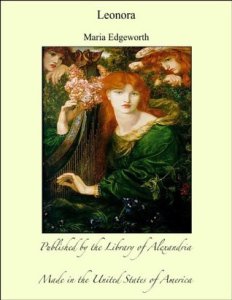
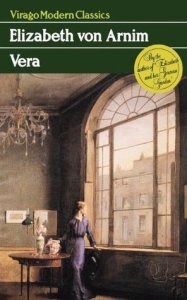
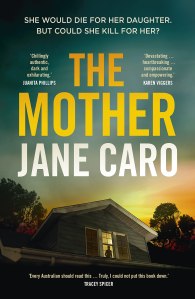
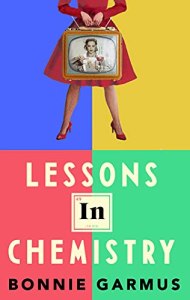
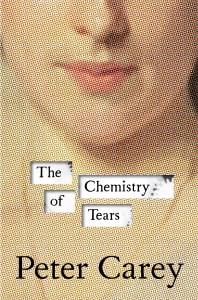
Now, for the link reasons. Dangerous liaisons is an epistolary novel, as is Jane Austen’s Lady Susan. (Both were also published in the 18th century.) Maria Edgeworth’s Leonora, is about a coquette visiting friends, as is Lady Susan, albeit in this case the coquette is not the titular character but Leonora’s friend. (Leonora is also an epistolary novel, and is written by an English-born woman.) Elizabeth von Arnim’s Vera has a woman’s first name as its title. (It was also written by a woman, who is English, though she wasn’t born in England.) Jane Caro’s The mother is about a coercive control by a husband, which is also the idea behind Vera, though coercive control wasn’t known as that then. (Jane Caro is also a woman, though that’s a very broad link!) Bonnie Garmus’ Lessons in chemistry is a debut novel by a 65-year-old-woman, and was The mother. (Like Caro’s novel, it also has a mother-daughter thread, though that’s not the main idea.) And for my last link, I’ve made it super-easy. Peter Carey’s The chemistry of tears has “chemistry” in the title, as does Garmus’ book.

How did you go? Did you find some links I didn’t?

And, have you read Dangerous liaisons and, regardless, what would you link to?

Gavin Casey, Dust (#Review)

I have had to put aside the novel I was reading for Bill’s Gen 1-3 Aussie male writers week, as my reading group book called. I will get back to it, and post on it later, but in the meantime, I wanted to post something in the actual week.

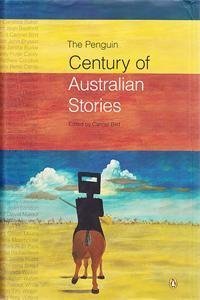
So, I turned, as I have for other Reading Weeks, to The Penguin century of Australian stories, an excellent anthology edited by Carmel Bird. Given Bill’s week encompasses writers working from 1788 to the 1950s, Bird’s anthology offered almost too many choices. Besides the obvious Henry Lawson, there were Steele Rudd, Tom Collins, Vance Palmer, and more, ending with Judah Waten’s 1950 story, “The mother”. I considered several, but Gavin Casey captured my attention because in her Introduction to the anthology, Kerryn Goldsworthy, looking at the 1930s and 40s, commented that Gavin Casey’s “Dust” and John Morrison’s “Nightshift” exemplified the more overtly political stories of this era. She added that:

they are stories in simple, unadorned language … that focus on workers and workplace disasters, on the physical dangers lying in wait for working men and women.

I have been interested in this period – and its socialist-influenced political thinking – for some time, so it had to be Casey or Morrison. Casey it was because I have listed him in a couple of Monday Musings posts but knew nothing about him.

Who was Gavin Casey?

Casey (1907-1964) was an author and journalist, born in Kalgoorlie, Western Australia, to an Australian-born father and Scottish mother. 

He doesn’t have a Wikipedia article but there is a useful biographical entry for him in the Australian dictionary of biography (ADB). Written by Anthony Ferguson, it says he had a sketchy education before obtaining a cadetship with the Kalgoorlie Electric Light Station. However, he left there to work in Perth as a motorcycle salesman, only to be “forced” back to Kalgoorlie in 1931 by the Depression. He then worked “as a surface-labourer and underground electrician at the mines, raced motorcycles and became a representative for the Perth Mirror“. He married in 1933, but “poverty plagued them, long after their return to Perth next year”.

By 1936, he was publishing short stories in the Australian Journal and the Bulletin, and in 1938 he was foundation secretary of the West Australian branch of the Fellowship of Australian Writers. His two short story collections – It’s harder for girls (1942), which won the 1942 S. H. Prior memorial prize and in which “Dust” appeared, and Birds of a feather (1943) – established his reputation. Ferguson writes:

Realistic in their treatment of place and incident, his stories showed—beneath the jollity and assurance of his characters—inner tensions, loneliness, unfulfilled hopes, and the lack of communication between men and women.

You may not be surprised to hear that his first marriage failed!

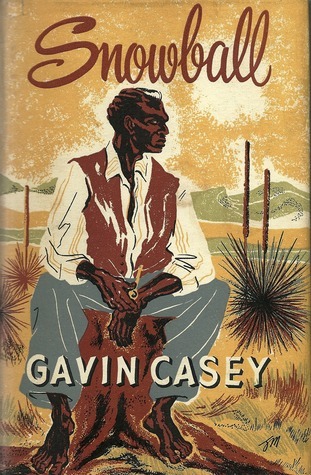
Overall, he wrote seven novels plus short stories and nonfiction works. His novels include Snowball (1958), which “examined the interaction between Aborigines and Whites in a country town”, and Amid the plenty (1962), which “traced a family’s struggle against adversity”. There is more about him in the ADB (linked above).

Ferguson doesn’t specifically address the political interests Goldsworthy references. Instead, he concludes that critics liken Casey’s earlier works to Lawson, seeing “a consistent emphasis on hardship that is tempered, for the male at least, by the conviviality of mates”. Ferguson also praises both for “their perceptiveness” and “their execution”.

The reality of Casey is a bit more nuanced, I understand. For a start, his men are not bush-men but suburban workingmen. Consequently, I plan to write more on him in a Monday Musings Forgotten Writers post, soon. Meanwhile, on with “Dust”.

“Dust”

“Dust” features male characters only, and there are some mates but, while they are important, they are not central. “Dust” also must draw on Casey’s experience of working in Kalgoorlie’s mining industry. It’s a short, short story, and is simply, but clearly constructed. It starts with a physical description of dust swooping through the township, over housetops and hospital buildings, and “leaving a red trail wherever in went”. It sounds – almost – neutral, but there are hints of something else. Why, of all the buildings in town, are “hospital buildings” singled out with the “housetops”, and does the “red trail” left behind signifiy anything?

Well, yes it does, as we learn in the next paragraph. Although this dust comes from “honest dirt” and can do damage like lifting roofs off, it is “avoidable” and is nothing like the “stale, still, malicious menace that polluted the atmosphere of far underground”. Ah, we think, so the “dust” we are talking about is something far more sinister than that flying around the open air.

And here is where the hospital buildings come in. Protagonist Parker and his miner friends are waiting for their six-monthly chest x-rays checking for the miners’ dust lung disease which killed his father. Things have changed since his father’s times, Parker knows. Not only are there the periodic medical examinations, but there are mechanisms to keep the dust down, and a system of “tickets” and pensions for affected miners. But, the risk is still there, and Parker’s anxiety increases as he watches his mates go in one by one, while he waits his turn.

This is a story about worker health and safety – but told from a personal not political perspective. It’s left to the reader to draw the political conclusions. However, it is also a highly relatable story about humans, health, and risky choices and behaviour, because it seems that Parker does have a choice. I won’t spoil it for you, but simply say that the ending made me smile – ruefully.

Gavin Casey
“Dust” (orig. 1936)
in Carmel Bird (ed.), The Penguin century of Australian stories
Camberwell: Penguin Books, 2006 (first ed. 2000)
pp. 86-90

Monday musings on Australian literature: Bill’s Australian White Men Gen 1-3

For several years now, Bill (The Australian Legend blog) has run a week dedicated to “generations” in Australian literature, focusing until this year on Australian Women Writers. This year, however, he has changed tack, and decided to look at Australia’s early male writers – who were, of course, in that colonial landscape, mostly white. He has also decided to do three generations at once, which means we are covering writers who were active from 1788 to the 1950s. This, says Bill, will be his last “Gen” – and fair enough, it’s been a big effort, one that many of us have enjoyed taking part in. Bill deserves a big thanks for bringing older Australian writers to the fore, and encouraging discussion about our literary history – the writers, the influences (including his “favourite”, The Bulletin) and the trends.

As before, Bill has created a page of Gen 1-3 writers to which he will add reviews posted for them or for writers he’s not yet listed. In this post I am going to list the writers I have read who suit this period, as my first contribution to Bill’s project.

Now, like Bill, my reading focus is women writers. Each year they represent 65-75% of my reading. I do like reading men too – and I would read more, if I could carve out more reading time – but my point here is to explain why my contribution is paltry.

Sometimes a bloke gits glimpses uv the truth
(CJ Dennis, “In Spadger’s Lane” in The moods of Ginger Mick)

The Gums’ Gen 1-3 List

In alphabetical order by author (compared with Bill’s chronological one by date of birth) … and with links on titles to my reviews of their books.

Knowledgable eyes will notice that my list does not include some of the big names of Australia’s male writers of the 19th century – Rolf Boldrewood, Marcus Clarke, Joseph Furphy, Henry Kingsley and Henry Lawson. Or Watkin Tench’s first hand accounts of the early colony. I have read a couple of these before blogging, but overall they have not been high priorities for me.

But, just to prove my interest, I have also read a couple of biographies of Australian male writers:

I have also read a couple of short journalistic pieces by Vance Palmer.

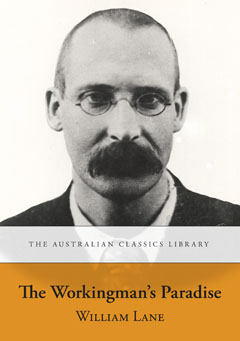
The books in my list span a century, from John Lang in the 1850s to Martin Boyd and D’Arcy Niland in the 1950s. John Lang’s A forger’s wife is a colonial novel with a 19th century melodrama feel, and is about, as I wrote in my post, issues like “the survival of the wiliest, and the challenge of identifying who you can trust”, things deemed critical to survival in the colonial mindset. By the ’90s, we were well into the time of social realism* and writers were looking outwards – to the sociopolitical conditions which oppressed so many. This is reflected in William Lane’s novel. It is also reflected in Price Warung’s stories, which, although “historical fiction” about the convict days, are written with a social realist’s eye on the inhumanity of the system. By the time we get to the mid-20th century, fiction was increasingly diversified. The world wars, increasing awareness of gender and continued concern about those issues the social realists cared about, not to mention modernism’s interest in the self, intellect, art, and their intersection with each other (to put it very loosely) can be found in the books I’ve read from that period.

When Bill started this project, he was inspired by the divisions suggested by Henry Green in his history of Australian literature. Green’s divisions were “conflict”, 1789-1850; “consolidation”, 1850-1890; “self-conscious nationalism” 1890-1923; and “world consciousness and disillusion”, 1923-1950. There is some sense to these divisions, and they provided a loose skeleton for the Gens! However, in her introduction to The Cambridge companion to Australian literature, Elizabeth Webby shares several studies or surveys of Australian literature, discussing their different approaches and goals, but she does say that several identify the 1890s as “being crucial to the development of a national literature”.

I could go on delving more deeply, but I won’t, as this post’s main goal was to tell Bill which books I can contribute to his male Gen 1 to 3 list, and I’ve done that.

Are you joining in or do you have any thoughts to add?

* There is some confusion regarding social versus socialist realism, but I am using social realism broadly to mean concern with sociopolitical issues – particularly regarding the working classes – with or without political “isms” behind it.

Six degrees of separation, FROM Orbital TO …

Woo hoo, a new year – and a Happy New Year to you all – but our old-faithful Six Degrees meme continues on. I’d like to thank Kate for keeping on with this meme as it’s the only one I like to do, and I do like being part of the Six Degrees community. Now having done that little bit of emotional blackmail, on with the show … as always, if you don’t know how the #SixDegrees meme works, please check Kate’s blog – booksaremyfavouriteandbest.

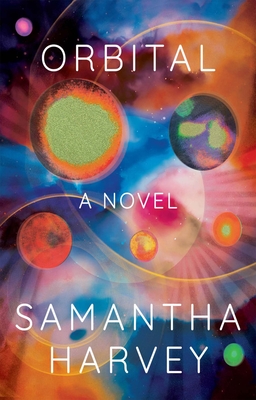
The first rule is that Kate sets our starting book. This month, it’s another book I haven’t read. I did buy it with the best of intentions when Kate announced it, but then forgot to bring it to Melbourne with me. The book is last year’s Booker Prizewinner, Samantha Harvey’s Orbital. As most of you surely know it is a novella about six astronauts orbiting the earth in their spacecraft. 

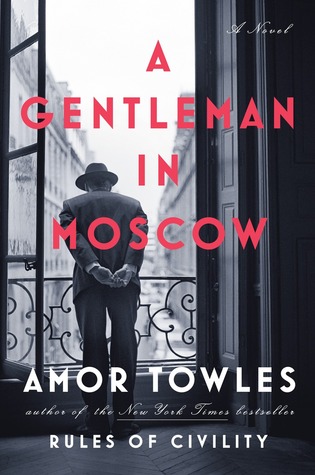
Cover for Amor Towles A gentleman in Moscow

I had many thoughts about this one, starting with another prize-winning novella with a single-word title, Arboreality. However, in the end I chose another novel about confined protagonists, though in this case it’s one confined protagonist. The book is Amor Towles’ A gentleman in Moscow (my review), whose aristocratic protagonist is under house arrest in a hotel in Moscow (in Bolshevik Russia).

The women in black, Madeleine St John, book cover

Towles’ novel is an intriguing book. Why did an American investment banker write such a book. Towles, whether you believe him or not, said he had no central theme. He simply wanted to create a work that would be “satisfyingly cohesive” but “prompt varied responses from reader to reader, and from reading to reading.” One of my responses was that the novel belonged at least in part to the comedy-of-manners tradition – and, no, I am not linking to Jane Austen but to another recent-ish comedy-of-manners, Madeleine St John’s The women in black (my review).

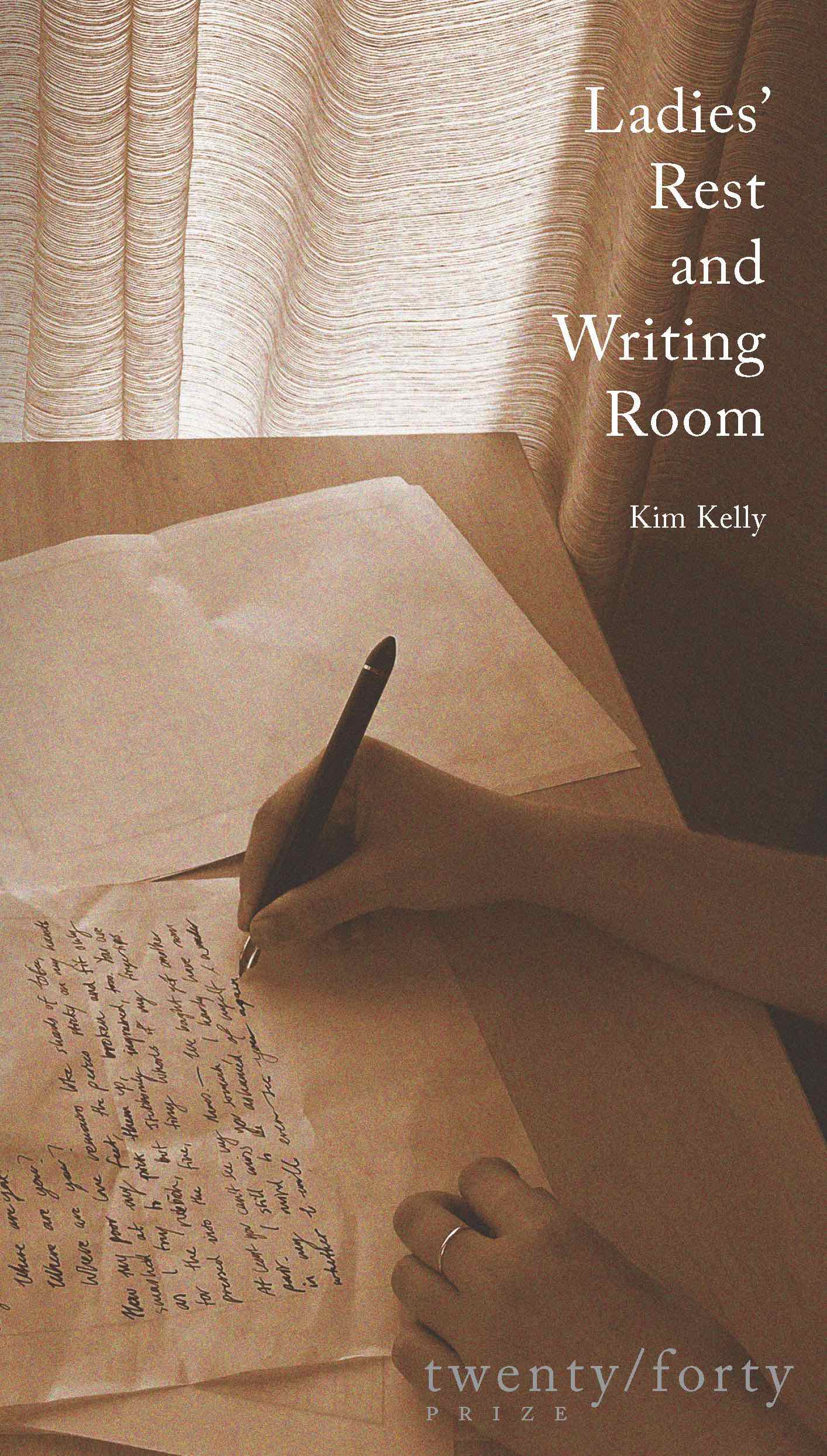
Setting is my next link, because The women in black is set in a Sydney department store. Kim Kelly’s Ladies’ Rest and Writing Room (my review) is also set in a Sydney department store, albeit three decades earlier, in the 1920s.

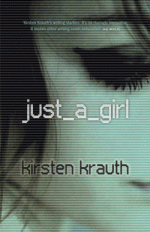
Kirst Krauth, Just a girl

OK, so now my next link might irritate some, but Kim Kelly’s name is alliterative on “K”, and so is my next author Kirsten Krauth. I’m linking to her debut novel just-a-girl (my review). GoodReads describes it as “A Puberty Blues for the digital age, a Lolita with a webcam”. It’s one of the first novels I read that looked at social media and its (potentially dangerous) use by teenage girls.

Book Cover

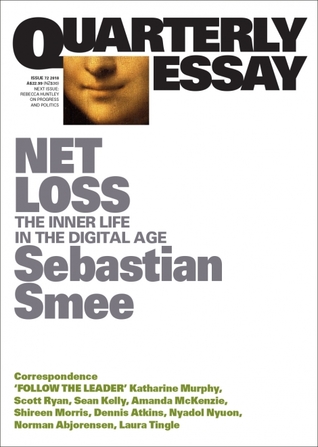
My next link picks up on the issue of the digital age and its impact on our lives, though Sebastian Smee‘s main interest is our inner lives. I’m linking to his Quarterly Essay, “Net loss: The inner life in the digital age” (my review). Among many things, he talks how modern digital media encourages children to “present performative versions of themselves online”, which links nicely with Krauth.

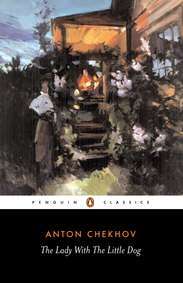
Penguin collection, translated by Wilks, book cover

However, it’s the inner life issue that is the basis of my final link. The reason I read Smee’s essay is because it inspired a member of my reading group to recommend we read Anton Chekhov’s short story “The lady with the little dog” (my review). As I wrote in my Smee post, Chekhov’s Gurov discusses his inner and outer lives, making clear that the inner life is where “everything that was essential, of interest and of value to him, everything that made the kernel of his life, was hidden from other people”. This is the inner life that Smee explores.

So, we’ve gone from outer space to inner lives this month! And my links have been three male and three female authors. We’ve spent time in some confined spaces, and, without planning it, I started and ended in Russia.

Have you read Orbital and, regardless, what would you link to?

Blogging highlights for 2024

Yesterday, as per my tradition, I posted my annual Reading highlights, which means tonight it’s time for my Blogging highlights. This is probably only of interest to me, but I’m a librarian/archivist by training and I love to keep records! My main blogging highlight this year has to be that I celebrated 15 years of blogging in May. I never thought I’d still be here, but then again, I hadn’t realised how much fun it would be to be part of an international community of litbloggers, nor did I guess the way we’d become part of literary culture, locally, nationally and internationally.

Anyhow, onto some specific highlights …

Top posts for 2024

Are you interested in which posts of yours get the most hits? I love seeing which of my review posts are most visited over the year. For many years, older posts have dominated my Top Ten, but recent years have seen a gradual shift to more newer posts taking top honours. This continued for 2024. Why this change?

  1. Claire Keegan, So late in the day (December 2023)
  2. Ernest Hemingway, “Cat in the rain” (September 2022)
  3. Barbara Kingsolver, Demon Copperhead (February 2024)
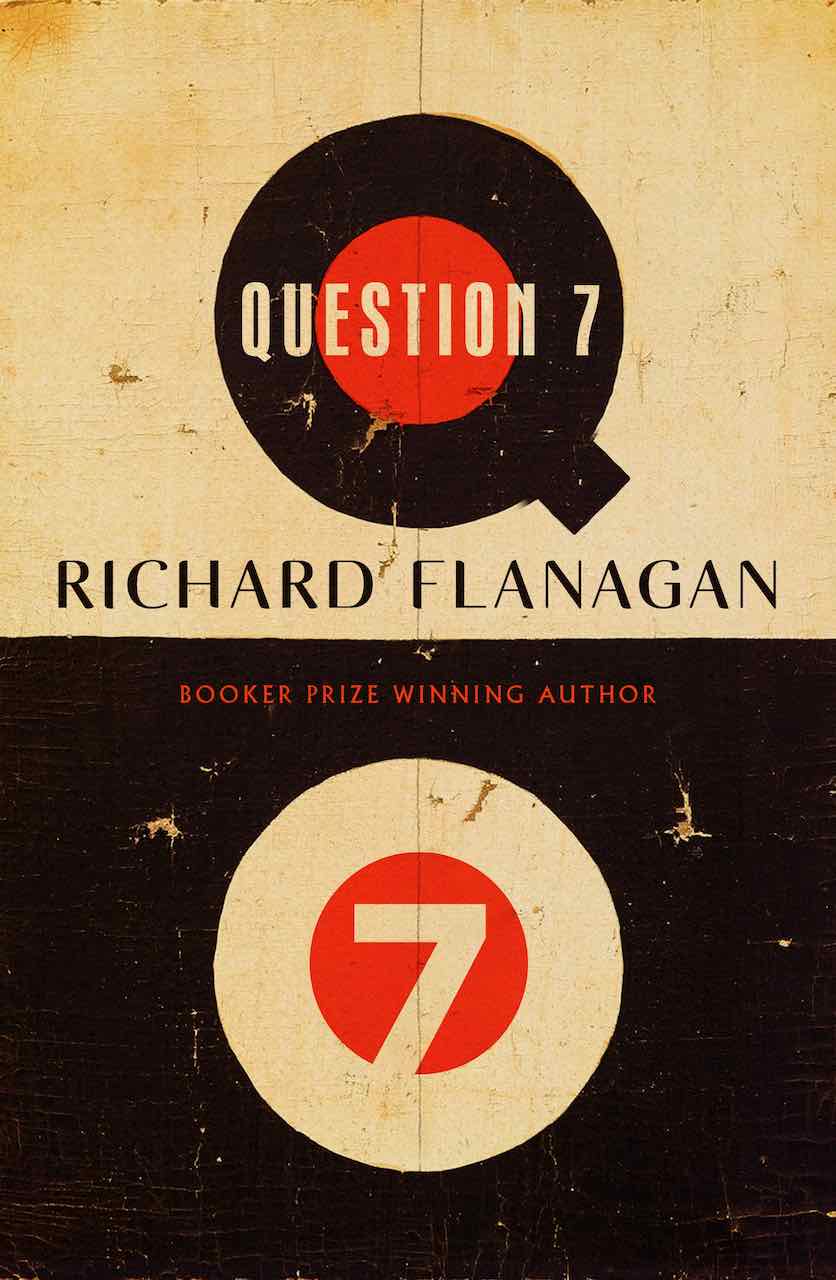
  4. Richard Flanagan, Question 7 (March 2024, Australian)
  5. J.D. Vance, Hillbilly elegy (August 2023)
  6. Carl Merrison and Hakea Hustler, Black cockatoo (January 2021, Australian)
  7. Charlotte Wood, Stone Yard devotional (June 2024, Australian)
  8. Robbie Arnott, Limberlost (March 2023, Australian)
  9. Ambelin Kwaymullina, “Fifteen days on Mars” (January 2023, Australian)
  10. Epiphany in Harrower’s “The fun of the fair” (essay by Emily Maguire) (January 2022, Australian)

Observations:

  • Three of these posts (Hemingway, Kwaymullina and Maguire’s essay on Harrower) were Top Tens last year, but in a big break with the past, none of the Serial Top Tenners (Jack London, Barbara Baynton, and Mark Twain) appear this year. Jack London does rank 12th, while Baynton and Twain have both dropped to the 20s.
  • Seven posts were published in the last two years, which is another record, being an increase by two on last year’s record of 5. Even more of a record is that all top ten posts were published in the 2020s. This trend to recent posts ranking well is a big change after years of older posts holding sway. I’m not sure how much is due to a real change in behaviour and how much to some change in WordPress’s protocols for counting hits.
  • Seven of this year’s Top Tens are Top Ten debuts, and six of this year’s Top are for Australian works, both of which are also records.
  • The list always offers something intriguing (to me, anyhow), but I’ll just comment on two inclusions: J.D. Vance’s Hillbilly elegy jumped in hits the week he was named you-know-who’s Vice-Presidential running mate; and I have no idea why Carl Merrison and Hakea Hustler’s gorgeous children’s picture book, Black cockatoo, is in the Top Ten, but I love that it is.

I also like to see how the posts written in the year fare, so here are the Top Ten 2024-published posts (excluding Monday Musings, event and meme posts):

My two most popular Monday Musings posts were the same as last year: Some new releases (the 2024 version); Books banned in Australia (June 2019); but my old post on The lost child motif (February 2011) was roundly bumped out of its stranglehold on the number three position by this year’s First Nations short story collections post (July 2024). What a lovely surprise.

Random blogging stats

The searches

Help Books Clker.com
(Courtesy OCAL, via clker.com)

I know some of you enjoy this part of my Blogging Highlights post, even though these days search term visibility is greatly curtailed.

Some searches related to specific books…

  • “need a detailed summary of stone yard devotional book by charlotte wood for a book club”: don’t you love the “need”?
  • “what is the trait of esperance in novel terra nullius”
  • “the rosie project cultural context”

while some are more general …

and some are just surprising …

  • last year I noted that the searches – ‘date of birth and “scott tucker”‘ and ‘husband and “scott tucker”’ – were probably looking for this Scott Tucker but that they got Michelle Scott Tucker’s Elizabeth Macarthur’s biography instead. People are still looking for “that” Scott Tucker, but are finding “mine”.
  • “trust-your-instincts-and-have-a-premarital-agreement-drafted” : what on earth brought this search to me?
  • “helen garner detives inspiration from female british author” : despite the typo this search found me, though I haven’t worked out why.
  • “books on literary authenticity in australia” : this seems to have brought the searcher to my home page rather than to a particular post which I guess should please me!
  • “historical importance of the esay literature and totalitarianism” : this brought the searcher to my post on George Orwell’s essay on “The prevention of literature”

Other stats

2024 was another quiet year for me post-wise. Although I wrote four more posts than last year’s 135, it was still well under my long term average of 153. However, my overall hits for the year increased by 35% on last year. Stats! I find it hard to believe that’s a true increase, particularly given the number of “likes” and “comments” were about the same. Methinks they’ve changed their counting protocols.

The top six countries visiting my blog were the same as last year, in the same order: Australia (46%), the USA (22%), United Kingdom, India, Canada, and the Philippines. But the next four show a change with Ireland popping in at no. 7, having not been in the ten at all, followed by New Zealand, Germany and France, from last year’s top ten. China dropped out.

I’ve never reported on this one before, but another interesting figure provided by WordPress (JetPack) is Clicks. This tells which sites visitors clicked, suggesting something about visitors’ engagement with our posts. My tops include Wikipedia, my own blog and images within it, and two short story sites. But, you might be interested in the bloggers that I link to. Here are the top 5 blogs clicked from mine, plus their most clicked link:

Challenges, memes, et al

I only do one regular meme, Kate’s (booksaremyfavouriteandbest) #sixdegreesofseparation. I occasionally do other memes – found under my “memes” link – but did no others in 2024.

I also took part, to various degrees, in Bill’s (The Australian Legend) Gen 0, Nonfiction November (multiple bloggers), Novellas in November (Cathy of 746 books and Rebecca of Bookish Beck), the #YEAR Club (Kaggsy’s Bookish Rambling and Simon’s Stuck in a Book), and Buried in Print’s MARM. Most of these can be found via my “Reading weeks/months/years” category.

I like the structured opportunity these provide for bloggers to explore writers and works we might otherwise find hard to fit in, and would love to do more, but …!

And so, 2025 …

I can’t do much but repeat my usual thanks you to all of you who commented on my blog this year – the regulars and the newbies who have given me a shot. I love those of you who comment – regularly or occasionally – and thank you for being an active part of the community. But, as always, a big thank you too to the lurkers. Your interest and support is also greatly appreciated.

I also want to thank all the hardworking bloggers out there. I’m sorry that I’ve continued this year to be a less regular commenter on your blogs than I’d like to. My life has changed, and I’m still working out how to manage the new lifestyle, with new and old commitments. I enjoy reading your posts when I can, and hope to read more, and engage in more book talk in 2025.

Finally, huge thanks to the authors, publishers and booksellers who make it all possible.

Roll on 2025 … Meanwhile, Happy New Year everyone.

Reading highlights for 2024

And suddenly it’s the end of the year again, meaning time for the annual highlights posts. For me, this means posting my reading highlights on December 31, and blogging highlights on January 1. I do my Reading Highlights on the last day of the year, so I will have read (even if not reviewed) all the books I’m going to read in the year, and I call it “highlights” because, as most of you know, I don’t do “best” or even, really, “favourite” books. Instead, I try to capture a picture of my reading year. I also include literary highlights, that is, reading-related activities which enhance my reading interests and knowledge.

Literary highlights

This mostly comprises my favourite literary events of the year. I never get to all that I would like – not even close – but those I attend I enjoy. Even where the books or authors may not be my favourite genre or topic, there is always something to learn from writers and other readers.

  • Canberra Writers Festival: I attended six sessions this year, and you can find my write-ups on them (plus previous festival sessions) on my Canberra Writers Festival tag. I attended conversations with Rodney Hall, Emily Maguire, Catherine McKinnon, Charlotte Wood, Robbie Arnott, and Anita Heiss, as well as a lively panel on the art and role of the critic.
  • Awards events: I attended fewer awards events this year, just two live ones: ACT Literary Awards; and the Finlay Lloyd 20/40 Winners Launch and Conversation with Authors.
  • Book launches and author conversations: I attended the same number as last year, and most were part of the The Canberra Times/ ANU Meet the Author series: Brigitta Olubas and Susan Wyndham (with Julianne Lamond); Sulari Gentill and Chris Hammer (with Anna Creer); Shankari Chandran (with Karen Viggers); and Karen Viggers (with Alex Sloan). I can’t believe I didn’t get to more, but my records tell me that I didn’t!
  • Podcasts: I am not a big podcast follower, mainly because I prefer not to be constantly plugged in. When I walk, I walk in peace. When I do housework, I listen to music. When I drive locally, I listen to the radio, but when we drive long distance we often listen to podcasts – and this year we’ve focused on Secrets from the Green Room. Targeted primarily to writers, the episodes have much to offer readers who like to understand how it all works – the writing, the editing, the publishing, the promotion, and so on.

Reading highlights

As usual, I didn’t set reading goals, but kept my basic “rules of thumb”, which are to give focus to Australian and women writers, include First Nations authors and translated literature in my list, and reduce the TBR pile.

2023 was a very strange year – our downsizing year – and it showed in my reading, which was unusually high in short stories and low in nonfiction. This year saw me return to something like my usual pattern, but not quite. Short stories, for example, remained a higher proportion of my reading. This works fine in this new phase of my life which involves frequent trips to Melbourne to see family and spend time with grandchildren.

But now the highlights … each year I present them a bit differently, choosing approaches that I hope will capture the flavour and breadth of my reading year. Here are this year’s observations from my reading:

The characters

  • Mothers in extremis: Mothers aways feature in my reading, but this year’s included some seriously challenged ones: Al Campbell’s The keepers, about a mother of two autistic sons; Jane Caro’s The mother, about the mother of a daughter subjected to coercive control by her husband; and Marion Halligan’s memoir Words for Lucy (review coming), about a mother’s grief for a daughter who died too young.
  • Young people in extremis: Life is rarely easy for the young, but Lucy Mushita’s Chinongwa and Barbara Kingsolver’s Demon Copperhead have more than their youth and inexperience to contend with. The system is stacked against them. In Karen Viggers’ Sidelines, on the other hand, the issue starts closer to home. It’s the parents who need to take a look at themselves.
  • It’s never too late: Rachel Matthews’ middle-aged characters in Never look desperate show that romance is not just for the young.
  • The oldies have it: Older characters have shone in this year’s reading. Besides those in Matthews’, Caro’s and Halligan’s books, I enjoyed the stoic 80-year-old Wilf in Stephen Orr’s Shining like the sun, matriarch Maya in Shankari Chandran’s Chai time at Cinnamon Gardens, the aging Zelda in Michael Fitzgerald’s Late, and Nunez’s determined narrator in The vulnerables. Not only did they show that “Life” doesn’t stop when you age, but that, while age might bring some wisdom, it doesn’t bring all the answers.
  • Most unlikable character: Sometimes there are characters you just want to shake (not that I would ever shake a person of course!) and this year, self-pitying Deidre in Karen Jennings’ Crooked seeds wins the award. If only she’d read Dale Carnegie’s How to win friends and influence people!
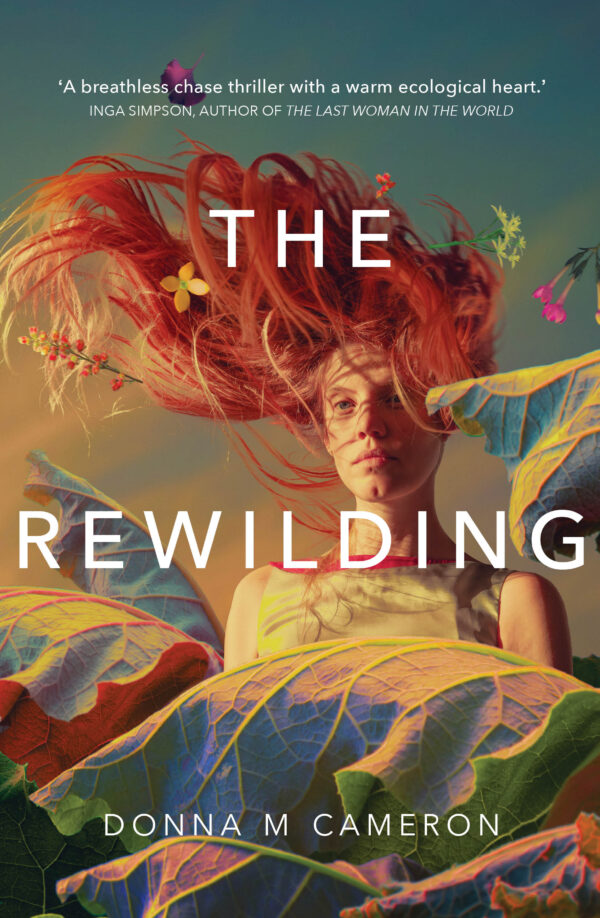
  • The odd couple: Odd couples are not unusual in romance, but privileged-on-the-run Jagger and eco-warrior Nia make a fetching pair in Donna Cameron’s The rewilding.
  • Most naive characters: This goes to most of the characters in P.S. Cottier and N.G. Hartland’s The thirty-one legs of Vladimir Putin. What were they thinking!
  • Don’t forget the animals: Animals are rarely forgettable when writers create them, and I certainly couldn’t forget Sigrid Nunez’s miniature macaw Eureka, Carmel Bird’s cat Arabella, and definitely not all those mice in Charlotte Wood’s Stone Yard devotional.

The subject matter

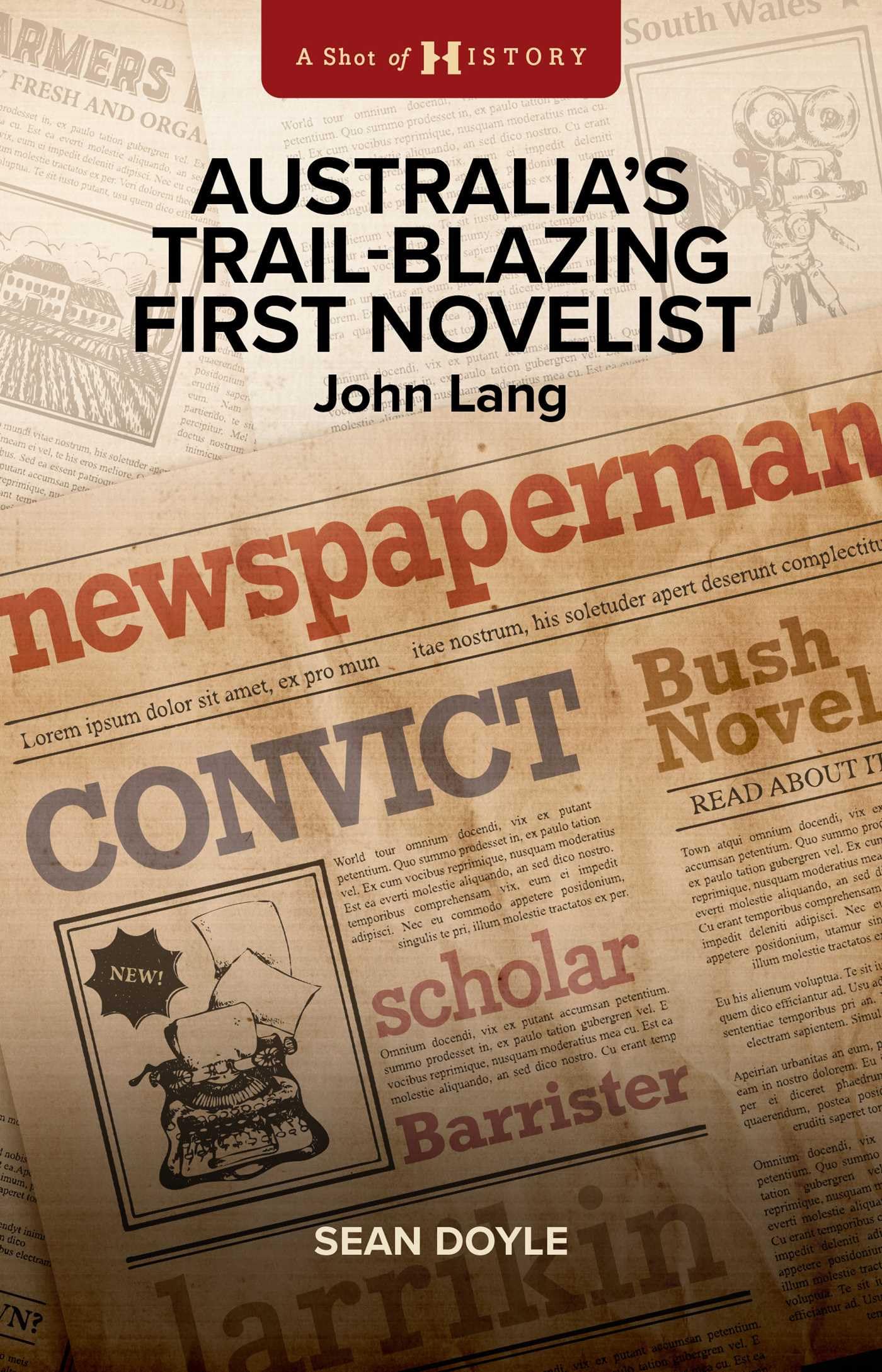
  • Writers’ lives: I always enjoy reading literary biographies and memoirs, and this year I read three very different works, from Sean Doyle’s more traditional Australia’s trailblazing first novelist: John Lang to more personal, hybrid takes in Nell Stevens’ Mrs Gaskell and me, and Anna Funder’s Wifedom.
  • Truthtellers of the year: I used this category last year, and I think it’s a keeper because truthtelling, particularly regarding the “colonial project”, is not done. This year’s highlights include First Nations Australian Melissa Lucashenko’s Edenglassie, and two from North America, Thomas King’s “Borders” and Sherman Alexie’s “War dances“, each of which added different layers to the truths we need to hear.
  • Vividly rendered places will always get me in, and this year three were skilfully evoked, the Monaro (in Charlotte Wood’s Stone Yard devotional), Naples (in Shirley Hazzard’s The bay of noon), and the South West Coastal Path (in Raynor Winn’s The salt path).
  • Only fools have answers“: the best writing for me is that which leaves us with questions. Many of this year’s reads did just that, but leading the way was surely Richard Flanagan’s Question 7.

The reading life

  • Good things come to those who wait: Gail Jones has been on my must-read list (and in my TBR) since Sixty lights was published in 2004. Finally, this year I read a novel by her, Salonika burning. It must not be my last.
  • Re-find of the year: Having not read a Shirley Hazzard novel for many years, I loved finding the opportunity to read The bay of noon for Novellas in November and the #1970 Year Club
  • Re-reads of the year: Of course these were by Jane Austen, Mansfield Park and her novella, Lady Susan.

Only when I was young did I believe that it was important to remember what happened in every novel I read. Now I know the truth: what matters is what you experience while reading, the states of feeling that the story evokes, the questions that rise to your mind, rather than the fictional events described. (Sigrid Nunez, The vulnerables)

Some stats …

While I don’t read to achieve specific stats but, I do have some reading preferences which I like to track, but it’s boring to repeat them all each year. So let’s just say that

  • 85% of this year’s reading was fiction and 75% of my authors were women, both of which are higher than my long-term average.
  • Nearly 50% of this year’s reading comprised works written before 2000, which is also higher recent percentages.
  • 58% of this year’s authors were Australian.
  • Last year’s big downsizing project saw short stories and novellas comprising over 60% of my year’s reading. This halved in 2024 to just over 30%.
  • 11% of this year’s reading was by First Nations writers, largely due to my reading several short stories by First Nations American writers.

I read only two books from my actual TBR – Nell Stevens’ Mrs Gaskell and me and Gail Jones’ Salonika burning – but I will add to this Shirley Hazzard’s The bay of noon, which has been on my virtual TBR for many years.

Tomorrow, I (hope to) post my blogging highlights.

Meanwhile, I’ll repeat my usual end-of-year huge thanks to all of you who read my posts, engage in discussion, recommend more books and support our little litblogging community. It is special. I wish you all an excellent, book-filled and peaceful 2025.

What were your 2024 reading or literary highlights?

Shirley Hazzard, The bay of noon (#BookReview)

Shirley Hazzard’s novella, The bay of noon, has been in my sights for a long time, but finally, this Novellas-in-November year, I managed to get it out of my sights and into my hands. It’s the first of two novellas I read for the month, but the second to review. Such was my November (and we are now well into December!)

Published in 1970, The bay of noon was Hazzard’s second novel. It was one of six books nominated for the Lost Man Booker Prize in 2010. This was a special award created to, in effect, right a wrong which occurred when a change in the Booker Prize rules resulted in books published in 1970 missing out on a chance for Booker glory. The award was decided by public vote, with JG Farrell’s Troubles emerging the victor.

I’ve read three books by Hazzard before blogging, but since then I’ve just read one short story – “The picnic” – for the 1962 Club. In my post on that story, I referred to a review in The Guardian of Shirley Hazzard’s Collected stories. The reviewer Stephanie Merritt writes that “Hazzard’s recurring themes here – enlarged upon in her novels – are love, self-knowledge and disappointment”.

This is true of The bay of noon, which tells of a young Jenny, who, though born in England, had been sent to Cape Town with other young children to escape the Blitz. Post-war she was reunited with her older brother but, realising that her love for him was unhealthy, she leaves England to take up a job with NATO in Naples, bringing me to another of Hazzard’s recurring themes, that of young women leaving home to find their place. I understand from her biography that Hazzard herself worked for NATO in Naples in the timeframe this book is set, so she knows whereof she writes – which is not to say that she is writing her life. This is fiction, so while Hazzard draws on her own experiences, Jenny’s story is not hers.

Anyhow, we are in Naples, and it is some years after World War II, the mid 1950s in fact. Hazzard loved Italy, and her description of Naples at this time is imbued with a love born of knowing a place authentically, not as a sightseer. Naples is poor, and damaged both by war and a Mt Vesuvius eruption in 1944. Hazzard’s evocation of the city is a joy to read. A “through the looking-glass” city of both “apartness” and “continuity”, it also provides a moody, sometimes metaphoric, backdrop for our newcomer Jenny.

The storyline is straightforward. Knowing no-one outside of her work, Jenny follows up a letter of introduction to the charming and welcoming writer Gioconda, whose married lover, and Roman film director, Gianni, she also meets. Soon, however, through her work, Jenny also comes to know a Scotsman, Justin Tulloch, and a relationship of sorts develops between them. These relationships, and how they play out – with their mysteries and betrayals – form the nub of the story, but they are not what the novel is about. That is not so straightforward, but there are clues.

The title offers one clue, particularly, for me, the idea of “noon” as a time when the sun is at its highest, when the light is brightest, and so, perhaps representing a moment of clarity and, perhaps, also, of transition or change? Another clue is in the epigraph from Auden’s “Goodbye to the mezzogiorno” and in the opening paragraphs, both of which encompass ideas about memory and experience. The story is told first person through Jenny’s eyes, and there is a sense as the novel progresses of her working through an experience. Or, perhaps, not so much “working through” as allowing the passage of time to do its work. In the opening paragraphs, Jenny speaks of experiences building up “until you literally sink under them” but is also aware that, with the passage of time, memory, which was once “clouded with effects and what seemed to be their causes”, can become protective. As Auden concludes his poem:

… though one cannot always
Remember exactly why one has been happy,
There is no forgetting that one was.

But of course, not all memories are happy – and time can’t make them so. Gioconda, who had suffered loss, says

‘When people say of their tragedies, “I don’t often think of it now”, what they mean is it has entered permanently into their thoughts, and colours everything…’ (p. 67)

Just prior to this, she admits:

‘When I talk of it this way, now, to you, it all comes out as if there were some sequence, some logic, instead of moods, contradictions, alternatives. The design imposes itself afterwards. And is false, must be false.’ (p. 66)

It’s a curious but beguiling novel. The writing has a formal, intellectual – almost dispassionate, and sometimes elegiac – tone. It feels as though it belongs to a much earlier time, earlier in a way than the time in which it is set. This works somehow, partly because of Hazzard’s clear and measured prose, partly because the characters themselves seem to belong to an earlier time, and partly because Jenny is telling us the story from some time in the future.

As I read The bay of noon, I kept trying to place it within a wider literary tradition. It belongs, in part, to those stories about young people being taken under the wing by more experienced elders. Jenny observes the world she is drawn into, gradually becoming a more active and confident player in it. However, an Englishwoman, she remains an outsider, so retains her observer status which, over time enables her to see some realities she had missed in the first flush.

This is not a simple coming-of-age story, as it might look on the surface. Jenny is not an ingenue, but neither is she, at the start, experienced enough to understand the complex emotions and tragedies her older friends have experienced. Moreover, Hazzard has set the novel in a time that was itself complex, as Europe, and Naples specifically, was emerging from the war and – hmmm, was what? I wanted to say remaking itself, but that’s not the sense we get of Naples. It’s more one of being itself.

Towards the end, Jenny, reflecting on that past time in Naples, likens it to a

vineyard that had been left to flourish intact … among the deadly apartment buildings, not so much showing how it was as what has happened to it.

And that is the book’s ultimate meaning for me. It is not about who we are, what we hoped for, or where we have arrived, but about, in the closing words of the novel, “how we came”. Life, in other words, is a process, a journey that doesn’t always take us where we plan or expect.

Read for Novellas in November. Also read by Brona for the month. Read very late for the 1970 Year Club run by Karen (Kaggsy’s Bookish Ramblings) and Simon (Stuck in a Book)

Shirley Hazzard
The bay of noon
ISBN: 9781860494543
Virago Press, 2005 (originally published 1970)
182pp.

Six degrees of separation, FROM Sandwich TO …

And here we are again at the last Six Degrees of the year. I’m not going to say the obvious about time, as you are all thinking it anyhow, I’m sure. Instead, I will just wish you the best of the season. I hope it’s a contented and peaceful one for you all. Now, on with the show … as always, if you don’t know how the #SixDegrees meme works, please check host Kate’s blog – booksaremyfavouriteandbest.

The first rule is that Kate sets our starting book. This month, it’s another book I haven’t read. Indeed it’s one I hadn’t even heard of, but it was chosen because it’s a beach read (and here, down under, it’s beach-time!) The book is Sandwich by Catherine Newman, and it’s about a family’s annual vacation to Cape Cod in northeast USA.

Annie Dillard, The Maytrees

As frequently happens, I considered many options – beach read, a book about someone in the sandwich generation, a book with food in the title, a book by Anne Patchett who appears on the front cover, and so on. However, in the end I went with location, Cape Cod, and a family story, though my choice is a about a family which has lived on Cape Cod for generations rather than one which just visits there, The Maytrees, by Annie Dillard (my review).

Min Jin Lee, Pachinko

As best as I could determine, The Maytrees tells the story of a family over a period of around 60 years from the 1920s/30s to the 1990s. Min Jin Lee’s Pachinko (my review) is another family saga which spans most of the 20th century, from 1910 to 1989. It starts in a fishing village in Korea, before moving to Japan. (Provincetown in Cape Cod was also well known for fishing, though I suspect tourism might be its main industry now.)

Hoa Pham, Lady of the realm

Fishing village is my next link. Hoa Pham’s The lady of the realm (my review) opens in 1962, by introducing the protagonist Liên, who, as a young girl, has a prescient dream that the Viet Minh will come and destroy her fishing village. And thus starts a novel which explores the suffering wrought by war. The lady of the realm, like Pachinko and The Maytrees, spans multiple decades (albeit, in this case, in just 90 pages!)

Viet Thanh Nguyen, The sympathizer

Another book I’ve read about the Vietnam War is Viet Thanh Nguyen’s Pulitzer Prize winning novel, The Sympathizer (my review). Quite coincidentally, I read it back in 2017 straight after reading The lady of the realm. They make, I said, an interesting pairing because both deal with the Vietnam (or American) War and its aftermath, both are written in first person from a Vietnamese character’s point of view, and both question what happens when revolutions win. But, the similarity ended there.

One of the reasons The Sympathizer differs from The lady of the realm, is that The Sympathizer is a satirical novel. Another anti-war satirical novel is Kurt Vonnegut’s now classic Slaughterhouse-Five (my review), so that’s an obvious next link – and I’ll leave it at that.

Book cover

Vonnegut’s Billy Pilgrim spends time in a Dresden prisoner-of-war camp, the titular Slaughterhouse-Five, a place to which he keeps returning in the novel (unless he’s escaped to the alien Tralfalmadore). Dorrigo in Richard Flanagan’s The narrow road to the deep north (my review) also spends time in a POW camp – in the same war, but on the Thai-Burma Railway. It seems the right link to conclude on, though I did, briefly, consider a more tricksy link related to my reading group.

So, we started with Kate’s book in Cape Cod America, and stayed there for the next book before travelling more broadly in Asia, Europe, Australia and some more in the USA (though not necessarily in this order). Four of today’s writers are American born or based, with just two, Hoa Pham and Richard Flanagan, being Australian born. The gender split is 50:50, which is unusual for me. But we have, unfortunately, spent too much time thinking about war, so let’s not any more. Instead, I’ll reiterate my opening wish for you all to have a wonderful holiday season, and leave you with my usual question …

Have you read Sandwich and, regardless, what would you link to?

Novellas in November 2024, Part 2 (New to my TBR)

November is over and, as I expected, I didn’t get to post much for Novellas in November. However, I did read a couple of novellas and started another short form work (ie nonfiction), and, more to the point, I did read some participants’ posts which resulted in my noting some “New to my TBR” options.

Last year I listed 8 “New to my TBR” options and, unusually for me, I actually read two of them. They were:

New to my TBR:

  • Jon Fosse, Aliss at the fire (translated by Damion Searles) (orig. pub 2003): Brona of This Reading Life was mesmerised by this book in which an elderly woman reflects on the disappearance of her husband some twenty-five years before, after taking his rowboat out into the fjord.
  • Pascal Garnier, Boxes (translated by Melanie Florence) (orig. pub. 2012?): Kimbofo of Reading Matters didn’t like this as much as other books she’s read by Garnier, but I’m intrigued. Strangely, given my interest in Fosse’s book, it’s about, says kimbofo, “a middle-aged man reeling from his young wife Emma’s sudden disappearance”. It appears that journalist Emma fails to return home from a work trip and is presumed dead.
  • Paul Griffiths, Tomb guardians (2021): Lisa of ANZLitLovers makes this story – about the guardians of the tomb from which Christ’s Resurrection took place – sound both interesting and entertaining.
  • Jean-Patrick Manchette, No room at the morgue (translated by Alyson Waters) (orig. pub. 1973): host Cathy of 746 Books attracted me to this one by describing it as French noir which “blends a taut mystery with a trenchant sense of ennui and regret”.
  • Hiroko Oyamada, The factory (translated by David Boyd) (2010): Karen of Booker Talk posted on this and caught my attention, partly because it’s Japanese, but more because factory settings intrigue me and she describes it as unsettling and bordering on the absurd. 
  • Evelyn Waugh, Love among the ruins (1953): Judith Stove commenting on my Part 1 post, recommended this dystopian novella. She write that “Waugh covers a lot of themes – the ‘ruins’ of the title, criminal rehabilitation, and the transformative power of love – as well as the assisted-death industry. Plenty of themes with relevance to our time!” It’s a while since I’ve read Waugh, and this appeals and sounds manageable in my time-poor life!

There are probably others but given my track record for actually reading books I spy, I think this is enough. Maybe some of them caught your eye too? I see that two caught host Cathy’s eye. Check out her post to see which ones! I must say that she reminded me that I’d also been attracted to Kate’s post on Carys Davies’ Clear, but I am not going to (formally, anyhow) add it to my list. It’s long enough.

Regardless, has Novella November affected your TBR pile this year?

Written for Novellas in November 2024. Thanks as always to Cathy and Rebecca for hosting this special month.