Blogging highlights for 2015

So, I’ve done my Australian Women Writers’ Challenge wrap-up, my Reading highlights, and now, to complete what’s become my annual trifecta, my Blogging highlights. I hope I’m not boring you – but I’m doing this partly for my own record!

Top posts for 2015
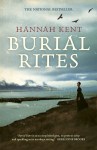
Hannah Kent, Burial Rites bookcover

Courtesy: Picador

As in 2013 and 2014, my most “hit” post for 2015 was a short story by Virginia Woolf, her “The mark on the wall (posted March 2012). I presume it’s a set text for schools/universities.

However, for the first time in my blog, Australian works occupied 2nd to 5th place:

Last year’s fifth highest hit, Barbara Baynton’s “The chosen vessel” (posted November 2012), continues strongly at 9th, and I’m thrilled that indigenous writer Tara June Winch’s Swallow the air (posted July 2014) ranked 10th. My most popular non-Australian novel post was Jeanette Winterson’s Oranges are not the only fruit (posted April 2010), which came in 8th. My most popular 2015 post – albeit 45th in the list of top posts – was for Fyodor Dostoevsky’s Crime and punishment.

As last year, many of my top hits are for older posts, which suggests that there’s some longterm value in litblogging.

Random blogging stats
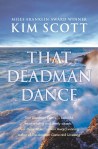
Kim Scott That Deadman Dance

(Courtesy Picador Australia)

I always love to share some of the searches that find my blog, and this year, as always, there were some interesting ones:

  • what new stories does that deadman dance tell: an interesting question – I’d love to know why it was being asked
  • how useful are hachette writers retreats: now, there’s someone doing their research
  • custard apple cultivation in india: I have no idea
  • chic lit gum: I suppose this found chick lit reviews (such as for Toni Jordan’s books)
  • unrevised japanese girl adult pictures: again, keine Ahnung

My busiest day this year was November 19th with 611 views. The most popular post that day was Don DeLillo, Midnight in Dostoevsky. Last year, my busiest day was October 28th with 436 views. Guess what the most popular post that day was? Yes, Don DeLillo’s Midnight in Dostoevsky. It must surely be a first semester set text in the US somewhere?

Other stats tell the story of my year. As many of you who read my blog regularly know, it was a very disrupted year, and this shows starkly in my posting stats. This year I wrote 133 posts, some 19 fewer than last year’s 152 (neither of which is anything like Lisa’s rate of posting!) This didn’t stop you visiting though – and for this I thank you. According to WordPress, my blog visitors came from 168 countries, and my most active commenters this year were: Stefanie (So Many Books, So Little Time), Lisa (ANZLitLovers), Ian Darling, M-R (author of the memoir, And then like my dreams), and Meg. Thanks to everyone who reads and comments on my blog. I love “my” little blogging community (and I worry when some of you disappear at times! I want to know you’re OK. You are allowed not to comment, of course, but …)

Monday Musings on Australian Literature

I have been posting Monday Musings since August 2010. WordPress tells me that Monday was my best posting day with 51 posts. Funny that! To be honest, I’m surprised I’ve managed to keep it going this long. It’s an interesting challenge, and makes me appreciate even more those newspaper columnists who have to keep producing to get paid! However, as I said in last year’s highlights post, it’s all of you who read and comment on my musings that encourages me to keep going, so, rest assured, you’ll see another one tomorrow!

Australian Women Writers’ Challenge

awwchallenge2016As I wrote in my AWW Challenge wrap up, I will participate in the Challenge again this year, so let this be my announcement post. I plan to stick to the top level – Franklin, read 10, review 6 – though, for fun, I may have a go at a Bingo Card challenge. (See here for the Sign Up page). I will read more of course, but I’m not in this for the challenge so much as for the community and supporting Aussie women writers.

And finally …

I’ve already said it in my Reading Highlights post, but I’ll say it again: thanks to everyone who read, commented on and/or “liked” my blog in 2015. You demonstrate what a positive place cybersphere can be. I wish you all happy reading in 2016.

And, of course, thanks to all the wonderful bloggers I visit, the authors who wrote the books that make it all possible, and the publishers who get the authors’ works out there for us to read. May 2016 be a stellar one for you all.

Monday musings on Australian literature: Australian Women Writers’ Challenge 2015

awwchallenge2015For the fourth year now, I’m devoting the year’s last Monday Musings to the Australian Women Writers Challenge*.

The challenge continues to be supported by a wide range of reviewers. This year we moved to a self-hosted site which enabled us to produce a single searchable database of all reviews logged since the challenge started in 2012. We now have reviews for nearly 3,000 books across all forms and genres of Australian women’s writing. An impressive resource, I’d say, for its breadth and accessibility.

As usual, the Challenge ran some special events during the year, including a focus on Lesbian/Queer women writers,  author Q&As, and an In Conversation With series. These were organised by some wonderful challenge volunteers, particularly Jessica White, Marisa Wikramanayake and Annabel Smith. I think these posts deserve more air, so will share them here:

The Australian Women Writers’ Challenge is the only challenge I do (or have ever done). This year I posted 27 reviews for the challenge, three fewer than last year. I managed a similar variety in my reading, but unlike last year, I didn’t manage to read one book from my TBR pile. It was, I must say, an erratic year for me and I feel that I lurched from book to book, scrabbling to keep up. If I set myself one goal for next year it would be to tackle the TBR pile a little! On the plus side, three Australian women feature in my top ten posts for the year – Hannah Kent, Barbara Baynton, and Tara June Winch. What a diverse group that is!

Anyhow, here’s my list of works read for this year (with links to the reviews):

FICTION

SHORT STORIES

NON-FICTION

There are some subtle differences from last year’s list to this. For example, last year nearly all the non-fiction reads were memoirs, whereas this year only two are. I read a similar number of novels as last year, but twice the number of historical fiction novels, 4 versus last year’s 2. I will talk more about that in another end of year post. I would like to have read more classics/older books.

Anyhow, if you are interested in the challenge, you can check it out here. I don’t believe the sign up form is ready for 2016, but watch the site. You are most welcome – whether you are female or male – to join us. The challenge is also on Facebook, Twitter (@auswomenwriters), GoodReads and Google+.

Finally, a big thanks to Elizabeth and the rest of the team – including Lewis, our wonderful database developer – for making it all such a cooperative, and enjoyable experience. Roll on 2016.

* This challenge was instigated by Elizabeth Lhuede in 2012 in response to concerns in Australian literary circles about the lack of recognition for women writers. I am one of the challenge’s volunteers – with responsibility for the Literary and Classics area.

Australian Women Writers 2015 Challenge completed

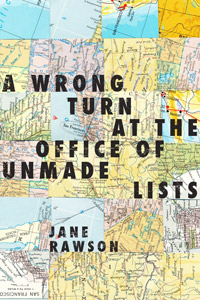
As most of you have heard now ad infinitum, I only do one challenge – the Australian Women Writer’s Challenge. As in previous years, I signed up for the top level, Franklin-fantastic, which required me to read 10 books and review at least 6. I have now exceeded this. Although I plan to continue to add to the challenge, as I’ve done in previous years, I do need to write a completion post so I’m doing it now. I have, so far, contributed 12 reviews to the challenge. RawsonWrongTurnTransitHere’s my list in alphabetical order, with the links on the titles being to my reviews:

Only one of these – Cusack’s – is for a classic and only one – Van Neerven’s – is by an indigenous author. I hope to broaden my reading for the challenge in the second half of the year but given the way the year is shaping up, it may not work out quite the way I’d like. My final post for this year’s challenge will tell the tale.

Do any of you do challenges? And if so, what do they add to your reading? I often see challenges that appeal to me, such as those ones to do with working through your TBR, or reading in an area I’d like to explore more, like Japanese literature, but I feel the completion stress would counteract the value so I resist.

Blogging highlights for 2014

Top posts for 2014

According to my tags and categories, my most popular posts according to WordPress still relate to Australian literature, Women writers, Australian writers, 21st century literature and Review-Novels. However, as in 2013, my most “hit” post* for 2014 was a short story by an English woman, Virginia Woolf’s “The mark on the wall (reviewed in March 2012), presumably because it’s a set text for schools/universities.

My other “top” hits for 2014 were:

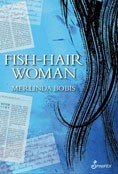
  • Merlinda Bobis Fish-hair woman

    Cover courtesy Spinifex Press

    Australian novel (second highest hit overall): Merlinda Bobis’ Fish-hair woman (reviewed in April 2013). Interestingly, a large percentage of the hits came, I believe, from the Philippines – in the second half of the year. Was it set for study? Was it only just published there? Will it retain this position in 2015?

  • Australian short story (fifth highest hit): Barbara Baynton’s “The chosen vessel” (reviewed in November 2012). It was my top Australian hit last year. I’m guessing that, like the Woolf, it’s a set text.
  • Non-Australian novel (sixth highest hit): Pramoedya Ananta Toer’s This earth of mankind (reviewed in June 2009, about five weeks after I started blogging).

The interesting thing is that my top ten reviews are heavily slanted to older novels and short stories. Is this because newer works are widely reviewed across the web resulting in searches first reaching prime sites like newspaper reviews, whereas older works are covered more sporadically so that searches are more likely find them on blogs like mine? Regardless, for me one of the joys of blogging is giving life to older works on the web.

I’m also aware that many of my top hits are for older posts, which suggests that there’s some longterm value in this here litblogging! Then again, perhaps I’m drawing some long bows from minimal data!

Monday Musings on Australian Literature

When I started Monday Musings in August 2010, I’d been blogging for 15 months. I had no idea that I’d still be blogging over four years later, let along still writing Monday Musings, but here I am … I have, I believe, written 224 Monday Musings posts. At times I have wondered what on earth am I going to write about this week, but I’ve discovered that I enjoy the challenge of finding a new angle or a new piece of news or a new theme to explore. One of the reasons I enjoy it is because of all of you who read and comment on them. I love the conversations that often result – and have learnt much from the sharing that has happened. So, thank you for joining in with such enthusiasm and good grace.

Now, what shall I write about tomorrow?

Searches that reached my blog in 2014

Like most bloggers, I love to look at what the people who find my blog have searched on. Due to Google’s encrypted  searching, WordPress captures less information about search terms now, but we still get a few. Here are some of my favourites from this year:
  • describe wolf hall in 20 words: good luck with that. I wonder if my post helped!
  • poem for boys in love and gun: hmm … two of my posts mention poetry and guns so I suppose that’s what the seeker found, but whether s/he found what s/he was looking for I have no idea.
  • australian landscapes nice and simple: well, of course, I mention landscape a lot on my blog but I’d love to know what this person was looking for. A travel blog? An art blog?
  • pickingjob lengly night: no idea what this means but I’m guessing it brought the seeker to my review of Eve Langley’s The pea-pickers.
  • i got the wooden spoon my pants pulled down: whatthe? I think this reached my Delicious descriptions from Carrie Tiffany post.
  • smacking wooden spoon Facebook irish: see above!

Australian Women Writers’ Challenge

awwchallenge2015Of course, I plan to continue to participate in the Australian Women Writers’ Challenge this year, so let this be my announcement post. We are asked to choose a level or create our own. I plan to stick to the top level, “Franklin, read 10, review 6”. I always exceed it, but I don’t plan to challenge myself to read more than I did last year. As I’ve said before, my doing this challenge is a “cheat” because Australian women writers have been my particular interest since the 1980s. If I wanted to undertake a “real” challenge it would be to increase my reading of non-English language writers, but, as I don’t do challenges, I’ll leave that alone!

And finally …

Thanks to everyone who read, commented on and/or “liked” my blog in 2014. I really do appreciate your visiting me here. I wish you all happy reading in 2015.

* The ranking I’m giving excludes the top hit by far which is “Home page/Archives”. I don’t think that counts really.

Monday musings on Australian literature: Australian Women Writers’ Challenge 2014


awwchallenge2014As I’ve done over the last two years, I’m devoting my last Monday Musings for the year to the Australian Women Writers Challenge. This challenge, which most of you probably know by now, was instigated by Elizabeth Lhuede in response to concerns in Australian literary circles about the lack of recognition for women writers. I am one of Elizabeth’s band of volunteers – responsible for the Literary and Classics area – and, of course, am also a challenge participant.

The challenge has had another successful year with continued commitment by a wide range of reviewers. In 2015, we will be moving to a self-hosted site and plan to produce a single searchable database of all reviews logged since the challenge started in 2012. This will provide an excellent entree to a wide variety of Australian women’s writing across all forms and genres that has not been easy to access to date.

As last year, the Challenge ran some special events during the year, including a focus on indigenous writers, writers from diverse backgrounds, and writers with a disability. These events have included interviews and guest posts, and I thought I’d share some with you here, because they are worth reading and because they demonstrate the depth of diversity the Challenge reaches for:

  • Honey Brown (Women writers with a disability): on living with paraplegia and the surprising links between creativity and coping with adversity.
  • Eleanor Jackson (Queer women writers): on how being a “bisexual, biracial female writer” affects her art.
  • Ambelin Kwaymullin (Indigenous women writers): containing reviews of 5 works by Aboriginal women (including one by an Aboriginal community) which “offer insights into Aboriginal culture and existence”.
  • Donna McDonald (Women writers with a disability): on the struggle for rights for people who are deaf or hard-of-hearing, and how exhausting it is.
  • Yvette Walker (Queer women writers): on two queer writers – Elizabeth Bishop and EM Forster – who have inspired her.
  • Jessica White (Women writers with a disability): on her deafness which brought isolation and dislocation but some consolations too!

If you are interested in the challenge, you can check it out here. I don’t believe the sign up form is ready for 2015, but keep an eye on the site. We’d love you – whether you are female or male – to join us next year. The challenge can also be found on Facebook, Twitter (@auswomenwriters), GoodReads and Google+.

As regular readers know by now, the Australian Women Writers’ Challenge is my only challenge. This year I posted 30 reviews for the challenge, three more than last year. My breadth is similar to last year, except interestingly, I reviewed no poetry this year, whereas last year I contributed three poetry reviews. What happened? However, I am pleased that I managed to read four books from my TBR pile for the challenge. Now that is something worth crowing about! Anyhow, here’s my list (with links to the reviews):

FICTION

SHORT STORIES

NON-FICTION

ESSAYS

JUVENILIA

Again, I have enjoyed taking part in the challenge – and plan to take part again next year, both as volunteer and participant. I particularly want to thank Elizabeth and the rest of the team for making it all such a cooperative, and enjoyable experience. I look forward to 2015.

Australian Women Writers 2014 Challenge completed

awwchallenge2014Regular readers here know by now that I only do one challenge, and that’s the Australian Women Writer’s Challenge. As in previous years, I signed up for the top level: Franklin-fantastic. This required me to read 10 books and review at least 6. I have now exceeded this. I will continue to add to the challenge, as I’ve done in previous years. However, one of the requirements of completing the challenge is to write a completed challenge post. Here is that post.

I have, so far, contributed 14 reviews to the challenge.

Here’s my list in alphabetical order, with the links on the titles being to my reviews:

Only two of these – Baynton and Anderson – are for non-recent works. I would like in the second half of the year to read more backlist, more classics. Let’s see what happens when I write my end-of-year post for the challenge.


Monday musings on Australian literature: Australian Women Writers’ Challenge 2013


Australian Women Writers Challenge
As last year, I’m devoting my last Monday Musings for 2013 to the Australian Women Writers Challenge. This challenge, instigated by Elizabeth Lhuede in response to growing concern in Australian literary circles about lack of recognition for women writers, was so successful in 2012 that Elizabeth, with the help of a team of volunteers, decided to continue the challenge in 2013. I am one of those volunteers – responsible for the Literary and Classics area – and, of course, am also a challenge participant. It was a quieter year for the challenge as we settled into a routine, but that doesn’t mean nothing memorable happened. So, before I round-up my own challenge I’d like to comment on a few of the highlights for me.

The main excitement was, I think, the announcement of the inaugural Stella Prize. The prize was not created by our Challenge, but it grew out of the same concerns that inspired the Challenge. Marg (Adventures of an Intrepid Reader) attended the award ceremony on behalf of the Challenge and wrote a post on the experience. The winner, Carrie Tiffany (for her novel Mateship with birds), impressed us all by sharing a portion of her prize with the shortlisted authors. A lovely gesture recognising the complex and uncomfortable nature of literary competition.

In October, as a special “event”, the Challenge focused on women writers of diverse heritage, and asked four authors to write guest posts. If you’d like to read these posts, they are:

  • Tseen Khoo: on her frustration about “narrow interpretations of writing by Asian-Australian women writers”
  • Alice Pung: on, interestingly, “Ruth Park, class, and marginalisation”
  • Malla Nunn: on her experience as an African migrant turned Australian writer
  • Merlinda Bobis: on “the necessity of creating and defining ‘home’ both for herself, as a writer, and for her readers”.

Finally, one of the features I particularly enjoy about the challenge is seeing Australian women writers support it (and each other) by reviewing books by other women writers. Annabel Smith, Amanda Curtin and Jessica White are three who have been particularly active this year.

If you are interested in the challenge, you can check it out at the link above, and, if you’d like to join up for 2014, you can fill out the form on this page.  This year, it is possible to join up as a reader or as a reviewer. The challenge can also be found on Facebook, Twitter (@auswomenwriters), GoodReads and Google+.

As I explained in last year’s highlights post, the Australian Women Writers’ Challenge is my only challenge. Once again, I signed up for the Franklin-fantastic Dabbler level, which is that I’d read (and review) at least 10 books by Australian women writers in more than one genre/category. Here is my list (with links to my reviews) for this year.

FICTION

SHORT STORIES

POETRY

NON-FICTION

ESSAYS

ANTHOLOGIES

awwchallenge2014CHILDREN’S LITERATURE

I have enjoyed taking part in the challenge – for being part of a team of committed people keen to spread the word about the breadth of Australian women’s writing, and for being introduced to that breadth. I am learning a lot more about Australian women’s literature than I could possible have learnt by beavering away here on my own. Roll on the 2014 challenge.

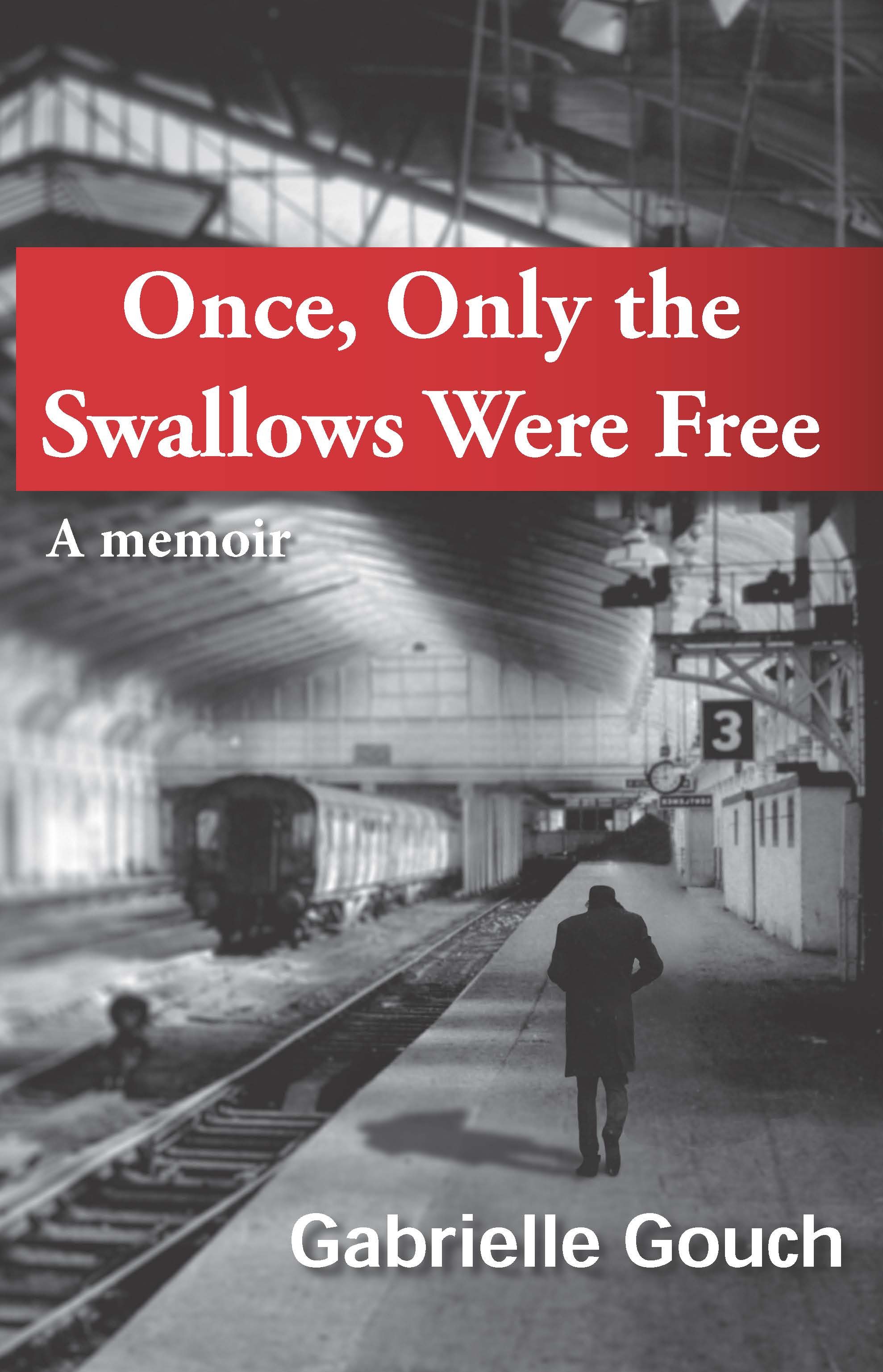
Gabrielle Gouch, Once, only the swallows were free (Review)

Gabrielle Gouch, Once, only swallows were free

Courtesy: Hybrid Publishers

Do you differentiate memoir from autobiography? I do. For me, a memoir, such as Gabrielle Gouch’s Once, only the swallows were free, deals with a specific aspect of a person’s life, such as a sportsman writing about his career when he retires from it or a person writing about her growing up, like, say, Alice Pung‘s Unpolished gem. An autobiography, on the other hand, I see as something more holistic, something written near the end of one’s life and summing up its entirety. What do you think?

Gabrielle Gouch was born in Transylvania, Romania to parents who’d both fled anti-Semitic Hungary. She moved elsewhere in Romania with her family before they emigrated to Israel, without her older half-brother, when she was around 20. A few years later, she emigrated on her own to Australia which has remained her home ever since. This is the basic chronology of her life, but Gouch is not really interested in telling us this story chronologically – and in fact, she’s not really interested in telling us the story of her life. What interests her is the brother, Tom, left behind. She wants to know about his life during and post communism in Romania. She also wants to know about the gaps in her knowledge of the family.

Gouch therefore doesn’t tell the story in a simple chronology. While she clearly signposts where you are as you read, I found it a little disconcerting to start with, until I felt familiar with the places and people she was writing about. This, however, could be due to other things going on in my life as I started this book. The memoir starts in 1990 with her first return to Transylvania after “the collapse of communism. The eternal and invincible communism”. A return that took place 25 years after she had left. As the book progresses, she visits Cluj several times, catching up with her brother, learning about her family. It’s a sad story – not surprisingly. Tom’s mother, the much beloved, vivacious Hella, died in childbirth. His – and eventually Gabrielle’s – father, Stefan, married the nanny, refugee Roza, hired in to look after the physically handicapped Tom. (As far as I can tell, his condition is hemiplegia, probably caused by the forceps birth). Roza and Stefan went on to have two children – Gabrielle and, somewhat later, Yossi – but country girl Roza was never accepted by Stefan’s well-to-do family.

The book proper starts in 1962 with the family expecting permission to migrate to Israel to arrive any minute. Of course, it doesn’t – and it is not until some 40 or so pages and three years later that they are finally able to leave. They leave without Tom, now well into his twenties, but exactly why this is so is not understood by Gouch. During the course of the book she finds out why – and she finds out what Tom’s life was like under the communist regime. It’s a very interesting story, and once you master the time shifts across the book’s seven parts, it’s a very readable one. The very short Part 2, for example, returns to the opening of the book, her return in 1990. Then Part 3 jumps to 2002 and another trip of hers “home”. From then on the focus is her time with Tom and the stories she gradually pieces together.

Gouch is a good writer. Her language is expressive, but not over-done. That is, she has some lovely turns of phrase that capture moments and people well. Here, for example, she describes her family’s reaction when her mother says something surprising:

We looked at her as if she had made her way into our home by the back door somehow, a woman we had never met before.

And I like this simple description of children:

Well, children are like shares, you never know how they will turn out.

There are two main threads in the book, one being life under communism, as experienced by Tom, and the other being the life of the emigrant, as experienced by her family. The book is enlightening for people interested in either of these topics, but I’m going to highlight the second, the emigrant’s life, because she explains it beautifully – from the tough life her parents experienced in Israel to her own experience of dislocation from culture. She writes, as she starts to reconnect with her brother:

Noone ever told me that you cannot turn physical distance into emotional one, you cannot forget your native country, you cannot give up your mother tongue. It deadens you inside.

She gives one of the best descriptions of the relationship of language to culture that I have read. She meets an old professor who had chosen to stay living under the repressive regime because, he said, “This is my native land, my language. I belong here.” She writes:

His words lingered. ‘My native land, my language.’ For most people, the sound of Hungarian is awkward; for me it is poetry and delight. When I say ‘flower’ in English I refer to a plant with petals and colours. But the word in Hungarian, virág, sounds to me melodious and joyful. Yes, you can learn to speak a language, you can even learn to think in a language but will you feel the same joy and sadness at the sound of those words? Feel the black desperation or be uplifted by hope? Will the word love evoke the same tenderness and ardour? I don’t think so.

Australian Women Writers ChallengeGouch also writes about “history”, about the impact on people of living through some of history’s trickiest times, as her family had. Her description of her father’s life – a loving father who had worked hard – is heart-rending:

A man who was a Jew but not Jewish enough, an Israeli but not quite, a Hungarian Jew among Romanians and a Jew among Hungarians. Finally he left this world with its divisive nationalisms, ideologies and religions which had marred most of his life. He was just another man on whom history had inflicted its painful and murderous pursuits: Nazism, the Second World War, the communist dictatorship, the Arab-Israeli conflict and Israeli religiosity. History had match-made him, history had controlled his life. It was over. He joined the infinite Universe.

I’ve possibly quoted too much, but Gouch’s words are powerful and worth sharing.

“Knowledge”, Gouch’s father once told her, “is your only possession”. Once, only the swallows were free is a story of discovery for Gouch, but for us, it provides a window into a particular place, time and experience that most of us know little about. The knowledge, the understanding, we gain from reading it is a precious thing.

Gabrielle Gouch
Once, only the swallows were free: A memoir
Melbourne: Hybrid Publishers, 2013
279pp.
ISBN: 9781921665998

(Review copy supplied by Hybrid Publishers)

Lesley Lebkowicz, The Petrov poems (Review)

Canberra poet Lesley Lebkowicz has made a couple of brief appearances in my blog: first in my post on The invisible thread anthology, and then when she won this year’s ACT Poetry Award. I was consequently more than happy to accept for review her latest book, The Petrov poems.

English: Evdokia Petrova at Mascot Airport, Sy...

Evdokia being escorted by two Russian diplomatic couriers to a plane at Mascot Airport, Sydney (Presumed Public Domain, from NAA, via Wikipedia)

It’s intriguing that nearly 60 years after the events, we are still interested in the Petrovs. In fact, I have written about them before, in my review of Andrew Croome’s historical novel, Document Z. Most Australians will know who they are, but for those global readers here who don’t, the Petrovs were a Russian couple who worked at the Soviet Embassy in Canberra in the early 1950s. Vladimir (Volodya), Third Secretary, and his wife Evdokia (Dusya) were both Soviet intelligence officers (or, to put it baldly, spies). They defected in 1954. The defection was particularly interesting because Vladimir defected first, and Evdokia two weeks later at the airport in Darwin after some dramatic scenes at Sydney’s Mascot airport.

At first glance, The Petrov poems looks like a collection of poems but in fact it is a verse novel, albeit one comprising many short individually-titled poems. These poems are organised into four “chapters”: Part 1, Volodya defects; Part 2, Dusya defects; Part 3, The Petrovs at Palm Beach; and Part 4, The Petrovs in Melbourne.

I must admit that I wondered, initially, why Lebkowicz had decided to write about the Petrovs, given that they have already been picked over in novels, non-fiction, theatre, and television. But, as soon as I started reading it, I could see why. Lebkowicz gets into the heart of these two characters, bringing them back to ordinary human beings who were caught up in something that was both of and not of their own making. It is a rather pathetic story. There are no heroes here – and yet, as happens with these sorts of things, it captured the world’s attention for a short time.

Now, before I comment specifically on this book, I’d like to quote another Canberra poet Paul Hetherington from an interview with Nigel Featherstone in the online literary journal Verity La:

One of the ways I recognise the poetic is when I find works in which language is condensed, ramifying, polysemous and unparaphraseable. Part of what I wish to do when writing poems is to make works that speak in such ways – but to do so without resorting to any kind of trickery or artificial obscurity.

While I wouldn’t use words like “ramifying” and “polysemous”, and while we can paraphrase the ideas to a degree, this is pretty much what Lebkowicz achieves in The Petrov poems. In just 80 pages or so she manages to not only tell the story of their lives but get to the nub of their hearts and psyches – as much, anyhow, as anyone can do for another person. We learn that Volodya is not succeeding at spying:

He wants to succeed but stumbles. Failure
follows him like iron torn from a roof and
rattled along the wind.
(from “Glass I”)

We learn that he loves Dusya (“Dusya is his place in the world”), but that he loves booze, his dog and prostitutes more. He seems weak, but he’s a man struggling. With Stalin’s death and the arrest of his boss, he fears reprisals when he returns to Moscow. Here he is at the moment of defecting (which he does, after disagreements on the subject, without telling Dusya):

Once again he’s going to be wrenched from the soil.
He remembers his father – struck by lightning, buried up to his neck
by foolish men, and dying in the freezing night.
Then chaos and not enough food. Uprooting a full-grown plant
is no easy thing: so many roots
are wound through the earth. He mutters the Russian words
for sadness and home and ruffles his Alsatian’s fur.
(from “Loss”)

Dusya, on the other hand, is a stronger character, but she has suffered severe losses in her life, including her first love and her daughter:

This is something Dusya does not allow herself to think: how her
life might have been if Romàn had not been arrested. […]
If she had gone on taking happiness for granted. Living with
Romàn had been like walking along a winter street and arriving
in a field of warm poppies. If Romàn had not been broken in a
labour camp. If Irina had not died –
(from Romàn I)

While she understands Volodya’s fear, she fears even more what might happen to her family if she defects. At Darwin airport she doesn’t want to make a decision: “If only/this government man would abduct her”. But of course he can’t.

We then watch them as their relationship falters, first during ASIO’s interrogation, and then the years of living together in Melbourne, officially in disguise but known nonetheless. (“The whole street knows they are Petrovs -/too many photos, too much publicity”).

While I’m not a Petrov expert, I’ve read enough to feel that Lebokowicz’s interpretation is authentic. She explores what happens when the political interferes with the personal; she recognises the pull of culture and the despair that losing one’s home can engender; and she sees that corruption is not confined to communism:

so when ASIO falsifies (No! Not falsifies
amends, adjusts, even corrects) the documents
he brought from the Embassy – of course he assents
(from “Bones”)

Australian Women Writers ChallengeThese are wonderful, readable poems. They are poetic but, to quote Paul Hetherington’s goal, without “trickery” and “artificial obscurity”. The imagery is strong but clear. I particularly liked the way Lebkowicz varies and plays with form. None of it is rhymed, but there are sonnets, couplets, poems with multi-line stanzas but closing on a single dramatic line, and others. There are poems with short lines or terse rhythms, indicating action or stress, and poems with long lines conveying thoughts and reflections. There is also a shape-poem, “Torment”, in which the zigzag shape mirrors Dusya’s distress (“Her life is a staircase that switches directions”).

Like any good historical fiction – if a verse novel can be called that – you don’t need to know the history to understand the story told here. And like any good historical fiction writer, Lebkowicz has produced something that enables us to reconsider an historical event from another perspective and to understand the humanity below the surface of the facts. An excellent and moving read.

Lesley Lebkowicz
The Petrov poems
Sydney: Pitt Street Poetry, 2013
95pp.
ISBN: 9781922080141

(Review copy supplied by Zeitgeist Media Group)

Australian Women Writers 2013 Challenge completed – and Miles Franklin Award Winner 2013

Australian Women Writers ChallengeAs regular readers here know by now, last year I broke my non-challenge rule to take part in the Australian Women Writer’s Challenge. It was so satisfying, I decided to do it again this year. After all, it’s really the challenge I’d do when I’m not doing a challenge.

Like last year, I signed up for the top level: Franklin-fantastic. This required me to read 10 books and review at least 6. I have now exceeded this – and will continue to add to the challenge, as I did last year – but one of the requirements of completing the challenge is to provide a link to a complete challenge post. Here is that post.

I have, in fact, contributed 13 reviews to the challenge to date, but decided to wait to write my completion post until I’d read 10 books. I have now done that – with the other three being individual short stories or essays.

Johnston, House at Number 10 bookcover

Courtesy: Wakefield Press

Here’s my list in alphabetical order, with the links on the titles being to my reviews:

Except for the Baynton, Astley and Johnston reviews, they are all for very recent publications. I would like in the second half of the year to read some more backlist, more classics. Will I do it? Watch this space!

Miles Franklin Award winner for 2013 …

has been announced and it is Michelle de Kretser‘s Questions of travel. I’m pretty thrilled as this is the book my reading group decided to do in July (from the shortlist). As much as I enjoyed Carrie Tiffany’s Mateship with birds, it has won two significant awards this year already, and I don’t think it serves literature well for one book to have a stranglehold on a year’s awards – unless there really is only one great book published in a year but that would really be a worry wouldn’t it?!

You can read about the announcement on the Miles Franklin Literary Award site.