Monday musings on Australian literature: Some New Releases in 2017

This is the last of what seems to have become my set of end-of-year-beginning-of-year posts – and it’s about, as if you couldn’t tell, the books that will be published this year. Obviously, I can’t list them all – even if I could know them all – but it’s fun to share a few that look interesting.

Now, luckily for me, part of my work has already been done by Elizabeth Lhuede who posted coming releases by Australian women writers on our challenge blog. I don’t plan to repeat that here because you can check it out there – though I may highlight one or two of particular interest to me. This means, of course, that my list – mostly drawn, like Elizabeth’s, from an article by Jane Sullivan in the Sydney Morning Herald – will primarily feature men (because, yes, I do read them too.) And, because this is a Monday musings on Australian literature post, the list will be further filtered to include just Australian authors.

Authors I’ve read before

  • Alex Miller’s The passage of love (Allen & Unwin). Miller had said he’d finished writing novels, but clearly not, and a good thing too (though on this blog I’ve only reviewed his Lovesong).
  • Kim Scott’s Taboo (Picador, August). That deadman dance , which I’ve reviewed here, is for me one of those unforgettable books. I wonder if this one will be too? By the way, Fremantle Press is re-releasing Scott’s first Miles Franklin winning book, Benang, in its Treasures series.
  • Ouyang Yu’s Billy Sing (Transit Lounge, April). This is about a “half-Chinese Gallipoli hero” so very different I expect to the book I’ve reviewed here, Diary of a naked official.

Authors I haven’t but maybe should have read before

  • Steven Carroll’s A New England affair (Fourth Estate, September). The final book in his six-part Glenroy series chronicling life, from the 1950s, in an outer Melbourne suburb.
  • Brian Castro’s Blindness and rage: A phantasmagoria (Giramondo. April). Castro is one of the shameful gaps in my reading to date.
  • John Kinsella’s Old growth (Transit lounge, February). A short story collection.
  • Stephen Lang’s Winderran (UQP, July). An author I don’t know much about, but I should because he’s won and/or been shortlisted for some significant awards.
  • Adrian Mitchell’s The beachcomber’s wife (Wakefield Press, January). Another  author I’m not greatly aware of but he writes literary historical fiction (and non-fiction), so I clearly should be!
  • AS Patric’s Atlantic black (Transit Lounge, October). By the middle of the year I’ll be able to move this to the “authors I’ve read” category as I will be reading his Miles Franklin award-winning Black rock, white city in a few months.
  • Alex Skovron’s The man who took to his bed (Puncher and Wattman, May). A collection of short stories from a multiply-published poet.
  • Chris Womersley’s City of crows (Picador, September). Hmm, about 17th century witchcraft apparently.

Debut authors – so I can’t have read them before

  • Charlie Archbold’s Mallee Boys (Wakefield Press, May). I’m determined to visit the Mallee this year (I’ve only touched its edges before) so this may be the book for me.
  • Michael Fitzgerald’s The Pacific room (Transit Lounge, July). It’s about Robert Louis Stevenson in Samoa.
  • Dennis Glover’s The Last Man in Europe (Black Inc., July). Another historical fiction about a well-known character, this time it’s Orwell and his writing of Nineteen Eighty-Four.
  • Tony Jones apparently has a political thriller coming out with Allen & Unwin later in the year. I normally wouldn’t have mentioned this – given there’s no title and it’s not really a key genre for me – but Jones is well-known in Australia (unlike most of these debut authors) for his work on television as a political commentator and current affairs show anchor. (Sullivan lists a number of crime and thriller books coming out, so if you’re interested do check out the article link above).
  • Gordon Parker’s In Two Minds (Ventura, April). Parker is the founder of the Black Dog Institute, and Sullivan describes this book as “a rollicking tale of mental illness”!
  • Peter Polites’ Down the Hume (Hachette, March). He’s described as “the new Tsiolkas or Luke Davies” so this is likely to be urban and gritty.

Some women writers I must mention

  • Bernadette Brennan’s biography. A writing life: Helen Garner and her work (Text, April). A high priority for me. I hope it’s as book as Karen Lamb’s biography of Thea Astley.
  • Rebekah Clarkson’s Barking dogs (Affirm Press). A bit of an anomaly in this list as I don’t know Clarkson, but she is apparently an accomplished short story writer, and I do like Affirm Press.
  • Sara Dowse’s As the lonely fly (For Pity Sake, May?). Dowse, like Farmer below, hasn’t published for some time so it’s great to see a new work coming out. I’ve reviewed her Schemetime here.
  • Beverley Farmer’s These waters: Five tales (Giramondo, July). I read and loved her back in the 1980s to early 1990s. This is a collection of short stories.
  • Kate Grenville’s The case against fragrance (Text, February). Listed by Sullivan under “politics and big issues”! Sounds interesting.
  • Marilla North’s book on Dymphna Cusack, whom I’ve reviewed here a couple of times, is well due I think.
  • Jane Rawson’s From the Wreck (Transit Lounge, March). I so enjoyed Rawson’s imaginative A wrong turn at the Office of Unmade Lists that I’m intrigued to so what she comes up with next.
  • A web of friendship (Miegunyah Modern Library from the University of Melbourne, February), which contains selected letters of Christina Stead, and Loving words (Brandl and Schlesinger, June), containing letters between Vance and Nettie Palmer. Both of great interest.
  • Alexis Wright’s Tracker Tilmouth: An essayed memoir (Giramondo, October). Essayed memoir? Is that how I should have described Fiona Wright’s and Georgia Blain’s memoirs last year? Anyhow, this is about an indigenous activist.

Do you actively look out for coming releases, or just wait until they appear and you read or hear about them?

Louise Mack, The world is round (Review)

Louise Mack, The world is roundI’ve had Louise Mack’s debut novel, The world is round, on my TBR for about 20 years. Published in 1896, when she was 26 years old, it’s a fairly straightforward tragicomedy about a young well-to-do 21-year-old girl, Jean, who aspires to be a writer, and the two men who love her, the 30-plus-year-old self-confident, successful lawyer-and-writer Musgrave, and the around-25-year-old, shy and financially struggling Harrison. It’s a short work, a novella really, being just 93 pages in my edition.

Now, when I was searching Trove for information about Mack for this week’s Monday Musings, I found a couple of articles about her writing, amongst a myriad about her lecture tours. One was written in 1895, before this novel was published but after some of her verse and short prose pieces started appearing in journals like the Bulletin. The article quotes Mrs Bright, editor of Cosmos:

In these early days it is not possible to predict the place that Miss Mack is destined to fill in Australian literature. At present she shines chiefly in dialogue and a quaint, satirical style; peculiarly noticeable in sketches like “A study in Invitations.” In time she may develope [sic] a faculty for descriptive writing, which will supply the only quality now lacking to ensure her high rank among the popular novelists of the day.

The other was written in 1896, soon after the publication of her novel. The writer says:

Miss Mack has a particularly taking satirical style, but her descriptive writing is hardly up to her ability in the other department. Were she to but slightly improve in that qualification it would enhance the already strong position she has attained in the ranks of popular writers.

So, the praise is qualified. Her niece, the writer Nancy Phelan who wrote the introduction to my edition, discusses her not living up to this early potential. She notes that a common view is that she was “praised too soon, told she was good and encouraged to rush into print” when she needed time to sit back and think, and “be disappointed”. Phelan writes:

She wrote instinctively … but without proper guidance and criticism her work too often became facile. Facility, with a fertile imagination and love of inventing stories, made her a successful romantic novelist but it eroded her talent, and years of formula writing elbowed aside the poet. She never lost her poetic awareness but had little occasion to use it. Haste, lack of reflection, putting words on paper before they were ready robbed them of their true value; it was quicker and easier to write of trivial events than to try to address deep, difficult thoughts and emotions.

Yet in all Louise’s books there are glimpses of the writer she might have been. Even in her most idiotic novels there are occasional patches of true feeling or sensitive descriptions …

Why have I written all this? Well, partly because it might explain why this particular writer from the past has sunk from view. However, I’d argue that The world is round is worth reading – for a couple of reasons. One is that it is a good read, in which you can see why she received early praise. As our 1895 and 1896 writers above say, her dialogue is good and she has a lovely, light, satirical eye. (I’m going to share an excerpt which shows both of these in a Delicious Descriptions next week.) The other is that it is a good example of why “classics” (or older works) are worth reading. I’m going to focus my post on these two points.

a “brilliant little study”

The 1896 writer notes that “the reader’s report” for this novel described it as a “brilliant little study of two men and two women, sparkling and witty, and told in a graphic style”. It is a fun read, still today. It has a light touch, never wallowing in the issues it raises, and not weighed down with long explication or too many adjectives that you sometimes find in debut novelists. There are moments of sadness or pathos – obviously at least one of the would-be lovers is going to be disappointed, for a start – but Mack never becomes sentimental. (You can see this skill in those columns I referred to in my Monday Musings.)

The story is told third person, chronologically, in named chapters – “Musgrave”, “Jean”, “In which a friend is brutal” – and takes place in various interiors, such as James Musgrave’s chambers, Harrison’s classroom, and Jean’s home. Mack draws on the life she knows, presenting a picture of a small group of characters moving around each other in a small environment. This is very reminiscent of Jane Austen, to whom there is a tongue-in-cheek allusion in this conversation between Jean and Musgrave:

“I don’t suppose I will ever be a George Eliot, or a Thackeray, but perhaps I may be a–”
“Miss Austen.”
Miss Austen! oh, surely I’ll be something b–I mean surely I won’t be like her.”
“She did some good work.”

I mean to say! Anyhow, Mack’s descriptions of her small group of people and their interactions ring true, while also drawing on standard literary tropes, like the well-to-do heroine and her poor friend, the experienced confident suitor and the awkward poor one. The plot plays out, perhaps more through little vignettes than a flowing narrative, but it is enjoyable to read, largely because these vignettes are well-drawn, and confidently mix a light tone with the occasional darker one. I’ll leave the story there.

on reading “classics”

As I was reading this old book or forgotten “classic” (let’s not get into the definitions of “classic” here now), I started thinking about why we read such books. It’s easy to explain those classics that belong to the canon: they address the big universal themes or ideas, their writing is skilled and timeless, and, often, they have innovated or contributed something to literary culture. But, what about what we might call the second rung, books like Mack’s The world is round? Are they really worth reading over contemporary writers? I’d say yes, and one of the justifications is in the first line of Mack’s novel. It starts:

Sydney was revelling in the clear, cold weather of June, the most delicious month of the Australian seasons.

Now, that is not an attitude most Australians would have today, but is clearly how the colonials, those transplants from mild temperate Britain, felt about Australia’s climate. In other words, books written in a different time can provide a fascinating insight into the attitudes and values of that time. They might be fiction, but they can’t help also betraying their era. For students of colonial Australia, Mack’s novella offers some delightful insights into “the life and times”.

I don’t want to bore you with details, but will just share one more example. It concerns the poor friend who tells Jean that she “can’t write about Australia, it doesn’t appeal” to her. She admits she’s a “Colonial” but she knows nothing of bush life. She says, “I’ve never taken my country into my soul, and never will until I get away from it”. However, she’s poor, and is offered a job governessing in the bush on a cattle station. She learns to love the Bushies and to prefer them over “the posturing, pseudo-intellectual Sydney set”. She writes several pages to Jean on the subject. Now, this friend plays a role in the plot in terms of providing a counter assessment of Jean’s literary skills and there’s a plot reason for sending her away, but I can’t see much reason for this little outburst, except for Mack to make some point about colonial society and its values.

So, there you have it. This is less review, more wandering reflections, but I hope I’ve convinced you that Louise Mack is a worthy addition to the list of past writers who should be kept alive.

aww2017-badgeLouise Mack
The world is round
Pymble: Angus & Robertson, 1993 (orig. pub. 1896)
93pp.
ISBN: 9780207180163

Monday musings on Australian literature: Louise Mack

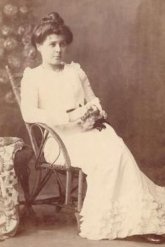
I promised in my Reading Highlights post that my first review of the year would be for a book from my TBR pile, and so it will be – hopefully in a couple of days. However, I suspect that the book, and maybe even the author, will be unknown to most of my readers here so I’ve decided to use my first Monday Musings of the year to introduce the author, Louise Mack.

Louise Mack, 1890s

Louise Mack, by Kerry & Co, 1890s (Photo:
National Library of Australia, nla.pic-an23474744, via ADB)

I’ve had Mack’s first novel, The world is round, on my TBR since the mid 1990s when I found it on a remainder table. It had been published under Imprint Classics by Angus & Robertson in 1993, and although it’s only 93 pages, I somehow didn’t read it then, and kept not reading it – until now. But, more on it later this week.

Louise Mack was born in Tasmania in 1870, the seventh child and first daughter of a family which ended up numbering 13! Her father was a Wesleyan minister, and they moved around, ending up in Sydney by the time Mack was in high school. She went to Sydney Girls’ High where she met and became friendly with Ethel Turner (who was also born in 1870). I wrote in my post on Ethel Turner’s juvenilia that Ethel and her sister, Lilian, established a magazine Iris when the school’s newspaper, Gazette, which was edited by Louise Mack, rejected Ethel’s contributions! However, I understand that they were very good friends and, in fact, Turner apparently met her husband at the Mack family home.

Australian author Nancy Phelan, who was Mack’s niece, wrote the entry about her in the Australian Dictionary of Biography (ADB), and also the introduction to the novel I’ve read. I don’t want to reiterate what you can read in the ADB, but here’s a potted history. After school she worked as a governess before being becoming “a regular contributor to the Bulletin in the late 1880s”, with the encouragement of owner-editor J. F. Archibald and editor A. G. Stephens. Phelan suggests that Mack perhaps received too much attention and praise, implying that it impacted the development of her talent. She married, but it failed and she went to England, around 1900, where she wrote novels and serials, travelled, and worked as a journalist, including as a war correspondent. She returned to Australia in 1915 and became a touring speaker or lecturer, something she did right through to the 1930s. During this time back in Australis, she wrote more novels and married a second time (more happily), before dying in 1935, “possessionless”.

“little lady”

They’re the dry facts. She was quite a colourful character, with Phelan describing her as “fair, pretty, extroverted, audacious, unpredictable, a genuine Bohemian who chose a life of adventure and insecurity”. Phelan writes in my novel’s introduction that Mack “grew up in a series of large, shabby, untidy parsonages, with no luxuries but plenty of books … books, as necessary as bread, were constantly discussed”. I found an article in Trove which announces her as a rising literary star. It suggests that:

Miss Mack owes much of her development to her mother’s literary tastes, and the varied training that an intellectual father can bestow on his children. (The Methodist, 23 Nov 1895)

My Trove search retrieved pages and pages of hits on her name, many of them from newspapers all around Australia – from Dubbo to Perth – announcing her lecture tour on her war experience, which included experiencing German occupation and bombardment in Belgium and going behind German lines. In her mid to late 40s at the time of the tour, she is, patronisingly to our modern ears, described in these announcements/reports, as “this charming little lady” or “the pretty and charming little lady”. This is the woman who, one of these articles says, was asked by Scotland Yard to report on a meeting of spies with Germans in Antwerp to which she’d been an eye-witness. This article’s writer also calls her a “little lady” but a bit later describes her more appropriately as “this daring and travelled lady”. S/he reports on an interview with Mack:

“I just love lecturing,” Miss Mack said; “it is the most fascinating work I have ever taken up. Indeed, I may say that I just live for the moment when 8 o’clock strikes, and I and my pictures begin to tell the story of a Woman’s Experience in the Greatest War this world has ever known.” (Western Mail, 17 September 1915)

Mack, you see, went the whole hog and illustrated her talks with moving pictures. Reports suggest that she was an excellent and engaging speaker. Some of these talks were given under the auspices of, and raised money for, the Red Cross. Her book, A woman’s experiences in the Great War, was published in 1915

I’m not going to discuss her writing in any detail here, because I’ll do that in my review post. Instead I’ll share a couple of columns that she wrote in the 1930s in the Australian Womens Weekly, for whom I’m guessing she must have been a columnist. These columns –  Louise Mack’s Diary and Louise Mack Advises – provide some insight into her values and sense of humour.

In a Diary column I found this on Mrs Bradfield, wife of Australian engineer and designer of the Sydney Harbour Bridge, John Bradfield:

I’VE always been wondering what would happen if Dr. Bradfield got his title, and dear Mrs. Bradfield became Lady Bradfield, and somehow, between myself and my diary, I must confess I’m glad that Mrs. Bradfield is still there. Dozens of times coming back from hospital, getting out of the train at Gordon, I would find my suitcase seized, or my parcels grabbed, and there’d be Mrs. Bradfield trotting along besides me, coming out of her way so that she could help carry someone’s burdens.

Could Lady Bradfield have done that? Ah, yes! Title or no title, this little simple, pale, absolutely natural woman, all kindness, with a quite remarkable craze for carrying other people’s parcels, would always have been Mrs. Bradfield. That’s her real title, her many friends think.

I like her focus on kindness, on the unimportance of “titles”, and her light humorous touch.

And, one of the advice columns. It’s called “The gentle art of giving” and asks “Do you give? Or Do you grab? The commonest way of giving is to give what you can spare. But that’s not giving at all, ethically speaking”. Fascinating. It made me think of Australian ethicist Peter Singer and his views on giving. However, let’s not get sidetracked by that now. Mack goes on to suggest that giving is good for your looks! She suggests getting on a tram and looking around:

Can’t you tell at a glance who hoards and who gives? It is written on their faces. It is graven around their lips. It is mirrored in their eyes, giving, or grabbing. The face that gives has a better complexion because the blood flows happily through capillaries kept open by the light-heartedness of generous doings. The face that gives has brighter eyes and sweeter lips. Oh, particularly about the lips does the will to give reveal itself in its full beauty.

She then gives examples of women who give and don’t give, ending with Myrtle who has almost no food left, when in comes her brother. Mack writes:

And there before my eyes took place a metamorphosis. Ovid wasn’t in it. One moment Myrtle was a grey woman with a quarter of a loaf of bread and a cold chop, and now she turned into a gracious creature, all wealth and possessions, that she was handing away to Tom. She whisked a bit of tea into one parcel, a quarter loaf into another, two potatoes and an onion into another, a cold chop out of her safe, two apples for the children, then pressed threepence into poor old Tom’s hand, with, “It’s pouring; take a tram.”

That was giving, indeed.

Giving is when you press your thumb down, down on the indicator of your heart—and, pressing still, and yet again pressing, send your will to give up, up, up, to the very highest storey of your soul.

Louise Mack sounds like a woman worth knowing … and yet is, I believe, unknown to most Australians. Such is life!

Georgia Blain: Births deaths marriages: True tales (Review)

Georgia Blain, Births deaths marriagesPoignant is a word I actively avoid in my review posts, as it’s such a review cliché, but sometimes a book really does call for it, and the late Georgia Blain’s essay-collection-cum-memoir, Births deaths marriages, is such a book. In the last essay, she talks of her mother, broadcaster, activist and non-fiction writer, Anne Deveson, trying her hand at fiction just as she, Blain, was trying non-fiction. She writes:

We had switched places, my mother and I. And we looked at each other. Both mothers. Both writers. Both trying on each other’s shoes, taking a few steps back, eyes on our feet, before we glanced across once again, curious as to how this had happened (“A room of one’s own (2)”)

The poignant thing, of course, is that these two who were so closely entwined in life, not just as mother-and-daughter but as writers, died within a few days of each other – with the sadly ironic twist that the daughter died first. It makes my heart break a little, something I wouldn’t have felt had I read it before these deaths. Such is the impact of context on our reading, eh?

Anyhow, onto the book. Births deaths marriages (the title has no separating commas) is the second memoir-in-essay-form that I’ve read this year, the first being Fiona Wright’s Small acts of disappearance. Both books follow a general chronological arc but the essay form makes it easy for this not to be strict, allowing the writers to follow tangential yet relevant threads. From here, though, the two “memoirs” depart, because the respective writers’ lives are very different. Wright, the younger writer, was writing primarily about her twenties and focused particularly on her experience of an eating disorder, while Blain was in her mid forties when writing hers. She was a published novelist and, significantly, had experienced a much more public life, not only because both her parents were public figures but also because of her mother’s own memoir, Tell me I’m here, about life with her schizophrenic son.

This book – with its intensely personal subject matter and its unusual form – offers rich opportunity for discussion. To do it justice, I’m going to have to narrow it, so I’m going to focus on form and style, but some content will push through along the way. The way I see it, there are two broad types of memoir, those which tell about lives most of us know little or nothing about (such as Frank McCourt’s Angela’s ashes, or, more obviously, celebrity memoirs) and those which are about lives much like ours. Georgia Blain’s falls into this latter category. For these ones to engage readers, they need to offer something illuminating about the lives we lead.

“the truth was a little more complex” (from “Getting in the boat”)

The first essay in Blain’s memoir is titled “A room of one’s own”. In it she reflects on her childhood, on how her mother would write about their family for newspaper columns and how reading these columns later, with their bland pictures that “did not accurately reflect who we were”, brought back the child she was, the child who wanted her family to be like the one in the columns, who thought all other families were like that and not like the messy reality she was experiencing. These bland columns are the antithesis of what Blain shares in her essays (and indeed of what Deveson herself shared in her memoir). It’s all about purpose I suppose. Newspaper columns tend to be more about entertainment – with perhaps some subtle messages about life – whilst memoirs, good ones anyhow, are about “truth”. If we don’t feel the memoirist is sharing the “truth” of her (or his) experience we are going to lose interest pretty quickly.

Blain convinces me that she is sharing her truths when, for example, she describes, in “The story my mother tells me” and “The outside country”, her fears about childbirth and her struggle to cope with the demands of motherhood. She exposes herself with soul-baring honesty when she shares her sense of disconnect, of being alone, of being “shattered” when her baby is born. She writes that she wanted to give her daughter “the place in my life that she needed and deserved, one that was without my terror and anxiety about loss of self” but it took several months for this to happen. She writes with similar honesty about her relationship with her husband Andrew. It takes some guts to write what she does.

In “Close to the bone”, Blain addresses more directly her writing life, and the difference between writing fiction, which she’d done until this book, and writing about herself, which she was now doing. Reflecting on her brother’s death, she says:

The complexity and rawness of an immediate response to pain is not easy to understand and recognise, let alone pin down in writing, in a photograph or in a film. The very act of capturing distorts. Once neatly contained, all that we felt is no longer unruly, unreasoned, immediate and wild. Perhaps this is why we hold these moments as truth. They cannot be replicated. Each time we try, we dilute their intensity, we confuse, holding up false images of this so-called truth that leave us reeling as we try to reconcile what we see encapsulated with what we have experienced.

Even her “truth”, the one she is writing, she sees, is not easy to grasp. She goes on:

I believed, and still do, that if I wrote about my own life and the lives of those I love, I had to tell the truth. But foolishly, I believed the truth lay only in the immediate…

These two excerpts reminded me of that David Hockney comment about happiness being a retrospective thing I wrote about recently, because I read them as her recognition that there are different truths – those immediate reactions and feelings, and those that come later. It’s this sort of reflection on “how” we live and interpret our lives which makes Births deaths marriages such a meaningful read.

I said that this memoir exemplifies the second type of my two simple categories, but I meant it when I defined them as being about “lives much like ours” because no life is the same. And so, Blain, like all of us, had her own set of challenges, including her control-freak, sometimes-violent father, and the tragic loss of her schizophrenic brother. One of the joys of her book lies in watching her explore and expose her own development, her learning not only to come to terms with these experiences in her life, but to use them to come to a more open, flexible way of understanding. She writes of “chasing absolutes”, of believing that “there was one truthful answer to every question” which she had to pin down, when in fact, as she learns, the truth lies in the “layers”.

In the end, there are no resolutions, she realises, but there are momentary happy endings along the way. She also realises that “writing about oneself” can “amount to more than a purely personal exercise”. It sure can, as she has proven here. This memoir is special – and not just because of the context in which I am reading it – but because it’s honest, because it doesn’t pretend to have it all sorted, because, in fact, it’s true – to her life and experience, and also to ours.

AWW Logo 2016Georgia Blain
Births deaths marriages: True tales
North Sydney: Vintage Books, 2008
ISBN: 9781742743981 (eBook)

Monday musings on Australian literature: Australian Women Writers’ Challenge 2016

AWW Logo 2016For the fifth year in a row, I’m devoting my last Monday Musings of the year to the Australian Women Writers Challenge*.

This year has been one of consolidation rather than of huge change for the Challenge, as we got used to our self-hosted site to which we moved in 2015. The big advantage of this move was that it enabled us to produce a single searchable database of all reviews logged since the challenge started. It now contains reviews for nearly 3,600 books across all forms and genres of Australian women’s writing, an increase of 20% on last year’s total. A good achievement n’est-ce pas?

Once again the Challenge ran some special events during the year, achieved some milestones, and introduced some new initiatives. These include:

A big thanks to author/researcher Jessica White for her special posts on diversity – the Migrant heritage, Aboriginal and Torres Strait Islander Heritage, and writers with a disability  posts – and to Kelly (Orange Pekoe Reviews) for creating the Bingo Challenge, which we hope to run again in 2017. And a shout out too to Brona, Debbie Robson and Elizabeth who often commented on my AWW round-up posts.

The Australian Women Writers’ Challenge is the only challenge I do (or have ever done). This year I posted 30 reviews for the challenge, three more than last year. I managed a similar variety in my reading, but only dipped once into my TBR pile (to read part of Christina Stead’s Ocean of story for Lisa’s ANZLitLovers’ Christina Stead Week). Last year, I challenged myself to tackle my TBR pile and I failed, miserably. I also let the ball drop this year in one of my favourite areas, classic Australian women’s fiction. I’m therefore making no promises, setting no goals (at least publicly!) for next year.

Anyhow, here’s my list of works read for this year (with links to the reviews):

Debra Adelaide, The women's pagesFICTION

Tegan Bennett Daylight, Six bedroomsSHORT STORIES

POETRY and VERSE NOVELS

Emma Ayres, CadenceNON-FICTION

As in each year, there are subtle differences in this year’s list, though none are big enough to suggest my reading tastes have changed! For example, last year 48% of the reviews were for novels, while this year only 40% were. Half of these were debut novels. This year saw a return to 2014’s heavy emphasis on Memoir in my non-fiction reading, though there was some interesting playing with form. Not only were a couple of memoirs told through essays, but I also read three mother-daughter stories which combined elements of memoir with biography.

aww2017-badgeAnyhow, if you are interested in the challenge, you can check it out here. The 2017 sign up form is ready so do consider joining up, as we welcome all – women and men – to join us. I’ll be there again. The challenge is also on Facebook, Twitter (@auswomenwriters), GoodReads and Google+.

Finally, a big thanks to Elizabeth and the rest of the team – including Lewis, our wonderful database developer – for making it all such a cooperative, and enjoyable experience. I look forward to seeing what 2017 brings.

* This challenge was instigated by Elizabeth Lhuede in 2012 in response to concerns in Australian literary circles about the lack of recognition for women writers. I am one of the challenge’s volunteers – with responsibility for the Literary and Classics area.

Monday musings on Australian literature: Spotlight on Georgia Blain

Courtesy: Annette Marfording

Courtesy: Annette Marfording

This is the fifth in my occasional series of Spotlight posts inspired by Annette Marfording’s Celebrating Australian Writing: Conversations with Australian Authors, and this time I’m featuring Georgia Blain who died just over a week ago, three days before her mother Anne Deveson also died. In a comment on my Vale post, Annette Marfording reminded me that she’d interviewed Georgia Blain for her book and so, with her support, I decided to make Blain the subject of this week’s Monday Musings.

Marfording’s interview took place in 2010, at which time Blain had published 4 novels, one of which had been shortlisted for the NSW Premier’s Literary Award; plus a memoir, which was shortlisted for the Nita B Kibble Life Writing Award, and a young adult novel. She had also been named in 1998 as one of the Sydney Morning Herald’s Best Young Novelists. At the time of her death, her eighth novel, Between a wolf and a dog had won the Queensland Literary Award for Fiction and been shortlisted for the Victorian Premier’s Literary Award. In addition, her first novel, Closed for winter, had been made into a film, and her second novel, Candelo, had been optioned for a film. Not a bad record for a writer who wasn’t, really, on everyone’s lips!

Marfording asked her, as she asked many writers, what awards meant to her. Blain simply said it “was incredibly pleasing” to be shortlisted and also to have one’s work made into a film, although on the latter she commented on the work required from others and that she “applauded” them more than herself for that. Sounds pretty humble to me. Later in the interview, when asked about her role as a judge, she comments on the degree of serendipity involved.

Anyhow, Marfording then moved on to talk about her most recent book, the young adult novel Darkwater which was published in 2010. She asked the question that I often want to ask writers who set novels in the recent past, which is why she’d set her novel in the 1970s rather than the present. This question is particularly pertinent when you are talking about a young adult novel because, as Marfording commented, “the young adults for whom the book is written weren’t alive then”. The simple – and probably obvious – answer which Blain gave is that it was the time of her own youth. She was writing what she knew, in other words. However, she also said she wanted the challenge of writing about a time when there was no technological communications – no mobile phones or texting or emailing, etc. And it was also a fascinating time she said that encompassed both “great conservatism and great liberation”.

Marfording then notes that her adult novels were also set in this period, and wondered, given Blain was only a child then, how she’d managed to evoke the mood so well. Blain replied that, being the period she grew up in, it “soaked” into her.

Moving onto subject matter, Marfording asked Blain about her focus on darkness, on pain and the loss of a major character. Blain responds not only that loss and pain are part of life but that they can lead to positive things.  I wonder whether she remembered this when six years later she wrote in The Saturday Paper about her initial hope that there’d been a mistake, followed by attempts to rationalise and intellectualise her prognosis, and finally her realisation that she needed to try

to live alongside this unwelcome guest, a guest whose presence cannot be ignored, and must be accommodated in the best way I am able.

Can we see this realisation – and her later understanding of what it means “to truly love” – as some of those positive things? It’s a hard – tragic – way to learn these lessons, isn’t it?

Interestingly, particularly given their deaths, Marfording comments on what she saw as “the autobiographical base” to Blain’s novels and whether there was “an element” of her trying to understand her mother and their relationship. Blain said that she didn’t see it this way, and that she didn’t believe in writing for catharsis. In fact, she said, that this can be self-indulgent and that she writes when she has some measure of resolution. But she followed this up with

of course I constantly draw on my life when I write and I think any writer who says to you that they don’t is lying to you.

I like her calm reason, I must say. Later in the interview, Marfording returns to her relationship with her mother, from a different angle, that of being the child of writers. Blain’s response is interesting, and perhaps a little guarded, when she says she “thought Why bother hiding it? It’s part of who I am and it doesn’t bother me that much”. My understanding, I should add here, is that Blain had a good relationship with her mother but that the family did suffer under a physically violent father, Ellis Blain.

Here is an excerpt from her autobiographical essays, Births, deaths, marriages:

Detailing his extreme physical outbursts was also an easy way of making people understand why I had so little love for him. But there was so much I could not describe in neat episodes. His presence alone created tension; it was the threat of what he might do that kept us tiptoeing, scared, around him. Each night we ate dinner in silence, knowing that the wrong word, a dropped piece of cutlery, even the scrape of a chair could set him off. He would slam his fist down…

I’m not going to summarise the whole interview, of course, but I do want to share a few more things. One of these is in relation to researching her various settings. Blain responded that

I’m quite a lazy researcher [laughs] but I write about places that have had a strong impact on me, and I work from memory … “Candelo” was set in a town where we had holidays when we were young, and again, I did not go back and research there. I actually got the geography of the town completely wrong – I did a reading in Candelo once and readers almost chased me out of town – but that actually doesn’t matter to me because what I’m doing is drawing on the impact that the place had on me.

I hear you, Georgia! I am one of those readers who doesn’t care about this sort of factual detail in a novel. I care about emotional truths, about whether they make sense to and move me, not about whether that hill is really here or over there. But, I often feel I’m in the minority. Anyhow, I wouldn’t have driven her out of town!

Marfording asked her about the impact of bad reviews, commenting on her reference to self-doubts, but once again Blain responds with a calm reason. She admits they can “knock you for a six” but then says that her main concerns are commercial. Will the bad review affect sales and/or the ability to find a publisher for the next book?

Finally, Marfording asked her about her favourite writers. Like Annette, like me, I’m guessing you’re interested in the answer? Well, they are Alice Munro and Richard Ford (his short stories specifically). In a 2008 article in The Australian, she also mentions Alice Munro, but this time alongside WG Sebald. Interesting choices don’t you think?

It’s an interesting interview. Blain says at one stage that maths was her best subject at school. I think you can see the clear, logical, mathematical brain at work here, a brain that, given what we know of the challenges she faced in her life, probably stood her in good stead – or, am I generalising too much?

Previous Spotlight posts:

Annette Marfording
Celebrating Australian Writing: Conversations with Australian Authors
Self published, 2015
273pp.
ISBN: 9781329142473

Note: All profits from the sale go to the Indigenous Literacy Foundation. To find out where you can purchase this book, please check Marfording’s website.


Elizabeth Jolley, An innocent gentleman (Mini-Review)

Elizabeth Jolley, An innocent gentlemanNote: this is a mini-review compiled from the notes I made when I read Elizabeth Jolley’s An innocent gentleman before blogging. I found them on some scrappy pieces of paper while decluttering and figured my blog is the best place to keep them … not floating in some drawer somewhere!

Most if not all of Elizabeth Jolley’s books that I’ve read deal with the difficulties in forming and maintaining meaningful human relationships. Of course, a lot of writers do this – after all people and their relationships are the stuff of life. But Elizabeth Jolley tends to deal with the disturbing or unsettling sides of our relationships. She explores the ‘feelings’ people have but often don’t admit to, such as feelings for a person of the same sex or for a person for whom they should not have feelings. This might be because of age or power differences or infidelity. She shows how difficult it is – though we desire it so – to maintain a long-term intimate or deep relationship that is equal on all levels (physical, intellectual, social, material, etc). And she usually does it with a deep sense of irony. In this, she is, to me, a contemporary Jane Austen.

And so, in An innocent gentleman, Jolley’s last novel, we have three main characters – Henry, Muriel and Mr Hawthorne – who have a complicated set of relationships with each other based on wishes and desires for something deeper, happier. The setting is World War 2, and the woman, Muriel, has married ‘down’ according to her mother. Henry is her husband, and Mr Hawthorne is the ‘classy’ man they meet. If you suspect the “eternal triangle” you’d be right, sort of, but in Jolley’s hands it doesn’t play out to script. The relationships that develop are complex … and play, for one thing, on the notion of innocence.

There is an autobiographical element to this too. In her essay collection, Central Mischief, Jolley writes about her mother’s long-running adulterous relationship, which her husband, Jolley writes, “grudgingly accepted”. He was an older, more well-off man. It’s not surprising, really, that Jolley explored complex, odd-to-many-of-us relationships.

Anyhow, besides these three, there are some secondary characters – Muriel’s mother, their neighbours the Tonkinsons, the two little daughters, and Victor and Miss Morton – who circle around these characters, being affected by or affecting the central relationships. This is very Jane Austenish too, in fact, this focus on a small range of characters operating in a small sphere, which comprises, in this case, a town in the midlands and a trip to London. In Jolley’s hands, though, there’s often a suffocating sense of lives too well controlled, too small, and of a desire, sometimes, to break out.

Jolley quotes Wordsworth: ‘…There is a dark/Invisible workmanship that reconciles/Discordant elements, and makes them move/In one society’. And so, as in most of her books, there is not a final resolution where the characters find their place, resolve their issues. There is just a point in time where they have learnt something about themselves and resolve to keep on going, doing the best they can ‘in one society’, but what that best entails is another thing.

Lisa at ANZLitLovers is also an Elizabeth Jolley fan, and has reviewed this book.

AWW Logo 2016Elizabeth Jolley
An innocent gentleman
Ringwood: Viking, 2001
258pp.
ISBN: 9780670912155

Monday musings on Australian literature: ABC RN presenters name their best reads of 2016

Now, here’s my conundrum. We (at least I think I can speak for a general “we”) want Australians to read widely, because it’s important for us to understand cultures that are different to our own. But, given how small the Australian market is, we also want people to read Australian literature (and see, for that matter, Australian films which struggle for recognition and box office).  To achieve more people reading Aussie writing requires promotion, and there’s nothing like people of influence (like those I reported last Monday) naming and talking about Australian books to help this process.

Helen Garner, Everywhere I lookSo, what happened when ABC’s RN (Radio National) presenters named their picks for 2016? Well, there are 18 presenters on this list, and only two named Aussie books:

  • Paul Barclay (presenter, Big Ideas): Stan Grant’s Talking to my country. Stan Grant is a journalist who has an indigenous background, and his book, says Barclay “might not be quite the best thing I’ve read this year” but he says that its message about “growing up feeling excluded and subjected to bigotry in your own country” has stayed with him. Great choice. It’s on my TBR pile and everyone who’s read it says it’s a book all Aussies should read.
  • Sarah Kanowski (co-presenter of Books and Arts Daily): Helen Garner’s Everywhere I look. Oh, lookee you here, another Aussie, and what a lovely one it is. (See my review.) Kanowski – I always knew I liked her (haha) – described it as the book that gave her the “most delight — and most wisdom” this year.

So, what did the others choose? Eight chose British writers – mostly novelists:

  • Richard Fidler (presenter, Conversations): Peter Frankopan’s The silk roads: (non-fiction)
  • Andrew Ford (presenter, The Music Show): Alan Bennett’s Keeping on keeping on. (non-fiction)
  • Ann Jones (presenter, Off Track): Max Porter’s Grief is the thing with feathers. (novel)
  • Patricia Karvelas (presenter, RN Drive): Deborah Levy’s Hot milk. (novel)
  • Lynne Malcolm (presenter, All in the Mind): Ian McEwan’s Nutshell. (novel)
  • Rachael Kohn (presenter, The Spirit of Things): Andrew O’Hagan’s The Illuminations. (novel)
  • Amanda Smith (presenter, Sports Factor): Graham Swift’s Mothering Sunday. (novel)
  • Robyn Williams (presenter of The Science Show): Julian Barnes’ The noise of time. (novel)

And six chose American writers:

  • Kate Evans (presenter, Ear Shot): Colson Whitehead’s The Underground Railroad. (novel)
  • Antony Funnell (presenter, Future Tense): Amanda Foreman’s A world on fire. (non-fiction, that Funnell called “a nice, big fat book for summer reading”. I do like his definition of summer reading, I must say.
  • Cassie McCullagh (co-presenter, Life Matters): Noah Hawley’s Before the fall. (novel, which McCullagh decribed as “perfect holiday reading”)
  • Annabelle Quince (co-presenter, Rear Vision): Anthony Doerr’s All the light we cannot see. (novel, which Quince described as “perfect summer reading”.)
  • Scott Stephens (Online Editor for the ABC on Religion and Ethics): Martha Nussbaum’s Anger and forgiveness. (non-fiction)
  • Tom Switzer (presenter, Between the Lines): John B Judis’ The populist explosion. (non-fiction)

That leaves two more presenters:

  • Michael Cathcart (co-presenter, Books and Arts Daily) who chose a memoir by a Libyan-born novelist, Hisham Matar’s The Return.
  • Natasha Mitchell (science journalist and presenter) who managed to sneak in two choices, both memoirs, one English and one American: Jeanette Winterson’s Why be happy when you could be normal? and Gloria Steinem’s My life on the road.

These are all, I’m sure, worthy reads but is it wrong for me to be disappointed to see so few Aussie books here – just two works of non-fiction and no fiction? And, is it wrong for me to be further surprised that, of the preponderance of non-Aussie books, only one is not British or American? How ethnocentric we are! I appreciate that the presenters were asked to give only one pick (albeit Natasha Mitchell managed to squeeze in two). If they’d been asked to name three, say, we may have seen more variety, including more Aussie books.

However, I do see making these lists as a political act and therefore an oportunity for them to give a little boost to local writers. Perhaps, though, they didn’t want to show favouritism to one author over another and so went off-shore? Whatever the reason, I would love to have seen more Aussies here.

What do you think about this, particularly if you’re an Aussie? And if you’re not, what do you think about their choices?

Monday musings on Australian literature: Aussie writers name their pick reads of 2016

December is, or has certainly become in recent years, the month of lists. As always, I’ll be saving my lists until the end of 2015, which means you won’t see them until January. However, that doesn’t mean I can’t share other people’s lists, does it?

I’ve gleaned the list I’m sharing here from a recent article in the Sydney Morning Herald, a list I particularly enjoy because they ask a wide range of Aussie writers who come up with books crossing a variety of forms and genres. In my report on it, I’ve only included Australian books. I hope that, because of this and because my order of presentation is completely different, I haven’t broken copyright. If I have, I hope they forgive me, in recognition of our shared goal of promoting books and reading.

So, here’s the list of books, with the nominating author/s in parentheses at the end. I’ve used asterisks to denote those books nominated more than once, with the number of asterisks identifying the number of nominations.:

  • Randa Abdel-Fattah’s When Michael met Mina (YA fiction) (Maxine Beneba Clarke)
  • ***Steven Amsterdam’s The easy way out (fiction) (Maxine Beneba Clarke, Abigail Ulman, Charlotte Wood)
  • Melissa Ashley’s The birdman’s wife (historical fiction) (Robert Adamson)
  • Carmel Bird’s Family skeleton (fiction) (Jacinta Halloran)
  • **Georgia Blain’s Between a wolf and a dog (fiction) (Toni Jordan, Charlotte Wood)
  • Maxine Beneba Clarke’s Foreign soil (short stories) (Clare Wright).
  • Maxine Beneba Clarke’s The hate race (memoir) (Zoe Morrison)
  • Stephanie Bishop’s The other side of the world (fiction) (Katherine Brabon)
  • Stephen Daisley’s Coming rain (fiction) (Clare Wright)
  • Robin Dalton’s Aunts up the Cross (classic memoir, repub. by Text) (Tim Flannery)
  • Catherine de Saint Phalle’s Poum and Alexandre: A Paris memoir (memoir) (Helen Garner)
  • David Dyer’s The midnight watch (historical fiction) (Malcolm Knox)
  • Sarah Engledow’s The popular pet book (non-fiction) (Chris Wallace-Crabbe)
  • Richard Flanagan’s Notes on an exodus (non-fiction) (Katherine Brabon)
  • **David Francis’ Wedding Bush Road (fiction) (Abigail Ulman, Don Watson)
  • Peggy Frew’s Hope Farm (fiction) (Clare Wright)
  • Alice Garner’s A shifting shore (non-fiction) (Gregory Day)
  • Helen Garner, Everywhere I look***Helen Garner’s Everywhere I look (essays) (Lisa Gorton, Jacinta Halloran, Joan London) (my review)
  • Stan Grant’s Talking to my country (non-fiction) (Maxine Beneba Clarke)
  • Tom Griffiths’ The art of time travel (non-fiction) (Clare Wright)
  • Shirley Hazzard’s Cliffs of fall and other stories (short stories, orig. pub. 1963) (Helen Garner)
  • Toni Jordan’s Our tiny useless hearts (fiction) (Graeme Simsion)
  • Gisela Kaplan’s Bird minds (non-fiction) (Tim Winton)
  • Hannah Kent’s The good people (historical fiction) (Malcolm Knox)
  •  Lee Kofman and Maria Katsonis’ Rebellious daughters (short story anthology) (Clare Wright)
  •  Julie Koh’s Portable curiosities (short stories) (Maxine Beneba Clarke)
  • Anthony Lawrence’s Headwaters (poetry) (Robert Adamson)
  • Micheline Lee’s The healing party (fiction) (Helen Garner)
  • Cassie Lewis’ The blue decodes (poetry) (Robert Adamson)
  • Tim Low’s Where song began (non-fiction) (Tim Flannery)
  • Thornton McCamish’s Our man elsewhere (biography of Alan Moorehead) (Helen Garner)
  • Adrian McKinty’s Rain dogs (historical crime fiction) (Michael Robotham)
  • ***Kim Mahood’s Position doubtful (memoir) (Lisa Gorton, Jacinta Halloran, Tim Winton)
  • Robert Manne’s The mind of The Islamic State (non-fiction) (Alex Miller)
  • Zoe Morrison’s Music and freedom (memoir) (Graeme Simsion)
  • **Ryan O’Neill’s Their brilliant careers (fiction) (Toni Jordan, AS Patric)
  • Heather Rose’s The Museum of Modern Love (novel) (Hannah Kent)
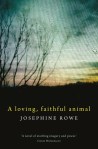
  • Josephine Rowe, A loving faithful animal** Josephine Rowe’s A loving, faithful animal (novel) (Jacinta Halloran, Fiona Wright) (my review)
  • **Baba Schwartz’s The May beetles (memoir) (Helen Garner, Joan London)
  • Sybille Smith’s Mothertongue (memoir) (Helen Garner)
  • Randolph Stow’s The Merry-Go-Round in the sea (classic fiction) (Jacinta Halloran)
  • **Ellen van Neerven’s Comfort food (poetry) (Maxine Beneba Clarke, Lisa Gorton)
  • Dave Warner’s Before it breaks (crime fiction) (Michael Robotham)
  • Alison Whittaker’s Lemons in the chicken wire (poetry) (Fiona Wright)
  • Josephine Wilson’s Extinctions (fiction) (Charlotte Wood)
  • Peter Wohlleben’s The hidden life of trees (non-fiction) (Tim Flannery)

As with last year’s smh list, there are books and authors I haven’t heard of, but I’m thrilled to see some books appearing multiple times, including a couple of books I loved this year – Garner’s Everywhere I look and Josephine Rowe’s A loving faithful animal – and Kim Mahood’s Position doubtful, which I know I’ll be reading next year.  Tim Winton says of Mahood’s book:

If anyone’s written more beautifully and modestly about this country and its people I’m not aware of it. I think it’s a treasure.

A book I should clearly consider reading is three-asterisked Stephen Amsterdam’s The easy way out. Charlotte Wood describes it as “a sharp, snappy novel about assisted dying. Blackly witty but never glib, it’s humane and moving.”

It’s lovely to see Patrick White award-winner, Carmel Bird, in the list with her new novel Family skeleton, alongside older books by Shirley Hazzard and Randolph Stow. And it’s interesting to see the variety of memoirs admired by our authors.

While this year there are several books with two or three recommendations, last year had a runaway winner with five recommendations – Charlotte Wood’s The natural way of things. I noted then that I clearly needed to read it – and I did. In fact, I reviewed, in 2016, 7 books from last year’s list. I wonder if I’ll do something similar in 2017.

Meanwhile, do you enjoy end of year lists – and, more significantly, do they guide your reading choices in any way? If they do I’d love to know how.

Monday musings on Australian literature: Arnold Haskell on the Arts (1)

Arnold Haskell, Waltzing MatildaA couple of months ago I wrote a post on British dance critic Arnold Haskell’s book, Waltzing Matilda: a background to Australia (published in Australia in 1944). I said then that I’d come back to it, so here I am, focusing this time on his chapter on “The Arts”. It comprises 22 pages covering, according to the chapter subtitle, “The theatre – The cinema – Painting – The press – Literature”. Today, I’ll just discuss the theatre and literature.

“a national theatre is not yet born”

He starts with the theatre, and says that although he knows “from experience that Australia has a vast theatre-going public and a fine theatrical tradition … the theatre is unfortunately in decay”. Performances are more likely to be “Gilbert and Sullivan” or English or American musicals or sensational-type plays with imported stars. When an Australian does show ability “he [of course, it’s a “he”] promptly leaves for England or America”. If he stays he’ll “probably starve, both artistically and financially”.

Serious theatre – performing, say, Chekhov or Gogol – mostly occurs in amateur repertory societies and some of these “reach an extraordinarily high standard”. He blames the lack of development of a national theatre on “apathy and the great national inferiority complex” (aka “the cultural cringe” I’ve often mentioned here). However, when it comes to music, ballet and opera things are a little better, particularly in opera where Melba, who had died in 1931, had “dealt a smashing blow to the inferiority complex”.

“still in the formative period”

Haskell spends more of his chapter on painting than on anything else but let’s get to literature. He says, it has “not produced men who are the equals of Streeton, Heysen or Gruner”. Interesting. I might be wrong but I’d say that now Miles Franklin, Katharine Susannah Prichard, and Eleanor Dark are at least as well-known as those three artists.

Anyhow, here is his impression:

Those who could write the great Australian novels, who are neither apathetic nor complacent and who correspond in some way to our Bloomsbury, are unfortunately too busy talking to accomplish more than a poem, a pamphlet or a short story. They are dissatisfied, they hate the squatter, despise the ‘dinkum Aussie’ and are well to the left of his traditional labour. Their thoughts are in Spain or Russia. They have both imagination and compassion, but there is more of bitterness in their make-up… They concentrate on the ideal of some vague revolution just as the masses concentrate on sport.

He argues that the “flourishing school of contemporary American literature was started by such minds as these in their magnificently creative intervals from drinking and posing in Paris.” (Don’t you love it?) He’s referring, I presume, to Hemingway, F Scott Fitzgerald, et al. He sees – quite perspicaciously I’d say – that the problem is that Australians were looking to Europe, were seeing the distance between them and Europe “as a handicap” BUT he says “the differences between Australia and England will produce a national art and literature, not the similarities.” In other words, look to your own. America has recognised this, he writes, “and has made her differences a source of pride”. Our own Nettie Palmer saw it too, and argued strenuously for an Australian literature. She pondered in her 1929 article, “The need for Australian literature”, on what recognition the work of Australians had received. “To what extent, ” she asked, “have their efforts been made barren by the ingratitude and even hostility with which they have been met at the outset.” Cultural cringe again? For Palmer, it is the artist (the writer, in her case) who illuminates, or makes understandable, our lives for us.

Anyhow, Haskell does recommend some Australian authors/works which have become “part of the Australia scene”, which I’ll share as I know we all like lists:

  • Marcus Clarke’s For the term of his natural life: Haskell writes beautifully about this book and how Kensignton-born Clarke used his two years’ bush experience to make himself “an Australian writer”. He argues that Clarke’s characters “have a humanity not unworthy of Dostoievsky” and compares him favourably against Henry Kingsley’s Geoffrey Hamlyn which he describes as “stilted and old-fashioned” and Rolf Boldrewood’s Robbery under arms which is just “a typical boy’s yarn”.
  • Henry Lawson’s While the billy boils, and other works: Haskell says Lawson’s work is universally seen as “honest Australian” and that “no interested tourist should omit reading these sketches of the Australian character”.
  • Vance Palmer and Brian Penton “depict the Australian scene with skill and conviction”, and Mrs Aeneas Gunn’s The little black princess “gives a particularly delightful picture of the aboriginal mind and was highly recommended to me by a distinguished anthropologist”. (Oh dear, but these were different times.)
  • Ion Idriess, who covers “the more adventurous sides of Australian life”, is “not a polished writer” but tells “magnificent” stories from his own experience.
  • Katherine [sic] Susannah Prichard, Helen Simpson and Henry Handel Richardson “are so well known in England that they are accepted as English writers”! What does this mean? And interesting that these are all women writers who are described this way. He says that The fortunes of Richard Mahoney “gives a gloomy picture of Australia but it is surely the greatest contemporary work of Australian fiction”.

Haskell also mentions several poets – Adam Lindsay Gordon, Henry Kendall, CJ Dennis and ‘Banjo’ Patterson [sic] – as worth reading. I’m just going to share, though, what he says about Paterson because Paterson, himself, felt he was just a ‘verse-maker’ not a poet. Here is Haskell:

Patterson, a bigger figure [than Dennis], might be called Australia’s Kipling, though there is little actual resemblance. It might be very easy to dismiss this very hearty verse as being of little account, easy but superficial. When one knows Australia this is altogether impossible. It has a quality of greatness because Patterson has written folk-songs and ballads of Australia. His verse has an extraordinary quality of spontaneity. It is truly indigenous.

Dennis, he writes, “is famous for his amusing doggerel in the Australian vernacular” and “has left behind some humorous journalism. It is more deliberate and sophisticated; it is a tour de force and not a cri de coeur.”

Haskell admits that there are other names he could share. However, his aim has not been, he says, to produce “a study of Australian literature” but rather a “personal account” of his “journey” because his prime goal has been to “see Australia at first hand and not through literature”. I understand that …