Monday musings on Australian literature: Memory of the World and Dorothea Mackellar

Memory of the World Logo

By UN [Public domain], via Wikimedia Commons

If you’re an Australian, did you know that last week seven new entries were added to the UNESCO Memory of the World Australian Register?

If not, let me start at the beginning … with UNESCO’s Memory of the World programme. Established in 1992, it’s the documentary heritage equivalent of the World Heritage Site programme which protects physical sites of natural and cultural significance. It’s a significant programme, particularly for those of us who support libraries and archives.

Briefly, it’s a multi-pronged programme aimed at saving and preserving the world’s documentary heritage, but the most visible activity is its international register of “documents, manuscripts, oral traditions, audio-visual materials, library and archival holdings of universal value”. You can find out more on the official website.  To date, there are five “works” from Australia on the register. The first two added were the Mabo Case Documents and Captain Cook’s Endeavour Journal.

However, there are, of course, more “documents” that countries like Australia would like to register. Some of these might eventually make it to the international list, but some might only ever be of national, not universal, interest. For both these types of documents we luckily have the Australian Memory of the World committee which manages an Australian register – in addition to proposing nominations to the international register. The current chair of the Australian committee is Ros Russell, whose novel Maria returns I’ve reviewed here and who was on one of last year’s Canberra Writers Festival panels that I wrote up.

There are now 57 items on the Australian register, the last seven inscribed at a ceremony in Canberra last week. Knowing of my blog and interest in promoting Australian literature, Ros emailed me last week asking if I’d be interested in publicising one of these latest additions. Would I? Did she even need to ask? Of course I would … and so here goes …

Wide Brown Land sculpture

Wide Brown Land (National Arboretum)

Many of you – particularly my Australian readers – will have guessed from this post’s title what this particular addition is, and they’d be right, Dorothea Mackellar’s poem “Core of my heart (My country)”. This poem starts:

The love of field and coppice
Of green and shaded lanes,
Of ordered woods and gardens
Is running in your veins.
Strong love of grey-blue distance,
Brown streams and soft, dim skies
I know, but cannot share it,
My love is otherwise.

But, the verse which most Australians know by heart is the second one:

I love a sunburnt country,
A land of sweeping plains,
Of ragged mountain ranges,
Of droughts and flooding rains.
I love her far horizons,
I love her jewel-sea,
Her beauty and her terror
The wide brown land for me!

According to the notes accompanying the inscription, Mackellar, who was born in Australia in 1885, wrote the first draft sometime between 1904 and 1908 during a trip to England, and finalised it for publication in 1908. These notes conclude with this assessment:

Regarded by many as Australia’s quintessential poet, Dorothea Mackellar’s most iconic works offer powerful statements of fervent patriotism and connection to the land, captured as Australia was coming of age as a nation and on the brink of participation in global warfare. In the century since its creation, ‘My Country’ has had an almost immeasurable impact on the collective consciousness of Australians, especially within the sphere of literary culture and, for many, remains the ultimate expression of the centrality of the land to Australian identity. A wonderful poet of light and colour, commenting towards the end of her life, Mackellar made her own assessment of the significance of her poetry: ‘I did say more or less what I wanted to say, and that’s the satisfaction.’

Not only is this a worthwhile addition to the Australian list for the reasons given above but, as Ros pointed out, it’s the first literary work on the Australian register and it’s by a woman! Woo hoo! Not that I’m competitive or anything, but it is always encouraging to see a woman’s achievement recognised.

Now, I did a little search of Trove – of course – and found an article on Dorothea Mackellar by critic Bertram Stevens whose Golden treasury of Australian verse I featured in a Monday Musings last year. The article, written in 1919, came from his series, Some Australian Writers. He says of “Core of my heart” that ‘love of country has seldom been expressed more beautifully, or in language more simple and sincere’ and he comments particularly on her love of and ability to describe colour. He writes that in her poems about the Australian landscape she ‘helps many of us to realise the value of the gift of colour in Australia, which was so often considered sombre and melancholy — a “haggard continent,”* in fact.’

To conclude, I’ll share some of Canberra writer Adrian Caesar’s inscription ceremony address, which Ros sent me. He started by acknowledging the important work done by cultural institutions in ‘collecting, preserving and exhibiting documents of historical, political and cultural significance’. He noted the ‘repeated budgetary attacks’ on these institutions and said

it is more imperative that ever to stridently insist upon the lasting relevance of the documentary record. It is unfortunate, too, that the incursions of post-modern relativism by tending to suggest that all history is fiction has played into the hands of those who seek to benefit from what we have heard recently referred to as ‘alternative facts’. In the increasingly Orwellian world of political doublespeak, the preservation of documents to which empirical method might be applied, and from which ‘facts’ may be adduced, seems more vital than ever to our ability to understand our past and chart our future.

Yes!

He then discussed the poem. He talked of the value of having access to original manuscripts, discussed the poem’s cultural relevance and importance to Australian life, analysed its meaning including addressing the problematic issues of “patriotism and nationalism”, and explained his preference for the original title “Core of my heart”.

He concluded that the inscription of this poem’s manuscript to the Register:

leads us both to a contemplation of the circumstances of its composition and to the power of its potential ongoing contribution. For surely in this its first completed form, it might lead us and students of the future to think about our relationship to land and landscape, and not only to use that to assert our independence from England, but also to seek an empathetic understanding of Aboriginal notions of country. Instead of ‘us’ and ‘them’, it seems to me that love of landscape, love of country as it is articulated in Mackellar’s poem might provide a bridge towards healing rather than a chasm between colonisers and colonised.

Nicely done, eh? And thanks to Ros for the heads up.

NOTE: The original manuscript draft of the poem has been digitised and can be viewed online.

* Referencing, I presume, the poem “Written in Australia” by New Zealand-born Arthur H Adams.
Monday musings on Australian literature: Arnold Haskell on the Arts (2)

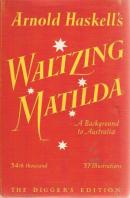
Arnold Haskell, Waltzing MatildaBack in November, I wrote a post on the Arts chapter in dance critic Arnold Haskell’s book Waltzing Matilda and focused on theatre and literature. In this post, I’ll look at his discussion of the press.

“compares … favourably”

Haskell starts by saying that Australia’s press started in a “thoroughly unprincipled and worthless manner”, though he doesn’t explain what he means by this. However, by the time he is writing, he says it “compares, as a whole, favourably with the English and American”, adding that its style is “English and not American”. He describes the press’s treatment of “the abdication” (Edward VIII) and “the September crisis” as “dignified and free from deliberately fostered sensation”.

There were, he admitted, sensational papers, such as Truth and Smith’s Weekly, which “at first glance are not a good advertisement for Australia”. At times their humour is raw and undergraduate, but he comes to admire their humour, even when they targeted him. He praises their writers as “excellent”, and writes:

These papers greatly upset me at first, but I can now appreciate their value as an antidote to wowsing. For all their presentation and methods they are usually on the side of the angels.

Wow, no faint praise here – and rather a long way from today’s “fake news”! Anyhow, he shows himself to be an open-minded traveller.

And then, of course, there’s “Grannie” or The Sydney Morning Herald, which he describes as “the dean of papers” and

the organ of conservative views and amazing respectability. Its very make-up clears it of any suspicion of frivolity. It is a power in the land and it knows it.

Next he discusses the Sydney Daily Telegraph suggesting it might become a rival. It’s owned he writes

by a young man, Frank Packer, a colossus with the figure of a prize-fighter and the flair to do great things. It is brilliant, erratic, out for scoops at all costs, technically well presented.

Packer sold it in 1972 to Rupert Murdoch. And this brings me to Melbourne, which my Melbourne readers will be relieved to read that Haskell doesn’t ignore! He writes:

In Melbourne, probably in Australia, the greatest power in journalism is Sir Keith Murdoch; he has been called ‘Lord Southcliffe’ and also ‘the maker of Prime Ministers’. He looks the part.

Haha … I enjoy Haskell’s references to physical appearances. Haskell praises several Melbourne papers, Murdoch’s Melbourne Herald, as well as The Age and Argus. He’s surprised that they didn’t take sides in Victoria’s “drink referendum”. Of papers in smaller cities, he is similarly positive, saying they “are also of a high standard, and are surprisingly free from parochialism.”

And then he – remember he was an arts critic – says something even more interesting:

The Australian press as a whole gives considerable space to art criticism and treats the artist with far greater respect than our own popular press, though its criticism of local artists tend to be too benevolent to be of the greatest value.

This is interesting on two fronts. One is his praise of the commitment to arts criticism, which suggests too that there was a readership for it. The other is his belief that criticism of the arts can have value – that it is important – but that to have value it needs to be willing to be a bit tougher than it is.

He says Keith Murdoch is interested in art, and that he has “an admirable critic” in Basil Burdett. Haskell describes Burdett as “a man with an artistic background that would be exceptional in any country”. Now, I hadn’t heard of Burdett, so I decided to check him out in Trove. The first hits I got were about his death in an air crash Singapore in 1942. He was Assistant Australian Red Cross Commissioner in Malaya. The Sydney Morning Herald, reporting his death, quoted Australian artist, and President of the Society of Artists, Sydney Ure Smith:

He had taste, knowledge, and that rare quality — enthusiasm … As a writer on art, he was well-informed and progressive without being narrow. He was a valuable art critic.

Anyhow, Haskell mentions two other critics, and I’ll share his description of those too. There’s The Sydney Morning Herald’s “well-informed art critic”, Kenneth Wilkinson, whose field, Haskell writes, “is made to cover painting, music, the drama and the films; probably too much for any one man”. Fair point, don’t you think? And there’s “J.S. McDonald, now curator of the Melbourne Museum”. He “was formerly an art critic” and “whether one agrees with him or not” he “is one of the most entertaining and forceful writers on art”. Has anyone heard of these?

Haskell then turns to the social pages, which occupies much space in all papers and which Australia’s intelligentsia describes as “provincial”. However, Haskell again shows his independence of mind when he suggests it probably is, but why “very lengthy accounts of the doings of that small clique known as cafe society in the London and New York press should be worthier of attention I cannot understand”. Why indeed! Further, he comments that Australian gossip columns are “not snobbish”. They are, and this must clearly be a dig at the British equivalents, “written by journalists about people and not by titled amateurs about their friends”! He writes that

Miss Brown of Wagga, Miss Jones of Gundagai, will both find a space when they come to Sydney or Melbourne, and, what is more, their dresses will be described as minutely as the Governor’s Lady’s.

Perhaps this is a good time to remind you of my first post on Haskell in which I quoted his being (initially) “aggressively uninterested” in visiting Australia.

Haskell also talks about “the paper that has represented Australia the most and that has a place in the history of Australian literature … the famous Sydney Bulletin.” He admits it’s “a little tamed today” but still represents “a national way of thinking”. Its goals, which were to encourage Australians to love their own country, have resulted in “the formation of an Australian manner of expression” which is “often crude, never ‘literary’ from the English point of view”, but is “vigorous and creative”.

I love that an English visitor was able to assess Australia, as a place in its own right and not a little England.

Monday musings on Australian literature: The cost of literary awards

Queensland Literary Awards LogoI must get better at noting who posts links on social media that I later take up and use on my blog. Today’s post was inspired by an article posted on Twitter (I think) early last December last (and I now thank whoever it was who posted it!) The article is by The Sydney Morning Herald’s literary editor, Susan Wyndham, and was itself inspired by an announcement by the University of Western Australia’s publishing arm to not enter books for awards in 2017.

Terri-ann White, the director of UWA Publishing, said that the “expense (of entry fees, books, and postage) and the time involved in entering books for literary awards and prizes” exceeded their resources in 2016. Wyndham explains that there are at least 60 annual awards in Australia, and this is growing. Most require an entry fee of $50-100 plus the provision of up to six copies for each book entered. In addition, as one publisher noted, there’s the rather substantial cost of attending awards ceremonies. Do you or don’t you, she said.

But, don’t awards result in more sales?

Well, not necessarily, apparently. White said that short listings and wins do not, in their experience, automatically translate into increased sales. For example, when Geoffrey Lehmann’s Poems 1957-2013 won the Prime Minister’s Literary Award for poetry in 2015, Lehmann received $80,000 but UWA “saw no results whatsoever [in sales].” My immediate response was that this is probably not surprising with less “popular” literary forms. However, White’s argument regarding sales is confirmed by other publishers. Donna Ward of Inkerman and Blunt told Wyndham that “literary prizes are expensive and don’t add to the bottom line of a boutique press trying to build its business.” Giramondo’s Ivor Indyk essentially agrees too, saying that “you don’t do it for sales, you do it for your authors, and for the reputation of the publishing house”.

Allen & Unwin, by contrast, said that sales tripled for Charlotte Wood’s The natural way of things after its Stella Prize win. And another big publisher, HarperCollins, said that sales of Stephen Carroll’s novel The time we have taken went from 3000 to 26,000 after winning the 2008 Miles Franklin Award, and Stephen Conte’s debut novel The zookeeper’s war went from 3000 to 13,000 after winning the first Prime Minister’s Literary Award for fiction.

So, here’s the rub: although over 60 literary awards are offered now, publishers told Wyndham that only the Miles Franklin, the Stella and the Children’s Book Council of Australia awards significantly affect sales. I’m guessing other awards might, like the above mentioned Prime Minister’s Literary Award, but on a more case-by-case basis?

Wyndham interviewed several publishers and found that while most plan to continue to support their authors by entering their books, there is a move, particularly among the smaller presses, towards being more careful, more targeted. Ventura Press, for example, said they are “highly selective”.

What to do?

Wyndham asked publishers how things could be improved. They suggested

lowering the fees, or removing them for small presses; reducing the number of categories to focus attention and cut fees; accepting digital copies, possibly without the author’s or publisher’s name to reduce a perceived bias towards big publishers; announcing shortlists and winners earlier so books are still in shops, and promoting those lists better.

Some good ideas here. I’d be interested to hear what authors say, particularly regarding the “blind” submission of their works; what the awards managers say about the fee/cost issue; and what booksellers say, particularly about the timing issue.

The timing issue seems tricky because books can be eligible for awards up to a year, and sometimes two years with biennial awards, after publication. I can’t see how timing can suit all books eligible for a particular award. However, it is certainly the case that some awards close their entries long before the process of long and short listing, and then awarding of the prize, takes place. Take the 2016 Prime Minister of Australia Literary Awards as an example. To be eligible books had to be published in the 2015 calendar year. Entries closed in May 2016, but the shortlist wasn’t announced until October and the winners, finally, in early November, making it nearly 2 years after the earliest eligible books could have been published. You can see their point can’t you?

The promotion issue is an interesting one – because it’s something that we bloggers can help with. I must say that I have felt a bit silly just reiterating long and short lists as they’ve been announced, figuring those interested in books will have seen them anyhow. I tend just to do a select few. But perhaps I should rethink this? Of course, my blog is small bickies in the scheme of things, but maybe it all contributes to a useful critical mass.

It sounds like, whatever we do, we need to do something, because, as the above-named Donna Ward told Wyndham:

publishers are very selective and many small and micro publishers don’t even bother. And thus, Australia misses out on hearing about its most extraordinary, vibrant writers.

And that’s a sad thing.

I’d love, of course, to hear what you have to say on this issue (and I do recognise that some readers here would rather there be no awards at all.)

Monday musings on Australian literature: Some Australian adventurers

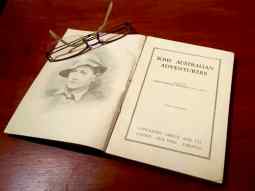
Enid Moodie Heddle, Some Australian adventurersRegular readers here may remember that last year I wrote a few posts (this, this and this) inspired by books I found while clearing out my late aunt’s house. Well, here comes another. It’s inspired by a book that was probably a school text because my aunt wrote her name and her school in the front cover. The book is Some Australian adventurers. It was first published in 1944 by Longmans, Green and Co., and was edited by Enid Moodie Heddle.

I’ve never heard of Heddle but she has a Wikipedia page so is clearly of some note (given Wikipedia’s notability requirement). It describes her as “an Australian poet and writer for children”. She moved around somewhat. She was born in Melbourne (in 1904), went to high school in Sydney and university back in Melbourne. AustLit contributes that “As an infant Enid travelled around the world under sail with her Orcadian sea-captain father …”. She taught in South Australia, Victoria and England where she also researched child libraries. She then worked for publishers Longmans and Collins, becoming, after World War 2, Education Manager (for whom?) overseeing the publication of textbooks for schools and universities. So there we have it, the book probably was a school text!

From the title I thought it might comprise mini-biographies of – obviously – some Australian adventurers but, in fact, it’s an anthology of writings by Australians. Its aim, the Introduction explains, is not

to give a comprehensive idea of Australian prose, nor even to picture with any sort of completeness the country, its people, customs and history, but rather, to catch something of the spirit of adventure and joy in discovery which seem to us [who is “us”?] to be not only characteristic of the majority of the writers here represented, but also of Australians as a race.

Hmm … moving right along, the Introduction goes on to tell us that the book doesn’t contain the full stories and is “but a prelude to adventure.”

The book is divided into six sections:

  • In the land of Mirrabooka;
  • The white intruders;
  • Animals and men;
  • Further afield;
  • Strange encounters; and
  • Story and character.

Most sections, except the first one, contain more than one excerpt. Brief biographical details are provided for each writer, plus suggestions for further reading. The authors include those I know, such as Eleanor Dark, Ion L Idriess, Frank Dalby Davison, Vance Palmer and Henry Lawson, and many I don’t such as Elizabeth Bussell, William Hatfield, Hendley Herbert Finlayson. The writings include fiction and non-fiction, including letters. And the non-fiction writers include the famous adventurers, antarctic explorer Sir Douglas Mawson and aviator Charles Kingsford Smith. So, a varied bunch.

“infinite variety” (Parnassus)

I will write later about the content, but first I’ll share some contemporary reviews, though “review” is a generous name for what were mostly a paragraph or two. I found them through Trove of course. Although my copy is dated 1944, the book ran into many editions/reprints, and the earliest review I found came from 1946. The reviewer, “Parnassus” of Western Australia’s Western Mail, heads his/her piece with “there is keen interest just now in works of Australian writers”, which is good to hear given the cultural cringe which commonly typified Australian response to cultural fare. Parnassus has a rather funny formal style, commending the book with the following:

One likes the editor’s selection. It is of infinite variety, and while including extracts from recent publications she has given us a timely reminder that Australian writers have not by any means confined their writing to bush lore and descriptions of the inland …

One does, does one!

I am indebted to Parnassus, however, because s/he paid the book more attention, giving it about 6 paragraphs, than most I found. Victoria’s  Argus called it “a handy little volume” and briefly described the breadth of its contents, while Book News, in 1947, found the excerpts “wisely chosen” but said they were “spoiled by an unworthy cover jacket and frontispiece”. I can’t comment on the cover jacket as Google displays many different editions of the book, but my title page does say “with a frontispiece” without identifying who it is. Strange. Queensland’s Courier-Mail, probably describing the same edition, starts its little paragraph with “Once past an excellent, yet misleading, dust jacket to this bright little compilation, you’ll find here a book true to title”. I’d love to know which dust jacket they are talking about. Finally, one more, this time from South Australia’s Advertiser. It is also generally positive but makes this observation:

Although all of the foremost authors of this country are not represented, and the stories themselves are not indicative of the best their writers can produce, the collection as a whole can be said to be a cross-section of Australian literature.

Interesting point about not being “indicative of the best” but perhaps the best don’t represent the “adventurer” theme well. Overall, though, not a bad recommendation for a volume of less than 180 pages.

“riches in experience” (Introduction)

I like that the book starts with an Aboriginal legend. The bio for the first piece’s writer, K Langloh Parker, commences by recognising that “the first adventurers of whom we know in Australia, the land of Mirrabooka, the Southern Cross, were the Australian aboriginals”. Parker, we are told, “did us a great service by collecting their legends and retelling them in English in a way as near as possible to the original”. How did they know I wonder? Langloh Parker started doing this in the late nineteenth century. The legend included in Heddle’s book, “Beereeun the mirage maker”, came from her 1898 book, More Australian legendary tales, which was, we’re told, illustrated by an aboriginal artist.

This recognition of indigenous Australians continues in the book’s second section, The white intruders, which contains excerpts from four writers, beginning with Eleanor Dark. Her excerpt comes, as we’d expect, from The timeless land. In this excerpt, “Breaking the flag”, Dark imagines first contact from the indigenous point of view, something white writers would be unlikely to do today – and rightly so – but Dark must be admired for what she tried to do in her time.

Another excerpt in this section is from a writer I don’t know, William Hatfield, and his 1933 book, Desert saga. It’s about an indigenous man, Grungunja. Hatfield may not be well-known now, but he clearly was in 1930s  and 1940s Australia, particularly among socialist circles in which the rights and plight of indigenous people were being discussed. The last sentence of the excerpt is uncompromising. It occurs after a confrontation with white pastoralists and police. Remember, we are in Grungunja’s head:

All his generalship, all his valour had availed him nothing, then. True, his tribesfolk were unharmed, they were to be left in possession of their country, but only as a subject people.

Hatfield was, I understand, largely a polemical writer. It’s probably why he’s faded from view, but it’s also something that makes him relevant to those of us interested in the past.

Now, my aim was not to review this book but to use it to add to my project of increasing my knowledge about the history of Australian literature: who was around at different times, what were they thinking and what did others think of them? This book – and my related research of Trove – has furthered that. I could very well return to it to explore some of the other authors and topics it covers.


Monday musings on Australian literature: Angela Savage and setting in fiction

Angela Savage, The dying beach

I have several ideas for my next few Monday Musings, but another one popped up on the weekend as I was perusing my Twitter feed. I don’t check Twitter regularly enough – it’s impossible to keep up with all the social media sites don’t you think? – but when I do I regularly find a treasure or two. Anyhow, this tweet was from Angela Savage promoting the short piece “Take me to a different land” that she wrote for the Desert Nights, Rising Stars Writers Conference being held next month at the Virginia G Piper Centre for Creative Writing at Arizona State University. This is an annual conference for “writers, readers, and lovers of literature”, though it seems to me that the main focus is on writers, as it describes itself as devoted to “the science and art of creative writing, including world building, plot/narrative structure, and character development to more specialized topics like writing about climate change, working with different cultures, and pulling material from fairy tales and myth”.

Saguaro, near Tucson

Beautiful saguaro, near Tucson. (Just because I can!)

I was inspired to delve further for a few reasons: I’m interested in anything to do with the process of writing fiction; I wanted to know what Angela Savage had to say having enjoyed her crime novel The dying beach (my review); and, less relevant to this post, I love Arizona!

Now, setting is one of those aspects of fiction that readers often discuss. And, in fact, Savage starts her piece by quoting a reader from a rejection letter she received for her first Thailand-set novel, Behind the night bazaar:

I didn’t really feel that I had been taken to Thailand… I think there needs to be more of a sense of the sights and smells of Thailand, of being taken to a different land.

Savage says that at the time she was writing the novel she’d been living in SE Asia for six years, including 18 months in Thailand. She realised that it had become too familiar to her. She needed, she said, to step back and remember what it was like when she first arrived, and “try to conjure the little things that made the place unique”. She describes the process she went through to give that first novel the feeling of Thailand, and then says that for her later Thailand-set novels she’s returned to the country “with the express purpose of conducting fieldwork to inform my fiction”.

She goes on to say that as well as working on conveying “the sensory texture of different locations—the sights, smells, sounds, tastes and touch”, she “walks the streets in the shoes” of her characters, “imagining the landscape as they would see it, based on their state of mind.” Her aim in doing this is to closely relate the setting to the character. She recognises that a “strong sense of place” can transport readers, “adding to the pleasure and excitement of reading” but that the writer’s challenge is to ensure place enhances the story, rather than be a distraction.

I’ve written about setting and place a few times on this blog. In one post, I talked of this sensory aspect, saying that “my favourite descriptions are sensory, enabling me to feel and see the place and its impact on the characters”. This is largely what Savage is talking about here, isn’t it?

In another post I reported on a panel with the 2011 Prime Minister’s Literary Award winners. The chair, Caroline Baum, asked fiction winner Stephen Daisley about writing on place. She said that roughly 50% of authors writing about foreign places say they must visit a place to write about it, while the other half argue that this isn’t necessary. Daisley admitted that he’d not visited all the places he’d written about in Traitor, resulting in Baum asking how one can write about a place without visiting it. Daisley’s answer was Google!

Author Nigel Featherstone, was asked, in an interview he offered to my blog, about his writing on landscape in his novel, Remnants. He said

Even today, as I drive around the Southern Tablelands, I’m struck by the character of the landscape, its moods, its reticence, but always the amplification of self. As a writer, I’m interested in place as character as much as I am in human beings as character.

So, that’s what some authors say. What do readers say?

Commenting during a discussion of my 2011 Prime Minister’s Literary Awards post, Louise (A Strong Belief in Wicker) wrote:

But if an author chooses to set a story in a real place, and they name it, then I think they should get it right. I want the details to be right, and if they aren’t (and I notice that they’re not, that’s another big step) then it spoils my enjoyment of the rest of the story. I don’t necessarily mean it to, but it just does.

Regular commenter on my blog, Meg, agrees, commenting on my recent Spotlight on Georgia Blain post that:

I do prefer factual detail about people and places. When I read fiction I want to believe what the author is telling me. I don’t want to have to question something I know to be different.

And then just a few days ago, John (Musings of a Literary Dilettante) commented on Lisa (ANZlitLovers) post on Bernhard Schlink’s latest novel, Woman on the stairs. He agreed with Lisa’s criticism of the book, saying:

Thank God – I’m not alone! I found this dull too, and very poorly edited. For example: when the narrator says he loves the botanical garden in Sydney, he says it is bordered by a cathedral to the north and by the Opera House to the south. Wrong! It’s the Opera House to the *north*, the cathedral to the *south*…

And finally, Cally73 (a GoodReads reviewer) commented on the abovementioned Stephen Daisley’s Traitor that:

A little more explanation of the New Zealand setting would have been beneficial – as a New Zealander, I was able to work out where it was set, but those unfamiliar with the geography of NZ may find it difficult.

Oh dear, and that’s a place he has been to!

What I sense here – based on both the few examples here and more conversations over the years – is that readers can be very critical if they think authors have got the “facts” about place wrong, whilst for authors, the focus is more on the “sense” of the place and whether it serves their purposes. Many know they will be picked up if they get the “facts” wrong, but that’s not their focus. For authors who like doing research, it’s not a big issue, but for those who don’t it’s probably safer, as Louise above implies, to create a fictional setting, even if it’s based on a real place. Call Canberra by another name, and readers can go with the flow – but that doesn’t help of course if the issues the author wants to explore are place-centric (such as the shrimp-farming industry in Angela Savage’s The dying beach.)

I’d love to be a fly on the wall when setting is discussed at the conference. What issues will concern the authors most?

Monday musings on Australian literature: Some New Releases in 2017

This is the last of what seems to have become my set of end-of-year-beginning-of-year posts – and it’s about, as if you couldn’t tell, the books that will be published this year. Obviously, I can’t list them all – even if I could know them all – but it’s fun to share a few that look interesting.

Now, luckily for me, part of my work has already been done by Elizabeth Lhuede who posted coming releases by Australian women writers on our challenge blog. I don’t plan to repeat that here because you can check it out there – though I may highlight one or two of particular interest to me. This means, of course, that my list – mostly drawn, like Elizabeth’s, from an article by Jane Sullivan in the Sydney Morning Herald – will primarily feature men (because, yes, I do read them too.) And, because this is a Monday musings on Australian literature post, the list will be further filtered to include just Australian authors.

Authors I’ve read before

  • Alex Miller’s The passage of love (Allen & Unwin). Miller had said he’d finished writing novels, but clearly not, and a good thing too (though on this blog I’ve only reviewed his Lovesong).
  • Kim Scott’s Taboo (Picador, August). That deadman dance , which I’ve reviewed here, is for me one of those unforgettable books. I wonder if this one will be too? By the way, Fremantle Press is re-releasing Scott’s first Miles Franklin winning book, Benang, in its Treasures series.
  • Ouyang Yu’s Billy Sing (Transit Lounge, April). This is about a “half-Chinese Gallipoli hero” so very different I expect to the book I’ve reviewed here, Diary of a naked official.

Authors I haven’t but maybe should have read before

  • Steven Carroll’s A New England affair (Fourth Estate, September). The final book in his six-part Glenroy series chronicling life, from the 1950s, in an outer Melbourne suburb.
  • Brian Castro’s Blindness and rage: A phantasmagoria (Giramondo. April). Castro is one of the shameful gaps in my reading to date.
  • John Kinsella’s Old growth (Transit lounge, February). A short story collection.
  • Stephen Lang’s Winderran (UQP, July). An author I don’t know much about, but I should because he’s won and/or been shortlisted for some significant awards.
  • Adrian Mitchell’s The beachcomber’s wife (Wakefield Press, January). Another  author I’m not greatly aware of but he writes literary historical fiction (and non-fiction), so I clearly should be!
  • AS Patric’s Atlantic black (Transit Lounge, October). By the middle of the year I’ll be able to move this to the “authors I’ve read” category as I will be reading his Miles Franklin award-winning Black rock, white city in a few months.
  • Alex Skovron’s The man who took to his bed (Puncher and Wattman, May). A collection of short stories from a multiply-published poet.
  • Chris Womersley’s City of crows (Picador, September). Hmm, about 17th century witchcraft apparently.

Debut authors – so I can’t have read them before

  • Charlie Archbold’s Mallee Boys (Wakefield Press, May). I’m determined to visit the Mallee this year (I’ve only touched its edges before) so this may be the book for me.
  • Michael Fitzgerald’s The Pacific room (Transit Lounge, July). It’s about Robert Louis Stevenson in Samoa.
  • Dennis Glover’s The Last Man in Europe (Black Inc., July). Another historical fiction about a well-known character, this time it’s Orwell and his writing of Nineteen Eighty-Four.
  • Tony Jones apparently has a political thriller coming out with Allen & Unwin later in the year. I normally wouldn’t have mentioned this – given there’s no title and it’s not really a key genre for me – but Jones is well-known in Australia (unlike most of these debut authors) for his work on television as a political commentator and current affairs show anchor. (Sullivan lists a number of crime and thriller books coming out, so if you’re interested do check out the article link above).
  • Gordon Parker’s In Two Minds (Ventura, April). Parker is the founder of the Black Dog Institute, and Sullivan describes this book as “a rollicking tale of mental illness”!
  • Peter Polites’ Down the Hume (Hachette, March). He’s described as “the new Tsiolkas or Luke Davies” so this is likely to be urban and gritty.

Some women writers I must mention

  • Bernadette Brennan’s biography. A writing life: Helen Garner and her work (Text, April). A high priority for me. I hope it’s as book as Karen Lamb’s biography of Thea Astley.
  • Rebekah Clarkson’s Barking dogs (Affirm Press). A bit of an anomaly in this list as I don’t know Clarkson, but she is apparently an accomplished short story writer, and I do like Affirm Press.
  • Sara Dowse’s As the lonely fly (For Pity Sake, May?). Dowse, like Farmer below, hasn’t published for some time so it’s great to see a new work coming out. I’ve reviewed her Schemetime here.
  • Beverley Farmer’s These waters: Five tales (Giramondo, July). I read and loved her back in the 1980s to early 1990s. This is a collection of short stories.
  • Kate Grenville’s The case against fragrance (Text, February). Listed by Sullivan under “politics and big issues”! Sounds interesting.
  • Marilla North’s book on Dymphna Cusack, whom I’ve reviewed here a couple of times, is well due I think.
  • Jane Rawson’s From the Wreck (Transit Lounge, March). I so enjoyed Rawson’s imaginative A wrong turn at the Office of Unmade Lists that I’m intrigued to so what she comes up with next.
  • A web of friendship (Miegunyah Modern Library from the University of Melbourne, February), which contains selected letters of Christina Stead, and Loving words (Brandl and Schlesinger, June), containing letters between Vance and Nettie Palmer. Both of great interest.
  • Alexis Wright’s Tracker Tilmouth: An essayed memoir (Giramondo, October). Essayed memoir? Is that how I should have described Fiona Wright’s and Georgia Blain’s memoirs last year? Anyhow, this is about an indigenous activist.

Do you actively look out for coming releases, or just wait until they appear and you read or hear about them?

Monday musings on Australian literature: Louise Mack

I promised in my Reading Highlights post that my first review of the year would be for a book from my TBR pile, and so it will be – hopefully in a couple of days. However, I suspect that the book, and maybe even the author, will be unknown to most of my readers here so I’ve decided to use my first Monday Musings of the year to introduce the author, Louise Mack.

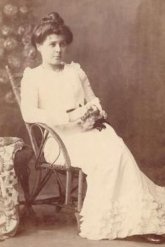
Louise Mack, 1890s

Louise Mack, by Kerry & Co, 1890s (Photo:
National Library of Australia, nla.pic-an23474744, via ADB)

I’ve had Mack’s first novel, The world is round, on my TBR since the mid 1990s when I found it on a remainder table. It had been published under Imprint Classics by Angus & Robertson in 1993, and although it’s only 93 pages, I somehow didn’t read it then, and kept not reading it – until now. But, more on it later this week.

Louise Mack was born in Tasmania in 1870, the seventh child and first daughter of a family which ended up numbering 13! Her father was a Wesleyan minister, and they moved around, ending up in Sydney by the time Mack was in high school. She went to Sydney Girls’ High where she met and became friendly with Ethel Turner (who was also born in 1870). I wrote in my post on Ethel Turner’s juvenilia that Ethel and her sister, Lilian, established a magazine Iris when the school’s newspaper, Gazette, which was edited by Louise Mack, rejected Ethel’s contributions! However, I understand that they were very good friends and, in fact, Turner apparently met her husband at the Mack family home.

Australian author Nancy Phelan, who was Mack’s niece, wrote the entry about her in the Australian Dictionary of Biography (ADB), and also the introduction to the novel I’ve read. I don’t want to reiterate what you can read in the ADB, but here’s a potted history. After school she worked as a governess before being becoming “a regular contributor to the Bulletin in the late 1880s”, with the encouragement of owner-editor J. F. Archibald and editor A. G. Stephens. Phelan suggests that Mack perhaps received too much attention and praise, implying that it impacted the development of her talent. She married, but it failed and she went to England, around 1900, where she wrote novels and serials, travelled, and worked as a journalist, including as a war correspondent. She returned to Australia in 1915 and became a touring speaker or lecturer, something she did right through to the 1930s. During this time back in Australis, she wrote more novels and married a second time (more happily), before dying in 1935, “possessionless”.

“little lady”

They’re the dry facts. She was quite a colourful character, with Phelan describing her as “fair, pretty, extroverted, audacious, unpredictable, a genuine Bohemian who chose a life of adventure and insecurity”. Phelan writes in my novel’s introduction that Mack “grew up in a series of large, shabby, untidy parsonages, with no luxuries but plenty of books … books, as necessary as bread, were constantly discussed”. I found an article in Trove which announces her as a rising literary star. It suggests that:

Miss Mack owes much of her development to her mother’s literary tastes, and the varied training that an intellectual father can bestow on his children. (The Methodist, 23 Nov 1895)

My Trove search retrieved pages and pages of hits on her name, many of them from newspapers all around Australia – from Dubbo to Perth – announcing her lecture tour on her war experience, which included experiencing German occupation and bombardment in Belgium and going behind German lines. In her mid to late 40s at the time of the tour, she is, patronisingly to our modern ears, described in these announcements/reports, as “this charming little lady” or “the pretty and charming little lady”. This is the woman who, one of these articles says, was asked by Scotland Yard to report on a meeting of spies with Germans in Antwerp to which she’d been an eye-witness. This article’s writer also calls her a “little lady” but a bit later describes her more appropriately as “this daring and travelled lady”. S/he reports on an interview with Mack:

“I just love lecturing,” Miss Mack said; “it is the most fascinating work I have ever taken up. Indeed, I may say that I just live for the moment when 8 o’clock strikes, and I and my pictures begin to tell the story of a Woman’s Experience in the Greatest War this world has ever known.” (Western Mail, 17 September 1915)

Mack, you see, went the whole hog and illustrated her talks with moving pictures. Reports suggest that she was an excellent and engaging speaker. Some of these talks were given under the auspices of, and raised money for, the Red Cross. Her book, A woman’s experiences in the Great War, was published in 1915

I’m not going to discuss her writing in any detail here, because I’ll do that in my review post. Instead I’ll share a couple of columns that she wrote in the 1930s in the Australian Womens Weekly, for whom I’m guessing she must have been a columnist. These columns –  Louise Mack’s Diary and Louise Mack Advises – provide some insight into her values and sense of humour.

In a Diary column I found this on Mrs Bradfield, wife of Australian engineer and designer of the Sydney Harbour Bridge, John Bradfield:

I’VE always been wondering what would happen if Dr. Bradfield got his title, and dear Mrs. Bradfield became Lady Bradfield, and somehow, between myself and my diary, I must confess I’m glad that Mrs. Bradfield is still there. Dozens of times coming back from hospital, getting out of the train at Gordon, I would find my suitcase seized, or my parcels grabbed, and there’d be Mrs. Bradfield trotting along besides me, coming out of her way so that she could help carry someone’s burdens.

Could Lady Bradfield have done that? Ah, yes! Title or no title, this little simple, pale, absolutely natural woman, all kindness, with a quite remarkable craze for carrying other people’s parcels, would always have been Mrs. Bradfield. That’s her real title, her many friends think.

I like her focus on kindness, on the unimportance of “titles”, and her light humorous touch.

And, one of the advice columns. It’s called “The gentle art of giving” and asks “Do you give? Or Do you grab? The commonest way of giving is to give what you can spare. But that’s not giving at all, ethically speaking”. Fascinating. It made me think of Australian ethicist Peter Singer and his views on giving. However, let’s not get sidetracked by that now. Mack goes on to suggest that giving is good for your looks! She suggests getting on a tram and looking around:

Can’t you tell at a glance who hoards and who gives? It is written on their faces. It is graven around their lips. It is mirrored in their eyes, giving, or grabbing. The face that gives has a better complexion because the blood flows happily through capillaries kept open by the light-heartedness of generous doings. The face that gives has brighter eyes and sweeter lips. Oh, particularly about the lips does the will to give reveal itself in its full beauty.

She then gives examples of women who give and don’t give, ending with Myrtle who has almost no food left, when in comes her brother. Mack writes:

And there before my eyes took place a metamorphosis. Ovid wasn’t in it. One moment Myrtle was a grey woman with a quarter of a loaf of bread and a cold chop, and now she turned into a gracious creature, all wealth and possessions, that she was handing away to Tom. She whisked a bit of tea into one parcel, a quarter loaf into another, two potatoes and an onion into another, a cold chop out of her safe, two apples for the children, then pressed threepence into poor old Tom’s hand, with, “It’s pouring; take a tram.”

That was giving, indeed.

Giving is when you press your thumb down, down on the indicator of your heart—and, pressing still, and yet again pressing, send your will to give up, up, up, to the very highest storey of your soul.

Louise Mack sounds like a woman worth knowing … and yet is, I believe, unknown to most Australians. Such is life!

Monday musings on Australian literature: Australian Women Writers’ Challenge 2016

AWW Logo 2016For the fifth year in a row, I’m devoting my last Monday Musings of the year to the Australian Women Writers Challenge*.

This year has been one of consolidation rather than of huge change for the Challenge, as we got used to our self-hosted site to which we moved in 2015. The big advantage of this move was that it enabled us to produce a single searchable database of all reviews logged since the challenge started. It now contains reviews for nearly 3,600 books across all forms and genres of Australian women’s writing, an increase of 20% on last year’s total. A good achievement n’est-ce pas?

Once again the Challenge ran some special events during the year, achieved some milestones, and introduced some new initiatives. These include:

A big thanks to author/researcher Jessica White for her special posts on diversity – the Migrant heritage, Aboriginal and Torres Strait Islander Heritage, and writers with a disability  posts – and to Kelly (Orange Pekoe Reviews) for creating the Bingo Challenge, which we hope to run again in 2017. And a shout out too to Brona, Debbie Robson and Elizabeth who often commented on my AWW round-up posts.

The Australian Women Writers’ Challenge is the only challenge I do (or have ever done). This year I posted 30 reviews for the challenge, three more than last year. I managed a similar variety in my reading, but only dipped once into my TBR pile (to read part of Christina Stead’s Ocean of story for Lisa’s ANZLitLovers’ Christina Stead Week). Last year, I challenged myself to tackle my TBR pile and I failed, miserably. I also let the ball drop this year in one of my favourite areas, classic Australian women’s fiction. I’m therefore making no promises, setting no goals (at least publicly!) for next year.

Anyhow, here’s my list of works read for this year (with links to the reviews):

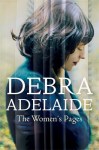
Debra Adelaide, The women's pagesFICTION

Tegan Bennett Daylight, Six bedroomsSHORT STORIES

POETRY and VERSE NOVELS

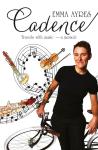
Emma Ayres, CadenceNON-FICTION

As in each year, there are subtle differences in this year’s list, though none are big enough to suggest my reading tastes have changed! For example, last year 48% of the reviews were for novels, while this year only 40% were. Half of these were debut novels. This year saw a return to 2014’s heavy emphasis on Memoir in my non-fiction reading, though there was some interesting playing with form. Not only were a couple of memoirs told through essays, but I also read three mother-daughter stories which combined elements of memoir with biography.

aww2017-badgeAnyhow, if you are interested in the challenge, you can check it out here. The 2017 sign up form is ready so do consider joining up, as we welcome all – women and men – to join us. I’ll be there again. The challenge is also on Facebook, Twitter (@auswomenwriters), GoodReads and Google+.

Finally, a big thanks to Elizabeth and the rest of the team – including Lewis, our wonderful database developer – for making it all such a cooperative, and enjoyable experience. I look forward to seeing what 2017 brings.

* This challenge was instigated by Elizabeth Lhuede in 2012 in response to concerns in Australian literary circles about the lack of recognition for women writers. I am one of the challenge’s volunteers – with responsibility for the Literary and Classics area.

Monday musings on Australian literature: Spotlight on Georgia Blain

Courtesy: Annette Marfording

Courtesy: Annette Marfording

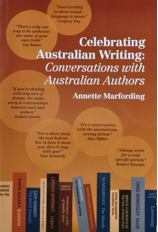
This is the fifth in my occasional series of Spotlight posts inspired by Annette Marfording’s Celebrating Australian Writing: Conversations with Australian Authors, and this time I’m featuring Georgia Blain who died just over a week ago, three days before her mother Anne Deveson also died. In a comment on my Vale post, Annette Marfording reminded me that she’d interviewed Georgia Blain for her book and so, with her support, I decided to make Blain the subject of this week’s Monday Musings.

Marfording’s interview took place in 2010, at which time Blain had published 4 novels, one of which had been shortlisted for the NSW Premier’s Literary Award; plus a memoir, which was shortlisted for the Nita B Kibble Life Writing Award, and a young adult novel. She had also been named in 1998 as one of the Sydney Morning Herald’s Best Young Novelists. At the time of her death, her eighth novel, Between a wolf and a dog had won the Queensland Literary Award for Fiction and been shortlisted for the Victorian Premier’s Literary Award. In addition, her first novel, Closed for winter, had been made into a film, and her second novel, Candelo, had been optioned for a film. Not a bad record for a writer who wasn’t, really, on everyone’s lips!

Marfording asked her, as she asked many writers, what awards meant to her. Blain simply said it “was incredibly pleasing” to be shortlisted and also to have one’s work made into a film, although on the latter she commented on the work required from others and that she “applauded” them more than herself for that. Sounds pretty humble to me. Later in the interview, when asked about her role as a judge, she comments on the degree of serendipity involved.

Anyhow, Marfording then moved on to talk about her most recent book, the young adult novel Darkwater which was published in 2010. She asked the question that I often want to ask writers who set novels in the recent past, which is why she’d set her novel in the 1970s rather than the present. This question is particularly pertinent when you are talking about a young adult novel because, as Marfording commented, “the young adults for whom the book is written weren’t alive then”. The simple – and probably obvious – answer which Blain gave is that it was the time of her own youth. She was writing what she knew, in other words. However, she also said she wanted the challenge of writing about a time when there was no technological communications – no mobile phones or texting or emailing, etc. And it was also a fascinating time she said that encompassed both “great conservatism and great liberation”.

Marfording then notes that her adult novels were also set in this period, and wondered, given Blain was only a child then, how she’d managed to evoke the mood so well. Blain replied that, being the period she grew up in, it “soaked” into her.

Moving onto subject matter, Marfording asked Blain about her focus on darkness, on pain and the loss of a major character. Blain responds not only that loss and pain are part of life but that they can lead to positive things.  I wonder whether she remembered this when six years later she wrote in The Saturday Paper about her initial hope that there’d been a mistake, followed by attempts to rationalise and intellectualise her prognosis, and finally her realisation that she needed to try

to live alongside this unwelcome guest, a guest whose presence cannot be ignored, and must be accommodated in the best way I am able.

Can we see this realisation – and her later understanding of what it means “to truly love” – as some of those positive things? It’s a hard – tragic – way to learn these lessons, isn’t it?

Interestingly, particularly given their deaths, Marfording comments on what she saw as “the autobiographical base” to Blain’s novels and whether there was “an element” of her trying to understand her mother and their relationship. Blain said that she didn’t see it this way, and that she didn’t believe in writing for catharsis. In fact, she said, that this can be self-indulgent and that she writes when she has some measure of resolution. But she followed this up with

of course I constantly draw on my life when I write and I think any writer who says to you that they don’t is lying to you.

I like her calm reason, I must say. Later in the interview, Marfording returns to her relationship with her mother, from a different angle, that of being the child of writers. Blain’s response is interesting, and perhaps a little guarded, when she says she “thought Why bother hiding it? It’s part of who I am and it doesn’t bother me that much”. My understanding, I should add here, is that Blain had a good relationship with her mother but that the family did suffer under a physically violent father, Ellis Blain.

Here is an excerpt from her autobiographical essays, Births, deaths, marriages:

Detailing his extreme physical outbursts was also an easy way of making people understand why I had so little love for him. But there was so much I could not describe in neat episodes. His presence alone created tension; it was the threat of what he might do that kept us tiptoeing, scared, around him. Each night we ate dinner in silence, knowing that the wrong word, a dropped piece of cutlery, even the scrape of a chair could set him off. He would slam his fist down…

I’m not going to summarise the whole interview, of course, but I do want to share a few more things. One of these is in relation to researching her various settings. Blain responded that

I’m quite a lazy researcher [laughs] but I write about places that have had a strong impact on me, and I work from memory … “Candelo” was set in a town where we had holidays when we were young, and again, I did not go back and research there. I actually got the geography of the town completely wrong – I did a reading in Candelo once and readers almost chased me out of town – but that actually doesn’t matter to me because what I’m doing is drawing on the impact that the place had on me.

I hear you, Georgia! I am one of those readers who doesn’t care about this sort of factual detail in a novel. I care about emotional truths, about whether they make sense to and move me, not about whether that hill is really here or over there. But, I often feel I’m in the minority. Anyhow, I wouldn’t have driven her out of town!

Marfording asked her about the impact of bad reviews, commenting on her reference to self-doubts, but once again Blain responds with a calm reason. She admits they can “knock you for a six” but then says that her main concerns are commercial. Will the bad review affect sales and/or the ability to find a publisher for the next book?

Finally, Marfording asked her about her favourite writers. Like Annette, like me, I’m guessing you’re interested in the answer? Well, they are Alice Munro and Richard Ford (his short stories specifically). In a 2008 article in The Australian, she also mentions Alice Munro, but this time alongside WG Sebald. Interesting choices don’t you think?

It’s an interesting interview. Blain says at one stage that maths was her best subject at school. I think you can see the clear, logical, mathematical brain at work here, a brain that, given what we know of the challenges she faced in her life, probably stood her in good stead – or, am I generalising too much?

Previous Spotlight posts:

Annette Marfording
Celebrating Australian Writing: Conversations with Australian Authors
Self published, 2015
273pp.
ISBN: 9781329142473

Note: All profits from the sale go to the Indigenous Literacy Foundation. To find out where you can purchase this book, please check Marfording’s website.


Monday musings on Australian literature: ABC RN presenters name their best reads of 2016

Now, here’s my conundrum. We (at least I think I can speak for a general “we”) want Australians to read widely, because it’s important for us to understand cultures that are different to our own. But, given how small the Australian market is, we also want people to read Australian literature (and see, for that matter, Australian films which struggle for recognition and box office).  To achieve more people reading Aussie writing requires promotion, and there’s nothing like people of influence (like those I reported last Monday) naming and talking about Australian books to help this process.

Helen Garner, Everywhere I lookSo, what happened when ABC’s RN (Radio National) presenters named their picks for 2016? Well, there are 18 presenters on this list, and only two named Aussie books:

  • Paul Barclay (presenter, Big Ideas): Stan Grant’s Talking to my country. Stan Grant is a journalist who has an indigenous background, and his book, says Barclay “might not be quite the best thing I’ve read this year” but he says that its message about “growing up feeling excluded and subjected to bigotry in your own country” has stayed with him. Great choice. It’s on my TBR pile and everyone who’s read it says it’s a book all Aussies should read.
  • Sarah Kanowski (co-presenter of Books and Arts Daily): Helen Garner’s Everywhere I look. Oh, lookee you here, another Aussie, and what a lovely one it is. (See my review.) Kanowski – I always knew I liked her (haha) – described it as the book that gave her the “most delight — and most wisdom” this year.

So, what did the others choose? Eight chose British writers – mostly novelists:

  • Richard Fidler (presenter, Conversations): Peter Frankopan’s The silk roads: (non-fiction)
  • Andrew Ford (presenter, The Music Show): Alan Bennett’s Keeping on keeping on. (non-fiction)
  • Ann Jones (presenter, Off Track): Max Porter’s Grief is the thing with feathers. (novel)
  • Patricia Karvelas (presenter, RN Drive): Deborah Levy’s Hot milk. (novel)
  • Lynne Malcolm (presenter, All in the Mind): Ian McEwan’s Nutshell. (novel)
  • Rachael Kohn (presenter, The Spirit of Things): Andrew O’Hagan’s The Illuminations. (novel)
  • Amanda Smith (presenter, Sports Factor): Graham Swift’s Mothering Sunday. (novel)
  • Robyn Williams (presenter of The Science Show): Julian Barnes’ The noise of time. (novel)

And six chose American writers:

  • Kate Evans (presenter, Ear Shot): Colson Whitehead’s The Underground Railroad. (novel)
  • Antony Funnell (presenter, Future Tense): Amanda Foreman’s A world on fire. (non-fiction, that Funnell called “a nice, big fat book for summer reading”. I do like his definition of summer reading, I must say.
  • Cassie McCullagh (co-presenter, Life Matters): Noah Hawley’s Before the fall. (novel, which McCullagh decribed as “perfect holiday reading”)
  • Annabelle Quince (co-presenter, Rear Vision): Anthony Doerr’s All the light we cannot see. (novel, which Quince described as “perfect summer reading”.)
  • Scott Stephens (Online Editor for the ABC on Religion and Ethics): Martha Nussbaum’s Anger and forgiveness. (non-fiction)
  • Tom Switzer (presenter, Between the Lines): John B Judis’ The populist explosion. (non-fiction)

That leaves two more presenters:

  • Michael Cathcart (co-presenter, Books and Arts Daily) who chose a memoir by a Libyan-born novelist, Hisham Matar’s The Return.
  • Natasha Mitchell (science journalist and presenter) who managed to sneak in two choices, both memoirs, one English and one American: Jeanette Winterson’s Why be happy when you could be normal? and Gloria Steinem’s My life on the road.

These are all, I’m sure, worthy reads but is it wrong for me to be disappointed to see so few Aussie books here – just two works of non-fiction and no fiction? And, is it wrong for me to be further surprised that, of the preponderance of non-Aussie books, only one is not British or American? How ethnocentric we are! I appreciate that the presenters were asked to give only one pick (albeit Natasha Mitchell managed to squeeze in two). If they’d been asked to name three, say, we may have seen more variety, including more Aussie books.

However, I do see making these lists as a political act and therefore an oportunity for them to give a little boost to local writers. Perhaps, though, they didn’t want to show favouritism to one author over another and so went off-shore? Whatever the reason, I would love to have seen more Aussies here.

What do you think about this, particularly if you’re an Aussie? And if you’re not, what do you think about their choices?