Monday musings on Australian literature: Memorable Australian characters

Image on screen as we waited for Kim Scott

Image on screen as we waited for Kim Scott

The inspiration for today’s somewhat fun post, came from something more serious, Kim Scott’s Ray Mathew lecture that I attended last week. As I was waiting in the National Library’s gorgeous theatre waiting for the lecture to start, I found myself thinking about Bobby in Scott’s novel That deadman dance. What I realised was that Bobby is still vivid in my mind, years after I read the book – and I started to think about other similarly vivid characters…

Because, I don’t know about you, but I have read many books over the years. Some have been forgotten, some I remember generally, and some in more detail for one reason or another. Those reasons can vary – they can be the emotion that was engendered in me, or the ideas the book inspired me to think about, or the language delighted me, or, even, the plot surprised me, but there’s only a few for which that reason is very specifically a character. I thought it would be fun to share those – and for you to share back. Of course, as this is my Australian literature post, I’ll be focusing on Aussie books only. In other words, you won’t find Darcy or Elizabeth here! You, though, don’t have to be similarly constrained, so go for it. Bring out your Atticus Finches and Emma Bovarys. Let’s see what happens.

I have another proviso for this post, besides my characters having to be from Australian books, and that’s that I have to have read the books at least five years ago. Otherwise, I’m not sure I could say they’ve stood the test of time. My earliest favourite character comes from my pre-teen reading.

I noticed something interesting as I was compiling this list: not only do the characters vary in terms of age, gender, role/position, etc., they also fall into types like “my favourite pioneer character” or “child character” and so on. There’s very little duplication of these categories.

I am a bit nervous about this post, because I know I’ll omit some memorable characters that have slipped my mind (briefly!), exposing my shallowness, but I’ve decided to screw my courage to the you know what, and jump in. Oh, and one final point before I do: while these characters come from books I’ve loved, those books won’t necessarily be among my top books, particularly now, years later (though some will be).

So, here is my list, presented alphabetically by the character’s first name!

  • Bobby Wabalanginy, from Kim Scott’s That deadman dance (published 2010, read and reviewed 2011) is a luminous, unforgettable First Contact character whose generosity of spirit is knocked back again and again by the colonial settlers. He represents all that could have been good and positive in our first indigenous-settler relationships in this country.

We thought making friends was the best thing, and never knew that when we took your flour and sugar and tea and blankets that we’d lose everything of ours. We learned your words and songs and stories, and never knew you didn’t want to hear ours.

  • The drover’s wife, from Henry Lawson’s short story “The drover’s wife”. As far as I remember, she doesn’t have a name, but stands for the archetypal 19th century pioneer woman who had to face the terrors of the bush alone while her husband was, well, droving. She, like the rest of her ilk, had to become “used to the loneliness”.
  • Joe Harman and Jean Paget, from Nevil Shute’s A town like Alice, survived much, particularly being POWs during World War 2, before finally realising their love for each other. Yes, they are my favourite romantic couple from my adolescence, and I had to share them here.
  • Judy Woolcot, from Ethel Turner’s Seven little Australians, is, in a way, Australia’s version of America’s Beth (from Louisa May Alcott’s Little women). She’s the tragic character of our childhood. However, where Beth was a sweet town-living girl, Judy was a courageous, feisty tomboy from the bush.
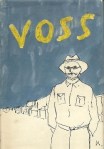
  • Patrick White, VossSybylla Melvyn, from Miles Franklin’s My brilliant career, has to be in the list of any Aussie female reader. How can she not be, with her independent spirit and her refusal to let a handsome, wealthy man distract her from her dream of a “brilliant career”.
  • Voss, from Patrick White’s Voss, was inspired by Prussian explorer Ludwig Leichhardt and his expedition into the Australian outback in the 1840s. He’s tragic, mythic, romantic, and I first fell for him, and thus also for Patrick White, in my teens.
  • Weekly, from Elizabeth Jolley’s The newspaper of Claremont St, is a working class woman, a cleaner in fact (hence her “name”). She works steadily towards a dream that she will not give up, not for any anything.

And I think I’ll leave it there. I could go into families – like Tim Winton’s Lambs and Pickles (Cloudstreet) and Ruth Park’s Darcys (The harp in the south) but that would be diluting the theme which I don’t want to do. I’m aware that this is not at all representative of my favourite authors, but that’s because I love them for other reasons.

And now, over to you. Who are your most memorable characters?

Monday musings on Australian literature: Bookswapping

Old books

Old books (Courtesy: OCAL @ clker.com)

Last week I wrote a Monday Musings about bookselling for/by charities. As I was writing it, I realised that there was another way of acquiring books that is worth writing about – book swap arrangements. Not surprisingly, it came up in comments on that post, so is clearly something of interest to many readers. It’s an area that I’m aware of – how could you not be – but not one I use with any regularity, so I’ve enjoyed researching it beyond my limited knowledge. I’m sure commenters will add even more information, for which I thank you in advance!

Book swapping as an informal activity is practised by most readers in some form or another. We share books – sometimes lending them to be returned, other times asking for the book to be passed on. It may not always be exactly one-to-one, but something more informal where we press loved books on each other as we read them. A little bit more formal is that practice in places like youth hostels where travellers leave a book behind that they’ve read, in a communal bookcase, and take one in its place. I still have a book that I picked up that way back in the 1970s. It’s Mordecai Richler’s Shovelling trouble. I love it – and the memories it carries.

In other words, book swapping as I’m describing it here is a pretty loose activity. It happens in multitudinous ways, ranging from the highly informal to the very controlled, from sharing books locally (in just a street, for example) to sharing across and between nations. Some swapping is simply about ensuring we always have something to read – what I’d call reader-to-reader sharing – while other schemes have bigger literary and social justice goals. These aims and styles aren’t always mutually exclusive, but the emphasis tends to fall more into one camp than another, if that makes sense. The activities I list here all fall into the somewhat organised end of the spectrum.

BookCrossing

BookCrossing is the first big “organised” system that I came across – and that was back in the early 2000s when I found a book in my workplace cafe. Wikipedia describes it as “the practice of leaving a book in a public place to be picked up and read by others, who then do likewise.” It started in the USA but has become a huge international community, supported by a website and social media platforms.

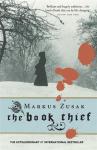
Markus Zusah, The book thiefAustralia is 7th on the list of the world’s top 10 bookcrossing country according to the BookCrossing website, which is not bad given our size (unless that was measured per capita).   (If you are interested, the top three countries are USA, Germany, United Kingdom.) I won’t say more about this, but if you’ve never heard of it do check out their website. It’s rather fun to see the list of recently released, recently caught, most travelled and most wished for books. I loved seeing, when I checked, that the top book in “the most wished for” list was Markus Zusak’s The book thief (my review).

The Great Book Swap

Coordinated by the Indigenous Literacy Foundation, the Great Book Swap is a very different kettle of fish. Its aim is to raise money for the Foundation. The idea is for organisations – workplaces, schools, any group at all – to host a book swap, which this year was on Wednesday 6 September. (But, really, you could do it any time. The ILF won’t reject your money). The principle is that people swap books for a gold coin donation. That is, participants bring a book (or books along) and for the right to take a book or book/s away, pay a gold coin donation. So, you get a book to read and the Foundation gets some money. In 2016, the ILF raised $160,000. The money is used to buy books to send to remote indigenous communities.

ILF Ambassador, children’s author Andy Griffiths, describes it thus:

The Great Book Swap is a win-win. Not only does it help raise money to improve literacy levels in remote communities, but the excitement and fun…helps improve literacy levels in your community or organisation…

The Little Big Book Swap

Another literacy focused event is the Little Big Book Swap run by The Little Big Book Club at Raising Literacy Australia. It runs along the same lines as the Great Book Swap, with money going “to support literacy programs and resources for SA families”. Raising Literacy Australia seems to be an Australia-wide organisation, with its vision being “Enriching Australian lives and building communities through literacy”, but this Little Big Book Swap, currently anyhow, says the money is for South Australian families. Hmm … maybe this is just a start of a program they plan to expand.

Street Libraries/Little Free Libraries

You’ve all heard, I’m sure, about street libraries. They are neighborhood book exchanges where passers-by can take a book to read or leave a book for others to find. The Little Free Library is one manifestation of these. It started in the USA in 2009. According to Wikipedia, there were 50,000 registered libraries world-wide. I bet there are many more that are not registered. In Australia, we have an organisation called streetlibrary.org.au . I love their description of what they do:

Street Libraries are a beautiful home for books, planted in your front yard. They are accessible from the street, and are an invitation to share the joys of reading with your neighbours.

Street Libraries are a window into the mind of a community; books come and go; no-one needs to check them in or out. People can simply reach in and take what interests them; when they are done, they can return them to the Street Library network, or pass them on to friends.

If anyone has a book or two that they think others would enjoy, they can just pop it into any Street Library they happen to be walking past.

They are a symbol of trust and hope – a tiny vestibule of literary happiness.

“A tiny vestibule of literary happiness”. I mean, what more could you want? You can register your library on the site, which enables others to find you. You can build your own little library, or you can buy a kit from the website. According to the website, there are 9 in my city. (I should have gone out and photographed one today, shouldn’t I?) The one closest to me is Books for the World (and it just so happens that one of my ACT-litblogger mentees is involved in it!) Another is the Mighty Fine Book Swap in Brisbane. Click on these links to see gorgeous pics, and read about them.

Other

These are some of the “big” initiatives, but I know there are all sorts of book swap arrangements around (including the hostel ones I mentioned in my introduction). Commenter Jeanne on last week’s Monday Musings wrote that

Recently Mildura Library has started a new venture: provide a book swap at Mildura Airport: http://milduraairport.com.au/books-on-the-fly/. Are there any other airports that have something similar?

Are there? Anyhow, what a lovely initiative. It’s called, delightfully, Books on the Fly. Being a small regional airport, Mildura Airport does not, I’m guessing, have a bookshop in the terminal, so this provides a lovely service for air-travellers.

Do you use – or contribute to – any book swap arrangements? I’d love to hear about them, whether or not I’ve mentioned them here already. 

Monday musings on Australian literature: Bookselling for charity

Old books

Old books (Courtesy: OCAL @ clker.com)

Last week I wrote a Monday Musings about the current, relatively positive, state of play for bookshops in Australia. Responding to that post on Facebook, one of my longstanding friends, and an original member of my bookgroup, reminded me of the Lifeline Bookfair which is held regularly in Canberra, and to which I have donated many books. I didn’t mention Lifeline because that post was about shops selling “new” books. However, she made me realise that while I have also written about secondhand book shops before, I have never specifically written about those organisations which sell books to raise money for charity (or good works). Now is that time …

First, though, a brief comment. A few years ago, knowing that bookselling is the prime fundraiser for some charities, such as Lifeline, I wondered what would happen to their fundraising goals in the new world of digital books. Well, I needn’t have worried. Books are still raising plenty of funds for charities. I’m not the only one, it appears, who still loves the printed book!

Lifeline Bookfair (Canberra)

The most visible seller of books for charity in my city is Lifeline. Lifeline is a national organisation providing 24-hour crisis support, particularly, but not exclusively, in the area of suicide prevention. It relies on volunteers to staff the support phones, and to raise money for the work of the organisation. A major fundraiser in my city – and I think in other parts of Australia – is the Lifeline Bookfair, which is held three times a year. It is hugely successful, and a big-ticket event on Canberra booklovers’ calendars. (Not mine, though. I donate to it, but I stay away! If I ever start to run out of books to read, however, I know where to go!) For Lifeline Canberra, these bookfairs are “the cornerstone” of their “financial strategy”, and currently bring in between $1 to $2 million for the organisation.

As well as the physical book fairs, Lifeline also runs an online service. I should add that besides books, they also sell records, DVDs, CDs, jigsaws and related products. For Mr Gums, Lifeline is a good source for the foreign language books (German, to be precise) that he likes to read.

There are Lifeline organisations throughout Australia and many, if not all, raise funds through booksales. We donated, for example, many books from my Aunt’s estate last year to her nearest Sydney operation.

Brotherhood Books

This is a social enterprise run by the Brotherhood of St Laurence which aims to tackle poverty in Australia. Its bookselling, mainly carried out online but also available through their physical stores in Victoria, is also volunteer run. They say that when you buy books from them

you also keep them out of landfill, reduce your carbon footprint, and support the many worthy charitable programs run by the Brotherhood of St Laurence.

Vinnies and Salvos

St Vincent de Paul (Vinnies) and the Salvation Army (Salvos) run secondhand shops throughout Australia, and sell books at these shops along with clothing and household goods. Both organisations aim to reduce social injustice, particularly poverty.

Vinnies, and probably Salvos, also give books to families in need.

Other

And of course, there’s an array of smaller charities which sell books to support their activities, starting with school, church and hospital fetes and stalls.

Also, the Australian online donations platform, GiveNow, lists a number of organisations which accept donated books, some of these to sell for fundraising (such as Brotherhood Books) and others to distribute to those in need (such as the Aboriginal Literacy Foundation, which is particularly interested in children’s books).

Do you buy from, or donate to, charity booksellers? Please give a shout out to your favourite/s – particularly if I haven’t mentioned them here.

Monday musings on Australian literature: Tasmanian Writers Centre

Continuing my little series on our writers centres, I’ve chosen the Tasmanian Writers Centre for my next post, largely because it is holding its Tasmania Writers and Readers Festival next month. Might as well give that a plug in case for my Tasmanian readers, though I’m sure they know!

The Tasmanian Writers Centre was established in 1998 and must have one of the loveliest locations in Australia, the Salamanca Arts Centre. It has a lovely bright webpage which announces that its aim is

Supporting writers to tell powerful stories, connecting with readers and building sustainable careers.

To do this, the Centre does the sorts of things that other writers centres do, and as before I’ll list their main programs …

A Writer’s Journey

Danielle Wood, Mothers Grimm, book coverThis seems to be an annual program comprising monthly workshops, with the overall topic changing each year. In 2017, the topic is “the challenges and rewards of a variety of non-fiction formats. Topics include memoir and life writing, environmental journalism, how to research for non-fiction and freelance feature writing.” The presenters include Danielle Wood (whose memorable Mothers Grimm I’ve reviewed here), Anna Krien (whom I’ve reviewed here a few times and whose topic was, appropriately, Environmental writing and journalism), and Maria Tumarkin.

Erica Bell Mentorship Program

This program, which started in 2016, provides “one-on-one mentorship with an established writer over a six month period.” Applicants submit a 10,000 wd excerpt from their manuscript and a letter explaining why they believe they would benefit from a professional mentor. Unfortunately, for nosey me, the site doesn’t say who the professional mentor/s might be.

Young Writers Program

The Centre seems to have an active program for supporting and encouraging young writers:

  • Twitch: This is the overall name the Centre gives to its youth program. It includes workshops, “Hot Desk residencies”, and the Young Writer in the City program.
  • Young Writer in the City: I came across the first year of this program on a visit to Hobart in 2015, and wrote about it then. The idea was that writers, under 30 years old, would set up “their chairs, laptops and notepads in the midst of shoppers and surrounds to compose essays between 1500 and 5000 words”. It was apparently successful, because after that first one in Hobart, the project has been offered in Launceston, Devonport and, most recently, Glenorchy. You can find links to some of the recent writing on the project’s page. One, for example, found her inspiration for writing about MONA in her childhood love of Charlie and the Chocolate Factory, in “Willy Wonka and his fascinating factory full of wonder and surprises”. Anyone who has been to MONA could understand that reference.

Emerging Tasmanian Aboriginal Writers Award

This award is being offered for the first time in 2017 – as part of the Festival. It is open to writers 16 years and older, and offers prize money of $1200. The lovely thing is that it accepts a wide variety of writing forms: poems or songs, short fiction, non-fiction (essay, autobiographical or biographical work), a play excerpt, or an illustrated story. There are different length limits depending on the form.

Tasmanian Writers and Readers Festival

Tasmania’s festival is a biennial one, and like most such festivals includes “masterclasses, discussion forums, spoken word events, children’s programs”. It’s nice, I think, that it’s framed as a “writers and readers” festival. This year’s festival runs from September 14 to 17. At this year’s festival, masterclasses are being run by writers like Bradley Trevor Greive, Ashley Hay, Arnold Zable, and Alec Patrić (on Advanced Short Fiction). There’s also a delightful sounding session titled “Miles and Stella in Conversation”. Of course, I had to read more about that one, and this is what it said: “What do two prize-winning authors talk about when they talk about writing? Alec Patrić (2016 Miles Franklin winner) and Heather Rose (2017 Stella Prize winner) quiz each other on words, prizes, literature and life. A unique opportunity to get an inside glimpse into the friendship of writers.” This is followed by, in parentheses, the note that “(Cosmopolitans and Bellinis on sale for this session.)” Is there something I don’t know? Did our Miles love these cocktails? And what if I’d prefer a simple glass of wine? What a hoot.

It is also at this Festival that the shortlist for the biennial Tasmanian Premier’s Literary Awards will be announced – so, we’ll be looking out for that. The winners will be announced in November.

Monday musings on Australian literature: Bushfire fiction

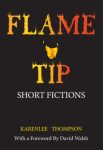
Karenlee Thompson, Flame tipLast week I reviewed Karenlee Thompson’s short story collection, Flame tip, which was inspired by (if “inspired” is quite the right word here) the horrendous Tasmanian bushfires of 1967. Lisa at ANZLitlovers had also reviewed this book, and in discussion on her post we discussed the apparent dearth of books on a topic so critical in Australian life. I thought the topic warranted a Monday Musings. Maybe readers here will come up with some more titles that we haven’t thought of!

In 2015, researcher at the ARC Centre of Excellence for the History of Emotions, Grace Moore wrote an article for The Conversation titled “Bushfires are burning bright in Australian letters and life”. She starts by noting that

Historically, bushfires have played an important role in Australian literature, adding a touch of exoticism in fiction written for readers back in Europe, while also offering insights into the dangers faced by settler communities.

She says that novelists and short story writers from as early as the 1850s referred to fires, often using them as “a melodramatic device to resolve romance plots.” A “heroic rescue from swirling flames (themselves an outlet for the smouldering passions of the protagonists)” would be used to bring together “characters whose marriage would have been considered unsuitable ‘back home’ on the other side of the world.” She names Ellen Clacy as one such writer – though her best known book, A Lady’s Visit to the Gold Diggings of Australia in 1852–1853, is a non-fiction account of the goldfields. I couldn’t find an example online of the sort of story Moore describes.

However, by the 1880s, she writes, “as settlers became better acquainted with the devastation that fire could cause in the outback, bushfire narratives became bleaker and more menacing”. Instead of settlers successfully defending their homes, stories started to describe “suicides, traumatic flashbacks and apocalyptic visions” (like J.S. Borlase’s Twelve miles broad1885) or “devastating environmental impact” (such as H. Hudson’s story, The phantom herd, 1907).

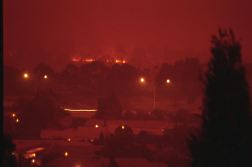
Canberra fires, 2003, taken from opposite our house

In another article Moore is quoted as saying, that in the 20th century fire became “increasingly tied to the nation and resistance”. When fire threatens people’s property, or towns or lives, she said, “it is like a micro war on Australian soil, one that acts as a call to arms for members of the community to fight for their own and their neighbours’ safety”.

Moore had (or has), in fact, been researching fires for some time, and was involved, back in 2013, in a two-day conference held by the Centre, called “Fire stories”. One of the papers was by John Schauble titled “Lost in the flames? The missing great Australian bushfire novel”. The abstract for the paper says:

Bushfire might have been expected to produce a great Australian storyteller, but curiously it has not. While this quintessentially Australian disaster looms large in the popular imagination, bushfires are largely absent from the nation’s fictional narrative. Fire finds expression in the visual arts, poetry and particularly in children’s literature, but novels and even short fiction in which bushfire is central to the narrative are a rarity. Even cataclysmic events such as Ash Wednesday and Black Saturday – that triggered a flurry of other literary activity – have largely failed to ignite the imagination of fiction writers. Fiction has largely been eclipsed by factual accounts, while other forms of literary expression of fire have flourished. A strong tradition of juvenile literature has not translated into adult genres.

Interesting, eh? Why is this?

Now, I hadn’t heard of Schauble before – he’s a CFA volunteer  advisor to Victoria’s Fire Services Commissioner – but he’s been interested in this topic for sometime. Back in 2002, he wrote an article for The Age on our relationship to bushfires, and said something similar to what he said in 2013:

Despite the great tragedies of fire in the Australian bush, just a handful of novels use bushfire as the central theme. A few poignant short stories – Henry Lawson’s The Fire at Ross’s Farm, John Morrison’s The Children, and Robert Drewe’s Radiant Heat – are noteworthy, along with the occasional poem.

Curiously, bushfires have been seen as been as more suitably the stuff of children’s literature. A succession of well-known children’s authors – Ivan Southall, Colin Thiele, Mavis Thorpe Clarke, Alan Aldous and Roger Vaughan-Carr – have used bushfire as the theme of at least one work.

He said more, including quoting loved Australian cartoonist, Michael Leunig, but you can read the article yourself if you are interested.

Peter Temple, Truth

My point is that it is into this environment that Karenlee Thompson’s collection has been released. I can point to other recent books I’ve read which mention fire – including Gillian Mears’ Foal’s bread (my review), Alice Robinson’s Anchor Point (my review), Peter Temple’s Truth (my review), and Jane Rawson’s dystopian novel A wrong turn at the Office of Unmade Lists (my review). None of these revolve around fire, but in a couple fire is significant.

Anchor Point is one of these, containing a major fire partway through the novel. It starts:

Laura looked where he pointed. A line of crimson flames was rising over the crest of a distant hill. Burning storeys high, licking the sky, starving. More than spot fires, the land was alight.

This is followed by several pages of terror. Then, when it’s over:

How depressing it was to live for months in a singular palette: grey, charcoal, black. It was strange to consider what had gone up in smoke and what had survived. There seemed no logic to it …

And fire comes to the city at the end – because Anchor Point is, among other things, a cli-fi novel.

So, things are changing. Just this year, Eliza Henry-Jones published her second novel Ache (see Lisa’s review). This novel’s subject matter is the impact of bushfire on individuals and communities. Lisa tells us that Henry-Jones wrote her Honours thesis on “the representation of bushfire trauma in fiction”. Lisa has reviewed a couple of other books in which fires feature significantly: Roger McDonald’s 1996 book about an arsonist, The Slap (Lisa’s review), Amanda Lohrey’s 2009 novella Vertigo (Lisa’s review), and Lexi Landsman’s 2016 novel The ties that bind (Lisa’s review).

Things, in other words, seem to be changing. I wonder why now? We have always had  devastating fires in this country, but is climate change increasing their frequency and therefore bringing the issue once again to the fore? I haven’t read these recent novels, so I can’t really comment on what approach they are taking to exploring fires in Australia. Are they focusing, for example, on grief and trauma, or community and nationhood, or environmental politics and climate change?  Or, is there no observable trend in this contemporary writing?

Do you have any thoughts on this topic? If you’re not Australian, do you have any comments about your country’s literature relating to – hmm – disasters that are common to your shores?

Monday musings on Australian literature: Northern Territory Writers’ Centre

Back in June, I wrote a post on the ACT Writers Centre, and indicated then that I would gradually write about other state centres. So, today I am writing about the other pseudo-state aka territory centre, the Northern Territory Writers’ Centre. I’ve chosen this as my second one because I think the Northern Territory is often overlooked in terms of cultural activity – and yet, there’s clearly quite a lot going on in this region.

On its website, the NT Writers’ Centre describes its goals:

The NT Writers Centre encourages vibrant literary activity in the Northern Territory, developing and supporting writers in all genres at all stages of their careers. We value quality NT writing as a unique component of Australia’s literary wealth and recognise Indigenous writers and storytellers as a core component of this.

Its main activities are:

  • NT Writers’ Festival, its “cornerstone event”, which alternates between Darwin & Alice Springs
  • Territory Read, its biennial book awards
  • Andrew McMillan Memorial Residency and Eco House Residency, which are two writers residencies
  • Workshops and other events

NT Writers’ Festival

This year the Festival was held in Alice Springs, in May. Its theme was Crossings/Iwerre-atherre (with Iwerre-atherre being an Arrernte, word for “two roads meeting, neither blocking nor erasing the other; two-way learning or travelling together.” Speakers included Kim Mahood and Bruce Pascoe (both of whom I’ve reviewed on my blog), plus many indigenous and other writers (including Indonesian writer, Agustinus Wibowo.) A lovely diverse line-up.

Olive Pink Botanic Garden

Olive Pink Botanic Garden

This year they also, for the first time, shared festival sessions via live streaming to “libraries and other venues across the NT.” A great initiative, but I wonder how successful this was – technologically, I mean.

Many of the events were held in the gorgeous Olive Pink Botanic Garden, which I’ve visited a couple of times. One event, for example, was titled “Up with the Birds: Poetry readings at the café”. I reckon I could have made that, as it wasn’t too early at 8am! The poets were Anthony Lawrence, Meg Mooney, Bruce Pascoe, Kaye Aldenhoven, and the poems were apparently about “how our feathered companions have crossed the hearts and minds of poets.”

Territory Read (and other literary prizes)

These are biennial awards, with the next ones due in 2018. They are not wealthy awards, with the total prize money offered in 2016 being $9000, and are only offered for works by NT residents. The awards are:

  • Chief Minister’s Book of the Year Award: can be won by a book in any genre. The 2016 prize of $5000 was won jointly by Clare Atkins for Nona and Me (published by Black Inc.) and Mary Anne Butler for Highway of Lost Hearts (published by Currency Press)
  • Best Non-Fiction: for non-fiction prose: for any non-fiction prose work.
  • Best Young Adult or Children’s Fiction: for a published book in either genre, and they say that if a picture book wins, the prize money is split between author and illustrator.

The Writers Centre supports or contributes to other literary competitions, including, for example, the Darwin Poetry Cup. In fact, from reading their site, and searching the ‘net, I sense that poetry is quite a going thing in the Territory. Australian Poetry, for example, supports (or, has supported) a Cafe Poet residency in the above-mentioned Olive Pink Botanic Garden.

Writers Residencies

The two residencies they offer are:

  • the Eco House Residency at the Darwin Botanical Gardens which is for “all writers outside Darwin” and is a three-week residency which involves staying in “an old-style elevated house” inside the Gardens.
  • the Andrew McMillan Memorial Residency which is “open to any emerging writer who is an NT Writers’ Centre member” (or, a member of any other of the national writers centres). It’s funded by a bequest from writer/journalist/museum Andrew McMillan, and is at Larrimah which is a tiny settlement around 500 kilometres south from Darwin. McMillan often stayed here to write away from distractions.

I was intrigued to note that, as well as work on their project, the writers from both residencies must “write a 500-word blog post for the NT Writers’ Centre website”.

Workshops, etc

Like all writers centres, the NT Writers’ Centre runs all sorts of workshops, and they are clearly aware that writers need to be skilled for contemporary consumers of literature. So, for example, one of this year’s workshops was on podcasting, and was run in conjunction with the 2017 Darwin Fringe Festival. The end result was Podcasts from the Fringe.

Another upcoming workshop uses modern technology to reach writers, which is probably particularly important in such a relatively large but sparsely populated state. It’s an online writing group, which will run for three months from September 2017. It’s for writers in all genres or forms, will provide feedback, and is about “drafting, reflection and constructive criticism in a structured and supportive online setting.”

I’ve enjoyed this little foray into another part of Australia and discovering what seems to be another vibrant literary environment … I hope you’ve enjoyed it too.

Monday musings on Australian literature: Road novels

Having just returned from the madness of LA’s freeways to the calm of Canberra’s roads, I found myself thinking about road novels! Road movies are often talked about, but not so much road fiction, particularly in Australia – so today I’m going to have a go.

Defining the term

I’ve labelled this post “road novels” rather than “road literature” or “road narratives” because I want to focus on fiction rather than on travel, and other non-fiction, in which “road” stories abound.

But, how to define the “road novel”? I turned to Google of course, and found some discussion of a “road genre”.

WorldCat provides a basic, brief definition, noting the “picaresque” as a related genre:

Used for works in which a journey, as a life-changing experience, is a central part of the action.

Blackwell Reference, a subscription site, is more expansive (but I would have had to subscribe to get their full discussion):

The road novel is the automotive version of the journey narrative, borrowing elements from its two major variants: the romance or noble quest and the picaresque with its chance encounters and roguish characters. American automobilists recall pioneer figures like Leatherstocking and Huck Finn who seek to escape civilization by “lighting out for the Territory”; they also follow in the footsteps of the peripatetic speaker in Whitman’s “Song of the Open Road” who finds freedom, companionship, and insight on the highway. Sinclair Lewis’s Free Air ( 1919 ), the first road novel, draws on these traditions in establishing the defining theme of the genre: the technologized escape from the constraints of civilization to the freedom of the open road. This flight is also the central paradox of the genre since drivers, in their dependence on automotive technology, bring with them the civilization they flee. The road novel became a popular genre in the 1950s, when growing affluence made it possible for the majority of Americans to own automobiles and President Eisenhower backed the largest freewaybuilding project in history. The most famous example is Jack Kerouac’s On the Road (1957), which adapts Huck’s “lighting out” to the Beat philosophy of “dropping out.” Kerouac’s journey inspired road trips by a number of literary dropouts, including Ken Kesey, Tom Wolfe, Hunter S. Thompson …

British author and journalist, Tim Lott, wrote in The Guardian:

No, it needn’t involve a road, but probably will. Yes, it is pretty much an American form. Yes, it is essentially 20th-century, with exceptions. And yes, it does have to be a novel (which disqualifies The Electric Kool-Aid Acid Test). By this definition, a road novel would still include, say, The Grapes of Wrath, which nevertheless somehow doesn’t quite fit – mainly because it is a novel about desperation and escape rather than exploration and adventure, which to my mind are the quintessence of the road novel.

Three definitions, but they differ in emphasis. WorldCat focuses on the idea of “journey” and “personal growth”, whilst Blackwell and Tim Lott focus more on “adventure” and “freedom”. I wonder if this difference relates to their different cultural frameworks, that is, WorldCat is probably providing a more international definition whilst Blackwell and Tim Lott see the genre as primarily an American one and define it in terms of the “big” American examples, On the road, Fear and loathing in Las Vegas, et al. Blackwell adds the “car” as a critical component, which would exclude books like Cormac McCarthy’s The road. (But then, they and Lott would probably exclude it anyhow, given it’s about “survival” rather than “adventure” and “freedom”)

So, what about Australia? Do we have road novels, and if so, do they meet these definitions or do we have our own version (or variation)?

The Australian road novel?

Tara June Winch, Swallow the airI’d say we do have road novels. Here are some suggestions (in chronological order):

  • Eve Langley’s The pea pickers, 1942 (my review), about two sisters seeking agricultural work in Victoria’s Gippsland and other rural areas
  • D’Arcy Niland’s The shiralee, 1955, about a father tramping the country roads of NSW with his daughter, his swag/shiralee/burden, working itinerantly
  • Ruth Park’s Swords and crowns and rings, 1977 (my review), in which a step-father and son seek work in country NSW during the Depression
  • Tim Winton’s Dirt music, 2001, in which a man travels to NW Australia to escape a confrontation (and find his own peace)
  • Tara June Winch’s Swallow the air, 2006 (my review), about a young indigenous woman seeking her heritage

Some of these books are primarily about “the road” while in others, particularly Swords and crowns and rings, and Dirt music, the road forms one part of a bigger story. Looking at them in terms of our definitions, we could say that:

  • None are primarily about “adventure” and “freedom”, though there is an element of these in The pea pickers – and they can be natural by-products of being “on the road”.
  • Two have a strong “quest” element, particularly The pea pickers (with the girls seeking a spiritual connection with, or at least an understanding of, their mother’s home land) and Swallow the air with the protagonist seeking to understand her heritage and therefore he identity.
  • Most are about survival – either physical or spiritual or both.
  • Two – The pea pickers and Swallow the air – have autobiographical elements, which is a feature of the classic American road novels.
  • None are specifically “automotive” journeys, though the car is used as a form of transport in some.

So, I’d say, from this small sample, that Australian road novels:

  • meet the broad WorldCat definition because, whether or not “life-changing” is the goal of the journey, that does tend to be the outcome; and
  • are not universally characterised by the “freedom” and “adventure” goal that is seen to be critical to the American road novel.

There is more that could be teased out – including the possibility of gender differences. For example, the two novels that I suggest have autobiographical and stronger quest elements are the two by women authors. Too small a sample I know, but it’s an idea to explore.

I’d love to know whether you like road novels, what you think characterises or defines them. Or, do you think it is a specifically American genre, and that the books I’ve listed are not road novels?

[Please excuse the lazy dot-pointing in this post.]

Monday musings on Australian literature: Australian writers and Hollywood

This will be my last Monday Musings posted from the USA, so I figure I should do at least one post inspired by where we’ve been. I’ve put it together pretty quickly though, as time for blogging is pretty limited, so please forgive all the gaps!

Since this is a litblog, my focus here is the relationship between Australian writers and Hollywood, and I’m narrowing it to the last couple of decades. (This connection, in fact, goes back to the silent movie days, but that would make for an essay rather than the brief post I have time for here.) I should also explain that I am using “Hollywood” to stand for America (a common synechdoche for which I should perhaps apologise, but it suits my California-holiday-post purpose, and is probably pretty accurate anyhow.)

I guess there are political issues that could be discussed here – brain drain, and all that – but I’m not going there. And, anyhow, besides the fact that obtaining enough work can be difficult in Australia, many Australians do seem to keep their feet in both hemispheres.

There are two angles from which this topic can be tackled – Aussie scriptwriters in Hollywood, and Australian writers whose stories have been optioned for film adaptation by Hollywood – and I plan to briefly do them both.

Aussie scriptwriters & Hollywood

Many scriptwriters well-known in Australia have also written for American productions – usually having been identified because of their Australian success. Laura Jones and Andrew Bovell are two such. Laura Jones, for example, worked on Portrait of lady (1996) and Possession (2002). She also wrote for Oscar and Lucinda (a 1997 British-American production of an, admittedly, Australian novel, directed by an Australian, so this is not particularly surprising!). These are all adaptations of novels, in fact, but only one is Australian.

Andrew Bovell, known in Australia for films like Strictly Ballroom (1992) and Lantana (2001), was also scriptwriter on the more recent American-British-German co-production of A Most Wanted Man (2014). Bovell said he was approached for about six or seven projects, via his American agent, after the American release of Lantana. He chose one, set to star Benicio de Toro, but, like many film projects, it doesn’t seem to have eventuated.

Less surprising in this group, perhaps, is Craig Pearce who has worked on many Baz Luhrmann films, including the recent Australian-American co-production, The Great Gatsby (2013). It is worth mentioning, nonetheless, because the film (obviously!) is an adaptation of a major American classic.

One of the most recent Australian writers to make his name as a scriptwriter in Hollywood is poet, novelist, scriptwriter Luke Davies. He was scriptwriter on the co-production, Life (2015), about a Life Magazine photographer and James Dean. He has really established himself, though, for his work on last year’s, Lion, for which he received an Oscar nomination for Best Adapted Screenplay. (He won the BAFTA.) Sure, it’s a British-Australian-American co-production and is an Indian-Australian story, but this must put him on the map in Hollywood. And, in fact, he is now working on an American production, Beautiful boy, which is another adaptation of a memoir (two, in fact, one by a father and one by his son).

Another Australian making his mark in Hollywood – as an actor, director and writer – is Joel Edgerton who wrote and directed the critically-well-regarded film, The Gift (2015). He is now working on another film – as director and writer. It’s titled Boy Erased, and is due for release in 2018. His path is clearly different to that of the preceding names here, with his coming via his acting career rather than a writing background.

While researching this, I discovered an organisation called Australians in Film, which describes itself as “The Industry Association for Australian Filmmakers and Performers in the U.S.” It was founded in 2001, and says that it “supports and promotes Australian screen talent and culture in the United States.” One of its several programs is Gateway LA Script Development which was created in 2015 by its President. The aim is to give Australian screenwriters “the chance to have their script seen by top industry professionals” and it has apparently been successful in achieving that. There were 8 finalists this year, with the winners being a duo, Penelope Chai and Matteo R. Bernardini, whose script explores the Cinderalla myth/fantasy.

Australian novelists & Hollywood

I was going to head this section “Australian stories”, but decided that that’s not quite right, as you’ll see. Of course, Australian novels have been adapted for films in America for the longest time – like, to pick a quick obvious example, British-born Australian novelist Nevil Shute’s On the beach (1959) which was produced and directed by Stanley Kramer.

Hannah Kent, Burial Rites bookcover

Courtesy: Picador

Recently though, it seems that books by Aussie novelists are attracting a lot of attention. I’ll name just a few, which were discussed in The Australian:

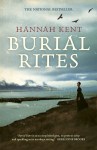
  • Hannah Kent’s Burial rites, a debut novel (my review) which is currently “in development” with Jennifer Lawrence signed on to star. It’s set in Iceland, hence my qualification regarding “Australian stories”.
  • Liane Moriarty’s Truly, madly, guilty and The husband’s secret have been announced or are in pre-production. Her Big little lies has already been made into a mini-series in the USA (2017), starring, among others, Nicole Kidman and Reese Witherspoon. A Los Angeles literary agent, quoted in The Australian (link above), says that “People are just so enamoured of the worlds she creates — she’s captured the zeitgeist of suburbia”.
  • Anna Snoekstra’s Only daughter, a debut novel just published last year and set in my home-city, has been optioned by Working Title, a partner of Universal Pictures.
  • ML Stedman’s The light between oceans was released in cinemas in 2016 (as British-New Zealand-American co-production).
  • Marcus Zusak’s The book thief (my review) was released in 2013 (as a German-American co-production).

Not a particularly original post, I’m afraid, but I didn’t want to miss a Monday Musings. I hope it’s been of some value, even if not particularly edifying.

I’d love to hear from readers here who can add names to this brief discussion!

Monday musings on Australian literature: ACT Litbloggers under way

A few weeks ago I posted on the ACT Litblogging program for which I am a mentor. But, I’ll just recap in case you missed that post. Titled ACT Lit-bloggers of the Future, this is a collaborative program between the ACT Writers Centre and the National Library of Australia (NLA). It provides for two emerging ACT-region writers to attend events at the National Library of Australia and post their experience on the Writers Centre’s Capital Letters blog, as well as for that mentorship from me.

The two bloggers, playwright and performance maker Emma Gibson, and blogger/podcaster and writer Angharad (Tinted Edges), are now well underway. They have posted on three events, and more posts, I know, are scheduled for the next month. The posts to date reveal the variety of programs offered by the National Library, an impressive variety really, when you know that the bloggers, due to their work and other life commitments, have not been able to attend every event available.

Here are the posts published to date:

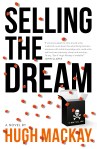
  • Hugh Mackay, Selling the dreamAuthor talk with social commentator and prolific writer Hugh Mackay, held on 6 June, and posted by Angharad. The book was Selling the dream, on the advertising industry, and Angharad, who loves attending author talks – as most keen readers do – enjoyed both the overall experience and what she learnt about advertising, including its increasing role in political campaigns. As you usually do at author talks, she bought the book and had it signed!
  • Presentation on the life and death of botanical illustrator Dorothy English Paty by curator Nat Williams, on 28 June, and posted by Emma. Emma, who has always liked botanical illustration, was throughly engaged by this introduction to Paty (1805-1836), a little-known early Australian amateur artist. The Library has two of her Newcastle sketchbooks in its Nan Kivell Collection and this talk focused on presenter Williams’ research. As Emma says, although there are many gaps in our knowledge about her, the survival of these notebooks, together with research by people like Williams, will ensure that she (and the contributions she made) are not lost to us.
  • NAIDOC 2017 week collection talk titled Our voice, presented by librarian Ryan Stoker on 6 July, and posted by Emma. Described as a collection talk, this event involved Stoker highlighting “a variety of interviews, social histories and folklore recordings” that the Library has collected from Aboriginal and Torres Strait Islanders. As a playwright, Emma is attuned to things aural, and takes her own audio recordings when travelling. Not surprisingly then, she found the talk illuminating, particularly in relation to how this collection at the NLA might help keep indigenous languages alive.

More posts, as I said in my introduction, are coming, including one from Angharad on an author talk by the popular and successful Australian fantasy and historical fiction writer Kate Forsyth. Look for that, and others by our two bloggers, on the Capital Letters blog. You can subscribe to it via the box in the right sidebar.

Meanwhile, our two bloggers would love it if you read these current posts and left them a comment!

You are very likely to hear more about this program later in the year, but I did want to share what’s been done to date – and give a little heads up to the good work being done by the NLA, ACT Writers Centre, and our two bloggers.

A short post today, but I’m sure you won’t complain about that!

Monday musings on Australian literature: Mid-year awards round-up

As is my wont, I have not been posting this year on all the awards that have been announced  – on their longlists, shortlists or even their winners – though I have done some. It can become a bit overwhelming. Instead, I’ve decided that a mid-year recap might be a useful way to go – so, since we have now passed the year’s halfway mark, that time has come. I’ll mention the awards I’ve chosen to do, in chronological order of their announcement.

Stella Prize

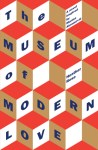
Heather Rose, The museum of modern loveThe Stella Prize is now one of the first awards to be announced in the year, and I did post on the longlist.  From this longlist, a shortlist of six books were chosen:

  • Between a wolf and a dog, by Georgia Blain
  • The hate race, by Maxine Beneba Clarke (my review)
  • Poum and Alexandre, by Catherine de Saint Phalle
  • An isolated incident, by Emily Maguire (my review)
  • The museum of modern love, by Heather Rose
  • Dying: A memoir, by Cory Taylor

And the winner, announced in early March, was Heather Rose’s The museum of modern love, which I will be reading with my reading group later this year.

Indie Book Awards

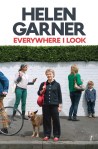
Helen Garner, Everywhere I lookThe winners of these awards, which are run by Australian independent booksellers, were announced in late March. Several awards are made, which you can check out on their site but those most relevant to my blog are:

  • FictionThe last painting of Sarah De Vos, by Dominic Smith
  • Non-fiction: Everywhere I look, by Helen Garner (my review)

The New South Wales Premier’s Literary Awards

These awards are multipronged and far too complex for me to report on in detail here. You can see the full list of winners, which were announced in late May, on Wikipedia. However, those of most relevance to me were:

  • Christina Stead Prize for FictionThe museum of modern love, by Heather Rose
  • UTS Glenda Adams Award for New Writing: Letter to Pessoa, by Michelle Cahill

ABIA, or the Australian Book Industry Awards

These awards, announced in late May, only a few days after the NSW Premier’s awards, are also multipronged. You can read the full list on the ABIA website, so again I’ll just share the most-reelvant-to-me award here, the  Literary fiction of the year award, which went to The last painting of Sarah De Vos, by Dominic Smith.

I should add that the hugely popular bestselling Australian author Di Morrissey was inducted into the ABIA Hall of Fame, and also that, for the first time this year, an award was made for Audiobook of the year, which nicely recognises the popularity and value of this form of “reading”.

Oh, and interestingly, the overall winner, Jane Harper’s The dry, was also the overall winner at the Indie Book Awards earlier in the year. So, the overall winner and the literary winner of both these awards were the same. The shortlists at both are judged by independent panels.

Miles Franklin Shortlist

While the Miles Franklin Award won’t be announced until later this year, it’s such a significant award in Australia that I’m going to share the shortlist here which was announced in June. The shortlist is:

  • Emily McGuire’s An isolated incident (Picador) (my review)
  • Mark O’Flynn’s The last Days of Ava Langdon (UQP)
  • Ryan O’Neill’s Their brilliant careers (Black Inc Books)
  • Philip Salom’s Waiting (Puncher and Wattman)
  • Josephine Wilson’s Extinctions (UWAP)

Nice to see a gender mix, and good representation from smaller publishers, including two university presses!