Monday musings on Australian literature: The Next Chapter

Two weeks ago I wrote a Monday Musings post on HarperCollins’ new prize for unpublished manuscripts, the Banjo Prize – and this week I saw the announcement of the winners of another new “prize”, the Wheeler Centre’s Next Chapter initiative.  It’s a very different kettle of fish but is another program offering opportunities to writers who may be struggling to be heard …

The Next Chapter program was, in fact, announced back in May as “an unprecedented new way of supporting writers”. Like the Horne Prize, about which I’ve also written recently, it is supported by the Aesop Foundation. Before I get onto Next Chapter, I need to tell you about this interesting company called Aesop! Established in Melbourne in 1987 it is – would you believe – a company that sells skin, body and hair products that are “created with meticulous attention to detail, and with efficacy and sensory pleasure in mind.” Hmm … no wonder I, who uses minimal and very basic skin, body and hair products, have never heard of them. However, it seems that their philosophy extends beyond their products to “fostering literacy, storytelling, and diversity”, which they do through a Foundation which offers support through two granting programs. I almost feel I should check out their products.

Anyhow, back to the Wheeler Centre’s Next Chapter. The Centre recognised that there are aspiring writers all around Australia who find it hard to get their stories heard. It also realised that “the commercial market is not always the best place for a writer to develop their skills and hone their craft.” And so it created the Next Chapter program, which aims

to elevate the Australian stories that aren’t being published – and to nurture a new generation of writers, from all sorts of backgrounds, to tell them.

They plan to do this by selecting, each year, “ten outstanding writers” who will be given $15,000 each to develop their work. They will also be matched with a mentor who will work with them to bring their writing to life, and connect them with peers, publishers and readers.
Maxine Beneba Clarke, The hate raceThe good thing is that although the Wheeler Centre is Melbourne-based/Victorian-focused, this program is being offered nationally – in order, says director Michael Williams, to “find the next chapter of Australia’s literary story.” The inaugural judging panel is beautifully diverse – you know how I feel about that – comprising Maxine Beneba Clarke (whose The hate race I’ve reviewed), Benjamin Law, Christos Tsiolkas (who has also appeared here several times), and Ellen van Neerven (who has appeared here several times). There is a video (with transcript) about the program at the Centre’s site, outlining the judging criteria – merit, impact, potential, suitability and significance.

Law, supporting the program, said that the two most important things he needed to build a sustainable writing career were “mentorship and money,” which is what the Next Chapter aims to provide. Tsiolkas said, on accepting the role of judge:

I am supporting The Next Chapter because we need to listen to and be astonished by more voices in Australian writing. Both to reflect the reality of contemporary Australia but also, and possibly more importantly, to provoke and invigorate cultural forms and expressions.

The danger of the word diversity is that it can be reduced to feel-good, kumbaya sloganeering. The radical dare of diversity is that it challenges us to be open not only to the difference of voice but the difference of opinion, politics, belief, aesthetic, commitment and priority. Real diversity should burst bubbles and we need that more than ever now.

Looking at the winners below, I’d say the judges have made a bang-on attempt to achieve this goal …

So, who are the inaugural winners? Being emerging writers they are not well-known, but many do have a good cv already, including being published in literary journals and/or performing at festivals (or elsewhere) and/or winning specialist awards:

  • Evelyn Araluen, indigenous poet, researcher, and educator working with Indigenous literatures at the University of Sydney
  • Jean Bachoura, Damascus-born, Melbourne-based writer and actor
  • Ennis Cehic, writer of fiction, non-fiction, poetry and essays, who was born in Bosnia and Herzegovina, but now lives in Melbourne
  • Nayuka Gorrie, New South Wales-based Gunai/Kurnai, Gunditjmara, Wiradjuri and Yorta Yorta freelance and comedy television writer, who focuses on black, feminist and queer politics
  • Lian Low, a Melbourne-based writer and spoken word artist, who has collaborated with circus artists, poets and dancers, in Malaysia and Australia
  • Yamiko Marama, Melbourne-based writer, therapist and food truck owner who is interested in social justice and memoir
  • Giselle Au-Nhien Nguyen, Melbourne-based Vietnamese-Australian writer, editor and bookseller
  • Ara Sarafian, Melbourne-based writer and editor who writes comedy-fiction, commentary and satire
  • Adrian Stanley, South-Australian based indigenous artist
  • Adam Thompson, Aboriginal (Pakana) writer from Launceston who writes contemporary, Aboriginal-themed short fiction.

There is, as you can see, a high proportion of winners from Melbourne – which is not hugely surprising for a new program emanating from Melbourne. Despite this geographic concentration, however, the winners’ backgrounds are diverse. You can read more about them at the Wheeler Centre’s site.

So, another interesting initiative – from a literary centre with support from a philanthropic foundation. So great to see, particularly given it focuses not only on emerging artists but also on encouraging and supporting “real” diversity. Now, it will be interesting to see where these writers/performers pop up next?

Monday Musings on Australian literature: the Australasian Home Reading Union (1)

Shared Reading Sign

Shared Reading (Courtesy: Amy via Clker.Com)

Reading Groups, U3A branches, Probus clubs, etc. These are just a few of groups around today in which people come together, formally or informally, to further their intellectual interests. What did people with such interests do in, say, late nineteenth century Australia? Well, one option was to join or form an AHR circle. Have you heard of these?

English and American antecedents

I admit that I hadn’t – until I stumbled across references to the Australasian Home-Reading (sometimes hyphenated, sometimes not) Union while researching Trove recently. So, I dabbled in Trove and to a degree in Google, and discovered quite a lot about Home-Reading Unions. As far as I can gather the idea has a few origins. In England, by the 1870s, there were reading courses offered by libraries, and post-university extensions schemes like the Oxford Home Reading Circle which involved systematic. My source for this, however, noted that these tended to be very middle-class, requiring an advanced level of education. This source, Robert Snape from the University of Bolton, goes on to say that:

The fragmentary progress in establishing a popular framework of adult education and guided reading in England was contrasted by the success in North America of the Chautauqua movement. Founded in 1871 as a camp meeting of the Methodist Episcopal Church at Lake Chautauqua in New York State, this evolved into the Chautauqua Literary and Scientific Reading Circle comprising over 100,000 workmen, farmers, teachers and housewives who read prescribed books over a four-year course. The aim of the circle, which was widely imitated throughout North America, was to nurture the habit of daily reading through a formalised winter programme, its emphasis on system and method being underpinned by lists of prescribed reading, local discussion groups and an annual summer camp with classes and lectures.

That was 1871. The idea was then, Snape said, picked up back in England by one John Brown Paton, who was the Principal of the Congregational Institute in Nottingham. He heard about the scheme, and was attracted because, says Snape, he was “interested in the moral welfare of young people” and was “aware of their patterns of reading and what he perceived as the corrupting influence of cheap literature.” He had already founded the Recreative Evening Schools Association to encourage progressive reading amongst young adults.

The Chautauqua scheme, though, “offered an inspirational example of the large-scale programme of popular education Paton wished to introduce in Great Britain” and so, with the help of others, “he formulated a system of home reading circles, modelled on Chautauqua, that would provide ‘some guiding hand to show folk what to read’ and would be primarily for uneducated working people and for young adults who had recently left school.” He had hoped to engage the help of the universities but they wanted this scheme to be part of their existing extension programs. However, Paton was “adamant that his new scheme should embrace the Chautauqua principle of inclusiveness.” He consequently eschewed the universities with their middle-class constituency and founded the National Home Reading Union as an autonomous organisation in April 1889.

Snape writes that

the aims of the National Home Reading Union were to guide readers of all ages in the choice of books, to unite them as members of a reading guild and to group them, where possible, in circles for mutual help and interest.

Paton hoped it would, “check the spread of pernicious literature among the young” and “remedy the waste of energy and lack of purpose so often found among those who have time and opportunity for a considerable amount of reading.” The reading would occur within “a systematic framework, and would educate readers in the practice of reading reflectively and to personal advantage.” Paton believed that social reading in a circle would facilitate members discussing prescribed books. His primary audience was “relatively uneducated readers” but he also hoped to reach established readers for whom the program could make “reading more profitable.”

And so to Australia

Not surprisingly, Australians started to hear about the scheme. By 1890, there are various articles – and even letters to the editor – discussing the above English and American programs. And then, on 14 March 1892, an article in Melbourne’s Argus tells us that an Australian version, Australasian Home-Reading Union “was recently founded at the Hobart meeting of the Australasian Association for the Advancement of Science.” Tasmania, eh?

The article’s main aim though is to advise that “an influential meeting of ladies and gentlemen” had just been held in Melbourne’s Town Hall “to co-operate in establishing a Victorian branch” of the Union. A Professor Morris advised the meeting that:

the object of the society was to promote a more systematic study of literature and science by publishing courses of home reading appealing to different tastes, drawn up by specialists in various subjects, by, publishing a monthly magazine containing additional help for students of each course, and by the formation throughout Victoria of local circles for combined study and discussion by those taking up the same courses.

Another attendee at the meeting, Mr. R. T. Elliott, said that

rapid progress had been made in New South Wales and Tasmania, where Lady Hamilton had taken a most active interest in the union, and that the results already attained in Victoria were very encouraging.

It seems that the formation of circles around Victoria was indeed taking off. An article in the Beechworth, Victoria’s, Ovens and Murray Advertiser of 21 May 1892 says that a circle was about to formed in Beechworth. It explains that the reading program can “be selected according to individual taste, whether that be for scientific, historical, philosophical or popular literature” and that the plan is “so arranged that intending readers, who know little or nothing of the subject they may choose, can begin with very easy and popularly written hand-books and proceed to more comprehensive but equally popular works.” It believes that the circle

will prove itself a very great boon to the social life of quiet Beechworth.

I have numbered this post (1) because I plan to return to this organisation again: how active was it, how long did it last, and how effective was it as a democratising project. Meanwhile, you can look at the Union’s 1894 edition of the AHR (Australasian Home Reader) Volume 3. It contains, among other things, prescribed readings for their courses, as well as papers relating to the year’s business.

Monday musings on Australian literature: The Banjo Prize

I have just caught up with a new literary prize – the Banjo Prize – which is not to be confused with the Banjo Paterson Writing Awards I guess it’s to be expected that one of Australia’s favourite bush poets might be honoured by more than one award being named for him.

Before I get to the new one, I’ll briefly mention the older one. The Banjo Paterson Writing Awards were established in Orange in 1991 “to honour Banjo Paterson [of course], a great Australian writer and favourite son of Orange.” They seem to be run by the Orange City Library, the Central Western Daily and ABC Central West Radio, and have three categories: Short Story, Contemporary Poetry and Children’s Writing. The entries, they say, don’t have to be written in Banjo’s style, but must be Australian in content. Fair enough. The winners receive cash prizes ($2000 for each of the first two, and $200 for the children’s award.)

The Banjo Prize is a different thing altogether. Firstly, it’s a manuscript award, and secondly it’s offered by a publisher, HarperCollins. The winner will receive a $15,000 advance and a chance of a publishing contract, while two runners-up will receive written assessments of their manuscripts which could also result of course in their books achieving publication down the track.

Most of the articles I read about the award seemed to be based on HarperCollins Press releases or came from HarperCollins itself. The articles announced the prize in March, the shortlist in August, and then the winner at the end of August. The winner, from 320 submissions, is Tim Slee with his manuscript, Burn. HarperCollins’ Head of Fiction Catherine Milne, whom you’ve met here before, said of the winner:

Burn is a novel that sneaks up on you, and takes you by surprise – and before you know it, you’re deep in its world and don’t want to leave. Burn is a thought-provoking, heart-warming, quintessential Australian novel like no other, and I’m just thrilled that it is our inaugural Banjo Prize winner.

Tim Slee, Charlie JonesThe two runners-up were Ruth McIver for Nothing Gold and Gregory James for Bordertown.

It’s unlikely that any of these authors will be well-known to us because the whole point is to discover new Australian storytellers. However, Adelaide’s The Advertiser provides some information about Slee. He is an “Adelaide-born expatriate writer”, and has previously self-published science fiction and historical novels. The Advertiser says that “he was thrilled that the book that ‘broke through’ for him was one about the ‘unbreakable spirit’ of Australian people.” He’s apparently lived abroad for more than a decade – they don’t say where – but “has returned regularly” to Australia. His author bio at Amazon.Com tells us he’s also won the 2016 US Publishers Weekly BookLife Prize for Fiction and was a past winner of Allen & Unwin’s INK prize for short fiction.

Anyhow, Burn was apparently inspired by a father and son he met five years ago during a family camping holiday in southeast Victoria. The two had sold their farm and the father was heading to Melbourne to look for work because

making a living on the land was too bloody hard. I remember the pain in his eyes. Watch any news bulletin about the drought today, you’ll see that pain.

Burn starts with “the death of a bankrupt dairy farmer who sells his herd and sets fire to his house rather than hand it over to the banks.” Slee calls it a warning that “a lot of people in this country have had a gutful and it’s ready to go up in flames.” Sounds like a book that grapples with some confronting contemporary issues. We’ll just have to wait now for it to be published …

The write stuff

Before I leave this prize, I’d like to share some points made by Denise Raward in the Sunshine Coast Daily in an article titled “Have you got the write stuff?” She wrote it in April after the award was announced. I like that she took the press release, did some research and produced a thoughtful commentary. She notes that Australia is undergoing “something of an amateur writing boom.” Evidence for this includes, she says, the Sydney-based Australian Writers’ Centre [AWC] saying that there’s been “a huge surge in interest in its online and classroom writing courses in just the last five years.” AWC’s national director Valerie Khoo, she continues, attributes this “to the very thing that was supposed to kill the written word as we knew it, the internet.” Khoo said that “people have discovered it’s easy to tell their own stories on platforms like Facebook, Instagram, blogs and so on … It’s given them a voice – and an audience.” It has, in other words, encouraged the art of storytelling.

Raward responds with a note of caution, reminding us that “if it’s the lure of fame and fortune spurring the growing ranks of part-time writers, they may well be disappointed. A 2015 study of 1000 Australian book authors found the average income from their writing was $12,900 a year.”

She then goes on to say that unlike some of its rival publishing houses, HarperCollins hasn’t accepted unsolicited manuscripts for some time because the strike rate was too low. Allen & Unwin, for example, accepts unsolicited manuscripts, receiving about 1000 a year. Publishing rates for first time authors in Australia, Raward says, “are infinitesimal but it doesn’t seem to deter the punters.” HarperCollins’ Milne wants to open the door, hoping that the prize “will become a fixture on the writing community’s calendar and give new authors something to work towards every year.”

Raward then asked – logically – what publishers look for in a manuscript:

Milne says there are some definite pointers but there’s also some magic involved.

“My first piece of advice is to read, read, read,” she says. “Have a notion where your work is going to sit within the genre you’re writing in. Be familiar with the well-known authors and how they’re telling their stories and also the niche authors. Know the territory.”

And then:

The next tip is one she can’t emphasise enough – to make sure the beginning is compelling. Milne says she can often tell whether a manuscript is going to captivate her just by reading the title, first paragraph and synopsis.

There’s more, but you can read it all in the article. Raward does report though that Milne says they’re not looking for science fiction and fantasy, but are for other genres that are currently very popular: “great historical fiction, romantic comedies, family sagas, gritty crime – domestic noir and psychological thrillers.”

Milne, however, makes the point that in the end

it’s always the more intangible qualities that make manuscripts leap out of the pile: a unique voice, passion in the writing and good old-fashioned story telling.

She wants to be “kept up late at night because I can’t stop turning the pages. I want to feel the passion that went into writing it.”

Burn must have done that!

It’s an interesting initiative from HarperCollins, if only because it represents a very public commitment to reading manuscripts. A prize to watch – will it continue, and will it unearth some exciting new storytellers?

What do you think?

Monday musings on Australian literature: Writing NSW

Today’s Monday Musings is the fifth in my little series on Australia’s writers centres, and it’s New South Wales’ turn. Originally called the NSW Writers Centre, it was renamed this year as Writing NSW.

Writing NSW was founded (under its original name) in 1991, as a not-for-profit organisation providing services to writers. On its Our History page, it says that it was created when writer Angelo Loukakis and others from the literary community “lobbied the government to establish a facility for the development of writers.” Clearly they were successful – and the Centre was officially opened in Garry Owen House in Callan Park in 1991.

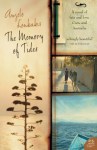
Angelo Loukakis, The memory of tides

I’m embarrassed to say that I don’t really know Angelo Loukakis, but Wikipedia does! Besides being a writer, and besides being the Centre’s founding Chair, he was also Executive Director of the Australian Society of Authors from 2010 to 2016. He’s been a teacher, editor, publisher and scriptwriter, and has written three novels, two collections of short stories, as well as several non-fiction works.

But now, let’s get to the centre itself. Like other writers centres, Writing NSW is largely a membership organisation, but also obtains funding from the government and donations. Its aim from the start was to support writers, particularly emerging writers. Emily Maguire (whose An isolated incident I’ve reviewed here) and fantasy/historical fiction writer extraordinaire, Kate Forsyth, credit it as playing a significant role in their early development.

Here are some of the things the centre does:

Courses

Courses – whether on-line or in-person, single workshops or over a period of time – seem to be the main services offered by writers centres, and Writing NSW is no different. Some of the courses coming up are:

Bianca Nogrady, The best Australian science writing 2015
  • The Year of the Novel, Phase 3 (with Emily Maguire, no less!): it starts tomorrow, and runs for 8 sessions. Members get a whopping 30% off the price, which more than covers the annual membership fee! The course is about making “your very good novel … brilliant.”
  • Finding the Detail: Research Tools for Writers (with Eleanor Limprecht whose novels Long Bay and The passengers I’ve reviewed): a 2 1/2 hour seminar about research (for fiction and non-fiction). The description says it will cover “how to organise your research, the ethics of research and how to put your research aside and just start writing.”
  • The Secrets of Science Writing (with Bianca Nogrady who has also appeared in my blog):a 6-hour course on such topics as finding good science stories, the basic principles of science writing, and interviewing and pitching to editors.

These are just three of many, many courses, workshops and seminars they offer on topics that include, in addition to the above, playwriting, poetry, comedy, writing for schools, marketing, speculative fiction … you name it, in other words …

Events

  • Festivals: Writing NSW runs various festivals, including, the new biennial Boundless Festival, first held in 2017 and focusing on” Indigenous and culturally diverse Australian writers and writing”, and, coming up, Quantum Words, a one-day festival on the meeting of science and writing. Its speakers include astronomer Fred Watson (who has appeared here a few times, with the Griffyn Ensemble) and cli-fi novelist James Bradley.
  • First Friday Club: a monthly, free, members-only event that runs on the first Friday of the month from March to October. The event involves a guest speaker – such as an author, editor, publisher, journalist – and, they say, “a delicious morning tea.” October’s speaker is Bronwyn Mehan from the innovative Spineless Wonders.
  • Talking Writing: ad hoc panel discussions (as far as I can tell) on various subjects relating to writing. One held in April this year, for example, was called Make it Funny.
  • Ad hoc events: such as an all-afternoon Open House event with publishers HarperCollins and Harlequin at which members will get an opportunity “to meet one-on-one with a publisher to get feedback on your submission.”

Prizes and Grants

  • Quantum Words Poetry Prize: established in 2018 this prize is for “science poems”, that is, they must “include or address some aspect of science.” Pretty broad.
  • Boundless Indigenous Writer’s Mentorship: supported by Writing NSW and Text Publishing, for “an unpublished Indigenous writer who has made substantial progress on a fiction or non-fiction writing project.” It pairs the “emerging Indigenous writer (from anywhere in Australia) with a senior Indigenous writer in the same genre for a structured year-long mentorship.”
  • Writing NSW Varuna Fellowships: awarded annually for writers with a work that is “ready for the next stage of development.” It involves a week-long residency at Varuna (Eleanor Dark’s old home which I’ve mentioned here before.) Two will be awarded this year, with one specifically for a writer under 30.

The above is just a selection of what Writing NSW offers. Like most writers centres they offer a wide range of services, including a library, newsletter, manuscript assessment, all sorts of mentorships, space for writers groups to meet. They aim to specifically support regional writers, Indigenous writers, and writers with a disability. A lovely service that I suspect not all writers centres have the resources to provide is their Space to Write. This enables writers who have trouble finding quiet places in which to write the opportunity to book space or a room at Gary Owen House (some are free, and some involve rent.)

Oh, and they have run workshops on blogging (such as Power Your Blog), since at least 2012, though I couldn’t find any for this year. It’s good to see this type of writing and publishing also being recognised by writers centres.

… and that’s about it for another busy, active Writers Centre.

Writers Centres covered to date: the ACT, the Northern Territory, Queensland, and Tasmania.

Monday musings on Australian literature: The Copyright Agency’s Cultural Fund

Australia’s Copyright Agency has been referenced here several times in this blog, mostly regarding the work it does via its Cultural Fund, but I wonder how many of us (besides artists) know just how much it does to support Australian writing and writers?

The Copyright Agency is a non-profit organisation (company) which describes its mission as being:

to provide simple ways for people to reproduce, store and share words, images and other creative content, in return for fair payment to creators. We are committed to encouraging the development of lively and diverse markets for published works…

Its main services to authors are to:

  • collect and distribute copyright fees for educational and government use of works. It manages, on behalf of the government, the education and government copying sections of the Copyright Act which allows educational institutions and governments to use content without permission, provided they make fair payment.
  • license writer’s content to corporations and others (though writers can also license their works themselves.)

It does other things too, one of which is to fund “writers’ projects and skills development” through its Cultural Fund, which is my focus for this post.

Cultural Fund

The Cultural Fund is the Agency’s philanthropic arm, and aims to support “cultural projects and creators’ professional development.” Its priority includes “to ensure that artists are better supported and are paid appropriately for their creative endeavours.” It is funded by members agreeing to 1.5% of the licence fees collected on their behalf being retained for the Fund. In the financial year, 2016-2017, they disbursed well over $2m through the Cultural Fund to “114 projects, 23 professional development grants and 5 fellowships.”

Fellowships

The fund offers various annual fellowships, with this year’s including:

  • Author: one offered each year, worth $80K. Open to novelists, playwrights, poets, non-fiction writers, children’s and young adult writers, and journalists to develop and create a new work. (Non-Fiction writers, this year could also apply for the non-fiction writing fellowship.) I noted in a previous post that the inaugural author fellowship went to Canberra-based author Mark Henshaw (who wrote The snow kimono.)
  • Non-fiction writing: worth $80K, and with more specific requirements than the author fellowship above. It’s “to develop and create a new work of creative non-fiction writing which will engage with key issues and topics for a broad readership” which means it’s not for academic or scholarly writing. They list the acceptable genres, which include biography, memoir, autobiography, environment, and history.
  • Publisher: two were offered in 2018, each worth $15K.
  • Reading Australia Fellowship for Teachers of English and Literacy: worth $15K, and self-explanatory from the title I’d say.

CREATE Grants

This year’s CREATE grants were recently announced, five going to writers and one to a visual artist, from over 135 applications. The writers were Peggy Frew ($20K), Jennifer Mills ($20K), Josephine Rowe ($10K), Jane Rawson ($15K), Lenny Bartulin ($20K).

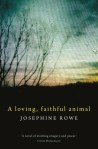
Josephine Rowe, A loving faithful animalThe works of fiction these authors will be creating cover a variety of topics, “from xenophobia, self-interest and individualism to post-war migrant life in Tasmania during the 1950s, to cross-cultural friendships and ghost stories.”

Two of these authors have appeared here before, Jane Rawson with A wrong turn at the Office of Unmade Lists (my review), and Josephine Rowe with A loving, faithful animal (my review).

IGNITE Grants

These are smaller grants, of up to $5K each. They are “to support individuals working in the writing, publishing and visual arts sectors to develop skills and progress their careers.” They include things like “mentorships, internships, residencies, leadership opportunities, and strategic promotional opportunities” but not academic or tertiary study.

Grants for Organisations

These seem to be more ad hoc grants – at least in the dollar-amounts offered, because they are not always specified. The grants themselves are not ad hoc, however, in the sorts of things that qualify, as the Agency defines on the webpage the sorts of things it will fund. These grants can be for single projects or for up to 3 years. They spread far and wide, from the Djilpin Arts Aboriginal Corporation (in the Katherine region of NT) to the Melbourne Writers Festival, from theatrical companies to libraries, from community groups to education departments, from supporting fiction to history. No wonder they have popped up regularly in my Monday Musings posts!

Some of the grants awarded under this banner, as far as I can tell from their 2017 Annual Report include:

  • Festivals and the like: These range from small symposiums and workshops to the big festivals, and include Australian Authors Week 2017 (by the Australia’s Embassy in Beijing), a craft and design writing symposium (by Craft ACT, in my town), the AALITRA Symposium (Australian Association for Literary Translation), the StoryArts Festival (by the Ipswich District Teacher Librarian network), the Canberra Writers Festival, and the Melbourne Writers Festival. Sometimes the grant is for a specified aspect of the festival, such as the “Getting it Write” workshop in Geelong Regional Library’s Word for Word Festival.
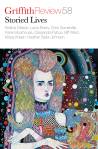
  • Griffith Review 58 Novella Project (2017)

    Griffith Review 58 Novella Project (2017)

    Journals: Several journals are listed as receiving grants – including The Big Issue, Griffith ReviewInside Story, Island magazine (to increase payments to writers), Meanjin, Westerly. Some of these are for specific editions, such as the Big Issue’s fiction edition and Griffith Review’s novella project.

  • Prizes: Some of these grants seem to support the administration of the prize rather than the prize purse itself, such as a three-year grant to the Stella Prize for “promotion of the winners.” Also listed are the David Unaipon Award, the Miles Franklin Award (also three years), and the National Indigenous Story Award. In the past, they’ve supported the CAL Scribe Fiction Prize (which seemed to only run from 2009 to 2012), and the Finch Memoir Prize (which is not being offered in 2019 because of lack of funding)
  • Writing projects: Like many other of their grants, these cover a variety of forms, such as Belvoir Theatre’s “Investing in Australian Stories” commissions.
  • Other: Such as supporting a stipend for the Children’s Literature Laureate, or the Early Career Researcher Scheme (organised by the Australian History Association). Smaller fellowships, in addition to the large ones listed above are also supported through organisations such as Queensland University Library’s Creative Writing Fellowship, the Sydney Review of Books Emerging Critics Fellowships, and the Eleanor Dark Foundation’s Fellowships for Indigenous Writers.

Reading Australia

Reading Australia is a service established by the Agency and partly (mostly?) funded through the Cultural Fund. Its focus is the education sector, aiming “to create in depth teaching resources on Australian literature, to encourage homegrown stories to be taught in schools.” Among other activities, they produce book lists, and resources for the primary, secondary and tertiary education sectors.

I first wrote about Reading Australia five years ago, and again last year when I posted on the Reading Australia-Magabala Books partnership. Education is so fundamental to the health of our literature (and our culture) that this seems a good point on which to conclude this post.

If you’re Australian, are you aware of the Copyright Agency and/or its Cultural Fund? I’d love to know how well-known it is.

Monday musings on Australian literature: National Child Protection Week 2018

National Child Protection Week 2018If you are an Australian, you will be aware of our recent Royal Commission into Institutional Responses to Child Sexual Abuse. That Commission only looked into one aspect of child sexual abuse in Australia. Arguably the bigger issue lies in the sexual abuse of children outside institutions – abuse of children by family members, by so-called family “friends” and others known to the child, and by, far less common, strangers. The bigger issue also encompasses child abuse that’s not sexual – physical abuse, emotional abuse, neglect, abandonment. This week, September 2 to 8, is National Child Protection Week. Co-ordinated by NAPCAN, it aims to encourage all Australians “to play their part to promote the safety and wellbeing of children and young people” in all ways.

What has this to do with Monday Musings? Well, as I was listening to a discussion about the week on ABC Radio National this morning, I was reminded of all the books I’ve read since blogging, which refer in some way to child abuse. Some are memoirs, and others are fiction. Some may function partly as therapy for the writer. However, because I believe that literature has an educational, awareness-raising, empathy-developing function, I thought I’d share a selected few books here. I appreciate that reading this material can be unpleasant – and I know that it can be triggering for some. If you are among these people, please stop reading now. Otherwise, I offer these wide-ranging books as my contribution to the week …

Links on the titles are to my reviews.

Memoirs and biographies

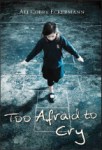
Ali Cobby Eckermann, Too afraid to cryAli Cobby Eckermann, Too afraid to cry: indigenous poet, memoirist and novelist, Eckermann beautifully (if you can use the work “beautiful” in this situation) captures the impact on her of being sexually abused from a young age by an uncle. Not knowing having the words to describe what was happening to her, she can only describe her feelings: it felt like an “icy wind”. This becomes a metaphor for the abuse, for her memory of it, and for its impact on her psyche until she can no longer cry – “the ice block had turned to stone, and now there was no moisture left inside me”.

Jelena Dokic, Unbreakable: I haven’t read this memoir but it chronicles the emotional and physical abuse she, a gifted young tennis athlete, experience at the hands of her father. The terrible thing is that much of this happened under public gaze, but nothing was done. (I attended a conversation with her about this book.)

Sarah Krasnostein, The trauma cleaner: Sandra Pankhurst, the transgender woman who is the subject of this biography, was physically and emotionally abused and neglected by her adoptive parents, after naturally born children appeared. It’s an unbelievable story of inhuman behaviour by people trusted to care for the young boy she was at the time.

Betty McLellan, Ann Hannah, my (un)remarkable grandmother: A psychological biography: A biography about McLellan’s grandmother who was born in 1881, and whose second husband was violent to and sexual abused his step-daughter, as well as Ann Hannah, herself, and one of their daughters. McLellan describes the lack of recourse women had during the time Ann Hannah lived, and concludes that her grandmother’s only choice, really, was to “accept her lot”. She reports that Ann Hannah said it was “the ‘appiest day of my life when ‘e died”!

Marie Munkara, Of ashes and rivers that run to the sea: Like Eckermann and Pankhurst, Munkara (who also happens to be a member of the Stolen Generations), grew up with adoptive parents, neither of whom gave her the love due to a child they offered to care for. Her mother was hard, unaffectionate, but her father was a pedophile who sexually molested her from a young age.

Fiction

Anne Buist, This I would kill for: a crime novel in which Buist’s ongoing character, the forensic psychiatrist Natalie King, investigates whether eight-year-old Chelsea is being abused, and if so, by whom. Chelsea is, apparently, being abused by someone she knows. As Buist, a perinatal psychiatrist who is expert in this area, says, those who abuse children are “very, very rarely a stranger.” You can read more about this book at the ABC website.

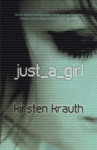
Kirst Krauth, Just a girlKirsten Krauth, just_a_girl: a modern novel about a 15-year-old girl who thinks she’s more sophisticated than she is, with a mother who is struggling with her own problems. The result is a sexualised young girl at risk.

Sofie Laguna, The choke: first-person novel about a young girl who lives in a physically and emotionally impoverished situation – albeit she is loved – and who is violently assaulted in an act of revenge. You can see it coming – and you know exactly why she’s at the risk she is, and who might be the one to help her out of it.

Mirandi Riwoe, The fish girl: a retelling of Somerset Maugham’s short story “The four Dutchmen”, which explores young women’s lack of agency, at the hands of colonial masters but also within their own traditional communities.

Lest you are unsure about the value of this post, I should tell you that there are several similar lists out there, including at the New York Public Library (2014); Wikipedia; GoodReads; and ParentBooks (Canadian organisation offering resources to use with children).

Monday musings on Australian literature: Women science fiction writers

This year’s National Science Week finished yesterday, 19 August, but I figured no-one would mind if I wrote a Science-Week-dedicated post a day late. In past years I’ve written Science Week posts on novels about scientists (2015), science-based non-fiction (2015), and science writing (2016). I didn’t write a post last year. So, what to do this one? I’ve decided, given my Australian Women Writers Challenge involvement that I’d share some of Australia’s popular women science fiction writers. This is not, I admit right now, my area of expertise. but I’ll give it a go.

My first challenge is, as you might expect, definition of the genre. Wikipedia lists, in chronological order, over 30 definitions, starting with someone called Hugo Gernsback in 1926. I don’t want to get embroiled in this, and I want, for my purposes here, to take a rather narrow definition. Here are two, in Wikipedia, from well-known science-fiction writers:

  • Isaac Asimov (1990) “‘[H]ard science fiction’ [is] stories that feature authentic scientific knowledge and depend upon it for plot development and plot resolution.”
  • Arthur C. Clarke (2000) “Science fiction is something that could happen—but you usually wouldn’t want it to. Fantasy is something that couldn’t happen—though you often only wish that it could.”

So, I’m going to focus on women writers who, I believe, write (more or less) within these definitions. I’ll be on thin ground I know, but will welcome debate!

I decided that a good source for me to separate out science fiction from other forms of speculative fiction would be Australia’s Aurealis Awards which offers prizes in specific categories, one being “Science Fiction” (but even there, some of the books overlap into other sub-genres, like dystopian fiction, which I want to leave aside here.) Indeed, the more I looked into “my” topic, the harder I found it to locate relevant authors. It seems, as AWW Challenge Speculative Fiction expert Tsana Dolchiva said in a post for the challenge, “Australia hasn’t been the most fertile ground for science fiction — for whatever reason, the planets didn’t quite align for it the way they did for fantasy.” I wonder why this is? Any ideas? Anyhow, I don’t feel so bad now about the paucity of my knowledge.

Marianne de Pierres, Dark spaceSo, here goes with a few names – all Australian women of course:

  • Cally Black: New Zealand-born, Melbourne-based Black is a new writer in the YA science fiction arena. Her debut novel, In the dark spaces, won the Aurealis Award for Best Young Adult Novel. It is a sci-fi thriller about a 14-year-old orphan who is taken in by her aunt who happens to be a cook on a space freighter.
  • Amanda Bridgeman: The Western Australian-based Bridgeman has, so far, written the Aurora space opera series, and an apocalyptic novel, The time of stripes. The Aurora series comprises 6 books set in and around a spaceship named “Aurora”. The third in the series, Aurora: Meridian, was nominated for an Aurealis Award.
  • Marianne de Pierres: Tsana writes that you “can’t talk about science fiction in Australia without mentioning Marianne de Pierres” which makes sense to me because even I have heard of her! De Pierres writes across a wide range of speculative fiction genres, including in this more “pure” science fiction area that I’m focusing on here. An example is her space opera series, the Sentients of Orion. Its four books – Dark space, Chaos space, Mirror space and Transformation space – were all shortlisted for Aurealis Awards, with the last one winning Best Science Fiction Novel in 2010. The novels are set on an “arid mining planet” called Araldis. She lives in Brisbane, and writes crime under a different name, Marianne Delacourt.
  • Anna Hackett: Hackett is, her website says, a USA Today bestselling author, but she grew up in Western Australia and describes her childhood as “running around in the sunny weather, chasing my brother and turning my mother’s outdoor furniture into spaceships.” She writes action romance, some of which take us into space, such as her Galactic Gladiators series.
  • Amie Kaufman & Jay Kristoff, IlluminaeAmie Kaufman: Tsana describes Kaufman as “one of the most notable Australian authors writing science fiction today”. She is, her website says, “a New York Times and internationally bestselling author of science fiction and fantasy for young (and not so young) adults.” She seems to mostly write collaboratively. Her debut novel, These broken stars, was co-authored with US writer Meagan Spooner, as is her latest book published this year, Unearthed. It’s novel is about an alien culture that has advanced technology which may be able to undo environmental damage. She has also collaborated with Australian writer Jay Kristoff, such as on their YA series, the Illuminae Files. The first in the series, Illuminae, is set in 2575 and “two rival megacorporations are at war over a planet that’s little more than an ice-covered speck at the edge of the universe.”

So, that’s five, and, until today, I’d only heard of one of them. So many genres, so many authors. I tried to see if I could identify any consistent themes running through these books, but I don’t think there are – not, at least, the way there are in the dystopian sub-genre. It does, though, seem that more writing is happening in the YA area than specifically for adults, which is interesting.

But now, have you read these authors – or, if not, who are your favourite sci-fi authors?

(PS I might explore other speculative fiction genres in future National Science Week posts.)

Monday musings on Australian literature: War-time reading tastes, World War 2

Continuing last week’s brief survey of war-time reading habits…

World War 2

And then we come to the Second World War. Here’s The West Australian again, this time in July 1940, less than a year after the war had started (a bit like our 1915 World War 1 report last week.) The article is headed, “Light Reading Popular. Perth’s Wartime Tastes.” It says that:

Wartime readers prefer light humour and detective novels to political works or discussions of international affairs. This was the verdict of a Perth book-seller and librarian when asked whether the public reading taste had changed since the beginning of the war. For a long time before the war, it was stated, books on international affairs were first favourites but this was no longer so. There had been a remarkable increase among library subscribers in the demand for detective fiction.

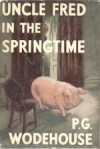
PG Wodehouse, Uncle Fred in the Dreamtime

And yet, it continues, “the unexpurgated edition of Hitler’s Mein Kampf (royalties in which go to the Red Cross) had sold well.” Did you know that about the royalties? Anyhow, it goes on to say that booksellers in the east of the country report similar interests, with A. P. Herbert’s General cargo and P. G. Wodehouse’s Uncle Fred in the springtime being best sellers, and “historical novels and light travel books dealing with countries outside the political maelstrom” also selling well.

Another July 1940 newspaper report on wartime reading tastes comes from Launceston’s Examiner. It starts by saying that people are sick of reading about Hitler, and that one male library visitor pronounced that “All he wanted to read about Hitler now was his obituary!”

The article says that most of the Launceston public library’s users “demand ‘light’ reading” but that “that does not necessarily mean fiction.” People are also interested in “non-fiction that is easy to read, such as short autobiographies and travel”, particularly for “travel books descriptive of countries affected by the war” (which counteracts somewhat the Perth report above about travel book preferences.) As for autobiographies, it says that “those about Royalty of any country are always widely read.” Interesting!

The article says that

most readers say that with the war over-shadowing most things, they seek books that will be purely a distraction from serious thoughts, necessitating the least possible concentration. For that reason, fiction is in greater demand than ever and detective stories the most popular of all the many classes of literature handled at the library to meet varied tastes.

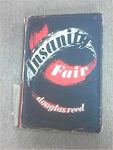
Douglas Reed, Insanity FairThere is an exception to the disinclination for “the ‘heavier’ political type of book” – Douglas Reed’s Insanity fair. It “is still one of the most sought books of all types. There is always a waiting list for it.” I had not heard of him or it, but Wikipedia says that “Insanity Fair (1938) was one of the most influential in publicising the state of Europe and the megalomania of Adolf Hitler before the Second World War.” (You can download it for free from archive.org.) Another exception, this time for books “avoided because of great length”, is Gone with the wind. Since being published in 1937, it apparently “has never rested on the library shelves.”

Also in July 1940 – were these journalists feeding off each other? – was an article in Melbourne’s The Age titled “Reading in wartime. Escape Books”, with the by-line Investigator. It’s a long article – around 1000 words. It poses a number of questions: have tastes changed; should in fact people be reading at all given the “mighty effort” being undertaken “to overcome the foe”; and, if people do continue to read “what kind of books do wise and well-balanced minds recommend to thoughtful Australians?” Don’t you love the idea of “wise and well-balanced minds”?

The article then briefly mentions the challenges faced by readers, including the reduced output from publishers, irregular supply, and “the natural indisposition to spend money on expensive books.” However, Investigator says, “literate homo sapiens must be intellectually fed.” Indeed, s/he quotes Poet Laureate John Masefield, who advised that

While we must, of necessity, be deeply interested in all that is written and broadcast concerning the war, let us keep reading some quiet book to steady our minds. In other words, to preserve our poise, our cheerfulness and sanity, have on hand some quiet, absorbingly interesting book, divorced from politics, warfare, national culture and Ideologies, east or west.

Francis Brett Young, Pilgrim's restWith this advice in mind, Investigator then gives a suggested reading list from “one experimenter.” It comprises “literature of release, diversion and escape from which the experimenter had derived real refreshment since the war began to press heavily upon heart and mind.” The list is diverse, but includes:

  • Such is life, by Tom Collins (aka Joseph Furphy), the new edition with an introduction by Vance Palmer.
  • On the Barrier Reef, by S. Elliott Napier: seems like a non-fiction book about the Barrier Reef. Napier was a banker, solicitor, journalist, and author, among other things.
  • Two of J. B. Priestley’s and Angela Thirkell’s latest novels.
  • Pastoral Symphony, by Aldyth Williams: a gentle memoir, I’m guessing, given its subtitle is “a recollection of country life”.
  • Pilgrim’s rest, by Francis Brett Young: described in GoodReads as “tale of gold lust, gentle romance and the violent industrial unrest which shook the Rand in 1913.” Clearly escapist.

Our “experimenter” also lists books of essays and sketches (one described as containing “pleasant writings”), books of Australian verse, some biographies, and “the three last numbers of the Cornhill Magazine — killed by the war in December, 1939, after 80 years of placid life.” Oh dear, poor Cornhill!

Investigator goes on to say that this list may not represent Australian readers overall, because the “experimenter” has “a sensitive mind, needing release from mental strain”. In fact, Investigator says, data from two different libraries in Melbourne shows that there is “no marked swing in the direction of the literature of escape.”

Nearly two years later, however, in February 1942, Adelaide’s The mail has an article titled “Reading tastes change under war conditions”. This article too quotes a librarian’s experience, Mr CM Reid of the Adelaide Circulating Library. He says that in times of peace Adelaide readers “prefer well reviewed novels, books on current affairs, and a moderate ration of ‘thrillers'”, but that

War time, however, brings a revival of interest in spiritualism, and all kinds of books on mediumism which have never been taken down for years, except to be dusted, are asked for at the counters.

He also notes “a much greater interest in Biblical prophecy since the war began.” The writer suggests that this interest in prophecy, astrology and the occult, “seemed to indicate that some people’s minds were troubled and confused, and that they were seeking comfort rather than information.”

These readers, though, are apparently not “the more serious readers” who, Mr Reid says,

seem to be reading both better books and lighter books since war began. On the one hand they are anxious to be well informed, and all good new books on world affairs and on other countries are sought after; but the same subscribers are also reading many more thrillers, as if for relaxation and escape from world problems.’

And finally, from Ipswich’s Queensland Times in January 1943 comes a report on “people’s tastes” from a librarian. He (it is a he) said that

reading was definitely on the increase in Ipswich, and in addition there was an increase in the demand for the better class of books. More than ever inquiries were for good travel books, biographies, and the historical novel, while anything on sociology and international affairs also was readily taken.

He did admit, though, that “the demand for light fiction remained keen.”

However, supplying this increased interest in reading was a challenge because the war was affecting the output and availability of books. Normally, he would add around 250 new books a month to his library, he said, but he was now lucky to “obtain 40 to 50”, most of which came “from abroad.”

So there we have it, a view of what Australians were reading during World War 2 – from Perth across to Adelaide, then down to Launceston, back over the seas to Melbourne and finally up to Ipswich.

Did anything interest or surprise you?

Monday musings on Australian literature: War-time reading tastes, World War 1

Rudyard Kipling, Sea warfare

First pub. 1916

For the longest time I’ve understood that during war-time people turn to lighter forms of entertainment, to musicals in film, for example, or to escapist books in their reading. However, the truth – of course – is more complex, as I discovered in Trove’s digitised newspapers. I was fascinated by how often the matter was, in fact, discussed in papers of the say – and so am sharing a very small selection of those discussions here, with you. Because …

I have, I admit, only done a brief search of Trove. There’s a lot of material there. However, I hope what I’ve found is representative of how it went … I have, at least, managed to represent the continent, reasonably well.

World War 1

During the war

In Melbourne’s The Argus in July 1915, the writer says that

Since the war begin the taste of the reading public has changed considerably and less attention is now given to works of fiction than formerly.

The evidence for this comes from “the annual report of the trustees of the Public Library, Museums, and National Gallery of Victoria”. This report said that “the demand for newspapers and periodicals dealing largely with war questions has been very great and several files of newspapers have had to be duplicated” but that there was, overall, a decrease in the number of borrowers and of books read, particularly in fiction. That puts paid to the entertainment theory doesn’t it – though this was early in the war. Perhaps things change when wars drag on?

Perhaps it did, because in February 1916, the Newcastle Morning Herald and Miners’ Advocate, reported on reading stats from Melbourne’s Athenaeum, a public institution that included a subscription library. They found a significant increase in fiction borrowing in the previous year, while borrowing in “geography, voyages, travels, and descriptive works” was nearly halved – “a rather remarkable falling off”, the paper said – and there was a similar, near-halving, in “biography, speeches, and correspondence.”

Post-war

Ten years after the war, that is in January 1928, The Brisbane Courier had a short piece titled “Literary tastes”. It referred to wartime tastes, stating that “During the tragic years of warfare there was a “run” on light and breezy books evidently to distract the mind of the reader from the sterner realities of life.” In other words, tastes did seem to change when the war wasn’t over in a year!

Anyhow, after that, they say, tastes changed, turning to “books of a philosophical character” and then a little later again, to “books on travel.” However, in the Christmas just past, with “the poignancy of war privations having to some extent become atrophied through time’s healing influence”, there was a demand for “novels with a war-time background.”

Then, the next year, in June 1929, The West Australian had an article titled “Reading Tastes”. Booksellers, it said, were noticing that the public was moving a little away from novels to “general literature”, and particularly to “biographies and works of travel”. They reported three reasons that had been “advanced” for this change, the first being increased advertising for those types of works, and the third being changed pricing policies by publishers in which, reasonably soon after publishing “a substantial work … at a substantial price”, they issued it “at a popular price”. But, the second reason was,

the huge increase, in the size of the reading public following the war. Hundreds of thousands of men in the trenches, who in prewar days had taken little or no interest in literature, had received books from home, and had read them. What was at first merely a means of relieving the monotony of trench life had developed into a definite taste for reading. The habit contracted in time of war, remained when peace had come, and it was only natural that a considerable proportion of this vastly increased reading public should have an inclination for various kinds of literature besides fiction.

No evidence is provided for this, so it’s impossible to say whether it’s anecdotal from booksellers, or based on some sort of collected data, but there’s probably some truth to it. That said, I did like the fact that some of the reports I read, including some of those above, did use library borrowing data to support their claims …

I’d love to have spent more time exploring Trove, but even retired people seem to be time poor these days!

Hmm…

I initially intended to discuss both the World Wars in this post, but it started to get rather long, so you’ll have to wait until next week’s riveting instalment to find out about readers’ behaviour in World War 2. Were they different? Come back next week to see!

Meanwhile, any thoughts – or anecdotes of your own?

Monday musings on Australian literature: Melbourne Centenary literary competitions, 1934

I came across a reference to the 1934/35 Melbourne Centenary literary competitions quite by accident, but they intrigued me so I decided to investigate further. Here’s what I found …

Melbourne Centenary

According to an article in the La Trobe Journal (no. 34, October 1984), there was much discussion about whether to celebrate the centenary in a major way or not, but it was eventually decided to go ahead because of its importance, and because visitors “would circulate money and create jobs”. A valid reason, given, as the article says, that “Australia was slowly recovering from the world-wide depression”.  Unemployment was falling, it says, but was “still at a serious level.”

So, a celebration was planned, to span last six months, starting with a Henty celebration at Portland in October 1934 and finishing with “the anniversary of the Batman and Fawkner settlements at Port Phillip in 1935.” The celebrations included, among other things, several competitions including the MacRobertson Centenary Air Race and the Melbourne Centenary Grand Prix.

The article also mentions that the Centenary Council sponsored The Centenary gift book. Edited by Frances Fraser and Nettie Palmer (who has appeared here before), it was, apparently, entirely written and illustrated by women. The things you learn.

Literary Competitions

There were four literary competitions – for a poem, short story, novel and war-novel. Before I discuss them, though, I’d like to share a comment about the competition which I found in the notes accompanying a 2007 exhibition mounted from the Monday University Library’s Rare Book Collection, Australian Women Writers 1900-1950. The comment comes from writer Marjorie Barnard (who has also appeared here before):

Marjorie Barnard pointed out to Leslie Rees with some irony that the 1934 Victorian Centenary literary competition was worth £200, while the golf championship attracted five times that amount.

Plus ça change, eh?

Poetry

The first prize awarded was for the Poem, announced in August 1934. It was worth £50, and there were 179 entries. The winner was Furnley Maurice, pseudonym of Frank Wilmot who apparently founded the Melbourne Literary Club in 1916. His winning poem was ”Melbourne and memory”.  Ninety-six lines long, it was described by the judges – W. F. Wannon, Nettie Palmer, and Enid Derham – as “a work of beauty and permanence.” The announcement in Adelaide’s The Advertiser (11 August) says it “consists of irregular but cadenced and rhymed verse”, and describes its theme as “the impact of Melbourne today upon a sensitive observer.” I like the “sensitive observer” bit!

Commentators describe it as “an early attempt to capture the everyday life of a city through references to familiar places.” It opens Maurice’s collection, Melbourne odes. The Oxford companion to Australian literature says that the odes overall “deal with places and events familiar in the life of the city: the Victoria Markets, the annual agricultural show and orchestral concerts in the Melbourne Town Hall”. One, “Upon a row of old boots and shoes in a pawn-broker’s window”, describes the plight of the unemployed, and is, the Companion says, “a powerful radical commentary on the economic misery and injustice of the time.”

Short story

The Short Story prize, also worth £50, was announced next, in September. For the short story and novel prizes, entries had to be submitted under a pen-name, to ensure blind judging. The announcement in the West Australian (29 September) said the winner was “‘Caspar Dean’ for the story entitled ‘Sea Hawk.'” ‘Caspar Dean’, they then divulge, was none other than novelist Vance Palmer (whom you’ve also met here). There were 119 entries.

Brisbane’s columnist, “The Bookman”, in The Courier Mail (6 October) is more expansive:

In the writing of a short story, many attempt but few succeed. It is an art that requires both study and practice, for a good short story is the concentrated essence of incident and character, dovetailed in a manner that carries conviction. Mr. Vance Palmer is the present-day master of the short story in Australia, so it is not surprising that he won the prize for the best story in the Melbourne Centenary Short Story Competition. It is said that Henry Lawson’s outstanding success as a writer of short stories was that he hung a lamp on every place that he wrote about. Vance Palmer has many of the characteristics of Lawson, but he is less dramatic; he has a far greater vocabulary, a more polished style, and a better knowledge of the world. Sincerity is his strong suit in novels, stories, plays, or poetry.

Fiction

In November, it was the Novel’s turn, and the result was more surprising. Firstly, there were joint winners, and secondly one of the winners was unknown. The prize, donated by “Mrs James Dyer”, the sister of Melbourne’s Lord Mayor, was worth £200. There were 153 entries, and the judges were, said Melbourne’s The Age (24 November), Enid Derham (senior lecturer in English at the University of Melbourne), H. W. Allen (Vice-master of Ormond College) and Frank Wilmot (Furnley Maurice who won the Poetry prize). The winners were ‘Redhead’ (Frederick Sydney Hibble) with his novel Karangi, and ‘Ivan Power’ (Vance Palmer) with The Swayne family. Sydney-based Hibble set his novel in country New South Wales, while Palmer’s was set in Melbourne.

The Age’s report says – somewhat politically incorrectly now – that:

… Mr. Hibble was overjoyed. He said he had written the book hurriedly, having spent only four weeks on it. Mr Hibble is a cripple, and in receipt of an invalid pension. Mr. Hibble has written a number of short stories, and had his book sub-edited by a Sydney woman journalist.

Hibble apparently became disabled in 1919 “after suffering an illness during the flu epidemic.”

Now, I’ve never heard of FS Hibble, but “Pegasus”, writing in the Book Talk column in Rockhampton’s Morning Bulletin (26 January 1935), is highly impressed:

The Swayne Family, by Vance Palmer, which I dealt with a few weeks ago, was an outstanding novel of its kind, and Karangi, by F. S. Hibble … which I have just read, is as fine a piece of well-balanced realism as has appeared in the history of the Australian novel … the beauty of both books, to a great extent, lies in the fact that the setting is not emphasised, as has been the tendency in many Australian books, but just taken for granted, as it should be, and treated as a strictly subordinate part in the creation of a work of art. Both take their vitality from the vividness of their characterisation, and the deft working out of relations between these characters; but, whereas The Swayne Family depends for its interest for the wide sweep which it takes over the various members of three generations, Karangi is a much more detailed study of the working out of one particular character upon the background provided by scarcely more than a dozen characters in all.

S/he goes on to say that while both are “outstanding” novels,

I think “Karangi” by far the finer achievement. If the writer’s hand appears to lack the mature experience of Vance Palmer, the depth of his insight into human nature might appear to be greater, his capacity to make the very ordinary people he has chosen for his characters appear unique, his handling of the development of the character through pressure of the emotions, and his sense of the dramatic in his presentation of the tale betoken an author who will yet go very far.

And yet, as happens surprisingly often, this was Hibble’s only book, though he had several short stories published.

War novel

Finally, the War Novel. This prize, also worth £200, was made by the Victorian branch of the Returned Sailors’ and Soldiers’ Imperial League as its contribution to the Centenary. The conditions, according to Hobart’s The Mercury (March 1934), were that:

Candidates must be persons who served abroad during the war as members of the Australian Imperial Force, the Royal Australian Navy, or the Australian Nursing Service. The novel must deal with the life of the Australian soldier in the war, and his reaction to the various conditions, environments, and the experiences through which he passed. The sequence of the story and the descriptive matter must be accurate historically and geographically, a condition which certainly will distinguish any war novel from any other one has read.

Hmm, so a Nurse could enter but the subject had to be a “he”, “the Australian soldier”?

JP McKinney, CrucibleThe winners were announced in Melbourne’s The Age on, appropriately, Anzac Day in 1935. I say winners because first (£150) and second (£50) prizes were awarded. The first went to Over the top by ‘Sar-Major’ (pen-name for JP McKinney, Surfers Paradise, Queensland), with the second going to Summer campaign, by ‘Roger Walters’ (C.W.W. Webster, Melbourne). There were over 50 entries, with the judges being Sir Keith Murdoch, Sir Harry Chauvel, and Mr. Phillips (a Melbourne barrister). A note in Miles Franklin’s papers at the State Library of NSW, states that her novel All that swagger “was entered in the Melbourne Centenary Prize Competition in 1934”.

Over the top was published by Angus and Robertson as Crucible.

But, JP McKinney of Surfers Paradise rang a bell. The newspaper reports didn’t help, though, because the reason I recognised his name came later. Yes, he’s the man who became the husband of one of Australia’s most famous poets, Judith Wright. The things you learn, as I said before!