Back in 2020 I commenced a “supporting genres” Monday Musings subseries, although some of the posts have been more form- than genre-based. Today’s is one of those, and has been inspired, as many of you will have guessed, by a graphic novel winning this year’s Stella Prize. And, as most of you will also know, graphic novels span genres. There is also graphic nonfiction. Art Speigelman’s Maus is the go-to example, but Australia has many creators in this space, like Mandy Ord, for example. Here, though, my focus is novels, so no nonfiction today.
As usual, I’ll start with definitions – and, of course, I went first to Wikipedia. It cites Merriam-Webster, which defines the graphic novel as “a fictional story that is presented in comic-strip format and published as a book”. This is a simple, formal definition, but there are many greys, and bookshops and libraries in particular accept the greys. Comics (which do not contain a single story) and graphic nonfiction published in book form are frequently shelved together with the “purer” versions of the form.
But, defining what is and isn’t a graphic novel isn’t the only grey area. There is the term itself. Not all agree it is necessary, and Wikipedia shares some of the criticisms. Many of these are made by the creators themselves who see it as a marketing – or even a snooty literary – term for comics. Wikpedia says that the
writer Neil Gaiman, responding to a claim that he does not write comic books but graphic novels, said the commenter “meant it as a compliment, I suppose. But all of a sudden I felt like someone who’d been informed that she wasn’t actually a hooker; that in fact she was a lady of the evening”.
Good one. Given graphic novels tend to be at the more subversive, disruptive end of creating and publishing, it’s not surprising that there are bones of contention. Richard Watts explores the complexities in 2022 at ArtsHub. He traverses similar ground. He talks of the inaccurate use of the term
to describe a collection of individual comic books bound together in a single volume – think Alan Moore’s The Watchmen (an episodic story in 12 parts) or Neil Gaiman’s collected volumes of Sandman (75 individual issues in its original run).
Watts says these collections are “certainly epic in scope and remarkable acts of imagination” but “weren’t necessarily imagined as novels per se“. They were “written as monthly instalments, not as a sustained, focused and finite narrative”. Hmm, this is tricky territory, because as we know many novels in the past – including by Dickens and Edith Wharton, to name an English and an American example – were initially published in instalments. Also Watts admits that the book that is “generally recognised as the world’s first ‘graphic novel’, was a collection of short stories in comic book form”. He agrees that “graphic novel” is a marketing term aimed at getting comics to be taken just as seriously as ‘real literature’”, but he also says that as “long-form comic books that embrace the potential of their artform”, graphic novels do exist. Then, turning back again, he suggests that “we should probably just call them comic books – emphasis on the books”*. Make up your mind!
I’ll leave it here, because of course there is no answer. Whether we call them “comic book”, “comic-strip novel”, “illustrated novel”, or “graphic novel”, my subject here is those standalone graphical stories that are published in a book format, and I think most of us will understand – well enough – what that means.
Graphic novels can be found across genres and audiences, and any lists I found included a goodly number of graphic novels for children, younger readers and young adults, as well as for adults. Adult novels cross all areas, but speculative fiction and dystopias, stories about social issues (including queer and First Nations stories) and mythic retellings do seem to loom largest.
Awards
There are not many awards in Australia specifically for graphic novels, but, as fiction, they are submitted for – and occasionally get shortlisted for, or win – fiction wards. However, in 2008, the Aurealis awards, which the website says are “for works of original speculative fiction by authors, editors and illustrators”, added a category for Best Illustrated Book or Graphic Novel. In its analysis of those awards, Wikipedia says that Shaun Tan has won three times, with Justin Randall, Tom Taylor and James Brouwer having won it twice. Tan also holds the record for most nominations, with four to his name. Check out the link if you are interested in the names of some well-regarded creators in this form, but a telling thing is just how many of those names are redlinks, meaning they do not have a dedicated Wikipedia article. You do not find this preponderance of redlinks in, for example, Wikipedia’s lists for the big literary awards like Miles Franklin or the various state prizes.
Australian writers have also been recognised in international graphic novel awards, such as the Ignatz Awards in the USA.
Publishers
Graphic novels, like poetry I’d say, tend to struggle to find publishers, because of their niche audience. Some bigger publishers do publish them, though. The above-linked list of Aurealis awards and nominations provide a reasonable overview of who does publish this form. Allen & Unwin pops up with some frequency, albeit many of its books are for young adult and younger readers, and some of the small, brave independent publishers we know appear. But, there are also many unknown-to-me publishers. If you look at the Aurealis list, you will see that the point I made about redlinks for authors also holds true for publishers!
Select list, and a few more
This is a very short list aimed at providing a taste of what is happening:
- Chris Gooch, Under-Earth (2020, Penguin, Aurealis AwardBest Illustrated Book or Graphic Novel): a dystopian work that references, says Watts, Australia’s colonial origins, except here prisoners are dumped underground, “rather than an isolated continent on the far side of the world”.
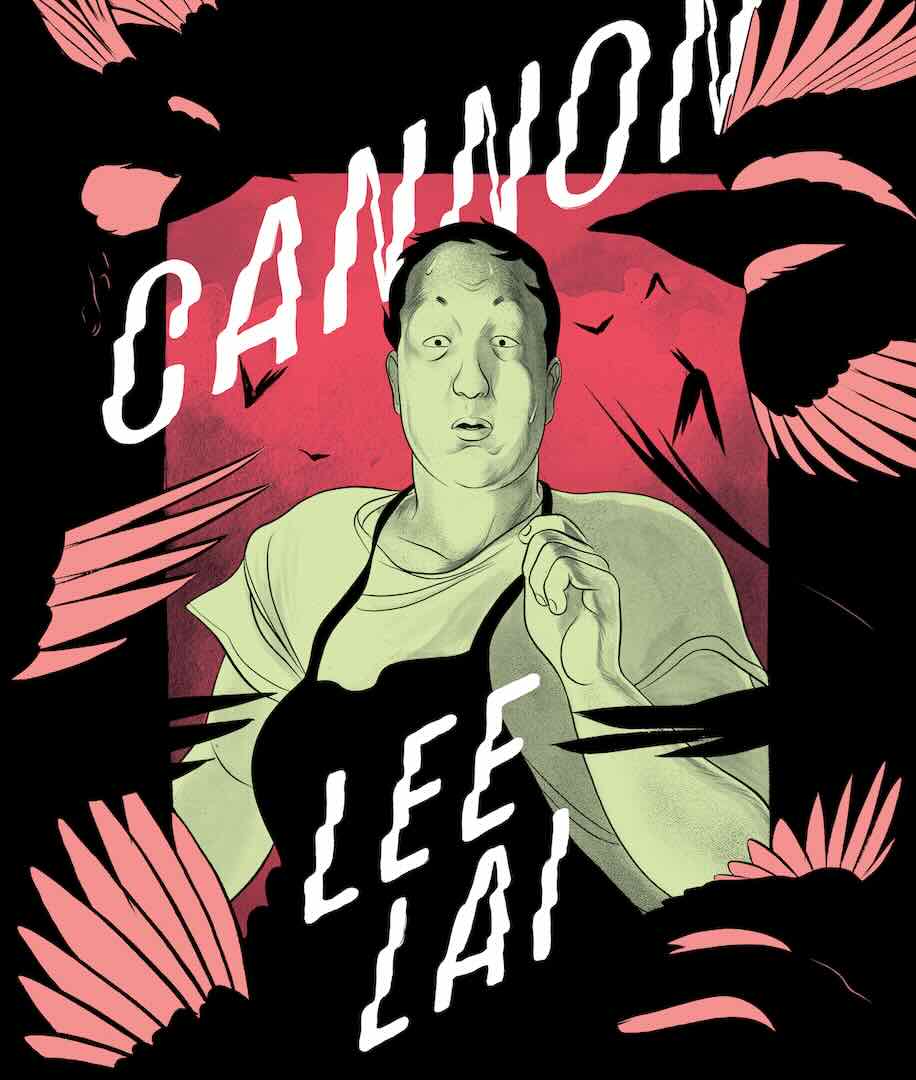
- Lee Lai, Cannon (2025, Giramondo, Stella Prize Winner, on my TBR) and Stone fruit (2021): navigates queer relationships as they move from youth to adult relationships, and takes in issues like chosen family, and mental health.
- Bruce Mutard, The sacrifice (2008, Allen & Unwin): “an ambitious exploration of the Australian experience in WWII”, says Watts, and the first of a trilogy. Set in Melbourne, it concerns the ethical dilemma of pacifism.
- Tommi Parrish, Men I trust (2022, Fantagraphics): one of many books covering queer life and love by this Melbourne-born trans Australian cartoonist and painter who currently lives in the USA.
- Shaun Tan, The arrival (2006, Hodder): a wordless work about the immigrant experience, capturing the bewilderment and wonder of arriving in a strange, new world; won multiple awards in Australia and internationally. Technically, a children’s book but, like many of Tan’s books, it crosses over to adult readers.
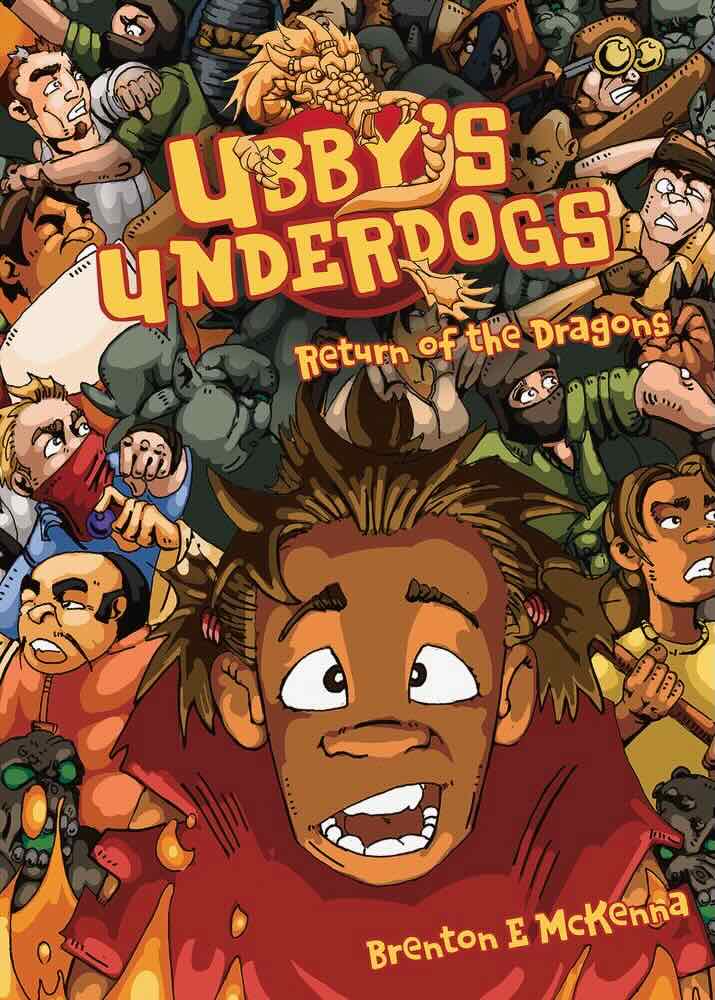
There are many Children’s and Young Adult graphic novels. One example of absolutely many is Ubby’s Underdogs by Brenton E. McKenna. I singled it out because, according to Magabala Books, McKenna “is a respected Yawuru artist based out of Broome, WA, who is the first ever published Indigenous graphic novel author in Australia”. This story is part of “a vibrant, action-packed series set in 1940s Broome” which “features an ethnically diverse cast of kids and Indigenous folklore, deeply rooted in the culture of Northwestern Australia”.
The Australian Library and Information Association has a special interest group, the ALIA Graphic Novels and Comics group, which aims to be “a resource and network for library and information professionals who are responsible for and/or interested in comics and graphic novels”. This includes helping with “all aspects of collection development, advocacy and programming related to graphic novels and comics”. Clicking on their link will take you to a list of posts, including some listing notable graphic novels for specific years.
Graphic novels and me

I am intrigued by graphic novels. I enjoy interesting art and I love the sense of subversiveness that is never far from this form. But, I am a textually-focused person and I find marrying text with image as I read a challenge. Consequently, I have only reviewed three graphic novels here to date, none Australian, though I have reviewed Shaun Tan’s story Eric. However, I have been tempted by writers like Mandy Ord; I have a son who loved comics/graphic novels/manga though his teens and twenties; and I have bought Cannon! I am interested … so will keep working on my skills.
What about you? Do you like graphic novels and, if so, care to share why?
Previous supporting genre posts: 1. Historical fiction; 2. Short stories; 3. Biography; 4. Literary nonfiction; 5. Crime; 6. Novellas; 7. Poetry; 8. Science Fiction; 9. Romance novels
* For the librarians among us, this article in the National Library of New Zealand’s blog makes interesting reading.


I adore The Arrival. Shaun Tan’s artwork is so beautiful.
Thanks Cathy – I agree, it is. And he can be both tough and gentle at the same time, can’t he.
I always mean to read more graphic novels as I usually love them, but struggle with the cost given how quick they are to read and how much space they then take up in my house! Cannon does look great and I’ve had my eye on Deena Mohamed’s Shubeik Lubeik (Your Wish Is My Command in the UK) for ages.
Oh thanks for a recommendation too Laura. You are right that they tend to be bigger and more expensive, I guess that reflects the cost of production. Cannon is hardback and AUD40, which is not cheap, though probably not excessively expensive either in terms of hardback costs for fiction in Australia. Trade PBs are around AUD35.
That puts a different complexion on it for Australian book buyers – those prices are much closer than they would be in Britain (we’d pay £10 for a paperback and at least £20, probably more, for a graphic novel).
That’s interesting Laura. I wonder why. We do have the smaller size paperbacks too, but that’s mostly for books that go into later runs, if they do (a few months or a year after first publication). They are around AUD25 I think. I don’t buy them much because I prefer Trade Paperbacks.
Is it standard to have fiction hardbacks in Australia, or just the trade paperbacks? It sounds like your trade paperbacks are serving a similar function to our hardbacks, which would be priced similarly to graphic novels (£20 ish). Sorry for the questions, I actually find it very interesting!
No, don’t apologise at all Laura. This is what readers are interested in I reckon. My understanding – my experience – is that only a small percentage of Australian fiction is now first published in hardback, that most are published as trade paperback and then if they have a longer life they come out in the smaller, cheaper paperbacks. And of course some new books come out in smaller paperback formats.
Ah – that makes a lot more sense of the price differentials with UK books! Thanks!
A pleasure Laura.
I think for most fans, a graphic novel/nonfiction is a whole story, like a novel, and it was never published monthly, like a magazine. Anything comic is a comic strip (like in the newspaper) or a comic book, which is like TV episode in length and published (usually) monthly on glossy, but not high-quality, paper. Feels more like a cheap magazine. Sometimes several comic books that create an overarching narrative are bound into one book on nicer-quality paper and a firmer cover. I disagree that “graphic novel” is snooty because it absolutely sets my expectations for what I’m buying—quality material, a full story instead of a bite. I don’t see either as a compliment, just a fact. In fact, these days, what are called four-panel comic artists are super popular on the internet. Google “Sarah Andersen” and check out her images. She’s a popular voice of Millennials, and she does it all in four panels (boxes). Overall, I will never dismiss graphic novels or comic books because for some readers, especially young people, these are a gateway into novels, into places they can connect to others or see themselves. They’re also great for distracted (or hyper focused) readers with ADHD or dyslexia. Comic book shops are places of gathering, exchanging ideas about the latest comic, and playing games.
Thanks Melanie, I agree with all of this. I see the term as a fact, a descriptor too. Though I must admit that I probably did tend to dismiss comics a bit until I knew people who loved them. I would never have wanted to prevent people reading them though for that reason you give regarding their being an entry into wider reading. My son is back to reading comics more than graphic novels because that’s what the 10-11 year olds in his class do.
I 100% support people saying “this is not for me,” which is the camp I see you in, but when they say a certain firm shouldn’t be respected or say it’s not “real” reading or that it shouldn’t win prizes — just negativity toward others, their reading, and their work, really — that’s where I get ruffled.
And I understand that distinction Melanie. Value judgements shouldn’t have a place in discussions about reading preferences. though I’m not really in the “this is not for me” camp. I’m in the “I’m interested but I don’t easily gravitate because I find them challenging” camp!!
As much as I love art, graphic novels are just not for me.
I understand John, but is there something that would tempt you to give one a go?
I actually have a few years back. A fella gave me a Japanese graphic novel. It was graphic in other ways as well. I had no issue with it per se, but I preferred my imagination.
I’ll ask no more. I remember my son as a teenager or maybe 20 year old (he went overseas at 21) was into graphic novels and manga in a big way. He would order them in and had a large collection. One day I saw one thrown in the bin. It was too graphic he said and he wanted nothing to do with it. I believe it was sadistic violence (with a sexual element). I was proud of him.
What fourtriplezed said!
Haha kimbofo – and, what I replied to fourtriplezed!
Maybe this winner if I saw it at the library. But for me, reading is about words/prose, not pictures, and being immersed in language. I don’t do audio books for similar reasons because my brain just switches off and starts thinking about other things… but reading off a page really focuses my mind and is one of the rare ways I get to shut the rest of the world out.
I hear you Kimbofo – re both graphic books and audio books. I keep trying the latter but I’ve decided that for me they really only work for plot-driven stories and I don’t read many of those. I hate even little things like knowing how a name is spelt. Let me see the words on the page. And yes I really do prefer beautiful prose over beautiful pictures but I want to give those a bit more of a go. (Meaning beautiful in its wider sense NOT in its chocolate box pretty sense)
Such an interesting post. I hadn’t really thought about what I feel about graphic novels and their place in either my reading or prizes. On the first, I think I am open to them but I haven’t really gravitated that way in the past, but for no justifiable reason. I just might try a couple out through the library. On prizes, I think they have a place because there are so many different novel formats and styles, from books with no punctuation, to a one sided speech, so why not a graphic novel! I am glad you posted this so that I could think about it 🙂
Thanks very much Rach … I’ll be interested to see what you think if/ when you check some out.
As a very young child in the early 1960s I enjoyed reading my much older cousins’ collection of Classics Illustrated, which could always be found stored in the pianola stool. Thus, I was introduced to the Count of Monte Cristo, etc, etc. Classics Illustrated – Wikipedia
So perhaps this graphic novel phase is a reintroduction of an older concept, except that the former was an abridged version of the entire novel. In that, they were similar to the Readers’ Digest condensed books.
Oh thanks, Gwendoline. Those ring a vague bell, but I don’t really have a memory of them. But, you could be right that they are a precursor.
The question of differing definitions is interesting (also to see how it matters and doesn’t to other commenters here); I’ve read them for many years, but less often now (an availability issue, as the sort I most enjoy tend to be expensive and the library system where we’re at right now doesn’t have as large a budget and manga series are probably getting far more use and cost less). And I second Melanie’s rec of Sarah Andersen’s comics: super cute and relatable! But Tom Gauld is also very bookish and, so, also relatable (and you’ve written about him, and included the link above too). Next for me is Cannon, too, as others have said.
Thanks Marcie. I’d certainly read more Tom Gauld. I hope to get to Cannon in the next month.
It’s a shame that price is a disincentive, even for libraries as I guess it helps keep this form under the radar.