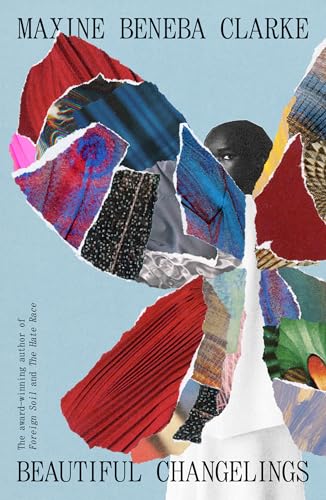
Maxine Beneba Clarke’s latest book, Beautiful changelings, is the first poetry collection scheduled by my reading group in our 38 years, and it went very well. I should clarify, lest you think we are poetry-avoiders, that we have read some verse novels and we’ve had a couple of poetry evenings where we’ve shared favourite poems, but reading and discussing a whole collection was a new experience. And one initially faced with various degrees of trepidation.
But, Clarke won over all who attended our meeting. This could be partly due to her origins in performance poetry. As I wrote in my post on Paris Rosemont’s Barefoot poetess, performance poets know how to infuse their poetry – even that not directly intended for performance – with the sort of power that can quickly engage their audience. But, it may also be due to the fact that Clarke is on a mission to expose the challenges faced by women – girls, mothers, older women, and particularly women (and people) of colour – a mission that speaks to us. The back cover describes the book as offering “wrecking-ball revisitings of the myths, mantras and fairy tales fed to girls”, and this it certainly does.
So, before I talk more about the book, I might address the elephant in the room, that is, the question of whether poetry can effect – or even simply contribute to – change. Clarke thinks it can. In her four-part poem, “The hope of a thousand small lights” which is dedicated to “the women who fought for the equality of the International Criminal Court and those warrior on”, she writes:
What use the pen,
if not to protect,What remedy ink,
if not a salve,and what use reason,
if not to reason well.(“iv. The Map”)
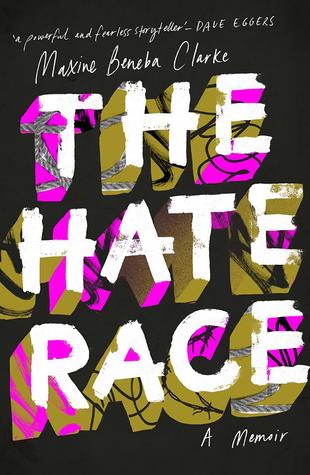
As I’ve said before, I don’t believe writers must write for any reason other than their own internal ones, but I do love writers who want to speak to contemporary issues – and who do it well. I read Clarke’s memoir, The hate race (my review), and loved how she didn’t simply describe racist behaviour, but showed how such behaviour changes the human being who is at the receiving end. This poetry collection, you could say, represents the natural progression of a woman, so changed, who happens to also be a writer, one able to unpick that change and point her pen at what racist and sexist behaviour creates, at the ways forward, and particularly, at the resilience needed for survival. There are funny poems and sad ones, there are thoughtful ones and angry ones, and, there are those I particularly loved, the defiant ones, the ones that say, I am still here and you will not grind me – a black person, a woman, a mother, a girl – down.
Clarke has structured her poems into groups that lead us through ideas, starting with a section called “beautiful changelings” which focuses on idea of change, including in the body. It opens with positive poems, the titular one and the delightful “I want to grow old”, then moves through poems about the physicality of womanhood, including the powerful, angry narrative poem, “I would like a hysterectomy”, to end with something more positive again, about the aging body. The section concludes:
saying this is where
i stretched, and changed,
and grew
pastmerely fitting
(from “the body keeps song”)
In this excerpt, you can see her attention to layout (spacing and indentation) and formatting (like italicisation). These guide our reading and our understanding. You can also see her effective use of a punchline.
The next section, “vocational school for girls”, looks at the issues girls and young women face – including appearance, relationships and choosing a career (in the pointed “vocational school for black girls”). From here, the sections continue, with their main idea being mostly obvious from their titles: “sirens”, “women’s work”, “major complications”, violazione”, “to have become”, and “the matriarchs”. The whole is bookended by a “prologue” and “epilogue”.
The poems vary from short punchy ones, like “#IWD lament”, to long narrative poems, like “I would like a hysterectomy”. They call on popular culture (such as in “the bear wants dinner”) and the vernacular. They draw on history, such as Emmett Till’s 1955 lynching and Salem with its story of Tituba, “the witch that would not burn” (in “major complication”):
tituba made sure
they got
the complicationthey were searching for
And, of course, some poems reference literary heroes like Alice Walker (“alice, alone”) and Toni Morrison (“I want to grow old”).
“it was their ink”
Subversiveness underpins the collection, but one section in particular, “Sirens”, is inspired by an unambiguously subversive point-of-view. It looks at myths, fairytales and nursery rhymes from different perspectives. The long narrative poem, “Spindle”, tells the Sleeping Beauty story from an angry servant’s perspective while in “there once was a woman”, our shoe-living mother “knew what to do”! Her children were “clothed, fed / loved and public schooled”. I love the “public schooled” point here. It exemplifies the subtle ways in which points are slipped in, almost under the radar. This section’s central poem is “men who made us monsters”. It is spoken by the wicked women in fairy tales – the witches and stepmothers. They admit their sins, but conclude:
oh, we were so rendered.
by the fictions of men.it was their ink.
that made of usmonsters
They remind me of Jane Austen’s Anne Elliot in Persuasion who will brook no arguments against women based on books and writing, because “Men have had every advantage of us in telling their own story … the pen has been in their hands”.
Talking men, not all poems are negative about them. The poem, “men, in the effort”, concludes the “to have become” section. In a jaunty rhythm that offers a more than passing nod to Dr Seuss, she acknowledges the men – the “male-allies, male good-guys”, the “cause-of-sister men / love mister-men”, “rights-to-choose men / in jimmy choos men” – all the men, whoever they are, “saying, we’re in“.
Not all the poems spoke to me equally, but that is more likely to be about where I am on the journey than about the poems themselves.
In beautiful changelings, Maxine Beneba Clarke interrogates feminism from all its angles – social, personal, historical, political, economic, medical, and more – and does so with a contemporaneity and an accessibility that speaks to current generations. The title conveys her intent, the idea of change and being changed (as reflected in the gorgeous butterfly wings on the cover) but also the idea of being agents of change (like the proverbial changeling in the nest who is determined to survive). This book is both a call to arms and a reassurance that we are not alone.
On this mother’s day (down under, anyhow), share it with your mother, daughter, sister, friend – and husband, father, brother, son. This is a book for all.
Maxine Beneba Clarke
beautiful changelings
Ultimo (Gadigal Country): Ultimo Press, 2025
289pp.
ISBN: 9781761154560
 Whispering Gums
I just realized the U.S. and Australia must have the same Mother’s Day, given when you published this review! One thing that surprised me was the author’s references to Black women from the U.S.. I even Googled to confirm she is an Australian writer, because I thought for a moment she might be American.
Interestingly we do, Melanie, but very different fathers days. I think that while she does have Guyanese and Jamaican heritage, which makes her background broader, those stories and writers (like Walker and Morrison) are universally known and so will work well in poetry with the themes she has.
I was just surprised there isn’t an Australian Morrison or Walker, you know what I mean?
Yes, I wondered if that’s what you meant. I guess part of it is that your situation is more complicated. Walker and Morrison are not Native American but our main “black” population is our First Nations people. Then there’s the issue of settler Australia being around 100 years younger than you with a concomitant, I think, delay in the development of a non-settler literature. This is coming now.
Bill would point rightly to Alexis Wright as an example but she would not have the broad recognition that Walker with The colour purple etc and Toni Morrison with her Nobel prize does. Also, she’s a generation after them so is only gaining gravitas now. Hopefully by the time she has been around our literary culture as long as they have in yours, she will have that presence. Have I made sense or have I been too wordy and said nothing. In other words, I guess I’m saying our blak literary culture is too new but I think it’s building.
That makes sense.
Do you know The World’s Wife by Carol Ann Duffy? It’s more than twenty years old, but contains many tender and clever poems about the wives of men who are central to myths and history books, given voice to the women’s experiences. There are links here to ten of her poems, including the one about Mrs. Midas for instance (such an ending) and Anne Hathaway (for Shakespeare).
This collection sounds like it’s insisting, similarly, that women’s experiences be refocussed; I think I’d enjoy it, but like you, don’t often read longer current collections (sometimes).
Oh no I don’t Marcie though I recognise her name. I will check that link out as it sounds right up my alley.
The original reason I thought of her, but then I realised I didn’t say so in my comment, was that she so often makes me laugh and smile with her poems, which is something that we’ve mentioned wanting more of in our reading more generally, and that doesn’t seem to often happen with poetry (which, understandably works so well for other profound emotions, like grief).
Interesting point … I think poetry does lend itself to humour very well because of the opportunity it offers to use rhythm, word play and rhyme (tho of course the last isn’t a necessary part). Something writers of verse for children know very well. When it comes to writing for adults, people do struggle to use humour well, don’t they? But we love it when they do!
Not sure how I missed this review, Sue, my blog reading and actual book reading is taking second place these days to that furry little baby that is dominating my life! But yes, now having read your thoughts I, too, wonder why this one didn’t make the Stella longlist. It sounds like the themes and the high quality would make it an ideal inclusion.
I read her memoir years ago and remember it was so powerful, because, as you point out, not because she talked about racism but it’s direct impact on the recepient.
Thanks kimbofo … I understand completely. It is so hard to keep up with reading, writing posts, reading other posts, and life, isn’t it?
I’m glad you see my point about the listing. And, as you say, and I’ve been wondering, maybe it wasn’t entered.