Some of you will have come across the Walter Scott Prize for Historical Fiction already. Brona (This Reading Life) recently posted on it, and I have mentioned it in passing a few times on this blog. Wikipedia provides good overview, as does the Prize’s own website, so I am sharing information from both these sites.

It is a British literary award that was founded in 2010 by the Duke and Duchess of Buccleuch whose ancestry includes Sir Walter Scott. He is generally accepted to be, as Wikipedia puts it, “the originator of historical fiction” with his 1814 novel Waverley (see my post on Volume 1). Its prize money of £30,000 makes it one of the UK’s largest literary awards. Eligible books must be first published in the UK, Ireland or Commonwealth and must, of course, be historical fiction, which, says Wikipedia, they define as fiction in which “the main events take place more than 60 years ago, i.e. outside of any mature personal experience of the author”. As the Prize website explains, the 60 years comes from Waverley’s subtitle, Or, sixty years since.
You will now, I’m sure, have gleaned its relevance for Monday Musings, which is that because Australia is of the Commonwealth, books by Australian authors are eligible. Over the years of the prize, Australian novels have been long- and shortlisted. So, I thought to share them here – to give them another airing, and to identify their main subject matter. Have any topics been more popular than others, I wondered? Let’s see …
Walter Scott Prize Australian shortlistees (2010-2025)
While the prize was first awarded in 2010, an Australian book was not shortlisted until 2013. Perhaps some were longlisted before that (and since), but I can’t see longlists on the Prize’s website, and it would take some gleaning to track them down.
- 2013: Thomas Keneally, The daughters of Mars: World War 1, and Australian nurses (Kimbofo’s review, with links to other bloggers)
- 2016: Lucy Treloar, Salt Creek: mid-19th century South Australia, farming struggles and First Nations tensions (Brona’s review)
- 2017: Hannah Kent, The good people: early 19th century Ireland, and “changelings”
- 2019: Peter Carey, A long way from home: 1950s Australia seen through the lens of the Redex Car Trials (Kimbofo’s review, on my TBR)
- 2021: Kate Grenville, A room made of leaves: early 19th century Australia (the Sydney settlement) imagined through the eyes of Elizabeth Macarthur (Brona’s review)
- 2021: Pip Williams, The dictionary of lost words: early 20th century England, imagining a woman’s contribution to the OED (Brona’s review)
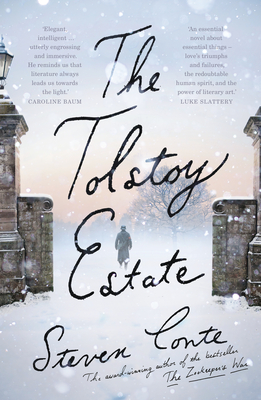
- 2021: Steven Conte, The Tolstoy Estate: World War 2 (1941), and a German medical unit at the Tolstoy Estate: (my review)
- 2023: Fiona McFarlane, The sun walks down: late 19th century South Australia, lost child story involving many people, including famers, cameleers and First Nations trackers (Brona’s review)
So far, an Australian hasn’t won, but my, what a showing we had in 2021! As for setting, there’s little concentration – in this tiny sample – on any one time or place. South Australia appears twice, and four of the eight are set in the 19th century. Given none of the authors are First Nations, a couple of the stories include First Nations people, but their history is not the focus. Three of the stories – by Kent, Williams and Conte – are not set in Australia. If there is any one idea coming through, it is that of restoring the role of women in historical events or, simply, in life. This is not surprising given that one of the values of historical fiction, according to American historian Steven Mintz*, is that it
can offer a more inclusive portrait of the past, recover and develop stories that have been lost or forgotten and foreground figures and dissenting and radical perspectives that were relegated to history’s sidelines.
And we all know that women, just one among many groups of disempowered people, were/still are ignored by “history”. This recovery of lost stories – this deeper and wider exploration of history, and all its byways, that the proverbial victors ignored – is why I have come to enjoy historical fiction, a genre I wasn’t much interested in for a long time.
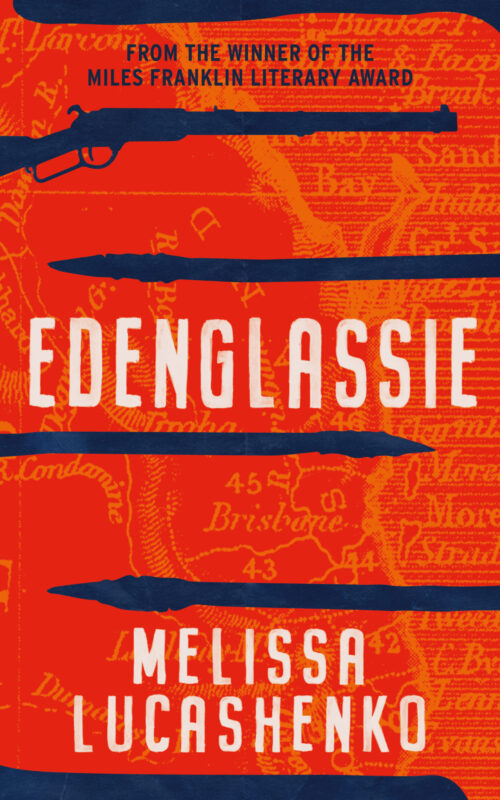
The 2026 longlist has been announced, and it features another Australian work, Melissa Lucashenko’s Edenglassie (my review). It is a good and significant read, and it would be excellent to see it become the first First Nations Australian shortlistee.
I’d love to hear your thoughts on historical fiction and/or this particular prize, or for you to just name a favourite historical novel. Over to you …
* An aside: I didn’t know who Steven Mintz was, but he has a Wikipedia page. I also found this intriguing commentary on his departure from Inside Higher Ed (which is where I found the statement above). He sounds like a thoughtful, decent guy, but he is in his 70s, so I don’t blame him for wanting to move into a quieter life.
 Whispering Gums
A treacherous country, which won the Vogel, was also shortlisted in 2021, I believe. I think Lisa might have reviewed it.
Thanks, by the way, for linking to my reviews.
Thanks Kimbofo … and a pleasure of course. I believe A treacherous country was longlisted. I came across references to it, but as I couldn’t get the full lists I decided not to go there except list the latest one because the shortlist isn’t out yet and I have my fingers crossed!
Ah, I see. What a shame the long lists aren’t archived online
I hate it when prize websites don’t preserve their lists. Hopefully they have them on paper files. I think they had last year’s longlist so maybe they are now going to start keeping them online!
“he is in his 70s, so I don’t blame him for wanting to move into a quieter life”
Why should this CHILD be so excused ?!
(Who, me ? – off-topic ??)
🤣🤣🤣
Haha MR … are you showing your age?
Yup: feelin it, ST.
Understand completely… life is a weird thing. And the older we get the more weird we realise it is! So, we just keep on truckin’- at least Bill does!!
And so will I.
I really struggle with historical fiction. The stuff that comes out of the US seems to be one of three things: 1) man and woman just meet, he gets sent off to war, she waits at home, he sleeps around in the other country, but it’s ok because he dies and we all feel bad, 2) some distant relative finds the diary of great-great-great meemaw and learns that people were humans 100 years ago, too! or 3) some horrible secret has torn this family apart for generations and that secret is that a woman had an abortion/got pregnant by another man and didn’t tell her husband—AND NOW WE ALL KNOW! I just want something better, more interesting. I don’t know historical fiction to be about secrets or romance. What is left? In the US, nothing that I know of….
Thanks for this Melanie. I love your characterisation of these stories! It sounds like the sort of formulaic, or perhaps we could call it escapist, historical fiction that I don’t like and is why I didn’t like it in my youth.
But I think you have some great historical fiction … an older one now would be Toni Morrison’s Beloved. Isn’t Colson Whitehead’s Underground Railroad historical fiction? Louise Erdrich’s The night watchman is historical fiction. I’d also call Percival Everett’s James historical fiction. Geraldine Brooks has written a lot of historical fiction like March and Caleb’s crossing. And I think Horse is too?
Okay, I HAVE read The Night Watchman; you’ve got me there. I have Beloved on my next season of reading, so you’ve got me there, though I’m not sure if that book is historical fiction itself, or if it is set when the author wrote it. Underground Railroad is magical realism, I believe — an actual railroad to help escaped enslaved people.
Oh no, Beloved is set soon after emancipation – 187s – so way before Toni Morrison’s time.
Wikipedia says this about Underground Railroad (which I haven’t read so had to check my assumption): “The Underground Railroad is a historical fiction novel by American author Colson Whitehead, published by Doubleday in 2016.”
I do think there’s some great historical fiction coming out from many countries at the moment, but don’t tell Bill!
Ah, okay, so Morrison’s book is historical fiction. I checked my spreadsheet, and I actually have Song of Solomon. I read Beloved and didn’t get on with it, which is why I forgot it is historical fiction.
I wonder why you didn’t like Beloved? It’s one of the few non-Austens that I’ve read more than once. But even that second read was a long time ago. I’ve also read Jazz, but I don’t think I’ve read any others of hers.
It was so painfully confusing in ways that feel unnecessary. I read it with my mom, and there were definitely moments when we were both sitting there and couldn’t imagine what was even happening.
I do remember it was challenging to start with but it must have sorted itself out. I’m not one to remember quotes from books but I remember a couple from this one which was Sethe beginning “the day’s serious work of beating back the past”. That is so powerful!
FYI: Lauren Groff also writes fascinating historical fiction set in the US and the UK
Thank you!
Thanks Brona …
Don’t read Caleb’s Crossing! It’s all that’s bad about Hist.Fic – rewriting old stories and filling them with twenty first century people.
I was watching this thing on the news this morning about his prolific Shonda Rimes is with her creation and writing of TV shows, one being Bridgerton. It reinforced the time with people of a diverse cast, and it is EXTREMELY popular. Would something like that bother you? Or is it fair to say that historical fiction can imagine people who were systematically denied access to spaces? At the end of the day, historical fiction isn’t meant to teach us about the time period, but I do think it’s disingenuous to romanticize horrible situations/people.
Piping up here, I’m not much interested in Bridgerton. I could be wrong, but I feel like it is a bit more in the “bodice-ripping” end of the genre than I like. I saw the recent(ish) David Copperfield film that was colour blind, and I didn’t mind that, but it does depend on how it is done. I agree – I don’t like historical fiction that romanticises tough stories/situations (though humour can be used, if that makes sense).
Oh no, I read it and reviewed it! I didn’t love it, but probably not for the reasons you give. Surprise surprise!
I think Hist.Fic is valuable in telling the stories of people whose stories weren’t told at the time (Blacks, FN) or whose stories were told but ignored (women). But Hist.Fic. also gets a lot wrong – like having every Frenchman in the Resistance; or imagining ‘good’ slave owners.
That said, if an old story is well known then it is interesting to reimagine it populated with non-traditional characters. (Melanie, I hope that addresses what you were asking).
And also working class people, among others Bill.
I agree that it can be interesting to reimagine a well-known story with non-traditional characters, as was done with the recent David Copperfield. But I think you do have to choose your stories and be clear about what you are doing.
Come now, GTL – you’re allowing yourself to be affected by local circ.s.
Come to think of it, I don’t know how you couldn’t be. 😦 Like the old song: just one dern thing after another …
If you know of a great Australian fiction novel, let me know! I’m happy to read it. Our writers in the US love to jump on a profitable band wagon. When I worked at a library, EVERYTHING was WWII fiction. Before that was “here’s an old person’s diary!” historical fiction.
Most of Peter Carey’s work is historical fiction. He’s a hit or miss author for me, but I do love Oscar and Lucinda, which is about an English clergyman and an Australian heiress, both addicted to gambling, who stake everything on an bet to transport a glass church from Sydney to a location 200km north. It’s set in the early 19th century.
I just noticed Oscar and Lucinda is also a film with two amazing leads: Cate Blanchett and Ralph Fiennes.
It’s a great story, Melanie, and I think the film did well, but I didn’t see it.
That’s interesting kimbofo. I hadn’t thought of Carey that way because his early novels/stories weren’t, but you are right he has written a lot of historical fiction, ranging all over place and time, hasn’t he. I know what you mean about hit-and-miss but I have liked quite a lot. And I do think Oscar and Lucinda could make a claim to be the GAN. Though I think I’d have to read it again to see if I think it still holds up.
Hi Sue, I could name many from dead Australian authors. However, present day authors and their novels that might fit the classification are Tony Birch’s novel Women and Children; Restless Dolly Maunder by Kate Grenville, and Rapture by Emily Maguire (but not set in Australia).
Good ones Meg. Tony Birch’s The white girl might squeeze in to the 60 years though it’s probably pushing it! Rapture is fine … we are talking Aussie authors not subjects!
I created a WSP page on my blog many years ago and spent ages trying to find longlists for the first 4 yrs of the prize. I suspect they didn’t have one until 2015 – but you can see what I did find here – https://bronasbooks.com/awards-prizes/walter-scott-prize/
Okay, so I had to check again of course! I searched the news tab on their website and in 2015 I found this,
Problem solved 🙂
Oh thanks Brona, I’ll have a look at your page.
I’m reading Hist.Fic right now, The Heart of Midlothian. I love how Scott builds his stories – this one and Waverley at least – on the accounts of old-timers who were young when the events occurred. Interestingly my other favourite Hist.Fic writer (not counting Georgette Heyer) Scott, Kim does something similar, building his stories from oral histories and official records.
A lot of Hist fic writers do!! At least the ones I mostly like, though some have to resort to secondary sources too. They usually explain their sources in their note. Of course for some, those trying to retrieve lost stories of the disempowered, there just aren’t these primary sources.
Well, I am staying a loooong way from the whole American historical fiction comment thread, LOL, altho it was fun to read. But if anyone does enjoy reading writers like Toni Morrison (Beloved, etc.) and was looking for more like that, writers like these would suit: Paulette Jiles, Leslie Marmon Silko, Margaret Walker, Bobbie Ann Mason, David Guterson, Charles Frazier, Edward P. Jones, Jayne Ann Phillips, Khanh Ha, Robert Olen Butler, Tim O’Brien, Ernest Gaines, Chris Bohjalian, and Annie Proulx (and I don’t particularly gravitate towards historical fiction, but I do read a lot about injustice and inequity, so I land there sometimes). You’ve made me wonder how prominent Canadian writers are, on this prizelist; I will try to remember to take a look, out of curiosity before too long. (I’ve also starred your short story post to come back and read, when I’ve not already been on-screen past my limit.) The only one on your list I’ve read is, ooops, none: three of the authors but not those titles. Hah!
Reading the discussion on American historical fiction tempted me to add a shameless plug for my own work which is about to be published any day now. I restrained myself, but I do so hope you get to read it and potentially review it. It falls under the “forgotten women’s stories” genre.
Thanks Gwendoline. What is it called and who is publishing it?
Louisa, (an Historical Novel) by David Reiter of IP (Interactive Publications Pty Ltd) under his Glass House Books imprint. I was lucky enough to get offered a traditional publishing contract – it’s so difficult to get one these days! (I could include a link if you would like.)
I’m really sorry. I should have known all that. I haven’t visited your blog for a while – I had this feeling you didn’t have comments on your blog and I most like blogs where there can be to-and-fro, but I see you do have comments open. Have I mixed you up with another blogger. I fear I have.
Re a link to your book, perhaps the best thing would be for any readers here who are interested to click on your name in the comment above. That will take them to your blog, where they can read about you, the book and also find out where they can buy it. How does that sound?
Yes, that is the best idea. It’s why I didn’t want to put a link myself, as that is not the purpose and audience of your blog. In fact, it was already cheeky of me even to mention it (and should delete the trail if you think wise). It was the chatter about American historical novels that set me off.
We should leave it to the reader to decide if they wish to know more about my work.
I’ve never put up a post with closed comments, but I have not been posting as often as usual … I’ve been a bit distracted 🙂
Oh no, I wouldn’t delete the trail. A bit of cheekiness is acceptable!
There’s another Australian blogger then who has closed comments. I’m sure she’s a “retiree” too and has G in her name. But can I bring her to mind? Nope. I’m really sorry I don’t visit much. I really am just over committed. I’m reading too little, checking blogs too little. And it’s frustrating!
We are all so time poor. I try to keep up with a number of bloggers but cannot afford to sign on to new ones. An active retirement is all very well, but balance seems to have left our lives, as well as our bodies.
I can’t help with an answer to the other blogger, sorry :(-
You are doing well! I know you are a reluctant retiree. I’m not reluctant at all but I do wish I had more time to enjoy it!!
Haha – I was thrown out of work around 2008, just as I was hitting my stride – might have even made director. I couldn’t imagine returning now and reporting to some bright young thing (as I once was). But the moniker has stuck, and I’ll only cause confusion to change it now.
That wasn’t pleasant. I took early retirement in 2007 and was so happy. I did various contract jobs for another 5 years (on related work but not for my old employer because, I reckon when you go you go!) Then I decided it was time to stop.
yeah – nah. Not my experience at all. Relocated from Sydney to Wollongong so Hubbie could retire. Gave up a big job with the Japanese shipping company NYK (and previously, Ricegrowers, now trading as SunRice). BlueScope Steel had been headhunting me for some time. I delayed them, then arrived JUST AS THE GFC hit. Everybody had to get off the bus, including my recruiter and my potential boss.
Sound like the perfect training to make a writer?
Sure does!