My reading group’s top picks for 2017

Jane Fletcher Geniesse, Passionate nomad, book coverThis year was my reading group’s 30th year, and for the first time ever we decided to vote on our top picks for the year. Will it become a tradition? Who knows? Anyhow, in the spirit of end-of-year lists, I thought you might be interested to see the result, because you will know some of these books.

First, though, here’s what we read in the order we read them (with links to my reviews). I missed one when I was travelling – unfortunately:

And now, the winners …

Min Jin Lee, PachinkoAll eleven of our currently active members voted. We had to name our top three picks, which resulted in 32 votes being cast (as one member only voted for two books). The top vote-getters are:

  1. Pachinko, by Min Jin Lee (7 votes)
  2. The museum of modern love, by Heather Rose (6 votes)
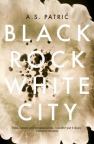
  3. Black rock white city, by AS Patrić (5 votes)

Highly commended were Nutshell by Ian McEwan (3 votes), and Our souls at night by Kent Haruf (3 votes). In other words, five books received 24 of the 32 votes cast, which is pretty decisive, don’t you think?

Heather Rose, The museum of modern loveBut of course, this is not a scientific survey. Votes were all given equal weight, even where people indicated an order of preference, and not everyone read every book, which means different people voted from different “pools”. If all had read every book Pachinko may have had even more votes (because my memory tells me that every one, or almost everyone, who read it voted for it.)

A few, including yours truly, tried to sneak in some extra “votes” but these were rejected by the returning officer (who happened to be yours truly!) These “extras” were for Stan Grant’s Talking to my country, Kent Haruf’s Our souls at night, Kim Mahood’s Position doubtful and AS Patrić’s Black rock white city.
 
AS Patric, Black rock white cityInterestingly, a few commented that there wasn’t one book in our schedule that they didn’t enjoy. Now, that’s an achievement! Of course, sometimes disagreement can engender the best discussions, but this year’s selection contained such meaty and/or “big” books that there always seemed to be issues to tease out.
Selected comments (accompanying the votes)
  • PACHINKO: Most members who commented on this one liked it for the cultural history it provides about Koreans in Japan, something which few us knew much about. One member added that  “the story was told so very well without pathos but with sympathy for the victims.”
  • THE MUSEUM OF MODERN LOVE: Comments on this included that it was revealing about “Abramovic the artist and the relationship with her audience”, with one member saying  “it was almost perfect. It satisfied on so many levels”.
  • BLACK ROCK WHITE CITY: Two members were uncertain about this to start with, one saying “I wasn’t really expecting to enjoy it but found I was totally absorbed very quickly” and another that “I started with low expectations and his beautiful writing won me over.” In the end, all who voted for it agreed, I’d say, with the member who called it “a fabulous and quirky story related to the migrant experience .”
  • NUTSHELL: The two members who commented on this one wrote “beautiful writing and a very innovative theme, makes me look at foetuses in a different way” and “clever, quirky and a lot of fun.”
  • OUR SOULS AT NIGHT: As for this one, if you’ve read Haruf you won’t be surprised at comments describing it as “a real gem”, as “deceptively simple with big themes and big heart.”

And next year, do I hear you ask?

Viet Thanh Nguyen, The sympathizerWe choose our schedule twice a year, so here are our books for the first half of 2018:
  • Rabih Alameddine’s An unnecessary woman
  • Viet Thanh Nguyen’s The sympathizer (which most of you know I’ve already read)
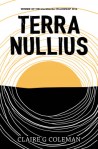
  • Claire Coleman’s Terra nullius 
  • Helen Garner night: read any from Garner’s oeuvre (an experiment. We’ve done poetry nights where we bring a poem or two to share, but never something like this.)
  • Richard Flanagan’s First person
  • Randolph Stow’s The merry-go-round in the sea (our classic, because we always like to do at least one)

If you are in a reading group – face-to-face or online – I’d love to hear your highlights and/or what you plan to read in 2018.

Reading Bingo 2017

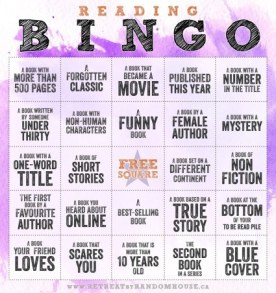
Reading Bingo 2017Are you getting sick of memes and lists? If so, just ignore this post and come back when the silly season is over because it seems that we book bloggers can’t help ourselves at this time of year. Today’s meme is a bingo asking us to name books we’ve read this year that meet categories on a bingo card – and it’s a big one with TWENTY-FIVE categories. I got the card from Lisa (ANZLitLovers).

Like most bloggers I have not read to the bingo card, but have tried, after the event, to squish my reading into the card. There are, therefore, a couple of fudges, which I hope you’ll accept. But if you don’t, what are you going to do? Unsubscribe? I hope not!
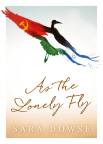
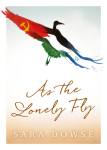
Sara Dowse, As the lonely blyA book with more than 500 pages: As it turns out I didn’t read one that was more than 500 pages though I read at least three that were between 450 and 500 pages, so I’m choosing the Australian one of those three, Sara Dowse’s As the lonely fly (my review), about Jewish migration, big dreams and the Jewish state in Israel.
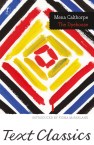
Mena Calthorpe, The dyehouseA forgotten classic: Mena Calthorpe’s The dyehouse (my review), which was (re)published by Text. They thought it was so special they made in their 100th book in their Classics series. If you haven’t read it, consider doing so, particularly if you like social realist novels about the lives of workers.
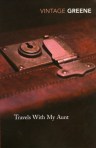
Graham Greene, Travels with my auntA book that became a movie: I have a few of those in my reading this year – and they are mostly classics. The one I’m choosing is Graham Greene’s Travels with my aunt (my review) which, unlike the ones I didn’t choose, I haven’t seen!! I did however read it!
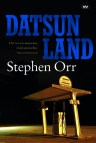
Stephen Orr, DatsunlandA book published this year: I’ve read several new releases this year, mostly review copies. I’m choosing Stephen Orr’s Datsunland (my review) because I do like a collection of short stories, and I’ve read a few good’uns this year. I’ll be reviewing my third Orr book, his newest release, within the next few months.
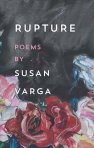
Susan Varga, RuptureA book with a number in the title: This proved strangely difficult this year, but luckily one book I read had numbers in its subtitle, Susan Varga’s moving poetry collection, Rupture: Poems 2012-2015 (my review). I do hope this isn’t a fudge – the numbers are on the title page even if not on the cover!
Louise Mack, The world is roundA book written by an author under thirty: Normally this would be hard, but history tells me that Louise Mack was 26 when her book The world is round (my review) was published in 1896. This book was nearly my “forgotten classic” until I needed something here!
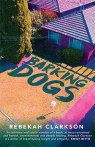
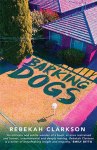
Rebekah Clarkson, Barking dogsA book with non-human characters: I was initially challenged by this one, until I remembered Rebekah Clarkson’s interconnected short story collection Barking dogs (my review) in which Jasper the barking dog recurs a few times, eventually providing the catalyst for a devastating action.
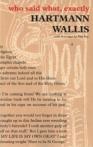
Hartmann Wallis, Who said what exactlyA funny book: I don’t read a lot of funny-haha books, but many of the books I read make me laugh. Take Hartmann Wallis’ Who said what exactly (my review), for example. If my review doesn’t enable you to see the humour, try reading Robin Wallace-Crabbe’s comment.
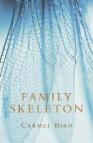
Carmel Bird, Family skeletonA book by a female author: Now this is a hard one – not! I have an embarrassment of riches here, so I’m going to go with one of the doyennes of the Australian literary scene, Carmel Bird and her clever Family skeleton (my review).
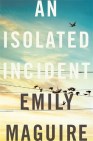
Emily Maguire, An isolated incidentA book with a mystery: Well, let’s choose an actual mystery book here, albeit a literary one in which the mystery is really not the main point. I’m talking about Emily Maguire’s An isolated incident (my review).
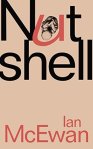
Ian McEwan, NutshellA book with a one-word title: I have a few options here, but I’ll go with the one I used in a recent Six Degrees post, Ian McEwan’s Nutshell (my review). Such an intriguing book with an unusual choice of narrator.
Stephanie Buckle, Habits of silenceA book of short stories: As a short story enthusiast I have a few options here too, so am choosing the last one I reviewed, Stephanie Buckle’s Habits of silence (my review). It’s a (lovely) debut collection, so I’d like to give it this extra shout-out.
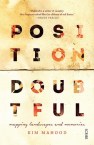
Kim Mahood, Position doubtfulA free square: So many to choose from, but I’ll nominate the book that I waited months to read until my reading group did it, Kim Mahood’s thoughtful memoir, Position doubtful (my review), about being Australian and relating to this land that belonged to someone else first.
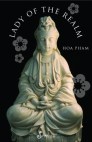
Hoa Pham, Lady of the realmA book set on a different continent: I read several books set in different parts of the world, but, quite coincidentally, two of them were set partly or completely in Vietnam. I’m choosing the one set completely there, Hoa Pham’s Lady of the realm (my review).
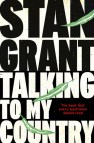
Stan Grant, Talking to my countryA book of non-fiction: Again, so many to choose from, but Stan Grant’s Talking to my country (my review) works as a sort-of companion to Position doubtful, in that it’s by a descendant of one of those original owners. He firmly but generously talks about what it has meant for his people to have been so summarily displaced by us!
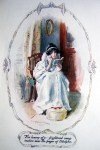
Northerner Abbey illus br Brock

From Ch. 9, illus. by CE Brock)

The first book by a favourite author: Most of you know who my favourite author is (though I have a few really) – Jane Austen. I’m fudging here, because her first book to be published was Sense and sensibility, but the first sold to a publisher (who then didn’t publish it) was Northanger Abbey (my posts). I just so happen to have re-read it this year (200 years after its eventual posthumous publication).
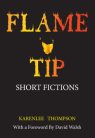
Karenlee Thompson, Flame tipA book you heard about online: Like most readers, I hear about many books online, but one I know I FIRST heard about online is Karenlee Thompson’s book of short fiction, Flame tip (my review), which was inspired by Tasmania’s bushfire of 1967.
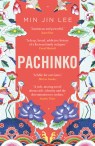
Min Jin Lee, PachinkoA best-selling book: Hmmm, I don’t tend to read best-sellers, but I think Min Jin Lee’s Pachinko (my review) is such in the USA, where it was named one of the New York Times Book Review’s 10 Best Books of 2017.
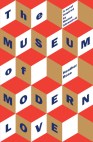
Heather Rose, The museum of modern loveA book based on a true story: My choice here is one of my top reads of the year, Heather Rose’s The Museum of Modern Love (my review). Such a stimulating excursion into ideas about art, love and home.
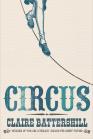
Claire Battershill, CircusA book at the bottom of my TBR pile: Now which TBR pile do they mean? And what does bottom mean? I have no idea but one of my TBR reads this year was a wonderful collection of short stories given to me by Daughter Gums in 2014, Circus (my review), by Canadian writer Claire Battershill.
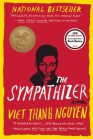
Viet Thanh Nguyen, The sympathizerA book your friend loves: This is easy. My dear American friend gave me Viet Thanh Nguyen’s The sympathizer (my review) because she loved it. I did too.
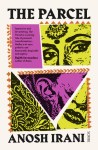
Anos Irani, The scribeA book that scares you: When I think of this category, I don’t think mystery or horror genre, but books with ideas that scare me. I’ve several to choose from, but I’ll go with Anosh Irani’s The parcel (my review) for its devastating evocation of how cruelly people can treat others, and how intolerant people can be of difference.
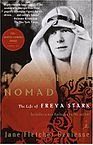
Jane Fletcher Geniesse, Passionate nomad, book coverA book that is more than ten years old: Again I have a few of these, but some have already appeared in this list, so I’ll go with Jane Fletcher Gienesse’s Passionate nomad: The life of Freya Stark (my review) which was first published in 1999.

The second book in a series: I almost never read series, and certainly haven’t read anything in a series this year so FAIL. I can’t complete the Bingo card!
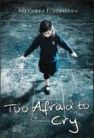
Ali Cobby Eckermann, Too afraid to cryA book with a blue cover: Woo-hoo, this category enables me to include one of the two books I read this year by Ali Cobby Eckermann, her memoir Too afraid to cry (my review).

So there you have it … a long post. Did you make it to the end? I can’t expect you to complete the bingo card in the comments, but how about choosing one category to highlight a book you’ve read this year that you think deserves a shout-out?
Monday musings on Australian literature: ABC RN presenters name their 2017 summer picks

Well, folks, it’s getting to the time of year when people start producing lists, and so, as last year, I’ll be joining the fray, starting this week with books recommended by ABC Radio National’s presenters – the bookworms amongst them, anyhow – for us to read over the coming summer.

However, as last year, not all chose Aussie books, but this post is in my Monday Musings on Australian Literature series, so what to do? Last year I decided to share them all, starting with the Aussie reads, and I’ve decided to do the same this year. After all, the things Aussies read form part of our literary culture don’t they?

Notwithstanding the above, I was disappointed last year when only two (TWO!) of the 18 presenters chose books by Australian authors. (The two books were Stan Grant’s Talking to my country and Helen Garner’s Everywhere I look, both of which I’ve read)I’m consequently thrilled that the number is far greater this year, with SIX (that is, nearly half) of the 14 presenters choosing Australian authors. Here they are:

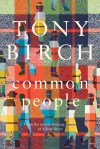
  • Tony Birch, Common peopleMichael Cathcart (Books and Arts): Tony Birch’s Common people. Birch recently won the Patrick White Award, and his novels Blood and Ghost River were both shortlisted for significant Australian literary awards. Common people, however, is his (latest) collection of short stories. Cathcart says that the stories “take us into the lives of very ordinary people — often people who are doing it tough — and open up the pain, the wit and the twinkle of their worlds. Tony’s wisdom and goodwill are beyond politics. His prose breathes with humanity”. How I love short stories, and this sounds like another great collection.
  • Andrew Ford (Music Show): Ashley Hay’s A hundred small lessons. This is Hay’s third novel, her second The railwayman’s wife having won or been nominated for several literary awards.) Ford says that Hay’s writing “is so simple and precise, at first you fail to notice how powerful it is” and says that “the main character in the book is Brisbane — actually, two Brisbanes, 50 years apart, culturally different in so many ways, yet both sticky, subtropical, and prone to flooding”.
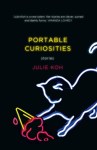
  • Ann Jones (Off Track): Julie Koh’s Portable curiosities. Koh is a critically well-regarded short story writer, and this, her first full collection, has received many accolades including her being named a 2017 Sydney Morning Herald Best Young Australian Novelist (though the “novelist” nomenclature is a bit weird.) Jones makes the collection sound great, when she says “The stories are dark and make fun of hipsters. In fact, in gorgeous and believable flow, Koh unleashes a portmanteau of fables, which take on body image, racism, father-son relationships and cat cafes.”
  • Sarah Kanowski (Books and Arts): Tex Perkins’ (with Stuart Coupe) Tex. Unlike many of the presenters it seems – see my summation below – Kanowski took the “summer read” recommendation seriously in choosing this memoir of Australian rock musician Tex Perkins. She said “In Tex, he is self-deprecating but not apologetic: yes he’s drunk too much, been an idiot, sabotaged his chances of commercial success, but he has also made great music and, above all, had fun. There are nobler aims in life and wiser books, but if you’re sitting on a beach towel with a beer this summer Tex will serve you brilliantly.”
  • Amanda Smith (Life Matters)Sarah Krasnostein’s The trauma cleaner. This is a biography of an amazing – but ordinary – person, Sandra Pankhurst, who was born a boy, “was adopted into an abusive family”, and then married, as a man, before deciding to live as a woman. It just so happens she also works as a trauma cleaner, that is, one who “cleans up crime scenes after the police have finished” and who  “also sorts things out after ‘unattended deaths’.” Smith says that not only is the book a “tribute to a life-force” is “a story told more beautifully than you can possibly imagine.”
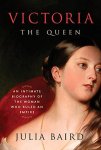
  • Julia Barid, Victoria the queenRobyn Williams (Science Show and Ockham’s Razor): Julia Baird’s Victoria the Queen. Williams noted that in 2017 he’d mostly read books by women, with this biography of Queen Victoria being his best book of the year. He bought it because he loves Julia Baird’s journalism, is “impressed by her range, deep learning and clarity”. He says that this biography “surprises, informs with real scholarship and tells a huge story with a light touch. When I finished I felt as if my brain had grown an extra layer.” I wouldn’t mind an extra layer in my brain, I must say!

Four chose British authors:

  • Joe Gelonesi (Philosopher’s Zone): Stephen Mumford’s Glimpse of light: New meditations on first philosophy (non-fiction)
  • Patricia Karvelas (RN Drive, and the The Party Room podcast): Natalie Haynes’ The children of Jocasta (fiction, Greek myths retold through the women characters)
  • Keri Phillips (Rear Vision): Tim Harford’s Fifty things that made the modern economy (non-fiction)
  • Andrew West (Religion and Ethics Report): David Goodhart’s The road to somewhere: The populist revolt and the future of politics (non-fiction)

And four chose American authors:

  • Kate Evans (Books and Arts): Jennifer Egan’s Manhattan Beach (novel)
  • Antony Funnell (Future Tense): Sarah Sentilles’ Draw your weapons (non-fiction)
  • Natasha Mitchell (Science Friction): Oliver Sacks’ The river of consciousness (non-fiction, collection of essays)
  • Scott Stephens (The Minefield: Noah Feldman’s The three lives of James Madison (non-fiction).

Julie Koh, Portable curiositiesSo, a more even spread than last year’s, but still oh-so-very Western-based. Last year, only ONE presenter chose a non-Western book, with all the rest choosing, as this year, Australian, British and American. This year there’s not even one non-Western book. However, both years, an indigenous author was chosen – just one, but that’s something. And, the choice of Julie Koh provides some nod to diversity too, as she’s the Australian-born daughter of Chinese-Malaysian parents.

The biggest difference this year, besides the significant increase in Aussie picks, is in the fiction-non-fiction ratio. Last year NINE (that is 50%) of the choices were for fiction (all novels), but this year only FIVE (35%) are, and of these, two are novels, two are short story collections, and one a collection of myths. This sort of selection is probably not what most readers might expect when looking for summer reads, but our ABC RN presenters are clearly a serious lot!

What ONE book would you recommend from your 2017 reads for, let’s be inclusive and say holiday, not summer, reading?

Monday musings on Australian literature: ABDA 2017 Shortlist

Five years ago, I wrote a Monday Musings on book design, in which I featured three book designers. I’ve mentioned book design occasionally since then but, having just seen the shortlist for this year’s ABDA (Australian Book Design Awards) which are sponsored by the ABDA (the Australian Book Designers Association), I’ve decided to write another post on this aspect of the thing we love – books!

ABDA describes the awards as celebrating “the bravest and brightest, the most original and beautiful books published in Australia each year”. This year’s awards are the 65th! 65 years of celebrating book design! That’s wonderful, really. They make awards in sixteen categories, including four awards in Children’s and YA categories, and awards for specialist areas like Cookbooks, Fully-illustrated books, and Educational books.

I couldn’t possibly list all these, but if you are interested you can find them at the link I gave in the first paragraph. I will just focus on two categories, Literary Fiction and Non-fiction:

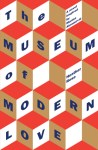
Heather Rose, The museum of modern loveLiterary Fiction

  • George Orwell’s 1984 (Text): WH Chong
  • Ellen van Neerven’s Comfort food (University of Queensland Press): Josh Durham (Design by Committee)
  • Melissa Ashley’s The birdman’s wife (Affirm Press): Christa Moffit
  • Heather Rose’s The museum of modern love (Allen & Unwin): Sandy Cull (GoGo Gingko)

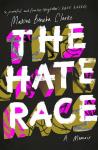
Maxine Beneba Clarke, The hate raceNon-fiction

  • Ashleigh Wilson’s Brett Whiteley: Art, life and the other thing (Text): WH Chong
  • Damon Young’s The art of reading (Melbourne University Press): Mary Callahan
  • Maxine Beneba Clarke’s The hate race (Hachette Australia) (my review): Allison Colpoys
  • Andrew Hankinson’s You could do something amazing with your life (Scribe): Jenny Grigg

I’m impressed by the number of smaller publishers here. Seems they support good design too, and carefully “curate” the whole work. Certainly Melissa Ashley seems to think so …

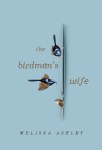
Melissa Ashley,The birdman's lifeMelissa Ashley, author of the shortlisted The birdman’s wife, has posted on her blog about the shortlisting of her book’s cover. The novel, historical fiction, is about Elizabeth Gould the wife and accomplice of the famous ornithologist and artist, John Gould. Ashley writes:

It was my secret hope that Elizabeth Gould’s iconic, hand-coloured lithograph of the superb fairy wren featured in the cover design for The Birdman’s Wife. You can imagine how chuffed I felt when my editor, publisher, and book-designer felt the same way.

Authors don’t always have a say in their covers, but clearly Ashley did, and she was thrilled with the result. She praises “the visionary generosity of Affirm Press”. She loves not just the cover but the book’s whole design because, of course, book design is not just about the cover.

Back in 2012, I named three book designers – Dean Gorissen (who was one of the designers used by Affirm Press), WH Chong (who worked for Text Publishing – and still does, as their Design Director) and Sandy Cull (who has her own company, GoGoGingko). You’ve probably noticed in the lists above that Affirm Press is still employing great designers, and that Chong and Cull are still producing quality, award-attracting designs.

As well as sponsoring these design awards, ABDA also maintains a hall of fame, whose eight members include:

  • Alec Bolton (an independent publisher whom I’ve mentioned here before)
  • W.H. Chong (link above)
  • Patrick Coyle (the first nominee to the Hall of Fame, in 1994)
  • Sandy Cull (link above)
  • Arthur Stokes (a book designer and previous judge of the awards. A report on the 1978/9 awards, commented on the “lively” two days of judging, and that “Arthur Stokes kept remarkably calm but did complain that the other judges ‘kept sitting down and reading the books'”.)

Interestingly, while I was researching the hall-of-famers, I found a report on the 1972/73 design awards. Apparently the judges that year were disappointed in the quality, and they named some of the issues. For example, they said that “there was little awareness of contemporary design” and a lack of imagination. “Typography,” they said, “lacked detailed decisions” particularly regarding “sans serif and serif type faces – sans serif was often used inappropriately”. I was once told to use serif type for text, and sans serif for headings. I wonder if that’s what they were referring to, and whether this is still recommended practice?

They talked about the jackets, and the type used being either “out of character with the book” or comprising “a multitude of different faces”. Yes! I remember, years ago, reading an article titled “Font shock”. It was when word processing first became a tool used by all of us and the temptation was to throw every font available in the one document, but it reminded me once again that “less is more” or to “kiss“.

They also commented on poor cropping and sizing of photographs. Hmm, I hope they never look at my blog!

I found all this fascinating.

I briefly mentioned (or inferred) what I like in a book design in my 2012 Monday Musings post so won’t repeat it here. Instead, I’ll say what I don’t like! I don’t like:

  • small print (because my eyes aren’t as good as they used to be)
  • low contrast between paper and print so that the print is not easy to read
  • cheap paper that feels nasty
  • binding that stops the book falling open easily
  • tiny margins (which prevent easy marginalia writing)
  • no index (in non-fiction books)
  • covers that stereotype
  • covers that mislead regarding their content

I’d love to know what you like or don’t like in book design, and if you want to name a recent favourite or two, do go ahead and share it with us.

Monday musings on Australian literature: Some New Releases in 2017

This is the last of what seems to have become my set of end-of-year-beginning-of-year posts – and it’s about, as if you couldn’t tell, the books that will be published this year. Obviously, I can’t list them all – even if I could know them all – but it’s fun to share a few that look interesting.

Now, luckily for me, part of my work has already been done by Elizabeth Lhuede who posted coming releases by Australian women writers on our challenge blog. I don’t plan to repeat that here because you can check it out there – though I may highlight one or two of particular interest to me. This means, of course, that my list – mostly drawn, like Elizabeth’s, from an article by Jane Sullivan in the Sydney Morning Herald – will primarily feature men (because, yes, I do read them too.) And, because this is a Monday musings on Australian literature post, the list will be further filtered to include just Australian authors.

Authors I’ve read before

  • Alex Miller’s The passage of love (Allen & Unwin). Miller had said he’d finished writing novels, but clearly not, and a good thing too (though on this blog I’ve only reviewed his Lovesong).
  • Kim Scott’s Taboo (Picador, August). That deadman dance , which I’ve reviewed here, is for me one of those unforgettable books. I wonder if this one will be too? By the way, Fremantle Press is re-releasing Scott’s first Miles Franklin winning book, Benang, in its Treasures series.
  • Ouyang Yu’s Billy Sing (Transit Lounge, April). This is about a “half-Chinese Gallipoli hero” so very different I expect to the book I’ve reviewed here, Diary of a naked official.

Authors I haven’t but maybe should have read before

  • Steven Carroll’s A New England affair (Fourth Estate, September). The final book in his six-part Glenroy series chronicling life, from the 1950s, in an outer Melbourne suburb.
  • Brian Castro’s Blindness and rage: A phantasmagoria (Giramondo. April). Castro is one of the shameful gaps in my reading to date.
  • John Kinsella’s Old growth (Transit lounge, February). A short story collection.
  • Stephen Lang’s Winderran (UQP, July). An author I don’t know much about, but I should because he’s won and/or been shortlisted for some significant awards.
  • Adrian Mitchell’s The beachcomber’s wife (Wakefield Press, January). Another  author I’m not greatly aware of but he writes literary historical fiction (and non-fiction), so I clearly should be!
  • AS Patric’s Atlantic black (Transit Lounge, October). By the middle of the year I’ll be able to move this to the “authors I’ve read” category as I will be reading his Miles Franklin award-winning Black rock, white city in a few months.
  • Alex Skovron’s The man who took to his bed (Puncher and Wattman, May). A collection of short stories from a multiply-published poet.
  • Chris Womersley’s City of crows (Picador, September). Hmm, about 17th century witchcraft apparently.

Debut authors – so I can’t have read them before

  • Charlie Archbold’s Mallee Boys (Wakefield Press, May). I’m determined to visit the Mallee this year (I’ve only touched its edges before) so this may be the book for me.
  • Michael Fitzgerald’s The Pacific room (Transit Lounge, July). It’s about Robert Louis Stevenson in Samoa.
  • Dennis Glover’s The Last Man in Europe (Black Inc., July). Another historical fiction about a well-known character, this time it’s Orwell and his writing of Nineteen Eighty-Four.
  • Tony Jones apparently has a political thriller coming out with Allen & Unwin later in the year. I normally wouldn’t have mentioned this – given there’s no title and it’s not really a key genre for me – but Jones is well-known in Australia (unlike most of these debut authors) for his work on television as a political commentator and current affairs show anchor. (Sullivan lists a number of crime and thriller books coming out, so if you’re interested do check out the article link above).
  • Gordon Parker’s In Two Minds (Ventura, April). Parker is the founder of the Black Dog Institute, and Sullivan describes this book as “a rollicking tale of mental illness”!
  • Peter Polites’ Down the Hume (Hachette, March). He’s described as “the new Tsiolkas or Luke Davies” so this is likely to be urban and gritty.

Some women writers I must mention

  • Bernadette Brennan’s biography. A writing life: Helen Garner and her work (Text, April). A high priority for me. I hope it’s as book as Karen Lamb’s biography of Thea Astley.
  • Rebekah Clarkson’s Barking dogs (Affirm Press). A bit of an anomaly in this list as I don’t know Clarkson, but she is apparently an accomplished short story writer, and I do like Affirm Press.
  • Sara Dowse’s As the lonely fly (For Pity Sake, May?). Dowse, like Farmer below, hasn’t published for some time so it’s great to see a new work coming out. I’ve reviewed her Schemetime here.
  • Beverley Farmer’s These waters: Five tales (Giramondo, July). I read and loved her back in the 1980s to early 1990s. This is a collection of short stories.
  • Kate Grenville’s The case against fragrance (Text, February). Listed by Sullivan under “politics and big issues”! Sounds interesting.
  • Marilla North’s book on Dymphna Cusack, whom I’ve reviewed here a couple of times, is well due I think.
  • Jane Rawson’s From the Wreck (Transit Lounge, March). I so enjoyed Rawson’s imaginative A wrong turn at the Office of Unmade Lists that I’m intrigued to so what she comes up with next.
  • A web of friendship (Miegunyah Modern Library from the University of Melbourne, February), which contains selected letters of Christina Stead, and Loving words (Brandl and Schlesinger, June), containing letters between Vance and Nettie Palmer. Both of great interest.
  • Alexis Wright’s Tracker Tilmouth: An essayed memoir (Giramondo, October). Essayed memoir? Is that how I should have described Fiona Wright’s and Georgia Blain’s memoirs last year? Anyhow, this is about an indigenous activist.

Do you actively look out for coming releases, or just wait until they appear and you read or hear about them?

Reading highlights for 2016

And so we finally say goodbye to a year many of us would like to forget, but before we do, I would like to share my 2016 reading highlights. As usual, I won’t be naming top picks, because I’m a wuss. It’s too hard. So, instead, I’ll be sharing highlights which combine best reads with those that were interesting for some reason or another.

First, though, this year’s …

Literary highlights

By literary highlights I primarily mean literary events. I went to a smaller number this year but they were good ones:

  • Carmel Bird, Fair gameTenth anniversary celebration for regional publisher, Finlay Lloyd. Held at the National Library of Australia, this was a most enjoyable occasion, with several authors, including Carmel Bird, Alan Gould and Paul McDermott, speaking about their FL books.
  • Canberra Writers Festival on which I wrote four posts (Day 1, Day 2, Day 3 and Recap): What a thrill to have a writers festival here again after a very long hiatus. Although my messy year meant I didn’t plan well enough in advance for the event, it was great being part of the buzz. What I attended was excellent, and I understand funding is guaranteed for another couple of years. Woo hoo.
  • The annual Seymour Biography Lecture, given this year by David Marr. Titled Here I stand, it was a fascinating talk which provided much for me, and commenters on my blog, to ponder on, particularly regarding Marr’s exhortation for the biographer to keep out of the biography.

Reading highlights

As in previous years, I’m going to discuss this year’s reading under categories which reflect this year’s experience.

The reading …

  • Julie Proudfoot, The neighbourDebut novels: I enjoy including debut works in my reading diet. This year I read around six, of which my two favourites would probably be Josephine Rowe’s A loving faithful animal for tackling the Vietnam War and the devastating impact of PTSD on a family, and Julie Proudfoot’s tight, powerful novella, The neighbour, which still has me thinking months after reading it.
  • Memoir/Autobiography: This was the surprise trend of the year (as Historical Fiction was last year). It certainly wasn’t planned but I ended up reading 8 memoirs/autobiographies, plus Anna Rosner Blay’s Sister, sister which, while mostly biography, had a touch of memoir about it too. I can’t possibly describe them all here but I do want to mention the three World War 2 mother-daughter stories, Blay’s book, Halina Rubin’s Journeys with my mother, and Susan Varga’s Heddy and me. I liked the way these daughters blended the forms of biography and memoir to produce something substantial yet engagingly personal. Then there were the two essay-collection-memoirs, Fiona Wright’s Small acts of disappearance and Georgia Blain’s Births deaths marriages, which played with the form in a different way. And oh dear, I loved them all, but I’ll name just one more, Gerald Murnane’s Something for the pain. My how I loved the sly way he told us about his wider life through describing his love of the turf.
  • Indigenous Australian writers: Shamefully, I only read four works by indigenous Australians, but at least I continued my education into indigenous Australian life and culture. I’ll name just two: Ali Cobby Eckermann’s beautiful and generous historical fiction verse novel Ruby Moonlight, and Bruce Pascoe’s more overtly political Dark emu.
  • Elizabeth Harrower, A few days in the country and other storiesShort stories galore: As always, I read a goodly number of short stories this year, though fewer complete collections than in 2015. The standout collection was Elizabeth Harrower’s A few days in the country and other stories. Such a great read, I’d recommend it to anyone. Debut author Cassie Flanagan Willanski’s Here where we live was also an excellent read particularly for telling about life in remoter parts of Australia. My favourite individual short stories included Ted Chiang’s “The story of your life” (adapted to the film Arrival) and the group of stories I read from Christina Stead’s Ocean of story for Lisa’s Christina Stead Reading Week.
  • From elsewhere: I read only two overseas works this year that weren’t English or American, but both were truly excellent. One was the African classic, Chinua Achebe’s Things fall apart, which I’ve been wanting to read for years. The other was Pierre Lemaitre’s contemporary Prix Goncourt winning novel, The great swindle. Excellent as they were, I must try to do better next year. My other favourite book from elsewhere was American author Anthony Doerr’s All the light we cannot see. Amazing how many stories can still be told, differently, about the Second World War.
  • Biggest surprise: I hadn’t read Stephen Orr before, but his pastoral novel The hands, which was one of my first reads of the year, is still vividly with me as the year closes. The way he captures the relationship, particularly through dialogue, between father and sons just bowled me over.
  • Biggest disappointment: This was  a surprise for one who loves classics, but I really wouldn’t have been sorry not to have read William Makepeace Thackeray’s The luck of Barry Lyndon.
  • The ones that got away: As always there were books I wanted to read during the year but just didn’t get to. Prime among them are Jenny Ackland’s The secret son, Larissa Behrendt’s Finding Eliza, Carmel Bird’s Family skeleton, and Kim Mahood’s Position doubtful (another memoir!) Roll on 2017.

Some stats …

For my interest really:

  • 65% of the authors I read were women (2% less than 2015)
  • 32% of the works I read were not by Australian writers (5% more than 2015!)
  • 63% of my reading was fiction (short, long or in-between!) (10% less than 2015)
  • 35% of the works I read were published before 2000 (a whopping 15% more than 2015)

A couple of interesting trends here. There’s the significant reduction in fiction, which is partly due to the big jump in memoirs (about which see above!) And, while I like to read contemporary authors, I also love delving into the past, so I’m pleased to see the increased number of works before 2000. Surprisingly, I managed to read more works overall than last year – a big plus. However, once again, I made woeful inroads into my TBR so, to get me off to a good start, I hereby proclaim that my first 2017 review WILL be for a TBR book. I hope you like it. I’m sure enjoying reading it.

Overall, it was a good reading year, made especially so by you who joined me here. So, a big thankyou for reading my posts, engaging in discussion, recommending more books and, generally, being all-round great people to talk with. I hope 2017 is good to you, and look forward to seeing you here again whenever something takes your fancy.

What were your reading or literary highlights for the year?

Books given and received for Christmas, in 2016

I did a “books given and received post” last Boxing Day, and decided to do it again, but after Boxing Day because this year Boxing Day coincided with Monday Musings, and I have another tradition for the last Monday Musings of the year. Anyhow, here goes with the books I gave and received this Christmas. There are not so many of them this year, for some reason.

  • Robyn Cadwallader, The anchoressFor Ma Gums, who has worked as a lexicographer, yet another word-oriented book: John Simpson, The word detective: Searching for the meaning of it all at the Oxford English Dictionary, which I bought on spec when I saw it in the National Library’s bookshop (I think). Simpson was once chief editor of the OED. Next year I really will have to get her something different.
  • For Brother Gums, an historian who loves walking: Rebecca Solnit’s Wanderlust, as the result of Stefanie’s (So Many Books) review. It even mentions Lizzie Bennet apparently.
  • For Sister-in-law Gums, who likes to think about things: The best Australian science writing of 2016 . I loved (my review) the 2015 edition so I’m hoping she will like this. (I was tempted to keep it for myself!) And SNAP, in one of those wonderful readerly coincidences, Brother and Sister-in-law Gums gave this book to Mr Gums – so I will now have an opportunity to read it after all!
  • For Gums’ Californian friend, who showed interest when I told her about this book in a letter: Robyn Cadwallader’s The anchoress (my review).
  • For Gums’ Californian friend’s daughter, who’s just finished her law degree and might be interested in some Aussie crime: Peter Temple’s The broken shore.
  • For Gums’ Californian friend’s other daughter, who is interested in things factual and, I think, scientific: The best Australian science writing of 2016. (This book did well this Christmas in our neck of the woods.)

I did do a little shopping to help out Ma Gums, and bought on her behalf for her grand-daughter, aka Daughter Gums, Maxine Beneba Clarke’s The hate race. (I’m hoping that I might get to read it too!)

As for what I received, a varied but much appreciated bunch:

  • From Parents Gum: Grahame Greene’s Travels with my aunt, because they knew that it’s on my reading group list for next year. They’re not silly: they know this is one book they’ve given me which they can be confident will get read within a reasonable time of their giving it to me.
  • From Brother and Sister-in-law Gums, who know my interest in indigenous Australian culture: Kanalaritja: An unbroken string: Honouring the tradition of Tasmanian Aboriginal shell stringing, supporting a touring exhibition (and, to go with it, an original, authentic – and gorgeous – shell string necklace.) A beautiful gift.
  • From my Californian friend, who reads my blog and with whom I correspond regularly by snail mail, and who, therefore, knows my reading taste well: Viet Thanh Nguyen’s Pulitzer prize-winning The sympathizer. A commenter on my review of Josephine Rowe’s A loving, faithful animal recommended this book, as did the present-giver in a letter, so I’m very pleased to have it.
  • From a Jane Austen group member (a lovely out-of-the-blue present): Helena Kelly’s Jane Austen: The secret radical. This sounds intriguing, and I can see that the first couple of chapters on Northanger Abbey will come in useful when my group discusses this, Austen’s first novel, in 2017.

Jane Austen ornament and pendantsAnd I also received a couple of other book related gifts from friends who know me too well: a pendant necklace with a quote from Jane Austen’s Pride and prejudice,”I declare after all there is no enjoyment like reading”; and two gorgeous Jane Austen tree ornaments (a silhouette and a little figure). It pays, sometimes, to have obsessive interests!!

What about you? Any Christmas book news you care to report?

Monday musings on Australian literature: Australian Women Writers’ Challenge 2016

AWW Logo 2016For the fifth year in a row, I’m devoting my last Monday Musings of the year to the Australian Women Writers Challenge*.

This year has been one of consolidation rather than of huge change for the Challenge, as we got used to our self-hosted site to which we moved in 2015. The big advantage of this move was that it enabled us to produce a single searchable database of all reviews logged since the challenge started. It now contains reviews for nearly 3,600 books across all forms and genres of Australian women’s writing, an increase of 20% on last year’s total. A good achievement n’est-ce pas?

Once again the Challenge ran some special events during the year, achieved some milestones, and introduced some new initiatives. These include:

A big thanks to author/researcher Jessica White for her special posts on diversity – the Migrant heritage, Aboriginal and Torres Strait Islander Heritage, and writers with a disability  posts – and to Kelly (Orange Pekoe Reviews) for creating the Bingo Challenge, which we hope to run again in 2017. And a shout out too to Brona, Debbie Robson and Elizabeth who often commented on my AWW round-up posts.

The Australian Women Writers’ Challenge is the only challenge I do (or have ever done). This year I posted 30 reviews for the challenge, three more than last year. I managed a similar variety in my reading, but only dipped once into my TBR pile (to read part of Christina Stead’s Ocean of story for Lisa’s ANZLitLovers’ Christina Stead Week). Last year, I challenged myself to tackle my TBR pile and I failed, miserably. I also let the ball drop this year in one of my favourite areas, classic Australian women’s fiction. I’m therefore making no promises, setting no goals (at least publicly!) for next year.

Anyhow, here’s my list of works read for this year (with links to the reviews):

Debra Adelaide, The women's pagesFICTION

Tegan Bennett Daylight, Six bedroomsSHORT STORIES

POETRY and VERSE NOVELS

Emma Ayres, CadenceNON-FICTION

As in each year, there are subtle differences in this year’s list, though none are big enough to suggest my reading tastes have changed! For example, last year 48% of the reviews were for novels, while this year only 40% were. Half of these were debut novels. This year saw a return to 2014’s heavy emphasis on Memoir in my non-fiction reading, though there was some interesting playing with form. Not only were a couple of memoirs told through essays, but I also read three mother-daughter stories which combined elements of memoir with biography.

aww2017-badgeAnyhow, if you are interested in the challenge, you can check it out here. The 2017 sign up form is ready so do consider joining up, as we welcome all – women and men – to join us. I’ll be there again. The challenge is also on Facebook, Twitter (@auswomenwriters), GoodReads and Google+.

Finally, a big thanks to Elizabeth and the rest of the team – including Lewis, our wonderful database developer – for making it all such a cooperative, and enjoyable experience. I look forward to seeing what 2017 brings.

* This challenge was instigated by Elizabeth Lhuede in 2012 in response to concerns in Australian literary circles about the lack of recognition for women writers. I am one of the challenge’s volunteers – with responsibility for the Literary and Classics area.

Monday musings on Australian literature: ABC RN presenters name their best reads of 2016

Now, here’s my conundrum. We (at least I think I can speak for a general “we”) want Australians to read widely, because it’s important for us to understand cultures that are different to our own. But, given how small the Australian market is, we also want people to read Australian literature (and see, for that matter, Australian films which struggle for recognition and box office).  To achieve more people reading Aussie writing requires promotion, and there’s nothing like people of influence (like those I reported last Monday) naming and talking about Australian books to help this process.

Helen Garner, Everywhere I lookSo, what happened when ABC’s RN (Radio National) presenters named their picks for 2016? Well, there are 18 presenters on this list, and only two named Aussie books:

  • Paul Barclay (presenter, Big Ideas): Stan Grant’s Talking to my country. Stan Grant is a journalist who has an indigenous background, and his book, says Barclay “might not be quite the best thing I’ve read this year” but he says that its message about “growing up feeling excluded and subjected to bigotry in your own country” has stayed with him. Great choice. It’s on my TBR pile and everyone who’s read it says it’s a book all Aussies should read.
  • Sarah Kanowski (co-presenter of Books and Arts Daily): Helen Garner’s Everywhere I look. Oh, lookee you here, another Aussie, and what a lovely one it is. (See my review.) Kanowski – I always knew I liked her (haha) – described it as the book that gave her the “most delight — and most wisdom” this year.

So, what did the others choose? Eight chose British writers – mostly novelists:

  • Richard Fidler (presenter, Conversations): Peter Frankopan’s The silk roads: (non-fiction)
  • Andrew Ford (presenter, The Music Show): Alan Bennett’s Keeping on keeping on. (non-fiction)
  • Ann Jones (presenter, Off Track): Max Porter’s Grief is the thing with feathers. (novel)
  • Patricia Karvelas (presenter, RN Drive): Deborah Levy’s Hot milk. (novel)
  • Lynne Malcolm (presenter, All in the Mind): Ian McEwan’s Nutshell. (novel)
  • Rachael Kohn (presenter, The Spirit of Things): Andrew O’Hagan’s The Illuminations. (novel)
  • Amanda Smith (presenter, Sports Factor): Graham Swift’s Mothering Sunday. (novel)
  • Robyn Williams (presenter of The Science Show): Julian Barnes’ The noise of time. (novel)

And six chose American writers:

  • Kate Evans (presenter, Ear Shot): Colson Whitehead’s The Underground Railroad. (novel)
  • Antony Funnell (presenter, Future Tense): Amanda Foreman’s A world on fire. (non-fiction, that Funnell called “a nice, big fat book for summer reading”. I do like his definition of summer reading, I must say.
  • Cassie McCullagh (co-presenter, Life Matters): Noah Hawley’s Before the fall. (novel, which McCullagh decribed as “perfect holiday reading”)
  • Annabelle Quince (co-presenter, Rear Vision): Anthony Doerr’s All the light we cannot see. (novel, which Quince described as “perfect summer reading”.)
  • Scott Stephens (Online Editor for the ABC on Religion and Ethics): Martha Nussbaum’s Anger and forgiveness. (non-fiction)
  • Tom Switzer (presenter, Between the Lines): John B Judis’ The populist explosion. (non-fiction)

That leaves two more presenters:

  • Michael Cathcart (co-presenter, Books and Arts Daily) who chose a memoir by a Libyan-born novelist, Hisham Matar’s The Return.
  • Natasha Mitchell (science journalist and presenter) who managed to sneak in two choices, both memoirs, one English and one American: Jeanette Winterson’s Why be happy when you could be normal? and Gloria Steinem’s My life on the road.

These are all, I’m sure, worthy reads but is it wrong for me to be disappointed to see so few Aussie books here – just two works of non-fiction and no fiction? And, is it wrong for me to be further surprised that, of the preponderance of non-Aussie books, only one is not British or American? How ethnocentric we are! I appreciate that the presenters were asked to give only one pick (albeit Natasha Mitchell managed to squeeze in two). If they’d been asked to name three, say, we may have seen more variety, including more Aussie books.

However, I do see making these lists as a political act and therefore an oportunity for them to give a little boost to local writers. Perhaps, though, they didn’t want to show favouritism to one author over another and so went off-shore? Whatever the reason, I would love to have seen more Aussies here.

What do you think about this, particularly if you’re an Aussie? And if you’re not, what do you think about their choices?

Monday musings on Australian literature: Aussie writers name their pick reads of 2016

December is, or has certainly become in recent years, the month of lists. As always, I’ll be saving my lists until the end of 2015, which means you won’t see them until January. However, that doesn’t mean I can’t share other people’s lists, does it?

I’ve gleaned the list I’m sharing here from a recent article in the Sydney Morning Herald, a list I particularly enjoy because they ask a wide range of Aussie writers who come up with books crossing a variety of forms and genres. In my report on it, I’ve only included Australian books. I hope that, because of this and because my order of presentation is completely different, I haven’t broken copyright. If I have, I hope they forgive me, in recognition of our shared goal of promoting books and reading.

So, here’s the list of books, with the nominating author/s in parentheses at the end. I’ve used asterisks to denote those books nominated more than once, with the number of asterisks identifying the number of nominations.:

  • Randa Abdel-Fattah’s When Michael met Mina (YA fiction) (Maxine Beneba Clarke)
  • ***Steven Amsterdam’s The easy way out (fiction) (Maxine Beneba Clarke, Abigail Ulman, Charlotte Wood)
  • Melissa Ashley’s The birdman’s wife (historical fiction) (Robert Adamson)
  • Carmel Bird’s Family skeleton (fiction) (Jacinta Halloran)
  • **Georgia Blain’s Between a wolf and a dog (fiction) (Toni Jordan, Charlotte Wood)
  • Maxine Beneba Clarke’s Foreign soil (short stories) (Clare Wright).
  • Maxine Beneba Clarke’s The hate race (memoir) (Zoe Morrison)
  • Stephanie Bishop’s The other side of the world (fiction) (Katherine Brabon)
  • Stephen Daisley’s Coming rain (fiction) (Clare Wright)
  • Robin Dalton’s Aunts up the Cross (classic memoir, repub. by Text) (Tim Flannery)
  • Catherine de Saint Phalle’s Poum and Alexandre: A Paris memoir (memoir) (Helen Garner)
  • David Dyer’s The midnight watch (historical fiction) (Malcolm Knox)
  • Sarah Engledow’s The popular pet book (non-fiction) (Chris Wallace-Crabbe)
  • Richard Flanagan’s Notes on an exodus (non-fiction) (Katherine Brabon)
  • **David Francis’ Wedding Bush Road (fiction) (Abigail Ulman, Don Watson)
  • Peggy Frew’s Hope Farm (fiction) (Clare Wright)
  • Alice Garner’s A shifting shore (non-fiction) (Gregory Day)
  • Helen Garner, Everywhere I look***Helen Garner’s Everywhere I look (essays) (Lisa Gorton, Jacinta Halloran, Joan London) (my review)
  • Stan Grant’s Talking to my country (non-fiction) (Maxine Beneba Clarke)
  • Tom Griffiths’ The art of time travel (non-fiction) (Clare Wright)
  • Shirley Hazzard’s Cliffs of fall and other stories (short stories, orig. pub. 1963) (Helen Garner)
  • Toni Jordan’s Our tiny useless hearts (fiction) (Graeme Simsion)
  • Gisela Kaplan’s Bird minds (non-fiction) (Tim Winton)
  • Hannah Kent’s The good people (historical fiction) (Malcolm Knox)
  •  Lee Kofman and Maria Katsonis’ Rebellious daughters (short story anthology) (Clare Wright)
  •  Julie Koh’s Portable curiosities (short stories) (Maxine Beneba Clarke)
  • Anthony Lawrence’s Headwaters (poetry) (Robert Adamson)
  • Micheline Lee’s The healing party (fiction) (Helen Garner)
  • Cassie Lewis’ The blue decodes (poetry) (Robert Adamson)
  • Tim Low’s Where song began (non-fiction) (Tim Flannery)
  • Thornton McCamish’s Our man elsewhere (biography of Alan Moorehead) (Helen Garner)
  • Adrian McKinty’s Rain dogs (historical crime fiction) (Michael Robotham)
  • ***Kim Mahood’s Position doubtful (memoir) (Lisa Gorton, Jacinta Halloran, Tim Winton)
  • Robert Manne’s The mind of The Islamic State (non-fiction) (Alex Miller)
  • Zoe Morrison’s Music and freedom (memoir) (Graeme Simsion)
  • **Ryan O’Neill’s Their brilliant careers (fiction) (Toni Jordan, AS Patric)
  • Heather Rose’s The Museum of Modern Love (novel) (Hannah Kent)
  • Josephine Rowe, A loving faithful animal** Josephine Rowe’s A loving, faithful animal (novel) (Jacinta Halloran, Fiona Wright) (my review)
  • **Baba Schwartz’s The May beetles (memoir) (Helen Garner, Joan London)
  • Sybille Smith’s Mothertongue (memoir) (Helen Garner)
  • Randolph Stow’s The Merry-Go-Round in the sea (classic fiction) (Jacinta Halloran)
  • **Ellen van Neerven’s Comfort food (poetry) (Maxine Beneba Clarke, Lisa Gorton)
  • Dave Warner’s Before it breaks (crime fiction) (Michael Robotham)
  • Alison Whittaker’s Lemons in the chicken wire (poetry) (Fiona Wright)
  • Josephine Wilson’s Extinctions (fiction) (Charlotte Wood)
  • Peter Wohlleben’s The hidden life of trees (non-fiction) (Tim Flannery)

As with last year’s smh list, there are books and authors I haven’t heard of, but I’m thrilled to see some books appearing multiple times, including a couple of books I loved this year – Garner’s Everywhere I look and Josephine Rowe’s A loving faithful animal – and Kim Mahood’s Position doubtful, which I know I’ll be reading next year.  Tim Winton says of Mahood’s book:

If anyone’s written more beautifully and modestly about this country and its people I’m not aware of it. I think it’s a treasure.

A book I should clearly consider reading is three-asterisked Stephen Amsterdam’s The easy way out. Charlotte Wood describes it as “a sharp, snappy novel about assisted dying. Blackly witty but never glib, it’s humane and moving.”

It’s lovely to see Patrick White award-winner, Carmel Bird, in the list with her new novel Family skeleton, alongside older books by Shirley Hazzard and Randolph Stow. And it’s interesting to see the variety of memoirs admired by our authors.

While this year there are several books with two or three recommendations, last year had a runaway winner with five recommendations – Charlotte Wood’s The natural way of things. I noted then that I clearly needed to read it – and I did. In fact, I reviewed, in 2016, 7 books from last year’s list. I wonder if I’ll do something similar in 2017.

Meanwhile, do you enjoy end of year lists – and, more significantly, do they guide your reading choices in any way? If they do I’d love to know how.