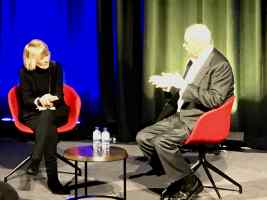
Suddenly it was my last session! How quickly the two days went. The reason I chose In Our Backyard is obvious. It was described as “Get up close and personal with four of Canberra’s literary gems”, and was moderated by ABC journalist, Emma Alberici.
It was a warm-hearted session, characterised by a sense of respect between the writers made most evident in their friendly banter and genuine interest in each other.
Alberici introduced the four writers:
- Nigel Featherstone, novelist, Bodies of men (my review)
- Karen Viggers, novelist, The orchardist’s daughter (my review)
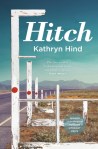
- Kathryn Hind, novelist, Hitch
- Patrick Mullins, political biographer, Tiberius with a telephone: The life and stories of William McMahon.
Four very different books, said Alberici, so she suggested they start with their book’s genesis.
Genesis
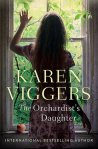 Karen Viggers: Is passionate about Tasmania, wilderness, freedom, empowerment, forests, and friendship. Her novel is about three outsiders in a small timber town, and explores how people create bonds and belonging in such places.
Patrick Mullins: Did his PhD in political biography at the University of Canberra in 2014, but hadn’t written one. He looked around and Billy McMahon was there for the taking (with “good reason” he added!) Researching McMahon, he became intrigued by the disconnect between the reputation (the derision) and the reality (twenty plus years covering all major portfolios as well as prime minister.) Further, his unpublished autobiography indicated he had a divorced-from-reality view of himself, which suggested themes about the myths we can create about the past.
Kathryn Hind: Enrolled in a creative writing masters in the UK. She had to write something. She looked to her experience of travelling around the world alone for a year, during which she found that she needed, as a young woman, to be hypervigilant, always. Suddenly, Amelia and her dog by the side of the road appeared to her. Neither she, Amelia, nor she, the author, knew what would happen to her!
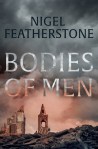 Nigel Featherstone: Wanted “to piss off Tony Abbott”. Seriously though (or, also seriously), the book resulted from a “strange decision” to apply for an ADFA (Australian Defence Force Academy) residency in 2013, despite having no interest in war. Of course, the residency did come with $10K! Featherstone’s overriding interest was to explore different expressions of masculinity under military pressure. Eventually, he found two books in the ADFA Library: Deserter, by American Charles Glass, which explored desertion as an act of courage, and Bad characters, by Australian Peter Stanley, which included the story of a soldier who, during World War 1, had been caught in a homosexual act, been found guilty, and never turned up to board the ship to take him home to prison! There’s my novel, he decided. Had he had any reaction from ADFA to the book, Alberici asked. No.
Place
Given the narrow “backyard” framing of the panel, Alberici took it upon herself to broaden the theme to “place” in general. Suited me. I love hearing authors discuss place.
Karen Viggers: All her stories come from a spiritual connection to place. (I follow Karen on Instagram and can attest her love of place!) She gives her place a fictional name, because she, like Tara June Winch said in the morning, didn’t want to impose her views on real towns (but it is set in the Geeveston/Huonville/Hartz Mountain region of southern Tasmania). She wanted to focus on different types of violence, besides physical, including psychological and economic control. In small towns people know this is going on and can’t pretend they didn’t know. She also wanted to bring back park ranger Leon from a previous book. And, most of all, she wants people to visit, love, and support Australia’s places.
 Kathryn Hind: Believes her senses were heightened because she started writing in England, when she was missing Australia. She couldn’t do physical research so would “drop a pin on map”. She named real places. She didn’t feel she had to capture exact their reality, but the timings of Amelia’s journey had to be right. I love that she used online traveller reviews to inform herself. For example, a review of a hotel in a little town mentioned being kept awake by trains shaking the walls at night. She used that! She wanted to truly test Amelia to bring out her strength.
Nigel Featherstone: Hadn’t been to Egypt, so had some initial creative concerns. Then he realised that 1940s Alexandria no longer exists, which that freed him to rely on research. He knows very well the other main place in the book, Mt Wilson. He also talked about writing by hand (which astonished journalist Emma Alberici!) He has gradually learnt that writing is a whole of body activity.
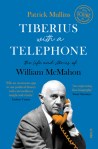 Then it was Patrick Mullins. He was tricky in terms of “place”, so Alberici asked him about the title. Mullins admitted that his publisher chose it – using Gough Whitlam’s description of McMahon’s scheming by telephone. Mullins’ own title is the subtitle. Alberici asked if he had any cooperation from the family. None, said Mullins, though he sent messages and did have coffee with one member. So, he couldn’t access the 70 boxes of McMahon’s papers at the Archives. He understood, he said. Children of politicians have crappy lives, and, anyhow, it freed him from feeling beholden to the family. Silly family, eh? Fortunately, he had access to one of McMahon’s autobiography ghostwriters who had seen the papers. The most startling revelation, he said, responding to another question from Alberici, was that McMahon was “more admirable than we would have thought”. He racked up several significant achievements, including taking us to the OECD, and showed impressive persistence/resilience.
Q&A
It was a quality Q&A. The first questioner asked the writers to share the best part for them about writing:
- Viggers loves the first draft, the joy of going on the ride, and taking the tangents. She also loves those rare moments when the words start to sing!
- Featherstone found it a hard question, but said one part is when you feel you have written a good sentence, one that feels alive. (One that sings, perhaps?) This happens about once a month, he said. He quoted novelist Roger McDonald, who says that writing is putting sentence after sentence after sentence.
- Hind’s favourite moments were making discoveries in her own work, the moments when you forget to eat and drink, the moments when you feel “this is what I’ve done”, and when you know your novel so well you can defend it against an editor (albeit her editor was great, she hastened to say.)
- Mullins gave a non-fiction writer’s answer: It’s when you get access to material, when you find that special piece of information, the little details.
Another question concerned characters “taking over”. Does this happen, and how did they feel about it? Viggers said that for her it’s less that the characters dictate and more that the publishers want her to go deeper, while Hind said that there were times when she wished Amelia would tell her more! Amelia divulging much, even to her author! Featherstone gave the answer of the session. He said that around draft 20 (of the 40 he wrote), he pretended he was a journalist and interviewed his main characters. He asked them to give him an object that represented them, and to tell him a secret about themselves, which he promised not to put in the book. They did, and he didn’t!
Another asked for the best piece of advice they’ve received. Featherstone said it was “to write about what makes you blush”, while Viggers said it was “to get it down, then get it right.” Her husband also says that writing is not about inspiration but getting “bum on seat” and doing it. Hind said her tutor told her that she writes very plainly, which upset her – until he added, “a bit like Tim Winton”! That’s ok then! Mullins said he’d been told that a book about McMahon would be short. It’s not, it’s nearly 800 pages. So, his response was, don’t follow advice!
A good place to end my report of my Canberra Writers Festival. Phew. To those still with me, thanks for following along!
 PM’s Pick, featuring the multi-award-winning Brian Castro, was another must-attend session. The night before, while dining at Muse, I checked to see whether they had any Castro in their classy little bookshop. They did, including a second-hand copy of his fourth novel, After China. I snapped it up, and as I did, bookseller Dan reminded me that he’s “very literary”. I know, I said! He is also very reclusive, making this a not-to-be missed session. And it was free, my original payment being refunded when they found a sponsor. Woo hoo!
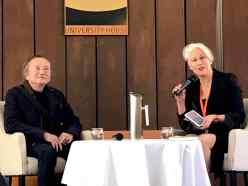 Castro conversed with local ABC radio presenter Genevieve Jacobs. It was a smallish audience, and a quiet conversation, but provided some fascinating insights.
 Now, I should say a little about Blindness and rage. Inspired by Virgil, Dante (the 34 cantos of his Inferno), and Pushkin’s Eugene Onegin, it tells the story of writer Lucien Gracq who, told he is terminally ill, goes to Paris to finish the epic poem he’s writing and to die there. He joins a secret writers’ society, Le club des fugitifs, which only dying writers can join. It publishes an author’s last unfinished work, but not in his/her name. This reflects Castro’s own view that the work is all, the writer doesn’t matter! He doesn’t think fame helps anything.
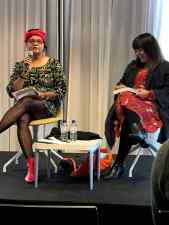 Today was the day I was able to devote to fiction writers. There were still clashes, but there was never any doubt that I would attend this Tara June Winch session, even though it meant missing a panel featuring Charlotte Wood, Brian Castro, and Simon Winchester. Why were these scheduled opposite each other?! The Festival-goers complaint! Anyhow, fortunately, as you’ll see, I did get to hear Brian Castro too; and I have seen Charlotte Wood before and did see Simon Winchester in
  Winch explained The yield’s genesis. Ten years in the writing, it was inspired by a short course she did in Wiradjuri language run by Uncle Stan Grant Sr (father of Stan Grant whom I’ve
  It’s a curious thing, isn’t it? When I write my book reviews, I spend very little time on the content, focusing mostly on themes, style and context, but when I write up festivals and other literary events I find it hard to be succinct about the content. Perhaps this is because I can always go back to the book to check something, while these events are fleeting. Once they’re gone, they’re gone, so I want to capture all I can. Of course, many events these days end up as podcasts, but you can’t be sure how long they’ll be there. Anyhow, that’s my excuse and I’m sticking to it …
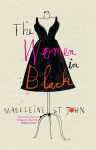 Pomeranz began, it seemed to me, by wanting to focus more generally on book-to-film adaptations, but Beresford focused, not surprisingly I suppose given the session topic, on The women in black/Ladies in black.
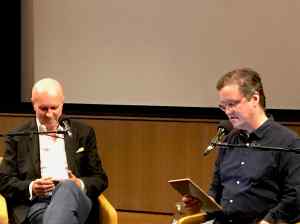 And then it was time to hop into the car, and drive over the lake for the sold-out session (as indeed was my first session of the day), Simon Winchester in conversation with Richard Fidler. There was no time for lunch!
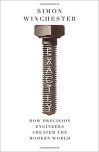 First though – oh oh, will I still be able to keep this short – the book is cleverly (though probably still chronologically) structured according to increasing levels of precision (or, to put it another way, decreasing levels of tolerance.) So, Chapter 1 is Tolerance 0.1, Chapter 2 is 0.0001, right up to Chapter 9, the second last chapter, which is a mind-boggling: 0.000 000 000 000 000 000 000 000 000 000 000 01! We are talking precision after all!
 This session was recorded for ABC RN’s Big Ideas program, and the host of that show, Paul Barclay, moderated the panel. The panel members were
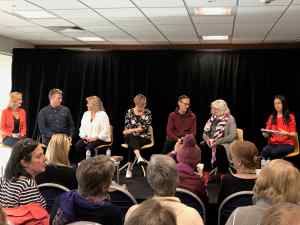 The session was billed as follows: “Some of Canberra’s finest and most creative writers join forces in this irresistible ode to the national capital. Take a wild ride through a place as described by the vivid imaginations of some of this city’s best talents. Capital Culture brings stories not just of politics and power, but of ghosts and murder and mayhem, of humour and irreverence, and the rich underlying lode that makes Canberra such a fascinating city.”
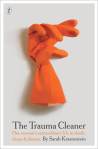 Sarah Krasnostein’s The trauma cleaner: One woman’s extraordinary life in death, decay & disaster (Biography) (
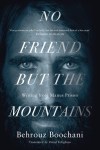 The overall winner, announced last Monday, 12 August, is Behrouz Boochani’s No friend but the mountains.
 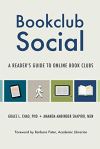 Back in 2016, I completed a survey about online bookclubs, and answered some supplementary questions about “my” sort of club. I also took part in a follow-up telephone interview with the two American researchers involved, Grace Chao and Amanda Shapiro. Now, three years later, they have completed their research and self-published it in their book, Bookclub social: A reader’s guide to online book clubs. Of course I bought it, because although it’s some time since I’ve been active in online book clubs (or, OBCs), I am interested in reading communities of all sorts.
 Whispering Gums