No, I didn’t go to this year’s Hobart Writers Festival, but I had the next best thing – a brother who did. Not only that, but he responded positively to my request for some notes. I’ll be posting what he so-called “cobbled” together today and tomorrow, which means no Monday Musings this week. I hope – and believe – that you’ll find his report a worthy replacement.
By way of introduction, my brother Ian Terry has lived in Tasmania for well over three decades now, and recently retired after around 10 years as a curator of history at the Tasmanian Museum and Art Gallery. We have been discussing our reading most of our adult lives. It’s a connection that means a lot to me, because I respect his thoughts and interpretations (despite his not being a Jane Austen fan!)
Part 1: Saturday 14 September
Tasmanian readers and writers have had a mixed week. On the cusp of publishing its 40thanniversary edition of the state’s well-regarded literary magazine, Island learned that its funding from Arts Tasmania has not been renewed for 2020. Unless it can find new sources of funding this celebratory issue will be the magazine’s last.
On a happier note Hobart’s historic Hadley’s Orient Hotel, in recent years positioning itself as a significant cultural space in the city, hosted the Hobart Writers Festival this weekend. The festival has a had a chequered history, sometimes held annually, sometimes bi-annually at varying venues and with changing names. This record suggests that while Tasmania takes its art and culture seriously and has a vibrant and important scene, the state’s small population creates recurring financial difficulties.
This festival’s theme, My Tasmanian Landscape, promised a program all about ‘Tasmania’s amazing literary landscape’ to celebrate ‘our diverse writers and writing’. While it is too long since I ventured into the Hobart Writers Festival, this edition did not disappoint with several sessions a balm to my historian’s soul offering me tempting choices.
 On the first morning Henry Reynolds was in conversation with Ian Broinowski, author of a historical fiction entitled The Pakana Voice: Tales of a War Correspondent from Lutruwita (Tasmania) 1814-1856. Broinowski whose grandfather and father were both editors of the local newspaper, The Mercury, invents a colonial journalist, W.C., reporting on the frontier war that raged in Tasmania, but with sympathies lying on the Aboriginal side of the frontier. W.C. writes his despatches from an Aboriginal point of view, upending the usual way of reading history and forcing us to consider the colonial experience from the other side of the frontier. Acknowledging that as a non-indigenous person he could not truly represent an Aboriginal voice, Broinowski consulted the well-known Tasmanian Aboriginal writer puralia meenamatta Jim Everett and began the session by thanking him for his assistance and for changing the way he thought about Tasmania’s history.
The conversation touched on many issues, particularly on language, representation and the free press, matters as pertinent today as in the early 19thcentury. W.C. has a trusty canine companion Bent, a nod to early Tasmanian newspaper editor, Andrew Bent, who is regarded as the founder of Australia’s free press for his strident opposition to government control of newspapers. Words and language, Reynolds reminded us, configure the way we regard our history, drawing attention, as an example, to the procession of 26 weapon-carrying Aboriginal men and women through Hobart in early 1832. Although usually portrayed as having surrendered to colonial power Reynolds observed that captives do not commonly proceed to a Governor’s residence spears in hand. Words matter.
In a moving finale, Broinowski asked readers of his book to think about the people depicted on its cover – Aboriginal Tasmanians as drawn by John Glover – as the original owners of the soil and victims of the violence of the frontier.
History underpinned the next session which saw the launch of the inaugural Van Diemen History Prize, initiated by Forty South Publishing, at the suggestion of historian Dr Kristyn Harman. Judges Kristyn Harman, Imogen Wegman and Nick Brodie joined winner Paige Gleeson and highly commended authors Tony Fenton and Terry Mulhern on a panel discussing history writing in general and the authors’ essays in particular.
Brodie observed that much of Tasmanian history could be categorised as myth, and commended Gleeson for exploring and exploding the much-repeated myth of a bunch of rowdy female convicts (the so-called Flash Mob) mooning Governor Sir John Franklin and his wife, Jane Lady Franklin, at the Cascade Female Factory in 1844. In her thoughtful and entertaining response, Gleeson noted that, as an academic historian, writing popular history was alien to her, so she consulted the seer of all modern knowledge, Google, to get some tips. ‘Do not write about historiography,’ she was sternly advised, ‘nobody wants to read about writing about writing history’. ‘Rubbish,’ she thought and proceeded to do just that, exploring how myths come into being and how, while not wholly accurate, they can hold kernels of truth that point to a larger social reality.
In similarly entertaining mode, Tony Fenton informed the audience that writing about the minutiae of weather, the environment and times encountered by hapless scientists who journeyed to Bruny Island and remote Port Davey to view the eclipse of the sun in May 1910 was critical to his story, because otherwise it would be boring ‘as nothing happened’. Four weeks of drizzle, rain and grey skies did not abate and the eclipse was impossible to see. School children in Queenstown, on the other hand, despite the town’s soggy reputation, enjoyed rapidly clearing skies and a good view of the event.
Terry Mulhern’s essay is more sombre, telling us of the last days, even hours of early 19thcentury Henry Hellyer who took his own life 1832. Mulhern told us that he was able to draw on his own early experience of depression to empathise with the turmoil that led Hellyer down his fatal path.
Finally, in answering a question from the floor, Imogen Wegman reminded us that historical myth-breaking takes courage and could be controversial. For female historians, she suggested, this is even more difficult as women were not meant to rock the boat.
My third session took me on a journey from 1820s India and Tasmania’s Derwent Valley to the state’s Fingal Valley in the 1930s as Henry Reynolds discussed the lives, nature writing and linkages between Elizabeth Fenton and her great great grand-daughter, Anne Page with Margaretta Pos. Pos, a former Mercury journalist and ‘plain writer’ in her own words, has written about Elizabeth Fenton and published the teen-aged journal of own mother Anne Page.
Both women wrote lyrically about Tasmania’s natural world. Page called herself a ‘bush rat’ and lovingly described the valley in which she lived with its presiding presence, Tasmania’s second highest peak Ben Lomond. She listed animals sighted, including the thylacine, and like Fenton decried the destruction of old growth forest and the environment in general.
Reynolds noted that while many historians have argued that it took several generations for Australians to grow a deep sense of place and love for their new home, in Tasmania this happened very quickly as evidenced by the writing of women such as Fenton. He also suggested that Page’s love of nature was fostered by her being educated at home on the Fingal Valley farm rather than at school where education focussed away from Tasmania.
In conclusion, Pos reported that she asked her mother, who died aged 97, whether she had ever wanted to write books. ‘I was going to write eight books,’ Anne Page replied, ‘but had eight children instead’.
Dissident poets and story-tellers Sarah Day, Cameron Hindrum, Pete Hay, Ruth Langford and Gina Mercer, rounded out my day one sessions by discussing the role of poets as activists. Hindrum stated that Tasmanians have a genetic predisposition ‘not to take any crap’ and quoted Bertolt Brecht who, writing about dictatorship, asked, ‘Why were their poets silent?’
Unconvinced by Brecht’s question, Hay, a poet, academic and activist, provocatively opined that poets puff themselves up, that with their tiny and declining audience they cannot be activist by writing alone. Poetry, he said, is elusive and enigmatic and so cannot be put to political cause, although he did concede that writers have a role to bear witness and cut through political sloganeering. He finished by telling us that poetry rewires the brain by bending the rules of language, and read a moving poem about driving through clear-felled land near Laughing Jack Lagoon in central Tasmania – It’s no laughing matter, Jack – the poem concluded.
Day countered Hay’s thesis by remembering the writer/poet/activist Judith Wright and quoting Emily Dickinson’ lines, Tell all the truth/but tell it slant. Mercer drew on her own history of childhood trauma telling the audience that poetry became her solace and her voice, her way of speaking the unspeakable, of being activist in the cause of women’s and environmental rights by transforming silence into words and action. She spoke of poetry as providing reflective activism.
Langford, a Yorta Yorta woman who grew up in Tasmania, confessed that she was a dissident by birth and a story-teller rather than a poet, and that she had engaged in much activism in her life, chaining herself to machinery and scaling corporate buildings to hang protest banners. Life as an activist she said was one of hate and division, of us and them. Now eschewing direct activism, she argued that our current predicament required intelligence to heal the planet and society, with words and poetry providing powerful vehicles for this.
 In August I posted a review (of sorts) of the first volume of Sir Walter Scott’s first novel, Waverley, and I included a quote describing his hero’s unstructured, undisciplined reading encouraged by a theory of education that sounds a bit like Mary Poppins’ “spoonful of sugar”. The longer quote is as follows:
 A different sort of Australian writer who lived in Japan, in Kyoto, for twenty years, is Meredith McKinney (who also happens to be poet Judith Wright’s daughter). She is best known as a translator of Japanese literature. Back in Australia, since 1988, and living near Canberra, she’s an associate professor at the Australian National University’s Japan Centre, and writes on Japanese related topics. An example is her analysis in Griffith Review of atomic power and Japan after the Fukushima meltdown,
  An Australian writer who seems to have disappeared from view is Andrew O’Connor, who lived in Tokyo and Nagano for a few years in the early 2000s. His novel Tuvalu won the The Australian/Vogel Literary Award for unpublished manuscript in 2005. I read it back then, before blogging. You might think from the title that the novel is about Tuvalu, but you’d be wrong. It is set primarily in Tokyo, with Tuvalu representing an escape-fantasy. (Hmm, not now!) O’Connor captured well the life of young expats in Japan, and that strange, black, other-worldly tone you find in some modern Japanese literature.
 All these writers I knew about when I conceived this post, but one I didn’t know who had spent significant time in Japan is novelist and short story writer, Paddy O’Reilly. According to
  I admit to a brief feeling of déjà vu when I started Dominic Smith’s latest novel, The electric hotel, because it starts by telling us that its protagonist 85-year-old Claude Ballard has been living in the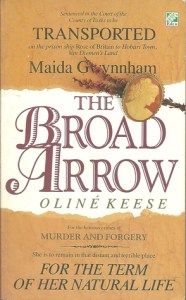


 A week or so ago, I wrote
 Nhulunbuy Primary School students, with Ann James and Ann Haddon
 Fiction
 Non-fiction
 Australian history

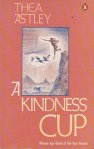 Then there’s Tom Dorahy in Thea Astley’s 1974 novel A kindness cup, my first Astley, which I read long before blogging. He’s an idealist, a humane person, who returns to his home town for a reunion, but what he really wants to do is right the wrongs of a massacre of Aboriginal people that occurred during his time there, twenty years previously in the 1860s, and for which the perpetrators were never properly punished. It’s interesting that Astley, inspired by
 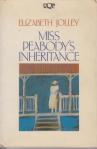 Elizabeth Jolley’s 1983 novel, Miss Peabody’s inheritance, also features a teacher, but perhaps not quite in the way most parents would be looking for. This is a novel-within-a-novel, in which an Australian novelist sends instalments of her novel-in-progress to a fan in England. Her novel is about three middle-aged single women, including headmistress Arabella Thorne, who holiday annually together in Europe. This particular year, Thorne brings along a sixteen-year-old student to give her “a little finishing”. The finishing she gets, as she becomes caught up in Miss Thorne’s emotional entanglements with her women friends, is not exactly the usual!
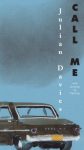 Hmmm, so, are there any teachers actually being good role models in Australian novels? I’m sure there are, but the only one I can remember right now is Phil Day who appears in Julian Davies’ 2018 Call me (
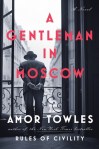 The main point is, though, that Kate sets our starting book, and this month’s is – hallelujah, again – a book I’ve
 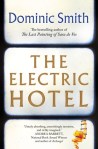 Now, A gentleman in Moscow is set, almost completely, in Moscow’s famous
  Claude Ballard, our gentleman in Los Angeles, is a film director, albeit a fictional one from the silent era, but it just so happens that my last read was the memoir of a contemporary Australian film director, Jocelyn Moorhouse, so it’s to her book, Unconditional love: A memoir of filmmaking and motherhood (
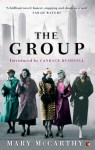 Jocelyn Moorhouse’s husband, PJ Hogan, is also a film director, and two of his most famous films are Muriel’s wedding and My best friend’s wedding. A now classic novel, but one I only read recently, starts with a wedding, Mary McCarthy’s The group (
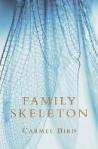 The group, as I’ve said, starts with a wedding, but it ends, logically I suppose, with a funeral. A book that starts with a funeral – and this has its own logic – is Carmel Bird’s Family skeleton (
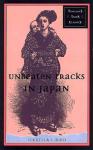 But, enough of weddings and funerals. My next link is on something simple – the author’s name. Later this month I will be heading to Japan (my fourth visit). An early western visitor to Japan was the intrepid Englishwoman Isabella Bird whose 1879 travel book, Unbeaten tracks in Japan
  I like reading Japanese literature, though I haven’t read a lot since blogging. However, I did recently read a contemporary novel, Sayaka Murata’s Convenience store woman (
 Whispering Gums