Delicious descriptions: Madelaine Dickie on Indigenous language and Uranium

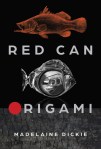
Book coverMy recent post on Madelaine Dickie’s Red can origami was getting too long – and I just couldn’t cover in detail all that I wanted to, so I’ve decided to do one of my rare Delicious Descriptions posts to expand some ideas from the book.

Concluding my post, I commented that the novel is an effective consciousness-raiser as well as a great read. One of the many points Dickie makes concerns the intrinsic significance of language to cultural identity. (This issue, in fact, was discussed much during last year’s International Year of Indigenous Languages.) Here is Dickie in Red can origami (and do note the second person style – “you’re invited to sit …”):

You’re invited to sit in on a Burrika language session at Gubinge District High. It’s the first week of term one and the session’s being funded through the community benefits package. The language teacher is fishing-club-Keith’s wife Kylie, an intimidating, bearded old girl, with a deep wrinkle line between her eye. She stands in front of a class of teenagers. She explains that in Burrika, there are six words to describe anger, four words to describe jealousing and that there’s even a word for someone who’s a serial liar. Here, she looks pointedly at a young woman wearing heavy eyeliner. Then she says some people think the Burrika language is only used to describe things like berries and barramundi. Here, she looks pointedly at you.

Language comes from country, she tells the kids. Language comes from the rocks, the desert waterholes, from the creeks that twist through the mangroves. Language comes from the sky. When you don’t know your language, you can’t tell country you are coming, and you can’t look after your country. (p. 195)

With Indigenous language revival programs popping up around the country, some of which I’ve mentioned in my blog, Dickie was spot on to make this point in her book.

The issue of uranium mining and its potential for problems, if not disaster, underpins the novel’s plot. It also provides a good example of how Dickie teases out different attitudes from the various stakeholders – the Indigenous people, protesters, the people of Gubinge, the mining company employees, and Ava herself as she navigates spin versus facts and reality. And as Ava ponders the issue, the second person voice brings us on her journey with her. Whenever we hear “you”, there’s that little initial reaction, “who, me?” Anyhow, Burrika leader Noah patiently tells a radio presenter,

No-one wants to see a uranium mine on their country. Not the mob at Jabiluka, not the mob in South Australia, and not the people in Gubinge. But when you’re under duress, when you are given a choice between something and nothing, you choose something.

These are the sorts of real-world challenges that are posed by the novel.

At the book’s launch, Dickie referred to Japan’s involvement in uranium mining in Australia, and mentioned the Fukushima disaster. She quoted from the letter written in 2011 by Yvonne Margarula of Kakadu’s Mirarr people to UN Secretary General Ban Ki Moon concerning the Fukushima disaster:

Given the long history between Japanese nuclear companies and Australian uranium miners, it is likely that the radiation problems at Fukushima are, at least in part, fuelled by uranium derived from our traditional lands. This makes us feel very sad.

The sense of extended community responsibility expressed in this letter is surely something we could all learn from – and this, I’m sure, is what Dickie hopes her book will encourage its readers to consider.

Madelaine Dickie, Red can origami, Fremantle Press, 2019.

Madelaine Dickie, Red can origami (#BookReview)

Book coverSome writers, I understand, suffer from a thing called “second novel syndrome”, which describes the fear of writing a second novel after a successful first one. Well, it’s clear that Madelaine Dickie, who won the TAG Hungerford with her first novel Troppo (my review), hasn’t suffered from this particular disorder, because her second novel, Red can origami, is not only another good read but it presents as a confident work from an author who knows exactly what she wants to do.

A confident work

Let’s start with the plot. Red can origami is set primarily in a town in Australia’s north-west called Gubinge, to which Melbourne-based journalist Ava has gone for a job as a reporter. Fairly soon, though, she is offered a significantly better paid job as an Aboriginal Liaison Officer by the Japanese uranium mining company, Gerro Blue, who wants someone to help them negotiate an exploration licence with the local native title owners. Already you can see, I’m sure, some red flags, because this plot is going to require Dickie to create Indigenous Australian characters and, thus, to speak for them. This, of course, raises once again that thorny question of who can write what.

Now, I attended this novel’s New South Wales launch at the south coast just before Christmas (and just before the bushfire situation got out of control). I hadn’t met Dickie before, but her mother-in-law, who held the launch, is a good friend and one of my reading group’s original members. Dickie gave a wonderful speech in which she addressed this question head-on. She quoted Anita Heiss’s statement that the Australian novel needs to be inclusive; she reminded us that there were many Indigenous writers, like Alexis Wright in Carpentaria and Tara June Winch in The yield, who are telling their stories well; and she quoted non-Indigenous author Stephen Hawke who writes Indigenous characters and argues that you need to write well and be respectful. In addition, she, who has lived in the Kimberleys where the novel is set, described some of the work she’s done in recent years for traditional owners, including going “on country with old people”. Her arguments and credentials seem fair enough to me – though of course, in the end, it’s up to each reader, Indigenous and non-Indigenous, to decide for themselves.

The other point I want to make about the confidence of this work is its voice, because it is told second person. This too Dickie confronted in her speech. She was leaving no stone of potential contention unturned. I was impressed. Anyhow, essentially, she said that she’d tried writing it third person but it flowed better when she switched to second. That was her writerly judgement – and certainly I found it easy to read. However, she also had a political reason for this choice, and it’s this, she wanted to involve if not implicate the reader in what’s happening. Second person does this very effectively – at least it does in this book. I won’t spoil the ending, but I’ll just say that the second person voice makes the last line an inspired one.

About the book

So now, I’ve talked a lot around the book, but not a lot about it. Another thing Dickie said in her speech was that she wanted the book to be a page-turner – and that it is. The novel moves at a good pace, as did Troppo, and covers a lot of ground in its 220 pages. It starts with Ava arriving in town and building up a little band of both Indigenous and non-Indigenous friends and aquaintances. These characters include Lucia, an Indigenous reporter on the same paper as she; Ash, a non-Indigenous local TAFE lecturer who is soon attracted to Ava, and who shows her the ropes, taking her fishing and to the local bars in particular; and Noah, an Indigenous station-manager and local Indigenous leader, to whom Ava is attracted. Ava quickly falls in love with the land and the life of the Kimberleys, but equally quickly she becomes aware of local politics – and, with her reporter’s eyes, she notices some suss things going on. Is Gerro Blue already working on the land they haven’t yet obtained the licence to do? What are those bones they’ve disturbed?

It is in this environment that Ava, who has already shown sympathy towards the Indigenous owners, is wooed by Gerro Blue’s smooth CEO, Yuma Watanabe, to be their Aboriginal Liaison Officer. If there is a plot fault in the novel, it could be this – why would she take such a job – but Dickie makes us believe. Not only is Watanabe a shrewd employer, but Ava genuinely, albeit uncertainly, believes she can help the local Burrika people. After all, she thinks, “better you, with your olive-green heart, than someone else”. However, she also admits that being paid real money rather than a reporter’s salary, would set her up. She is, then, a real or flawed character, just as we like our characters to be.

As the book progresses, conflict increases. The traditional owners disagree over whether to grant Gerro Blue the licence, particularly given it’s for uranium mining, with all its implications. (Dickie has specifically set her novel around 2011, the year of the Fukushima disaster.) They don’t all trust Ava either. Protesters, from within and without the Indigenous community, make their own waves. Dickie navigates well this tricky, but real – and not at all unusual – situation in native title negotiations. She clearly knows whereof she speaks. Anyhow, while all this is going on, Ash is keeping an eye out for Ava, while Ava is keeping her eye on Noah. It all, of course, comes to a head, with a powerful ending that is entirely appropriate to the story being told.

And then there’s the writing. This is a novel written in the voice of a young woman living in remote Australia. The voice is, thus, earthy, but also fresh and authentic. Dickie’s writing is expressive, and has been pared to the essential, which is not the same as saying it is bare and plain. It is anything but. Here is Ava describing her sophisticated Melbourne sister:

Imogen’s voice is all sparks. It holds the drunken sequin shine of a Melbourne night.

And here a boab tree in Perth, far from its home (like Ava):

The boab’s bark is cracked, its leaves are withered, and its roots strain from the soil, as if it’s planning on splitting town, hitching north.

So, Red can origami is a good read, as Dickie intended, but it also has an underlying purpose. Dickie is passionate about northwest Australia, and about the challenges faced by Indigenous Australians – and she wants all Australians to understand this better. Red can origami sits within that contemporary literature space comprising works which explore Indigenous and non-Indigenous Australian relationships and interactions. Like Lucashenko’s Too much lip, and similar novels, Red can origami works beautifully as a consciousness-raiser, because it wraps authentic situations and issues in an engaging, page-turning story. In doing so, it teaches us about the beauty of northwest Australia, about the complexities of native title legislation and practice, about the nastiness that happens when politics and business get together, about direct and indirect racism, about dispossession, and, above all, about the diversity of human beings and the challenges we face in getting along together. A book for now.

Lisa (ANZLitLovers) was also impressed by the book, and teases out some different angles.

Challenge logoMadelaine Dickie
Red can origami
Fremantle: Fremantle Press, 2019
221pp.
ISBN: 9781925815504

Monday musings on Australian literature: Musician’s memoirs

Book coverI had been toying with a different topic for today’s post, but Brian’s (Babbling Books) comment on my post on Anna Goldsworthy’s memoir, Piano lessons, sent me off in a different direction. Brian said that he was “interested in the lives of artists”, that “there is something about the subject that is inherently fascinating”. He also said that he’s attracted to “both fictional and non fictional accounts”.

I related to all of that, and I suspect that many readers here do too. One of the reasons I read is to learn about – and experience vicariously – the lives of others, and the lives of artists are among those that most fascinate me. I am fascinated and impressed by the combination of passion, dedication and talent that enable them to do what they do. For this reason, I love reading about writers, but in this post I’m talking about another group I love to read about, musicians. And although, like Brian, I’m happy to read both fiction and non-fiction, I’m focusing here on memoirs.

However, there are many, many musician’s memoirs out there. They cover the whole gamut of music – rock, folk, classical, and so on – and different types of musicians, from performers, and composers, to composer-performers like singer-songwriters. During my research, I came across an article in beat.com.au discussing two memoirs by two members of the band The Smiths. The article starts:

The musician’s memoir is a salacious sanctity in which readers are afforded a rare, fly-on-the-wall type glimpse at debaucheries, creative methods and inner-workings to which they wouldn’t be otherwise privy, and no matter the author’s prowess for prose, there is usually much to be learnt between the pages.

Here is my problem. I’m not particularly interested in salaciousness (even if in a sanctity!) or debaucheries. Indeed, these are among the reasons I tend to be hesitant about memoirs in general, but I am interested in those memoirs which explore being an artist, or which tackle the musical and/or other challenges an artist has faced. The books I’m sharing below do, I believe, offer these learnings and insights. They are just a selection – a diverse one in form, approach and content – of those that have been published in the last decade or so.

Emma Ayres, CadenceEmma Ayres, Cadence: Travels with music – A memoir (2014) (my review): Classical music string player and broadcaster Ayres wrote this travel memoir about her year-long bicycle journey from England to Hong Kong, accompanied by her violin. Like all good travel memoirs it is about more than travel, meaning in her case that it includes her childhood, her reflections on her life as a musician, her analyses of classical music, and gender identity and how it played out during her travels. She also talks about playing music along the way, and how it brings people together.

Jimmy Barnes, Working class boy: A memoir of running away (2016): You won’t be surprised to hear that I don’t gravitate to rock musician memoirs, so I haven’t read Australian rocker Jimmy Barnes’ memoir. However, I’m including it here because it isn’t apparently your traditional celebrity memoir, and, in fact, finishes before Barnes makes it big with Cold Chisel. It is about his difficult childhood and the neglect, violence and abuse suffered by him and his siblings. It could be a misery memoir, but I believe it is more than that.

Andrew Ford, The memory of music (2017): Ford is well-known to many Australians as the presenter, since 1995, of Radio National’s weekly program, The Music Show, but he is also a classical music composer. Publisher Black Inc says that Ford “takes us from his childhood obsession with the Beatles to his passion for Beethoven, Brahms, Vaughan Williams, Stockhausen and Birtwistle, and to his work as a composer, choral conductor, concert promoter, critic, university teacher and radio presenter”. They also say, and here’s what interests me, that it is “more than a wonderful memoir – it also explores the nature and purpose of music.” The smh’s review of the book provides a good overview.

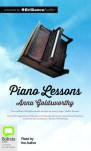
Anna Goldsworthy, Piano lessons (2009): The book that inspired this post, this takes the form of a musician’s coming-of-age memoir, telling of the author’s years of learning music, from the age of 9 to becoming a concert pianist and professional musician by her early to mid 20s. There is much to learn here about hard work and talent, about the role of exams and competitions, about dedicating one’s life to a passion, and, also, about what the arts mean.

Maureen and Leora O’Carroll, Maureen O’Carroll: Musical memoir of an Irish immigrant childhood (2019): This is the left-field addition to my list for a couple of reasons: it was self-published, and was written by Maureen’s daughter who posthumously credited her mother as co-author. I haven’t heard of Carroll, but, according to a review, she was “an acclaimed cellist, who played in the Sydney, New Orleans and Seattle Symphony Orchestras, the New Zealand National Orchestra and others”. She also played for Tony Martin and Frank Sinatra, not to mention singer Dame Joan Sutherland and composer Aaron Copeland. However, this memoir covers much more, including her Catholic Depression-era childhood in Sydney.

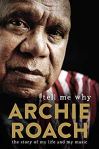
Book coverArchie Roach, Tell me why: The story of my life and my music (2019): Now, this book by Indigenous Australian singer-songwriter, guitarist, and activist, Roach, is one I should read in July for Lisa (ANZLitLovers) 2020 Indigenous Reading Week. Roach’s significance in the Australian music scene can be exemplified by the fact that one of his most famous songs, “Took the children away”, was written long before the term “stolen generations” was common parlance for Australians. It has become one of the anthems of that part of our history. Roach’s memoir, is, I gather, as much about his life – and thus works as a consciousness-raising book for Australians about indigenous people’s lives – as it is about his music, though music is and has always been, an integral part of his life.

So, there are musicians here who had comfortable childhoods, and those who didn’t; there are immigrant musicians and a First Australian; there are classical musicians, rock musicians, and alternative rock/folk/protest musicians; and there’s a travel memoir, a self-published one, and some that verge on the “misery memoir”. All, though, are by musicians passionate about what they do. I’ve stopped at six, but others  include Clare Bowditch Your own kind of girl; Peter Garrett’s Blue sky; Chrissie Hynd’s Reckless; Paul Kelly’s How to make gravy; Linda Neil’s All is given: A memoir in songs (my review); Tim Rogers’ Detours; and John Paul Young’s JPY: The autobiography.

Have you read any of these, or, do you have any favourite musician memoirs to share with us?

Anna Goldsworthy, Piano lessons (#BookReview)

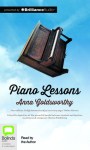
Book coverEver since Anna Goldsworthy’s memoir, Piano lessons, was published, I’ve hankered to read it, but somehow never got around to acquiring a copy. So, when I was casting around for our next road trip audiobook and this one popped up serendipitously in Borrowbox, I grabbed the opportunity.

Now, I have to admit that although I did play drums and fife, briefly, in a primary school band, I have never had formal music lessons. Ballet was my thing as a child. However, Mr Gums learnt piano to Grade 7, and I sat in on our kids’ music lessons, especially their piano ones, for years. I loved it, because I learnt so much about music (and music teachers) as a result. I was consequently primed for this book about the author’s piano lessons and her relationship with her Russian-born piano teacher, Mrs Sivan. Being on the Liszt List, that is, someone whose student-teacher lineage reaches back to Liszt, Mrs Sivan initially comes across as formidable, but very soon her warmth and generosity come to the fore.

Essentially, this memoir is a coming-of-age story. It covers Goldsworthy’s life – specifically her piano-playing life – from the age of nine until her mid-late twenties. It is not, however, the traditional coming-of-age story, but her coming-of-age as a musician and, along the way, as a wiser more rounded person. We see Anna coping with the humiliation of failure, when she gets a C in an important piano exam having been used to always getting As. We see the point at which she realises that, if she is to achieve her concert pianist dream, practising for barely two hours a day is not going to cut it. We see the naiveté of a young woman who, not prepared for a journalist’s questions, manages to hurt the people closest to her, learning, in the process, the importance of “humility and gratitude”. And, we see the brilliant pianist and school dux learning that a “perfect score” is “not proof against disaster”.

But, we also hear the wisdom of her piano teacher who doesn’t just teach her the techniques of playing piano, but also the meaning of music, the value and role of the arts and, more, a deeply humane philosophy of life, one that recognises, for example, the value of competition for learning but not for measuring one’s achievement or worth. Indeed, she tells Anna that she is “not teaching piano playing”, she is “teaching philosophy”. It is some years, of course, before Anna stops seeing piano playing as “obstacle courses for fingers” but as something you feel and express.

Goldsworthy describes this piano teacher, Mrs Sivan, as “less a character than a force”, and she conveys this sense largely through reproducing her teacher’s rapid-fire broken English. This might have been worked well in text, but in the audiobook – which was read by Goldsworthy herself – it was frequently difficult to listen to and was sometimes so fast that we missed words. Unfortunately, I don’t have the text to give you an example, but I found one tiny quote on GoodReads. Here is Mrs Sivan telling student Anna about Chopin:

I tell you a secret about Chopin, piano is his best friend. More. He tells piano all his secrets.

Mrs Sivan preceded this by saying that George Sand was not Chopin’s great love, the piano was! One of the real pleasures of this book is the insight provided into several musicians, particularly Bach, Mozart and Chopin, but also Beethoven, Shostakovich and others. Mrs Sivan knows them and their music so well, and impresses upon Anna that musicians must understand the composer and their lives to understand their music. Mozart, for example, “was born with happy of everything”.  I found her adamance about this interesting, because, in the literary arts, there are those who argue that the author’s life is irrelevant and should not be considered at all. I think there’s a place for it.

Piano lessons is not a long book – just 240 pages or so – but the writing and the structuring of the story are so tight that Goldsworthy conveys this coming-of-age to some depth despite the book’s brevity. She does this by never labouring her points, by knowing which stories to tell and how much to tell of them, and by imbuing it all with a light touch. Sometimes you think you are left hanging – “did she win that audition?” – but the answer always comes directly or indirectly a little later.

There is more to this book about music and musicians, about fostering talent, about forging a meaningful life as a musician, and about teaching being “the highest calling”, but not having it on hand, I’ll close here by sharing Mrs Sivan’s words about the arts. She told Goldsworthy that the arts must be “aesthetically and ethically grounded” and that they embody “unlimited flying of imagination”. I like both of these ideas – particularly that about the arts needing to be both aesthetic and ethical. In one sense, I don’t like to think that the arts “should” be anything, but I also believe that being ethical about what we do – whatever that is – is important. I think I would have liked Mrs Sivan.

Lisa also (ANZLitLovers) loved this book.

Challenge logoAnna Goldsworthy
Piano lessons (Audio)
(Read by Anna Goldsworthy)
Bolinda Audio, 2015 (Orig. pub. 2009)
2:23 e-audiobook (Unabridged)
ISBN: 9781489020260

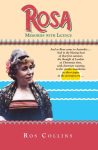
Ros Collins, Rosa: Memories with licence (Author’s response)

Book cover

Last October, I reviewed a book by Ros Collins titled Rosa: Memories with licence. As the title suggests, this book is not quite memoir, but neither is it really fiction. My post generated quite some discussion from commenters, which resulted in my saying “Maybe Ros will comment here and answer the questions”. Unfortunately, just as her book was launched, Ros had a sudden hip fracture, resulting in hospitalisation. Now, getting back to normal, she has contacted me saying she’d love to respond to the comments, but that it was long. I suggested making it a separate post. I do hope those commenters see it, and read what she has to say.

First, though, for those interested, she writes that she is well into “a new book based on [her late husband] Alan’s 19th century ancestors. It will be creative non-fiction.” Love it! And now …

Author with her bookFrom Ros Collins …

Some background

My first book, Solly’s girl (2015) was as factually accurate as I was able to research. It was intended to complement my husband Alan’s memoir Alva’s boy (2008). Even before that, he had used his terrible childhood experiences in autobiographical fiction, namely The boys from Bondi which is now part 1 of his trilogy, A promised land? (2001). The eminent critic Fay Zwicky called that ‘a psalm to life’.  It seemed an essential task for me to complete the history of our two families.

Rosa developed out of a number of short stories which undoubtedly accounts for the third person-first person dichotomy. My publisher Louis de Vries and editor Anna Blay at Hybrid, dealt with the anomalies with enormous patience. Three chapters, “Jellied eels”, “Sheyn Meydl” and “Rimonim” were part of my work for an online course in short story writing that I undertook in 2017. By the time I’d read William Trevor, Raymond Carver, Hemingway and many other masters of the genre, I knew it was not for me.

However, ‘Creative non-fiction’ had great appeal. “Ultimately, the primary goal of the creative nonfiction writer is to communicate information, just like a reporter, but to shape it in a way that reads like fiction.” (Gutkind, Lee. The best creative nonfiction, Vol. 1). I embarked on Rosa with enthusiasm and a great desire to entertain. Like Alan, I also believe in the  power of humour and only wish I had greater skills.

Response to the comments

 ‘… worn out with fictionalised Australian Jewish memoirs…’  was one I could easily relate to. I was director of Makor Jewish Community Library (now the Lamm Jewish Library of Australia). One of my proudest achievements was to establish the ‘Write your Story’ program whereby I hoped the community ‘would be able to write its own history’. To date more than 150 memoirs have been published. I believe the comprise the largest such series in the world. Inevitably, as Melbourne has so many Holocaust survivor families, the tragedy of the Shoah features prominently. It is however a multicultural series: memoirs have been written about Jewish life in Egypt, Argentina, England – and Australia.

So as far as Australian Jewish literature is concerned, it seems to be overwhelmingly preoccupied with Holocaust memoir or peeks into the exotic world of heavy duty orthodoxy. Sephardi or Spanish-Jewish history has also afforded subjects for writers: People of the book comes to mind.  But Anglo-Australian-Jewish writing is very limited. One of your commentators mentioned Judah Waten. He mentored Alan and urged him to write his first book of short stories, Troubles (1983), which was highly commended in the Alan Marshall awards.  Waten, Morris Lurie, Serge Liberman, et al, born here or not, all write out of the European tradition; the migrant/survivor experience is very much to the fore. Alan’s ancestors arrived either on a convict transport or later as free settlers in the 1800s and Rosa (me of course) is British, a ‘ten-pound Pom’ who in the 1950s wore white gloves to visit the ‘city’. Anglos. And this difference makes for confusion. It’s unlikely that your readers are familiar with communal conflicts but I’ll just open the subject by pointing out that the Jewish Anglo community in Australia was ‘more British than the British’. For many of them the mother country was still considered ‘home’, and ‘the Empire’ really mattered! The ‘reffos’ – the migrants – were often disparaged, even despised. To get a picture, don’t bother with the history books, read Alan, much more digestible and he makes the reader laugh as well as cry.

Your readers mention the Americans and British including towering figures such as Roth and Jacobson, both of whom are favourites of mine. They would doubtless be puzzled by the fact that many local Jews couldn’t warm to Jacobson’s The Finkler question [see my review] which I greatly admire. I imagine it’s the British connection. I understand how difficult it is for the mythical ‘general reader’ to come to grips with Jewish lit in all its complex variety. It helps to remember the profoundly different histories. Australian, American and British Jews are far from being all of a piece. Howard Jacobson for example has been exasperated by critics who have called him ‘the British Phillip Roth’; he retorts that Jane Austen is a far greater influence. Australian reviewers have found shades of Dickens in Alan’s work.

I’d like to  mention some helpful titles which have impressed me, authors who have made me think about identity and heritage, my place ‘down here at the bottom of the world’ as I said in 1957.

On being Jewish by Rabbi Julia Neuberger is straightforward, accessible and sensible. Baroness Neuberger, a member of the House of Lords, is a Reform rabbi (the first woman to head her own congregation in Britain), a tireless worker for social justice and progressive values. She’s younger than me but we share some knowledge of Anglo-Jewish life in the 1950s. Her ancestry is German-Jewish; her ‘British-ness’ is rather like my own.

Jews and words by the eminent Israeli writer Amos Oz and his daughter, historian Fania Oz-Salzberger, is a wonderful ‘blend of storytelling and scholarship, conversation and argument’; it also includes some great jokes.  What I like so much about this book is the way the authors introduce themselves:  At this early stage we need to say loud and clear what kind of Jews we are.  Both of us are secular Jewish Israelis. And then this, As Jewish atheists, we take religion to be a great human invention. ‘Jewish atheists’ must be very confusing for some  readers!  

Closer to home is Australian genesis: Jewish convicts and settlers 1788-1850 (1974) by J. S.  Levi and G. Bergman. It is eminently readable and beautifully illustrated. It should never have been allowed to go out of print but most libraries will have a copy. Rabbi John Levi is of ‘Anglo’ heritage and is a most sensitive and compassionate scholar. His reference book, These are the names: Jewish lives in Australia 1788-1850 (2013) is an invaluable guide to the lives of the more than 1600 Jews who came to Australia in that early period. It has been fascinating for me to read the transcript of the trial at the Old Bailey of ‘our’ 17-year old convict. He became a respectable citizen in Goulburn and the local ‘Hebrew congregation’ would meet in his store for ‘champagne suppers’ to celebrate Royal Family events back in the mother country.

An essential guide to Australian-Jewish literature is Serge Liberman’s monumental Bibliography of Australian Judaica (2011).

Did I have a ‘plan’?  Was it all ‘true’?  Did I want to protect others?  No, yes and no. I wrote Rosa because I wanted to. Isn’t that how most writers operate? The events I’ve dramatized are true but obviously I am unable to replicate conversations that took place in the past. ‘Licence’ was a word suggested to me by my kind mentor Karenlee Thompson who has written so movingly about bush fires in Flame Tip [see my review].  For example, I know my maternal grandfather went AWOL from the army of Czar Alexander and I’m guessing he was forcibly conscripted like so many other little Jewish boys at the age of 12 and couldn’t contemplate another 25 years of army life. I know he received letters from his sister in Kiev until in 1941 they suddenly ceased, and I’m assuming my great-aunt perished with 34,000 others in the massacre at the ravine of Babi Yar. And, as I write in the book, I have no wish ever to set foot in Eastern Europe. Israel is another very different matter.

Sue, you conclude your review with a most perceptive paragraph:  Rosa, then, is a warm-hearted, open-minded “memoir” written by an Anglo-Australian Jewish woman for whom being Jewish, as for many I believe, is as much, if not more, about history and heritage as god and religion. In this book, Collins interrogates her family’s past, and her late husband’s story, in order to come to a better understanding of herself, and of what she would like to pass on to the next generation. This book is testament to that soul-searching, and makes good reading for anyone interested in the life-long business of forming identity, Jewish or otherwise.

I never set out to be an apologist for my heritage and it has been a surprise to learn that so many readers have found Rosa ‘enlightening’, an opportunity to see the variety in my community. The misconceptions are often funny but also appalling at a time when intolerance and racism are on the rise in this ‘lucky country’.  So I shall end here with two stories about electricians:

My electrician who is an intelligent much-travelled man asked me: Won’t you get into trouble with your rabbi for not wearing a wig? He was amazed that I laughed and even more surprised to learn that rabbis really have little authority – they’re teachers – and although I seldom attend a service I cannot be disenfranchised.

My son’s electrician had a much more sinister question. Pointing to the mezuzah on the doorpost of my son’s house he asked:  It’s full of blood, isn’t it?  My son, completely secular, Vietnam vet, non-kosher, a painter – and a proud Jew – replied:  Of  course it isn’t, there’s little piece of paper inside with a prayer and blessing written on it; I’ll take it down and show you. But the electrician was horrified:  Ooh no, don’t do that, we’d better not touch.

And that, Sue, is how it all starts with rubbish like that, words that lead to swastika flags in Beulah and book burning …

If in Rosa I can open some windows I think it’s a good thing.

And so do I. Thanks very much Ros for appearing out of the blue with this warm, open and informative response to the comments on my post. I look forward to seeing your next book!
Monday musings on Australian literature: Hidden Women of History

Every now and then I share some content from The Conversation, and so I am again today. This time, it’s an occasional series they have featuring the “hidden women of history”, in which they “look at under-acknowledged women through the ages”. Not all of these are Australian but around half, so far, are.

The most recent article in the series (see link below) is about Catherine Hay Thomson. It starts:

In 1886, a year before American journalist Nellie Bly feigned insanity to enter an asylum in New York and became a household name, Catherine Hay Thomson arrived at the entrance of Kew Asylum in Melbourne on “a hot grey morning with a lowering sky”.

Hay Thomson’s two-part article, The Female Side of Kew Asylum for The Argus newspaper revealed the conditions women endured in Melbourne’s public institutions.

Her articles were controversial, engaging, empathetic, and most likely the first known by an Australian female undercover journalist.

Before this, the intrepid Thomson had written about Melbourne Hospital, having obtained work there as an assistant nurse. She was quite a social justice mover-and-shaker, and worth reading about.

Here, though, I want to share with you some of the other women in this series which, at the point of writing, numbers 31 articles. The first was published on 31 December 2018, and featured  Elsie Masson, a journalist who became an advocate for Aboriginal people. Lydon writes in her article (see link below) that:

As one of the “first white women” to travel in the Northern Territory, Masson’s newspaper articles and book An Untamed Territory – a profusely-illustrated narrative of life in the wild north – show how she popularized the “expert” views of her circle: an elite global network of colonial administrators, including the famous anthropologist Walter Baldwin Spencer.

Lydon writes of Masson’s “transition from dislike to respect” not only of Indigenous Australians but of “others” as well, such as Chinese people. Attending the trial of nine Indigenous men arrested for the murder of trepanger James Campbell also changed her views. Lydon writes that her

account of this trial ultimately argued for the need to acknowledge the coherence of Indigenous tradition, and what today is termed customary law.

These articles cover a wide range of women – Indigenous, immigrant and Australian-born – from the early nineteenth century to well into the twentieth. They cover a wide range of professions and achievements, from the arts and sport to social justice and activism.

Listed below are the articles featuring Australian women (alphabetical by last name):

I haven’t read all of these articles yet, but once again, I thank The Conversation for bringing these women – few of whom appear, for example, in the Australian Dictionary of Biography (ADB) – to our attention.

Stella Prize 2020 Longlist

I don’t do well at having read the Stella Prize longlist at the time of its announcement. In 2017 I’d read none; in 2018 it was one, and last year two! Will it be three this year? (BTW by the end of 2019, I had read six of the 12, one more than in 2018! At least I’m going up, albeit at a snail’s pace.)

I do do better at reading the winners, however, having read Carrie Tiffany’s Mateship with birds, Clare Wright’s The forgotten rebels of Eureka, Emily Bitto’s The strays, Charlotte Wood’s The natural way of things, Heather Rose’s The museum of modern love and Vicki Laveau-Harvie’s The erratics. So far, I’ve only missed 2018’s winner, Alexis Wright’s Tracker.

The judges are again different to last year’s – with the exception of the chair, Louise Swinn, who was also chair last year. 2020’s judges are award-winning journalism and author Monica Attard, journalist and editor for NITV News Jack Latimore, feminist editor and author Zoya Patel, and poet, educator and researcher Leni Shilton. Once again, as you’d expect from an organisation like Stella, attention has been paid to diversity on the panel.

Book coverThe longlist:

  • Joey Bui’s Lucky ticket (short stories)
  • Gay’wu Group of Women’s Songspirals: Sharing women’s wisdom of Country through songlines 
  • Jess Hill’s See what you made me do
  • Yumna Kassab’s The house of spirit
  • Caro Llewellyn’s Diving into glass
  • Mandy Ord’s When one person dies the world is over
  • Favel Parrett’s There was still love (on my TBR) (Lisa’s review)
  • Josephine Rowe’s Here until August (short stories)
  • Vikki Wakefield’s This is how we change the ending
  • Tara June Winch’s The yield (on my TBR) (Lisa’s review)
  • Charlotte Wood’s The weekend (my review)
  • Sally Young’s The paper emperors: The rise of Australian newspaper empires

Well, wow! All I can say is I guessed Winch and thought probably Wood, and maybe Parrett, but several of the others I haven’t even heard of. I was hoping that Carmel Bird’s Field of poppies, Madelaine Dickie’s Red can origami, and Amanda O’Callaghan’s This taste for silence, for a start, might get up – not to mention Jessica White’s Hearing Maud. But, as I haven’t read most of the longlist I’m not going to judge. I will say though that my record, that was on the up, has taken a beating, as I’ve only read one to date. Nonetheless, it is good to see diversity again in the list – both in terms of author and form.

The judges’ chair, Louise Swinn commented on the longlist that:

… This longlist is varied: it includes a graphic memoir, a young adult novel, Aboriginal songspirals, personal memoir, history, short stories and novels. We’ve been given a sense of just how influential our newspapers have been on public policy; we’ve learnt some history of our land; and we’ve been given the lowdown on both the dire statistics and the real-life stories of domestic abuse. We’ve been transported: we were sixteen years old all over again (gulp!).

All of the writers we longlisted are finding innovative ways to communicate their stories, and there is a very real sense when opening these books that an honest dialogue is being entered into. These authors are craftspeople serious about their intention and dedicated to the art. We were educated and entertained by these twelve longlisted books and we recommend them heartily.

The shortlist will be announced on March 6 (not March 8, International Women’s Day, as recently been tradition), and the winner on April 8.

Any comments?

Charlotte Wood, The weekend (#BookReview)

Book coverAfter reading the first few pages of Charlotte Wood’s latest novel, The weekend, I was starting to wonder how on earth these women, with “their same scratchy old ways”, could be described as “dearest friends”. They seemed so different, and so irritated or, sometimes, cowed by each other’s differences. Where was their point of connection I wondered, besides their late friend Sylvie?

But, let’s start at the beginning. My edition’s back cover describes the set up beautifully: “Four older women have a lifelong friendship of the best kind: loving, practical, frank and steadfast. But when Sylvie dies, the ground shifts dangerously for the other three. Can they survive together without her?” Well, they are going to find out, because the book concerns a weekend – a Christmas weekend, in fact – in which the remaining three come to Sylvie’s beach-house to clean it out for sale. It’s a thankless task at the best of times, so when you get three very different, but still grieving personalities doing it, the stage is set for tension, at the very least.

Who then are these three? There’s retired restaurateur Jude who has had a married lover for over forty years; public intellectual Wendy whose much loved husband died many years ago and who now has the frail, demented dog Finn in tow; and out-of-work actor Adele whose relationship has just fallen apart, leaving her homeless. Wood sets the scene, and establishes their characters perfectly through describing their journey to and arrival at the beach-house (much like the opening title sequence for another house-party story, The big chill.) We quickly learn that Jude is organised, task-focused, financially comfortable and disdainful of other people’s frailties; that Wendy is disorganised and soft, but emotional and loyal; and that vain but always optimistic Adele is seen by her friends as “the child” of the group. While Wendy and Jude work at their Jude-assigned tasks, she can be found reminiscing over Sylvie’s LP collection.

Over the weekend, the women’s friendship is tested to its limits. Early on, Wendy reflects that “it was exhausting, being friends”, while Adele remembers their early years of friendship, and how they “saw their best selves in each other”. But, how honest are they, can they be, should they be with each other? Adele ponders early, that “it was dangerous business, truth-telling”. Over the weekend, of course, some truths come out – what they think about each other, and truths that were supposed to be secrets. And yet, the friendship holds fast:

Because what was friendship, after forty years? What would it be after fifty or sixty? It was a mystery. It was immutable, a force as deep and invitable as the vibration of the ocean coming to her through the sand.

“simple creatureliness”

However, there is a fourth main character in this story – the aforementioned Finn whom Wendy brings with her knowing full well that Jude would not be impressed. But what was she to do? Living alone and unwilling to euthanise him, she had no option. Utterly frail in body and mind, he is a significant character – or, at least, plays a significant role – in the book. This role is bifold. Firstly, we gain more information about the women’s characters and their attitudes to aging and death through their attitudes and reactions to him. His physical and mental frailty, his incontinence, deafness and blindness, confront the women with their own mortality. No-nonsense Jude doesn’t want him and his mess around, and thinks, frankly, he should be put down. She is barely aware of Finn’s importance to Wendy. Adele isn’t enamoured but more tolerant and understanding, while Wendy, for whom Finn was a lifeline after her husband’s death, finds it impossible to think about euthanasia. His presence throughout the novel sometimes mirrors, sometimes opposes the women’s volatile emotional states.

But, the other more interesting role played by Finn has to do with one of the novel’s over-riding themes, one triggered by ageing. It’s the question of what have I lived for, what have I achieved, when have I “finished [my] turn”? Wendy and Adele, for example, both feel they have more to achieve. For Wendy, it’s the intellectual idea she feels she’s moving towards, “the place she had always felt was there waiting for her”, and for Adele, it’s “clawing back her one great moment on the stage”. Jude’s life is more about “gathering experience, formulating opinions, developing ideas” to “fold away and save for” those times her married lover is able to see her. So, the underlying question is: When you no longer have those seemingly limitless goals of youth, what goals do you have, where do they come from, and what happens when you, perhaps, run out of goals or purpose? Finn offers this opposite – “simple creatureliness”, or, just being. This issue of goals and purpose is, I believe, one of the biggest challenges of ageing – alongside the obvious physical ones – and I love that Wood takes it on.

However, she doesn’t stop there, because her women also confront other ageing-related issues – increasing homelessness for older women, the threat of loneliness that often attends age, and coping with technological and cultural change not to mention with children who start to parent you.

To keep this story and its tensions focused, Wood uses the house-party setting, as many other authors have done before including John Clanchy in his novel Sisters (my review). I didn’t much like the melodramatic party scene, involving two interlopers, that occurs near the end, but this is a common trope, I think, in the house-party sub-genre. Overall, I loved the writing. It’s tight. We shift seamlessly between the characters without getting lost, each one nicely differentiated, and there are some spot-on images:

Every time Jude had to hold her tongue, every time she didn’t tell Wendy she should pay him the kindness of letting him die, she felt falsehood pulled tighter like a plastic bag, closer, closer over her mouth and nose. She couldn’t bear it.

AND

Outside the cicadas were filling the still summer air with sound. You must shed the dead skin … The bush was full of insects and snakes reborn, shining with newness. The dried carapaces rustled as the resurrected creatures slithered out of, away from, their dead selves. You had to struggle free from what had protected you.

By now, you may be thinking that this a grim book, but while its intent is serious, Wood’s touch is light, using some humour – sometimes generous, sometimes satirical or ironic – in the telling. This humour – as in the scene describing Adele, in the park, having just peed, running into a theatre producer – keeps these women real and relatable, and the tone edging to hopeful.

You would think that The weekend would be the perfect pick for my reading group, given we are all women not much younger than Wood’s protagonists and that many of us have been friends for thirty years plus. And yet, the responses of the twelve members present at our meeting were mixed. One group was ambivalent, arguing that the characters were too much like types, while the other loved it, believing it captured the dynamics of longtime women’s friendships with heart and humour. You know which group I belonged to – for all the reasons I’ve described above.

Lisa (ANZLitLovers) also enjoyed the book.

Challenge logoCharlotte Wood
The weekend
Sydney: Allen & Unwin, 2019
256pp.
ISBN: 9781760292010

(Review copy courtesy Allen & Unwin)

Monday musings on Australian literature: Screen adaptations, update

Back in 2012, I wrote three posts (here, here and here) sharing some of my favourite film and television adaptations of Australian novels and plays. With recent(ish) announcements about more adaptations in the offing, I thought it worth writing an updating post.

To get us going, here are some of the adaptations that have been announced over the last few years, which is not to say that they will actually make it to the screen:

  • Emily Bitto’s The strays (my review)
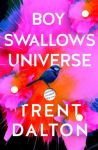
  • Trent Dalton’s Boy swallows universe (my review)
  • Peter Goldsworthy’s Wish
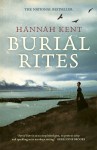
  • Hannah Kent’s Burial rites (my review)
  • Hannah Kent’s The good people 
  • Alice Pung’s Laurinda

When these announcements are made it can be very early in the process. It may simply be that developmental funding has been allocated – and, as the saying goes, there can be many a slip betwixt cup and lip.

Meanwhile, I was intrigued while researching this update, to come across an announcement for a symposium on Adaptation and the Australian Novel being run by the Centre for Critical and Creative Writing at the University of Queensland in June this year. The announcement starts with this:

Landmark Australian novels are being adapted for the stage and screen at a rate we’ve not seen for many decades. In the 2015 to 2020 period alone, what was previously a steady trickle has become a flood as the nation’s various mediums of cultural transmission have offered reimagined versions of much-loved novels …

They name many titles we have seen on our screens over the last few years including, on TV, The slap (my review) and Barracuda (my review), and on the big screen, Jasper Jones (my review) and The ladies in black (my review).

The symposium will include keynote speeches by “international critical adaptation theorist Frances Babbage” and “internationally-acclaimed stage and screen writer, and adaptor of the landmark The Secret River text, Andrew Bovell”. There will also be an in-conversation session between Christos Tsiolkas and Andrew Bovell, discussing Bovell’s adaptation of Tsiolkas’s novel Loaded for the screen. The announcement also calls for proposals for 20-minute papers. They list the sorts of topics they’re looking for, such as Adaptations and gender, and Indigeneity, race and ethnicity, and landscape, and so on. You can see the complete list at the link above.

These topics draw from what I thought was the most interesting paragraph in the announcement, the paragraph that poses the questions they think need to be considered:

Questions that arise here include: Why the rush on Australian adaptation now? What’s fuelling the appetite for this locally themed work, and why is it being distributed internationally via digital platforms such as Amazon and Netflix? Is there a ‘house style’ emerging either at particular theatre companies or television production houses who are leading this push? Whose stories are being canonised in this tranche of largely Anglo-Celtic authored works, and whose voices are doing the adapting? What version of Australian national identity becomes enshrined in this process, and whose perspectives are elided or omitted?

While all these are valid questions, I have highlighted those that I think are of most interest to Whispering Gums readers. In my brief research of the internet, I found nothing much else discussing this issue of perspective and representation, so I hope these papers are podcast and/or published.

Unrelated to this issue, but interesting too, is that of why so few adaptations, comparatively speaking, in the Australian screen industry. This was raised in The Guardian back in 2014. Apparently, in Hollywood, more than half of its movies are adaptations, while in Australia it’s less than 20%. MIFF (Melbourne International Film Festival) apparently hosted an event which brought together Australian book publishers and film producers. The thinking was that “if a successful film can be crafted from a book, more sales will result, benefitting publishers and authors as well as the filmmakers.” Makes sense to me. Various reasons for the low rate of adaptations are put forward in the article, including cost and the fact that book culture is very different to film culture. Overall, the reasons seemed to me to be applicable to the adaptation industry in general, rather than explaining why the Australia-Hollywood discrepancy, although one panelist believed that in the USA “distributors and agents are constantly on the lookout for book properties that are capable of being turned into films”.

Finally, though this goes back even further to 2010, there’s an Occasional Paper published by Screen Australia, titled Mitigating Risk: The case for more adaptations in the Australian film industry. It was written by Matthew Hancock, as part of the Master of Arts program at the Australian Film, Television and Radio School. He notes the declining proportion of adaptations in Australia to under 20% since 1999, which, he says, “is significant because adaptations, both in Australia and in foreign markets like the US, tend to perform well, attracting a higher proportion of box office than their proportion in release”.

So, my question is: Do you prefer adaptations over original screen stories? And, leading question, thinking particularly of that issue of perspective and representation, is there a literary work that you would love to see adapted? 

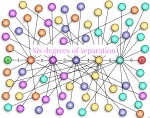
Six degrees of separation, FROM Fleishman is in trouble TO …

Here we are at our second Six Degrees of Separation meme of 2020. For those of you who don’t know what this meme is and how it works, please check out meme host Kate’s blog – booksaremyfavouriteandbest.

Once again, but I’m used to this now, I haven’t read Kate’s starting book, Fleishman is in trouble by Taffy Brodesser-Akner. However, I devised a lovely – well, I think it was – chain for it. Then, as the fires and smoke in my area just got worse and worse this week, I decided to go off script and riff off the title to create my own theme for this post, Australia is in trouble! I’m not going to link my books, but just share six that I’ve read which address, in some way, climate change.

In his 1946 essay, “Why I write”, George Orwell lists four main purposes for writing, the fourth being:

Political purpose: Using the word ‘political’ in the widest possible sense. Desire to push the world in a certain direction, to alter other peoples’ idea of the kind of society that they should strive after. Once again, no book is genuinely free from political bias. The opinion that art should have nothing to do with politics is itself a political attitude.

The other purposes, if you want to know, are “sheer egoism”, “aesthetic enthusiasm”, and “historical impulse”. Orwell goes on to say that “in a peaceful age I might have written ornate or merely descriptive books, and might have remained almost unaware of my political loyalties. As it is I have been forced into becoming a sort of pamphleteer.” Of course his times were different, so his issue – totalitarianism – is different to the ones confronting us now (though, then again, perhaps not!) Anyhow, my point is that in this post I’m going to share six works by writers who also write with a political purpose.

Melissa Lucashenko’s “How green is my valley” (2006) (my review): an essay in Griffith Review’s climate-change-focused issue (12), Hot air: How nigh’s the end. Indigenous writer, Lucashenko addresses climate change, recognising that many non-Indigenous Australians also love the land. She suggests that a “bicultural” approach, which spans the chasm “between industrial and indigenous views of the ‘good life’ and what constitutes a proper society”, would be a good place to start.

Jane Rawson’s A wrong turn at the Office of Unmade Lists (2013) (my review): set in a bleak climate-damaged Melbourne of 2030, where it’s very hot, and clean water is harder to come by and more expensive than beer. Its main protagonist, Caddy, is living rough, having lost her husband and home in a heatwave-induced fire a couple of years before the novel opens.

Annabel Smith’s The ark (2014) (my review): set in the 2040s, during, as Smith describes it, “a post-peak oil crisis. The polar ice caps have melted. Crops are failing. People are starving and freezing to death.” Interestingly, given my George Orwell intro, a major theme of this novel is how, in such a world, charismatic-despotic leaders can come to the fore.

Alice Robinson’s Anchor point (2015) (my review): a family drama, but one framed by farming and the land. Climate change hangs over this novel, with its depiction of father Bruce and daughter Laura struggling against drought, bushfires and land degradation to keep their farm going. By 2018 (a little into the future at the time the novel was written), Laura has given up the struggle, because “the climate had long stopped being something she understood”.

Cassie Flanagan Willanski’s Here where we live (2016) (my review): a collection of short stories about the relationships between non-Indigenous and Indigenous Australians, and the relationship both have with the land. Although not specifically a cli-fi book, concern about land, the environment, and climate change suffuses the stories. In the last story, a terrible storm occurs, and a character says:

‘It’s climate change, of course,’ you say knowingly. ‘They say that these one-hundred year storms are occurring so frequently now that the name no longer bears any meaning. But we need to keep the name so that we can understand that this kind of storm is so severe it should only occur once every hundred years. We need the name so we understand that something has gone wrong.’

Catherine McKinnon’s Storyland (2017) (my review): set in the Illawarra region south of Sydney, and tells the story of the Australian continent, post-white settlement, from 1796 to 2717. One of its five time-periods is 2033 in which climate-change has caused utter devastation to the land and a dystopia is playing out.

So, a different Six Degrees post, and one not necessarily featuring all the most obvious Australian climate-related books. Although all mine are by women, men have written some too. It’s just that I haven’t read them. The main point is that writers are addressing this issue, doing their best “to push” all to see that Australia is in trouble. The question is whether the people who need to read them are in fact reading them?

And now, the usual: Have you read Fleishman is in trouble? And, regardless, what would you link to?