Blogging highlights for 2020

Finally, the last of my traditional and very self-indulgent year-end trifecta (which includes my Australian Women Writers’ Challenge wrap-up and Reading highlights posts).

But, before I launch into my usual analysis, I must send a huge shout-out to Bill (The Australian Legend) for the astonishing effort he put in this year to help me keep my blog going during the sad months of my mother’s late-diagnosed illness and death. He coordinated four Monday Musings guest posts (from Lisa, Kate and Michelle, as well as himself, even proposing topics in case they needed inspiration). And, inspired by Karen’s (BookerTalk) post on reblogging, he curated a series of reblogged posts from my early days, which we titled Bill curates. It was a stellar effort and I’m immensely grateful to him (and to Lisa, Michelle and Kate) for helping me out during those times. It may sound silly but it significantly helped my well-being to have these posts lined up to keep my beloved blog ticking along. Thanks Bill.

Top posts for 2020

Until last year, my top posts have changed minimally, but last year’s little shift has held – a little! However, there is still a set of “usual suspects” posts reappearing year after year, and it’s still true that most of the posts are over 5 years old. Whatever these top posts are, though, I always wonder why them? Some are probably set school texts, but the rest?
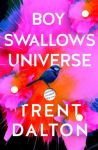
Trent Dalton, Boy swallows universe

Here’s my 2020 Top Ten, ordered by number of hits:

None of these were actually published in 2020, which is the norm except for last year’s little aberration when Trent Dalton hit the top spot. What other observations can I make?

  • Red Dog has slipped out of the Top Ten (into the Top Twenty) for the first time since it was published in 2011.
  • Last year’s record of six Australian posts in the Top Ten did not last, but Australians still make a showing!
  • Barbara Baynton continues to be an established Top Ten regular.
  • Why is ABR’s Top Twenty list here? Were locked-down readers looking for reading recommendations? And, old Stegner and Greene posts are new here. Why them? Good lockdown reading?
  • Mark Twain’s “A presidential candidate”, which popped into the Top Ten in 2018 and remained there in 2019, appears again, but has risen to 2nd spot! I wonder why?!
  • Short stories and essays still feature strongly, with four again this year.

Four Australian posts appear in the next ten, as in 2019, but they are all different. Barbara Baynton remains, just with a different story, “A dreamer”! The others are Shaun Tan’s Eric, the slowly-slipping Red dog, and, out-of-the-blue it seems to me, a 2014 Delicious descriptions: Clare Wright’s sources on the Australian landscape.
Book cover

But what about posts actually written in 2020? How did they fare? After last year’s little aberration, this year returned to normal (whatever that is) with my top-ranked 2020-written post coming quite down the list. Here are the Top Ten 2020-published posts (excluding Monday Musings) – an eclectic bunch that tells us, what?:

My most popular Monday Musings posts were:

My New Releases posts seem popular, having featured the last two years. Australian Gothic has also featured in the top three for a few years. But, I’m surprised to see Allen & Unwin’s House of Books, which was only published in July, appearing as the third most popular Monday Musings this year.

Random blogging stats

The searches

One of my favourite parts of this highlights post is sharing some of the search terms used to reach my blog, but this year that aspect of the end-of-year stats has been flakey. However, I did glean a few that might interest – and hopefully, entertain – you.
Book Cover
  • several searches seemed to be for a school or college assignment about Sherwood Anderson’s short story “Adventure”. The searches included: who should be blame for alice’s tragedy; alice is the one to be blamed for her tragedy. do you agree?; explain. adventure sherwood anderson; and explain the significance of the title ‘adventure’ by anderson. Don’t you love how some have just typed in the whole question?
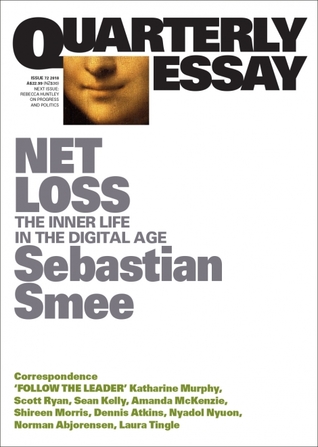
  • I have reviewed an essay by Sebastian Smee but I don’t think that will have helped this searcher: does wellesley have a non-credit on-line course taught by sebastian smee
  • relevant to this year’s second top post, here is one search: what type of satire is mark twain’s a presidential candidates 
  • and, my favourite: word association. what comes into your mind about australian literature? You know what I’m going to ask: What words come to your mind when you think about Aussie lit?

Other stats

I wrote thirteen (nearly 8%) fewer posts in 2020 than in 2019, averaging under 13 posts per month. This resulted in a small drop in my blog traffic.

Merlinda Bobis Fish-hair woman

Australia, the USA, Britain, in that order, continue to be the top three countries visiting my blog. The next three slots went, respectively, to India, the Philippines and Canada. India has been fourth for two of the last three years but, this year, the Philippines jumped from its usual 6th place to 5th, edging out Canada. This is largely due to Philippine-born Merlinda Bobis’ Fish-hair woman.

I’d like to thank all of you who commented on my blog this year. I’m thrilled that, although my blog traffic dropped a little this year, my comments count increased by 12%, which is heart-warming because the conversations have to be one of blogging’s biggest delights. The friendly but fearless sharing of sometimes opposing ideas – you know who you are! – demonstrates that social media can be positive and respectful.

Challenges, memes and other things

I only do one challenge, the AWW Challenge, which I wrapped up last week, and one regular meme, #sixdegreesofseparation run by Kate (booksaremyfavouriteandbest). I occasionally do others, which you can find on my “memes” category link.

I also took part in Lisa’s (ANZLitLovers) Indigenous Literature and Thea Astley weeks, Bill’s (The Australian Legend) AWW Gen 3 Week, and, more casually, in Nonfiction November, because all these align with my reading practice.

Each year, I like to host some guest posts but I have already mentioned these in my opening paragraph. You can find them at this link.

Being blogging mentor for the New Territory  program has been a major highlight over recent years. It was set to continue, until you-know-what. I don’t know whether it will return next year. Meanwhile, I have enjoyed following the writings of several “alumni” who are continuing their literary reviewing and criticism journeys. Rosalind Moran’s well-timed Overland post on the value (or not) of lists, caught the eye of several bloggers over the last month! Amy Walters has revamped her website to include links to her other writings, and Angharad has continued to be an active blogger as well as occasionally writing other articles. Shelley Burr, on the other hand, won a Debut Dagger for her Aussie noir unpublished manuscript, Wake. How lucky am I to know these great young women.

And so, 2021 …
As I say every year, a big thanks to everyone who read, commented on and/or “liked” my blog last year – and to all you other wonderful bloggers out there. I’m really sorry that I don’t always manage to visit everyone as much as I’d like. I wish you all good reading in 2021, and look forward to discussing books with you at your place or mine!

Finally, huge thanks to the authors, publishers and booksellers who make it all possible (and who have put up with my extreme tardiness this year). Let’s hope 2021 will be better for us all.
Six degrees of separation, FROM Hamnet … TO …

Woo hoo! A New Year at last after what has really been a doozy for us all, in one way or another. So glad to see the back of it. I hope you all had a lovely Christmas wherever you were and however you were able to spend it. Now though to that thing that stayed with us unchanged all through 2020, come hail or shine, come fire or covid, and that thing of course is our Six Degrees of Separation meme. If you don’t know this meme and how it works, please check out meme host Kate’s blog – booksaremyfavouriteandbest.

Book cover

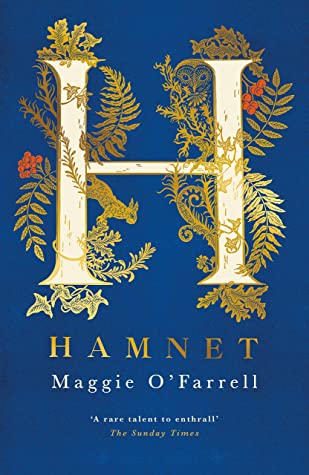
The first rule is that Kate sets our starting book. This month, she’s chosen a book was one of many readers’ loved books last year – Maggie O’Farrell’s Hamnet! I haven’t read it – but what’s new? I wouldn’t be averse to reading it, I must say, because its topic of Shakespeare’s son, Hamnet, who died in his youth, sounds intriguing.

Book cover

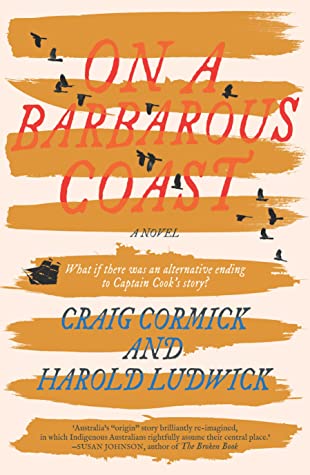
There are various directions I could go in, but I’ve chosen a pretty obvious one, a book that, like Hamnet, is historical fiction breathing life into a marginal historical figure. The book is Craig Cormick and Harold Ludwick’s On a barbarous coast (my review), and the figure, James Mario Magra. Magra was a midshipman on the Endeavour and is believed to have authored an anonymous journal about that journey. Cormick drew from that journal for his characterisation of Magra.

Dorothy Johnston, Through a camel's eye

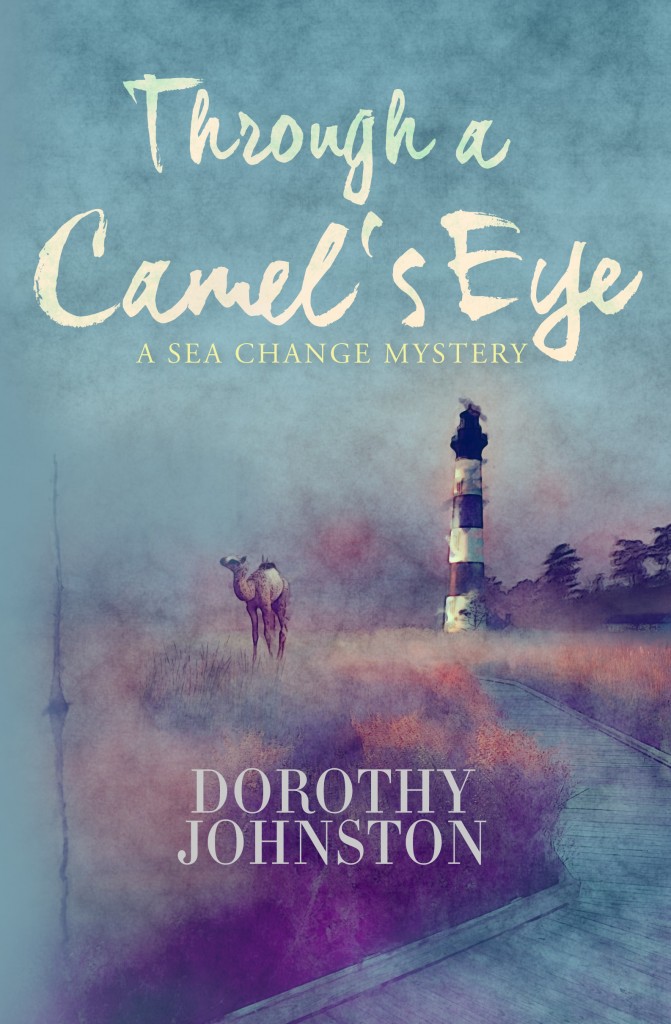
Staying with the coastal theme – but shifting time (to the contemporary not colonial era), setting (to southern Victoria, not Far North Queensland), and genres (to crime not historical fiction) – I’m linking to Dorothy Johnston’s Through a camel’s eye (my review). This novel introduces Constable Chris Blackie, meaning that …

Through a camel’s eye is the first of Johnston’s latest series, her Sea-change Mysteries. I’m not, as you know, a big reader of series, but in 2020 I did read the first in another series, Steven Carroll’s The lost life (my review), which starts his Eliot Quartet series.

I’m being a bit cheeky with my next link because I’m taking us to a literary app, rather than a book, The waste land app for TS Eliot’s poem cycle of the same name (my review). This was an exciting foray into the possibilities of using apps for the reading and study of literature, but I’m not sure it has taken off. It was, I’d say, expensive to produce and may just not have got the market size they needed. A shame. (The pic here is of a book edition of the poem, not of the app!)

Winterson, Oranges are not the only fruit, book cover

The Wasteland app contains many academics, writers and actors reading, critiquing and reflecting on this major poem. One of those involved was the English novelist Jeanette Winterson, so it’s to her book Oranges are not the only fruit (my review) that I am linking next.

Francesa Rendle-Short book cover Bite your tongue

Jeanette Winterson has quite a bit in common with our Francesca Rendle-Short, but the most relevant to my link here is that both were raised by mothers who were religious zealots. Oranges are not the only fruit is a semi-autobiographical novel, while Bite your tongue (my review) is a sort of hybrid fiction/memoir, but both cover protagonist-daughters’ struggles against highly restrictive maternal upbringings.

Coincidentally, we’ve somehow ended up on a topic – religion and God – relevant to last month’s starting book, Judy Blume’s Are you there God? It’s me Margaret.

So, this month, half of my books are by men and half by women. We haven’t travelled far, staying in Australia except for a trip in the middle to England, but we have traversed a couple of centuries. I do like how we started with the starting book’s lovely cool blue cover and ended with Rendle-Short’s fiery one. I hope that’s not telling us something about the year to come!

Now, the usual: Have you read Hamnet? And, regardless, what would you link to?

Reading highlights for 2020

For newbies here, my annual Reading Highlights post is my answer to other bloggers’ Top Reads posts. In other words, I don’t do a ranked list of the books I consider my year’s “best”, but instead share my “highlights”, which I define as those books and events that made my reading year worthwhile.

I don’t, as I say each year, set reading goals, but do have certain “rules of thumb”, including trying to reduce the TBR pile, increase my reading of indigenous authors, and read some non-anglo literature. This year though has been an annus horribilis for me – of which COVID-19 was only a part. Consequently, I didn’t make great inroads into any of these … as you’ll see.

Literary highlights

My literary highlights, aka literary events, were different this year, given the pandemic’s early (and ongoing) presence in the year, However, going on-line, while a less personal experience, had its pluses:

Book cover
  • Writing War panel discussion: This in-person event was changed into a Zoom one. As it included local writer Nigel Featherstone on his book, Bodies of men, I loved being able to attend!
  • Writers in Residence: This tightly run online festival aimed to give exposure to some emerging writers, and it worked a treat.
  • Melbourne Writers Festival: Covid-19 had some silver linings, including enabling me to attend, at last, some Melbourne Writers Festival events. I only attended two sessions, one on short stories and the other a lecture by Alexis Wright, but they were both so stimulating.
  • Yarra Valley Writers Festival: Another silver lining saw me able to attend sessions of the inaugural Yarra Valley Writers Festival. Session topics were wide-ranging, such as climate change and crime. I wrote four posts.
  • Author interviews/book launches: I only got to a few of the many offered: Heidi Sze, Sara Dowse, Robert Dessaix and Ramona Koval (the last two from Yarra Valley Writers Festival’s New Release Sundays program).

Reading highlights

Book cover

This is where I share some random observations about the year’s reading, rather than a ranked list. That said, I’d happily recommend all I mention here:

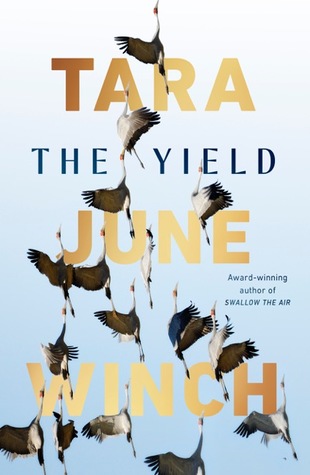
  • Indigenous authors: Each year I try to ensure my reading diet includes a few indigenous authors. This year I didn’t quite achieve the number I did last year, but I did read three novels, Tara June Winch’s Miles Franklin Award-winning The yield, Julie Janson’s Benevolence, and the collaborative On a barbarous coast by Craig Cormick and Indigenous writer Harold Ludwick – plus Archie Roach’s memoir, Tell my why.
  • The year of single-word titles: I can’t remember when I read so many books with single word titles, titles not even preceded by an article, like Benevolence, Bruny, Damascus, Displaced, Mammoth, Murmurations, and Unsettled. I like the possibilities contained in direct, simple-sounding titles like these.
  • Rethinking colonial Australia: Completely serendipitously, I read a few books this year by Indigenous and non-Indigenous writers that attempted to correct the white-version of Australia’s colonisation that many of us grew up with: Craig Cormick and Harold Ludwick’s On a barbarous coast; Julie Janson’s Benevolence; and Gay Lynch’s Unsettled. Poet John Kinsella’s memoir, Displaced, also addresses these issues, albeit within a contemporary framework. And, at a tangent, Madeleine Dickie’s contemporary novel Red can origami hinges on this colonial dispossession to explore the complex relationships and exploitation behind mining in northwest Australia.
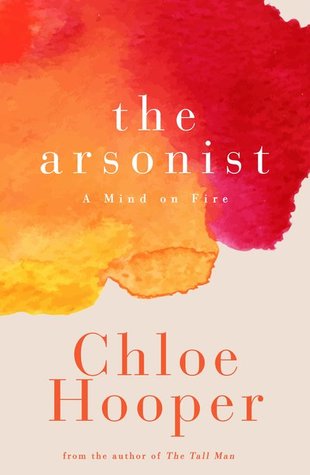
  • That “accusing” TBR (which I define as books waiting for more than 12 months): This year I read 5, one more than last year, so, a win. The highlights were Ruth Park and D’Arcy Niland’s collaborative memoir, The drums go bang! and Chloe Hooper’s The arsonist.
  • Returning to an old favourite author: Looking for books for my mum to read, I chose, among others, Anne Tyler’s Redhead by the side of the road. She wanted to read it, but her time ran out. However, I read it, and Tyler’s quirky world was just the right thing at the time. Other favourite authors I returned to this year included Thea Astley (An item from the late news), Jane Austen (Juvenilia Vol. 1), and Helen Garner (Yellow notebook).
  • Out of left field from Brother Gums came Sue Lovegrove and Adrienne Eberhard’s nourishing art-poetry book, The voice of water, and, from my reading group, Balli Kaur Jaswal’s cheekily titled Erotic stories for Punjabi widows.
  • Observing contemporary Australia: My reading always includes books that interrogate contemporary life, and two stand out from this year, Carmel Bird’s wry, satirical Field of poppies about a retired couple’s failed escape from the city, and Charlotte Wood’s The weekend about older women and friendship.
  • Other people’s lives: Biographies and memoirs are always part of my reading fare. Two standouts this year were Desley Deacon’s thorough and beautifully designed biography of Judith Anderson, and Rick Morton’s heart-rending but not self-indulgent memoir, One hundred years of dirt.
  • Some interesting voices: Each year seems to produce an unusual narrator or two – a foetus or skeleton, perhaps. This year produced another variation, with Chris Flynn’s Mammoth narrated by, yes, the fossil of a 13,000-year-old mastodon. It was more enjoyable than I expected.
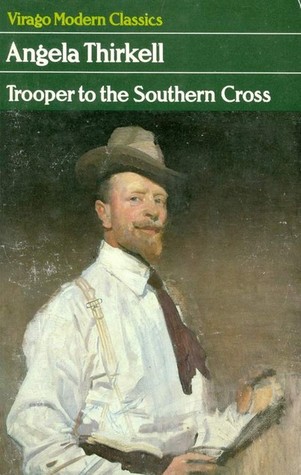
  • Surprise of the year: I read a couple of books for Bill’s (The Australian Legend) AWW Gen3 week but Angela Thirkell’s Trooper to the Southern Cross took the cake. I didn’t know what to expect, and was both surprised and entertained by what I got.
  • The quiet achiever: A beautiful, perceptive book that just didn’t get the recognition it deserves is John Clanchy’s historical novel exploring clerical abuse of children, In whom we trust.
  • The book most relevant to me this year won’t surprise those who know my year: Griffith Review 68, Getting on. It’s enlightening, informative, and even, at times, inspiring, about all things ageing!
Book cover

These are just some of 2020’s worthwhile reads.

Some stats …

I don’t read to achieve specific stats, but I like to keep an eye on what I’m doing to ensure some balance, all the while maintaining my particular interest in women and Australian writers:

  • 63% of my reading was fiction, short stories and novels (70% in 2019 and 80% in 2018): Around 75% is my rule of thumb, so this is quite a bit lower. Not sure why, but these things happen!
  • 80% were by women which is significantly higher than my 2015-2019 average of 68%: This is a bigger weighting than the 65-70% I prefer. Some of this 80% includes collaborations with male writers and editors.
  • 18% were NOT by Australian writers (28% in 2019 and 18% in 2018): I would like the balance to be something more like one-third non-Australian, two-thirds Australian, so this is a regression on last year’s achievement, but this year was an aberration overall so I’m not going to beat myself up. It is what it is.
  • 15% were published before 2000 (significantly less than for the last three years which hovered around 30%): Too low. I really like to read more older books.
  • 22% were published in 2020 (rather less than last year), which pleases me, because (obviously) I don’t want all my reading to be the latest books.

Overall, it was a disappointing reading year, in which much of my reading was driven by review books and my reading group. Both of these resulted in some good reads, and I don’t for a moment regret them, but my personal circumstances meant I did less self-directed reading and that was a bit frustrating. I hope I can get back to a more even keel in 2021.

As always, I’m grateful to all of you who read my posts, engage in discussion, recommend more books and, generally, be all-round great people to talk with. You know I love you!

I wish you all an excellent 2021, and thank you so much for hanging in this year.

What were your 2020 reading or literary highlights?

Craig Cormick and Harold Ludwick, On a barbarous coast (“BookReview)

Craig Cormick is a Canberra-based writer whom I’ve seen at various literary events around town, but not read until now, so I was especially glad when Allen & Unwin sent me this book to review. Titled On a barbarous coast, it was written collaboratively with Harold Ludwick, “a Bulgun Warra man whose traditional lands lie west of Cooktown”.

On a barbarous coast offers something a bit different for reviewers. Besides its collaborative nature, there’s its form or genre, which is that sub-genre of historical fiction called alternate (or alternative) history. In this case, it involves looking at a period of Australian history and asking “what if things had happened differently?” Those things, for Cormick and Ludwick, relate to Captain Cook’s exploration of Australia.

The story springs, then, from Captain Cook’s 1768-1771 voyage to Australia to observe the Transit of Venus. During that expedition, in late 1770, the Endeavour was seriously damaged around the Great Barrier Reef, but managed to limp on to Batavia. However, Cormick and Ludwick posit a different scenario, suggesting that the Endeavour was shipwrecked and that only a small number of the crew survived – including Cook, though he remains comatose though much of the story. The survivors make their way to land, and … the question is, as the cover states, “What if there was an alternative ending to Captain Cook’s story?” Would Australia’s history have been different, and how?

While I’ve not read many, I do quite like alternative histories. They encourage us to look at the past from different angles, which can illuminate the implications of decisions made and actions taken.

So, this is how it goes …

The story is told in two alternating first-person voices, Cormick’s being that of American Midshipman James Magra, and Ludwick’s being the young Indigenous boy, Garrgiil.

Magra chronicles the actions and fates of the shipwreck survivors, who very quickly break into two antagonistic camps, while Ludwick shares the thoughts and actions of the local Guugu Yimidhirr people. For the bulk of the narrative, the two cultures remain apart. There is quite a bit of humour in watching Garrgiil’s people trying to decide whether these strange “spirit things” are ancestors or just men. Initially, they feel they must be ancestors, but the way they stumble around, starving while “walking past food every day”, not to mention behaving incorrectly in sacred or special areas, suggests that this may not be the case.

… their presence gives our people great stories of their stupidity and clumsiness to tell around the fire at night. Like the one who stood in the river and let Gandhaar [crocodile] eat him …

Meanwhile, we watch Magra and his co-survivors bickering amongst themselves, trying to plan a solution to their predicament, and sensing the “natives” are out there but not seeing them. The stage is set for a meeting. The question is: how will it go? You will have to read the book for yourselves to find out.

So, how does it all come together?

Magra gets the lion’s share of the story, which could be seen as giving the invaders the upper-hand (yet again) in story-telling. However, I’m going to assume that this was all discussed and agreed between the two authors. Also, I think we could argue that the unequal number of physical pages doesn’t necessarily mean that the emotional impact of the two narratives is similarly unequal. Garrgiil’s voice is strong enough, and compelling enough, to be in our minds, even when he’s not centre-stage.

In the Authors’ Note at the end, Cormick says they “tried to stay as close to known history as possible, both within the known and imagined paths of the story”, which requires a bit of mind-bending but I get what they mean. They drew upon “many existing knowledges” including several journals, such as those of James Cook, Joseph Banks, Sydney Parkinson, and an anonymous journal believed to have been written by James Mario Magra, whom Cormick uses as his narrator. They also looked at the work of Indigenous and non-Indigenous historians, journalists and academics, and at historical accounts of several shipwrecked individuals who had lived with Indigenous people. Cormick notes that while their story divides easily into the two narratives, “it is not so easy to unpick how each of us influenced each other’s work”.

Ludwick adds that his aim was to pull readers into “the world of Guugu Yimidhirr language (which was first recorded in 1770 by Sydney Parkinson and Joseph Banks)”. He says that many of the practices and knowledge he describes in the book are still used by his people. He also says that he wove Dreamtime stories into his narrative to help readers understand his people’s traditional explanations of how the land became what we see today.

The end result is the sort of book I like to read, one that entertains me with its story, while also engaging my mind as I consider what the authors (plural, in this case) were trying to do, how they were trying to do it, and whether they pulled it off. It is an earnest book. Sometimes this comes a bit close to the surface when we are “told” things to make sure we get it (such as “I know the Captain controlled how the stories of our journey would be told”). This – and the strange though interesting little “magical realism” interludes where Magra talks to Gandhaar, the crocodile – creates a little unevenness in the narrative. Also, the use of parenthesis to translate the local language used by Garrgiil felt clunky. Yet, I applaud the book’s extensive use of this language. We need more of it in contemporary Australian literature. As Gandhaar tells Magra:

You create the landscape in your own words. If you don’t know the right words, you will never know the land properly.

But these are minor “picky” things. Cormick and Ludwick have attempted something significant in terms of story, intent, and process, and they pulled it off in a way that engaged me, right through to their considered ending which suggests possibilities, while being realistic about probabilities. Without irony, we could call this book “a grand endeavour”. It is certainly exciting to see such Indigenous-non-Indigenous collaborations happening in our literary sphere.

Lisa (ANZLitLovers) also found this book intriguing.

Craig Cormick and Harold Ludwick
On a barbarous coast
Crows Nest: Allen & Unwin, 2020
309pp.
ISBN: 9781760877347

(Review copy courtesy Allen & Unwin)

Monday musings on Australian literature: Australian Women Writers Challenge 2020

AWW Challenge 2019 Badge

Once again I am devoting my last Monday Musings of the year to the Australian Women Writers Challenge*. Last year in my opening paragraph, I wrote that I loved the sound of 2020 – and I wished you all a wonderful year to come in whatever form you would like that to take. My, oh my, little did we expect what was going to eventuate (which for me included a personal loss in addition to the impacts of the pandemic and other catastrophes). I no longer like the sound of 2020, and fervently hope 2021 turns out much better for us all. And so, may you all have a positive and fulfilling 2021.
Now, the challenge … it has continued to go very well. The full database now contains reviews for nearly 7,000 books across all forms and genres, from all periods, of Australian women’s writing. This means that the number of books reviewed on our database increased in 2020 by 900 books, which is about the same number added as last year, or just under 15%.

My personal round-up for the year

This year, for obvious reasons, was not my best Challenge year. I posted only 26 reviews relevant to the Challenge over the year, about the same as last year which was also a strange year (but differently). I feel disappointed about all this, but such is life. Anyhow, here they are, with links to my reviews:

Fiction

Book cover

Short stories

Book cover

Anthologies/Essays

Non-fiction

Book cover

This year, fiction (including short stories) represented around 61% of my AWW challenge reading, which is a little more than last year and a bit closer to my preferred ratio. I read three Classics. Two were novels and one a memoir, and they were read for Bill’s (The Australian Legend) Gen 3 week and Lisa’s (ANZLitLovers) Thea Astley week. Thanks to Bill and Lisa for the impetus to read these books, because they added a special depth ! In terms of that problematic word “diversity”, I read two novels by Indigenous Australian women, and one translated novel by an Iranian-born Australian writer.

Chloe Hooper, The Arsonist

My non-fiction reading was eclectic, featuring biography and memoir of course, a work of creative or narrative nonfiction, a beautiful collaboration between an artist and a poet, and, unusually for me, also two books that could be seen to be in the self-help vein.

If you’d like to know more about the Challenge, check it out here. We are also on Facebook, Twitter (@auswomenwriters), and GoodReads. Do consider joining us. All readers are welcome.

Finally, as always, a big thanks again to Theresa, Elizabeth and the rest of the team. I (still) love being part of this challenge, partly because equating with my reading goals it is not really a challenge, and also because I enjoy working with the people involved. See you in 2021.

And so, 2021

Challenge logo

The 2021 sign up form is ready, so this is also my Sign Up post for next year. As always, I’m nominating myself for the Franklin level, which is to read 10 books by Australian women and post reviews for at least 6 of those. I expect, of course, to exceed this.

Do you plan to sign up?

* This challenge was instigated by Elizabeth Lhuede in 2012 in response to concerns in Australian literary circles about the lack of recognition for women writers. I have been one of the challenge’s volunteers since 2013. Theresa Smith (of Theresa Smith writes) now oversees the day-to-day management of the blog, but Elizabeth is still an active presence.

My reading group’s favourites for 2020

In what is becoming a tradition, my reading group once again voted for our favourites from our 2020 schedule. Given many of us like hearing about what other reading groups do, I’m sharing the results as I did last year.

First, though, here is what we read in the order we read them (with links on titles to my reviews):

I really don’t know what came over us this year, as this is way less diverse than we our usual schedule. Almost all are Australian; all but three are novels; there’s not one translated novel; there’s no classic and indeed all were published in 2017 or later. Fortunately, the first half of next year will see us reading a much greater variety, which is good. Our focus always has been Australian – with a special interest in women – but it was never meant to be quite so narrow as this year.

The winners …

All twelve of our currently active members voted. We had to name our three favourite works, which resulted in 36 votes being cast. No weighting was given to one over another in those three, even where some members did rank their choices. Unlike the last couple of years which saw the the favourite books bunched quite closely to each other, there was a runaway favourite this year:

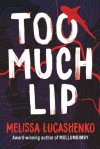
  1. Too much lip, by Melissa Lucashenko (10 votes)
  2. Overstory, by Richard Powers; and Griffith Review 68: Getting on (5 votes each)
  3. One hundred years of dirt, by Rick Morton, Mammoth, by Chris Flynn, and Phosphorescence, by Julia Baird (3 votes each)

I love that Lucashenko’s book was so enjoyed and appreciated (partly because it was one of my recommendations!) It’s interesting that all three of the non-novels on our list featured among our favourites. What does that say about us, or about this year, or about our time of life? Anything? Nothing? Last year, four books (as against 6 this year) made our top three positions, and all were novels by men!

Every book but one received at least one vote, and that one, Anna Goldsworthy’s Melting moments, got an honourable mention (ie, a sneaky extra vote!) from one member.

Of course, this is not a scientific survey (and it’s a very small survey). Votes were all given equal weight, even where people indicated an order of preference, and not everyone read every book, so different people voted from different “pools”.

Selected comments (accompanying the votes)

  • Too much lip: Commenters used words like “engaging” and “authentic” next to “flawed characters”. Several also commented on the humour, and the originality and freshness of its writing and story-telling.
  • Overstory: Most commented on what they learnt about trees, nature, and wildlife activists. One wrote that in this pandemic year, it pulled her into “trees and nature … at a time when I particularly needed to be there”.
  • Griffith Review 68: Getting on: It’s not surprising that a group of women who are “getting on” liked this read. Commenters said things like “essential reading”, “eye-opening” and “thoughtful ideas on a depressing subject”.
  • One hundred years of dirt: Commenters appreciated Morton’s “heart-rending” honesty about his family’s challenges, and his “tribute to his mum”.
  • Mammoth: Commenters loved that it’s “quirky”, “original”, or, as one member said, “a real work of imaginative and stimulating writing”.
  • Phosphorescence: One member, in particular, “adored” it, calling it “a thought-provoking and thoughtful reflection on life, friendship, children, getting old, nature… a book to keep dipping into” while another said, simply, that “Julia helped me find some truths.”

But wait, there’s more!

As last year, some members of my group named other (ie non bookgroup) favourite reads of the year, and I share them with you (with links to my reviews for those I’ve read):

  • Robbie Arnott’s Flame
  • Thea Astley’s An item from the late news (my review)
  • Elisabeth Tova Bailey’s The sound of a wild snail eating
  • John Clanchy’s In whom we trust (my review)
  • Jeanine Cummins’ American dirt
  • Trent Dalton’s All our shimmering skies
  • Bernadine Evaristo’s Girl woman other (scheduled for 2021)
  • Robert Galbraith’s Troubled blood
  • Vicki Hastrich’s Night fishing
  • Christy Lefteri’s The beekeeper of Aleppo
  • David Mitchell’s Utopia Avenue 
  • Sharon Pincott’s Elephant tracks
  • Lucy Treloar’s Wolfe Island
  • Edith Wharton’s The custom of the country (read, and loved, but long before blogging)
  • Tara June Winch’s The yield (my review)

If you are in a reading group – face-to-face or online – would you care to share your 2020 highlights?

And whether you do or not, here’s to you all for the best sort of Christmas you can muster this year. Hope you can make it a good one. Now’s the time to make good stories of our lives if we possibly can. Look forward to catching you on the other side! 

Monday Musings on Australian literature: ABR’s 2020 Books of the Year

The Australian Book Review (ABR) recently published its annual books of the year as selected by 34 of its contributing critics and reviewers, who include novelists, poets, historians and literary critics. Most are known to me, but there are a few newbies too.

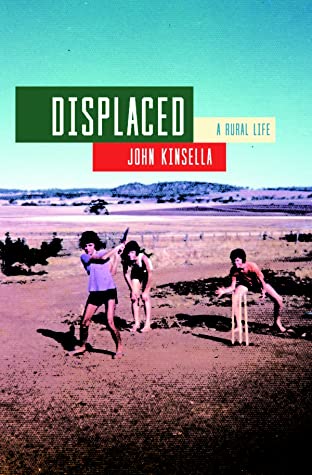
I know we discussed the pros and cons of lists in my last Monday Musings post but I want to share this because of the variety and for the value-add of the comments made. I am not going to share every “pick” but just a selection of the Australian ones. Most of the contributors named both Australian and non-Australian books in their mix but two deserve a shout-out, says parochial me, for choosing only Australian books: poet John Kinsella (whose memoir, Displaced, I recently reviewed) and new-to-me historian Yves Rees.

ABR presented its list, logically, by contributor, but for us here, I’m going to organise the Aussie picks by form, starting with novels. Here goes …

Novels

Book cover

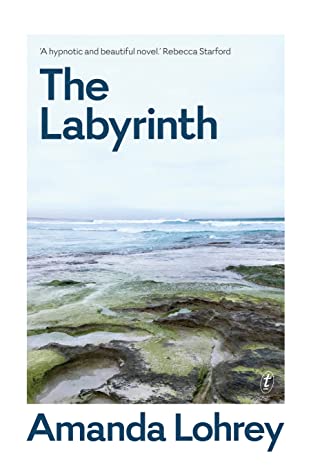
Only one novel was mentioned more than once, Amanda Lohrey’s The labrynth. Literary editor and critic, Susan Wyndham said Lohrey “shows how art can both destroy and heal”. Poet and critic Felicity Plunkett agreed, saying it “examines the trace and wrack of violence and the counterbalancing creativity that might transmute it”. Historian Judith Brett, describing it as being “about suffering and redemption”, writes that “Lohrey’s social observation is acute and the writing is superb, spare, and filled with light and wisdom.” Lisa (ANZLitLovers) also loves this book.

The other novels named are:

  • Robbie Arnott’s The Rain Heron, which historian Billy Griffiths says “conjures the magic of a Studio Ghibli production”.
  • Garry Disher’s three novels set in South Australia’s dry farming country, Bitter Wash RoadPeace and Consolation. Judith Brett loves the plots, and that Disher’s policeman is “warmer and less troubled than the average fictional copper”, but says “the richest pleasure is Disher’s superb evocation of place”.
  • Gabrielle Everall’s Dona Juanita and the Love of Boys is, says poet and academic, John Kinsella, a “unique, ironic, confronting, frequently traumatic, and dissecting verse novel of sexuality and desire, passion but also abusive invasiveness”.
  • Richard Flanagan’s The Living Sea of Waking Dreams is, says academic Tony Hughes-d’Aeth, a “slow-burning, eerie tour de force”. Again, Lisa liked this too.
  • Sofie Laguna’s Infinite Splendours , is “a brilliant, heartbreaking portrait of a damaged but resilient soul” says Susan Wyndham.
  • Laura McPhee-Browne’s Cherry Beach, “pulled” writer Sarah Walker “into a house vibrating with the rumblings of things going wrong”. “The dreamy, slightly dissociative quality of the writing felt right for this year: hovering above a life that is slipping between our fingers”.
  • Mirandi Riwoe’s Stone Sky Gold Mountain offers, says historian Yves Rees, “a refreshing counter-narrative of the goldfields” from Chinese miners’ perspectives.
  • Jessica Townsend’s Nevermoor series, of which the third of nine, Hollowpox: The hunt for Morrigan Crow, has just been published, “balances”, according to author and critic Beejay Silcox, “sophisticated menace, gleeful morbidity, and guileless wonder”.
  • Tara June Winch’s The Yield was part of Yves Rees’ plan to decentre “whiteness in her reading diet”. Winch’s book made her feel “frontier violence … like never before”. It’s a “reminder that stories trump facts when truth-telling about Australia’s past”. Yes!
  • Davis Wood’s At the edge of the solid world is, writes, academic and critic, Kerryn Goldsworthy, “a detailed study in grief and empathy” and is “utterly original”.

And, for something a little different, author, poet and academic Ali Alizadeh named My favourite work novelist Elizabeth Bryer’s “eloquent translation” of José Luis de Juan’s Napoleon’s Beekeeper, as his favourite work by an Australian author.

Short stories

Book cover

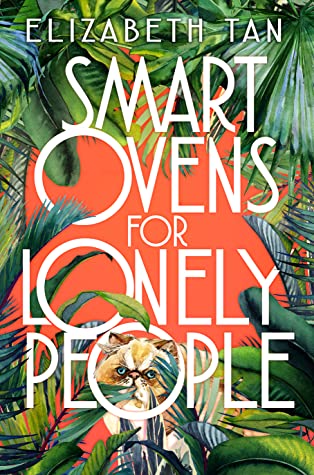
Just one Australian short story collection was mentioned, but it was mentioned four times, Elizabeth Tan’s Smart Ovens for Lonely People. Essayist-critic Declan Fry “liked it even more than Robbie liked Cecilia in Atonement“! Kerryn Goldsworthy liked that its “witty stories are set in a futuristic yet easily recognisable world where the human relationship with technology becomes ever closer and more anxiety-inducing while creating some laugh-out-loud scenarios and lines”. Yves Rees calls it “a romp of dazzling imagination that injected whimsy into my lockdown” and Tony Hughes-d’Aeth liked its “blend of Vonnegut surrealism and Carveresque suburbia”, believing it “is already destined to be a classic”.

Poetry

Book cover

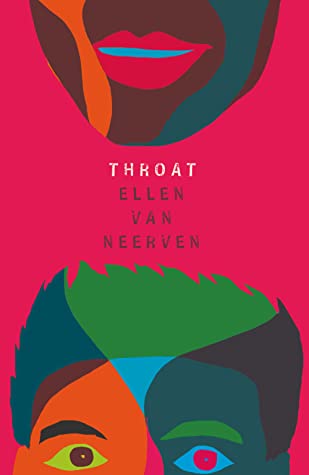
Poetry was very popular with this set of contributors, with a few collections mentioned more than once. Ellen van Neerven’s Throat, says novelist and academic Tony Birch, shows “yet again, that van Neerven is an important and gifted poet”. Tony Hughes d’Aeth says it’s “the poetry book that spoke most directly” to him in 2020, calling it “wickedly sharp”. Yves Rees admits that “poetry has never been my tipple, but Ellen van Neerven’s Throat converted me. Each line lands like a punch, the whole book an assault on settler complacency”.

Two collections were mentioned twice:

  • Felicity Plunkett’s A kinder sea was named by John Kinsella who described it as “a sinewy book of survival with a deceptive tautness beneath its flows” and poet, critic and musician David McCooey called it “a necessary rejoinder in a year of unkindness, illustrating Plunkett’s ability to write poetry that is both deeply intelligent and profoundly moving”.
  • Jaya Savige’s Change machine is described by poet Sarah Holland-Batt as “an intoxicatingly inventive and erudite collection rife with anagrams, puns, and mondegreens that ricochets from Westminster to Los Angeles to Marrakesh”. John Kinsella calls it “a work of razor-sharp verbal plays and passion for detail shimmering on international wavelengths. It disputes colonial usurpings of language by breaking them down and playing them back in confronting, ironic, and liberated ways. It’s a book of social critique and family, and an incisive investigation of the estrangement and bewilderment many of us feel”. Sounds like it speaks to some of the issues Kinsella cares about in Displaced.

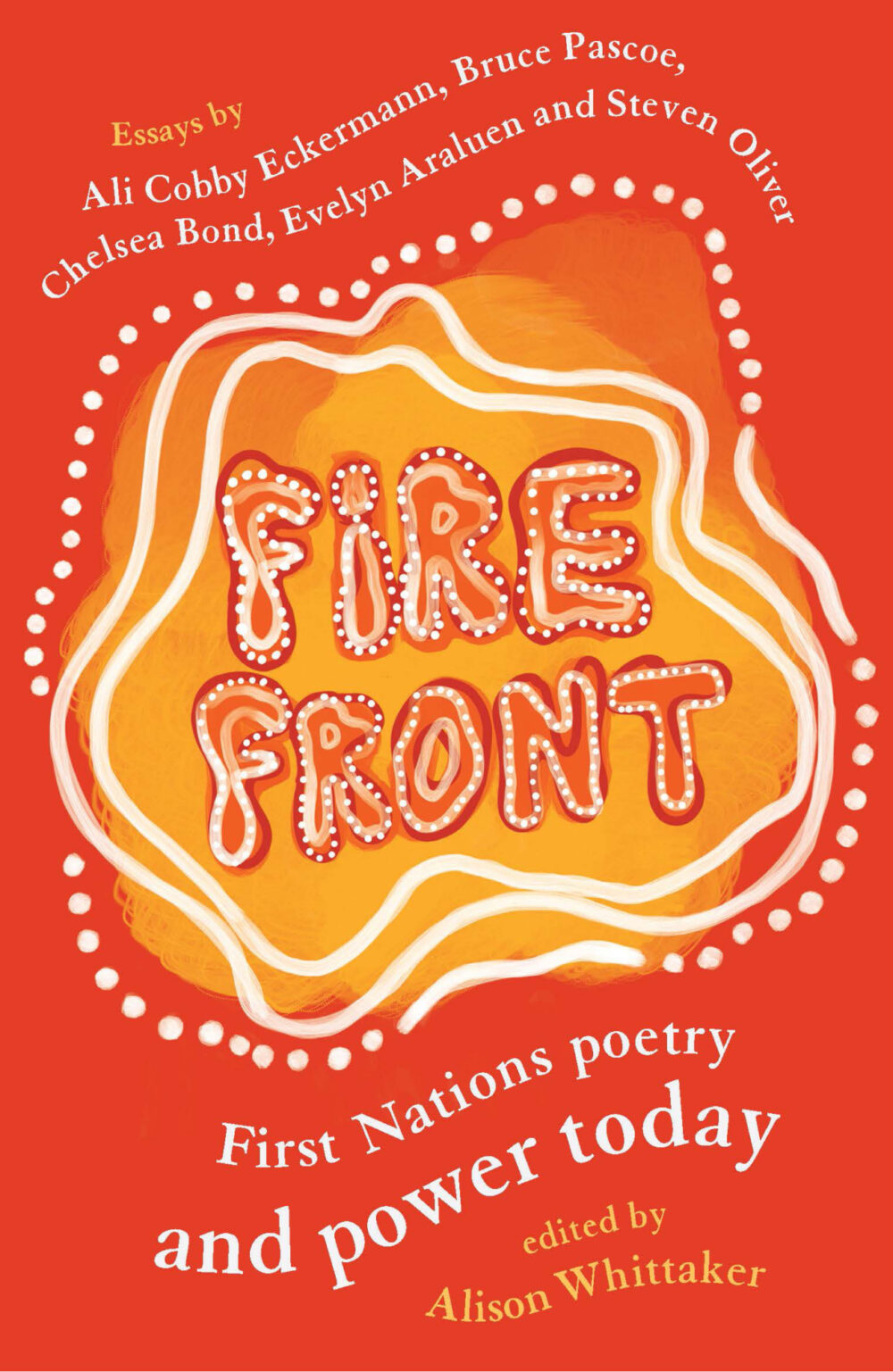
Ten other collections were mentioned but I can’t let this be a tome, so if you are interested, please check the link in the opening paragraph. However, I will share one more, the Indigenous Australian poetry anthology edited by Alison Whittaker, Fire Front: First Nations poetry and power today. Writer and artist A Frances Johnson says the book “dynamically situates seminal poets alongside ascendant talents (e.g. Oodgeroo Noonuccal, Lionel Fogarty, Raelee Lancaster, Baker Boy)” and notes the value added by the essays introducing each section.

But now, non-fiction, which, interestingly, formed the bulk of the named books.

Non-fiction

Book cover

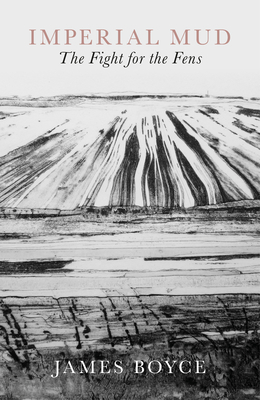
Of the many many non-fiction books named, only one received multiple mentions and it’s a surprising one because, although by an Australian historian, the subject is the Fens of England. The book is James Boyce’s Imperial mud: The fight for the Fens. Tony Birch calls it “a wonderful example of history writing embedded in the narratives of place”. Novelist, poet and musician describes it as “a surprising and wonderfully slushy next layer in the ecological oeuvre of my favourite Australian historian”, while historian Billy Griffiths, says it “offers a lively and refreshingly antipodean history of the Fens in eastern England”. Fascinating.

Now what to do? There are far too many books for me to mention here, so I’ll have to be selective. Several of course deal with our colonial history and Indigenous issues in general. Billy Griffiths named other histories besides Boyce’s. He liked Grace Karskens’s People of the river: Lost worlds of early Australia about the “lives, cultures, and histories along the ancient waterway of Dyarubbin”, and Tiffany Shellam’s 2020 Prime Minister’s Literary Award winning book, Meeting the Waylo: Aboriginal encounters in the archipelago, which “searches the silences of colonial archives”.

Meanwhile, the ever-political John Kinsella named Ambelin Kwaymullina’s Living on stolen land as “an essential and clear statement” that “confronts colonial injustice and decisively shows why Australians should understand and address the history of dispossession, the fact of Aboriginal sovereignty, and continuing connection to country”.

There were some books of more literary subject matter which of course interest me. One is on my TBR, Brenda Niall’s Friends and Rivals. Writer Jacqueline Kent suggests that “this study of four Australian women writers working against the grain of their literary times, accomplishes a great deal”, adding that “her sometimes mordant commentary is particularly enjoyable”. Lisa calls it a must-read for Aussie literature fans.

I could go on. There’s so much – on contemporary politics in this oh-so-political year, on environment and climate change issues, on more esoteric topics like the history of Australia’s bad language, and so on. If you are looking for great reads on contemporary subjects, here is a great place to start. I feel like the proverbial child in the lolly shop, so I’ll end with one that sounds quite out there, Ellena Savage’s Blueberries. It apparently defies description but is, basically, an essay collection. Declan Fry says it:

stole my heart. Not surprising, either, given all the larceny it contains: the theft of land that birthed settler-colonial Australia; the theft of time as one’s twenties make way for their thirties; the cruel coercion and theft of self that marks sexual violence.

I do love a challenging essay collection.

Do let me know if anything grabs you from their selections.

My life in books 2020

As I started reading other people’s contributions, I said that I might play the “my life in books” meme – and I have not decided that I will! So, thanks to Lisa for bringing it to my attention and to Annabookbel for managing this fun meme.

It’s a simple meme, and goes like this:

Using only books you have read this year (2020), answer these prompts. Try not to repeat a book title. (Links in the titles will take you to my reviews where they exist)

Book cover

I’m sorry about the paucity of images, but darned if I could get the columned gallery work in block editor. WordPress’s support page said that even if you choose the number of columns you want “Your images will automatically arrange themselves to look good no matter how many columns you select.” Well, no thanks, WP. I want the columns to do what I want them to do and not what you think looks nice! (I think it’s to do with desktops vs tablets vs phones, but the end result is no control at all, it seems to me.)

Sue Lovegrove and Adrienne Eberhard, The voice of water (#BookReview)

I had planned to post on this beautifully produced book, The voice of water, earlier in the year, but the events of the year threw me completely off track, and here I am at the end scrambling to finish off the posts I planned oh so many months ago.

Created by Tasmanians, visual artist Sue Lovegrove and poet Adrienne Eberhard (who has appeared here before), The voice of water was described by Hobart’s Fuller’s bookshop in their book launch announcement, as “a collection of 30 miniature paintings and poems which celebrate and pay homage to the beauty and ephemeral life of wetlands”. This is a good description of the content, but it doesn’t describe its exquisite production. You can tell that this book was a labour of love by two people who have both a passion for the Tasmanian landscape and an eye for beauty and design.

In their brief introduction, Lovegrove and Eberhard describe their aim as being “to reveal the fragility and fleeting nature of life in a lagoon”, to capture “the constantly shifting light”, “the soundtrack of place from frog call and scratching index legs to the tapping of grasses”, and “the calligraphy of reeds and sedges”. Not surprisingly, they also note the threat to wetlands posed by climate change. They name the wetlands that inspired them, and describe their process:

We spent days simply sitting together or apart, amongst the banksias and tea-trees at the edges, or lying in the sedges and reeds, letting these places seep into our imagination. We waded through ponds and swamps, working side-by-side, drawing and writing, and we had many conversations.

Interestingly, there was an exhibition of Sue Lovegrove’s miniatures at my favourite local gallery, Beaver Galleries, so you can see some (if not all) of the images on their website. The images are beautiful, some having an almost Monet-esque impression of light and water, others being a little more representational, particularly of reeds and sedge. (The original images are watercolour and gouache on paper.) One gorgeous miniature pair features a pond of deep blue with overhead clouds reflected in it. Eberhard’s miniature poem is (without her spacing though I tried):

enamelled sky
where clouds mop
and soak tumbrils
of luminous blue

The words “enamelled” and “luminous” capture the colours perfectly. Other poems convey different watery effects, such as “like textured silk like ruched folds of material”.

Another miniature pair features rows of reeds or grasses in a pond. The accompanying poem is presented on the facing landscape page in portrait mode so that it looks like spikes of grass too. So much attention has been paid to the design, and how design can help convey meaning as much as the works themselves – representing, for example, “the calligraphy of reeds and sedges”. Another poem is arranged in offset columns to encourage us, or so it seems to me, to read the lines in different orders – down one column and then the other, or leaping across the columns – producing slightly different meanings or effects depending on the order.

I’ll share just one more poem, which exemplifies the attention they also paid to the “soundtrack” of the landscape:

jostle of noise a cacophonous counterpoint to the artist’s mark-making scribble and scratch
castanet-clack the scratching of insect legs
ratcheting and tightening an orchestration that ricochets
and rasps phonetics of frog call an infiltration a metronome’s sustaining heartbeat.

The book chronicles the water cycle in the lagoons, the water coming and receding at different times – “lagoon shrinks to water lines washing through reeds” – but this is not a polemical book about climate change. Rather, it is a hymn to what we have now. At least, that’s how I read it.

However you read it though, The voice of water is a gorgeous book to get lost in and carried away by, and I’m sorry I didn’t write it up earlier in the year.

PS I have tagged this “Nature writing”, which reminded me that I have just received advice that submissions are now open for the 6th biennial Natural Conservancy Nature Writing Prize (about which I have written here before). It’s an essay prize, and is worth $7,500 for the winner. This year’s judges are literary critic, Geordie Williamson, and Miles Franklin Award winning novelist, Tara June Winch. Being selected by them would be quite a feather in the cap, I reckon. For more information check the website.

Challenge logo

Sue Lovegrove and Adrienne Eberhard
The voice of water
Published in 2019 with assistance from an Australia Council for the Arts grant
64pp. (unnumbered)
ISBN: 9780646802541

Monday musings on Australian literature: Summer picks 2020

For a few years now, I’ve shared ABC book journalists’ top Aussie reads of the year, but this year I’m doing something a little different. I’m sharing picks from three different sources. Most of these include non-Australian books, but I like to share them in a Monday Musings post and focus on the Aussie books among them. So, here goes.

Readings bookshop

Book cover

Readings staff actually shared their favourite Australian books of the year, which is really great of them so they get first billing here. Their list is called “the best Aussie fiction books of 2020” but in fact the text describes the list as their “favourite” books, which puts a different, and better, slant on it I think.

Here’s their list, reorganised into alphabetical order. I don’t know whether their order was by popularity vote, but alphabetical is easier for people to look for their favourites…

  • Steven Conte’s The Tolstoy Estate
  • Kate Grenville’s A room made of leaves
  • Victoria Hannan’s Kokomo
  • Laura Jean McKay’s The animals in that country
  • Kate Mildenhall’s The mother fault
  • Sean O’Beirne’s A couple of things before the end
  • Andrew Pippos’ Lucky’s
  • Nardi Simpson’s Song of the crocodile
  • Elizabeth Tan’s Smart ovens for lonely people
  • Jessie Tu A lonely girl is a dangerous thing
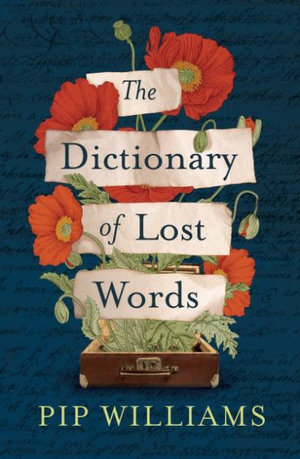
  • Pip Williams’ The dictionary of lost words

I like this selection because, although I’ve not yet read one of them, I have given some as gifts during the year, and I have a couple on my current TBR. Whether I’ll get to them in summer is another thing, but I will get to some …

ABC RN’s Bookshow and The Book Shelf presenters

Book cover

Claire Nichols, Sarah L’Estrange, Kate Evans and Cassie McCullagh put together a list they call “The best books of 2020 for your summer reading list”. It includes books from around the world, but, as I explained above, I’m just going to share their Aussie picks, which are but few!

  • Erin Hortle’s The octopus and I
  • Laura Jean McKay’s The animals in that country, which Kate Evans describes as “Surprising and surprisingly-convincing characters, and a well-realised, inventive premise”.
  • Jessica Tu’s A lonely girl is a dangerous thing, of which Claire Nichols says “the passion and the obsession drips off the page”
  • Pip Williams’ The dictionary of lost words, of which Sarah L’Estrange says, “For lovers of language and the power of words, this story has everything you want”.

Interesting that three of the four here also featured in Readings’ list. Are these the books we are likely to see on awards long and shortlists next year? Interesting too that all are women writers (as were the selectors. I can live with that!)

ANU English Department picks

Book cover

Now this list – on the ANU website, but shared with me by retired University Librarian Colin Steele (thankyou Colin) – is an unusual one, partly because it has very few contemporary (or any other) Australian books. The Aussies are:

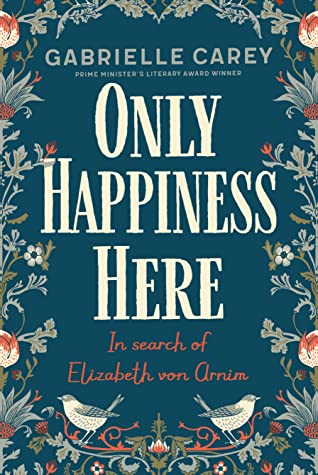
  • Gabrielle Carey’s Only happiness here, her biography of Elizabeth von Arnim, though, weirdly, the description doesn’t mention that at all. It just says “a literary sensation of the early twentieth century weaves a wonderful tale of love, pleasure, gratitude and survival that is written beautifully, perfect for the history buffs and women’s literature lovers among us”. Why not mention the name of the “literary sensation” or that it’s a “biography”? It could sound like a novel?
  • Sarah Hopkins’ The subjects, which is on the Small Press Network’s Book of the Year shortlist, is described as “a gripping read, which follows a gifted teenage delinquent down an uncertain path”
  • Michelle de Kretser’s The life to come, which came out a couple of years ago now, is described as “a wickely [sic] funny novel about the stories we tell and don’t tell ourselves as individuals, as societies and as nations”.

On lists …

When is a list not a list? Regular readers here know that I don’t tend to produce my own annual “best of” or “top reads” lists. I prefer to write a Reading Highlights post (which I will do again in early January for 2020). In this post, I don’t rank books or even talk about best books. Instead, I talk about the books and events that made my reading year worthwhile – and, already, I know I will have some interesting trends to comment on for this year. It is, though, still a list, I suppose! Just a very loose, porous one.

For a thoughtful piece on lists, you might like to check out an article written by one of my 2019 New Territorians, Rosalind Moran. Titled “Against best-of lists” it’s available at Overland Literary Journal. While much of it covers thoughts I’ve had myself, it’s beautifully and clearly expressed – and it did give me some additional points to ponder! (Thanks for Lisa for the heads-up).

What do you think about lists? Are some useful, despite their failings? Or, would you prefer to eschew them altogether?