The Griffyns are back – with Songs from a Stolen Senate

COVID-19 wreaked havoc on the performing arts industry, as we all know, and that, of course, included our beloved Griffyn Ensemble. However, they clearly didn’t spend the time twiddling their thumbs, because this weekend they returned to live performance at the new Belco Arts Theatre. What a thrill it was to see and hear these special musicians again – and with an inspired and inspiring program*. Titled Songs from a Stolen Senate, it featured music commissioned from some of Australia’s leading First Nation musicians. Their brief was to use Parliamentary text – hence the performance’s title – to create “song and storytelling from the perspective of their own life stories”. This is the first in an ongoing series that the Griffyns say will explore how Australian identity has been forged since European settlement.

It was a brave program, because it involved the Griffyns working collaboratively with a number of Indigenous Australian musicians and laying themselves bare to the discomfort – to leaving one’s comfort zone – that such collaboration inevitably entails if it’s conducted honestly. However, it also showed what such collaboration undertaken with open hearts and good will can achieve, which is why I started this post with the words “inspired and inspiring”. Of course, it goes without saying that Indigenous Australians have experienced discomfort – and much, much worse – for a long time, so it’s time that the rest of us opened ourselves up to that too, as Jimblah said in his video statement during the show.

Promo published on YouTube in October 2020

So, who did they collaborate with? With indigenous artists from around Australia: Warren Williams (Aranda country musician), Gina Williams and Guy Ghouse (Noongar singer-songwriters), Norah Bagiri (singer-songwriter from Mua Island in the Torres Straits), Christopher Sainsbury (Canberra-based Dharug/Eora composer), Brenda Gifford (Canberra-based Yuin composer), and with Canberra poet, Melinda Smith, who undertook parliamentary research and helped with the lyrics. If I understood correctly, to these original five collaborations were added Gina Williams’ beautiful Wanjoo welcome song, chosen by Griffyn soprano Susan Ellis; a piece composed by the Griffyns in collaboration with local Ngunnawal visual artist, Richie Allen; and the song “Not in my name” inspired by hip-hop artist from Larrakia nation Jimblah’s call for us to “activate”.

And what, exactly, did they collaborate about? Well, these won’t be a surprise as the musicians explored the sorts of topics you would expect, including the Stolen Generations, climate politics, Aboriginal Deaths in Custody, assimilation policies. The original brief was, as I’ve said, to use Parliamentary text, but some of the musicians needed to go wider. For example, Norah Bagiri wanted to write about climate change and rising sea levels in the Torres Strait, but that has not been covered in Parliament, so it was to the UN that she and Melinda Smith went! Similarly, Gina Williams was interested in AO Neville, the notorious Protector of Aborigines in Western Australia, so they used words from the Western Australian government.

Anyhow, the end result was a musical program performed by the Ensemble, supported by beautifully curated verbal contributions from the creators, presented on a large screen, interspersed with the live music.

Program (jotted down in the dark so perhaps not quite right)

  • Wanjoo welcome song (Gina Williams and Guy Ghouse)
  • Instrumental work (Warren Williams)
  • The view from the shore (Norah Bagiri)
  • Music from Ngunnawal Country (inspired by local Ngunnawal Kamilaroi visual artist, Richie Allen)
  • Breathe (Brenda Gifford)
  • What are we to do (Gina Williams and Guy Ghouse)
  • Not in my name (Jimblah)
  • Red kangaroo standing (Christopher Sainsbury)

Some of the issues that came out through the program included exploration of our national anthem’s notion of “young and free” (Gifford) and the fact that Noongar language didn’t have words for “stolen” and “freedom” (Williams and Ghouse):

They have no word for stolen
They have no word for freedom
What kind of civilisation is this?

All the pieces were strong, engaging and musically interesting, but I found “What are we to do” and “Not in my name” particularly haunting.

The program ended on something a little more hopeful, Christopher Sainsbury’s “Red kangaroo standing”, which was inspired by Ken Wyatt, the first Indigenous Australian elected to the House of Representatives, to serve as a government minister, and to be appointed to cabinet. Sainsbury, I believe, wanted to leave us with a positive sense of where Indigenous Australians are now and of non-Indigenous Australia’s increasing openness to Aboriginal culture. However, I couldn’t help hearing a touch of irony in the the last words of the piece – and of the program – “thank you”!

The Griffyns’ current line-up has been together for several years now, and the simpatico – musical, intellectual and yes, I’d say, emotional – that is clearly between them makes these concerts not only of high quality, performance-wise, but a real joy to be part of. It goes without saying that I look forward to their next concert. (Meanwhile, if you live near Castlemaine, Victoria, you can see this program there on 28th March.)

Griffyn Ensemble: Michael Sollis (director, mandolin), Holly Downes (double bass), Susan Ellis (voice), Kiri Sollis (flutes), and Chris Stone (violin)

* This program was intended to launch the new theatre at Belco Arts last May, but COVID-19 stopped that. It was then presented, virtually, last September in the Where You Are Festival, for which I booked, and then missed!

Jayant Kaikini, No presents please: Mumbai stories (#BookReview)

Book cover

Jayant Kaikini is an Indian (Kannada) poet, short story writer, playwright, a public intellectual and a lyricist in Kannada Cinema. Kannada is new to me, but it’s the language widely spoken in the Indian state of Karnataka, where Kaikini was born (in 1955). He is regarded, according to Wikipedia, as one of the most significant contemporary writers in Kannada and is “credited with revolutionising the image of Kannada film songs”. I make this point because references to film and film songs abound in No presents please.

No presents please is a collection of short stories that are both ordinary and extraordinary at the same time, but before I talk about them I’d like to share some insights from the translator, Tejaswini Niranjana, who was also involved in selecting the stories. She shares the issues she faced in translating Kaikini’s work, particularly “the flavour of the speech, the hybrid Hindu-Urdu-Dakhani speech, that is the cultural vernacular of Bombay” and is prominent in the stories. It’s clear that there were vigorous discussions about translating this speech. Kaikini apparently complained about her “frugality”, but she was worried about how the book would challenge readers not proficient in Hindustani. She solved it “by doing parallel translations–leaving in the Hindustani but giving the meaning in English either close by or elsewhere in the sentence so that the attentive reader eventually understands the meaning”. I read this discussion after reading the book. I must say that there were times when I was a little challenged, but my reading philosophy is to go with the flow and, overall, Niranjana’s approach combined with my strategy worked!

The other point I want to share is Niranjana’s insight into the content of these stories which, as the subtitle clearly states, are about Mumbai. But, here’s the thing: Kaikini has, Niranjana writes, “mastered the ruse of the ordinary”. By this she means that every story “begins with an extremely ordinary person or situation–sometimes both” but that “the ordinary often reveals itself as surreal”. Her challenge was

to maintain the ordinariness of the narrative until it could be maintained no longer, and to let the translation lead the reader along without drawing attention to itself. At the same time, when the surreal began to seep into the story, and the ruse of the ordinary opened out onto a different terrain of engagement for the characters, the translation had to find the right words to signal this “turn”.

She’s right about the stories moving, almost imperceptibly at times, from the ordinary to the surreal. I suspect that Kaikini’s (sometimes subtle, sometimes less so) references to cinema help us readers have the right mindset for shifting between reality and illusion, which is more how I would describe most of the funny little moments, than actual surrealism.

So, the collection. Titled by last story in the book, it contains sixteen stories, dated between 1986 and 2006. All are written third person, and explore Mumbai as it is experienced by its “ordinary” inhabitants. The first story, “Interval”, is about a young couple who meet at a cinema where he works and she’s an audience member:

That these two were planning to run away together early tomorrow was a fact nestling snugly in the dark, like the secret of a bud that had not yet blossomed.

You can tell here that Kaikini was first a poet. What happens is not at all what you would expect – which is one of the delights of this collection. The stories are not predictable, but neither do they have dramatic twists. Things just work out differently, quite often. In a neat rounding off, the last, titular, story, is about a young engaged couple with no family, and what happens as they draft their wedding invitation.

“the friendships among strangers” (City without mirrors)

In between are stories about, for example, a father looking for a husband for his daughter (“City without mirrors”), the despairing father of a very naughty but irrepressible 6-year-old-boy (“A spare pair of legs”), a bus-driver wanting to return to his village for an annual festival (“Crescent moon”), a stunt man (“Toofan Mail”), roommates who suddenly become estranged (“Partners”), a loyal maid who becomes ill (“A truck full of Chrysanthemums”), and a child quiz contestant (“Tick tick friend”). These stories pull no punches about the lives of people living on the margins or struggling in some way. Kaikini is not afraid to expose some of Mumbai’s (and India’s) underbelly. In “City without mirrors”, a bachelor is “aghast at the cruelty of a situation in which an old man had to speak to a complete stranger about the proof of virginity of his nearly forty-year-old daughter”.

Many of the stories, like “City of mirrors”, involve chance meetings between strangers, strangers who tend to offer something positive, rather than danger. “Tick tick friend” is about a young quiz contestant coming to the big city to compete in a television studio that happens to be in the basement of a hospital. Schoolgirl Madhu and her father meet a young man in the hospital canteen. His cheeky, positive attitude to life buoys them. Mogri (“Mogri’s world”) grows up in a chawl with her mother and frequently absent father. Early on, she realises that sex can be women’s downfall, but learns through meeting an older waiter at work that there are different ways of being between men and women.

In “Water”, two men, one ill with cancer, meet on a plane and spend a night with the third, their taxi-driver, when a huge storm creates havoc in the city. It’s a moving story, full of philosophical observations about life. Taxi-driver Kunjbhai, answering whether life seems “like hell or like heaven”, says:

Well, everything depends on how we think about it. If I think I’m happy, it’s happy I am. If I think I’m sad, then I’m sad.

That may sound a bit pat, I suppose, but in the context, it’s beautiful. I liked this story for the warmth generated between three strangers.

And that’s the thing about this book. For all the challenges most of its characters face, there is also warmth and humour in the telling, the end result being stories that don’t drag you down but that also don’t lull you into thinking all is well. There’s acceptance and resilience, but also little glimmers of hope in the stories.

No presents please won the DSC Prize for South Asian Literature in 2018. It’s the first translated work to win the award, and the jury particularly noted “the outstanding contribution” of the translator. That tells you, I think, how special this book is.

Jayant Kaikini
No presents please: Mumbai stories
Translated from the Kannada by Tejaswini Niranjana
Melbourne: Scribe, 2020 (Orig. pub. in India, 2017)
267pp.
ISBN: 9781922310187

(Review copy courtesy Scribe)

Monday musings on Australian literature: Commonwealth Writers Prize (now defunct)

March 8 this year is a packed one. Of course, it is always International Women’s Day, but the second Monday in March is also Canberra Day here in the ACT, Labour Day in Victoria, and Commonwealth Day in, yes, the Commonwealth. It is not a public holiday in most places, but I decided it could inspire this week’s Monday Musings!

Some of you will have come across the Commonwealth Writers’ Prize before. It was established by the Commonwealth Foundation in 1987, as a successor to their Commonwealth Poetry Prize. This Foundation was itself established in 1966 by CHOGM (the Commonwealth Heads of Government). As its Wikipedia page, says

the Commonwealth Secretariat was established [1965] to support the political endeavours of the Commonwealth, the “Foundation was brought into being in the hope that it would give further substance to the old truism that the Commonwealth is as much an association of peoples as of governments”.

In other words, it focuses on the social, cultural, professional and other more locally-focused aspects of the Commonwealth. This includes, the Wikipedia pages also says, “to help to create national professional societies as part of a general process of “deanglicization”. This sounds a bit quaint now, but maybe that’s because much of this “deanglicisation” has been achieved. Has it? Anyhow, another of its formal goals was “to aid the broadening of experience through the printed word”. Hence, I assume, the various literary prizes.

The first was the Commonwealth Poetry Prize, which was succeeded in 1987 by today’s focus, the Commonwealth Writers Prize. This prize had two components – Best Book (1987–2011) and Best First Book (1989–2011). They were awarded for four regions: Africa, Caribbean and Canada, South Asia and Europe, and South East Asia and Pacific. There were winners in each category, Best Book and Best First Book, for each region, and from these, overall Best Book and Best First Book winners were chosen. In 2011, this award was discontinued. A new cultural programme was launched, with a new prize, the Commonwealth Short Story Prize, which is still going.

Anyhow, as most of us love lists, I thought I’d share the Australian winners of the Best Book and Best First Book awards over the duration of the award. Australia was in the Southeast Asia and South Pacific region, which comprised Australia, Brunei Darussalam, Fiji Islands, Kiribati, Malaysia, Nauru, New Zealand, Papua New Guinea, Samoa, Singapore, Solomon Islands, Tonga, Tuvalu, and Vanuatu.

So, the lists … bolded titles were overall winners for the year. Also, please note that I’m not being ethnocentric, just true to the Aussie Lit focus of Monday Musings! You can see all the prizes on the website.

Best Book

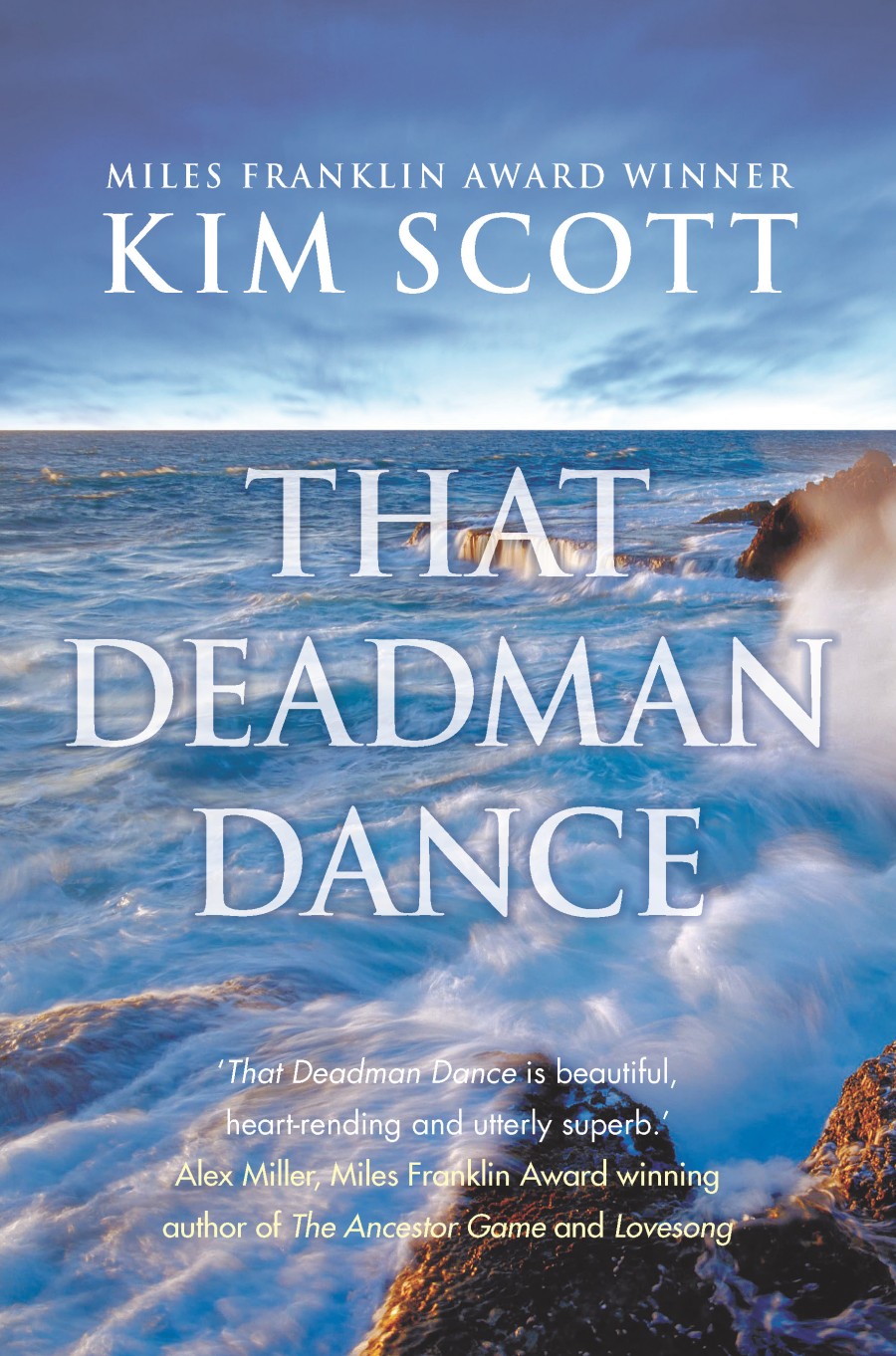
Kim Scott That Deadman Dance
  • 2011: Kim Scott’s The deadman dance (my review)
  • 2009: Christos Tsiolkas’ The slap (my review)
  • 2008: Steven Carroll’s The time we have taken
  • 2006: Kate Grenville’s The secret river
  • 2005: Andrew McGahan’s The white earth
  • 2004: Michelle de Kretser’s The Hamilton case
  • 2003: Sonya Hartnett’s Of a boy
  • 2002: Richard Flanagan’s Gould’s book of fish
  • 2001: Peter Carey’s True history of the Kelly Gang
  • 2000: Lily Brett’s Too many men
  • 1999: Murray Bail’s Eucalyptus
  • 1998: Peter Carey’s Jack Maggs
  • 1997: Sue Woolfe’s Leaning towards infinity
  • 1996: Gillian Mears’ The grass sister
  • 1995: Tim Winton’s The riders
  • 1994: David Malouf’s Remembering Babylon
  • 1993: Alex Miller’s The ancestor game
  • 1991: David Malouf’s The great world
  • 1990: Robert Drewe’s The bay of contented men
  • 1988: George Turner’s The sea and summer
  • 1987: Blanche d’Alpuget’s Winter in Jerusalem (shared with a NZ book)

You will see that Australia won the lion’s share of these prizes (21 of 25). The exceptions were 2010 won by a Samoan writer, 2007 and 1989 by a New Zealand writer, and 1992 by a Samoan-New Zealand writer. Things were a little different for the Best First Book award …

Best First Book

Book cover
  • 2010: Glenda Guest’s Siddon Rock
  • 2008: Karen Foxlee’s The anatomy of wings
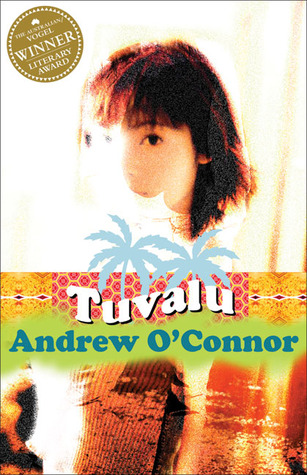
  • 2007: Andrew O’Connor’s Tuvalu
  • 2005: Larissa Behrendt’s Home
  • 2004: Nada Azar Jarrar’s Somewhere, home
  • 2002: Meaghan Delahunt’s In the blue house
  • 2001: Arabella Edge’s The company
  • 1998: Emma Tom’s Deadset
  • 1995: Adib Khan’s Seasonal adjustments
  • 1994: Fotini Epanomitis’ The mule’s foal
  • 1993: Andrew McGahan’s Praise
  • 1991: Thea Welsh’s The story of the year of 1912 in the village of Elza Darzins
  • 1989: Gillian Mears’ Ride a cock horse

So, fewer won by Australians here (13 of 23), and another country involved too: 2011, 2009, 2000, 1999, 1996, 1992, and 1990 by New Zealand writers; 2006 and 2003 by Malaysian writers; and 1997 by a Samoan writer.

There’s another interesting thing here. All of the winners of the Best Book award continued to be published and be well-known after their win. This is not the case with the Best First Book winners where a few have not become well-known on the literary scene (though many have continued to write and publish, some now overseas).

I have read many of the Best Books, and a few of the Best First Books, but mostly before blogging. Interestingly, the Best Books reflect the very “white” focus in Australian literary awards at the time (with a couple of exceptions), while the Best First Books reflect greater diversity. I wonder whether this fact is behind the Foundation’s change to focusing on short stories, because the aim seems to have also changed from “simply” recognising achievement to developing, promoting and encouraging writers. The prize, they say,

is open to writers who have had little or no work published and particularly aimed at those places with little or no publishing industry. The prize aims to bring writing from these countries to the attention of an international audience. The stories need to be in English, but can be translated from other languages.

What do you think about all this?

Six degrees of separation, FROM Phosphorescence TO …

So our strange Antipodean summer has ended, and I, for one, am sad. How often did I, this year, get to wear my summer frocks? More often than I needed to, actually, because I hated seeing them lonely in the wardrobe. I know there are people who hate the heat, and I know that it was great to have had some good soakings of rain this year, but still … a few more hot summer days would have been appreciated. With the whinge over, I’ll get to something I’ll never whinge about, our Six Degrees of Separation meme. If you don’t know how it works, please check out meme host Kate’s blog – booksaremyfavouriteandbest.

Book cover

The first rule is that Kate sets our starting book – and wonder of wonders, for the second month in a row, I’ve read the starting book, Julia Baird’s Phosphorescence (my review). It wasn’t one I would normally have read, but it was a reading group choice, and like most of my reading group’s choices – because we have a great group of interesting women – I was glad I did read it. Subtitled On awe, wonder, and things that sustain you when the world goes dark, it sounds like it could be a self-help book. It is a bit, but not entirely.

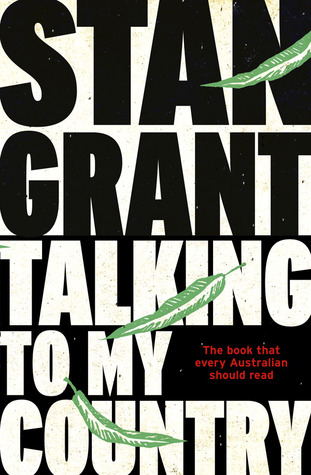
Stan Grant, Talking to my country

So, the obvious choice for a link would be come sort of other self-help book – or memoir about surviving great odds. I suppose at a push, my next book could be seen as the latter, but it’s not really, so that’s not the linking point. The link is that, Stan Grant, the author of Talking to my country (my review), is an occasional host of ABC TV’s The Drum program for which Baird is one of the two founding hosts.

The little stranger, by Sarah Waters

I have heard Stan Grant speak in person in an ANU/Canberra Times Literary Event, and my, was he impressive. The first such event I attended after I started blogging was back in 2010 when I heard (and saw, of course) Marion Halligan converse with the English author Sarah Waters about her latest novel at the time, The little stranger (my review). She’s quietened down a bit lately, hasn’t she?

Book cover

I could then, but I’m not going to, link on authors who have quietened down. Instead I’m linking on the fact that both Waters’ novel and Shokoofeh Azar’s The enlightenment of the greengage tree (my review) deal in some way with ghosts, albeit Waters’ book is a more traditional ghost story while Azar’s ghosts are of quite a different spirit.

Book cover

Azar migrated to Australia from Iran, and her novel, while not exactly autobiographical, draws from the experiences of friends and family under Ayatollah Khomeini’s dictatorial regime. Elizabeth Kuiper was much younger than Azar when she migrated to Australia – with her mother – from Robert Mugabe’s dictatorial regime in Zimbabwe. Her novel, Little stones (my review), does have an autobiographical element.

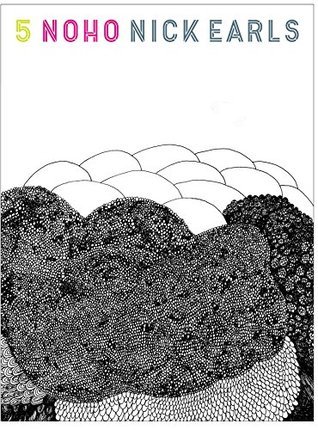
Nick Earls, NoHo

Kuiper’s protagonist and first-person narrator is 11-year-old Hannah. Another novel – or novella in this case – with an 11-year-old narrator is Nick Earls’ NoHo (my review), which is set in Los Angeles (North Hollywood if you want to know!) although Earls is very definitely Aussie.

Book cover

NoHo is part of a (subtly linked, apparently) novella series by Earls, called Wisdom Tree. My last link is going to be a bit cheeky, because it draws on this idea of a novella series. I say cheeky because Nigel Featherstone’s three novellas published by Blemish Press were not originally conceived as a series. It’s just that at the end of a month’s writer’s retreat in Launceston, many years ago now, he found he had sketches for three novellas, and Blemish published all three. As NoHo is the last of Earls’ 5-book series, I’ll link to Beach volcano (my review) which is the last of Featherstone’s. Their subject matter is very different but both books are about sons and brothers – one 11-year-old, one 44-year-old – who are facing challenges in their lives! I’ll leave it at that…

So, hmm, where have we been this month. All over the shop really. While nearly all this month’s authors are Australian, or Australian-based now, they have taken us not only to Australia, but England, Iran, Zimbabwe and Los Angeles in the USA. That’s a bit of arm-chair travelling for you, though we’ve been through some rocky territory!

Now, the usual: Have you read Phosphorescence? And, regardless, what would you link to?

Stella Prize 2021 Longlist announced

Unfortunately, because I’m on the road, I wasn’t able to “attend” the announcement earlier this evening, but at least I have been able to get my post out on the night, as it were.

As I say every year, I think, I don’t do well at having read the Stella Prize longlist at the time of its announcement. In 2017 I’d read none; in 2018, one, and in 2019, two! Last year, I was back to one! By the end of 2020, I’d read 3.5 which is worse than previous years.

Again, as I’ve said before, I do better at reading the winners, having read Carrie Tiffany’s Mateship with birds (2013), Clare Wright’s The forgotten rebels of Eureka (2014), Emily Bitto’s The strays (2015), Charlotte Wood’s The natural way of things (2016), Heather Rose’s The museum of modern love (2017), and Vicki Laveau-Harvie’s The erratics (2019). So far, I’ve missed 2018’s winner, Alexis Wright’s Tracker, and I’m only halfway through reading last year’s winner, Jess Hill’s See what you made me do. I will finish though, as it’s a significant book I believe.

The judges are again different to last year’s with only Zoya Patel (this year’s chair), continuing on the panel: memoirist and editor Zoya Patel (Chair); playwright, author and Blak & Bright First Nations Literary Festival Director Jane Harrison; 3RRR radio producer, presenter and literary critic Elizabeth McCarthy;  production editor of The Saturday Paper Ian See; and Deputy Programme Director at Edinburgh Book Festival Tamara Zimet. As always, attention has been paid to diversity on the panel.

The longlist

Book cover
  • Rebecca Giggs’ Fathoms: The world in the whale (non-fiction)
  • SL Lim’s Revenge (fiction) (Lisa’s review)
  • Laura Jean McKay’s The animals in that country (fiction)
  • Louise Milligan’s Witness (non-fiction)
  • Cath Moore’s Metal fish, falling snow (fiction)
  • Intan Paramaditha’s The wandering (fiction)
  • Mirandi Riwoe’s Stone sky gold mountain (fiction) (on TBR; Kate’s mini-review)
  • Ellena Savage’s Blueberries (non-fiction/essays)
  • Nardi Simpson’s Song of the crocodile (fiction) (on TBR)
  • Elizabeth Tan’s Smart ovens for lonely people (short stories) (Bill’s review and on TBR)
  • Jessie Tu’s A lonely girl is a dangerous thing (fiction) (Kim’s review)
  • Evie Wyld’s The bass rock (fiction)

Well, I guessed five of these might be in the list – McKay, Riwoe, Simpson, Tan and Tu, but I also guessed some more non-fiction like Grace Karskens’ People of the river, and Jacqueline Kent’s Vida. However, as I haven’t read any of the longlist – and have not, in fact, heard of several of them – I’m not going to judge. I’ll just say, how interesting!

Oh, and for the record, I’ve read none – though I have a few on my pile!

The judges’ chair, Zoya Patel commented on the longlist:

The 2021 Stella Prize longlist demonstrates the breadth of expression present in Australian literature, and the importance of raising the profile of women and non-binary voices in celebrating this expansive talent. In reading these titles, we pondered what might be lost or overlooked should a prize such as the Stella not exist to specifically examine the output of Australian women and non-binary writers. […]

This year’s reading presented a diversity of talent and expression, with books exploring the people and animals through the lens of fiction and non-fiction, and with a common objective to reach into the heart of what it means to exist in the world today.

To read the judges on each of the longlisted books, do check out the Stella website.

Stella’s announcements are all later this year than in previous years – including this longlist which has usually been announced in February. So, the shortlist will be announced on March 25, and the winner on April 22.

Any comments?

Bill curates: Ruth Park

Bill curates is an occasional series where I delve into Sue’s vast archive, stretching back to May 2009, and choose a post for us to revisit. This is a most enjoyable project as I read every post and usually the comments too. Which is why I’m still only up to Oct. 2010. Today, because I can, I’ve chosen an AWW Gen 3 post on Ruth Park which I had previously overlooked.

______________________________

My original post titled: Monday musings on Australian literature: Ruth Park

The muddle-headed wombat by Ruth Park, book cover

For a New Zealander, Ruth Park is a very popular Australian! Not only did she write the much-loved (and studied) Harp in the south trilogy, but she also wrote the hugely popular (in its time) radio serial The muddle-headed wombat, was married to the Australian D’Arcy Niland (now deceased) who wrote The shiralee, and is mother to children’s author-illustrators Deborah and Kilmeny (now deceased) Niland. Ruth Park also won the Miles Franklin Award with her Swords and crowns and rings, and wrote two very popular autobiographies, Fence around the cuckoo and Fishing in the Styx. And this is not all – or even all of the best – that she’s produced in her long career.

Park was born in New Zealand in the early 1920s and first came to Australia in 1940 when she met D’Arcy Niland. She writes that Australian writer Eve Langley*, with whom she had a longstanding friendship, said of Niland:

‘That’s a good face … Do you know what it is saying?’
‘No, what?’
‘It says “Take me or leave me.” I like that.’

So apparently did Park. She returned to Australia in 1942 to work as a journalist, and married Niland. They worked at various jobs in rural New South Wales for some years before Park’s stories gained the attention of the Australian Broadcasting Commission (ABC) resulting in their decision to try to make a living from free-lance writing. They wrote, and wrote, and wrote – anything that would earn money. They wrote, for example, short stories, genre stories (such as romances and westerns), radio talks and radio plays, scripts for radio comics, all the while honing their skills for their more serious writing goals. And they lived during these early years in Sydney’s inner city slum, Surry Hills.

These experiences of living in rural areas and city slums are clearly evident in Swords and crowns and rings (the story of the dwarf Jackie, and his love Cushie Moy) and the Harp in the south trilogy (the story of the Darcy – ha! – family). The thing I love about these books – both of which span the first 4-5 decades of the twentieth century – is the way Park explores gritty issues like poverty, abortion, religious bigotry, unemployment and illness with a psychological and social realism that also encompasses warmth and humour. Her main characters tend to be the quintessential Aussie battlers, but their concerns transcend time and place. It’s not surprising, really, that these works keep being read, re-published, set for study, and adapted for television and film.

Realism though is not the only string to Park’s fictional bow. She wrote in several “genres” for a range of audiences, including fantasy for children. Her Muddle-headed wombat stories ran on the ABC Children’s Session from 1957 to 1971. I have to say that I never have really been one for anthropomorphism, and have read few children’s classics featuring animals (no, not even The wind in the willows) but even I would tune in for the wombat! Park also wrote a children’s time-travel fantasy Playing Beatie Bow, which is taught in schools and has been made into a film.

And yet, for all this, I’m sure she is little known outside Australia … if I am wrong, please let me know!

In the meantime, I will conclude with her description in her first autobiography, Fence around the cuckoo, of her first sighting of Australia as she arrived by boat:

What I saw were endless sandstone cliffs reflecting the sunrise. A chill ran over my skin, my ears buzzed as they had once done when I was about to experience uncertainty about something as yet unknown. The sea fled south, its malachite green changing to beaming blue; the sky was sumptuous with a sun hotter than I had ever known.

This was my first glimpse of Australia Felix, the ancient, indifferent, nonpareil continent that was to become the love of my life.

Ruth Park is not one of those ground-breaking writers who makes you go, wow!, but  she is an excellent story-teller who has an enviable ability to create and develop memorable characters who confront the real “stuff” of life. You could do far worse than read her if you want an introduction to Australian literature. If I haven’t convinced you, read Lisa at ANZLitLovers and Tony of Tony’s Bookworld on Harp in the South, and kimbofo at Reading Matters on her “Top 10 novels about Australia”.

*Park mentions Langley (whom I reviewed early in this blog) several times in Fence around the cuckoo. One concerns Park’s decision to stay with Eve to escape a Peeping Tom uncle but, when she arrived at the windmill in which she believed Eve to be living, she found no Eve but another woman who had heard of Eve but not for some years. “What had happened to that weird girl?”, the new windmill resident wondered. Poor Eve. She was indeed a bit weird and had a rather sad life, but that is another story.

___________________________

Book cover

It’s interesting for me to re-read these old posts of mine, and think about how I’d write them now! Regarding Park, my admiration has only grown for her warmth, humour and abiding sense of fairness. Check my Park posts here.

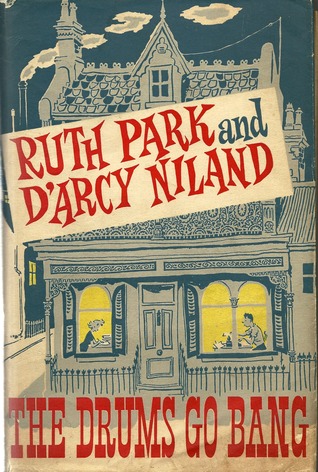
But, back to Bill. He says he’s not a fan of Park’s autobiographies but he does recommend, whenever he can, the Park/Niland memoir The Drums Go Bang, which we have both reviewed (Bill’s review) (my review). I enjoyed her autobiographies, but The drums go bang is very special.

Are you are Park fan? If so (or if not), we’d love to hear your thoughts.

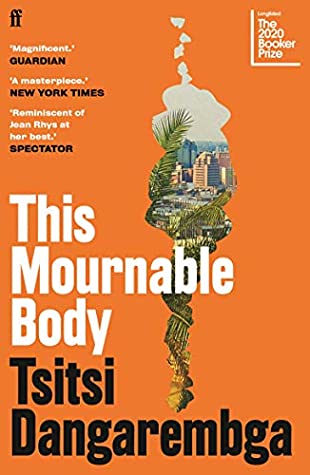
Tsitsi Dangarembga, This mournable body (#BookReview)

Zimbabwean author Tsitsi Dangarembga’s This mournable body was my reading group’s February book. Shortlisted for the Booker Prize, it is Dangarembga’s third novel, and is a sequel to Nervous conditions (1988) and The book of not (2006), neither of which I’ve read. These novels are written in English, the language of Dangarembga’s schooling, though she also speaks Shona.

It is a remarkable book, for its subject matter, vivid writing and the complexity of its protagonist, Tambu (Tambudzai). Wikipedia’s article on Nervous conditions describes Tambu’s character, saying “her desire for an education and to improve herself seem strong enough to overcome just about anything. She is very hard on herself, and always strives to do her best and make the correct decisions”. This perfectly describes the character I met in This mournable body, except that by now Tambu is around 40 years old and disappointed that life has not worked out as she had hoped. Indeed, she is out of work and living in a boarding house, eking out her savings from her previous copy-writing job in order to survive. A sense of failure and an air of desperation surrounds her.

Interestingly, Dangarembga chose a second person voice to tell Tambu’s story. There are various reasons for choosing this voice. Madeleine Dickie chose it for her novel Red can origami (my review) to involve if not implicate the reader in the world she was describing. I don’t know why Dangarembga chose it, but my guess is to convey Tambu’s apparent dissociation from her self. Second person avoids both the objective insight that an omniscient third person voice can provide and the confessional immersion in a life that first person offers. Tambu is struggling; she is caught between her Western-education with its Western-style aspirations and her Zimbabwean family and culture. We see her pain, but second person keeps her and us a little remote from it, as if she and we are watching it, not fully comprehending what is happening.

The novel is set in troubled late 1990s Harare, on the cusp of the millennium. It has a three-part structure – Ebbing, Suspended, and Arriving – which chronicles the trajectory of this period in Tambu’s life. In Ebbing, we see Tambu’s hopes for a successful, secure life, ebb:

Fear, your recurrent dread that you have not made enough progress toward security and a decent living, prickles like pins and needles at the mention of “village.” You have dodged this fear for too long—all your conscious life.

We also learn some of the reasons for the state she’s in, despite having been plucked from her village by her uncle and given a good “white” education. These reasons include the fact that although having gained Independence, Zimbabwe remains a racist place where black Zimbabweans still suffer under the colonialism they “thought” they’d thrown off. Tambu had had a good job as a copywriter in an advertising agency:

you have no one but yourself to blame for leaving your copywriting position. You should have endured the white men who put their names to your taglines and rhyming couplets. You spend much time regretting digging your own grave over a matter of mere principle.

Late in Ebbing, Tambu manages to obtain a decent job as a teacher, but it doesn’t last long, largely because her insecurity – her jealousies and fears – result in her self-destructing.

Suspended starts with her having been suspended from this job and admitted to a psychiatric hospital where her life is effectively “suspended” as she struggles to regain her mental health and equanimity. This she does, with the help of her family, including cousin Nyasha who takes her in. Incomprehensibly to Western-focused Tambu, Nyasha had returned, with her German husband and two children, from an apparently successful life in Europe, to work for the community, and specifically to improve things for Zimbabwean youth.

In the final part, Arriving, Tambu finds herself working for Tracey, her white Zimbabwean nemesis who had been a schoolmate at the prestigious Young Ladies’ College of the Sacred Heart and then her boss at the copywriting agency. Tracey is setting up an eco-tourism business, Green Jacaranda, and sees potential in Tambu – and indeed, Tambu seems to start to find herself, both personally and professionally, but I will leave the plot here …

This mournable body, however, is more than just a story about Tambu. Dangarembga weaves Zimbabwean social and political history into her narrative. While Tambu hadn’t been involved in pre- and post-Independence violence, many in her family had. The impact of war – particularly on women – provides one of the running commentaries throughout the novel. One refrain concerns her sister Netsai’s loss of a leg, which works as a visible reminder of personal and national losses:

Sometimes I ask if people forgot that many people went to war. Because if they have not forgotten, these people in this country, what is going on with them? Why are they so foolish? Do they think we went for this? … This is not what we went for and stayed for without food and blankets, even clothes, without our parents or relatives. Some of us without legs. Yet now we are helpless and there is nothing we can do to remove the things we see that we didn’t go to fight for.

Independence, in other words, is not working out the way they expected. The interplay of race, gender and colonialism continues to impede the country’s growth. Through her characters, Dangarembga powerfully conveys that old mantra “the personal is the political” – even though Tambu, ironically, tries to avoid talking politics with Tracey. “I don’t believe in politics”, she naively tells Tracey.

This mournable body is a serious and often heartbreaking novel, but there is also humour, much of it in the form of irony and satire. Here’s Tracey on her new business, echoing, for different reasons, Tambu’s dislike of “village”:

Everything’s Green Jacaranda eco! And you can’t say village. … That kind of promise doesn’t work these days either. It’s got to sound like fun, not under-development, soil erosion and microfinance.”

Tracey is either oblivious to – or chooses to ignore – the truths of Zimbabwean culture, preferring to exoticise a generalised notion of “Africa” for her business. In one excruciating scene she asks Tambu to organise village women to dance bare-breasted for their tourists.

At the other end of the spectrum is Tambu’s landlady’s now late husband, a black Zimbabwean who had profited from Independence. He had experienced an horrific accident, but

His biggest blow was what happened to his BMW and his temporary relegation to a lowly Datsun Sunny. People admired the stoicism with which Manyanga put up with this.

Dangarembga’s Zimbabwe is a complex society that has been riven by internal and external conflicts over decades, conflicts that are, in part, personified in Tambu’s difficulty in separating out her own goals from the “white” ones she had been educated into. While Dangarembga provides no easy answers, she suggests there are paths of hope, paths that rest with individual people who have a firm grip on what they want for themselves and for their country. This mournable body is an excruciating read at times, but the insights and perspectives it offers, particularly to Westerners whose assumptions it questions, are worth the pain and challenge.

Lisa (ANZLitLovers) was also impressed by this book.

Tsitsi Dangarembga
This mournable body
London: Faber & Faber, 2020 (orig. ed. 2018)
288pp.
ISBN: 9780571355532 (Kindle ed.)

Bill’s literary tour of the Mallee

I love road-tripping around different parts of Australia, and for some time now have had a hankering to explore the Mallee-Wimmera region of western Victoria. This hankering has been enthusiastically supported by Bill (The Australian Legend) for whom this part of Australia was his youthful stomping ground. We have discussed the region and what might be included in a Mallee literary tour several times over the years – with Lisa joining in on occasion too.

Jenny Ackland, Little gods

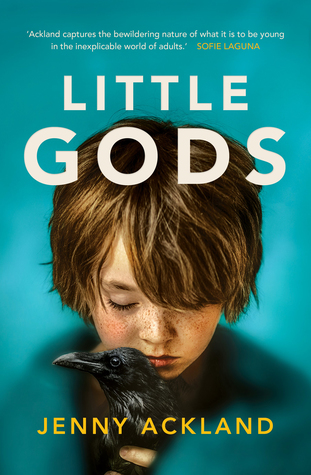
We would all, I think, like to compile a list of books set in the region. I’ve reviewed a few on this blog – at least I think they are set in the Mallee, as the region’s borders are a bit confusing to me – such as Jenny Ackland’s Little gods, Charlie Archbold’s Mallee boys, and Sue Williams’ crime novel Live and let fry. Lisa recently posted a review of a new Mallee-set book, Anne Brinsden’s Wearing paper dresses, and last year, another, Bill Green’s Small town rising.

But, topping it all, is that this week, Bill has finally put fingers to keyboard and written a post on touring the Mallee which he has generously said I can post here too … He starts:

Sue/Whispering Gums a year or so BC set me the task of devising a literary tour of the Mallee – the northwest corner of Victoria, a triangle bounded by the Murray River to the north and northeast, the South Australia border to the west and let’s say to the south the 36th parallel, so a line from a bit north of Route A8 to the Murray north of Echuca. To read the rest of the tour, please check out his post. I’m sure he wouldn’t mind if you hitched a ride and took the tour too!

Thanks so much Bill … there’s a possibility we might even do a bit of this trip this month. It all depends … no glamping in Little Desert is a bit of a worry!

Monday musings on Australian literature: Mining in Australian fiction

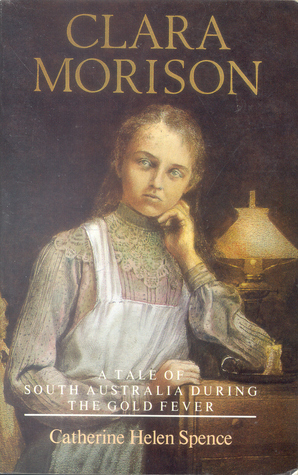
I was inspired to write this post by Bill’s (The Australian Legend) post on Catherine Helen Spence’s novel Clara Morison whose subtitle is “a tale of South Australia during the gold fever”. Mining is one of Australia’s biggest industries. Iron, copper, coal, silver, gold, zinc, bauxite and opals have all played significant roles in Australia’s economy and thus in the lives of many Australians. But, how often has it featured in our fiction?

The funny thing is that when I think of mining in fiction, my first thoughts don’t go to Australian novels, but to books like Richard Llewellyn’s coal mining classic How green was my valley, and Wallace Stegner’s Angle of repose about white settlers in the American West. This post, then, is as much a brains-trust fishing expedition as it is an informative one, but I plan to throw a few thoughts into the mix.

Nineteenth to mid-twentieth century

Catherine Helen Spence’s Clara Morison was published in 1854, and, as Bill writes, a major stream is the mining story, including the loss of men from South Australia’s copper mine to the excitement of the Victorian goldfields.

Katharine Susannah Prichard wrote several novels about mines, mining and/or mining towns, starting with her third novel, Black opal (1921). Set in an opal mining settlement, Falling Star Ridge, it draws from New South Wales’ Lightning Ridge where she’d spent some months. Prichard biographer, Nathan Hobby, discusses it on his blog. He says that by the time she wrote this novel Prichard “had committed to communism, and the influence is evident”. For example, she “paints a picture” of the settlement as a “workers’ utopia”. Prichard’s Goldfields trilogy (The Roaring Nineties, 1946; Golden Miles, 1948; and Winged Seeds, 1950) came later. It chronicles life in Kalgoorlie from the the discovery of gold up to the early 1940s when Prichard lived there. Hobby has also written on his blog about these books, focusing particularly on the political impetus behind their writing.

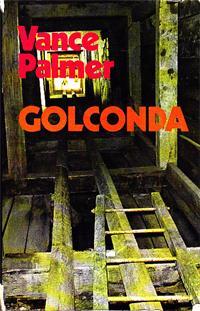
Vance Palmer also wrote a mining trilogy – the Golconda trilogy: Golconda (1948), Seedtime (1957) and The big fellow (1959). They tell the story of a mining town – one I once knew well, Mount Isa – from the time it was a mountain of silver and lead through to the established town. Deborah Jordan (in the Queensland Historical Atlas) writes that the characters include Macy Donovan, who begins as an obscure union organiser in early Golconda, but ends up the premier of Queensland, and Christy who “embodies the dying prophetic vision of the socialists of the 1890s”. Palmer, she says, was apparently fascinated by political leadership, especially those leaders who emerged from the ranks.

Mid to late twentieth century

Thea Ashley, It's raining in Mango

Another author who has written more than once about mines and mining towns is Thea Astley, though not as intensively as Prichard and Palmer. An item from the late news (1982) (my review) is set in the dying town of Allbut, which was once a thriving mining centre. Mining is not the focus – indeed I don’t mention it in my review – but its aftermath, the directionless machismo simmering in the town, underpins the novel. A few years later, Astley wrote It’s raining in Mango (1987), a four-generation story set in north Queensland, which I read around the time it came out. It covers a lot of ground, but includes references to the massacre of Indigenous people by goldfield diggers in the 1860s.

I’m guessing that miners and mining feature in outback-set commercial fiction, but this is not my area my expertise. However, my research suggests, for example, that Bryce Courtenay, who had worked in mines in South Africa, has two brothers working on goldfields, among other places, in his novel, Tommo and Hawk.

Twenty-first century

Historical fiction, which has been part of most of the novels/trilogies I’ve described above, continued into the 21st century. Mirandi Riwoe’s Big sky stone mountain (2020) explores the experience of Chinese people in late nineteenth Australia, including on the Queensland goldfields. Gail Jones’ latest novel, Our shadows (2020), takes us back to Kalgoorlie. It’s apparently a three-generation story starting with the discovery of gold there in 1893. Guardian reviewer Bec Kavanagh says that “Jones tells a story of gold and greed that goes beyond myth and folklore, deep into a family trying to reconcile their past with the present”.

Book cover

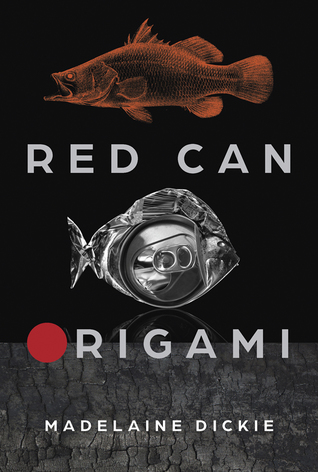
However, one of the biggest contemporary issues facing mining in Australia is the right traditional owners of Aboriginal land have to make agreements with mining companies concerning use of their land. It’s encouraging to see this issue appearing in modern novels. Mining and rights is the main focus of non-Indigenous writer Madeleine Dickie’s 2019 novel, Red can origami (my review). Dickie explores the issue from multiple perspectives – indigenous, environmental, political and personal.

Book cover

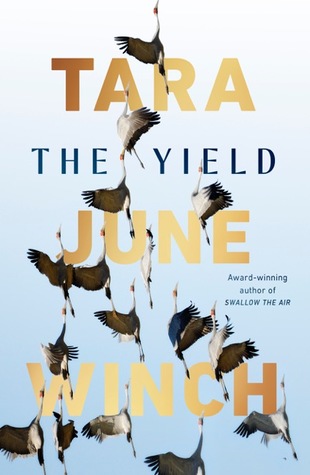
But, importantly, mining is also covered by Indigenous Australian writers. Maggie Nolan, writing in Australian Literary Studies, argues that while Alexis Wright’s Carpentaria (my review) “can be, and has been, read in a range of ways, … the impacts of mining are central to any understanding” of it. She says that “few commentators have focused on the centrality of mining in the story”, to which I must hold up my hand, though when I thought of this topic, Carpentaria immediately came to mind. Mining also features in Tara June Winch’s The yield (my review). When August returns home for her grandfather “Poppy” Albert’s funeral, she discovers that a mining company is staking its claim. Ellen van Neerven, writing in the Australian Book Review argues that “The Yield is an anti-mining novel for the present day in the wake of the approval of the Adani coal mine in central Queensland”.

I’ll stop here, but I’ll just observe that politics – labour issues, environmental issues, indigenous land rights issues, for example – features in most of the fiction I’ve listed here. What does that say about Australia’s relationship with the mining upon which so much of our wealth depends?

What are your thoughts, and do you have more examples (from whichever country you come from) of mining novels?

Bill curates: Charles Dickens and Australia

Bill curates is an occasional series where I delve into Sue’s vast archive, stretching back to May 2009, and choose a post for us to revisit.

I’m such a fan of Monday Musings – I guess we wouldn’t be here if we didn’t all enjoy talking about books, and writing, and authors, and translators, and publishers – that all the posts that jump out at me, seem to be MMs. From Sept 2010 Sue discusses the Australianness of an author who was never in Australia. As Hannah Gwendoline D’Orsay Tennyson Bulwer [Last Name] wrote in Comments “I had no idea Dickens had such a connection with Australia.”

______________________________

My original post titled: Monday musings on Australian literature: Charles Dickens and Australia

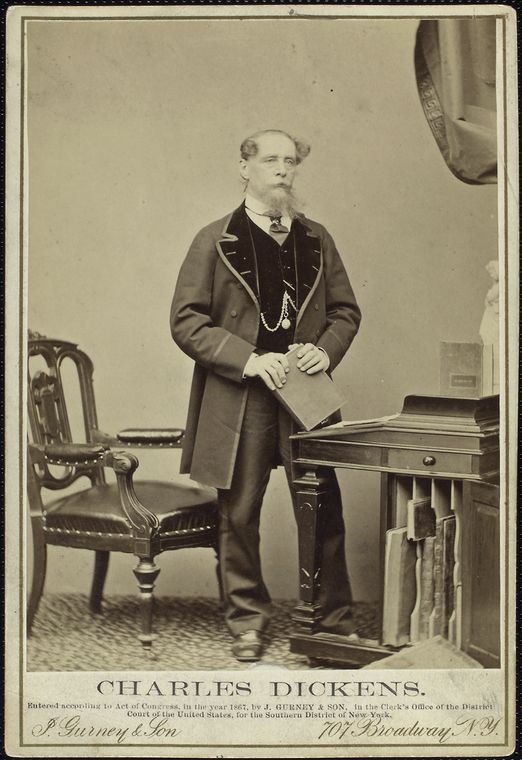
Charles Dickens, c1860

Here’s something completely different for my Monday musings! Not an Australian author, not even a foreign born author who came to Australia (though, being the great traveller he was, he did consider a lecture tour), but Charles Dickens does have a couple of interesting “connections” with Australia. These connections are supported by the existence of some letters written by him at the National Library of Australia.

On convicts and migration in general

Transportation of convicts to Australia – actual, implied or threatened – features in several of his novels. These include John Edmunds in Pickwick Papers (1836-37), the Artful Dodger in Oliver Twist (1837-1839), Mr Squeers in NicholasNickleby (1838-39), Alice Marwood in Dombey and Son (1846-48), and Magwitch (probably the most famous of all) in Great expectations (1861)not to mention Jenny Wren who threatens her father with transportation in Our mutual friend (1864-65). Dickens apparently learnt quite a lot about convict life, and particularly the penal settlement on Norfolk Island, from his friend Alexander Maconochie (to whom I refer in my review of Price Warung’s Tales of the early days).

Clearly, it was this knowledge which inspired the letter he wrote to the 2nd Marquess of Normanby (George Augustus Constantine Phipps), who was Secretary of State for the Home Office . He suggests

a strong and vivid description of the terrors of Norfolk Island and such-like-places, told in a homely narrative with a great appearance of truth and reality, and circulated in some very cheap and easy form (if with the direct authority of the Government, so much the better) would have a very powerful effect on the minds of those badly disposed … I would have it on the pillow of every prisoner in England. (3 July 1840, Original in the National Library of Australia, Ms 6809)

He offers to write this narrative, gratis. As far as I know, although Dickens and the Marquess were friends, nothing ever came of this offer.

While Dickens deplored the treatment of convicts in the penal settlements, he also saw Australia as a land of opportunity. The transported Magwitch, as we know, made his fortune in Australia. Mr Micawber, debt-ridden at the end of David Copperfield, emigrates to Australia and becomes a sheepfarmer and magistrate. But, perhaps the strongest evidence of Dickens’ belief in Australia as a place where people could get ahead, is the emigation of his sons.

On his sons

Two of Dickens’ sons – Alfred D’Orsay Tennyson Dickens and Edward Bulwer Lytton Dickens* (nicknamed Plorn) – emigrated to Australia, both with their father’s encouragement.

Alfred (1845-1912) migrated to Australia in 1865. He worked on several stations/properties in Victoria and New South Wales and as a stock and station agent, before partnering with his brother in their own stock and station agency, EBL Dickens and Partners. He died in the United States in 1912, having left Australia on a lecture tour in 1910. Dickens’  youngest son, Edward (1852-1902), went to Australia in 1869. He also worked on stations before opening the stock and station agency with his brother. He later worked as a civil servant and represented Wilcannia in the New South Wales Legislative Assembly in 1889-94, but he died, debt-ridden, in 1902 at Moree. Australia did not quite turn out to be the land of opportunity for these two that Dickens had hoped, but fortunately he was not around to see it!

A couple of Dickens’ letters to his sons are held at the National Library of Australia. One was written in 1868, not long before Plorn left England, and includes some fatherly advice:

Never take a mean advantage of anyone in any transaction, and never be hard on people who are in your power …

The more we are in earnest as to feeling religion, the less we are disposed to hold forth on it. (26? September 1868, Original in National Library of Australia, Ms 2563)

One does rather wish that Dickens had taken his own advice regarding not being “hard on people who are in your power” in his treatment of his poor wife Catherine.

Eighteen days before he died in 1870, he wrote this to Alfred:

I am doubtful whether Plorn is taking to Australia. Can you find out his real mind? I note that he always writes as if his present life were the be-all and end-all of his emigration and as if I had no idea of you two becoming proprietors and aspiring to the first positions in the colony without casting off the old connexion (1870, Original in National Library of Australia, Ms 6420).

These are just two of the many letters that he wrote to (and about) his sons in Australia. More can be found in published editions of his letters. I have chosen these particular ones purely because we have them here in Canberra. It’s rather a treat to be able to see Dickens’ hand so far away from his home.

Do you enjoy close literary encounters of the handwritten kind?

Image: Dickens, c. 1860 (Presumed Public Domain, via Wikipedia)

___________________________

What an interesting choice of Bill’s but I am glad to be reminded of this post as I have been wanting to read more of Dickens’ journalistic writings. Whether I will is another thing but, you never know.

Are you a Dickens fan?